Advertisement

Edifier launches M230 II retro speaker with 26W RMS output, Bluetooth 6.0 & 30h battery

Edifier has released the M230 II, a new desktop Bluetooth speaker that pairs a wooden enclosure with updated wireless standards and internal hardware. The speaker is currently available in China through JD.com. It has a standard retail price of 399 yuan ($60), though it is launching with an introductory price of 359 yuan ($54).

Edifier M230 II retro speaker

Edifier M230 II Specifications

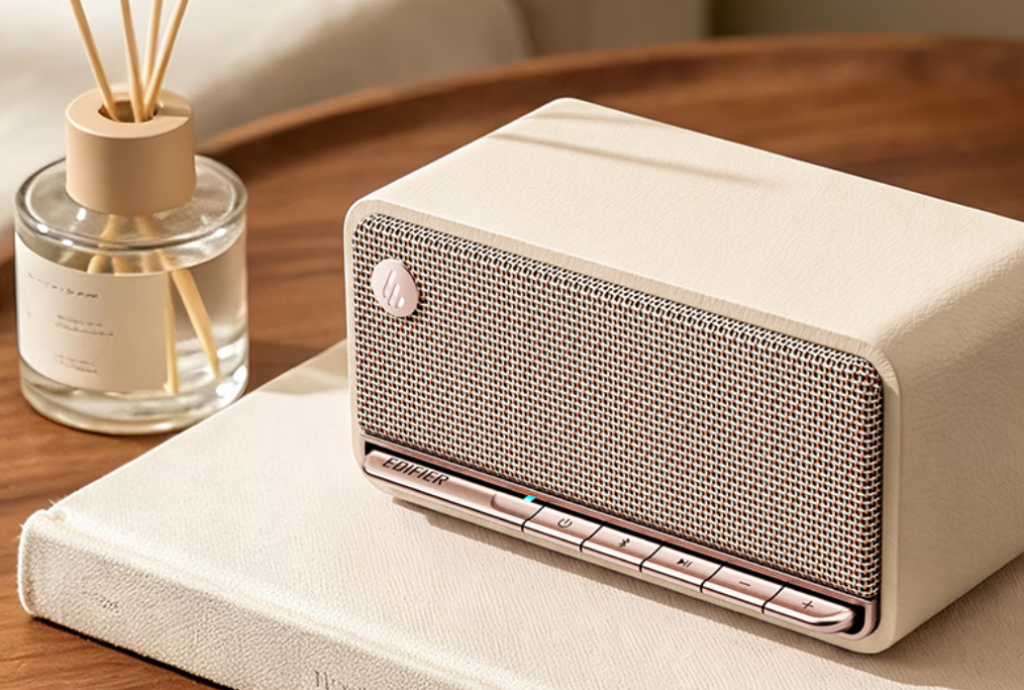
The design of the M230 II relies on a standard vintage aesthetic. The cabinet is constructed from MDF wood, a material the company says is used to reduce unwanted acoustic resonance. The front of the unit features a dual-tone woven fabric grille, and playback is controlled via a row of electroplated piano-style keys.

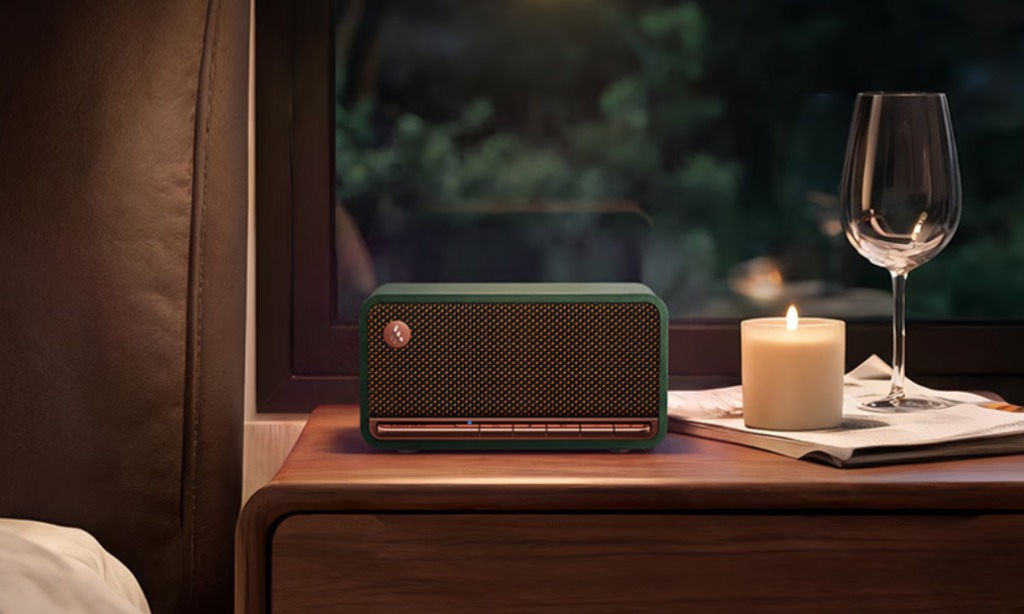
It is a relatively compact device, measuring 170 x 86 x 106mm and weighing 0.82kg. Edifier offers the speaker in three color options: Brown Wood Grain, Peach Pink White, and Moss Bamboo Green.
Edifier M230 II retro speaker

Inside the cabinet, the M230 II uses a two-way acoustic setup. The audio hardware includes a 22mm silk-diaphragm tweeter for high frequencies, a 45 x 80mm racetrack-shaped mid-bass driver, and a 113 x 49mm passive radiator to handle the lower frequencies.

This configuration provides 26W of RMS output power and a peak output of 52W. The frequency response range spans from 58Hz to 20kHz. This is a direct hardware update from the previous M230 model, which had a 20W output and a narrower 70Hz to 13kHz frequency range.
Edifier M230 II retro speaker

For wireless audio, the speaker uses Bluetooth 6.0. It supports multipoint connectivity, meaning users can keep two devices connected simultaneously.

It also includes True Wireless Stereo (TWS) support, allowing two M230 II speakers to be paired together as dedicated left and right channels for a standard stereo setup. Aside from Bluetooth, the speaker has a USB sound card mode for wired connections to a computer and a TF card slot for playing locally stored files.

Edifier M230 II retro speaker

In terms of battery life, the M230 II comes with a 19.24Wh (5,200mAh) battery, offering up to 27 hours of playback at 50% volume and 14 hours at 80% volume. Edifier also includes a LoongSound mode that extends the runtime to 30 hours at 50% volume or 20 hours at 80% volume. This mode can be enabled through the Edifier Connect app, which also provides sound customization and audio source controls.

In related news, Sony has recently launched the ULT TOWER MAX, TOWER 7, and TOWER 5 party speakers with 360° sound and dedicated DJ inputs, while Boat has introduced its PartyPal speaker lineup with up to 300W output, karaoke auto-tune, and built-in DJ controls.

For more daily updates, please visit our News Section.

Stay ahead in tech! Join our Telegram community and sign up for our daily newsletter of top stories!

(JD)

Oppo AI Heart Ball is a 9.8g wearable designed to track your daily decisions

Oppo used today’s event to unveil the Find X10 series smartphones, but it also introduced a much smaller device alongside them. Called the AI Heart Ball, it’s a clip-on AI wearable that Oppo describes as an “AI growth coach.” The device is available for trial at 499 yuan (~ $75), with user recruitment opening today.

The Heart Ball is small enough to clip onto your collar without getting in the way. It weighs just 9.8 grams and offers up to 24 hours of battery life on a single charge. Oppo says its microphone can pick up sound from as far as 5 meters away, so you don’t need to keep the device close to your mouth while using it.

Oppo Ai Heart Ball launch specs price

What it actually does is track your day with you. It helps you stay focused on tasks, reminds you of commitments you’ve made, flags risks it picks up on, and goes back over past decisions and outcomes with you so you can see where your judgment held up and where it didn’t.

AI built around your daily activities

The Heart Ball’s AI features are powered by Oppo’s PersonaX Memory Symbiosis Engine. It combines voiceprint recognition, information association, and what Oppo calls memory evolution algorithms to build a better understanding of your activities over time.

The wearable also uses VAD voice detection and an in-memory computing architecture to process the information it collects. Oppo’s O-Mind bionic behavioral deep thinking algorithm then turns that information into personalized suggestions and actions instead of simply producing a transcript of what it hears.

Oppo AI Heart Ball Design

Oppo is also opening the Heart Ball’s MCP ecosystem to developers. This gives them access to some of the AI tools the device already uses and lets them build additional experiences around the wearable.

Privacy is especially important for a device designed to listen throughout the day. Oppo says the Heart Ball uses its PCC private computing cloud, with end-to-end encryption covering data storage, transmission, and processing.

The company also says it doesn’t retain user recordings, which should help address concerns about having an always-listening AI device clipped to your clothes.

Don’t miss a thing! Join our Telegram community for instant updates and grab our free daily newsletter for the best tech stories!

For more daily updates, please visit our News Section.

(via)

Oppo launches 33W, 10,000mAh pocketable power bank with a smart feature for Oppo phones

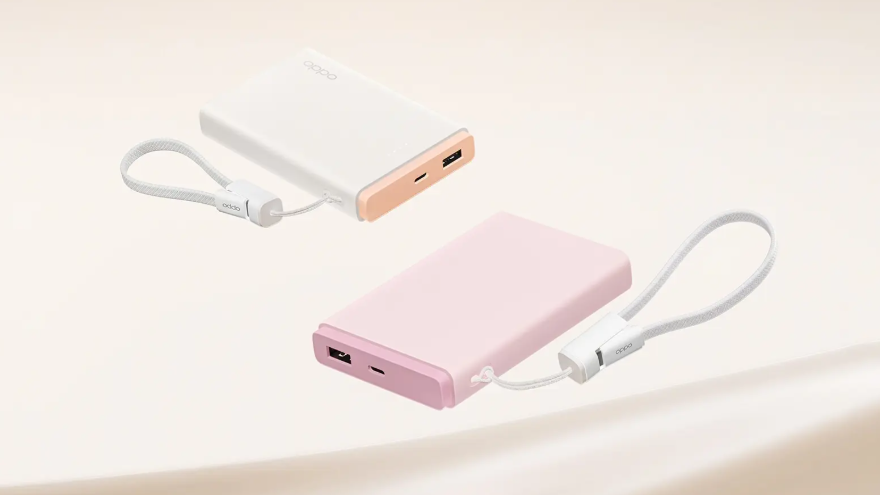
Oppo has released a slim power bank for people who want reliable on-the-go charging without lugging around a brick. The new 33W Pocket Charge Super Flash Charge Power Bank 10000 is compact, practical, and surprisingly well-connected for such a small accessory.

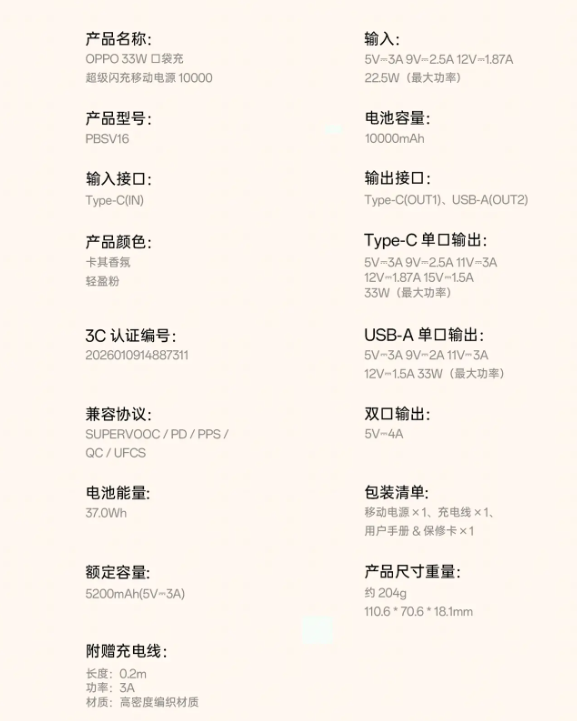
It’s available now for 149 yuan (~$22). You get 10,000 mAh of capacity in a body that measures just 110.6 × 70.6 × 18.1 mm and weighs about 204 g. Two understated colors are on offer: Khaki Fragrance and Light Pink. It’s also certified under China’s new 2026 national safety standard for portable chargers.

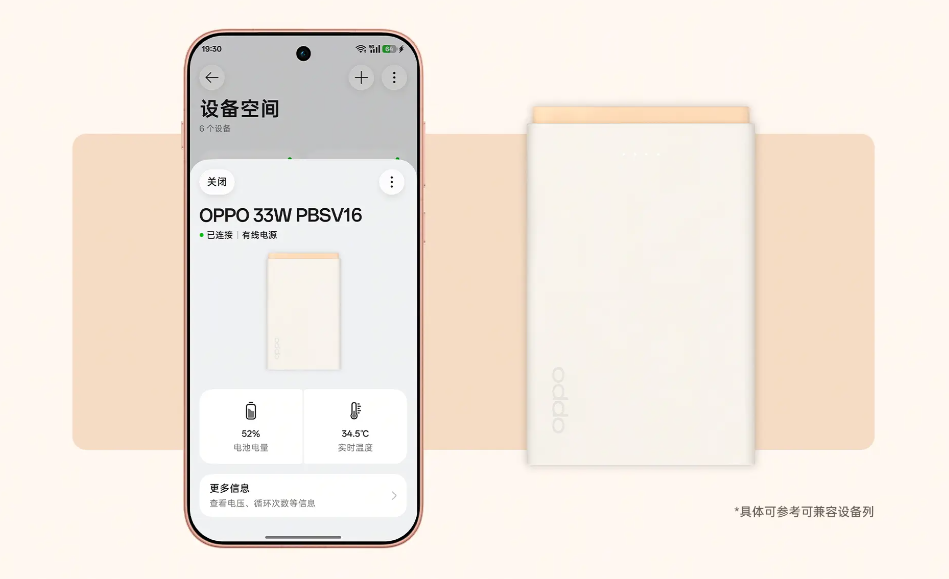
One of the nicer touches is how it works with ColorOS. On compatible Oppo phones, you can see the power bank’s remaining charge, battery health, and even real-time temperature right on your phone screen, no need to guess how much juice is left.

Charging-wise, it has dual ports (USB-A and USB-C). Each one can push up to 33 W when used alone and supports SUPERVOOC, PD, PPS, QC, and UFCS. When both ports are in use at the same time, the max combined output drops to 5 V / 4 A. It also automatically detects low-power devices, so it can safely charge smartwatches, earbuds, and fitness trackers without issues.

In the box you get a short 0.2 m, 3A braided cable with dual Type-C ends. It’s designed to be easy to attach and detach, so you can leave the house without packing an extra cable.

Compact size, multi-protocol support, solid safety credentials, and those handy software features make this little power bank a pretty practical everyday companion, especially at this price. It’s available now through major Chinese retailers.

Don’t miss a thing! Join our Telegram community for instant updates and grab our free daily newsletter for the best tech stories!

For more daily updates, please visit our News Section.

(Source: Oppo)

Oppo Find X10 E debuts with Dimensity 9500s, 7025mAh battery, triple 50MP Hasselblad camera system

Oppo has expanded the Find X10 series with a more wallet-friendly option that still packs solid performance, decent cameras, and strong battery life. The Find X10 E is aimed at people who want a taste of the flagship experience without jumping to the pricier models.

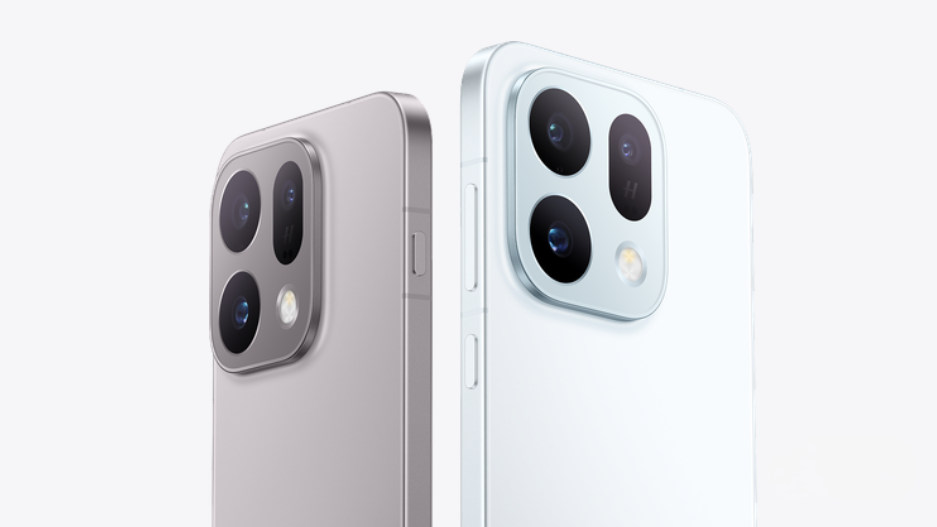
The design keeps things refined but more understated than the Find X10 and Find X10 Pro Max. It has a velvety glass back, ultra-narrow equal bezels on all four sides, and a subtly shimmering metal frame. Nothing flashy, just clean.

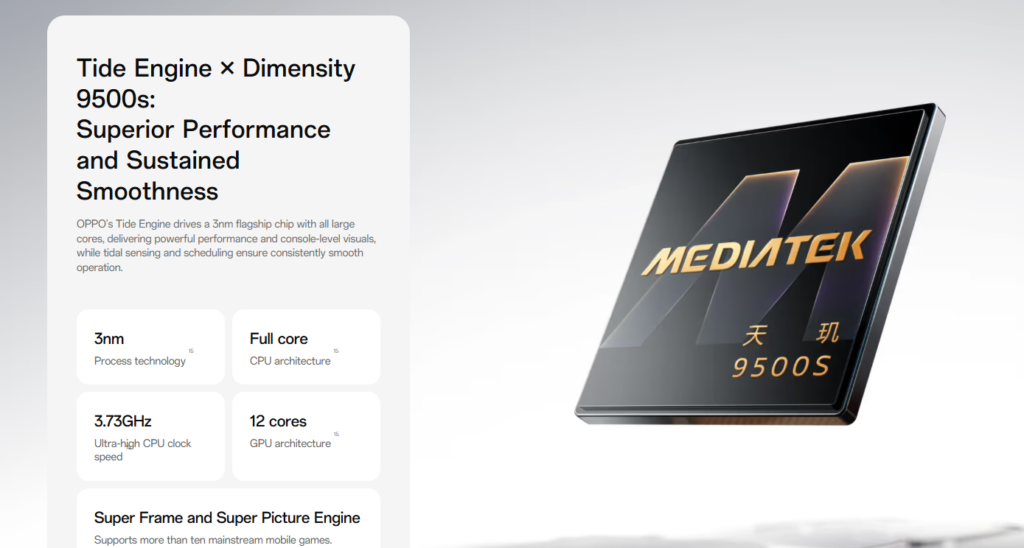
Under the hood is MediaTek’s Dimensity 9500s, a 3nm chip that peaks at 3.73 GHz. It comes with LPDDR5X RAM and UFS 4.1 storage, so everyday use should feel snappy. Battery life looks promising with a 7,025 mAh battery that supports 80W SuperVOOC wired charging and 50W wireless charging.

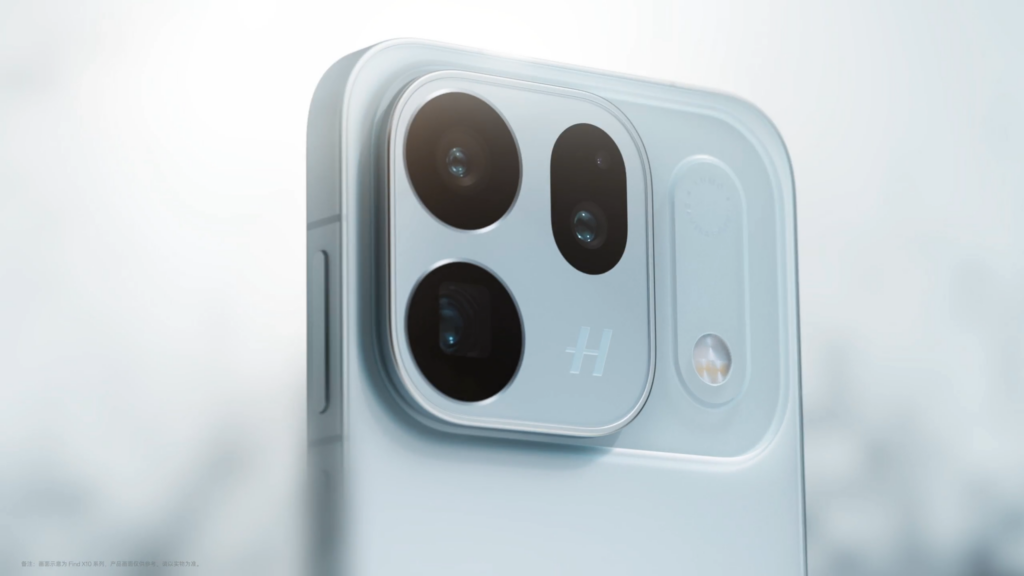
For cameras, Oppo stuck with a Hasselblad-tuned imaging setup, but this time it’s three 50MP sensors. The main camera uses a large 1/1.4″ sensor with a 23 mm equivalent focal length, f/1.6 aperture, and optical image stabilization. The telephoto has a 1/1.95″ sensor at 73 mm equivalent, f/2.6, and OIS. The ultra-wide is a 15 mm equivalent with an f/2.0 aperture.

Up front there’s a 32MP selfie camera (21 mm, f/2.4). Software extras include the LUMO colour palette for portraits, Hasselblad Natural Colors, Professional Portrait Mode, and XPAN Mode for more cinematic shots.

The screen is a flat 6.59″ panel with a 2,760 × 1,256 resolution and 120 Hz refresh rate. It hits a peak brightness of 1,800 nits, uses a Display P3 chip, and features 3,840 Hz ultra-high-frequency PWM dimming for better eye comfort in low light. It’s running ColorOS 17 on top of Android 17.

Price and availability:

It was announced alongside the rest of the lineup this evening (September 22) and goes on sale in China from September 24. Pricing starts at 4,999 yuan (~$746) for the 12GB + 256GB version, with the 16GB + 512GB model at 5,499 yuan (~$821). You get two colour choices: Ice Blue and Light Titanium.

All in all, the Find X10 E feels like a practical entry into the new series: capable hardware, Hasselblad-tuned cameras, and pricing that undercuts the higher models. A solid all-rounder if you don’t need the absolute top-tier specs.

🔌 You’ll NeedThe 7,025mAh battery is built for 80W SuperVOOC charging, so a compatible charger avoids a slow top-up. Check Oppo 80W SuperVOOC charger price on Amazon →

Don’t miss a thing! Join our Telegram community for instant updates and grab our free daily newsletter for the best tech stories!

For more daily updates, please visit our News Section.

Portronics launches Mopcop Duo 3-in-1 cordless vacuum that also mops and blows air

Portronics has released a new cleaning device in India called the Mopcop Duo. It is a battery-powered vacuum that also works as a floor mop and an air blower, designed to combine a few different household cleaning tools into one piece of hardware.

Portronics Mopcop Duo

Portronics Mopcop Duo Specifications

As a vacuum, the Mopcop Duo uses a brushless motor that provides up to 17,000Pa of suction. That is a standard amount of power for a handheld cordless vacuum of this size, and it is enough to pick up regular household debris like dust, crumbs, and pet hair. It has two speed settings. You can tell which mode you are currently using by looking at the LED indicator, which lights up in either blue or white depending on the selected speed.

Portronics Mopcop Duo

The device is built to be modular, allowing it to switch between its three main functions. If you need to mop, you can attach a specific rod that features a 90-degree flexible joint at the base, allowing you to push it across hard floors and maneuver around furniture.

If you need to clear dust out of a computer keyboard or blow debris off a window sill, you can swap the attachments to use the device as an air blower. Portronics includes a few different nozzles in the box, ranging from wide to narrow, as well as an extended hose for reaching tight spaces like the gaps between car seats or couch cushions.

For battery life, the vacuum runs on three 2,000mAh batteries. Portronics says this setup will last for about 30 minutes of continuous use before it needs to be plugged in. One of the more practical hardware choices here is the inclusion of USB-C charging. Instead of relying on a proprietary wall adapter, you can charge the vacuum using the same cables you likely already use for your phone, tablet, or laptop.

Inside the vacuum, there is a dual-layer HEPA filter that you can wash and reuse to maintain airflow. The dust cup itself is on the smaller side, holding just 90ml of dirt, so you will likely need to empty it frequently if you are cleaning a larger space.

Pricing and Availability

The Mopcop Duo is available now. The official retail price is listed at Rs. 6,999 ($73), but Portronics is currently selling it for Rs. 4,099 ($42) on its own website. It comes with a one-year warranty and can also be purchased through Amazon India, Flipkart, and various physical retail stores.

In related news, Portronics has recently launched the AeroDock Ultra laptop cooling pad with three fans and RGB lighting, alongside a 4-in-1 tire inflator with 150 PSI pressure and dual AC/DC power.

For more daily updates, please visit our News Section.

Stay ahead in tech! Join our Telegram community and sign up for our daily newsletter of top stories!

(Portronics)

Oppo Find X10 debuts with dual 200MP cameras, 0.99 mm bezel, Dimensity 9600M chipset

Oppo has officially unveiled the Find X10, its new standard flagship. Instead of just pushing the ultra-premium model, they’re pitching this one as a proper all-rounder with strong cameras, serious battery life, and a refined design that doesn’t feel like a compromise.

The real headline, of course, is the camera setup. The Find X10 brings a dual 200MP Hasselblad imaging system down to the standard flagship model. You get a 200 MP main camera (1/1.4″ sensor, f/1.6, 23 mm equivalent, OIS rated CIPA 6.0) and a 200 MP telephoto (1/1.56″, f/2.6, 65 mm, OIS rated CIPA 7.0). The ultrawide packs a relatively less impressive 50 MP with a 15 mm equivalent focal length.

Oppo added a second-generation colour-correction sensor and the LUMO engine to make the most of the 200 MP sensors. Extra features include 4K live video, a stage mode, and support for an optional Hasselblad teleconverter.

Inside sits MediaTek’s Dimensity 9600M chipset, which peaks at 4.21 GHz. Oppo pairs it with their Tide Engine and claims the phone will stay smooth for years. Powering it all is a massive 8,000 mAh battery. Charging is solid too: 80W SuperVOOC wired and 50W wireless.

🔌 You’ll NeedThe Find X10 charges at 80W wired, so a standard adapter will bottleneck its 8,000mAh battery. Check Oppo 80W SuperVOOC charger price on Amazon →

Design-wise, Oppo went for immersion. It has an ultra-narrow 0.99 mm symmetrical bezel, a metal frame, and a soft, velvety glass back. It’s also rated IP66, IP68, and IP69 for dust and water resistance, so it should handle real-world abuse pretty well.

The screen is a new 6.59″ panel that can go down to 1 nit for eye comfort. Resolution is 2,768 × 1,272, it hits 144 Hz (adaptive in everyday use), supports 3,840 Hz high-frequency PWM dimming, covers BT.2020 colour, and Oppo claims very accurate colors (dE < 0.6). It’s running the brand-new ColorOS 17, which brings a few useful AI features.

Price and availability:

The phone was announced this evening (September 22) and goes on sale in China from September 24. Prices start at 5,499 yuan for the 12GB + 256GB version and climb to 7,499 yuan for the 16GB + 1TB model. You’ll get three colour options: Ice Blue, Light Orange, and Light Titanium.

  • 12+256GB: 5499 yuan (~$820)
  • 12+512GB: 5999 yuan (~$895)
  • 16+512GB: 6499 yuan (~$970)
  • 16+1TB: 7499 yuan (~$1,120)

Don’t miss a thing! Join our Telegram community for instant updates and grab our free daily newsletter for the best tech stories!

For more daily updates, please visit our News Section.

Oppo Find X10 Pro Max official as world’s first phone with three 200MP cameras

Oppo has officially launched the Oppo Find X10 Pro Max at its launch event tonight. It’s the first Pro Max in the Oppo Find line ever, and also the first smartphone in the world to feature three 200MP cameras. 

The Find X10 Pro Max is also among the first to feature MediaTek’s new Dimensity 9600 Pro chipset, after the Vivo X500 Pro series. 

Oppo Find X10 Pro Max Launch Specs Price

Design and display

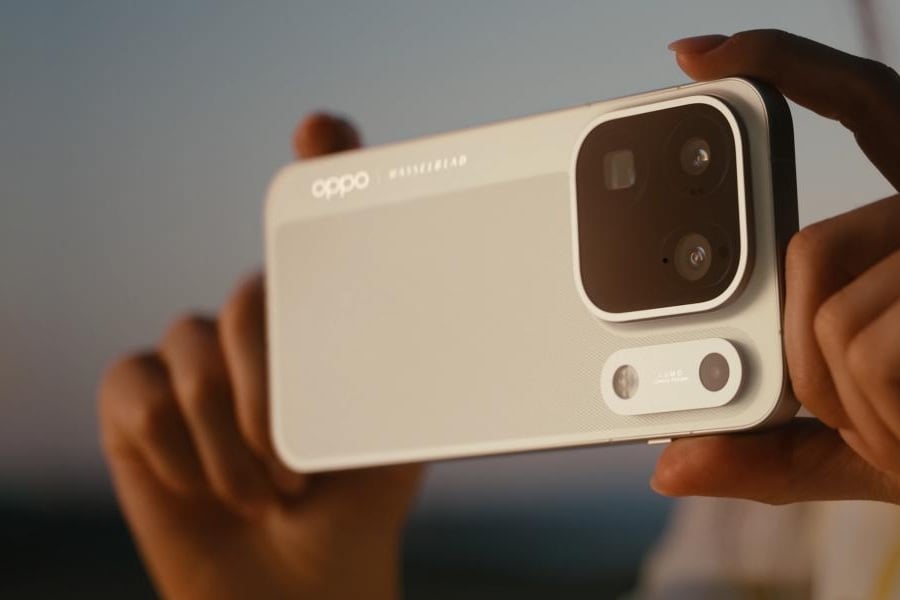
The Find X10 Pro Max retains the squari-cle camera module of the previous line, now with a separate pill module on the right for LED light. The back panel also has a Hasselblad imprint, styled after the material sections you’d find on classic film cameras. You get a mix of a smooth metal finish and a woven texture across the back. 

Oppo offers the phone in three colors: Moon White, Warm Orange, and Light Titanium, matching what we saw in the official images Oppo published ahead of launch.

The phone is rated IP68, IP69, and IP66 for dust and water resistance, and it carries a five-star drop and impact rating from SGS Switzerland. On the front, you get a new 6.78-inch eye-protection screen with a 1-nit minimum brightness and 95% coverage of the BT.2020 color gamut. Of course, it’s an LTPO OLED panel with 3600 nits peak brightness and 3840Hz PWM Dimming. A five-channel ambient light sensor tracks changes in color temperature around you, which Oppo says keeps brightness and color accurate as lighting conditions shift.

🔌 You’ll NeedThe curved LTPO OLED front is the most exposed part of the phone — a tempered glass protector guards it from day one. Check 9H tempered glass screen protector price on Amazon →

Camera

The headline feature is the triple 200MP setup, something we tracked through several leaks, including the detailed camera samples Oppo shared just days before launch. All three rear cameras use 200MP Hasselblad-branded sensors:

  • Ultra-wide: 1/1.56-inch sensor, f/2.2 aperture, 124-degree field of view, and a claimed 202% increase in light intake over the outgoing model.
  • Main camera: 17EV of single-frame dynamic range and an f/1.5 aperture.
  • Telephoto: The highest pixel count and largest aperture Oppo has put on a Pro Max telephoto lens, with CIPA 7.5 stabilization.
Oppo Find X10 Pro Max Camera Features

Oppo’s new second-generation Danxia color reproduction lens works alongside what it calls the LUMO native light and shadow engine to keep colors accurate across different lighting setups rather than just under ideal conditions.

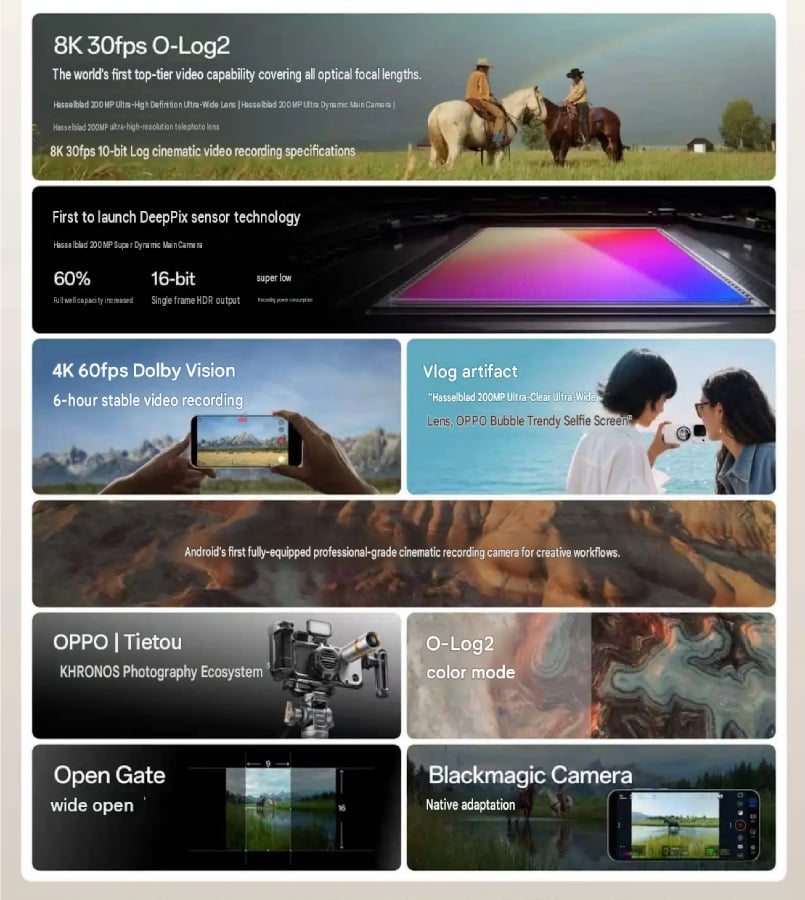
As for videos, the Oppo Find X10 Pro Max records 8K Log video across all three lenses and 4K 120fps Dolby Vision at any focal length, with horizon stabilization to keep handheld footage steady.

Oppo also says the new DeepPix sensor increases full-well capacity by 60%; that means each pixel can hold significantly more charge before saturating. In practice, that translates to better retention of detail in high-contrast scenes. The brand has also partnered with TILTA and Blackmagic Camera to support native Dolby Vision, O-Log2, and Open Gate recording. 

Performance

Inside, you get the Dimensity 9600 Pro, MediaTek’s 2nm flagship chip, running alongside ColorOS 17 — all about the new skin here. Oppo says its new Tide Engine scheduling cuts the interval between 200MP photo captures down to 0.7 seconds, ten times faster than before. That should matter if you shoot in burst mode often. 

MediaTek Dimensity 9600 Pro

The chip also brings a redesigned NPU setup that Oppo built jointly with MediaTek, aimed at running AI features like ColorOS 17’s Xiao Bu Space, a tool that pulls together scattered information like flight bookings and schedules without you having to dig through separate apps for it.

For connectivity, the phone has the new ShanHai communication system, which Oppo claims supports carrier signals in more than 230 countries and regions, with three-network standby, so switching SIM cards abroad shouldn’t be necessary.

Price and availability

The Oppo Find X10 Pro Max ships in four configurations in China:

  • 12GB + 256GB: 6,799 yuan (~$1,006)
  • 12GB + 512GB: 7,499 yuan (~$1,110)
  • 16GB + 512GB: 7,999 yuan (~$1,184)
  • 16GB + 1TB: 8,999 yuan (~$1,332)

Oppo has not announced pricing or availability outside China yet. We’ll update this piece once Oppo shares a global rollout timeline.

For daily updates, please visit our News Section.

Stay ahead in tech! Join our Telegram community and sign up for our daily newsletter of top stories!

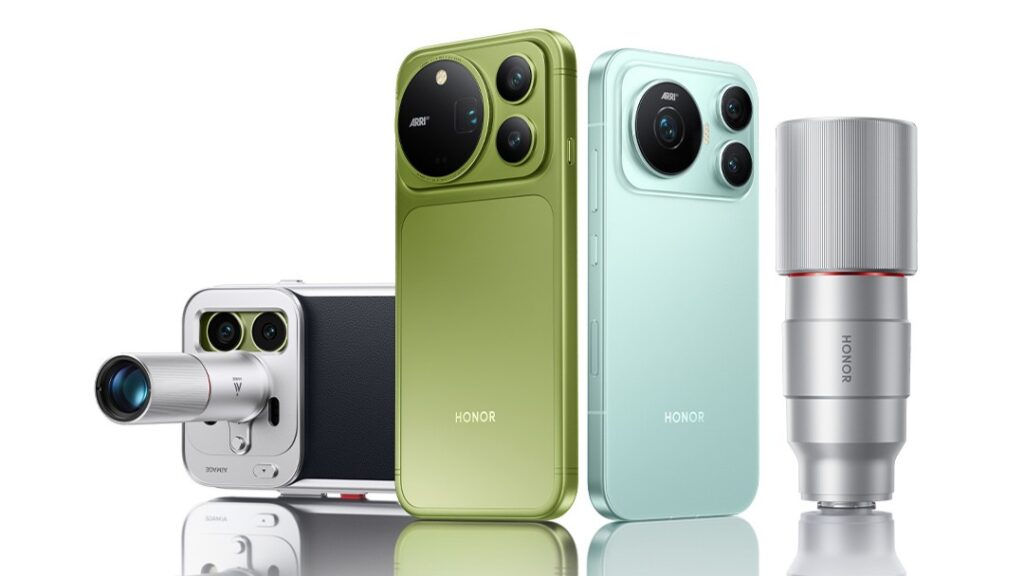
Honor Magic 9 high-res camera samples teased ahead of September 28 launch

The Honor Magic 9 series is scheduled to launch on September 28 with a very different design from its predecessors. As expected, Honor has started teasing the series, and this article is about the camera samples from the standard Honor Magic 9.

Just like the camera module design, the optics also got a major refresh. Unlike last year’s Honor Magic 8, which came with a 50MP main sensor, a 50MP ultrawide, and a 64MP 3x telephoto, this year’s standard Honor Magic 9 comes with a 200MP main sensor with a 1/1.4″ sensor size, compared to 1/1.56″ last year. So, it’s a little bit larger. Then, the periscope telephoto also has a 200MP resolution and a 1/1.56″ sensor size, compared to last year’s telephoto. The ultrawide camera retains the 50MP resolution of its predecessor.

The company shared quite a few high-resolution samples taken in both bright and low-light conditions, with key information such as focal length, shutter speed and ISO included, giving us an idea of the capabilities of those two 200-megapixel cameras.

Looking at the low-light samples first, we see eye-pleasing colors, good exposure, and dynamic range, with no obvious artifacts such as noise despite the lack of proper lighting. All three samples were taken at an 80mm focal length, meaning they’re from the 200MP 3.5x telephoto camera. Reports say this is a Samsung sensor, and the newly launched ISOCELL HP5 matches the 1/1.56-inch sensor size.

Daylight samples from that telephoto look even better, with plenty of detail, nice colors, and good dynamic range.

The daylight samples captured with the main camera show 50mm and 45mm focal lengths, which translates to roughly a 2x crop. Surprisingly, one of the three samples from the main camera shows some visible artifacts on the face upon closer inspection, which could be the result of imperfect noise removal, while another sample looks a bit softer.

We will be able to share more about the camera once we get access to the device and test its new ARRI imaging system ourselves.

Don’t miss a thing! Join our Telegram community for instant updates and grab our free daily newsletter for the best tech stories!

For more daily updates, please visit our News Section.

(Source: Honor on Weibo)

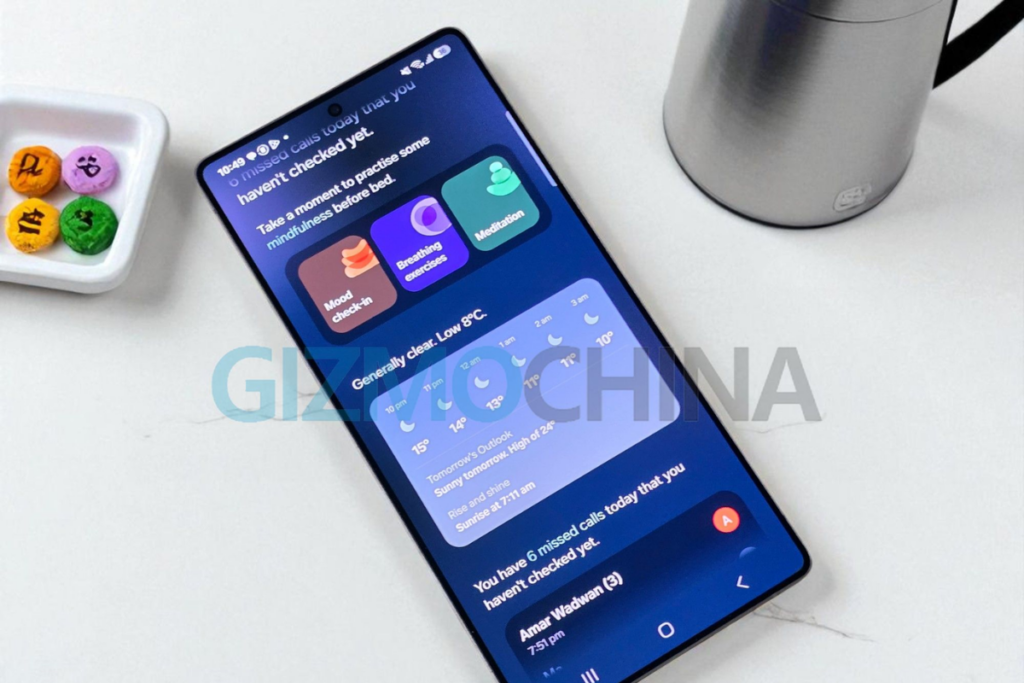
Samsung is struggling with a wider One UI 9 rollout

Samsung One UI 9 rollout delay
[Update as on Sep 23, 2026] Samsung has finally started rolling out One UI 9 to the Galaxy S26 series outside Korea. It’s the US that’s now getting the update, with other regions expected to join the party very shortly.

Origin story as follows:

It took Samsung four months of testing and seven beta iterations to finally begin rolling out the stable One UI 9 to the Galaxy S26 series. The rollout went live on September 16, and as expected, it was initially limited to Samsung’s home market, South Korea. But the company is struggling with a wider rollout.

Usually, Samsung expands the update to other regions within hours of the Korean release, but it’s been nearly a week, and the One UI 9 update hasn’t been released for a single device outside Korea.

Samsung’s Thailand newsroom portal promised to release the update to the Galaxy S26 phones on September 21st, but it hasn’t arrived yet. What we now have is a new date – September 28th.

Unfortunately, it turns out that Samsung isn’t confident with a specific release date. The company soon updated the newsroom post to include that the Galaxy S26 series will receive the update in September, with no specific date mentioned.

Previously, Samsung’s Thailand newsroom post promised to bring One UI 9 to the Galaxy Z Fold 7 and Galaxy Z Flip 7 on September 28th. The revised page says the update will be released to these Galaxy devices in September, while the Galaxy S23 FE’s update timeline has been postponed from “October” to “later this year.”

Previously statement: “In Thailand, the update will first be available on the Galaxy S26 Series on September 21st, followed by the Galaxy S25 Series and Galaxy Z7 Series on September 28th. The update will continue to roll out to the Galaxy S23 FE by October of this year.“

New statment: “In Thailand, the update will first be available on the Galaxy S26 Series, Galaxy S25 Series, and Galaxy Z7 Series within September, with further updates to the Galaxy S23 FE later this year.”

From Samsung’s Thailand Newsroom post

The One UI 9 rollout dates weren’t looking promising from the beginning, as we hinted in a previous post. Samsung published these One UI 9 rollout dates only on its Thailand portal, while other newsroom posts were completely silent about them. And now we’re seeing the dates being pushed further. Still, other newsroom portals haven’t published anything about the update rollout, which could mean further changes in plans are still possible.

These last-minute changes are making users furious, given that the Galaxy S26 series has already undergone a lengthy four-month beta testing period, which is more than enough time to find and fix bugs. What’s worse? Samsung isn’t communicating clearly on the matter, which is making some people on Reddit more disappointed than the actual rollout delays.

Anyways, we’ll continue to track the latest developments on the topic and post them in our Samsung section. You can visit the page regularly for the latest details.

Also, don’t forget to join our Telegram channel to receive instant alerts as soon as we post new stories.

MediaTek launches 3nm-based Dimensity CX C10 Max for thin & light Googlebook laptops

MediaTek is branching out. Today the company introduced its first chip built specifically for a new kind of AI-focused laptop, kicking off a dedicated series aimed at thin, capable machines that mix mobile-style efficiency with traditional laptop power.

The chip is called the Dimensity CX C10 Max, the first in MediaTek’s new Dimensity CX “Computing Experience” lineup. It’s made on TSMC’s 3nm process and is designed for Googlebook devices, Google’s upcoming flagship laptops that blend Android and ChromeOS with deep Gemini AI integration.

These machines will come from partners like Acer, ASUS, Dell, HP, and Lenovo, and they’re promising up to 10 years of software support, solid on-device AI features, and smooth Android app compatibility.

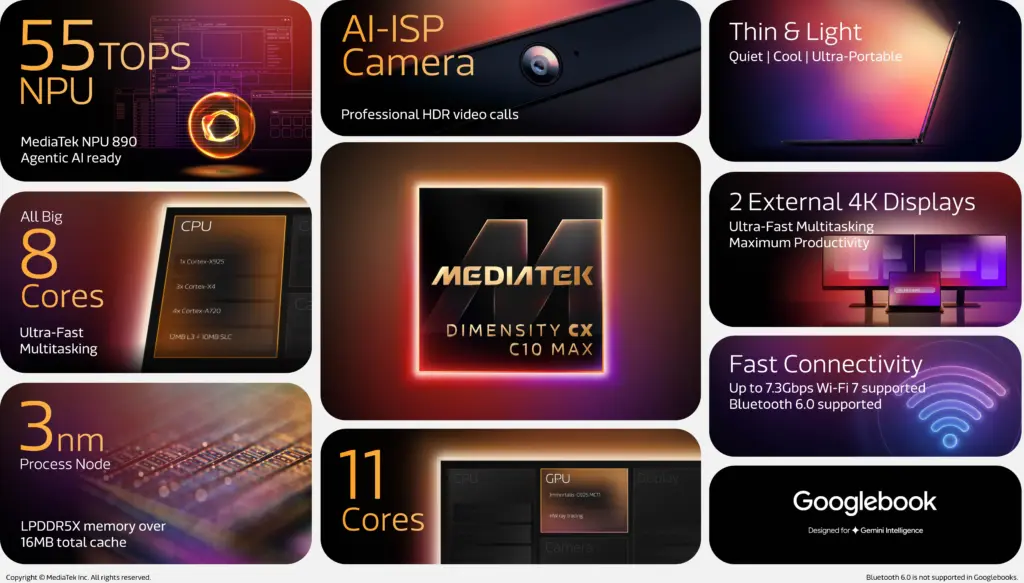
Under the hood, the Dimensity CX C10 Max uses an eight-core “all-big” CPU setup: one Cortex-X925, three Cortex-X4s, and four Cortex-A720s, plus 12MB of L3 cache and 10MB of system-level cache. Graphics come from an 11-core Immortalis-G925 GPU. For AI work, it packs MediaTek’s eighth-generation NPU that can hit up to 55 TOPS, so features like contextual help and local file summarization can run on-device without constantly hitting the cloud.

It also includes the Imagiq 1090 image signal processor, which supports cameras up to 32MP and is tuned for good video calls, HDR, and smooth zoom. Connectivity covers 7.3Gbps Wi-Fi 7 and Bluetooth 6.0. Memory goes up to LPDDR5X-9600, storage is UFS 4.0, and the chip supports three PCIe Gen4 lanes, one full-featured USB 5Gbps port, two eUSB2v2 ports, and three 4K video outputs for multi-monitor setups.

MediaTek is pitching this as a power-efficient option that should help manufacturers build thinner, lighter, and possibly even fanless laptops with strong all-day battery life. It’s already lined up to power an upcoming Lenovo Googlebook and will sit alongside Intel and Qualcomm chips in the first wave of these devices.

Don’t miss a thing! Join our Telegram community for instant updates and grab our free daily newsletter for the best tech stories!

For more daily updates, please visit our News Section.

(Source: MediaTek)

Xiaomi launches smart countertop dishwasher with AI dirt sensing, 80°C drying & 10-day UV storage

Xiaomi has launched a new compact dishwasher in China, called the Mijia Smart Countertop Dishwasher 5-Set. The appliance is priced at 1,998 yuan ($298) on JD.com and is designed for smaller kitchens where installing a conventional built-in dishwasher may not be practical.

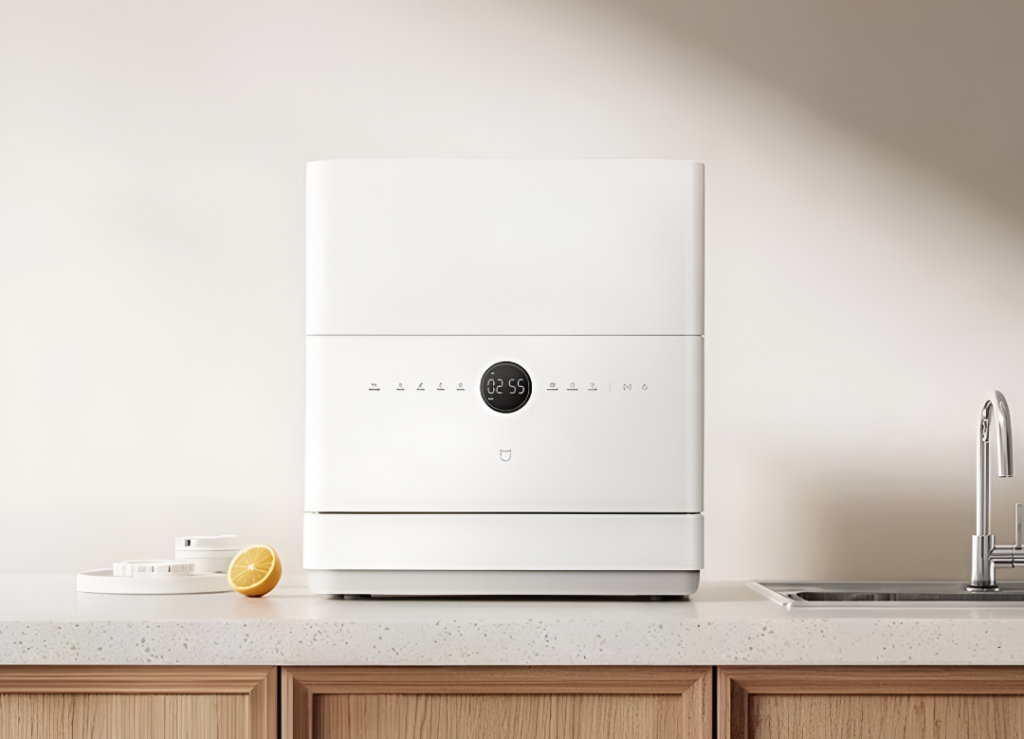
Xiaomi Mijia Countertop Dishwasher 5-Set

Mijia Countertop Dishwasher 5-Set Specifications

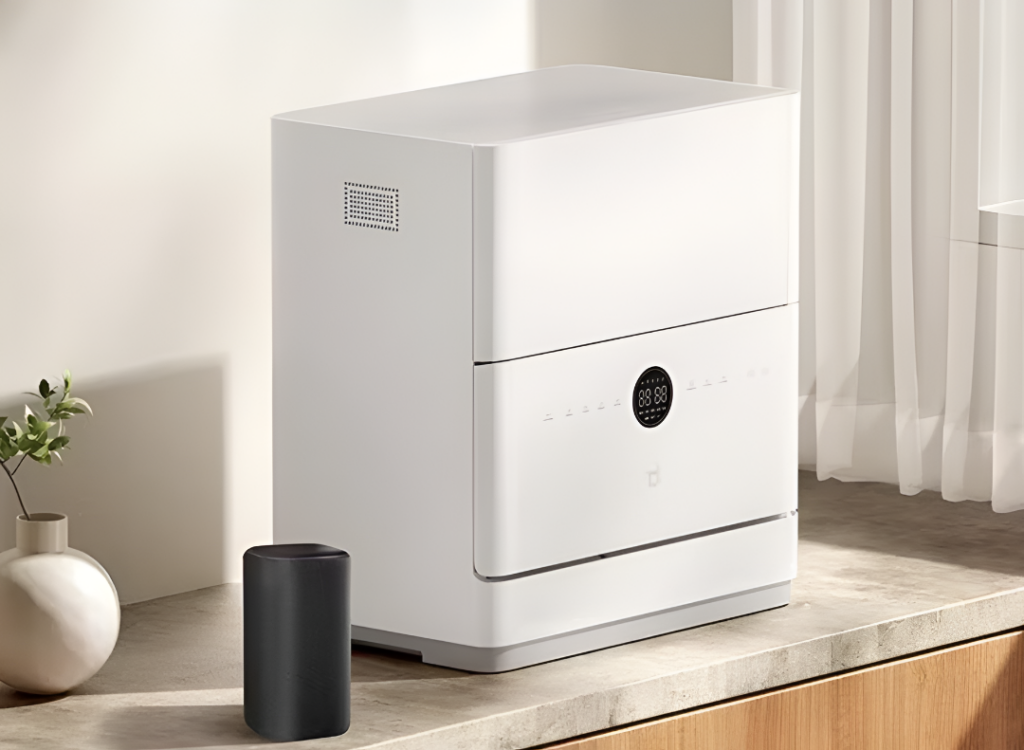
The unit is built specifically for countertop use, measuring 550 x 598 x 350mm and weighing 18.5kg. To keep the footprint manageable, Xiaomi opted for a magnetic folding door that limits the total depth to 600mm when fully opened.

Despite the relatively slim profile, it has a five-place setting capacity, which the company says is adequate for households of two to five people. The interior space can accommodate standard tableware alongside cookware, including frying pans up to 30cm in diameter and 24cm soup pots.

Xiaomi Mijia Countertop Dishwasher 5-Set

For washing, the dishwasher features a multi-directional spray system with four sets of spray arms and 34 water jets. The system delivers an outlet pressure of up to 30kPa to clean dishes from multiple angles. It also comes with an optical water-quality sensor that works with AI algorithms to detect the level of dirt within 10 seconds.

Based on the results, the dishwasher can automatically select a suitable washing program from its eight available modes. It also features an intelligent water-softening system that helps reduce limescale buildup and residue on dishes.

For sanitization, the dishwasher uses a high-temperature wash cycle that reaches up to 75°C. It also comes with a PTC hot-air drying system that delivers air at temperatures of up to 80°C to keep dishes dry after washing.

Xiaomi Mijia Countertop Dishwasher 5-Set

Xiaomi positions the dishwasher as a five-in-one appliance that can also double as a storage cabinet for clean dishes. It features a UV storage mode with active air circulation that helps keep tableware dry and fresh for up to 240 hours (10 days). The storage duration can be adjusted in 24-hour increments through the Mijia app.

The dishwasher meets China’s updated Level 1 water-efficiency standard. In Eco Wash mode, a single cycle uses 8 liters of water and 0.282kWh of electricity. As with most Xiaomi appliances, it integrates into the company’s smart home ecosystem. It supports HyperOS Connect, enabling remote control, cycle scheduling, and progress monitoring via the Mijia app, along with voice commands through compatible Xiaomi smart speakers.

In related news, Xiaomi has recently launched a compact 271L three-door refrigerator with an adjustable middle zone, alongside the Mijia Sterilizing Foot Bath 2 featuring a 99.9% sterilization rate and a three-section massage system.

For more daily updates, please visit our News Section.

Stay ahead in tech! Join our Telegram community and sign up for our daily newsletter of top stories!

(JD)

Red Magic 12 Pro+ teaser reveals useful redesign: rounded edges, 0.96mm bezel

Red Magic has started teasing its next high-end gaming phone, the Red Magic 12 Pro+. They’re positioning the new model as a noticeable step forward in comfort and refinement, with the official reveal confirmed for next month.

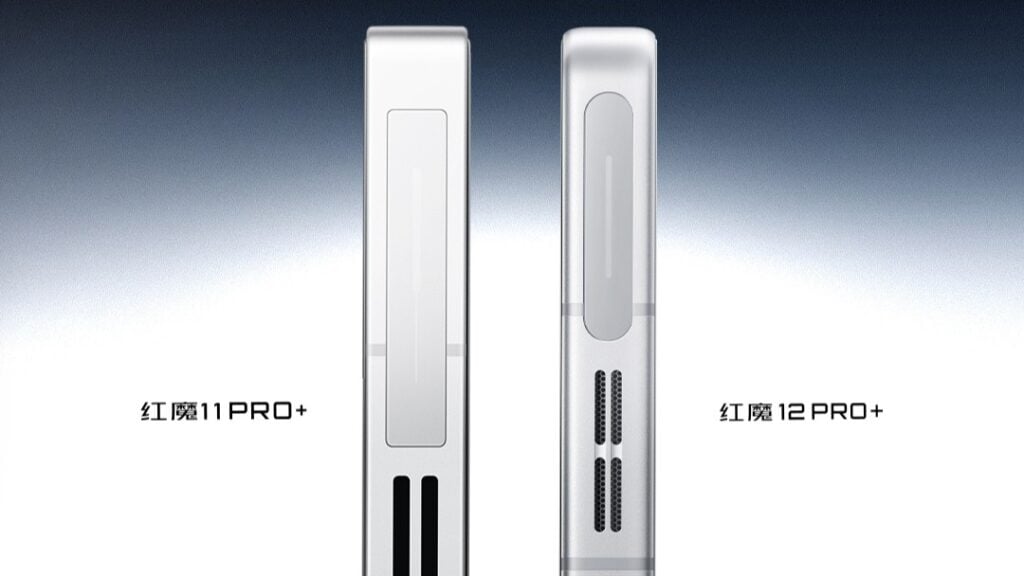
The company calls it “the best-feeling Red Magic flagship to date,” saying it’s lighter, thinner, narrower, and more rounded than what came before. The early images show tighter screen bezels and softer, rounded edges. The bezel has been trimmed from 1.25 mm down to 0.96 mm, which should make the display feel a bit more immersive.

Jiang Chao, General Manager of Red Magic Gaming Phones, summed up the intent pretty clearly: this is a phone built for gamers. It can handle heavy loads, the cooling is meant for long sessions, it’s lighter and thinner in the hand, the design is distinctive, the front is a pure under-display screen with no holes, and the day-to-day software experience is meant to feel smooth. The under-display camera remains a core part of that clean-front approach.

Full specs aren’t out yet, but the heavy emphasis on ergonomics seems aimed at feedback from earlier models that leaned hard into performance and cooling while feeling a bit less comfortable for everyday use. The thinner, lighter body and rounded edges are meant to make long gaming sessions (and regular use) more pleasant without giving up sustained power and heat management.
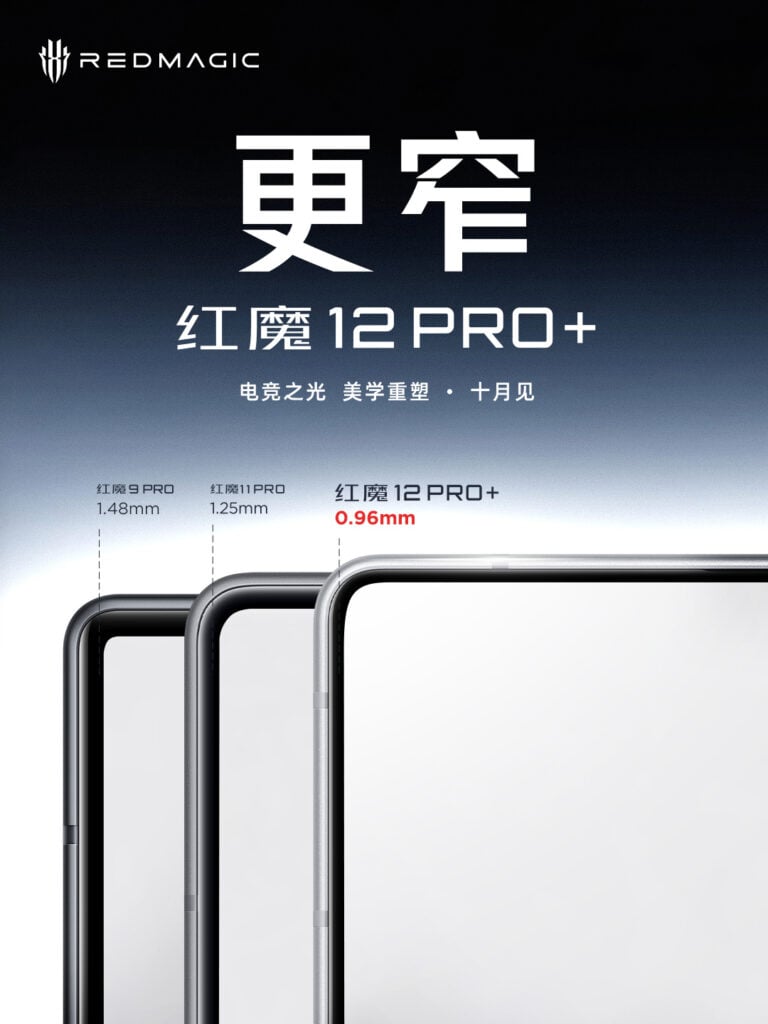
With an October launch, the 12 Pro+ is set to be one of the earlier phones showing off the next wave of gaming-focused hardware. Exact release date, full specs, pricing, and colors should come closer to the official launch. For now, the teaser makes it clear Red Magic is trying to balance its usual performance-first approach with more attention to how the phone actually feels day to day.

Don’t miss a thing! Join our Telegram community for instant updates and grab our free daily newsletter for the best tech stories!

For more daily updates, please visit our News Section.

(Source: Red Magic Gaming Phone on Weibo)

Xiaomi launches Mijia Instant Hot Water Dispenser Pro with three-second heating, 2.8L tank, four temperature settings

Xiaomi has added another practical gadget to its Mijia lineup: the Mijia Instant Hot Water Dispenser Pro. It’s built for the small daily tasks, making tea or coffee. It’s heading to Chinese shelves soon at a pretty accessible price.

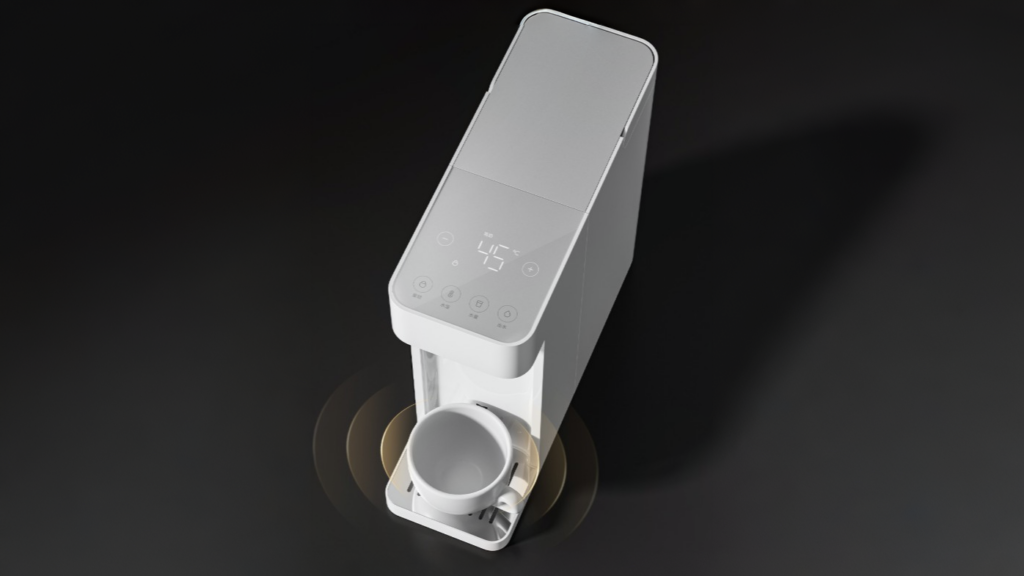
The dispenser is priced at 399 yuan (~$60) and goes on sale on September 28. The parts that touch the water (tank liner, heating element, and main water pathways) are all made from food-grade stainless steel. It can start pouring hot water in about three seconds, and under normal conditions the water inside the heating element hits a full 100°C, so you’re getting actual boiling water rather than just “hot.”

There are four preset temperatures by default:

  • 25°C for room-temp water
  • 45°C for milk or formula
  • 75°C for tea
  • 100°C for boiling

You can also fine-tune the temperature if you want something more specific. The removable 2.8L tank can be filled by hand or hooked up with a flexible hose to bottled water or a purified water source. Xiaomi recommends using pure or filtered drinking water only.

A few nice everyday touches: the LED display wakes up automatically when you put a cup on the base, and it has an intelligent self-cleaning mode that flushes residual water from the pipes and shows the progress on screen to help avoid secondary contamination. Specs-wise, the model (MSYSJ04MH) runs on 220V, pulls 2100W, weighs about 2.45 kg, and measures a compact 312 × 106 × 280 mm. In the box you get the main unit, water tank, drip tray, and manual.

Between the near-instant heating, useful temperature presets, stainless-steel build, and self-cleaning feature, this looks like a straightforward upgrade for anyone who wants hot water quickly on demand.

Don’t miss a thing! Join our Telegram community for instant updates and grab our free daily newsletter for the best tech stories!

For more daily updates, please visit our News Section.

(Source: Xiaomi Youpin)

OnePlus surprises with a Unisoc chip in its new budget phone

OnePlus just launched the N6 Lite in India, and it’s cheaper than everything else in the N-series lineup. But the price tag isn’t the interesting part; it’s on the inside. The N6 Lite 4G is powered by a Unisoc T7250 chipset, something that has never shown up in a OnePlus phone before.

Here’s a bit of context. OnePlus has been making phones since 2014, and in that entire run, it’s preferred Qualcomm for its flagships and, starting with the Nord 2 5G in 2021, MediaTek for its mid-rangers. Unisoc, the chip maker best known for powering budget phones from ZTE and other Chinese OEMs, was never in the mix. The N6 Lite breaks that streak.

And it’s not hard to figure out why. OnePlus has been sharing R&D, supply chain, and software resources with its parent company Oppo under the BBK Electronics umbrella, and that alignment shows up directly in this phone’s silicon. 

OnePlus N6 Lite Launch Specs Price
OnePlus Nord N6 Lite 4G

Back in April, Oppo’s global A6c 4G switched from the Snapdragon 685 it shipped with in China to a Unisoc T7250. It also landed with almost the exact spec sheet you’re now seeing on the N6 Lite: 6.75-inch HD+ LCD at 120Hz, 900 nits HBM, 7,000mAh battery, 15W charging, and IP64 durability. 

That is to say, the OnePlus N6 Lite 4G is essentially a rebadge, and the shared chipset shows how tightly OnePlus and Oppo are running their entry-level playbooks together these days.

OnePlus N6 Lite 4G Specifications 

As for what you’re actually getting, the N6 Lite runs the T7250 alongside 4GB of RAM (with LPDDR4X) and 64GB of UFS 2.2 storage. The display is a 6.75-inch HD+ LCD panel with a 120Hz refresh rate and 900 nits peak brightness in HBM mode. 

You get a 13MP OV13B10 sensor on the back and a 5MP shooter up front for photos and video duties. And the phone is powered by a 7,000mAh cell with 15W wired charging.

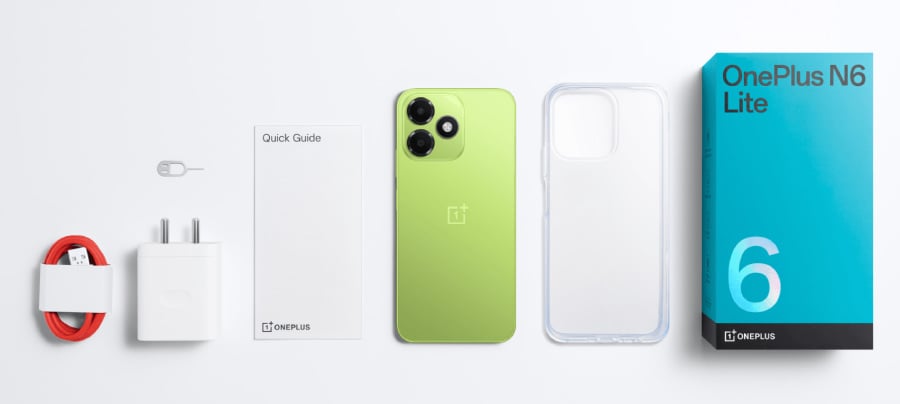
OnePlus N6 Lite 4G Box Contents

You still get a few things OnePlus has been quietly bringing back into its cheaper phones, like a 3.5mm headphone jack and a side-mounted fingerprint reader. There’s no NFC or stereo speakers here, and connectivity tops out at Wi-Fi 5 and Bluetooth 5.2. 

The phone runs Android 16 with OxygenOS 16 on top and carries an IP64 rating, along with the MIL-STD-810H durability testing OnePlus has applied across its N-series so far.

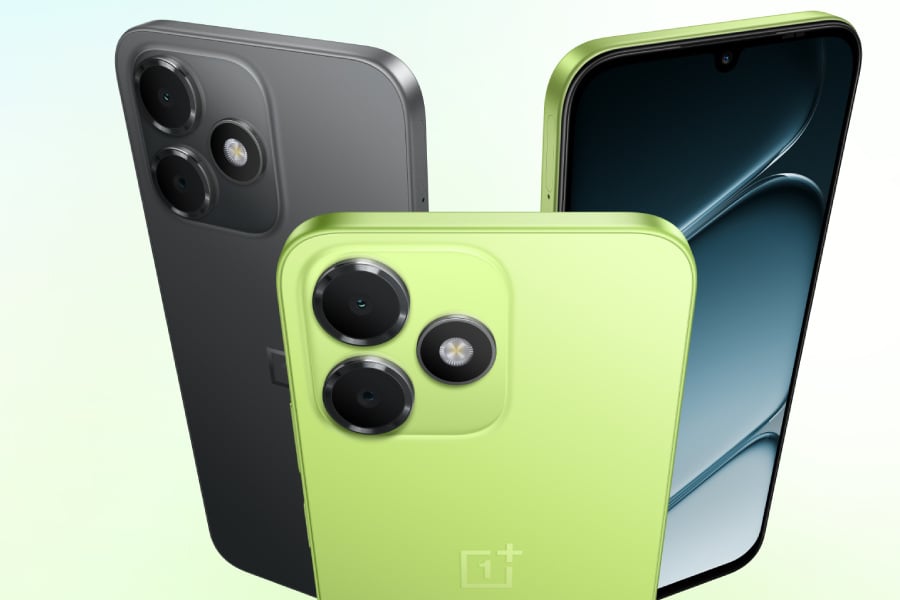
On pricing, the N6 Lite starts at Rs 16,999 for the 4GB+64GB configuration. Colors are Midnight Hype and Neo Green.

For daily updates, please visit our News Section.

Stay ahead in tech! Join our Telegram community and sign up for our daily newsletter of top stories!

(Source)

🔌 You’ll NeedThe 7,000mAh battery charges at just 15W, so a fast wall adapter helps top it up quicker. Check OnePlus 15W charger price on Amazon →

Here’s when the Vivo X500 Ultra will launch

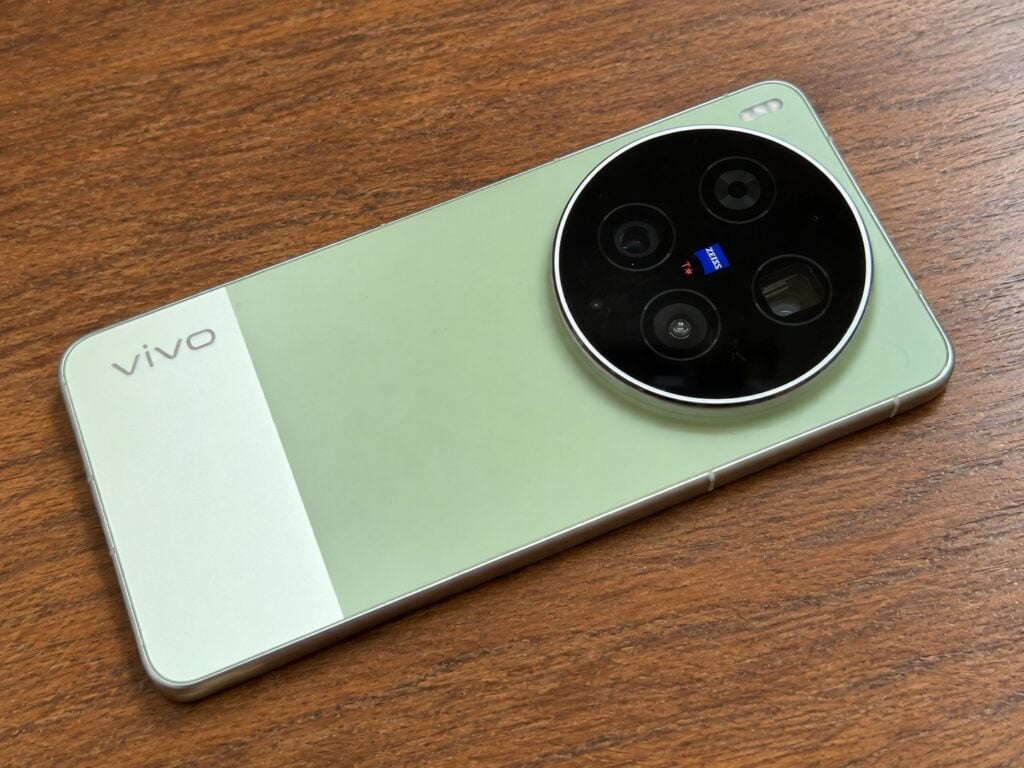
Yesterday, Vivo held a major launch event in China to unveil the Vivo X500, X500 Pro, and X500 Pro Max. While reports suggest the brand could add the X500e, X500 FE, and X500 Ultra to the lineup, only the latter has received an official launch timeframe so far. Vivo has now revealed when we can expect the X500 Ultra to arrive.

Vivo X500 Ultra launch timeframe

Vivo X300 Ultra
Vivo X300 Ultra

Huang Tao, Vice President and Vice President of Product at Vivo, revealed during the post-conference session following the Vivo X500 series launch that the company plans to launch the Vivo X500 Ultra by March or April next year.

There is currently no official confirmation regarding the X500e or X500 FE. The X500 Ultra, meanwhile, is expected to sit above the existing X500 series models and serve as the lineup’s most camera-focused offering.

Vivo X500 Ultra: What to expect?

Like the X300 Ultra, the Vivo X500 Ultra is expected to focus heavily on photography and content creation. A July leak from tipster Digital Chat Station claimed that Vivo was testing three different 200-megapixel telephoto sensors for the phone, with 1/1.12-inch, 1/1.3-inch, and 1/1.4-inch options.

The largest 1/1.12-inch sensor would represent a more aggressive approach to telephoto photography, while the 1/1.3-inch and 1/1.4-inch sensors were reportedly being considered as more balanced options. It remains unclear which sensor Vivo will ultimately choose for the retail device.

The flagship is also said to be testing two different 35mm main camera configurations. One option combines a 50-megapixel 1/1.28-inch LOFIC sensor with optical image stabilization and a micro-gimbal lens system offering a wide stabilization angle, while the other uses a 200-megapixel 1/1.12-inch LOFIC sensor.

The existing X500 series models are powered by Dimensity 9600-series chipsets, but the Ultra model could take a different route. It is rumored to feature Qualcomm’s Snapdragon 8 Elite Gen 6 Pro, potentially giving it a notable performance advantage over the other models in the lineup.

While Vivo has now confirmed the X500 Ultra’s China launch timeframe, there is currently no clarity on whether the flagship will also be released globally. More details should emerge as the launch window approaches.

For daily updates, please visit our News Section.

Stay ahead in tech! Join our Telegram community and sign up for our daily newsletter of top stories!

(via)

Xiaomi launches large 425L Mijia refrigerator with 14 compartments and flexible temperature zone

Xiaomi has added another refrigerator to its Mijia home appliance lineup. Called the Mijia Refrigerator 425L, it is now available to order on Xiaomi Youpin in China for 2,699 yuan (around $380).

The refrigerator offers 425 liters of storage spread across 14 compartments. This includes 215L of refrigeration space, 155L for freezing, and a 55L variable-temperature zone that can be adjusted based on what you want to store.

Xiaomi Mijia Refrigerator 425L Specs Launch Price

The flexible section is one of the refrigerator’s main features. In Dry Goods mode, it can be used to store items such as cordyceps, bird’s nest, supplements, and cosmetics. Baby & Maternity mode keeps the temperature at 4°C for storing breast milk. You can also set the compartment to 0°C to keep fish fresh for several extra days without freezing it. For longer-term storage, the freezer can reach temperatures as low as -30°C.

Xiaomi has also focused on making the refrigerator easier to fit into modern kitchens. It measures 59.7cm in depth, 70.2cm in width, and 185cm in height, taking up around 0.42 square meters of floor space.

The refrigerator is designed to sit close to kitchen cabinets, with just a 4mm gap on the sides. Despite the tight fit, the doors can still open up to 90° when the refrigerator is placed against a wall. The heat is released from the bottom instead of the rear, which helps with the flush-fitting design.

Ion purification and antibacterial protection

For food storage, the refrigerator uses a full-area ion purification system combined with an Ag+ silver ion module. Xiaomi claims the system can provide a 99.99% antibacterial effect against E. coli and Staphylococcus aureus. The company also says the system can prevent mold growth.

Xiaomi Mijia 425L Refrigerator Features

The exterior uses a black feather rock metal panel, which Xiaomi has previously used on Mijia refrigerators, including the 536L model launched a few years ago. The surface has a soft finish designed to resist fingerprints and is also magnetic, allowing users to attach magnets directly to the refrigerator.

The Mijia Refrigerator 425L has China’s first-class energy efficiency rating and uses an inverter compressor. Xiaomi says it consumes around 0.82 kWh of electricity over 24 hours while producing as little as 34dB of noise.

Smart features are handled through Xiaomi’s Surge Smart Connect system and the Xiaomi Home app. Users can manage the refrigerator remotely, track stored food, and control it using Xiao Ai voice commands.

For daily updates, please visit our News Section.

Stay ahead in tech! Join our Telegram community and sign up for our daily newsletter of top stories!

(Source)

Vivo V80 launch date, key specifications officially confirmed

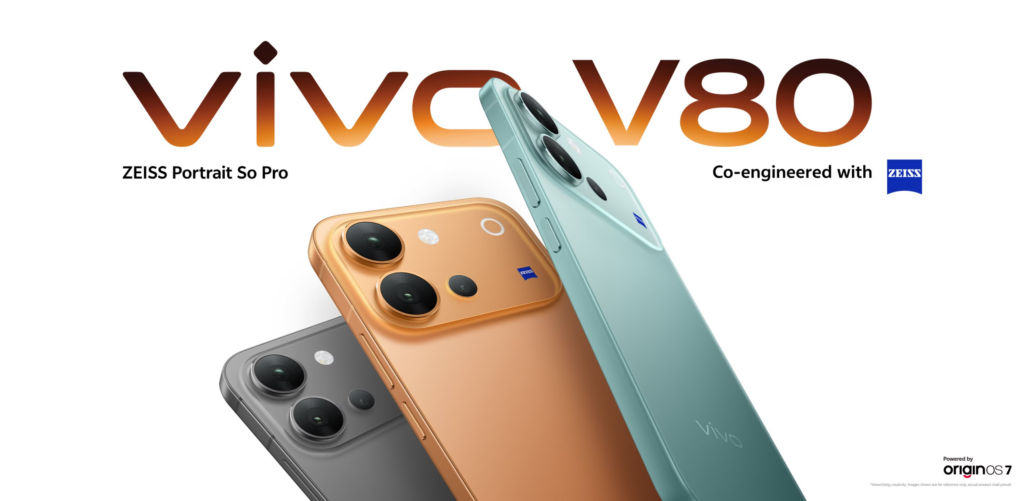
Vivo has been teasing the arrival of the Vivo V80 in India for the past few days, and it has finally confirmed the launch date. The phone is set to arrive on October 6, bringing a camera-focused experience and several notable upgrades over its predecessor. Here is everything Vivo has revealed about the upcoming V-series smartphone so far.

Vivo V80 key specifications revealed

Vivo V80 display specs

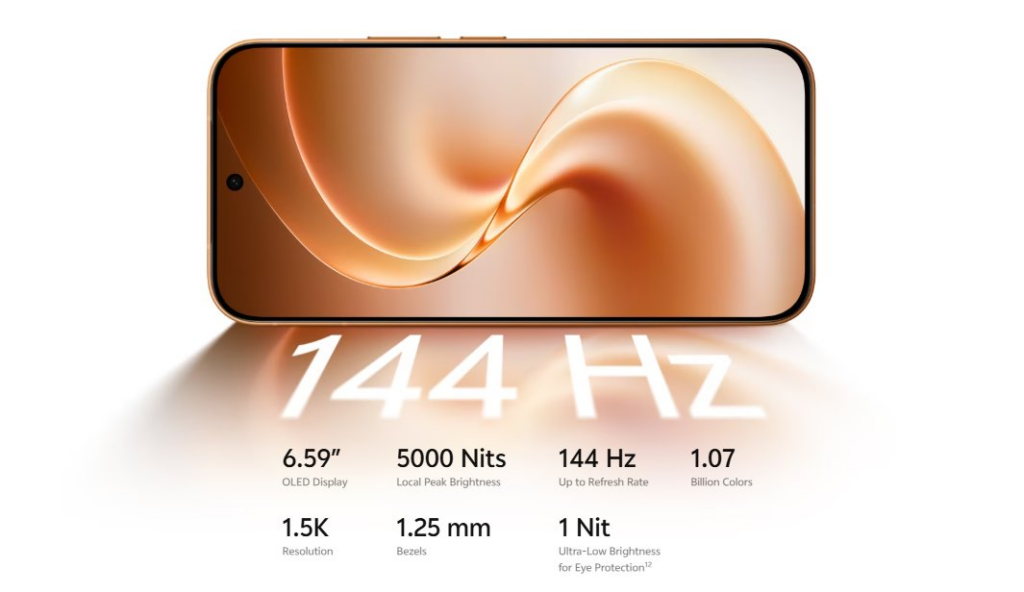
The Vivo V80 features a 6.59-inch 1.5K OLED display with a 144Hz refresh rate, 5,000 nits of local peak brightness, support for 1.07 billion colors, and a minimum brightness of just 1 nit. The display is designed to offer a smooth experience while maintaining visibility across different lighting conditions.

Vivo V80 cameras

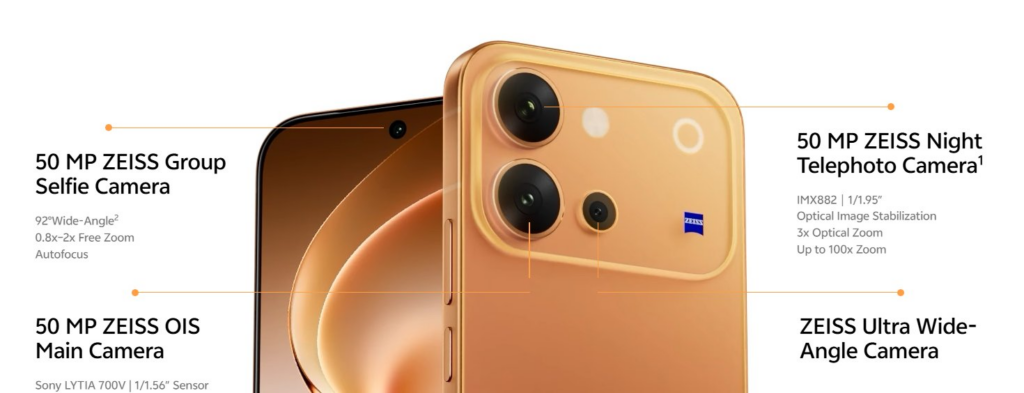
Photography continues to remain a major focus, with the Vivo V80 featuring a 50-megapixel Sony LYT-700V primary camera with OIS, an ultra-wide ZEISS lens, and a 50-megapixel Sony IMX8822 periscope telephoto camera and a 50-megapixel ZEISS Group Selfie camera with a 92-degree FOV and autofocus support. The phone supports OIS, 4K video recording at 60fps, and ZEISS 85mm and 100mm portrait modes. It will also allow users to record 4K cinematic videos.

Vivo V80 battery

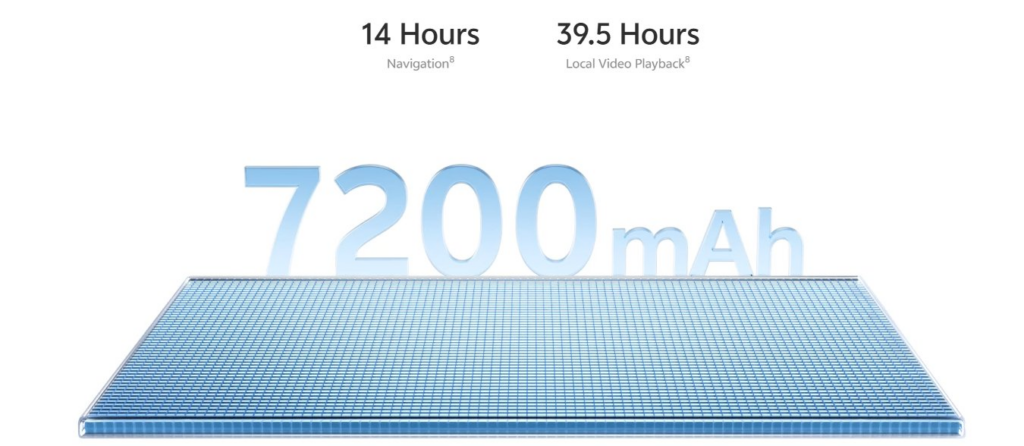
The Vivo V80 houses a 7,200mAh battery, making it the largest ever on a V-series phone. It supports 90W FlashCharge, while Vivo claims up to 14 hours of navigation and up to 39.5 hours of local video playback.

Vivo V80 color options

The Vivo V80 will run OriginOS 7 and comes with features including Pet Pals, StickIt, Wiggle Theme, and Snap Notes. Vivo is also promising long-term support with up to six years of security updates. The phone will be offered in Sunrise Anthem, Horizon Blue, and Stellar Black color options.

For daily updates, please visit our News Section.

Stay ahead in tech! Join our Telegram community and sign up for our daily newsletter of top stories!

Huawei Mate 90 Series: Everything We Know Before Launch

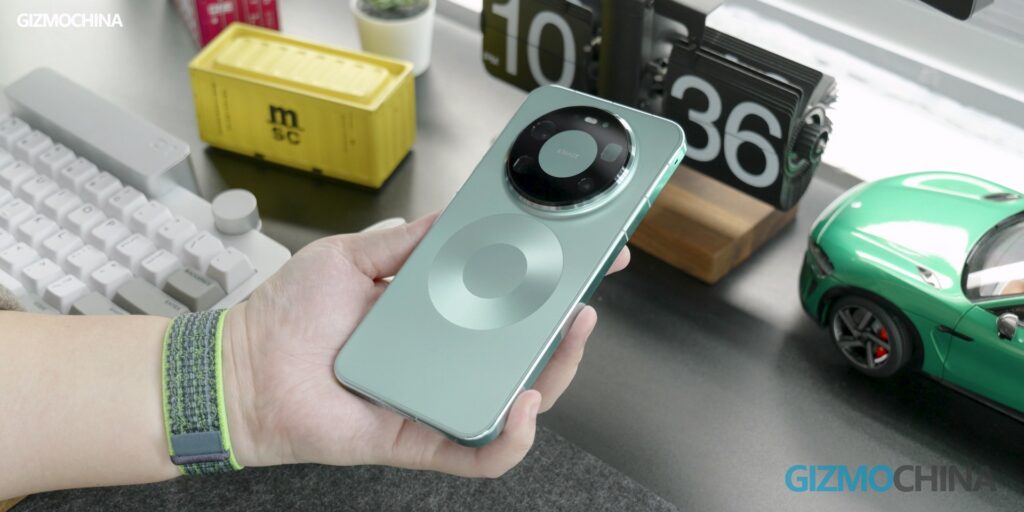
Huawei is getting ready for its biggest smartphone launch of 2026. The Mate 90 series is likely to launch in China in the last week of September, around two months earlier than the Mate 80 and Mate 70 series. This puts Huawei’s new flagship lineup in the same launch month as Apple’s latest iPhones, and most of us probably know why. 

Huawei Mate 80

The Mate 90 series is expected to include four models: the standard Mate 90, Mate 90 Pro, Mate 90 Pro Max, and Mate 90 RS Ultimate Design. Huawei has not confirmed the full lineup yet, but several tipsters have shared similar details, giving us a good idea of what to expect.

1. The chip: Kirin 9050 series and LogicFolding

Huawei Kirin 9050 Pro

The biggest change could be inside the phone. Huawei is expected to use the new Kirin 9050 chip based on a technology called LogicFolding. It is part of a wider design approach Huawei refers to as the Tau scaling law.

Instead of relying only on traditional transistor shrinking, the technology stacks logic circuits vertically. This allows Huawei to fit more computing power into the same space without depending on the most advanced chip-making processes.

Huawei has already shared some details about the technology. Compared with last year’s Kirin 9030 Pro, transistor density is said to increase by 53.5%, reaching around 238 million transistors per square millimeter. The chip area is also reportedly about one-third smaller, while power consumption at the same performance level drops by more than 40%.

The different Mate 90 models are expected to use different versions of the chip. The Mate 90 and Mate 90 Pro could get earlier versions, while the Mate 90 Pro Max and Mate 90 RS Ultimate Design are tipped to use the full Kirin 9050 Pro.

The same chip is already used in the Mate XT 2 tri-fold, which launched earlier this month. Huawei claimed a 42% performance improvement over the previous generation, including a 24% increase in single-core performance and a 52% gain in multi-core performance.

2. Display

The display could be one of the more familiar parts of the Mate 90 series. All four models are expected to use a 6.9-inch flat OLED panel with Huawei’s dual-layer tandem OLED technology.

This setup uses two emissive layers to improve brightness while keeping power consumption under control. Huawei first used the technology on last year’s Mate 80 RS Ultimate Design, but it is reportedly bringing it to the entire Mate 90 lineup this time.

A recent leak also points to a 1.5K resolution and an LTPO backplane, which would allow the refresh rate to adjust depending on what’s happening on the screen. The display is also expected to have large, rounded corners, giving it a softer look instead of sharp 90-degree corners.

The front design could remain largely unchanged, with the Mate 90 series reportedly keeping the three-hole punch cutout used on the Mate 80 series.

3. Huawei Mate 90

The standard Mate 90 will be the entry point into the lineup. Its rear camera setup is expected to include a 50MP main camera, a 40MP ultrawide camera, and a 50MP telephoto camera. A smaller multispectral sensor is also expected to help with color accuracy. 

Charging is reportedly limited to 66W, making it the slowest-charging model in the series. The phone is expected to come in black, white, green, and pink. Its dimensions are tipped at around 162.1 x 75.5 x 7.85mm, which should make it fairly manageable despite the large 6.9-inch display.

4. Huawei Mate 90 Pro

The Mate 90 Pro is expected to bring a noticeable upgrade in both charging and cameras. It will reportedly support 100W charging, while the main camera is tipped to use a large sensor with a variable aperture.

A variable aperture can help the camera adjust how much light enters the lens, which can be useful in low-light photography and when controlling depth of field.

The Pro model could also feature two periscope telephoto cameras. Having two separate periscope lenses would give the phone different optical zoom ranges instead of relying on a single telephoto camera.

Battery capacity is expected to be between 6,800mAh and 7,000mAh across the Pro-tier models. That’s considerably larger than the roughly 5,400mAh battery reportedly used in the iPhone 18 Pro Max.

5. Huawei Mate 90 Pro Max

The Mate 90 Pro Max is expected to have a large 1-inch-type main sensor alongside two periscope telephoto cameras. One of them could support up to 10x optical zoom.

Huawei could also change the camera design. The Pro Max is tipped to use a square camera module instead of the circular camera housing found on the Mate 80 Pro Max. 

The fingerprint scanner could remain on the side, however. Leaks suggest Huawei is not moving to an ultrasonic under-display fingerprint sensor on this model, despite the technology becoming more common on competing flagship phones.

The Pro Max is also expected to feature the Kirin 9050 Pro, a 6.9-inch dual-layer OLED display, and Wi-Fi 7.

6. Huawei Mate 90 RS Ultimate Design

The Mate 90 RS Ultimate Design will sit at the top of the lineup. Huawei’s RS models usually focus heavily on camera hardware and premium materials, and the Mate 90 RS is expected to follow the same approach.

It is tipped to feature two periscope telephoto cameras and the same Kirin 9050 Pro chip as the Pro Max. Premium materials and higher-end finishes are also expected to set it apart from the other models.

The RS could also offer the fastest charging speeds in the series, along with more exclusive color options aimed at buyers looking for a more premium design.

7. Software: HarmonyOS 7

HarmonyOS 7
HarmonyOS 7

All four Mate 90 models are expected to run HarmonyOS 7 out of the box. Huawei introduced the new software earlier this month alongside the Mate XT 2.

One of the biggest changes is Huawei’s focus on what it calls the “agent era.” The company’s Xiaoyi AI assistant is being turned into a system-level agent that can handle multi-step tasks instead of simply responding to individual questions.

HarmonyOS 7 also brings a redesigned interface with new lighting and motion effects, along with deeper AI features across the system. Huawei says the update also includes performance improvements that can lead to faster app launches and better battery efficiency when combined with the new Kirin chip.

Since HarmonyOS 7 has already debuted on the Mate XT 2, the Mate 90 series should launch with a more established version of the software rather than being the first devices to receive it.

Don’t miss a thing! Join our Telegram community for instant updates and grab our free daily newsletter for the best tech stories!

For more daily updates, please visit our News Section.

Googlebook PC launches with Android, Gemini features, and up to 10 years of updates

Google’s Android-based laptop platform is finally shipping. Four months after confirming it was building an Android-based alternative to the Chromebook, and just days after leaked Lenovo renders gave us an early look, Google and five hardware partners have opened pre-orders for the first Googlebooks. They are available to order now, with sales beginning on October 4.

Acer, ASUS, Dell, HP, and Lenovo each have a model, with prices ranging from $899 to $1,299. The lineup includes everything from a 2-in-1 to a 15.3-inch laptop, giving buyers several hardware options.

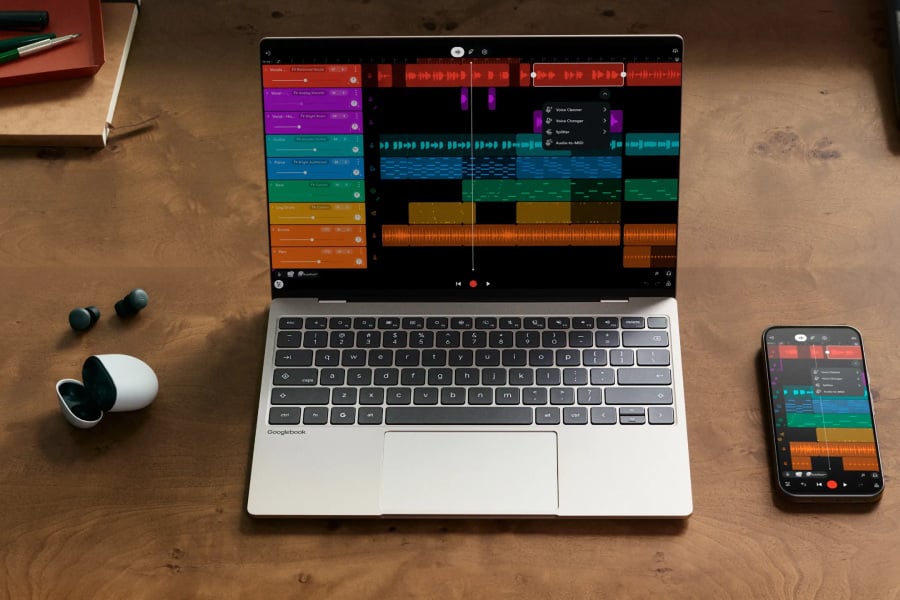
Googlebook PCs

Every Googlebook comes with a 12-month Google AI Pro subscription and 5TB of cloud storage. Buyers also get three months of YouTube Premium, Photoshop, and CapCut. Google says Googlebooks will receive system updates for up to 10 years.

Googlebook hardware

The Acer Googlebook 14 is the only 2-in-1 in the launch lineup and starts at $899. Acer has already warned that the launch price could increase if memory shortages continue to raise component costs. It has a 14-inch 2.8K OLED touchscreen, Intel Core Ultra 5 or Ultra 7 processors, and up to 16 hours of claimed battery life.

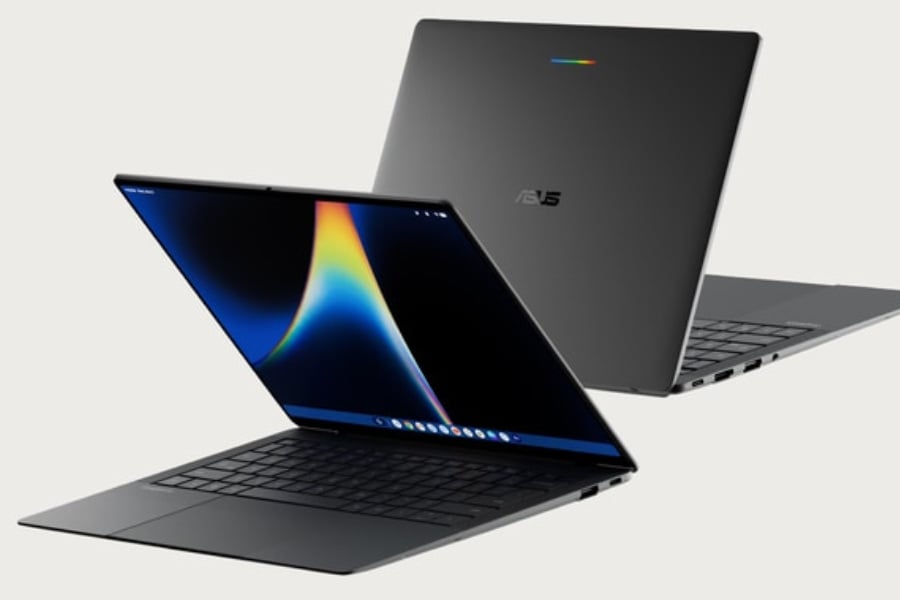
The ASUS Googlebook 14 costs $1,299. It has the most ports among the launch models and weighs just 1.0kg, making it the lightest option in the lineup.

Asus Googlebook 14

Dell’s XPS Googlebook uses a Snapdragon X Elite processor and closely follows the design of the XPS 13, including its glow finish. Connectivity is limited to two USB-C ports.

HP also uses the Snapdragon X Elite and offers up to 1TB of storage, which is the largest storage option among the launch models. It also supports both face and fingerprint unlocking.

Lenovo’s Googlebook has the largest display at 15.3 inches and is the only model available in a white finish.

Googlebook OS and Gemini features

Googlebook OS combines elements of Android and ChromeOS, with Gemini built into several parts of the experience. 

One of the main features is Magic Pointer. When you move the cursor over something on the screen, Gemini can offer suggestions based on what you’re viewing. You can then follow up and open a chat window for more help.

Google is also using its smaller on-device Gemini Nano v3 model for file searches. Instead of sending files to the cloud, the model can summarize content locally on the laptop. Google has been using a similar on-device approach on phones such as the OnePlus 13.

Googlebook features

Android integration is another major part of Googlebook OS. Users can run Android phone apps directly on the laptop, transfer files and photos between devices without going through the cloud, and continue tasks across devices.

Google executive Sameer Samat has said the platform is primarily aimed at Android users rather than people looking to move away from MacBooks. Google also plans to add iPhone connectivity in the future, although it has not provided a timeline yet.

Don’t miss a thing! Join our Telegram community for instant updates and grab our free daily newsletter for the best tech stories!

For more daily updates, please visit our News Section.

Global Vivo X500 Pro Max to pack smaller battery than the Chinese edition, reveals a major certification

Vivo has just launched the Vivo X500, X500 Pro, and Vivo X500 Pro Max in China. There are speculations that the global launch may happen in November or December. Ahead of the global rollout, three X500 series model entries have emerged on the EPREL (European Product Registry for Energy Labelling) database, revealing battery capacities that appear smaller than those of their Chinese counterparts.

Global Vivo X500 series’ battery sizes revealed

Global Vivo X500 series battery sizes

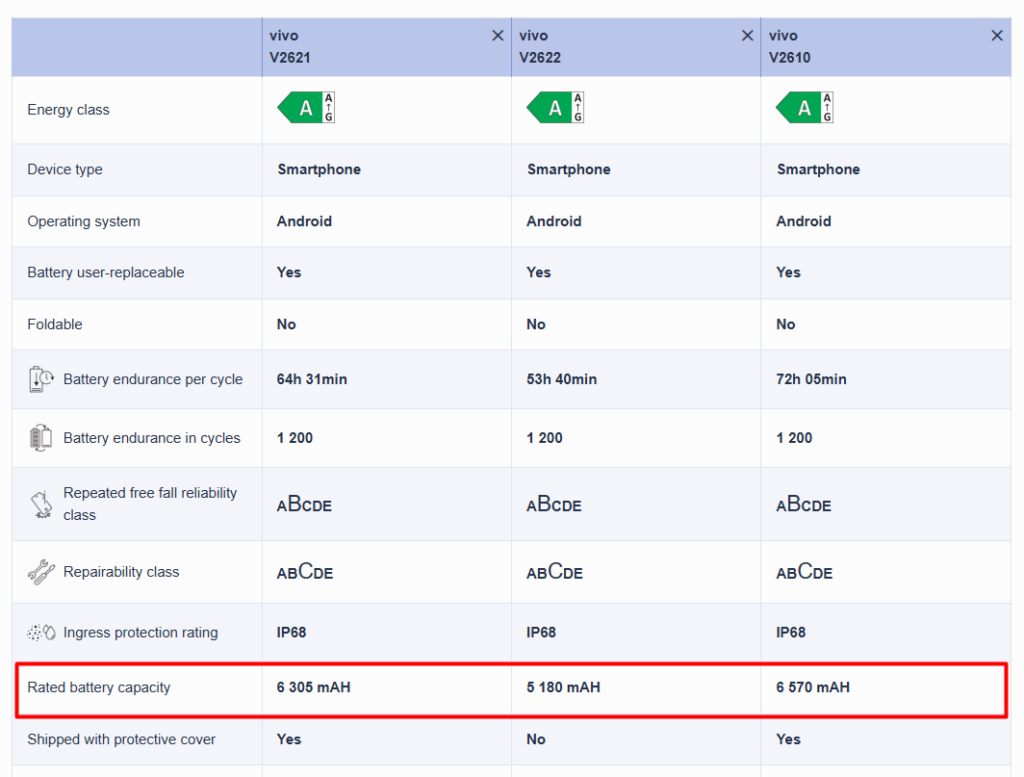
The EPREL listings identify the Vivo V2621, V2622, and V2610, with their rated battery capacities listed at 6,305mAh, 5,180mAh, and 6,570mAh, respectively. As per the previously seen certification listings,, the V2621 is believed to be the global Vivo X500 Pro, while the V2610 corresponds to the Vivo X500 Pro Max.

There’s a possibility that the V2621 could have a typical capacity of around 6,510mAh. This means that the Vivo X500 Pro’s global edition could offer the same battery size as its Chinese edition.

On the other hand, the Vivo X500 Pro Max’s (V2610) global version could pack a 6,800mAh in typical capacity. In comparison, its Chinese edition houses a bigger 8,000mAh battery.

Vivo X500 PRo IMEI listing
Vivo X500 Pro IMEI listing

The V2622 is more difficult to identify. An IMEI database listing refers to the V2622 as the Vivo X500 Pro. Its battery size suggests that it could potentially be the global Vivo X500, although previously seen certifications have revealed that the V2619 model number for the global X500. Therefore, the final marketing name of the V2622 remains unclear, and further certifications or listings should provide more clarity.

Nevertheless, the Vivo X2622 EPERL listing suggests that its typical battery size could be around 5,300mAh. To put into context, the X500’s Chinese edition has a 7,500mAh capacity.

Global Vivo X500 series battery sizes-

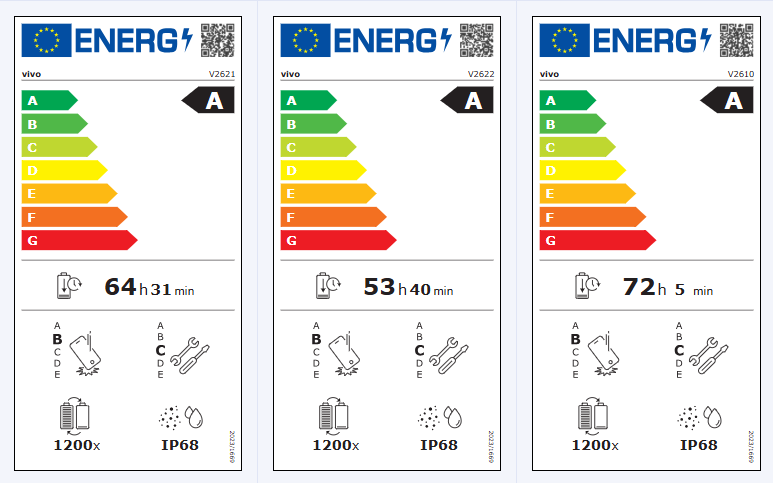
The EPREL listings also reveal several other details about the three models. All three are listed as Android smartphones with an A energy-efficiency rating, non-foldable designs and IP68 ingress protection. Their battery endurance per cycle is rated at 64 hours 31 minutes for the V2621, 53 hours 40 minutes for the V2622, and 72 hours 5 minutes for the V2610, giving us an additional indication of how the global variants may differ.

For daily updates, please visit our News Section.

Stay ahead in tech! Join our Telegram community and sign up for our daily newsletter of top stories!

(via)