Google Pixel Watch 5 and Samsung Galaxy Watch8 are premium Wear OS smartwatches designed to combine fitness tracking, health monitoring, navigation, and everyday smart features. Both offer bright AMOLED displays, ECG support, GPS, LTE options, 2GB of RAM, and water resistance. However, they take different approaches.
The Pixel Watch 5 focuses on Google’s software ecosystem, a larger 64GB of storage, advanced positioning, and a broad sensor package. The Galaxy Watch8 counters with a thinner design, sapphire protection, Samsung’s BioActive health sensor, and a more rugged build. The better choice ultimately depends on whether health features, durability, storage, or Google’s ecosystem matters most.
The Pixel Watch 5 has a rounded 45mm body measuring 45 x 45 x 12.3mm, with an aluminum frame and Gorilla Glass 5 protection. It weighs between 31g and 36.7g depending on the configuration and carries IP68 water and dust resistance with 5ATM protection. The Galaxy Watch8 has a slightly wider 46 x 43.7mm body but is considerably thinner at 8.6mm. Its sapphire crystal, Armor Aluminum 2 construction, IP68 rating, 5ATM water resistance, and MIL-STD-810H compliance give it a stronger durability focus. The Samsung also weighs 34g in its 44mm version. For everyday comfort and rugged use, the slimmer Samsung design has the advantage.
Both watches offer high-end AMOLED displays capable of reaching 3000 nits peak brightness, making them suitable for outdoor viewing. The Pixel Watch 5 uses a 1.4-inch LTPO AMOLED panel with 456 x 456 resolution and around 320 ppi density. Its LTPO technology can help manage refresh rates efficiently. The Galaxy Watch8 provides a larger 1.47-inch Super AMOLED display with 480 x 480 resolution and around 327 ppi. It also uses sapphire crystal for improved scratch resistance. The Samsung therefore offers slightly more screen area and marginally higher pixel density while matching the Pixel’s peak brightness. The Pixel remains excellent, but the larger panel and stronger protection make Samsung more practical.
The Pixel Watch 5 packs a 465mAh battery in the 45mm model, compared with 435mAh for the Galaxy Watch8 44mm model. Google also provides detailed wired charging figures, with the 45mm Pixel Watch reaching 50% in 15 minutes, 80% in 30 minutes, and full charge in about an hour. The Galaxy Watch8 uses 10W wireless charging. Battery capacity alone does not determine real-world endurance, so the larger Pixel battery should not automatically be interpreted as longer battery life. Still, its larger capacity and faster specified charging make it attractive for users who want quick top-ups. Samsung’s wireless charging is convenient for compatible charging setups.
Winner: Google Pixel Watch 5 — larger battery and more clearly specified fast-charging performance.
Both watches provide a strong collection of health sensors, including heart-rate monitoring, ECG, blood oxygen measurement, temperature sensing, accelerometers, gyroscopes, barometers, and altimeters. The Pixel Watch 5 additionally lists skin conductance and advanced environmental sensing, giving it a broad sensor package for wellness and activity monitoring. The Galaxy Watch8 adds Samsung’s BioActive sensor and supports body-composition measurements, while its health platform includes features such as blood-pressure monitoring, ECG, irregular heart-rhythm notifications, and an antioxidant index. This gives Samsung a broader set of dedicated health metrics. The Pixel remains a capable health tracker, but Samsung offers more specialized measurements for users focused on detailed wellness analysis.
For more options beyond these two, our guide to top smartwatches this year covers other models worth weighing.
5. GPS & Navigation
Both watches support dual-frequency GPS using L1 and L5 signals, which can provide more accurate positioning than single-frequency systems, particularly around buildings, trees, and other signal-obstructing environments. The Pixel Watch 5 supports GPS, GLONASS, and Galileo, while its positioning system also benefits from L1+L5 support. The Galaxy Watch8 supports GPS, GLONASS, Galileo, and BDS, giving it broader satellite-system compatibility. Both therefore provide a strong foundation for outdoor workouts and route tracking. The Pixel also includes UWB support, which expands its positioning-related capabilities beyond conventional GPS. Samsung’s broader satellite compatibility gives it an advantage on paper for global positioning coverage.
Neither watch is positioned simply as a basic step counter. Both provide the sensors required for tracking movement, heart rate, elevation, temperature, and activity-related data. The Pixel Watch 5 combines its accelerometer, gyroscope, heart-rate sensor, altimeter, compass, barometer, SpO2 sensor, skin-temperature sensor, and skin-conductance sensor to provide detailed activity data. The Galaxy Watch8 similarly combines motion, heart-rate, barometric, temperature, and compass sensors with Samsung’s BioActive system. This makes both suitable for running, walking, cycling, gym sessions, and general fitness tracking. Samsung has the edge for users who want deeper health-linked training insights, while Pixel offers a particularly comprehensive sensor setup.
Winner: Samsung Galaxy Watch8 — stronger integration of fitness tracking with its wider health platform.
7. Smart Features
The Pixel Watch 5 runs Wear OS 7, while the Galaxy Watch8 runs Wear OS 6 with Samsung’s One UI 8 Watch interface. Both provide core smartwatch functions such as notifications, apps, wireless connectivity, NFC, Bluetooth, Wi-Fi, and LTE support on cellular models. The Pixel Watch 5 offers 64GB of internal storage, twice the Galaxy Watch8’s 32GB capacity, giving Google a significant advantage for storing apps and other compatible content. Samsung counters with a highly customized interface and deeper integration within the Galaxy ecosystem. The choice here largely depends on the phone ecosystem, but Pixel’s newer operating system and substantially larger storage make it more compelling for long-term app-heavy use.
Winner: Google Pixel Watch 5 — newer Wear OS version and twice the internal storage.
8. Outdoor Features
For outdoor use, both watches provide IP68 protection, 5ATM water resistance, GPS, compass functionality, barometric sensors, altimeters, and temperature sensing. The Pixel Watch 5 also includes UWB and satellite SOS on LTE models, adding useful emergency and positioning capabilities. Its 3000-nit display is designed to remain visible in bright conditions. The Galaxy Watch8 takes a more rugged approach with Armor Aluminum 2 construction and MIL-STD-810H compliance, alongside sapphire crystal protection. This makes it particularly appealing for hiking, travel, and outdoor activities where accidental knocks and scratches are more likely. Pixel offers excellent connectivity-oriented features, but Samsung’s physical durability gives it the stronger outdoor profile.
Winner: Samsung Galaxy Watch8 — tougher construction and military-standard durability.
The better choice depends heavily on the type of smartwatch experience you want. The Google Pixel Watch 5 is more appealing for users who prioritize Google’s Wear OS experience, larger storage, UWB, a broad sensor package, and fast wired charging. Its 64GB storage is especially useful for users who expect to install many apps or keep more content on the watch. The Samsung Galaxy Watch8 is the more rounded option for health-conscious and outdoor-focused users. Its sapphire crystal, thinner body, BioActive sensor, body-composition tracking, broader health features, and MIL-STD-810H rating give it a wider feature set. At around $300 versus approximately $400 for the Pixel Watch 5, Samsung also offers the stronger value proposition.
Winner: Samsung Galaxy Watch8 — more features, stronger durability, and lower pricing.
The Google Pixel Watch 5 and Samsung Galaxy Watch8 are both capable premium smartwatches, but Samsung delivers the more complete package for most users. The Galaxy Watch8 combines a thinner design, sapphire crystal, 3000-nit display, dual-frequency GPS, advanced health sensors, body-composition analysis, and stronger durability credentials. The Pixel Watch 5 stands out with 64GB storage, Wear OS 7, a larger 465mAh battery, UWB, and its extensive sensor selection. It is the better alternative for users who specifically prefer Google’s ecosystem and need more onboard storage. However, the Galaxy Watch8 offers the better balance of health features, durability, smart functionality, and value.
Winner: Samsung Galaxy Watch8 — the stronger all-round smartwatch for most buyers.
Disclaimer: Prices, specifications, and availability may vary by region and retailer. Recommendations in this article are based on editorial opinion, feature-based value, and market positioning at the time of writing. Readers are advised to do their own research before making a purchase.
The iQOO Z11S is only a couple of hours away from the big reveal, but the company has already shared quite a lot of details about the phone, with the latest ones being detailed camera samples.
The brand shared a total of four images taken in different lighting conditions to highlight the imaging prowess of the iQOO Z11S. The first one is a portrait. It is a high-resolution image, and upon closer inspection, we can see some improper cutouts in trickier areas, such as the glass the person is holding.
The food items inside are still in focus, but the top of the glass is blurred out. Maybe this is a tricky object for the imaging system, as it can still see the object behind it. Toward the bottom of the frame, part of the dress is also blurred out.
Apart from that, the fibers of the hat are mostly in focus, with an impressive cutout. More importantly, the overall detail and noise control are impressive. Overall, it does not look too noisy or show the kind of artifacts we have come to expect from mid-range devices with less impressive imaging hardware.
Two other images suggest eye-pleasing colors and, again, a lack of any noticeable noise or artifacts in the photos. The one with the cups and other decorative items seems to have been taken at 2x or with a similar digital zoom. It still packs a reasonable amount of detail if you want to crop in. The other one is of a library with red elements, and the colors suggest an eye-pleasing, upload-ready output. The last one, again, features a human subject and looks about what you would expect from a photo shared by the brand.
The phone is launching today alongside the iQOO Neo 11 Ultra in China. Detailed official renders of the device have already revealed two cutouts on the back, each with one lens, one of which is a 50MP main camera. They sit inside a rounded-square camera island on the top left of the device. Overall, the phone comes with the usual flat design with a flat display.
Vivo is preparing to release OriginOS 7 with several major upgrades and new features, along with plenty of improvements across key areas. The beta program is already live for select devices, and the stable release shouldn’t be more than a few weeks away.
With the official release right around the corner, you may be wondering whether your Vivo or iQOO device is eligible for the update, when it will roll out, or what new features to expect from OriginOS 7. This post has everything you need to know about the upcoming OriginOS skin. And we’ll keep it up to date so you always get the latest information.
OriginOS 7 update: List of eligible devices
Vivo phones eligible for the OriginOS 7 update
Vivo X series
Vivo X Fold 6
Vivo X Fold 5
Vivo X Fold 3 Pro
Vivo X300
Vivo X300 Pro
Vivo X300 Ultra
Vivo X300 FE
Vivo X200
Vivo X200 Pro
Vivo X200 FE
Vivo X200T
Vivo X100
Vivo X100 Pro
Vivo V series
Vivo V70
Vivo V70 Lite
Vivo V70 FE
Vivo V70 Elite
Vivo V60
Vivo V60e
Vivo V60 Lite
Vivo V60 Lite 4G
Vivo V50
Vivo V50e
Vivo V50 Lite
Vivo V50 Lite 4G
Vivo V40
Vivo V40 Pro
Vivo T series
Vivo T5
Vivo T5 Pro
Vivo T5 Lite
Vivo T5x
Vivo T5e
Vivo T4
Vivo T4 Pro
Vivo T4 Ultra
Vivo T4 Lite
Vivo T4x
Vivo T4R
Vivo S series
Vivo S2
Vivo Y series
Vivo Y600
Vivo Y600 Turbo
Vivo Y500
Vivo Y500 Pro
Vivo Y500s
Vivo Y500i
Vivo Y400
Vivo Y400 4G
Vivo Y400 Pro
Vivo Y400 Pro+
Vivo Y300 GT
Vivo Y300t
Vivo Y300i
Vivo Y60
Vivo Y51 Pro
Vivo Y31d 4G
Vivo Y21 (2026)
Vivo Y11 (2026)
Vivo Y05 4G
iQOO phones eligible for the OriginOS 7 update
iQOO flagship series
iQOO 15
iQOO 15 Ultra
iQOO 15R
iQOO 13
iQOO 12
iQOO 12 Pro
iQOO Z series
iQOO Z11
iQOO Z11 Lite
iQOO Z11x
iQOO Z11i
iQOO Z10
iQOO Z10x
iQOO Z10R
iQOO Z10 Lite
iQOO Neo series
iQOO Neo 10
iQOO Neo 10R
iQOO Neo 9 Pro
We’ve prepared this list based on the existing update policy. So, if you can spot your device on the list, it’s almost certain to receive the OriginOS 7 update.
It’s important to highlight that Vivo doesn’t have a clear-cut software update policy for many devices, particularly for entry-level and lower mid-range smartphones. It’s difficult to predict if those will receive another major upgrade. So, we decided not to include devices that we weren’t confident about to keep the list as accurate as possible. That said, many of them may still have a chance.
When will the OriginOS 7 update roll out?
Vivo hasn’t yet announced a release date for OriginOS 7, but things appear to be moving more quickly than last year’s OriginOS 6. The company announced the OriginOS 7 beta program in China at least two weeks earlier, and as a result, the beta release also happened earlier.
Last year, the OriginOS 6 global beta program was announced on September 29, while the stable rollout went live in early November. This year, Vivo is acting more quickly, so we’re expecting the global OriginOS 7 beta to be announced in early September or a little earlier.
If Vivo keeps up the pace and everything goes smoothly, October is what we’re looking forward to for the OriginOS 7 global rollout.
What to expect from OriginOS 7?
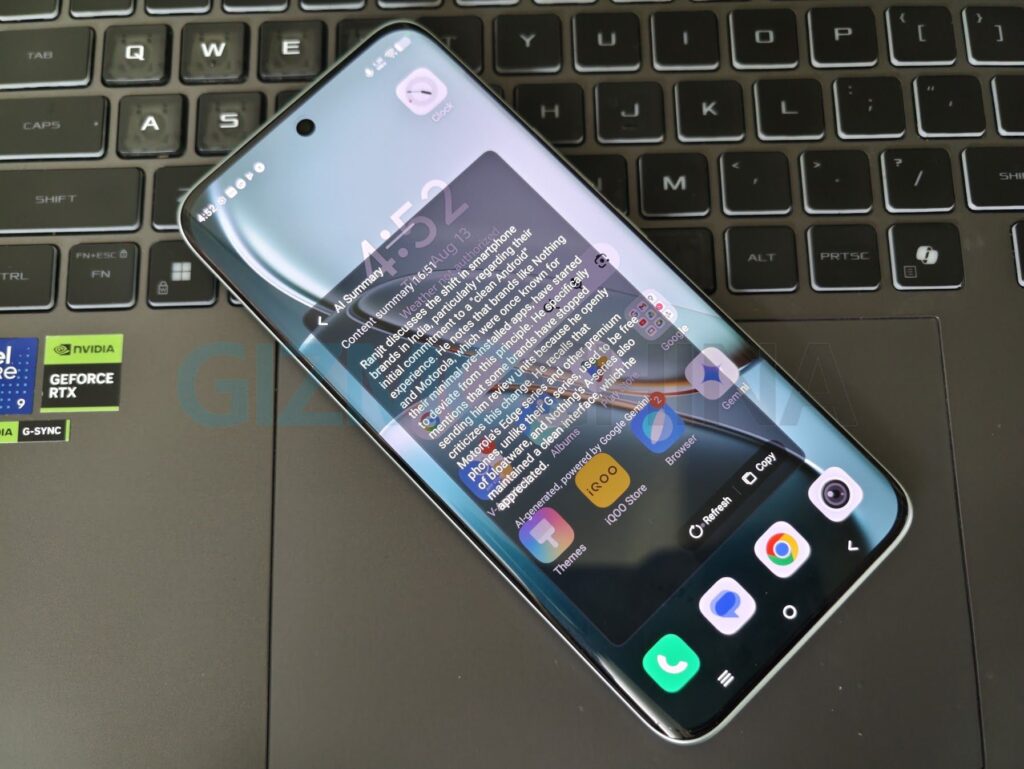
Details about new features and upgrades in OriginOS 7 are currently scarce. However, some users testing the beta build have reported that the liquid glass effect has been applied across the system with highlights, shadows, refraction & dynamic lighting effects. App opening animations feel more natural, dynamic, and stretched out, making the transition feel much smoother.
The OriginOS 7 beta is said to feature bouncy, springy animations that further enhance the user experience. Furthermore, it adds new themes and more customization options.
Reliable tipster Digital Chat Station claims the overall software experience with OriginOS 7 is better than Xiaomi’s HyperOS 4 and Oppo’s ColorOS 17. It seems the wait is going to be worth it.
We’ll update the post regularly as we receive more details. You can bookmark the page or join our Telegram channel to stay updated.
Xiaomi has added a new gaming monitor to its lineup in Taiwan, targeting gamers looking for a high-refresh-rate display without spending too much. The Xiaomi Gaming Monitor G25i 2026 combines a 240Hz panel with gaming-focused features and a compact design.
Xiaomi G25i 2026 gaming monitor specifications and features
Xiaomi G25i 2026 gaming monitor
The Xiaomi G25i 2026 features a 24.5-inch Fast IPS LCD with a 1920 x 1080 resolution and a 16:9 aspect ratio. The panel supports a 240Hz refresh rate and a 1ms GTG response time, while the 178-degree horizontal and vertical viewing angles are designed to keep the picture consistent when viewed from different positions.
For color reproduction, the monitor covers 100% of the sRGB color space and 93% of DCI-P3. It offers 8-bit color depth and carries DisplayHDR 400 certification, with a typical brightness of 400 nits and a 1000:1 contrast ratio. Xiaomi also includes FreeSync Premium, which helps reduce screen tearing when frame rates fluctuate.
Xiaomi G25i 2026 gaming monitor
The monitor includes several gaming-focused tools, such as a crosshair overlay, night vision mode, and dark-area enhancement for making details in darker scenes easier to see. It also uses hardware-level low blue light technology certified by TÜV Rheinland. Connectivity includes one DisplayPort 1.4, one HDMI 2.0 port, an audio port, and a DC input. The HDMI port supports up to 1920 x 1080 at 240Hz.
The monitor measures 557 x 173.1 x 445.6mm with its stand and weighs 3.2kg. It supports tilt adjustment from -5 to +15 degrees and VESA 75 x 75mm wall mounting.
The Xiaomi Gaming Monitor G25i 2026 is priced at NT$2,999 in Taiwan, which is roughly $95. Xiaomi has not confirmed availability in other markets at the time of writing, so it remains unclear whether the monitor will launch outside Taiwan.
A new leak is adding weight to earlier reports that the Vivo S2 could be sold internationally under a different name. An image of the Vivo V80 Lite has surfaced on the web, and although blurry, we can tell the phone looks exactly like the Vivo S2.
The paper trail started when the device hit the Google Play Supported Devices List with three model numbers: V2643, V2644, and V2576. The last one is also tied to the Vivo S2, which suggested the two phones could be the same device sold under separate names in different markets. Vivo hasn’t said anything about this officially, though.
Renaming a phone for different regions isn’t new for Vivo. It’s done this with other models in the past, so seeing the S2 resurface abroad under the V-series name wouldn’t be unusual.
The new images make the connection harder to dismiss. The Vivo S2 has a slim frame, curved edges, and a horizontal camera bar with two large round lenses next to a circular flash. The V80 Lite 5G promo materials show the same setup — same camera positioning, same curve on the display, and a matching blue color option.
Vivo V80 Lite Expected Specifications
If the phones do turn out to be the same hardware, the V80 Lite 5G would likely carry what Vivo already confirmed for the S2 at its India launch: a 6.83-inch AMOLED display at 120Hz, a MediaTek Dimensity 7360-Turbo chipset, and a 7,050mAh battery. The camera setup would carry over too — a 50-megapixel Sony main sensor with a secondary lens on the back, plus a 32-megapixel front camera.
None of this is locked in until Vivo makes an announcement, so the naming and specs should still be treated as unconfirmed. We will keep you in the loop for new details.
Several reports have claimed that Vivo is planning to unveil the Vivo X500 series in September in China. Ahead of the launch, the X500 members are gradually bagging key certifications in the home market. After the X500 Pro and X500 Pro Max, the standard model has now been approved by China’s 3C certification platform.
Vivo X500 3C certified
Vivo X500 3C certified
The above screengrab reveals that a forthcoming Vivo phone with model number V2602A has been approved by China’s 3C authority. The listing suggests that the device may support 90W fast charging.
In recent weeks, the Vivo X500 Pro Max‘s Satellite Communication version was spotted with the model number V2602DA. Since the new device carries a similar model number, it could be a variant of the X500 Pro Max without satellite communication support.
The Vivo X500 Pro said to have the model number V2609A. Its 3C certification has also revealed support for 90W fast charging. Interestingly, the global version of this device with model number V2610 has already been approved in Indonesia.
Vivo X500 specifications (rumored)
As per a recent report, the standard Vivo X500 will have a different rear design compared to the Pro models. While the Pro models will continue to feature a large, circular camera module positioned at the center on the back, the X500’s camera module could be placed at the upper-left corner.
The Vivo X500 is said to have a 6.59-inch flat OLED panel offering a 1.5K resolution. It is expected to feature a Dimensity 9-series chip, but it could be a 3nm chip instead of the 2nm Dimensity 9600 Pro chip that will power the Pro models.
The X500 is said to pack a battery of around 7,500mAh capacity with 90W wired and 40W wireless charging support. Its rear camera setup is expected to include a 50-megapixel main camera with a 1/1.28-inch sensor size, a 50-megapixel ultra-wide lens, and a 64-megapixel mid-tier periscope telephoto camera. The entire lineup will run on OriginOS 7-based Android 17.
For more daily updates, please visit our News Section.
Samsung hasn’t announced the Galaxy S26 FE yet, but you can already watch someone holding one. A user on X posted what he claims is a hands-on video of the phone, and it comes weeks after the device went through FCC certification.
The video shows the phone running Android 17 with One UI 9 layered on top. The camera bump follows the same design language Samsung has used across this year’s lineup — individual lenses sitting inside one oval-shaped island rather than separate cutouts.
What has changed is the chip. The device is powered by Exynos 2500, along with a new sensor for the 12MP ultrawide camera.
Samsung Galaxy S26 FE Google Play Console Listing
A separate listing backs up the chip detail. The Galaxy S26 FE, carrying model number SM-S741U, showed up in the Google Play Console database with an Exynos 2500 paired to a Samsung Xclipse 950 GPU. Meanwhile, the Galaxy S26 FE has already run Geekbench scoring 2426 and 8004 single- and multi-core points, respectively.
The listing also confirms 8GB of RAM, a 1080 x 2340 resolution, and a screen density of 450 DPI. Samsung is reportedly planning purple, green, and black color options, and 45W wired charging carries over as expected.
XPPen, a global digital art technology brand, is celebrating its 21st anniversary with a worldwide campaign called “DOODLE THE WORLD.” Announced in Los Angeles on August 16, 2026, the campaign brings together digital art, designer toys, artist collaborations, creative contests, interactive activities, new products, and anniversary offers. XPPen is using the milestone to encourage creators to explore different forms of artistic expression without limits.
“DOODLE THE WORLD” Focuses on Creative Freedom
The campaign is based on the idea that creativity should have no boundaries. XPPen is highlighting artistic expression across paper, digital screens, physical artwork and designer toys, encouraging artists to experiment with new ideas, materials, emotions and creative styles.
The company is also looking to connect digital art with youth-oriented and trend-inspired designer toy culture. This wider approach is reflected in artist conversations featuring tattoo artist Chromakane and multidisciplinary artist Marina Esmeraldo. Their discussions explore artistic journeys, different approaches to creativity, drawing across mediums, creative environments and the freedom to create anywhere and anytime.
TOP TOY Contest Invites Artists to Reimagine Zero
A major part of the anniversary campaign is the Global Art Toy Design Contest, launched by XPPen in partnership with TOP TOY. The competition is centered on Zero, TOP TOY’s original IP character, and is open to creators worldwide.
The contest began on August 16 and will run until October 16, 2026. Participants can create designs in three categories: Null Shell Design, Fenix Shell Design and Zero Figure Design.
Artists can take inspiration from different seasons, clothing styles, personal concepts and original themes while developing their own interpretation of Zero. This gives creators the opportunity to bring their personal artistic styles to an established character.
Winning Designs Could Become Physical Art Toys
The contest offers XPPen creative devices, cash prizes, TOP TOY blind boxes and X-Coins from the XPPen Community. Selected winning designs may also be transformed into physical art toys, with some potentially being stocked in TOP TOY stores worldwide.
The judging panel includes Southeast Asian graffiti artist Katun, German illustrator and strategic designer Josephine Rais, Japanese illustrator and contemporary artist Jun Oson, and TOP TOY’s senior art toy designer jury.
Tong Liu, Senior Designer at TOP TOY, is also part of the panel. Liu has encouraged creators to be bold, experiment beyond color, explore different materials and incorporate emotions into their designs. He also highlighted the creative possibilities offered by subtle design elements.
Artist Ultra 14 Expands XPPen’s Product Lineup
XPPen also launched the Artist Ultra 14 on August 17, expanding its Artist Ultra Series. The new drawing display is positioned as a slim and portable option for creators seeking a flexible creative setup.
Its key focus is Ultra Clear True Color, supported by high color accuracy and a clear visual presentation. XPPen says the device is designed to provide an immersive drawing experience while remaining portable.
The Artist Ultra 14 will also be among the prizes associated with both the Global Art Toy Design Contest and the XPPen anniversary game.
21st Anniversary Brings Games and Special Offers
XPPen is marking the anniversary with an interactive online experience through XPPEN official website. The 21st Anniversary Online Game includes the 21-Day Doodle Journey, creative activities and a prize wheel, giving the global XPPen community opportunities to participate and win anniversary prizes.
The company is also offering special promotions through its official online stores, with discounts of up to 50% on selected products during the anniversary campaign.
IFA 2026 Will Reveal More Upcoming Products
The anniversary celebrations will continue at IFA 2026 in September. XPPen plans to showcase its latest innovations, upcoming products and new releases ahead of their official launches. More information about these products is expected to be revealed during the event.
21 Years of Creative Innovation
With “DOODLE THE WORLD,” XPPen is combining its 21-year history in digital art with new creative formats, including designer toys, interactive experiences and artist collaborations.
The company says it will continue focusing on empowering creators, developing digital art technology, expanding creative possibilities and supporting artists around the world. The anniversary campaign therefore serves as both a celebration of XPPen’s 21-year milestone and a look at its vision for the future of creative expression.
Citizen has added another model to its ongoing line of Star Wars-themed watches. The latest release is the Luke Skywalker Jedi Master edition (AW1910-48W), a $450 analog watch that is available now through the company’s US website.
The watch comes with a black and green dial featuring a silhouette of Luke Skywalker holding his lightsaber. Citizen has applied luminous coating to the hands, hour markers, and lightsaber, allowing these elements to glow in the dark.
The design incorporates the Star Wars theme in a subtle way without making the watch look overly playful. There is also a small Rebel Alliance logo placed at the 12 o’clock position, and the back of the case is engraved with the quote, I am a Jedi like my father before me.
The watch features a 43mm polished silver-tone stainless steel case. This size is fairly common for modern watches, although it may feel slightly large on smaller wrists. It is paired with a black leather strap featuring green stitching and a matching green inner lining that complements the dial. The strap is secured with a standard buckle clasp.
Inside, the watch runs on Citizen’s J810 Eco-Drive movement. The Eco-Drive system is essentially a light-powered mechanism that charges the internal power cell using any available light source, whether natural or artificial. This means you don’t have to worry about opening the case to replace a standard watch battery every few years.
For durability, Citizen opted for a mineral crystal over the dial. While mineral crystal provides standard impact resistance, it is more prone to scratching than sapphire crystal. It also has a water resistance rating of 100 meters (10 Bar), which means it is perfectly fine to wear while swimming, showering, or snorkeling.
Boat has expanded its audio hardware portfolio in India with the release of the PartyPal series, an eight-model lineup of large-format party speakers. The company is shifting its focus from standard high-volume output to interactive audio features, equipping the new devices with integrated DJ controls, real-time vocal tuning, and a wide array of physical inputs.
Boat PartyPal 650 Specifications
The flagship model of the new range is the PartyPal 650. It is a substantial piece of hardware, measuring 720mm in height, and relies on built-in wheels for mobility. Internally, it features a dual 8-inch driver and dual 2-inch tweeter configuration that delivers a total output of 300W RMS.
The PartyPal 650 features what boAt calls Karaoke ProTuner, a hardware-level auto-tune system that automatically corrects vocal pitch in real time during karaoke sessions. It comes with two UHF wireless microphones to support the feature. The speaker also has a built-in DJ pad on the top panel, allowing users to trigger pre-loaded sound effects and bass drops directly without relying on additional software.
Visuals are handled by an integrated RGB LED array that synchronizes with audio playback. Both the lighting patterns and the speaker’s sound profiles can be adjusted using the Boat Hearables companion app.
For battery life, Boat claims the PartyPal 650 can run for up to five hours on a single charge. However, the company specifies that this metric was tested at 60 percent volume, meaning users pushing the 300W system to higher volumes will likely experience a shorter playback time.
For connectivity, the speaker offers Bluetooth 5.3, True Wireless Stereo (TWS) pairing, USB, TF card, and AUX support. It also features dedicated physical inputs for connecting a guitar and an additional wired microphone.
Pricing and Availability
The broader PartyPal series includes seven other models: the 600 Plus, 500, 390 Plus, 230, Boom, Ultra, and Rumbl, which scale down in both power output and price. The series starts at Rs 9,499 and tops out at Rs 24,999.
The entire lineup is available through Boat’s official website and standard retail channels across India.
In related news, Edifier has recently launched new wired gaming earbuds with a built-in DAC and THX spatial audio, while 1MORE has launched AiClip S52 clip-on earbuds with 11mm drivers, AI transcription, and translation.
For more daily updates, please visit ourNews Section.
Edifier has released a new set of wired in-ear earphones, the Hecate Hunter S, currently available on JD.com. They are priced at 221 yuan ($32), with an initial launch price of 199 yuan ($29).
Inside the earbuds, Edifier is using 10mm dual-chamber dynamic drivers. The diaphragm is made from a liquid crystal polymer (LCP) dome with a titanium plating. Edifier says this specific combination of materials helps with the bass and treble response. The earphones have a frequency response range of 20Hz to 40kHz and a sensitivity of 97dB.
Instead of relying entirely on the audio processing of the device you plug them into, the Hunter S has a built-in DSP and a DAC chip integrated into the cable. It supports audio playback up to 384kHz/32-bit and has a Hi-Res certification.
For gaming, the earphones include THX-customized spatial audio with a 7.1.4-channel configuration. This includes vertical sound positioning, which is designed to help players hear audio cues like footsteps or reloads from above or below them in a game. Through the companion Hecate software, you can access preset EQ profiles for games like Valorant, Counter-Strike, and Delta Force, or adjust the EQ settings manually to your preference.
The earphones use an over-ear cable routing design and an inverted-triangle housing to keep them in place while in use. Edifier says that the design provides up to 30dB of passive noise isolation. The included cable is a 2-meter braided oxygen-free copper wire. It connects via USB-C, making it compatible with Android phones, iPads, the Nintendo Switch, and the PlayStation 5.
The earbuds feature an inline remote with a built-in silicon microphone supporting 48kHz/24-bit voice sampling, along with controls for volume, media playback, and calls. They also feature a durable cable rated for up to 8kg of pulling force, while the buttons and USB connector are rated for 10,000 clicks and 5,000 insertions, respectively.
In related news, 1MORE has recently launched AiClip S52 clip-on earbuds with 11mm drivers, AI transcription, and translation, while QCY has launched the affordable T13 Pro earbuds with 50dB ANC, 13mm drivers, and up to 49 hours of battery life.
For more daily updates, please visit ourNews Section.
Supreme is partnering with JBL to launch a limited-edition Go 5 Bluetooth speaker for its Fall/Winter 2026 collection. Predictably, the ultra-portable speaker is wrapped in the streetwear brand’s iconic signature red.
The JBL Go 5is already available globally in ten different colors, including red. Supreme’s version swaps in its own shade of red, which is noticeably different from JBL’s standard color.
You’ll spot Supreme’s logo printed in white, JBL’s branding on the lanyard in its usual font, and white buttons instead of the red ones on the regular model. Beyond the paint job, though, this is the same speaker JBL already sells.
JBL Go 5 Specifications
The Go 5 runs on a 4.8W driver tuned by JBL’s Harman Acoustics team and backed by a 7-band equalizer in the JBL Portable app if you want to adjust the sound yourself. It measures 101 x 77.4 x 43 mm and is light at about 230 grams of weight.
The connectivity options include Bluetooth 6.0, with support for SBC, AAC, and LC3 codecs, plus Bluetooth Auracast so you can link it up with other compatible speakers for a wider sound setup. You also get AirTouch, which handles instant pairing between two units for stereo playback. There’s also a USB-C connection with a built-in DAC chip, so you can plug the speaker straight into a laptop or phone for audio without any wireless compression.
The Go 5 offers up to 10 hours of run time in Playtime Boost mode. The speaker carries an IP68 rating for dust and water resistance, and is rated to survive drops. It also has ambient edge lighting that runs along the frame, which is customizable through the companion app.
Supreme hasn’t said how much this version will cost or when it’ll actually be available. Given how these collaborations usually go, expect a markup over JBL’s own pricing and a limited run that sells out fast.
For more daily updates, please visit our News Section.
The Xiaomi 18 series won’t launch together this year. According to the latest tip from Digital Chat Station, the standard Xiaomi 18 will land in December, well after its Pro siblings. For comparison, Xiaomi has so far launched all its flagship phones at the same event.
You can already see this pattern playing out elsewhere in Xiaomi’s lineup. For instance, the company launched the Redmi K100 Pro series first, while the standard model is held back for a later date. Spacing out releases this way means each phone gets its own moment in the spotlight, instead of competing for attention on the same day.
As for the Xiaomi 18 Pro, expect it in September. Qualcomm’s Snapdragon Summit is scheduled from September 22 to 24, where the company will officially reveal the Snapdragon 8 Elite Gen 6. According to reports, Xiaomi will launch the 18 Pro phones with this chip on September 28 or 29.
What we know so far
The whole Xiaomi 18 series is tipped to run on that Snapdragon 8 Elite Gen 6 chip, built on TSMC’s 2nm process. This should bring a solid jump in both performance and battery efficiency over last year’s chip. You’ll reportedly get five color options: black, white, pink, blue, and red.
The camera setup is where the standard Xiaomi 18 makes its biggest change. It’s expected to drop the 50MP triple-camera setup Xiaomi has used for several generations and switch to a 200MP dual-camera system tuned with Leica.
Meanwhile, the Xiaomi 18 Pro will keep its rear display and add new tricks to it, including a built-in compass, quick access to your WeChat payment code, and a one-tap food delivery pickup code.
As for pricing, the Xiaomi 18 Pro is said to start at 5,499 yuan, about 1,000 yuan more than last year’s starting price, likely due to the cost of the 2nm chip and the upgraded camera system.
Xiaomi has introduced a new large-capacity refrigerator to its home appliance lineup in China. The Mijia Refrigerator Pro 600L Cross-Door Automatic Ice Maker is currently up for preorder on JD.com for 4,469 yuan (around $662), with an official release date set for August 31.
As the name suggests, the fridge offers 600 liters of total storage space, making it a fairly massive unit aimed at larger households. That capacity is split between a 375-liter top refrigeration section and a 225-liter bottom freezer.
Inside the fridge compartment, there is a dedicated 36-liter drawer with adjustable temperature settings. You can switch this drawer between three modes: dry goods, zero-degree, and a setting for baby products, depending on what you need to store.
From a hardware perspective, the most practical feature is the dual-system cooling setup. Xiaomi put independent evaporators and fans in both the fridge and the freezer. Because the two sections don’t share air, you don’t have to worry about odors from the fridge migrating over and ruining the taste of your ice.
The freezer also includes a -30°C deep-freeze setting, which is meant to freeze items fast enough to prevent large ice crystals from forming and damaging the texture of the food.
The fridge also includes a built-in ice maker, but it doesn’t require complex plumbing. Instead, you manually fill an internal water reservoir, and the system handles the rest, storing up to 130 ice cubes at a time.
It connects to Xiaomi’s Mijia app, which lets you schedule ice production, check water levels, and run a three-minute self-cleaning cycle to flush out the internal water lines.
To handle smells and bacteria, the main compartment uses an ion purification system built into the air vents, while the freezer relies on a standard silver-ion antibacterial module.
Physically, the fridge comes in a dark grey finish that Xiaomi calls Black Feather Rock. It is designed to sit flush inside standard kitchen cabinetry, venting heat from the bottom rather than the sides to save space.
It measures 852mm wide by 675mm deep and stands 1,912mm tall. It also supports Xiaomi XiaoAI voice control, carries a Level 1 energy efficiency rating, and comes with a 10-year compressor warranty.
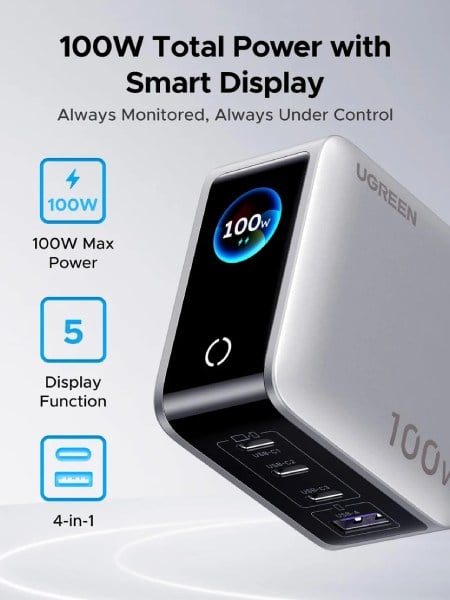
The charger has three USB-C ports, one USB-A port that offers 100W of total output. The C1 and C2 ports can each output up to 100W, the C3 port supports up to 65W, while the USB-A port supports 22.5W. This setup lets you charge a laptop on one port while a phone and other devices charge on the others.
The charger also supports common fast charging protocols, including PD 3.0, PD 3.2, PPS, QC, and QVC. Therefore, it should work with phones and laptops from most major brands.
Moreover, it has an intelligent power distribution system that manages output across the ports. It also includes protection against overcurrent, overvoltage, short circuit, and overload. The body measures 63 x 63 x 63mm, which is small enough to fit easily in a bag.
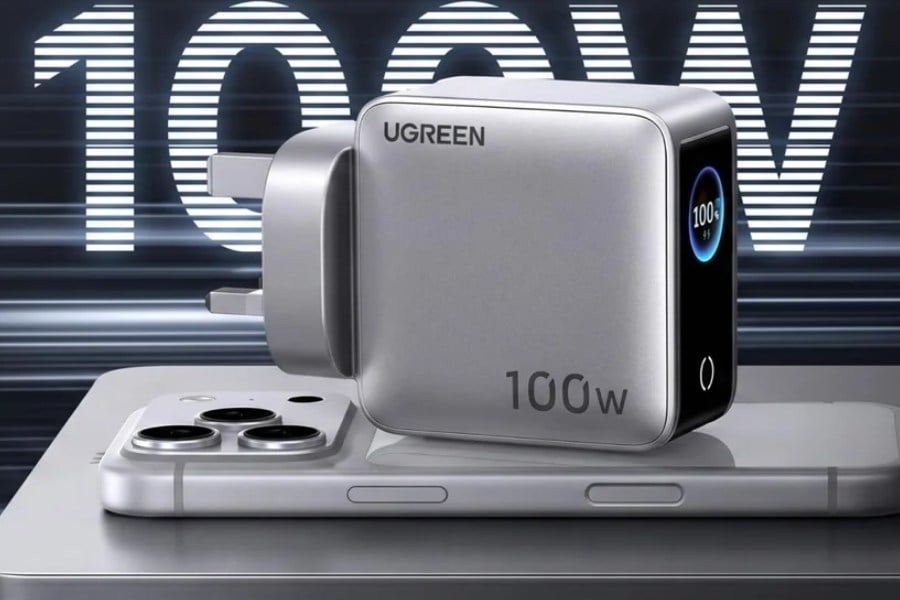
The Nexode Pro 100W has a screen for real-time monitoring
The charger has a TFT color screen on the front. It shows real-time information, including output power, temperature, voltage, and the charger’s health status.
Ugreen has added similar screens to other chargers recently, including its 300W desktop charger with eight ports, which also displays power, voltage, and temperature data.
At £55.99, the Nexode Pro 100W is priced below some of Ugreen’s higher-output chargers, such as the 200W Nexode charger, which is built for charging two laptops at once.
The Nexode Pro 100W is for people who need to charge a phone, tablet, and laptop together but don’t need that much power. Ugreen has not given a timeline for availability beyond the initial launch, so the charger’s rollout to other regions may take some time.
Poco is expanding its M8 series again, and early details suggest the newest model is aimed at people who want solid battery life and everyday performance without spending too much. While the company has already put out higher-spec versions earlier this year, this one looks like the more affordable option in the lineup.
Leaked specs point to the Poco M8x 5G coming with a 6.9-inch IPS LCD display at HD+ resolution and a 120Hz refresh rate. That would make it the first M8-series phone to use an LCD panel, both the M8 (which launched in January) and the more recent M8 Power stick with AMOLED screens. Under the hood it’s expected to run on MediaTek’s Dimensity 6300, paired with 4GB of RAM and 128GB of storage that can be expanded with a microSD card. It’s also tipped to ship with HyperOS 3 out of the box.
Battery life seems to be a focus, with reports talking about a 6,000 mAh cell and 33W wired charging. Camera details are still thin, though recent Poco teasers have shown a dual rear camera setup with an LED flash. Design-wise, there’s talk of a green colour option with a gold-accented camera module and a flat frame.
The leaked hardware lines up pretty closely with what’s been circulating about the Redmi 17C 5G, which is also expected to use a 6.9-inch 720p LCD, the same Dimensity 6300 processor, and a 6,000 mAh battery with 33W charging. Earlier speculation that linked the M8x to the Redmi 17 5G (which uses a Snapdragon 4 Gen 5 and a bigger 7,500 mAh battery) no longer looks accurate based on the latest info.
In India, the Poco M8x 5G would become the third M8-series model. Poco hasn’t confirmed the launch date, final pricing, or full specs yet, and the reported RAM and storage options still need official confirmation.
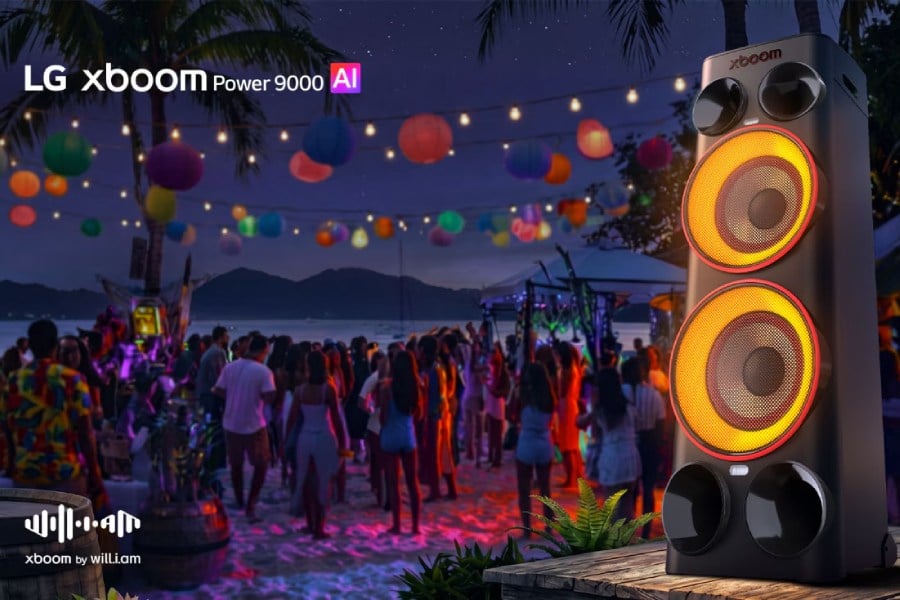
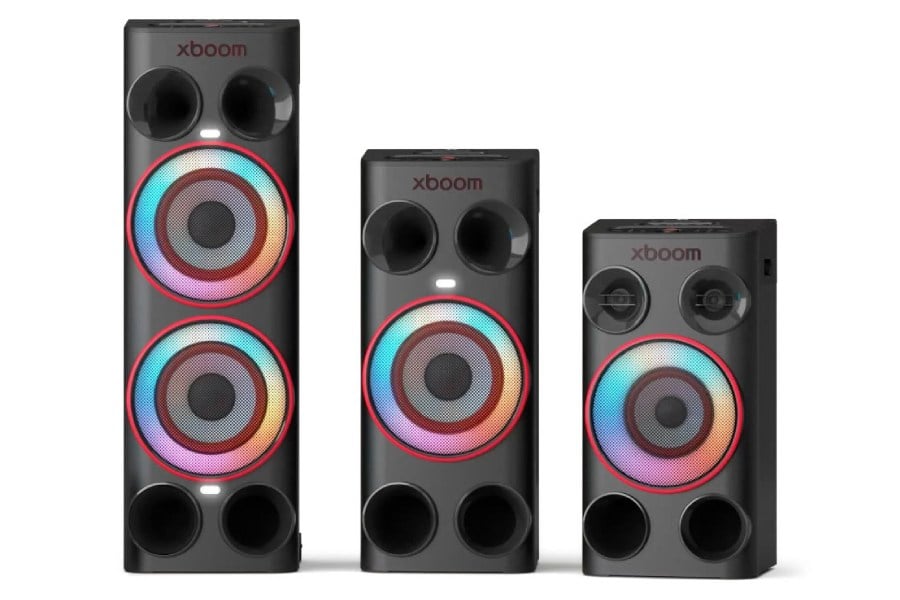
LG has launched a new line of xboom speakers, called xboom Power, initially featuring three soundboxes — Power 9000, Power 7000 and Power 5000. Announced on August 17, the new lineup pairs high-output speakers with smart party features, including an AI Karaoke Master that turns your regular playlist into a karaoke session on the fly.
Every model in the series carries xboom’s signature sound tuning, and this time will.i.am — a nine-time Grammy winner who’s already lent his ear to several other xboom launches — worked on the acoustic profile again. The tuning focuses on stronger bass while keeping the sound clear.
LG xboom Power 9000, 7000, and 5000 Specifications
The LG xboom Power 9000 is the top-of-the-line model with 440W of continuous output and has dual 10-inch woofers and dual 1-inch horn tweeters. The LG xboom Power 7000 offers 340W output with a 10-inch woofer and dual 1-inch horn tweeters. Likewise, the Power 500 features an 8-inch woofer and dual 2-inch tweeters, delivering 260W of output power.
All three come with colorful AI lighting, DJ performance effects, and a smart stand that displays lyrics from your phone or tablet. The speakers also have two microphone inputs, so two people can sing together, and the AI Karaoke Master can remove vocals, shift pitch, and start karaoke tracks from a music library with one click.
The speakers also adjust their sound automatically based on the type of music being played and the size of the room or outdoor space. This is similar to what LG did with the xboom Stage 501 series released earlier this year.
The series supports Auracast, which lets users connect several xboom speakers to play the same audio at once. LG has not yet shared pricing or release dates for the Power 9000, 7000, or 5000.
For more daily updates, please visit our News Section.
Honor has been gradually expanding the Play 11 series of mid-range phones in China. After unveiling the Play 11C, Play 11 Plus, and Play 11 Pro, the brand has now taken the covers off the Play 11T, which packs a 120Hz screen, a Snapdragon 4-series chip, and a large battery. Here is a closer look at the phone’s specifications and features.
Honor Play 11T specifications and features
Honor Play 11T
The Honor Play 11T sports a 6.61-inch TFT LCD with a 1604 x 720 resolution, 20:9 aspect ratio, and a 120Hz refresh rate. The display reaches a peak brightness of 1,010 nits and supports DC dimming, software-level low blue light reduction, an e-book mode, and other eye-comfort features.
The phone is powered by the Snapdragon 4 Gen 4 chipset and runs MagicOS 10 based on Android 16. It comes with 6GB or 8GB of RAM and 128GB or 256GB of storage, while Honor RAM Turbo can expand the available memory virtually.
A 7,500mAh battery powers the Play 11T, with support for 45W wired charging. It features a 13-megapixel f/2.2 rear camera with autofocus and a 5-megapixel f/2.2 front camera. Other features include a side-facing fingerprint sensor, 5G connectivity, Wi-Fi 5, Bluetooth 5.0, face recognition, a USB Type-C port, and no 3.5mm headphone jack.
🔌 You’ll NeedThe Play 11T supports 45W wired charging, but China-market units often ship without a charger in the box — a 45W USB-C brick fills the gap. Check 45W USB-C fast charger price on Amazon →
The Play 11T also carries an IP64 rating for dust and water resistance and has received SGS five-star drop and compression certification. Honor claims the device can withstand drops from up to 1.8 metres. It weighs 205g and measures 163.9 x 75.9 x 8.29mm.
The Honor Play 11T is available in four configurations: 6GB+128GB, 6GB+256GB, 8GB+128GB, and 8GB+256GB, priced at approximately $210, $255, $240, and $285, respectively. It comes in Black, Gold, and Blue color options. Honor has yet to clarify whether the Play 11T will be launched in markets outside China.
For more daily updates, please visit our News Section.
HMD has spent a good chunk of this year putting out feature phones, but one style has been missing from the mix. The company’s last proper clamshell arrived more than a year ago, so people who still like the flip-phone form factor have been waiting. A fresh leak now suggests HMD is finally ready to bring that classic design back, with a twist that could make it appeal to more than just traditional feature-phone users.
According to leaker smashx_60, HMD is working on the HMD 2760 Flip 4G. It takes clear inspiration from the Nokia 2760 Flip that came out in 2022. You’re looking at the same dual-display setup: a 2.8″ main LCD on the inside and a 1.77″ cover screen on the outside. There’s a 5MP autofocus rear camera with an LED flash, plus a basic VGA camera on the front.
The big difference is the software. The original Nokia 2760 Flip ran KaiOS 3.1, but this new HMD version is rumored to come with Icon OS 13, which is based on Android 13 Go. That would mean Google Mobile Services, the Play Store, and access to a wider range of apps, basically turning the classic flip phone into a lightweight smartphone instead of a pure feature phone. It’s also said to come with the usual Snake game pre-installed.
Under the hood, it’s expected to use a Unisoc T310 processor (a 12 nm quad-core chip with one Cortex-A75 core up to around 2 GHz and three Cortex-A55 cores), 2 GB of RAM, and 32 GB of storage. There’s a microSD slot for expanding up to 128 GB. The battery is a 2,500 mAh unit, a clear step up from the 1,450 mAh cell in the 2022 Nokia model. Other practical bits include a 3.5 mm headphone jack, USB-C, Wi-Fi with hotspot support, Bluetooth, an SOS key, and a touchpad.
Colour options are listed as Black, Cyan, and Pink. HMD’s most recent clamshell, the HMD 2660 Flip, launched at MWC Barcelona in March 2025 and stayed a pretty conventional feature phone. The 2760 Flip 4G would therefore be a proper step up in capability while still keeping the nostalgic foldable design.
Honor appears to be preparing several ambitious devices for its next product cycle, with a new wide foldable drawing particular attention. The device is reportedly being tested with Qualcomm’s upcoming flagship platform, while other Honor phones are also tipped to receive unusually large batteries.
Honor’s wide foldable could pack a next-gen flagship chip
According to tipster Wisdom Pikachu, Honor’s wide foldable is currently being tested with Qualcomm’s Snapdragon 8 Elite Gen 6 Pro, built on a 2nm process. The tipster claims it is currently the only wide foldable being tested with this platform. If the information is accurate, the device could become Honor’s first horizontally folding smartphone to use the latest generation of flagship silicon.
Earlier information suggests the foldable could feature a 7.6-inch inner display and a 5.5-inch outer screen. Its design is expected to use a new body process with a horizontal camera island. The device is also tipped to pack a 7,000mAh battery and a triple-camera setup led by a 200-megapixel primary sensor, with Honor’s imaging technology also expected to be part of the package.
Honor is preparing more phones with huge batteries
Digital Chat Station has claimed in the above Weibo post that Honor is testing another 11,600mAh battery with a typical capacity of around 12,000mAh, alongside previously mentioned 11,790mAh/12,000mAh-class batteries. Two more single-cell batteries are reportedly rated at 9,800mAh and 9,850mAh, with these solutions expected to appear across the Win 2, X and Power series.
At the same time, Honor is also reportedly working on a second-generation Robot Phone under its Alpha project. DCS said the hardware definition of the Alpha second-generation project is already at a very high level, although it remains unclear whether Honor will introduce another unconventional form factor. The first-generation Robot Phone itself has already been officially showcased by Honor as part of its ALPHA PLAN, featuring a motorized gimbal camera and embodied AI capabilities.
We use cookies on our website to give you the most relevant experience by remembering your preferences and repeat visits. By clicking “Accept”, you consent to the use of ALL the cookies.
This website uses cookies to improve your experience while you navigate through the website. Out of these, the cookies that are categorized as necessary are stored on your browser as they are essential for the working of basic functionalities of the website. We also use third-party cookies that help us analyze and understand how you use this website. These cookies will be stored in your browser only with your consent. You also have the option to opt-out of these cookies. But opting out of some of these cookies may affect your browsing experience.
Necessary cookies are absolutely essential for the website to function properly. This category only includes cookies that ensures basic functionalities and security features of the website. These cookies do not store any personal information.
Any cookies that may not be particularly necessary for the website to function and is used specifically to collect user personal data via analytics, ads, other embedded contents are termed as non-necessary cookies. It is mandatory to procure user consent prior to running these cookies on your website.