Advertisement

Vivo T4 arriving in India with Snapdragon 7s Gen 3 and 5000 nits AMOLED display

The Vivo T4 is an upcoming mid range smartphone that is set to launch in India soon. The company teased this device a couple of days ago, and now, a fresh leak has revealed the display and chipset specs. So here’s what we know.

Vivo T4 with Snapdragon 7s Gen 3 & Bright AMOLED display leaked

The latest rumor arrives from a MySmartPrice report. It claims that the Vivo T4 5G will sport the brightest quad curved AMOLED display for its price segment. The screen will reportedly have a peak brightness of up to 5,000 nits, allowing for great visibility even under direct sunlight. Vivo’s new T4 model is also expected to launch with the Snapdragon 7s Gen 3 SoC, which can achieve an AnTuTu benchmark score of over 820,000 points.

Vivo T4 5G

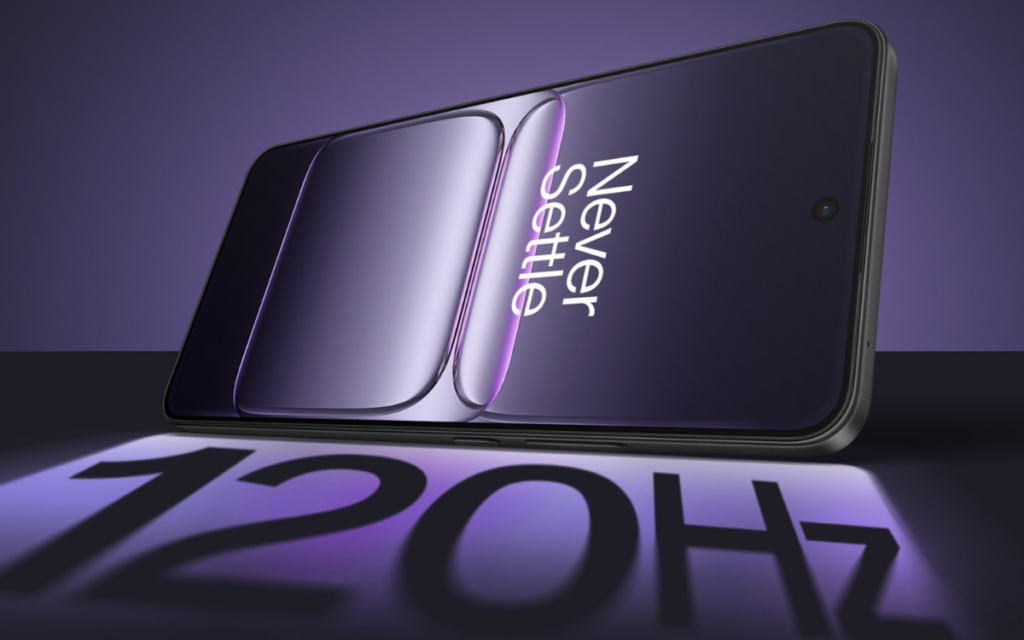
In the previous teaser, the company offered us a hint about the smartphone’s design and confirmed that the Indian launch is coming soon. The Vivo T4 was recently spotted on a fresh leak, which revealed some of its key specs as well. This model is a higher end variant that will likely be positioned above the Vivo T4x that debuted back in March. This leak hints that the Vivo T4 will sport a 6.67-inch AMOLED display with an FHD+ resolution and a 120Hz refresh rate.

A massive 7,300mAh battery pack could power this model, which may support 90W wired fast charging. For photography, the rear could feature a 50MP IMX882 primary camera with a 2MP secondary sensor with the front housing a 32MP selfie shooter. Other notable features include an in-display fingerprint scanner, IR blaster, and 8.1mm thickness. There are also leaks suggesting that the Vivo T4 could launch in an Emerald Blaze edition with gold accents around the camera island.

For more daily updates, please visit our News Section.

Tech enthusiast? Get the latest news first! Follow our Telegram channel and subscribe to our free newsletter for your daily tech fix! ⚡

Dimensity 9400+ beats March’s top AnTuTu score in unreleased Vivo phone

Vivo today confirmed that it will launch the X200s and X200 Ultra in China in April. The X200 Ultra is the only model in the lineup to get Snapdragon 8 Elite treatment. Meanwhile, the X200s will stick with MediaTek, just like its siblings.

Specifically, the X200s is to be equipped with the Dimensity 9400+, an upgraded version of the Dimensity 9400. MediaTek is scheduled to announce the chip on April 11, but we’re already getting an early look at its performance thanks to a benchmark listing.

Ahead of its official debut, the X200s has appeared on AnTuTu scoring 2,906,450 points on version 10 of the benchmark. That puts it ahead of AnTutu’s March’s top performer—the Vivo X200 Pro—which scored 2,902,298. The performance gap isn’t massive, but it makes sense as the X200 Pro uses the standard Dimensity 9400.

X200s specs: what’s inside

Beyond the new chip, the X200s is set to feature a 6.67-inch flat BOE Q10 display with a 1.5K resolution and 120Hz refresh rate. The screen is surrounded by slim bezels and includes a single-point ultrasonic fingerprint scanner. Like the X200, it will have an IP68/IP69 rating for dust and water resistance.

Vivo X200s
Vivo X200s

On the back, the phone will include a ZEISS-branded triple camera setup. A 50MP main sensor with OIS, a 50MP ultra-wide lens, and a 50MP LYT-600 periscope telephoto lens with 3x zoom and macro support. The setup offers focal lengths ranging from 15mm to 70mm and a variable aperture between f/1.57 and f/2.57.

Powering it all is a 6,200mAh battery that supports 90W wired and 40W wireless charging. For comparison, the regular X200 features a smaller 5,700mAh battery and lacks wireless charging.

Last but not least, the X200s will be available in Soft Purple, Mint Green, White, and Black shades.

For more daily updates, please visit our News Section.

Stay ahead in tech! Join our Telegram community and sign up for our daily newsletter of top stories!

iQOO Z10 Turbo series revealed in a marvellous Orange edition, pre-booking begins

Last week, Qualcomm held a launch event in China to unveil the Snapdragon 8s Gen 4 chipset. Soon after, iQOO released an official confirmation that the iQOO Z10 Turbo Pro will be the world’s first phone to feature the Snapdragon 8s Gen 4. Today, the brand confirmed that the Z10 Turbo series’ pre-booking is now live on Vivo China’s website. As can be seen in the image below, the Z10 Turbo series’ design has been revealed for the first time.

iQOO Z10 Turbo series’ pre-booking begins, design revealed

iQOOZ 10 Turbo series pre-booking
iQOOZ 10 Turbo series pre-booking begins in China

Customers who pre-book the iQOO Z10 Turbo series can enjoy a limited-time offer across all channels, with exclusive gifts worth up to ¥2,100. These benefits include a stylish iQOO x Nián Nián Bù dual shoulder bag, a 1-year extended warranty, 1-year screen protection, and 3-year battery protection. Additionally, pre-booking users will receive 1-year post-sales service, up to ¥500 in internet benefits for new phone activation, and a trade-in subsidy of up to ¥1,000 for their old device.

The official image reveals that the iQOO Z10 Turbo series’ design will be quite similar to the Z9 Turbo from last year. The new series offers a striking and premium design with a bold orange finish. The back panel showcases a glossy, flame-like pattern that catches light in a dynamic way.

The large, squircle camera module is positioned in the top-left corner and includes dual lenses with neatly integrated rings, giving the phone a clean and symmetrical aesthetic. The iQOO logo is placed towards the bottom in a subtle silver hue.

iQOO Z10 Turbo, Z10 Turbo Pro specifications (rumored)

According to reports, the iQOO Z10 Turbo series will include two devices, namely the Z10 Turbo and Z10 Turbo Pro. Both devices will have a 6.78-inch flat OLED LTPS 1.5K 144Hz screen, OriginOS 5-based Android 15, and a plastic frame. The Z10 Turbo may feature an OIS-assisted 50-megapixel + 2-megapixel dual-camera setup, a Dimensity 8400 chip, and a 7,600mAh battery with 90W charging. On the other hand, the Pro variant will feature an OIS-enabled 50-megapixel + 8-megapixel (ultra-wide) dual-camera unit, a Snapdragon 8s Gen 4 chip, and a 7,000mAh battery with 120W fast charging.

For more daily updates, please visit our News Section.

Stay ahead in tech! Join our Telegram community and sign up for our daily newsletter of top stories!

Redmi Buds 7S launched with 32hr battery life, ANC, dual-device pairing, spatial audio support, and more

Redmi has officially opened reservations for its new semi-in-ear wireless earbuds, the Redmi Buds 7S, on the Chinese retailer platform – JD.com. Successor to last year’s Redmi Buds 6S, the Buds 7S is designed to offer top-tier acoustic performance, noise cancellation, and smart connectivity, all wrapped in an ergonomic design. Here’s a look at the specifications, features, and price of the device.

Redmi Buds 7S specifications and features

Redmi Buds 7S
Redmi Buds 7S

The Redmi Buds 7S is built around a flagship-level dual-driver acoustic architecture, combining a 12.4mm titanium-coated dynamic driver with a 5.5mm micro piezoelectric ceramic unit. This setup delivers rich sound with detailed highs and full-bodied bass. For added personalization, the earbuds offer five EQ presets and are certified by NetEase Cloud Music as an official hardware partner.

Redmi Buds 7S
Redmi Buds 7S

The SoundID-based audio personalization feature analyzes a user’s hearing preferences through a quick test and then adjusts sound output accordingly. Whether you’re a fan of vocal clarity or deep bass, the system tailors the sound to your taste. Spatial audio is also supported, powered by Xiaomi’s self-developed HRTF algorithm, delivering a 360-degree surround experience ideal for movies and gaming.

Equipped with dual microphones, the Buds 7S supports intelligent active noise cancellation with two modes—deep and balanced—and an adaptive system that adjusts based on your environment and how you’re wearing them. Wind noise resistance is rated for up to 9m/s, ensuring clear calls even outdoors.

Redmi Buds 7S
Redmi Buds 7S

The earbuds offer up to 6.5 hours of playback on a single charge and 32 hours in total with the case. A 10-minute charge gives 2 hours of use. Additional features include dual-device connectivity, fast pairing, customizable controls via the Xiaomi Earbuds App, and support for the latest Cloud Light Effect 2.0 with upgraded battery level indicators.

Redmi Buds 7S price and availability

The Redmi Buds 7S has arrived in China with a price tag of 199 Yuan (~$27). It comes in three shades, such as Snow White, Lake Green, and Midnight Black.

For more daily updates, please visit our News Section.

Stay ahead in tech! Join our Telegram community and sign up for our daily newsletter of top stories!

Vivo X200s leak reveals 6,200mAh battery, 40W wireless charging, color options revealed

On April 21, Vivo will host a major launch event in China to unveil multiple new devices. In addition to the star of the show – the Vivo X200 Ultra – the brand will also introduce the Vivo X200s, new tablets named the Vivo Pad 5 Pro and Pad SE, and the Vivo Watch 5 smartwatch. The X200s will arrive as an upgraded version of the X200, which debuted in October 2024 with the Dimensity 9400 chip. While recent teasers from the brand have already confirmed the X200s’ appearance, a new video teaser and several posters released today reveal its colour variants. At the same time, tipster Experience More has leaked the key specifications, including battery and charging details that were not known before.

Vivo X200s specifications (rumored)

According to the tipster, the Vivo X200sv will feature a 6.67-inch flat BOE Q10 display that offers a 1.5K resolution and a 120Hz refresh rate. The screen will be surrounded by ultra-slim bezels and feature a single-point ultrasonic fingerprint scanner. Like the X200, the X200s will continue to sport an IP68/IP69-rated dust and water-resistant chassis.

The X200s’ rear will house a ZEISS-branded triple camera setup featuring a 50-megapixel main camera with OIS support, a 50-megapixel ultra-wide lens, and a 50-megapixel LYT-600 3x periscope telephoto lens with macro support. The handset will offer focal lengths ranging from 15mm to 70mm and variable apertures between f/1.57 and f/2.57.

Under the hood, the Vivo X200s will feature the Dimensity 9400+ chipset, which is an enhanced version of the Dimensity 9400 present inside the X200. The leak further states that the X200s will pack a 6,200mAh battery with 90W wired and 40W wireless charging support. In comparison, the X200 has a 5,700mAh battery with 90W wired charging, but no wireless charging support.

Vivo X200s color options

Vivo previously confirmed that the X200s will be available in Soft Purple and Mint Green shades. Today, the brand revealed that it will also be available in White and Black. In terms of design, the X200s features a flat display on the front, a round camera on the back, and flat edges. To recall, the X200 featured a micro-quad-curved screen equipped with an optical fingerprint sensor.

For more daily updates, please visit our News Section.

Stay ahead in tech! Join our Telegram community and sign up for our daily newsletter of top stories!

Google Pixel 9a teardown: repairability is a mixed bag

Google announced the Pixel 9a last month, which is a unique device in terms of the back design—or to be more specific, the protrusion of the camera module. It’s a great choice for people like me who prefer a completely flush back design. While the phone looks appealing, is it easy to repair? How does it look from the inside? Well, YouTube creator PBKreviews took the phone apart to find out just that.

The good and bad in terms of repairability

Three of the most common smartphone repairs are replacing the display, back plate, and the battery inside. The back plate of the Pixel 9a is made of plastic, so there’s very little chance that you’ll ever need to replace this. Removing the back plate with heat and a suction cup reveals the same pull the predecessors use.

Pixel 9a pull tab breaks

It’s a different kind of pull tab, which you need to slide back and forth to cut through the adhesive, which is strong enough to hold the battery until the pull tab breaks. The only viable option remaining at that point is to apply a solvent, such as isopropyl alcohol, and wait for it to loosen up the adhesive. But it still requires prying, which could, in some cases, damage the soft packaging of the battery and may even cause fire. It used to be the case with older Samsung phones, which have now been replaced with the traditional pull tabs.

On the positive side, the screen replacement is relatively easier: it only requires the screen to be pried off. The display cable can be plugged and unplugged from the board without opening the back plate, which is a good thing. The heat dissipation system for this phone also looks good, which should enable the Tensor G4 chip to handle all day-to-day tasks.

Don’t miss a thing! Join our Telegram community for instant updates and grab our free daily newsletter for the best tech stories!

For more daily updates, please visit our News Section.

OnePlus 13T’s latest teaser reveals flat display, new shortcut key

Last week, OnePlus confirmed that the OnePlus 13, a compact phone equipped with powerful specs, will be unveiled in April in China. Since then, the president of OnePlus China, Li Jie, has been gradually revealing key details of the 13T. His latest Weibo post reveals the display design and the inclusion of a new hardware button, which replaces the good old Alert Slider button.

OnePlus 13T to feature new shortcut key with customizable functions

OnePlus 13T shortcut key
OnePlus 13T’s new shortcut key

As shown in the image above, the OnePlus 13T will feature a completely flat OLED panel and is designed to appeal to users who favor compact yet high-performance smartphones. One of the major highlights of the 13T is the addition of the new physical shortcut key on its left edge.

Li Jie revealed the new shortcut key not only handles the usual silent, vibrate, and ring mode toggles but also supports customizable functions. This allows for quick access to a variety of actions, making it a highly practical addition. He also mentioned that an intriguing and fun feature has been built into the button, with more details to be revealed soon.

Speculations are rife that the Oppo device with model number PKX1100, which was recently spotted at Chinese certification platforms like 3C and CMIIT, is the upcoming OnePlus 13T. The said device was also spotted on AnTuTu with over 3 million points. The AnTuTu listing revealed that the 13T is equipped with the Snapdragon 8 Elite chipset, 16GB of LPDDR5x RAM, 512GB of UFS 4.0 storage, a 120Hz screen, and Android 15.

Li Jie has previously teased that the OnePlus 13T will pack a battery of around 6,000mAh capacity. According to reports, the device will carry a massive 6,200mAh battery housed inside a body that weighs only 185 grams. The device is expected to support 80W fast charging but might omit wireless charging.

The 13T will house a 6.31-inch OLED panel that offers a 1.5K resolution and a short-focus optical in-screen fingerprint sensor. For imaging, the phone offers dual 50-megapixel cameras, featuring a primary camera and a telephoto sensor with 2x optical zoom. In terms of design and durability, it is expected to feature a metal frame and a glass back.

For more daily updates, please visit our News Section.

Stay ahead in tech! Join our Telegram community and sign up for our daily newsletter of top stories!

Honor Power with 7,800mAh battery to launch in China on April 15

Honor has officially announced the launch date of its upcoming smartphone, the Honor Power. According to details shared on Honor’s Weibo and corroborated by popular tech blogger Experience More, the device will be unveiled on April 15 at 7:30pm (local time) in China. This smartphone marks a significant shift for Honor, being the first model released under its new strategic roadmap.

Honor Power said to pack 7,800mAh battery

Honor Power launch date

The Honor Power is being pitched as a “light-outdoor” smartphone, balancing the durability of rugged devices with the sleek usability of mainstream smartphones. According to the above-mentioned tech blogger, it will feature a massive 7,800mAh battery—possibly the largest in any mainstream phone this year—designed to comfortably handle prolonged outdoor usage. While its design appears to favour a larger screen with a dual punch-hole setup similar to the Honor number series, it’s unlikely to carry high-end facial recognition hardware like the Magic series.

Honor has been teasing the Power series since the beginning of this month with what initially seemed like a playful prank, claiming the phone’s battery life is so long it could charge other devices. However, with official confirmation now out, it’s clear that the company is serious about entering the long-battery niche.

Honor DVD-AN00 / DVD-AN80 to support 80W fast charging

It is speculated that the Honor device with DVD-AN00/AN80 that was recently certified by China’s 3C certification platform could be the forthcoming Honor Power smartphone. The certification revealed that it will support 80W fast charging.

This launch also marks the first major release since CEO George Zhao announced the brand’s shift towards becoming a global AI-centric terminal ecosystem company. The Power series represents Honor’s commitment to blending outdoor functionality with urban usability—optimising for communication, reliability, and AI features.

With its focus on battery, connectivity, and a lighter build than traditional rugged phones, the Honor Power could be the go-to device for users seeking ultra-long battery life without the bulk. There’s no clarity on whether the Honor Power will be released in markets outside of China.

For more daily updates, please visit our News Section.

Stay ahead in tech! Join our Telegram community and sign up for our daily newsletter of top stories!

Vivo X200 Ultra hands-on video emerges, reveals design from all angles

Vivo has finally confirmed the Vivo X200 Ultra launch event for the Chinese market. The brand will unveil the much-anticipated flagship phone on April 21. Ahead of the launch, a hands-on video of the device has emerged to give a good look at its design from all angles.

Vivo X200 Ultra design

The Vivo X200 Ultra’s hands-on video shows that it sports a micro-quad-curved OLED panel like the Vivo X200 and X200 Pro. The device is equipped with flat edges and has a new hardware button dubbed the Action Button on the right side. Its bottom side features a SIM slot, a microphone, a USB-C port, and a speaker grille.

The most prominent element of the Vivo X200 Ultra’s back panel is the large circular camera module, which houses three camera sensors along with the Zeiss branding at the center. The design suggests a strong focus on photography and symmetry. Adjacent to the camera module is a pill-shaped dual-LED flash positioned vertically near the top-left corner of the rear panel.

Vivo-X200-Ultra-red-and-white-color-variant
Vivo X200 Ultra

Shown above is an official image of the X200 Ultra that showcases its design in two distinct color variants—one in white with a vertically ridged texture that offers a refined and grippy feel, and another in red with a smooth matte finish that gives it a clean and understated elegance.

According to reports, the X200 Ultra specifications include a 6.82-inch BOE OLED panel that offers a 2K+ resolution and a 120Hz refresh rate. On the front, it will have a 50-megapixel selfie camera, and its back panel will include an OIS-enabled 50-megapixel Sony LYT-818 primary camera, a 50-megapixel Sony LYT-818 ultra-wide lens, and a 200-megapixel Samsung HP9 periscope telephoto camera. For an enhanced photography experience, the X200 Ultra will feature the Vivo S1 pre-processing chip and the V3+ post-processing chip.

The X200 Ultra will feature the Snapdragon 8 Elite chipset and a massive battery of around 6,000mAh capacity. The device is expected to support 90W wired and 50W wireless charging. It is expected to come with other features like a metal middle frame and an IP68/69-rated dustproof and water-resistant chassis.

For more daily updates, please visit our News Section.

Stay ahead in tech! Join our Telegram community and sign up for our daily newsletter of top stories!

(source)

Casio Adds a Summer Spin to G-Shock GA2100 Watches with Translucent Update

Casio‘s G-Shock GA2100 series watches have recently received a summer-style translucent makeover in three new colorways for the US, UK, and EU markets. Three new models, namely the GA2100BM-7A27A5, and 7A8 have received this transparent look for their cases and straps, along with new sky blue, rose gold, and silver paint jobs for their dials.

The watch doesn’t change the GA2100’s core design—the same octagonal shape, carbon-resin case, and mix of digital and analog displays—but the translucent band and shiny dial give it a lighter, seasonal vibe. The watch stays true to G-Shock’s toughness: It’s shock-resistant thanks to Casio’s Carbon Core Guard tech, water-resistant up to 200 meters, and includes practical features like world time (31 time zones), a stopwatch, countdown timer, and dual LED lights. The battery lasts three years.

These new GA2100BM series watches are priced at $130 and are available to buy on Casio’s US website. In the UK, they cost £99.90, while Casio France has them listed for €129. This particular model is also available in the G-Shock Flame Inside watch collection, as well as the Oasis of Day and Night collection.

In other news, Casio has launched the G-Shock Move GMDB300SC series in the US for $120, available in turquoise, coral orange, and white. These sporty, eco-friendly fitness watches feature a durable octagonal resin case, step tracker with Bluetooth syncing, 200m water resistance, and 2-year battery life.

For more daily updates, please visit our News Section.

Don’t miss a thing! Join our Telegram community for instant updates and grab our free daily newsletter for the best tech stories!

(Via: Notebookcheck)

Blackmagic PYXIS 12K Announced: Full-Frame 12K Cinema Camera for $4,995

At NAB 2025 in Las Vegas, Blackmagic Design announced the PYXIS 12K, a full-frame digital cinema camera with a 12K RGBW sensor, modular build, and cloud-based workflow tools. It’s priced at $4,995 and will be available in July 2025.

Blackmagic Pyxis 12K camera

Sensor and Resolution

The PYXIS 12K uses a 36 x 24mm full-frame RGBW sensor—the same one in the URSA Cine 12K LF. It captures 16 stops of dynamic range with low noise and records up to 12,288 x 8,040 resolution. Frame rates include 12K at 40 fps, 8K at 60 fps, and 4K at 112 fps. It supports full-frame 3:2 open-gate recording, uncropped 6:5 anamorphic, and Super 35mm modes. The RGBW layout improves color accuracy and low-light performance.

Blackmagic Pyxis 12K camera

Build and Lens Options

Made from aerospace aluminum, the PYXIS 12K weighs under 3 pounds. It has multiple 1/4″ and 3/8″ mounting points and works with drones, gimbals, and handheld rigs. Lens mounts include L-Mount, PL, and locking EF, giving support for a wide range of lenses—from Leica L-glass to ARRI primes. A 5” HDR touchscreen monitor ($995) and the URSA Cine EVF are optional. A built-in 4” 1500-nit HDR LCD is included.

Blackmagic Pyxis 12K camera

Storage and Cloud Features

The camera has dual CFexpress slots for 12-bit Blackmagic RAW recording. A USB-C port supports external SSDs. It can generate real-time H.264 proxies for upload to Blackmagic Cloud using 10G Ethernet or 5G smartphones. Footage can be edited remotely in DaVinci Resolve. A built-in streaming engine supports RTMP and SRT for direct live streaming.

Connectivity and Power

Connections include 12G-SDI out (HDR), mini XLR with 48V phantom power, 10G Ethernet, and support for Sony BP-U batteries. An optional SSD plate allows secure mounting for SSDs or phones during live streaming.

Availability

The PYXIS 12K will ship in July 2025 with L-Mount, PL, and EF options. Accessories like the HDR monitor and EVF are sold separately.

(Source)

Top 10 Android Flagships Ranked by AnTuTu: Dimensity 9400-powered Vivo X200 Pro Dominates

AnTuTu has released the Android flagship performance rankings for March 2025. The data is based on over 1,000 valid test results collected in China from March 1 to March 31. Scores are averages, not peak numbers.

Vivo X200 Pro Satellite Edition

Antutu’s Top 10 best-performing flagship phones for March 2025

March 2025 AnTuTu flagship phone performance list
  1. Vivo X200 Pro Satellite Communication Edition
    • Chipset: Dimensity 9400
    • Score: 2,902,298
  2. iQOO 13
    • Chipset: Snapdragon 8 Gen3
    • Score: 2,885,754
  3. iQOO Neo 10 Pro
    • Chipset: Dimensity 9400
    • Score: 2,817,285
  4. OnePlus 13
    • Chipset: Snapdragon 8 Gen3
    • Score: 2,789,969
  5. OnePlus Ace 5 Pro
    • Chipset: Snapdragon 8 Gen3
    • Score: 2,789,528
  6. Realme GT 7 Pro Speed Edition
    • Chipset: Snapdragon 8 Gen3
    • Score: 2,712,889
  7. Realme GT 7 Pro
    • Chipset: Snapdragon 8 Gen3
    • Score: 2,681,174
  8. OPPO Find X8 Pro
    • Chipset: Dimensity 9400
    • Score: 2,641,716
  9. Redmi K80 Pro
    • Chipset: Snapdragon 8 Gen3
    • Score: 2,629,715
  10. OPPO Find X8
  • Chipset: Dimensity 9400
  • Score: 2,628,855

The Vivo X200 Pro Satellite Edition, powered by the Dimensity 9400, clinched first place with an average score of 2,902,298. Snapdragon 8 Elite devices remain competitive: the iQOO 13 secured second place (2,885,754 points), trailing Vivo by just 16,544 points. Another MediaTek-powered device, the iQOO Neo 10 Pro, took third (2,817,285), followed by OnePlus’ Snapdragon flagships—the OnePlus 13 (2,789,969) and OnePlus Ace 5 Pro (2,789,528). These phones still offer solid performance.

Dimensity 9400 appears in four of the top ten, showing strong presence. It’s mid-cycle refresh called the Dimensity 9400+ is expected soon. Among the upcoming smartphones set to feature the Dimensity 9400+ are the Realme GT 7, launching in April, the Vivo X200S, and the next OnePlus Ace device—all expected in the first half of 2025.

For more daily updates, please visit our News Section.

Tech enthusiast? Get the latest news first! Follow our Telegram channel and subscribe to our free newsletter for your daily tech fix!

(Source)

The Most Iconic Xiaomi Products of All Time

As Xiaomi celebrates its 15-year anniversary, Founder and CEO Lei Jun took to social media to mark the occasion, reflecting on the company’s journey from a startup with a custom Android skin to a global tech powerhouse. In that time, Xiaomi hasn’t just launched products — it’s redefined entire categories. It turned budget smartphones into serious contenders, made smart home gadgets mainstream, and even entered the electric vehicle race.

So let’s take a look back. Over a decade and a half, Xiaomi has pushed boundaries with innovation and aggressive pricing — a mix that’s changed markets forever. In a product lineup that spans everything from wearables to vacuum robots and now electric sedans, a few standout devices have left an undeniable mark. These are the best Xiaomi products of all time — the ones that weren’t just good for the price but genuinely changed the game.

1. Mi 1 (2011)

Xiaomi-Mi-1-2011

Xiaomi’s first-ever phone didn’t just sell — it sparked a movement. The Mi 1 offered a Qualcomm dual-core 1.5GHz processor, 1GB of RAM, and an HD display at a time when those specs were reserved for phones twice the price. More importantly, it introduced MIUI — Xiaomi’s Android-based software that brought customization and polish to budget users.

It was a classic move: flagship specs, affordable price, and online-only sales. Within 34 hours, the Mi 1 racked up over 300,000 pre-orders. It wasn’t just a phone — it was a declaration that premium didn’t have to mean expensive.

2. Mi 3 (2013)

Mi-3-2013

If the Mi 1 was Xiaomi’s announcement, the Mi 3 was its arrival. Packing a Snapdragon 800 chipset (or NVIDIA Tegra 4 for certain variants), a crisp 1080p IPS display, and a refined MIUI interface, the Mi 3 delivered true flagship power — but without the flagship price.

This was also the device that brought Xiaomi into the global spotlight. In India, it sold out in seconds during flash sales and helped cultivate a passionate community of fans. I was one of them.

The Mi 3 (our full review) proved that Xiaomi wasn’t just a budget disruptor — it could build a premium phone with the polish and power to rival Samsung and HTC. For many users, the Mi 3 was their first glimpse of just how far Xiaomi could go.

3. Mi Mix (2016)

Xiaomi-Mi-Mix

Before bezels were a design crime, Xiaomi launched the Mi Mix — a stunning concept phone that went into mass production. Designed in collaboration with Philippe Starck, the Mix sported a near bezel-less display and a full ceramic body that made every other phone look dated.

It wasn’t just hype. The Mix pushed the industry toward higher screen-to-body ratios and proved that design-led innovation could come from anywhere — not just Cupertino or Seoul. It was futuristic, risky, and ahead of its time.

4. Redmi Note 4 (2017)

Redmi-Note-4-2017

The Redmi Note 4 might be Xiaomi’s most important mass-market phone. It brought together a 5.5-inch display, Snapdragon 625, a massive 4100 mAh battery, and a sleek metal unibody — all for a price that bordered on unbelievable.

It became the best-selling phone in India in 2017 and helped cement Xiaomi’s dominance in emerging markets. The Note 4 wasn’t flashy, but it made large batteries and solid performance accessible to millions, redefining the mid-range playbook.

5. Pocophone F1 (2018)

Pocophone-F1-2018

The Pocophone F1 wasn’t just a surprise — it was a shockwave. Under the new Poco sub-brand, Xiaomi dropped a Snapdragon 845-powered phone with 6GB RAM, a 4000 mAh battery, and dual cameras — all for around $300.

It was a return to Xiaomi’s core values: performance-first, value-driven, and internet-savvy. The F1 earned the “flagship killer” crown from media and users alike and sold over 700,000 units in just a few months. It’s still remembered as one of the most important Android phones of the decade

6. Mi Band (2014–Present)

Mi-Band-2014

Before wearables became fashionable, the Mi Band made fitness tracking accessible. The first model cost less than $20, tracked steps and sleep, and boasted battery life measured in weeks. It didn’t have a screen — just an LED — but it didn’t need one.

Over the years, the Mi Band series added screens, heart-rate monitors, waterproofing, and more, while still undercutting competitors by a mile. By 2021, Xiaomi had shipped over 120 million Mi Bands.

7. Mi Robot Vacuum (2016)

Mi-Robot-Vacuum-2016

Robot vacuums were once luxury gadgets — then Xiaomi dropped the Mi Robot Vacuum. Co-developed with Roborock, it brought laser navigation, SLAM mapping, and remote control via app to the sub-$300 category.

It wasn’t just affordable — it was good. With a 5200 mAh battery and smart mapping, it outperformed some of the pricier Roombas. For many users, it was their first real step into home automation — a gateway to the wider Xiaomi ecosystem.

8. Mi Air Purifier (2014)

Mi-Air-Purifier-2014

Launched during China’s smog crisis, the Mi Air Purifier wasn’t just a health gadget — it was a public service. With a minimalist design, smartphone connectivity, and a three-layer HEPA filtration system, it brought reliable air purification into homes that previously couldn’t afford it.

Xiaomi’s strategy was simple: take an expensive product category and make it mainstream. It worked. The Mi Air Purifier sold out quickly and helped solidify Xiaomi’s role beyond just smartphones.

9. Mi LED Smart Bulb (2017)

Mi-LED-Smart-Bulb-2017

Through its Yeelight brand, Xiaomi introduced RGB smart bulbs that cost a fraction of what Philips Hue was asking — and didn’t need a hub. With support for Alexa, Google Assistant, and Apple HomeKit, it slotted perfectly into any smart home setup.

It made something as simple as color-changing light exciting again — and accessible. For under $20, you could control ambiance with your voice or phone. That’s ecosystem lock-in done right.

10. Mi Electric Scooter (M365, 2016)

Mi-Electric-Scooter-M365-2016

The M365 is more than a scooter — it’s the face of the micromobility boom. With a top speed of 25 km/h, 30 km of range, and a folding design, it quickly became the hardware of choice for companies like Bird and Spin.

Built with real-world use in mind (disc brakes, regenerative braking, a solid app), the M365 offered commuters a sleek, portable ride that was both fun and practical. Xiaomi didn’t just enter the e-mobility market — it helped define it.

11. Mi TV (2013–Present)

Xiaomi-Mi-TV

The original Mi TV in 2013 stunned the market: a 47-inch 1080p panel, smart interface, and a price of just $490. Since then, Xiaomi has continued to innovate — whether with the ultra-thin Mi TV 4 or today’s QLED and Mini LED offerings.

In markets like India and China, Mi TVs have been among the top sellers for years. The strategy? Killer hardware, useful software, and prices that make traditional TV brands sweat. It also pushed Xiaomi deeper into the living room — a key part of its “smart home” vision.

12. Mi Wi-Fi Router (2013)

Mi-Wi-Fi-Router-2013

The first Mi Router was a hacker’s dream. Shipped as a DIY kit — complete with screwdriver and gloves — it packed a dual-core processor, 256MB RAM, and a built-in 1TB hard drive.

It wasn’t just a router. It was a media server, a cloud storage box, and a home network hub rolled into one. It was the beginning of Xiaomi’s push into connected living — years before that became a buzzword.

13. Xiaomi SU7 (2024)

Xiaomi-SU7-2024

The SU7 is Xiaomi’s most ambitious product ever — a fully electric sedan aimed squarely at Tesla and Porsche. With up to 800 km of range, a 2.78s 0–100 km/h time, and a cockpit powered by Xiaomi’s own HyperOS, it’s a marvel of hardware and software integration.

It’s also deeply embedded in Xiaomi’s ecosystem. Think phone-level OTA updates, HyperOS syncing with your Xiaomi gear, and an EV that knows your preferences better than you do. Within 24 hours of launch, the SU7 pulled in over 88,000 orders in China — a staggering start for a debut car.

Is it a Tesla killer? Time will tell. But one thing’s for sure: Xiaomi isn’t just playing in the gadget space anymore. It wants to own the future of mobility.

14. The Legacy of Disruption

Across categories, Xiaomi’s approach has stayed surprisingly consistent: challenge the incumbents with real innovation and ruthless pricing. These products didn’t just fill niches — they created them. They brought flagship experiences to people who couldn’t (or wouldn’t) pay flagship prices.

From the Mi 1 to the SU7, Xiaomi has shown that being the underdog can be a superpower — as long as you know how to fight smart.

For more daily updates, please visit our News Section.

Stay ahead in tech! Join our Telegram community and sign up for our daily newsletter of top stories! 💡

Vivo X200 Ultra launch set for April 21, new leak reveals red variant and oversized camera bump

Vivo has confirmed that its upcoming smartphones, the X200s and X200 Ultra, will launch in China on April 21. The company initially teased the devices in late March, and it has now revealed new details, including the first official look at the Ultra model’s rear design.

Vivo X200 Ultra and X200s launch date China confirmed

Vivo X200 Ultra

The official teaser reveals the X200 Ultra in a clean white finish with vertical stripes running down the back. But it’ll also come in at least one other variant. A red version that’s already surfaced in leaked images on Weibo. This model swaps out the textured stripes for a smoother, leather-like finish.

Both versions show off a large, raised camera bump that extends prominently from the chassis. The phone itself also seems relatively thick, likely due to its substantial hardware.

According to the details shared (and leaked), the X200 Ultra will feature a rear triple-camera setup: two 50MP 1/1.28″ LYT818 sensors (one standard, one 35mm), and a 200MP 1/1.4″ HP9X periscope unit with an 85mm focal length. 

Vivo claims these sensors are equipped with OIS across all focal lengths and support 4K video at 120fps. The camera system also includes Zeiss co-engineered optics, a VS1 and V3+ chip setup, and a new tone filter. 

The phone is expected to feature a 6.82-inch quad-curved BOE LTPO display with 2K resolution and a 120Hz refresh rate. Underneath, the phone will have a Snapdragon 8 Elite chip along with a battery exceeding 6000mAh, with support for 90W wired and wireless charging. 

Other features will include IP68/69 water resistance, an ultrasonic fingerprint scanner, and support for China’s Beidou-3 short message service on top-tier configurations.

Vivo X200s

Meanwhile, the more affordable X200s will feature a flatter design and a smaller 6.67-inch 1.5K LTPS screen. It will be offered in pink, blue, black, and white shades with a glossy finish on the back.

The rear camera system is expected to include an IMX921 primary sensor, a JN1 ultra-wide, and a 3x periscope macro telephoto lens (LTY-600). It will also carry a battery of over 6000mAh with support for 90W fast charging. But will swap the 8 Elite for MediaTek’s Dimensity 9400+ chip

For more daily updates, please visit our News Section.

Stay ahead in tech! Join our Telegram community and sign up for our daily newsletter of top stories!

(Source)

Lenovo Launched a Retro-Inspired SSD Flash Drive With Up to 2TB of Storage

Lenovo is expanding its Xiaoxin lineup with a sleek new solid-state flash drive, the XS720—a compact yet performance-focused gadget that ticks all the right boxes for on-the-go storage.

Available now in 256GB, 512GB, and 1TB variants (with a 2TB model on the way), the XS720 is priced competitively, starting at just 249 yuan ($35) and topping out at 599 yuan ($83) for the 1TB option.

Lenovo XS720

Lenovo XS720 Specifications

The XS720 features USB 3.2 Gen2 support and delivers read speeds of up to 1040MB/s and write speeds of up to 1000MB/s—enough to handle everything from raw 4K video files to massive photo libraries without breaking a sweat.

The XS720 sports a clever dual-interface design, integrating both USB-C and USB-A connectors within a smooth push-pull sliding mechanism. This means it plays nice with a wide range of devices, eliminating the need for adapters. It works seamlessly across Windows, macOS, Linux, Android, iOS 15/16, and HarmonyOS.

It equips a zinc alloy chassis with a painted metallic finish that feels both premium and rugged. The drive is dustproof, splash-resistant, pressure- and shock-resistant, and has been put through over 80 hours of durability testing.

Weighing under 50 grams and measuring just 77.8mm in length, the XS720 fits easily in a pocket or clips onto a keychain. It’s slightly bulkier than a typical thumb drive, but that’s the tradeoff for SSD-level performance in such a compact form.

In terms of design, the device features a playful, retro-inspired design with a soft pastel blend of pink, red, and blue. Styled like a classic game controller, it includes a D-pad, a central On-Off-On toggle switch, and A/B buttons, combining nostalgic charm with a compact, tech-friendly form.

It also comes backed by a three-year warranty, giving you some peace of mind for long-term use. With a 2TB option on the way, the XS720 is shaping up to be a seriously dependable travel-size vault for your digital life.

In related news, Lenovo recently introduced a new 24.5-inch office monitor featuring a 1080p resolution, 100Hz refresh rate, and a 4ms response time.

For more daily updates, please visit our News Section.

Stay ahead in tech! Join our Telegram community and sign up for our daily newsletter of top stories! 💡

These Samsung phones are getting 8 Android OS upgrades, all the way to Android 23!

In January, Samsung unveiled the Galaxy S25 series of smartphones across the world. The South Korean tech giant announced the Enterprise Editions of the Galaxy S25, S25+, and S25 Ultra in February. The regular S25 series is confirmed to receive seven years of Android OS upgrades and seven years of security updates. According to the official Samsung Knox website, the Galaxy S25 series Enterprise Edition will receive even longer software support than the standard models.

Galaxy S25 series Enterprise Edition promised 8 Android OS updates

Samsung has officially confirmed that the Galaxy S25, Galaxy S25+, and Galaxy S25 Ultra Enterprise Editions are eligible for eight major Android OS updates. These phones ship with Android 15 out of the box and are set to receive updates up to Android 23. This is one version more than the standard Galaxy S25 models, which are limited to seven major OS updates, ending with Android 22.

This extended support for Enterprise Editions isn’t new—Samsung typically reserves longer update lifespans for its business-focused devices. Alongside the OS updates, these models will also receive security patches until January 2032. The Knox platform identifies these devices as “Android Enterprise Recommended,” backing their suitability for long-term deployment in professional environments.

What’s Galaxy S25 series Enterprise Edition?

The Samsung Galaxy S25 series Enterprise Edition sets itself apart from the standard models by offering a suite of business-focused enhancements. It comes with a complimentary one-year Samsung Knox Suite subscription for advanced security and remote device management, along with up to three years of extended business support.

The Enterprise Edition also includes AI-powered tools such as call transcription with summaries, meeting recording transcription, and a Writing Assist feature for professional emails. While the hardware remains the same as the regular S25 models, the Enterprise Edition commands a slightly higher price, justified by its added security, productivity features, and long-term enterprise support.

For more daily updates, please visit our News Section.

Stay ahead in tech! Join our Telegram community and sign up for our daily newsletter of top stories!

(source|via)

Jmgo N1S 4K portable laser projector launched with triple-laser 4K, HDR10 & Google TV

Jmgo has officially launched its latest compact projector, the N1S 4K, and it’s a sleek little beast aimed at users who want cinematic performance without committing to a full-blown home theater setup. Retailing at $1,299 in the U.S. and €1,399 in select European markets, it’s already available at a launch price of $999/€999 through Jmgo’s official store and Amazon.

Jmgo N1S 4K

Jmgo N1S 4K Specifications

First launched in China last year and later showcased at CES 2025, the N1S 4K (check out our review) stands out for packing serious projection tech into a highly portable frame. The design is all clean lines and compact geometry, measuring just 7.3 x 6.5 x 7.5 inches and weighing in at a travel-friendly 4.4 lbs. Despite the portable moniker, this isn’t a battery-powered model — you’ll still need a power source — but it’s clear Jmgo is aiming to make plug-and-play projection stylish and accessible.

Jmgo N1S 4K

The N1S 4K uses the company’s MALC triple laser system, which produces 1,100 ISO lumens and supports up to a 200-inch projection size with a 1.2:1 throw ratio. Colors are vivid and lifelike, with 110% BT.2020 coverage, HDR10 support, and up to 1,000,000:1 dynamic contrast. Jmgo is also touting ΔE<1 color accuracy, which should make cinephiles take notice.

The projector includes an integrated gimbal-like stand that can tilt the device by up to 127°, giving you flexible projection angles without resorting to awkward stack-of-books solutions. Autofocus, keystone correction, and intelligent screen alignment are all automatic — a welcome suite of features that removes setup friction for casual users.

Jmgo N1S 4K

On the entertainment side, it runs Google TV, meaning instant access to apps like Netflix, YouTube, Hulu, and Spotify, with built-in support for Google Assistant voice commands and Cast. For audio, the N1S 4K houses dual 5W speakers and a subwoofer, delivering surprisingly full sound that supports Dolby Audio and DTS-HD formats.

Gamers aren’t left out either: it supports 1080p at 60Hz, offers MEMC motion smoothing, and boasts a 17ms input lag, making it a capable option for casual console or cloud gaming sessions. An HDMI 2.1 eARC port is onboard, too.

For more daily updates, please visit our News Section.

Stay ahead in tech! Join our Telegram community and sign up for our daily newsletter of top stories! 💡

(Via)

Motorola Edge 60 Pro Roundup: Design, Processor, Camera, Battery & More

Motorola’s annual Edge refresh is already underway with the recent debut of the Edge 60 Fusion. But that’s not the only phone in the pipeline—two more models are expected to join the lineup soon: the Edge 60 and the higher-end Edge 60 Pro.

As the name suggests, the Edge 60 Pro sits at the top of the stack. And thanks to a TENAA certification listing out of China, we now have a fairly complete look at what to expect. Here’s a quick breakdown of what the Edge 60 Pro is likely bringing to the table.

Motorola Edge 50 Pro

1. A Familiar Face

Motorola Edge 60 Pro TENAA images

Based on images from the TENAA listing, the Motorola Edge 60 Pro doesn’t reinvent the design wheel. It still has a faux leather finish on the back with a soft-edged square camera module. 

The front is built around a 6.67-inch OLED display with curved sides, which is a now-signature look for Motorola’s Edge series. The panel features a crisp 1.5K resolution and has a fingerprint scanner underneath. 

From the front, the phone looks premium and modern, with minimal bezels and a centered punch-hole selfie camera. The screen curves smoothly into the chassis, making the phone feel sleeker than the numbers might suggest. 

At just 7.25mm thick, the Edge 60 Pro is actually slimmer than the standard Edge 60, which will come in at 7.95mm. And despite its larger battery (more on that in a second), it still weighs a manageable 188 grams, just a few grams heavier than the base model. 

Interestingly, the Pro model features an unknown physical button that hasn’t been seen on previous Motorola phones. It’s not yet clear whether it’s a dedicated camera shutter, a shortcut to AI features, or something else entirely. But it certainly seems like Motorola might be experimenting with something new this time around. 

2. Performance

Now, let’s talk about performance. The Edge 60 Pro will be powered by the MediaTek Dimensity 8350 SoC with a top clock speed of 3.35GHz. And the memory options will include 8/12/16GB of RAM with 128/256/512GB and 1TB storage. 

We don’t have benchmark numbers for the Edge 60 Pro just yet, but several phones with the same chip are already out in the wild. For instance, the Oppo Reno 13 5G with the Dimensity 8350 hits around 1,134,729 points on AnTuTu and posts 1324 single-core and 4073 multi-core scores on Geekbench 6.

All in all, you can expect smooth day-to-day performance and some light gaming without much trouble. For a detailed look at how this chip performs, check out our full Reno 13 review.

3. Battery and Cameras

Motorola seems to be making a big jump when it comes to Edge 60 Pro’s battery. It packs a massive 6,000mAh cell which is 1500mAh more than what you get on its predecessor. 

But while the battery is getting a boost, Motorola is dialing things back slightly on charging speeds. Instead of the 125W fast charging found on the Edge 50 Pro, the Edge 60 Pro only supports 90W wired charging. Still, that should be more than enough to deliver a full charge in under an hour.  

We can also keep the wireless charging option in cards given that last year’s model supported it as well. Leading the pack is a 50MP main sensor, joined by a 13MP ultrawide and a third, yet-to-be-confirmed lens. It is likely a telephoto shooter with 3x optical zoom. Up front, the phone has a 32MP selfie camera. 

4. Rest of the specs

At this point, pricing and software are the only pieces missing. Motorola hasn’t confirmed the launch date yet, but the TENAA certification is usually a sign that the launch is imminent. At least in China. A global or Indian launch could follow shortly after.

As for software, Motorola has been relatively consistent with offering near-stock Android with a few meaningful customizations. Features like Moto Gestures, Peek Display, and selective personalization have made its Android experience feel light and user-friendly, and we expect the Edge 60 Pro to continue in that direction. 

For more daily updates, please visit our News Section.

Stay ahead in tech! Join our Telegram community and sign up for our daily newsletter of top stories! 💡

AOC just launched a 23.8-inch IPS monitor with 120Hz overclocking — and it’s only $55

AOC has just introduced a new budget-friendly monitor in China that delivers surprising value for its price. The AOC 24B35H features a 23.8-inch Full HD IPS display and comes with a smooth 120Hz refresh rate, factory-calibrated colors, and gamer-focused enhancements — all for just 399 yuan (around $55) after a Chinese subsidy on JD.com. Even without the discount, it retails for only 469 yuan ($65), making it one of the most affordable high-refresh-rate monitors on the market.

AOC 24B35H Monitor

AOC 24B35H Monitor Specifications

It equips a 1080p panel with a native 100Hz refresh rate that can be overclocked to 120Hz, offering significantly smoother scrolling, animation, and gameplay compared to standard 60Hz displays. It also supports 4ms GtG response time as well as Adaptive Sync, which helps minimize screen tearing and input stutter — particularly beneficial for casual gamers running mid-range GPUs.

The monitor sports an IPS panel, which ensures consistent color reproduction and wide 178-degree viewing angles. AOC claims factory calibration brings the average Delta E below 2, promising excellent color accuracy right out of the box. It supports 8-bit color, has a static contrast ratio of 1300:1, and displays up to 16.7 million colors, while image enhancements like Clear Vision and HDR Mode further refine the visuals — though the 250 nits peak brightness does limit HDR impact.

Despite its budget status, the 24B35H comes with thoughtful eye-care features. It includes flicker-free backlighting, low blue light modes, and a dark field control setting that boosts visibility in shadow-heavy scenes. For gamers and content creators, it also features 20 levels of Game Color adjustment for fine-tuning saturation.

In terms of design, it keeps things simple but functional. It supports tilt adjustment from -5° to 23° and features VESA mount compatibility (100 x 100 mm). On the back, it equips both HDMI and VGA ports. While there’s no DisplayPort or USB hub, the value offered at this price point is hard to argue with.

Weighing just 2.58kg with the stand, the 24B35H is lightweight enough for most setups and has passed China’s energy efficiency certification.

In related news, KTC has introduced a MacBook-friendly monitor offering iMac-level clarity, while AOC has unveiled a new 26.5-inch 4K 240Hz QD-OLED gaming monitor featuring pro-grade color accuracy.

For more daily updates, please visit our News Section.

Stay ahead in tech! Join our Telegram community and sign up for our daily newsletter of top stories! 💡

(Via)

Oppo Find X8 Ultra specifications, images revealed via TENAA certification

Reports have revealed that the Oppo Find X8 Ultra, expected to launch in China on April 10, carries two model numbers— PKJ110 and PKU110. The PKJ110 variant is the standard model, while the PKU110 is the satellite communication edition. The PKJ110 has now surfaced on China’s TENAA certification platform, offering a clear look at its design and specifications. Here’s a round-up of everything we know so far, including official details, TENAA certification, and reliable leaks.

Oppo Find X8 Ultra specifications

Oppo Find X8 Ultra TENAA images

The TENAA listing reveals the Find X8 Ultra dimensions as 163.09 x 76.8 x 8.78mm and a weight of 226 grams. It features a 6.82-inch flat OLED screen with a resolution of 3168 x 1440 pixels (2K+), offering a 120Hz refresh rate for smooth visuals.

On the front, the handset is equipped with a 32-megapixel selfie camera. At the back, it houses four 50-megapixel sensors along with a 2-megapixel auxiliary lens, likely a multi-spectral unit. For security, the phone integrates an ultrasonic under-display fingerprint sensor and also includes an IR blaster.

Under the hood, the Find X8 Ultra is expected to be powered by a 4.35GHz processor, possibly the Snapdragon 8 Elite chipset. RAM options include 12GB and 16GB, with storage ranging from 256GB to 1TB depending on the variant. It runs on Android 15 with ColorOS on top and includes a dual-cell battery design. While TENAA lists one cell as 2985mAh, the official total battery capacity is 6,100mAh. The brand has officially confirmed that the X8 Ultra supports 100W wired and 50W magnetic wireless charging.

Oppo Find X8 Ultra
Oppo Find X8 Ultra

Recent camera leaks add more detail, revealing a quad-50MP setup: a Sony LYT-900 main sensor with OIS, Samsung JN5 ultra-wide, Sony LYT-700 with 3x periscope zoom, and LYT-600 offering 6x periscope. Other reports revealed that the X8 Ultra will carry an IP68/IP69 rating and introduce a new push button (replacement for Alert Slider) on the left edge.

The Find X8 Ultra’s Satellite Communication Edition will be available in a single 16GB+1TB configuration, whereas its regular version will be sold in options like 12GB+256GB and 16GB+512GB. It will be available in color options include Starry Black, Moonlight White, and Morning Light.

For more daily updates, please visit our News Section.

Stay ahead in tech! Join our Telegram community and sign up for our daily newsletter of top stories!