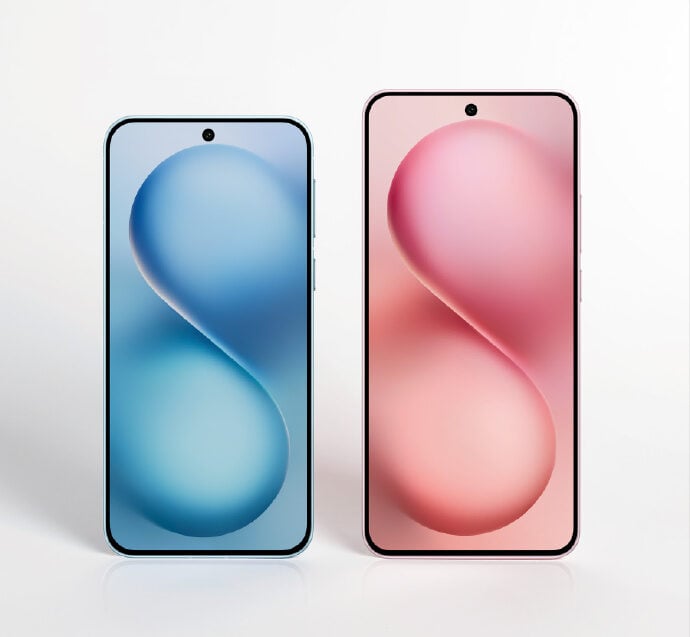
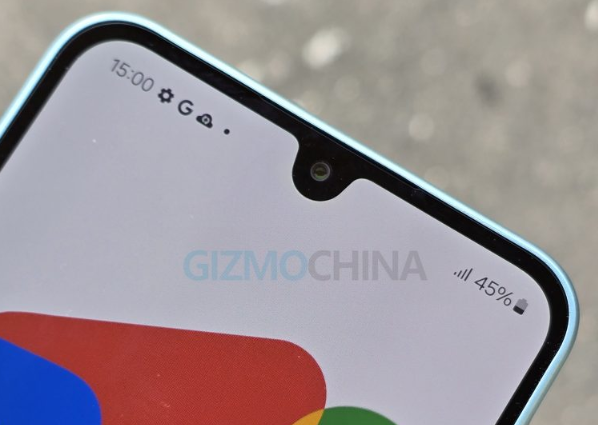
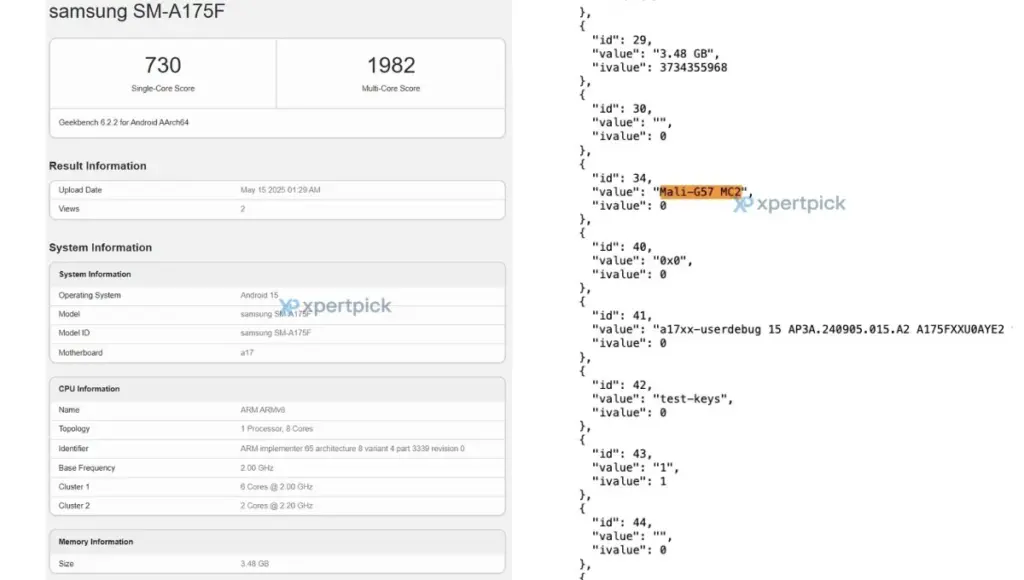
iQOO is reportedly working on the iQOO Z10 series of smartphones for the Chinese market. It is speculated that the lineup may include four models, such as the Z10x, Z10, Z10 Turbo, and Z10 Turbo. By mid-2025, the brand may unveil the Neo 10S series as an incremental upgrade over the existing Neo 10 lineup. The iQOO 15 series is expected to launch in October or November in the home market. By the end of 2025, the company may unveil the Neo 11 and Neo 11 Pro. A new leak by reliable tipster Digital Chat Station has revealed what to expect from the Neo 11 lineup.
iQOO Neo 11 key specifications leaked
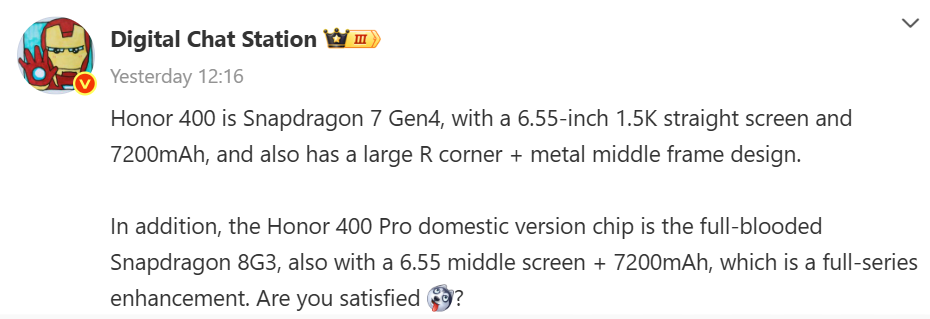
iQOO Neo 11 series leak by DCS
In the above Weibo post, DCS has not mentioned the name of the phone(s) he is talking about. However, the emoji used by him suggests that he could be talking about an upcoming iQOO phone, possibly the Neo 11 series. The leak suggests that the Neo 11 and Neo 11 Pro will have common specifications such as a 2K flat display, which would be a significant upgrade from the 1.5K screens seen in previous models.
Another major highlight of the Neo 11 lineup is the inclusion of a 3D ultrasonic fingerprint scanner, offering improved speed and accuracy compared to optical in-display sensors. Additionally, the series is expected to house a battery with a capacity exceeding 7,000mAh paired with 100W fast charging. For durability, the Neo 11 series will be equipped with a metal middle frame. If true, this would mark a significant shift from the plastic frames used in past Neo-series models.
The iQOO Neo 11 and Neo 11 Pro will succeed the Snapdragon 8 Gen 3-powered Neo 10 and Dimensity 9400-powered Neo 10 Pro, which were announced in December 2024 in China. While DCS has not mentioned the chipsets of the Neo 11 and 11 Pro, it is likely that the standard model may feature the Snapdragon 8 Elite, whereas the Pro model could be equipped with the upcoming Dimensity 9500 chipset.
For more daily updates, please visit our News Section.
Realme has confirmed its presence at MWC 2025 in Barcelona, where it will introduce the Realme 14 Pro series to a global audience. Alongside this, the brand has teased a new “Ultra” flagship smartphone with a strong focus on photography. The teaser hints at cutting-edge camera technology, but it remains unclear whether the device will be fully launched or just showcased as a concept.
The teaser image reveals a large circular camera module, suggesting the presence of an “ultra-large” sensor and an optical telephoto lens. Realme claims this sensor is larger than those found in current flagship smartphones. The brand also showcased zoom comparison shots, possibly targeting the Apple iPhone 16 Pro Max and Samsung Galaxy S25 Ultra—two premium devices that lack a 1-inch sensor and 10x optical zoom.
Realme Ultra flagship’s camera capabilities
A teaser video further fuels speculation by hinting at DSLR-level photography capabilities, with the possibility of a lens attachment system. This suggests that Realme’s Ultra phone may not just feature a high-end camera but also explore interchangeable lens functionality. However, this raises questions about whether the device is a commercial model or a concept aimed at demonstrating Realme’s advancements in smartphone photography.
Realme Ultra phone has DSLR-like lens attachment
The Realme Ultra flagship will be unveiled between March 3-6 at MWC 2025. If it enters the market, it will face competition from upcoming Ultra-tier flagships like the Galaxy S25 Ultra, Xiaomi 15 Ultra, Vivo X200 Ultra, and Oppo Find X8 Ultra.
As far as the global launch of the Realme 14 Pro series is concerned, their specifications are already known as they have been unveiled in India in the recent past. There’s a possibility that the Realme 14 Pro and 14 Pro+ are likely to be priced at around $440 and $590, respectively.
For more daily updates, please visit our News Section.
Lenovo has launched the IdeaPad Slim 5 Gen 10 AI laptops in India, targeting professionals and creators. These laptops are available in two standard sizes: 14-inch and 16-inch, and feature the AMD Ryzen AI 300 Series processors, integrating Zen 5 cores, RDNA 3.5 graphics, and an XDNA 2 NPU for AI capabilities.
The 14-inch IdeaPad Slim 5 model has a WUXGA OLED display with a 120Hz refresh rate, while the 16-inch variant offers IPS or 2.8K OLED options, with touch and non-touch choices. Both models have anti-glare screens and up to 500 nits brightness.
Lenovo IdeaPad Slim 5 14-inch 10th Gen
The laptops are powered by Ryzen AI 7 350 processors, supporting up to 32GB DDR5 RAM and 1TB M.2 SSD storage. They run Windows 11 and include a 1080p FHD IR hybrid camera, a backlit keyboard, and a 60Wh battery. Connectivity features include Wi-Fi 7, Bluetooth 5.4, two USB-C ports, two USB-A ports, HDMI 2.1, and a headphone/mic combo.
Lenovo has added AI tools like Lenovo AI Now, an AI agent based on Llama 3, and Lenovo Learning Zone for personalized learning. The laptops are 16.9mm thick and have military-grade durability.
Pricing & availability
Priced starting at ₹91,990, the IdeaPad Slim 5 Gen 10 comes in Luna Grey and Cosmic Blue. It is available on Lenovo.com, exclusive stores, e-commerce platforms, and offline retailers. A Custom to Order (CTO) option is also available which allows users to customize specifications like processor, memory, and storage. Lenovo Premium Care is included for support.
For more daily updates, please visit our News Section.
MediaTek has officially launched its latest mobile processors, the Dimensity 7400 and Dimensity 7400X. These new chipsets serve as successors to the Dimensity 7300 and Dimensity 7300X from last year, bringing improved AI processing and gaming optimisations. Read on to know their specifications and what sets them apart.
MediaTek Dimensity 7400 and Dimensity 7400X specifications
Dimensity 7400 and Dimensity 7400X
The Dimensity 7400 and 7400X are built on TSMC’s 4nm process, featuring an octa-core CPU with four Cortex-A78 cores clocked at 2.6GHz and four Cortex-A55 cores at 2.0GHz. The GPU is a Mali-G615 MC2, promising efficient graphical performance for mobile gaming.
Memory support includes LPDDR5 and LPDDR4X, with speeds of up to 6400Mbps. For storage, the chipsets are compatible with UFS 3.1 and UFS 2.2. Connectivity features include 5G with 3CC carrier aggregation, a peak downlink speed of 3.27Gbps, and Wi-Fi 6E with a 2T2R antenna configuration. Bluetooth 5.4 is also supported.
For imaging, MediaTek integrates the Imagiq 950 ISP, supporting up to 200-megapixel cameras and 4K HDR video recording at 30fps. Features like AI-driven autofocus, video EIS, and hardware-based face detection enhance photography and videography. The MiraVision 955 display engine ensures vibrant visuals with support for WFHD+ at 120Hz and Full HD+ at 144Hz.
MediaTek has upgraded the AI processing unit to APU 655, delivering a 15 percent improvement over its predecessor. The Dimensity 7400 series also benefits from the UltraSave 3.0+ power-saving technology, reducing gaming power consumption by up to 36 percent. Google Ultra HDR support ensures an improved dynamic range for photos and videos.
Dimensity 7400 vs. Dimensity 7400X: What’s the main difference between them?
The Dimensity 7400 and Dimensity 7400X are quite similar in terms of core specifications but are designed for different device categories. The D7400X is specifically fine-tuned for foldable devices, ensuring better power management and efficiency when handling multi-screen use cases. For regular smartphones, the D7400 provides the same level of performance, but without the additional enhancements needed for foldable displays. Smartphones featuring the Dimensity 7400 and 7400X are expected to debut in Q1 2025.
For more daily updates, please visit our News Section.
Xiaomi has officially confirmed key photography details of the Xiaomi 15 Ultra through newly released promotional posters. The smartphone, set to launch in China on Feb. 27, is expected to push mobile imaging capabilities further. In different markets, this phone will take on other “Ultra” branded flagship phones, such as the Galaxy S25 Ultra, Vivo X200 Ultra, and Oppo Find X8 Ultra.
Xiaomi 15 Ultra to feature Leica-powered imaging system
According to Xiaomi’s posters, the Xiaomi 15 Ultra will debut a new “Leica Ultra-Pure Optical System,” designed to enhance image clarity and light intake. The device is codenamed “Night God,” emphasizing its focus on low-light photography. The smartphone will house a new 1-inch main sensor alongside a powerful 200-megapixel periscope telephoto lens, both engineered to improve image purity and dynamic range. Xiaomi claims this combination will set a new benchmark for its Ultra series.
Xiaomi’s second poster highlights the 200-megapixel periscope lens, which offers advanced light intake and an equivalent 9.4mm aperture size. The sensor supports ultra-high resolution, a 100mm focal length, and an f/2.6 aperture. Additionally, it facilitates lossless zoom capabilities at 200mm and 400mm, promising significant improvements in telephoto performance. This camera, which is believed to be the Samsung HP9 lens, will replace the 50-megapixel Sony IMX858 periscope telephoto camera that was made available on the Xiaomi 14 Ultra.
Xiaomi 15 Ultra camera specifications (rumored)
Reliable tipster Digital Chat Station recently revealed the quad-camera configuration for the Xiaomi 15 Ultra. According to the leak, the primary 50-megapixel camera will feature a 1/0.98-inch sensor, a 23mm focal length, and an f/1.63 aperture.
The standout feature of the setup is a 200-megapixel periscope telephoto camera, which is said to support multiple lossless zoom levels, including 0.6x, 1x, 2x, 3x, 4.3x, 8.7x, and 17.3x.
Additionally, the quad-camera system will include a 50-megapixel ultra-wide camera with a 14mm focal length and an f/2.2 aperture. Rounding off the setup is a 50-megapixel 70mm telephoto camera with an f/1.8 aperture, which also supports telephoto macro shots.
For more daily updates, please visit our News Section.
OnePlus has started rolling out the OxygenOS 15.0.0.501 update for the OnePlus 13R in India, focusing on app features, connectivity, camera performance, and security. The update (CPH2691_15.0.0.501(EX01)) is being released in phases, initially reaching a small group of users before expanding broadly.
The update allows users to permanently delete items from the recycle bin in the Notes, Messages, and My Files apps. It also ensures the Weather app adjusts automatically when system font sizes are changed. Connectivity improvements include better Wi-Fi stability, adjusted cellular network reliability, and smoother device-to-vehicle connections.
Camera performance has been fine-tuned for smoother operation, while system optimizations aim to reduce lag and crashes. The update includes the February 2025 Android security patch to fix vulnerabilities and improve security. You can check the official changelog below.
OnePlus 13R OxygenOS 15.0.0.501 changelog
Apps
Adds options to quickly delete Notes, Messages, and My Files data from the recycle bin.
The system font size now also applies to Weather.
Communication & interconnection
Improves the stability and compatibility of Wi-Fi connections.
Improves the stability and expands the compatibility of cellular communications.
Improves the stability of the connection between your mobile device and your car.
Camera
Improves camera performance and stability for a better user experience.
System
Improves system stability and performance.
Integrates the February 2025 Android security patch to enhance system security.
OnePlus notes that this is a gradual update, and features might vary by region. Users should check official release notes for specifics. Indian users can report bugs by dialing *#800# in the Google Dialer, a feature currently limited to India. The company encourages users to share feedback to address potential issues.
Your phone’s screen is the most vulnerable part of the device, and one accidental drop can lead to a cracked, scratched, or shattered display. Screen protectors add an extra layer of defense, but with so many options available, picking the right one can feel overwhelming. From tempered glass to liquid coatings, there’s no shortage of choices. So, which one is best for your phone? Let’s break it down.
The Different Types of Screen Protectors
Tempered Glass: The Gold Standard
Tempered glass screen protectors have become the most popular choice due to their durability and smooth feel. They are made by heating and rapidly cooling glass, making them tougher than regular glass. Most come with an oleophobic coating to resist fingerprints and smudges, and they can absorb impact from drops, often sacrificing themselves to save your screen. However, they can add some bulk and may crack upon heavy impact, requiring replacement.
TPU (Thermoplastic Polyurethane): The Flexible Option
TPU screen protectors are thin, flexible, and self-healing, meaning minor scratches disappear over time. Unlike tempered glass, TPU film covers the entire screen, including curved edges, making it a great option for phones with rounded displays. The downside? They’re not as impact-resistant and can feel rubbery, which some users find unpleasant.
PET (Polyethylene Terephthalate): The Budget Pick
PET protectors are ultra-thin, lightweight, and cheap. They provide decent scratch protection but won’t do much to prevent screen damage from drops. PET protectors are often found in multipacks and are easy to apply without bubbles, but they lack the premium feel of glass and tend to wear out faster.
Privacy Screen Protectors: For Extra Security
If you’re tired of nosy people peeking at your phone on public transport, privacy screen protectors are worth considering. These are usually made of tempered glass with a special filter that limits viewing angles, ensuring only you can see your screen. While great for privacy, they can slightly reduce display brightness and clarity.
Matte Screen Protectors: Anti-Glare and Smooth Touch
Matte screen protectors reduce reflections and fingerprints, making them ideal for outdoor use and gamers who dislike glossy surfaces. They offer a unique smooth feel, often described as “paper-like,” which can be great for stylus users on tablets. However, matte protectors can slightly reduce display sharpness and may make colors appear less vibrant.
How to Choose the Right One?
Consider Your Usage: If you frequently drop your phone, tempered glass is your best bet. If you just want scratch resistance, PET or TPU might be enough.
Check Compatibility: Some protectors interfere with under-display fingerprint scanners, so look for one that explicitly supports biometric unlocking.
Thickness Matters: While thicker protectors provide better impact resistance, they might slightly alter touch sensitivity.
Ease of Installation: Look for protectors with installation kits that include alignment frames, dust removers, and squeegees to reduce air bubbles.
Top Screen Protector Brands to Consider
If you’re looking for reliable options, these brands consistently deliver high-quality screen protectors:
ZAGG (InvisibleShield): Known for its premium glass protectors and added features like blue light filtering and reinforced edges.
amFilm: Budget-friendly brand that offers reliable tempered glass protectors at competitive prices.
Spigen Glas.tR: Popular among phone case users for its compatibility and durability.
Whitestone Dome Glass: Uses a UV-cured adhesive to ensure a perfect fit on curved screens.
ESR: Solid mid-range option offering a balance of quality and affordability.
Belkin ScreenForce: Apple-certified protectors for iPhones with high precision and great clarity.
Realme will debut its Neo 7 SE smartphone, Neo 7x, and Buds Air 7 earbuds in China today, April 25, expanding its mid-range portfolio. Pre-reservations for the Neo 7x have already begun, with the brand teasing key specs ahead of the launch.
In the latest teaser shared by the brand on Weibo, Realme has claimed that the Neo 7x will be the world’s first smartphone powered by Qualcomm’s Snapdragon 6 Gen 4 chipset. Released in February 2025, this new chip is built on a 4nm process and borrows the Snapdragon 8 Gen 3’s micro-kernel architecture for improved performance and efficiency. It pairs this with a 6,000mAh battery supporting bypass charging, reducing heat during high-power usage.
Despite its large battery, the device maintains a sleek 7.97mm profile and is rated IP66, IP68, and IP69 for dust and water resistance. This means it is fully dustproof, protected against strong water jets, can withstand prolonged immersion in water (typically 1.5-3m depth), and is resistant to high-pressure, high-temperature water jets.
Design-wise, the Neo 7x features a futuristic “Ares mecha” rear panel with a rectangular camera module housing dual sensors and an LED flash. A grey-silver color option has been showcased.
The Neo 7x is expected to launch globally as the Realme 14 5G (model RMX5070), though regional pricing and availability remain unconfirmed. Previous reports have claimed that the device could feature a 6.67-inch OLED display with FHD+ resolution, a 16-megapixel front camera, and a 50-megapixel + 2-megapixel dual-camera system. Detailed specs and Chinese pricing will be revealed at tomorrow’s event.
The Neo 7 SE’s expected specs include a Dimensity 8400-Max chip, with a 6.78-inch flat OLED panel that offers a 1.5K resolution and a 120Hz refresh rate. It could ship with a 16-megapixel front camera and a 50-megapixel + 8-megapixel dual-camera system. A large 7,000mAh battery is expected to be onboard with 80W fast charging. The launch event begins April 25 at 2:30 PM local time.
For more daily updates, please visit our News Section.
Nothing has rolled out a major update for its Phone (1), integrating Google’s Circle to Search and critical security features. The 202MB Nothing OS V3.0-250218-1552 update is now available for download, delivering functional upgrades and performance optimizations.
Key Additions The standout feature, Circle to Search, lets users instantly search any on-screen text, image, or video. Activation requires a long press on the Home button (3-button navigation) or the navigation bar (gesture mode). Enable it via Settings > Special features > Gestures > Navigation mode.
A new power-off password verification blocks unauthorized device shutdowns—crucial for lost or stolen phones. Users can enable this by searching “Power off verify” in Settings. The update also introduces fresh wallpapers for customization.
Performance Upgrades The update improves Settings menu responsiveness, refines Quick Settings pull-down speed in landscape mode, and enhances stability for Wi-Fi, Bluetooth, and system performance. It also includes the February 2024 Android security patch. You can check out the complete changelog below.
Nothing OS V3.0-250218-1552 Changelog
New features
Circle to Search is available now. Initiate a search from any text, image, or video on your screen:
• 3-button navigation: Long-press the Home button • Gesture navigation: Long-press the Navigation bar. (Ensure your Navigation bar is not hidden)
To enable the settings for Circle to Search, navigate to: Settings > Special features > Gestures > Navigation mode > Circle to Search
Added power-off password verification to prevent immediate power-off if your phone is lost. Path: Search ‘Power off verify’ in Settings.
Added new wallpapers.
General improvements
Improved responding speed of Settings.
Optimised Quick Settings pull-down speed in landscape mode.
Enhanced WiFi, Bluetooth, and system stability.
Updated to February security patch.
Installation Download the update under Settings > System > System Updates. Users are urged to install immediately for optimized security and functionality.
For more daily updates, please visit our News Section.
Infinix India has launched the Y1V QLED TV, a 40-inch model priced at ₹13,999. Available exclusively on Flipkart from March 1, 2025, the Y1V targets budget-conscious buyers.
The TV features a 40-inch Full HD (1920×1080) QLED display with 280 nits brightness, a 60Hz refresh rate, and a 94% NTSC color gamut. Its bezel-less design incorporates anti-blue light technology. A quad-core processor powers the device, supported by 512MB RAM and 4GB storage.
For audio, the TV has dual 16W speakers with Dolby Audio. Connectivity options include Wi-Fi, Bluetooth 5.0, two HDMI ports, two USB ports, Ethernet, and a 3.5mm jack. An IR remote is included. The Linux-based OS features pre-installed apps like JioCinema, Hotstar, Prime Video, ZEE5, Sony LIV, and YouTube. As for screen mirroring, the TV has Miracast.
The Y1V enters India’s competitive budget TV market, challenging established brands like Xiaomi and Realme. Its ₹13,999 (~$162) price point undercuts comparable QLED TVs, though RAM remains limited. Additionally, the TV comes with a one-year warranty, providing buyers with peace of mind. As mentioned above, the Y1V QLED TV will be exclusively available via Flipkart from March 1, 2025.
For more daily updates, please visit our News Section.
Samsung’s foldable future might not be as Exynos-powered as some had hoped. Despite reports suggesting that the Galaxy Z Flip 7 could ship with the Exynos 2500, new information indicates that yield issues will likely keep Samsung’s latest in-house chip off the company’s flagship clamshell foldable. Instead, the Flip 7 is now expected to launch with Qualcomm’s Snapdragon 8 Elite, the same chip found in the Galaxy S25 series.
Exynos 2500 Faces Setback
Samsung Foundry had been riding a wave of optimism after finally stabilizing its 3nm process, fueling hopes that the Exynos 2500 could compete with Qualcomm’s best. Early Z Flip 7 prototypes were reportedly running on Exynos 2500 silicon, signaling Samsung’s confidence in its latest chip. But now, those prototypes seem to have vanished, replaced by versions rocking Qualcomm’s latest Snapdragon chip.
Samsung has been aggressively pushing to bring Exynos back into its high-end lineup after relying heavily on Qualcomm in recent years. The company had originally planned to equip the Galaxy S25 and S25+ with the Exynos 2500, but low yields at Samsung Foundry forced it to use the Snapdragon 8 Elite across the entire lineup. Those same yield problems appear to be affecting the Galaxy Z Flip 7’s development.
Currently, Samsung is reportedly producing only around 5,000 Exynos 2500 chips per month, a number far too small to meet the demand for a mainstream foldable like the Z Flip 7. Unless the foundry can dramatically scale up production before the phone’s expected release later this year, Samsung has no choice but to stick with Qualcomm’s silicon.
That doesn’t mean the Exynos 2500 will sit on the sidelines entirely. Some reports suggest Samsung may still use the chip in the upcoming Galaxy Z Flip FE, a more affordable foldable that could see a limited release. The lower sales volume of an FE model would make it a better candidate for a chipset with supply constraints.
Meanwhile, Samsung is already eyeing the Exynos 2600, its next-gen 2nm chip, for the Galaxy S26 series. But if current manufacturing struggles persist, Samsung’s ambitions for a fully in-house flagship experience could remain out of reach for another year.
For more daily updates, please visit our News Section.
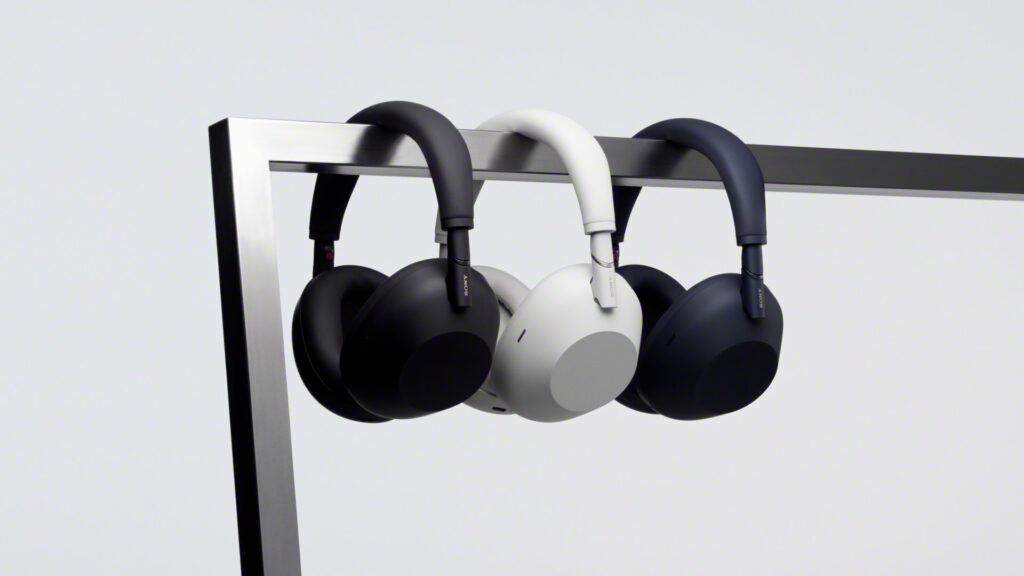
Panasonic Life Solutions India has unveiled three new soundbars—SC-HTS600GWK, SC-HTS400GWK, and SC-HTS160GWK—tailored to different budgets and audio preferences.
Premium Option: SC-HTS600GWK
The top-tier SC-HTS600GWK features a 5.1-channel setup with Dolby Digital Plus and a 600W RMS output. Its 900mm soundbar, wireless surround speakers (80 x 168 x 92mm), and subwoofer (190 x 372 x 319mm) aim to replicate cinematic sound. Weighing 7.6kg, it suits larger spaces.
Mid-Range Balance: SC-HTS400GWK
The 5.1-channel SC-HTS400GWK (400W RMS) also supports Dolby Digital Plus but has a shorter 760mm soundbar. At 7.45kg, it balances audio quality and space efficiency for medium-sized rooms.
Basic Model: SC-HTS160GWK
The entry-level SC-HTS160GWK offers a 2.1-channel system (160W RMS) without Dolby support or surround speakers. Its 760mm soundbar and subwoofer (6.3kg total) cater to smaller spaces or casual listeners.
Common Features

All models share features like Bluetooth 5.3, HDMI, USB, optical ports, and four EQ modes (Music, Movie, News, Night/3D). An LED display, touch controls, and a remote simplify operation.
Pricing and Positioning
The SC-HTS160GWK starts at ₹12,990, the SC-HTS400GWK at ₹23,990, and the SC-HTS600GWK at ₹34,990. The soundbars are available at Panasonic stores, retailers, e-commerce platforms, and the brand’s direct-to-consumer website.
In other news, LG has also introduced the S95TR and S90TY soundbars in India, offering premium audio with features like Dolby Atmos and DTS:X support.
Indian electronics brand boAt launched two affordable smartwatches, the Ultima Prime and Ultima Ember, on February 24, 2025. Both models are priced at Rs. 1,899 and focus on Bluetooth calling, fitness tracking, and extended battery life.
boAt Ultima Prime features
The Ultima Prime includes a 1.43-inch AMOLED Always-On Display with a 466×466 resolution and 700 nits brightness. It has a functional crown for navigation and a Wake Gesture feature to check notifications by raising the wrist. The device supports Bluetooth calling with a dial pad for 20 contacts and offers a battery life of up to five days (three to five days with calling enabled).
Health features cover heart rate, SpO2, sleep, and stress monitoring, menstrual cycle tracking, guided breathing exercises, and over 100 sports modes. It is IP68-rated for dust and water resistance and includes step counting, calorie tracking, hydration reminders, and tools like a calculator, games, and weather updates.
boAt Ultima Ember features
The Ultima Ember has a larger 1.96-inch AMOLED Always-On Display (368×448 resolution, 800 nits brightness) and a longer battery life of up to 15 days (three to five days with calling). It supports Bluetooth calling for 20 contacts and matches the Prime’s health and fitness features, including heart rate, SpO2, sleep, stress tracking, and sports modes. Additional tools like camera/music controls, alarms, timers, and Emergency SOS are included.
Key differences between the two models are screen size, resolution, brightness, and battery life. The Ultima Ember offers a larger display and longer battery, while the Prime has a higher screen resolution and the Wake Gesture feature. Both devices provide IP68 water resistance, customizable watch faces, and a one-year warranty.
Pricing & availabilty
Available in six color options each, the Ultima Prime and Ultima Ember can be purchased via boAt’s official website, Amazon.in, Flipkart, and retail stores. As mentioned in the beginning, both watches cost Rs. 1,899.
For more daily updates, please visit our News Section.
Xiaomi is ready to dive headfirst into the AI PC era with the upcoming RedmiBook Pro 16 and Pro 14, set to launch on February 27. These new laptops pack Intel Core Ultra 7 and Ultra 5 processors, promising significant AI-powered upgrades that redefine performance, efficiency, and intelligent computing. But with all these advancements, Xiaomi’s Product Marketing Director Ma Zhiyu has already set expectations: a price hike is inevitable but it won’t be artificially inflated.
A Price Hike That’s Hard to Avoid
At the heart of the RedmiBook Pro 2025 is Intel’s second-gen Core Ultra processors, delivering up to 96 TOPS AI computing power, a 150%+ boost in AI performance. This means enhanced system optimizations, on-device AI processing for large models, and intelligent search functions baked directly into the OS. Xiaomi is calling it an “AI-powered professional office laptop,” positioning it as an essential tool for both productivity and creativity.
Beyond AI, Xiaomi has cranked up the hardware to match. The laptop features LPDDR5X 8400MT/s ultra-fast memory, while its new cooling system improves thermal efficiency by 34.4% over last year’s model. Internal tests show impressive gaming performance too—Black Myth: Wukong reportedly runs at an average of 67 fps on the device, peaking at 75 fps and rarely dipping below 59 fps. Even the smaller 14-inch variant will have a Core Ultra 7 option, suggesting serious horsepower across the lineup.
With so many upgrades, a price increase was expected. Ma Zhiyu cites exchange rate shifts, rising CPU costs, and premium hardware as the key factors. However, he insists that Xiaomi won’t inflate prices due to government subsidies, ensuring that consumers are paying for real improvements rather than artificial markups.
For reference, last year’s RedmiBook Pro 2024 series started at 4,999 yuan (~$690). While Xiaomi hasn’t revealed official pricing yet, expect a bump but one that aligns with the growing power under the hood. The full reveal happens on February 27 at 7 PM (CST), when Xiaomi officially pulls back the curtain on its first true AI PC alongside the Xiaomi 15 Ultra and SU7 Ultra.
For more daily updates, please visit our News Section.
Thunderobot has just dropped its latest gaming monitor, the Black Warrior ZQ27F210L, a 27-inch 2K display with a blazing-fast 210Hz refresh rate all for an introductory price of 899 yuan (~$125).
If you’re looking for something even more budget-friendly, there’s also a lower-end version with a fixed stand and slightly downgraded specs, launching at 799 yuan (~$111).
Thunderobot ZQ27F210L Specifications
The ZQ27F210L packs a 2560×1440 QHD Fast-IPS panel, delivering sharp visuals with 95% DCI-P3 and 99% sRGB color gamut coverage. It supports 10-bit color depth (8-bit + FRC) and ships with factory calibration for a Delta E≤2 color accuracy, making it a solid pick for content creators as well. The HDR support (though not officially VESA-certified) pushes brightness up to 450 nits, improving contrast and depth in supported games and media.
For gaming, the 210Hz refresh rate (via DisplayPort 1.4) ensures ultra-smooth motion, while the 1ms GTG response time and three levels of OverDrive acceleration help minimize motion blur and ghosting.
If you’re using HDMI 2.0, you’ll be capped at 144Hz, still plenty fast for most setups. Adaptive-Sync support makes the monitor compatible with both Nvidia G-Sync and AMD FreeSync, reducing screen tearing and stutter for a more seamless experience. There’s also a dark enhancement mode, making shadowed areas easier to see without overexposing highlights.
The fully adjustable stand lets you tweak the height (110mm), tilt (-5° to 20°), swivel (±30°), and even rotate the display 90° vertically for portrait mode. If you prefer a monitor arm, there’s VESA 75x75mm support for easy mounting.
Connectivity-wise, you’re getting two HDMI 2.0 ports, one DisplayPort 1.4 input, and a 3.5mm audio jack. Thunderobot includes a 1.5m DisplayPort cable in the box, so you’re good to go right out of the gate.
Rounding out the package, the monitor features DC dimming for a flicker-free experience and a hardware-level low blue light mode, making long gaming or work sessions easier on the eyes. It also comes with a three-year warranty.
Xiaomi has launched the Mijia Capsule Coffee Machine S1, a compact espresso maker designed for speed and convenience. Available on the company’s Youpin platform for 499 yuan (~$70), the machine brings a 25-second preheat time, a 20-bar ULKA water pump, and a magnetic capsule rack that can store up to 20 capsules.
Mijia Capsule Coffee Machine S1 Specs
The standout feature here is the powerful 20-bar pump, which applies steady pressure to extract rich, full-bodied espresso with a naturally creamy texture. Pair that with a 1250W heating system, and you’re looking at a machine that’s ready to brew in just 25 seconds, ideal for those rushed mornings.
Brewing is as simple as pressing a button, with no complex setup required. The dual-temperature control system, powered by an NTC sensor and PID algorithm, ensures the water stays at the ideal heat level for proper extraction without overdoing it. Users can also customize their cup size, choosing between 40ml for espresso and 110ml for an Americano, with the ability to save preferred settings for future use.
Xiaomi also put some thought into storage. The magnetic capsule rack can be attached to the side of the machine or stuck onto a metallic surface like a fridge, helping save counter space. Meanwhile, the detachable 650ml water tank makes refilling and cleaning hassle-free.
The design is another highlight. The machine is just 33.2cm × 9.0cm × 21.2cm, about the size of an A4 sheet, with a minimalist grey finish that should fit seamlessly into most kitchens. It’s also quiet, operating at 55dB(A), so you won’t wake up the whole house while making your morning coffee. The two-position adjustable cup holder accommodates various mug sizes, and a 10-minute auto shut-off helps conserve energy.
Xiaomi is bundling 10 Swiss-imported coffee capsules with the machine, offering a premium-tasting experience straight out of the box. The capsules promise a smooth, layered flavor profile with tropical fruit notes and a hint of dark chocolate.
Last year, Xiaomi also launched the Mijia Capsule Coffee Machine N1, a compact and easy-to-use device featuring one-button extraction, customizable cup volume, and a 20Bar electromagnetic pump for rich coffee flavor.
For more daily updates, please visit our News Section.
Samsung is set to expand its 5G smartphone lineup in India with the upcoming launch of the Galaxy M16 5G and Galaxy M06 5G. The company recently teased the arrival of these devices, which revealed key design elements of the two devices, particularly the rear camera layout. While the exact launch date remains undisclosed, the smartphones are confirmed to be available for purchase on Amazon.
Galaxy M16 and Galaxy M06 design is now official
The teaser image reveals a triple rear camera setup (for the Galaxy M16) arranged vertically within a pill-shaped island. The larger cutout in the module houses two sensors, while a smaller slot accommodates the third. A circular LED flash unit is positioned outside the camera island, adding a distinctive touch to the design. This aligns with previously leaked renders. To recall, the Galaxy M15 5G also packs a triple-camera setup: 50MP main + 5MP ultrawide + 2MP macro.
Samsung Galaxy M15Galaxy M05
Although details about the Galaxy M06 5G are more limited, it is expected to share a similar design language with two cameras on the back, just as its predecessor. The Galaxy M05 offers a 50MP main and a 2MP macro camera on the back, paired with an 8MP selfie. Here is good news for anyone waiting for the Galaxy M06: it’s expected to support 5G connectivity, which its predecessor lacks.
The Galaxy M16 previously surfaced on Geekbench with the Dimensity 6300 chip. According to a recent report from HT Tech, both phones are expected to be powered by the Dimensity 6300 chip, which, if true, will represent a shift in strategy as compared to last year’s models. The Galaxy M15 and the M05 are powered by the MediaTek Dimensity 6100+ (6nm) and Helio G85 (12 nm) respectively. Aside from 5G connectivity, it will also allow users to use slightly heavier apps on the more affordable model. Nonetheless, this is just a rumor, so take it with a pinch of salt.
The Galaxy M-series has been a popular choice for Galaxy fans seeking affordable yet feature-rich smartphones. Overall, both phones will come with a flat design and are expected to offer iterative improvements over their predecessors.
The Snapdragon 8 Gen 2 is a flagship chipset announced in November 2022. It’s an octa-core chip with a powerful CPU and GPU that delivers excellent performance, even with demanding applications and games. There are dozens of phones out there powered by this Qualcomm chip from multiple brands such as Xiaomi, Samsung, OnePlus, and more.
This Snapdragon 8-series chip is fabricated using TSMC’s highly efficient 4nm process node. The CPU has a total of eight cores, with a peak frequency of up to 3.2GHz. The GPU is Adreno 740, which is capable of handling demanding games, like Genshin Impact, Fortnite, and Call of Duty: Mobile. Here, we’ll look at performance of the Snapdragon 8 Gen 2 chipset on popular benchmarks including AnTuTu and Geekbench.
[Note: The following benchmark tests have been conducted on the iQOO Neo 9 Pro, powered by Qualcomm Snapdragon 8 Gen 2.]
Snapdragon 8 Gen 2 AnTuTu score
AnTuTu is a widely used benchmarking tool that measures a device’s CPU, GPU, memory, and user experience (UX) performance through a series of tests. It evaluates processing power, graphics rendering, multitasking efficiency, and overall system responsiveness. The final AnTuTu score represents the overall performance of a device.
On AnTuTu v10, the iQOO Neo 9 Pro, powered by Snapdragon 8 Gen 2, scored an impressive 1.6 million+ AnTuTu points. As for the breakdown, the CPU gets 387038 points, GPU gets 612954 points, memory gets 306124, and UX gets 303647 points.
AnTuTu score
1,609,763
CPU
387,038
GPU
612,954
Memory
306,124
UX
303,647
Snapdragon 8 Gen 2 Geekbench score
Geekbench evaluates CPU performance by running a series of tasks and outputs single-core and multi-core scores. The single-core score reflects the performance of a single CPU core, while the multi-core score measures the performance when all cores work together.
On Geekbench v6, the Snapdragon 8 Gen 2-powered iQOO Neo 9 Pro scored 2,012 points in the single-core test and 5,461 points in the multi-core test.
Geekbench 6
Single core
2,012
Multi core
5,461
Snapdragon 8 Gen 2 3DMark score
3DMark is a popular gaming benchmarking tool that evaluates the graphics capabilities of devices by rendering a demanding game-like scene.
Here are the 3DMark scores for iQOO Neo 9 Pro powered by Snapdragon 8 Gen 2:
3DMark scores
Wild Life (1440p)
12,961
Wild Life Extreme (2160p)
3,342
Solar Bay (1440p)
4,879
Snapdragon 8 Gen 2 spec sheet
SD 8 Gen 2
Announced
November 2022
Process node
4nm
Manufacturer
TSMC
CPU
1 x 3.2GHz — Cortex-X3 2 x 2.8GHz — Cortex-A715 2 x 2.8GHz — Cortex-A710 3 x 2GHz — Cortex-A510
GPU
Adreno 740 GPU Hardware accelerated ray tacing Snapdragon Elite Gaming features
NPU
Qualcomm Hexagon NPU
Memory
LPDDR5x, up to 4.2GHz
Storage
UFS 4.0
USB
USB Type-C version 3.1
Camera
Spectra triple 18-bit ISPs Up to 200MP single camera Up to 108MP single camera with zero shutter lag Up to 8K/30fps or 4K/120fps video recording
Qualcomm has announced the launch of its first-ever Snapdragon Experience Zone in India, which is intended to bring its cutting-edge technology closer to consumers in the country. The company has been constantly pushing the boundaries of how much is possible with a compact battery-powered device. The company has solved the battery life issue of Windows laptops thanks to its Snapdragon X series chips. Now, aside from the research and development, the company is also letting people experience the options they have.
In collaboration with Croma (a leading consumer electronics retail chain), the Experience Zone is now open at the Croma Store in Juhu, Mumbai. Qualcomm reportedly has plans to establish more such zones across the country, which would let customers explore and interact with devices powered by Snapdragon processors.
Qualcomm is showcasing a wide range of products
The Snapdragon Experience Zone showcases a wide range of ecosystem products, which include smartphones, PCs, wearables, and audio devices, all powered by Qualcomm’s advanced processors.
Visitors can enjoy a hands-on experience with these devices and witness firsthand the capabilities of Snapdragon chips, particularly their on-device AI features. Trained staff are also available to provide demonstrations and answer user queries, to ensure users walk away with a deeper understanding of the technology.
Savi Soin, President of Qualcomm India, emphasized the significance of this initiative, stating, “This allows customers to experience the transformative power of on-device AI, showcasing the cutting-edge capabilities of the Snapdragon ecosystem.”
The Windows laptops powered by the Arm-based Snapdragon X series SoCs are priced under $600 (approximately Rs. 50,000) globally, and a similar pricing strategy is anticipated for the Indian markets as well. Aside from the increased power efficiency, the NPU capability of the Snapdragon-powered laptops also makes them a great option for AI processing, which will make more sense as the industry moves towards a deeper integration of the technology. Microsoft was recently reported to be working on a distilled version of DeepSeek-R1, and the Snapdragon-powered laptops will be the first to benefit from this development.
The event, titled “AI PCs for Everyone,” highlights Qualcomm’s focus on making AI-powered devices accessible to a wider audience. With plans to expand the Snapdragon Experience Zones across India, Qualcomm aims to strengthen its presence in the country while educating consumers about the transformative potential of its technology.
Samsung’s One UI 7 is a pretty significant upgrade, bringing in plenty of visual changes across the UI, dozens of improvements, and several AI advancements. However, the stable rollout has been disappointing so far. The brand hasn’t even announced a release timeline, leaving users in the dark as to when they can expect the stable update on their Galaxy devices.
If you’re eagerly waiting for the One UI 7 update, you’re not alone. With every new One UI version, Samsung typically follows a pattern that includes rolling out beta updates for recent flagship models and then pushing the stable version in a month or two. However, this time, the uncertainty is frustrating many users. Here, we’ll break down Samsung’s software rollout plan and look at the possible rollout timeline for One UI 7.
Samsung One UI 7 release timeline
Samsung hasn’t updated a single Galaxy device to stable One UI 7 so far, which is disappointing and surprising, considering that many other brands, such as OnePlus and Nothing, are wrapping up their Android 15 rollout. The brand hasn’t even announced a release timeline yet, but it has been reportedly delaying the stable rollout multiple times.
However, we saw some good signs recently, hinting at an imminent release. Last week, Samsung released the fourth One UI 7 beta for the Galaxy S24 series. Soon after that, a Samsung Community moderator from the One UI beta team revealed that One UI 7 stable version will be released very soon without revealing the exact date, and the very next day, the Galaxy S24 models received their fifth beta update. This suggests Samsung may be planning to release the stable version anytime soon, at least for the Galaxy S24 series.
According to recent reports, Samsung might start rolling out the One UI 7 update to the Galaxy S series and Z series in March, and it might expand it to remaining Galaxy devices in the second quarter of 2025. So, the possible One UI 7 timeline looks like this:
March 2025: Galaxy S series, Galaxy Z series
Q2 2025: Galaxy A series, Galaxy M series, Galaxy F series, and remaining devices
If your Samsung Galaxy is a few years old, you might want to check if it’s actually eligible for the One UI 7 update, or has it run out of major updates quota? Below is the list you should have a look at.
Note that this is not an official list. However, it shouldn’t differ much from the official one as we’ve prepared it based on the software update policy for every Samsung device. So, if your device is on the list, it’s almost guaranteed to receive the One UI 7 update.
Don’t forget to regularly visit our One UI 7 section for the latest news regarding One UI 7 rollout plans. Also, follow our Telegram channel and subscribe to our free newsletter for the latest news and updates! ⚡
We use cookies on our website to give you the most relevant experience by remembering your preferences and repeat visits. By clicking “Accept”, you consent to the use of ALL the cookies.
This website uses cookies to improve your experience while you navigate through the website. Out of these, the cookies that are categorized as necessary are stored on your browser as they are essential for the working of basic functionalities of the website. We also use third-party cookies that help us analyze and understand how you use this website. These cookies will be stored in your browser only with your consent. You also have the option to opt-out of these cookies. But opting out of some of these cookies may affect your browsing experience.
Necessary cookies are absolutely essential for the website to function properly. This category only includes cookies that ensures basic functionalities and security features of the website. These cookies do not store any personal information.
Any cookies that may not be particularly necessary for the website to function and is used specifically to collect user personal data via analytics, ads, other embedded contents are termed as non-necessary cookies. It is mandatory to procure user consent prior to running these cookies on your website.