Samsung’s upcoming Galaxy A17 4G has surfaced on Geekbench, revealing its chipsets: the MediaTek Helio G99.
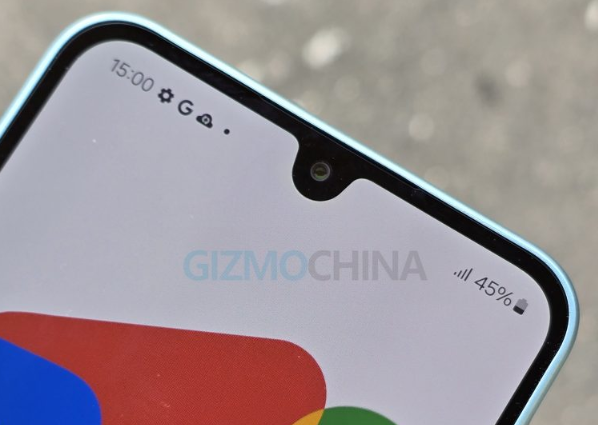
Samsung Galaxy A16 5G
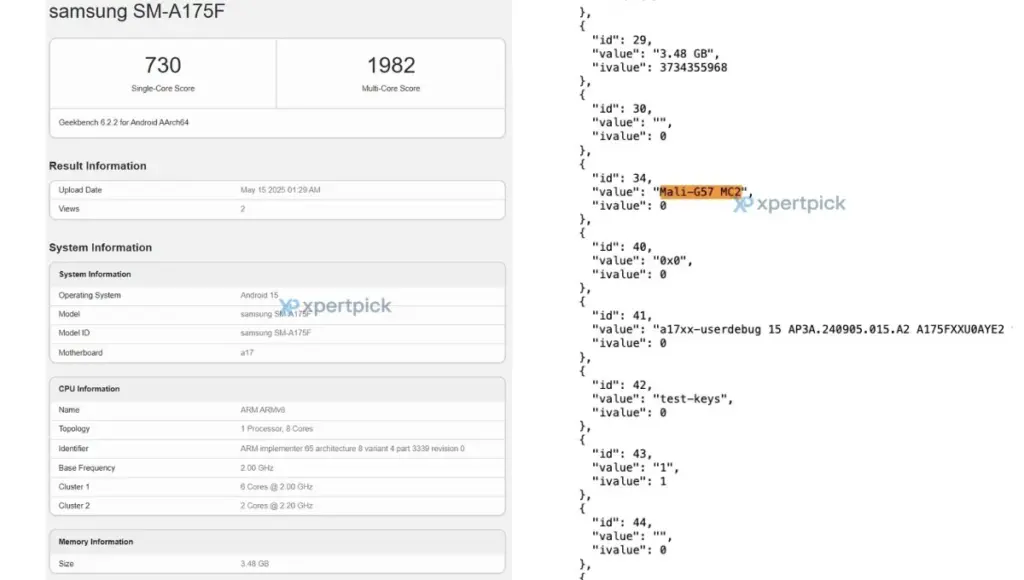
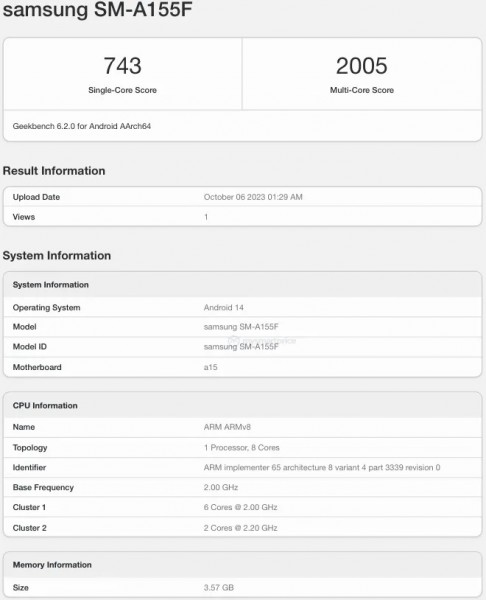
Samsung is prepping two budget-friendly phones for late 2025, with details emerging from Geekbench and Bluetooth SIG databases. The Galaxy A17 4G, model SM-A175F, uses the MediaTek Helio G99 — a two-year-old 6 nm-based chip with two 2GHz Cortex-A76 cores and six 2GHz Cortex-A55 cores, paired with a Mali-G57 MC2 GPU. It’s the same chip found in the Galaxy A16 and A15, and according to the Geekbench listing, it’s returning for the A17 as well. The scores? Slightly lower than it’s predecessors.
Upcoming Galaxy A17 4G on Geekbench
While it’s easy to justify the lower scores—given that the phone is still in development and has months of optimization ahead—that alone might not be enough to deliver a noticeable performance boost. Another surprise lies in the OS version: the Galaxy A17 (4G) is being tested on Android 15 (One UI 7.0) while One UI 8 will debut in June or July with the 7th gen foldables, months before the Galaxy A17’s release.
Galaxy A15 4G from 2023 on Geekbench
A 5G variant, likely powered by an Exynos or MediaTek Dimensity chip, is also expected. For context, both 4G and 5G versions of the A16 launched in October last year.
Meanwhile, the Galaxy M36 5G, model SM-M366B/DS, nears launch, with a support page on Samsung UAE’s site and an Exynos 1380 chip (5nm, Mali-G68 MP5 GPU), 6GB RAM, and Android 15. Likely a rebranded Galaxy A36, which uses a snappier 4nm Snapdragon 6 Gen 3, the M36 may share its 50MP main camera, 5,000mAh battery, and 25W charging. The Exynos 1380’s 5.5 lakh AnTuTu score trails the A36’s, but it’s still okay for basic day-to-day tasks.
Will the A17 4G’s dated chip hold it back, or can a creative marketing win out? Only time will tell.
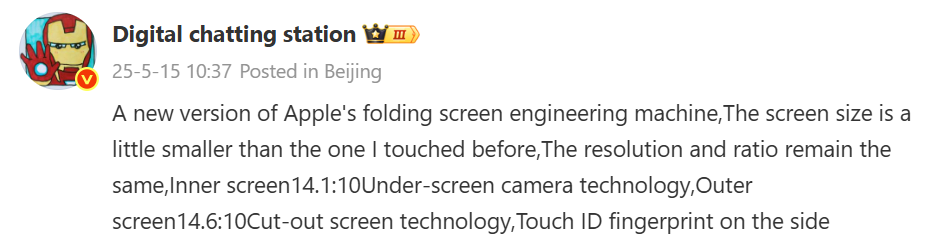
After years of cautious silence, Apple’s long-rumored foldable iPhone is finally starting to take shape, at least in the world of supply chain whispers and leaked prototypes. According to prominent Chinese tipster Digital Chat Station, the device is inching closer to reality with some big design departures that challenge Apple’s traditional playbook.
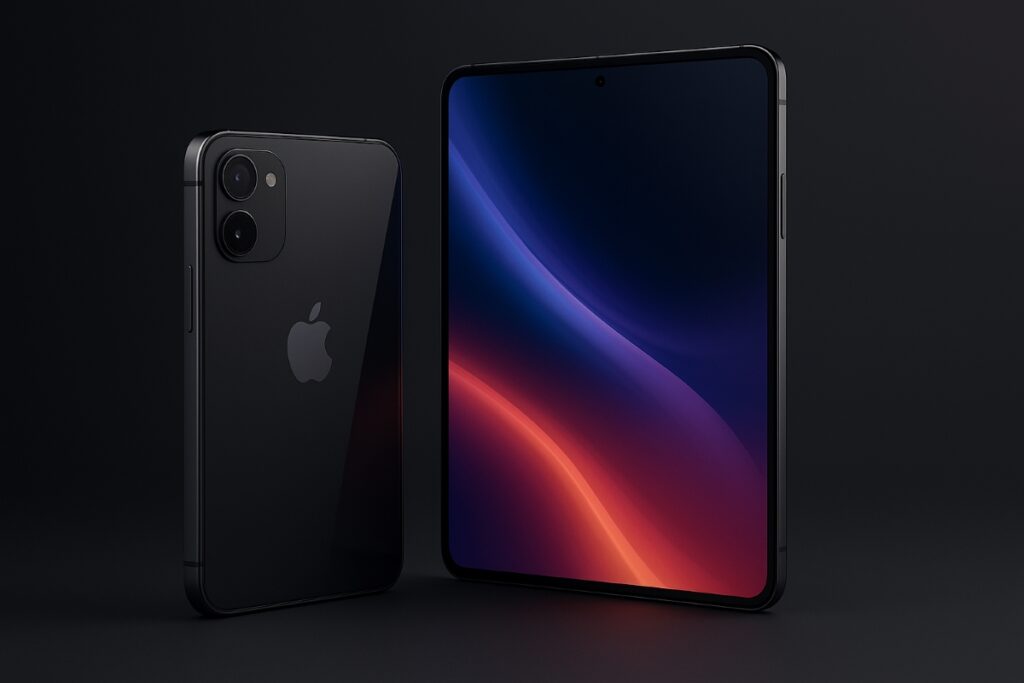
The foldable iPhone is said to feature a book-style design with two distinct display experiences: a 7.8-inch crease-free inner panel and a 5.5-inch outer screen. What’s particularly interesting is how Apple appears to be handling the front-facing cameras. The external display will reportedly include a punch-hole cutout, marking a sharp shift away from the signature notch and Dynamic Island design. Meanwhile, the internal foldable screen may sport an under-display camera to preserve a full-screen experience, an ambitious choice that very few OEMs have executed well so far.
Touch ID is also reportedly making a comeback, but not under the screen. Instead, Apple is said to be embedding it into the side-mounted power button, much like on the iPad Air. This choice likely stems from the tight internal layout of foldables, which might leave little room for the complex Face ID module.
Behind the scenes, development appears to be accelerating. Industry analysts like Ming-Chi Kuo say Apple aims to lock in the hardware by June, while Jeff Pu claims the foldable has entered the New Product Introduction (NPI) phase at Foxconn, suggesting a finalized prototype is already in motion. Mass production is reportedly planned for Q4 2026, with a potential launch at the tail end of next year.
As for pricing, the first-gen foldable iPhone is tipped to land somewhere between $2,000 and $2,300, placing it firmly in ultra-premium territory. Given Apple’s reputation and the anticipation surrounding a foldable iPhone, that price tag might not deter early adopters.
Apple has taken its time watching the foldable market evolve, but these early details suggest it’s preparing a device that isn’t just a late response, but potentially a redefinition of what a foldable iPhone should be. Whether it delivers on that promise remains to be seen, but Apple seems determined to fold the future its way.
In related news, Apple’s 20th anniversary iPhone is rumored to feature major upgrades, including a bezel-free design, no display cutouts, and a 100% silicon battery.
For more daily updates, please visit ourNews Section.
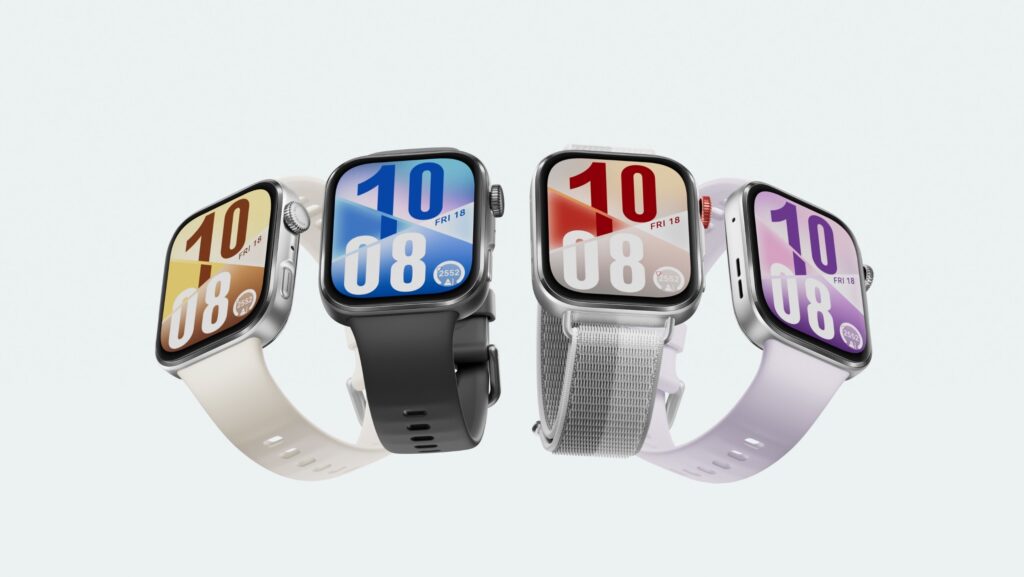
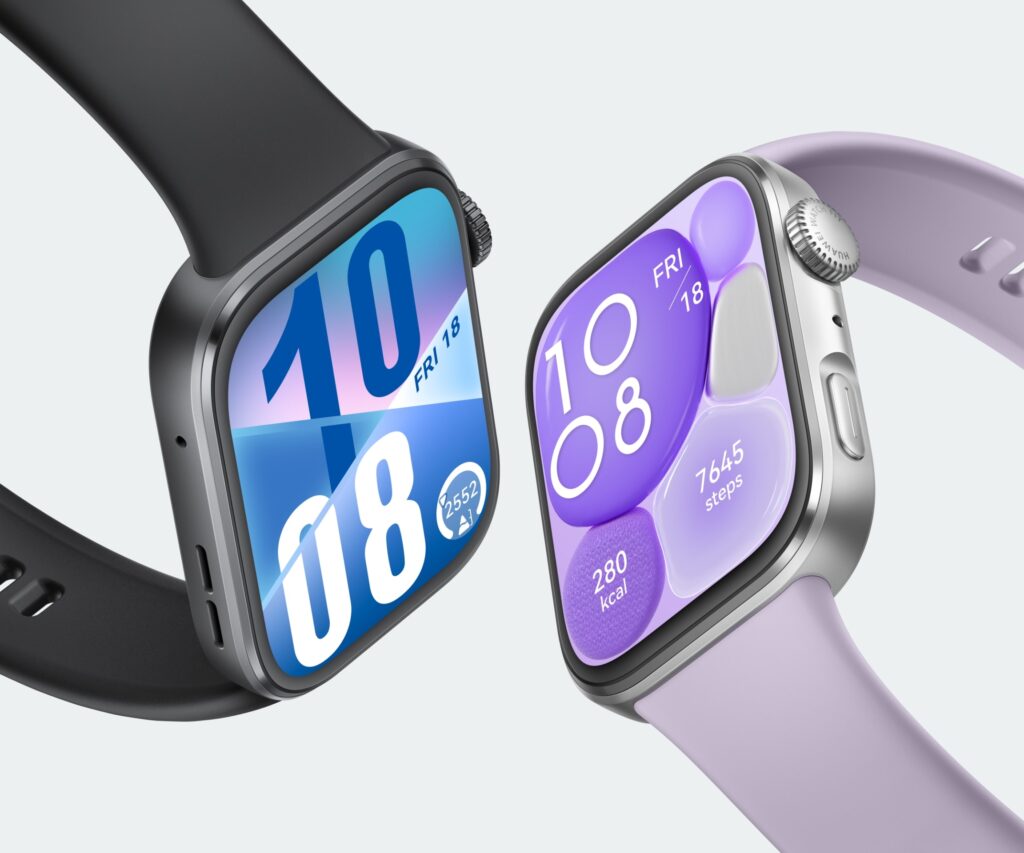
Huawei has officially launched its latest wearable duo, the Watch Fit 4 and Watch Fit 4 Pro, following the debut of its flagship Watch 5 series. While the Watch 5 leans heavily into health tech and luxury materials, the Fit 4 lineup is built to be lighter, sportier, and surprisingly ambitious in what it tries to do on your wrist. Both models bring AMOLED displays, advanced sensors, and Huawei’s latest TruSense health architecture, but it’s the Pro variant that’s aiming to stretch the limits of a fitness-focused smartwatch.
Huawei Watch Fit 4
Huawei Watch Fit 4 Series Specifications
The Watch Fit 4 Pro carries a 1.82-inch AMOLED display with a sharp 480×408 resolution and a dazzling 3000-nit peak brightness, making it legible even in direct sunlight. The standard Fit 4 shares the same size and resolution but tops out at 2000 nits. Huawei hasn’t changed the rectangular form factor much, but the Pro now gets a titanium alloy bezel, sapphire glass protection, and an aluminum alloy mid-frame that together weigh only 30.4g (without the strap). The regular Fit 4 trims it further to 27g.
Under the hood, the Fit 4 Pro is built like a rugged sports watch. It’s 5ATM-rated, IP6X dustproof, and certified for free dives up to 40 meters, thanks to its EN13319-compliant depth sensor. Huawei also throws in a new diving mode with real-time depth tracking, apnea training, and even hover timers for underwater discipline.
But it’s not all about diving. The Fit 4 Pro also targets golfers with a full-featured golf mode offering access to a database of over 15,000 courses, 3D fairway visualizations, smart distance measuring, and a digital scorecard. For runners and hikers, it includes dual-band GNSS positioning, a new barometer for altitude data, and breadcrumb navigation with offline maps.
Huawei Watch Fit 4
The standard Watch Fit 4 scales back slightly, skipping the dive-grade certification and ECG sensor, but still keeps serious fitness chops. It supports over 100 workout modes, route tracking for aquatic activities, and an improved barometric system with storm alerts and real-time ascent data.
Both watches are equipped with Huawei’s new TruSense system that powers everything from heart rate and SpO2 tracking to sleep breathing analysis, stress detection, and menstrual cycle predictions. Huawei has also built in the Emotional Wellbeing app, which uses a pet-themed mood-matching watch face to reflect and track your emotional state over time.
Battery life remains impressive, delivering up to 10 days of usage in light scenarios and around 4 days with Always-on Display enabled. Huawei’s second-generation wireless SuperCharger allows a 10-minute top-up to power the watch for an entire day.
Talking about other features, they include voice note recording, Bluetooth calling, quick message replies, a remote camera shutter, and support for sticker-style custom watch faces. The Watch Fit 4 Pro offers full NFC support across all color variants, while the standard Watch Fit 4 limits NFC to the grey version.
Pricing and Availability
The Watch Fit 4 is priced at £149.99/€169.99, while the Watch Fit 4 Pro goes for £249.99/€279.99. Pre-orders are now open via the Huawei Store, with full availability starting May 26.
For more daily updates, please visit ourNews Section.
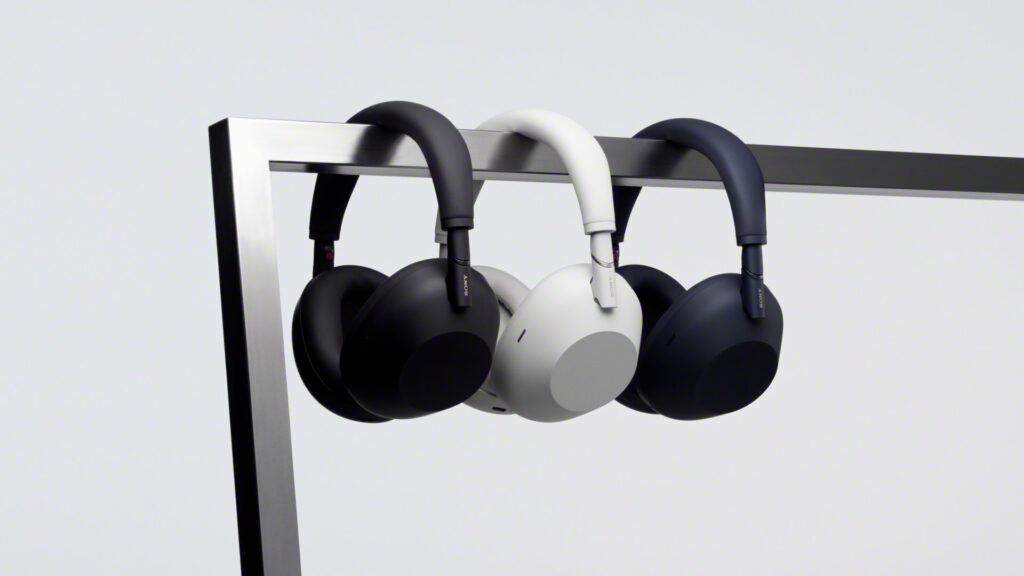
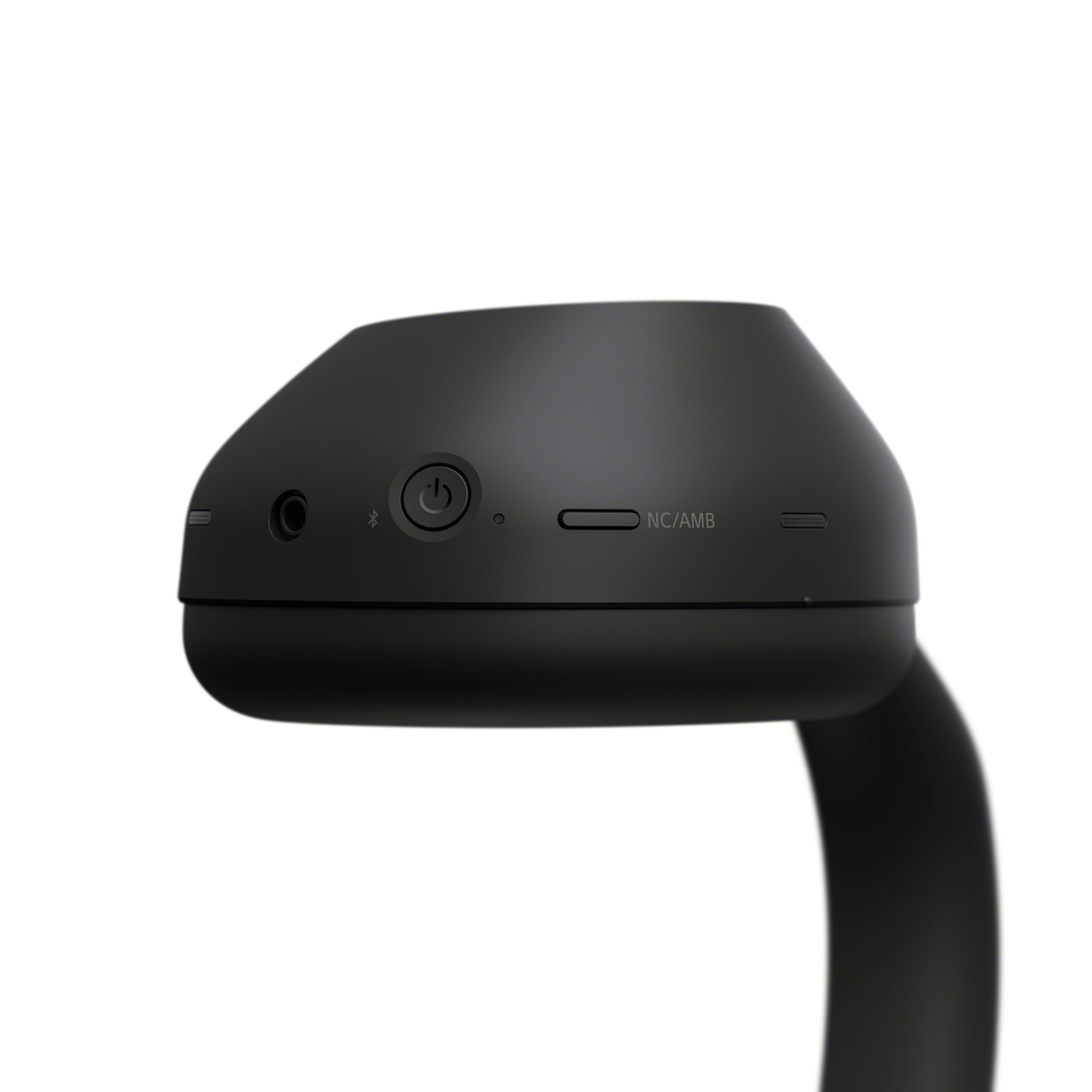
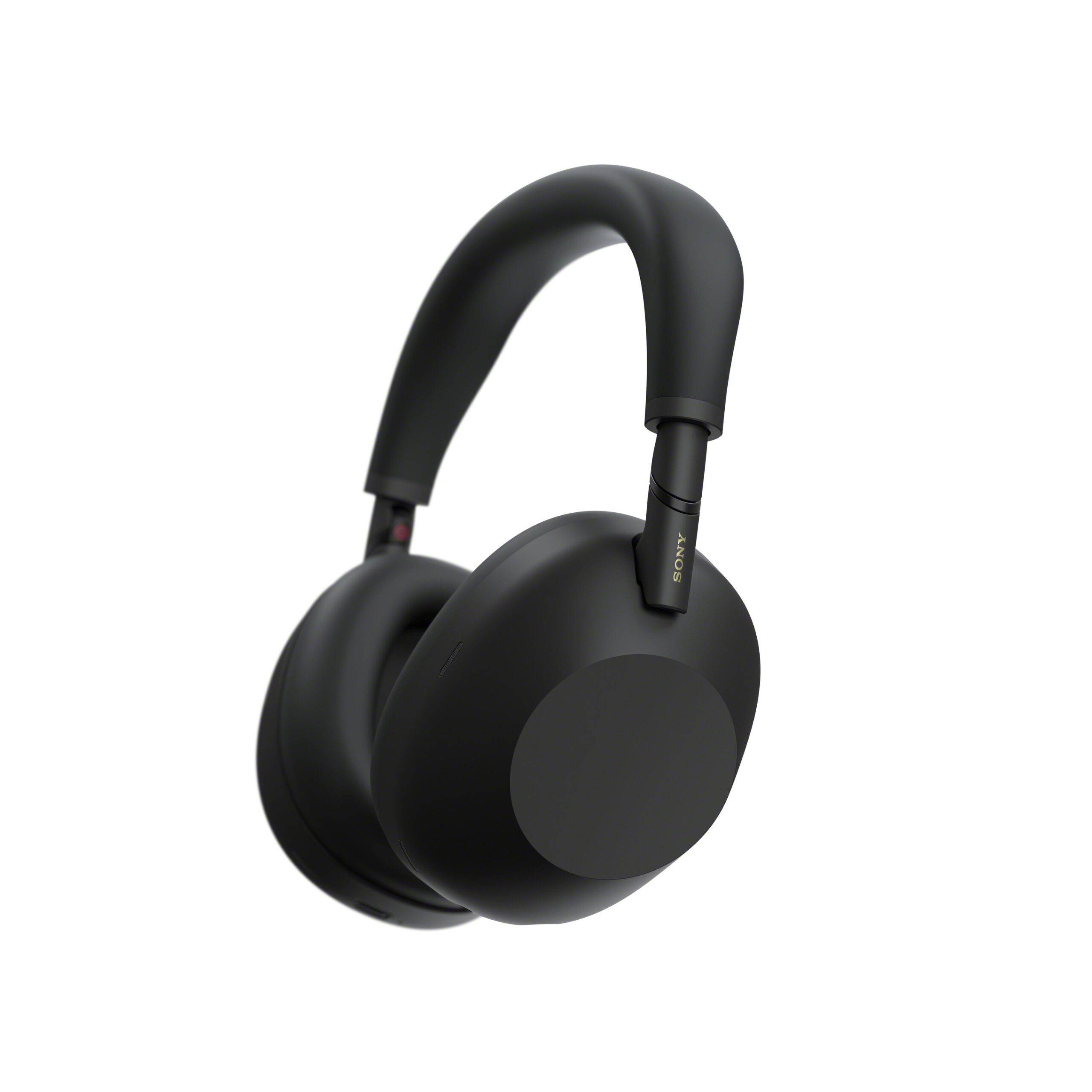
Sony has launched the WH-1000XM6, the newest model in its 1000X series of wireless noise-canceling headphones. The headphones use a new HD Noise Canceling Processor QN3, which is seven times faster than the previous version. It works with twelve microphones, 1.5 times more than before, to adjust noise cancellation based on the user’s environment.
The headphones also include Adaptive NC Optimizer, which adapts to different noise levels and air pressure. A redesigned driver unit helps block external noise more effectively. Auto Ambient Sound mode filters background noise and lets in important sounds like announcements. These settings can be changed automatically or manually through the Sony Sound Connect app.
Sony worked with mastering engineers from Sterling Sound, Battery Studios, and Coast Mastering to tune the sound. The headphones offer classical and balanced sound modes. The carbon fiber dome and custom voice coil improve detail across all frequencies. The headphones support High-Resolution Audio and LDAC. Compressed files are upscaled using Edge-AI and DSEE Extreme.
Users can adjust sound with a 10-band EQ or choose presets like Game EQ for shooters or Cinema 360 Reality Audio Upmix for movies. Calls are handled by a six-microphone beamforming system that separates the user’s voice from background noise. A mute button is included.
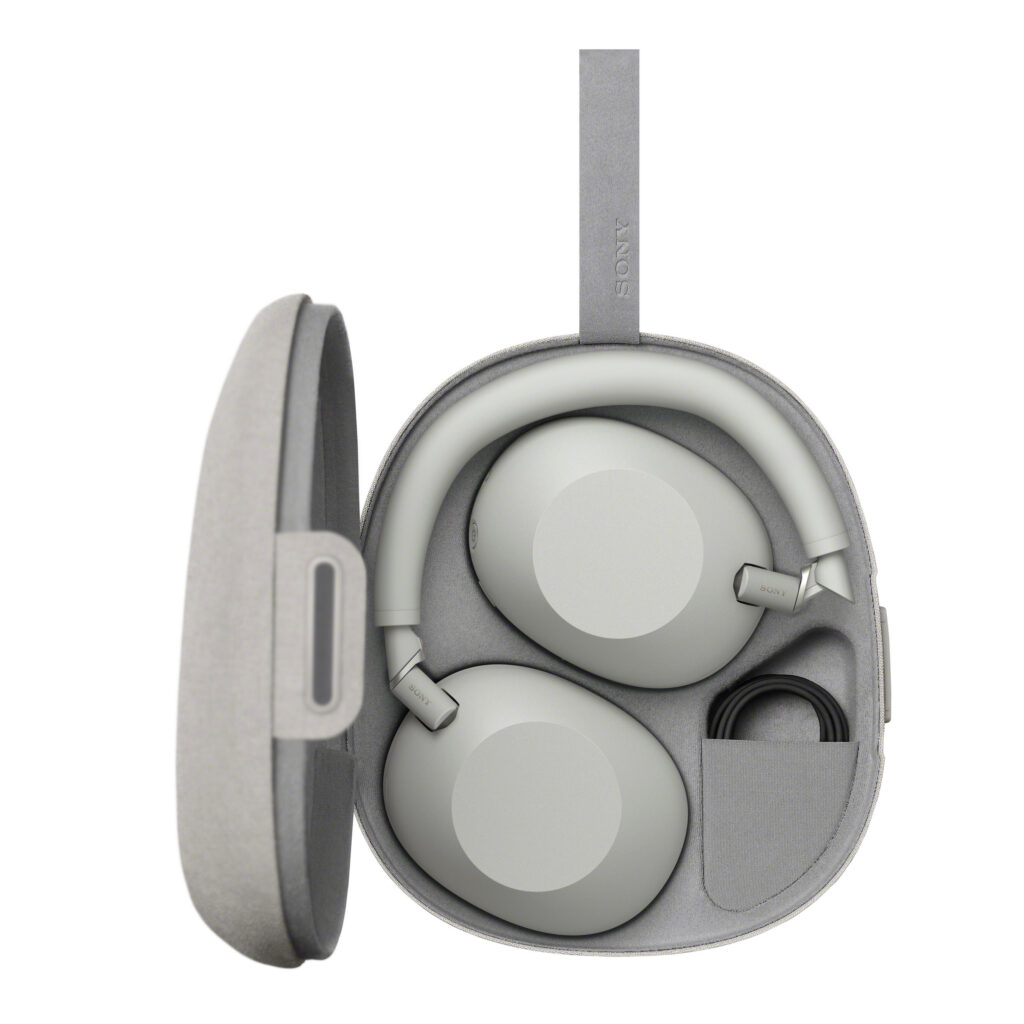
The WH-1000XM6 has a wider synthetic leather headband and soft earpads designed for long use. The headband is asymmetrical for quick left-right identification. The headphones fold using metal-injected joints and come with a compact case that closes magnetically.
Smart features include Scene-based Listening, which uses sensors to adjust playback and noise control based on activity and location. The headphones work with Spotify Tap, Apple Music, YouTube Music, and Amazon Music. LE Audio with AuraCast allows for low-latency playback and audio sharing. Multi-Point and Auto Switch let users move between devices without disconnecting.
The headphones offer up to 30 hours of battery life with noise canceling on. A 3-minute charge gives 3 hours of playback. Charging and listening can happen at the same time using USB-C.
Pricing & availability
The headphones come in Black, Platinum Silver, and Midnight Blue and are priced at $449.99 USD. Packaging is made from 100 percent paper using Sony’s Original Blended Material, made from bamboo, sugarcane fiber, and recycled paper.
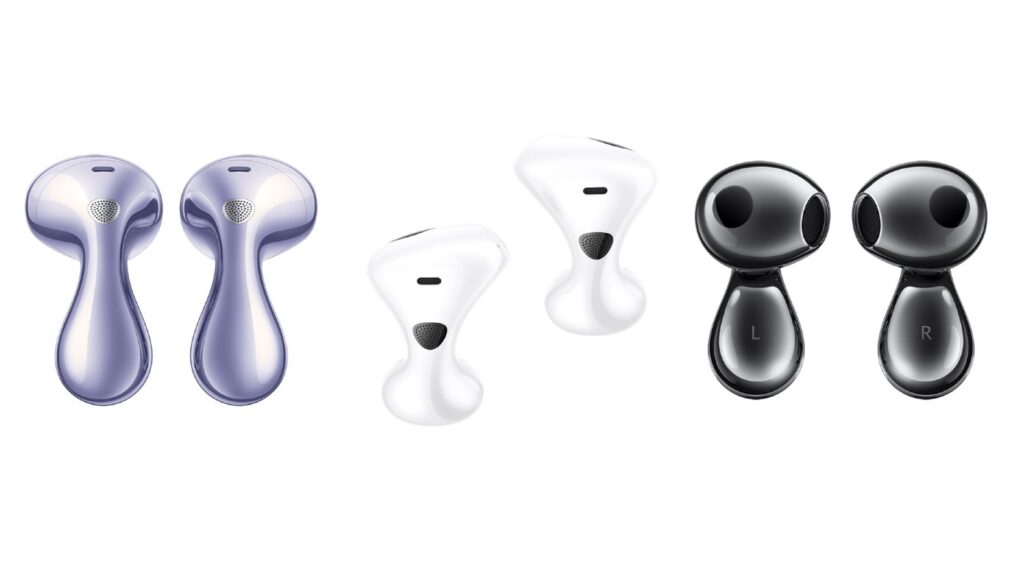
Huawei has launched the FreeBuds 6, a new pair of truly wireless earbuds with an open-fit design similar to the FreeBuds 5. The design has been improved for a lighter and more comfortable fit, with each earbud weighing 4.9 grams and the charging case weighing 40.3 grams. The shape is based on ear scan data to ensure better comfort.
Huawei FreeBuds 6 features
The FreeBuds 6 feature an 11mm dynamic driver and a micro-flat tweeter, making them the first semi-open earbuds to use two sound units. They support audio playback from 14 Hz to 48 kHz and deliver 48 kHz/24-bit high-resolution sound. The earbuds adjust sound in real time based on how they fit in the ear.
Tuned by the Central Conservatory of Music, the earbuds offer classical and balanced sound modes. They also support head-tracking spatial audio. For calls and outdoor use, they use bone conduction microphones and reduce noise up to 95 dB and wind speeds up to 8 m/s. Semi-open noise reduction helps cut out background sounds.
Battery life is up to 36 hours with the case. A 5-minute quick charge gives 2.5 hours of playback. Smart charging helps extend battery life by 37% over time. The earbuds support touch controls for music, calls, and volume.
Huawei’s AI assistant, Celia, supports 21-language translation and real-time interpretation. The earbuds include tracking features with up to 50-meter accuracy and long-distance locating. Bluetooth 5.2 provides low-latency performance for gaming and allows pairing with more than one device at a time. The earbuds are IP54 rated for water and dust resistance.
Pricing & availability
The Huawei FreeBuds 6 are priced at €159 and will be available on Huawei’s online store. These earbuds were launched in China a couple of months ago for 999 Yuan (US$138).
For more daily updates, please visit our News Section.
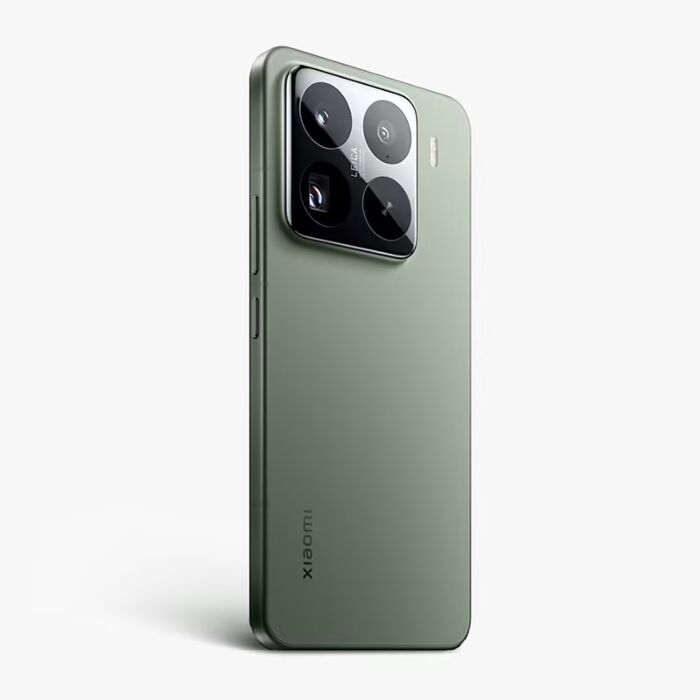
Xiaomi will unveil its Xiaomi 16 series of flagship phones later this year in China. As is tradition, the company is expected to unveil the standard Xiaomi 16 and 16 Pro models first, with the Ultra variant likely arriving sometime next year.
Ahead of the announcement, both the Xiaomi 16 and 16 Pro have surfaced in the GSMA IMEI database, hinting at regional availability and offering a few early clues about what to expect.
Xiaomi 16 Pro model number confirms China exclusivity
Here are the model numbers associated with the upcoming phones (via XiaomiTime):
Xiaomi 16
25113PN0EC (China)
25113PN0EG (Global)
25113PN0EI (India)
Xiaomi 16 Pro
2509FPN0BC (China)
25098PN5AC (China)
Xiaomi 15 Pro
Based on these listings, it looks like the 16 Pro will once again be limited to the Chinese market. Interestingly, two model numbers have been registered for the Pro; these could be the two configurations of the phone. There’s no official word on what sets them apart, but it wouldn’t be surprising if one version includes satellite connectivity or ships with a ceramic body.
The base model, on the other hand, seems to have a single configuration. It will be available in China, India, and global markets, and its internal codename has already leaked: “Nezha.”
What to expect from the Xiaomi 16 series?
According to a report, Xiaomi 16 will be the first smartphone to feature the Snapdragon 8 Elite 2 chipset. The leak further states that the device is being tested with a 6,800mAh battery coupled with 100W charging.
Meanwhile, the Pro is rumored to adopt a flat display. According to leaks, the screen will be a 6.85-inch LTPO OLED panel with 2K resolution and a 120Hz refresh rate.
For more daily updates, please visit our News Section.
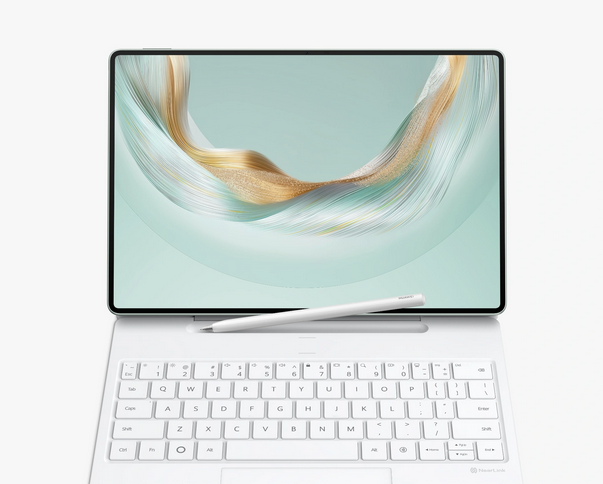
The Huawei Watch 5 just made its debut earlier today (15th May 2025). But this isn’t the only product drop, as the company also announced the 2025 edition of the Huawei MatePad Pro 12.2. It is a high end tablet with some great specs and features. So let’s check it out.
Huawei MatePad Pro 12.2: What does it offer?
As the name suggests, the Chinese tech giant’s MatePad Pro 12.2 sports a 12.2-inch Tandem OLED PaperMatte display that has a 2.8K resolution, 2000 nits of peak brightness, and P3 wide color gamut. For those unaware, the anti-reflection PaperMatte display technology helps reduce glare and improves usability in well lit areas. Huawei has stopped revealing a lot of details regarding its tablets and smartphones. So it might feature a Kirin chipset like the larger MatePad Pro 13.2 (2025).
Huawei MatePad Pro 12.2
But the storage configuration has been confirmed with 12GB of RAM and either 256GB or 512GB of internal storage. A massive 10,100mAh battery pack powers this tablet, which supports 100W wired fast charging. Just like other Huawei smartphones, the Huawei MatePad Pro 12.2 runs on HarmonyOS 4.3. For optics, the rear has a 50MP main camera with 4K 30fps recording support, while the front has an 8MP selfie shooter.
Other notable features include a side mounted fingerprint scanner, quad speakers with Huawei Sound, WiFi 7, and Bluetooth 5.2. The MatePad Pro 12.2 measures just 5.5mm in thickness and weighs 508 grams. The Huawei MatePad Pro 12.2 (2025) is available in two color options, namely Green and Black. It has a starting price tag of 849.99 Euros, with the first sale kicking off tomorrow in Europe. But keep in mind that only the 12GB + 512GB variant, which costs 999 Euros, gets the PaperMatte display.
For more daily updates, please visit our News Section.
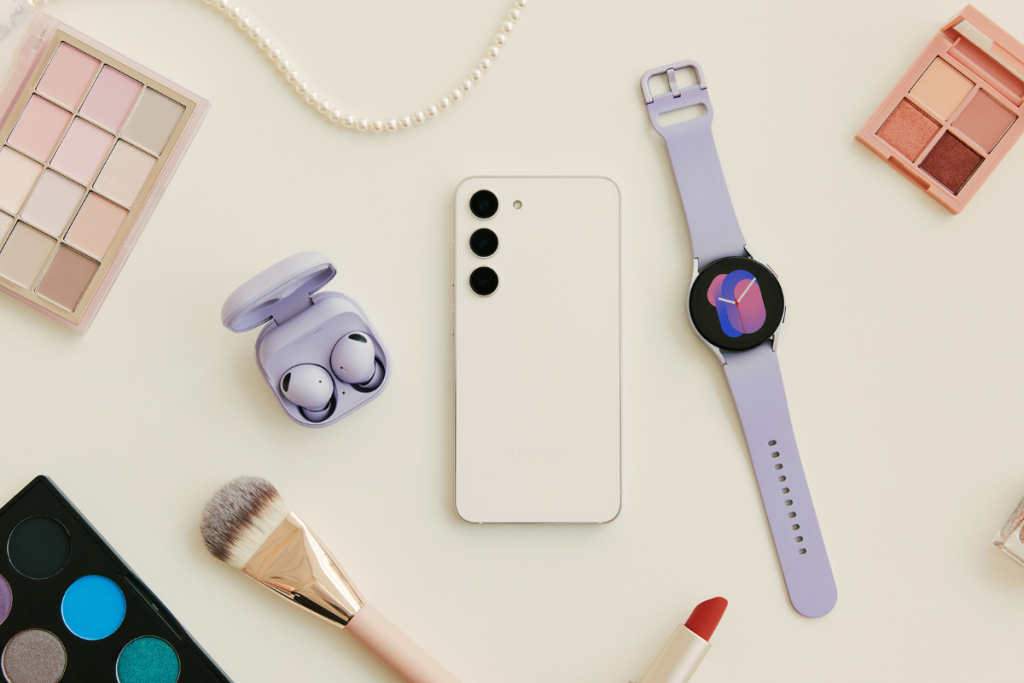
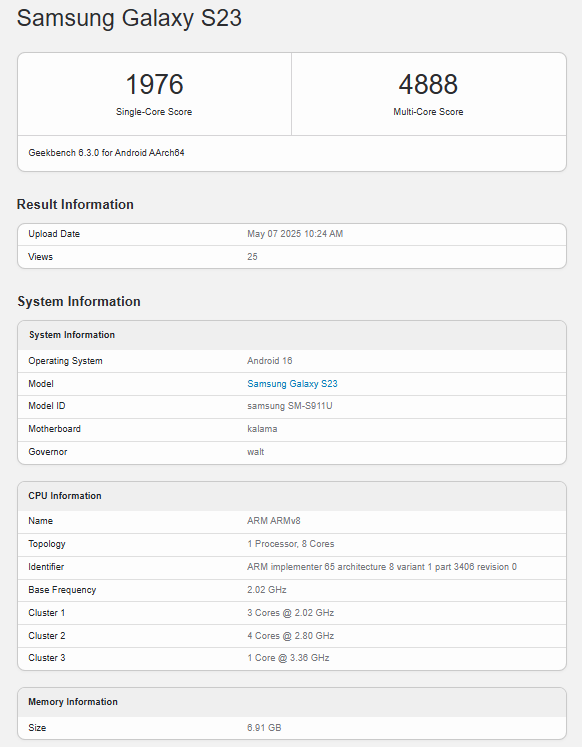
Samsung’s Galaxy S23 and S23+ have been caught running One UI 8, based on Android 16, in a Geekbench listing, signaling a major update for the 2023 flagships. While still rolling out One UI 7.0, Samsung’s fast-tracking One UI 8 could bring enhanced security and AI features by summer 2025.
Despite being two generations old, Samsung’s Galaxy S23 series remains in the spotlight, with Geekbench listings revealing the vanilla S23 (SM-S911U) and S23+ (SM-S916U) running Android 16, the backbone of One UI 8.
Oddly, the S23 Ultra (SM-S918U) is absent from the leak, but all listed devices pack the Snapdragon 8 Gen 2 for Galaxy and 8GB RAM. This follows the global rollout of One UI 7.0 (Android 15) with the April 2025 security patch, which added Galaxy AI features like Note Assist, Call Assist, Interpreter, and Google Gemini integration.
One UI 8, expected to debut with the Galaxy Z Fold 7 and Flip 7 in July 2025, appears to be an iterative update, refining Galaxy AI and introducing Android 16’s robust security, including the Advanced Protection Program to thwart scams. Features like stricter Factory Reset protections, AI-driven malware detection, and enhanced UWB support could boost the S23’s longevity. Live Updates for lock screen widgets may also arrive.
Eligible for four OS upgrades, One UI 8 will be its third, leaving one more before support ends. While its security features will benefit the users, the absence of advanced AI features like Audio Eraser and Natural Language Search in One UI 7 feels like a letdown. Let’s see what else Samsung has planned for One UI 8 on the S23 series.
Samsung’s One UI 8, based on Android 16, will introduce robust privacy and security features under Google’s Advanced Protection Program, aimed at shielding Galaxy phone and tablet users from fraud, scams, and theft.
Announced on May 14 at Google’s The Android Show, Android 16’s security enhancements will roll out to Samsung Galaxy devices via One UI 8.0, expected in summer 2025. The Advanced Protection Program (APP) consolidates features like Remote Lock and Theft Detection Lock, requiring user credentials to disable, ensuring robust defense against unauthorized access. Initially developed for Google apps, these will expand to third-party apps in the future.
Key features include uneditable secure device logs, letting users check for tampering. During calls, One UI 8 blocks risky actions like installing unverified apps or tweaking critical settings, thwarting scammer tactics. Banking app security also gets a boost: screen-sharing calls must end before access, with UK banks like Monzo and NatWest on board.
If you haven’t guessed already, AI plays a big role here. It scans for malware, filters scam messages, and flags apps that hide icons.
Enhanced Factory Reset protections render stolen phones unusable without owner authorization, while Remote Lock adds a security question and hides one-time passwords from notifications. These align with Samsung’s Auto Blocker, seen in One UI 6.1.1.
Set to debut with the Galaxy Z Fold 7 and Flip 7 in July, with a beta in June, One UI 8 could make Galaxy devices safer than ever. Will these features outsmart scammers, or are gaps like delayed third-party app support a concern? The summer rollout will reveal more.
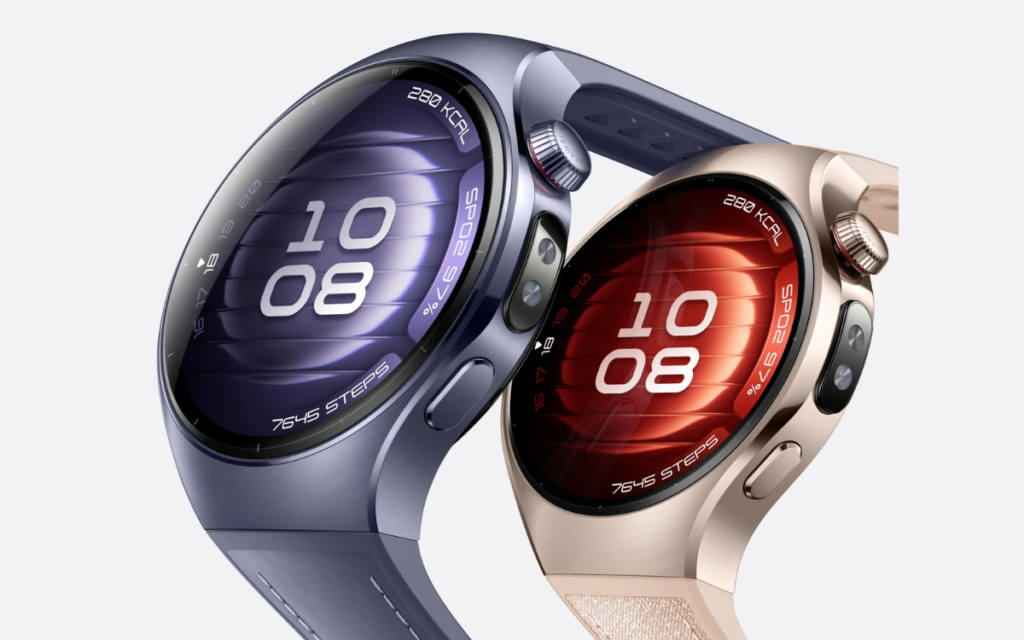
Huawei has launched its latest flagship smartwatch, the Watch 5, with a focus on health monitoring, refined design, and improved usability. The new wearable debuts the company’s proprietary X-Tap sensor, a multi-sensing module designed to streamline health tracking and enable faster interactions.
Huawei Watch 5 Specifications
The Watch 5 is available in two sizes: 46mm and 42mm. The 46mm model features a 1.5-inch LTPO AMOLED display, while the 42mm version comes with a 1.38-inch screen. Both displays offer a peak brightness of 3000 nits and a 466×466 resolution. Huawei has adopted a premium mix of materials, using spherical sapphire glass and a blend of aerospace-grade titanium, 904L stainless steel, and 316L stainless steel across various colorways and strap options.
One of the biggest changes is the addition of the X-Tap sensor. Located on the side of the watch, this compact module houses an ECG sensor, a PPG sensor, and a 10-level tactile sensor. Huawei says it enables real-time fingertip blood oxygen (SpO₂) readings in about 10 seconds and can initiate a “Health Glance” scan that produces a summary of 11 key health metrics in under a minute. Unlike traditional bottom-placed sensors, the X-Tap relies on fingertip pulse wave signals, which Huawei claims are more accurate and responsive.
The watch also supports gesture recognition, enabled by a dedicated neural processing unit. Double-tapping or sliding the thumb and index finger controls calls, music playback, alarms, and the remote camera shutter. These gesture-based functions work best when paired with Huawei smartphones. Huawei also includes over 100 workout modes, with improved tracking accuracy thanks to the new Sunflower Positioning System.
The Watch 5 supports eSIM for phone-free calling, Wi-Fi 6, dual-band GNSS positioning, Bluetooth 5.2, and NFC payments. It also features 5 ATM water resistance and complies with the IP69 standard for added durability.
Battery life varies by mode. The 46mm model lasts up to 4.5 days in standard mode and up to 11 days in battery saver mode. The 42mm version lasts up to 3 days in standard use and up to 7 days in saver mode. The watch charges wirelessly using the bundled second-gen SuperCharger.
Pricing and Availability
Huawei Watch 5 is already available for pre-order, with the official release set for May 26. The pricing in Europe starts at €449.99 for the 42mm variant and goes up to €649.99 for the high-end titanium versions of the 46mm model. The smartwatch is compatible with Android and iOS devices and includes a free three-month Huawei Health+ membership for new users.
For more daily updates, please visit ourNews Section.
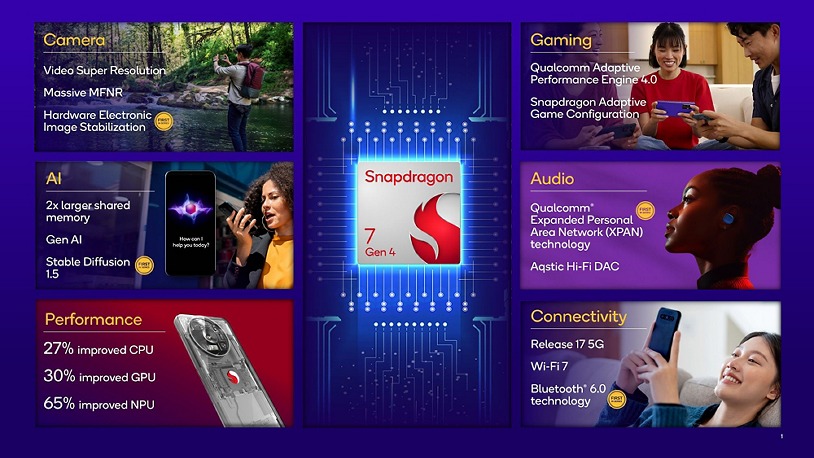
Qualcomm has officially launched the Snapdragon 7 Gen 4, the latest mid-range chip in its 7 series lineup. Built on TSMC’s 4nm process, it brings notable performance upgrades over last year’s Snapdragon 7 Gen 3. The CPU setup sticks to the same 1+3+4 structure, but now includes a 2.8GHz Cortex-A720 prime core, three A720 performance cores up to 2.4GHz, and four A520 efficiency cores running at 1.84GHz.
The chip also features improved AI capabilities. It supports Gen AI assistants and can run large language models directly on the device. It’s the first in the 7 series to support Stable Diffusion image generation. The updated Hexagon NPU includes fused AI acceleration with support for mixed precision formats like INT4, INT8, and INT16. There’s also a dedicated Sensing Hub for always-on tasks.
For gaming and graphics, the new Adreno GPU delivers faster render speeds and supports technologies like OpenGL ES 3.2, Vulkan 1.3, and HDR playback formats including HDR10+, HDR10, and HLG. Snapdragon Elite Gaming features are built in to improve gaming performance and responsiveness.
Camera support includes a triple 12-bit ISP with photo capture up to 200MP and video recording in 4K HDR at 60fps. Features like AI autofocus, white balance, auto exposure, and hardware stabilization are now part of the 7 series for the first time. It also supports 10-bit HEIF photos and HEVC video formats.
The Snapdragon 7 Gen 4 is compatible with LPDDR5x memory up to 16GB, UFS 3.1 storage, and on-device WQHD+ displays running at 144Hz. It includes a Snapdragon 5G Modem-RF system offering up to 4.2 Gbps sub-6GHz download speeds.
It supports Wi-Fi 7, Bluetooth 6.0, LE Audio, and Snapdragon Sound with aptX Lossless, Adaptive, and Voice. Qualcomm’s new XPAN tech offers extended coverage for wearables, even when away from your phone. Audio is handled by the Aqstic DAC with Hi-Fi playback and low distortion.
Navigation features include triple-frequency GNSS, sidewalk-level pedestrian tracking, and lane-level vehicle guidance. The chip also includes USB-C 3.1 Gen 2 and Quick Charge 5.
HONOR and vivo will be the first brands to use the Snapdragon 7 Gen 4, with the HONOR 400 and Vivo S30 launching soon.
For more daily updates, please visit our News Section.
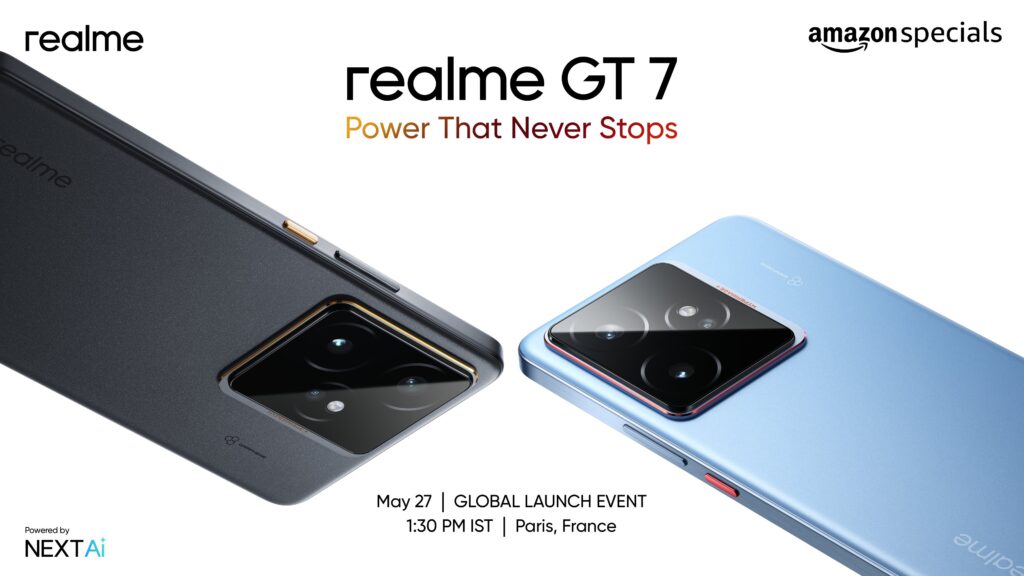
Back in April 2025, the Realme GT 7 made its official debut in China with cutting edge specs and features at an attractive price tag. The company is now set to release this device in the global market. So here’s a detailed roundup of all the rumors and official details revealed by the brand.
Based on recent teaser images, the Realme GT 7 has a design that is quite familiar to the Realme GT 7 Pro. So we can also expect it to offer IP rating for water and dust resistance. This model is also expected to launch in multiple color options, which could include Blue, White and Black, like in the Chinese variant. On the front, the Realme GT 7 may sport a tall 6.78-inch flat OLED display with a 1.5K resolution, a 120Hz refresh rate, and an in-display fingerprint scanner.
2. Hardware
While the Chinese variant of the Realme GT 7 came equipped with MediaTek’s latest and greatest Dimensity 9400+ SoC, the global option is getting a slight downgrade. Realme has teased the global GT 7 model with the Dimesnity 9400e SoC, which might be a refreshed version of the Dimensity 9300+. Realme is rumored to pair this chipset with up to 12GB of RAM and up to 512GB of internal storage.
Out of the box, the Realme GT 7 likely runs on the Android 15 OS based Realme UI 6 custom skin. A recent teaser also confirmed an impressive battery capacity. Realme’s upcoming smartphone may be powered by a massive 7,000mAh battery pack that supports 120W wired fast charging.
3. Camera
In China, the Realme GT 7 was launched with dual cameras on the rear. This included a 50MP Sony IMX896 primary camera along with an 8MP ultra wide angle lens. However, the global variant is reportedly getting a more versatile camera setup at the back. This budget flagship could pack a 50MP main + 50MP telephoto + 8MP ultra wide angle shooters at the back. Meanwhile, the front houses a 16MP camera for selfies and video calls.
4. Launch Date
The Chinese brand is gearing up to announce the Realme GT 7 globally on 27th May 2025. It will go on sale in multiple markets, including India. The announcement is set for an event in Paris, France. So stick around for more as we will be covering the launch event later this month.
For more daily updates, please visit our News Section.
We all know that Xiaomi has been making efforts to develop its own smartphone chip. Until recently, the news existed only in leaks and rumors — but not anymore.
Xiaomi has officially confirmed the existence of its self-developed chip, along with its launch timeline.
It’s called XRING O1.
Lei Jun, the co-founder and CEO of Xiaomi, personally made the announcement on Weibo. Xiaomi’s first smartphone chip will be named “XRING O1” and is set to be unveiled in late May.
While that’s pretty much everything we know from official sources, tipster Digital Chat Station has shed some light on the silicon.
Apparently, the chip has been ten years in the making. And now that it’s official, Xiaomi becomes the fourth smartphone brand globally—and the second in China—to develop its own smartphone SoC. The chip is reportedly manufactured on a node smaller than 5nm.
What can you expect?
According to a previous report, the silicon will be manufactured on TSMC’s N4P node, which is a 4nm process.
Specs-wise, the XRING O1 is rumored to feature an octa-core CPU with a 1+3+4 configuration. At the top is one high-performance Cortex-X925 core clocked at 3.2GHz, backed by three Cortex-A725 cores at 2.6GHz, and four Cortex-A520 efficiency cores running at 2.0GHz. On paper, it sounds close to what we’ve seen in upper-tier chips from MediaTek this year.
Graphics duties will allegedly be handled by an Imagination Technologies IMG DXT72 GPU clocked at 1.3GHz. Reportedly, it can outperform the Adreno 740 found in the Snapdragon 8 Gen 2.
Based on current leaks, the XRING O1 probably won’t go head-to-head with the latest Snapdragon 8 Elite or Dimensity 9400. But it seems to sit somewhere near the flagship tier.
More interesting than performance, though, is what this chip means strategically. Xiaomi has been dependent on Qualcomm and MediaTek for years.
An in-house chip, even if it’s just used in one or two flagship models, could give the company more control over everything from hardware integration to software optimization.
That’s the playbook Huawei used before sanctions hit, and it’s the same path Google and Samsung have been experimenting with.
The chip is rumored to debut on the Xiaomi 15s.
For more daily updates, please visit our News Section.
OnePlus has confirmed that the OnePlus 13s will launch in India soon. After teasing the phone in Black Velvet and Pink Satin, the latest update reveals a new Green color option. The Gray variant seen on the OnePlus 13T in China will not be available in India. The phone will feature a new “Plus Key,” a customizable physical button that replaces the usual Alert Slider, giving users more control over shortcuts and actions.
The OnePlus 13s will run on the Snapdragon 8 Elite chipset and come with a 6.32-inch display, making it a compact flagship. It will be available for purchase on Amazon.in, the OnePlus India website, and in offline stores. The launch date hasn’t been announced yet, but a “Coming Soon” tag confirms it’s expected shortly.
Earlier listings on Geekbench revealed the phone under the model number CPH2723. It scored 2862 in single-core and 8528 in multi-core tests. The phone will ship with Android 15, likely using OxygenOS 15, and come with 12GB of RAM. The chipset includes an octa-core CPU clocked at 4.32GHz and is paired with the Adreno 830 GPU.
OnePlus has confirmed that the 13s will be the first phone outside China to include the Plus Key. It will also offer a lifetime display warranty that covers green line issues, which affected earlier OnePlus models. The phone is expected to launch in India as a rebranded version of the OnePlus 13T (full review), which debuted in China in April 2025.
For more daily updates, please visit our News Section.
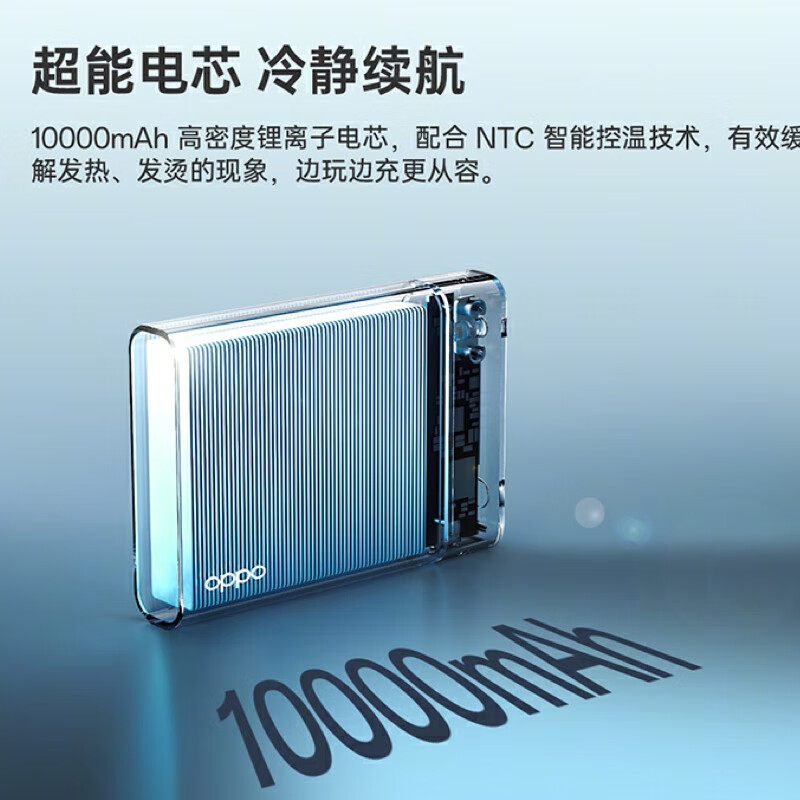
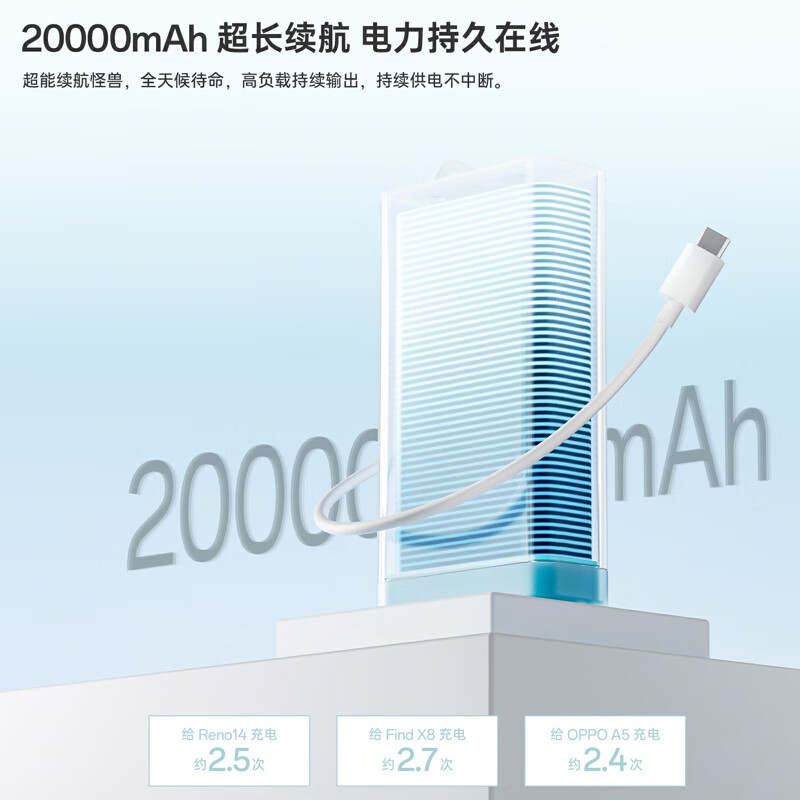
Oppo has launched two new power banks in China alongside the Reno 14 series and Pad SE. The lineup includes a 10,000mAh 22.5W fast charging model called the “Energy Jelly” and a larger 20,000mAh unit with 45W SuperVOOC charging support. Prices start at 129 yuan (around $18) for the smaller model and 199 yuan (around $28) for the higher-capacity version.
Oppo 22.5W Energy Jelly Power Bank Specs
The Oppo 22.5W Energy Jelly power bank features a compact design with a translucent top cover in a marine-inspired “Summer Sea Salt” colorway. It weighs around 197 grams and measures 97.5 x 69 x 18.5mm. Oppo uses a 2C high-density lithium-ion battery with a total capacity of 10,000mAh.
The power bank includes two USB-C ports, one for input and output, and another for the built-in charging cable. Both ports support up to 22.5W output and 18W input. Oppo claims the device can charge a Reno 14 up to 1.4 times. It also supports multiple fast charging protocols, including PD.
The Energy Jelly model uses a magnetic mounting system that attaches securely to compatible devices for convenient charging on the move. Double-pressing the power button enables a low-current mode, ideal for charging smartwatches and wireless earbuds. It also features an LED indicator to show battery status and a 12-layer safety system, which includes temperature monitoring via NTC sensors. The power bank is certified for use on both flights and trains.
Oppo 45W Super Flash Charging Power Bank Specs
The 45W Super Flash Charging Power Bank has a 20,000mAh battery made up of dual 10,100mAh cells. It supports 45W two-way SuperVOOC fast charging and is compatible with smartphones, tablets, wearables, and devices like the Nintendo Switch.
This power bank uses a 2C1A port configuration. It includes two USB-C ports that support input and output and a USB-A output.
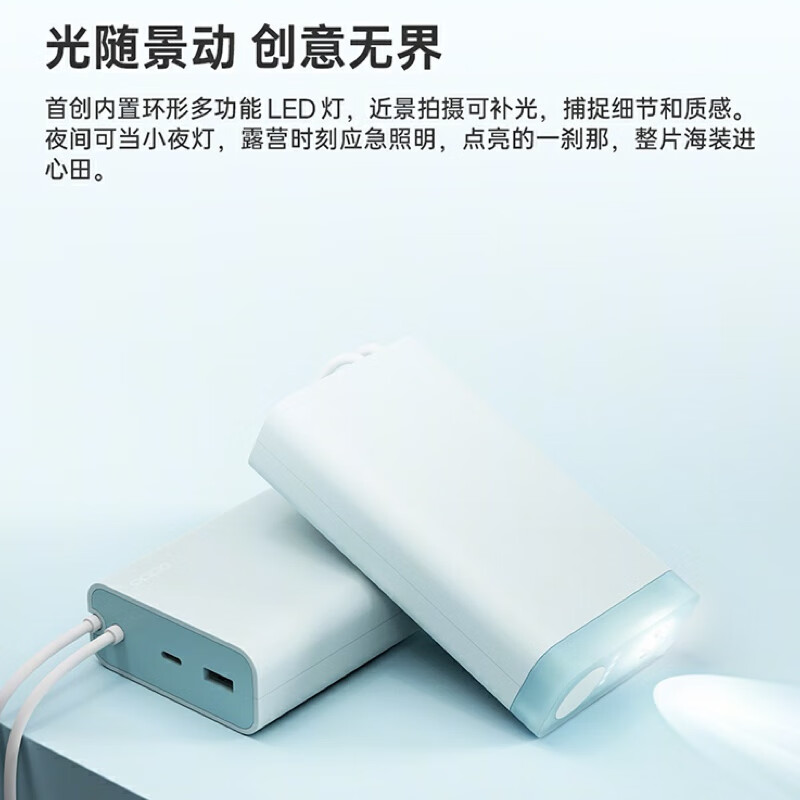
The device includes a 450mm built-in Type-C charging cable. It also features a ring-shaped LED light that functions as a flashlight, fill light, or ambient light. Users can turn the light on with a long press and off with a single press.
It weighs 409 grams and measures 129.5 x 73 x 31mm. The body uses a mint-colored, semi-transparent finish inspired by ocean waves. Like the smaller model, it includes 12 safety layers and meets international air transport standards.
For more daily updates, please visit ourNews Section.
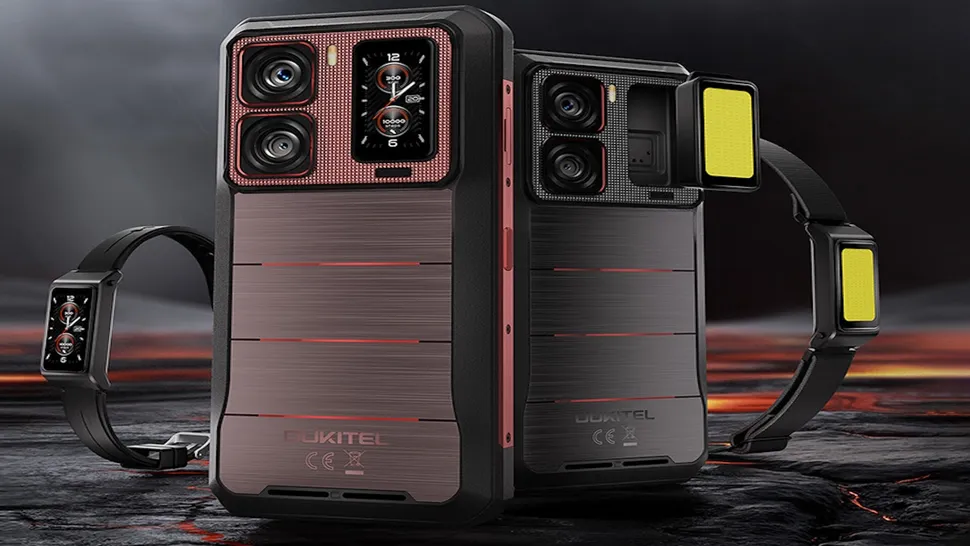
Oukitel is known for its rugged phones but one of its upcoming models is one absurd device. Not only does it have a battery pack that trumps any smartphone for the general public, but the device even houses two wearable gadgets in its body. So here’s a closer look at the Oukitel WP300.
Oukitel WP300: Mammoth battery, rugged design, built-in earbuds and smartwatch
Oukitel’s brand new WP300 model features a rugged design that is built to act as a one stop solution for multiple gadgets while promising top tier battery life. It arrives with an IP69, IP69K, and MIL-STD-810H standards for water and dust resistance as well as shock resistance. A humongous 16,000mAh battery pack powers this device, which is even larger than some power banks as well. This also supports 45W wired fast charging and 18W reverse wireless charging. So it can even double as a portable power bank that can charge other gadgets.
Oukitel WP300 Rugged Phone
It sports a 6.78-inch display on the front with a FHD+ resolution, Corning Gorilla GLass 5 for protection, a 120Hz refresh rate, and 650 nits of peak brightness. Under the hood, the Oukitel WP300 is equipped with the MediaTek Dimensity 7050 SoC, which is paired with 12GB of RAM and 512GB of internal storage. Users can even bump up the memory to 36GB via virtual RAM expansion.
For optics, the rear has a 108MP AI camera on the back and a 32MP selfie shooter on the front. Another aspect that sets this device apart from other rugged phones is the two attachments. One is for the detachable LED camping light for emergency use, and the other is a wireless earbub that docks into the smartphone and converts ito a compact smartwatch. The Oukitel WP300 retails for just 399 US Dollars with its Kickstarter set to go live by the end of this month. Its original price tag starts from 599 US Dollars, but the early bird offer comes with a 200 US Dollar discount.
For more daily updates, please visit our News Section.
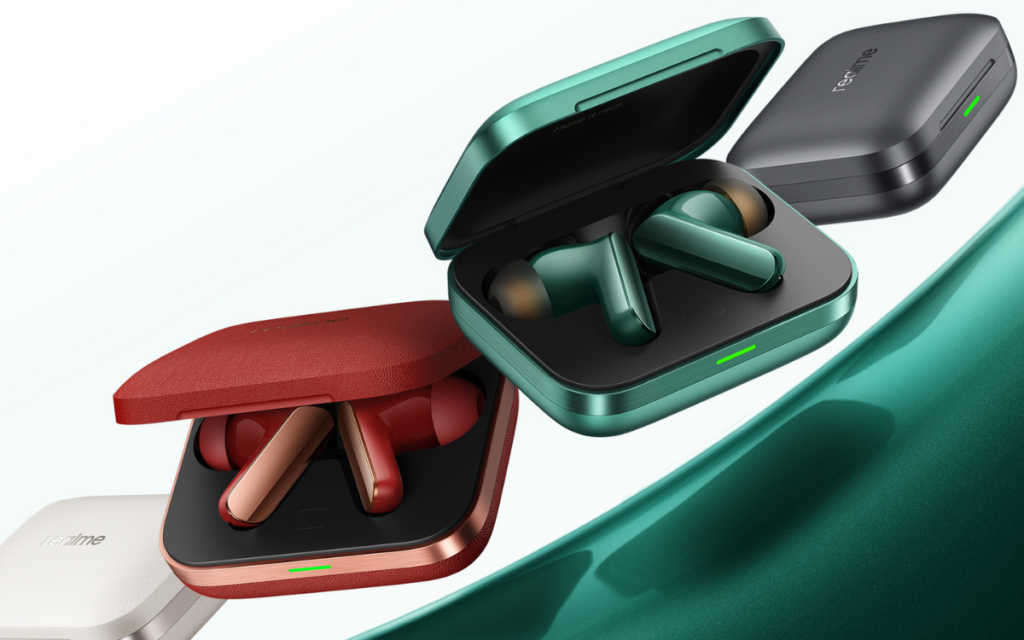
Realme is gearing up to launch a new high end smartphone along with new truly wireless earbuds later this month. The company has just confirmed that the Realme Buds Air 7 Pro will drop alongside the Realme GT 7. But a fresh leak has also confirmed some of its key specs and features. So here are all the details.
Realme Buds Air 7 Pro: Launch date & Features
The Chinese brand just announced that the Realme Buds Air 7 Pro will debut in the global market, including India, on 27th May 2025. Realme will unveil these earbuds during the global launch event in Paris, France. Looking at the teaser image poster, we can see that the Realme Buds Air 7 Pro arrives in multiple color options, namely Red, Green, White and Gray variants.
Realme Buds Air 7 Pro
While Realme hasn’t revealed the specs and features of the TWS earbuds, the Chinese launch from back in April has confirmed a lot of the details. To recall, these earbuds come with a dual driver setup that combines an 11mm bass drivers and a 6mm micro planar tweeter. It packs dual DAC chips along with support for Hi-Res audio and LHDC 5.0 for improved quality. The upcoming earbuds were previously announced with up to 53 decibels of Active Noise Cancellation.
You also get 3D spatial audio and access to a personalized sound profile using an in-ear scan. The earbuds arrive with a bunch of AI powered tools, which include real-time voice translation, face-to-face conversation translation across 32 languages, and a smart Q&A assistant. Other notable features include IP55 rating for water and dust resistance, up to 48 hours of audio playback, and quick charge support.
For more daily updates, please visit our News Section.
Alcatel is preparing for a major re-entry into India’s smartphone market. So far, reports have revealed that the brand will announce the Alcatel V3 Ultra smartphone this month in the country. However, industry insiders suggest that the brand could unveil three new V3 series devices. It is speculated that the brand may unveil the V3 Pro and V3 Classic alongside the Ultra model.
The Alcatel V3 trio are expected to feature the company’s unique in-house display system that may be comparable to the brand’s NXTPAPER platform seen in European markets. This new display technology, speculated to be built into the hardware itself, could deliver high clarity, comfort-oriented brightness levels, and a multi-mode viewing setup that reduces eye strain, making it a compelling proposition for long-form content consumption, gaming, and reading.
What makes this especially interesting is the possible addition of intelligent display tuning through Alcatel’s AI-driven NXTVISION suite. If true, the AI tweaks will allow the screen to adapt automatically to different usage scenarios, enhancing colors and contrast and even reducing blue light when necessary.
Alcatel V3 Ultra price in India
Among the expected trio, the V3 Ultra will be the most premium of the lot. It may ship with a stylus and is reportedly targeting a sub-Rs 30,000 price point. This would place it competitively in the mid-premium segment — potentially appealing to professionals and creatives alike.
All three Alcatel V3-series models are also rumored to carry advanced eye-care functionality, with the entire lineup aiming to deliver a high-quality, visually immersive experience that puts user comfort in front and centre. Rumors are rife that the V3 trio will debut by the end of this month in India.
For more daily updates, please visit our News Section.
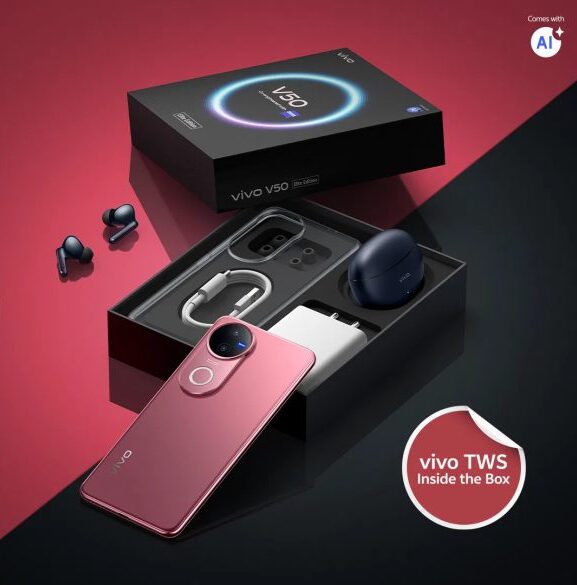
Vivo has just announced the Vivo V50 Elite Edition in the Indian market. Despite what it sounds like, the smartphone is the regular Vivo V50, but it is a special package deal that includes a TWS earbuds in the box. So let’s check it out.
Vivo V50 Elite Edition: What does it offer?
The original Vivo V50 was first announced in the region for 40,999 INR (256GB option), but it is currently on sale for 36,999 INR. However, the Vivo V50 Elite Edition brings a package deal that includes the smartphone and the Vivo TWS 3e (which typically retails for around 1,900 INR). So while this might seem like an expensive deal, the V50 on the Elite bundle is the 12GB + 512GB storage configuration.
Vivo V50 Elite Edition
To recall, the Vivo V50 sports a tall 6.77-inch curved AMOLED display with a FHD+ resolution, a 120Hz refresh rate, HDR10+, and up to 4500 nits of peak brightness. Under the hood, the smartphone is equipped with the Snapdragon 7 Gen 3 SoC. A massive 6,000mAh battery pack powers this model, which supports 90W wired fast charging. On the rear, the Vivo V50 features a 50MP main camera with Zeiss lens + 50MP ultra wide angle shooter, while the front houses a 50MP selfie shooter with auto focus.
Out of the box, the Vivo V50 runs on the Androd 15 OS based Funtouch OS 15 custom skin. Other notable features include an in-display fingerprint scanner, ultra slim design, IP68 + IP69 rating for water and dust resistance, Bluetooth 5.4, WiFi 6, and stereo speakers. The Vivo TWS 3e was announced last year with ANC, dual connectivity, and up to 42 hours of battery life.
For more daily updates, please visit our News Section.
As expected,Oppo today officially launched the Reno 14 and Reno 14 Pro smartphones in China. Both phones bring a MediaTek chipset under the helm, along with an OLED display and battery capacity of over 6000mAh. Here are the complete details.
Oppo Reno 14
The standard Reno 14 features a 6.59-inch flat LTPS OLED screen with 1.5K resolution, 120Hz refresh rate, and 1200 nits peak brightness. It carries an IP66/68/69 rating for dust and water resistance, and the frame is metal with a velvet-textured glass back.
Oppo is offering the phone in three finishes: Mermaid, Half Summer Green, and Reef Black. The phone weighs 187g and is 7.32mm thick.
Inside is a MediaTek Dimensity 8350 processor with a reported benchmark score of over 1.4 million. The chip is paired with LPDDR5X RAM and UFS 3.1 storage, with configurations ranging from 12/256GB to 16GB/1TB.
The phone is fueled by a 6000mAh cell that supports 80W wired charging. TO keep the thermals down, Oppo equips the Reno 14 with what it calls a “nano ice crystal heat sink.” It is said to deliver three times the thermal conductivity of graphite-based solutions like those in iPhones.
On the imaging front, the Reno 14 houses a triple camera system: a 50MP Sony main sensor with OIS, an 8MP ultra-wide, and a 50MP JN5 periscope telephoto lens offering 3.5x zoom. There’s also a 50MP front-facing camera.
Oppo is introducing features like Live Photo support, 4K HDR to Live conversion, and a so-called “CCD effect,” all aimed at giving stills a more cinematic quality.
Running the hardware is ColorOS 15, based on Android 15. The OS brings features like floating windows, split-screen, and a new Xiaobu AI assistant backed by DeepSeek. The assistant supports AI writing, screen Q&A, and context-based searches.
Oppo Reno 14 Pro
The Reno 14 Pro arrives with a slightly larger 6.83-inch 1.5K flat OLED display, keeping the 120Hz refresh rate. Powered by the MediaTek Dimensity 8450, the Reno 14 Pro scores over 1.4 million in AnTuTu. It comes with a similar RAM and storage configuration as the base model.
The phone features a one-piece glass body for seamless dust and water resistance (also IP66/68/69-rated) and is available in three shades: Reef Black, Mermaid, and Calla Lily Purple. The Mermaid version has a new iridescent finish, which gives the surface a shifting multi-color look under changing light.
The phone has a trio of 50MP primary, ultra-wide, and periscope telephoto lenses on the back. The front also features a 50MP selfie unit.
Like the Reno 14, the Pro model also runs ColorOS 15. The OS enables editing and transferring of Live Photos, sharing directly to platforms like WeChat and Xiaohongshu, and even local photo transfers to iPhones. The device runs on a 6200mAh cell with support for 80W wired and 50W wireless charging.
Pricing and Availability
The Reno 14 and 14 Pro are available now for pre-order in China, and sales will start on May 23. Here’s the pricing breakdown
Reno 14
12GB + 256GB: CNY 2799
16GB + 256GB: CNY 2999
12GB + 512GB: CNY 3099
16GB + 512GB: CNY 3299
16GB + 1TB: CNY 3799
Reno 14 Pro
12GB + 256GB: CNY 3499
12GB + 512GB: CNY 3799
16GB + 512GB: CNY 3999
16GB + 1TB: CNY 4499
Oppo has yet to announce international availability for either device.
We use cookies on our website to give you the most relevant experience by remembering your preferences and repeat visits. By clicking “Accept”, you consent to the use of ALL the cookies.
This website uses cookies to improve your experience while you navigate through the website. Out of these, the cookies that are categorized as necessary are stored on your browser as they are essential for the working of basic functionalities of the website. We also use third-party cookies that help us analyze and understand how you use this website. These cookies will be stored in your browser only with your consent. You also have the option to opt-out of these cookies. But opting out of some of these cookies may affect your browsing experience.
Necessary cookies are absolutely essential for the website to function properly. This category only includes cookies that ensures basic functionalities and security features of the website. These cookies do not store any personal information.
Any cookies that may not be particularly necessary for the website to function and is used specifically to collect user personal data via analytics, ads, other embedded contents are termed as non-necessary cookies. It is mandatory to procure user consent prior to running these cookies on your website.