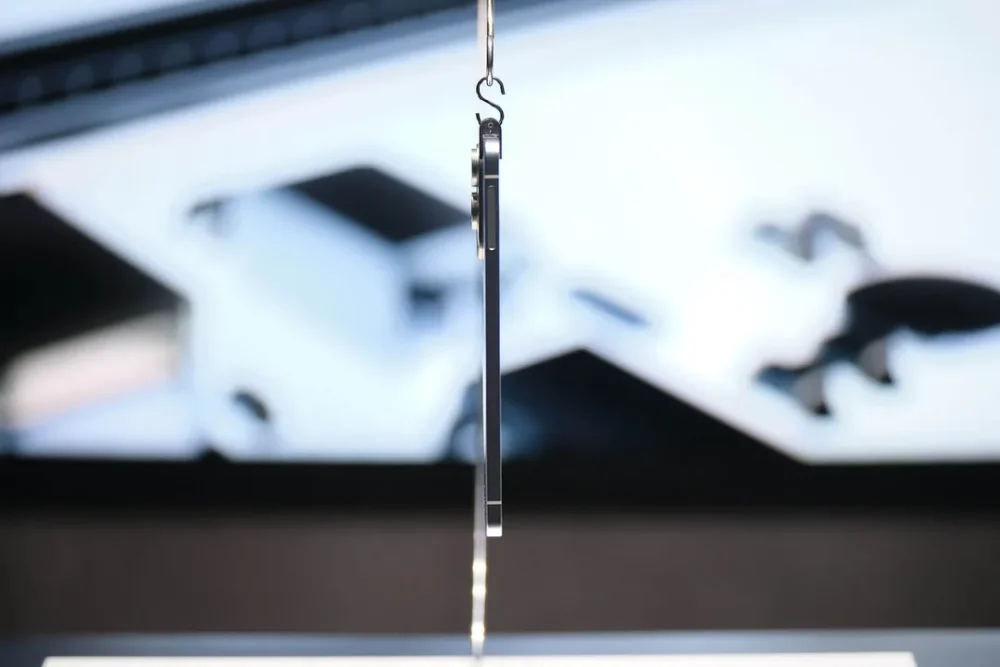
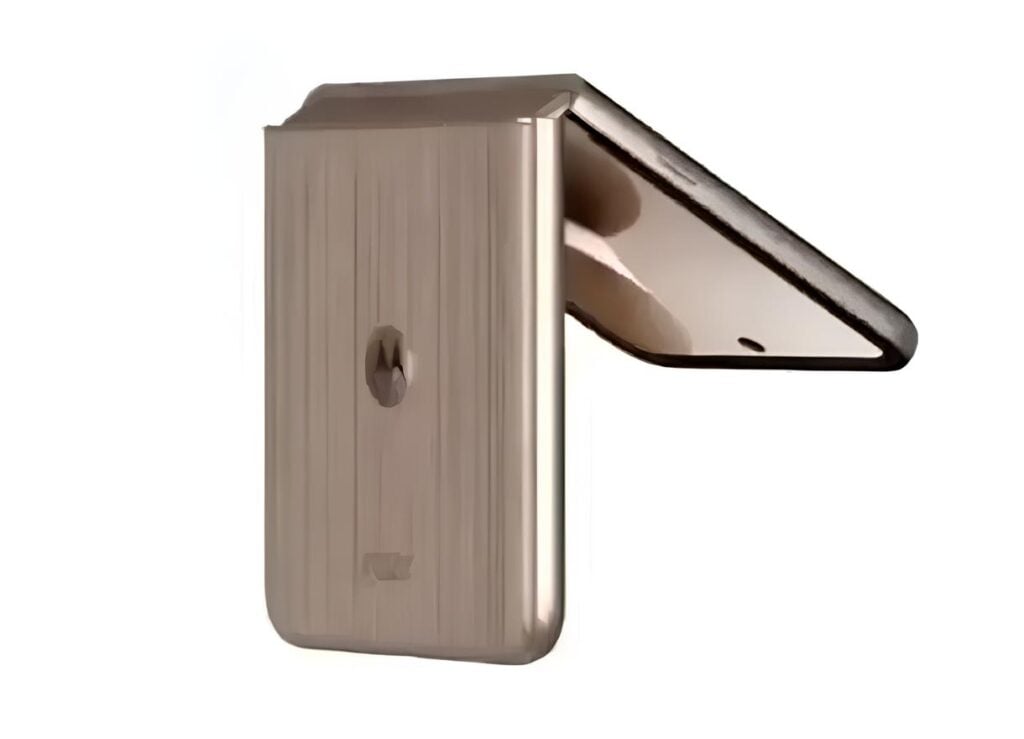
According to leaks and rumors, Samsung’s highly anticipated Galaxy S25 Edge will launch in April, so we are pretty close. But don’t expect a flashy Unpacked event to mark its debut. Industry insiders suggest the company may opt for a low-key announcement via press release, much like what it did with the Galaxy Z Fold SE.
A flashy launch event will be substituted by a press release, claims tipster
The speculation follows Samsung’s unusually secretive handling of the device. Despite showcasing the S25 Edge at both its January Unpacked event and MWC 2025, the company prohibited hands-on access—even for press—while remaining tight-lipped about key details like its rumored ceramic body. The phone has already appeared in multiple certification platforms, including BIS and FCC, which hints at an imminent launch. But this controlled reveal strategy hints at a launch without the typical fanfare.
If the claim is true, the decision to forgo a dedicated event may reflect Samsung’s confidence in the S25 Edge as a complementary model to its flagship S25 series rather than a standalone product. By leveraging existing hype from earlier showcases and proceeding with a quiet rollout, the company could streamline marketing efforts while maintaining an air of exclusivity around the device.
Also, the S25 Edge may serve more as a testing ground for the new form factor rather than a device designed to attract new users to the Galaxy ecosystem. This thesis becomes clearer when you look at the Galaxy Z Fold 7 rumors. The upcoming foldable is reportedly based on the design and hinge mechanism of the Galaxy Z Fold Special Edition, which is not only slimmer but also launched quietly and remained exclusive to the home country.
Next gen Redmi and POCO flagship smartphones might be getting an upgrade in their camera technology. A new rumor has hinted at the upcoming Redmi K90 Pro and POCO F8 Ultra models featuring advanced camera technology for improved magnified shots. So here’s what we know so far.
Redmi K90 Pro & POCO F8 Ultra with new periscope telephoto lens
The Chinese tech giant’s upcoming Redmi K90 Pro and POCO F8 Ultra models were spotted on Weibo posts, which revealed that both models are getting better zoom cameras. The K90 Pro model is getting various upgrades that includes an ultrasonic under display fingerprint scanner and even a periscope telephoto shooter. The POCO F8 Ultra is expected to be a rebranded version of the Redmi K90 Pro, so the new F8 Ultra could also offer this camera tech as well.
Redmi K80 Pro
To recall, the Redmi K90 Pro launched with a 50MP telephoto shooter with 2.5x optical zoom and OIS support (Optical Image Stabilization). So the K90 Pro is likely bringing improved optical zoom. The leak basically talks about upcoming flagship smartphones from sub brands of Chinese OEMs. These next gen models might get the new Snapdragon 8 Elite 2 SoC. While the exact name wasn’t revealed, these might be referring to the OnePlus 14, Realme GT 8 Pro, and the Redmi K90 series.
Digital Chat Station believes that the early engineering prototypes will reportedly come with periscope telephoto cameras as well (Via MySmartPrice). Offering a periscope telephoto shooter on the popular Redmi K series was only a matter of time considering how the more affordable Redmi Note 14 Pro+ also offers similar technology.
For more daily updates, please visit our News Section.
Samsung Electronics Chairman Jay Y. Lee met with Xiaomi CEO Lei Jun at Xiaomi’s Beijing EV factory this week, which is a significant development that could reshape the electric vehicle supply chain. This also marks the first official meeting between the tech giants in seven years and signals potential collaboration between the smartphone rivals in the booming EV sector.
Xiaomi is aggressively expanding its electric vehicle ambitions
The Chinese tech giant sold 137,000 SU7 units in its debut year, generating $4.5 billion in revenue, with plans to scale production to 350,000 vehicles in 2025 before going global by 2027. This rapid expansion creates massive demand for components where Samsung’s ecosystem excels – including advanced batteries (Samsung SDI), automotive displays, AI chips, and infotainment systems (Harman International).
Industry analysts note the meeting likely progressed beyond preliminary discussions, given the venue choice and seniority of attendees. The companies already maintain a strong supplier relationship, with Xiaomi sourcing Samsung’s memory chips, NAND flash storage, and OLED displays for its smartphones. This existing partnership provides a natural foundation for EV collaboration.
The foray into the EV supply chain market could be beneficial for Samsung as well. The South Korean giant has been facing challenges in its core semiconductor business for a while. For instance, Samsung couldn’t prepare the Exynos 2300 and Exynos 2500 chips in time, and Google also switched back to TSMC for the fabrication of the Tensor G5.
So, diversifying into automotive supply chains could provide stability. Samsung’s affiliate companies collectively offer nearly 60% of the components needed for modern EVs, positioning the group as an ideal partner for Xiaomi’s ambitious production targets.
While neither company has confirmed specific collaboration terms, the high-profile meeting suggests formal announcements may follow soon. Such a partnership would represent a rare case of cooperation between smartphone market rivals. It underscores how the $800 billion EV market is creating unexpected alliances across the tech and automotive industries.
Luxury customization brand Caviar unveiled its Horizon collection last week, transforming flagship smartphones into intricate works of art dedicated to iconic cities. Now, the company has expanded the lineup with a new addition — the Moscow edition of the iPhone 16 Pro and Pro Max, featuring a stunning panoramic depiction of the Russian capital.
Design Details
The Moscow model features an intricate panoramic depiction of the city’s most recognizable landmarks, including the Spasskaya Tower and Saint Basil’s Cathedral. The Spasskaya Tower is adorned with a 24-karat gold coating and scarlet-colored garnets crafted using yttrium, a rare-earth metal mined in Russia’s Ural region. Adding to the exclusivity, a unique indium insert highlights the tower’s window. Saint Basil’s Cathedral is meticulously handcrafted with vibrant colored enamel, showcasing the architectural brilliance of old Moscow.
The phone’s body incorporates premium titanium with black PVD coating, laser-engraved with golden firework patterns that symbolize the celebratory Moscow sky. The side buttons are inlaid with 18K gold, adding to the luxury appeal. Caviar offers an optional mechanical watch integrated into the Spasskaya Tower for collectors seeking additional refinement. Only ten units of this Moscow edition will be made, ensuring it remains a truly exclusive masterpiece.
Alongside Moscow, the Horizon collection features several other city-inspired models. The London variant includes a gold miniature of Big Ben with an integrated mechanical watch. The Dubai edition highlights a three-dimensional gold panorama with the iconic Burj Khalifa. Other designs include Gibraltar with titanium engravings of the Barbary macaque, the Bahamas with gold-plated elderberry flowers, and Shanghai’s skyline crafted on a Huawei Mate X6 foldable phone.
Prices for Caviar’s Moscow edition start at $10,560 for the 128GB variant of the iPhone 16 Pro and go up to $12,060 for the 1TB variant of the iPhone 16 Pro Max, targeting those who seek not just a smartphone but a symbol of global elegance and craftsmanship.
For more daily updates, please visit our News Section.
So the rumors were true. The Samsung Galaxy S24 series is indeed getting the sixth One UI 7 beta update, and this could be the final one before the stable update arrives early next month.
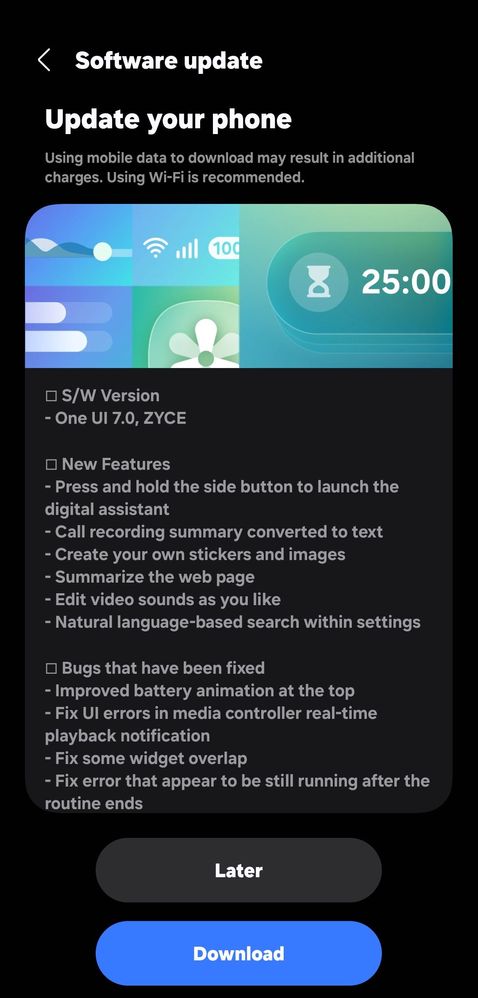
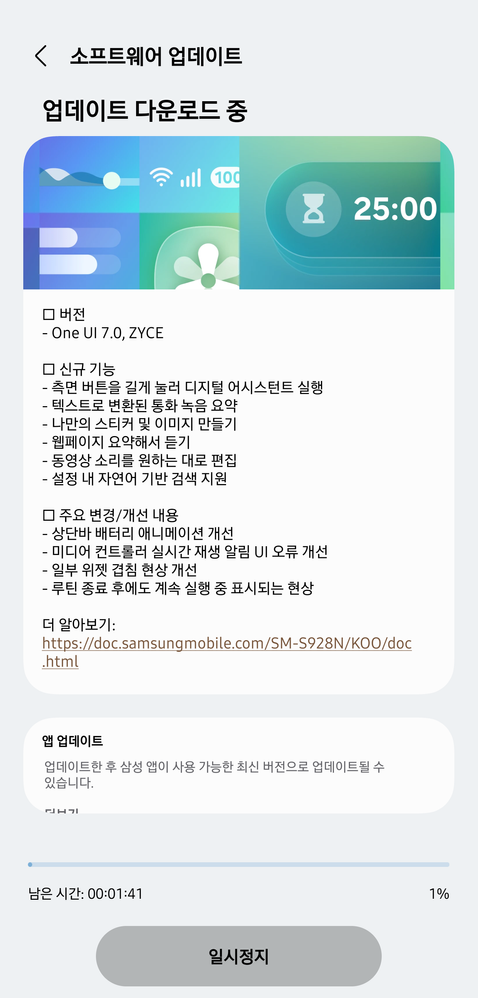
The One UI 7 beta 6 update is rolling out to the Galaxy S24, Galaxy S24+, and Galaxy S24 Ultra (the S24 FE is not part of the beta program). It comes with the firmware version ZYCE and brings several new features and bug fixes to enhance the overall software experience. Since the majority of changes and additions have already been implemented, the update size isn’t huge — it’s only around 1.25GB.
As noted by SamMobile, the changelog is the same as the third One UI 7 beta update for the Galaxy Z Fold 6 and Galaxy Z Flip 6, which was released yesterday. This means we’re finally getting the Audio Eraser feature. This feature can identify up to six different types of sounds and lets you increase or decrease the volume of identified sounds in videos to enhance the audio experience. For example, you can lower or remove the voices of people chattering in the background and increase yours for better clarity.
The sixth One UI 7 beta for the Galaxy S24 series also brings an improved version of Sketch to Image, with the ability to give specific instructions to Galaxy AI while generating an image. Additionally, the update introduces the ability to summarize call recordings into text summaries.
Furthermore, the update includes deeper integration of Google Gemini. You can now access it quickly by holding the side button. The update allows you to create stickers and images and summarize web pages. It also enhances the Settings app with natural language search integration, enabling users to find settings using everyday language. For example, searching “my eyes are feeling tired” in Settings will suggest options like adjusting brightness or enabling Eye Comfort Shield.
The beta update also improves the battery animations at the top and includes fixes related to widget overlapping, media controller UI elements, and routines.
Samsung is rolling out the One UI 7 beta 6 update for the Galaxy S24 series in multiple countries, including India, Korea, and Germany. If you have a Galaxy S24 running One UI 7 beta, you can install the latest update by going to Settings > Software update and tapping on Download and install.
This could be the final One UI 7 beta for the Galaxy S24 series, as the stable rollout is only two weeks away. Past reports also indicate that the Galaxy S24 series would receive six beta updates. This means the next update could be the stable one.
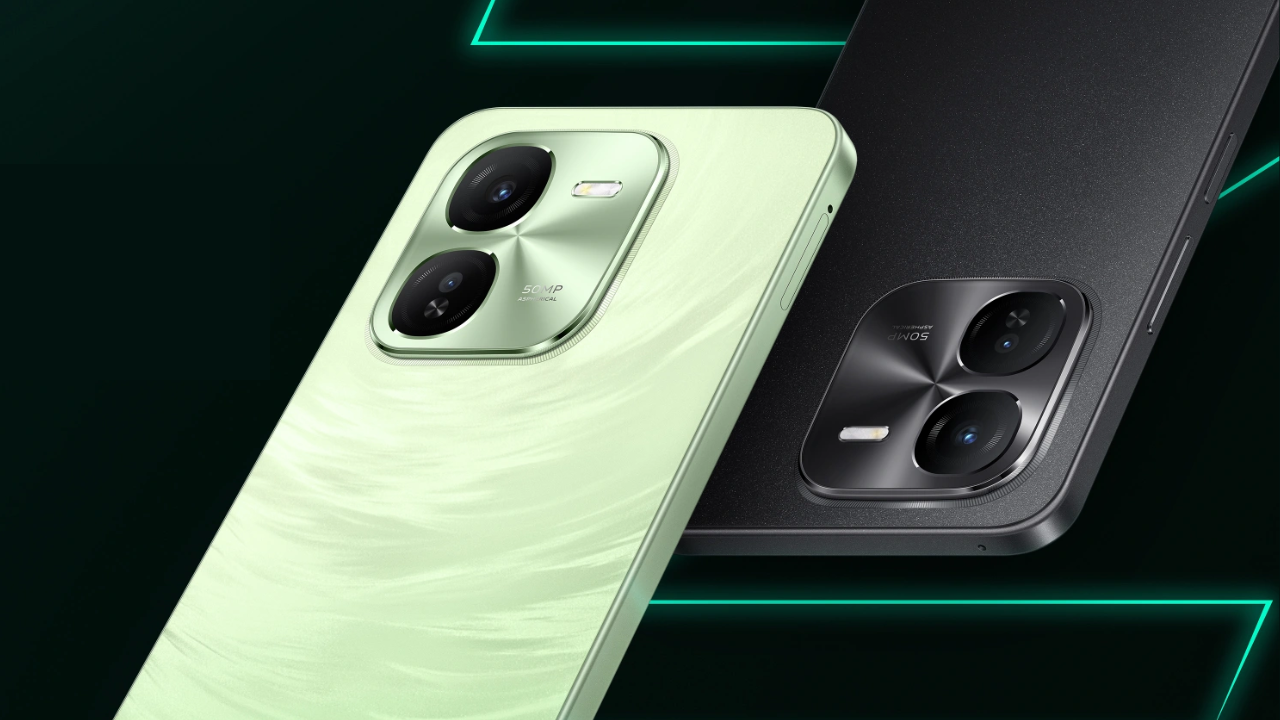
iQOO confirmed the launch of the iQOO Z10 in the Indian market last week. The upcoming smartphone is set to debut next month, but ahead of the April release, the Z10 surfaced in a fresh teaser. This confirmed one of its color options, so let’s check it out.
iQOO Z10 Teased in India
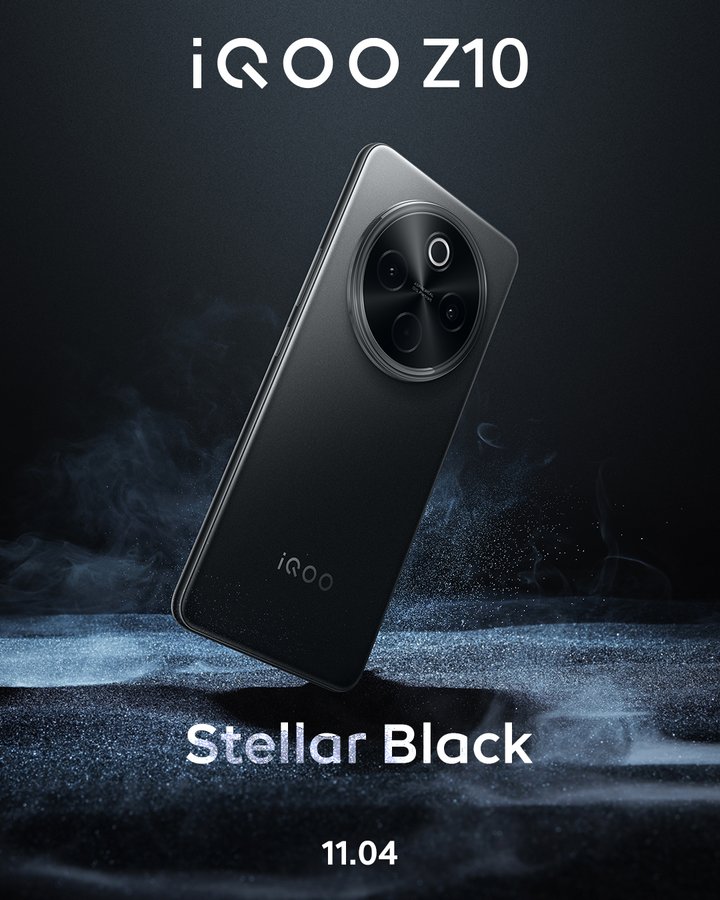
The Chinese smartphone maker just shared a teaser from its official X handle (formerly Twitter). Looking at the image poster, the iQOO Z10 is confirmed to launch in the Stellar Black color option, which has a matte finish as well. To recall, the device was previously spotted in another teaser, which confirmed the Glacier Silver color variant. The teaser poster showcases the full design of the iQOO Z10.
iQOO Z10 in Stellar Black
There is a large circular camera island that houses the image sensors and the LED flash module. The exact camera details are still at large but the camera module confirms support for OIS (Optical Image Stabilization) on the main sensor. In one of our previous reports, we covered another iQOO Z10 teaser that confirmed that the device will be powered by a humongous 7,300mAh battery pack.
In other words, it houses one of the largest batteries on a commercial smartphone. The brand plans to unveil this model in the Indian market on 11th April 2025. Based on another leak, the iQOO Z10 could sport a quad curved AMOLED display with a 120Hz refresh rate and FHD+ resolution. Under the hood, it is expected to feature either the Snapdragon 7 Gen 4 or Snapdragon 7s Gen 3 chipset. The smartphone only measures 8.1mm in thickness despite its massive battery and possibly offers 90W wired fast charging.
For more daily updates, please visit our News Section.
iQOO is gearing up to launch its Z10 series in India and China. In fact, the company has already confirmed a launch date for standard Z10 in India i.e. April 11.
While India is expected to get just this model for now, the full lineup—including the Z10x, Z10, Z10 Turbo, and Z10 Turbo Pro—could roll out in China soon. Here’s a breakdown of what to expect from each model.
The Z10x will be the most affordable entry in the lineup and will likely feature an LCD panel and a new MediaTek chipset.
It first appeared in certifications last October and later surfaced in BIS listings in January. But for now, details on its specs remain scarce.
Its predecessor featured a 6.72-inch IPS LCD with a 120Hz refresh rate and FHD+ resolution, powered by the Snapdragon 6 Gen 1 chipset with up to 8GB of RAM and 128GB of storage. It also packed a 50MP dual-camera system and a 6,000mAh battery with 44W fast charging. The Z10x will likely offer similar specs but could see some minor upgrades.
That said, this model might not launch alongside the rest of the lineup and could instead arrive later in Q3 2024.
iQOO Z10
The Z10 has already been confirmed for India, and teasers from iQOO have already confirmed some key specs. Including a massive 7,300mAh battery. That’s the largest battery on any phone in India right now.
And for comparison, its predecessor, the Z9, had a 5,000mAh battery. Despite the bump in battery size, the phone measures just 7.89mm thick.
iQOO Z10 in Stellar Black
Moreover, leaks suggest the Z10 will feature a 6.67-inch quad-curved AMOLED display (FHD+, 120Hz). Under the hood, it could pack either the Snapdragon 7 Gen 4 or the Snapdragon 7s Gen 3 chip paired with 8GB/12GB RAM and 128GB/256GB storage options. The front will have a 32MP camera for selfies, while details on the rear camera setup is still under wraps.
2. iQOO Z10 Turbo
iQOO Z9 Turbo Long Lasting Version
The Z10 Turbo is expected to launch in China in April with MediaTek’s Dimensity 8400. The display is rumored to be a 6.78-inch LTPS panel with a 1.5K resolution.
Camera-wise, leaks suggest a 50MP primary sensor and a 2MP secondary sensor at the back, with a 16MP front-facing camera. Powering the setup will be a 7,000mAh battery with 90W fast charging support.
Interestingly, a recent leak suggests iQOO might also launch the Z10 Turbo in India in April. The device could debut in configurations including 8GB/12GB RAM and 256GB storage. It may come in Gold and Silver color options.
3. iQOO Z10 Turbo Pro
Sitting at the top of the lineup, the Z10 Turbo Pro will likely share some DNA with the Turbo but push performance further. It’s rumored to feature the same 6.78-inch 1.5K display but swap in Qualcomm’s Snapdragon 8s Gen 4—a step up from the Snapdragon 8s Gen 3 used in the Z9 Turbo.
It has surfaced on Geekbench with 12GB RAM and Android 15, while a 3C certification confirms 120W fast charging. Other expected features include a plastic mid-frame and an optical fingerprint scanner, keeping costs in check.
4. Final Thoughts
IQOO is clearly aiming to offer a mix of affordability, large batteries, and high-performance chips with the Z10 series. The iQOO Z10 and Z10 Turbo seem to be the most interesting options, particularly with their massive battery capacities and OLED displays.
Meanwhile, the Turbo Pro brings near-flagship performance, while the Z10x offers a budget-friendly alternative. Now that we have a confirmed launch date for at least one model, we won’t have to wait long to see how the iQOO Z10 series stacks up.
For more daily updates, please visit our News Section.
Motorola is working on its new range of Razr and Edge series of smartphones. We have already covered various rumors and reports regarding these devices, and now, the latest leak confirms the European pricing, color, and storage options of the Razr 60 Ultra, Edge 60 Pro, and Edge 60. So here’s all the details.
The smartphone maker’s upcoming Edge 60 and Edge 60 Pro surfaced online at the European retail site Epto (Via 91Mobiles). Motorola’s higher end Edge 60 Pro arrives in two color options, namely Blue and Green. This listing was for the 12GB + 512GB storage configurations, which is priced at 649.89 Euros. Meanwhile, the base Edge 60 was listed with 8GB of RAM and 256GB of internal storage for 399.9 Euros.
You can get your hands on this model in Gibraltar Sea Blue and Shamrock Green. Lastly, we have the Motorola Razr 60 Ultra, which is the brand’s next gen flagship foldable phone. This can be purchased in a 12GB + 512Gb configuration for 1346.9 Euros. It is also listed in two color options, including Scarab Green and Mountain Trail Wood. Unfortunately, this was all the information that was revealed on the European retailer’s listing.
The Motorola Razr 60 Ultra was just recently spotted on the TENAA certification a couple of days ago. This confirmed that the device packs the Snapdragon 8 Elite SoC. A 4,500mAh battery pack powers the new flip phone, which supports a 68W fast charger as per a 3C certification. This model could offer a 50MP for selfies and video calls, while the rear houses a 50MP dual camera setup.
For more daily updates, please visit our News Section.
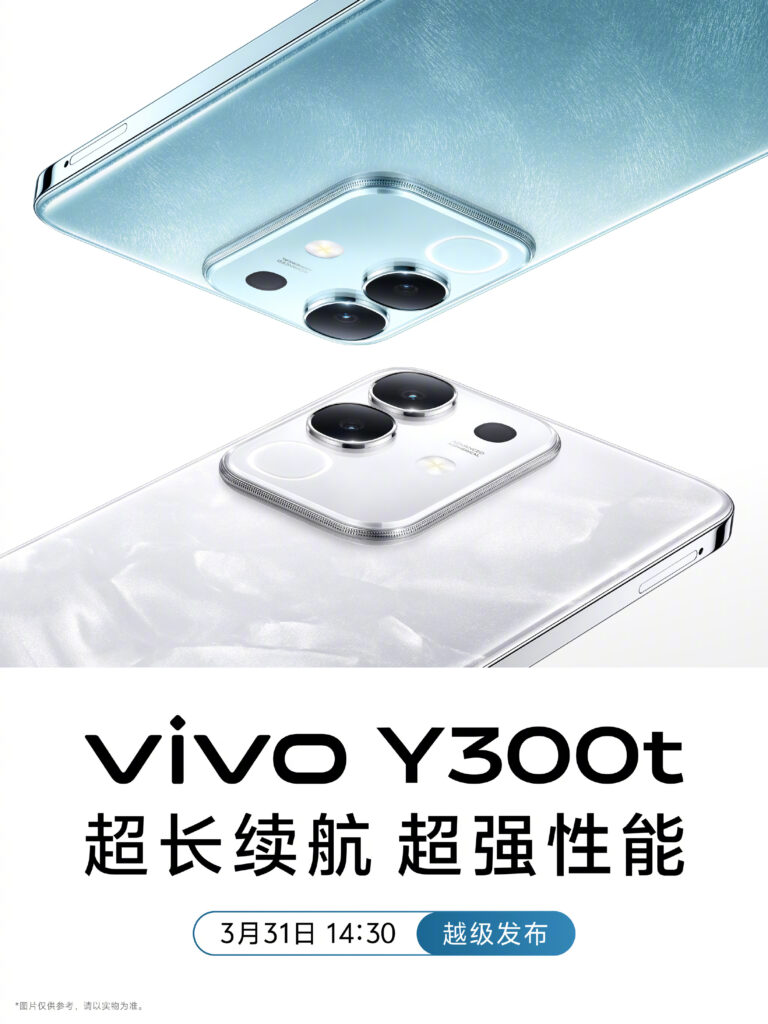
Earlier this week, Vivo confirmed that it will unveil the Vivo Y300 Pro+ on March 31 in China. Today, the brand also announced that it will launch another Y-series phone, the Vivo Y300t, alongside the Y300 Pro+. The Y300t is expected to be a rebranded version of the Vivo T4x 5G, which debuted in India earlier this month.
Vivo Y300t key specifications
Vivo Y300t launch date
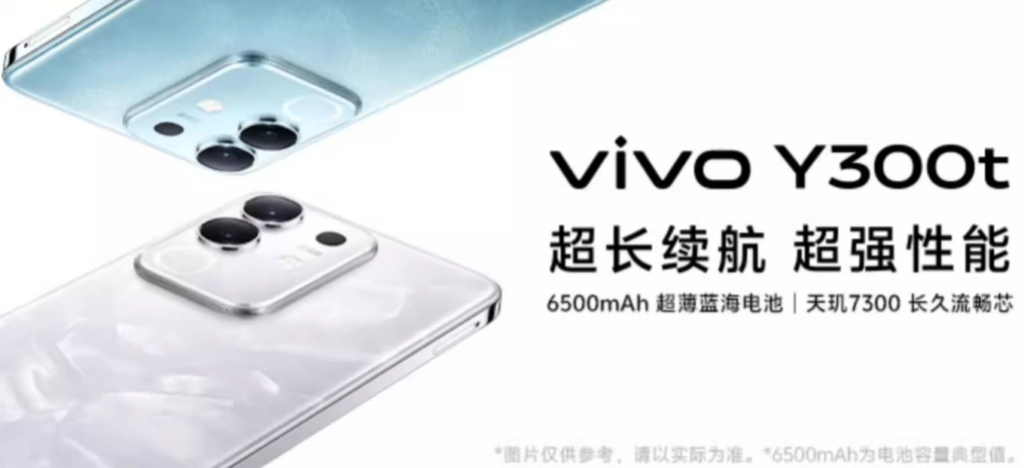
The Vivo Y300t will feature a 6,500mAh battery with 44W fast charging support. It will be powered by the MediaTek Dimensity 7300 chipset.
The Y300t features a flat frame and a curved glass back. On the rear, it sports a dual-camera setup with an LED ring flash. It will be sold in shades like black, white, and blue in China. The company is yet to reveal the other specs of the device, but it’s likely to inherit the internals of the T4x, being a rebranded version.
Vivo Y300t
Therefore, the Vivo Y300t may house a 6.72-inch LCD display that supports an FHD+ resolution, a 120Hz refresh rate, and a peak brightness of 1,050 nits. On the front, it may feature an 8-megapixel selfie camera, while its back panel could be fitted with a 50-megapixel + 2-megapixel dual-camera system. It is expected to run on OriginOS 5 based on Android 15 and offer features like AI enhancements, a side-mounted fingerprint scanner, an IR blaster, and IP64-rated protection.
Vivo Y300t
The Y300 Pro+, on the other hand, will have a 6.77-inch OLED display that offers a 1.5K resolution and a 120Hz refresh rate. Under the hood, it may feature the Snapdragon 7s Gen 3 chip, up to 12 GB of RAM, up to 512 GB of storage, a 7,300mAh battery with 90W fast charging, a 32-megapixel front camera, and a 50-megapixel + 2-megapixel dual-camera setup. The Y300 Pro+ is likely to be rebranded as the Z10, which is set to launch on April 11 in India.
For more daily updates, please visit our News Section.
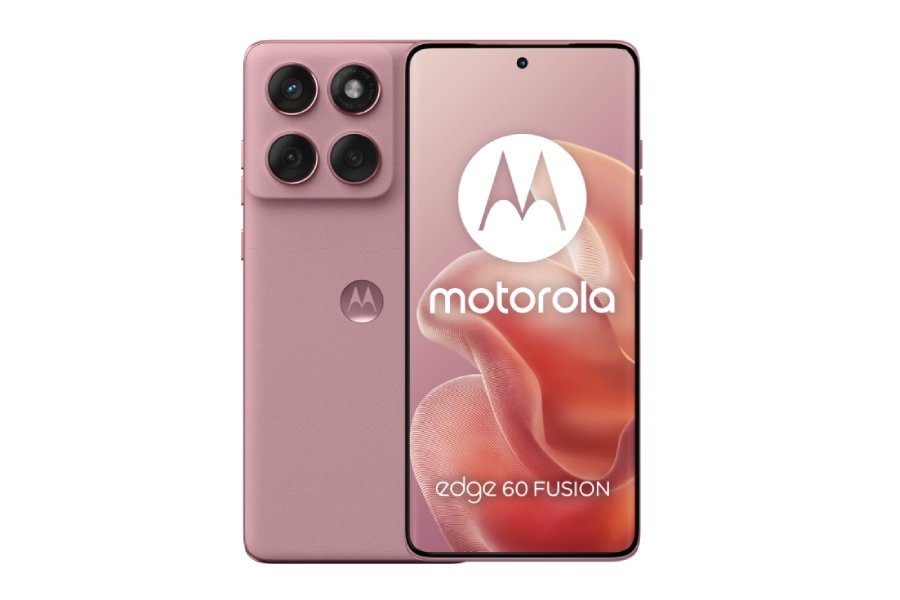
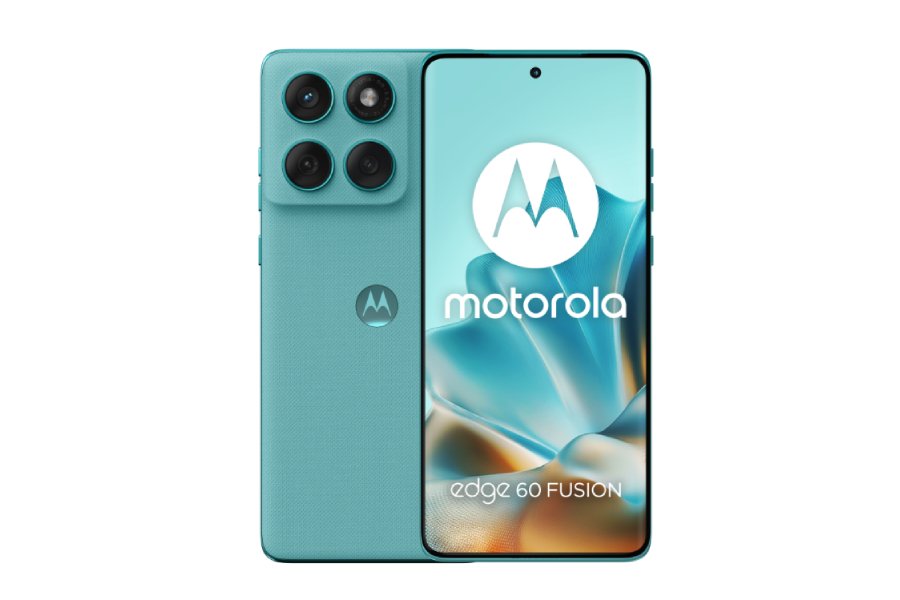
Motorola is gearing up to launch the Edge 60 Fusion in India on April 2nd. Along with this announcement, the company confirmed a few details of the device. Including a 1.5K all-curved display, military-grade certification, and the Sony LYT700C sensor for the main camera.
However, a new leak has now revealed the complete spec sheet along with renders of the device.
Motorola Edge 60 Fusion Specifications (Rumored)
According to the leak, the Edge 60 Fusion measures 161 x 73 x 7.95 mm and weighs 178 grams. The front features a 6.7-inch curved pOLED display with a resolution of 2712×1220, a 120Hz refresh rate, and an impressive peak brightness of 4500 nits.
The 60 Fusion will have a dual-camera setup on the back led by the said 50MP Sony LYTIA 700C sensor with OIS support. The remaining is a 13MP ultra-wide camera that is said to double as a macro shooter. On the front, you will get a 32MP camera for selfies.
Fueling the device will be a 5200mAh battery with 68W TurboPower charging support. Unfortunately, the charger won’t be included in the box.
The phone also boasts strong durability credentials with an IP68/IP69 rating along with MIL-STD-810H certification.
One of the more debated aspects of the phone is its chipset. The leak suggests that the Edge 60 Fusion will feature the MediaTek Dimensity 7300, while an earlier report pointed to the Dimensity 7400.
The latter is a newer SoC that debuted in February, but both chips share a similar core architecture, meaning real-world performance differences should be negligible. What seems certain, however, is that Motorola is moving away from Qualcomm in favor of MediaTek this year.
The SoC will be paired with 8GB of LPDDR4X RAM and 256GB of uMCP storage, which can be expanded up to 1TB via microSD. And software-wise, it will run Android 15 out of the box.
For more daily updates, please visit our News Section.
Earlier this week, Vivo’s product manager released a Weibo post showcasing the design of the upcoming Vivo X200S for the first time. Today, he published a new Weibo post revealing the phone’s display, chipset, and charging features. For those who don’t know, the X200S will arrive as an upgraded version of the Vivo X200, which debuted in October 2024.
Vivo X200S key specifications confirmed
Vivo X200s key specs officially confirmed by Vivo Product Manager Han Boxiao
The Vivo X200S will feature the Dimensity 9400 Plus, an enhanced version of the Dimensity 9400 with a clock speed increase to 3.7GHz. The X200S will support bypass charging and wireless charging, which are absent on the X200.
One of the key highlights of the device is its bypass charging system. This feature allows power to be directly supplied to the phone during charging, reducing battery wear and minimizing heat generation. The phone is expected to support 90W wired charging and 50W wireless charging.
The Vivo X200S will feature a flat BOE Q10 display with a uniform bezel design. It will also introduce an ultrasonic fingerprint scanner for improved unlocking speed and accuracy. In comparison, the X200 has a micro-quad-curved screen.
Rumours suggest that the X200S may ship with a 6,000mAh battery. For photography, the Vivo X200S is likely to retain the X200’s camera setup, featuring a 50-megapixel IMX921 primary sensor, a 50-megapixel ultra-wide Samsung JN1 lens, and a 50-megapixel LYT-600 periscope telephoto lens with 3x optical zoom.
For more daily updates, please visit our News Section.
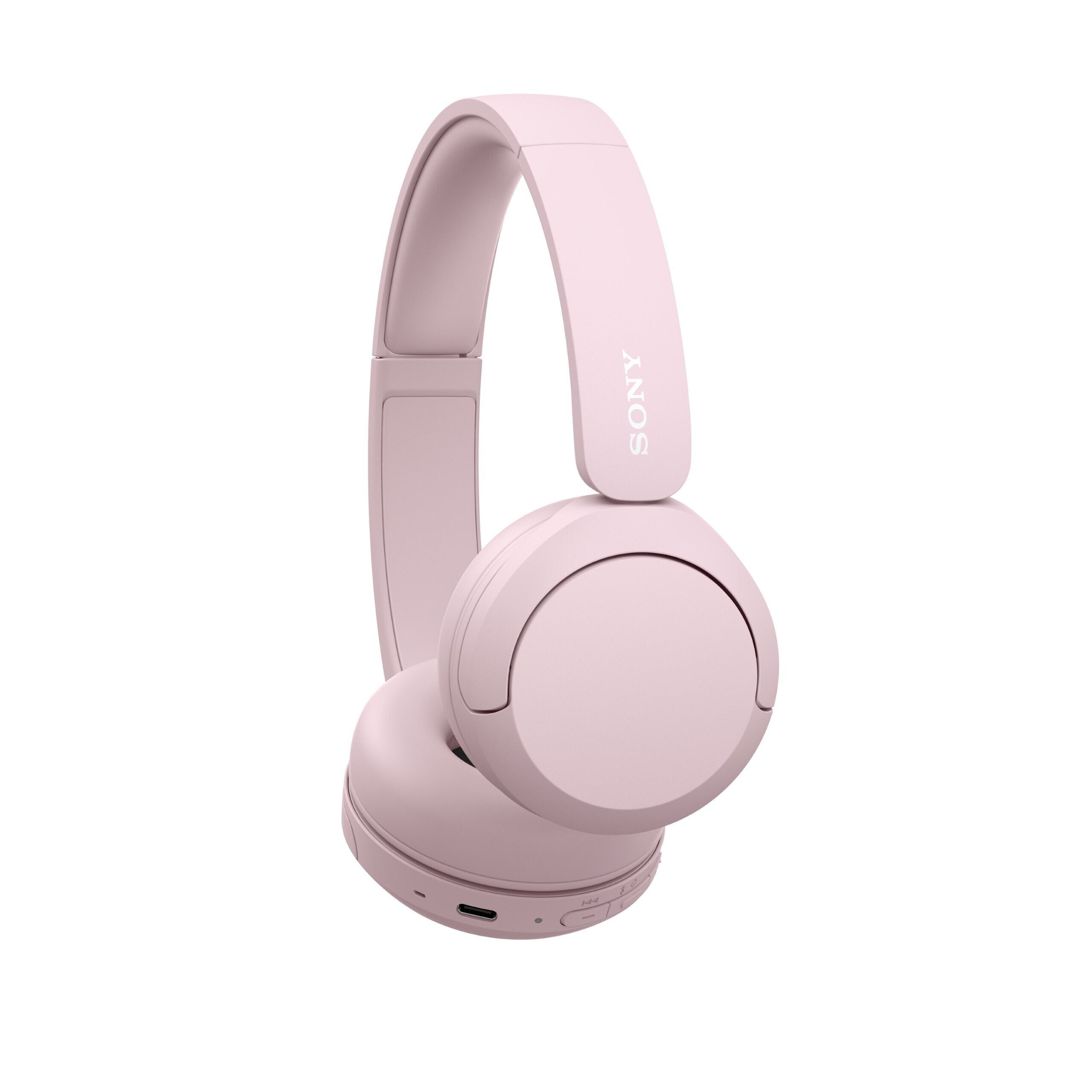
Sony has added new color options to its WH-CH720N and WH-CH520 wireless headphones. Both models now come in a pastel pink variant, while the WH-CH520 also adds a yellow option. An espresso color variant will be available in Canada. The update is part of Sony’s effort to offer more visual choices in its current lineup.
WH-CH720N: Specifications and Features
The WH-CH720N is an over-ear wireless headphone with active noise cancellation powered by Sony’s V1 processor. It includes 30mm dynamic drivers and uses DSEE technology to improve the quality of compressed audio. Ambient sound mode allows some external noise in, while voice mode makes it easier to hold conversations without removing the headphones. Adaptive sound control adjusts noise cancellation and audio based on user activity and surroundings.
WH-CH720N Wireless Noise-Canceling Headphones in Pink
The headphones feature Precise Voice Pickup for improved voice clarity during calls. Physical buttons on the ear cups manage playback, volume, and ANC. Bluetooth 5.2 is supported, along with Google Fast Pair and the ability to connect to two devices at once. Battery life is rated at up to 50 hours without ANC and 35 hours with ANC. Fast charging is also supported.
WH-CH520: Specifications and Features
WH-CH520 Wireless Headphones in YellowWH-CH520 Wireless Headphones in Pink
The WH-CH520 is an on-ear wireless headphone with a compact build, adjustable headband, and soft ear pads. It also features 30mm drivers and DSEE technology. Audio settings can be customized through the Sony Headphones app. A built-in microphone supports hands-free calling and voice assistant use.
Battery life is up to 50 hours. Connectivity includes Bluetooth 5.2 with Swift Pair, Google Fast Pair, and dual-device support.
Availability and Pricing
The WH-CH720N is priced at $149.99 USD ($249.99 CAD) and is available for pre-order in pink and previously available colors through Sony Electronics, Amazon, and authorized retailers.
The WH-CH520 is priced at $59.99 USD ($99.99 CAD) and is available for pre-order in pink, yellow, and existing color options. The espresso variant will be available only in Canada.
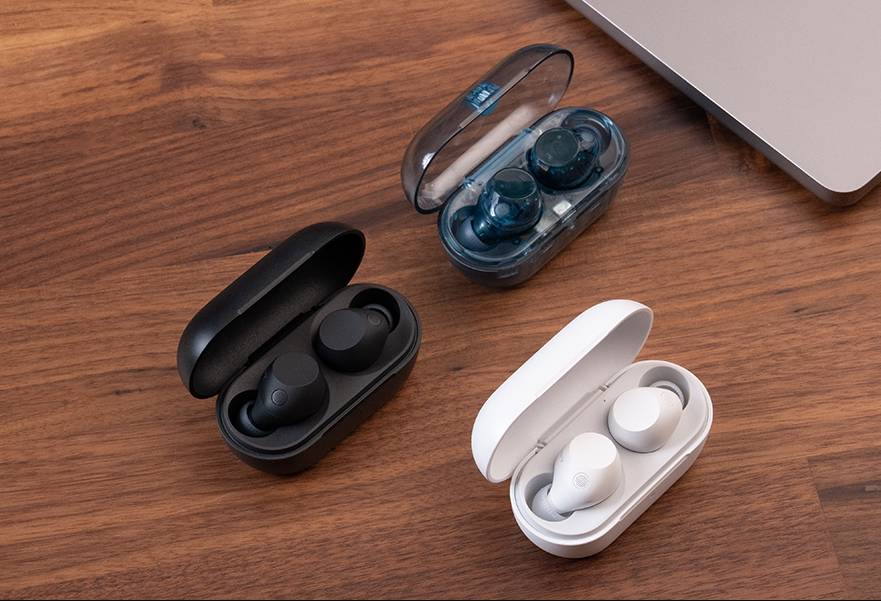
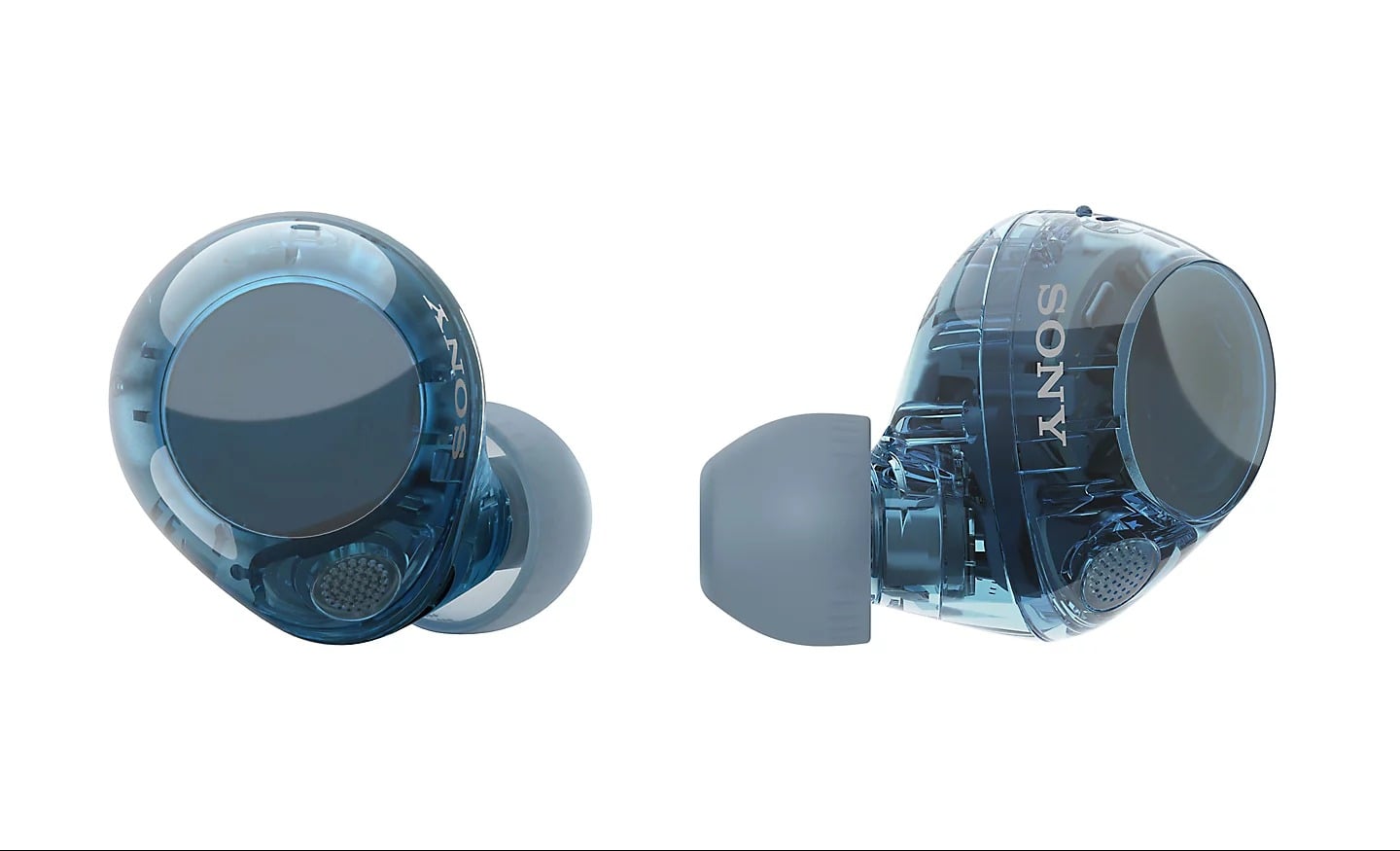
Sony Electronics Inc. has introduced its new mid-range wireless earbuds, the WF-C710N. Available for pre-order starting today, the earbuds come in four colors: Glass Blue, Pink, White, and Black. The earbuds focus on delivering core features such as noise cancellation, long battery life, and clear calls in a compact design.
Sony WF-C710N earbuds
The WF-C710N includes Dual Noise Sensor technology with two microphones that reduce surrounding noise. Users can adjust ambient sound settings through the Sony Sound Connect app, offering 20 levels of control or voice passthrough. Adaptive Sound Control changes audio settings based on location and activity, learning commonly visited places like offices or gyms. AI-based Precise Voice Pickup Technology, trained on over 500 million voice samples, helps isolate speech and reduce background noise during calls.
Each earbud has a 5mm driver and supports the Digital Sound Enhancement Engine (DSEE), which improves compressed audio quality. The app includes EQ Custom, allowing users to adjust sound profiles to their preferences.
The WF-C710N has a lightweight build and comes in an IPX4-rated design for water resistance. The earbuds feature a cylindrical case and offer touch controls for music, calls, and volume. With the charging case, the earbuds offer up to 30 hours of total battery life. A five-minute quick charge provides 60 minutes of use. Additional functions include Instant Pause/Play and multipoint Bluetooth connectivity.
Availability and Pricing
The WF-C710N is available for pre-order through Sony’s website, Amazon, and authorized retailers. It is priced at $119.99 USD ($169.99 CAD).
For more daily updates, please visit our News Section.
Oppo has officially started teasing the design and key specifications of the Find X8s, its upcoming compact flagship. The latest announcement highlights several industry-first design aspects, including an ultra-thin body, narrow bezels, and a lightweight build. The device will be unveiled alongside the Find X8s+, Find X8 Ultra, Pad 4 Pro tablet, Watch X2 Mini, and Enco Free 4 TWS on April 10 in China.
Opoo Find X8s’ key details officially confirmed
The Find X8s features a 6.3-inch flat display, which means that it will arrive as a compact flagship phone. Oppo has pushed the boundaries of engineering with an incredibly slim design, reducing the camera bump significantly and minimizing bezels to create a seamless, near-borderless look. The device reportedly weighs under 180g, making it approximately 20g lighter than the iPhone 16 Pro. Additionally, it has a thickness of less than 7.8mm, ensuring a comfortable grip.
One of the notable design changes is the new “Magic Cube,” a pressable button on the left frame, replacing the traditional three-stage Alert Slider key. The rear camera setup maintains a circular module in line with the existing Find X8 series. However, the camera bulge is not that protruding.
Under the hood, the Find X8s is powered by the upcoming Dimensity 9400+ chipset that works at 3.7GHz. Speculations are rife that the device is equipped with a 5,700mAh battery with 80W wired and 50W magnetic wireless charging. Its rear camera setup is expected to include a 50-megapixel main camera with OIS support, an 8-megapixel ultra-wide lens, and a 50-megapixel telephoto camera with 2x optical zoom.
Oppo has officially confirmed that the Find X8s will arrive in 12GB+256GB, 12GB+512GB, 16GB+512GB, and 16GB+1TB configurations. It will be sold in shades like Moonlight White, Hyacinth Purple, and Starry Black.
For more daily updates, please visit our News Section.
Vivo unveiled the Vivo X200 Pro Mini compact phone with a 6.31-inch display in October 2024. Following the success of this phone, other brands like Oppo and OnePlus are also planning to launch their iterations of 6.3-inch display phones, such as the Find X8s and OnePlus 13T. The X8s is scheduled to launch on April 10 in China, and now a new leak has emerged, revealing the launch timeframe of the OnePlus 13T.
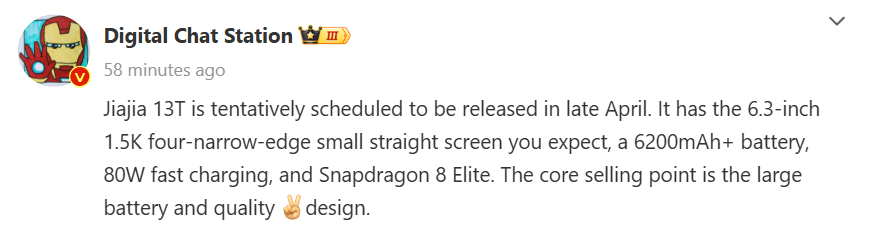
According to a new leak from tipster Digital Chat Station, the OnePlus 13T will stand out for its premium build and long battery life while maintaining a smaller form factor. The leak also suggests that this could be the most affordable Snapdragon 8 Elite-powered compact flagship phone.
The OnePlus 13T is said to feature a 6.3-inch 1.5K flat display with an ultra-thin, symmetrical bezel design. It will house a 6,200mAh battery, making it the largest in its category. It will also support 80W fast charging but may lack wireless charging support.
Interestingly, OnePlus has opted for a dual-camera setup, possibly to allocate more internal space for the battery. Previous reports have claimed that it will have a 50-megapixel main camera with OIS support and a 50-megapixel telephoto camera with 2x optical zoom. As far as the launch timeframe is concerned, DCS claims that it will debut by late April in China.
How it compares to the Find X8s
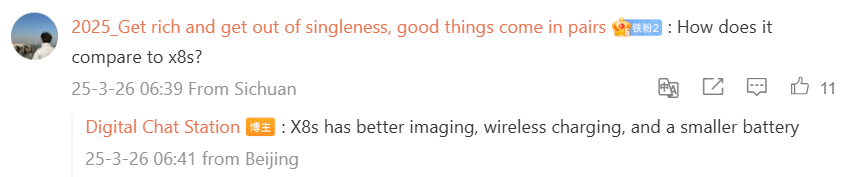
Compared to the OnePlus 13T, the Find X8s has a more advanced camera system and wireless charging, but a slightly smaller battery. Those prioritizing photography may lean towards the Find X8s, while the OnePlus 13T could be a better choice for users looking for maximum battery life at a lower price. As per reports, the Find X8s offers a 6.3-inch display, a Dimensity 9400 Plus chipset, and a 5,700mAh battery. It supports 80W wired and 50W wireless charging while featuring a triple-camera setup (50-megapixel + 8-megapixel + 50-megapixel).
For more daily updates, please visit our News Section.
Motorola is gearing up to refresh its iconic flip phone lineup with the Razr 60 and Razr 60 Ultra. With numerous certifications and leaks surfacing, it’s becoming clear that the company is doubling down on premium specs, refined design, and thoughtful features for its next-gen foldables. Here’s everything we know so far about the Motorola Razr 60 Ultra and what you can expect when it finally launches.
Motorola Razr 50 Series
Refined, Familiar Design
Motorola isn’t reinventing the wheel when it comes to the design of the Razr 60 Ultra. Leaked renders and certification images show a device that holds onto the clamshell aesthetic of its predecessor, the Razr 50 Ultra. The foldable will feature a large 6.96-inch OLED inner display with a high 165Hz refresh rate and a punch-hole cutout for the selfie camera. The cover display, measuring 4 inches with a resolution of 1080 x 1272 pixels, continues to stretch around the dual rear cameras, creating a seamless visual experience.
Interestingly, Motorola appears to be playing with textures and finishes this year. Leaks from Evan Blass suggest the phone could ship in a wood finish, reminiscent of the beloved Moto X Pure from 2015. Other colors reportedly include dark green, bold Rio Red, and possibly a leather finish for the lower half of the rear panel.
Powerful Internals Under the Hood
Talking about performance, the Razr 60 Ultra is expected to pack Qualcomm’s Snapdragon 8 Elite chipset, a step up from last year’s Snapdragon 8s Gen 3. The phone will come with RAM options ranging from 8GB all the way to a whopping 18GB, alongside storage configurations up to 2TB, though not all options will be available at launch.
Another standout upgrade is the battery. The Razr 60 Ultra will reportedly house a dual-cell battery with a combined rated capacity of 4,275mAh and a typical capacity around 4,500mAh. This marks a significant improvement over the 4,000mAh battery on the Razr 50 Ultra. The device has also been spotted with support for 68W fast wired charging and wireless charging, a notable jump from the previous 45W charging speeds.
Cameras Get a Boost
On the camera front, Motorola seems to be stepping things up. Expect a 50MP front camera, a clear upgrade from the 32MP sensor on the Razr 50 Ultra, designed for high-quality selfies and crisp video calls. On the back, the dual-camera setup will feature two 50MP sensors, with enhancements likely aimed at improving low-light performance and color accuracy.
Software and Features
The Razr 60 Ultra is expected to ship with Android 15 out of the box, offering a near-stock Android experience. Motorola is also expected to retain its clever cover display features, such as pinning apps for quick access and using the external display as a selfie preview window. Small design tweaks, like a larger bottom speaker grille replacing the dual-grille setup, are expected to improve audio output.
Stronger Entry-Level Model
The vanilla Razr 60 will also see some upgrades, though not as flashy as the Ultra model. It’s expected to use a MediaTek Dimensity 7400X chipset with up to 12GB of RAM and 512GB of storage. The foldable will sport a slightly smaller 6.7-inch inner display but will gain an IP48 rating and wet touch functionality, making it more durable and user-friendly.
Launch Timeline and Pricing
Motorola traditionally unveils its foldables around June, but given the volume of leaks, an earlier launch possibly in April is on the cards. Pricing details are still under wraps, but with the Razr 50 Ultra debuting at $1,000 in the US, we can expect Motorola to aim for a similar price bracket for the Razr 60 Ultra.
As Motorola fine-tunes its foldable lineup, the Razr 60 Ultra looks like it’s shaping up to be a thoughtful evolution of the series, balancing design nostalgia, performance upgrades, and battery improvements. Stay tuned as more details emerge in the coming weeks.
For more daily updates, please visit our News Section.
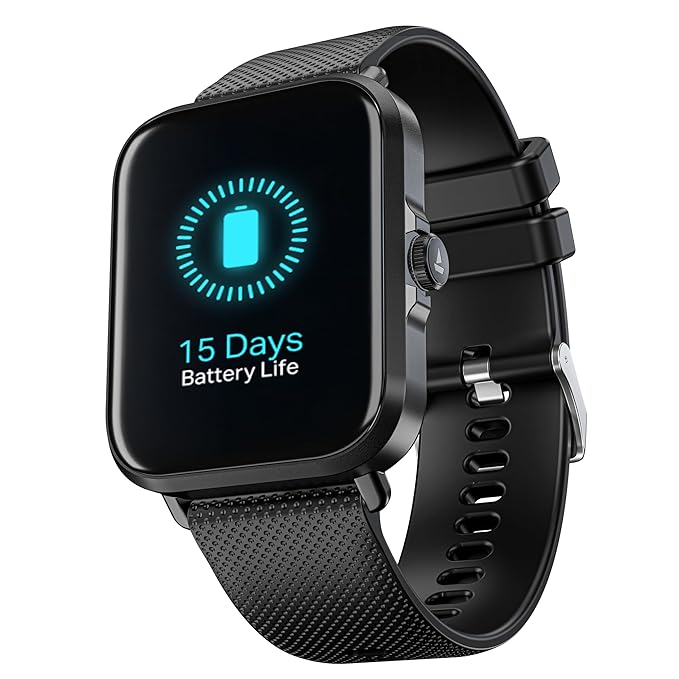
Indian electronics brand Boat has launched the Storm Infinity smartwatch, focusing on long battery life and practical features. The watch is now available on Amazon.in, Flipkart, and the official boAt website.
Boat Storm Infinity features
The Boat Storm Infinity has a 1.83-inch display with 550 nits brightness, a Wake Gesture feature triggered by wrist movement, and a Functional Crown for easier navigation. The nylon strap is IP68-rated, making it resistant to sweat, dust, and splashes.
The watch includes Bluetooth Calling with a built-in dial pad and supports up to 20 saved contacts. Health tracking covers heart rate, SpO2, sleep, stress, and menstrual cycles, along with guided breathing exercises. The watch also supports over 100 sports modes.
The smartwatch offers tools like activity tracking, hydration and sedentary reminders, SOS alerts, and Find My Device. It includes a voice assistant and apps for weather, flashlight, music and camera controls, games, and a calendar. All data syncs with the boAt Crest App.
The Storm Infinity includes a 550mAh battery, offering up to 20 days of regular use or 12 days with heavy usage. boAt states that the device typically needs charging twice a month. With ASAP Charge, a full charge takes 60 minutes, while 10 minutes of charging provides extended use.
Pricing & availability
The Storm Infinity is available in Active Black, Cherry Blossom, Silver Mist, and five other colors. It is priced from ₹1,299 with a ₹100 coupon discount (on Amazon) and a 1-year warranty. Offline sales begin today.
For more daily updates, please visit our News Section.
In November 2024, Realme unveiled the Realme GT 7 Pro, equipped with the Snapdragon 8 Elite, in multiple markets. It is likely that the brand will announce the Realme GT 8 Pro as its successor around the same time this year. Well ahead of its launch, tipster Smart Pikachu has leaked the GT 8 Pro’s key specifications.
Realme GT 8 Pro specifications (rumored)
The latest leak suggests that the Realme GT 8 Pro may feature a flat OLED panel with support for a 2K resolution. For security, it will be equipped with an ultrasonic in-screen fingerprint sensor.
Under the hood, the device is expected to feature the upcoming Snapdragon 8 Elite 2 chipset and a 7,000mAh+ battery. It will be an all-rounder flagship phone equipped with a periscope telephoto camera. However, details about the rest of its specifications are currently unavailable.
To recall, the Realme GT 7 Pro features a 6.78-inch micro-quad-curved Samsung AMOLED screen that offers a 1.5K resolution, a 120Hz refresh rate, and an ultrasonic in-screen fingerprint sensor. It is powered by the Snapdragon 8 Elite chipset, paired with up to 16GB of LPDDR5x RAM, up to 1TB of UFS 4.0 storage, and supports 120W fast charging. The GT 7 Pro’s Chinese variant packed a 6,500mAh battery, whereas its global version housed a 5,800mAh battery.
Realme GT 7 Pro
The GT 7 Pro features a 16-megapixel camera for selfies and video calls. On the rear, it has a 50-megapixel main camera with OIS support, an 8-megapixel ultra-wide lens, and a 50-megapixel periscope telephoto camera with OIS and 3x optical zoom.
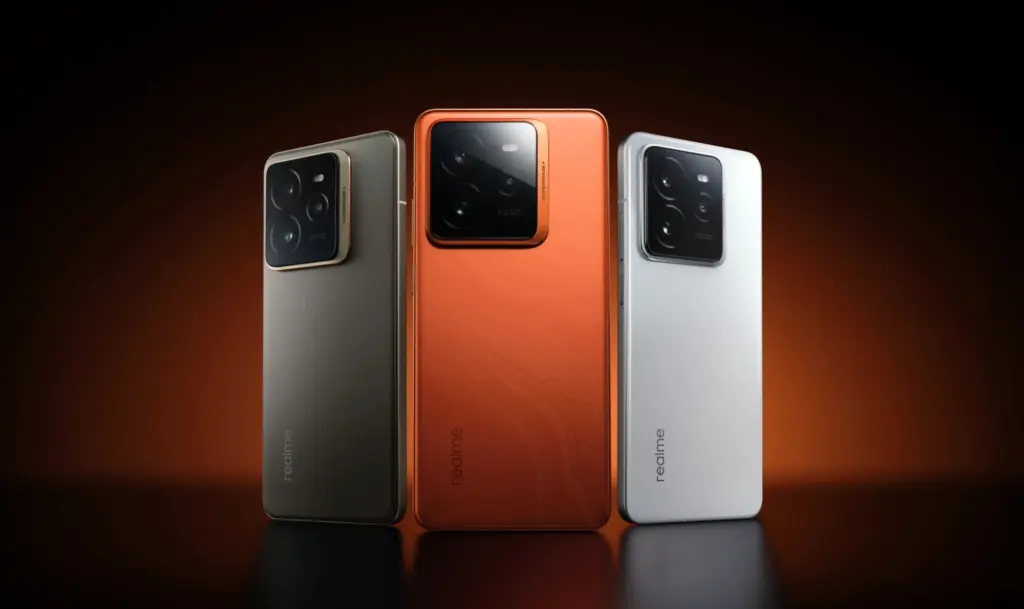
Apart from the Realme GT 8 Pro, the brand is also said to be working on the Realme GT 7, which is expected to launch in the coming weeks. It is speculated that the GT 7, equipped with the upcoming Dimensity 9400 Plus, will debut as early as next month (April) in China.
For more daily updates, please visit our News Section.
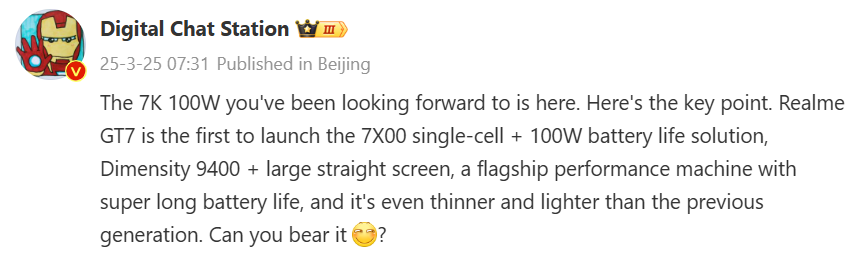
In July 2024, Realme unveiled the Realme GT 6, equipped with the Snapdragon 8 Gen 3 chipset. In a recent Weibo post, tipster Digital Chat Station revealed that the brand is working on the Realme GT 7. In addition, he has also shared the key specifications of the device.
Realme GT 7 specifications (rumored)
According to a tipster, the Realme GT 7 will be equipped with a 7,000mAh single-cell battery and 100W rapid charging support. It will feature a flat display and the forthcoming Dimensity 9400 Plus chipset.
DCS has further claimed that the GT 7 will be thinner and lighter than the GT 6, which is 8.4 mm thick and weighs 207 grams. The GT 6 featured a 5,800mAh battery, but its successor, despite packing a larger battery, will weigh less than its predecessor.
Speculations are rife that the Oppo Find X8S and Find X8S+ will debut on April 10 in China as the world’s first smartphones powered by the Dimensity 9400 Plus chipset. The Vivo X200S, debuting later in the same month, will also feature the same chipset.
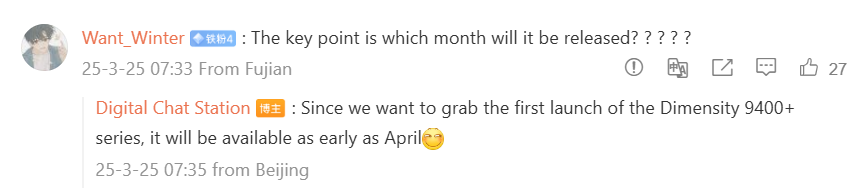
Next in line are the iQOO Neo 9S, Redmi K80 Ultra, and OnePlus Ace 5S which are expected to feature the Dimensity 9400 Plus chipset. DCS’ leak states that Realme wants to be the first among these models to launch a D9400+ phone. Therefore, the GT 7 is expected to debut as early as April.
For more daily updates, please visit our News Section.
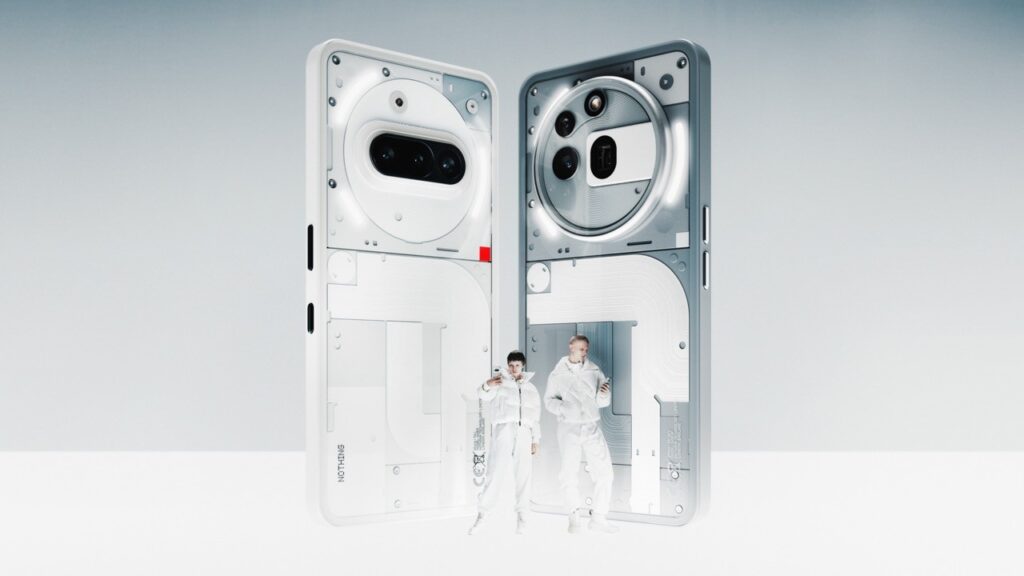
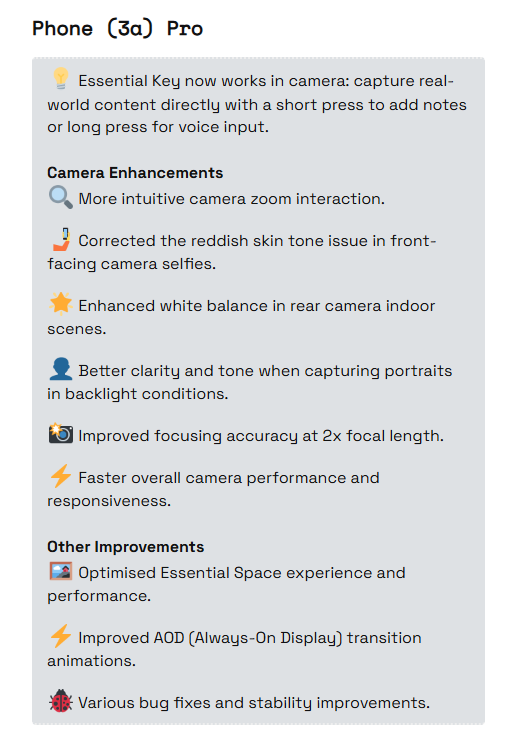
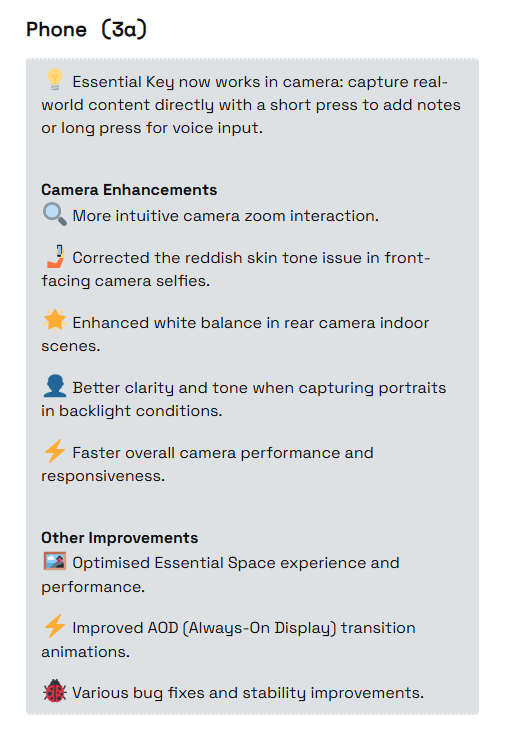
London-based tech company Nothing has released the Nothing OS 3.1 update for its recently launched Phone (3a) and Phone (3a) Pro devices globally. The update brings camera fixes, new productivity features, and system improvements.
The update introduces Essential Key support in the Camera app. A short press adds a text note to a photo, while a long press records a voice memo. This allows users to separate photo reminders in Essential Space from their main photo library.
Camera Fixes
Both devices now correct reddish skin tones in selfies, improve white balance for indoor shots, and provide better portrait output in backlit scenes. Zoom controls are now easier to use, and camera speed has been increased. The Pro model includes more accurate focus at 2x zoom.
System Changes
Always-On Display transitions are now smoother. Essential Space, Nothing’s built-in productivity hub, runs with fewer delays. The update also fixes known bugs and improves overall stability.
Coming Features
Essential Space will soon support Smart Collections for automatic note grouping, Focused Search for faster access, and Flip to Record, allowing users to start a voice memo by flipping the phone.
Official Changelogs
Installation Info
The update is rolling out in phases. Users can check availability under Settings > System > System Updates. Feedback can be sent via the system’s feedback tool or the community forum.
We use cookies on our website to give you the most relevant experience by remembering your preferences and repeat visits. By clicking “Accept”, you consent to the use of ALL the cookies.
This website uses cookies to improve your experience while you navigate through the website. Out of these, the cookies that are categorized as necessary are stored on your browser as they are essential for the working of basic functionalities of the website. We also use third-party cookies that help us analyze and understand how you use this website. These cookies will be stored in your browser only with your consent. You also have the option to opt-out of these cookies. But opting out of some of these cookies may affect your browsing experience.
Necessary cookies are absolutely essential for the website to function properly. This category only includes cookies that ensures basic functionalities and security features of the website. These cookies do not store any personal information.
Any cookies that may not be particularly necessary for the website to function and is used specifically to collect user personal data via analytics, ads, other embedded contents are termed as non-necessary cookies. It is mandatory to procure user consent prior to running these cookies on your website.