Reliable tipster Digital Chat Station has revealed that OnePlus has already begun the trial production of its next-generation flagship, which is expected to be the OnePlus 16. Additionally, the tipster has also revealed the battery capacity of the alleged device, suggesting that it could feature the largest battery ever seen on a OnePlus flagship.
OnePlus 16’s battery size revealed
According to the tipster, the OnePlus 16 prototype packs a dual-cell battery with a rated capacity of 4,390mAh ×2, resulting in a minimum combined capacity of 8,780mAh. With a rated energy of 33.11Wh and a nominal voltage of 7.54V, the battery is expected to offer a typical equivalent capacity of around 9,000mAh.
DCS also claims the device will support faster 100W wired fast charging, suggesting that OnePlus aims to combine a massive battery with flagship charging speeds in its upcoming smartphone. While the tipster has not mentioned it, the device is also expected to support 50W wireless charging.
Reports suggest that the OnePlus 16 will feature a BOE-supplied 6.78-inch LTPO OLED panel with a 1.5K resolution and a 185Hz refresh rate. It is expected to run Android 17 with ColorOS 17 and the next-generation Snapdragon 8 Elite Gen 6 Pro chipset.
For photography, the device could be equipped with a 200-megapixel Samsung HP5 primary camera and a pair of 50-megapixel Samsung JN5 sensors for the ultra-wide and periscope telephoto cameras. Other expected specifications include an ultrasonic in-display fingerprint sensor, an X-axis bionic vibration motor, symmetrical dual speakers, and IP68/IP69 dust and water resistance.
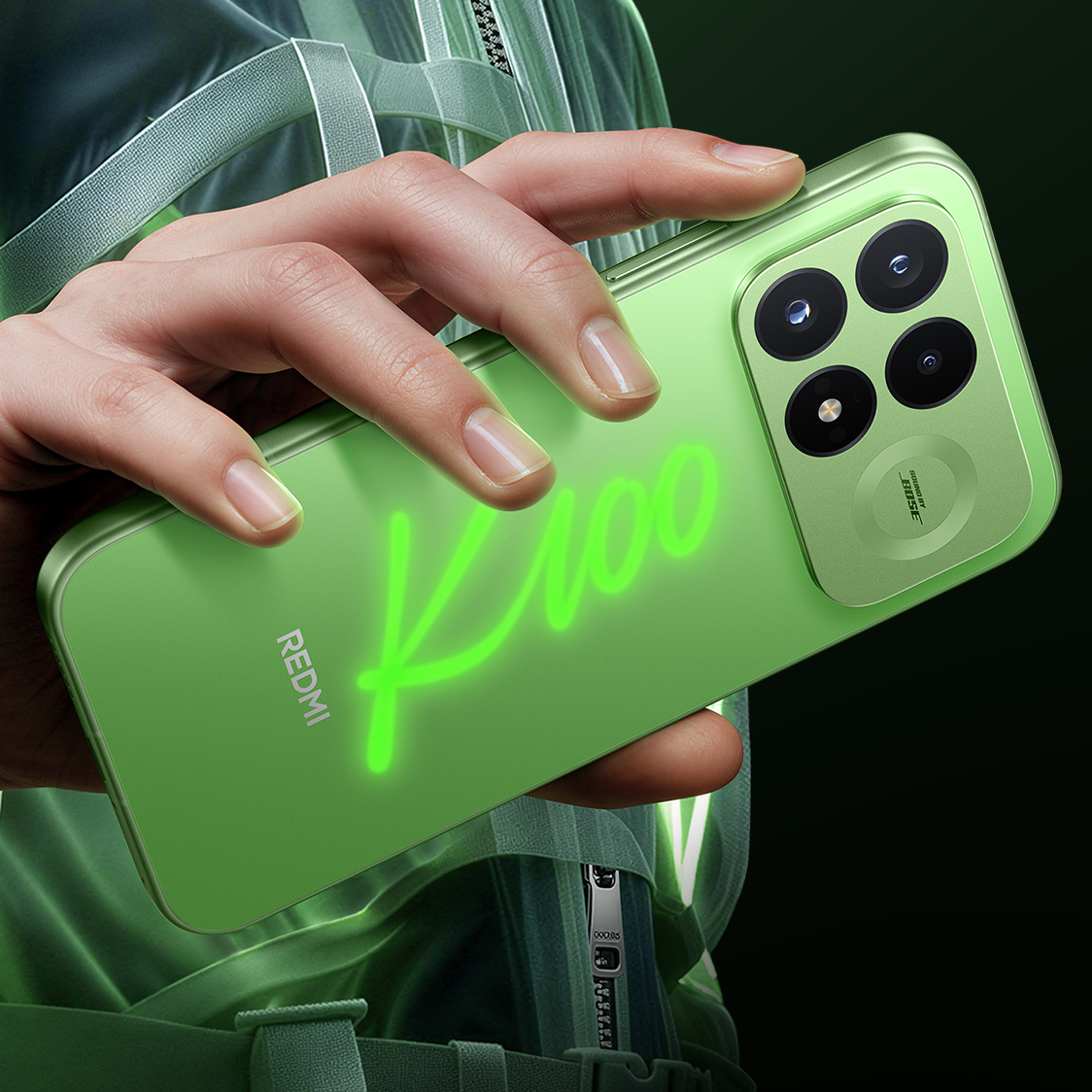
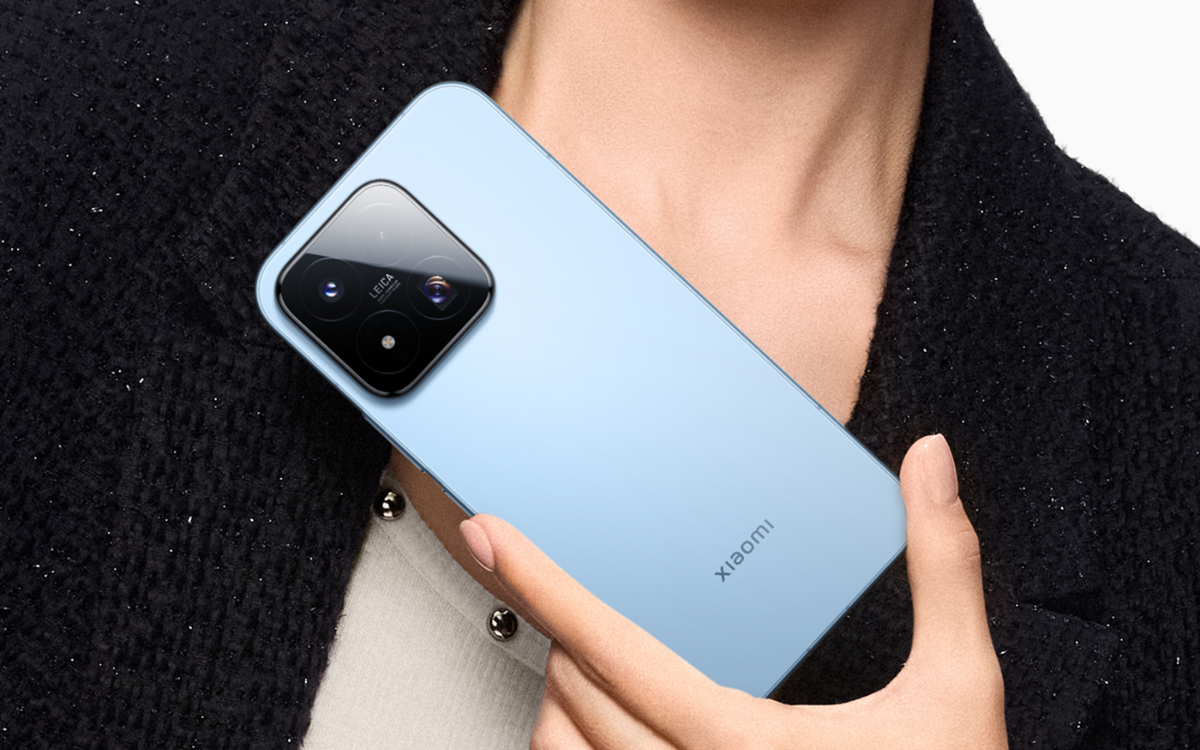
Redmi has teased another standout feature of the upcoming K100 Pro ahead of its Aug. 11 launch in China. Recently, the brand showcased the Cabernet Red variant of the K100 Pro Max, now it has revealed the K100 Pro for the first time in a unique color option called Glowing Firefly, introducing a distinctive glow-in-the-dark rear panel that offers more than just a different look. The teaser also reinforces several display and hardware details that have already been confirmed for the device.
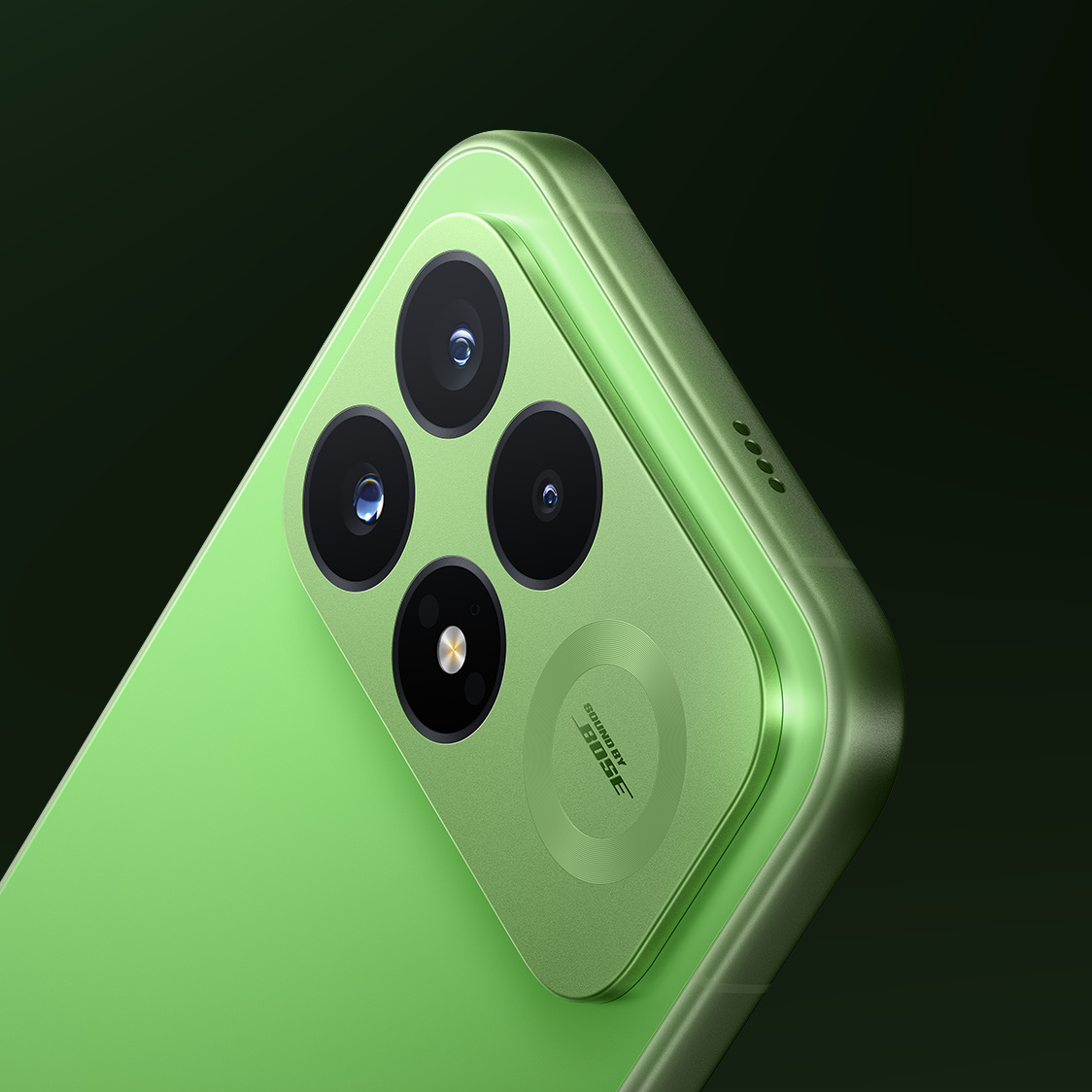
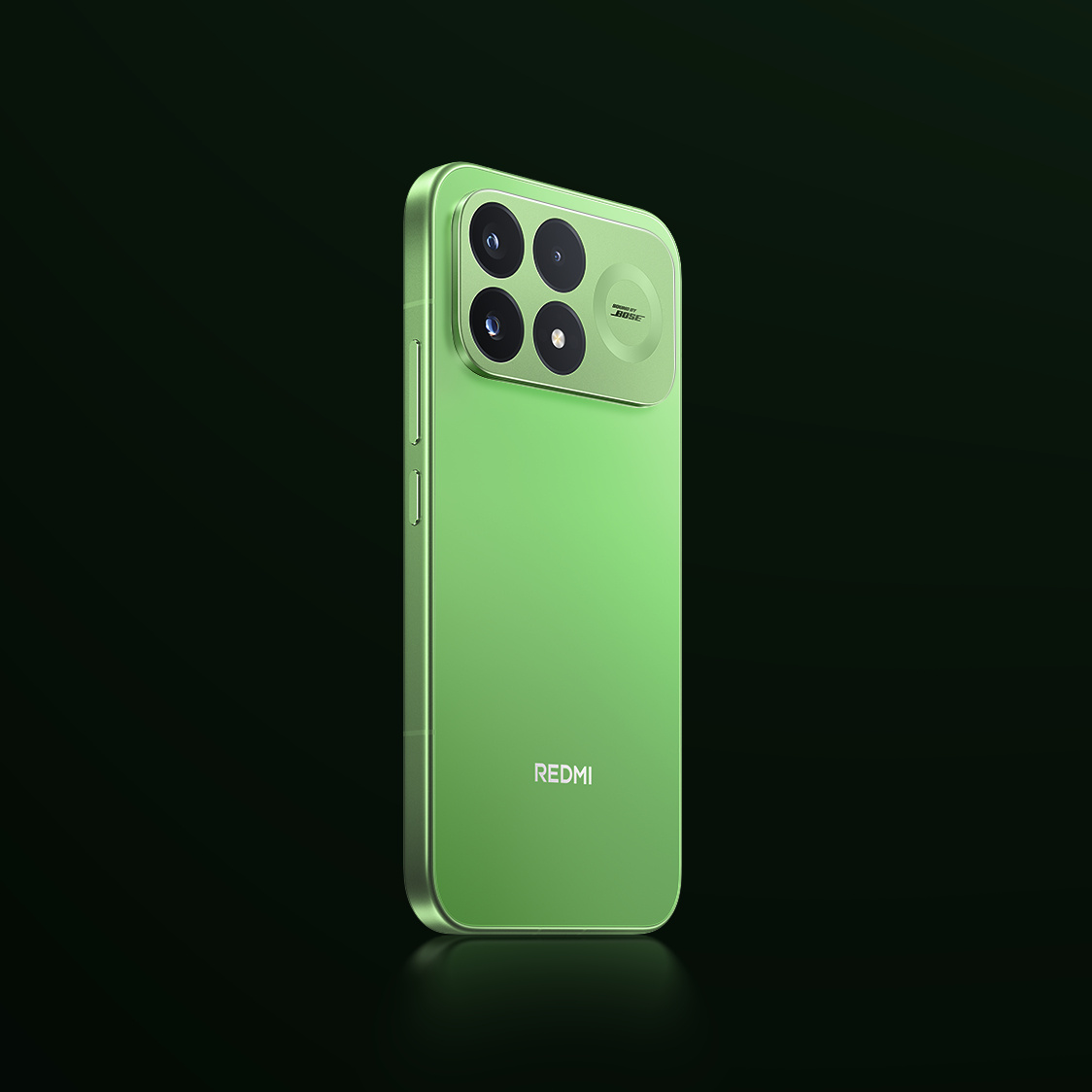
The new Glowing Firefly color features a fluorescent green finish that changes its appearance depending on the lighting. Redmi says it has placed a special luminescent material between the glass back and the green ink layer, allowing the rear panel to act as a “light painting canvas.”
After absorbing light from a flashlight or another bright source, the back panel glows in the dark, enabling users to create temporary glowing patterns. During the day, the phone has a translucent green finish, while the effect becomes visible in low-light conditions. Redmi has also matched the metal frame and camera island with the same green color, giving the phone a more uniform appearance. Apart from the Glowing Firefly, it will also have a sliver edition.
Redmi K100 ProRedmi K100 ProRedmi K100 Pro
Redmi has also reiterated that the K100 Pro will feature a 6.59-inch flat OLED display using the new M11 light-emitting material. The panel adopts the company’s “Super Pixel” full RGB sub-pixel arrangement and supports a 185Hz refresh rate, a 4,800Hz instant touch sampling rate, and a peak brightness of 4,500 nits. Redmi claims the new green light-emitting material improves luminous efficiency by 20 percent over the previous generation.
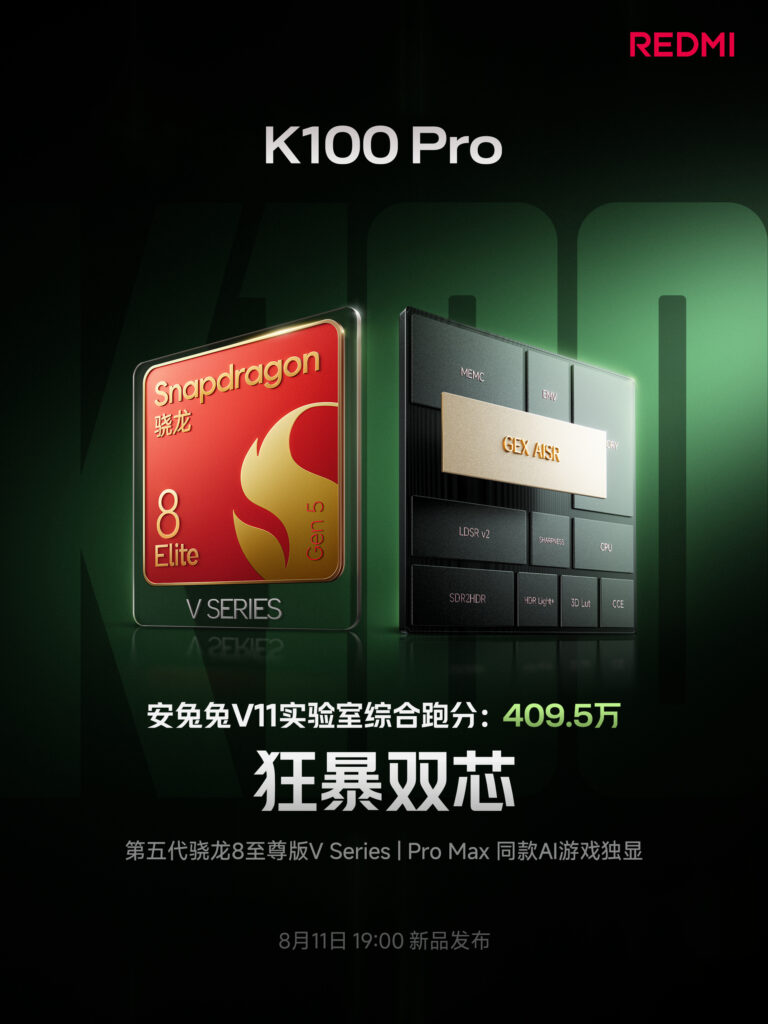
The company has also confirmed that the K100 Pro will be powered by the new Snapdragon 8 Elite Gen 5 V-series chipset alongside an AI gaming display chip. Previous teasers have revealed an AnTuTu V11 benchmark score of 4.095 million. Other expected features include a 200-megapixel rear camera, an over 8,000mAh battery with 50W wireless charging, a 3D ultrasonic fingerprint scanner, IP-rated water resistance, and telephoto macro photography support.
For more daily updates, please visit our News Section.
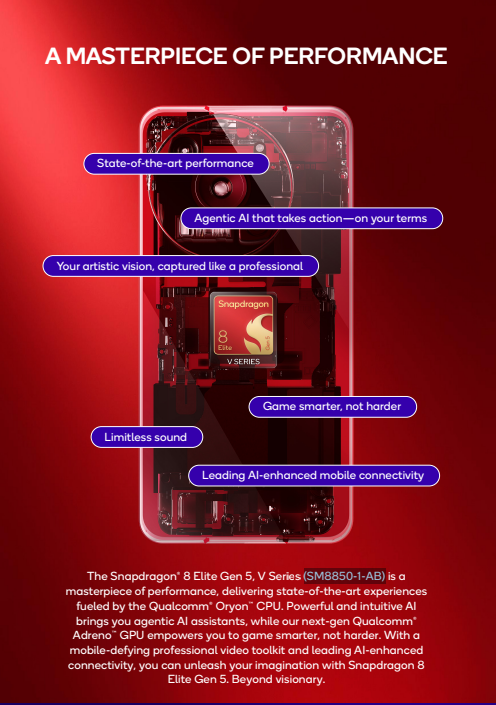
Qualcomm has quietly listed a new variant of its flagship Snapdragon 8 Elite Gen 5 V-series chipset on its official website. Carrying the model number SM8850-1-AB, the new silicon is confirmed to power the upcoming Redmi K100 Pro series. While it shares most of its specifications with the regular Snapdragon 8 Elite Gen 5, Qualcomm appears to be positioning it differently, with a greater emphasis on gaming.
Same performance, but gaming takes centre stage
Snapdragon 8 Elite Gen 5 SM8850-1-AB
According to Qualcomm’s official product brief, the Snapdragon 8 Elite Gen 5 V-series chip (SM8850-1-AB) features the same CPU and GPU configuration as the regular 4.6GHz Snapdragon 8 Elite Gen 5. It includes two Oryon prime cores clocked at up to 4.6GHz, six performance cores running at up to 3.62GHz, and an Adreno GPU operating at 1.2GHz. The chipset also retains the same Hexagon NPU, X85 5G modem, FastConnect 7900 connectivity system, LPDDR5X memory support, UFS 4.1 storage compatibility, and Qualcomm Spectra ISP found on the standard variant.
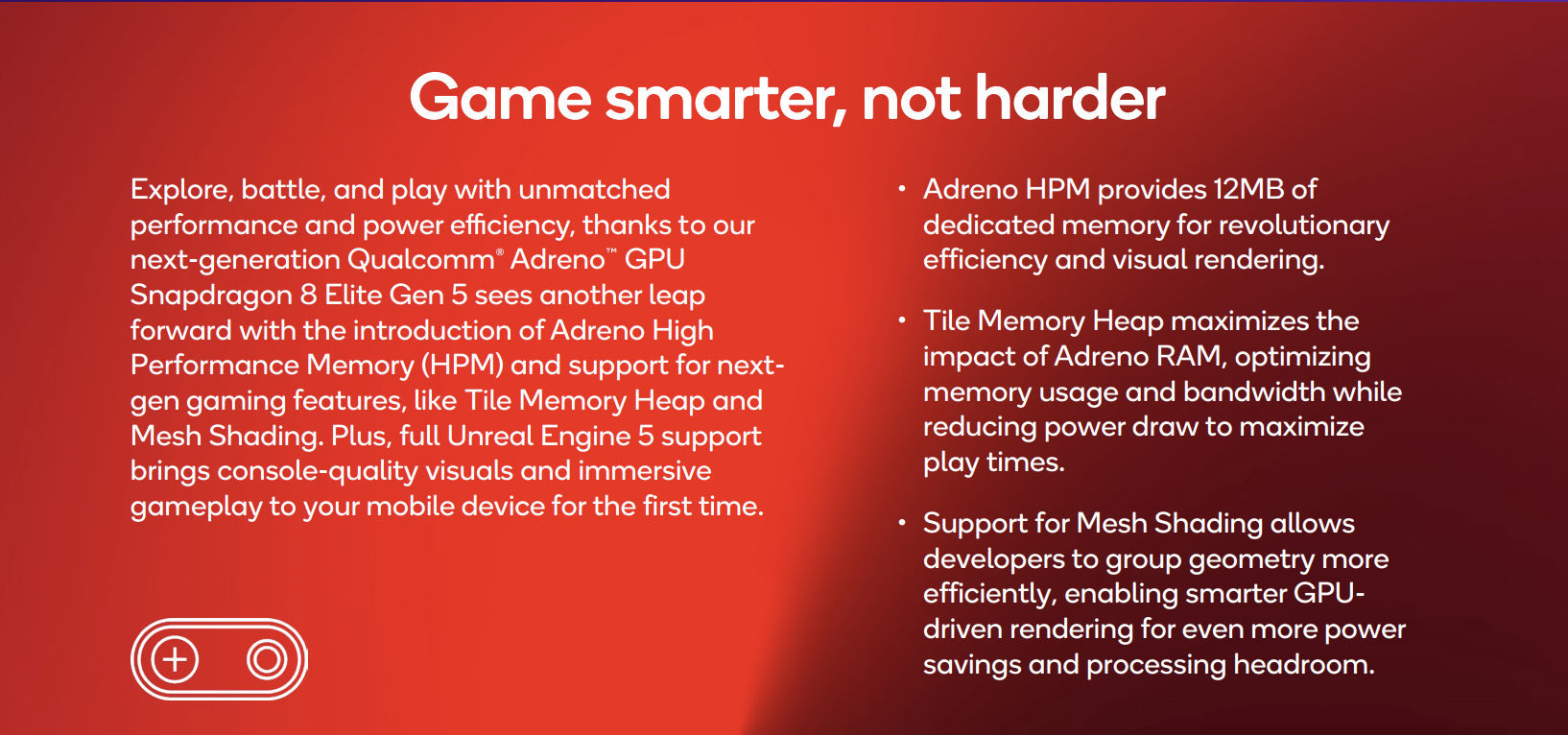
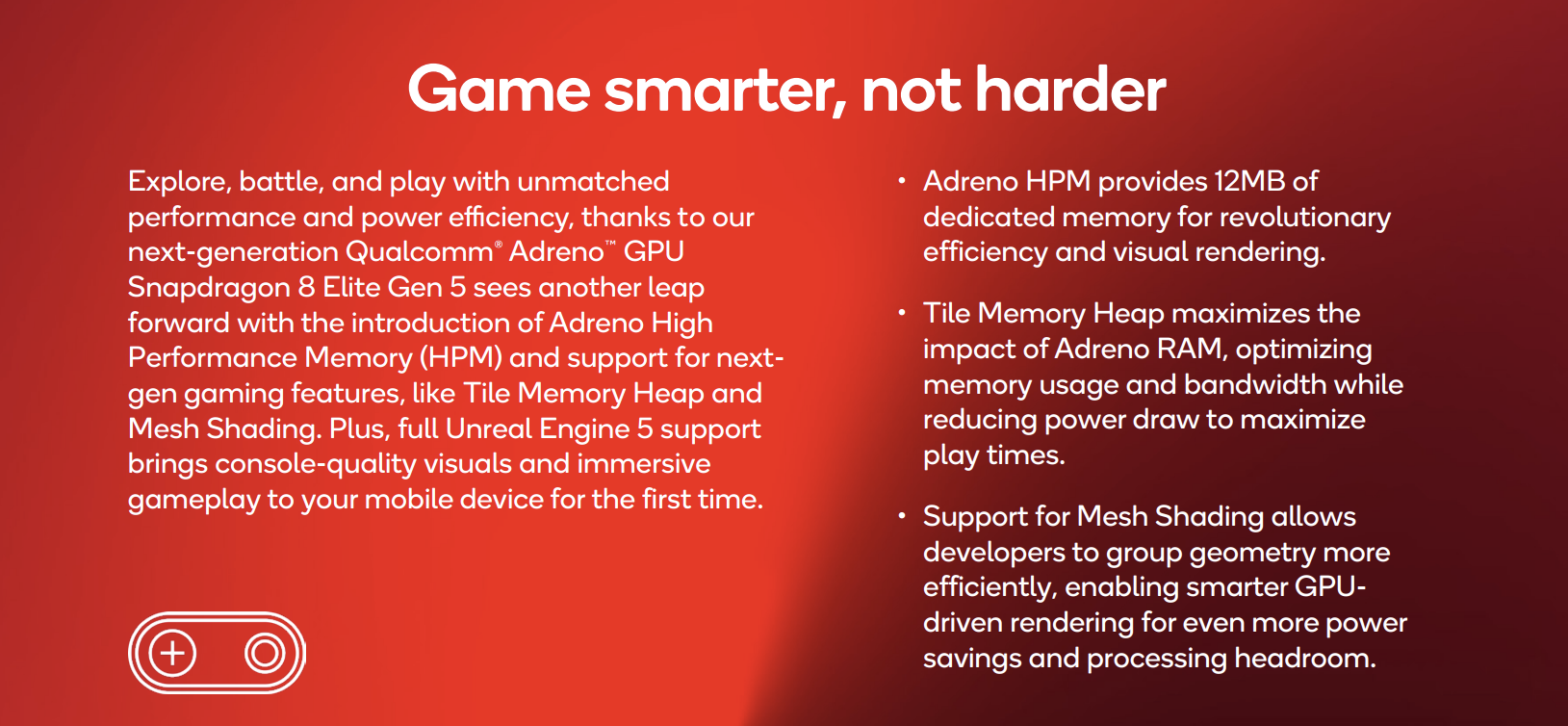
The only documented hardware difference between the two versions is Adreno High Performance Memory (HPM). The regular Snapdragon 8 Elite Gen 5 features 18MB of dedicated Adreno HPM, whereas the SM8850-1-AB includes 12MB. Aside from this, Qualcomm lists the same core hardware specifications for both chipsets.
The new gaming-focused version joins three other Snapdragon 8 Elite Gen 5 variants already available. The SM8850-AC is the standard version used in most flagship smartphones, while the SM8850-1-AD is the higher-clocked edition found in Samsung flagship devices as well as Red Magic and Legion gaming phones. Qualcomm also offers the SM8850-5-AC, a 7-core variant powering the Oppo Find N6 foldable. With the arrival of the SM8850-1-AB, Qualcomm now offers manufacturers another option for flagship phones that prioritize gaming performance without changing the platform’s core CPU and GPU frequencies.
While Qualcomm promotes the regular and the new SM8850-1-AB variants with the tagline “Game smarter, not harder,” the official documentation show that gaming technologies such as Tile Memory Heap, Mesh Shading, Unreal Engine 5 optimizations, Snapdragon Game Super Resolution 2.0, Adreno Frame Motion Engine 3.0, and hardware-accelerated ray tracing are also available on the regular Snapdragon 8 Elite Gen 5.
The Redmi K100 Pro series, which is set to launch on Aug. 11 in China, will be the first smartphone lineup to feature this new chipset variant. It remains to be seen whether more brands adopt the gaming-optimized platform in upcoming flagship devices. What seems certain is that the Poco F9 Pro and F9 Ultra, which will be rebranded versions of the K100 Pro and K100 Pro Max, will feature the same chip.
For more daily updates, please visit our News Section.
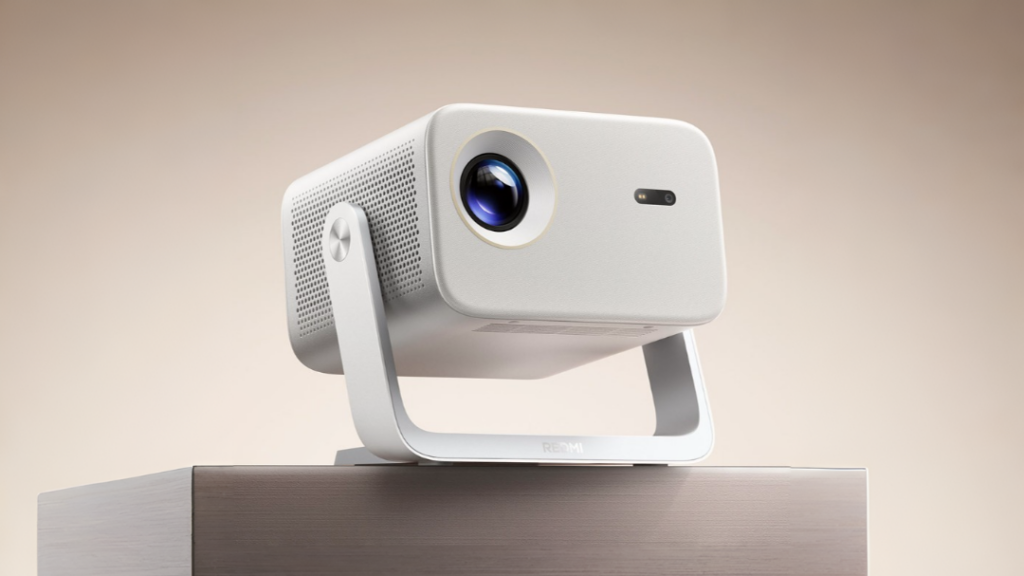
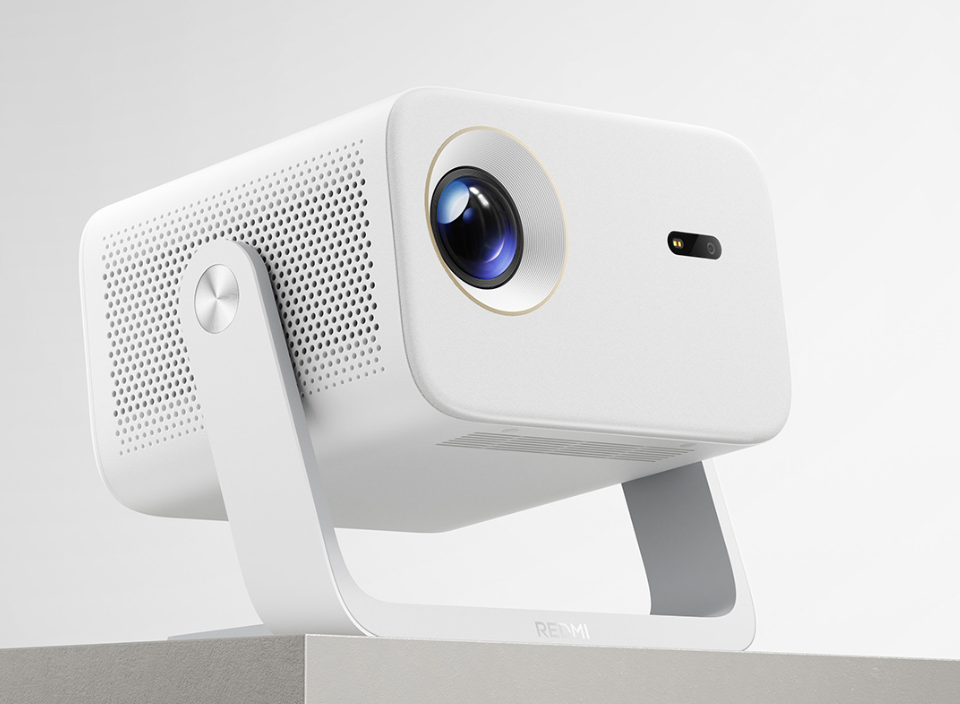
Xiaomi has released the Redmi Projector 5 Pro in China. The device is priced at 1,899 yuan (approximately $281) and introduces hardware like a 120Hz refresh rate and an integrated gimbal to the company’s standard projector lineup.
Redmi Projector 5 Pro Specifications
The projector outputs a native 1080p resolution and can cast images up to 120 inches diagonally. It has a brightness rating of 1,000 CVIA lumens, which is an increase over the previous model, and supports HDR10 for contrast management. The device uses a sealed optical engine combined with an all-glass lens system. Xiaomi indicates this closed design prevents internal dust accumulation and improves image sharpness by 10% compared to the prior generation.
For video playback and gaming, the Redmi Projector 5 Pro includes a 120Hz refresh rate, a 5ms latency, and MEMC motion compensation. These specifications are intended to reduce motion blur and judder during fast-moving video, such as sports broadcasts or action games.
The exterior features a white-and-gray dual-tone finish with a fabric-covered front panel. The integrated gimbal provides up to 150 degrees of vertical adjustment, allowing users to project directly onto walls or ceilings. For placement flexibility, it supports up to 30 degrees of side projection correction.
Setup is handled by a Time-of-Flight (ToF) sensor, a high-definition camera, and AI algorithms. This system performs automatic keystone correction, autofocus, obstacle avoidance, and screen alignment without manual input. It also includes wall color adaptation, which adjusts the image’s color and brightness based on the projection surface.
Inside, the projector runs on a MediaTek MT9660 chipset, paired with 2GB of RAM and 64GB of internal storage. It includes an internal and external dual-circulation cooling system that keeps operating noise at 28dB(A). Audio is provided by dual 10W speakers, a passive bass radiator, and a digital amplifier, with support for Dolby Audio.
For connectivity, it includes two HDMI ports. One of these is an HDMI eARC port based on the HDMI 2.1 standard, which supports 4K signal input and 1080p at 120Hz output. It also includes a USB 2.0 port and a 3.5mm headphone jack.
The device supports dual-band Wi-Fi 6 and wireless screen casting. On the software side, it integrates with the Xiaomi HyperConnect ecosystem and uses the XiaoAI voice assistant for media control and smart home interaction.
In related news, XElectron has recently unveiled an affordable Android 14-powered projector that features 20W speakers, WiFi 6 connectivity, and built-in streaming apps. Samsung has also expanded its projector lineup in the US with the launch of the Freestyle+, which brings Vision AI features, 360-degree audio, and a brighter viewing experience.
For more daily updates, please visit our News Section.
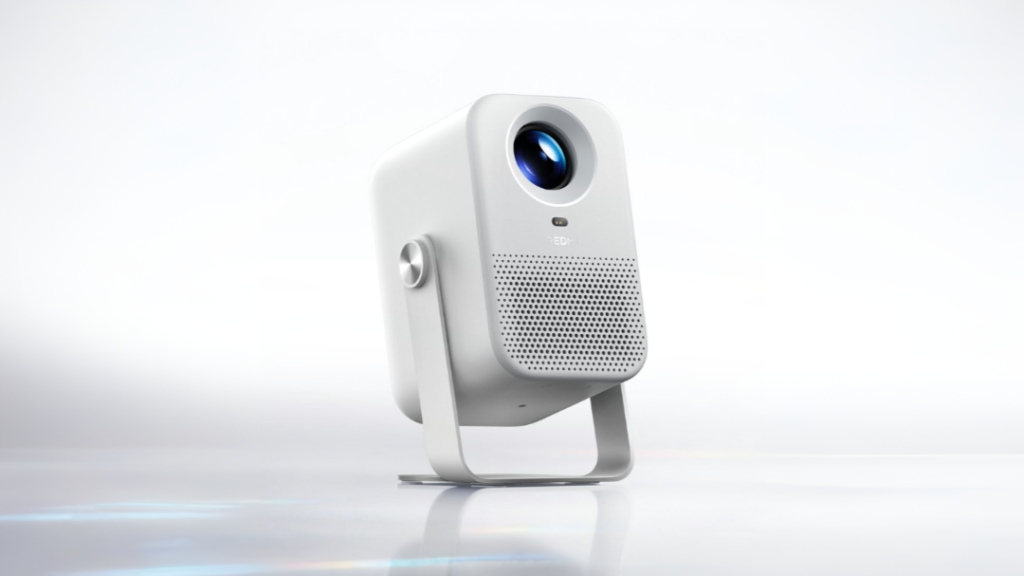
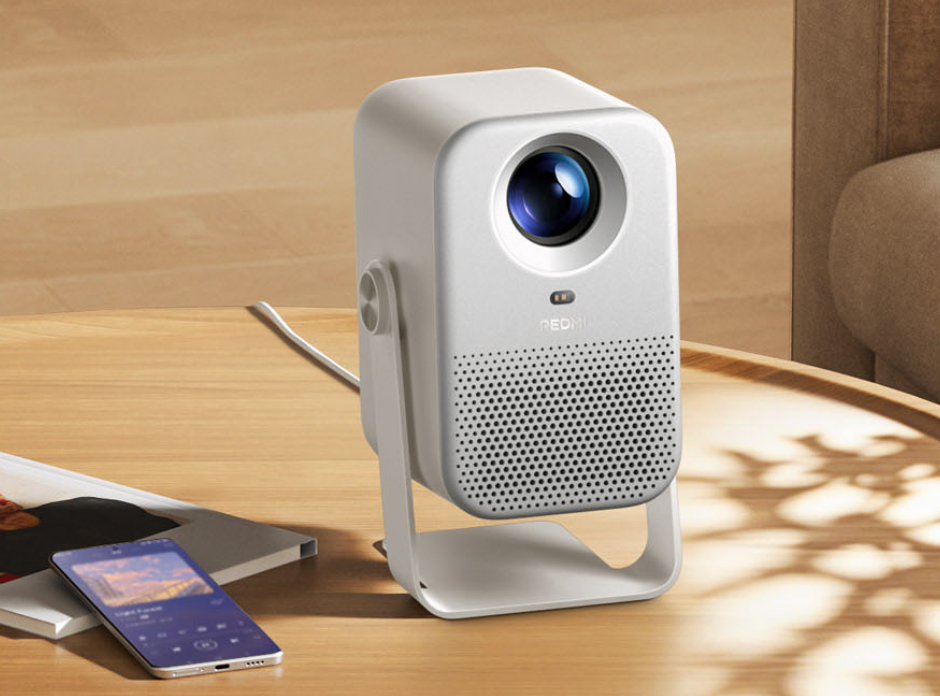
Xiaomi has introduced the Redmi Projector 5 in China as a new entry-level smart projector. It is priced at 999 yuan (around $148) and is now available through Xiaomi Youpin and JD.com.
The projector features an integrated metal gimbal stand with 360-degree tilt adjustment, allowing it to project onto walls or ceilings. It also comes with a textured white chassis and a custom sealed optical engine that helps keep dust away from internal components, improving durability and reducing maintenance over time.
In terms of display specs, the projector offers a native 1080p resolution, a 1.2:1 throw ratio, and support for screen sizes up to 120 inches. It delivers 400 CVIA lumens of brightness and carries SGS low blue light certification to help reduce eye strain during extended viewing sessions.
To simplify the setup process, the projector comes equipped with a ToF laser sensing module that enables automatic focus and keystone correction. It can quickly adjust the image after being moved and supports up to 20 degrees of side projection for more flexible placement.
Internally, the projector is powered by a MediaTek MT9-series processor paired with 1GB of RAM and 32GB of storage. It also includes a Bluetooth voice remote that supports voice search and playback controls for easier navigation.
For connectivity, the projector supports dual-band Wi-Fi, wireless screen casting from smartphones and PCs, and multiple ports for connecting external devices. It also integrates with Xiaomi HyperConnect, allowing users to create smart home automations with compatible Xiaomi devices such as lights and curtains.
In related news, XElectron has recently launched an affordable Android 14 projector with 20W speakers, Wi-Fi 6 support, and built-in streaming apps. Alongside it, Samsung has introduced the Freestyle+ projector in the US, featuring Vision AI, 360-degree audio, and enhanced picture brightness.
For more daily updates, please visit ourNews Section.
Phone batteries are getting bigger, but the latest generation of high-capacity smartphones isn’t simply stuffing more lithium into increasingly thick slabs. Brands are now using silicon-carbon cells, bypass charging, advanced cooling, and aggressive display tuning to turn battery life into a headline feature.
These are the best phones with batteries of 8,000mAh or more, ranging from premium camera flagships to gaming-focused powerhouses.
For a wider view of what else is worth buying, our roundup of top flagship phones covers models beyond just battery size.
Historically, phones with massive batteries compromised on other flagship features to keep costs down or manage internal space. The Xiaomi 17 Max avoids this by positioning itself as a premium device that simply happens to have an 8,000mAh battery.
Powered by the Snapdragon 8 Elite Gen 5, the 17 Max features a 6.9-inch 1.5K LTPO OLED display that reaches a peak brightness of 3,500 nits. Xiaomi also managed to include a robust camera system, utilizing a Leica-branded triple-lens setup with a 200-megapixel main sensor and a 50MP periscope telephoto lens.
It also supports 100W wired and 50W wireless charging. It’s a device for those who want top-tier photography and performance without worrying about finding an outlet by the evening.
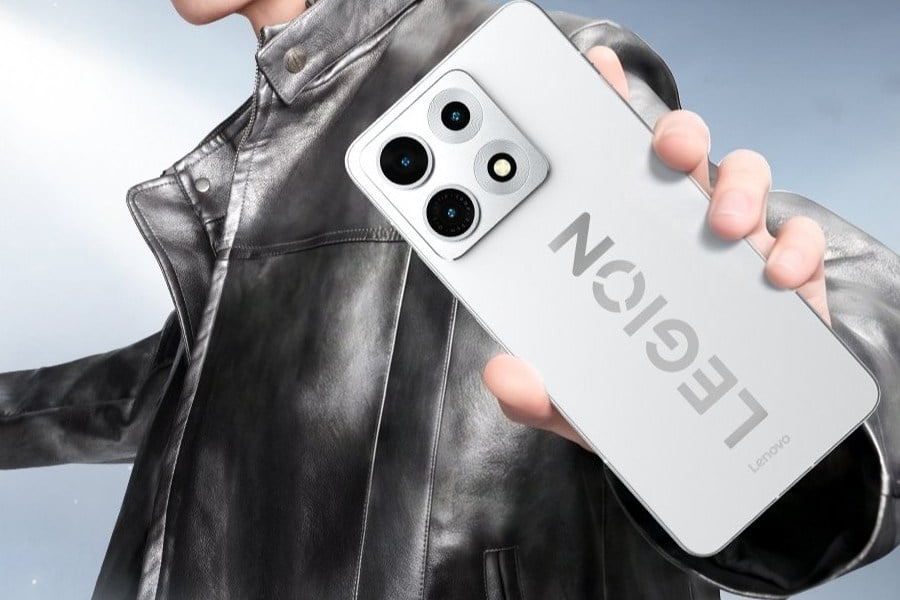
The Legion series has always targeted the mobile gaming demographic, and the new Legion Y70 continues that focus with a practical approach to power management. It pairs an 8,000mAh battery with the Snapdragon 8 Gen 5 processor and a 6.82-inch 2K AMOLED display capable of a 144Hz refresh rate.
The Y70 also features a bypass power supply option, allowing the phone to draw power directly from the charger during intensive gaming sessions. This prevents the battery from generating excess heat, which degrades cell health over time. Lenovo is confident enough in this system to offer a four-year battery warranty, promising a free replacement if health drops below 80%.
The Redmi Note line usually focuses on value, and the Note 17 Pro leans heavily into longevity and durability. For a mid-range price, it includes a 9,000mAh battery paired with the energy-efficient Snapdragon 6s Gen 4 processor.
This phone is built for harsh environments. It carries IP66, IP68, IP69, and IP69K ratings, meaning it is highly resistant to dust, water immersion, and even high-pressure water jets.
It also supports 22.5W reverse wired charging, allowing you to use its large battery to top up other devices like wireless earbuds or a secondary phone. To ease concerns about battery degradation, Xiaomi offers a five-year battery upgrade warranty for first-time buyers, making it a solid choice for long-term use.
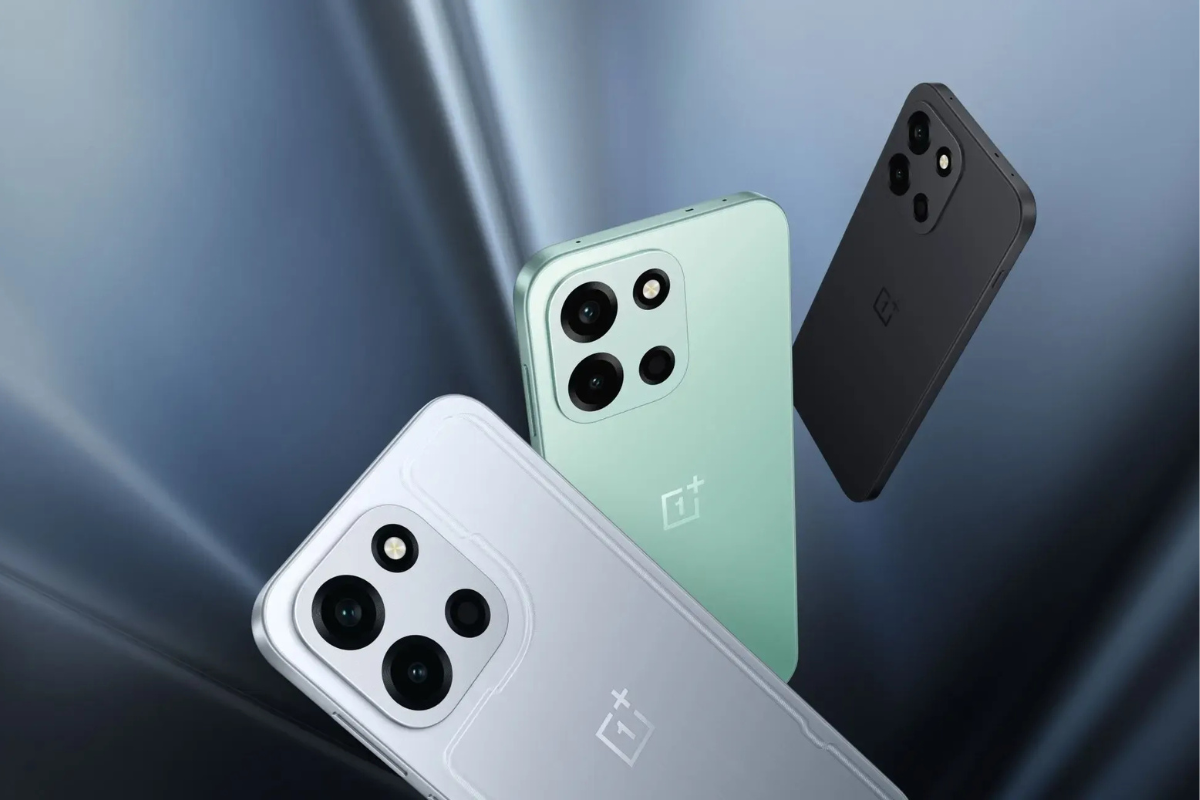
The OnePlus Nord 6 takes a slightly different approach, combining a 9,000mAh silicon-carbon battery with a heavy emphasis on artificial intelligence. Running on the Snapdragon 8s Gen 4, it features a 6.78-inch 165Hz AMOLED display and up to 12GB of RAM.
OnePlus has integrated a suite of AI tools into OxygenOS 16, deeply tied to Google Gemini. This includes features like an AI Mind Space for organizing personal data and real-time translation for calls.
The phone also supports Aqua Touch 2.0, allowing the display to remain responsive when wet, and comes with 80W fast charging for quicker charging times.
While an 8,000mAh battery is impressive, Honor has pushed the boundary further with the Power 2, integrating a 10,080mAh battery. Just a few years ago, a battery of this size would have required a thick, heavy chassis. Thanks to its fourth-generation silicon-carbon technology, the Power 2 weighs just 216 grams and measures under 8mm thick.
The phone is powered by the MediaTek Dimensity 8500 Elite and features a 6.79-inch 120Hz OLED display. It also includes comprehensive durability certifications, including an IP69K rating and SGS five-star drop resistance.
For users who work in remote areas or simply want the absolute maximum time between charges, the Honor Power 2 offers a capacity that was previously reserved for dedicated power banks.
The iQOO Z11 is another strong contender in the 9,000mAh category, specifically featuring a 9,020mAh cell. Powered by the MediaTek Dimensity 8500, the device uses a 6.83-inch 165Hz display and supports 90W fast charging.
iQOO complements the large battery with software optimizations to improve efficiency. It also features a capable 50MP main camera with OIS. It’s a very balanced device that manages to keep its weight down to 216.5g despite the large internal battery.
The Oppo K15 Pro+ rounds out the list as a high-performance option. It features an 8,000mAh battery and is powered by the MediaTek Dimensity 9500s. The device is built around a 6.78-inch 1.5K OLED display with a 165Hz refresh rate.
Oppo has also included a robust cooling system to manage the heat generated by the high-end processor, ensuring the device remains comfortable to hold during extended use. It also features 100W fast charging.
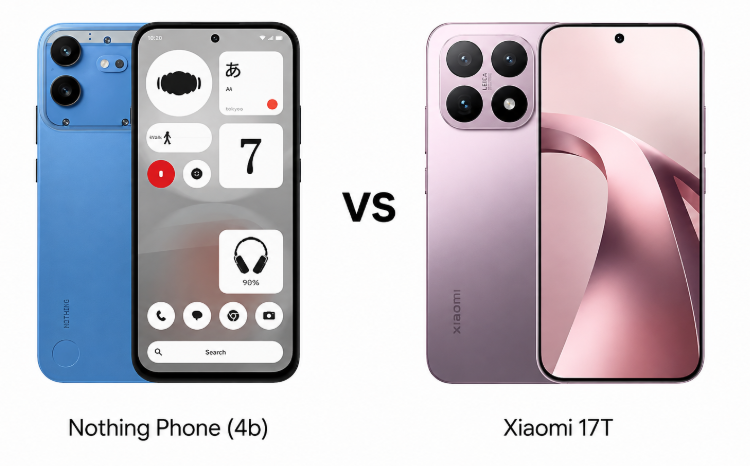
Nothing Phone (4b) and Xiaomi 17T cater to very different buyers despite both offering modern Android experiences. One focuses on distinctive design and value, while the other packs flagship-grade performance, premium cameras, and a top-tier display. Here’s a detailed comparison to find out which smartphone delivers the better overall experience for your budget.
The Nothing Phone (4b) continues the brand’s signature transparent-inspired styling with a rear notification LED system that gives it a distinctive identity. It features an IP64 rating for protection against dust and water splashes, making it suitable for everyday use. Xiaomi 17T adopts a more premium approach with Gorilla Glass 7i protection on both the front and reinforced back, along with a higher IP68 rating for complete dust resistance and water immersion protection. It also supports dual eSIM functionality in select markets, adding convenience for frequent travelers. While Nothing focuses on visual uniqueness, Xiaomi emphasizes durability and premium finishing that may appeal to users seeking a more refined flagship experience.
Nothing Phone (4b) offers a 6.77-inch AMOLED display with a 120Hz refresh rate, 480Hz PWM dimming, and up to 2,000 nits peak brightness. Xiaomi 17T counters with a slightly smaller AMOLED panel featuring a sharper resolution, Dolby Vision, HDR10+, 68 billion colors, 3,840Hz PWM dimming, and an impressive 3,500 nits peak brightness. The richer color reproduction and higher brightness provide a noticeably more premium viewing experience, especially for HDR content and outdoor visibility.
Verdict
Xiaomi 17T delivers the stronger overall design and display package thanks to its superior durability, flagship-grade screen, and premium multimedia features. Nothing Phone (4b) remains attractive for users who appreciate its distinctive design language and vibrant AMOLED panel, but Xiaomi clearly takes the lead in this category.
2. Specifications Including Battery
Performance
Nothing Phone (4b) is powered by the Snapdragon 6 Gen 4 paired with 8GB RAM and UFS 2.2 storage. It delivers dependable performance for everyday tasks, social media, streaming, and moderate gaming while promising three major Android upgrades. Xiaomi 17T raises the bar with the MediaTek Dimensity 8500 Ultra, 12GB RAM, and significantly faster UFS 4.1 storage. Heavy multitasking, demanding games, and advanced AI workloads benefit from the more capable chipset and faster memory. The hardware difference is evident in sustained performance and overall responsiveness, making Xiaomi feel closer to a flagship than an upper mid-range device.
Battery and Charging
The Nothing Phone (4b) packs a 6,000mAh battery in India with 33W wired charging and 7.5W reverse wired charging. Xiaomi 17T features a 6,500mAh global battery alongside much faster 67W charging, 50W PPS support, and 22.5W reverse wired charging. The faster charging significantly reduces downtime while maintaining excellent battery endurance.
Verdict
Xiaomi 17T comfortably wins this section by combining flagship-level performance with faster storage, more RAM, larger battery capacity, and considerably quicker charging. Nothing Phone (4b) remains an efficient daily performer but targets a different performance tier.
3. Camera
Main and Secondary Lenses
Nothing Phone (4b) features a 50MP primary camera with OIS and an 8MP ultrawide sensor capable of recording 4K video at 30fps. Image quality is reliable for everyday photography, producing balanced colors and stable shots. Xiaomi 17T delivers a far more versatile camera setup with a 50MP Leica-tuned main sensor, a 50MP periscope telephoto camera offering 5x optical zoom, and a 12MP ultrawide lens. It also supports advanced recording options including 4K at 60fps, HDR10+, Log recording, and 10-bit video. The additional telephoto camera greatly expands creative possibilities, making the system suitable for portraits, distant subjects, and professional-style video capture.
Selfie Camera
Nothing includes a 16MP front camera that records Full HD video and performs well for casual selfies and video calls. Xiaomi upgrades to a 32MP selfie camera with 4K recording and HDR10+, producing sharper details and better video quality for creators.
Verdict
Xiaomi 17T offers a significantly stronger camera experience with Leica tuning, true optical zoom, better video capabilities, and a higher-resolution selfie camera. Nothing Phone (4b) delivers dependable photography, but Xiaomi stands out for users who prioritize imaging versatility.
4. Pricing
The Nothing Phone (4b) is priced around $420 (₹35,000), while the Xiaomi 17T is priced around $700 (₹60,000). The price gap is substantial, placing the two devices in different market segments. Nothing Phone (4b) focuses on delivering a stylish design, clean software, reliable cameras, and long battery life at a competitive price. Xiaomi 17T justifies its premium positioning with a flagship-class display, much faster processor, Leica-enhanced camera system, larger battery, faster charging, and more premium materials. Buyers paying the extra amount receive meaningful hardware improvements rather than cosmetic upgrades alone.
Verdict
Nothing Phone (4b) offers stronger value for buyers seeking a balanced smartphone without entering flagship pricing. Xiaomi 17T justifies its higher cost through premium hardware and advanced features, making it a worthwhile investment for enthusiasts who want a near-flagship experience.
Disclaimer: Prices are approximate and may vary based on country, region, launch timing, and applicable taxes. Always check whether the listed price is for a China unit or a global/international variant when purchasing.
5. Conclusion
Nothing Phone (4b) distinguishes itself with its recognizable rear notification LED design, clean Nothing OS experience, and dependable long-term software support. It delivers an enjoyable everyday smartphone experience while keeping pricing accessible. Xiaomi 17T, meanwhile, focuses on flagship-level hardware with a Leica-powered triple-camera setup, periscope zoom, Dolby Vision display, HDR10+ recording, UFS 4.1 storage, faster charging, and a more powerful chipset. These upgrades create a noticeably more capable smartphone across photography, gaming, multimedia, and productivity. Both devices target different audiences, making the choice depend largely on budget and usage priorities rather than brand alone.
Verdict
For buyers seeking the best balance between price and everyday performance, the Nothing Phone (4b) is the smarter value-focused choice. Those willing to spend more for premium cameras, flagship-level performance, superior display technology, and faster charging will find the Xiaomi 17T to be the more complete and future-ready smartphone.
FAQs
1. Which is better, Nothing Phone (4b) or Xiaomi 17T? Xiaomi 17T offers better overall hardware, while Nothing Phone (4b) provides stronger value for money.
2. Does Xiaomi 17T have a better camera than Nothing Phone (4b)? Yes. Xiaomi 17T includes a Leica-powered triple-camera setup with a 5x periscope telephoto lens.
3. Which phone has better battery life? Xiaomi 17T lasts longer thanks to its larger 6,500mAh battery, though Nothing Phone (4b) also delivers excellent endurance.
4. Is Nothing Phone (4b) worth buying over Xiaomi 17T? Yes, if you’re looking for a stylish, capable smartphone at a much lower price.
5. Which phone is better for gaming and performance? Xiaomi 17T is the better choice with its Dimensity 8500 Ultra chipset, 12GB RAM, and UFS 4.1 storage.
Disclaimer: This comparison is based on the specifications provided and is intended for general informational purposes. Actual performance, camera results, battery life, and overall experience may vary depending on real-world usage, software updates, and individual preferences.
Casio has unveiled the new Pro Trek PRJ-B001EX-1 in Japan, priced at ¥33,000 (around $210). The outdoor-focused watch is now available for pre-order and is scheduled to launch later this month, bringing some upgrades aimed at improving comfort and durability for campers and hikers.
The watch comes with a reversible cloth strap that features a small built-in storage pocket for carrying essentials like a key, coins, or folded cash. The strap can also be flipped over to protect the watch face and is designed to work with a carabiner, allowing it to be attached to a backpack or other outdoor gear.
Casio has also modified the case design by adding a rotary guard bezel. By twisting the bezel, you can physically block access to the side buttons. This mechanism is meant to prevent accidental button presses when moving around or carrying heavy gear.
The watch case is made from bio-based resin, weighs 51 grams, and measures 50.3 by 46 millimeters. It is water-resistant up to 100 meters and is built to operate in temperatures as low as -10 degrees Celsius.
For power, the PRJ-B001EX-1 uses Casio’s Tough Solar charging technology, delivering up to seven months of operation on a full charge under normal use, or as much as 18 months in power-saving mode when stored away from light.
The watch also supports Bluetooth connectivity. When paired with the Casio Watches smartphone app, it automatically syncs the time. It also features a Time & Place function, which allows you to press a button on the watch to log your current time and location on a map within the phone app.
Otherwise, the device offers the typical functionality expected from a Casio digital-analog watch, including a 1/100-second stopwatch, a 60-minute countdown timer, five daily alarms, and a dual LED backlight. It also features a hand-shift function that temporarily moves the analog hands aside for a clearer view of the digital display.
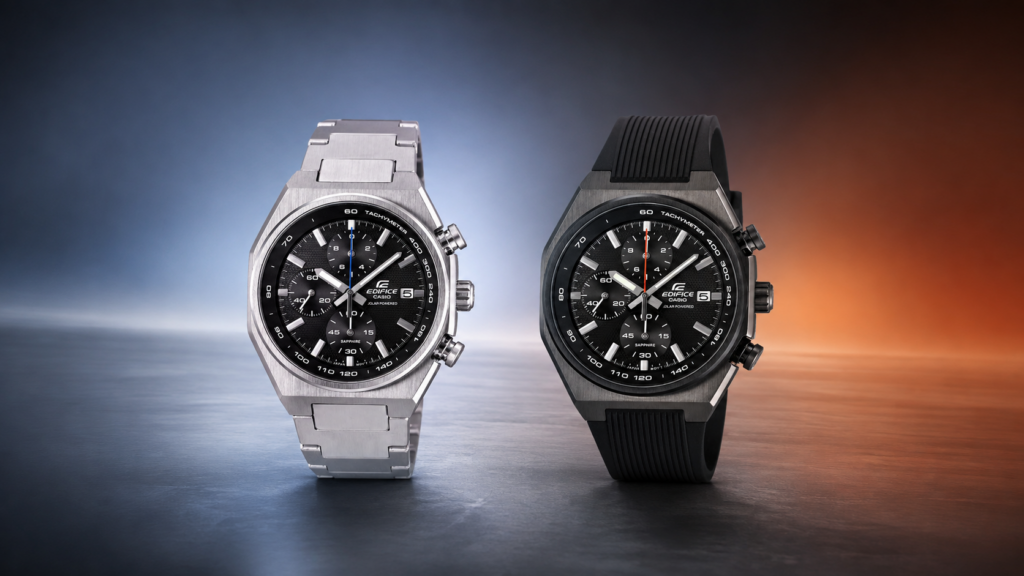
Casio has officially introduced the Edifice EFS-S660 series, a new pair of solar-powered chronographs launching in Japan later this month. The lineup consists of two models: the stainless steel EFS-S660D-1A and the resin-strapped EFS-S660PB-1A, both designed with a clear focus on motorsport utility and compact dimensions.
Design Details
Rather than leaning into the oversized aesthetic common in many modern sports watches, Casio has opted for a relatively slim profile. Both watches share the exact same case dimensions, measuring 45.3 x 38.3 x 11.6 mm. This sub-39mm width makes the EFS-S660 series highly wearable for a variety of wrist sizes while maintaining the legibility required of a chronograph.
The primary differences between the two models come down to materials, weight, and color accents. The EFS-S660D-1A features a traditional silver stainless steel case and an integrated metal bracelet with a one-touch three-fold clasp, accented by a blue chronograph seconds hand. Due to the steel bracelet, this model weighs 129 grams.
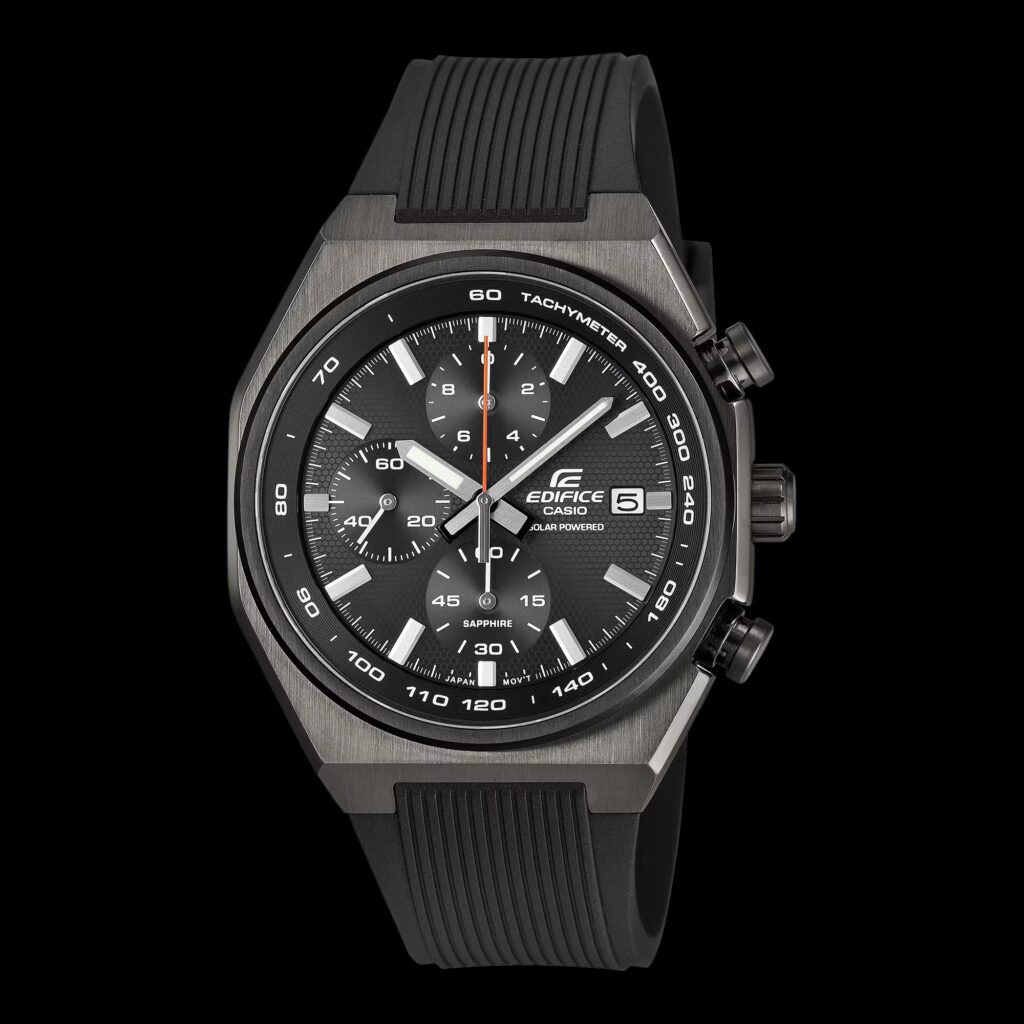
Alternatively, the EFS-S660PB-1A swaps the metal band for a black resin strap and utilizes a dark gray ion-plated case with a black ion-plated bezel. It features a contrasting red center seconds hand for a sportier aesthetic. The shift to a resin strap drops the overall weight significantly to just 71 grams.
On the hardware side, Casio is including a solid set of specifications for the price bracket. Both models are equipped with a sapphire crystal featuring an anti-reflective coating, which mitigates glare and provides strong scratch resistance. The watches also feature 100-meter water resistance and a tachymeter around the periphery of the bezel for calculating average speeds.
Internally, the EFS-S660 series relies on Casio’s solar-powered charging system. The dial has a textured finish that still allows enough ambient light to pass through to the solar panel beneath. On a full charge, the watch can operate for approximately five months before the hands stop.
The watch features a 1/20-second stopwatch capable of measuring elapsed time, split times, and first-to-second place times up to 59 minutes and 59.95 seconds. The dial layout includes three standard analog hands alongside three subdials for timekeeping seconds, stopwatch 1/20 seconds, and stopwatch minutes, plus a standard date display window.
Pricing and Availability
Both the EFS-S660D-1A and EFS-S660PB-1A are scheduled for release later this month. They are currently listed on Casio’s Japanese online store, with both models priced at ¥33,000 ($210).
Casio is adding three new watches to its standard collection in Japan this month. The new LTP-B150 series, which is currently available for pre-order and scheduled to ship later this month, features a rectangular stainless steel case and a traditional Roman numeral dial layout. All three models are priced at ¥12,100 (roughly $77).
The lineup consists of three variations that share the exact same core hardware but use different straps and dial accents. The LTP-B150D-7B is the metal option, featuring a stainless steel bracelet and a silver sunburst dial. The other two models switch to genuine leather straps.
The LTP-B150L-7B1 comes with a dark navy leather strap and retains the silver dial and silver-tone hands of the metal version. The LTP-B150L-7B2 uses a brown leather strap and incorporates gold-tone hands along with a gold inner bezel accent to differentiate it from the rest of the line.
In terms of dimensions, these are relatively small watches. The stainless steel case measures 31 by 22 millimeters and is 7.5 millimeters thick. Because of the different band materials, the overall weight varies significantly between the models.
The stainless steel bracelet version weighs 58 grams and is designed to fit wrists between 125mm and 185mm. The two leather strap versions drop the weight down to just 25 grams and fit wrists ranging from 130mm to 180mm.
The internal specifications are standard for Casio’s budget tier. The watches use a basic quartz movement with an estimated battery life of three years and an average monthly accuracy of ±20 seconds.
The dial is covered by standard mineral glass, and the cases have a daily water resistance rating. This means they can handle light splashes from washing your hands or walking in the rain, but they are not designed for swimming or full submersion.
Sony has expanded its premium TV lineup in India with two new large-screen models, the Bravia 9 II 115-inch and Bravia 7 II 98-inch. The latest additions bring Sony’s RGB Backlight Master Drive Pro technology to larger displays while retaining flagship picture, gaming, and smart TV features.
The highlight is the Bravia 9 II 115-inch, which is now the biggest television Sony has introduced in India. It features a 4K LCD panel with a 120Hz refresh rate and the company’s RGB Backlight Master Drive Pro technology, which independently controls red, green, and blue LEDs instead of relying on a conventional white or blue LED backlight with color filters.
Sony says this delivers a wider color volume, deeper blacks, reduced blooming, and improved viewing angles. The TV is powered by the Cognitive Processor XR and supports Dolby Vision, HDR10, HLG, IMAX Enhanced, XR Contrast Booster 40, XR Motion Clarity, XR Clear Image, RGB TRILUMINOS Max, and X-Wide Angle Pro.
The Bravia 9 II also includes a 12-speaker Acoustic Multi-Audio+ system with an 85W output, Google TV with a future Gemini update via OTA, Wi-Fi 6, Bluetooth 5.3, four HDMI ports, two USB ports, Apple AirPlay, Apple HomeKit, and Chromecast. Gamers also get 4K 120Hz support, VRR, ALLM, Auto HDR Tone Mapping, Auto Genre Picture Mode for PS5, and eARC.
Price, variants, and availability
Sony has also introduced a 98-inch version of the Bravia 7 II, which shares several premium features while offering a more accessible option than the flagship series. The televisions will be sold through Sony Centres, Sony Exclusive Stores, ShopatSC, leading electronics retailers, and major e-commerce platforms.
Recent reports have revealed that the Oppo Find X10 Ultra will feature dual periscope telephoto cameras. One of them is expected to offer 10x optical zoom. Now, a new leak from tipster Digital Chat Station claims that Oppo is evaluating either Samsung or OmniVision sensors for the 10x periscope camera.
Oppo Find X10 Ultra to support 10x optical zoom
As per the new leak, the Oppo Find X10 Ultra is currently being tested with a 50-megapixel periscope telephoto camera capable of 10x optical zoom. The tipster claims Oppo is evaluating two different sensors for the module. One prototype reportedly uses Samsung’s ISOCELL GNB sensor, while another is said to feature the OmniVision OV51A. Both sensors are expected to measure approximately 1/1.95 inches.
The leak further states that the periscope camera will continue to support telephoto macro photography, allowing users to capture close-up subjects without relying on the primary camera. If the final hardware retains the rumored 10x optical zoom, it would mark one of the most notable telephoto upgrades in the Find series.
The latest information builds on earlier reports that claimed the Find X10 Ultra would feature a 200-megapixel LOFIC main camera alongside a 200-megapixel periscope telephoto camera with upgraded optical image stabilization. The device I also expected to feature a 50-megapixel ultra-wide camera and a 50-megapixel front-facing camera.
Beyond its cameras, the phone is rumored to feature a 6.89-inch 2K LTPO BOE display with ultra-narrow symmetrical bezels, Qualcomm’s Snapdragon 8 Elite Gen 6 Pro chipset, and an approximately 8,500mAh battery. The Find X10 Ultra is also expected to target the ultra-premium segment with pricing similar to the Find N6.
While the Find X10, Find X10 Pro, and Find X10 Pro Max are expected to launch in China this September, the Ultra variant is likely to arrive at a later date, probably in the coming year.
Google introduced the Googlebook platform at its I/O 2026 event in May, marking the beginning of a new chapter for its laptop ecosystem. At the time, the company confirmed it was working with Acer, Asus, Dell, HP, and Lenovo to develop the first wave of Googlebooks. Now, a new report from Digital Citizen has shared what appears to be the first complete look at Lenovo’s upcoming Googlebook 15, revealing both its hardware design and several software details.
Lenovo Googlebook 15’s design revealed
The leaked renders suggest the Lenovo Googlebook 15 adopts a premium design with slim display bezels, a silver finish, and a large trackpad. One of the biggest changes is the keyboard, which replaces the traditional Windows key with a dedicated Google key that is expected to provide quick access to Gemini.
The function row also includes dedicated shortcuts for screenshot, microphone mute, accessibility, brightness, keyboard backlight, media controls, and what appears to be a profile switch button. Unlike many 15-inch laptops, the device skips a numeric keypad in favour of a centred keyboard layout.
The report also reveals a generous selection of ports, including HDMI, dual USB-C ports, USB-A, a card reader, and a 3.5mm headphone jack. Other hardware highlights include a webcam notch with a built-in physical privacy shutter, Dolby Atmos branding, speaker grilles on both sides of the keyboard, and a display hinge that opens up to 157.5 degrees.
While the hardware is interesting, Google’s software experience could be the biggest change. At I/O 2026, Google revealed that Googlebook combines Android and ChromeOS into a single desktop platform built on Android’s technology stack. This allows Android apps to run natively while enabling direct access to files stored on an Android phone through Quick Access.
Google also introduced Magic Pointer, which brings Gemini into everyday interactions by offering contextual actions based on where the cursor is placed. Other announced features include Create Your Widget, which lets Gemini generate personalized desktop widgets using information from apps such as Gmail and Google Calendar.
The leaked interface appears to match Google’s preview, showing an Android-style status bar, a redesigned taskbar, Gemini integration, and several Google apps alongside Adobe Premiere Pro, hinting that Googlebook is targeting more demanding workflows than traditional Chromebooks.
Lenovo is to announce the Googlebook 15 officially, and specifications such as the processor, memory, storage, display resolution, battery capacity, and pricing remain under wraps. Readers can visit the above-mentioned publication to checkout more images of the device.
For more daily updates, please visit our News Section.
At the Snapdragon Gaming Technology Awards event in China, OnePlus gave a quick tease of the OnePlus 16, focusing on performance upgrades aimed at gaming. They didn’t share much concrete info at the time, but a later leak from the X account @OnePlusClub has laid out what the Chinese pricing and storage configs might look like.
According to the tip, the base model will come with 8GB of RAM and 256GB of storage for CNY 4,999 (around $740). That’s a return to an 8GB option, something OnePlus hasn’t offered on its flagship line since the OnePlus 11 back in 2023.
Higher tiers are said to include 12GB/256GB for CNY 5,499 (~$815), 12GB/512GB for CNY 5,999 (~$888), and a limited-edition 16GB/1TB version at CNY 7,499 (~$1,110). The source also claims there won’t be a 24GB RAM option this time.
To put those numbers in perspective, here’s what the OnePlus 15 launched at in China: 12GB + 256GB for 3,999 CNY (~$560), 12GB + 512GB for 4,299 CNY (~$600), 16GB + 256GB for 4,599 CNY (~$645), 16GB + 512GB for 4,899 CNY (~$690), and 16GB + 1TB for 5,399 CNY (~$760). Memory prices have jumped quite a bit over the past year, and that’s clearly feeding into the higher starting prices we’re seeing here.
On the hardware front, earlier reports point to the Snapdragon 8 Elite Gen 6 Pro chipset, which is expected to be built on a 2nm process. The display is rumored to be a 6.78-inch flat OLED with 1.5K resolution and a refresh rate that can go up to 185Hz. Battery capacity is said to push close to 9,000mAh, while the rear cameras are expected to pack a 200-megapixel main sensor, a 50-megapixel ultrawide, and a 50-megapixel periscope telephoto with 3.5x optical zoom.
Availability looks like it’ll be limited. OnePlus has already confirmed it won’t be launching new products in North America or Europe. Recent signs also suggest the OnePlus 16 might skip India, which would further shrink its global reach. As with any early leak, take the pricing numbers with a grain of salt until we get official confirmation.
Honor has officially unveiled the Honor Band 11 series in China, introducing both standard and Pro models with several upgrades over the previous generation. The latest lineup focuses on improved battery capacity, enhanced displays, expanded sports tracking, and additional features for users looking for a more capable fitness wearable.
Honor Band 11 specifications and features
Honor Band 11
The standard Honor Band 11 features a 1.57-inch OLED display with a 60Hz refresh rate, 256 × 402 resolution, and a new 2.5D curved glass design. Compared to its predecessor, the wearable increases its sports modes from 96 to 113 and extends the rated battery life from 14 days to 18 days with its 250mAh battery.
It measures 8.99mm thick, weighs 15.3 grams, has a reinforced polymer fibre body, and supports 5ATM water resistance. It also includes professional badminton mode, sleep tracking, heart rate monitoring, SpO₂ tracking, body energy assessment, stress monitoring, female health tracking, and the company’s sudden cardiac death research feature.
Honor Band 11 Pro specifications and features
Honor Band 11 Pro
The Honor Band 11 Pro upgrades to a 1.61-inch 60Hz OLED display with 700 nits of typical brightness and a peak brightness of 2,000 nits. It features an aluminium alloy body and a 400mAh silicon-carbon battery rated for up to 26 days of usage.
Like the standard model, it supports 113 sports modes and the same suite of health tracking features, while adding Bluetooth calling, NFC, and an optional standalone GPS version. Other smart features include music controls, camera shutter control, weather updates, message notifications, Find Phone, alarms, timers, and a wider selection of watch faces.
Honor Band 11 series: Price and availability
The Honor Band 11 is priced at 229 Yuan (~$34) and is available in Sea Salt White, Taro Purple, and Caviar Black. The Honor Band 11 Pro NFC version costs 299 Yuan (~$44) and comes in Almond White, Cocoa Black, and Avocado Green.
The Honor Band 11 Pro GPS version is priced at 349 Yuan (~$52) and is additionally offered in Honey Brown. The new series is currently available in China, with no details yet on an international launch.
Oppo Reno 15A and Vivo Y500 take two very different approaches to the mid-range smartphone market. The Reno 15A focuses on premium features like a Snapdragon chipset, wireless charging, and advanced cameras, while the Vivo Y500 prioritizes exceptional battery life and affordability. Here’s a detailed comparison to see which smartphone delivers the better overall value for your money.
The Oppo Reno 15A and Vivo Y500 both target users looking for premium-looking smartphones with strong durability. Both devices feature IP68 and IP69 dust and water resistance, making them suitable for everyday outdoor use. The Reno 15A adds Corning Gorilla Glass protection, giving the display extra resistance against scratches and accidental drops. Vivo, on the other hand, includes MIL-STD-810H certification, which adds another layer of confidence for users who prioritize durability. Both phones feature modern in-display fingerprint scanners and clean designs, although the Reno 15A feels slightly more premium because of its stronger glass protection and flagship-inspired finish.
The Oppo Reno 15A offers a 6.6-inch Full HD+ AMOLED display with a 120Hz refresh rate, 10-bit colors, 100% DCI-P3 color gamut, and 1,400 nits peak brightness. The Vivo Y500 steps ahead with a larger 6.83-inch AMOLED panel featuring a sharper 1260 × 2800 resolution, HDR support, 120Hz refresh rate, and an impressive 5,000 nits peak brightness. The higher resolution and significantly brighter panel make multimedia and outdoor visibility noticeably better.
Verdict
While both displays are excellent for daily use, the Vivo Y500 delivers a superior viewing experience thanks to its sharper resolution, HDR capability, and exceptionally high brightness. The Oppo Reno 15A remains appealing for users who value color accuracy and Gorilla Glass protection, but Vivo takes this category overall.
2. Specifications Including Battery
Performance
The Oppo Reno 15A is powered by Qualcomm’s Snapdragon 6 Gen 1 processor paired with LPDDR4X RAM and faster UFS 3.1 storage. This combination provides smoother multitasking, faster app loading, and better long-term performance. The Vivo Y500 uses the Unisoc T7300 chipset with UFS 2.2 storage. While it handles everyday tasks comfortably, demanding games and heavier workloads are better suited to the Snapdragon platform. Faster storage also gives the Reno 15A an advantage during software updates and file transfers, making the device feel more responsive over time.
Battery and Charging
Battery life is where the Vivo Y500 stands out with its massive 8,100mAh silicon-carbon battery, offering exceptional endurance. It supports 44W wired charging, reverse wired charging, and bypass charging. The Oppo Reno 15A counters with a 7,000mAh battery, much faster 80W SUPERVOOC wired charging, and 50W wireless charging. Although the battery is slightly smaller, charging speeds are significantly quicker, making daily top-ups much more convenient.
Verdict
The Oppo Reno 15A delivers stronger overall performance and much faster charging, while the Vivo Y500 is the better choice for users who prioritize maximum battery life above everything else. Overall, the Reno 15A offers a more balanced hardware package.
The Oppo Reno 15A features a versatile triple-camera setup consisting of a 50MP primary camera with Optical Image Stabilization, an 8MP ultra-wide camera, and a 2MP macro sensor. OIS helps capture sharper images in low light, while the ultra-wide camera adds flexibility for landscapes and group shots. The Vivo Y500 uses a simpler dual-camera system with a 50MP main camera and an auxiliary lens. It performs well for everyday photography but lacks both an ultra-wide camera and optical stabilization. Video recording is another major difference, with the Reno 15A supporting 4K recording while the Vivo Y500 is limited to 1080p.
Selfie Camera
For selfies, the Reno 15A includes a high-resolution 50MP front camera capable of capturing detailed images and recording 4K video. The Vivo Y500 offers a respectable 32MP selfie camera with 1080p recording, which is sufficient for video calls and social media but falls behind in overall detail and recording quality.
Verdict
The Oppo Reno 15A clearly provides a stronger camera experience. Better stabilization, additional shooting flexibility, higher-quality selfies, and 4K recording make it a more capable smartphone for photography enthusiasts and content creators.
4. Pricing
The Oppo Reno 15A is priced around $415 (approximately ₹38,000), positioning it in the upper mid-range segment. The Vivo Y500 is priced around $196 (approximately ₹17,300), making it significantly more affordable. The Reno 15A justifies its higher price with a Snapdragon processor, faster UFS 3.1 storage, a premium AMOLED display, wireless charging, faster 80W charging, Gorilla Glass protection, and a much more capable camera system. Meanwhile, the Vivo Y500 focuses on offering a large AMOLED display and an outstanding 8,100mAh battery at a budget-friendly price, making it highly attractive for value-conscious buyers.
Verdict
Both phones justify their pricing within their respective segments. The Vivo Y500 offers exceptional value for users with a tighter budget, while the Oppo Reno 15A provides a far richer feature set that supports its premium price. The better choice depends on whether affordability or overall capability is the priority.
Disclaimer: Prices are approximate and may vary based on country, region, launch timing, and applicable taxes. Always check whether the listed price is for a China unit or a global/international variant when purchasing.
5. Conclusion
Oppo Reno 15A distinguishes itself with Snapdragon 6 Gen 1 performance, UFS 3.1 storage, a versatile OIS-equipped triple-camera system, 50MP selfie camera, 4K video recording, 80W wired charging, 50W wireless charging, Gorilla Glass protection, and Android 16 with ColorOS 16. These features make it feel closer to a premium smartphone than a conventional mid-range device.
Vivo Y500, however, impresses with its massive 8,100mAh silicon-carbon battery, extremely bright HDR AMOLED display, bypass charging, reverse wired charging, and aggressive pricing. It prioritizes endurance and affordability over flagship-style hardware, making it a compelling option for users who mainly need long battery life and a quality display.
Oppo Reno 15A is the better overall smartphone thanks to its stronger processor, faster storage, superior cameras, quicker charging, wireless charging support, and more premium feature set. Vivo Y500 remains an excellent value-oriented alternative with exceptional battery life and a superb display, but it cannot match the Reno 15A’s overall balance and versatility.
Users seeking the most complete smartphone experience should choose the Oppo Reno 15A, while those focused on affordability and endurance will find the Vivo Y500 to be a smart purchase.
Disclaimer: This comparison is based on the specifications provided and is intended for general informational purposes. Actual performance, camera results, battery life, and overall experience may vary depending on real-world usage, software updates, and individual preferences.
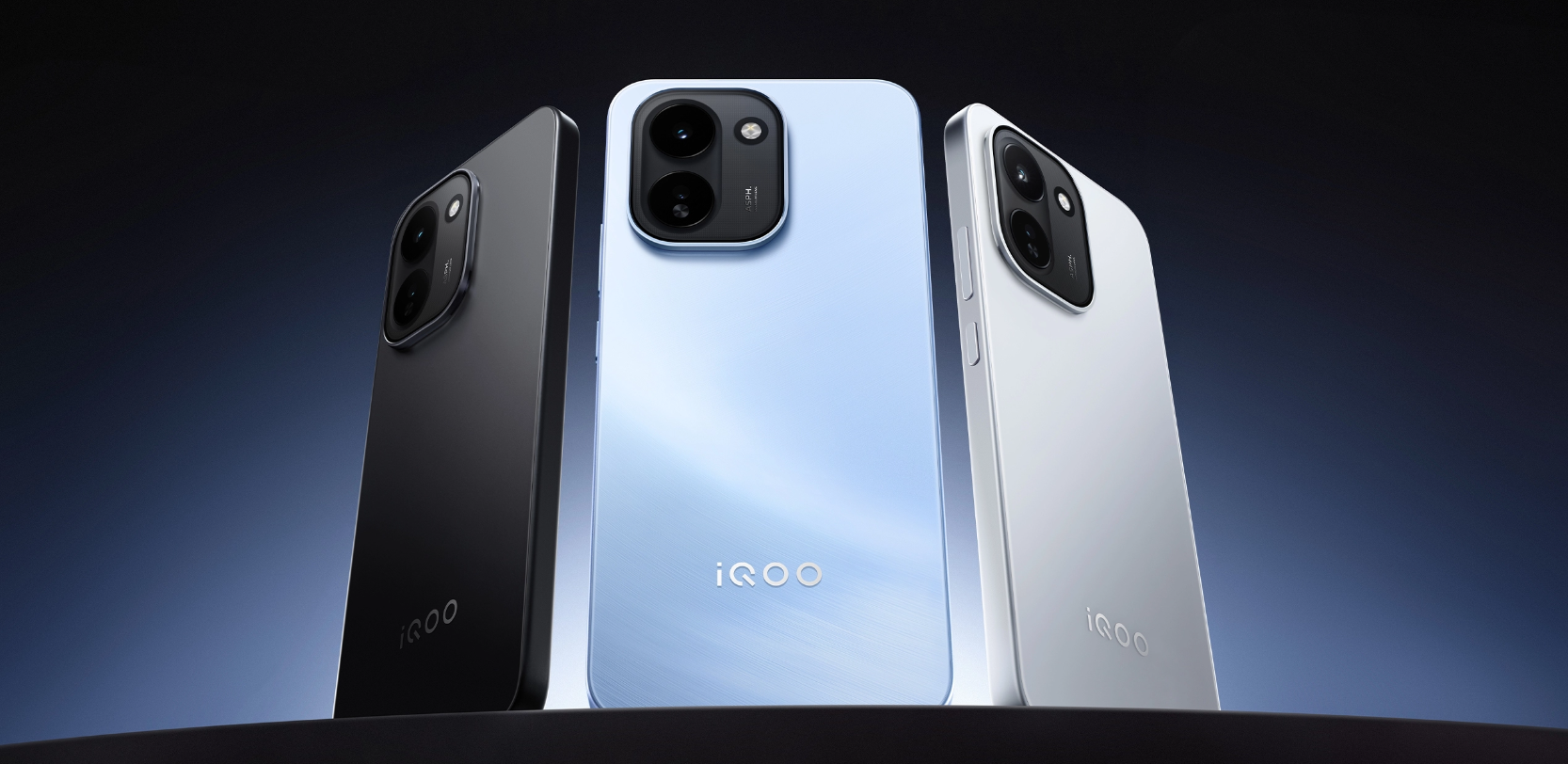
iQOO is all set to launch the iQOO Z11 in India. Its landing page has just gone live on the company’s regional website, which not only confirms its moniker for the first time but also reveals its design. iQOO already offers the Z11 with different specifications in Malaysia and China, but the upcoming Indian edition sports a different design and specifications.
iQOO Z11 design revealed
The images above show that the iQOO Z11 will feature a horizontal camera module housing dual cameras and a ring LED flash. The handset has curved edges on both the front and the back. It is also confirmed to arrive in multiple colors, including green, white, and blue.
With the landing page now live, it appears that the brand will update it with more specification details in the coming days. As per a recent Geekbench AI listing, the device is expected to feature the Dimensity 7500 chipset, 12GB of RAM, and Android 16 with OriginOS 6 on top.
This will be the third Z11-branded phone to launch in the Indian market after the Z11 Lite 44W and Z11x. The base variants of these phones are priced at Rs 19,499 and Rs 24,999, respectively. Therefore, the Z11, which is expected to offer better specifications than the Z11 Lite 44W and Z11x, may carry a price tag of around Rs 30,000.
What do you think about the iQOO Z11’s design? Let us know in the comments.
If you are still using a traditional vacuum cleaner to get rid of dust and debris, it’s time to invest in a robot vacuum cleaner. Not only does it save you the effort of vacuuming every day, but it also automates much of the cleaning process. The latest models can vacuum, mop floors, avoid obstacles, and even empty their own dustbins automatically after every cleaning session. And the best part is they don’t cost as much as a few years back.
The only problem is that there are now plenty of options available, making it difficult to choose the right one. But fret not, as we have rounded up some of the top options across budgets.
How to choose a robot vacuum
The first thing to check is the suction power. If your home has pets, carpets, or tends to collect a lot of dust, look for a model with at least 4,000Pa+ suction. If you want more power, check out the premium robot vacuums cleaners that offer well over 10,000Pa suction, making them better at picking up fine dust, pet hair, and larger debris.
Next, pay attention to the navigation system. LiDAR-based navigation is generally more accurate than basic gyroscope systems, letting the robot to map your home and clean rooms efficiently. Many premium models also use AI-powered obstacle avoidance to detect objects like slippers, charging cables, toys, and pet bowls.
If you also want the robot to mop, check how the mopping system works. Models with rotating mop pads usually clean dried stains more effectively than standard drag mops, while automatic mop lifting prevents carpets from getting wet during cleaning.
Finally, consider the docking station. Entry-level models require you to empty the dustbin manually every few cleaning cycles, whereas premium options can empty the dustbin, refill the water tank, wash the mop pads, and dry them automatically. While these features add to the cost, they also make daily maintenance almost effortless.
25,000Pa suction, built-in water tank, auto-empty dock, auto hot air drying
Rs 64,999
MOVA E10
If you are buying your first robot vacuum, the MOVA E10 is a solid budget option to pick. It offers up to 4,500Pa suction, making it capable of picking up dust and hair from hard floors and low-pile carpets. It also doubles as a vacuum and mop, while its LDS LiDAR navigation maps your home accurately for systematic cleaning.
The MOVA E10 also packs in features usually seen on more expensive models. It comes with Dual-Fusion obstacle avoidance, app control, scheduled cleaning, and a slim 7.6cm design that helps it clean under beds and sofas with ease. While it doesn’t include a self-emptying dock, it’s still a solid value-for-money option for anyone looking to automate daily floor cleaning.
The ILIFE A30 is another great option that offers powerful suction and premium navigation system on a budget. It has up to 13,000Pa suction, which is on par with premium robot vacuum cleaners, making it capable of picking up fine dust, pet hair, and even larger debris from hard floors and carpets. It also uses LiDAR navigation to create accurate maps of your home, ensuring systematic cleaning instead of random movements.
Apart from vacuuming, the ILIFE A30 also supports mopping, which makes it suitable for regular floor maintenance. You also get app control, customised cleaning schedules, and multi-floor mapping, giving you greater control over how and where the robot cleans.
The Indian brand Eureka Forbes, which has been making vacuum cleaners for decades, is now also in the robot vacuum space. It’s SmartClean vacuum cleaner is one of the top-selling options on Amazon, as it offers 7,000Pa suction, LiDAR navigation, and vacuuming and mopping. It also ships with an auto-empty dock that reduces the need for frequent maintenance.
You also get features like AI-powered obstacle avoidance, multi-floor mapping, and app control. It packs a battery that supports three hours of uninterrupted cleaning, which means it can clean your entire home in one go, depending on the size of your room.
The ECOVACS DEEBOT N30 Plus is a great option if you want flagship features without paying flagship prices. It offers up to 10,000Pa suction and comes with a bagless auto-empty station, so you don’t have to keep replacing disposable dust bags. It also supports vacuuming and mopping, making it suitable for everyday floor cleaning.
One of its biggest highlights is TrueMapping technology, which can map an area of up to 1,076 sq. ft. in just six minutes, which means it can plan efficient cleaning routes right from the first run. Other features include intelligent obstacle avoidance, app control, and a runtime of up to 320 minutes, making it a solid choice for medium and large homes alike.
The ECOVACS DEEBOT N50 Pro is a step up from the N30 Plus, offering 15,000Pa suction for better dust and dirt pickup. It also uses TrueMapping navigation to quickly create a map of your home and clean each room in a systematic manner instead of moving around randomly.
Another useful feature is ZeroTangle 2.0, which helps prevent hair from getting wrapped around the main brush, making it a good choice for homes with pets. You also get an auto-empty station, vacuum and mop support, app control, and obstacle avoidance, so you don’t have to worry much about day-to-day cleaning.
If budget isn’t a concern, the Dreame L50 Ultra CE is one of the best robot vacuums you can buy right now. It delivers a massive 25,000Pa suction, making light work of dust, pet hair, and larger debris on both hard floors and carpets. It also cleans along edges and corners better than most robot vacuums thanks to its extendable side brush.
The docking station does almost all the maintenance for you. It empties the dustbin, washes the mop pads with 80°C hot water, dries them, and even refills the water tank automatically.
The ILIFE A30 Pro is the best budget robot vacuum, as it has 10,000Pa suction power, LiDAR navigation, and a self-emptying dock.
What is the best overall vacuum cleaner?
The Dreame L50 Ultra CE is the best overall robot vacuum, thanks to its powerful 25,000Pa suction power, self-cleaning dock, and automatic mop washing, drying, and water refilling.
How long do robot vacuums last?
Most robot vacuums last between four and six years, provided you clean the brushes regularly and replace parts like filters and mop pads when needed.
Can a robot vacuum replace a regular vacuum cleaner?
A robot vacuum cleaner is great for everyday hands-free cleaning, but a traditional vacuum cleaner is still better for deep cleaning and cleaning more than just your floors.
Leaks suggest Samsung is adding a Pro model to the Galaxy S27 series while also removing one camera from its top-of-the-line flagship. Naturally, this raises questions about the camera capabilities and overall positioning of the Pro and Ultra models. A new report from South Korean outlet ETNews clarifies the situation to some extent.
Firstly, the report reaffirms the absence of a dedicated 3x telephoto camera on the Galaxy S27 Ultra. It cites detailed lens designs for the S27 series that Samsung has reportedly shared with its camera suppliers, reinforcing earlier claims.
The more interesting question is how Samsung plans to position the Galaxy S27 Pro. According to the report, it will feature a 200MP primary camera, a 50MP ultrawide, and a 12MP 3x telephoto.
Rather than being a straightforward cost-cutting measure, the decision appears to be aimed at creating clearer differentiation between the Pro and Ultra. Had both models shared the same 3x telephoto camera, their camera systems would have overlapped significantly. By taking different approaches, Samsung can give each device a more distinct identity.
That said, the inclusion of a 12MP 3x telephoto on the Galaxy S27 Pro may disappoint Galaxy fans hoping for a compact yet capable flagship. Meanwhile, the Galaxy S27 Ultra is expected to rely on sensor cropping from its primary camera to cover the 1x to 5x zoom range. AI-powered improvements to the image processing pipeline will certainly help enhance image clarity in post-processing, but their real-world impact will be worth watching rather than taking for granted.
Notably, both the S27 Pro and S27 Ultra are expected to use Samsung’s new 200MP ISOCELL HP6 sensor. For context, the ISOCELL HP2 used in the last four generations of S Ultra phones measures 1/1.3″. Samsung has consistently pursued smaller sensor designs in its high-resolution lineup, with the ISOCELL HP3 measuring 1/1.4 inches and the ISOCELL HP5 shrinking further to 1/1.56 inches. The latter is nearly the same size as the 50MP ISOCELL GN3, which has served as the primary sensor in Samsung’s standard Galaxy S models since the Galaxy S23.
With the S27 Ultra reportedly relying on a single sensor for everything from standard 1x shots to around 5x zoom through a combination of digital zoom and AI, its zoom performance will be worth watching for.
For the past few days, Vivo has been teasing the arrival of the Vivo S2 in India but has not confirmed any of its specs. Today, the brand has not only revealed its color options but also several key details about its specifications. Here’s a look at everything that has been revealed so far.
Vivo S2 key specifications confirmed
The Vivo S2 features a 7.99mm slim profile with what the company calls an Iconic Camera Design. It sports a 6.83-inch 3D curved AMOLED display with a 1.5K resolution, a 120Hz refresh rate, and up to 3,000 nits of peak brightness. The phone will be available in Silk White, Sapphire Blue, and Regal Bronze colour options.
For photography, the device is equipped with a 50-megapixel Sony IMX852 primary camera and a 32-megapixel front-facing camera. Vivo has confirmed support for 4K video recording on both the front and rear cameras, making it suitable for users who frequently create video content. Other camera features include Aura Light Portrait and Dual View Video for capturing footage from both cameras simultaneously.
The Vivo S2 is powered by the MediaTek Dimensity 7360-Turbo chipset, which is claimed to achieve an AnTuTu score of around 970,000. A 7,050mAh battery is expected to keep the phone running through extended gaming, video streaming, and everyday use.
The smartphone runs OriginOS 6 and introduces several AI-powered features, including AI Creation, AI Transcript Assist, and Vivo Office Kit. Circle to Search 2.0 is also included, allowing users to search for on-screen content with a simple gesture. Another notable addition is Shake and Share, which enables quick transfer of photos and 4K videos between compatible devices without relying on mobile data.
The Vivo S2 will be officially unveiled on Aug. 6, when the company is expected to reveal its pricing and complete specifications.
We use cookies on our website to give you the most relevant experience by remembering your preferences and repeat visits. By clicking “Accept”, you consent to the use of ALL the cookies.
This website uses cookies to improve your experience while you navigate through the website. Out of these, the cookies that are categorized as necessary are stored on your browser as they are essential for the working of basic functionalities of the website. We also use third-party cookies that help us analyze and understand how you use this website. These cookies will be stored in your browser only with your consent. You also have the option to opt-out of these cookies. But opting out of some of these cookies may affect your browsing experience.
Necessary cookies are absolutely essential for the website to function properly. This category only includes cookies that ensures basic functionalities and security features of the website. These cookies do not store any personal information.
Any cookies that may not be particularly necessary for the website to function and is used specifically to collect user personal data via analytics, ads, other embedded contents are termed as non-necessary cookies. It is mandatory to procure user consent prior to running these cookies on your website.