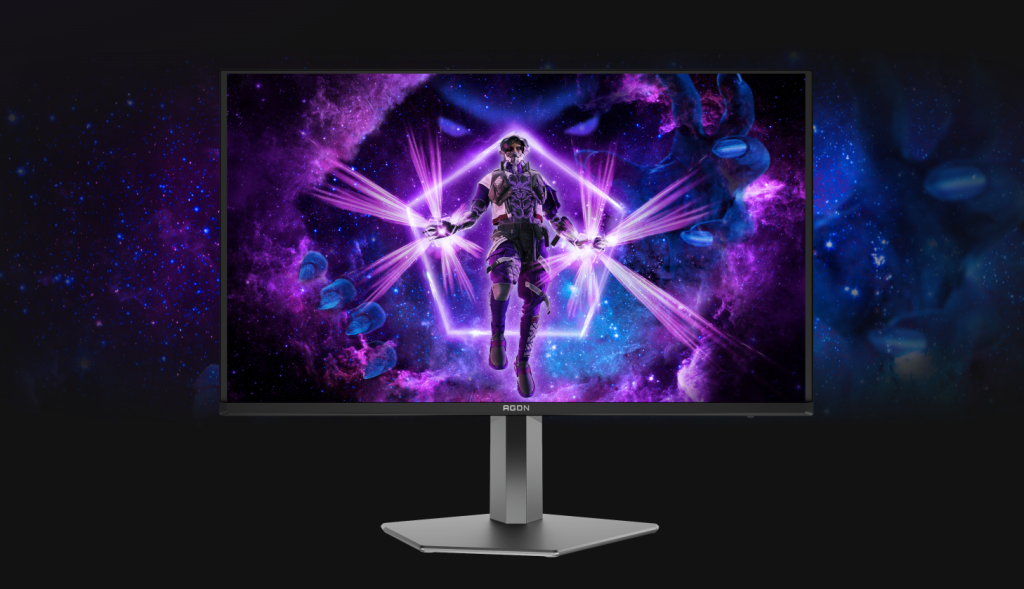
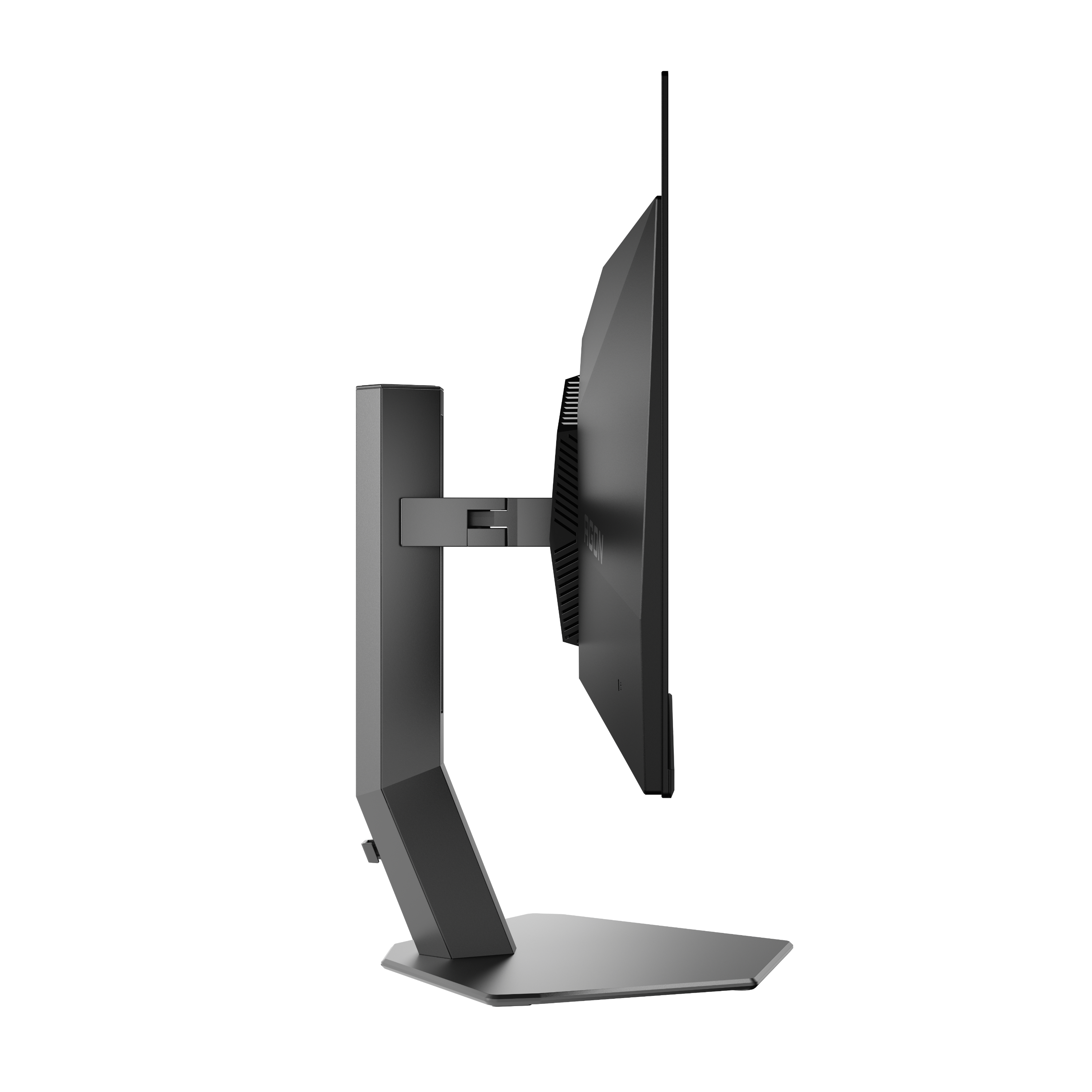
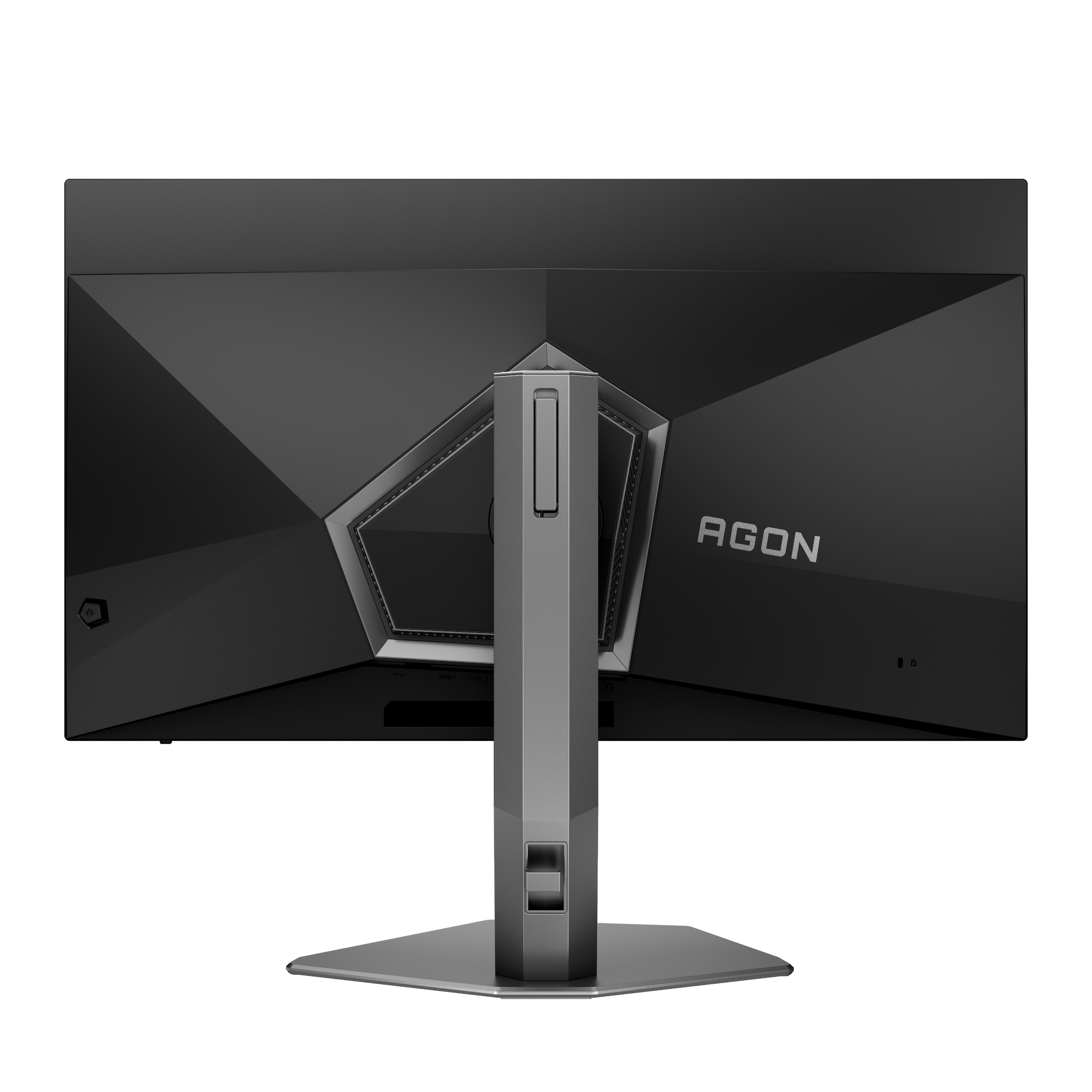
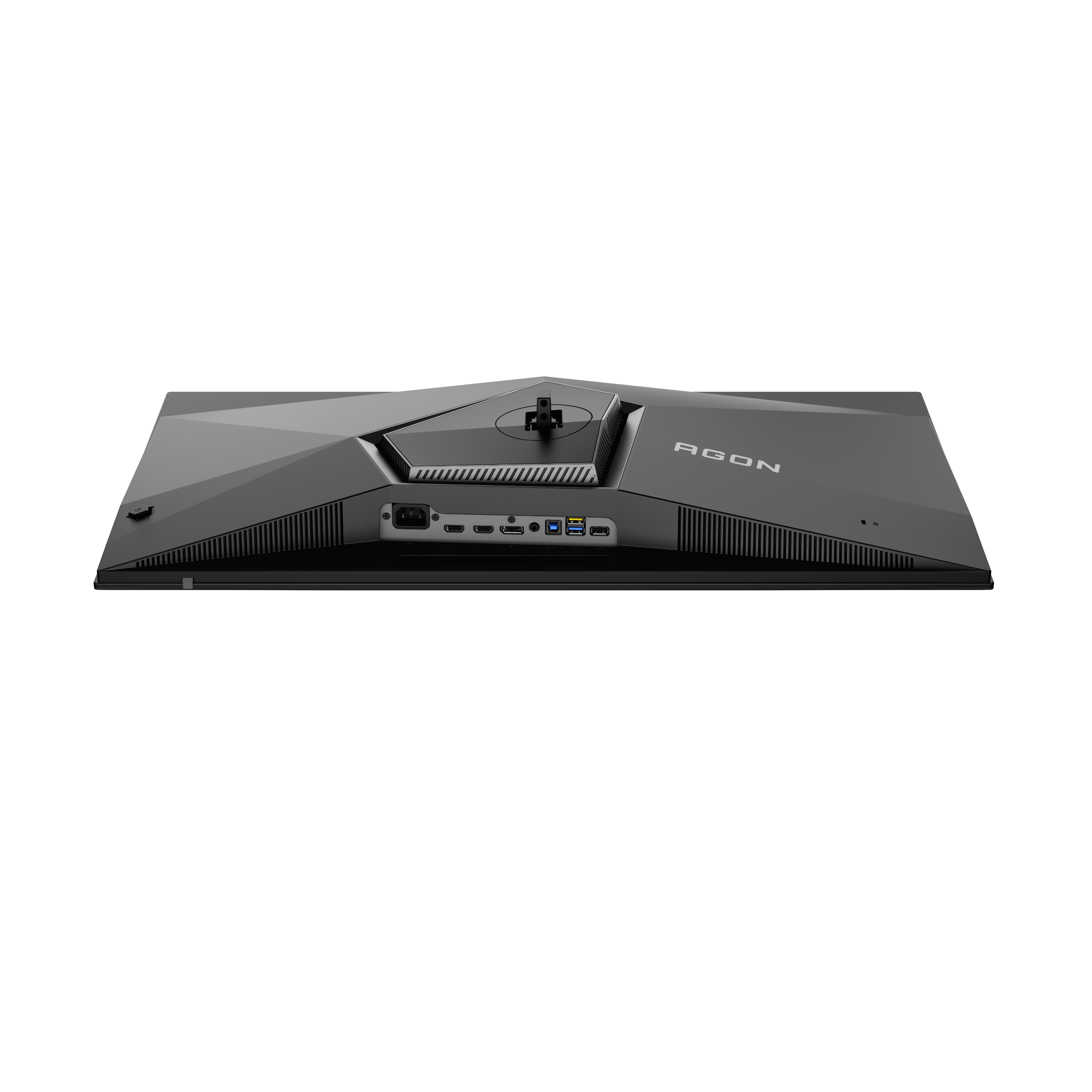
The AG326UD is a 31.5-inch UHD monitor boasting a 3840 x 2160 resolution and a QD-OLED panel. This technology combines the deep blacks and vibrant colors of OLED with the enhanced brightness of Quantum Dots, offering unparalleled image quality. Designed for gamers and creative professionals alike, the monitor supports a 165Hz refresh rate, Adaptive Sync, and VESA Certified DisplayHDR True Black 400, delivering smooth visuals and lifelike colors.
Key specifications include:
Resolution: UHD 3840 x 2160
Panel Type: QD-OLED
Refresh Rate: 165Hz
Response Time: 0.03ms GtG
HDR: DisplayHDR True Black 400 certification
Connectivity: HDMI 2.1, USB hub, and USB downstream ports
The monitor’s Adaptive Sync technology ensures tear-free and fluid gameplay by syncing the refresh rate with the GPU, while HDMI 2.1 compatibility unlocks optimal performance for next-gen consoles. Creative professionals will benefit from its wide color gamut and precise HDR capabilities, making it ideal for tasks requiring accurate color reproduction.
Designed with ergonomics in mind, the height-adjustable stand supports prolonged usage, while a space-efficient base caters to eSports setups. Additional features include an integrated USB hub for convenient connectivity and AOC’s G-Menu software for display customization.
AOC offers a four-year warranty for the Agon Pro AG326UD, which includes a “zero dead pixel guarantee” covering any pixel defects throughout the warranty period. Additionally, it comes with a year of accidental damage protection, though this is limited to one incident per monitor.
In other news, AOC has also launched the CU34G10XP ultrawide gaming monitor in China for 1,499 yuan ($206) on JD.com. It features a 34-inch VA panel with 3440×1440 resolution, a 21:9 aspect ratio, 180Hz refresh rate, 1ms GTG response time, and HDR10 support. The 1500R curved display offers enhanced immersion, factory-calibrated color accuracy (Delta E < 2), and multitasking modes (PIP and PBP).
Internet privacy has become quite crucial these days, and to prevent and mask the online identity, the Virtual Private Network services are now booming. However, it is quite difficult to choose among the best VPN players on the market. This is where a free trial becomes useful and essential.
A free trial allows you to explore the features of a VPN without any commitment. For instance, Surfshark offers an impressive 7-day free trial, giving users a hands-on experience of its premium features. Whether you’re testing the connection speed, assessing server reliability, or exploring additional tools like ad-blocking and malware protection, a free trial ensures transparency.
Benefits of VPN Free Trial
Evaluate Performance – Not all VPNs deliver on their promises. With a free trial, you can test Surfshark’s blazing-fast servers, seamless streaming capabilities, and secure browsing.
User-Friendly Interface – Surfshark is known for its intuitive design. With the free trial, you can navigate through the app, understand its functionalities, and see how user-friendly it is.
Compatibility Across Devices – The 7-day free trial allows you to test the VPN on multiple devices—be it your smartphone, tablet, or desktop.
Cost-Effectiveness – Investing in a VPN is a commitment. A free trial lets you decide if Surfshark is worth the subscription fee, giving you the confidence to proceed with a long-term plan.
How to Get Surfshark’s 7-Day Free Trial
Signing up for Surfshark’s free trial is straightforward. Simply download the app from your device’s app store, sign up for the free trial, and explore all premium features. There’s no risk involved, as you won’t be charged during the trial period.
Don’t miss out on this opportunity to experience Surfshark’s top-notch VPN services risk-free and start your 7-day free trial now.
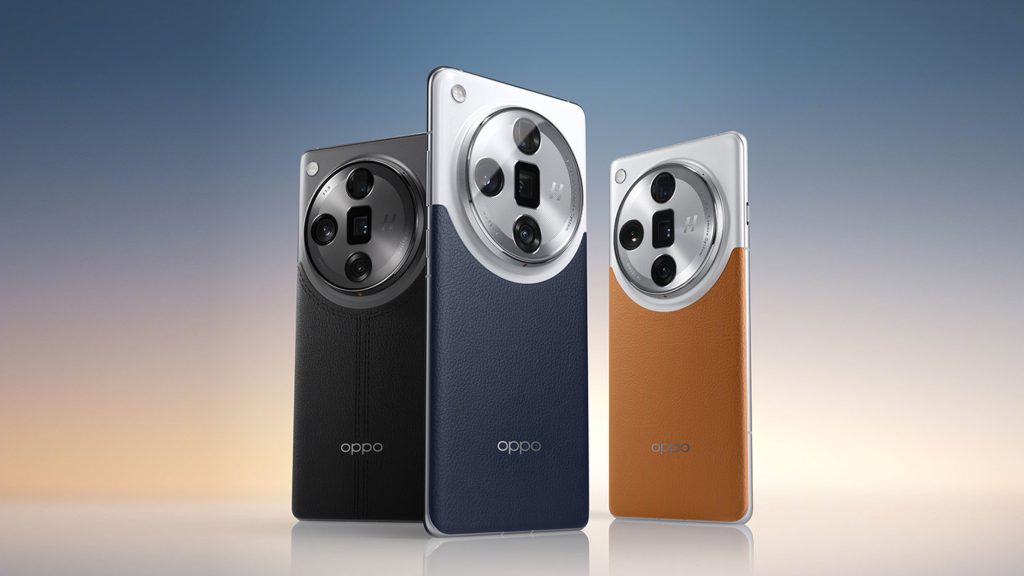
Following the release of the Find X8 and Find X8 Pro earlier this year, Oppo is now developing its next flagship smartphone. Expected to be named the Find X8 Ultra, the new device is anticipated to launch early next year, positioning it as a competitor to the Samsung Galaxy S25 Ultra, Honor Magic 7 Ultimate, Xiaomi 15 Ultra, and Vivo X200 Ultra.
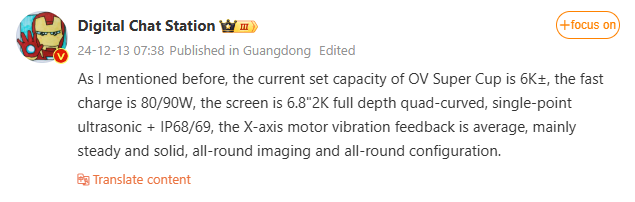
Oppo Find X8 Ultra leak machine translated
Ahead of the launch, recent leaks have provided insights into its key specifications. As per Digital Chat Station, the Oppo Find X8 Ultra will feature a 6.8-inch quad-curved display with 2K resolution. Additionally, the phone will incorporate an ultrasonic fingerprint sensor, a significant upgrade over the optical sensor found on the Find X7 Ultra.
OPPO Find X7 Ultra
In terms of durability, the Find X8 Ultra is rumored to have IP68 and IP69 ratings, ensuring protection against water and dust. The device is also expected to pack a larger 6,000mAh battery, although the charging speed may be slightly reduced to 80W or 90W.
While the specific chipset hasn’t been confirmed, the Find X8 Ultra will likely be powered by the Snapdragon 8 Elite, while the other Find X8 models feature Dimensity 9400.
Previous reports claim that the Find X8 Ultra is expected to feature a quad-camera setup. This includes a 50MP Sony LYT 900 primary sensor with a 1-inch optical format, a 50MP Sony IMX 882 ultra-wide sensor with a 1/1.95-inch format, and two telephoto lenses. The telephoto lenses consist of a 50MP Sony LYT 701 sensor with a 1/1.56-inch format and a 75mm equivalent focal length, as well as a 50MP Sony IMX 882 sensor with a 1/1.95-inch format and a 150mm equivalent focal length. More details are expected to surface as we get closer to launch.
AOC has launched its latest ultrawide gaming monitor called CU34G10XP in the Chinese market. The monitor is priced at 1,499 yuan ($206) and it is now available on JD.com. Let’s check out its key specs.
AOC CU34G10XP Monitor Specifications
The monitor sports a 34-inch VA panel with a 3440×1440 resolution and a 21:9 aspect ratio, delivering sharp and vibrant visuals. It comes with an impressive 180Hz refresh rate and a 1ms GTG response time, ensuring smooth motion and minimal input lag, ideal for fast-paced gaming scenarios.
It equips HDR10 support to enhance dynamic range, offering vivid colors and greater detail in highlights and shadows, paired with a peak brightness of 300 cd/m². Additionally, it features a 1500R curvature that enhances immersion by aligning perfectly with the natural field of view of the human eye.
This display is factory-calibrated for color accuracy, achieving a Delta E < 2, and supports 16.7 million colors, delivering precise and lifelike color reproduction. For multitasking, it features PIP (Picture-in-Picture) and PBP (Picture-by-Picture) modes, enabling two signal sources to be displayed simultaneously, making it ideal for productivity or entertainment.
The monitor equips dual HDMI 2.0 ports, dual DP 1.4 ports, and an audio output, offering versatile connectivity options. Its ergonomic design includes a 130mm height-adjustable stand, 30° left/right swivel, and a -5° to 23° tilt adjustment, ensuring optimal viewing comfort for prolonged use. The stand also supports quick-release assembly, reducing installation hassles.
For gaming enthusiasts, the monitor includes specialized features such as GameColor adjustments, dynamic crosshairs, and an FPS counter, enhancing gameplay accuracy and visibility. With a 3000:1 contrast ratio and 178°/178° viewing angles, the display delivers crystal-clear images from virtually any angle.
The monitor incorporates Adaptive-Sync (FreeSync) technology for tear-free visuals and low blue light with flicker-free technology to reduce eye strain. Compatible with VESA 100x100mm wall mounts, the monitor weighs 5.82kg (with stand) and 4.37kg (without stand). Its design is elevated with a red trim and a clean cable management system for an organized, aesthetic setup.
In related news, BenQ has launched a new 27-inch 4K HDR400 monitor featuring 95% DCI-P3 color gamut, eye-care technology, and built-in dual speakers. Earlier this month, AOC introduced the Q27G4ZMN, a 27-inch QD-MiniLED gaming monitor boasting a 240Hz refresh rate, 1200 nits peak brightness, and a 1ms GtG response time.
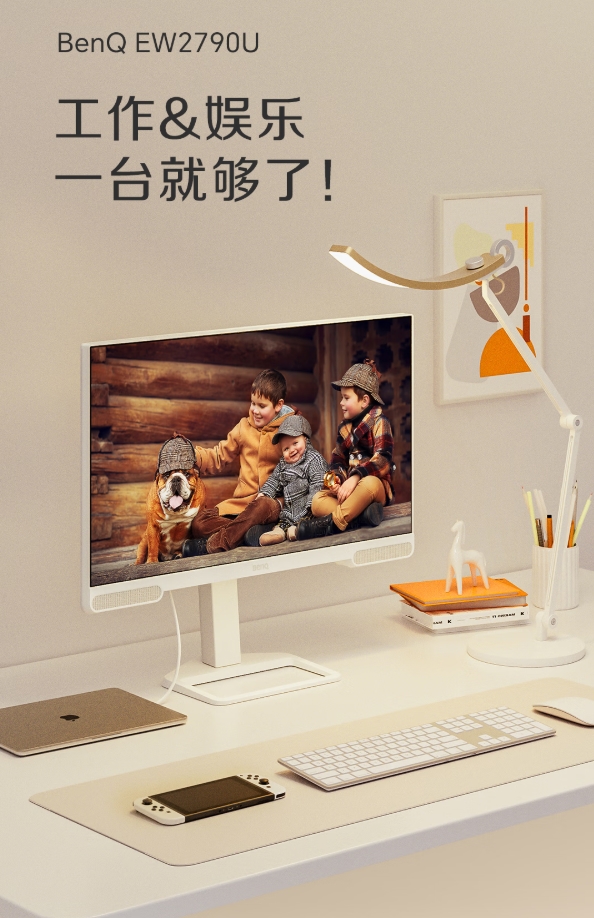
BenQ has introduced its latest professional-grade monitor, the EW2790U, in the Chinese market. Priced at 3,799 yuan ($522), the monitor is now available for purchase on JD.com. Here’s a look at its key specifications.
BenQ EW2790U Specifications
The monitor features a 27-inch 4K panel with a resolution of 3840 x 2160, delivering sharp and detailed visuals. It sports a 60Hz refresh rate and HDR400 certification, ensuring vibrant colors and impressive contrast with deeper blacks and brighter whites.
The monitor equips a 95% DCI-P3 color gamut, offering more accurate and vivid color reproduction, along with 99% sRGB and 99% Rec.709 coverage, catering to professional-grade color accuracy needs.
The monitor comes with AI Picture Optimization Technology that uses real-time algorithms to adjust brightness and contrast based on on-screen content, making dark scenes clearer and bright areas less overexposed. It also supports M-Book mode, specifically designed to harmonize with MacBook displays for seamless integration.
It features treVolo dual speakers, professionally tuned for immersive audio, and supports six audio modes, including game, movie, and user-customized options. It also sports a custom equalizer, allowing users to adjust audio preferences for a personalized experience.
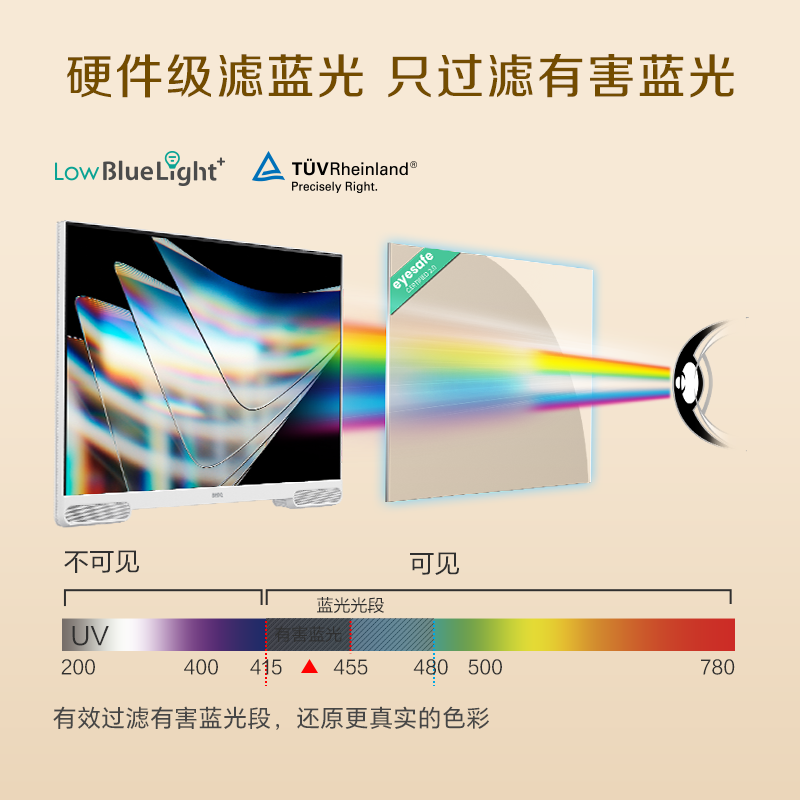
For eye care, the monitor sports Low Blue Light Technology and Flicker-Free Technology, reducing eye strain during long hours of use. It comes with Brightness Intelligence 2.0, which adjusts the screen’s brightness and color temperature automatically based on ambient lighting. Additionally, it offers a color-weak mode, making visuals accessible for users with color vision deficiencies.
The monitor includes a versatile connectivity suite with three HDMI 2.0 ports, a USB-C port supporting 65W power delivery, and USB-A ports, accommodating a range of devices. It also has a headphone jack.
Designed with ergonomics in mind, the monitor offers 110mm height adjustment, a -5° to 20° tilt range, and 90° pivot for vertical use. Its sleek aesthetic with a pure white finish complements modern setups.
The BenQ EW2790U promotes sustainability by using 85% post-consumer recycled materials in its construction and includes an auto power-off feature to conserve energy.
In related news, AOC has unveiled the Q27G4ZMN, a 27-inch QD-MiniLED gaming monitor featuring a 240Hz refresh rate, 1200 nits peak brightness, and a 1ms GtG response time. Additionally, ViewSonic has launched a new 27-inch FHD gaming monitor with a 240Hz refresh rate, HDR10 support, and an ultra-thin bezel design.
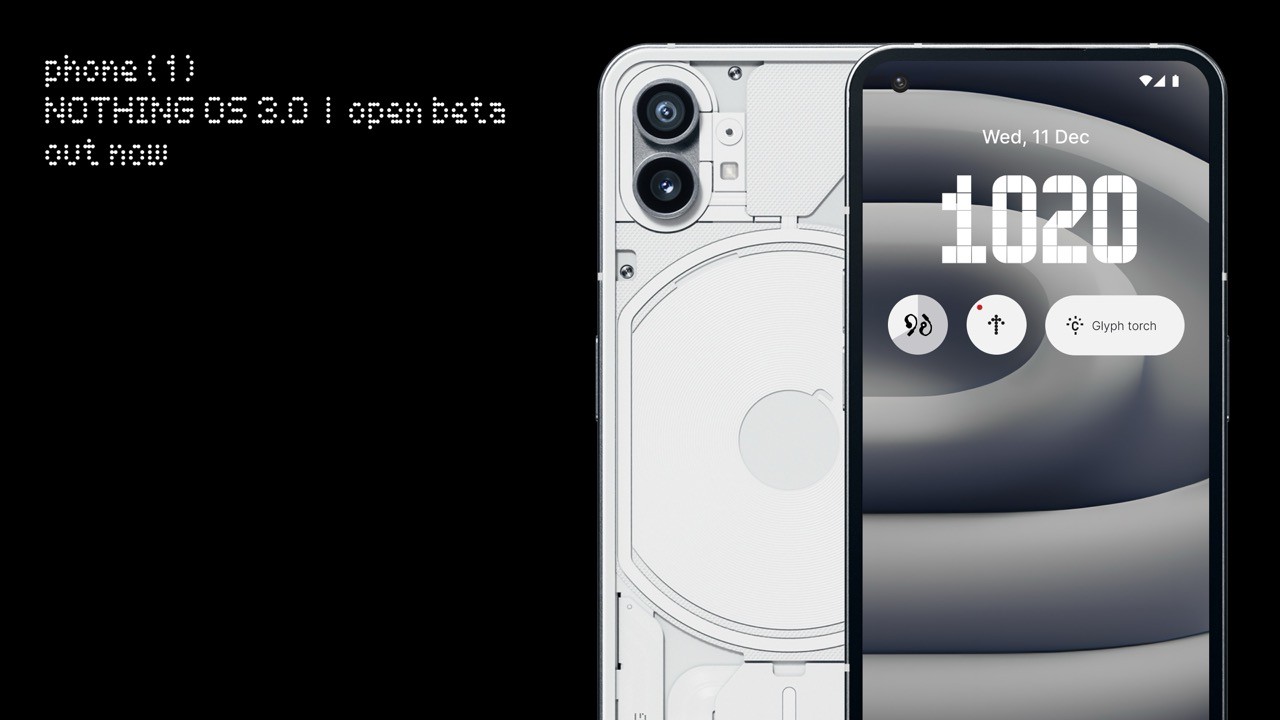
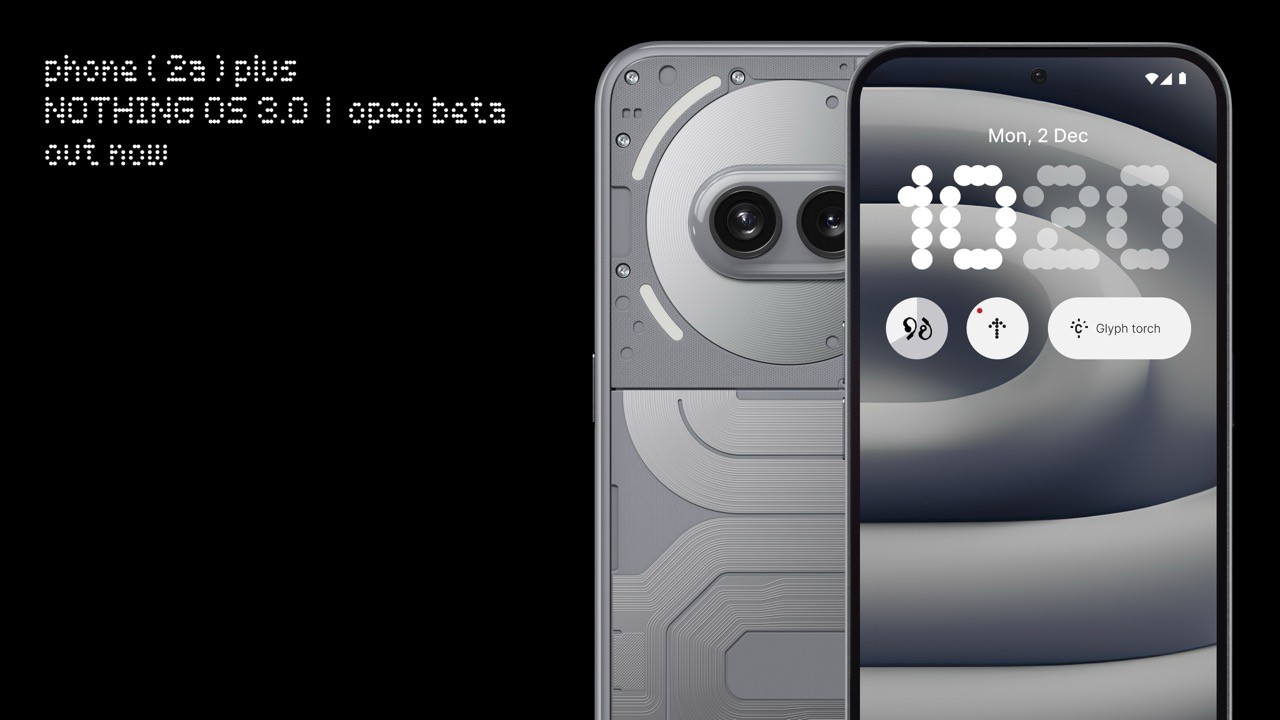
Nothing has officially rolled out the Android 15-based Nothing OS 3.0 open beta update for the Nothing Phone (1) and the Phone (2a) Plus. This update introduces a range of new features designed to improve customization, usability, and performance, showcasing Nothing’s focus on enhancing its software.
Update Now Available Across All Devices
With this release, Nothing has ensured that all its smartphones can access the latest software. Whether you use a Phone (2a) Plus or a Phone (1), updating to the beta version is simple. However, since this is a beta version, users are advised to back up their data before starting the update, as a factory reset might be required in case of any issues.
How to Get the Update
To update to Nothing OS 3.0 beta, ensure your device is running Nothing OS version 2.6. Once you download the required APK file (Phone 1 / Phone 2a Plus), follow these steps:
Go to Settings > System > Update to Beta Version.
Tap Check for new version and follow the instructions to complete the process.
Make sure your device build number matches the requirements for your model.
What’s New in Nothing OS 3.0?
Shared Widgets for Better Connectivity
The update introduces shared widgets, allowing users to share and interact with widgets from friends or family directly on their home screen. This adds a fun and unique way to stay connected.
Improved Lock Screen Options
Users can now access a lock screen customization page by long-pressing the lock screen. The update brings new clock styles, more widget space, and better options for personalizing the lock screen.
Smart Drawer for Organized Apps
A new AI-powered Smart Drawer automatically organizes apps into folders for easier access. Users can also pin their most-used apps at the top of the drawer for quicker navigation.
Updated Quick Settings and Camera Features
Quick Settings now have a refreshed design, making it easier to edit and access options. The camera gets significant improvements, including faster launch speeds, better HDR processing, enhanced portrait effects, and improved low-light performance.
Pop-Up View for Multitasking
The update makes multitasking easier with a movable pop-up view. Users can resize the view, pin it to the screen edge, and check notifications without switching apps. This feature can be enabled through Settings > System > Pop-Up View.
Other Key Improvements
AI-Powered App Prioritization: Keeps frequently used apps within easy reach.
Auto-Archive: Frees up storage without deleting apps.
Partial Screen Sharing: Allows users to record only specific apps for better privacy.
Updated Animations: Adds new fingerprint and charging animations with the brand’s signature design.
Improved Setup Wizard: Makes the initial setup process smoother for new users.
Nothing OS 3.0 Official Update Changelog
Shared Widgets
● Use widgets to link up with friends and family. See another person’s widgets displayed on your home screen and interact with each other through reactions. A new way to stay connected.
Lock screen
● New lock screen customisation page. Access by long-pressing the lock screen.
● Upgraded clock faces. Choose your favourite style.
● Expanded widget space, allowing you to place more widgets on your lock screen.
Smart Drawer
● Added AI-powered Smart Drawer feature to automatically categorise your apps into folders. For better organisation and easy access.
● For ultimate convenience, you can pin your favourite apps to the top of the app drawer. No scrolling required.
Quick Settings
● Reconsidered Quick Settings design with an optimised editing experience.
● Enhanced widget library design.
● Updated visuals in Settings including better Network & Internet and Bluetooth options.
Camera improvements
● Faster camera launch speed under the Camera Widget.
● Reduced HDR scene processing time.
● Optimised portrait effects by fine-tuning blur intensity based on face size.
● Boosted camera performance in low-light environments.
● Improved zoom slider display.
Enhanced pop-up view
● Movable pop-up view for cleaner and more productive multi-tasking.
● Easily resize the pop-up view by dragging the bottom corners.
● Pin the pop-up view on the screen edge for quick access.
● View information without leaving your current app. Simply swipe down on incoming notifications to enter the pop-up view. Enable via Settings > System > Pop-up view.
Other improvements
● AI-powered selection and prioritisation of your frequently used apps, keeping them at your fingertips for a more efficient experience
● Added support for auto-archive function to automatically free up storage space without removing apps or data from your device.
● Partial screen sharing for more efficient and secure screen recording. Record just an app window rather than the entire screen.
● Updated setup wizard to version 3.0 for the smoothest introduction to Nothing OS.
● Enabled predictive back animations for apps that have opted in.
● New fingerprint animation with signature dot matrix styling.
● New charging animation with signature dot matrix styling.
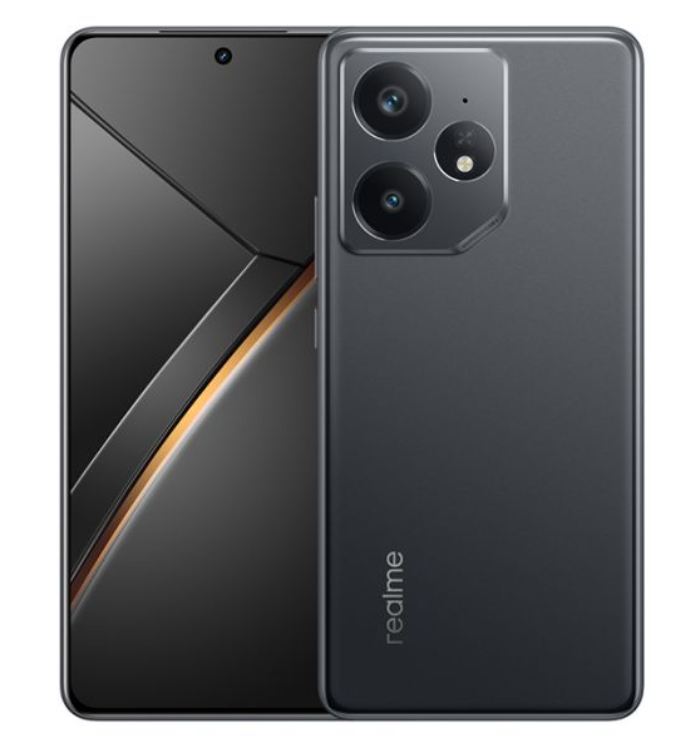
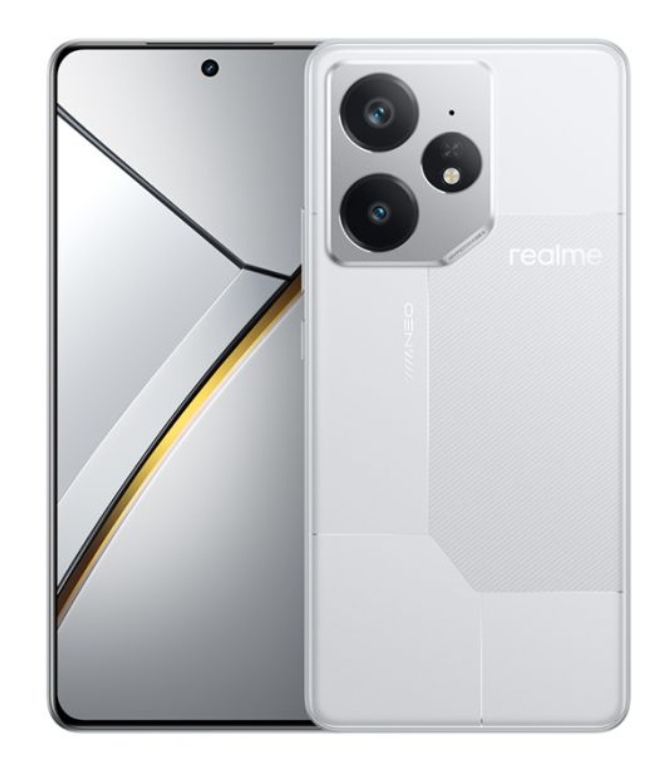
Realme has introduced its newest flagship, the Realme Neo 7, an innovation-packed smartphone designed to offer a premium experience. Featuring cutting-edge technology and stunning design, this device caters to users who demand top-tier performance and exceptional features. You can now get the Realme Neo 7 for a starting price of $359 at Geekwills.
Sleek Design and Stunning Display
The Realme Neo 7 boasts a 6.78-inch LTPO AMOLED display with 1.5K resolution, delivering sharp visuals and vivid colors. With a 120Hz refresh rate and an industry-leading 2600Hz touch sampling rate, the display ensures smooth scrolling and responsiveness. Its peak brightness of 6000 nits makes it perfect for outdoor viewing even under harsh sunlight. The display supports 2160Hz PWM dimming for eye comfort, reducing strain during extended usage. The phone is available in three stunning colors: Black, Blue, and White, catering to varied style preferences.
Powerful Performance with Dimensity 9300+
Under the hood, the Realme Neo 7 is powered by the Mediatek Dimensity 9300+ processor. This octa-core chipset, coupled with 12GB or 16GB of RAM, ensures lightning-fast performance, making multitasking, gaming, and app launches seamless. Realme’s intuitive UI 6, based on the latest Android 15, further enhances user experience with a fluid and efficient interface.
Advanced Camera System
The Realme Neo 7 features a versatile dual-camera setup. Its 50-megapixel Sony IMX882 primary camera, with optical image stabilization (OIS) and f/1.9 aperture, captures crisp, detailed photos even in low light. Accompanying it is an 8-megapixel ultrawide lens with a 112-degree field of view, perfect for breathtaking landscapes. The front-facing 16-megapixel camera ensures vibrant selfies and clear video calls.
Massive Storage and Battery
Storage will never be a concern with options for 256GB or 512GB of UFS 4.0 internal memory. Whether it’s photos, apps, or documents, you’ll have space for it all. The Neo 7’s 7000mAh battery provides exceptional longevity, making it ideal for heavy users. Additionally, the 80W SuperVOOC fast charging ensures you’re back to full power in no time.
Enhanced Connectivity
With 5G LTE capabilities, the Realme Neo 7 offers blazing-fast internet speeds for downloading, streaming, and staying connected. Whether you’re gaming, working, or scrolling social media, this device guarantees a lag-free experience.
Key Specs:
OS: Realme UI 6 based on Android 15
Processor: Mediatek Dimensity 9300+ with up to 16GB RAM
With the holiday season fast approaching, finding the perfect gift for your loved ones can be a challenge. If they’re proud iPhone users, gifting accessories to complement their devices is a surefire way to brighten their day. From portable chargers to stylish cases, here’s a list of the best iPhone accessories to gift this Christmas.
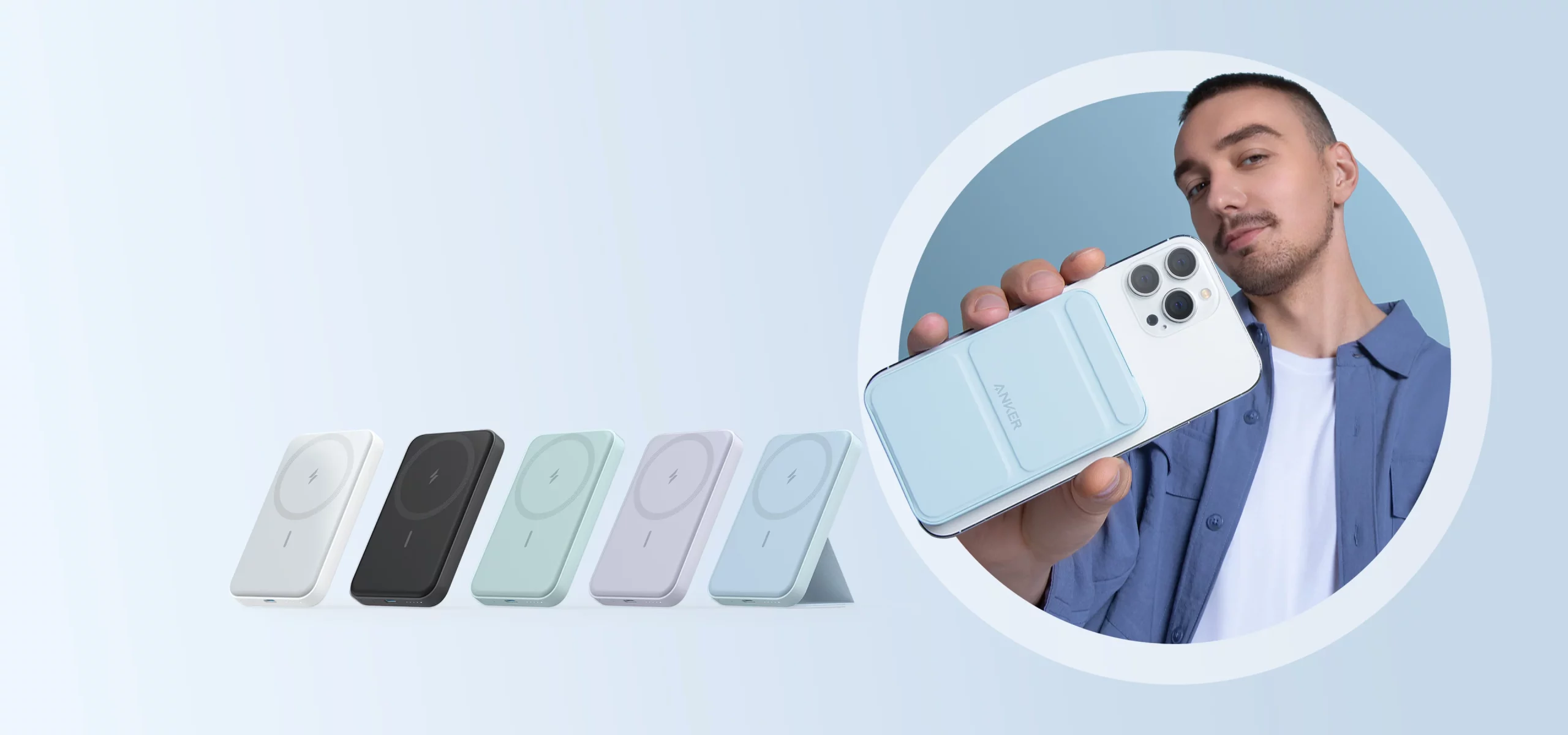
The Anker 622 Magnetic Battery is a thoughtful gift for anyone who values convenience and portability. This compact MagSafe-compatible charger boasts a 5,000mAh capacity, making it perfect for charging on the go. It equips a foldable kickstand, allowing users to prop up their iPhones for hands-free viewing during video calls or streaming.
Its ultra-slim design, measuring only 0.5 inches thin, ensures it’s lightweight and easy to carry in a pocket or bag. The magnetic alignment feature makes charging effortless by securely snapping onto compatible iPhone models, ensuring a seamless experience without fumbling with cables. At $27.99, it’s a practical and affordable option that delivers both power and style.
Please Note: When you buy something using the links in our articles, we may earn a small commission at no cost to you.
2. Baseus MagSafe Power Bank
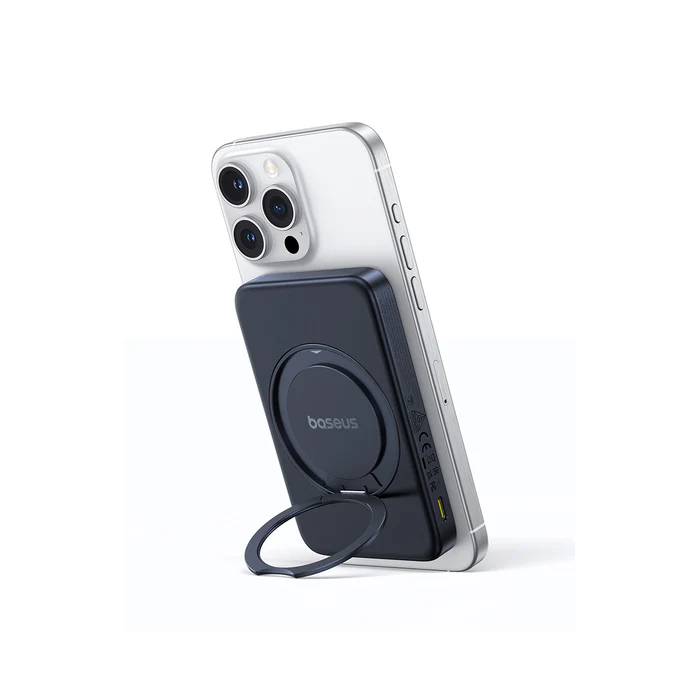
The Baseus Qi2 MagSafe Power Bank takes wireless charging to the next level. Officially Qi2-certified, this power bank supports ultra-fast 15W wireless charging, capable of charging an iPhone 15 Pro from 0 to 35% in just 30 minutes. It also sports a 5,000mAh capacity and a sleek, lightweight design at just 0.54 inches thick.
This charger doubles as a multifunction stand with a 360° rotatable magnetic ring. Whether watching videos or attending virtual meetings, users can enjoy adjustable angles for added convenience. Additionally, it supports simultaneous wired and wireless charging, making it a versatile option for multitaskers.
Available in multiple colors and priced at $49.99, this gift is both functional and stylish.
Please Note: When you buy something using the links in our articles, we may earn a small commission at no cost to you.
3. Apple AirPods Pro 2
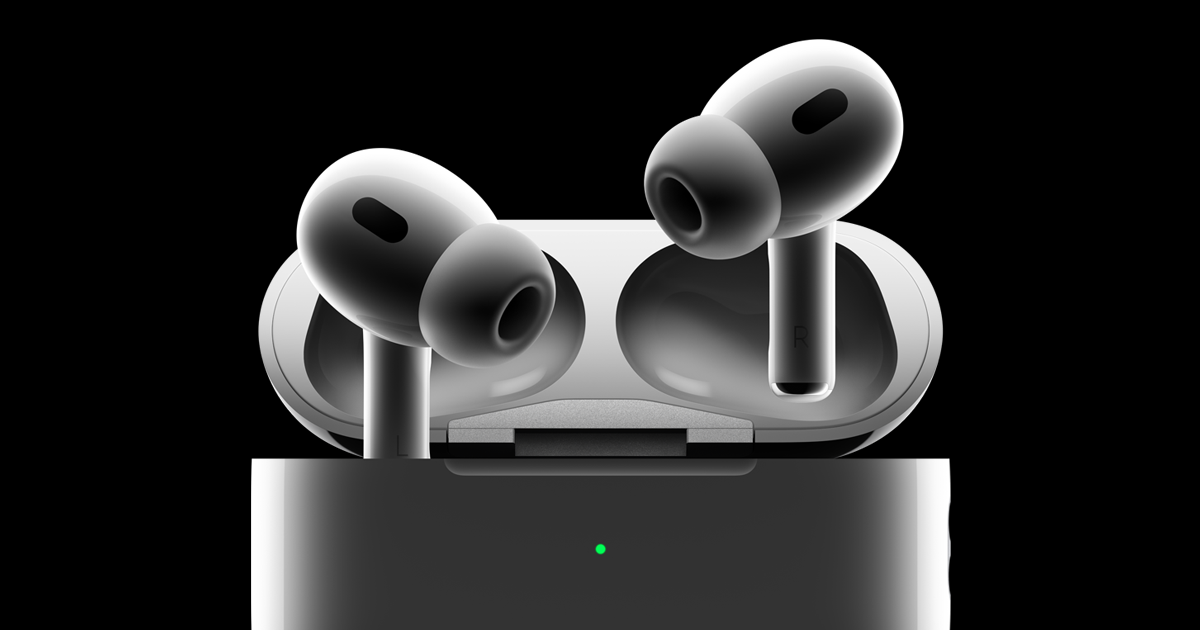
For audiophiles, the Apple AirPods Pro 2 with a USB-C charging case is an exceptional gift. These earbuds come equipped with Apple’s H2 headphone chip, offering features like Active Noise Cancellation and Adaptive Transparency. Personalized Spatial Audio provides an immersive listening experience, making it feel like sound is coming from all directions.
The MagSafe case adds convenience, while a 30-hour battery life ensures extended usage without constant recharging. With an IP54 rating, they are dust, sweat, and water-resistant, making them perfect for workouts or outdoor activities. At $249, these AirPods deliver high-quality audio and unmatched convenience, ideal for Apple enthusiasts.
Please Note: When you buy something using the links in our articles, we may earn a small commission at no cost to you.
4. Apple MagSafe Cases
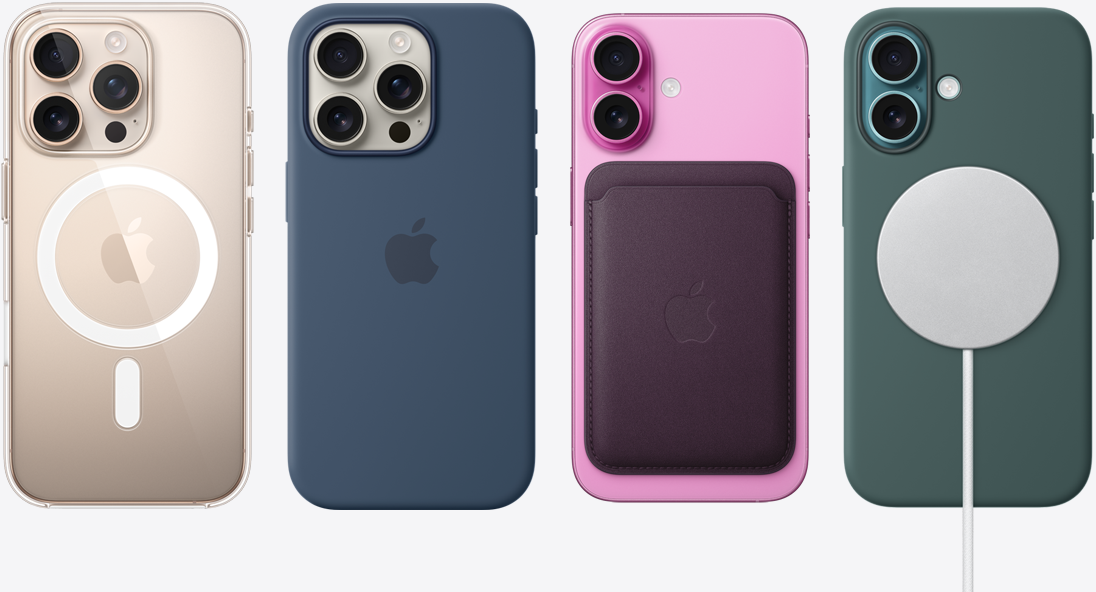
MagSafe cases are a must-have for iPhone users, and Apple’s Clear Case with MagSafe or Silicone Case with MagSafe are excellent choices. Both cases feature built-in magnets that align perfectly with MagSafe accessories, ensuring seamless wireless charging.
The Clear Case, priced at $49, is crafted from optically clear polycarbonate, showcasing the iPhone’s finish while providing robust protection. On the other hand, the Silicone Case, also $49, is made from 55% recycled silicone material and features a soft-touch exterior for a luxurious feel. Both options are rigorously tested to ensure they’re durable enough to protect against scratches and drops.
Please Note: When you buy something using the links in our articles, we may earn a small commission at no cost to you.
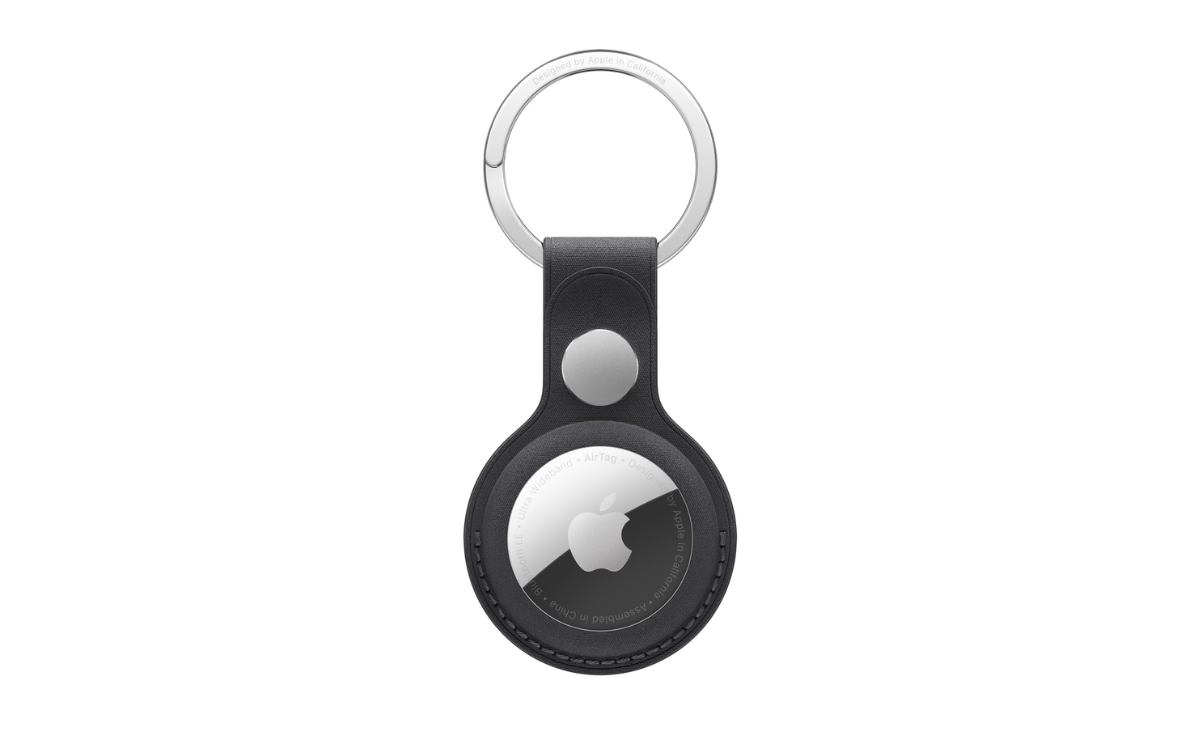
5. AirTag FineWoven Key Ring
Apple’s AirTag FineWoven Key Ring is a thoughtful stocking stuffer for anyone who wants to keep their belongings safe. Made from innovative, eco-friendly materials, it sports a durable micro-twill with a suede-like finish and a stainless steel frame. Designed to snugly fit the AirTag, it ensures the tracker stays securely in place.
At $35, it’s a small but meaningful gift for anyone who values practicality and sustainability.
Please Note: When you buy something using the links in our articles, we may earn a small commission at no cost to you.
6. Baseus Retractable USB-C Cable
For tech-savvy travelers, the Baseus Free2Pull Mini Retractable USB-C Cable is a perfect companion. This innovative cable offers four length settings (1.1, 1.9, 2.7, and 3.3 feet) and supports 60W rapid charging. It also facilitates high-speed data transfer at 480Mbps, ensuring quick and efficient connectivity.
The cable’s compact design, weighing just 36 grams, makes it easy to carry in a bag or pocket. With a durability rating of 50,000 pulling cycles, it’s built to last. Priced at $15.99, this accessory is a practical gift for those always on the move.
Please Note: When you buy something using the links in our articles, we may earn a small commission at no cost to you.
7. Baseus Magnetic Wireless Charger
The Baseus PicoGo 2-in-1 Magnetic Wireless Charger is the ultimate charging solution for multitaskers. Supporting the latest Qi2 wireless charging protocol, it provides 15W fast wireless charging for iPhones and 67W wired charging for laptops. Its innovative design includes a built-in retractable USB-C cable and an adjustable stand, making it perfect for desks and travel.
Measuring just 2.6 x 2.7 x 1.6 inches, this charger is incredibly compact and portable. With a price tag of $59.99, it’s a high-tech gift that ensures convenience and efficiency for both work and leisure.
Please Note: When you buy something using the links in our articles, we may earn a small commission at no cost to you.
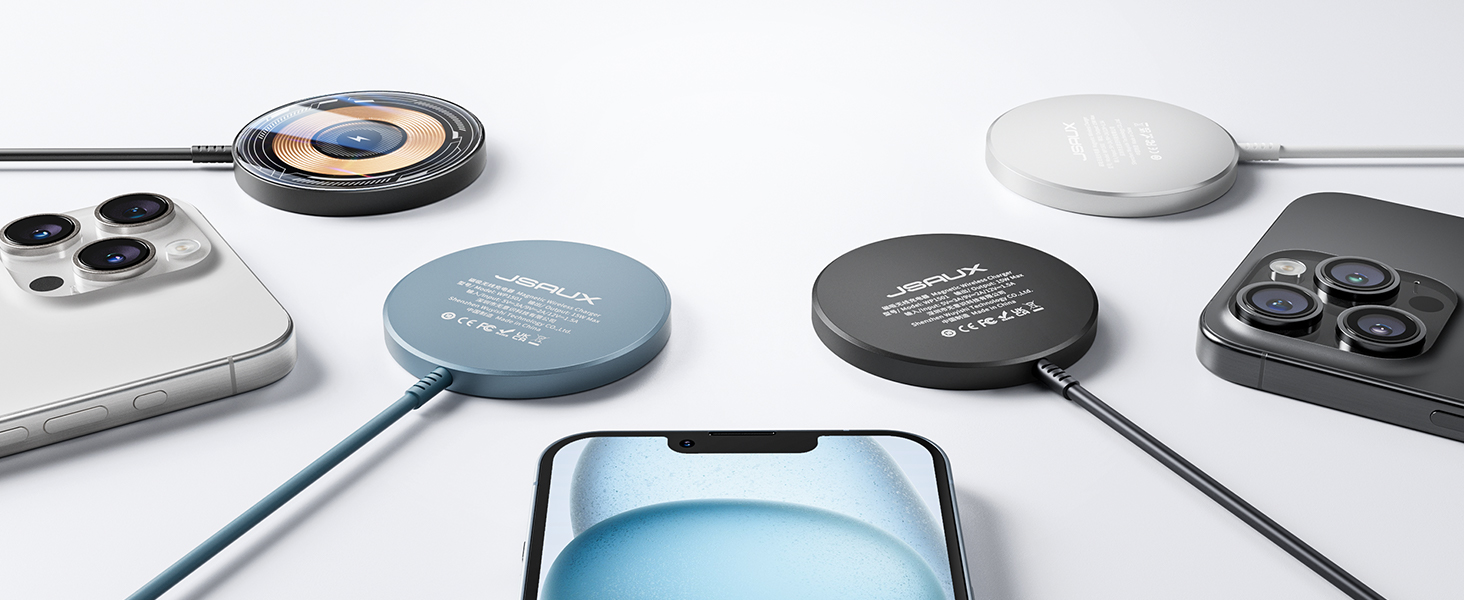
8. JSAUX Magnetic Wireless Charger
The JSAUX Magnetic Wireless Charger is a budget-friendly yet effective accessory for iPhone users. Compatible with MagSafe, this charger features a slim 0.23-inch design and a 4.9-foot multi-port cable for added versatility. Its strong magnets ensure secure alignment and reliable charging for iPhones and AirPods.
At just $15.99, this charger offers intelligent protection to prevent overheating and overcharging, making it a safe and thoughtful gift for tech enthusiasts.
Please Note: When you buy something using the links in our articles, we may earn a small commission at no cost to you.
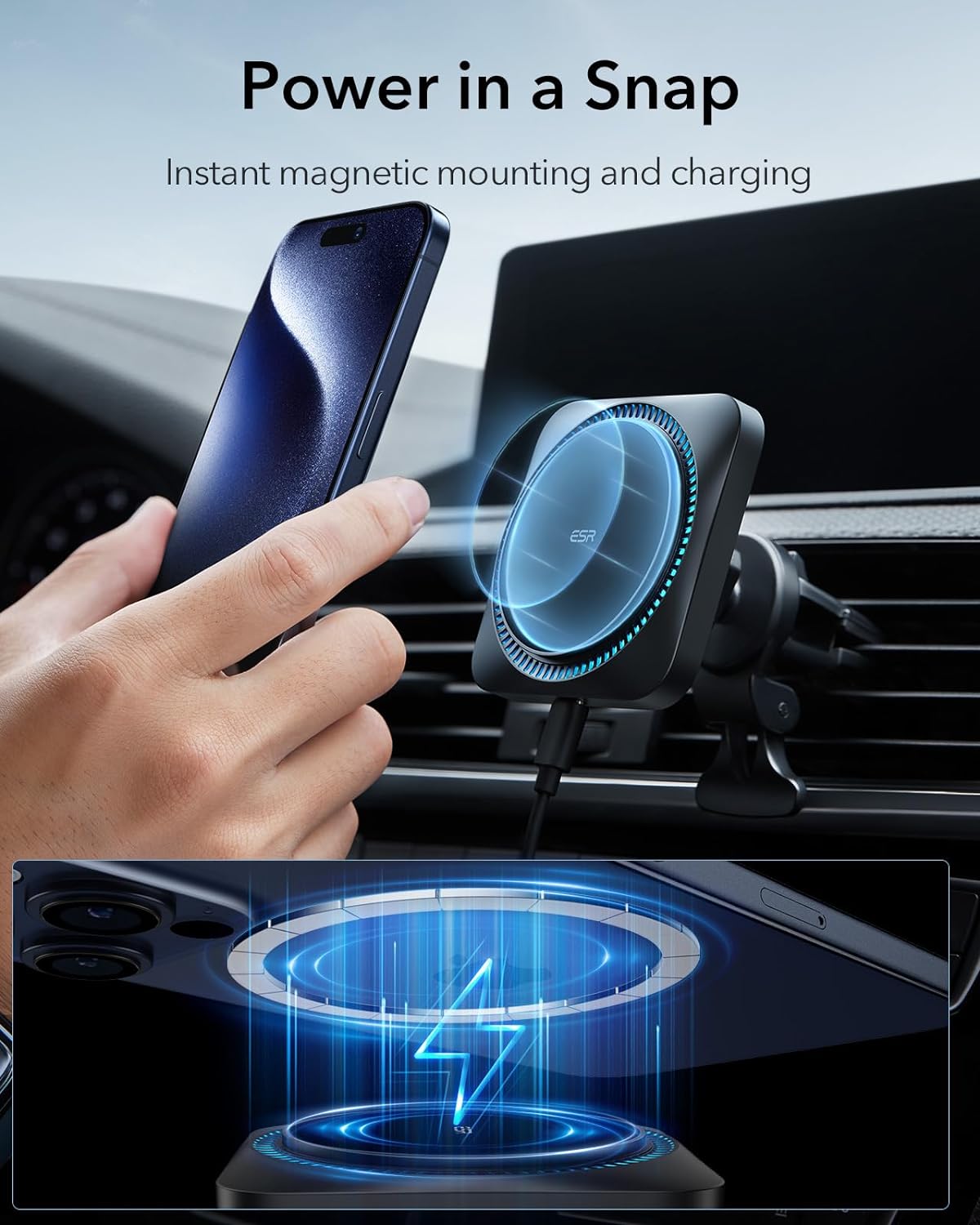
9. ESR Magnetic Wireless Charging Car Mount
For those who spend a lot of time on the road, the ESR Magnetic Wireless Charging Car Mount is an ideal gift. This car mount features CryoBoost technology, combining a cooling fan and heat-dissipating tech to maintain fast charging speeds. Its powerful magnets securely hold the phone in place, even on bumpy roads.
The adjustable ball joint allows users to position their phones at the perfect angle for navigation or calls. Compatible with the iPhone 12-16 series, this mount is priced at $29.99, making it a practical gift for drivers.
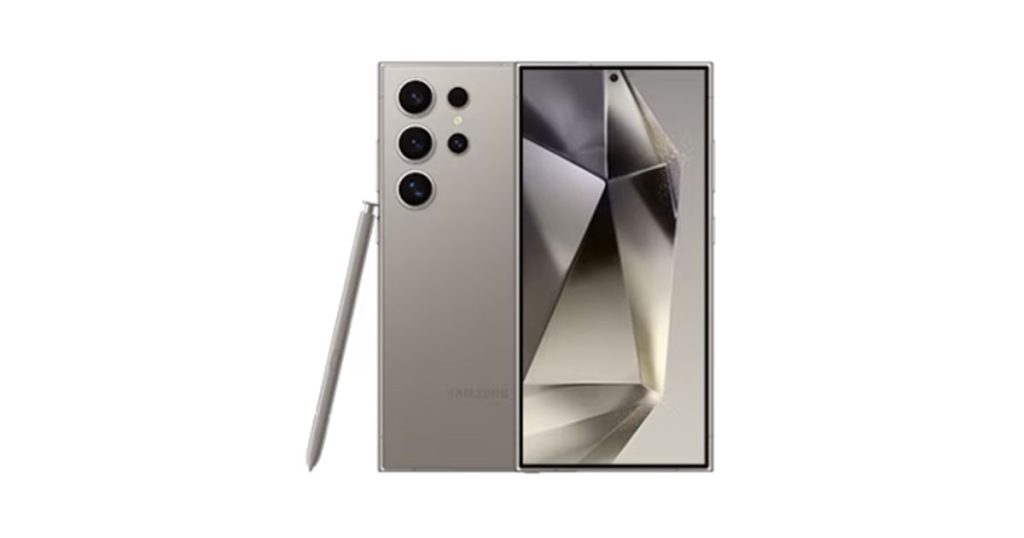
The Kroean giant has discounted its flagship smartphone, i.e., the Samsung Galaxy S24 Ultra, by $350 and the Galaxy Watch 7 by $75. Meanwhile, interested users can also enjoy a discount of $60 on the Galaxy Buds 3 Pro. Moreover, there are enjoyable discounts across the fleet of whole Galaxy smartphones on the eve of Christmas.
Samsung Galaxy S24 Ultra with 12 GB RAM and 256GB storage is currently retailing for the price of $1000, while the 512GB storage variant is on sale for $1070 via Amazon US. However, the Galaxy Watch 7 Bluetooth Variant 40mm is on sale for $232, while the 44mm is retailing for $255 at Amazon. If you want to grab cellular functionality, then you need to shell $275 for 40mm and $305 for 44mm.
Both the deals are purely value for money, and the interested folks can maximise their savings to grab these at such a discounted price.
Apart from these popular items, Samsung is offering a $60 discount and a $20 gift card on the purchase of Samsung Galaxy Buds 3 Pro. With the discount, the interested users can grab it for the final price of $190.
These discounts will continue till Christmas; however, it is better to grab now, as the Galaxy S25 series is on its way. Samsung may discontinue the Galaxy S24 Series after the new flagship debuts.
Samsung Galaxy S24 Ultra and Galaxy Watch 7 Specifications
Samsung Galaxy S24 Ultra features a 6.8-inch Dynamic AMOLED 2X display with a 1440×3120 resolution, Snapdragon 8 Gen 3 chipset, 5000mAh battery, and quad-camera setup with a 200MP main sensor. Meanwhile, the Samsung Galaxy Watch 7 boasts a 1.5-inch Super AMOLED display, Exynos W1000 chipset, a 425mAh battery, and advanced health tracking sensors.
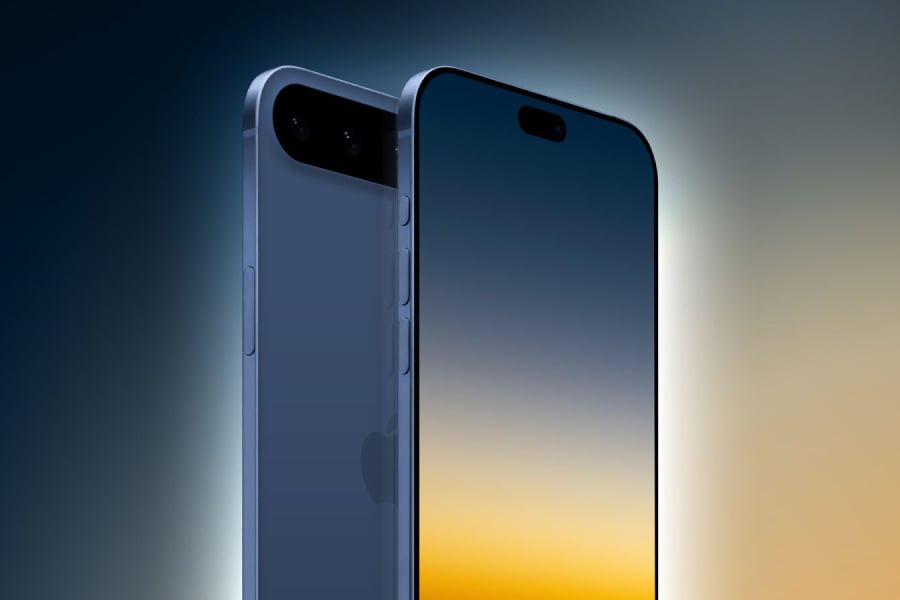
Apple is reportedly gearing up to introduce a new model in its iPhone lineup, the iPhone 17 Air, which is expected to replace the current Plus model. According to supply chain sources via DigiTimes, the iPhone 17 Air has entered the New Product Introduction (NPI) phase at Foxconn. The iPhone 17 Air’s entry into the NPI phase signifies the beginning of its journey toward production. This phase involves close collaboration between Apple and its suppliers to assess the feasibility of the design and manufacturing methods.
iPhone 17 Air to sport a super-slim design
iPhone 17 Air mock render
The NPI is a critical stage that transitions the product from concept to mass production, starting with design validation, prototype testing, and supplier qualification. The process also involves developing manufacturing methods, pilot production runs to test assembly and quality control, and aligning logistics with the supply chain to ramp up to full-scale manufacturing. Small design adjustments may still occur to align with manufacturing capabilities and cost considerations.
The iPhone 17 Air is said to arrive with a significantly slimmer design compared to its predecessors. Reports suggest it will be about two millimeters thinner than the current iPhone 16 Pro. In terms of size, it is expected to fall between the iPhone 17 Pro and 17 Pro Max, with display size rumors ranging from 6.55 inches to 6.65 inches.
One of the most notable changes is the anticipated inclusion of Apple’s custom-designed 5G modem chip, which is smaller and more integrated with other Apple components, aiming to save space without compromising battery life or display quality. Additionally, the rear camera is expected to be relocated to the center of the device, featuring a single 48-megapixel lens in a large, centered camera bump.
Set to debut next year alongside the standard iPhone 17, iPhone 17 Pro, and iPhone 17 Pro Max, the iPhone 17 Air represents a significant shift in Apple’s smartphone lineup. As it progresses through the NPI phase, its potential to replace the Plus model reflects Apple’s ongoing efforts to innovate and streamline its product offerings.
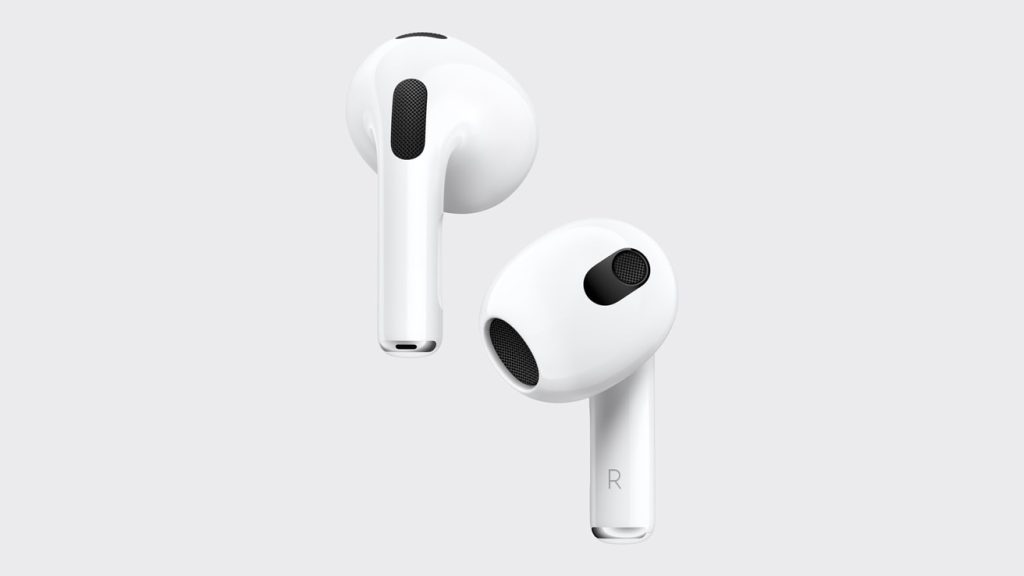
Wireless earbuds have become the go-to audio solution for many, offering freedom from tangled wires and a sleek, modern look. From Apple’s AirPods to budget-friendly alternatives, they dominate the audio accessories market.
But as convenient as they may seem, wireless earbuds come with a host of downsides that often get overlooked. Let’s dive into why these tiny devices might not be the best investment.
The advent of aptX and LDAC codecs has raised the bar for wireless headphone sound quality. Yet, even these advancements can’t compete with the uncompressed clarity of wired earbuds. Bluetooth technology simply doesn’t have the bandwidth to deliver truly lossless audio.
With wired earbuds, the sound you hear is as good as the source itself. There’s no compression, no loss in detail, and no reliance on fancy codecs. For audiophiles—or anyone who values pristine sound quality—wired earbuds are the clear winner.
2. Delays in sound transmission
Due to decoding the digital buffering signal and converting it to analog, all wireless earbuds have a noticeable sound lag. Depending on the model, it ranges from 40 to 300 ms. Wired earbuds, on the other hand, generally do not have any noticeable delay in sound transmission.
Even if you don’t mind the lag when listening to music or watching videos, in dynamic video games, while working with sound, or when playing musical instruments, it’s a crucial factor. Using wireless earbuds for these purposes, alas, will not work.
3. Connection instability
Bluetooth models are susceptible to interference because they rely on radio. This can manifest itself in stuttering audio, an inability to connect, or occasional loss of connection in crowded areas or when there is a source of interference nearby.
Even the most budgeted wireless earbuds can stutter if you simply put your phone in the back pocket of your jeans. All this is the price for the lack of a cable. Wired devices have none of this and can be used anywhere without problems. The connection is extremely reliable.
4. Less compatibility
Wireless earbuds rely entirely on Bluetooth connectivity. While this might cover most modern devices, there are glaring exceptions. Want to connect to a PC without Bluetooth? Or maybe a PlayStation console, a guitar amp, or an older audio system? You’re out of luck.
Wired headphones, however, are universal. As long as there’s a headphone jack—or even an adapter—you’re good to go.
5. Need for charging
Unlike wired headphones, which work as long as your device has power, wireless earbuds depend on their own internal batteries. These batteries typically last only a few hours per charge, and their lifespan diminishes over time.
After a year or two, you’ll likely find yourself charging them more often, which is not only inconvenient but also a clear sign of the device’s limited lifespan. Add the charging case into the mix—another battery that needs care—and it becomes a cycle of constant maintenance.
6. Fragile and Hard to Repair
Wireless earbuds might look sleek, but their complex internals make them inherently fragile. Batteries are usually the first component to fail, often within a couple of years. Replacing them isn’t just difficult—it’s often impossible.
In contrast, wired headphones are far simpler. The most common point of failure, the cable or plug, is relatively easy to repair. They’re also more durable, surviving drops and rough handling much better than their wireless counterparts.
7. Risk of losing one earphone
True wireless earbuds (TWS) bring an added risk: losing one of them. Whether it slips out during a jog or vanishes into a couch cushion, a lost earbud is more than just an annoyance—it’s costly. Without its counterpart, the remaining earbud is essentially useless.
Spare earbuds, if available, aren’t cheap. More often than not, losing one means replacing the entire set, making wireless earbuds a risky investment.
8. High price
Even as wireless earbuds become more widespread, they remain pricier than comparable wired options. The reason is simple, more components mean higher costs.
Wired headphones, with their straightforward design, are not only cheaper but also offer better value for the money. Their prices have even dropped further to stay competitive in a wireless-dominated market. If you’re on a budget or simply want the best bang for your buck, wired is the way to go.
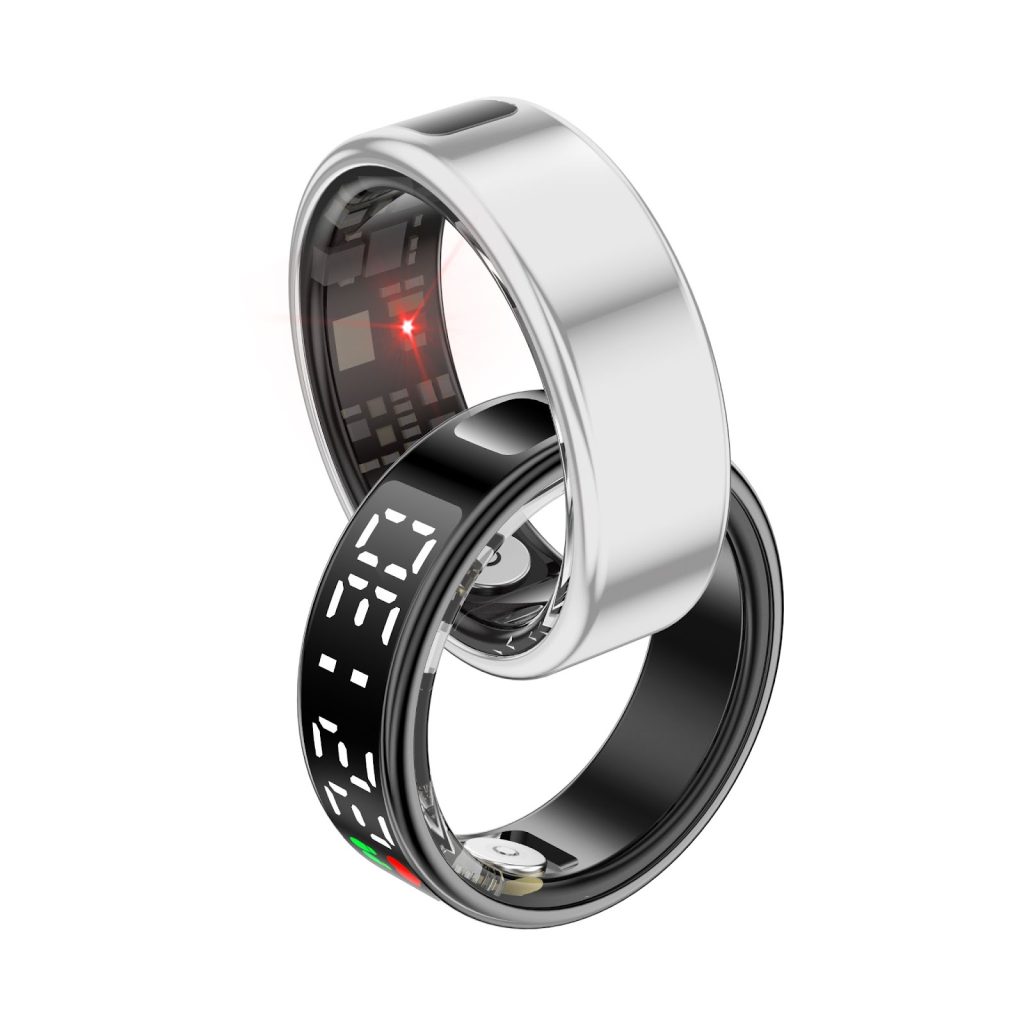
Rogbid, a brand that specializes in products like smartwatches, smart rings, and accessories, has launched a new smart ring dubbed the Rogbid SR08 Ultra. This product is noteworthy for being the world’s first smart ring with a display. Read on to find out what’s in store for buyers of the SR08 Ultra.
Rogbid SR08 Ultra key specifications
Rogbid SR08 Ultra
The Rogbid SR08 Ultra has a titanium alloy casing and is designed to be quite durable with a 5 ATM waterproof rating, meaning it can withstand being submerged in water up to 50 meters deep. The ring measures 8.0 mm in width and 2.5 mm in thickness, weighing just 4 grams.
One of its major highlights is the built-in OLED display with a touch-sensitive interface, something not commonly seen in smart rings. Tapping the display provides information on time, step count, heart rate, blood oxygen, and sleep tracking. It offers comprehensive activity tracking, including steps, activity time, walking distance, calories burned, and workout data.
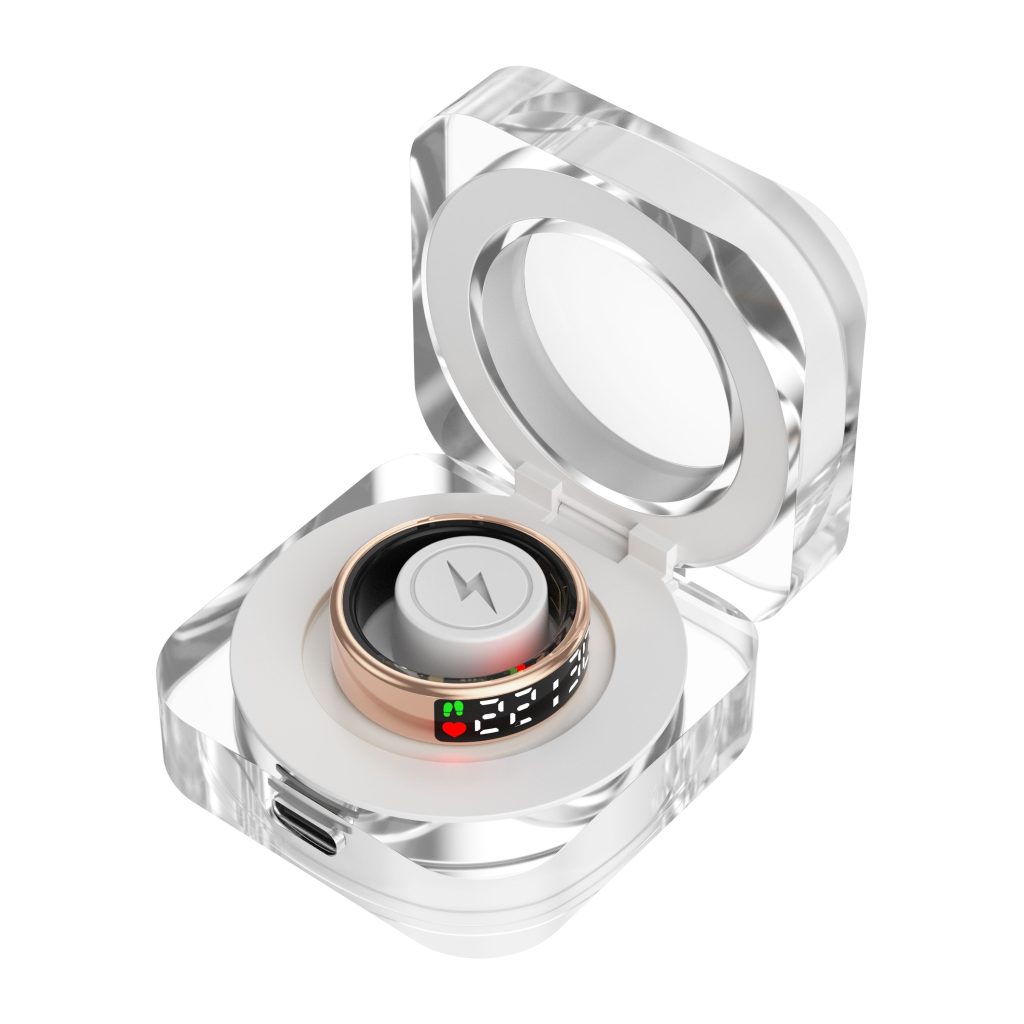
The SR08 Ultra’s GPS tracking function records exercise routes. It is compatible with iOS and Android through a dedicated app, offering a multilingual interface. Users can track health data, set goals, and receive reminders to stay active through the companion app. The ring offers a battery life of 3 to 5 days, extendable to 20 days with the included charging case.
Rogbid SR08 Ultra with charging case
If you’re interested in a wearable that combines health and fitness tracking with communication features in a compact form, the Rogbid SR08 Ultra might be worth a closer look. Just be sure to temper expectations given the inherent limitations of current smart ring technology.
Rogbid SR08 Ultra price
The Rogbid SR08 Ultra smart ring comes in multiple sizes, specifically 7, 8, 9, 10, 11, and 12, which are standard US ring sizes. Priced at $89.99, it is available in shades such as gold, silver, and black. It comes in a limited-edition New Year gift box, with a one-year warranty and free replacements for quality issues when purchased from the official online store.
Realme will be launching the Realme 14x 5G on December 18 in India. At the same time, the brand is reportedly working on the Realme 14 Pro series of smartphones for multiple markets, including China. Recently, a Realme 14 Pro series phone was spotted on the 3C certification platform in China. Now, the alleged Realme 14 Pro has emerged in 3C’s database, revealing its fast charging capabilities. The 3C approval of the Realme 14 Pro and 14 Pro+ suggests that both phones may debut in China by the end of this month or by early January.
Realme 14 Pro+ 3C certified
Realme 14 Pro+ 3C certification
The above screenshot reveals that an upcoming Realme phone for the Chinese market with model number RMX5050 has been approved by the 3C certification platform in China. The phone has been spotted with an 80W fast charger, suggesting that it could be the Realme 14 Pro+.
While the Chinese variant has the RMX5050 model number, it appears that its global version has the RMX5051 model number. It appears the Realme RMX5055 model, which was recently certified by the 3C authority, could be the Realme 14 Pro. The certification revealed that the device will support 45W fast charging.
Realme has already confirmed that the Realme 14 Pro+ will feature the Snapdragon 7s Gen 3 chipset and a 3x periscope telephoto camera. A new leak, courtesy of tipster Digital Chat Station, reveals that its rear camera setup will feature a 50-megapixel primary camera with a 1/1.56-inch camera sensor size, an 8-megapixel ultra-wide camera, and a Sony IMX882 50-megapixel periscope telephoto camera with 3x optical zoom. Other sources have claimed that it will have an LYT-701 primary camera and an IMX355 ultra-wide snapper. For selfies, it may feature a 32-megapixel front-facing camera.
The tipster further revealed that the OLED panel of the Realme 14 Pro+ will have a quad-curved design with equal-sized bezels and a short-focus in-screen fingerprint sensor. The leak also states that the device will continue to feature a plastic middle frame. Unfortunately, the leak has no information about the battery size and configurations of the 14 Pro+.
The Xiaomi 15 Ultra will be Xiaomi’s next major phone for the Chinese market. The device has already received 3C certification, indicating that it will launch in the first quarter of 2025. To be precise, the 15 Ultra is expected to launch after the 2025 Chinese New Year, which means it may debut in February in China. To recall, the Xiaomi 14 Ultra’s Chinese variant packed a 5,300mAh battery, whereas its global version came with a slightly smaller 5,000mAh battery. A new leak suggests that Xiaomi may have significantly increased the 15 Ultra’s battery capacity.
DCS hints increased battery size on the Xiaomi 15 Ultra
In a previous leak, reliable tipster Digital Chat Station expressed dissatisfaction with the battery size of the Xiaomi 15 Ultra’s engineering prototype. However, in a new leak, he claimed that the hardware shortcomings of an upcoming Snapdragon 8 Elite phone have been addressed without specifying its name. Chinese publications are speculating that the company may have resolved the battery size issue of the 15 Ultra by offering the largest battery ever on a Xiaomi flagship.
To recall, the Xiaomi 14 Pro from last year featured a 4,880mAh battery, whereas the 14 Ultra (Chinese variant) came with a 5,300mAh battery. To put into context, the Xiaomi 15 Pro houses a massive 6,100mAh battery, which indicates that the 15 Ultra may offer a larger or at least the same-sized battery as the 15 Pro.
The 3C certification of the device suggests that the 15 Ultra may support 90W fast charging. In addition, it may also offer 50W wireless charging support. With a couple of weeks remaining before the 15 Ultra’s launch, it is likely that the rumor mill will provide more accurate leaks about its battery size and other specifications. Therefore, it is advisable to wait for further updates.
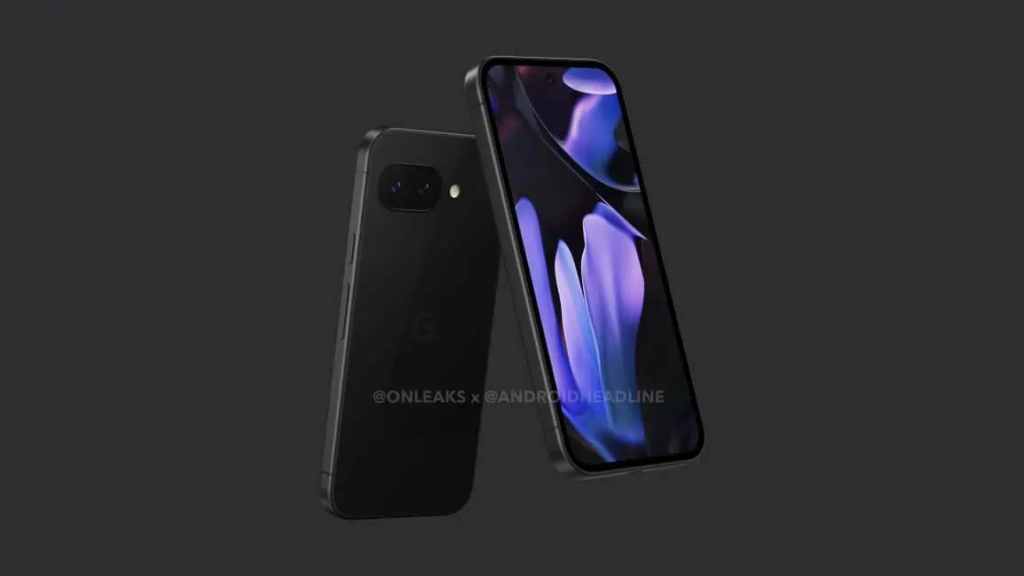
Google’s Pixel 9a is anticipated to launch in a few months, with earlier reports hinting at a mid-March 2025 release. Ahead of its debut, a new report from AndroidHeadlines has unveiled key details about the device.
Pixel 9a expected features
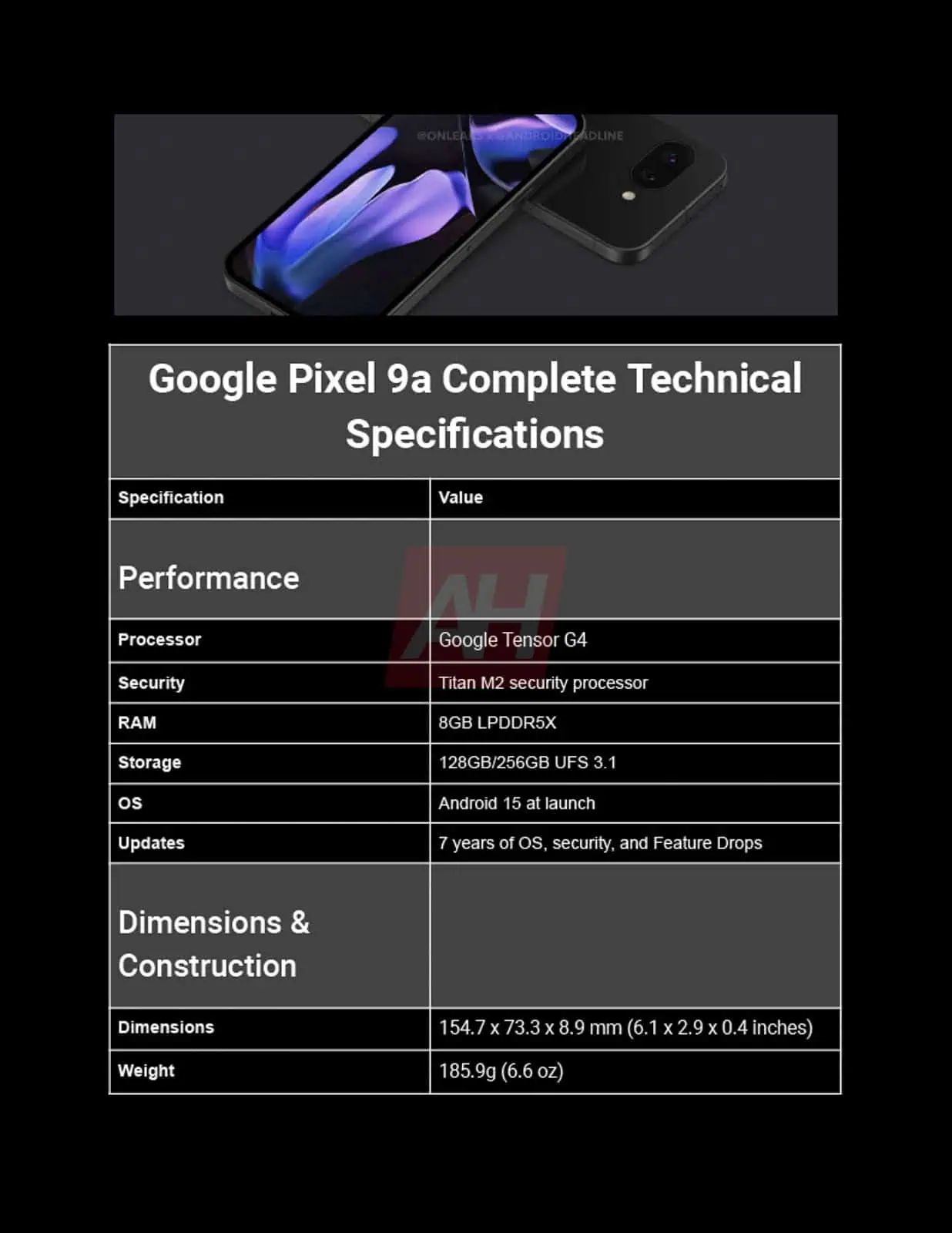
As per the AndroidHeadlines report, citing a wireless carrier source and an undisclosed second source, the Pixel 9a will be powered by Google’s in-house Tensor G4 processor, which debuted earlier this year on the Pixel 9 series smartphones. This powerful chipset, coupled with 8GB of LPDDR5X RAM, will ensure smooth multitasking and efficient app performance. The device will be available in two storage configurations: 128GB and 256GB, both utilizing UFS 3.1 storage for fast data transfer speeds.
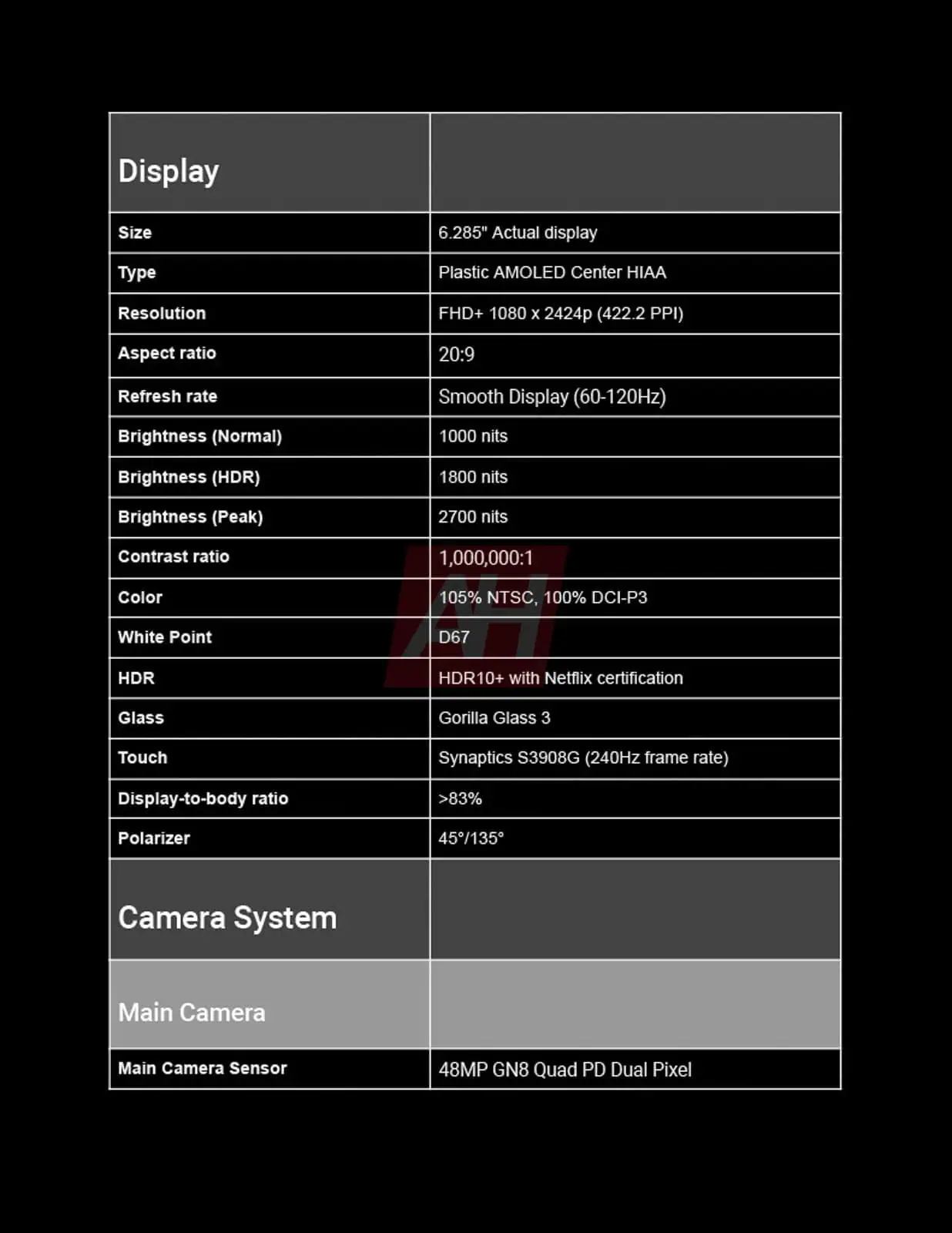
The Pixel 9a will feature a 6.285-inch OLED display that delivers stunning visuals with a peak brightness of 2,700 nits and an HDR brightness of 1,800 nits. The device retains the iconic Pixel design language, with a sleek and minimalist aesthetic.
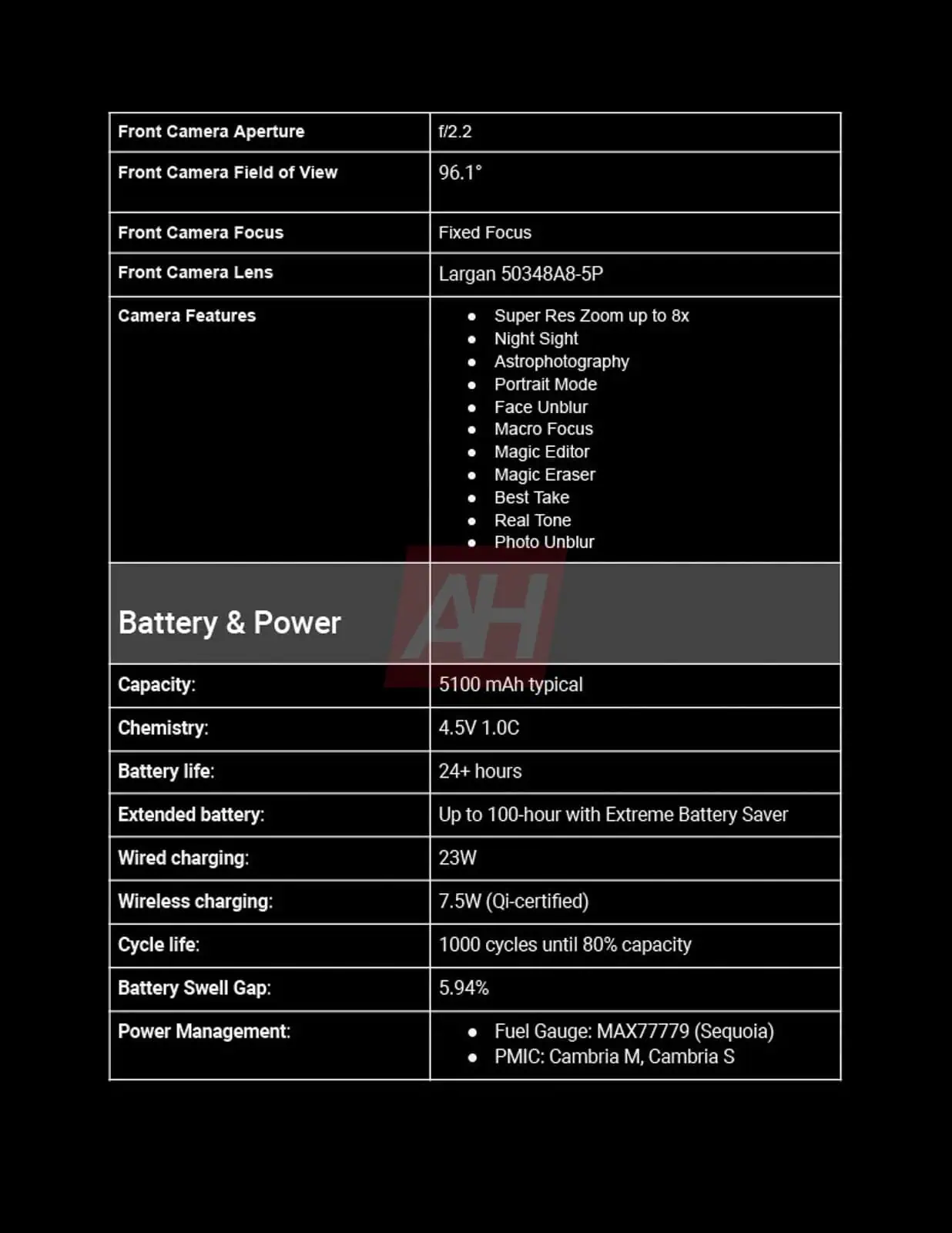
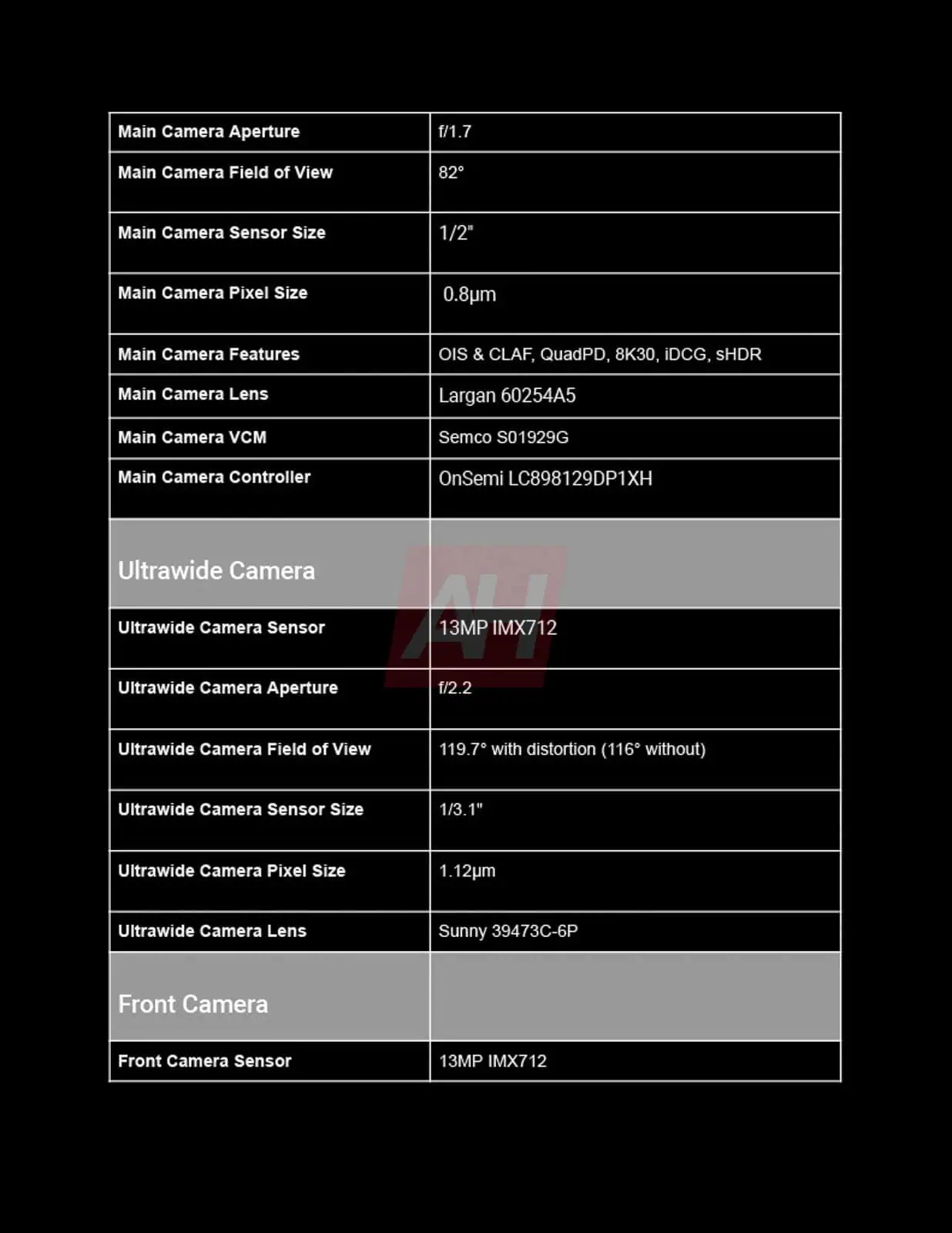
The rear camera setup is said to include a 48MP primary sensor (f/1.7) and a 13MP ultrawide lens, supported by Google’s computational photography tools like Night Sight and Magic Eraser for improved image quality. The front-facing 13MP camera uses a Sony IMX712 sensor for detailed selfies, with software optimizations enhancing portrait and video modes.
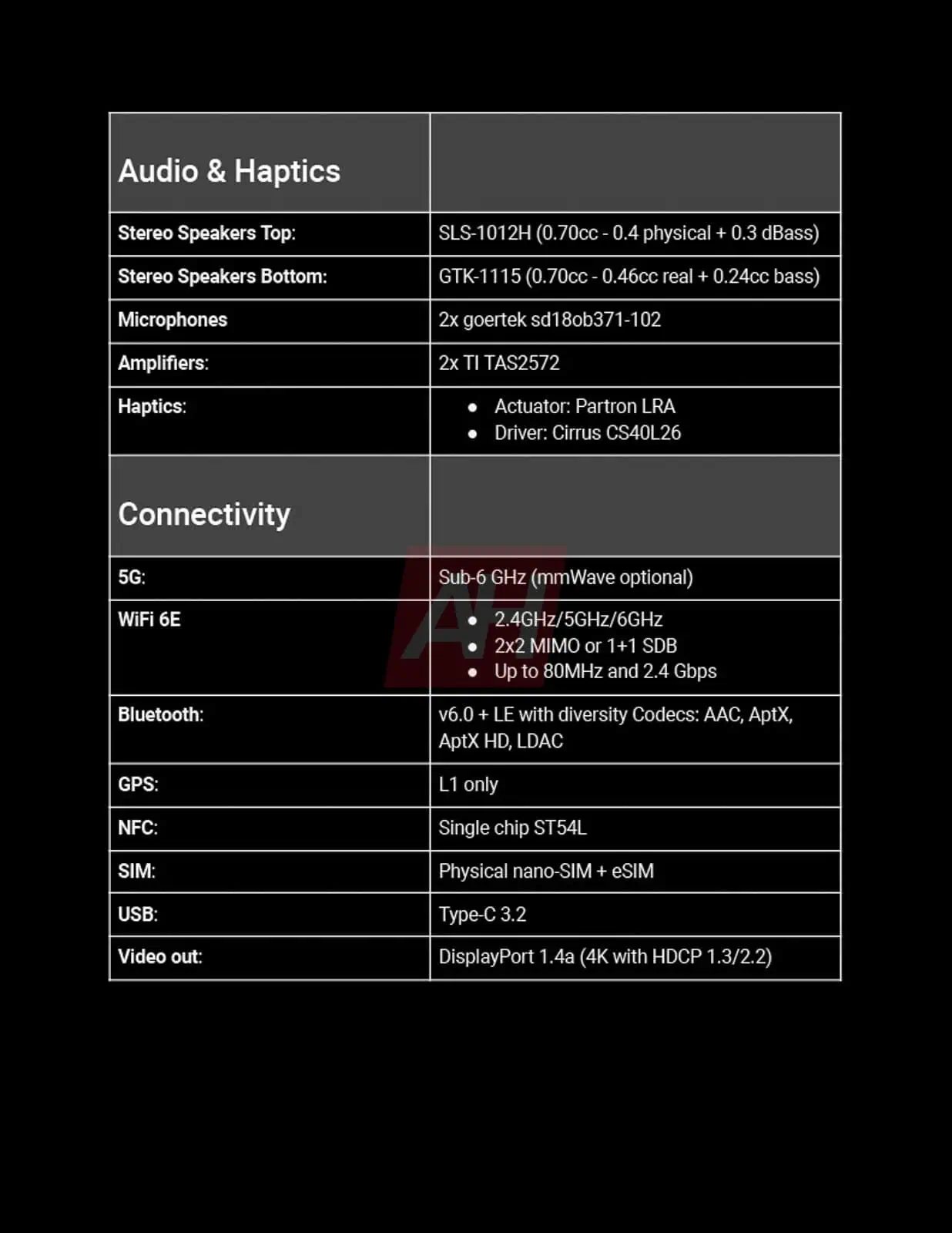
The Pixel 9a will pack a 5,100mAh battery, a significant upgrade from its predecessor. This larger battery, combined with efficient power management, should deliver excellent battery life. The device will also support 23W wired charging. While wireless charging is limited to 7.5W, it’s still a convenient option for overnight charging.
The phone will also come with a Titan M2 security chip, ensuring secure data protection and boot processes. Additionally, the device will be IP68-rated for water and dust resistance, making it durable enough to withstand accidental spills and splashes.
Pricing and Availability
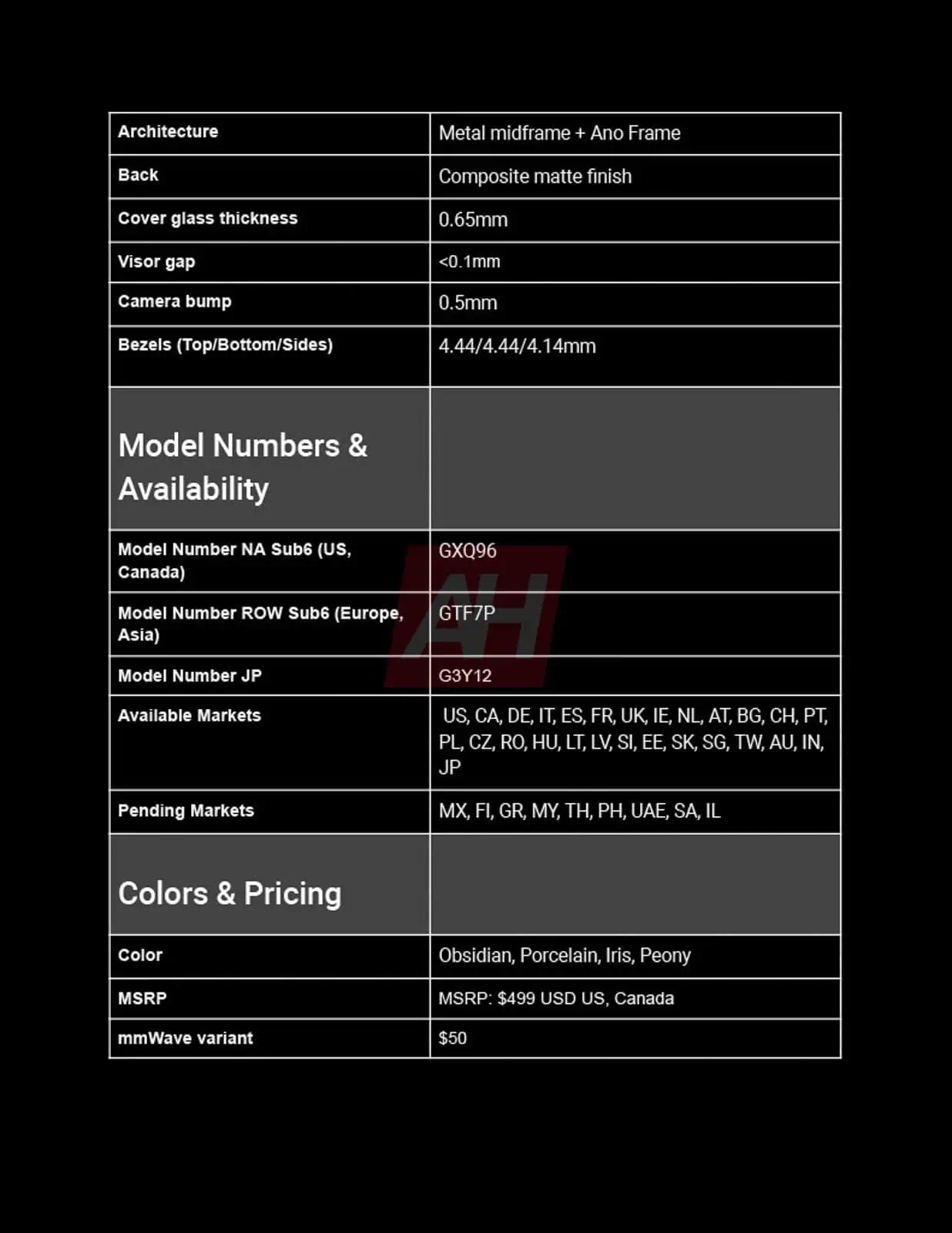
The Pixel 9a will allegedly start at $499 for the 128GB model, with a Verizon-exclusive mmWave variant available for $549. Color options will include Obsidian, Porcelain, Iris, and Peony.
This week, Poco will unveil the Poco M7 Pro 5G and the Poco C75 5G smartphones in India. It appears that the brand is also prepping the Poco X7 series of smartphones for different markets. The existence of devices like the Poco X7 Neo, the Poco X7, and the Poco X7 Pro have already emerged in recent reports. A fresh development reveals that the X7 Pro will also have a special edition model.
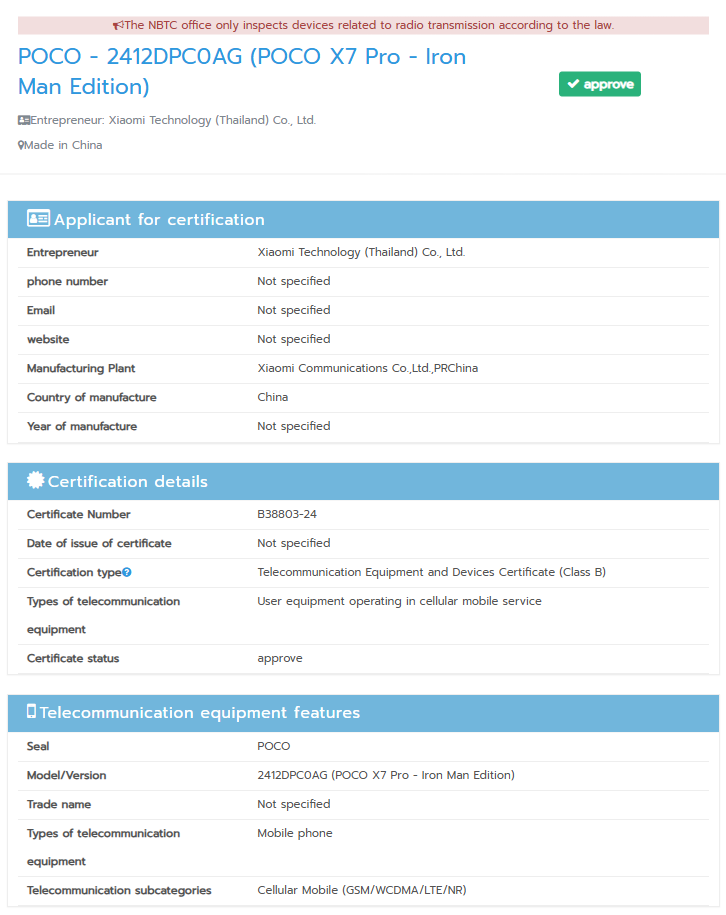
Poco X7 Pro, X7 Pro Iron Man Edition certified in Thailand
Poco X7 Pro NBTC listingPoco X7 Pro Iron Man Edition NBTC listing
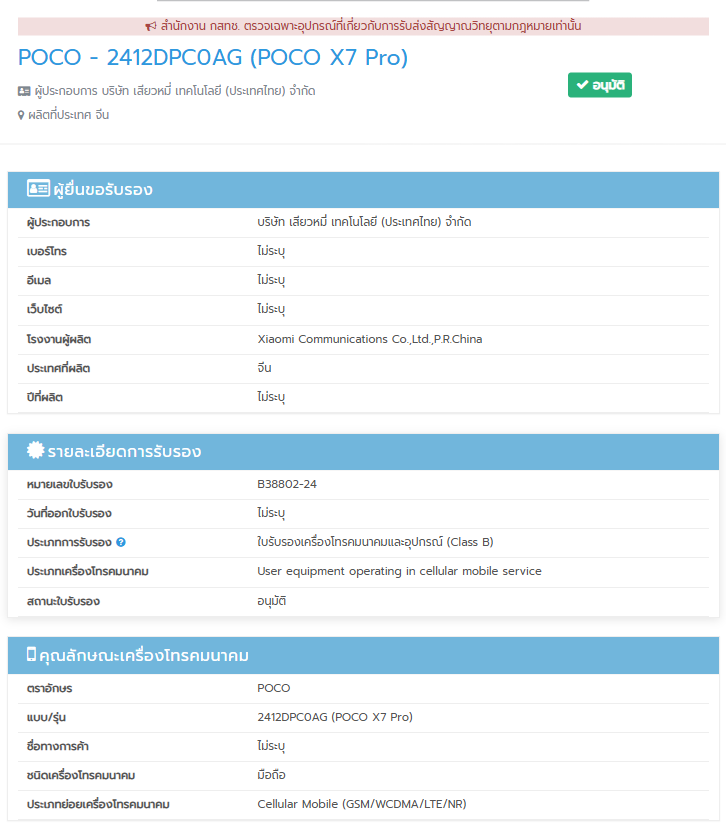
Thailand’s NBTC authority has approved the Poco X7, X7 Pro, and the Poco X7 Pro Iron Man Edition, as seen in the images above. Both devices have the same 2412DPC0AG model number.
Both devices are likely to pack the same specs, but the Iron Man Edition may offer more RAM and storage. There’s a possibility that it could be a limited-edition phone equipped with an Iron Man-themed UI, accessories, and a special package.
The Poco X7 Neo and X7 have both emerged on Geekbench’s database, revealing that these devices could be powered by the Dimensity 7025-Ultra and Dimensity 7300-Ultra chipsets, respectively. Therefore, these Poco phones could be rebranded, or slightly tweaked versions of the Redmi Note 14 5G and the Redmi Note 14 Pro 5G.
To recall, the Redmi K70e debuted as the world’s first Dimensity 8300 phone in China in November 2023. This device was rebranded as the Poco X6 Pro globally. It is speculated that the upcoming Redmi Turbo 4 for the Chinese market could be the first-ever phone to feature the forthcoming Dimensity 8400 SoC. Most likely, the Poco X7 Pro could be a rebranded version of the Turbo 4.
Now that the Poco X7 Pro models have received NBTC certification, it seems that the X7 series may go official in January in Thailand and other markets.
Lenovo has unveiled its latest offering in the mini PC market, the ThinkCentre Neo Ultra, designed to provide top-tier performance in a compact form factor. It is now up for purchase in China on JD.com. Let’s check out its key specs.
ThinkCentre Neo Ultra Specifications
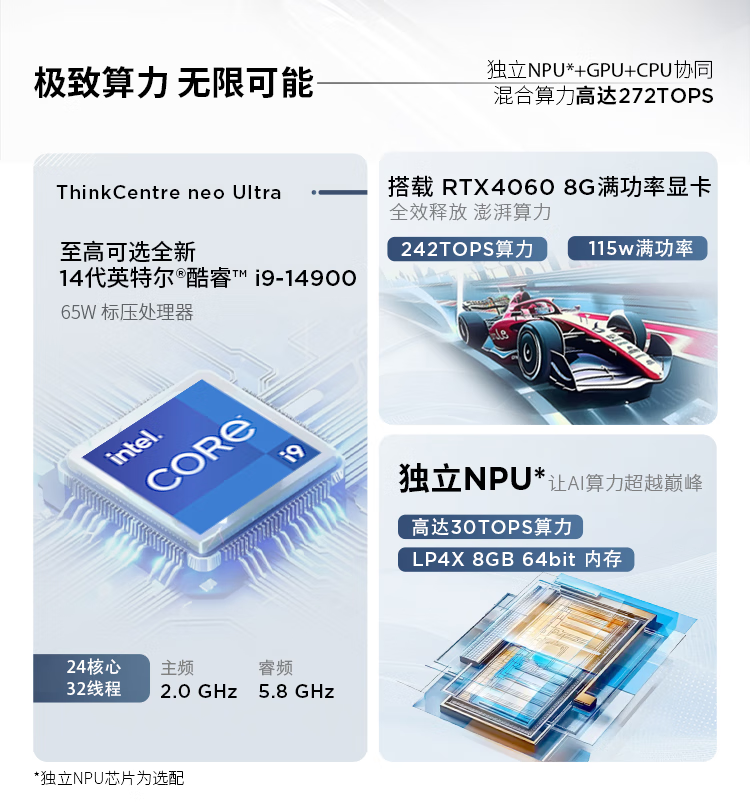
The ThinkCentre Neo Ultra mini PC boasts impressive hardware, including options for the 14th Generation Intel Core i5-14500, i7-14700, and a forthcoming i9-14900 variant.
These processors deliver exceptional multitasking and high-performance capabilities, with the i7-14700 featuring up to 20 cores and 28 threads, and the i9-14900 packing 24 cores and 32 threads. These processors operate with a turbo boost clock speed of up to 5.8 GHz, making them ideal for complex computational tasks.
The system is paired with 32GB of DDR5 RAM and a 1TB M.2 PCIe Gen4 SSD for fast data access and ample storage. It also includes an NVIDIA GeForce RTX 4060 GPU running at 115W full power with 8GB GDDR6 VRAM, enabling seamless 3D rendering, ray tracing, and high-performance gaming.
For cooling and efficiency, it sports ICE 7.0 thermal management, featuring advanced turbine fans and triple-layer ice blades for effective heat dissipation. This cooling system maintains low noise levels while offering a 5% improvement in thermal performance over its predecessor.
For AI-intensive tasks, the Neo Ultra takes advantage of hybrid compute architecture, combining the power of the CPU with an optional independent Neural Processing Unit (NPU), delivering up to 30 TOPS of AI-specific compute power. This enables real-time processing of AI workloads, such as data analysis, local AI inference, and smart applications.
The device boasts a compact CNC-machined aluminum chassis with a built-in 350W power supply, offering durability and excellent thermal conductivity. It is loaded with multiple connectivity options, including USB 3.2, Type-C, HDMI 2.1, DP 1.4, and Wi-Fi 6E for seamless integration into any workflow. It supports up to 7 independent display outputs for multitasking efficiency.
Out of the box, the Neo Ultra runs on Windows 11 Home and comes pre-installed with Microsoft Office 2021.
Pricing and Availability
The Lenovo ThinkCentre Neo Ultra mini PC is now available for purchase on JD.com. Pricing starts at 12,986 yuan ($1,784) for the i5-14500 variant, while the i7-14700 version is priced at 15,499 yuan ($2,130).
In related news, Aoostar has introduced the Gem 12 Pro Max gaming mini PC, powered by the AMD Ryzen 7 8845HS processor and equipped with OCuLink connectivity for enhanced performance and expandability. Additionally, Aoostar has unveiled the Godx mini PC, featuring the high-performance AMD Ryzen 9 6900HX processor paired with a Radeon RX 6600 LE GPU.
HUAWEI has unveiled its latest smartphone series, the Nova 13, designed to elevate the mobile photography experience. The series, comprising the Nova 13 and Nova 13 Pro, offers a compelling combination of powerful hardware, innovative software, and stunning design.
The Nova 13 series features 60MP ultra-wide autofocus (AF) front cameras, delivering detailed and vibrant selfies. Huawei’s XD Portrait Engine enhances images by refining facial features, smoothing skin tones, and adjusting lighting. The Nova 13 Pro adds an 8MP close-up portrait camera with up to 5x digital zoom, ideal for close-up portraits and macro shots.
2. Rear Camera Capabilities
Both models feature 50MP primary cameras with a physical variable aperture (f/1.4~f/4.0) and an RYYB sensor for improved low-light performance and accurate color capture. An 8MP ultra-wide macro camera and a 10-channel color temperature sensor complement them. The Nova 13 Pro includes a 12MP telephoto portrait camera with optical image stabilization (OIS), enabling high-quality bokeh effects and lossless zoom.
3. Displays and Design
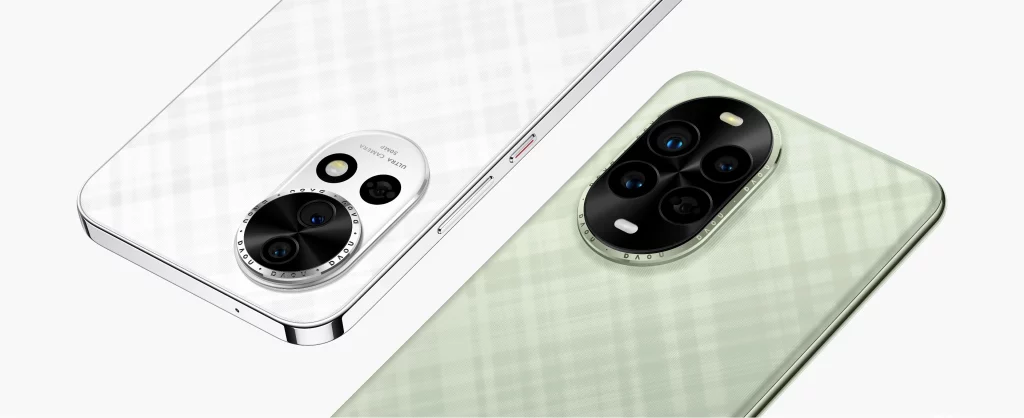
Huawei Nova 13 (left) and Huawei Nova 13 Pro (right)
The Nova 13 has a 6.7-inch Full HD+ OLED display with a 120Hz refresh rate, while the Nova 13 Pro offers a 6.76-inch LTPO OLED display that adjusts refresh rates between 1Hz and 120Hz to balance performance and power efficiency. Both models feature a sleek design with Huawei’s dynamic plaid texture, available in Loden Green, White, and Black.
4. Performance and Battery
Powered by EMUI 14.2, the Nova 13 series provides a smooth user experience. Both models come with a 5000mAh battery and support 100W Huawei SuperCharge for fast and efficient charging.
5. Pricing and Availability
The Nova 13 starts at AED 1699 (approximately USD 462), while the Nova 13 Pro is priced at 549 Euros (approximately USD 574) for the base model and 699 Euros (approximately USD 731) for the higher-end version. The Nova 13 series is set to launch in the UAE in January 2025, with availability in other regions, such as Mexico, already underway.
If you are an iPhone user, chances are you’ve already experienced the perks of Apple’s ecosystem. From seamless communication through iMessage to effortless file sharing with AirDrop, and continuity features that let you transition between devices, it’s all designed to work together.
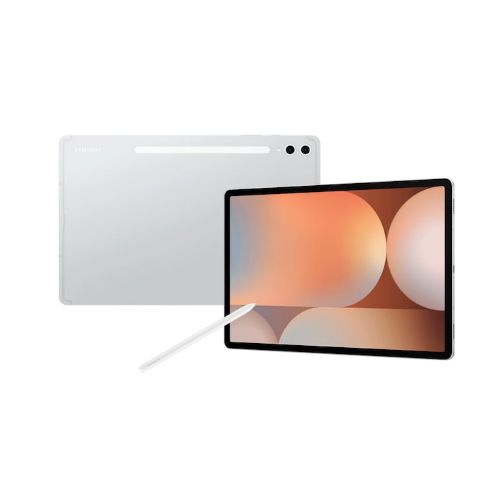
But what happens if you step outside this bubble? Say, by pairing an iPhone with an Android tablet from Samsung. Like the flagship Galaxy Tab S10 Ultra. At first glance, it might seem like a solid alternative to the iPad. It’s powerful, packed with features, and it’s also more affordable than Apple’s top-of-the-line iPad Pro M4.
Yet, the experience might fall short when you pair it with an iPhone. There are several reasons for this. And no, this isn’t about Android vs. iOS or Samsung vs. Apple. It’s about compatibility, user experience, and the compromises you’ll face. Let’s break it down.
Apple’s iMessage isn’t just a messaging app; it’s a central pillar of Apple’s ecosystem. If you own an iPhone, chances are you rely heavily on iMessage to communicate with friends and family. Add a Galaxy Tab to the mix, and you’re immediately cut off from this convenience.
Unlike iPads, Galaxy Tabs don’t support iMessage. Sure, there are workarounds like forwarding texts to your Android tablet, and Apple now supports RCS messaging as well. But it’s not like the native solution, to say the least. For group chats or conversations that rely on iMessage-specific features—like reactions, shared media, and location sharing—you’ll quickly feel the limitations or differences.
2. File Sharing Frustrations
One of Apple’s biggest strengths is AirDrop. It allows quick file sharing across iPhones, iPads, and Macs. Whether you’re sending photos, videos, or documents, AirDrop works seamlessly without relying on third-party apps or cloud uploads.
Unfortunately, Galaxy Tabs lack anything comparable to iPhones. Samsung’s Quick Share is a great feature for Android and Galaxy devices but doesn’t extend to iOS. If you want to share files between your iPhone and a Galaxy Tab, you’ll need to rely on cloud services like Google Drive or OneDrive, which introduces extra steps and also eats up your internet bandwidth.
3. App experience
Apple and Google both offer extensive app libraries for large screens, but it’s not hard to say that the Android tablet app experience lacks the polish of Apple iPads.
Apple has iPadOS specifically designed for tablets and takes a more focused approach to screen sizes and form factors. In contrast, Android tablets often feel like oversized smartphones with minimal optimization for larger screens.
Apple also works diligently to build a rich library of apps tailored just for iPads. Apps like Final Cut Pro and DaVinci Resolve leverage the larger screen for productivity. This positions iPads as powerful tools for work, whereas Android tablets appear less focused on productivity.
4. The Continuity Problem
Apple’s ecosystem is all about continuity. Features like Handoff allow you to start tasks on one device and finish them on another. For instance, you can begin writing an email on your iPhone and pick it up instantly on your iPad. Similarly, the Universal Clipboard lets you copy something on one Apple device and paste it on another.
With a Galaxy Tab, you lose access to these conveniences. While Samsung has its own ecosystem features, like linking Galaxy devices to Windows PCs or using Samsung Flow, they don’t extend to iPhones. Switching between your iPhone and Galaxy Tab will feel disjointed in comparison.
5. Accessory Challenges
If you’ve invested in Apple accessories like the Apple Pencil, Magic Keyboard, or AirPods, they work effortlessly with an iPad but not with a Galaxy Tab. Although the Galaxy Tab supports alternatives like the S Pen and various keyboards, these won’t integrate as seamlessly with your existing Apple setup.
AirPods, for example, can technically pair with a Galaxy Tab, but you’ll lose features like automatic device switching and spatial audio optimization, both of which shine within Apple’s ecosystem.
6. When a Galaxy Tab Might Work
This isn’t to say Galaxy Tabs are inherently bad. In fact, Galaxy S-series tablets are some of the best Android tablets on the market, with vibrant AMOLED displays, excellent multitasking capabilities, and robust hardware. But they’re designed with Android and Samsung users in mind.
If you’re someone who already owns other Galaxy devices or prefers Android’s customization options, the Galaxy Tab makes sense. However, for iPhone users accustomed to Apple’s ecosystem, the transition won’t be seamless—and that’s the crux of the problem.
7. Why Stick to an iPad
If you’re set on adding a tablet to your Apple-dominated setup, an iPad is the obvious choice. Whether it’s the entry-level iPad or the high-end iPad Pro, Apple’s tablets integrate perfectly with iPhones.
With features like iCloud syncing, shared subscriptions, and seamless accessory support, an iPad will feel like an extension of your iPhone rather than a separate device. You’ll also enjoy better resale value, as Apple products tend to hold their worth longer than most Android devices.
8. Final Thoughts
Buying a tablet is about more than just specs. It’s about how well it fits into your existing setup and the experience it offers. If you use an iPhone, a Galaxy Tab might feel like an awkward mismatch. It might force you to work around limitations rather than enjoy seamless integration.
Sure, a Galaxy Tab might save some money or offer features that rival the iPad. But when compatibility, ecosystem, and long-term usability come into play, sticking with an iPad is the smarter choice.
Ultimately, it’s not about which device is “better.” It’s about choosing the right tool for the job—and in this case, an iPad is the clear winner for iPhone users.
Alongside the global launch of the Huawei Mate X6 and FreeBuds Pro 4, the brand has also launched the FreeClip earbuds in a new Rose Gold Edition. This new color variant offers a refined and sophisticated aesthetic, making it an attractive option for consumers seeking stylish audio accessories.
The Rose Gold Edition retains the core features of the FreeClip series, such as a comfortable open-back design, high-quality audio output, and advanced noise cancellation. Its 10.8mm dual-magnet high-sensitivity driver delivers clear sound, while the dynamic bass algorithm enhances bass performance.
The earbuds feature AI Crystal-Clear Calls technology, which uses a multi-channel deep neural network algorithm to reduce background noise, ensuring clear voice calls even in busy environments.
The Rose Gold Edition offers up to 36 hours of battery life on a single charge, minimizing the need for frequent recharging. The charging case supports fast charging for quick power-ups.
Additional features include audio sharing, seamless dual-device connections, and drop reminders. The earbuds also have touch controls for managing playback, calls, and voice assistant functions with ease.
Pricing & availability
Like other color options of the FreeClip earbuds, the Rose Gold Edition is expected to carry a price tag of €169, however, it is currently going for €199 on Amazon Germany. The brand has also launched the Huawei FreeBuds Pro 4 globally with a €199 price tag. It offers 2.3 Mbps transmission and 48kHz/24-bit lossless audio. The earbuds include an 11mm dynamic driver, a micro-planar tweeter, advanced noise cancellation with ANC, and a voice-transparent mode.
We use cookies on our website to give you the most relevant experience by remembering your preferences and repeat visits. By clicking “Accept”, you consent to the use of ALL the cookies.
This website uses cookies to improve your experience while you navigate through the website. Out of these, the cookies that are categorized as necessary are stored on your browser as they are essential for the working of basic functionalities of the website. We also use third-party cookies that help us analyze and understand how you use this website. These cookies will be stored in your browser only with your consent. You also have the option to opt-out of these cookies. But opting out of some of these cookies may affect your browsing experience.
Necessary cookies are absolutely essential for the website to function properly. This category only includes cookies that ensures basic functionalities and security features of the website. These cookies do not store any personal information.
Any cookies that may not be particularly necessary for the website to function and is used specifically to collect user personal data via analytics, ads, other embedded contents are termed as non-necessary cookies. It is mandatory to procure user consent prior to running these cookies on your website.