Advertisement

Here’s our first look at the Huawei Mate 70 series’ back design

Huawei launched the Mate 60 series in China at the end of August last year. Given this timeline, it’s expected that the company would reveal the successor around this time. However, Weibo tipster Digital Chat Station previously claimed that the launch of the successors might be delayed, potentially occurring in mid-to-late Q4 this year.

In the latest leak, images of the back panels of the upcoming devices have been exposed, which reveals some changes in the camera layout.

As you can see from the image, the Mate 70 series will come with a similar camera module. However, it appears that the company has changed the placement of the different camera sensors. For example, a large cutout can be seen on top of the camera module (where the flash module was on the predecessors). This means that one of the camera sensors is relocated to the top of the camera island.

You can also notice an octagonal camera module in the images, which likely represents the Mate 70 RS Ultimate. Notably, the octagonal camera island in the leaked image has even sharper angles as compared to the octagonal camera island of the Mate 60 RS Ultimate.

In terms of hardware, the Huawei Mate 70 series is expected to be equipped with a new generation of Kirin chips. The series may adopt the three-punch home camera design on the front, 3D face recognition technology.

The upcoming Mate series devices could be the first to equip the HarmonyOS NEXT operating system. For those unfamiliar, HarmonyOS NEXT is expected to be a new breakthrough for Huawei in the software ecosystem.

(Via)

Marshall Unveils Upgraded Emberton III & Willen II Speakers with Extended Battery Life

Marshall has expanded its portable speaker lineup with the release of the Emberton III and Willen II, which offer upgrades over their predecessors.

Marshall Emberton III

The Emberton III, following the Emberton II, includes Dynamic Loudness technology that adjusts sound output based on volume levels. The battery life has been extended to 32 hours, an improvement from the previous model. It also now has a built-in microphone for hands-free calling. The speaker maintains its rugged design with an IP67 dust and waterproof rating.

Marshall Willen II
Marshall Willen II

The Willen II is a smaller, portable option with similar enhancements. It offers improved sound quality and a battery life of up to 17 hours on a single charge. It also features a strap for easy carrying, a microphone for hands-free communication, and an IP67 rating for durability.

Both models include Bluetooth LE Audio technology, set to be activated through a future update. This technology will support Auracast, allowing multiple listeners to enjoy high-quality audio simultaneously.

The Emberton III and Willen II are made with premium materials and feature a refined user interface. Priced at $169.99 and $119.99 respectively, they are available for pre-order, with an official launch on August 26.

(Source 1, 2)

Honor to Unveil Its Thinnest Foldable, New Tablet, and Laptop Globally on September 5

Honor has officially confirmed that it will introduce several new products globally on September 5 at the HONOR IFA 2024 event in Berlin (2 pm CEST). The launch is just over two weeks away.

As mentioned in the title, the new products will include the Honor Magic V3 foldable smartphone, Manor MagicPad 2, and Honor MagicBook Art 14. The company will also introduce a couple of its latest innovations in AI to the global market at the event.

Honor Magic V3:

This book-style foldable is currently the thinnest in the market which is measured at only 9.2mm while folded. For context, the latest book-style foldable from Samsung is measured at 12.1 mm when folded. Alongside the slim form factor, this phone also offers an IPX8 dust and water-resistant rating, which is the same as the Google Pixel 9 Pro Fold.

The Honor Magic V3 also offers a breakthrough in performance with the Snapdragon 8 Gen 3 chip and 5150 mAh silicon anode battery. You can learn more about the performance and other aspects of the Honor Magic V3 here.

Honor MagicPad 2

Honor launched the MagicPad 2 tablet in China last month. It packs a 12.3-inch OLED display that offers a resolution of 3000 x 1920 pixels, 1600 nits of peak brightness, and a high refresh rate of 144Hz. This tablet is powered by the Snapdragon 8s Gen 3 SoC.

To make the product special, Honor offers a series of cutting-edge AI technologies such as AI voiceprint noise reduction, AI voice-to-text, and AI meeting minutes. You can learn more about the Honor MagicPad 2 here.

Honor MagicBook Art 14

This laptop was also launched in China in July of this year. The outer body is constructed of aerospace-grade materials, which makes it both lightweight and durable. It weighs only 1.03kg and is only 1 cm thick.

The MagicBook Art 14 equips a 14-inch 3.1K OLED touchscreen display that supports 120Hz refresh rate. It packs a 60Whr battery inside which is rated to offer 9.5 hours of battery life.

For wired connectivity, users get the following ports:

  • Thunderbolt 4
  • full-function USB-C port
  • USB-A 3.2
  • HDMI 2.1
  • 3.5mm headphone jack

Pricing:

The company has yet to reveal the pricing of the products for the global market.

(Source)

Snapdragon 8 Gen 4 to power ZTE Nubia Z70 Ultra, Nubia Flip 2, Red Magic 10 Series

Flagship smartphones powered by Qualcomm’s upcoming Snapdragon 8 Gen 4 chipset are expected to debut later this year. ZTE is also expected to utilize the cutting-edge processor for its own high-end devices. Additionally, a gaming tablet featuring another Qualcomm chipset is also in the pipeline.

ZTE Nubia Z60 Ultra Leading edition

1. ZTE Nubia Z70 Ultra, Flip 2, & Red Magic 10 series with Snapdragon 8 Gen 4

ZTE Snapdragon 8 Gen 4 Nubia Flip 2

In a recent exclusive report, our team revealed that ZTE is currently working on its next foldable phone, the Nubia Flip 2. We also covered a leak of the Nubia Z70 Ultra. Both of these devices are expected to be equipped with the Snapdragon 8 Gen 4. While these were just speculation, tipster Digital Chat Station’s latest tips also back these rumors.

He expected the Nubia Z70 Ultra, Nubia Flip 2, and even the Red Magic 10 series to come with this high end processor. The brand’s next gen smartphones will apparently launch with a new generation of high resolution under-display selfie cameras and large battery packs. It is unclear if this is true for multiple devices or one particular model. Another one of these smartphones will use a ceramic back cover, although we’re not sure of its brand.

2. Snapdragon 8 Gen 3 powered Gaming Tablets

DCS recently claimed that the Red Magic Gaming Tablet 3 is set to launch next year, which is a gaming tablet with the Snapdragon 8 Gen 4. But that’s not all, ZTE could be developing developing another gaming tablet that uses the current gen Snapdragon 8 Gen 3 as well. So this might have a more affordable price tag compared to the 8 Gen 4 powered variants. Unfortunately, finer details like the specs and design of these upcoming gadgets are still at large so stick around for more updates.

OnePlus Buds Pro 3 price revealed through MYNTRA listing ahead of launch

The OnePlus Buds Pro 3, set to launch on August 20th, had its specifications and pricing revealed through a listing on Myntra. This leak comes days after the Buds Pro 3 was spotted listed on Flipkart revealing its price.

OnePlus Buds Pro 3 MYNTRA

According to the Myntra listing, the OnePlus Buds Pro 3 will be priced at ₹13,999, with the possibility of a launch discount based on OnePlus’ pricing trends.

OnePlus Buds Pro 3 specs:

As per all the leaks and teasers, the earbuds focus on audio quality with a dual-driver setup and dual DACs for better bass and treble. They feature Hi-Resolution Audio certification and support for the LHDC 5.0 codec. OnePlus partnered with Dynaudio for sound tuning, aiming for high-quality audio.

Noise cancellation is rated up to 50dB, offering improved isolation. Enhanced voice cancellation technology is included for clearer calls. Battery life is up to 43 hours with the charging case. The earbuds are IP55-rated for dust and water resistance, and Bluetooth 5.4 connectivity offers lower latency and smoother audio synchronization.

In other news, Motorola is set to launch the Moto G45 5G in India on August 21. The phone will feature a 6.5-inch 120Hz display with Gorilla Glass 3 protection, powered by a Snapdragon 6s Gen 3 chipset, up to 8GB RAM, and 128GB storage. It will have a 50MP main camera, 16MP front camera, and a 5,000mAh battery, running Android 14 with 1 year of OS updates and 3 years of security updates.

(Source)

Xiaomi launches Router AX3000E with Wi-Fi 6, gaming acceleration, smart features & more

Xiaomi has launched the Router AX3000E in the Chinese market, which is now available for pre-order through crowdfunding on Xiaomi Mall and Xiaomi Youpin. Let’s check out its key specs.

Xiaomi Router AX3000E

Xiaomi Router AX3000E Specifications:

The Xiaomi Router AX3000E is equipped with the latest Wi-Fi 6 technology, offering a maximum theoretical wireless speed of 2976Mbps, combining 2.4GHz and 5GHz dual-band signals.

It supports a 160MHz high bandwidth, making it ideal for high-speed gaming and 4K streaming. The router also comes with four signal amplifiers to ensure strong and reliable signal coverage throughout your home.

In terms of performance, the AX3000E is powered by a dual-core Qualcomm processor and an independent NPU (Network Processing Unit), designed to maintain stable internet speeds even with multiple devices connected. This router supports port aggregation, allowing dual WAN or dual LAN configurations, which can boost broadband speed beyond typical gigabit levels.

Xiaomi Router AX3000E

The router also integrates seamlessly with Xiaomi’s Mijia ecosystem. It supports new automation scenarios and voice control via Xiaoai. The router also features Xiaomi’s Mesh networking, enabling up to 10 devices to connect for full-house coverage without dead zones. Additionally, it offers smart game acceleration for Xiaomi and Redmi phones, reducing latency during gaming sessions.

The AX3000E also prioritizes security, featuring a Family Security Center within the Mijia app, which allows parents to manage children’s internet usage and restrict access to certain websites. It includes robust protection mechanisms against network attacks and supports the latest WPA3 encryption protocol.

Pricing and Availability

The router is priced at 199 yuan ($28), with a special crowdfunding price of 149 yuan ($21). The crowdfunding campaign begins on August 21 at 10 AM (CST) and will end on August 28 at 10 AM (CST).

Xiaomi 15 Ultra reportedly in works with three different back panel materials

Xiaomi is expected to launch the Xiaomi 15 and Xiaomi 15 Pro smartphones in late October or early September. Their top-tier sibling, the Xiaomi 15 Ultra, will join the lineup in the first half of 2025.

Rumors about these phones have been circulating for some time, and today, a new one has emerged from reliable tipster Digital Chat Station, revealing key details about the devices.

According to the leak, the Xiaomi 15 Ultra will be powered by the yet-to-be-announced Qualcomm Snapdragon 8 Gen 4 processor. The phone is rumored to feature a 2K resolution display with ultra-narrow bezels and an equal-depth quad-curve design.

The camera system is another highlight of the leak. The 15 Ultra is said to have a large, rear-centered, round lens housing a quad-camera setup. The main will be a 50MP lens which will be joined by a new periscope lens with a notably large sensor size.

Regarding the back panel material, the tipster mentions that the Xiaomi 15 Ultra’s engineering prototype is currently being tested with options like plain leather, fiberglass, or ceramic. 

Leather provides a premium feel but may be prone to scratches. Fiberglass is a lighter and more durable option, but might not carry the same level of perceived luxury. Ceramics offers a balance between aesthetics and durability but can be heavier and more susceptible to shattering upon impact.

It’s important to remember that this is an early leak, and the final specifications and design of the Xiaomi 15 Ultra could change significantly. Additionally, since the tipster hasn’t explicitly mentioned the device name in the leak, readers should take this information with a grain of salt. The device might not be the Xiaomi 15 Ultra and could potentially be the Vivo X200 Ultra instead.

Oppo A3 5G launch: Durable, Affordable, Smooth 120Hz Display

Oppo’s latest budget phone has just dropped in India. The Oppo A3 5G was announced in the region for an affordable price tag, a high refresh rate display, military grade design, and much more. It targets budget conscious consumers and arrives with various bank offers. This release arrives days after the Oppo A3x launch.

1. Oppo A3 5G: Durable Design & Fast Display

Oppo A3 5G

Durability was one of the focus of the new Oppo A3 5G. The company announced this device with a MIL-STD 810H military-grade shock resistance rating. It features a SplashProof sensitivity, letting you use the smartphone even when your hands are wet. There is liquid resistance, SGS Drop Resistance certification, and more.

Meanwhile, the front sports a tall 6.67-inch LCD screen that offers an HD+ resolution, a 120Hz refresh rate, a 240Hz touch sampling rate, and 1000 nits of peak brightness. The Oppo A3 5G’s display features a83 percent NTSC color gamut and Panda glass for protection.

2. Specifications

Under the hood, the new budget phone is equipped with the MediaTek Dimensity 6300 SoC, which is paired with 6GB of LPDDR4X RAM and 120GB of eMMC 5.1 storage. Users can supplement the RAM and storage via 6GB virtual RAM expansion and a microSD card slot.

For photography, the Oppo A3 features a 50-megapixel primary camera on the rear alongside a 2-megapixel portrait sensor. On the front, you get a 5-megapixel shooter for selfies and video calls.

A large 5,100mAh battery pack powers this model, which supports 45W wired fast charging. This model runs on the Android 14 OS based ColorOS 14 custom skin out of the box. Other notable features include a side mounted fingerprint scanner, a 3.5mm headphone jack, Bluetooth 5.3, Dual SIM, 5G, and WiFi 5.

3. Pricing and Availability

Oppo A3 5G Launch

Oppo unveiled the A3 5G in the Indian market in two color options, namely Ocean Blue and Nebula Red. Although, it is only offered in a single 6GB + 128GB storage configuration. This budget phone has a 15,999 INR price tag and it is currently available on Oppo India’s online store. The company is even offering an instant bank discount of up to 10 percent on SBI, OneCard, and Bank of Baroda card transactions.

Red Magic Gaming Tablet 3 coming next year with Snapdragon 8 Gen 4 & a small display

Known tipster Digital Chat Station recently revealed that Red Magic has plans to launch a new tablet later this month powered by the Snapdragon 8 Gen 3 Leading version processor. This will be the brand’s second tablet after the launch of the first one back in July 2023. Now, the tipster has spilled the beans about another tablet, that the brand has planned for next year.

Red Magic Gaming Tablet 3

As per a blog post by DCS on Weibo, the alleged Red Magic Gaming Tablet 3 will be launched with a next-gen processor, likely the Snapdragon 8 Gen 4. The tipster also adds that this new tablet will come with a comparatively smaller screen than what the market giants are trying to currently push. The first-gen Red Magic Pad featured a 12.1-inch screen, so we are either looking at the same size or smaller for the third-gen model. Rumors say that the second-gen model could also feature a smaller display.

Nubia Red Magic Gaming Tablet
Red Magic Gaming Tablet

While specific details are still unknown, the tablet is expected to include an effective cooling system, a large battery, and fast charging capabilities. The first-generation model has a 10,000mAh battery with 80W fast charging.

In other news, Red Magic plans to release its Titan 16 Pro gaming laptop globally, which appears to be a rebranded version of the Red Magic Gaming Laptop 16 Pro, currently exclusive to China. The laptop comes with a 16-inch 2.5K display with a 240Hz refresh rate, Harman Kardon speakers, and a 1080p IR webcam. It is powered by up to a 14th-gen Intel Core i9 processor, with options for NVIDIA GeForce RTX 4060 or 4070 GPUs.

(Source, via)

Galaxy S25 Ultra battery upgrade hopes dashed by new information

The Samsung Galaxy S25 Ultra will not go official till late January 2025, but it has already been in the news a lot. We’ve seen its CAD renders that suggest a few design tweaks, but one area where the S25 Ultra might disappoint is its battery. 

Early rumors suggested no improvement in battery capacity for the S25 Ultra compared to its predecessor. Now, a listing on China’s Compulsory Certification (CCC) database, spotted by 91Mobiles, seemingly confirms this. 

The listing reveals a battery capacity of 4,885mAh, which would likely be marketed as 5,000mAh—the same as the Galaxy S24 Ultra. There will be no change in charging speeds as well, according to previous reports.

This is in contrast to what we’ve been hearing about upcoming flagship phones from Chinese competitors like Honor, OnePlus, OPPO, Vivo, and Xiaomi. These brands are expected to equip their next flagship phones with battery capacities close to 6,000mAh.

Additionally, they are upgrading to Silicon Carbide battery technology, which offers higher energy density than traditional lithium-ion batteries. This allows manufacturers to either increase battery capacity in the same space or slim down devices without reducing capacity. Samsung seems to be missing out on both fronts.

While the battery might not be a standout feature, the S25 Ultra is still shaping up to be a compelling flagship. Rumors suggest a new design with rounded corners, a camera upgrade featuring a 200MP primary sensor alongside 50MP telephoto and ultrawide lenses, and the power of either the Exynos 2500 or the Snapdragon 8 Gen 4 processor, both built on the efficient 3nm architecture.

The device is also expected to run Android 15 with Samsung’s One UI 7.1 customization, likely offering seven years of software updates and Galaxy-specific AI features.

Samsung Galaxy Tab S10 series joins the S24 Ultra with its 45W fast charging

Samsung is bringing flagship level fast charging technology to its upcoming Galaxy Tab S10 series. The new Galaxy Tab S10+ and the Galaxy Tab S10 Ultra were recently spotted on a Chinese certification platform with 45W wired fast charging that matches the top end Galaxy S24 Ultra.

Samsung Galaxy Tab S10 Ultra leaked renders

1. Samsung Galaxy Tab S10+ & Tab S10 Ultra visit 3C

Samsung Galaxy Tab S10
Galaxy Tab S10+ and Galaxy Tab S10 Ultra surface on 3C

The two premium tablets were spotted on the 3C certification (Via MySmartPrice). Earlier this month, we shared an exclusive report about Samsung’s plans to skip the base Tab S10 model. Now, the Chinese certification backs this up since only the Galaxy Tab S10+ and Galaxy Tab S10 Ultra surfaced online. The former carries the SM-X820 model number, while the Tab S10 Ultra has the SM-X926C model number.

2. No upgrades over the last gen?

China’s 3C certification database confirms that both tablets will arrive with support for 45W wired fast charging (10V and 4.5A). If this is true, Samsung isn’t bringing any upgrade to the charging over the previous generation (the Galaxy Tab S9 series). The 45W standard can also be found in the South Korean tech giant’s current flagship smartphone, the Galaxy S24 Ultra.

3. What do we know so far?

The brand is also skipping Qualcomm’s Snapdragon chips entirely. It is rumored to move to MediaTek processors for the Galaxy Tab S10 lineup. A recent GeekBench sighting also backed this up, with the Galaxy Tab S10 Ultra being seen with the Dimensity 9300+ SoC. Samsung may debut the new tablets in October, along with the Galaxy Z Fold 6 Slim. This is all the information we have at the moment, so stick around for more as we will be providing updates when more information surfaces online.

Oppo’s latest budget phone official in India with HD+ display, Dimensity 6300 processor

Oppo has quietly launched the A3 5G in the Indian market, following the recent release of its sibling, the A3x 5G. The two phones share a lot in common, but there are a few key differences. Let’s get into the details here.

Oppo A3 5G Specifications

The A3 5G features a large 6.67-inch HD+ LCD display with a smooth 120Hz refresh rate and a peak brightness of 1,000 nits. Under the hood, it packs the MediaTek Dimensity 6300 SoC, a mid-range processor paired with a Mali-G57 MC2 GPU. 

The phone comes in a single memory configuration in India: 6GB of LPDDR4X RAM with virtual RAM expansion and 128GB of eMMC 5.1 storage. It runs ColorOS 14.0.1 based on Android 14 out of the box.  

The rear camera setup is the main difference between the A3 and A3x. The A3 sports a single 50MP main sensor with autofocus and an LED flash with boosted brightness for improved low-light performance. The front-facing camera for selfies is housed in a punch-hole cutout and utilizes a 5MP sensor.

The A3 5G boasts a sizeable 5,100mAh battery for extended usage and supports Oppo’s 45W SUPERVOOC fast charging technology. Connectivity options include Wi-Fi 5, Bluetooth 5.3, a USB Type-C port, and a 3.5mm headphone jack. It’s worth noting that unlike the global variant, the Indian model does not include NFC functionality.

The phone prioritizes durability with military-grade shock resistance and liquid resistance for added peace of mind. Security features include an in-display fingerprint sensor and face recognition unlock. The A3 5G is relatively lightweight at 187 grams and measures a manageable 7.7mm in thickness.  

Price and Availability

In India, the Oppo A3 5G comes in a single memory configuration (6GB + 128GB) and two color options: Ocean Blue and Nebula Red. It’s available for purchase directly from the Oppo India website at a price of ₹15,999 (roughly $190).

Please Note: When you buy something using the links in our articles, we may earn a small commission at no cost to you.

Honor Magic 7 Pro render emerges, camera specifications leaked before November launch

Honor is reportedly working on the Honor Magic 7 series of smartphones for China. Prolific leaker Digital Chat Station recently revealed that the Magic 7 lineup will make its announcement in November of this year. Tipster Teme, who is known for leaking details about upcoming Honor phones, has shared a render of the Magic 7 Pro. The image, which has been created based on the leaks surrounding the phone, gives a first look at its design.

Honor Magic 7 Pro design

Honor Magic 7 Pro render by tipster Teme

The image above indicates that the design of the Magic 7 Pro’s camera module will resemble that of the Magic 6 series. However, unlike the triangular arrangement seen in the predecessor, the Magic 7 Pro is expected to adopt a square design for the cameras and LED flash.

Honor Magic 7 Pro camera specifications (rumored)

The tipster claims that the camera in the top right corner will be a 180-megapixel or 200-megapixel Samsung HP3 periscope telephoto camera, promising impressive zoom capabilities. In the top left corner, there is a LiDAR sensor, an LED flash, and a color temperature sensor, which should enhance autofocus and lighting.

The bottom left corner will feature a 50-megapixel OmniVision OV50K main camera. Meanwhile, the bottom right corner will accommodate a 50-megapixel ultra-wide camera. The tipster did not reveal any other information about the phone’s specifications. Rumors are rife that it will come equipped with the Snapdragon 8 Gen 4 chipset.

The Honor Magic 7 Pro is expected to sport a quad-curved OLED panel with a pill-shaped cutout, like the Magic 6 Pro. It is expected to support a 1.5K resolution and a 120Hz refresh rate. It may house a silicon battery of around 6,000mAh capacity.

(source)

Why you shouldn’t buy cheap smartwatches

The appeal of a low-priced smartwatch can be tempting, but the saying “you get what you pay for” often holds true. While some budget options are decent, many inexpensive smartwatches cut corners on important features, durability, and overall user experience. Let’s delve into the reasons why investing a bit more in a quality smartwatch might be a wiser choice.

Smartwatch

1. Compromised Build Quality

Cheap smartwatches often have poor build quality, using inferior materials like flimsy plastic that makes them prone to breakage. The straps may be uncomfortable or easily damaged, and the overall look is usually far from premium. Additionally, lower-quality components can lead to performance issues and a shorter lifespan.

2. Inaccurate Sensors and Health Tracking

Cheap smartwatches often struggle with health and fitness tracking due to less accurate sensors, leading to unreliable readings for vital metrics like heart rate and blood pressure. This can be problematic for those relying on these devices for health management. Features like sleep tracking may be inaccurate or absent, and poor GPS performance can result in inaccurate distance and pace tracking during activities, ultimately affecting fitness goals and overall well-being.

3. Limited Functionality

While high-end smartwatches offer a wide range of features, including app compatibility, advanced notifications, and seamless integration with smartphones, cheap models often fall short. You might find limited app support, slow performance, and difficulty syncing with your phone. Some basic functions like touch responsiveness or display clarity may also be compromised.

4. Short Battery Life

Another common issue with budget smartwatches is poor battery life. You might find yourself charging the device frequently, interrupting your daily routine. This is often due to inefficient hardware and software optimization.

5. Privacy Concerns

Cheap smartwatches may pose greater privacy risks. These devices often come from less reputable manufacturers with questionable data handling practices. There’s a higher chance of your personal information, including health data, being compromised or mishandled.

6. Lack of Support and Updates

When you purchase a cheap smartwatch, you’re less likely to receive adequate customer support or software updates. If you encounter issues with the device, resolving them might be challenging or even impossible. Premium smartwatches often come with better warranty coverage and regular software updates that introduce new features and improve performance.

7. Investment in Your Well-being

A smartwatch can be a valuable tool for tracking your fitness, managing stress, and monitoring your overall health. Investing in a quality smartwatch ensures that you’re getting accurate data and reliable features that can support your wellness goals. While the initial cost might be higher, it’s an investment in your health and well-being.

Remember, a smartwatch is a personal device that you’ll wear on your wrist for extended periods. It’s worth considering factors beyond the price tag to ensure you’re making a purchase that meets your needs and expectations.

Hisense Rolls Out New Soundbars for Budget and Premium Audio Upgrades

Hisense has expanded its audio product range with new soundbars in its HS and AX series. These soundbars are designed to complement Hisense TVs, offering improved sound quality.

Hisense soundbars

Hisense HS series soundbars:

The HS series is aimed at users looking for an affordable audio upgrade. The HS2000 is the smallest model, featuring 2.1 channel sound with 240 watts of output. The HS3100 provides 3.1 channel sound with a dedicated center speaker and an external subwoofer, delivering 480 watts. The top-tier HS5100 offers 5.1 channel surround sound with additional wired rear speakers and a combined output of 540 watts. All HS models support Dolby Digital, Dolby Digital Plus, and DTS Virtual, and offer connectivity options such as HDMI ARC, Bluetooth 5.3, optical, AUX, and USB ports.

Hisense AX series sound bars:

The AX series is aimed at users who want higher audio performance. The AX3120G provides 3.1.2 channel sound with upward-firing speakers and an external subwoofer, producing 360 watts. The AX5125H offers 5.1.2 channel sound with wireless rear speakers and a more powerful subwoofer, with a total output of 500 watts. Both AX models support Dolby Atmos and DTS for a more immersive sound experience, with similar connectivity options to the HS series, plus the addition of dual HDMI ports.

Both series include remote controls, wall mounting options, and equalizer modes. The HS series is priced between €129 and €299, while the AX series ranges from €349 to €499, with availability depending on the model.

(Source)

GC Daily: Tensor G4 throttling to 50% of its performance in test, dual layer OLED tablets launching in 2024

Here’s a list of news that has been trending over the weekend!

Today’s Highlights:

  1. Google Tensor G4 Throttling Concerns: Dive into the early reports suggesting significant performance drops in the Pixel 9 Pro XL’s Tensor G4 chip.
  2. Samsung’s Potential Naming Shake-up: Explore the rumors surrounding Samsung’s possible rebranding of its flagship line. There could be a new Note model too.
  3. Huawei Export Restrictions Update: Unpack the latest developments in Huawei’s ongoing battle with U.S. export restrictions. We’ll have to wait and see the potential implications of the California Democrats’ recent move for both Huawei and U.S. tech competitiveness.
  4. Dual-layer OLED Tablet Race: Get the scoop on the upcoming high-end tablets from Xiaomi, Honor, and Huawei featuring advanced dual-layer OLED displays. We’ll break down what this technology means for the tablet market.

Plus, don’t miss our roundup of other headline-grabbing stories, including a face-off between the Google Pixel 9 and Samsung Galaxy S24, Lenovo’s next-gen gaming tablet, Pixel 9 series pricing and deals, and Samsung’s latest affordable smartphone launch!


Disappointing: Google Tensor G4 loses over 50% of its performance in throttling test

Google Tensor G4

Google‘s custom silicon efforts have faced consistent critiques regarding thermal management and sustained performance. Now, early reports suggest the Pixel 9 Pro XL’s Tensor G4 might be particularly susceptible to this issue.

Read More


Galaxy S26 Ultra might become S26 Note, S26+ Could Be Pro, suggest rumor

Galaxy S26 Ultra rename to Galaxy S26 Note

Samsung‘s Galaxy S series has long been a mainstay in the Android smartphone market, offering a clear and consistent naming scheme. However, a recent rumor suggests the South Korean giant might be considering a shake-up for the upcoming Galaxy S26 lineup.

Read More


Can we expect a pause on Huawei export restrictions?

Huawei‘s future under U.S. export restrictions is uncertain, but a recent move by California Democrats suggests a possible shift. In a letter to Alan Estevez, Under Secretary for Industry and Security at the U.S. Commerce Department, California representatives Alex Padilla and Zoe Lofgren voiced concerns about the impact of further restrictions on U.S. competitiveness.

Read More


Xiaomi, Honor, and Huawei, all have dual-layer OLED flagship tablets in line this year

Xiaomi is gearing up to launch the Pad 7 series in September, featuring advanced dual-layer OLED displays. The Pro model will boast the powerful Snapdragon 8 Gen 3 chip. This comes as other tech giants like Huawei and Honor are also planning to release high-end tablets with similar cutting-edge display technology by the end of the year.

Read More


🔥More Top Stories You Might Have Missed

iQOO 13 may bring back light strip design, aiming to be high-performance gaming phone

iQOO is preparing the iQOO 13 for the Chinese market. The device is expected to debut in November of this year in the country. This time around, the company is unlikely to launch a “Pro” variant alongside it. Hence, the iQOO 13 is expected to include features that were expected to be available on the cancelled Pro variant. Many details about the iQOO 13’s specifications have already been leaked by the rumor mill. A new leak, courtesy of tipster Bald is Panda, reveals important information about the design of the device.

iQOO 13 may sport a light strip design

According to the tipster, the upcoming iQOO 13 may feature a light strip on the back. To recall, iQOO previously offered a light-strip design on the first generation iQOO smartphone, which launched in 2019. The original design involved etching a light path approximately 1 mm deep into the glass back panel, allowing the light strip to shine through. This approach was quite striking at the time, with iQOO even incorporating additional light and shadow effects within the software to complement the light strip, enhancing its overall visual appeal.

iQOO eventually phased out the light strip on its smartphones. However, it now appears that the brand will reintroduce the light strip in the upcoming iQOO 13. This could indicate a return to the brand’s roots in high-performance, gaming-oriented smartphones. The iQOO 12 launched last year featured a squircle camera module. At present, there is no clarity on whether the company will offer the same design on the iQOO 13.

iQOO 13 specifications (rumored)

The iQOO 13 rumors suggest that it will have a flat OLED panel by BOE that offers a 2K resolution, a 144Hz refresh rate, and an ultrasonic in-screen fingerprint sensor. Under the hood, the device may feature the Snapdragon 8 Gen 4 chip and a 6,000mAh battery with 100W charging support.

Its rear-facing triple camera setup may include a 50-megapixel primary camera, an ultrawide lens, and a periscope telephoto camera with 3x optical zoom. The device is also expected to feature an IP68-rated chassis, a metal middle frame, and a glass back.

Vivo X200 sketch appears to showcase design changes

In October 2023, Vivo announced the Vivo X100 and X100 Pro as the first Dimensity 9300-powered smartphones. Rumor has it that the Vivo X200 and X200 Pro, set to debut in China in October, will be the world’s first phones equipped with the Dimensity 9400 chip. Today, tipster Digital Chat Station released a sketch to showcase the design changes on the Vivo X200.

Vivo X200 sketch released

Vivo X200 leaked schematic by DCS

In the above sketch, the ZEISS logo placed in the centre of the camera module clearly indicates that this is a schematic of an X200 series phone. While the Vivo X100 and X100 Pro featured a curved-edge OLED panel, reports suggest that the X200 Pro will continue with a curved-edge display, whereas the standard X200 may come with a flat display. Therefore, it seems that the schematic likely belongs to the Vivo X200.

As per reports, the Vivo X200 will have a 6.4-inch or 6.5-inch flat screen with support for a 1.5K resolution. An earpiece can be seen lodged in the top bezel above the display punch-hole. The device features a volume rocker and a power key on its right edge.

The back panel of the X200 features a round camera module with a pill-shaped LED flash unit positioned at the upper-right corner. Inside the round module, there are four rings, but it is speculated that the X200 will have a triple camera setup headlined by a custom-made 50-megapixel primary camera. The camera setup may also include a periscope telephoto camera, similar to its predecessor. The device is expected to pack a 5,800mAh battery. While the X200 Pro and a rumored smaller model featuring a 6.3-inch display, tentatively dubbed the Vivo X200 Mini, will offer wireless charging support, the X200 may lack support for it.

(source)

Oppo Find X8’s design schematic emerges before October launch

Approximately two months are remaining for the launch of the Oppo Find X8 series, which includes at least three models, such as the Find X8, X8 Pro, and X8 Ultra. It is speculated that the Find X8 and X8 Pro will hit the Chinese market in October and the Ultra may go official in January 2025. Today, tipster Digital Chat Station shared the following schematic to leak the design of what appears to be the standard Find X8.

Oppo Find X8 schematic

Oppo Find X8 leaked schematic
Oppo Find X8 leaked schematic by DCS

DCS recently claimed that the Find X8 will have a flat screen, whereas the displays of the X8 Pro and X8 Ultra will have a micro-curvature design. So, it appears that the above image, which features a flat display, could be the standard Find X8.

As can be seen, there’s an earpiece placed on the top bezel of the Find X8. The device appears to have an alert slider on the left side and a volume rocker and power button on the right edge.

The round camera module on the Find X8’s back has four camera rings with a Hasselblad logo in the middle. Since it is a standard variant, it is said to feature a triple camera setup. The upper-left corner of the module houses an LED flash.

Oppo Find X7

In comparison, the Find X7, which debuted in January this year, features a similar design but with a curved-edge display instead of a flat screen. Additionally, while it also has a round camera module on the back, the layout is slightly different.

Oppo Find X8 specifications (rumored)

According to reports, the Oppo Find X8 will feature a 6.4-inch or 6.5-inch OLED panel that supports 2760 x 1256 pixels and a 120Hz refresh rate. The Dimensity 9400-powered device is said to pack a 5,600mAh silicon battery. It is expected to run on ColorOS 15-based Android 15. Its rear camera setup is expected to feature a 50-megapixel Sony primary camera, an ultrawide lens, and a Sony IMX882 periscope telephoto camera. It is expected to come in shades such as black, white, blue, and pink.

(source)

Realme 13 Pro+ review: Unmatched flagship-level photography in its class

The Realme 13 Pro series, announced earlier this month, succeeds the Realme 12 Pro and 12 Pro+. The Realme 13 Pro and 13 Pro+ share the same chipset, unlike their predecessors, the Snapdragon 6 Gen 1 and Snapdragon 7s Gen 2, respectively. In fact, the two phones are largely identical, differing primarily in two key areas: the rear camera setup and quick charging capabilities. In this review, we will focus on the Realme 13 Pro+ and explore how its upgraded features, particularly the enhanced rear camera setup and faster charging, set it apart from the standard Realme 13 Pro.

1. Design and build

Realme 13 Pro Plus 5G
  • 161.3 x 73.91 x 8.41mm,185.5 grams (leather)
  • 161.3 x 73.91 x 8.23mm, 190 grams (glass)
  • IP65 rating | Gorilla Glass 7i protection for display
  • Colors: Emerald Green (leather), Monet Gold (glass)

Unboxing, the Realme 13 Pro+ retail package reveals the handset, an 80W charger, a USB-C to USB-A cable, a SIM ejector tool, a safety guide, a quick guide, and a protective case. The Emerald Green edition, which I received for review, has a leather back, while the Monet Gold features a glass back.

Like the Realme 12 Pro series, the 13 Pro+ continues to feature a curved-edge OLED panel on the front, a plastic frame, and a round camera module on the back. The device feels good in the hand, and its IP65 rating protects it from dust and low-pressure water jets, making it resistant to splashes and light rain.

Please Note: When you buy something using the links in our articles, we may earn a small commission at no cost to you.

2. Display and Audio

Realme 13 Pro Plus 5G
  • 6.7-inch OLED FHD+ (2412 x 1080p), 10-bit colors
  • 120Hz refresh rate, 240Hz touch sampling rate, 2160Hz PWM dimming
  • 100% DCI-P3 color gamut
  • TB: 600nits, GMB: 1200nits, LPB: 2,000nits, MMB:600nits (Typical Brightness, Global Maximum Brightness, Local Peak Brightness, Manual Maximum Brightness)
  • Dual speakers

The display of the Realme 13 Pro+ appears to be identical to that of the previous model. However, the new phone comes with better brightness. Color profiles available on the device include Vivid (P3), Natural, and Pro (Cinematic and Brillant). There is an “AI Eye Comfort” option in settings, which allows the phone to detect eye fatigue with AI and adjust the screen color temperature in real-time.

The Realme 13 Pro+ lacks HDR support, which means it can’t stream HD content available on Netflix and YouTube. However, it is compatible with Widevine L1.

The speaker setup includes a bottom-firing speaker and an earpiece-embedded one. The bottom speaker appears to produce about 60 percent of the sound output. Overall, the 13 Pro+ offers a decent experience when watching a movie.

3. Performance and Software

Realme 13 Pro+ 5G benchmarks
  • Snapdragon 7s Gen 2
  • LPDDR4x RAM | UFS 2.2 (128GB/256GB) / UFS 3.1 (512GB) storage | Up to 12GB virtual RAM
  • Variants: 8GB+256GB | 12GB+256GB | 12G+512GB
  • Android 14 | Realme UI 5
  • 5,200mAh battery | 80W charging

  • 9-layer cooling system (4500mm² tempered VC + 9953mm² graphite + 3394mm² large vapor chamber)

The Realme 13 Pro+ has the 4nm Snapdragon 7s Gen 2 onboard. In terms of performance, it is not better than the Snapdragon 7 Gen 1. In a nutshell, the S7sG2 offers a bit smoother experience for everyday tasks and slightly better gaming performance. It is good to see Realme pack a large battery of 5,200mAh inside the 13 Pro+. With an 80W in-box charger, the device can go from 0 to 100 percent in 50 to 55 minutes.

The Realme UI 5, based on Android 14, includes software features such as AI Smart Loop (similar to Google’s Circle to Search), AI Smart Recognition, Air Gestures, Smart Image Matting, Microsoft Phonelink, and File Dock. The phone is set to receive Android 15 and Android 16 OS upgrades, along with three years of security updates. While the UI experience is quite good, there are many pre-loaded apps. Ideally, I would prefer an app drawer with fewer preinstalled apps, allowing for a more customized experience where I can install apps according to my preferences. Additionally, the 13 Pro+ also shows system ads, which can be turned off in the settings. Nevertheless, apart from these hiccups, the Realme UI 5 experience is, as usual, quite smooth and stutter-free.

There’s feedback for the brand. While there are several AI functionalities, they seem to be buried deep within the settings. For example, AI Smart Loop and AI Smart Recognition are located under Settings > Accessibility & convenience. Additionally, there are numerous features within “Accessibility & convenience,” such as in-app air gestures available under Smart Sensing. It would be good if Realme simplified the interface so that these features were more easily accessible.

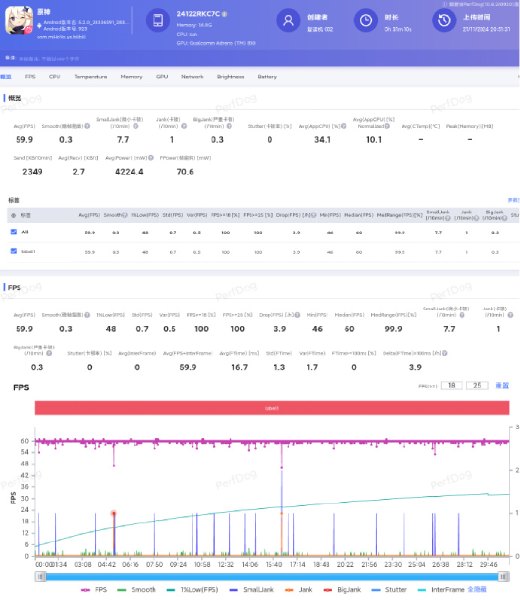
The Realme 13 Pro+ scores 652,858 in AnTuTu, indicating good overall performance. It should be able to handle most everyday tasks, multitasking, and even demanding games with reasonable ease. In the CPU Throttle app, the throttle percentage is at 73%, which indicates that the CPU is currently running at about 73% of its maximum potential performance. I did not experience frame drop issues in demanding games like PUBG (Ultra/Ultra HDR) and Genshin Impact. While the Realme 13 Pro+ can handle intensive tasks, it is not a gaming-focused phone. Since it is more of a photography device, you should look at the Realme GT 6 or 6T for a top-notch gaming experience.

4. Cameras and Other Features

Realme 13 Pro+ 5G
Realme 13 Pro+ 5G
  • Front: 32MP Sony IMX615
  • Rear: 50MP Sony LYT-701 with OIS | 8MP Smartsens SC820CS ultrawide | 50MP Sony LYT600 telephoto with OIS

The HyperImage+ logo on the camera module of the Realme 13 Pro series represents Realme’s new AI photography architecture, which aims to improve the camera experience and image quality. This includes packing flagship-grade optics (LYT-701, industry first on Realme 13 Pro+), the AI HyperRAW algorithm processing images in RAW format, and the AI HyperRAW algorithm processing images in RAW format. For cloud-based editing, Smart Removal lets you erase unwanted objects or people from photos, and Group Photo Enhancement optimizes group shots by adjusting lighting and facial features. Additionally, Audio Zoom enhances video audio quality by focusing on sound from specific sources.

As expected, daylight shots captured using the primary camera of the Realme 13 Pro+ are impressive. The 50-megapixel main camera captures images at 12 megapixels by default and supports up to 120x digital zoom. Color reproduction and details are accurate, with a satisfactory dynamic range. In low-light conditions, the main camera produces impressive shots with excellent details and color saturation. There’s a dedicated Action Mode feature, which can capture clear and more stable photos (up to 3x zoom) and videos when there’s movement involved. I feel that the LYT-701 when coupled with a flagship processor will produce even better results, especially in low-light conditions.

Shots captured using the 8-megapixel ultrawide camera are consistent with the primary camera. In both daylight and low-light conditions, the dynamic range is good.

When you use the phone for portrait shots, the periscope telephoto camera, which supports up to 3x optical zoom, comes into action. While it captures decent shots in daylight, the night selfies carry some noise.  

The 32-megapixel selfie camera supports 0.8x and 1x zoom options in Photo, Portrait, and Video modes. It captures 32-megapixel resolution shots by default, which can result in excessively large file sizes, potentially taking up significant storage space.

When it comes to video shooting, the Realme 13 Pro+’s primary camera can shoot up to 4K 30fps. The ultrawide and telephoto cameras support 1080p video recording at up to 30fps and 60fps, respectively. The front camera supports up to 4K 30fps video shooting.

Ultra Stead (OIS) is only available when you are shooting 1080p 60fps videos using the primary camera. The 30fps and 60fps videos are captured with EIS enabled by default. That means there is no stabilization while capturing 4K videos.

The Photos app provides two photography-related AI features. The AI Eraser does well at removing people and objects from an image. Sometimes, it may take a couple of tries to get some unwanted objects removed according to your preference. Otherwise, the feature functions pretty well. There’s AI Ultra Clarity for enhancing details in existing shots.

The in-screen fingerprint scanner on the Realme 13 Pro+ 5G operates flawlessly. However, I would have preferred its placement a bit higher. The Realme Lab available in Settings has two additional features, Dual-mode Audio (produces audio through Bluetooth earphones and wired earphones simultaneously) and heart rate measurement using the in-screen fingerprint sensor.

The x-axis vibration motor’s intensity can be increased according to preference via Settings. However, the Indian variant lacks support for NFC connectivity, unlike its global version.

5. Verdict and competitors

Realme 13 Pro Plus 5G

To sum up, the Realme 13 Pro+ is a reborn 12 Pro+ with a bigger battery with faster charging, better optics, and plenty of AI features. Only flagship phones, typically priced above Rs 50,000, come with periscope telephoto cameras. With the exception of the Realme 12 Pro+, which is now available at a reduced price of Rs 28,999, only the Realme 13 Pro+, priced around Rs 30,000, features a periscope telephoto snapper. Furthermore, it is blessed with a flagship-level primary camera. Hence, it manages to offer a better photography experience than the 12 Pro+. It is speculated that the Realme GT 7 Pro flagship phone, arriving by the end of this year, may inherit the LYT-701 primary camera from the 13 Pro+.

Realme 13 Pro+ price in India

The prices of the Realme 13 Pro+ variants in India, which include 8GB+256GB, 12GB+256GB, and 12G+512GB, are Rs 32,999 (~$393), Rs 34,999 (~$417), and Rs 36,999 (~$441), respectively. It is available for purchase through Realme India’s website, Flipkart, and offline stores.