Samsung has highlighted how its Bespoke AI Washer-Dryer lineup can help tackle one of the biggest household challenges during the monsoon season. With AI-powered washing, efficient drying, and smart connectivity, the company says its washer-dryer range is designed to keep clothes fresh and ready to wear despite humid weather.
Samsung Bespoke AI Washer Dryer: All the smart features for monsoon
Samsung Bespoke AI Washer-Dryer
One of the standout features is SmartThings integration, which allows users to monitor and control the appliance remotely through their smartphones. The washer-dryer also supports AI Energy Mode, which Samsung says can reduce energy consumption by up to 70 percent. For users with busy schedules, the SuperSpeed cycle completes a wash in just 39 minutes. The appliance also includes a deodorizing function that helps remove musty smells from clothes that remain damp because of prolonged humid weather.
Samsung says the Bespoke AI Washer Dryer uses AI-based sensing to detect fabric type and the level of soiling before automatically adjusting water usage, temperature, and wash settings. This helps deliver effective cleaning while ensuring clothes are dried properly, reducing the chances of moisture-related odors during the rainy season.
The lineup is available in different configurations to suit varying requirements. The premium model offers a 25kg washing capacity along with a 15kg dryer, making it suitable for handling bulky items such as curtains and bedding. The mid-range option features a 12kg washer paired with a 7kg dryer and is designed for everyday family use. Samsung also offers a compact washer-dryer that combines both functions in a single unit, making it suitable for homes where space is limited while retaining AI-powered washing capabilities.
By combining intelligent wash optimization, efficient drying, remote controls, and energy-saving technologies, Samsung positions the Bespoke AI Washer Dryer as a practical home appliance for the monsoon season. The company believes the lineup can help users spend less time worrying about damp clothes while keeping laundry fresh throughout the rainy months. What do you think about Samsung’s AI-powered approach to monsoon laundry? Share your thoughts in the comments.
For more daily updates, please visit our News Section.
Samsung is gearing up to launch its next major software upgrade, One UI 9.0, built on top of Android 17. The beta program is already out for select Galaxy devices, offering us an early look at the new features and upgrades Samsung has packed into this release.
If you’re a Galaxy user eager to know when is the update coming to your device and what it has to offer, you’ve come to the right place. This detailed post covers everything you need to know about the One UI 9.0 release, including the list of eligible devices, expected launch timelines, and the biggest new features heading to your phone.
Note: I’ll be updating this article periodically so that it always remains relevant and up to date. You can bookmark the page to visit later.
One UI 9.0 update: List of supported devices
Samsung has yet to confirm which Galaxy devices will be upgraded to One UI 9.0. So, this list is based on the current update policy and must therefore be accurate.
If your Samsung device is missing from the list, it won’t receive the One UI 9.0 update. It’s best to upgrade to a newer model before the rollout begins later this year.
Samsung will unveil One UI 9.0 at the upcoming Galaxy Unpacked event scheduled for July 22, 2026. The new version will debut with the Galaxy Z Fold 8 and Galaxy Z Flip 8, which are to be launched at the same event.
The stable rollout for older Galaxy devices will likely begin in September, with recent models like the Galaxy S26, Galaxy Z Fold 7, and Galaxy Z Flip 7 likely to be included in the first phase.
The One UI 9.0 beta program, which was released in early May 2026, is currently limited to the Galaxy S26 series. However, it’s expected to reach more Galaxy devices ahead of the stable rollout.
One UI 9.0 update: New features and upgrades
Samsung has already implemented major design changes in One UI 8.5, and therefore One UI 9.0 may look very similar. That said, the new version still offers many visual tweaks and new features worth looking forward to.
One UI 9.0 features thicker sliders for display brightness and volume that now fill out their full pill shapes for better touch accuracy. The media player widgets on the lock screen and quick panel can be resized and now show energetic waveform animations that match the album art. Some media controls now appear as circular buttons rather than being grouped inside a rounded rectangular container.
While the interface would look majorly unchanged, you can expect more liquid glass UI effects across One UI 9.0.
The new software will also introduce some new Galaxy AI features and refinements to existing features. It will have Creative Studio built directly into the stock app, allowing users to build personalized profile cards without opening a separate app.
The Home Up module in Good Lock has been updated to support multi-finger gestures for assigning custom actions, such as adjusting volume or triggering pop-up windows. One UI 9 also integrates a new “Ask AI” feature inside Samsung Browser to get direct answers from webpages.
I’m sure Samsung has more exciting features and upgrades in the pipeline, which should be announced at the upcoming Galaxy Unpacked event later this month.
In addition to One UI 9 features, the next major upgrade will also bundle many Android 17 features. This includes the bubble support for all apps, meaning users can open any app in a floating bubble, which was previously restricted to messaging apps.
Google has also added a system-level contacts picker, allowing users to give apps access to specific contacts rather than the entire phonebook. Android 17 also improves app adaptability across different screen sizes by preventing developers from locking apps to a specific orientation.
Remember to visit our Samsung section regularly for fresh details. Or, you can join our Telegram channel to receive instant notifications when we post new stories.
Xiaomi just gave its popular desktop photo printer lineup a fresh update, and it looks like a solid step forward for anyone who loves turning photos into real, physical prints.
The new Mijia Desktop Photo Printer 2 has now launched its crowdfunding campaign on the Youpin platform (it kicked off at 10:00 AM today). During crowdfunding, it’s priced at a pretty tempting 699 yuan. The regular price will be 799 yuan. Compared to the previous 1S model, this one brings some meaningful upgrades.
The biggest change is the switch to 4-color dye-sublimation printing (CMYK). By adding a dedicated black layer, it delivers deeper blacks, smoother gradients, and more vibrant, film-like results that actually feel closer to professional lab prints.
Xiaomi also fixed some common annoyances from earlier models. Instead of relying on 2.4GHz Wi-Fi, it now uses Bluetooth 5.2, which makes pairing with your phone faster and more stable. It prints at 300 × 300 dpi and supports both 4-inch and 6-inch photo paper. The cost per print is quite affordable too, starting as low as 0.99 yuan for the smaller sheets.
You can also use different lamination films to give prints a premium finish and better protection against fading. On the software side, there are some fun new tools: LUT color adjustments for more precise editing, automatic ID photo generation that meets official standards, and even AR dynamic photos that come alive when viewed through the app. It supports common formats like JPG, PNG, and HEIC, and you can connect up to three devices at once via Bluetooth.
The printer itself is still nicely compact (about 199 × 126.6 × 85.7 mm), so it won’t take over your desk. Print speeds range from around 53 to 85 seconds per photo depending on the settings. Consumables are reasonably priced, with packs for both 4-inch and 6-inch prints sitting at 69.2 yuan each.
Compared to the older 1S model that used ZINK technology, this dye-sublimation version should offer noticeably better color quality and longer-lasting prints, though you will need dedicated ink ribbons and special paper.
Overall, this feels like Xiaomi continuing its push to make good-quality photo printing easy and affordable for regular people. Global availability is still unclear, but a strong crowdfunding run could help it reach more markets later.
A new smart kitchen appliance from Xiaomi is heading to crowdfunding this month. The Mijia Smart Tea Bar Pro Vertical Model has gone live on Xiaomi’s Youpin platform, with sales set to begin on July 20 for 1,099 yuan (~ $165).
The Tea Bar Pro is designed for people who want both quick hot water and properly brewed tea from a single machine. It has a large 5.5-liter water tank and two separate water outlets — one side delivers instant hot water in just 3 seconds, while the other can brew tea just as fast.
Xiaomi says the two water paths are physically separated so they do not interfere with each other.
Precise Temperature Control and Fast Heating
For hot water, the machine has five preset temperature levels and four cup size options. It takes only 15 seconds to boil water, and the device also includes a 1.2-liter teapot and a sharing pot for serving guests or drinking tea alone.
What’s thoughtful of Xiaomi is to offer a built-in cleaning system. The Tea Bar Pro has a 10-liter storage compartment that can hold 8 to 15 cups. This space automatically sterilizes and dries stored cups using UVC ultraviolet light and 70°C hot air. Xiaomi says this process kills at least 99.99% of tested bacteria, spores, and fungi, based on independent lab testing.
Visually, the appliance has Xiaomi’s familiar minimalist white design and a 2.8-inch color touchscreen on top for controls. Meanwhile, it also supports Xiao AI to pass instructions via voice command. The interface is built to be simple and shows real-time status and alerts to make it easy to use for all age groups.
The machine also supports several preset tea brewing modes for different types of tea. Users are able to add their own custom tea recipes to match personal taste via the Xiaomi Home app. And once you’re done with brewing mode, the process runs automatically, adds water as needed, and stops once the pot is full, so users do not need to monitor it. After brewing, the machine can also keep tea warm automatically.
For more daily updates, please visit ourNews Section.
Xiaomi is preparing to launch the Redmi Note 17 5G in China, after which the phone will head to the global market, including India. New details about the phone’s Indian variant have now surfaced, thanks to a leak from tipster Abhishek Yadav on X.
According to the report, the Redmi Note 17 5G will launch in India with 6GB RAM and 128GB storage. Xiaomi is likely to add more RAM and storage combinations closer to the launch date, so buyers who want higher storage may see more options later.
For colors, the leak reveals two shades for India: Blue and Dark Night.
This leak comes a few days after Redmi confirmed the Note 17 series’ launch date, design, and battery details for the Chinese market. The company has skipped the Note 16 branding and moved directly from Note 15 to Note 17.
Redmi has also shared the first look at the Note 17 and Note 17 Pro, both of which have a camera module at the top-left corner of the back panel, unlike the centred module on the Note 15 series.
Redmi Note 17 5G
The base Note 17 model is tipped to carry a Snapdragon 4 Gen 4 chipset, a 7-inch 1.5K OLED display, and an 8,000mAh battery, along with a 50-megapixel main camera and stereo speakers.
Meanwhile, the Note 17 Pro is expected to feature a Snapdragon 6s Gen 4 chip with the same 9000mAh battery and a 50-megapixel main camera. Both models are said to retain dust and water resistance.
The India launch typically follows the China debut by a few months, based on the pattern seen with earlier Redmi Note series. Full specifications, pricing, and additional variants for the Indian market will be confirmed closer to launch. We will keep you updated about it.
For more daily updates, please visit ourNews Section.
Oppo’s upcoming Find X10 lineup is expected to include three models: the Find X10, Find X10 Pro, and Find X10 Pro Max. Until the Find X10 Ultra arrives, which is expected to happen in the first half of 2027, the Pro Max will be Oppo’s most powerful offering this year. As such, it is expected to arrive with top-tier camera hardware. Here’s a look at what tipster Digital Chat Station revealed in the latest leak about the Find X10 Pro Max.
Oppo Find X10 Pro Max may feature triple 200MP cameras
The tipster claims that an upcoming Oppo Find X10 Pro Max engineering prototype powered by the 2nm Dimensity 9600 Pro chipset is still testing an ambitious triple 200-megapixel rear camera system. This setup reportedly includes a 200-megapixel primary camera with a sensor size of around 1/1.3 inches, a 200-megapixel ultra-wide camera with a sensor size of around 1/1.5 inches, and a 200-megapixel periscope telephoto camera with a sensor size of around 1/1.3 inches.
According to the tipster, Oppo hopes to retain this advanced camera setup in the final production model. He also hinted that the device could launch between September and October alongside other flagship smartphones with revised specifications.
As per previous reports, the Oppo Find X10 Pro Max will feature a massive 6.89-inch BOE-supplied LTPO OLED display with a 2K resolution, a 144Hz refresh rate, support for the BT.2020 color gamut, and ultra-thin bezels.
The Find X10 Pro Max is expected to ship with ColorOS 17 based on Android 17. Its rear camera setup may also include a 3-megapixel multispectral sensor for improved color accuracy, while the front is expected to feature a 50-megapixel autofocus camera. At present, there is no information about the device’s battery capacity or charging capabilities.
For more daily updates, please visit our News Section.
Redmi is reportedly working on the Redmi Turbo 6 series. Just as the brand introduced the Redmi Turbo 5 and Turbo 5 Max earlier this year in China, the upcoming Turbo 6 lineup is expected to include both standard and Max variants. A new leak from tipster Smart Pikachu has revealed the key specifications of these smartphones.
Redmi Turbo 6 series’ key specs emerge
The latest leak suggests that the Redmi Turbo 6 series will feature a massive 7-inch display and a 10,000mAh battery. The standard Redmi Turbo 6 is said to be powered by a Dimensity 8-series chipset, which is believed to be the upcoming Dimensity 8600 built on TSMC’s 3nm process. The same chip is also expected to power the Honor Power 3, which is rumored to house an even larger 12,000mAh battery.
On the other hand, the Redmi Turbo 6 Max is tipped to arrive with a Dimensity 9-series chipset. It is expected to feature the upcoming Dimensity 9600s processor, although the chipset name has not yet been officially confirmed. Previous reports have also claimed that the Turbo 6 Max will feature a 2K resolution display.
The device is also expected to feature an ultrasonic in-display fingerprint scanner, a metal middle frame, and IP68/IP69-rated dust and water resistance.
The Redmi Turbo 6 Max is expected to launch in January 2027. It remains to be seen whether the standard Redmi Turbo 6 will debut alongside it.
For more daily updates, please visit our News Section.
Motorola is all set to unveil the Motorola Edge 70 Max on July 15 in India. Its Flipkart microsite has already revealed several details about its specifications but hasn’t confirmed anything about its cameras. Now, ahead of the launch, a hands-on video of the device has emerged, giving us a closer look at its design.
As seen in the video, the Motorola Edge 70 Max is shown in a pale green color option. It features a flat display with slim bezels all around and a raised square camera module on the back. A closer look at the camera island confirms that it houses a Sony Lytia 50-megapixel primary camera with OIS support.
The Edge 70 Max has flat aluminum edges and a glass back panel. It also features a dedicated AI button on the left side, while the power and volume buttons are positioned on the right.
At the same time, tipster Sudhanshu Ambhore has shared leaked renders of the device. The images show the phone in Pantone color options, including Onyx Black, Sage Green, and Glacier Blue.
He also revealed that the device features a 6.82-inch LTPO OLED display with a Quad HD+ resolution, a 144Hz refresh rate, and up to 7,000 nits of peak brightness. It is already known that the phone is powered by the Snapdragon 8 Gen 5 chipset, paired with up to 12GB of LPDDR5X RAM and a 7,100mAh battery.
The Edge 70 Max is also confirmed to support 90W wired charging and 25W magnetic wireless charging. For heat dissipation, the device is equipped with a 5,500mm² vapor chamber cooling system.
For more daily updates, please visit our News Section.
A new leak is giving us an early look at another color option for the upcoming Google Pixel 11 Pro Fold. A source that goes by the alias Mystic Leaks on Telegram posted a render of the upcoming Pixel Fold in a shade called “Pine.”
The render shows a low-saturation gray-green color. Visually, it looks more or less similar to the Jade color of the Pixel 10 Pro Fold. The difference seems to be that the overall tone is likely muted compared to its predecessor.
Google Pixel 11 Pro Fold in Pine
Pixel 11 Pro Fold render confirms redesigned camera module
The render also shows a change to the camera module. Compared to the Pixel 10 Pro Fold, the camera bump on this render is smaller, with almost no metal bezel around the lens openings. The main camera and ultra-wide lens are placed at the bottom of the module, while the telephoto lens has moved to the upper right corner.
The flash unit on the left side is also larger than before. This matches earlier leaks, including CAD renders shared in March that showed a thinner body and a redesigned camera island, as well as other reports pointing to a full camera upgrade for this generation.
Separately, a feature called “Pixel Glow” was found in the Android 17 Beta 4 code. It is said to use lights and colors on the back of the phone to show information, such as calls or notifications. We reported on this feature earlier, and it is still not confirmed whether the Pixel 11 Pro Fold will include it. None of the renders seen so far show any visible LED hardware on the back panel.
Google’s Pixel 11 series, including the Pixel 11 Pro Fold, is expected to be announced in August. More leaks and details are likely to surface before the official launch.
For more daily updates, please visit our News Section.
Xiaomi has introduced a new Mijia Monitor Light Bar 2 through its Youpin crowdfunding platform in China. The campaign is set to begin at 10:00 AM on July 15, with the screen light available for 259 yuan (~$39).
Xiaomi Mijia Monitor Light Bar 2 Specifications
The main selling point of this second-generation light bar is its glare-reduction technology. It uses a redesigned asymmetrical lighting layout with a wide 20.8-degree shielding angle that limits the beam so it only falls on the desk surface rather than spreading toward the user’s eyes or bouncing off the screen. Xiaomi calls it a “light without visible glare” setup.
To achieve accurate lighting, the bar uses 108 custom full-spectrum LED chips. Xiaomi says this design cuts down on harmful blue light while closely mimicking the quality of morning sunlight.
On color accuracy, the device scores Ra 96, R9 95, CQS 98, and Rf 97 — all measures of how naturally colors appear under its light.
In terms of raw brightness, Xiaomi says the light bar outperforms the AA-grade standard used for reading lamps. Depending on how high you mount it — 40cm, 45cm, or 50cm above the desk — it can produce maximum illuminance ranging from 1,100 to 1,800 lux.
The light bar extends to 50cm and comes with an upgraded clamp that can grip monitors with curvatures between 1000R and 1800R, and screens ranging from 5mm to 65mm thick.
You get a small wireless dial for controls. Users can rotate it to adjust brightness or press and turn to shift color temperature. It can also save custom lighting presets for work, study, or relaxation and can link up with Xiaomi’s HyperOS Connect ecosystem for broader smart home control.
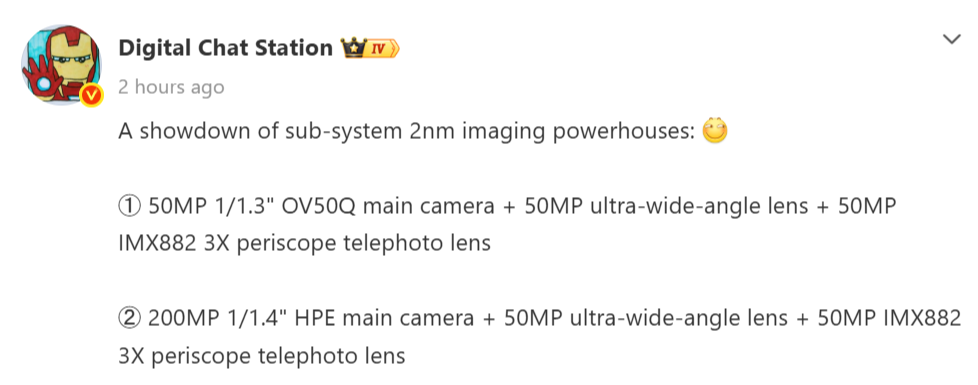
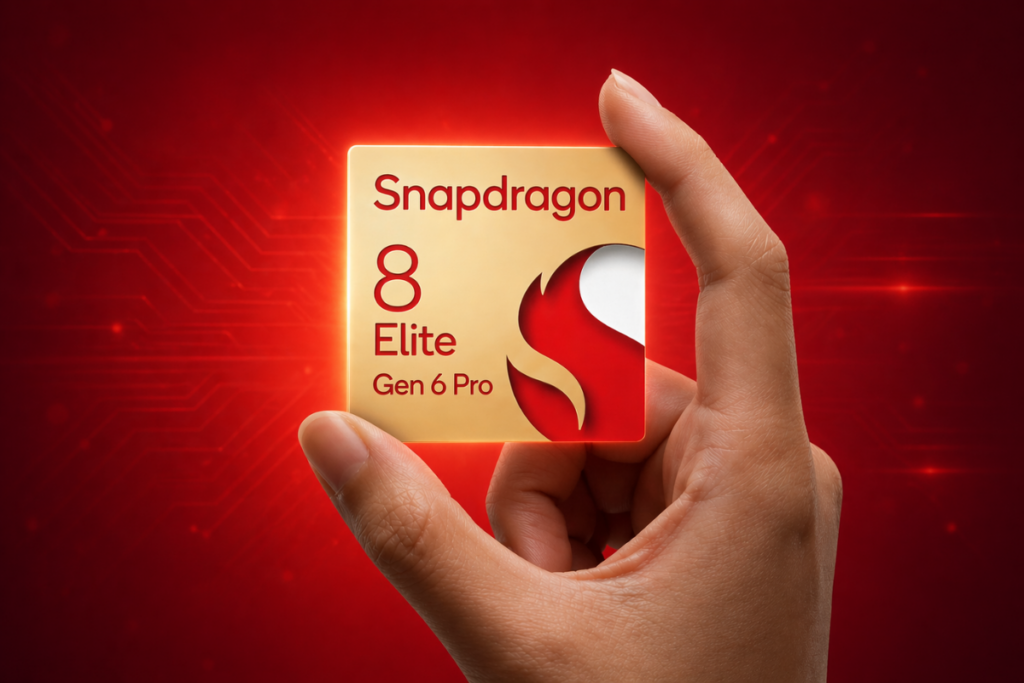
Tipster Digital Chat Station has shared new details about iQOO 16 in a fresh leak this morning. According to the tipster’s latest Weibo post, an engineering sample built around the Snapdragon 8 Elite Gen 6 Pro chipset is currently being tested with high-end symmetrical dual speakers from the 1115 series.
Alongside the speaker setup, the same prototype is said to include a 0916 series X-axis linear motor for more precise haptic feedback, a dedicated graphics chip to boost gaming performance, and a 3D ultrasonic fingerprint sensor for biometrics.
The device is also tipped to carry IP68 and IP69 ratings for dust and water resistance, USB 3.2 support, and an AR film layer on the display. Likewise, an OV50Q sensor will power the main camera.
iQOO 16 to feature 8500mAh battery
Interestingly, the tipster’s comment section added a few more clues. When asked whether iQOO 16 will house a squarish, quadrangular camera module, Digital Chat Station gave a noncommittal answer. On battery capacity, though, the tipster more or less confirmed the phone will house an 8,500mAh cell.
This isn’t the first time the 8,500mAh figure and symmetrical speaker setup have come up. As we reported last month, the same battery capacity and flagship-grade speaker configuration were tipped alongside a 2K flat display featuring a new customized panel material and an ultra-high refresh rate meant to improve gaming and multimedia performance.
iQOO 15 – Legend
Separately, another leak had suggested the iQOO 16 Ultra variant may be skipped this generation due to rising memory costs, leaving the standard model as the star of the lineup.
While the post doesn’t name the phone directly, the hints and the ongoing comment thread suggest it’s likely the iQOO 16. This tracks with what has already surfaced about the device, including its Snapdragon 8 Elite Gen 6 Pro chipset, 2K flat display, and flagship-grade symmetrical speakers.
For more daily updates, please visit our News Section.
Samsung fans hoping the Galaxy S27 Pro would be a mini Ultra might want to pump the brakes. According to a fresh report, the company has dialed back the Pro model’s camera ambitions, creating clearer separation between the different phones in the S27 lineup.
Naver blogger Lanzuk, who’s been spot-on with several past leaks, says Samsung has reworked the camera setup for the Galaxy S27 Pro. Instead of giving it near-identical imaging hardware to the flagship Ultra (as some earlier rumors suggested), the Pro is now shaping up as the sensible middle child: stronger than the regular S27 but not quite the photography beast the Ultra will be.
Now it looks like the Pro will share only some camera components with the Ultra and borrow more specs from the base S27 and S27+ models. In other words, the S27 Pro could end up filling the exact spot many enthusiasts have wanted the base model to occupy: compact, but noticeably more capable.
That said, broader leaks point to some meaningful camera upgrades across the board. Both the Pro and Ultra are rumored to finally get a 16MP front camera, Samsung’s first selfie sensor jump in years, moving on from that old 12MP unit.
On the back, both the Pro and Ultra are still expected to feature a 200MP main sensor. However, their telephoto setups will likely differ quite a bit. Samsung is reportedly dropping the dedicated 3x telephoto lens on the Ultra, relying instead on digital zoom and AI to cover focal lengths from 1x up to around 5x before switching to its periscope telephoto. Details are still scarce, but the Pro is unlikely to get the Ultra’s higher-end 5x periscope. This difference should help clearly justify the Ultra’s premium price and top-tier positioning.
Of course, take all this with a big grain of salt. These are early development leaks, and Samsung’s plans could evolve as the launch gets closer.
Thunderobot just showed off a new 16-inch thin-and-light gaming laptop at the BW2026 trade show, and the main draw is how much weight the company managed to shave off.
Thunderobot Zero Air 16 Specifications
The Zero Air 16 Little Dragon Racing Edition is a collaboration with the Zero Mileage ZM Drift Team. But beyond the motorsport branding, the actual hardware design is what stands out: it uses carbon fiber for most of its chassis to keep the weight down to just 1.64kg.
For a 16-inch gaming laptop, 1.64kg is unusually light. Thunderobot used high-strength carbon fiber on the lid, the keyboard deck, and the bottom panel to achieve this, finishing the exterior with a soft-touch coating rather than standard bare metal or plastic. Even when you factor in the included 210W power brick, the total travel weight sits at a very manageable 2kg.
Inside, the specifications are what you would expect from a mid-to-high-end 2026 gaming machine. It can be configured with up to an Intel Core Ultra 7 356H processor and an Nvidia GeForce RTX 5070 laptop GPU. Thunderobot claims the system is tuned to handle up to 160W of total performance output.
The display is a 2.5K panel with a 240Hz refresh rate, which the company refers to as a Hummingbird Eye-Care Screen. Marketing names aside, those are practical specs that pair well with the target frame rates of an RTX 5070. The screen also includes an ACR anti-glare coating to help minimize reflections in bright rooms.
For connectivity, the laptop includes a Thunderbolt 4 USB-C port, HDMI 2.1, a Mini DisplayPort, and a dedicated RJ45 Ethernet jack. There are other standard I/O ports that haven’t been fully detailed yet, and Thunderobot has also held back on announcing the battery capacity.
If you aren’t interested in the drift team branding, Thunderobot previously teased a standard version of the Zero Air 16 earlier this month. Both the standard and Racing Edition models are expected to launch officially in August.
For more daily updates, please visit our News Section.
Compact smartphones have become increasingly rare, especially in the mid-premium segment. Most brands have shifted towards larger displays, leaving users who prefer one-handed devices with limited choices. The Oppo Reno 16 attempts to fill that gap with a 6.32-inch display, premium build, capable cameras, and a massive 6,700mAh battery packed into a surprisingly compact body.
On paper, it ticks almost every box. You get four 50-megapixel cameras, IP69-level durability, ColorOS 16 with several new AI features, and long software support. However, there’s one specification that raises eyebrows considering its Rs 61,999 starting price.
After spending some time with the Twilight Violet 8GB+256GB variant, here’s whether the Reno 16 deserves a place on your shortlist.
If performance is your highest priority, the OnePlus 15R and Vivo X200T offer considerably more powerful chipsets while remaining competitively priced. The Xiaomi 17T is another strong option if you don’t mind a slightly larger phone and want flagship-level performance.
Interestingly, the Oppo Reno 15 Pro Mini may end up being the Reno 16’s biggest rival. Starting at Rs 59,999, it offers a faster Dimensity 8450 chipset, triple 200-megapixel cameras, and support for the optional Oppo Bubble accessory. The Reno 16, however, counters with a larger battery, newer AI features, and the dedicated AI Snap Key, making the better choice depend on your priorities.
For more daily updates, please visit our News Section.
Mangmi is entering the vertical handheld market with its newly announced Air Y series, following the 2025 release of its horizontal Air X and Pocket Max devices. The new Android-based lineup consists of two models: the standard Air Y and the dual-stick Air Y Pro.
Both handhelds run on Android and are powered by currently unnamed Qualcomm processors. The standard Air Y comes in a black finish, featuring a single RGB-backlit joystick positioned below a cross D-pad, Nintendo-layout ABXY buttons, and a front-facing speaker grille.
The Air Y Pro arrives in a white and burgundy colorway, dropping the front speaker grille to accommodate dual symmetrical RGB joysticks. This addition makes the Pro model better suited for complex Android titles and modern emulation that require standard twin-stick camera and movement controls.
Both models share a left-side control cluster that includes an orange power button, a scroll wheel, and an unassigned secondary button. The displays feature minimal bezels, though exact panel dimensions are not yet confirmed.
The Air Y series represents a direct hardware challenge to other upcoming devices in the increasingly crowded vertical handheld space. At this stage, Mangmi is withholding several core hardware details; information regarding display resolution, refresh rate, RAM, storage capacity, and battery size remains unavailable. It is also unclear if the Pro model will feature a higher-tier Qualcomm chip than the standard version.
Mangmi is expected to reveal full hardware specifications, pricing tiers, and a concrete launch schedule later this month. Pre-orders for both the Air Y and Air Y Pro are currently slated to open on July 30.
In related news, Ayaneo has recently unveiled the Pocket Micro 2, a retro-inspired handheld gaming device featuring a 3.5-inch LCD display and a 3,950mAh battery.
Lenovo has announced the ThinkVision E24q-30, a new 23.8-inch monitor available in the Chinese market. The display is currently listed on the retail platform JD.com with a price of 1,149 yuan, which converts to approximately $170.
Lenovo ThinkVision E24q-30 Specifications
The ThinkVision E24q-30 features a 23.8-inch IPS panel with a 2560 x 1440 resolution, delivering a sharp 123 PPI pixel density. It also offers 300 nits of typical brightness and a 1300:1 contrast ratio for clear and detailed visuals.
The monitor includes a native 100Hz refresh rate and a 4ms response time when set to fast mode. The exterior design incorporates a three-sided narrow bezel, which is standard for current monitors intended for multi-display setups.
Regarding color performance, the monitor supports an 8-bit color depth, which is implemented using a 6-bit panel with Frame Rate Control (FRC) technology to produce up to 16.7 million colors. The display covers 99% of the sRGB color gamut, making it suitable for standard web design, photo editing, and general media consumption.
The monitor integrates several features designed to reduce eye strain. It uses a hardware-level low blue light solution that lowers blue light emissions without shifting the screen’s color temperature to a yellow tint, which is a common byproduct of software-based filters.
The display also utilizes DC dimming technology to eliminate screen flicker and includes an anti-glare coating to reduce surface reflections. The unit holds TÜV Rheinland Low Blue Light, TÜV Rheinland Eye Comfort, and Eyesafe 2.0 certifications.
The included monitor stand offers multiple ergonomic adjustments. You can adjust the height up to 155mm, tilt the screen from -5° to 22°, and swivel the display. It also supports a 90-degree pivot rotation for use in a vertical portrait orientation. The back of the monitor is compatible with standard VESA mounts, supporting both 100 x 100mm and 75 x 75mm configurations.
For connectivity, it includes one HDMI 2.0 port and one DisplayPort 1.2 input, with both interfaces capable of supporting the maximum 1440p resolution at 100Hz. The monitor includes a Kensington lock slot and dual built-in 2W speakers for basic audio output.
A fresh Geekbench listing has given away most of what there is to know about the upcoming Redmi 17C 5G, and it turns out there isn’t much new here. The benchmark shows the phone under the codename “tornado,” which interestingly is also the codename for Redmi 15C 5G and the POCO C85 5G, both of which are already on sale in several markets.
Xiaomi already has a plain 4G version of the Redmi 15C out there too, so it’s clear the company is simply reshuffling the same hardware across its budget lineup under different names.
Redmi 17C 5G Geekbench
Going by the listing, the Redmi 17C 5G will run on the MediaTek Dimensity 6300 chipset that Xiaomi has already used across its budget 5G lineup this year. It’s not built for heavy gaming, but it should handle everyday tasks smoothly while keeping power draw low.
Not much has leaked about the Redmi 17C 5G, but if it’s a rebrand you can expect a large 6.9-inch LCD panel with 720p resolution. Camera-wise, the device is likely to house a 50MP main sensor for photos and an 8MP front camera for selfies and video calls.
As for battery, you can expect a 6,000mAh cell with 33W fast charging support. The phone is also expected to launch with Android 16 right out of the box, running on top of Xiaomi’s HyperOS.
So far, the Redmi 17C 5G is tipped for global and Indian markets only, with no word yet on a China launch. Pricing hasn’t surfaced either, but the Redmi 15C 5G launched in India at under $140, so the 17C is likely to launch at the same price.
We’ll share pricing and launch details as soon as they’re confirmed.
For more daily updates, please visit ourNews Section.
Minisforum is releasing a new mini PC, the MS-03, designed specifically for enterprise IT and local AI applications. While the company typically focuses on consumer hardware, this model is built as an edge workstation for businesses that need to run large language models locally rather than relying on cloud infrastructure.
Minisforum MS-03 Specifications
Inside, the MS-03 uses Intel’s Panther Lake Core Ultra 9 386H, a 16-core, 16-thread processor with a 4.9 GHz maximum turbo frequency and an 80W power limit in its standard balanced mode.
For local AI workloads, the chip utilizes an integrated NPU capable of 50 TOPS and an integrated GPU that provides an additional 40 TOPS. According to Minisforum, this hardware can run the Gemma 4-26B model at an inference speed of 22.05 tokens per second.
The system supports up to 128GB of DDR5 memory at speeds up to 7200 MT/s via two SO-DIMM slots. Storage options are relatively broad for a chassis measuring 196 x 189 x 48mm. The board includes three M.2 NVMe slots: two are PCIe 5.0 and one is PCIe 4.0. The package also comes with an M.2-to-U.2 adapter, which allows users to install 7mm-thick U.2 enterprise SSDs up to 15TB.
Networking is a primary focus of the MS-03. The rear panel features dual 10GbE SFP+ fiber ports powered by an Intel X710 controller, allowing direct connection to fiber switches. It also includes a 10GbE RJ-45 port and a 2.5GbE RJ-45 port. Wireless connectivity is handled by an Intel BE211 module, which provides Wi-Fi 7 and Bluetooth 6.
For further hardware additions, there is a physical PCIe x16 slot (wired for PCIe 4.0 x4) to accommodate half-height expansion cards. It also supports a low-profile discrete GPU inside the chassis, with support for up to 75W cards running over a maximum of eight PCIe lanes.
Standard I/O includes two USB4 Type-C ports with DisplayPort 2.1 Alt Mode, an HDMI 2.1 port, and four USB-A ports split across the front and back.
For IT administrators, the system supports Intel vPro for remote management, enabling out-of-band repairs, monitoring, and power cycling. Cooling is managed by a three-heatpipe heatsink and a single fan, which operates at around 38 dB under full load in balanced mode.
Pricing and Availability
Pre-orders for the MS-03 open globally on July 23. Minisforum has not yet announced pricing details.
In related news, Beelink has recently introduced the EQi 304 Mini PC, featuring Intel’s Wildcat Lake platform and support for up to 32GB of DDR5 memory.
Indian smartphone maker Lava has started its marketing push before its planned entry in the United Kingdom. The company has set up a social account for UK users, and interestingly, the marketing team is taking a dig at Samsung to hype its arrival.
The account’s bio reads “Escape the SAMe cycle,” where the highlighted word “SAM” is a reference to Samsung, which holds a large share of the UK smartphone market.
Lava has shared two posts on the account so far. The first shows a cluttered screen of Samsung app icons with the caption saying the mess is “obviously” not yours. The second shows a phone with a triple rear camera and the line “Buying new shouldn’t feel so… SAMe.”
Lava enters UK as its first major international market to make a global Indian brand
Lava has previously confirmed it’s entering the UK market in 2026 as part of a plan to build what the company’s Managing Director Sunil Raina calls a genuinely global Indian brand.
The company had earlier sold phones in the Middle East, Africa, and Latin America but pulled back from those regions to focus on India first. It currently exports to Nepal and Bangladesh, where it has a meaningful share in the market.
For the UK, Lava is expected to stick to the same pricing approach that has worked for it at home — keep phones around the £300 mark rather than competing in the flagship space. Raina has said the company sees no need to chase the premium segment right away, since its growth in India has come almost entirely from mid-range devices.
Lava has not said which phone will launch first in the UK. The company recently announced Agni 4 in India with a Dimensity chipset and the brand’s own on-device AI assistant. Likewise, its budget-focused Yuva Star 3 shows the same value-first approach at a lower price point.
For more daily updates, please visit our News Section.
A good monitor matters more than most people think when building a gaming setup. A fast GPU cannot show its full potential on a slow, low-refresh screen. The good news is that 2026 has been a strong year for budget displays.
Panel costs have dropped, and several brands have pushed 1440p resolution and refresh rates past 200Hz into the sub-$200 price bracket. Below are some of the newest options launched in 2025 and 2026 that are worth considering.
First on the list are two 27-inch monitors from Dell — the SE2726HGS and SE2726HG — that start at $140. Both use a 1920 x 1080 IPS panel with a 240Hz refresh rate and AMD FreeSync Premium support to cut down on screen tearing. The screen also has a 5ms response time in standard mode and 0.5ms in extreme mode, and the panel covers 99 percent of the sRGB color space.
The SE2726HGS gets a stand with height, swivel, and tilt adjustment, while the SE2726HG sticks to a basic tilt-only stand. For eye comfort, the monitor also has low blue light mode, flicker-free operation, and an anti-glare coating. These Dell monitors are a straightforward pick for anyone who wants a high refresh rate 1080p screen without paying extra for design flourishes.
Alienware’s AW2526HL is a 24.5-inch monitor that retails for around $175. It runs a 1920 x 1080 IPS panel natively at 300Hz, which is unusually fast for this price range, and pairs it with a 1ms grey-to-grey response time. You also get 400 nits of brightness with a 1000:1 contrast ratio, and the panel covers 99% sRGB for accurate colors.
It supports AMD FreeSync Premium and VESA Adaptive-Sync, plus TÜV Rheinland-certified blue light reduction. The stand allows tilt, height, and pivot adjustment, and the monitor is VESA mount compatible. For connectivity, there are HDMI 2.1 ports and one DisplayPort 1.4 input.
Xiaomi’s Redmi G27Q 2026 is one of the more aggressive releases of the year. It is priced at around $190 and brings in a 27-inch 2560 x 1440 IPS panel with a 320Hz refresh rate and 1ms GTG response time. It also supports AMD FreeSync Premium, VESA DisplayHDR 400, a 1000:1 static contrast ratio, 95% DCI-P3 and 100% sRGB color coverage, and 10-bit color depth for smoother gradients.
Xiaomi is also factory-calibrating the panel to a Delta E under 2, which means colors should look accurate out of the box. It has two DisplayPort 2.1 ports and two HDMI 2.0 ports for connectivity. Availability outside China has not been confirmed yet, so buyers elsewhere may need to wait for a global release or import listing.
Before the 2026 edition, Xiaomi released the Redmi G27Q 240Hz, which is still worth looking at if it shows up on sale. It uses the same 27-inch 1440p Fast IPS panel design, running at 240Hz with a 1ms GTG response time and AMD FreeSync Premium support.
It carries HDR400 certification with 400 nits peak brightness, and covers 95 percent DCI-P3 and 100 percent sRGB. It’s originally priced at around $206, but you can occasionally get it below $200. This is a good choice for anyone who wants 1440p and a high refresh rate but does not need the newer model’s extra 80Hz.
For a lower-cost option, the ViewSonic VA27G11-2 costs around $84, well under budget. It is a 27-inch 1080p IPS panel with a native 144Hz refresh rate that can be overclocked to 175Hz. Likewise, the response time is rated at 1ms MPRT and 5ms grey-to-gray, and brightness reaches 350 nits with a 1500:1 contrast ratio.
The panel covers 100% sRGB and supports both AMD FreeSync and Nvidia G-Sync. You also get extra features like HDR10 support, a black stabilization mode, a built-in crosshair overlay, flicker-free backlighting, and hardware-level low blue light filtering. It is a practical pick for gamers on a tighter budget who still want a smooth 1080p experience.
KTC has become a familiar name in this price range, and the H27T22C-3 is one of its stronger recent releases. It has a 27-inch 1440p IPS panel with a 200Hz refresh rate that can be overclocked to 220Hz. You also get a 1ms response time and 450 nits of brightness.
It is priced at around $150, making it one of the more affordable 200Hz monitors on the market. And not to forget, it also supports adaptive sync and includes a fully adjustable stand.
Of course, the right monitor for you depends on the budget, size, and features you want. The Alienware AW2526HL or the ViewSonic VA27G11-2 are good pick if you are considering a 1080p or fast refresh rate monitors.
If higher resolution is what you seek, the Redmi G27Q 240Hz or the KTC H27T22C-3 offer strong value. The newer Redmi G27Q 2026 is also worth watching for a wider release if 320Hz appeals to competitive players. Whichever model you choose, it’s better that you check that the monitor has at least FreeSync or G-Sync compatibility, and a lower response time. This will help you avoid a display that looks good on paper but struggles in fast motion.
For more daily updates, please visit our News Section.
We use cookies on our website to give you the most relevant experience by remembering your preferences and repeat visits. By clicking “Accept”, you consent to the use of ALL the cookies.
This website uses cookies to improve your experience while you navigate through the website. Out of these, the cookies that are categorized as necessary are stored on your browser as they are essential for the working of basic functionalities of the website. We also use third-party cookies that help us analyze and understand how you use this website. These cookies will be stored in your browser only with your consent. You also have the option to opt-out of these cookies. But opting out of some of these cookies may affect your browsing experience.

Necessary cookies are absolutely essential for the website to function properly. This category only includes cookies that ensures basic functionalities and security features of the website. These cookies do not store any personal information.


Any cookies that may not be particularly necessary for the website to function and is used specifically to collect user personal data via analytics, ads, other embedded contents are termed as non-necessary cookies. It is mandatory to procure user consent prior to running these cookies on your website.