Advertisement

Oppo K15 Pro, K15 Pro+ set to debut on April 1, gaming-focused Dimensity 9500s, 8500 phones incoming

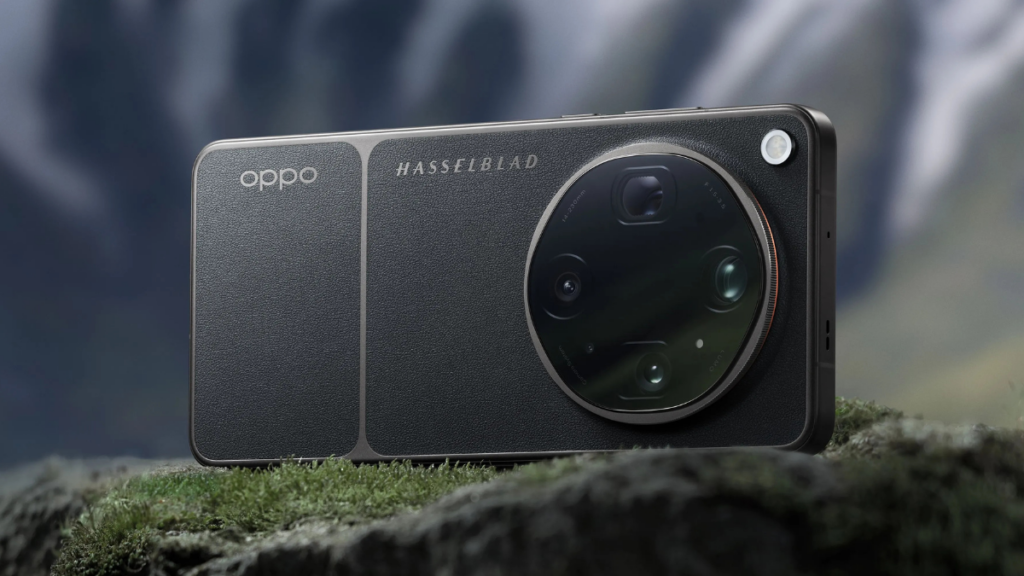
Last year, Oppo launched the Oppo K13 Turbo and K13 Turbo Pro phones in China. While India received a couple of K14 series phones in the past few weeks, it appears that the K14 lineup has been completely skipped for the Chinese market, as the company has started teasing the K15 Pro series in the country. It has been confirmed today that the company will announce the Oppo K15 Pro and K15 Pro+ on April 1 in China. This also suggests that the company may have dropped the Turbo branding for these phones, which appear to be successors to the K13 Turbo and K13 Turbo Pro.

Oppo K15 Pro series teaser released

Oppo K15 Pro series
Oppo K15 Pro series

The latest teasers from the brand indicate a shift in strategy, aiming to position these devices within the “trendsetter” circle. Industry insiders suggest that the move from the Turbo moniker to the Pro branding signifies a more premium approach to the mid-range performance segment.

One of the most striking revelations about this upcoming lineup is the inclusion of an active cooling fan across all models. The integration of such a cooling system allows the phones to maintain peak performance during long gaming sessions without thermal throttling, making them a serious option for mobile enthusiasts who prioritize sustained power.

Oppo K15 Pro, K15 Pro+ specifications (rumored)

As per the TENAA certification, the Oppo K15 Pro+ will feature a 6.78-inch 1.5K OLED screen with a resolution of 2772 x 1272 pixels and a 165Hz refresh rate. This phone is said to house the Dimensity 9500s chipset, reaching a top clock speed of 3.73GHz. For photography, it will carry a 50-megapixel main sensor alongside an 8-megapixel ultra-wide lens, while the front uses a 16-megapixel camera. It is expected to pack a massive 8,000mAh battery.

The standard K15 Pro will be slightly more compact, sporting a 6.59-inch 1.5K OLED screen, which may also support a 165Hz refresh rate. It will rely on the Dimensity 8500 processor with a maximum frequency of 3.4GHz to drive its operations.

The K15 Pro is expected to feature the same front and rear cameras as the Pro+ variant. Even though it has a compact design, it will include a big 7,500mAh battery and weigh under 200 grams. Despite these large cells, the brand has managed to keep the thickness around 8.3mm.

For more daily updates, please visit our News Section.

Stay ahead in tech! Join our Telegram community and sign up for our daily newsletter of top stories! 💡

OnePlus OxygenOS B50P01 Update Adds Auto File Open and Improves Stability

OnePlus has started rolling out a new system update, version B50P01, as part of its regular update cycle. The update focuses on system stability and adds a few small features aimed at improving everyday use.

The build carries version numbers BRB1EX01 for phones and BRB3EX01 for tablets. The rollout began on March 16, 2026, and will continue in phases until around March 31. As with previous releases, it is being pushed in batches. Users also have the option to manually check for the update and install it without waiting for the full OTA rollout.

One of the main changes is in Content Portal, available on OxygenOS 16 and select models. The feature now supports app clones. This allows users to duplicate apps and manage content more easily across different accounts or use cases.

The update also brings a change to OnePlus Share on OxygenOS 16 devices. A new option called “Automatically open received files” has been added. Users can choose whether shared files open immediately after being received or stay saved for manual access. This gives more control over how files are handled during transfers.

Alongside these changes, the update includes general system stability improvements. OnePlus has not listed performance upgrades, but the focus is on making the system more stable and reliable during daily use.

The rollout covers a wide range of devices across different OxygenOS versions. Devices on OxygenOS 16 include the OnePlus Open, OnePlus 15 series, OnePlus 13 and 13R, OnePlus 12 and 11 series, OnePlus Nord 5, Nord CE5, Nord 4, Nord CE4 series, Nord 3, and the OnePlus Pad 3, Pad 2, and Pad.

Devices running OxygenOS 15 and 16 include the OnePlus Nord 3 and OnePlus Pad. OxygenOS 15 also covers the OnePlus 10 series and Nord CE3 series. OxygenOS 14 includes the OnePlus 9 series, OnePlus 8T, Nord 2T 5G, Nord CE 2 Lite 5G, and OnePlus Pad Go. OxygenOS 13.1.0 reaches the OnePlus 8 and 8 Pro, while OxygenOS 13.0.0 includes the Nord 2 5G, Nord CE 2 5G, and Nord CE 5G.

OnePlus says this update follows its usual version pattern and does not change device performance or core system behavior.

For more daily updates, please visit our News Section.

Tech enthusiast? Get the latest news first! Follow our Telegram channel and subscribe to our free newsletter for your daily tech fix!

(Source)

Galaxy Z Fold 8 Wide leak reveals a wider form factor for competing with iPhone Fold

The Galaxy Z Fold 8 render we previously shared shows that the upcoming foldable will be an iterative upgrade over the existing model, with no major changes to its look and feel. 

However, the company is also working on a wide foldable, rumored to be called the Samsung Galaxy Z Fold 8 Wide. And renders of it have also surfaced online, revealing the device for the first time. 

According to a report shared by Android Headlines, the device is designed as a counterpart to the rumored foldable iPhone, often referred to as the Apple iPhone Fold.

Samsung Galaxy Z Fold 8 Wide Renders

Based on CAD renderings, the Galaxy Z Fold 8 Wide measures 123.9 x 82.2 x 9.8 mm when folded. When opened, it thins down to just 4.9 mm at its slimmest point.

That said, the camera bump adds noticeable bulk. The vertically aligned dual-camera setup protrudes significantly, and when included, the total folded thickness comes to around 14.6 mm.

The wider body also changes how the displays are used. The outer screen is said to be 5.4 inches, while the inner display stretches to 7.6 inches. That outer display, combined with the wider aspect ratio, could make everyday tasks feel less cramped compared to the narrower covers seen on some earlier foldables.

Under the hood, the Galaxy Z Fold 8 Wide is expected to mirror the standard model. That includes a custom Snapdragon 8-series chip, up to 16GB of RAM, and as much as 1TB of storage.

It’s also expected to come with a 5000mAh battery with support for 45W wired and 25W wireless charging. None of this is particularly surprising, but it does suggest Samsung isn’t treating this as an experiment.

For now, the Galaxy Z Fold 8 Wide looks like an extension of Samsung’s current strategy rather than a departure from it.

Don’t miss a thing! Join our Telegram community for instant updates and grab our free daily newsletter for the best tech stories!

For more daily updates, please visit our News Section.

OnePlus opens Android 17 Beta 2 for OnePlus 15

OnePlus is opening the door a little wider for developers and early adopters to experiment with its next big software update. The company has officially announced the Android 17 Beta 2 developer preview program for the OnePlus 15.

OnePlus 15
OnePlus 15

This new build is based on Android 17 Beta 2 from Google, which means it brings the latest underlying platform changes while maintaining compatibility with the most recent Google Mobile Services (GMS) package. 

According to OnePlus, any native apps that duplicate functionality already covered by GMS won’t be included here.

OnePlus 15 Android 17 Beta 2 is not for casual users

But like most developer previews, this isn’t meant for casual users. In fact, OnePlus is being very explicit about the risks. Installing Android 17 Beta 2 will completely wipe the device’s storage, erasing everything from photos to music to app data. Install only when you want to tickle it.

There are also strict requirements before users can even attempt the upgrade. The OnePlus 15 must be running specific Android 16 builds — either version 16.0.5.701 or 16.0.3.503. Anything outside that range won’t work, which means some users may need to downgrade or upgrade first before jumping into the beta.

OnePlus 15
OnePlus 15

The installation process itself is fairly manual. Users need to download the firmware package on a PC, transfer it to the phone’s storage, enable developer options, and then go through a local installation process in the settings. 

There are several steps involved, including extracting the firmware file and initiating the installation manually. If the “Install Locally” option doesn’t work, OnePlus says you can clear app data for the system updater and disconnect from the internet before proceeding again. 

If you aren’t tech-savvy, it’s worth waiting for a more stable release. But if you’re building apps or just curious enough to deal with the risks, the Android 17 Beta 2 on the OnePlus 15 is now available to try.

For more daily updates, please visit our News Section.

Tech enthusiast? Get the latest news first! Follow our Telegram channel and subscribe to our free newsletter for your daily tech fix!

Polar Street X Sports Smartwatch Debuts with AMOLED Screen, Recovery Tracking, and Long Battery Life

Polar Electro has introduced the Street X, a new sports smartwatch aimed at users who want fitness tracking in a more durable, everyday form factor. The device combines training tools, recovery tracking, and long battery life with a design built for regular city use.

Polar Street X smartwatch

Street X features a 1.28-inch AMOLED touchscreen with Gorilla Glass 3 protection. It includes built-in GPS, along with a compass and barometer, enabling route guidance and outdoor tracking without a connected phone. The watch supports more than 170 sports and activities, covering running, cycling, strength training, HIIT, functional training, and calisthenics.

The build focuses on durability. The watch uses a reinforced polymer body with an eight-screw chassis and weighs 48 grams. It is tested to MIL-STD-810H standards and offers WR50 water resistance, making it suitable for workouts and everyday exposure to water.

A new addition is an integrated LED flashlight with white and red light modes. The white light is intended for visibility in low-light conditions, while the red light helps reduce strain on the eyes in dark environments.

On the health side, Street X includes Polar Precision Prime optical heart rate tracking. It monitors heart rate, heart rate variability, and skin temperature. The watch also supports Training Load Pro for tracking workout strain and long-term cardio load. Nightly Recharge provides recovery insights based on overnight measurements. Sleep tracking includes duration, quality, and stages such as light, deep, and REM sleep, along with data on nighttime heart rate and autonomic nervous system activity.

Battery performance is a key part of the device. Street X delivers up to 10 days of battery life in smartwatch mode. During training, it supports up to 43 hours with continuous GPS and heart rate tracking. With power-saving settings enabled, usage can extend up to 170 hours.

The watch integrates with the Polar Flow app and web service for planning and reviewing workouts. Additional features include large buttons for easier control, 22 mm quick-release strap support, and a replaceable battery.

Pricing & availability

Street X is available globally starting today through Polar’s official website and select retail partners. It comes in Night Black and Snow White, with a third option, Forest Green, launching first in limited quantities on Polar’s website before a wider rollout in the second quarter. The watch is priced at EUR 249.90 and GBP 219.00, including VAT where applicable, and USD 249.90 excluding tax. Additional wristbands will be sold separately.

For more daily updates, please visit our News Section.

Tech enthusiast? Get the latest news first! Follow our Telegram channel and subscribe to our free newsletter for your daily tech fix!

Vivo Y21 5G and Y11 5G Launched: 6500mAh Battery, 44W Fast Charging and 120Hz Screen

Vivo India has introduced two new smartphones in its Y series, the Vivo Y21 5G and Vivo Y11 5G. Both devices focus on battery life, durability, and everyday performance. While they share many core features, there are some clear differences in camera and charging.

Vivo Y11 5G and Y21 5G

Both phones come with a 6500mAh battery. Vivo says this can deliver up to 48.4 hours of video playback or 80 hours of music playback. Features like Super Battery Saver Mode and Battery Life Extender are included to manage power usage over time. Vivo also claims a battery health lifespan of up to five years. The Y21 5G supports 44W fast charging, while the Y11 5G supports 15W charging.

On the build side, both models carry an IP65 rating for dust and splash resistance. They also have SGS-certified Military Grade Shock Resistance. The design includes a composite back, a matte frame, and a side-mounted fingerprint sensor.

The display is the same on both devices. They feature a 6.74-inch HD+ screen with a 120Hz refresh rate and up to 1200 nits peak brightness. The panels are TÜV Rheinland Low Blue Light certified to reduce eye strain.

Both smartphones are powered by the MediaTek Dimensity 6300 processor and run OriginOS 6 based on Android 16. Software features include Google Gemini, AI Photo Enhance, AI Documents, and Circle to Search with Google. Connectivity options include 5G dual SIM dual standby, USB Type-C, and Bluetooth 5.4.

The main difference comes in the camera setup. The Y21 5G has a 50MP main camera with a secondary lens, while the Y11 5G has a 13MP single rear camera. Both phones have a 5MP front camera.

Pricing & availability

The Y21 5G comes in 4GB, 6GB, and 8GB RAM options with 128GB storage, priced at Rs. 18,999, Rs. 20,999, and Rs. 22,999. The Y11 5G is available in 4GB RAM with 64GB or 128GB storage, priced at Rs. 14,999 and Rs. 16,999. Sales are live on Vivo’s online store, Flipkart, and retail outlets, with cashback offers, zero down payment options, Jio benefits, and V-Shield support included.

Don’t miss a thing! Join our Telegram community for instant updates and grab our free daily newsletter for the best tech stories!

For more daily updates, please visit our News Section.

Xiaomi Desktop Speaker Pro Set Launched Globally, Starting in Singapore

Xiaomi has introduced the Desktop Speaker Pro Set to the global market, with Singapore being the first to receive it. The system is priced at SGD 139 (around $109) and comes with a wireless subwoofer. It was originally launched in China in September 2025 under the name Redmi Desktop Speaker 2 Pro.

Xiaomi Desktop Speaker Pro Set

The main speaker uses a four-driver setup with two 10W racetrack drivers and dual passive radiators arranged horizontally to deliver a wider stereo field. It is angled upward at 53 degrees to direct sound toward the listener and improve clarity across a desktop setup. Xiaomi pairs this with a wireless subwoofer that features a 96mm long-throw driver and a tuned acoustic port. It can reach frequencies down to 60Hz and uses an independent power supply for stronger bass output.

Xiaomi Desktop Speaker Pro Set

The main unit and subwoofer connect over a low-latency 2.4GHz wireless link for synchronized performance. Audio processing is handled by a DSP system with a full digital signal chain and amplifier, designed to deliver low noise and a high dynamic range. There are five EQ modes available: Music, Bass, Vocals, Game, and Movie. The subwoofer automatically adjusts based on the selected mode.

Xiaomi Desktop Speaker Pro Set

Connectivity options include USB, Bluetooth 5.3 with A2DP playback, and AUX input, allowing use with computers, smartphones, and tablets. The system also includes a built-in microphone with acoustic echo cancellation for calls and meetings. A 3.5mm microphone input is available for external microphones.

The design features a metal grille and RGB lighting. There are 24 LEDs in the main speaker and 5 in the subwoofer, with six lighting effects available. Controls are handled through a side-mounted knob and two top buttons for volume, sound modes, input selection, and lighting.

The main speaker measures 51.1 x 7.5 x 7.5cm, weighs about 960g, and runs on 12V 3A power. The subwoofer measures 15 x 15 x 21.9cm, weighs about 1,308g, and runs on 12V 1.5A. Both operate within a temperature range of 0°C to 40°C.

Don’t miss a thing! Join our Telegram community for instant updates and grab our free daily newsletter for the best tech stories!

For more daily updates, please visit our News Section.

TCL launches Thunderbird 27Q6A Pro 27-inch 2K 320Hz Mini-LED gaming monitor

TCL’s sub-brand FFALCON has launched the Thunderbird 27Q6A Pro gaming monitor. The 27-inch display comes with advanced features aimed at competitive gamers. It is priced at 1,665 yuan ($240) and is now available on JD.com.

TCL Thunderbird 27Q6A Pro

TCL Thunderbird 27Q6A Pro Specifications

The Thunderbird 27Q6A Pro features a FAST IPS panel with a 2K resolution of 2560 x 1440 pixels. It comes with a 320Hz refresh rate and a 1ms GTG response time, ensuring smooth motion and reduced ghosting. The monitor also offers 178-degree wide viewing angles.

The monitor uses Mini LED backlighting with 180 local dimming zones. This enables better control over contrast and brightness across the screen. TCL has included DisplayHDR 600 certification, and the monitor delivers a peak brightness of 800 nits.

In terms of colors, the 27Q6A Pro supports 95% of the DCI-P3 color gamut and 99% of the sRGB spectrum. It has a color accuracy rating of ΔE < 2, ensuring precise color reproduction. It also features an 8-bit + FRC panel technology that helps the monitor generate up to 10.7 billion colors.

TCL Thunderbird 27Q6A Pro

The Thunderbird 27Q6A Pro includes gaming features like a 24.5-inch esports mode for competitive play and MPRT Plus with adjustable overdrive to reduce motion blur. It offers overdrive settings (standard, fast, ultra-fast) and supports AMD FreeSync Premium and Nvidia G-Sync Compatible technology to prevent screen tearing and stuttering.

For connectivity, the monitor includes HDMI 2.1 and DisplayPort 1.4. TCL has also included hardware-level low blue light technology and DC dimming to enhance eye comfort during extended use.

The design includes an ergonomic stand that supports height adjustment up to 125mm, tilt adjustment from -5° to 15°, swivel of ±20°, and pivot rotation of ±90°.

In related news, Xiaomi has recently launched the Monitor A24i 2026 globally with a 144Hz refresh rate and slim bezels at around $100, while Hisense showcased its RGB Mini-LED gaming monitor and the 5K GX Ultra at AWE 2026.

For more daily updates, please visit our News Section.

Stay ahead in tech! Join our Telegram community and sign up for our daily newsletter of top stories! 💡

(JD)

SEAVIV launches AideaMini R10 Mini PC with AMD Ryzen 5 3500U and OpenClaw support

SEAVIV has launched the AideaMini R10, a compact and affordable mini PC powered by the AMD Ryzen 5 3500U processor. The barebones version, which does not include storage, costs 879 yuan ($127).

SEAVIV AideaMini R10 Specifications

The AideaMini R10 features a quad-core, eight-thread AMD Ryzen 5 3500U processor. It runs at a base clock of 2.1GHz and can boost up to 3.7GHz. The integrated Radeon Vega 8 graphics operates at up to 1200MHz, supporting 4K video playback, casual gaming, and basic design tasks.

The system supports up to 32GB of memory via two DDR4-2400 SO-DIMM slots. It includes an M.2 2280 SSD slot compatible with SATA and PCIe 3.0 ×4 drives, as well as a 2.5-inch SATA drive bay, allowing up to 2TB of combined storage for speed and capacity.

SEAVIV AideaMini R10 mini PC

The AideaMini R10 comes with SEAVIVClaw software for direct OpenClaw deployment. It provides features like one-click updates, AI model configuration, system diagnostics, and chat integration. SEAVIV also includes a one-click recovery feature that allows users to restore the system by pressing F9 during startup.

The mini PC measures 127.5 x 112.4 x 39.9mm and weighs 420g. It supports VESA mounting, making it easy to attach behind a monitor or place on a desk. It uses a dual heat pipe and single fan cooling system to maintain low noise levels and improve energy efficiency.

For connectivity, the mini PC includes two HDMI 2.1 ports, one USB Type-C port with DisplayPort support, multiple USB 3.2 ports, a microSD card slot, and a Gigabit Ethernet port. The system also supports Wi-Fi 6 and Bluetooth 5.2 for wireless connectivity.

In related news, Asus recently launched the ExpertCenter PN55 with Ryzen AI 400 series CPUs and up to 96GB RAM, while Mechrevo launched the iMini E300 with a Ryzen 7 7445HS processor, USB 4, and OpenClaw AI support.

For more daily updates, please visit our News Section.

Stay ahead in tech! Join our Telegram community and sign up for our daily newsletter of top stories! 💡

(Via)

OPPO Find X9 Pro Android 17 Beta 2 Rollout Begins for Developers

OPPO Find X9 Pro users can now install Android 17 Beta 2, with OPPO releasing the latest developer build based on Google’s Android 17 Beta 2 along with the latest Google Mobile Services package.

This release is limited to the Find X9 Pro. No other OPPO devices are supported at this stage.

OPPO says this build is meant for developers and advanced users. It is not a stable version and is not recommended for daily use. Users who are not familiar with flashing ROMs or handling beta software are advised to wait for the stable update.

Installing Android 17 Beta 2 will erase all data on the device. This includes apps, photos, music, and documents. OPPO requires users to back up everything before starting the process. The backup can be done through Settings, under Additional settings, then Back up and migrate, followed by Local backup. The backup file is saved in the device storage under the ColorOS backup folder. Users must copy this backup to another device, as it will also be deleted during installation if left on the phone.

There are several known issues in this beta version. OPPO Interconnection features and touch response may freeze or fail in some cases. System apps and settings may show display issues or visual bugs. Users may also face screen flickering, app crashes, or apps becoming unresponsive. Third-party app support is limited, and some apps may not work properly.

Since this build uses Google Mobile Services, some OPPO apps that overlap with Google apps may not be available after installation.

OPPO also warns that this is not a simple install process. There is a real risk of bricking the device if something goes wrong. Users should only proceed if they fully understand the steps.

Don’t miss a thing! Join our Telegram community for instant updates and grab our free daily newsletter for the best tech stories!

For more daily updates, please visit our News Section.

(Source)

Xiaomi Monitor A24i 2026 goes global with 144Hz refresh rate at a budget price

Xiaomi has quietly brought its updated budget monitor, the Monitor A24i 2026, to more regions, including parts of Europe and Southeast Asia. It’s not a major overhaul, but the changes this time feel a bit more noticeable than usual, especially for a screen in this price range.

The basics remain the same. It’s still a 23.8-inch IPS panel with a Full HD resolution, which is what you’d expect here. But Xiaomi has bumped the refresh rate up to 144Hz from 100Hz. That doesn’t sound dramatic on paper, but in use, it usually makes things feel a little smoother, whether it’s just scrolling through pages or playing games.

The contrast ratio is now rated at 1,500:1, and Xiaomi says the panel is factory calibrated with Delta E below 1. In theory, that should mean more accurate colors right out of the box. Brightness has gone up slightly too, now at 300 nits. It’s not a huge jump, but it should help a bit if you’re using it in a well-lit room.

Other parts of the monitor haven’t really changed. The design is still slim, with fairly thin bezels, and it keeps wide viewing angles typical of IPS panels. You get HDMI and DisplayPort for connectivity. There’s also TÜV Low Blue Light certification, which is always nice to have if you spend long hours in front of the screen.

Pricing is where it gets interesting. Depending on the country, it’s selling for roughly $90 to $125. That’s still very much in budget territory, especially for a 144Hz display.

Overall, it feels like a small but sensible update. Nothing flashy, but a few tweaks that actually matter if you’re just looking for a reliable, affordable monitor.

Don’t miss a thing! Join our Telegram community for instant updates and grab our free daily newsletter for the best tech stories!

For more daily updates, please visit our News Section.

(Sources: 1, 2)

Xiaomi Launches Redmi A7 Pro in Europe with HyperOS 3 and Budget Pricing

Xiaomi has brought the Redmi A7 Pro to Europe, with Italy being the first market after its earlier launch in Malaysia. The phone had already appeared on certification listings last month, so this release was expected. It runs on HyperOS 3, which is now making its way even to Xiaomi’s budget devices.

Redmi A7 Pro

The biggest focus here is battery life. The Redmi A7 Pro packs a 6000mAh battery, which should comfortably last through a full day of regular use, including streaming, browsing, and calls. Charging is limited to 15W, so it is not fast, but that is in line with what you usually get at this price.

Redmi A7 Pro

The display is a 6.9-inch IPS LCD panel with a 120Hz refresh rate. That is a noticeable upgrade in this segment, where many phones still stick to 60Hz or 90Hz. Scrolling and general navigation feel smoother, even if the panel itself is still an LCD.

Under the hood, the phone uses the Unisoc T7250 processor built on a 12nm process. It comes with up to 8GB RAM and up to 128GB storage. In day-to-day use, this setup is enough for basic tasks like apps, social media, and light multitasking, but it is not meant for heavy gaming.

Redmi A7 Pro

On the camera side, Xiaomi has included a 13-megapixel dual rear setup with AI features, along with an 8-megapixel front camera. The AI processing helps improve shots in different lighting conditions, which is important for a phone in this category.

Design is another area where Xiaomi is trying to stand out. The phone is available in Black, Blue, and Green. An Orange variant is also available in other regions. It has a wavy texture on the back, which gives it a slightly different feel compared to the usual plain finishes.

Pricing in Italy starts at €129.90 for the 4GB RAM and 64GB storage version. The 4GB RAM and 128GB model is priced at €149.90. Both variants are available in Black, Mist Blue, and Palm Green.

For more daily updates, please visit our News Section.

Stay ahead in tech! Join our Telegram community and sign up for our daily newsletter of top stories.

iPhone’s Dynamic Island is here to stay as Apple faces problems with UDC tech

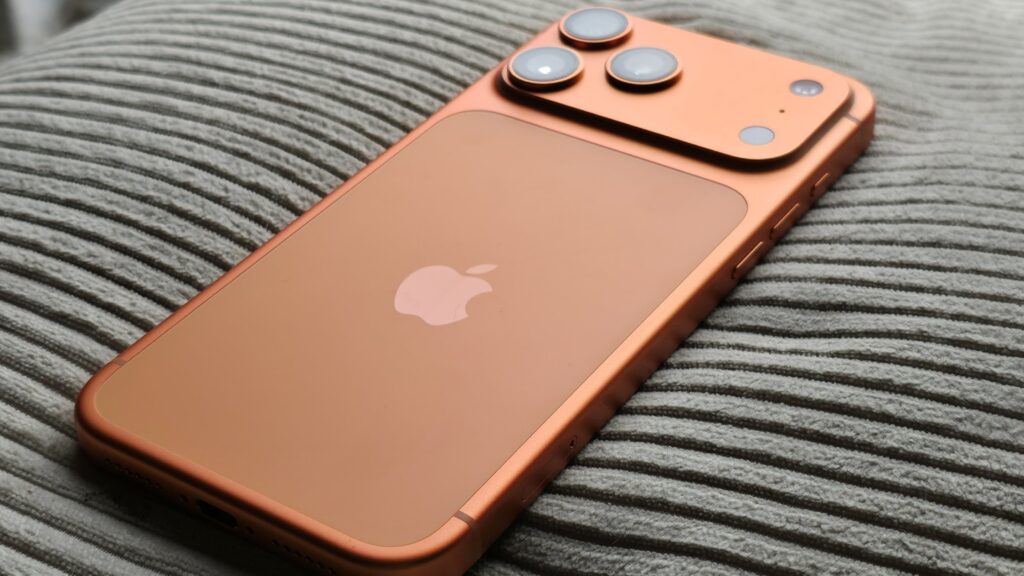
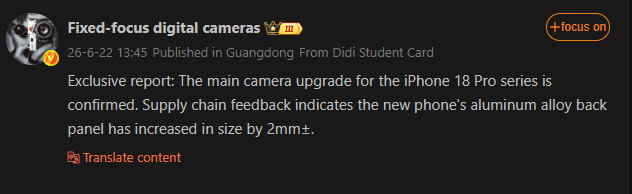
Apple’s Dynamic Island might be sticking around a bit longer than some people kexpected. A new report from China suggests the company isn’t quite ready to move everything under the display yet, at least not for the next Pro iPhones.

The original plan, or at least what many leaks had been pointing to, was fairly straightforward. Apple would hide the entire Face ID system under the screen and leave just a small punch-hole for the front camera. That would finally get the iPhone closer to a true all-screen look. But it now seems that’s proving harder to pull off than anticipated.

Instead, Apple is said to be working on a smaller Dynamic Island for the iPhone 18 Pro models. So the cutout won’t disappear, but it could take up less space than before. It’s a bit of a middle ground. Not the big visual jump some were hoping for, but still a step in the right direction.

Part of the problem comes down to how Face ID works. It’s not just one sensor that can be hidden easily. There’s a full set of components involved, and they all need to work reliably through the display without slowing things down or affecting accuracy. That’s easier said than done, and Apple doesn’t seem willing to compromise on that.

So for now, it looks like the company is choosing to refine rather than rush. A smaller Dynamic Island still keeps all the existing features intact, like live activities and quick controls, while making the front look a bit cleaner.

Of course, this is still based on early supply chain chatter, so things could change. But if this direction holds, a hole-punch cutout in an iPhone display might still be a little further away than many expected.

Don’t miss a thing! Join our Telegram community for instant updates and grab our free daily newsletter for the best tech stories!

For more daily updates, please visit our News Section.

(Source: Fixed Focus Digital on Weibo | Image)

DDR4 prices surge 8.8x in a year as manufacturers shift focus to AI

The global memory market is going through a bit of an unexpected shift in 2026. DDR4, which has long been the go-to option for affordable and widely available memory, is suddenly getting harder to find and noticeably more expensive. And it’s starting to affect a lot more than just PCs.

A recent report from Nikkei points to a sharp jump in prices. A standard DDR4 8GB module hit around $15 in February 2026, up 15% from the previous month and 8.8 times higher than what it was a year ago. DDR5 prices are also moving up, though not as dramatically, suggesting there’s broader pressure building across the DRAM market.

The main reason comes down to supply. Major players like Samsung, SK Hynix, and Micron have been gradually pulling back from DDR4 and LPDDR4 production. The focus now is on newer, more profitable high-bandwidth memory production, especially with AI demand picking up. That shift makes sense from a business perspective, but it’s left older standards in a tight spot.

For companies that still rely on DDR4, this is becoming a real problem. Some reports suggest buyers are only able to secure about half of the memory they actually need, even when paying higher prices. That kind of shortage can slow down production or force last-minute changes.

Interestingly, it’s not just smartphones or laptops feeling this. Devices like digital cameras and even TVs are getting caught up in the situation. Some manufacturers are reportedly looking at fallback options like DDR3, though that brings its own issues since supply there is tightening as well.

DDR4 isn’t obsolete yet, but it’s clearly no longer the priority. For now, that means higher costs, tighter supply, and a bit of uncertainty for anyone still relying on it.

Don’t miss a thing! Join our Telegram community for instant updates and grab our free daily newsletter for the best tech stories!

For more daily updates, please visit our News Section.

(Via | Image)

Honor Pad X10 launched with 11-inch 90Hz display and 10100mAh battery

Honor has unveiled the Honor Pad X10 in China, a feature-packed tablet for students, professionals, and entertainment enthusiasts. Its Pro version launched in January this year.

Honor Pad X10

Honor Pad X10 Specifications

The Honor Pad X10 features an 11-inch LCD panel with a 1920 x 1200 resolution, 90Hz refresh rate, up to 500 nits brightness, and 84% screen-to-body ratio. It includes eye-care technologies like TÜV Rheinland low blue light, flicker-free certification, eBook mode, and natural light mode to reduce eye strain.

Honor Pad X10

Under the hood, the tablet is powered by the Qualcomm Snapdragon 680 processor with an octa-core CPU (four Cortex-A73 cores at 2.4GHz and four Cortex-A53 cores at 1.9GHz) and an Adreno 610 GPU. It also supports up to 2TB of expandable storage

On the imaging front, the Honor Pad X10 features 5MP sensors for both the front and rear cameras. The device runs on Android 16 with MagicOS on top.

The Honor Pad X10 features a 10,100mAh battery, offering up to 22 hours of video playback, 123 hours of music, and a standby time of up to 97 days. It includes a 15W charger but lacks support for faster charging.

Honor Pad X10

The Honor Pad X10 is student-friendly, featuring a dedicated Learning Space with distraction-free modes, parental controls, and educational resources. It includes a quad-speaker setup and has a durable metal body weighing 499g and 7.25mm thick. It also boasts SGS five-star certification for drop and pressure resistance.

Pricing and Availability

The Honor Pad X10 comes in Sky Blue and Starry Gray colors. In terms of pricing, the 6GB + 128GB variant is priced at 1,299 yuan ($194). The 8GB + 128GB variant is available for 1,599 yuan ($239) while the higher-end 8GB + 256GB variant costs 1,799 yuan ($269).

For more daily updates, please visit our News Section.

Stay ahead in tech! Join our Telegram community and sign up for our daily newsletter of top stories! 💡

(Honor)

OnePlus 15T vs Samsung Galaxy S26: The $600 Flagship That Beats a $900 Phone?

In 2026, the flagship game isn’t just about who’s faster; it’s about who dares to go further. The OnePlus 15T storms in with a massive battery and extreme performance tuning, while the Galaxy S26 plays it smart with refinement, balance, and long-term polish. One feels like a power-packed disruptor, the other like a carefully perfected flagship. This clash isn’t subtle; it’s a clear battle between bold innovation and premium consistency.

Major Specs:

FeatureOnePlus 15TGalaxy S26Winner
Display6.32″ AMOLED, 165Hz, 3600 nits peak6.3″ LTPO AMOLED, 120Hz, 2600 nitsOnePlus – Higher refresh rate & brightness
ProcessorSnapdragon 8 Elite Gen 5 (higher clocks)Snapdragon 8 Elite Gen 5 / Exynos 2600OnePlus – Better performance tuning
RAM & StorageUp to 16GB RAM, 1TB, UFS 4.1Up to 12GB RAM, 512GB, UFS 4.XOnePlus – More storage & RAM
Rear Camera50MP (wide) + 50MP (3.5x)50MP (wide) + 10MP (3x) + 12MP ultrawideSamsung – More versatile setup
Selfie Camera16MP, 1080p12MP, 4K, autofocusSamsung – Better video & focus
Battery7500mAh4300mAhOnePlus – Much larger battery
Charging100W wired, 50W wireless25W wired, 15W wirelessOnePlus – Significantly faster
BuildAluminum + fiber back, IP69KGlass + Armor Aluminum, IP68Samsung – More premium feel
Software SupportAndroid 167 years updatesSamsung – Longer support
Extra FeaturesIR blasterSamsung DeXSamsung – Better ecosystem
Price~$600~$900OnePlus – Much better value

Please Note: When you buy something using the links in our articles, we may earn a small commission at no cost to you.

1. Design and Display 

Build and Feel

The OnePlus 15T leans toward a performance-focused design with a practical, slightly rugged approach, including stronger water resistance and a fiber-reinforced back that prioritizes durability over luxury. The Galaxy S26, on the other hand, feels more premium with its Gorilla Glass Victus 2 on both sides and a refined aluminum frame. Samsung’s finish looks and feels more flagship-grade, while OnePlus gives off a more utilitarian, power-user vibe. The S26 subtly feels more polished in hand, especially for everyday flagship expectations.

Display Quality

OnePlus pushes boundaries with a 165Hz AMOLED panel, extremely high peak brightness, and advanced PWM dimming, making it ideal for gamers and long usage sessions. The Galaxy S26 sticks to a 120Hz LTPO AMOLED but delivers better efficiency and more consistent color tuning. While OnePlus is more aggressive on specs, Samsung’s display feels more balanced and optimized for real-world viewing.

Verdict

The Galaxy S26 wins for premium feel and refined display tuning, while the OnePlus 15T stands out for sheer display performance and smoothness.

2. Specifications Including Battery 

Performance

Both phones run on the Snapdragon 8 Elite Gen 5 (region-dependent for Samsung), delivering top-tier flagship performance. The OnePlus 15T edges ahead slightly with higher clock speeds and aggressive tuning, making it better suited for sustained gaming and heavy workloads. Samsung, however, focuses more on stability and long-term optimization, especially with its extended software support. The difference is subtle but noticeable under prolonged stress.

Battery and Charging

This is where the gap becomes obvious. The OnePlus 15T packs a massive 7500mAh battery with 100W wired and 50W wireless charging, easily dominating endurance and charging speed. The Galaxy S26’s 4300mAh battery and slower 25W charging feel conservative in comparison. Samsung prioritizes battery health and safety, but OnePlus clearly targets power users who value speed and longevity.

Verdict

The OnePlus 15T wins comfortably with better performance tuning, a dramatically larger battery, and much faster charging.

3. Camera 

Main and Secondary Lenses

The OnePlus 15T offers a dual-camera setup with a strong 50MP main sensor and a high-quality 3.5x telephoto lens, focusing on clean, zoom-centric photography. However, the Galaxy S26 brings more versatility with a triple-camera system, including an ultrawide lens that expands shooting flexibility. Samsung’s image processing also tends to deliver more consistent dynamic range and color accuracy across scenarios. OnePlus feels sharper in zoom shots, but Samsung feels more reliable overall.

Selfie Camera

Samsung takes a clear lead here with a 12MP autofocus selfie camera capable of 4K video, offering sharper and more detailed results. The OnePlus 15T’s 16MP front camera is decent but limited to 1080p video, which feels less future-proof. For video calls and content creation, Samsung has a noticeable edge.

Verdict

The Galaxy S26 wins with a more versatile camera system, better processing, and a superior selfie experience.

4. Pricing 

5. Price Comparison

The OnePlus 15T is priced around $600 (₹58,000), while the Galaxy S26 comes in significantly higher at about $900 (₹88,000). This creates a clear gap in positioning, with OnePlus targeting high-performance value buyers and Samsung aiming at premium flagship users. The price difference is substantial and directly impacts buying decisions.

Is the Price Justified?

The OnePlus 15T delivers exceptional value with flagship performance, a massive battery, ultra-fast charging, and a high-end display at a much lower price. It feels aggressively priced for what it offers. The Galaxy S26 justifies its premium with better build quality, longer software support, more refined cameras, and ecosystem features like DeX. However, the upgrade cost may feel steep unless those extras truly matter.

Verdict

The OnePlus 15T clearly wins on value for money, while the Galaxy S26 appeals more to users willing to pay for refinement and longevity.

Disclaimer:
Prices are approximate and may vary based on country, region, and applicable taxes.

6. Conclusion 

The OnePlus 15T stands out with its massive battery, ultra-fast charging, 165Hz display, and performance-first approach. It feels designed for power users, gamers, and those who want maximum hardware without overspending. The Galaxy S26 differentiates itself with premium materials, a more versatile camera system, long-term software support, and productivity features like Samsung DeX. It leans toward a complete flagship ecosystem experience rather than raw specs.

Verdict

OnePlus 15T is the smarter choice for most users, offering better performance-per-dollar and unmatched battery life. The Galaxy S26, however, remains the better pick for those who prioritize premium design, camera consistency, and long-term reliability. The decision ultimately comes down to whether raw power or refined experience matters more.

Read More:

Galaxy A57 teardown video shows Samsung focusing on easier repairs

Samsung has just taken the wraps off the Galaxy A57 5G and Galaxy A37 5G, and we already had a look under the hood of one of them. A teardown of the Galaxy A57 by PBKreviews went live hours before the announcement, giving a fairly clear idea of what Samsung has changed this time.

The teardown itself is pretty standard. The back panel comes off with some heat, followed by a bunch of Phillips screws holding the internal frame together. Once that’s out of the way, the layout looks familiar, with the mainboard at the top and the battery taking up most of the space below.

Camera hardware is largely unchanged. You still get a 50MP main sensor with OIS, a 12MP ultrawide, and a 5MP macro, along with a 12MP front camera. The bigger change sits on the mainboard, where Samsung has placed the new Exynos 1680 chip. It’s built on a 4nm process and should handle daily tasks a bit more smoothly, though real-world performance will tell the full story.

One small but meaningful change is the battery setup. The 5,000mAh unit is held in place with pull-tab adhesive, which makes it easier to remove. It’s not something you notice as a user day to day, but it does make repairs less of a headache later on.

There’s also a larger vapor chamber this time. It sits under the battery and looks noticeably bigger than what we’ve seen in earlier models. That should help with heat management, especially during longer gaming sessions or heavy multitasking.

Overall, the inside of the phone feels clean and fairly easy to work with. The teardown gives it a 9 out of 10 for repairability, which is quite good for a modern smartphone.

From the outside, not much has changed. But internally, Samsung seems to have made a few practical improvements that might actually matter over time.

Don’t miss a thing! Join our Telegram community for instant updates and grab our free daily newsletter for the best tech stories!

For more daily updates, please visit our News Section.

Best Smartwatches with Longest Battery Life in March 2026

The smartwatch market in 2026 shows a clear divide. Some devices focus on advanced apps, bright AMOLED screens, and tight ecosystem integration. Others focus on one core goal: lasting as long as possible on a single charge. Battery life has become a defining factor for many buyers, especially for athletes, hikers, and users who do not want to charge a watch every day.

Manufacturers now approach endurance in different ways. Some rely on solar charging and low-power displays. Others use dual-chip systems or hybrid display technologies. The result is a wide range of smartwatches that can last anywhere from a few days to several weeks. Here are the best smartwatches with the longest battery life in March 2026.

1. Garmin Enduro 3

Garmin Enduro 3

Garmin positions the Enduro 3 as a watch built for extreme endurance. The device uses solar charging and a highly efficient display to deliver exceptional battery life.

The watch can last up to 80 days in smartwatch mode with solar support, and even longer under ideal sunlight conditions. GPS usage also stretches far beyond typical smartwatches, making it suitable for ultra-distance events and long expeditions.

Garmin includes advanced tools such as endurance score, stamina tracking, and detailed navigation features. The Enduro 3 focuses on reliability and long-term performance rather than smart features.

Please Note: When you buy something using the links in our articles, we may earn a small commission at no cost to you.

2. Garmin Fenix 8 Solar

Garmin-Fenix-8-Series

The Fenix 8 Solar builds on Garmin’s flagship platform with a balance of endurance and features. It targets users who want strong battery life without sacrificing functionality.

The watch delivers up to 30 days of battery life in standard mode, which extends to around 48 days with solar charging on larger models. It also supports AMOLED variants, which trade some battery life for improved visuals.

Garmin equips the Fenix 8 with features like training readiness, ClimbPro, PacePro, and multi-band GNSS. It supports a wide range of activities and works well for both training and outdoor navigation.

Please Note: When you buy something using the links in our articles, we may earn a small commission at no cost to you.

3. Coros Vertix 2S

Coros-Vertix-2S

Coros takes a different approach with the Vertix 2S. The company focuses on system-level efficiency instead of solar charging.

The watch offers up to 36 days of battery life in regular use and more than 118 hours in GPS mode.

This watch offers advanced offline mapping, dual-frequency GPS, and EvoLab analytics for training optimization.

Coros has built this device for endurance, incorporating a titanium bezel and sapphire glass for rugged durability. It functions exceptionally well in outdoor environments and is a reliable companion for mountaineers, runners, and explorers.

Please Note: When you buy something using the links in our articles, we may earn a small commission at no cost to you.

4. Amazfit T-Rex Ultra 2

Amazfit positions the T-Rex Ultra 2 as a rugged smartwatch with strong endurance at a lower price point. The device combines durability with a feature-rich platform.

The watch can last up to 30 days in standard use. It includes offline maps, multi-satellite positioning, and a bright AMOLED display. That combination stands out in this segment, where long battery life often comes with simpler displays.

The device also includes features such as a built-in flashlight and climbing tools. It works well for outdoor users who want a capable watch without spending too much.

Please Note: When you buy something using the links in our articles, we may earn a small commission at no cost to you.

5. Huawei Watch GT Runner 2

Huawei positions the Watch GT Runner 2 (full review) as a running-focused smartwatch with a lightweight titanium build and breathable strap design. It delivers up to 14 days of battery life under light use and around 7 days with typical usage.

The watch focuses on running performance with advanced metrics such as running power, training intensity, and race prediction tools. It also supports multi-satellite GPS tracking, over 100 sports modes, and a full suite of health monitoring features.

6. TicWatch Pro 5 Enduro

TicWatch-Pro-5-Enduro

Mobvoi uses a dual-display system to extend battery life on the TicWatch Pro 5 Enduro. The watch includes an AMOLED screen and a secondary ultra-low-power display.

The watch delivers up to 90 hours in Smart Mode and up to 45 days in Essential Mode. The secondary display handles basic information while reducing power consumption.

The device runs on Wear OS, which supports apps, notifications, and Google services. This approach allows the watch to maintain smart features while improving endurance.

7. Xiaomi Watch 5

Xiaomi Watch 5

Xiaomi introduces new battery technology with the Watch 5. The device uses a silicon-carbon battery along with a dual-chip system to improve efficiency.

The watch lasts up to 6 days in standard smart mode and up to 18 days in power-saving mode. These numbers are significant for a Wear OS smartwatch with deep Google integration.

The Watch 5 also supports gesture controls and advanced sensors. It focuses on balancing modern smartwatch features with improved battery life.

8. OnePlus Watch 3

OnePlus improves battery life on the Watch 3 compared to previous models. The smartwatch delivers up to 120 hours of battery life in smart mode and up to 16 days in power saver mode.

It includes a large AMOLED display, improved health tracking, and fast charging support. The watch also supports over 100 sports modes and dual-band GPS tracking.

Please Note: When you buy something using the links in our articles, we may earn a small commission at no cost to you.

9. Samsung Galaxy Watch Ultra

Samsung Galaxy Watch Ultra

Samsung positions the Galaxy Watch Ultra as a premium smartwatch with strong performance and ecosystem integration. The device delivers up to 48 hours of battery life in standard use and 100 hours in low power mode.

It includes a titanium build, advanced sensors, and multi-sport tracking features. The smartwatch also supports LTE connectivity and integrates deeply with Samsung devices.

Please Note: When you buy something using the links in our articles, we may earn a small commission at no cost to you.

10. Apple Watch Ultra 3

Apple-Watch-Ultra-3

Apple focuses on performance and ecosystem features with the Watch Ultra 3. The device delivers up to 42 hours of battery life and up to 72 hours in low power mode.

It includes features such as satellite communication, advanced health tracking, and improved fitness tools. The smartwatch integrates tightly with the Apple ecosystem and supports a wide range of third-party apps.

Please Note: When you buy something using the links in our articles, we may earn a small commission at no cost to you.

For more daily updates, please visit our News Section.

Stay ahead in tech! Join our Telegram community and sign up for our daily newsletter of top stories! 💡

Galaxy A57 and Galaxy A37 launched with minor upgrades and major price hikes

Samsung has refreshed its Galaxy A-series lineup with the launch of the Galaxy A57 5G and Galaxy A37 5G. Both phones bring a mix of practical upgrades, focusing on performance, durability, and camera improvements, while keeping things familiar overall.

The Galaxy A57 5G is clearly the more polished of the two. It runs on Samsung’s new Exynos 1680 chip, built on a 4nm process, and is expected to offer better efficiency and smoother day-to-day performance. A small improvement this year in terms of build and durability is the IP68 rating, up from A56’s IP67.

Samsung has trimmed the design a bit as well. The A57 is now thinner and lighter, with slimmer bezels around its 6.7-inch Super AMOLED display. The panel still sticks to FHD+ resolution with a 120Hz refresh rate, and peaks at 1,900 nits. It’s the same as last year’s A56.

The camera setup doesn’t change much either. You still get a 50MP main sensor with OIS, along with a 12MP ultrawide and a 5MP macro, plus a 12MP front camera. The difference this time reportedly comes from improved image processing, which should help with low-light shots and overall detail.

The more affordable option, the Galaxy A37, follows a similar approach. It uses the Exynos 1480 chip and also gets the new IP68 rating. The display is the same size and brightness as the A57, and camera hardware remains unchanged, though Samsung is relying on better processing here as well.

Design-wise, the A37 doesn’t get the same slimming treatment. It’s a bit heavier and keeps the thicker bezels from before. Both phones run One UI 8.5 based on Android 16 and pack a 5,000mAh battery with 45W charging.

Pricing and availability

Galaxy A37 5G

  • 6GB + 128GB: ₹41999 (or €429)
  • 8GB + 256GB: ₹47499 (or €519)
  • 12GB+256GB ₹52999

Galaxy A57 5G

  • 8GB + 256GB: ₹58999 (€529)
  • 12GB + 256GB: ₹62999 (or €589)

Sales begin April 10, with pre-order offers including a free storage upgrade. Overall, this feels like a steady update. Samsung isn’t changing too much, but it’s refining a few key areas to remain a go-to option for Galaxy fans in the highly competitive mid-range smartphone market.

Galaxy A56, Galaxy A36 launch prices

Stay ahead in tech! Join our Telegram community and sign up for our daily newsletter of top stories!

For more daily updates, please visit our News Section.

(Sources: 1, 2, 3)

Vivo X300 Ultra, Vivo X300s renders reveal bold new colors that may divide opinions

Vivo is getting ready to unveil its next camera-focused flagship, the X300 Ultra, and most of the details are already starting to fall into place. The phone is set to launch on March 30 alongside the more compact X300s, and going by the latest leaks, Vivo is clearly doubling down on photography this year.

Vivo X300 Ultra renders

Design-wise, the X300 Ultra doesn’t look like a major departure from previous X-series models, but the color options, based on leaked renders, help it stand out. The three variants include a soft green with a dual-tone finish, a clean matte black, and a white option with a similar two-tone look. The design still leans heavily on that large circular camera module at the back, which has pretty much become a signature for Vivo’s flagship line.

The camera setup is where things get interesting. The phone is expected to feature two 200MP sensors, which is unusual even by current flagship standards. The main camera uses Sony’s LYT901 sensor with a 35mm focal length, while the periscope telephoto relies on Samsung’s HP0 sensor with an 85mm focal length. There’s also a 50MP ultrawide camera based on Sony’s LYT818. On paper, it’s a very flexible setup, covering everything from standard shots to longer zoom ranges.

Vivo is also said to be introducing optional ZEISS teleconverter attachments, extending zoom to 200mm and even 400mm. It’s a niche feature, sure, but it shows how far the company is pushing the camera angle here. There’s even talk of a bundled kit with a grip and extra accessories for users who want a more camera-like experience.

Vivo X300s renders

Performance shouldn’t be a concern either. A prototype has already shown up on Geekbench with scores that line up with the Snapdragon 8 Elite Gen 5 chip. The phone is expected to come with up to 16GB RAM and run Android 16 with OriginOS 6.

With the launch just around the corner, the X300 Ultra looks less like a typical upgrade and more like a focused attempt to stand out through imaging.

Don’t miss a thing! Join our Telegram community for instant updates and grab our free daily newsletter for the best tech stories!

For more daily updates, please visit our News Section.

(Source: DCS on Weibo)