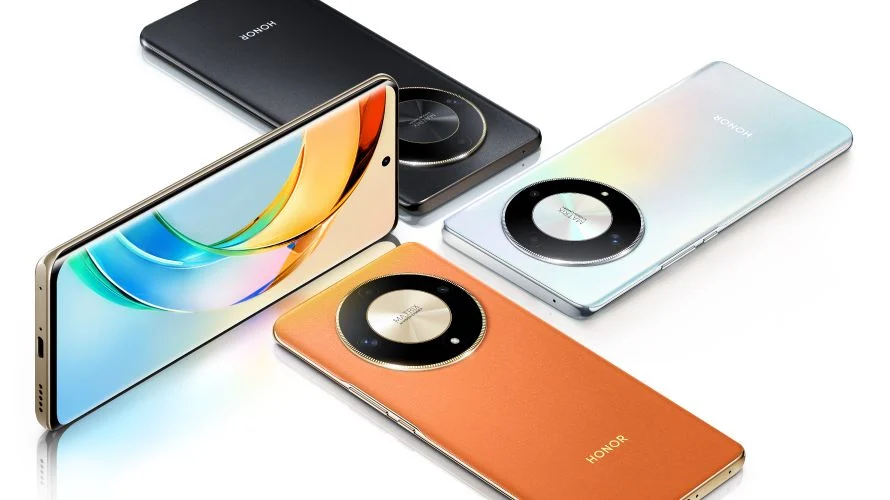
HONOR has started rolling out the MagicOS 8.0 OTA update for HONOR X9b users in India. After beta testing, the update is now available for all HONOR X9b phones, bringing new AI features and better security.
What’s New in MagicOS 8.0
Intent-Based UI: MagicOS 8.0 has a new UI that uses AI to make interactions more intuitive, powered by HONOR’s on-device AI model, MagicLM.
AI Features:
Magic Capsule: Easy access to calls, alarms, and notifications.
Magic Portal: Helps navigate to relevant apps based on message context.
Magic Ring: Simplifies multitasking across up to 8 devices.
Magic Lock Screen & Parallel Spaces: Full-screen Always on Display and isolated contact spaces for better privacy.
AI Smart Folders & AI Blur: Organizes apps intelligently and blurs sensitive information for privacy.
Improvements:
Smooth Animations: Provides a seamless visual experience.
Custom Camera Layout: Allows users to move frequently used camera modes for easier access.
Enhanced ViLTE’s Video Calling: Improves video call quality.
Practical Updates:
Ultra Power Saving Mode: Extends battery life.
5G Roaming: Ensures consistent connectivity while traveling.
Security: Includes the latest Android June 2024 security patches.
Update Availability
The update is now rolling out, and all HONOR X9b users in India can access it. To check for and install the update:
Go to Settings > System & updates > Software update
Tap on “Check for Updates”
In other news, the Xiaomi 14 Civi Limited Edition with a Panda Design is launching in India on July 29, 2024. This variant will feature new mirror glass and vegan leather options, available in Pink, Monochrome, and Blue. Expected to come with up to 12GB RAM and 512GB storage, it shares features with the base model, including a 6.55-inch OLED display with a 120Hz refresh rate, Snapdragon 8s Gen 3 SoC, 4,700mAh battery with 67W fast charging, a 50MP triple rear camera, and a 32MP front camera.
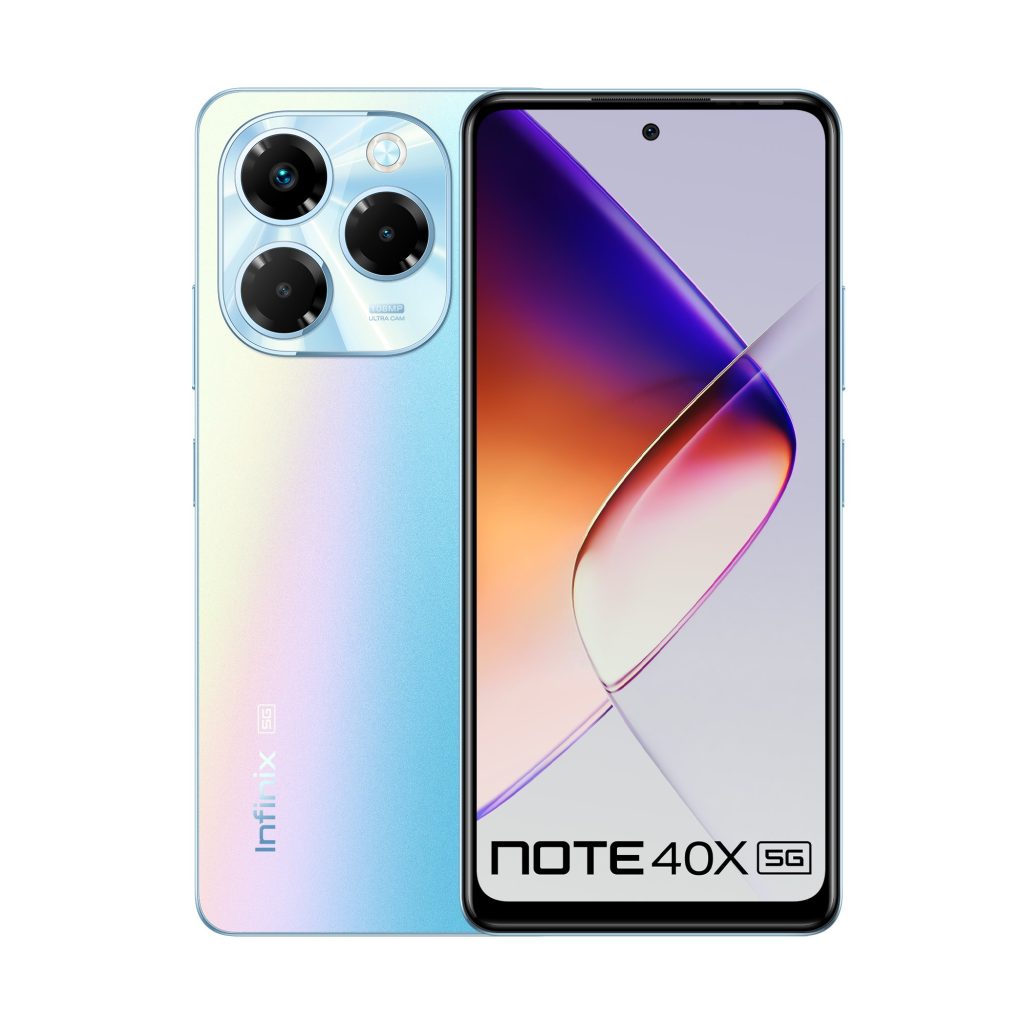
Infinix is set to launch a new smartphone in India soon. The brand has announced that its upcoming offering is called the Infinix Note 40X. It will be debuting early next month. Some key details of the smartphone have also been confirmed along with its design. The device will be the fifth addition in the Note 40 series that comprises of the standard, pro, and pro+ variants. Read on to know what we know so far about the Note 40X.
Infinix Note 40X launch date and key details revealed
The Infinix Note 40X is confirmed to launch on August 5. Design-wise, the device will come with a flat frame and a squarish camera module on the back panel. It is confirmed to be available in three color options including Starlit Black, Lime Green, and Palm Blue. One of them will have a gradient finish. The smartphone will feature a side-mounted fingerprint scanner embedded in the power button.
On the front, the Infinix Note 40X is said to come with a 6.78-inch display with a punch-hole cutout and Dynamic Port feature. The latter will mimic Apple’s Dynamic Island and display notification alerts, charging status etc. The upcoming offering is also confirmed to sport triple rear camera setup headlined by a 108MP main sensor. There will be an 8MP selfie snapper on the front and the device will pack AI features.
The Infinix Note 40X is confirmed to be equipped with dual stereo speakers with DTS Audio offering an immersive listening experience.
Other details regarding the Infinix Note 40X like processor, RAM and storage configurations, and battery remain under wraps. The device is expected to be available from Flipkart. We should learn more details in the days leading up to the launch event.
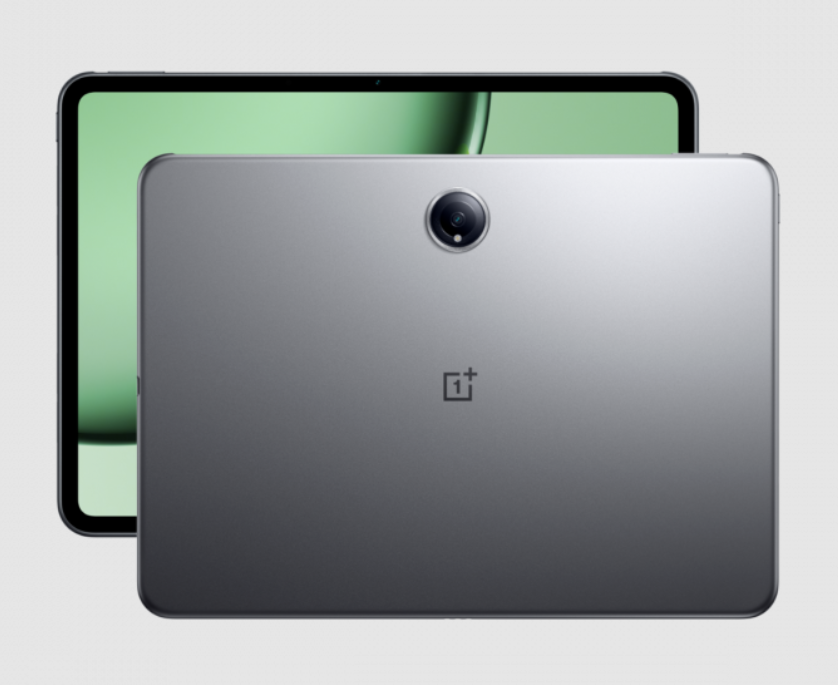
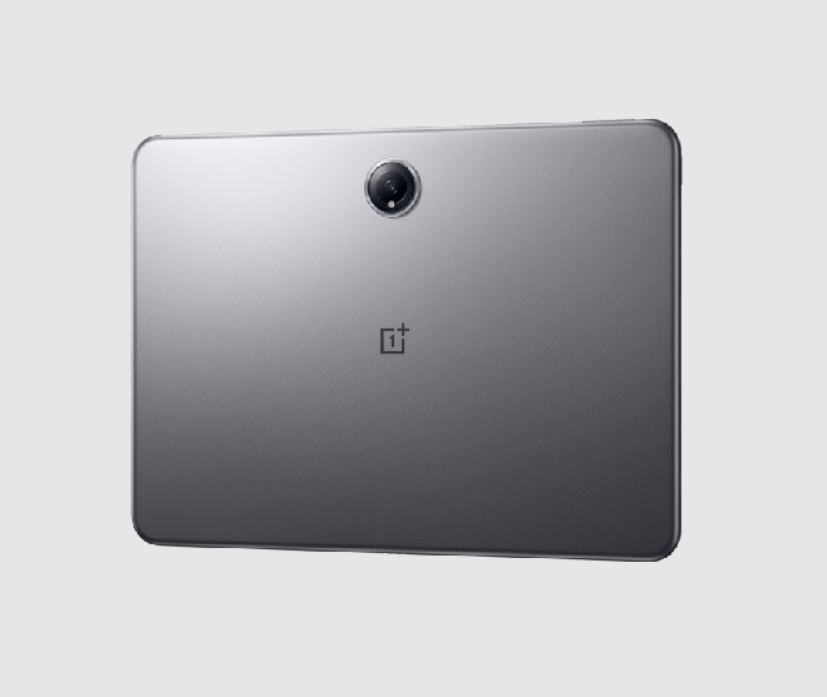
The OnePlus Pad 2 Global Edition is a powerhouse of innovation, designed to elevate your digital experience with its impressive array of features and cutting-edge technology. You can now get a discount of $50 by using the code:P2D50 at GeekWills. Thus you can get the tablet for as low as $399 only. Please note that this coupon expires on July 25.
At the heart of this sleek 12.1-inch tablet is the Qualcomm Snapdragon 8 Gen 3 chipset, renowned for its optimal balance of price and performance. Boasting a remarkable Antutu Benchmark score of over 2316067, this chipset ensures seamless multitasking and top-tier performance.
One of the standout features of the OnePlus Pad 2 is its stunning 3K 144Hz display, delivering an unparalleled visual experience. The 12.1-inch screen, with its unique 7:5 aspect ratio, offers ultra-high resolution and a smooth 144Hz refresh rate, making it perfect for gaming, streaming, and productivity. Supporting HDR10+ and P3 gamut with 10.7 billion colors, the display achieves a peak brightness of 900 nits and incorporates “Bright Eye Protection” technology for eye safety and DC dimming for comfortable long-term use.
Connectivity is another strong suit of the OnePlus Pad 2, featuring support for dual Wi-Fi channels (Wi-Fi 6 and Wi-Fi 7) to ensure stable and fast network connections. This, combined with the 12GB LPDDR5x RAM and 256GB UFS3.1 storage, ensures that users can store and access large amounts of data with ease and efficiency.
The tablet’s 9510mAh battery provides ample power for extended use, with the 67W SUPERVOOC charging ensuring quick recharge times. This means you can enjoy uninterrupted usage throughout the weekend and benefit from over 40 days of standby time, making it ideal for both work and play.
Gaming enthusiasts will appreciate the one-touch game streaming feature, allowing for seamless display projection from your phone to the OnePlus Pad 2. The small window mode lets you multitask by catching up on TV shows, sports, or live streaming while gaming. Additionally, the stereo panoramic acoustics powered by Super Audio 5.0 provide cinema-quality sound, enhancing your multimedia experience with rich, 3D panoramic audio.
The OnePlus Pad 2 also excels in cross-device functionality with its tablet and mobile cross-screen transfer capabilities. With one-touch transfer, you can easily move pictures or files between your OnePlus phone and tablet without the need for additional peripherals. This feature supports one-touch task flow, screencasting, and file transfer, making it easier than ever to stay productive and connected.
Technical specifications of the OnePlus Pad 2 include a powerful 8-core, 64-bit architecture CPU, an Adreno 750 GPU, and a robust set of connectivity options, including Bluetooth 5.4 and various Wi-Fi standards (802.11a/b/g/n/ac/ax/be). The tablet also features a 13MP rear camera capable of 4K video recording and an 8MP front camera for high-quality video calls and selfies. The device’s dimensions are 268.7 x 195.1 x 6.5 mm, and it weighs a lightweight 589g, making it portable and easy to handle.
Running on OxygenOS 14.1 based on Android 14, the OnePlus Pad 2 ensures a user-friendly and customizable interface, packed with features to enhance productivity and entertainment. The tablet’s versatile Type-C port, supporting USB 3.2 Gen1 at 5Gbps, further enhances its connectivity and charging capabilities.
OnePlus Pad 2 Global Edition is a versatile and powerful tablet that offers exceptional performance, stunning visuals, and advanced connectivity features. Whether for gaming, streaming, or productivity, this tablet is designed to meet the demands of modern users, making it a worthy addition to any tech arsenal.
The OPPO A3x 5G has bagged multiple certifications in recent times including MIIT, Geekbench, FCC, and NBTC. Now, the device has been spotted on the China Telecom website revealing its design and the full spec sheet. The various listings suggest that the smartphone’s launch is just around the corner. The upcoming offering is expected to arrive as the successor to last year’s OPPO A2x. Read on to know what the latest certification reveals.
OPPO A3x 5G China Telecom listing
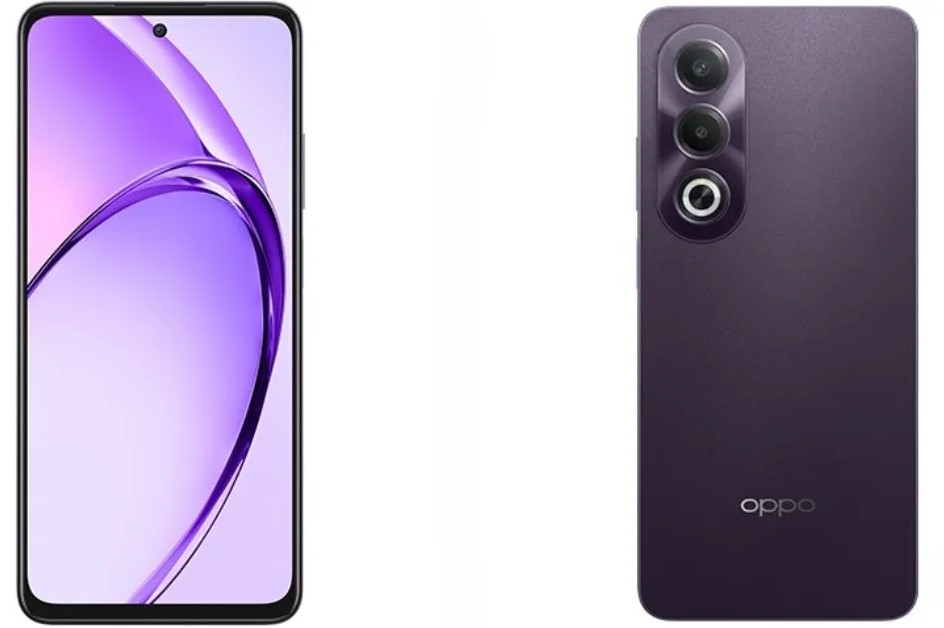
The OPPO A3x 5G carries a model number PKD130 on the China Telecom authority. It confirms the smartphone’s moniker. The device is seen in a Purple color option with a pill-shaped camera module. It will also be available in Starlight White and Cloud Feather Pink shades. Dimension-wise, it will measure 165.79 x 76.14 x 7.68 mm, and weigh 185.7 grams. On the front, there is a centre-aligned punch-hole display with a thick bottom chin.
As per the listing, the smartphone will feature a 6.67-inch LCD display bearing a resolution of 1,600 x 720 pixels. It will have a 32MP main camera coupled with a 2MP secondary lens and an 8MP front-facing selfie snapper.
Under the hood, the certification reveals that the OPPO A3x will be backed by a 5,100mAh battery unit. It will be offered in 4GB+128GB, 6GB+128GB, and 8GB+256GB RAM and storage configurations. The smartphone’s processor is not mentioned here, but as per the Geekbench database, it will be powered by a Snapdragon 680 SoC.
Connectivity options on the device include WiFi, USB-C, 3.5mm headphone jack, and Bluetooth. The upcoming offering will ship with Android 14 OS out of the box. We should learn more details about the OPPO A3x in the coming weeks.
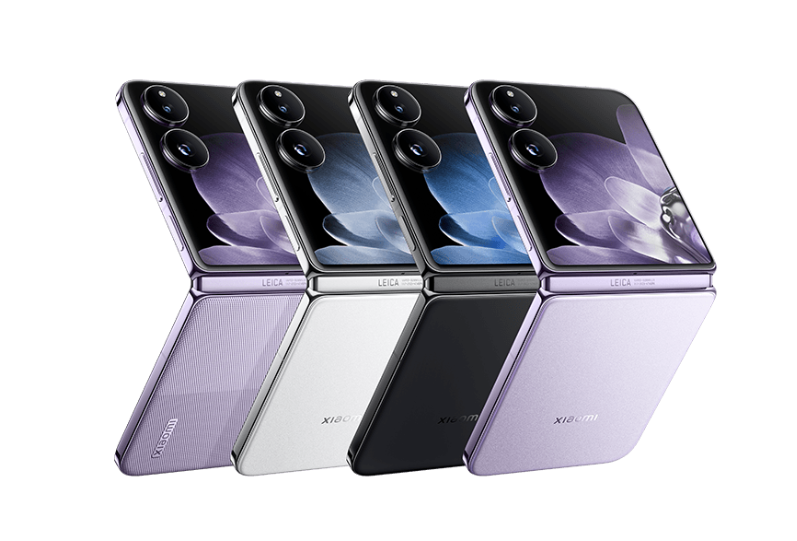
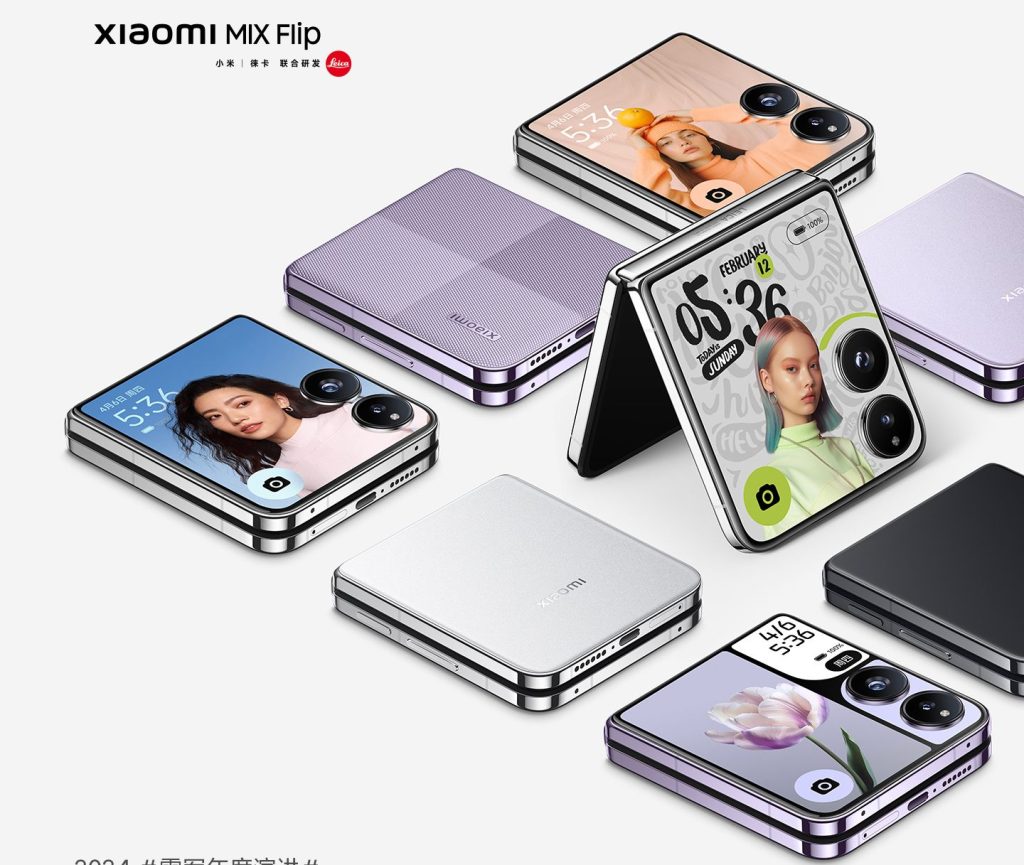
Xiaomi has officially confirmed the global launch of its first foldable phone, the Mix Flip. After an initial China-only release, five Central and Eastern European markets will be the first to get their hands on the device, priced at a competitive €1300 ($1411). Belgium will be among these five markets.
Xiaomi Mix Flip
The global model of the Xiaomi Mix Flip is expected to mirror the specifications of the Chinese version. It will likely feature a 6.86-inch foldable OLED TCL C8+ internal display with a Full HD+ resolution of 2912 x 1224 pixels, a 120Hz refresh rate, LTPO technology, and a peak brightness of 3000 nits, along with 2160Hz PWM dimming. The external display will be a 4.01-inch OLED TCL C8+ screen with a resolution of 1392 x 1208 pixels, a 120Hz refresh rate, a maximum brightness of 2500 nits, 2160Hz PWM dimming, and Xiaomi’s Dragon Crystal Glass protection.
The Mix Flip is powered by the Snapdragon 8 Gen 3 processor, LPDDR5x RAM, and UFS 4.0 storage. It includes a 4,780mAh battery with 67W fast charging and runs on Android 14 with HyperOS 1.0.
For photography, it boasts a 32-megapixel front camera and a rear camera setup featuring a 50-megapixel main camera with OIS and a 50-megapixel OV60A4 telephoto lens with 2x zoom and OIS. Additional features include a side-mounted fingerprint scanner, a 3500mm² 3D VC liquid cooling system, dual speakers, and advanced battery management and signal enhancement chips.
In related news, Xiaomi 14 Civi Limited Edition with a Panda Design is launching in India on July 29, 2024. This special variant, available in mirror glass and vegan leather versions in Pink, Monochrome, and Blue, retains the features of the base model.
Google’s annual Pixel launch event is happening next month which is quite earlier than expected. Plenty of leaks and rumors have revealed key details about the next-generation Pixel 9 series and Pixel Watch 3. The most notable addition to this year’s slab phone lineup is the comeback of an XL model that was last found on the Pixel 4 series. Now, a YouTube channel has compared the Pixel 9 Pro XL with the Pixel 8 Pro side-by-side.
Pixel 9 Pro XL compared to Pixel 8 Pro
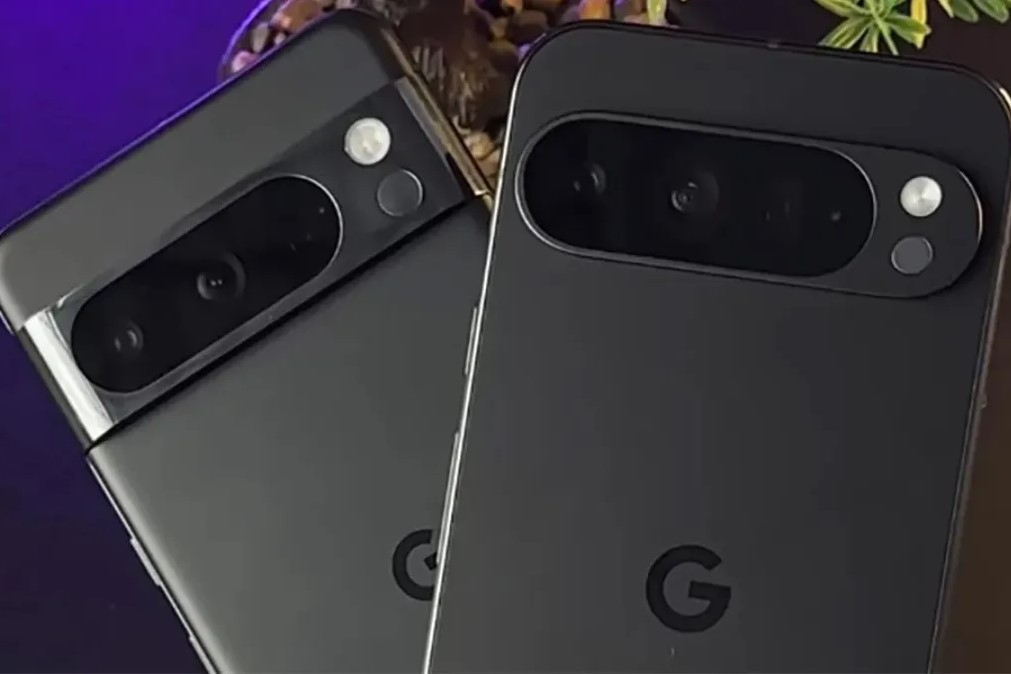
In the short video, the Pixel 9 Pro XL looks similar to what we saw in the leaked renders. It has a boxy design with a flat frame, significantly rounded corners, and a horizontal protruding camera island that does not stretch to the sides of the back panel. A closer look also confirms a periscope lens and there is of course a temperature sensor.
The Pixel 9 Pro XL looks slightly compact compared to the Pixel 8 Pro. This is because the latter has a slim profile compared to the boxy design on the upcoming offering. Another difference between the two devices is that the camera island on the Pixel 9 Pro XL has a matte finish compared to the glossy look on the Pixel 8 Pro. The side frame also lacks a glossy finish. Meanwhile, the back panel on both phones have a matte texture.
The Pixel 9 Pro XL is seen in a Matte Grey color option. It is also expected to be available in Porcelain shade. This is everything the leaked hands-on video reveals about the device. As per rumors, the entire Google Pixel 9 series is expected to be powered by a Tensor G4 chipset. The devices are confirmed to come with on-device Gemini AI.
Samsung shared a post earlier this month saying “Protect your Galaxy device with the Auto Blocker feature”. Samsung’s OneUI 6 based on Android 14 comes with a security feature called Auto Blocker, which is located in the Security and Privacy settings. It reportedly protects your Galaxy device by preventing the installation of applications from unauthorized sources The Auto Blocker feature is enabled by default, however, you can disable it during the setup process.
I feature to strengthen the security of the phone
Installing apps from third-party sources can be risky for the security of the device sometimes. While the pre-installed app stores are far from being perfect, implement various safety checks to prevent the distribution of malicious apps.
Notably, Android already blocks sideloading by default at an operating system level. The permission that most third-party app stores end up using, REQUEST_INSTALL_PACKAGES, has to be granted explicitly by the user.
Samsung’s Auto Blocker feature entirely blocks the installation of apps from unauthorized sources even if the source was granted the REQUEST_INSTALL_PACKAGES permission.
How to disable Auto Blocker?
Users of devices that get the feature through the OneUI 6.1.1 update can easily disable it by going to Settings > Security and Privacy> Auto Blocker. After this step, users will have to allow an app to sideload another, which is Android’s default sideloading behavior. Samsung devices running on One UI 6.1.1 reportedly include the past few generations of Galaxy S series and Z series devices so far.
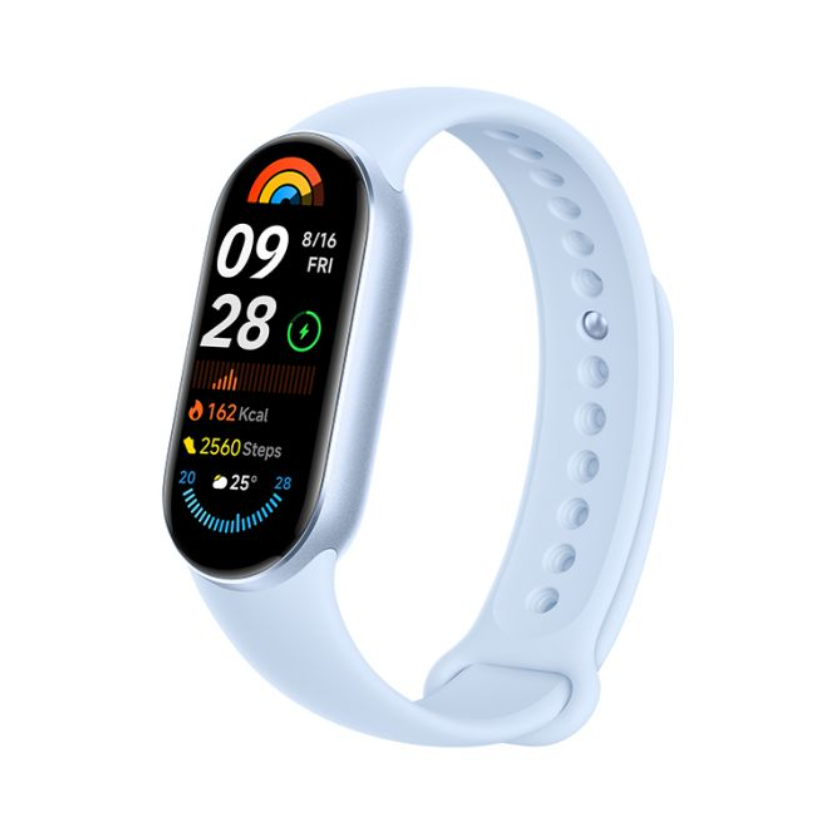
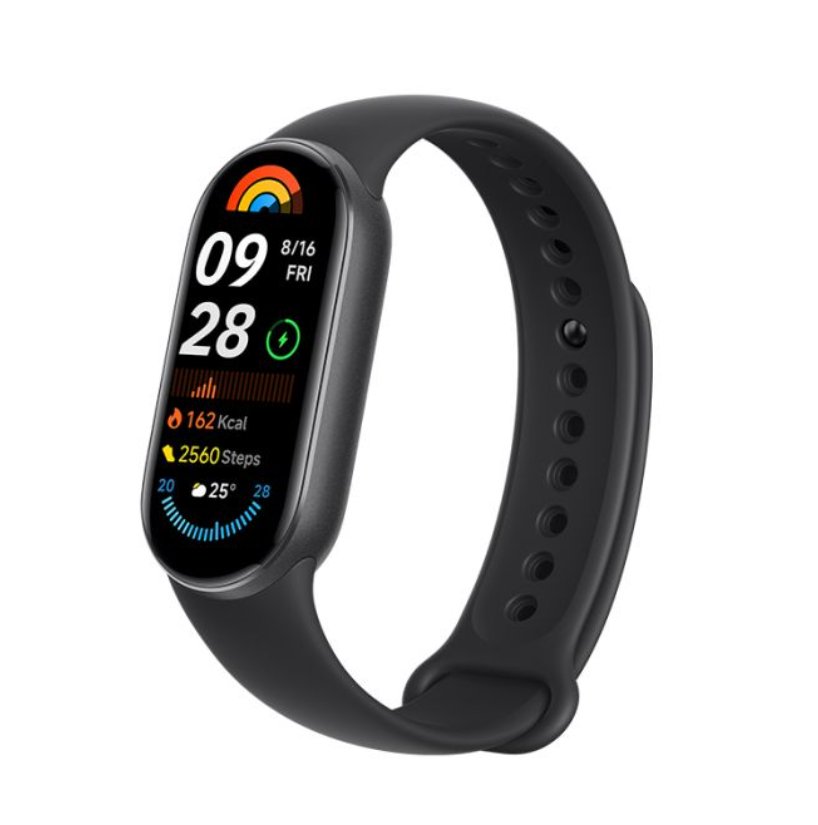
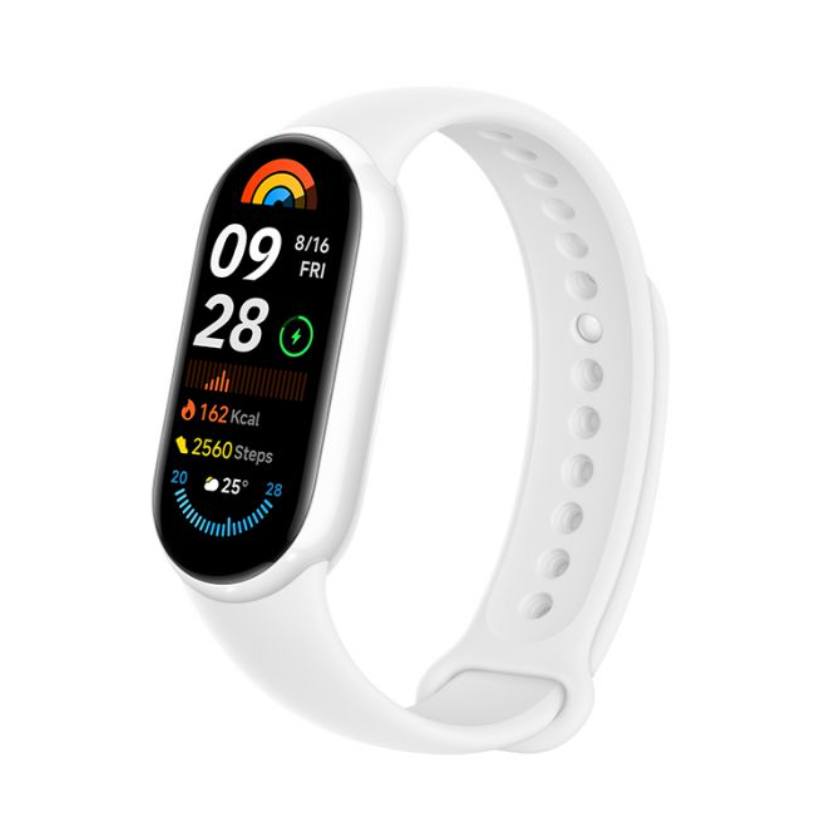
The Xiaomi Band 9 NFC is the latest addition to Xiaomi’s popular line of fitness trackers, featuring a 1.62-inch AMOLED screen that offers a vibrant and immersive display experience. You can now buy this smart band for $59.99 only at GeekWills. There is also a non-NFC version available for $49.99 only.
The screen, with its resolution of 192×490 pixels and brightness of up to 1200 nits, ensures clear visibility even under bright sunlight. Additionally, the screen supports auto brightness adjustment, enhancing usability in various lighting conditions. The band is available in multiple colors, including a special Ceramic White edition, adding elegance with its unique design.
Designed for comfort and durability, the Xiaomi Band 9 NFC boasts a lightweight main body weighing approximately 15.8 grams without the wrist strap. The dimensions of the main body are 46.53×21.63×10.95 mm, making it sleek and unobtrusive on the wrist. The 2.5D glass cover, aluminum alloy middle frame, and PC back ensure robustness while maintaining a sophisticated look. The wrist strap is made from TPU material and is adjustable between 135-210 mm, catering to a wide range of wrist sizes.
A standout feature of the Xiaomi Band 9 NFC is its multi-function NFC support, allowing for seamless contactless payments and other NFC-enabled interactions. Health and fitness tracking are at the core of this device, with sensors including an optical heart rate and blood oxygen sensor, and a 6-axis motion sensor. These sensors enable accurate heart rate, SpO2 levels, and physical activity monitoring, providing valuable insights into the user’s health and fitness.
The band is water-resistant up to 5ATM, making it suitable for swimming and other water-based activities. Connectivity is robust with BluetoothTM BLE 5.4, ensuring a stable connection with your smartphone. The rotor motor vibration system provides gentle notifications and alerts, enhancing the user experience without being disruptive.
Battery life is another strong suit of the Xiaomi Band 9 NFC, equipped with a 233mAh lithium-ion polymer battery that can last up to 18 days on a full charge. It supports fast charging, requiring only about 60 minutes to fully charge, minimizing downtime. The device supports multiple system languages, including Simplified Chinese, Traditional Chinese, and English, and is compatible with Android 8.0 or iOS 13.0 and above. Users can seamlessly integrate the band with the Xiaomi Sports Health app for a comprehensive health and fitness tracking experience.
Xiaomi Band 9 NFC combines style, functionality, and advanced technology to offer a superior fitness tracking experience. Its vibrant AMOLED display, comprehensive health monitoring features, water resistance, and extended battery life make it an ideal companion for both fitness enthusiasts and casual users alike. The inclusion of multi-function NFC further enhances its utility, making everyday tasks more convenient.
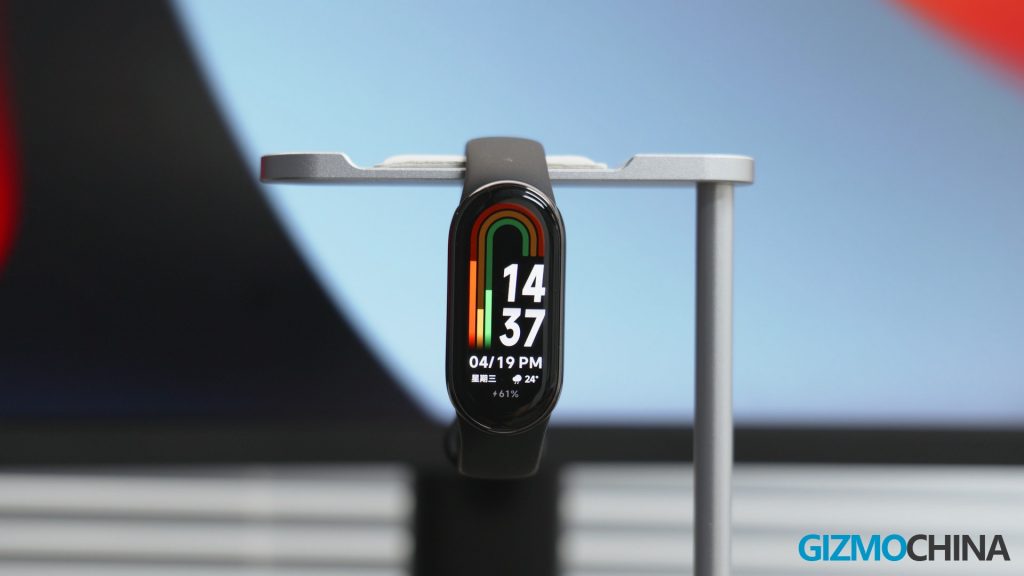
Xiaomi has rolled out a significant update for its popular Smart Band 8, bumping the firmware to HyperOS version 1.6.222 in China. This update brings a host of new features and improvements, focusing on enhancing user productivity and personalization.
The most notable addition is the support for focus notifications. This feature, previously introduced to the Smart Band 8 Pro, allows users to prioritize specific app notifications, ensuring that only the most important information reaches their wrist. It’s a welcome addition for those who often find themselves bombarded with notifications, as it helps to minimize distractions and maintain focus on tasks.
In addition to focus notifications, the update also introduces support for paid watch faces. This opens up a new avenue for personalization, allowing users to choose from a wider variety of designs and styles to match their individual preferences. While some may view this as a move towards monetization, it also offers a potential source of income for developers and designers, which could lead to even more diverse and creative watch faces in the future.
Beyond these major additions, the update also addresses various known issues, further improving the overall stability and performance of the device. The update is being gradually rolled out to users, so if you haven’t received it yet, keep an eye out for it in the coming days.
This isn’t the first major update for the Smart Band 8. In August of last year, it received a firmware update (version 1.3.176) that introduced several key features, including the Smart Do Not Disturb mode, new watch faces, and support for bus cards in specific regions. The update also enhanced the device’s fitness tracking capabilities with a new Frisbee motion algorithm and somatosensory game vibration feedback.
The Xiaomi Smart Band 8, launched in April of last year, has already gained a reputation for its impressive features, including a vibrant 1.62-inch AMOLED display, a sleek racetrack design, and a host of health and fitness tracking capabilities.
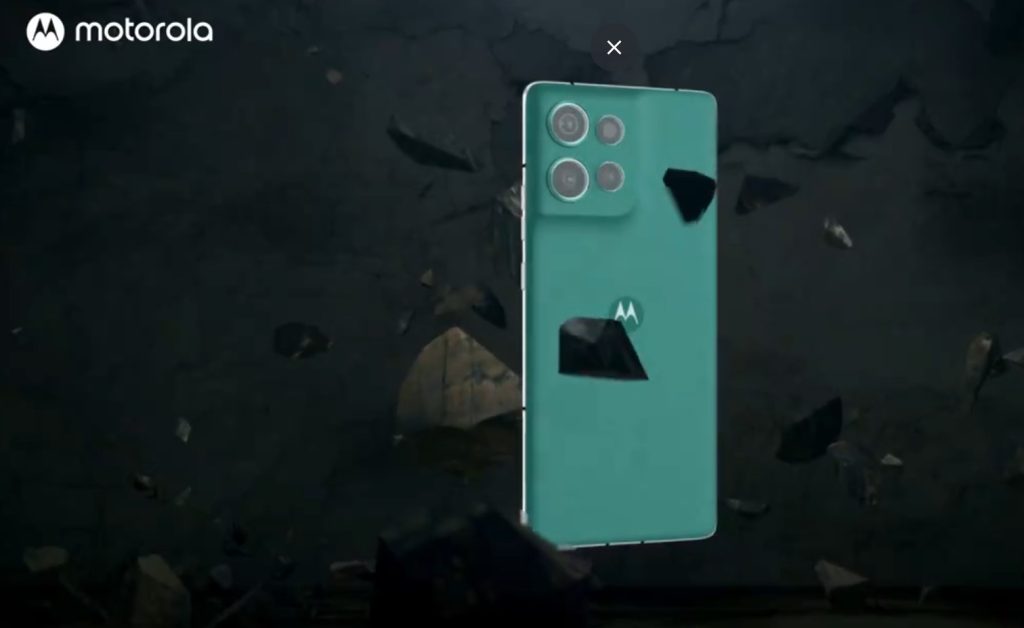
Motorola is gearing up for the launch of a new smartphone in India. The brand has started teasing the upcoming offering on its X handle. However, the name and launch date of the device have not been revealed yet. It is expected to be the Motorola Edge 50 Neo that surfaced in leaks recently. The smartphone is confirmed to be available from Flipkart.
Motorola teases the slimmest MIL-STD810 durable smartphone in India
Motorola is touting its upcoming smartphone as the world’s slimmest MIL-STD810 military-grade durable. It is said to be build to withstand the toughest adventures. The device is tested to withstand harsh environments and accidental drops.
The latest teaser video shared by the Lenovo-owned brand gives us a glimpse at the device. It is seen in a Green color option with a square camera module that elevates from the back panel similar to OPPO’s past Find X smartphones. We could notice three camera sensors and an LED flash unit. The device has a slim profile. The teaser reveals that more details will be revealed tomorrow.
The upcoming Motorola smartphone is tipped to be the Edge 50 Neo. It will arrive as the successor to the last year’s Edge 40 Neo. As per a recent leak, the device is rumoured to be IP68 rated and measures just 8.1mm thick. It is expected to feature a 6.4-inch pOLED display with a 120Hz refresh rate and FHD+ resolution. The smartphone will reportedly be powered by a Dimensity 7300 SoC and be backed by a 4,310mAh battery unit.
It remains to be seen if Motorola becomes the first brand to launch a slim military-grade durable smartphone. Because the OPPO K12x is set to debut on July 29 with MIL-STD810H certification. It is confirmed to measure 7.68mm thick.
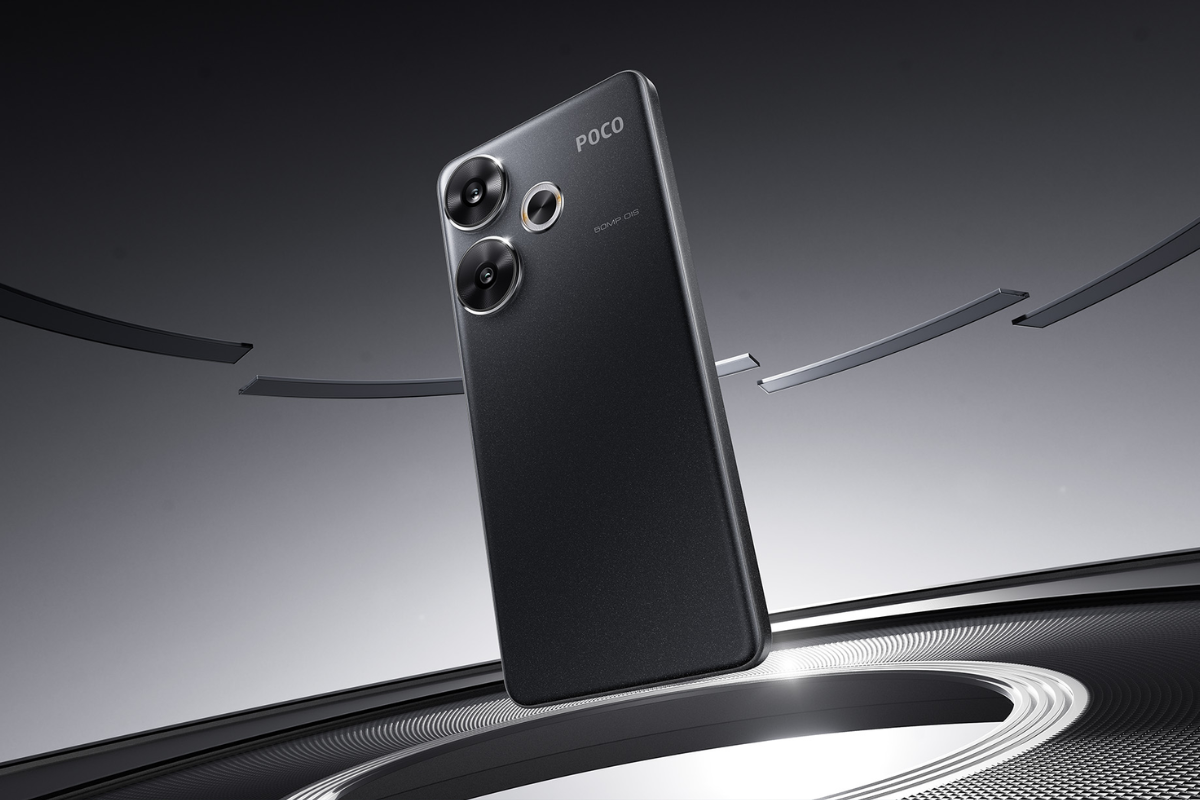
The POCO F6 was announced in India and the global markets back in May 2024. This is the brand’s latest affordable flagship device which features some top notch specs and features. It is currently on sale for a limited discount in India, but is it worth buying right now or should you wait for the special Deadpool Limited Edition?
The Chinese smartphone maker was announced with a starting price tag of 29,999 INR. For under 400 US Dollars, it brings high end specs like the Qualcomm Snapdragon 8s Gen 3 SoC. This processor is quite capable and is often seen in the flagship killer category. This chip is paired with up to 12GB of RAM and 512GB of internal storage.
A large 5,000mAH battery pack powers this device, which supports 90W wired fast charging. The rear packed a 50-megapixel dual camera setup, while the front has a 20-megapixel selfie shooter. So despite its relatively affordable pricing, it has some impressive features.
2. POCO F6 Deadpool Edition
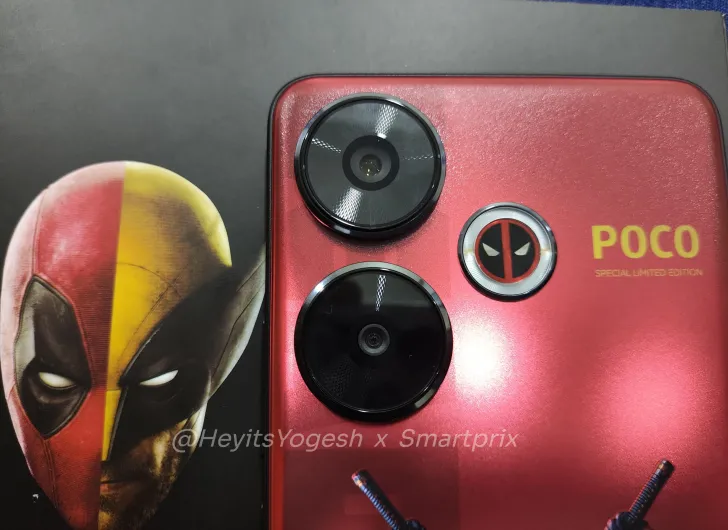
Just earlier today (24th July 2024), POCO announced that it would unveil the POCO F6 Deadpool Limited Edition in India on July 26. But ahead of the official announcement, a leak also offered us a look at this device. As the name suggests, the special edition is inspired by the iconic Deadpool character from Marvel.
The comic book character will appear in a new movie, so this is likely a promo collaboration. Looking at the leak, we can see the unique design of the POCO F6 with fresh red color and Deadpool on the LED flash module. Being a limited edition with a new design is what makes the POCO F6 Deadpool Edition special.
3. Is the discounted POCO F6 a better deal?
While the POCO F6 launched with a starting price tag of 29,999 INR, it is currently on sale for 27,999 INR. This discount isn’t limited to the base 8GB + 256GB option, but also the other two variants as well. Apart from the 2,000 INR off, there are also additional bank offers for the three options.
However, this sale is only available till tomorrow night. The Deadpool edition will likely launch for the original price tag or a lone 12GB + 512GB option. So the current deal on the regular POCO F6 is a better deal in my opinion. The new color hue and slight changes in design don’t seem worth it unless you’re a big Marvel fan.
Indian electronics manufacturer Boat has joined the Deadpool and Wolverine bandwagon with the launch of the Airdopes Alpha Deadpool Edition TWS earbuds. The Boat Airdopes Alpha earbuds were initially launched last year.
The Airdopes Alpha Deadpool Edition has a striking design. The earbuds come in a custom box with Deadpool and Wolverine on the front and an image of Deadpool on the back. The charging case also features Marvel Studios and Deadpool branding, with a USB Type-C port at the bottom. The earbuds are available in a red and black color scheme, with Deadpool’s insignia on one earbud and the boAt logo on the other.
Features and Performance
These earbuds are equipped with a 13mm driver that delivers Boat’s signature sound quality. They offer up to 35 hours of playback time on a single charge. The ASAPTM Charge technology allows for 60 minutes of playback with just a 5-minute charge. The earbuds also come with dual microphones featuring ENXTM technology for clear calls, Bluetooth 5.3 connectivity for a stable connection, and Beast Mode with 50ms low latency for a better gaming experience.
Price and Availability
The boAt Airdopes Alpha Deadpool Edition is priced at Rs. 1,099 on Flipkart and Rs. 999 on boAt’s official website.
In related news, POCO is also gearing up to launch the POCO F6 Deadpool Limited Edition smartphone in India on July 26. This special edition device will come with a crimson-red paint job and a yellow-colored Poco logo.
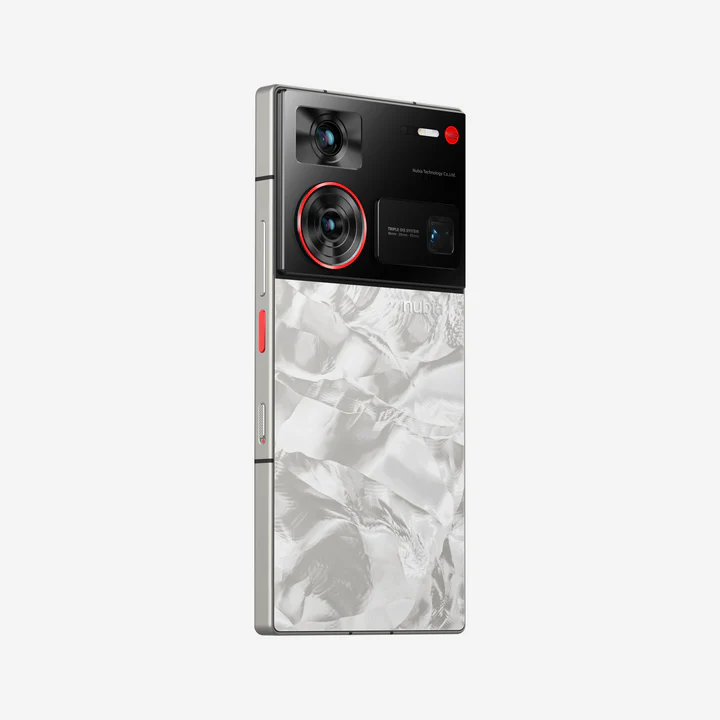
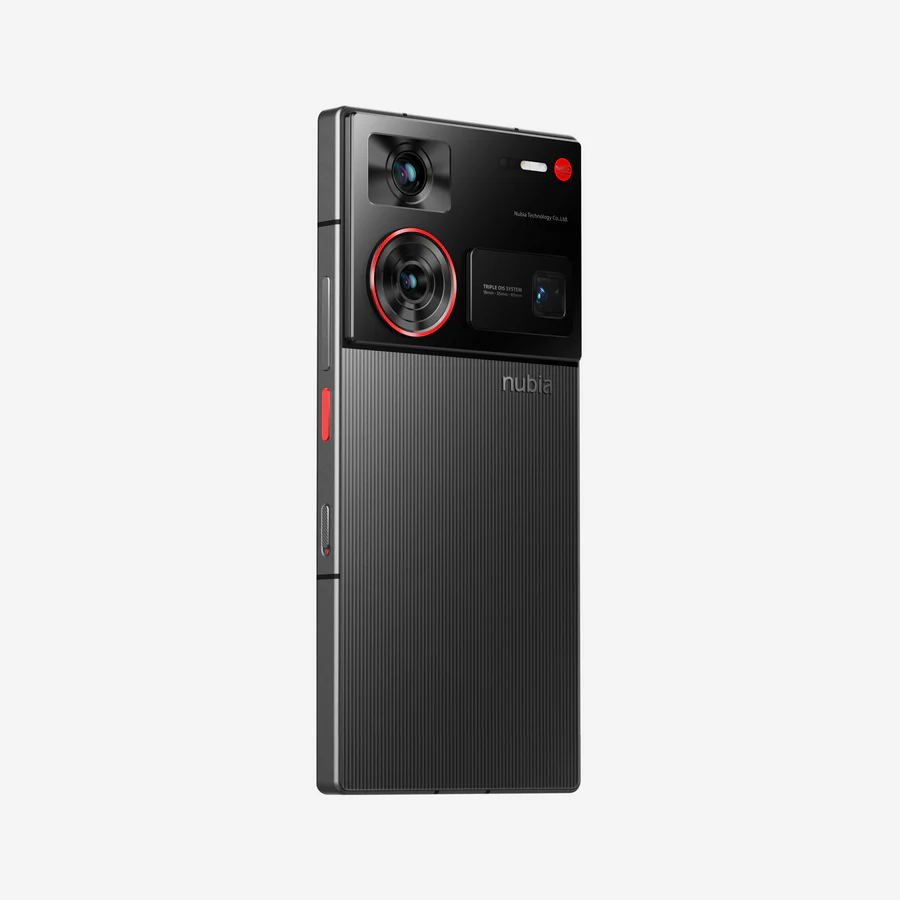
As scheduled, Nubia has launched a refreshed version of the Nubia Z60 Ultra, which was launched back in December last year with the Snapdragon 8 Gen 3 chipset.
The Nubia Z60 Ultra Leading Version comes in two color options – Black and Silver. You can get a better idea of the appearance from the images below
While the Black color option comes with a 1.15mm grating racing pattern and 25μm micro-etching process, the Silver variant is equipped with 5μm micro-ice crystal etching and 25μm micro-etching process. Just like the regular version, the phone offers a sliding button on the side. This button offers a number of controls including triggering the camera.
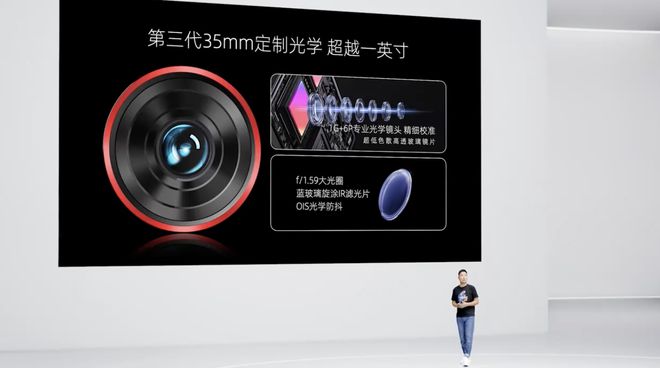
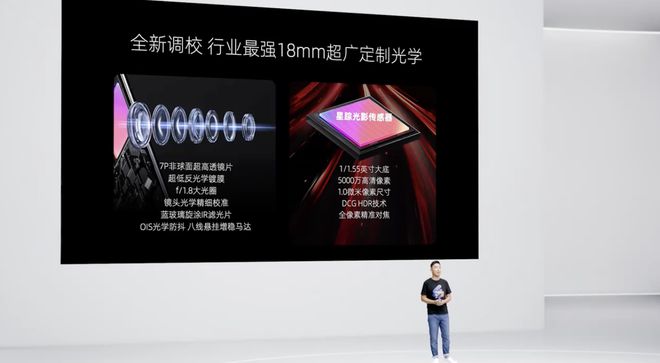
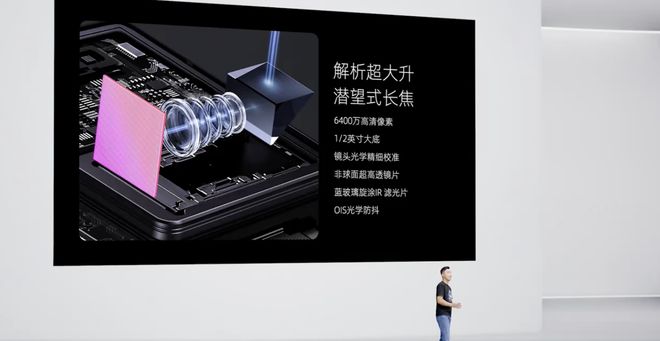
The phone comes with a boxy design that is very similar to the original version with minor changes to the camera island. Speaking of cameras, the phone packs a 50MP (1/1.49″) f/1.59 main camera with a 16+6P lens that offers a focal length equivalent to 35mm. This is paired with another 50MP 1/1.55″ sensor for the ultrawide (with 7P aspherical lens) and a 64MP (1/2″) sensor for the 85mm equivalent (3.3x) telephoto. All three cameras on the back support OIS.
On the front. there is a 6.8-inch 2.5D flexible 120Hz AMOLED screen with 400 PPI pixel density. This panel reaches a peak brightness of 1500 nits, covers 100% DCI-P3 wide color gamut, and supports 2160Hz high-frequency PWM dimming.
The “Leading Version” phone is powered by the Snapdragon 8 Gen 3 chip (same as the original version). This is paired with LPDDR5X RAM + UFS 4.0 storage. The phone packs a 6000mAh battery that has an energy density of 750Wh/L. This energy density is said to be a 16% increase compared to standard graphite anode batteries.
Pricing and availability:
The phone is globally available for $649 (8GB + 256GB) through the company’s official website. The 12GB + 256GB, 16GB + 512GB, and the 16GB + 1TB versions are priced at $699, $779, and $879 respectively.
I saw the Xiaomi launch event last week, which was hosted by Lei Jun. Obviously, the K70 Ultra is not the top performer. However, I believe many people are more interested in this model than the other two foldable smartphones. Of course, we will look at those two foldable phones later. For the time being, let us look at this high-performance machine that costs less than $360.
In the future, the K70 Ultra’s cameras may be upgraded and marketed globally as the Xiaomi 14T Pro. If you want to get your hands on this phone early or do not want to spend more money on the camera, go to Geekwills.com. The K70 Ultra is selling well.
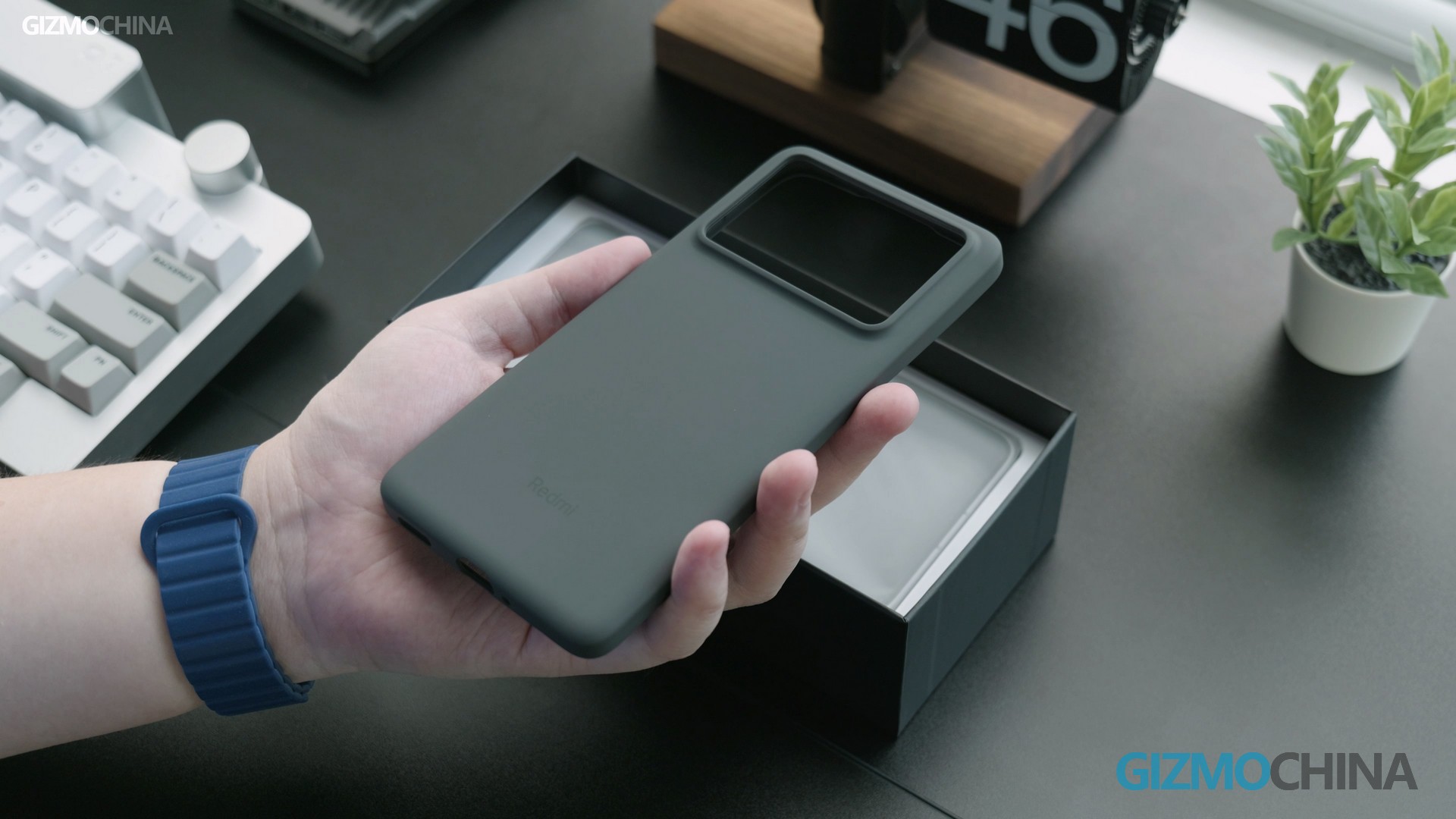
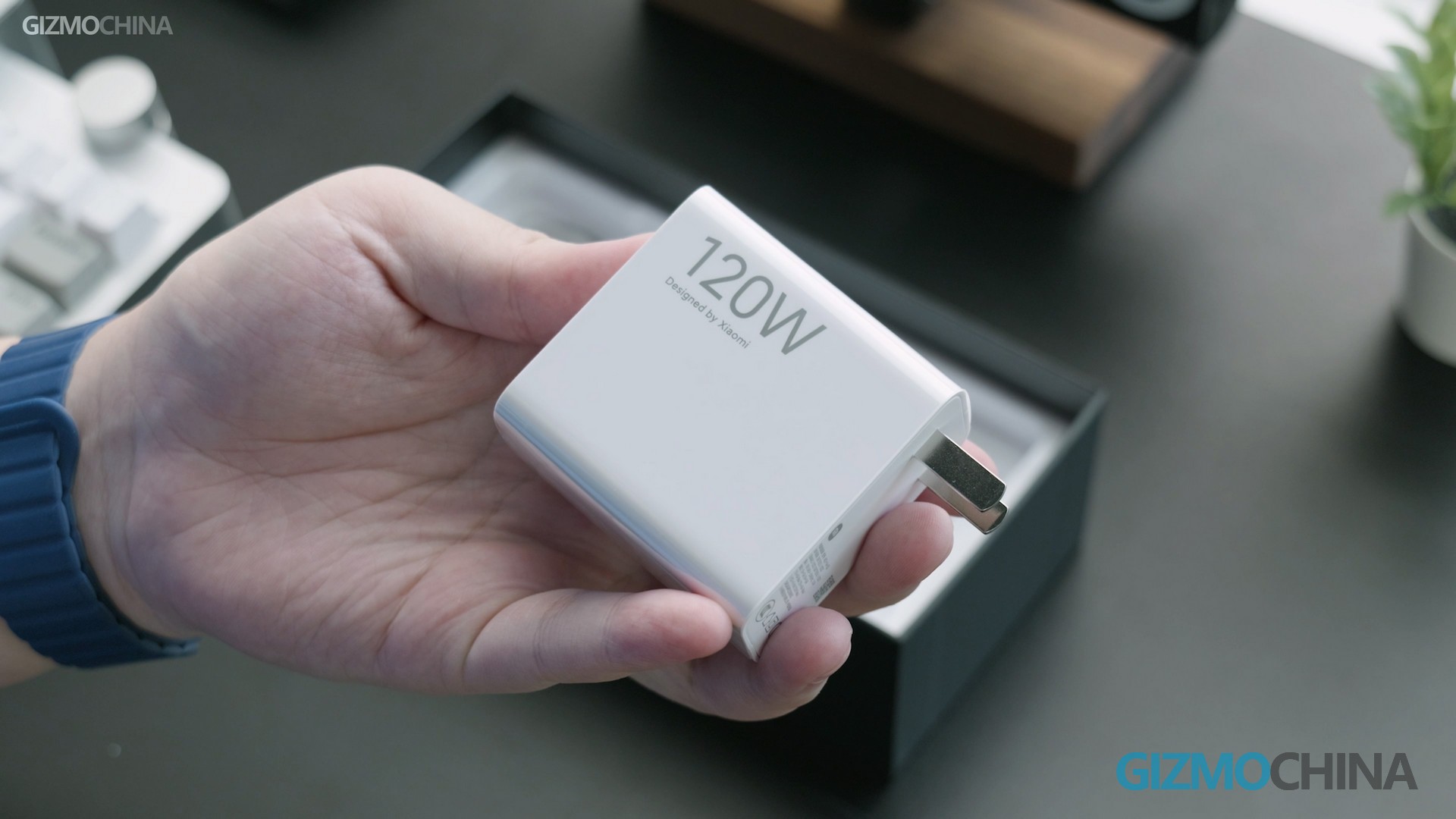
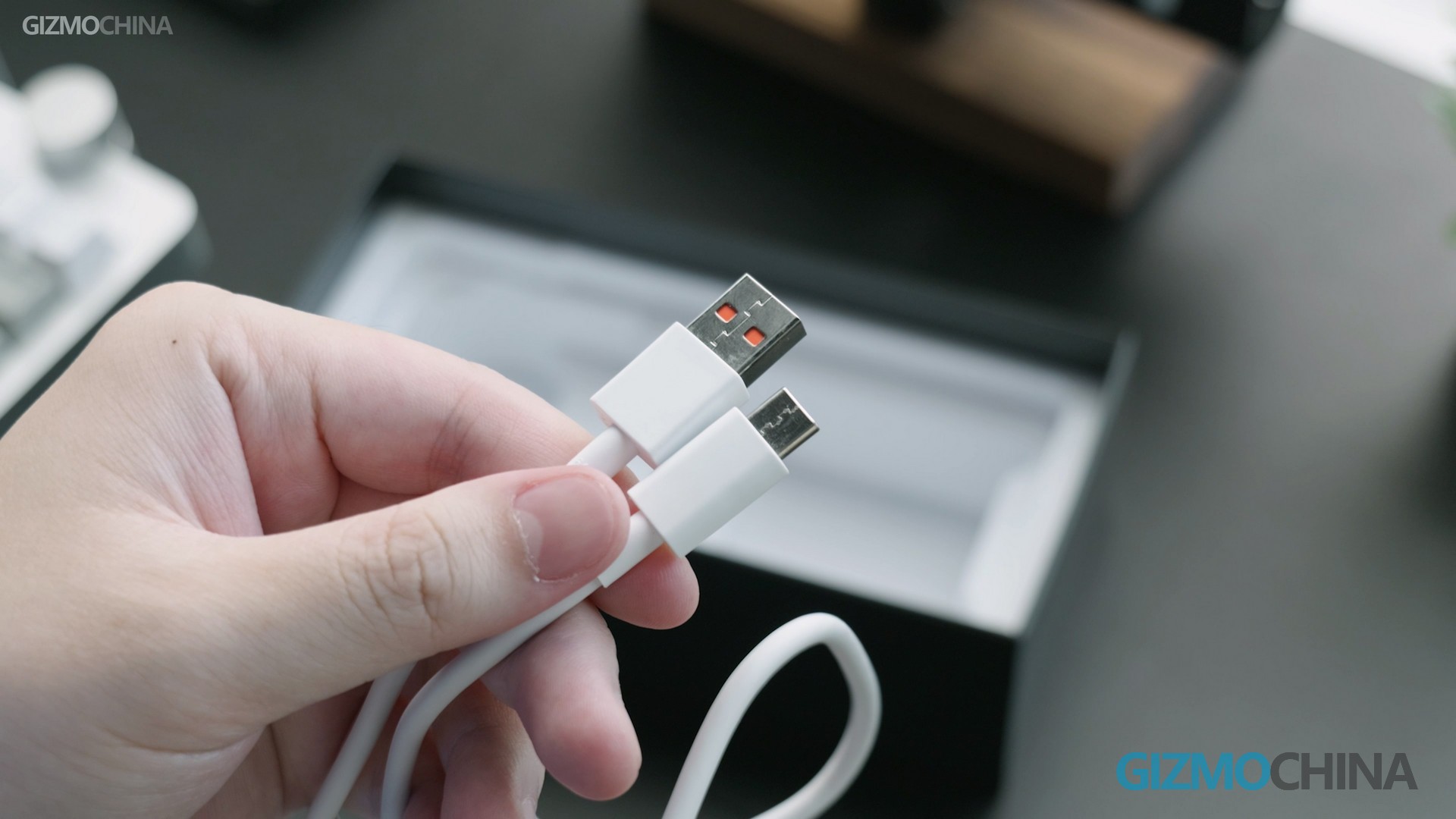
The phone still comes with the most basic components, like the SIM card pin and instructions. The phone case is still made from frosted silicone. The charger is 120W and still features a USB-A connector. The cable is also USB A to C, which makes sense.
The charging protocol is as shown in the picture and is unchanged compared to previous Redmi phones.
Design
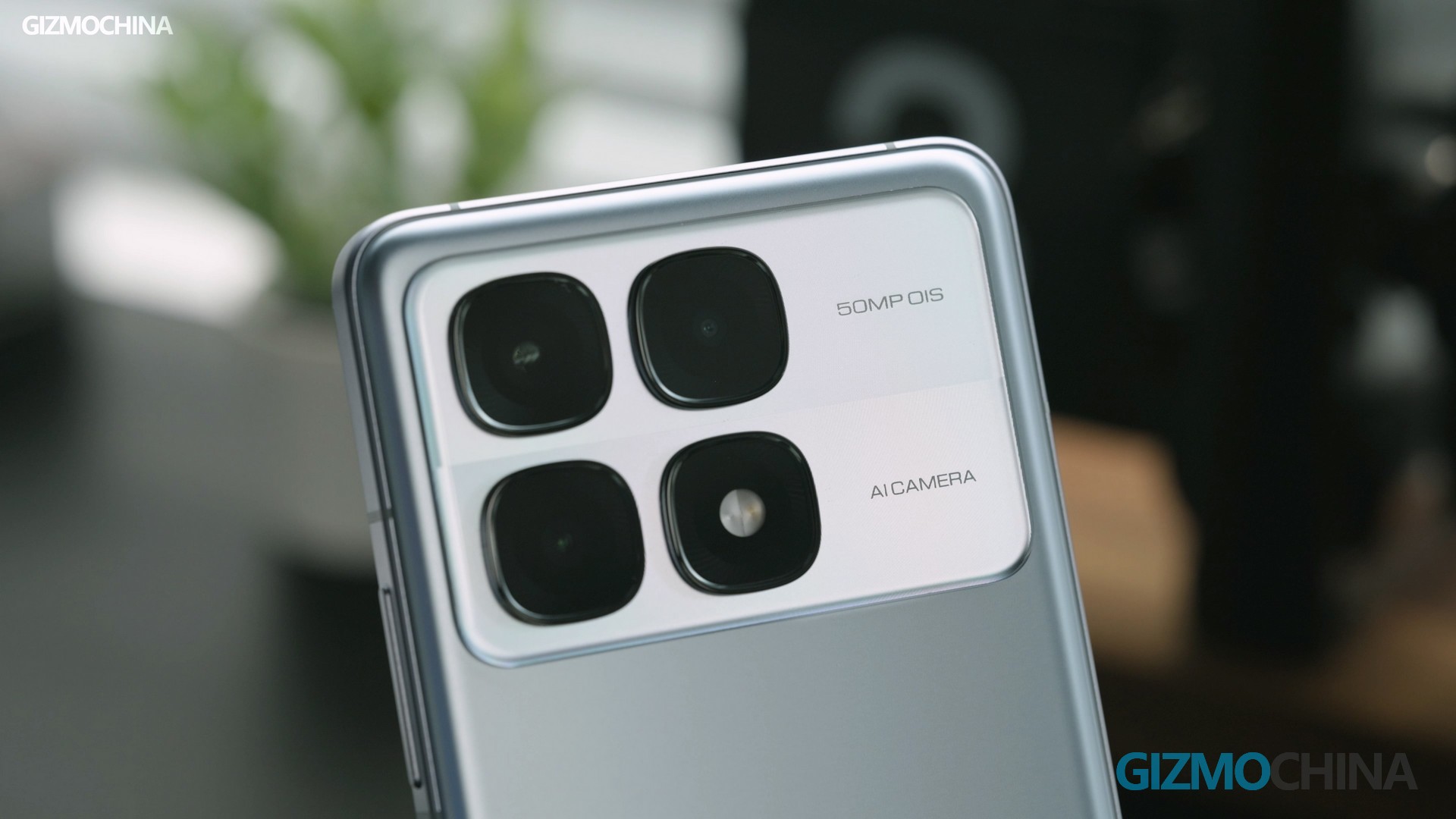
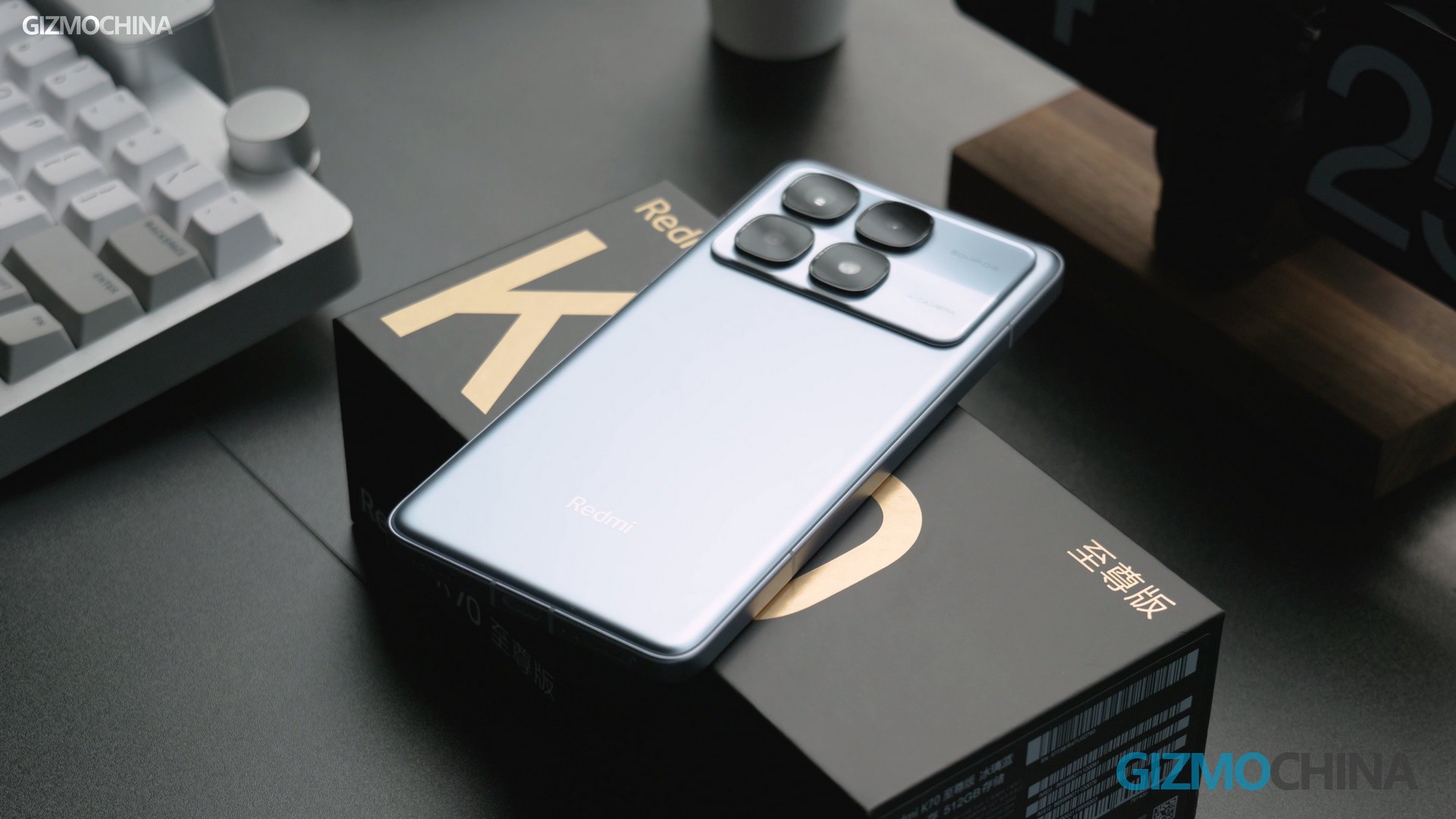
The design of the K70 Ultra still carries the gene of the K70 series, with the four cameras placed in the upper left corner. The lenses have gone from round to round rectangles. The power button has a non-slip finish. And the weight has slightly increased, presumably due to the larger battery capacity.
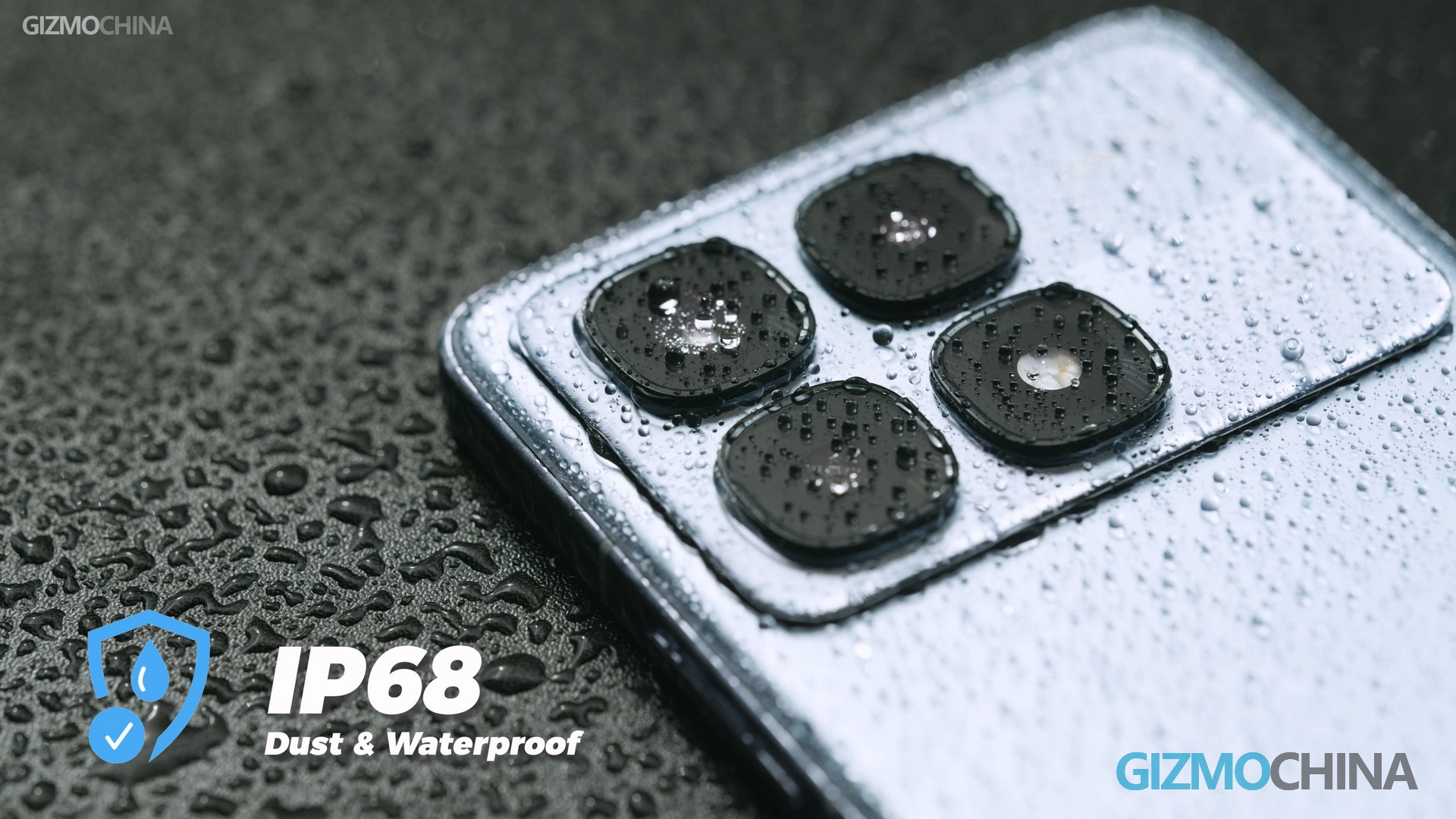
Other than that, it’s pretty much unchanged, with the same metal frame and glass back. There are no other features missing, but of course, the drawbacks are the same. Oh, I almost forgot, the K70 Ultra is probably the only phone in this price range that has IP68 dust and water resistance. That’s why it’s called Ultra, I guess.
Display
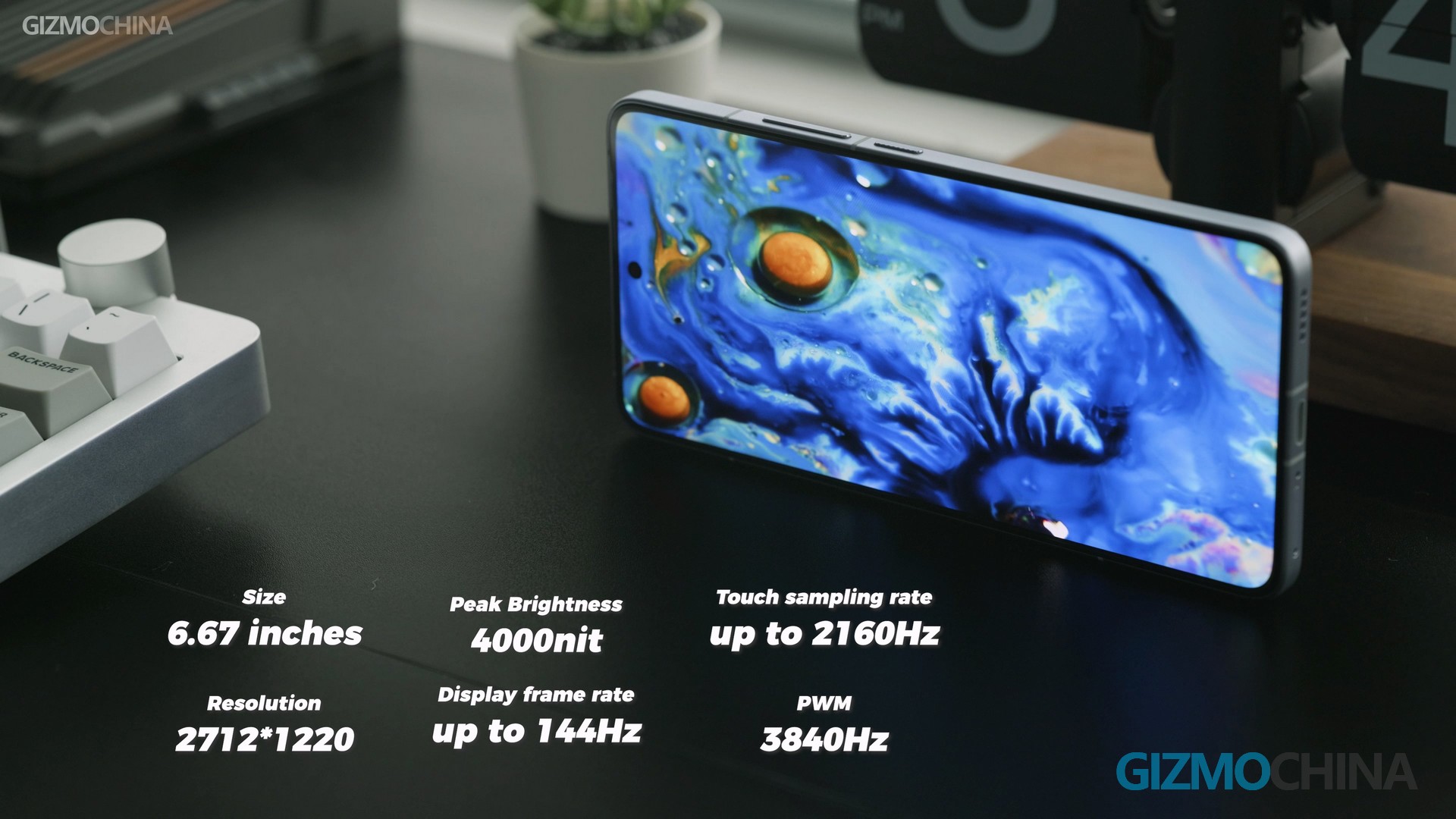
The K70 Ultra’s screen has an OLED panel from TCL. There are downgrades and upgrades compared to the K70 Pro. The Ultra’s resolution has been downgraded from 1440p to 1200p, the K60 Ultra did the same thing last year so I wasn’t too surprised.
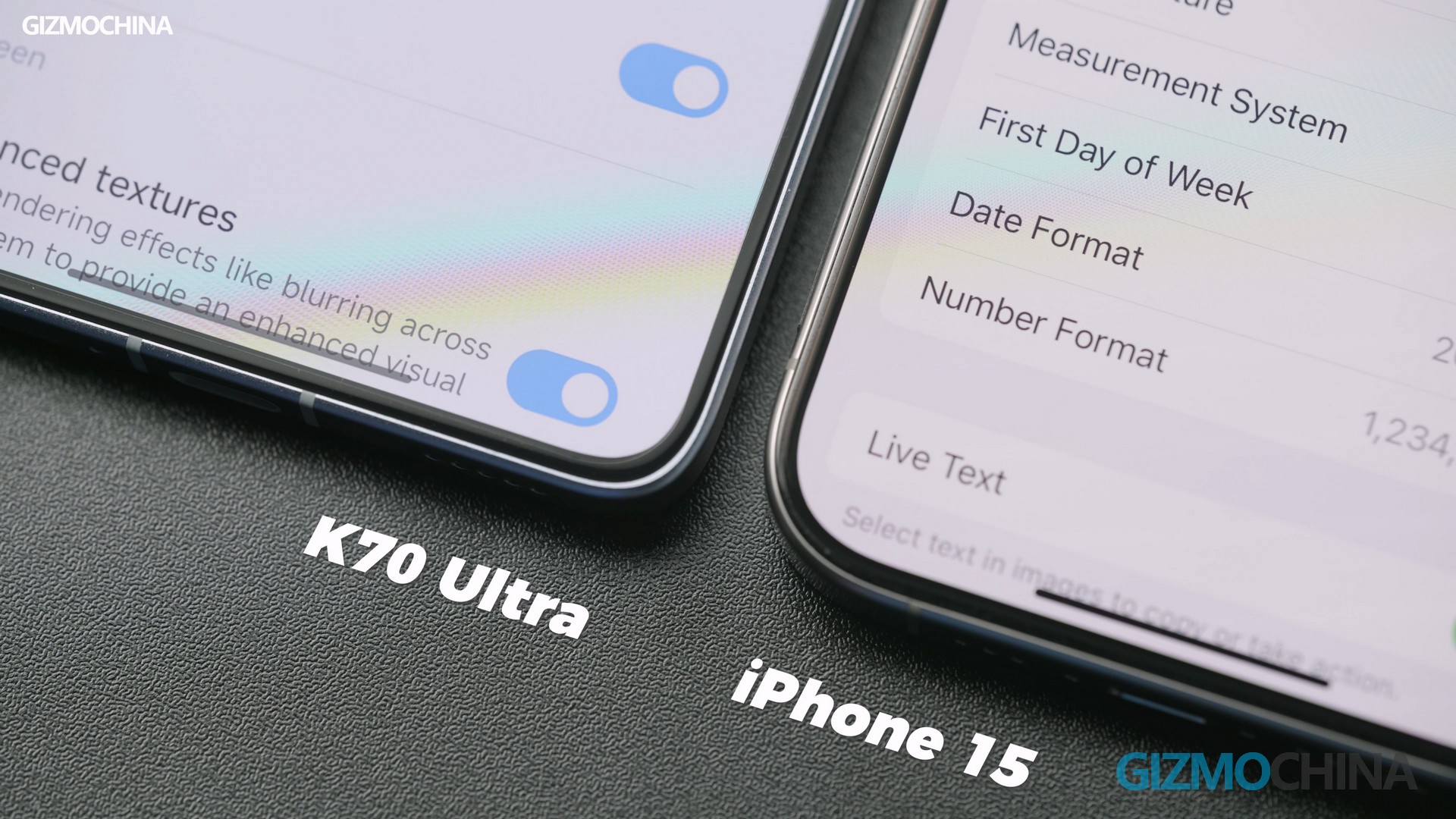
The upgrades are in the brightness, which can be adjusted manually to 700nit and up to 1600nit in sunlight. The conditions for switching dimming modes have changed, with a switch to high-frequency PWM dimming only when it’s below 60nit. Moreover, the lower bezel has been further narrowed and is almost as narrow as many curved-screen phones. From a distance, you might think it’s a very expensive phone.
Some of you may complain that it doesn’t support LTPO, so check out the Realme GT6 China Edition that we reviewed a few days ago, that phone might be better for you.
Performance & Gaming
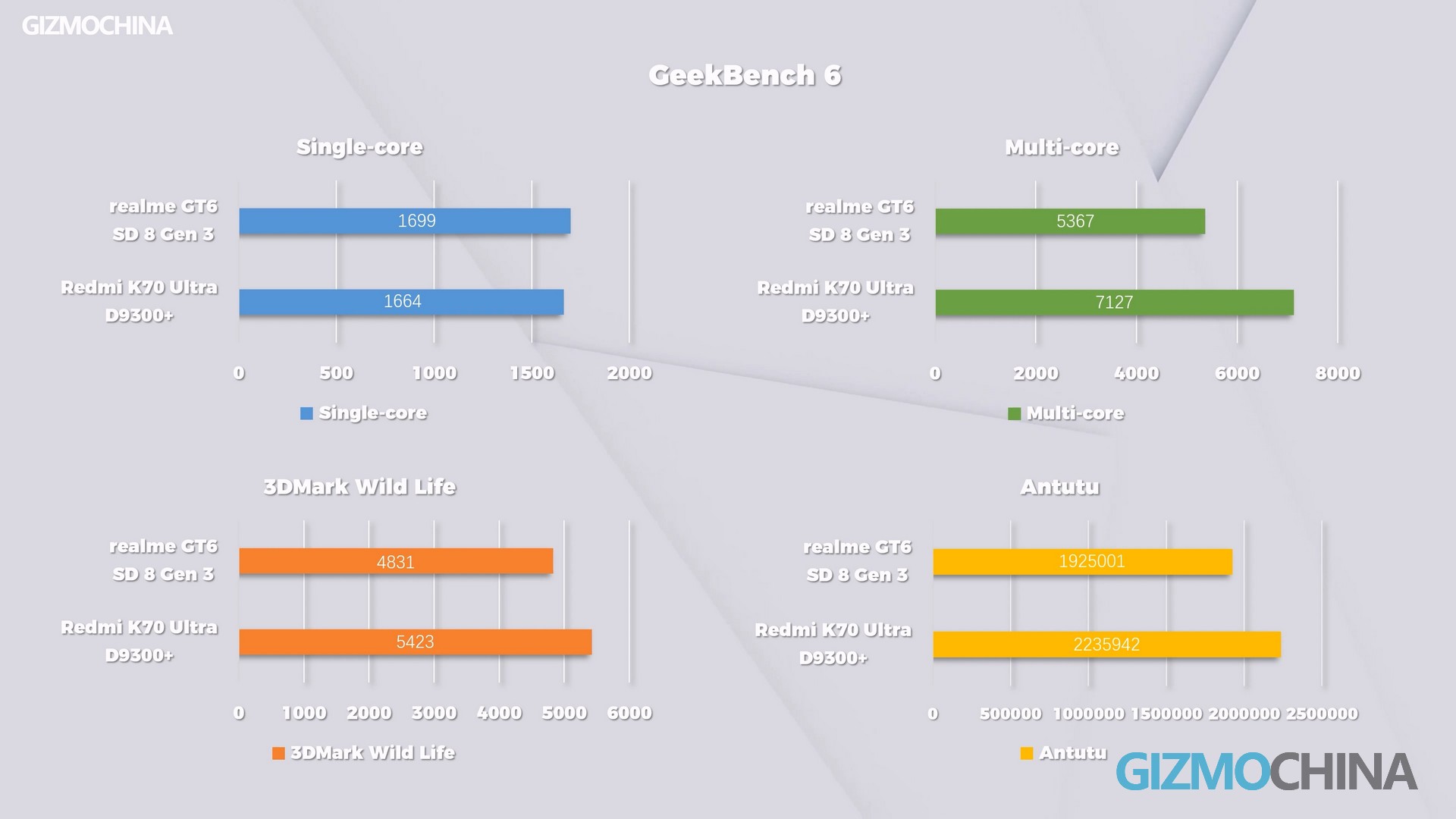
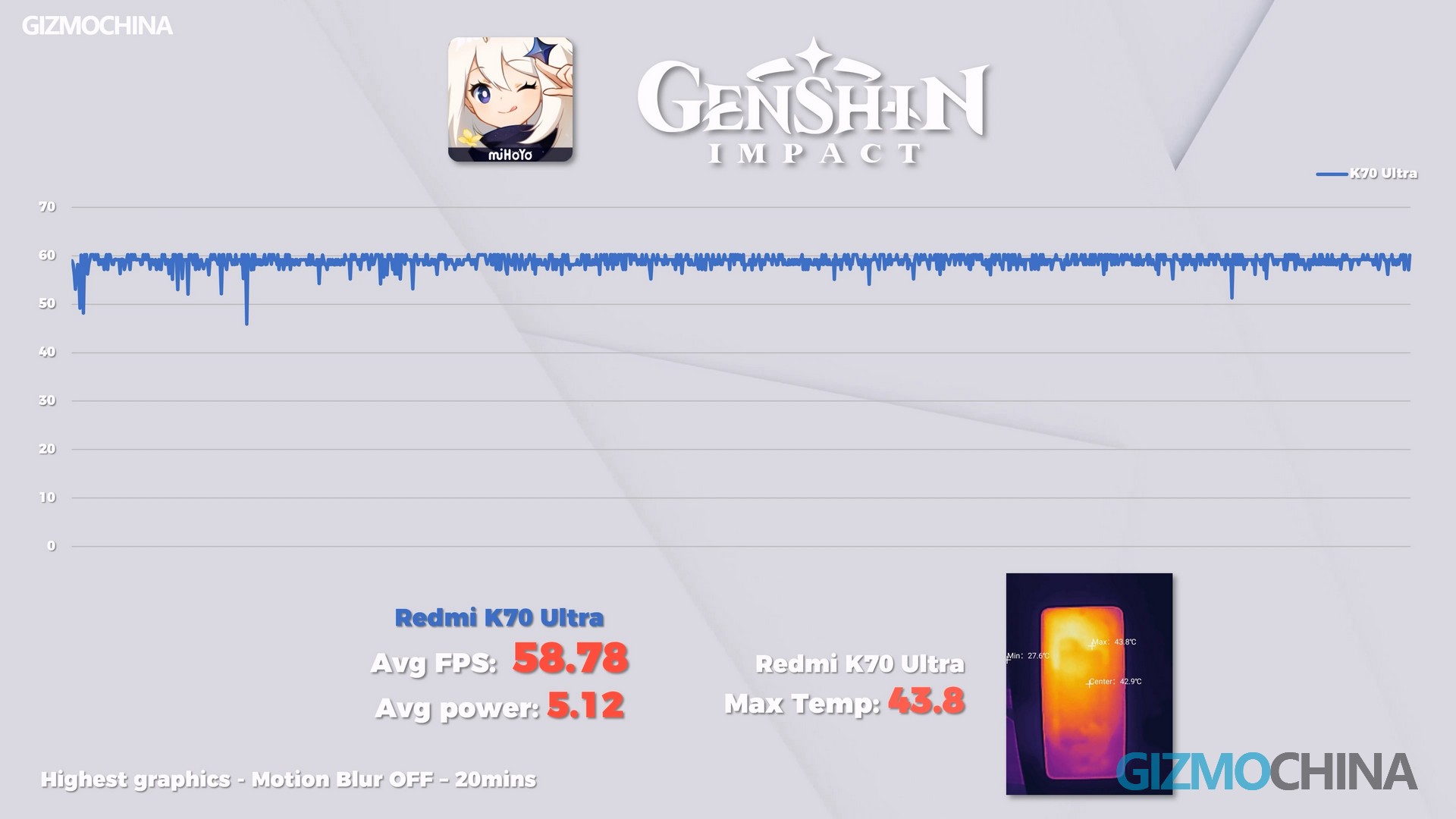
One of the key reasons for the K70 Ultra’s low price is that MediaTek’s CPUs are less expensive than Qualcomm’s. The Dimensity 9300+ is not the most expensive option, but it delivers some of the best performance in the phone’s SOC. There is little doubt that the score is somewhat higher than the eight Gen 3 phones. I have to say, even though I knew this CPU was fantastic, the K70 Ultra still surprised me.
I haven’t seen a frame rate graph that straight in a long time. And the best part is that it’s still very low in temperature and power consumption. I don’t know if it’s Redmi that’s awesome or MediaTek that’s insane, but anyway, it’s the best gaming experience I’ve had with a phone lately. And it’s also cheaper. So there is no reason for gamers not to pick this one.
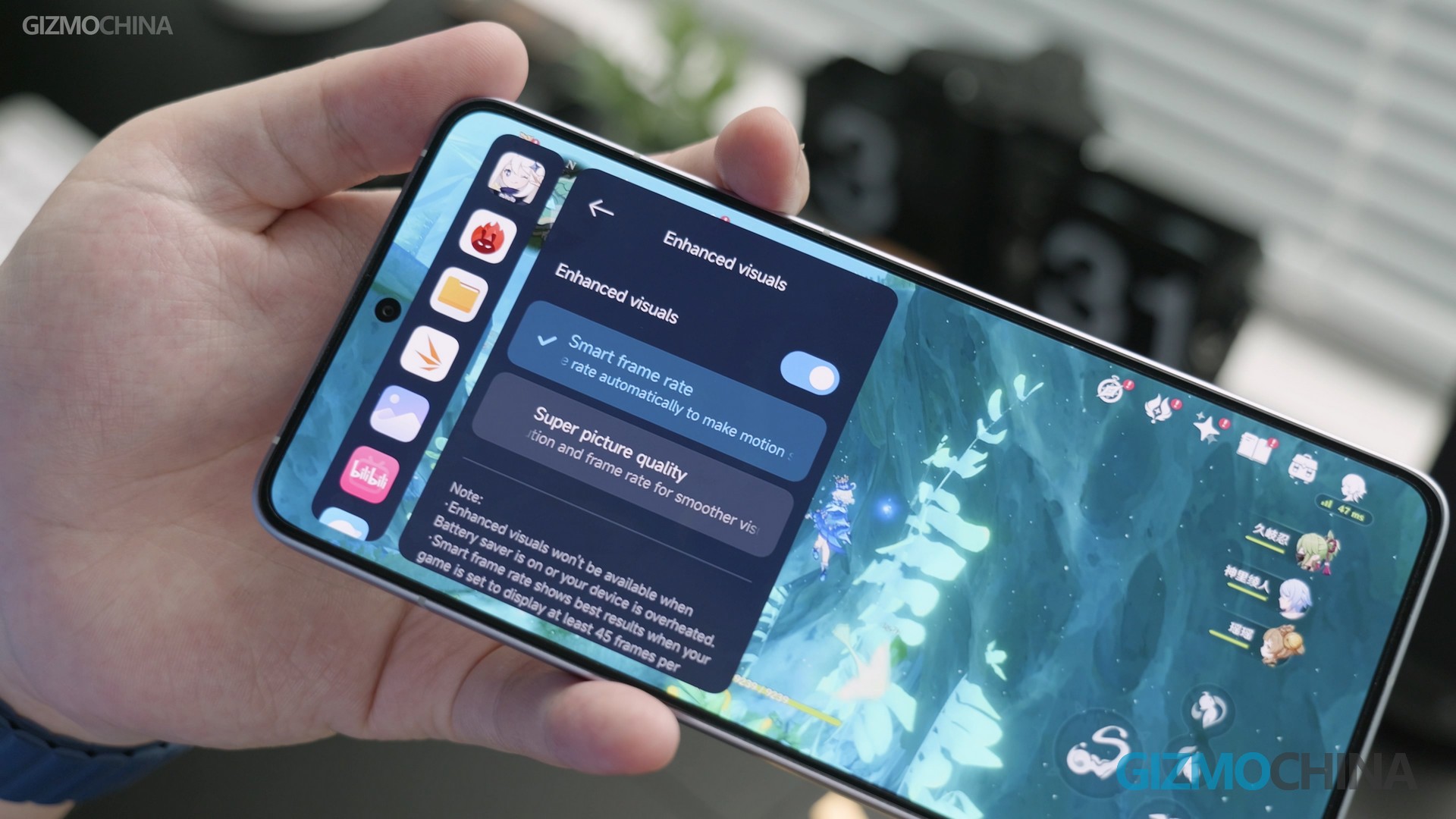
It’s worth noting that the K70 Ultra also comes with the display chip D1 this time around, which boosts the resolution, and the latency of frame interpolation. I also didn’t find any images being torn down due to frame insertion, so turning on these features does improve the gaming experience significantly. Of course, that depends on whether the game you’re playing supports these features.
For example, Zenless Zero does not have the option of interpolation and resolution enhancement. However, with the excellent performance of Dimensity 9300+, it can provide an excellent gaming experience even without these features. As long as it conquers these two games from HoYoverse, other games will be a piece of cake.
Camera
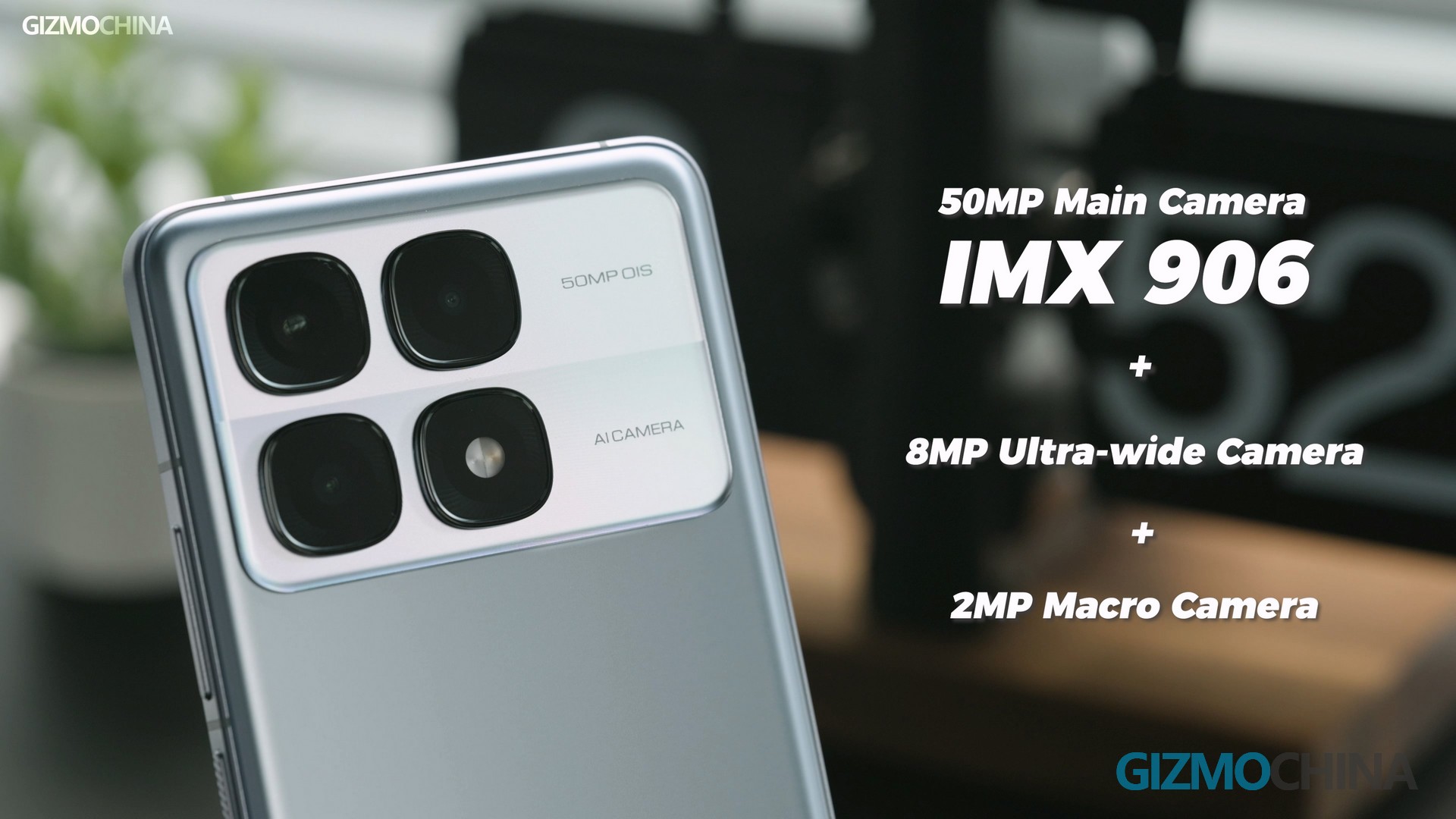
The three cameras on the K70 Ultra are a 50 MP main camera, an 8 MP ultra-wide camera, and a 2 MP macro camera. Compared to other phones in the same price range, there isn’t much difference in image quality.
Most of the photographs captured with the main camera are outstanding. The dynamic range and saturation are perfectly balanced, and the clarity is excellent. Personally, I believe that the K70 Ultra’s main camera is on par with Xiaomi’s sub-flagship. Compared to other mid-range phones, the 8 MP ultra-wide camera performs poorly at night. Especially the image quality around the edges. I assumed I had not wiped the lens clean.
Main cameraMain cameraMain cameraUltra-wide cameraUltra-wide camera
The 2 MP macro camera is mostly useless. The resolution is so low, that the photos cropped with the main camera are better than those taken with the macro camera. The main camera also has a slight purple-fringing issue. The video stabilization is also average, and only the main camera can record 4K video.
The rest is nothing to complain about; after all, the processor accounts for the majority of the budget.
Battery & Charging
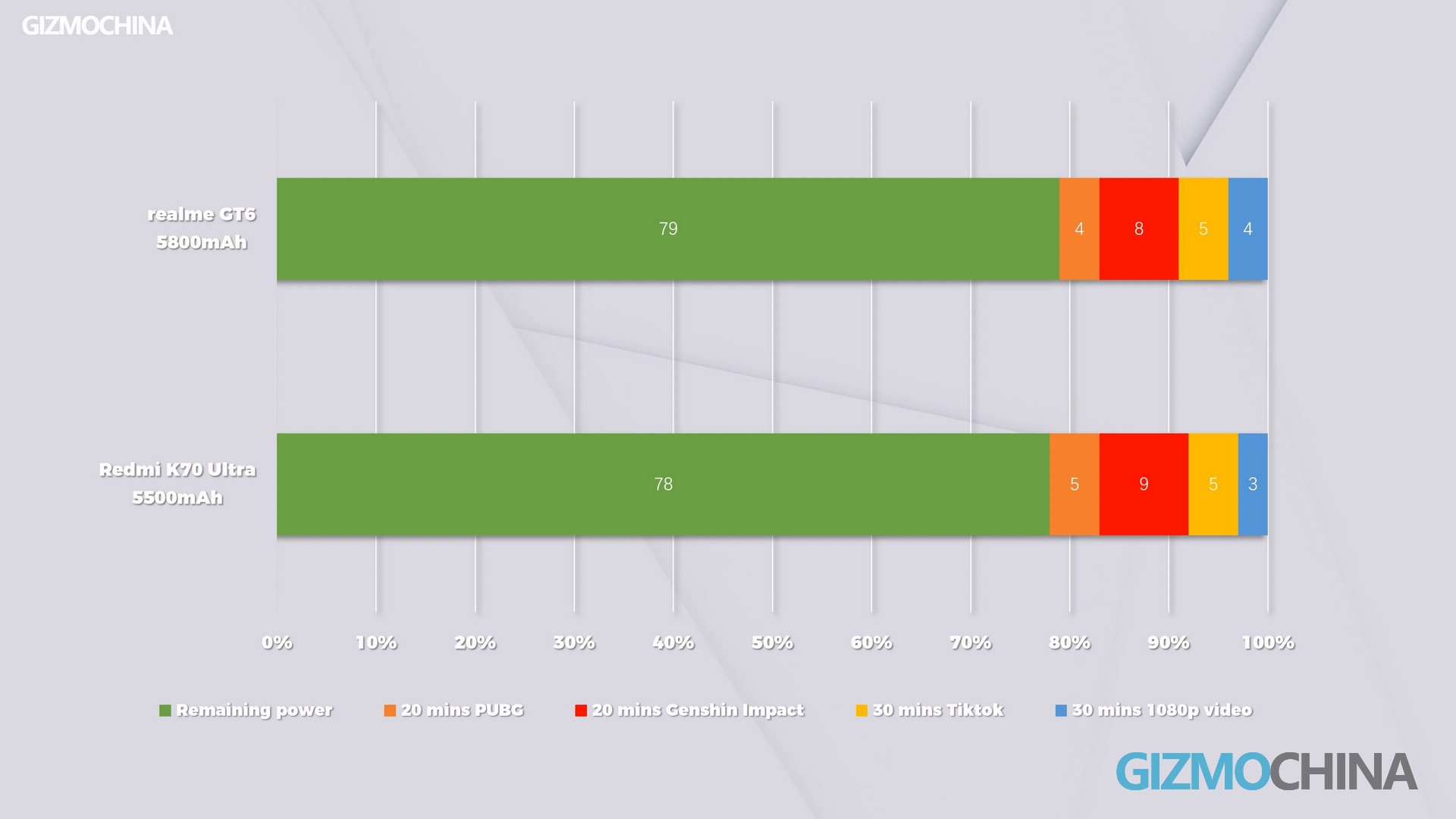
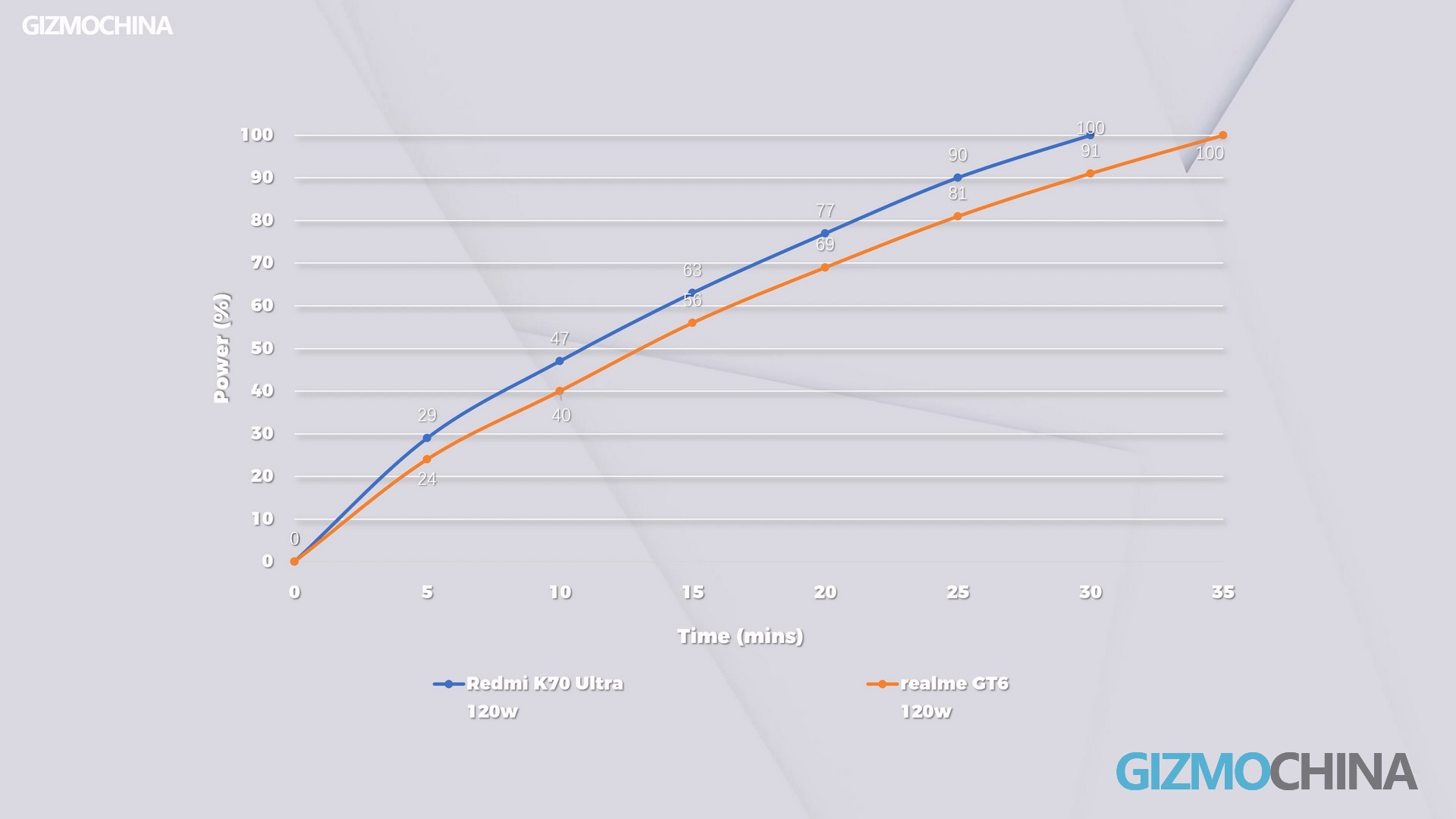
I expected the K70 Ultra’s 5500mAh battery to not surprise us much, given that the OnePlus Ace 3 Pro has 6100mAh. However, the battery life is actually rather good, comparable to the GT6 China edition, and somewhat exceeds our expectations. It also has 120W wired charging, which takes roughly half an hour to fully charge the battery. Overall, I would rate the K70 Ultra an eight out of 10 for its charging and battery life performance.
Verdict
We’ve recently reviewed a lot of phones in the same price range, which one do you guys prefer?
Is it the OnePlus Ace 3 Pro with a 6100mAh battery? Is it the Realme GT6 China Edition, which is a more versatile performer? Maybe the cheaper K70 Ultra is more appealing to you? Anyway, they all have their own unique features, and they’re all pretty much worth buying for.
If you’d like to watch a battle between them, don’t forget to subscribe to our YouTube channel. The K70 Ultra is also currently available on Geekwills, which you can check out by clicking the link below.
Chinese smartphone maker, Realme, has just announced a launch date for a new Narzo smartphone. The device in question is the Narzo N61, which is likely the brand’s latest budget phone. This model is set to launch next week, so here’s everything we know so far.
Realme Narzo N61 India Launch Date
The company announced that the Narzo N61 will be launched in India on 29th July 2024 at noon. Realme did not reveal finer details of this phone like its specs and features. Although, the brand shared teasers that offer us a look at its design. The rear packs a dual camera setup that includes a 32-megapixel primary camera. The Narzo N61 also has an IP54 rating for water and dust protection.
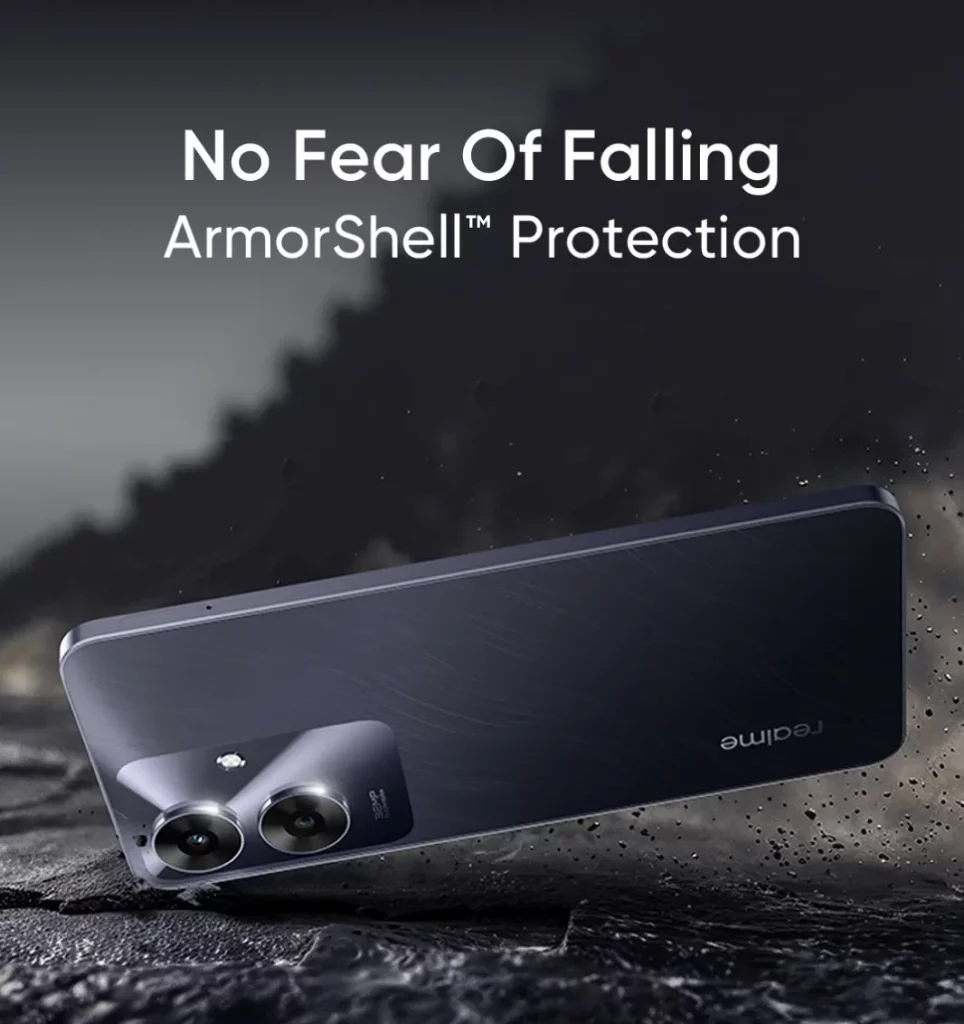
Realme is also bringing the Rainwater Smart Touch feature, which lets you use the handset even with wet hands. Adding to its protection, the N61 has ArmorShell protection with TUV Rheinland High Reliability Certification. Just last month, the Realme announced the Narzo N63 with a vegan leather back and an affordable 7,999 INR price tag. So it is likely that the Narzo N61 will also have a similar sub 10,000 INR price tag.
To recall, the Narzo N63 sports a tall 6.74-inch IPS LCD panel that offers an HD+ resolution and 90Hz refresh rate. It is equipped with the UNISOC T612 SoC, which is paired with 4GB of RAM and 64GB of internal storage. A large 5,000mAh battery pack powers this device, which supports 45W wired fast charging. It runs on the Android 14 OS out of the box. For optics, you get a 50-megapixel primary camera and a depth sensor on the rear, while the front houses an 8-megapixel selfie shooter. We can expect the Narzo N61 to have comparable hardware.
The Xiaomi 14 Civi was announced in India back in June. Now, the company has announced that this device is arriving in a Limited Edition variant in the region. Xiaomi has revealed that the Xiaomi 14 Civi Limited Edition with the Panda Design is dropping in India next week.
Xiaomi 14 Civi Limited Edition India Launch
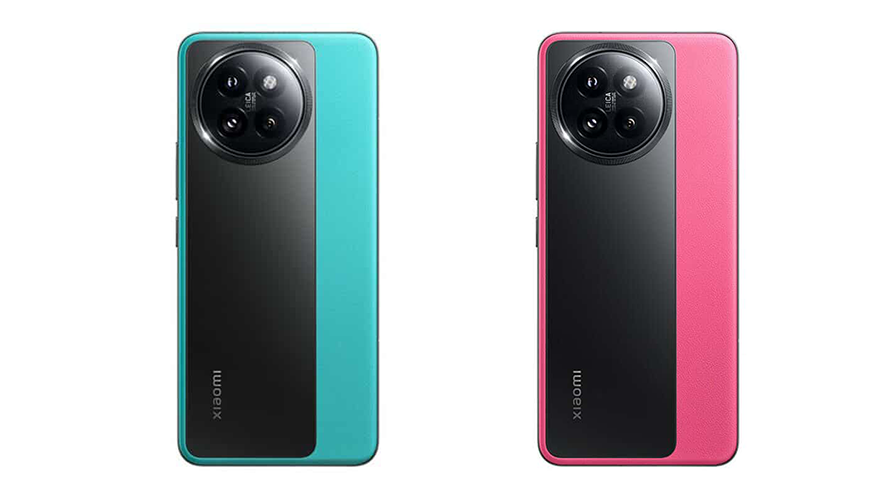
The special variant was previously teased to launch in India, and the Chinese tech giant finally confirmed its release date earlier today (24th July 2024). Xiaomi 14 Civi with a new Panda design is set to launch on July 29. The company has revealed that the devices will come in new mirror glass and vegan leather version, Pink, Monochrome, and Blue editions.
Storage configurations of this limited edition smartphone are still unclear, but we can expect it to arrive in the top end 12GB + 512GB option. However, apart from its design, it will have features identical to those of the base Xiaomi 14 Civi. So the upcoming limited edition will sport a 6.55-inch OLED display with a 120Hz refresh rate, 1.5K resolution, and up to 3000 nits of peak brightness.
Under the hood, the Xiaomi 14 Civi is equipped with the Qualcomm Snapdragon 8s Gen 3 SoC. A 4,700mAh battery pack powers this device, which supports 67W wired fast charging. For optics, you get a 50-megapixel triple camera setup on the rear and a 32-megapixel shooter for selfies and video calls.
The device runs on the Android 14 OS based HyperOS custom skin out of the box. Other notable features include an in-display fingerprint scanner, infrared sensor, Hi-Res audio, Stereo speakers with Dolby Atmos support, Bluetooth 5.4, NFC, and dual SIM support.
Graphite black (Stealth Black), Arctic White, Ocean Teal, Prism Gold
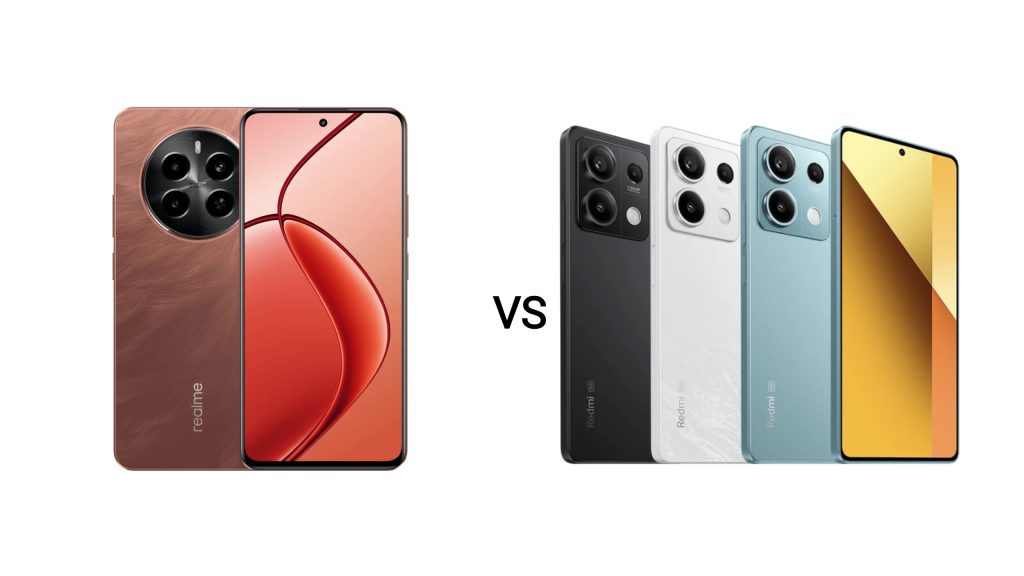
Is the Poco X6 Neo a worthy competitor against the newer Realme P1? Are you out shopping for a new device but are having troubles picking between which of these devices that you should purchase? These kinds of things can be quite challenging, but with this article, we’ll closely look at the specifications and features of these devices to help you with your purchase choice.
Please Note: When you buy something using the links in our articles, we may earn a small commission at no cost to you.
Realme P1 vs Redmi Note 13: Design and colours
Realme P1:
This new device follows the design language of the Realme 12 series with their circular camera cutout. On the cutout there sits five cutouts: two hold the cameras, one holds the flash, and the remaining two hold nothing at all. The Realme P1 also comes with a flat screen as well as flat edges around the device. Available colours in this series are Phoenix Red and Peacock Green, both of which feature a brushed finish that’s impressive to look at.
Redmi Note 13:
Poco keeps things simple with the design on this device, as it features a square camera cutout. This cutout houses the cameras and the flash, all sides of the device are flat. The buttons sit on the right side, the USB-C port, speakers and microphone sit at the base, while the 3.5mm headphone jack sits at the top of this device’s frame. Available colours here are Graphite black (Stealth Black), Arctic White, Ocean Teal, Prism Gold.
Major differences:
A 3.5mm headphone jack on the Redmi Note 13.
Realme P1 vs Redmi Note 13: Display
Realme P1:
Realme launched this device with a 6.67-inch AMOLED screen that supports 120Hz refresh rate. The screen also offers up to 1200 nits peak brightness, making it the brighter option of these two devices. In terms of screen to body ratio, this device comes with an 87.3% screen-to-body ratio, which is quite impressive.
Redmi Note 13:
This device comes with a similar screen size with the Realme P1 measuring at 6.67-inch. The panel on this device is an AMOLED panel, and it supports 120Hz refresh rate, which ensures that users get a snappy response on all actions taken on the device’s screen. With a peak brightness of 1000 nits, this device slacks behind the Realme P1, however it outshines it by offering a screen-to-body ratio of 88.9%.
Major differences:
Brighter screen on the Realme P1.
Realme P1 vs Redmi Note 13: Cameras
Realme P1:
When it comes to cameras, the Realme P1 comes with a dual camera setup, housing a 50MP main camera and a 2MP front facing camera. Up front, we find a 16MP selfie camera that sits in the punch hole on this device’s screen. Both front and rear facing cameras on this device don’t support 4K video recording.
Redmi Note 13:
Redmi brings a triple rear camera setup to help this device outshines the competitor in this article. In place of a 50MP main camera sensor, this device from Poco features a 108MP main camera sensor, an extra 8MP ultrawide lens is available on this device, and a 2MP depth sensor. Up front is a 16MP selfie camera like we see on the competition from Realme in this article.
Major differences:
108MP main camera on the Redmi Note 13.
8MP ultrawide camera on the Redmi Note 13.
Realme P1 vs Redmi Note 13: Performance
Realme P1:
Powering this device is the MediaTek Dimensity 7050 processor. Joining this processor is up to 8GB RAM and 256GB worth of storage capacity.
Redmi Note 13:
Under the hood of this device is the MediaTek 6080 processor. Supporting this processor is up to 12GB worth of RAM as an option. For storage, buyers of this device get to choose between either 128GB and 256GB storage capacity.
Major upgrades & differences:
A better processor on the Realme P1.
More RAM on the Redmi Note 13.
Realme P1 vs Redmi Note 13: Software
Realme P1:
This device currently runs on Android 14 and the Realme UI 5.0 software, and it supports up to three years of OS update.
Redmi Note 13:
Redmi launched this device with Android 13 and Hyper OS out of the box, as well as some software integrations unique to the brand. This device will also get up to three years of OS upgrades.
Major differences:
The Realme P1 runs Android 14 out of the box with Realme UI 5.0.
Realme P1 vs Poco X6 Neo: Battery life and charging
Realme P1 and Redmi Note 13:
Both devices launch 5000mAh battery capacity but the Realme P1 supports faster charging at 45W.
Major differences:
Faster charging on the Realme P1.
Realme P1 vs Redmi Note 13: Final Verdict
The Redmi Note 13 is the same device as the Poco X6 Neo that we’ve compared with the Realme P1 in a previous article. Considering this, we’ll maintain our stance that the Realme P1 is the better device to get in terms of performance. However, the Redmi Note 13 has an extra camera, so that can assure you of better pictures. But overall the Realme P1 wins this comparison against the Redmi Note 13.
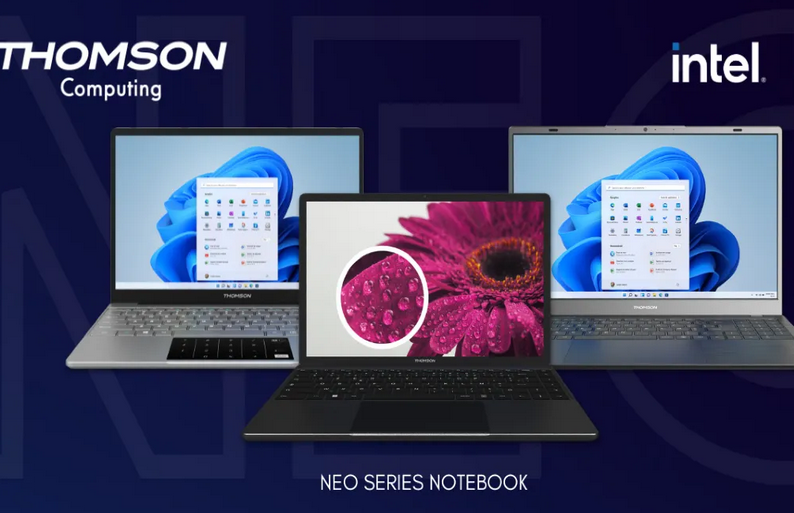
Thomson has just announced a brand new lineup of laptops in the Indian market. The company’s Thomson Neo laptops are equipped with Intel processors and range from entry level to mid range models. So here are their specs, pricing, and more.
Thomson Neo Series Pricing & Availability
Thomson’s new laptops have been announced in India and are listed on Flipkart, a popular e-retailer in the region. There are multiple models and here are their pricing:
Intel Celeron, 4GB RAM, and 128GB SSD – 14,990 INR
Intel Core i5 12th Gen 1235U, 8GB RAM, and 512GB SSD – 37,999 INR
Intel Core i5 12th Gen 1235U, 16GB RAM, and 512GB SSD – 37,990 INR
Intel Core i7 12th Gen 1255U, 16GB RAM, and 512GB SSD – 43,999 INR
Thomson Neo Series Specs
The new laptops from the brand sport a 15.6-inch display that offers FHD resolution with slim bezels, except the Intel Celeron variant which features a 14.1-inch screen. Thomson’s Intel Core i3, Core i5, and Core i7 processor versions are paired with up to Intel Iris Xe graphics. All of these laptops run on the Windows 11 Home OS out of the box. Connectivity options include a USB-C port, a DC input charging jack, an HDMI port, an RJ45 Ethernet port, a USB-C port, a 3.5mm audio jack, and two USB 3.0 Gen 1 ports. Buyers also get a backlit keyboard on these laptops and a 2-megapixel webcam on the front for video calls.
The United States Trademark and Patent Office (USPTO) has today approved a new patent application from Apple which is related to custom hand gestures for head-mounted devices. The head-mounted devices could be both headsets like the Apple Vision Pro and smart glasses.
It should be beneficial for users physically unable to perform a pre-defined gesture
The Vision Pro detects pre-defined hand gestures performed by a user and performs a corresponding function in response. However, in some cases, a user may be physically unable to perform the pre-defined hand gesture or to perform the function with a different gesture.
According to the patent application, users can customize gestures to achieve different interactive responses in the future. The application describes that the concept aims to allow electronic devices to detect user-predefined gestures and respond to perform corresponding functions. The application includes 48 design sketches, detailing how to detect these user-preset custom gestures and assign them to tasks or functions.
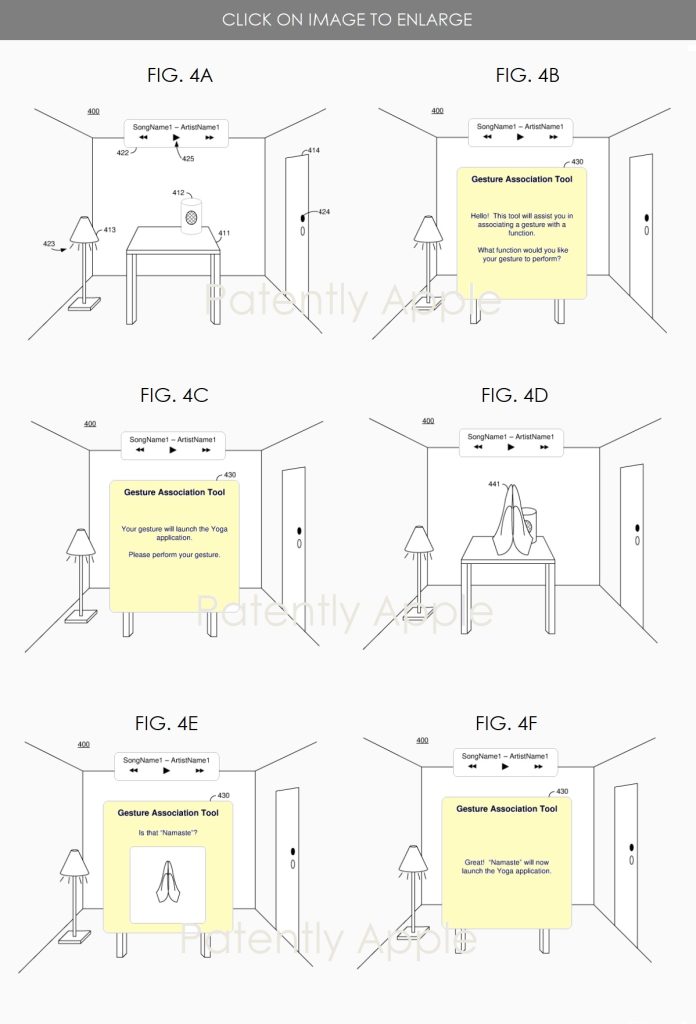
The company introduced a new tool called Gesture Association Tool in the patent, which first asks the user what functions they want to create gestures for. For an available gesture that is not activated, the device will assign a name to it. You can see a demonstration of it in the image below.
The process will be performed by a device including an image sensor, one or more processors, and non-transitory memory. The image sensors will capture the hand movement and share it with the processor. Then the device will extract a first set of features from the collected data and will gesture matching criteria based on the information collected through the sensors. To get a better idea of the process, you can refer to the images below.
Image: Patently Apple
While the main focus is on head-mounted devices like the Vision Pro, according to the patent application, the concept could be used in many other aspects such as headphones, windows having integrated display capability, displays formed as lenses designed to be placed on a person’s eyes, and much more.
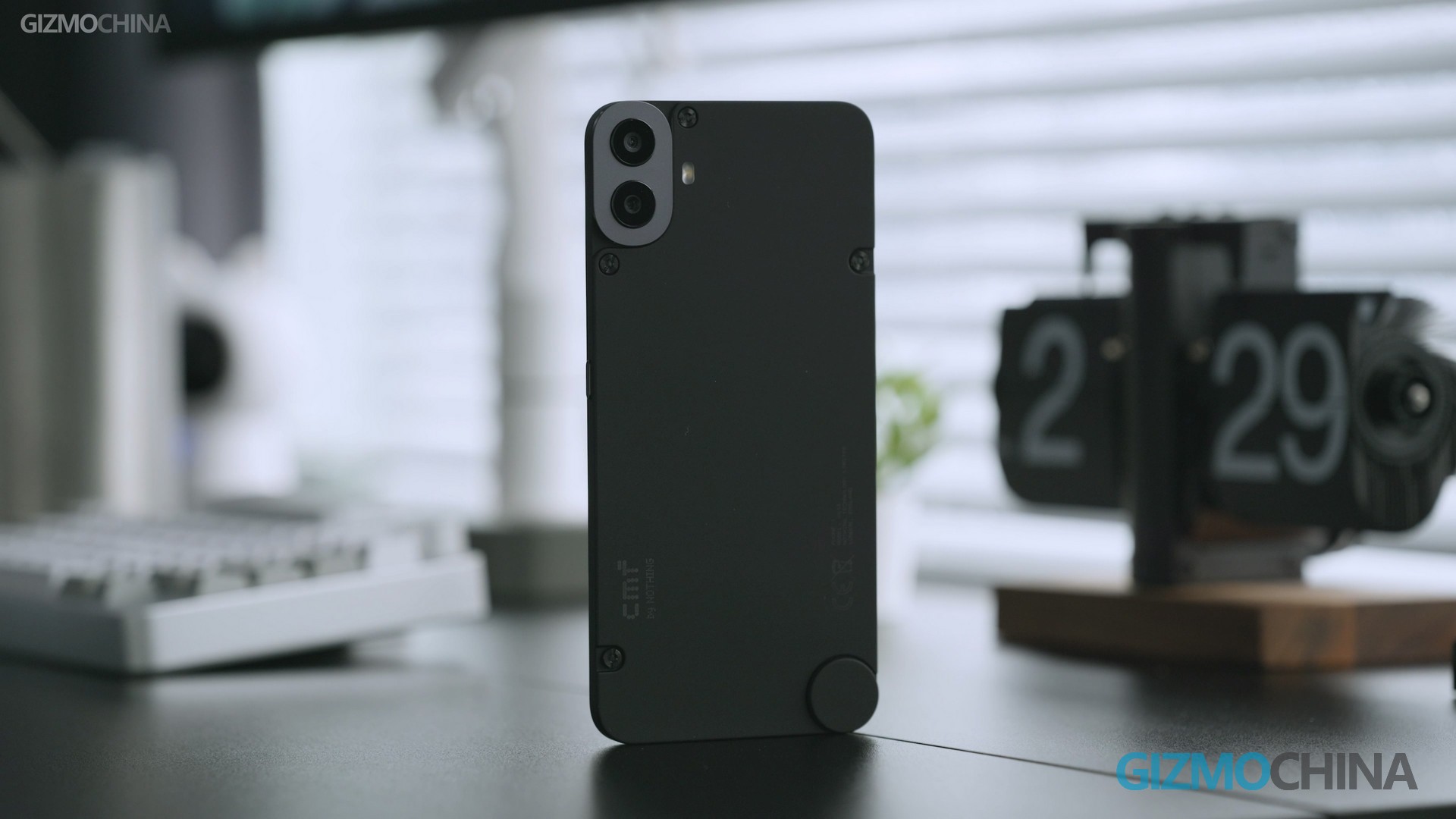
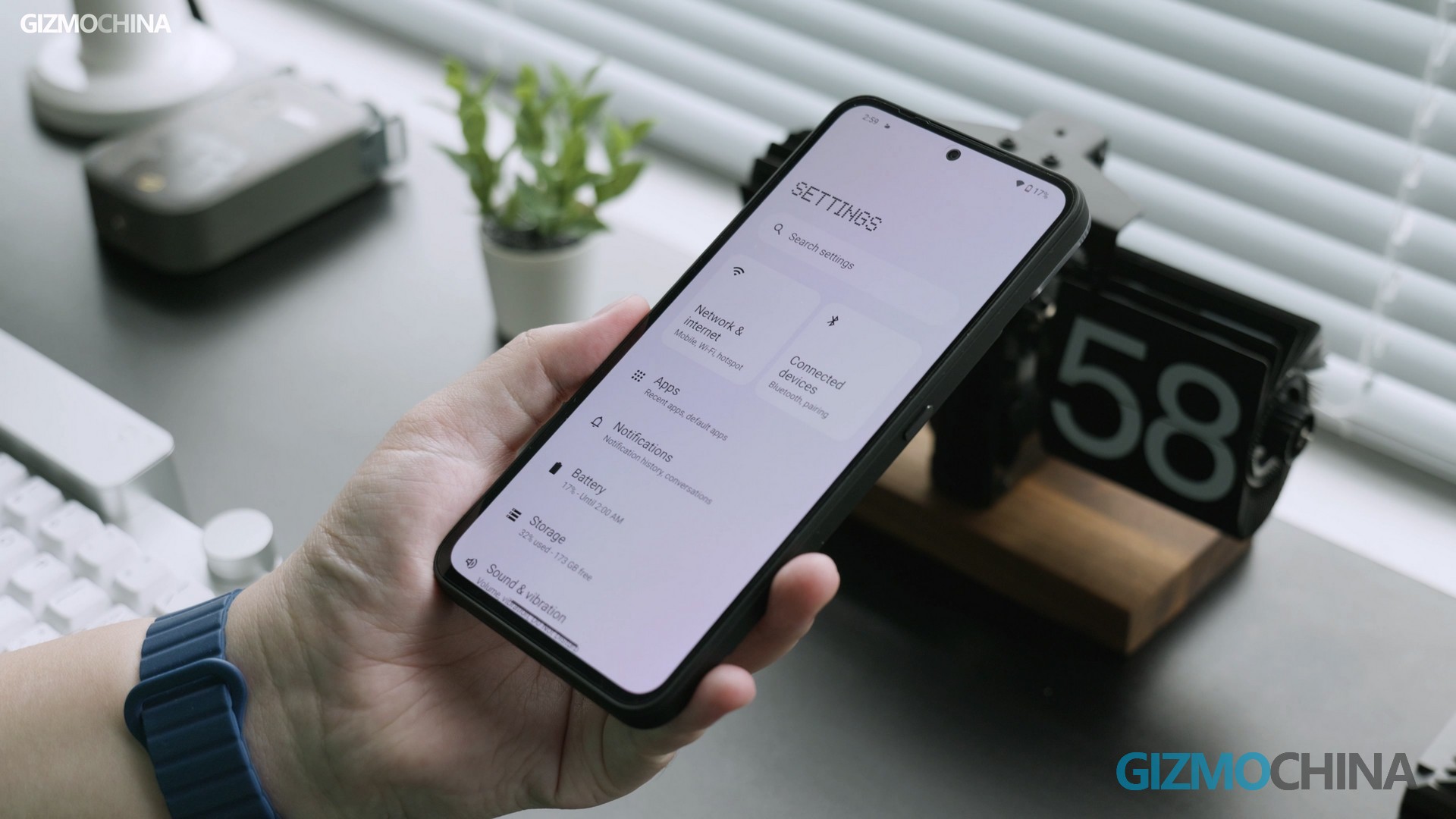
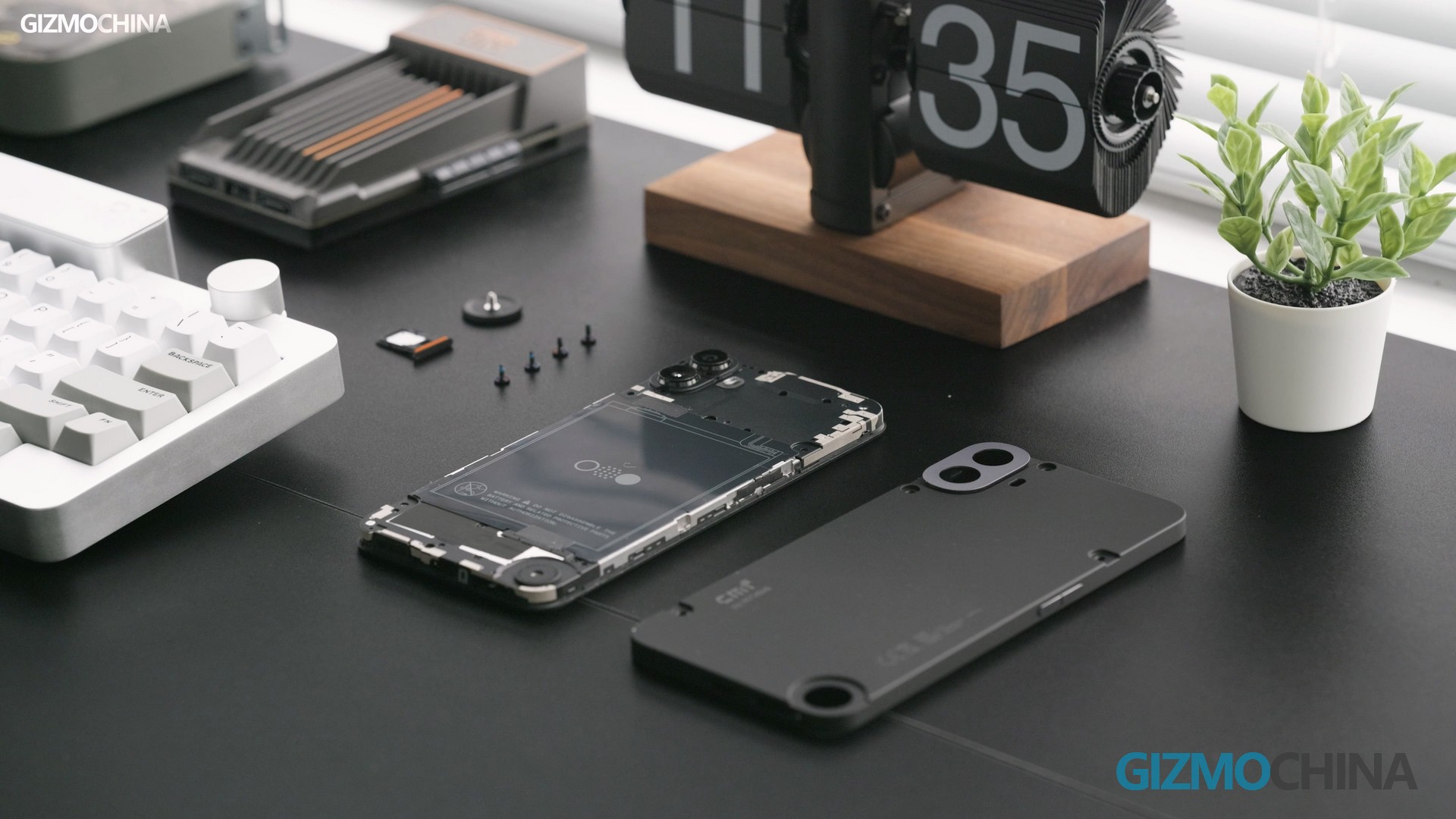
It’s a little bit late, but we finally got our hands on this CMF Phone 1. As the name says, the highlight of the CMF Phone 1 is the design. You can even remove the back cover and knob to customize the look yourself. I’m sure you guys already know about it from other places, so we won’t talk about that today. Instead, let’s add something others may not have mentioned. So what else does it have?
Functionality
Being a budget phone, the CMF Phone 1 does come with some trade-offs on features. As you probably already know, the lack of NFC and IR emitter is probably one of its few regrets. Other than that, the rest of the specs are pretty much the same as any other phone in its price range. Even the SIM tray can support a 2TB TF card expansion, a feature that’s usually only found on entry-level phones, which is undoubtedly a highlight.
Display
Flip it over and let’s focus on that display, I would not say the display is superior, but hey, all budget phones are the same. As long as this OLED screen is bright enough to help me fight the sun outside, that’s all it matters. If you ask me what room for improvement, I’d say a screen with a better viewing angle would be nice.
Processor
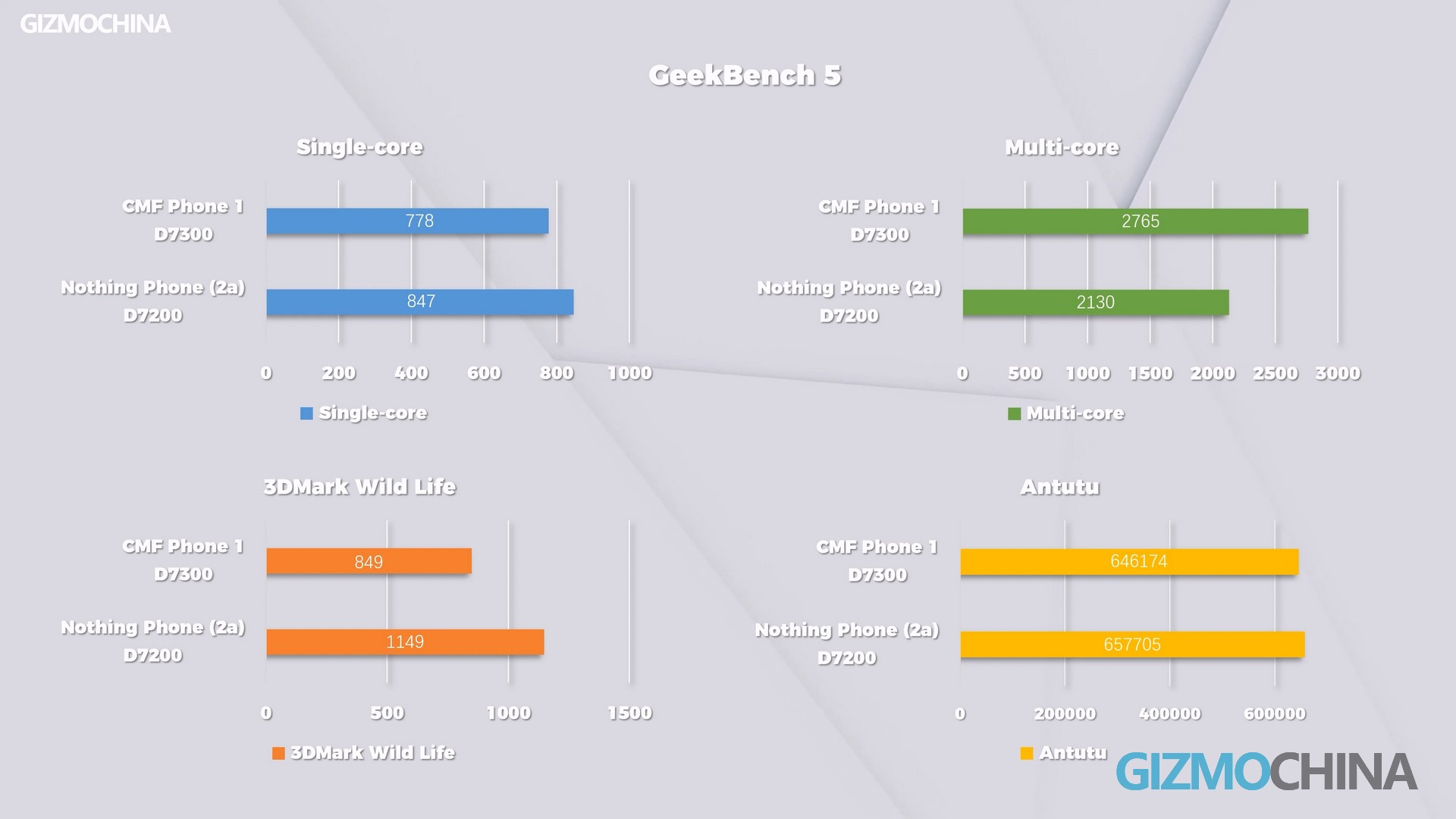
The CMF Phone 1 uses a Dimensity 7300 processor, which is slightly weaker than that Dimensity 7200 in the Nothing Phone (2a). Yes, you heard it right, 7300 is weaker than 7200, that’s what MediaTek’s math teacher taught him. By the way, Qualcomm’s English teacher did the same thing, The Snapdragon 8s Gen 3 is weaker than the 8 Gen 3. Am I crazy, or is the world crazy?
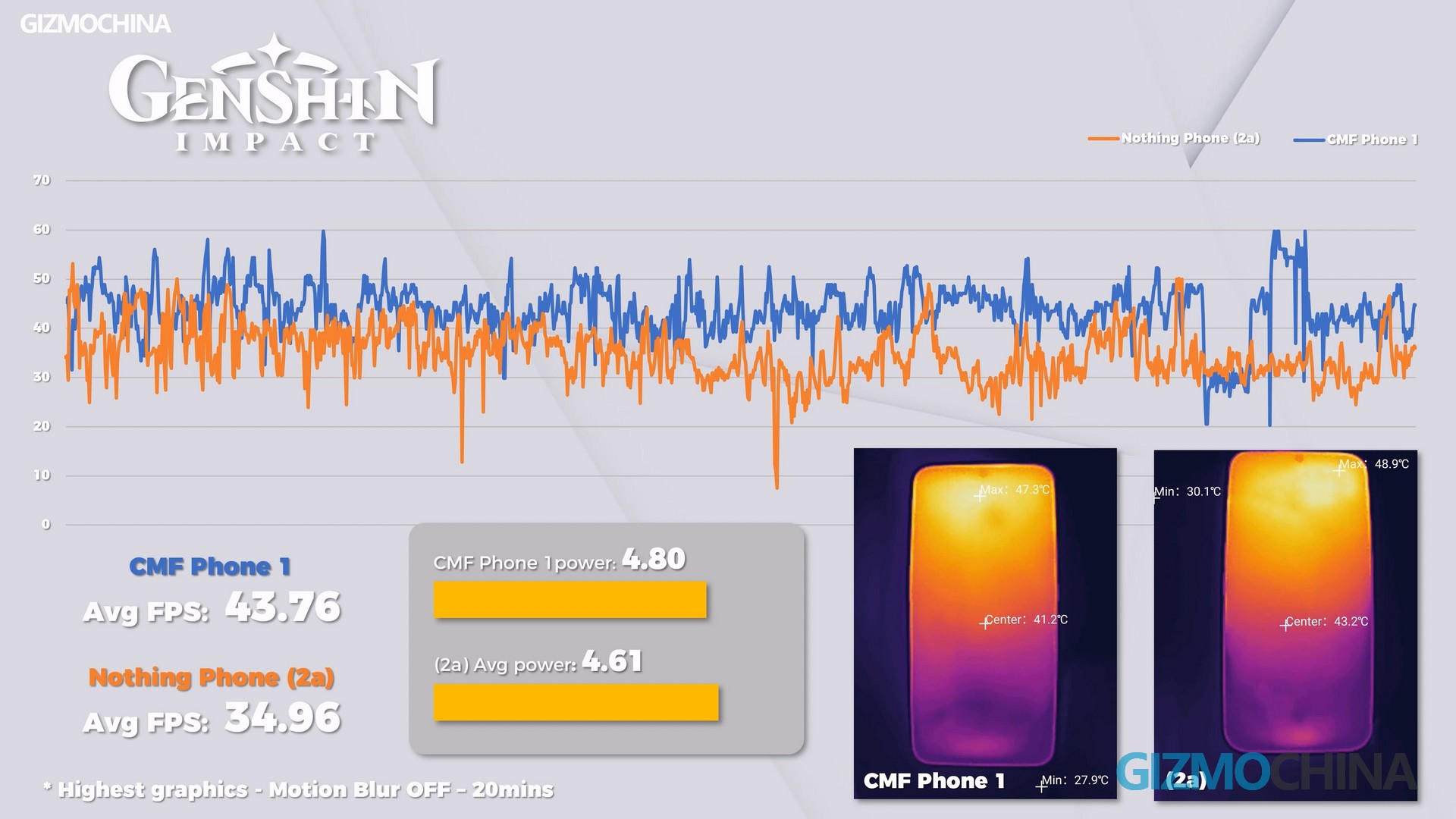
Surprisingly, the CMF Phone actually outperformed its big brother, the Nothing Phone (2a), in the gaming test session. Perhaps thanks to a more aggressive strategy, the CMF Phone’s average frame rate was much higher. It still has overheating issues at the end, but it’s pretty awesome for a budget phone to be able to do that. What we need to do is lower the graphics or limit the frame rate to 30, the gaming experience will be a bit better. For example, by lowering the graphics on the Zenless Zero to medium, the smoothness is already similar to many flagships.
Camera
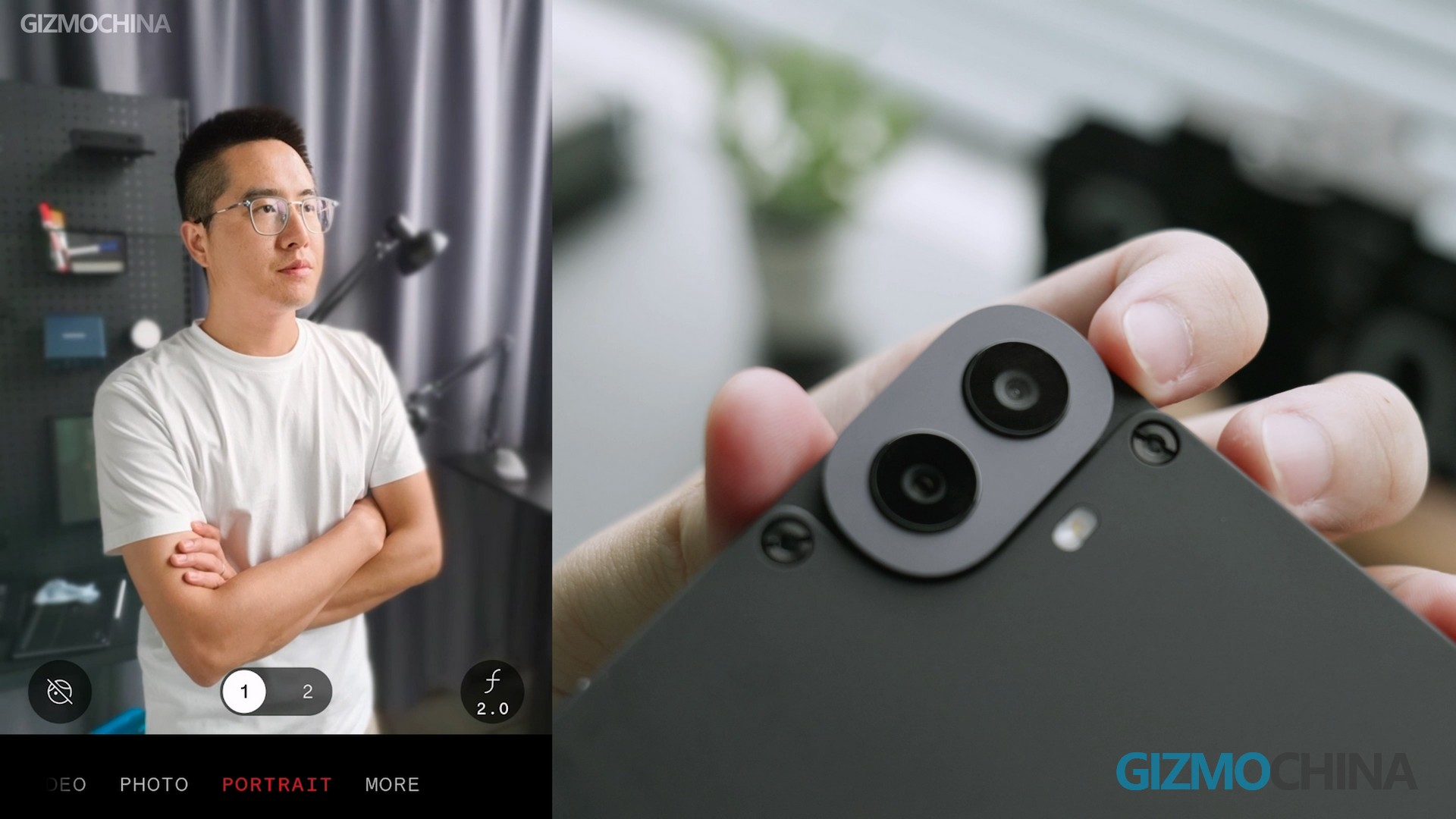
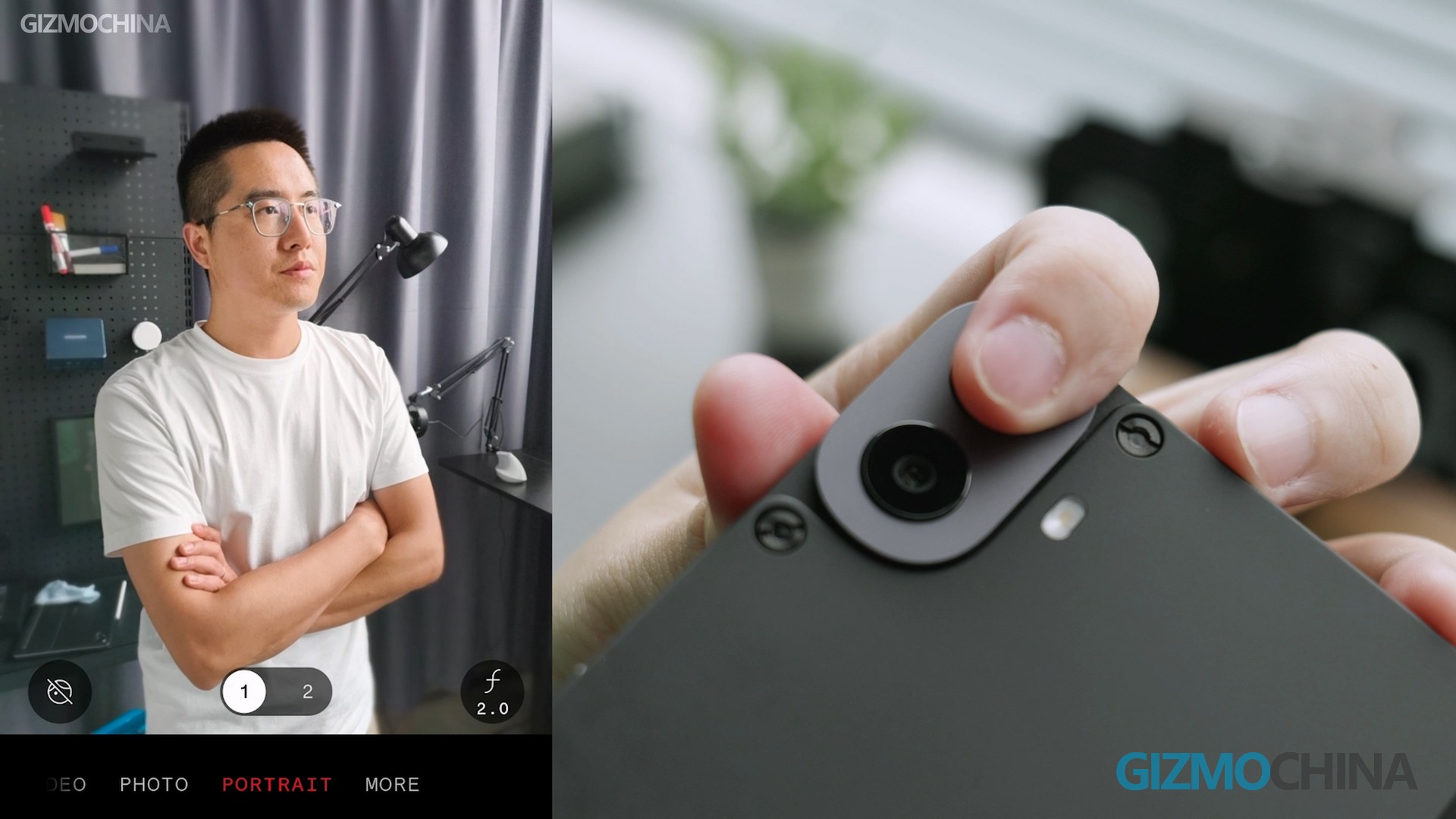
Unlike other budget phones, the CMF Phone replaces that 8 MP Ultra Wide Camera with a Depth of Field Camera. Although it can’t take photos on its own, it can support the main camera to get more professional camera-like photos. If you block this lens, the background bokeh is gone, so you can see that it does have a role to play. Having a nice background bokeh is pretty important for a photo, at least for portraits, it will make the photo look more professional.
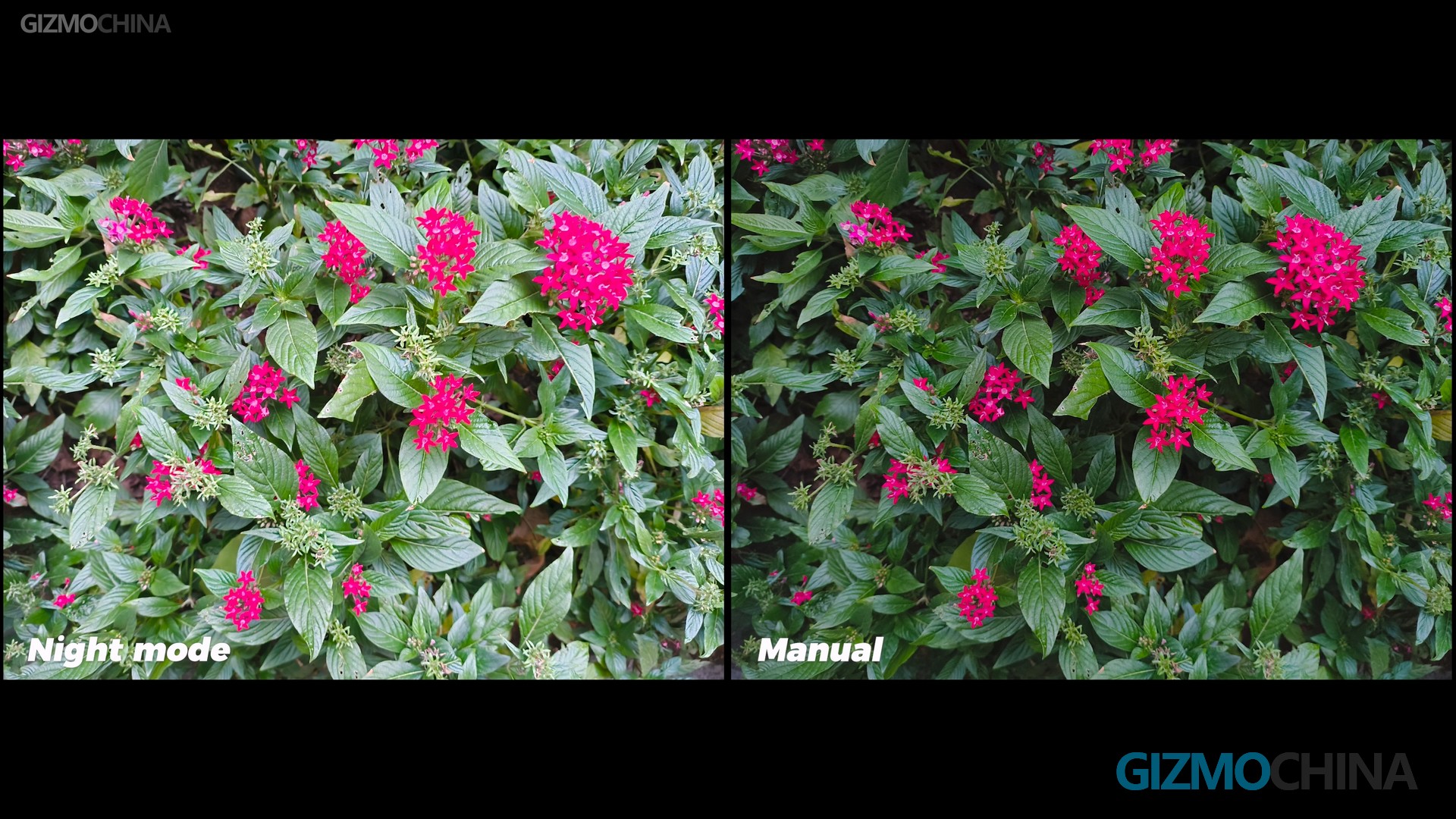
As for the main camera, I would say it performs well most of the time. The colors are bright and vibrant, and the resolution is good, both at 1x and 2x. At night, with the help of the night mode, the clarity is also a bit better than the auto mode. Only if you take photos on a cloudy day, the night mode can easily be turned on automatically, that’s when the photos will be overexposed. You need to manually turn off the night mode to make the exposure accurate enough, not a big deal.
Video recording tops out at 4K30 with electronic image stabilization. Can’t really pick any faults other than a bit more noise in the darker areas. I think the CMF Phone 1’s main camera performance is good enough for most people, after all, it’s not that expensive.
Disassemble
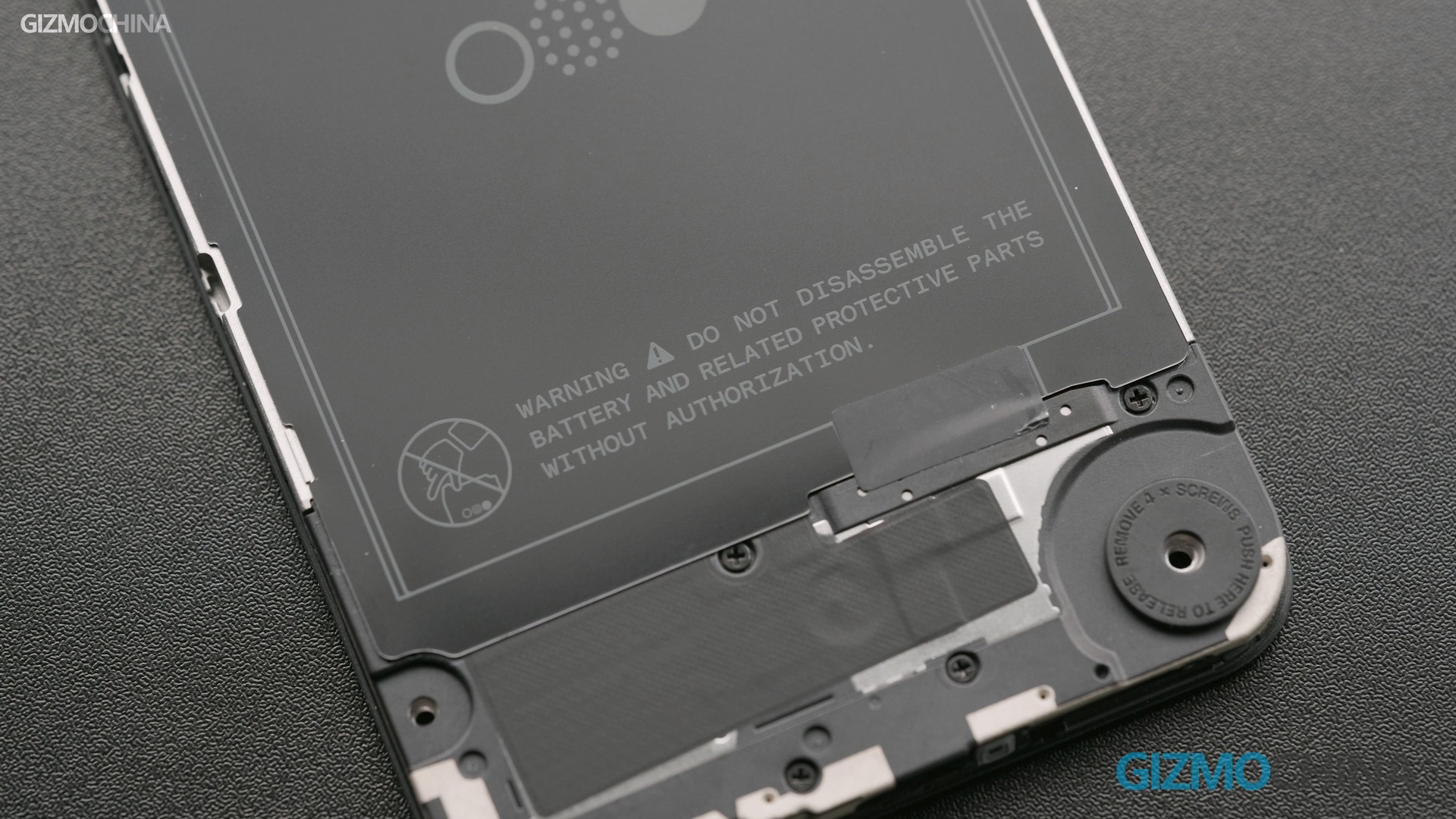
Removing the back cover of the CMF Phone 1, you can see that it’s so different from others. To prevent you from removing parts, the motherboard is covered with a plate or tape. There’s also a warning not to remove the battery and related protective components by yourself.
Once you remove the sticker or unscrew the bolts, you’ll lose the warranty. But to put it in another way, you can repair or upgrade this phone yourself once it’s out of warranty. Or you can do things like this, remove the back cover to play games, that way you won’t have overheating issues. This is something that only CMF Phone can do.
Battery & Charging
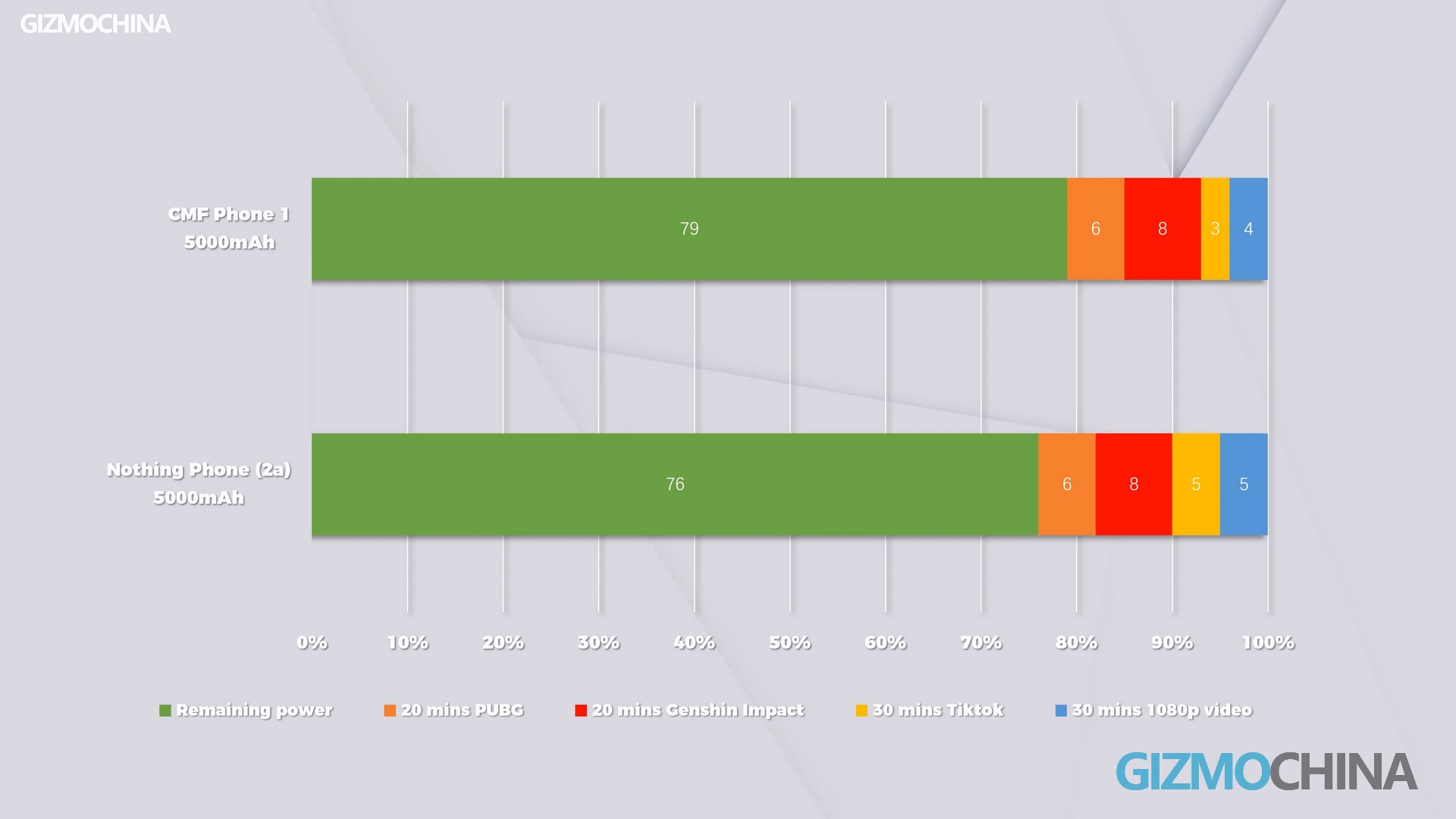
The CMF Phone has a 5000mAh battery, wired charging power up to 33W, and no wireless charging. It’s acceptable at the $250 price point, the power is not too big or small, charging speed will not be too fast or too slow. The battery life is even a little better compared to its brother 2a.
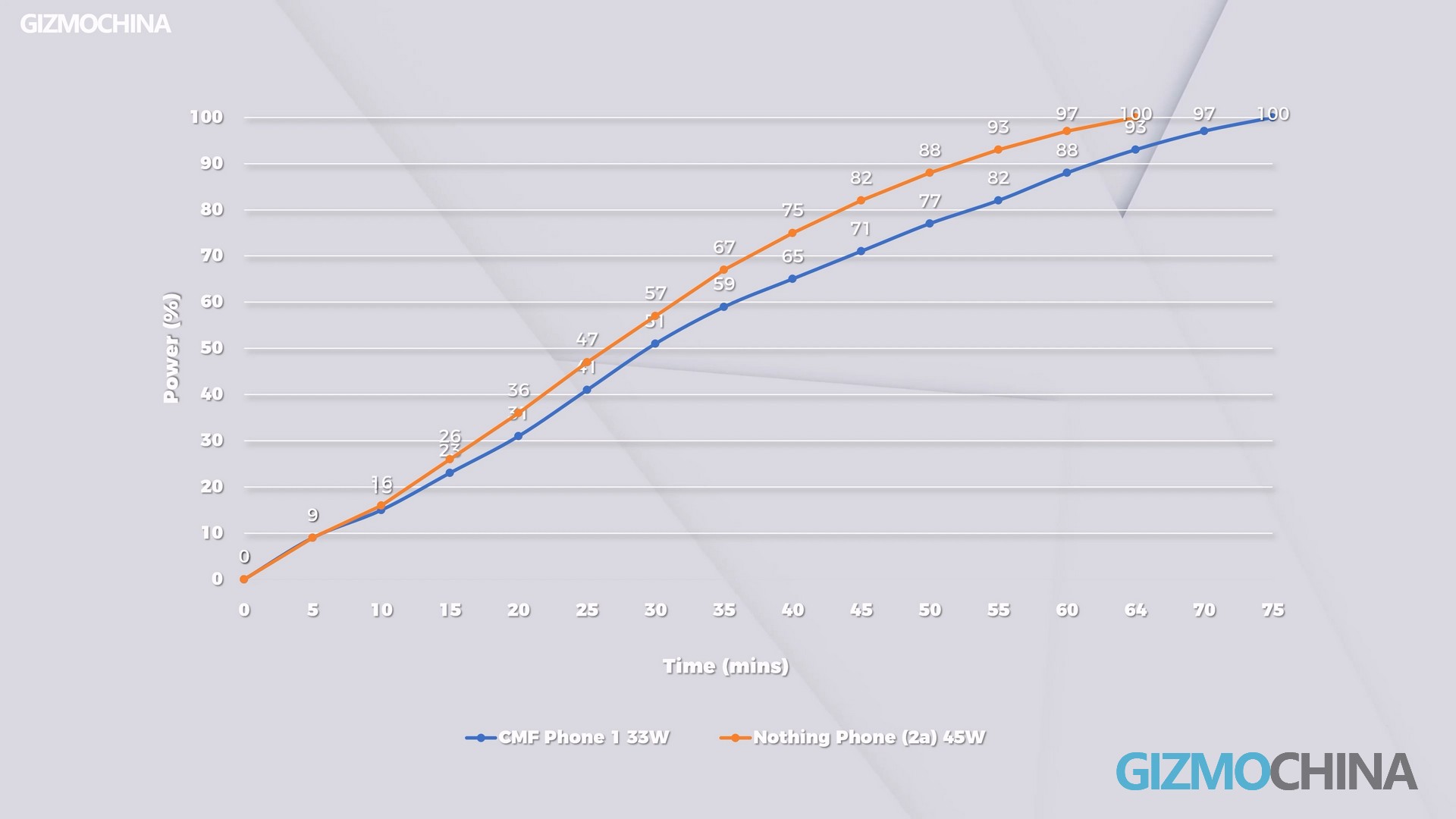
There’s not much to say about the wired charging, it can be charged to 51% in half an hour and over an hour to have it fully charged. Roughly, the maximum input power during charging can be 27W. 5W of reverse wired charging is also useful for charging a lot of gadgets.
Verdict
Once upon a time, in the phone market, there were a lot of phones with modular design. But without any exception, they didn’t live long, or even never be launched. Although the CMF Phone 1’s swappable accessories are not as radical as those modular phones, I still hope that it will be a big seller. I’m hoping the next CMF Phone will be more and more modular until a truly modular phone comes out.
We use cookies on our website to give you the most relevant experience by remembering your preferences and repeat visits. By clicking “Accept”, you consent to the use of ALL the cookies.
This website uses cookies to improve your experience while you navigate through the website. Out of these, the cookies that are categorized as necessary are stored on your browser as they are essential for the working of basic functionalities of the website. We also use third-party cookies that help us analyze and understand how you use this website. These cookies will be stored in your browser only with your consent. You also have the option to opt-out of these cookies. But opting out of some of these cookies may affect your browsing experience.
Necessary cookies are absolutely essential for the website to function properly. This category only includes cookies that ensures basic functionalities and security features of the website. These cookies do not store any personal information.
Any cookies that may not be particularly necessary for the website to function and is used specifically to collect user personal data via analytics, ads, other embedded contents are termed as non-necessary cookies. It is mandatory to procure user consent prior to running these cookies on your website.