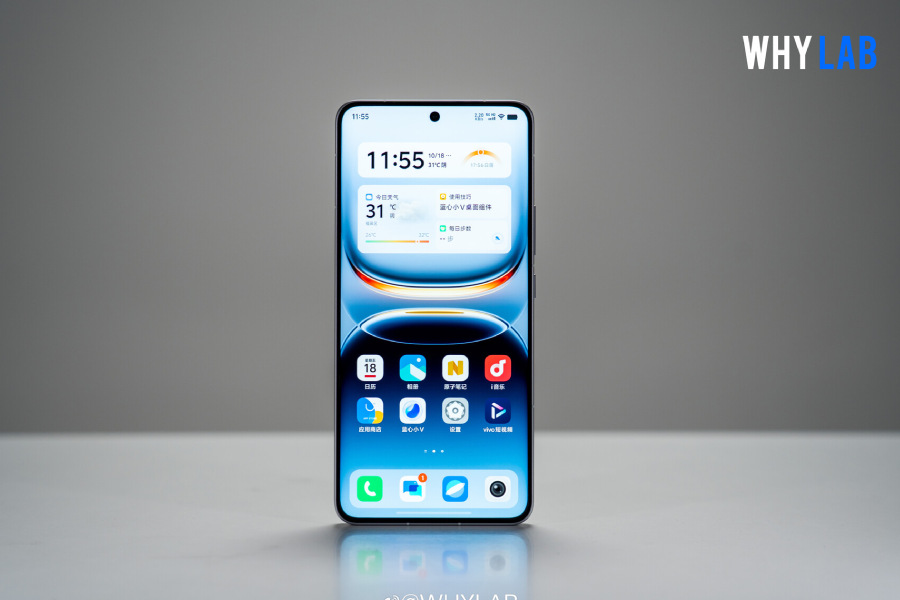
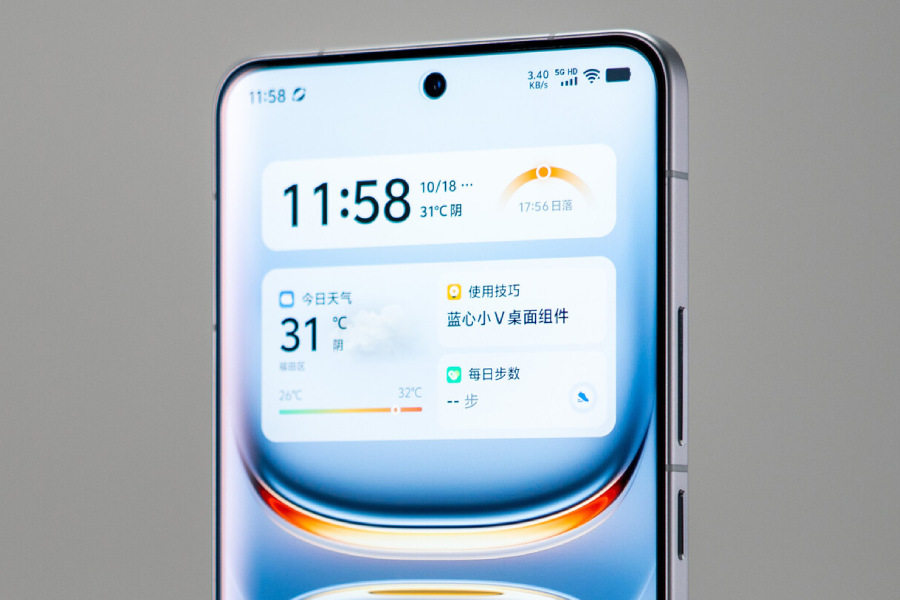
Huawei has already confirmed the Oct. 22 launch of the Nova 13 series in China. Now tipster Digital Chat Station has shared some of the specifications of the Nova 13 Pro along with its Geekbench listing.
Huawei Nova 13 and Huawei Nova 13 Pro
The phone scores 997 and 2,900 in the single-core and multi-core tests, respectively, which is surprisingly much lower than its predecessor’s scores. For context, the Nova 12 Pro achieved over 1,300 and 4,100 in the same tests.
Nova 13 Pro rumored to use Kirin 8000 chip
According to the tipster, the phone is powered by the mid-range Kirin 8000 chipset. In contrast, its predecessor used the more capable Kirin 9000s, the same chip that powers the flagship Mate 60 series.
The Huawei Nova Flip, which was released in August this year, also uses the mid-range Kirin 8000 chip, which includes a single Cortex-A77 core clocked at 2.40 GHz, three additional Cortex-A77 cores at 2.19 GHz, and four energy-efficient Cortex-A55 cores running at 1.84 GHz.
While the Geekbench listing for the Nova 13 Pro also confirms the same frequencies for all the different clusters, the scores are still lower than the flip phone. It suggests that the company is testing the device with different performance tuning to find a sweet spot between the performance and battery life.
Other specifications:
According to the Geekbench listing, the Kirin 8000 chip is paired with 12GB RAM. In addition to that, the phone packs a 1.5K quad-curved display, the same resolution as its predecessor. However, he didn’t reveal the display size.
The company’s new HarmonyOS Next operating system (independent of Android) is expected to debut alongside the Nova 13 series. However, the tipster claims it will be running on HarmonyOS 4.2.
As for the cameras, he reaffirms the previous rumors. There could be a dual 60MP + 8 MP setup on the front and a triple camera setup on the rear, including a 50MP main with variable aperture. According to previous rumors, the other two cameras could be a 12MP ultrawide and an 8MP telephoto.
The phone could also support satellite connectivity and 100W fast charging.
Motorola has not been impressive with software update distribution in recent years. It usually releases the latest Android update when many brands wrap up their rollout. However, 2024 has been a different year for the brand, as it appears to be taking things seriously.
In a big move, the American brand recently started offering five Android upgrades to select models. Though it’s not the best among Android brands, Motorola fans would really appreciate it. In a surprising turn of events, Motorola is already rolling out Android 15 beta ahead of Samsung and many other brands.
Motorola has also confirmed Android 15 availability for many of its devices. While the brand hasn’t made an official announcement, the details can be accessed via the company’s official support page.
Motorola phones eligible for Android 15 update
Motorola Razr phones:
Motorola Razr+ (2024) / Razr 50 Ultra
Motorola Razr (2024) / Razr 50
Motorola Razr+ (2023) / Razr 40 Ultra
Motorola Razr (2023) / Razr 40
Motorola Edge phones:
Motorola Edge (2024)
Motorola Edge+ (2023)
Motorola Edge 50 Ultra
Motorola Edge 50 Pro
Motorola Edge 50 Neo
Motorola Edge 50 Fusion
Motorola Edge 50
Motorola Moto G series phones:
Motorola Moto G Power 5G (2024)
Motorola Moto G Stylus 5G (2024)
Motorola Moto G 5G (2024)
Motorola Moto G85
Motorola Moto G75
Motorola Moto G55
Motorola Moto G45
Motorola Moto G35
Motorola Moto G34 5G
Other Motorola phones:
ThinkPhone by Motorola
ThinkPhone (2025)
This seems like a solid list at first glance, but you’ll quickly realize that many phones are missing. The most notable omissions are the Moto G64 and Moto G (2024). Both were released this year and were supposed to receive the Android 15 upgrade.
Please note that the above list has been curated by reviewing the device’s support pages. It’s possible that Motorola hasn’t updated support pages for many devices. So, if your device isn’t on the above list, wait for the official announcement. Meanwhile, you can check our list of Motorola Android 15 devices created based on the software update policy.
Motorola might roll out the Android 15 update quicker than last year. The reason is that the Android 15 beta is already seeding some models, including the Edge 50 Fusion, which is nearly three months ahead of the Android 14 beta.
What to expect from Android 15?
Android 15 doesn’t offer too many visual upgrades, but it strongly focuses on privacy and security. These are the new features you might see after upgrading your Motorola phone to the new OS:
1. Theft detection lock
This new feature uses AI to determine if your phone has just been snatched and locks it down to stop thieves from stealing your important data. You should enable this feature called theft detection lock the first chance you get.
In a blog post, Google revealed that this feature reduces incentives for thieves by making it difficult to set up the device again. Google says if a thief forces a reset of the stolen device, they will not be able to set it up again without knowing your device or Google account details.
2. Private space
Android 15 also introduces private space. It’s a separate space to keep important apps under an additional layer of security. All apps inside private space aren’t visible to other users and are hidden in recent apps.
This feature is already rolling out to Google Pixels with the Android 15 update, and it might also come to Motorola phones.
3. App pairs
Android 15 lets you create shortcuts for your favorite pairs of apps to open them in the split-screen mode. For example, you can create a shortcut to open YouTube and Notes in a single window.
4. App archiving
Android phones already support app archiving, which lets users uninstall an app while keeping the user data. However, this feature is only available via the Google Play Store. The upcoming Android 15 has this feature baked in, which means it will also support apps installed outside of the Google Play Store.
The app archiving feature is designed to save storage by archiving apps you don’t want to use for a short period. When you unarchive the app, you can continue where you left off without losing any data.
The next upgrade for your Motorola device will likely bundle more features and AI smarts.
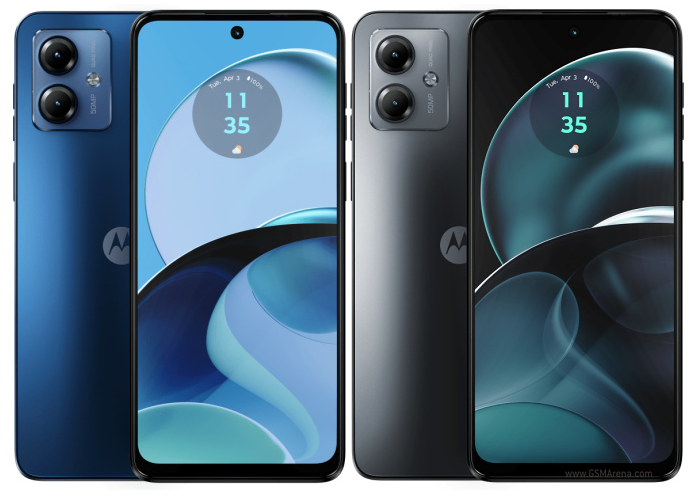
Motorola launched a pocket-friendly smartphone, the Moto G14, in August this year with 4GB/8GB RAM. Now the successor, Moto G15, has surfaced on Geekbench 5 with a single and multi-core score of 340 and 1311 respectively.
Although the scores are lower than the 447 and 1577 points of the predecessor, we cannot compare the numbers directly as the upcoming device is tested on Geekbench 5 instead of Geekbench 6.
The G15 listing doesn’t specify the exact chipset, but reports suggest it features a Mali-G52 MC2 GPU. The chipset has a 6+2 core architecture, with 2 performance cores clocked at 2.0 GHz and 6 efficiency cores at 1.7 GHz.
According to the listing, the phone runs on Android 15 and has 4GB RAM. However, there will likely be a higher (possibly 8GB) RAM option. This device could be priced around Rs 10,000 and cater to those who want a simple and lightweight UI.
To recall, the Moto G14 ships with the Unisoc T616 chipset, which also has the same core architecture and similar clock speeds.
Moto G14 Specifications:
Moto G14
To give you an idea of what to expect, the Moto G14 packs a 6.5″ FHD+ IPS LCD display, which is really good considering the price range. The Unisoc Tiger T616 is paired with UFS 2.2 storage, much faster than eMMC modules usually used in devices in the price range. There are two different storage options: 128GB/256GB. The phone packs a 5000mAg battery and supports 15W charging.
As for the cameras, the G14 offers a 50MP+2MP setup on the rear and an 8MP camera in the front.
Notably, the G14 is a 4G device, and the similarity in scores suggests that the G15 could also be limited to 4G speeds.
Fortunately, there could be better options in the price range for those seeking 5G connectivity. Redmi is expected to launch a 5G version of the Redmi 14C soon, which scores over 900 and 2000 in Geekbench 6, a massive improvement in performance over both the Redmi 14C and the Moto G14. This suggests a considerably better performance in heavier apps.
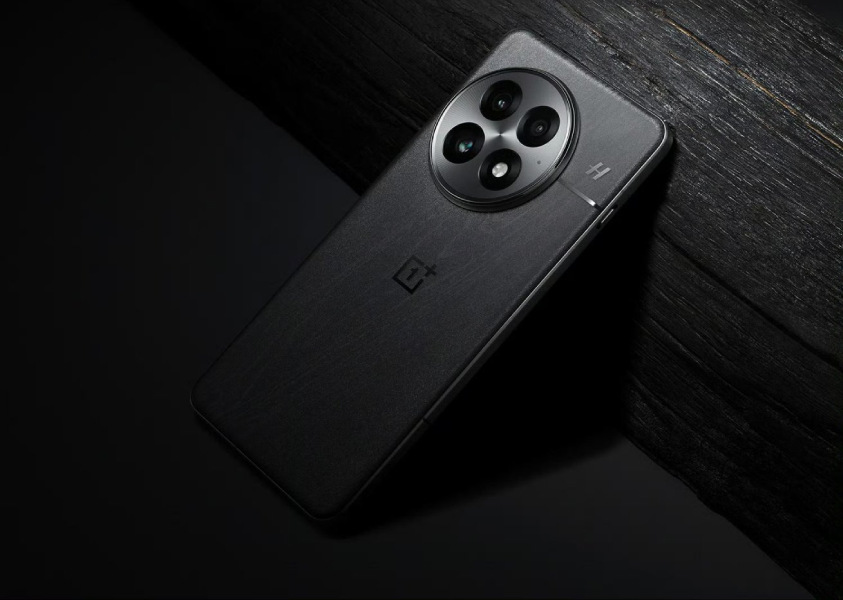
The OnePlus 13 is expected to launch in October, just after the announcement of the Snapdragon 8 Elite (or 8 Gen 4) chip. The phone has now also been spotted on multiple certification platforms including Camera FV-5, TUV, and IMDA, which not only confirms different aspects of the device but also suggests at imminent launch date.
OnePlus 13 Camera FV-5 listing
According to the listing information, the phone equips a 12.6MP main camera, likely the 4-1 binned output from the previously rumored 50MP sensor. It has a 24.6mm focal length, supports OIS, and has a 72.5-degree field of view.
In binned mode, the sensor achieves an equivalent pixel size of 2.0µm and supports exposure ranging from 1/12,801 to as long as 42.0 seconds.
According to previous rumors, it could be the 50MP Sony LYT 808 sensor, which has a large 1/1.3-inch sensor size.
Interestingly, the listing suggests a 16MP selfie camera, while the phone was previously rumored to boast a 32MP sensor for the purpose. According to the listing, the sensor has a binned resolution of 4MP, which suggests the actual resolution to be 16MP. Nonetheless, it can also be a 9-1 binned output from a 36MP sensor, which was noted at 32MP.
The selfie camera offers a field of view of 71.0-degree, and also supports EIS stabilization. However, unlike the main camera, it doesn’t support autofocus.
In terms of performance, the phone has recently been spotted on Geekbench with a single and multi-core score of 3236 and 10049 respectively, which is higher than most of the Snapdragon 8 Gen 4 listings we came across so far.
The phone offers a 6.8″ micro-curved 2K LTPO display which uses the BOE X2 panel, which is expected to reach 1600 nits under direct sunlight (HBM) and 6000 nits while playing HDR content. To power the display, the phone packs a massive 6,000mAh high-density silicon anode battery, and supports 100W SUPERVOOC fast charging paired with 50W magnetic wireless charging.
Vivo has emerged as the undisputed champion of the Indian smartphone market in the third quarter of 2024 (Q3), according to a report by Canalys.
The Chinese brand shipped a solid 9.1 million units during the period, translating to a 19% market share – a respectable jump from its 17% share in Q3 2023. While Vivo celebrates its rise, established players like Xiaomi and Samsung face a different reality.
Vivo shipped more smartphones in India than Xiaomi in Q3, 2024
Xiaomi, occupying the second spot with 7.8 million units shipped, managed a 17% market share.
This might seem positive on the surface, considering a slight increase in shipped units compared to last year. In reality, however, it saw a 1% dip in market share.
Samsung’s story is one of consistent decline. The South Korean giant, once the undisputed leader, shipped 7.5 million units in Q3 2024, securing only a 16% market share.
It’s a drop from both its 18% share and 7.9 million units shipped in the same period last year. Samsung seems to be losing ground in the competitive Indian market.
The remaining spots in the top five are filled by familiar names: Oppo and Realme. Oppo, with its 6.3 million shipments and 13% market share, witnessed a remarkable 43% growth year-on-year.
Realme, on the other hand, experienced a slight setback, shipping 5.3 million units for an 11% share. That’s an 8% decline in shipments compared to Q3 2023.
Overall, the Indian smartphone market saw a healthy 9% year-on-year growth, reaching a total of 47.1 million units shipped in Q3 2024.
Analysts at Canalys suggest that the market will continue on a modest single-digit growth trajectory in 2025. Notably, the ultra-low-end 5G segment is expected to be the primary driver of this growth, as affordable 5G capabilities become increasingly important for Indian consumers.
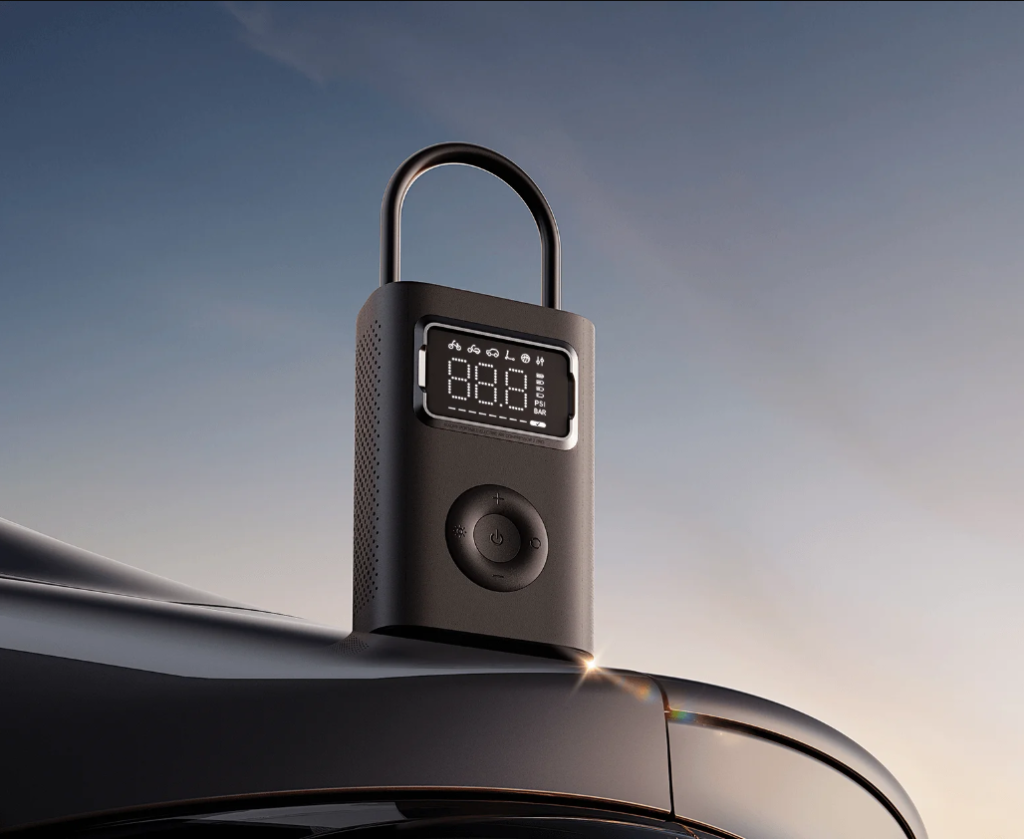
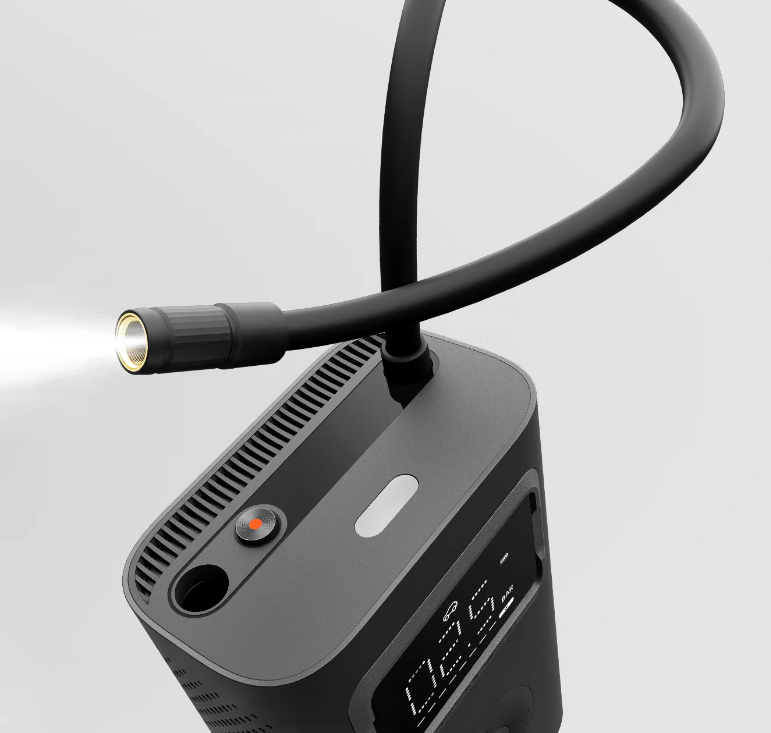
Xiaomi is set to release the Portable Electric Air Compressor 2 Pro globally, after initially unveiling it in China back in August. The Electric Air Compressor 2 Pro offers significant improvements over its predecessor.
This compact device features a 2,500mAh battery, capable of inflating up to 16 car tires or 30 road bike tires on a single charge. It inflates a 205/55 R16 car tire from 2.0 to 2.5 Bar in about 45 seconds, much faster than the previous model’s two-minute inflation time. It can inflate tires to a pressure range of 0.2 to 10.3 Bar or 3 to 150 PSI and operates in temperatures between -10°C and 45°C.
The 2 Pro offers five inflation modes for different tire types and sizes, with customizable settings to meet specific pressure needs. It automatically stops once the desired pressure is reached, and the display shows real-time progress.
Key features include a multimode indicator light for warnings and flashlight use, a USB-C charging port, and a compact, portable design. The compressor has a rated input of 5V⎓3A, a rated energy of 27Wh, and takes about 3.5 hours to fully charge. The device measures approximately 152 x 100 x 63 mm (excluding the high-pressure air hose).
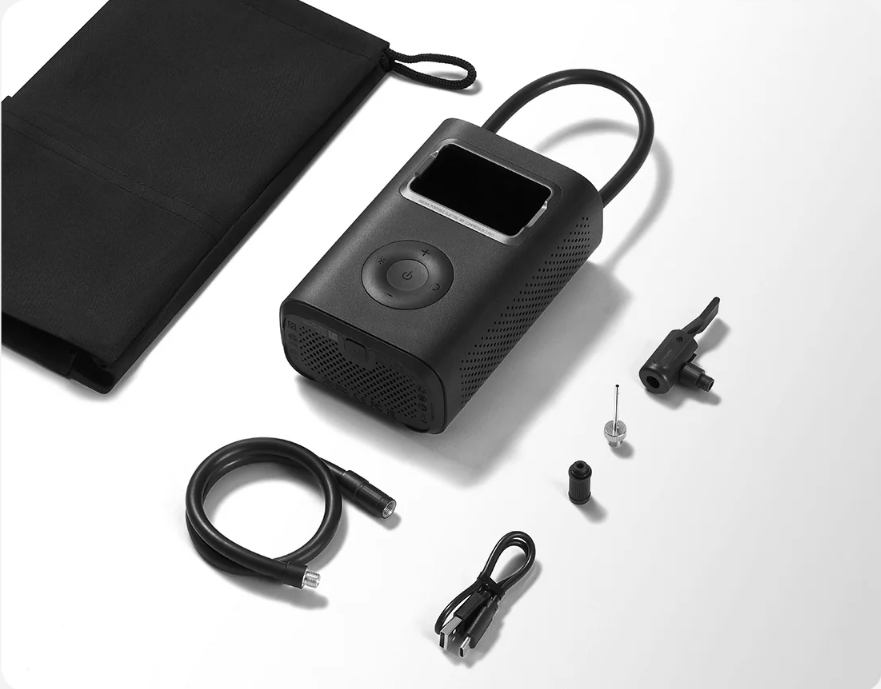
The package includes the Xiaomi Portable Electric Air Compressor 2 Pro, a Presta valve adapter, a needle valve, a storage bag, a fast-connecting air valve, a high-pressure air hose extension, a Type-C charging cable, and a user manual.
While pricing and availability are yet to be confirmed, it’s expected to be competitively priced, following the previous model’s $45 range. In China, the Air Compressor 2 Pro costs 299 yuan, which converts to around US$42.
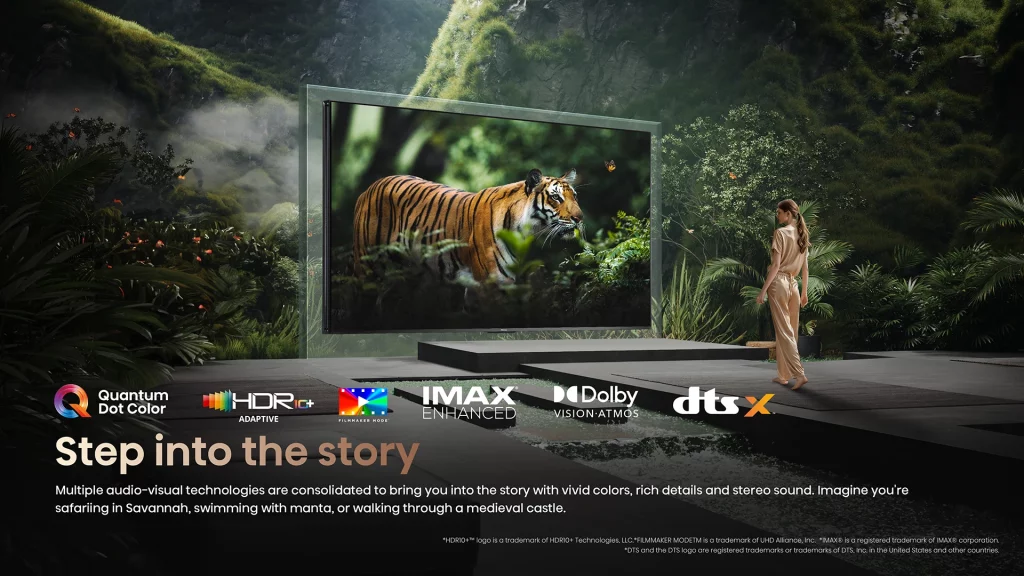
Hisense has officially launched its 110-inch ULED X Mini LED TV, now available globally for $20,000. First introduced at CES 2024, the 110UX received industry recognition, including a CES Innovation Award and Digital Trends’ Editor’s Choice Award.
Large Screen, High Performance
The 110UX offers a peak brightness of 10,000 nits, supported by over 40,000 local dimming zones to reduce backlight bleed and enhance contrast. Powered by Hisense’s Hi-View AI Engine X, the TV makes real-time adjustments for optimized clarity. This model features a 4K resolution (3840 × 2160 px) and a 120Hz refresh rate (144Hz VRR) to deliver smooth visuals, making it well-suited for sports, movies, and gaming.
For gamers, the TV includes four HDMI 2.1 ports, Game Mode Pro, and AMD FreeSync Premium Pro to support high-frame-rate gameplay. It also provides a 102W speaker system with 4.2.2 surround sound, supporting Dolby Atmos and DTS for an immersive audio experience.
Targeting a Global Audience
The 110UX runs on the Google TV platform in the U.S. and Vidda U OS in Europe. Priced at $19,999 in the U.S., £19,999 in the UK, and €19,999 in Europe, it is available through major retailers like Best Buy and specialist stores such as Crampton and Moore. This global rollout reflects Hisense’s strategy to penetrate new markets beyond its traditional mid-range products.
In addition to the standard 110UX model, Hisense has released a Championship Edition tied to the start of the NBA season. This limited-edition version adds luxury elements, appealing to sports enthusiasts and further positioning the brand within the high-end segment.
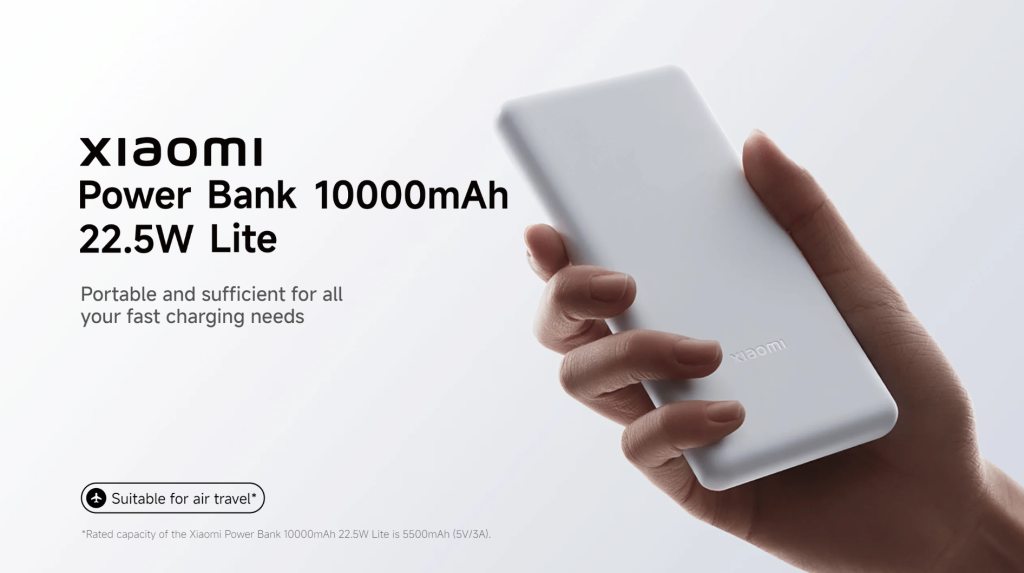
Xiaomi has expanded its global product lineup with the introduction of the Power Bank 10000mAh 22.5W Lite. Initially launched in China, this portable power bank offers fast charging capabilities and a compact design.
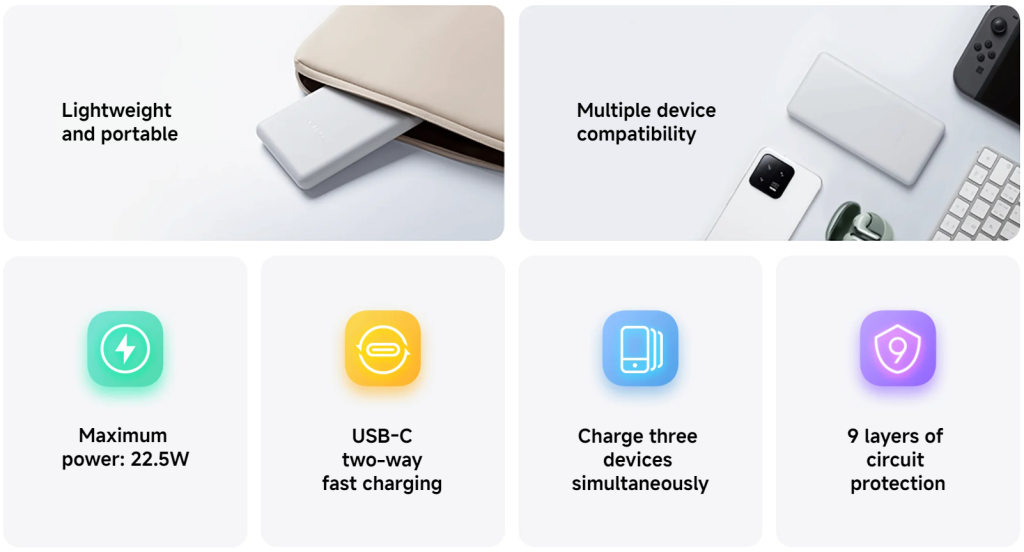
Equipped with one USB Type-C port and two USB Type-A ports, the power bank can simultaneously charge up to three devices. Its slim profile and lightweight design make it easy to carry and use on the go.
The 10000mAh battery capacity ensures ample power for charging various devices. The power bank supports a wide range of fast charging protocols, including PD3.0, QC3.0, AFC, FCP, SCP, PE, and SFCP, allowing it to charge compatible devices at speeds of up to 22.5W via the USB Type-C port and up to 12W through the USB Type-A ports.
Xiaomi claims that the power bank can rapidly charge smartphones, such as the iPhone 13 and Xiaomi 13, in under two hours. Its intelligent charging technology automatically adjusts the charging speed based on the connected device, ensuring optimal charging performance.
Safety features like over-current, over-voltage, over-temperature, short-circuit, and low-voltage protection safeguard both the power bank and connected devices. The LED indicator provides real-time status updates.
Global pricing and availability details are currently unavailable, however, the power bank costs 79 Yuan in China.
Last week, iQOO officially revealed the front design of the iQOO 13, confirming it will feature a BOE Q10 display. The device shown has narrow bezels and a center punch-hole cutout, but real-life images hadn’t surfaced—until now.
A bunch of real-life images of the iQOO 13 have appeared on the Chinese social media platform Weibo. And while these images only show the front of the phone, the design is still impressive.
iQOO 13 real-life images
As you can see, the iQOO 13 features minimal bezels on all sides of the screen, creating a symmetrical look typical of flagship phones.
The flat frames on the sides are complete with antenna lines, which also confirms the device is made of metal. Additionally, the right-side frame houses the power button and volume rocker.
The phone will be built on a 6.82-inch 2K LTPO AMOLED screen with a 144Hz refresh rate. The display is also expected to offer improved eye protection and an ultrasonic fingerprint scanner.
While the images do not show the back of the phone, previous leaks have revealed its design. To be fair, the iQOO 13 doesn’t look significantly different from its predecessor.
It still has the squircle camera island in the top left corner. However, this time, the camera island will also feature RGB lighting, known as the Halo light, surrounding it.
iQOO also confirmed this week that the upcoming iQOO 13 will launch in China at the end of October. Major brands are likely waiting for Qualcomm to unveil its next-generation Snapdragon 8 Elite (or 8 Gen 4) chip before revealing their new phones. Following this announcement, we can expect a flurry of launches.
Rumors suggest that iQOO will unveil the iQOO 13 on October 30th. While not official, the smartphone is tipped to start at Rs 55,000 in the Indian market.
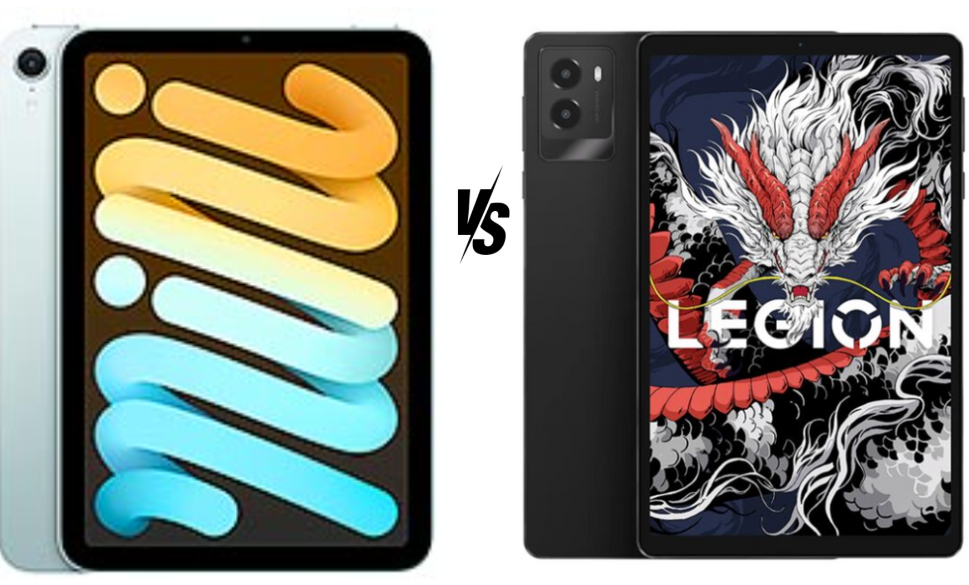
When it comes to tablets, Apple and Lenovo each bring something different to the table. The iPad mini 7 (2024) and the Lenovo Legion Y700 (2024) are two compelling options for different users. The iPad mini 7 appeals to professionals, creators, and Apple enthusiasts, while the Lenovo Legion Y700 targets gamers and entertainment lovers. In this comparison, we’ll analyze these devices in depth to determine which offers better value for its audience.
Design & Build Quality
Both tablets take a minimalist approach to design, but the execution is very different.
The iPad mini 7 comes in at 195.4 x 134.8 x 6.3 mm and weighs just 293g (Wi-Fi model), making it incredibly light and thin. Its aluminum back and frame give it a premium look, and with options like Space Gray, Blue, Purple, and Starlight, it’s stylish and modern. Its compact size makes it easier to carry, and Apple’s attention to detail is evident with features like a side-mounted fingerprint sensor.
The Lenovo Legion Y700 (2024) is larger and heavier, measuring 207.1 x 128.1 x 7.9 mm and weighing 375g. While heavier, its gray aluminum body feels durable and robust, better suited for rugged use. Lenovo’s focus is more on gaming durability than slim portability.
Similarities: Both devices have aluminum frames, premium glass fronts, and modern styling.
Differences: The iPad mini is lighter and slimmer, while the Legion Y700 is larger and heavier, making it less portable but potentially more durable.
Which is better? If you value a lightweight, portable device for casual use and productivity, the iPad mini 7 wins. For durability and a larger screen, especially for gaming, the Lenovo Legion Y700 is preferable.
Display
A tablet’s display is essential for gaming, media consumption, and productivity. Both devices offer high-quality screens but with different strengths.
The iPad mini 7 features an 8.3-inch Liquid Retina IPS LCD with a resolution of 1488 x 2266 pixels and a 500 nits typical brightness. Its color accuracy and pixel density of 327 ppi make it ideal for graphic work, media consumption, and general usage. Apple’s scratch-resistant glass and oleophobic coating ensure long-lasting durability.
The Lenovo Legion Y700 (2024) offers a larger 8.8-inch IPS LCD with a 1600 x 2560 resolution and a 16:10 aspect ratio. It also features HDR10, Dolby Vision, and 120Hz refresh rate, which creates a smoother experience, particularly for gaming. With a 343 ppi pixel density and the same 500 nits brightness, it matches the iPad’s brightness while offering better gaming visuals.
Similarities:Both tablets have 500 nits brightness, ensuring usability in bright environments.
Differences:The Lenovo Legion Y700 has a higher resolution and 120Hz refresh rate, making it better for gaming and high-refresh-rate content. The iPad mini 7, with its Liquid Retina IPS LCD, excels in color accuracy for creative work.
Which is better? For gamers and those who prioritize immersive media, the Lenovo Legion Y700 offers a better experience with its refresh rate and HDR support. For general use and professional tasks, the iPad mini 7 provides more refined visuals.
Performance
The iPad mini 7 is powered by Apple’s A17 Pro chipset (3 nm), a Hexa-core processor with Apple’s 5-core GPU. This chipset, which is designed for power efficiency and lightning-fast performance, ensures the iPad mini handles intensive tasks, from multitasking to creative work, with ease. The A17 Pro is renowned for outperforming most competitors in CPU and GPU power.
The Lenovo Legion Y700 (2024), on the other hand, is equipped with the Snapdragon 870 5G (7 nm), an Octa-core processor paired with the Adreno 650 GPU. While not as powerful as Apple’s A17, the Snapdragon 870 is known for its gaming prowess and excellent performance in Android gaming and app multitasking.
Similarities: Both tablets provide fast performance for everyday tasks.
Differences: The iPad mini 7 is superior in power efficiency and overall processing speed, while the Lenovo Legion Y700 is optimized for gaming with high GPU performance and multitasking.
Which is better? The iPad mini 7 edges ahead in general performance for creative and productivity tasks, while the Lenovo Legion Y700 stands out in gaming and resource-heavy applications.
Software & OS
Apple’s iPadOS 18 powers the iPad mini 7, providing a streamlined, fluid interface with access to Apple’s ecosystem, including iCloud, the App Store, and seamless integration with other Apple products. This OS is tailored for productivity, creativity, and multitasking.
The Lenovo Legion Y700 (2024) runs on Android 12 with ZUI 13, offering more customization options. Android offers a wider range of apps and the ability to sideload apps from third-party sources, which can be useful for gaming enthusiasts.
Similarities: Both devices offer robust operating systems that support multitasking and diverse applications.
Differences: Apple’s iPadOS is more optimized for productivity and ecosystem integration, while Android offers more freedom and customization, making it ideal for tech-savvy users who prefer flexibility.
Which is better? For productivity and integration into a larger ecosystem, iPadOS is unmatched. For customization and a more flexible OS, Android 12 on the Lenovo Legion is preferable.
Camera Systems
Cameras are not the primary focus of either tablet, but they do differ in quality.
The iPad mini 7 offers a 12MP rear camera with 4K video support and a 12MP ultrawide front camera, perfect for high-quality video calls, content creation, and media capturing.
The Lenovo Legion Y700 has a 13MP rear camera and an 8MP front camera, sufficient for basic photography and video calling, but lacking the advanced features of the iPad.
Similarities: Both devices have rear and front-facing cameras for basic photography.
Differences: The iPad mini 7 has a higher-quality camera system with 4K video recording, better suited for content creators. The Lenovo Legion Y700’s camera is functional but not a standout feature.
Which is better? For camera quality and versatility, the iPad mini 7 is the clear winner.
Battery Life & Charging
Battery capacity and charging speeds significantly impact user experience.
The iPad mini 7 houses a 5078 mAh battery and offers reliable all-day battery life with Apple’s efficient power management. It charges via USB-C 3.1 Gen2, though Apple doesn’t emphasize fast charging as much as other brands.
The Lenovo Legion Y700 comes with a larger 6550 mAh battery and supports 45W fast charging, capable of fully charging in just 45 minutes, making it a fantastic option for gamers who need quick refueling.
Similarities: Both use USB-C for charging and support all-day battery life for typical use.
Differences: The Lenovo Legion Y700 offers faster charging and a larger battery, making it ideal for intensive use and gaming sessions.
Which is better? For fast charging and battery capacity, the Lenovo Legion Y700 outshines the iPad mini 7, especially for gaming and media-heavy users.
Connectivity
The iPad mini 7 supports Wi-Fi 6e and Bluetooth 5.3, providing high-speed wireless connections and compatibility with the latest wireless accessories. It also features GPS and GLONASS for navigation, though NFC and radio are absent.
The Lenovo Legion Y700 supports Wi-Fi 6, and Bluetooth 5.1, and comes with a 3.5mm headphone jack, which is a notable feature for gamers and audiophiles. However, it lacks GPS and other location services.
Similarities: Both tablets offer high-speed Wi-Fi and Bluetooth capabilities.
Differences: The iPad mini 7 has more advanced Bluetooth support and navigation features, while the Lenovo Legion Y700 includes a 3.5mm jack for better audio flexibility.
Which is better? If you need advanced wireless connectivity and GPS, the iPad mini 7 is better. If you prefer wired audio options, the Lenovo Legion Y700 wins.
Speakers & Audio
Audio quality can significantly enhance your experience with media and gaming.
The iPad mini 7 is equipped with stereo speakers, offering balanced sound, but lacks a 3.5mm headphone jack, requiring users to rely on wireless or USB-C headphones.
The Lenovo Legion Y700 also features stereo speakers but is tuned by JBL, delivering enhanced sound for gaming and media. The inclusion of a 3.5mm jack allows for traditional headphone use, which many gamers prefer.
Similarities: Both tablets feature stereo speakers.
Differences: The Lenovo Legion Y700 offers better audio quality for gaming with JBL tuning and a 3.5mm jack. The iPad mini 7 lacks a headphone jack but still delivers excellent audio performance.
Which is better? For audiophiles and gamers, the Lenovo Legion Y700 offers superior audio flexibility.
Security
Security features on tablets protect your data and privacy.
The iPad mini 7 offers Touch ID integrated into the power button for fast, secure unlocking. Apple’s commitment to privacy and data protection is well-established, with advanced encryption and privacy settings in iPadOS.
The Lenovo Legion Y700 features a side-mounted fingerprint sensor for unlocking, which is fast and reliable but lacks the extensive privacy features of iPadOS.
Which is better? In terms of security, the iPad mini 7 leads with Touch ID and Apple’s privacy features.
Price & Value
Price is always a deciding factor when choosing a device.
The iPad mini 7 (2024) is priced at around $650, offering premium build quality, excellent performance, and access to Apple’s ecosystem.
The Lenovo Legion Y700 (2024) is expected to start at around $500, providing excellent value for gamers with its performance and features at a lower price point.
Please Note: When you buy something using the links in our articles, we may earn a small commission at no cost to you.
Which is better? For those looking for a more affordable gaming and media tablet, the Lenovo Legion Y700 is a better deal. If you’re invested in the Apple ecosystem or need more productivity features, the iPad mini 7 justifies its higher price.
Our Verdict: Which is Better?
For general use, productivity, and creative work, the iPad mini 7 is the better choice due to its sleek design, superior camera, powerful performance, and integration into Apple’s ecosystem. On the other hand, the Lenovo Legion Y700 shines for gamers and media lovers, with its larger screen, faster refresh rate, enhanced audio, and better battery life, all at a more affordable price point.
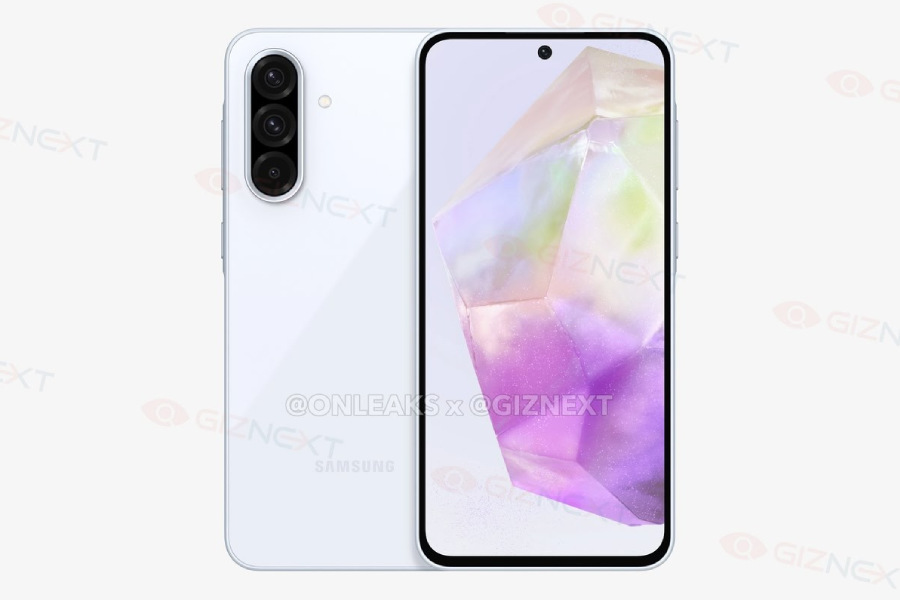
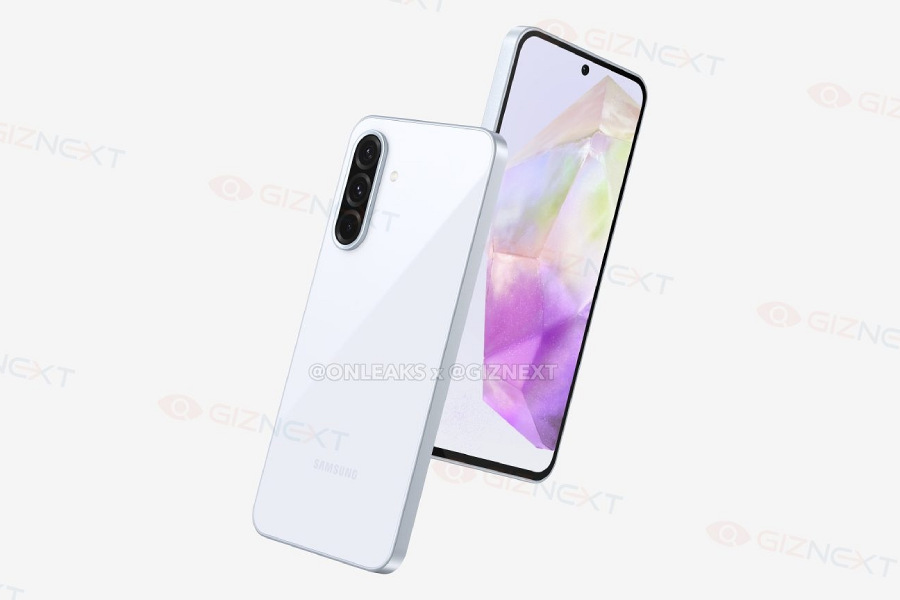
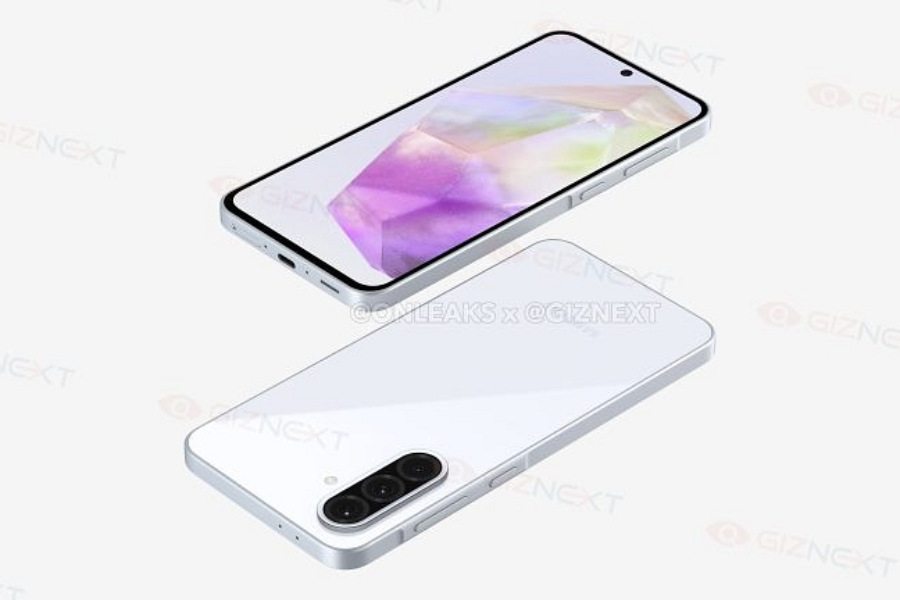
It was just yesterday that Samsung’s upcoming Galaxy A36 5G appeared on the Geekbench listing. A day later, we now have full details on the phone’s design, thanks to reliable tipster OnLeaks. In collaboration with Giznext, the insider has shared high-quality renders of Samsung’s new mid-range phone.
While we expected Samsung to stick to its usual design trend, this time things are changing — finally! Instead of the typical separate camera rings, the Galaxy A36 features a pill-shaped, vertically aligned camera island on the back.
Galaxy A36 Design Renders
The design is reminiscent of the good ol’ Galaxy Note 10, and it’s refreshing to see a design update in a Samsung phone after quite some time.
The rest of the phone seems like a subtle evolution. It’ll be a tad taller (162.6mm vs 161.7mm) to accommodate a slightly larger 6.64-inch display (up from 6.60-inch). Thankfully, it’ll also be marginally slimmer at 7.4mm (down from 8.2mm), although the camera bump pushes the total thickness to 9.6mm.
No word yet on the battery capacity, but hopefully, the slimmer profile won’t come at the expense of endurance.
Under the hood, things are a bit murky. The recent Geekbench suggests that the A36 might pack either the Snapdragon 6 Gen 3 or the 7s Gen 2 chipset. If true, this will be another supplier switch for the A-series, following the Dimensity 1080 on the A34 and the Exynos 1380 on the A35.
The front of the phone maintains the familiar flat display with a centered punch-hole camera. Bezels seem slightly asymmetrical, but overall, it’s a familiar sight. With no fingerprint reader on the side, we can safely assume it’ll be embedded into the display, just like its predecessor.
Keep in mind, that these are just renders, so the final design might differ slightly. There’s also still some time before the Galaxy A36 officially launches. The A35 debuted alongside the A55 in mid-March, so you can expect a similar release timeframe for the A36 and A56.
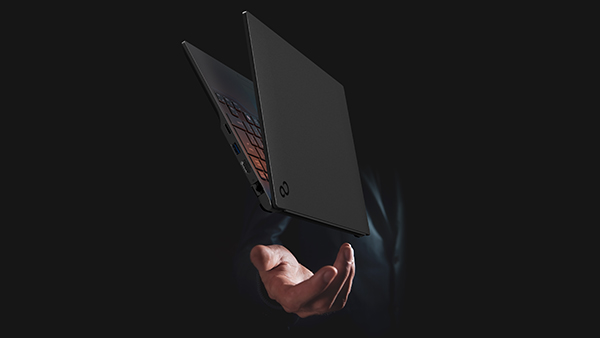
Fujitsu has introduced the FMV Zero Lifebook WU5/J3, the world’s lightest 14-inch laptop, weighing just 634 grams. This device is built for professionals who need to stay productive on the move. With its mix of portability, durability, and AI features, the WU5/J3 aims to meet the growing demand for reliable, high-performing laptops for remote work and travel.
Tough Yet Light
Made with carbon fiber, the WU5/J3 meets military-grade MIL-STD-810H standards, giving it resistance to drops, shocks, and pressure. This makes it well-suited for those frequently on the go, such as traveling professionals or hybrid workers.
As remote work becomes more common, there is a rising need for devices that are easy to carry without compromising the performance or structural integrity of the device.
Smart AI Tools for Productivity
The Lifebook offers configuration options with either an Intel Core Ultra 5 125U or Intel Core Ultra 7 155U processor, both equipped with integrated AI Boost NPUs for enhanced hardware acceleration of AI-driven features like CoPilot in Windows 11 and Office 2024. It also supports RAM options ranging from 8GB to 64GB and SSD storage from 256GB to 2TB.
The WU5/J3 comes with many built-in AI-powered tools. Features like noise cancellation help block out background sounds during video calls, and users can log in quickly with fingerprint or facial recognition. The laptop also comes with integrated AI NPUs, designed to speed up tasks on tools like Windows Copilot and Office 2024, enhancing workflow and productivity.
Full Connectivity in a Compact Package
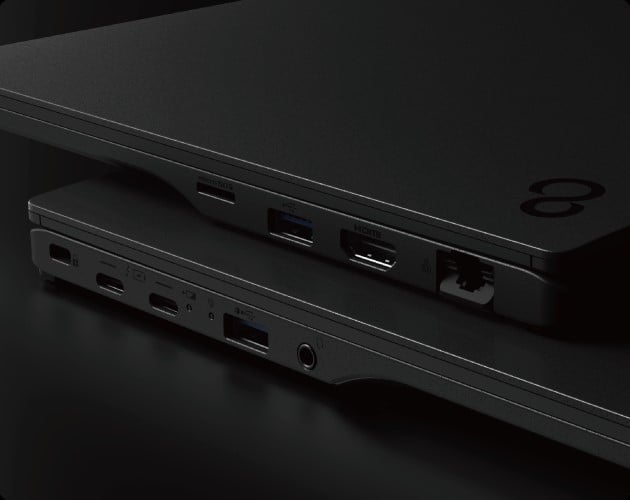
Despite its lightweight build, the WU5/J3 doesn’t compromise on connectivity. It offers two USB-A and two USB-C ports, a full-sized HDMI port, an Ethernet port, a microSD slot, and a headphone jack.
Battery Life Designed for Busy Schedules
The WU5/J3 provides between 6 to 11 hours of battery life, making it a reliable choice for long meetings and workdays. It also supports mobile charging, giving users the flexibility to power up wherever they are.
Limited Availability, Strong Demand
Currently, the FMV Zero WU5/J3 is only available for pre-order in Japan. It has an MSRP of 197,900 yen ($1,325).
Popular Chinese smartphone brand Xiaomi is preparing to launch the new Xiaomi 15. The company plans to introduce the device in China first. Aside from that, recent developments now suggest that the global version of the Xiaomi 15 may appear earlier than expected. This news has created excitement among Xiaomi fans around the world.
The Xiaomi 15 Global version might arrive sooner
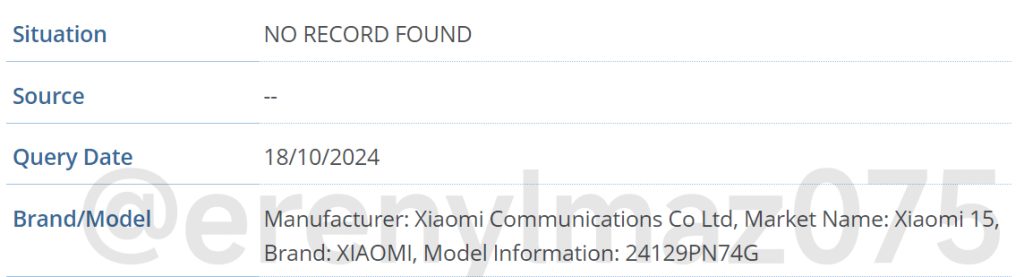
Xiaomi recently made some updates to the GSMA database. These changes have led to some rumors that the Xiaomi 15 global version might be released earlier than originally planned. While no official confirmation has been made, these updates raise the possibility that Xiaomi may introduce the Xiaomi 15 globally soon.
An interesting detail about the Xiaomi 15 is that the smartphone has now appeared in the GSMA database with its market name. The model number of the device is known as 24129PN74G and this information has been leaked before. The latest change in the database suggests that the Xiaomi 15 could come sooner.
Despite this, there is also a very high possibility that the regular Xiaomi 15 and the Xiaomi 15 Ultra could be launched during the Mobile World Congress (MWC) in 2025. This event will take place between March 3 and March 6, 2025.
However, we think these dates are too late for Xiaomi’s new smartphones. With the competition getting stronger, Xiaomi should launch the Xiaomi 15 series earlier. This would allow the company to gain more traction in the global market before other brands launch their new models.
At the moment, Xiaomi has not announced an official release date for the Xiaomi 15 series. It’s still unclear whether the company will launch the regular Xiaomi 15 and the more advanced 15 Ultra together. If Xiaomi decides to unveil both models at the same time, there is a good chance that this will happen during MWC 2025. However, an earlier launch gives Xiaomi a chance to attract more attention to its new models with Snapdragon 8 Gen 4 SoC before other brands.
Just yesterday, Infinix announced the Inbook Air Pro+ as its latest laptop offering alongside the Zero Flip foldable phone. It might seem like a simple thin and light laptop, but it’s a game changer in the market. So here’s why it is likely the best notebook by far for its price.
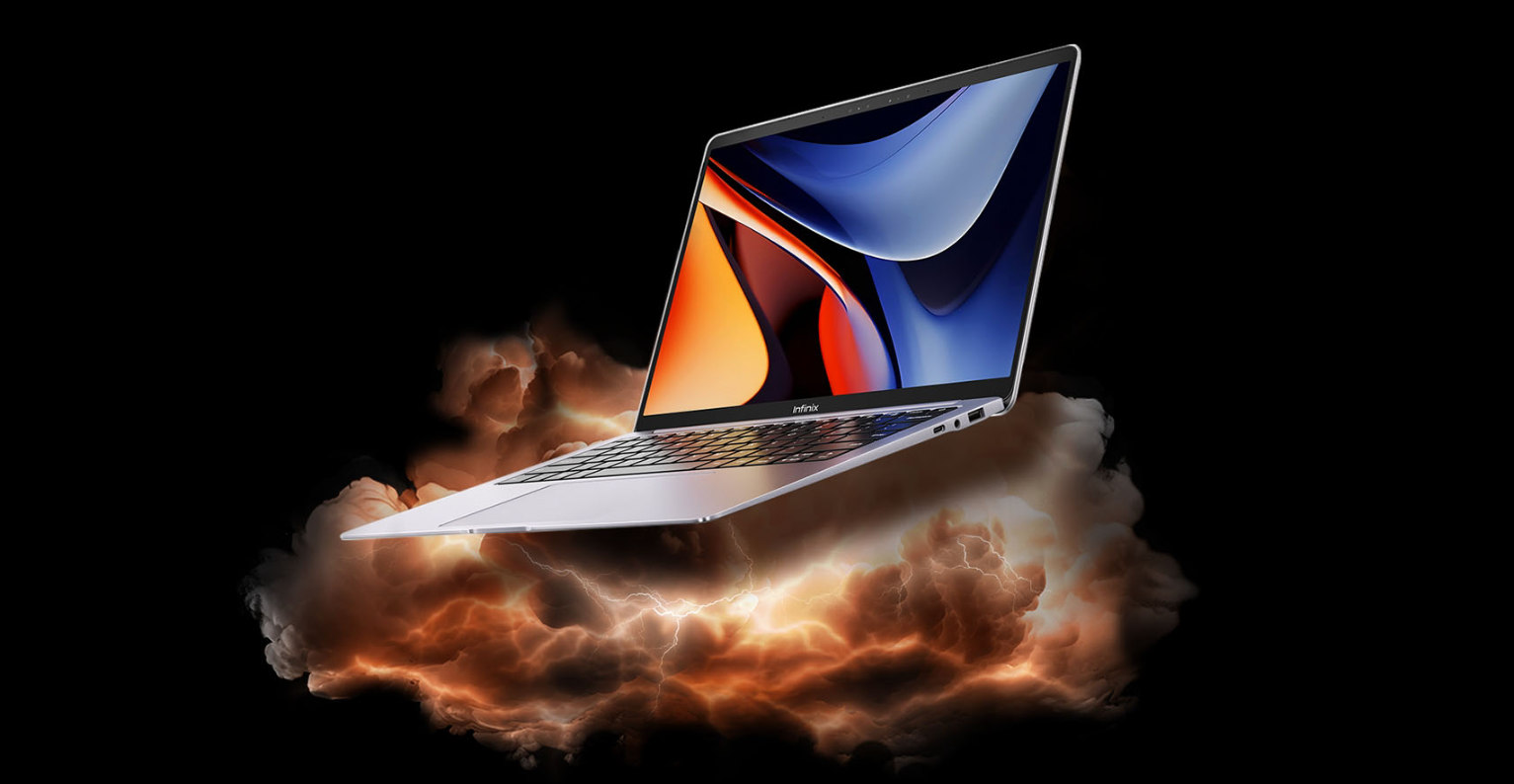
I had the opportunity to play around with the Inbook Air Pro+ during the launch event. One of the first thing that caught my eye was its gorgeous display. The notebook sports a 14-inch OLED display that offers 2.8K resolution along with a 100 percent sRGB color gamut, and DCI P3 color gamut. Right on top of the screen, the top notch houses an infrared camera that supports Windows Hello facial recognition.
This screen promises to offer sharp visuals and vibrant colors. An OLED panel offers true blacks and a brighter screen, allowing for an enhanced experience when watching your favorite movies and videos. For a price tag of just 49,990 INR, you rarely find an OLED display. That’s not all, an OLED display with this package is another big deal. So let’s see what else it offers.
2. Premium Metal & Slim Body
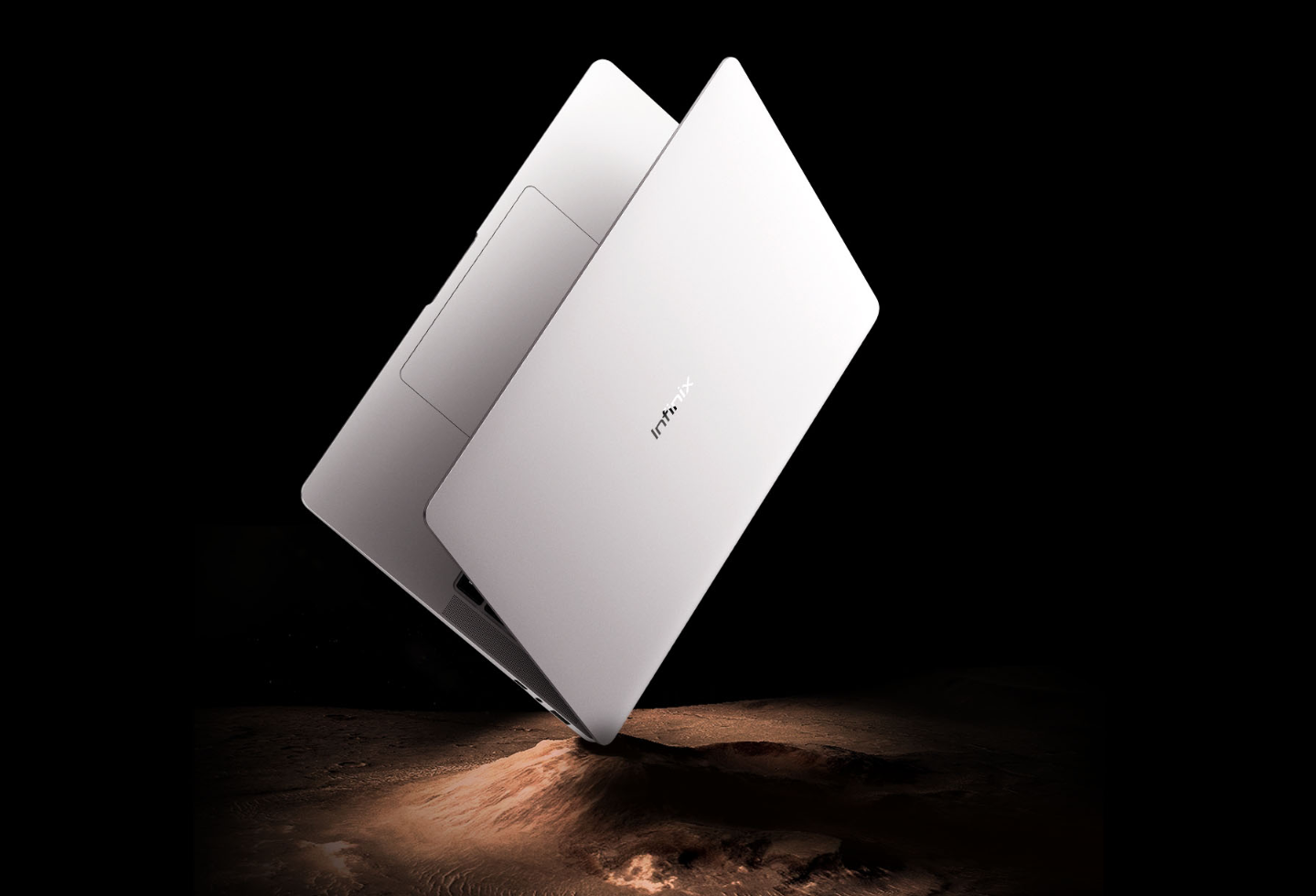
The Infinix Inbook Air Pro+ is a thin and light laptop and it shows with its ultra slim 4.5mm body and just 1kg of heft. It isn’t rare to find such laptops, but these are typically a lot more expensive. Infinix cut no corners with its design, opting for an all metal body rather than blending metal with plastic to save on cost.
My only gripe with the laptop was that it was a bit difficult to open with one hand. But the build quality is top notch. It is deceptively light and feels just as premium as more expensive options. Despite being ultra slim, the Inbook Air Pro+ still offers USB-C, USB-A, HDMI, and a microSD card slot. It even houses capable hardware which we can now check out.
3. Capable Specifications
Under the hood, the company launched the Infinix Inbook Air Pro+ with Intel’s 13the Gen Core i5 processor. This is a great processor that offers a balance between performance and energy efficiency. The 13th Gen Intel i5 is good for multitasking and ensures your laptop won’t hang during regular use. Some brands still sell outdated 11th Gen or 12th Gen powered laptops, but Infinix managed to offer a more up to date model at this price.
This CPU is paired with 16GB of RAM and 512GB of SSD storage. 16GB is a must have in today’s day and age, but sadly Infinix doesn’t offer an empty slot for storage expansion and even the RAM modules are soldered on. A 57Whr battery pack powers this model, which supports 65W wired fast charging via a USB-C port. If you’re a working professional in the corporate world or a student in university, this laptop is easily recommendable since it checks all the right boxes.
We already have confirmation that iQOO will launch its performance-centric iQOO 13 smartphone in China later this month. According to a previous report by Smartprix, the India launch was tipped for December 5th.
However, the publication now claims in a new report that the launch has been moved up by two days, and the smartphone is now set to debut in India on December 3rd. The change allegedly is to “aim to compete with rivals.”
iQOO 13 Specifications
As for the specs, the iQOO 13 is expected to feature the Snapdragon 8 Gen 4 chip and come with a sizable 6100mAh battery, supporting 100W PPS and PD charging.
Despite its large battery, the phone is said to be just 8.1mm thick (the same as the iQOO 12), thanks to the use of silicon-anode battery technology.
In terms of cameras, the iQOO 13 is rumored to have three 50MP sensors on the back: a Sony IMX921 as the main sensor, a Samsung ISOCELL JN1 for ultrawide shots, and an IMX826 for 2x telephoto zoom.
iQOO 13
The phone also reportedly upgrades to a more power-efficient display panel, consuming 10% less power than the iQOO 12’s screen. It is also said to offer improved water and dust resistance with an IP68 rating, up from the IP64 rating of its predecessor. In terms of configuration, the iQOO 13 could provide up to 16GB of RAM and 1TB of storage.
What’s confirmed is that iQOO has revealed the phone will feature BOE’s latest Q10 panel, delivering 2K resolution and a smooth 144Hz refresh rate. The Q10 display is also said to offer higher brightness, a longer lifespan, and lower color deviation compared to its competitors.
As for pricing, a previous report suggested that the iQOO 13 could start at around Rs 55,000 in India.
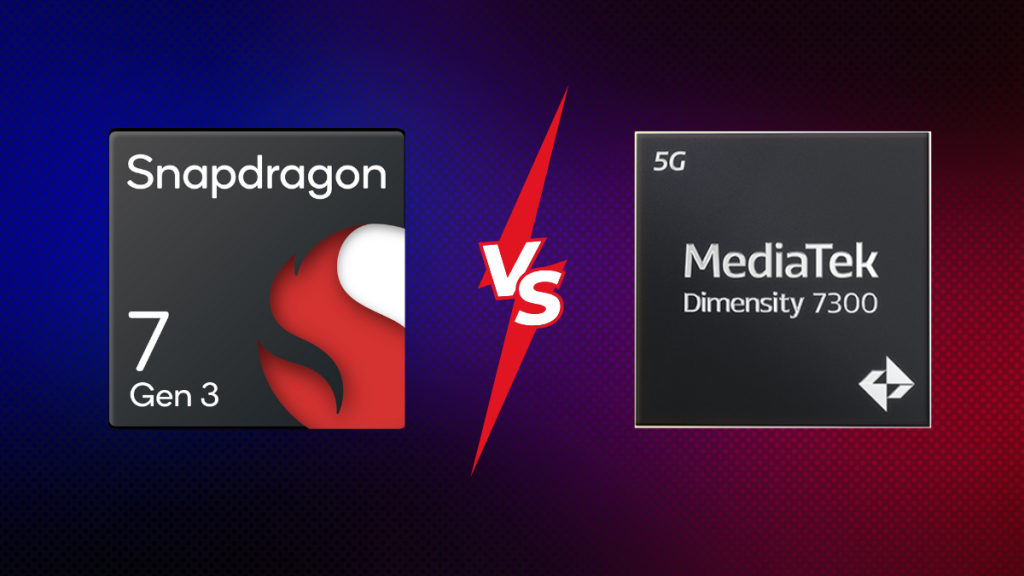
The Snapdragon 7 Gen 3 was announced in November 2023, while the Dimensity 7300 is a newer chip announced in June. Both are high-performance octa-core chipsets fabricated using TSMC’s cutting-edge 4nm technology. They are already powering many smartphones from popular brands like Vivo, Oppo, OnePlus, and Motorola.
While Snapdragon 7 Gen 3 and Dimensity 7300 are popular mid-range chipsets, they are not the ideal pick for everyone. So, let’s compare the two chips to find out how they stack up against each other and which would be better for you.
Let’s begin with the spec sheet:
SD 7 Gen 3
Dimensity 7300
Announced
November 2023
June 2023
Process node
4 nm
4 nm
Manufacturer
TSMC
TSMC
Cores
8
8
CPU architecture
1 x Cortex-A715 @ 2.63 GHz 3 x Cortex-A715 @ 2.4 GHz 4 x Cortex-A510 @ 1.8 GHz
4 x Cortex-A78 @ 2.5 GHz 4 x Cortex-A55 @ 2 GHz
GPU
Adreno 720 975 MHz frequency Snapdragon Elite Gaming
Mali-G615 MP2 MediaTek HyperEngine
NPU
Hexagon NPU
MediaTek APU 655
Camera
Qualcomm Spectra ISP (12-bit) 200MP single camera
MediaTek Imagiq 950 ISP (12-bit) 200MP single camera
MediaTek 5G R16 modem Downlink: 3.27 Gbps Wi-Fi 6E Bluetooth 5.4
Snapdragon 7 Gen 3 vs Dimensity 7300: Benchmarks
[Note: We have used the Vivo V40 (Snapdragon 7 Gen 3) and Vivo V40e (Dimensity 7300) for benchmark results.]
Snapdragon 7 Gen 3 vs Dimensity 7300: AnTuTu scores
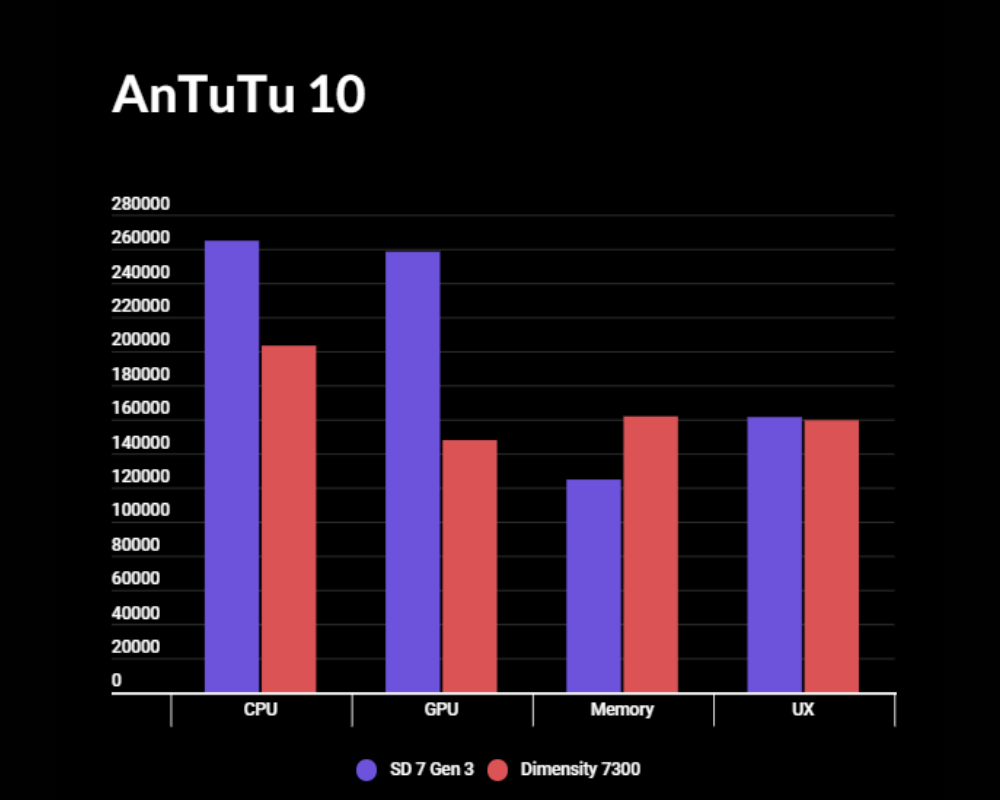
AnTuTu is a popular benchmarking platform that runs a device through a series of tests that measure different aspects of its performance, such as CPU, GPU, memory, and UX. The combined score represents the overall strength of a device.
Here’s how the chips have performed on AnTuTu 10:
The Snapdragon 7 Gen 3 clearly dominates the AnTuTu benchmark compared to Dimensity 7300. Here, the Snapdragon 7 Gen 3’s GPU is making the most significant difference, with over 70% higher score than the Dimensity 7300’s GPU, while the difference in CPU score is 30%. Memory performance, as per AnTuTu benchmarks, is better on Dimensity 7300, though.
Overall, the Snapdragon 7 Gen 3 has managed to pull off a 20% better AnTuTu score than the Dimensity 7300.
SD 7 Gen 3
Dimensity 7300
AnTuTu score
809,241
672,402
CPU
264,788
203,267
GPU
258,403
147,861
Memory
124,720
161,780
UX
161,330
159,494
Snapdragon 7 Gen 3 vs Dimensity 7300: Geekbench scores
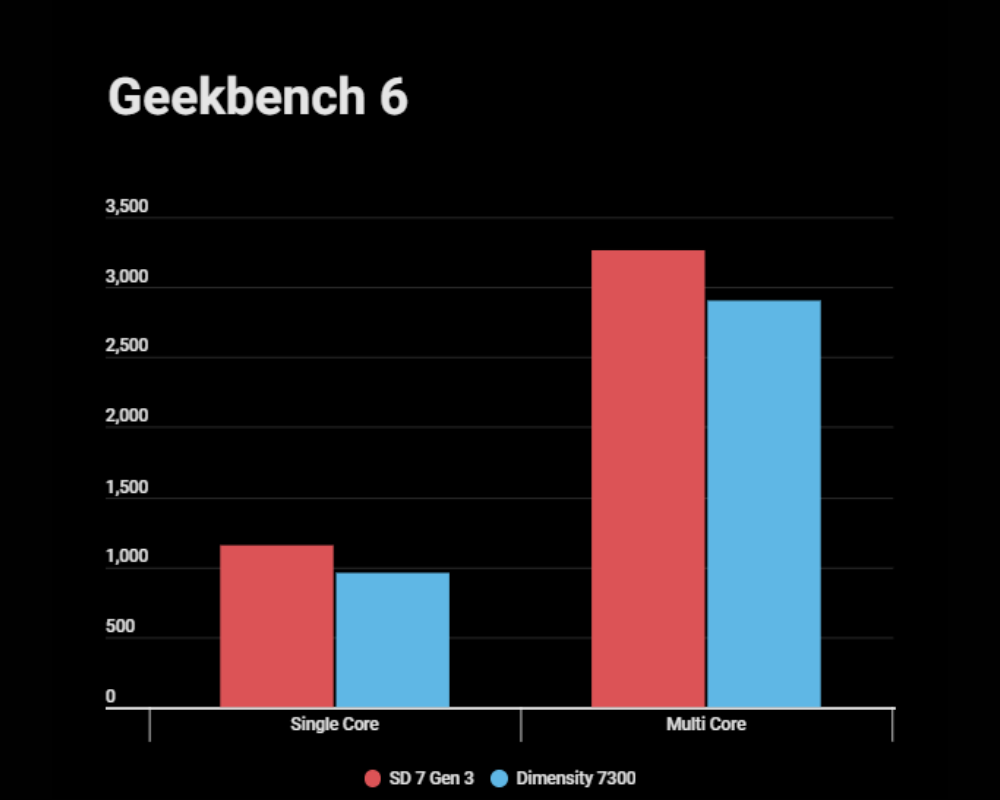
Geekbench evaluates a device’s performance through a series of tests designed around practical scenarios. Tests include image processing, compression (text and image), speech recognition, PDF rendering, and more. Geekbench is primarily used to evaluate the CPU performance of devices.
Here’s how the chips have performed on Geekbench 6:
Snapdragon 7 Gen 3 also dominates Geekbench compared to Dimensity 7300, though the difference isn’t as significant as in AnTuTu benchmarks. That’s because both benchmarks perform different series of tests and have their own ways of calculating results. However, in all likelihood, the Snapdragon chip wins, at least on these benchmarks.
SD 7 Gen 3
Dimensity 7300
Single core
1,156
959
Multi core
3,264
2,904
Snapdragon 7 Gen 3 vs Dimensity 7300: Key Differences
Both chips have eight cores and are built using TSMC’s 4nm process, but they share different core clusters and architectures. The Snapdragon 7 Gen 3 has three Cortex-A715 performance cores (two run at 2.63 GHz and one at 2.4 GHz clock speed) and four Cortex-A510 power efficiency cores clocked at 1.8 GHz.
The MediaTek Dimensity 7300 chip has four Cortex-A78 cores at 2.5 GHz and four Cortex-A55 cores at 2 GHz. Its maximum CPU clock speed is 2.5 GHz, while the Snapdragon chip has a higher peak CPU clock speed, thus offering an additional performance boost.
Both chips have custom-built GPUs — Adreno 720 on Snapdragon 7 Gen 3 and Mali-G615 MP2 on Dimensity 7300. Both chips support UFS 3.1 storage and LPDDR4X RAM. However, the Snapdragon 7 Gen 3 also supports LPDDR5X, which is faster than LPDDR5. I’ll leave that to the device manufacturer to decide whether to offer LPDDR5 or LPDDR5X.
Connectivity is another key area where the two chips differ. Although both have a 5G modem, the peak download speed is higher on the Snapdragon chip — 5 Gbps (vs. 3.27 Gbps on Dimensity 7300).
Snapdragon 7 Gen 3 vs Dimensity 7300: Which is Better?
Both are high-performance chipsets for mid-range phones built by TSMC using its 4nm cutting-edge process. However, the Snapdragon 7 Gen 3 has a better CPU and GPU performance than the Dimensity 7300, although the difference may not be significant in real life.
So, if you’re more into gaming and video editing, the Snapdragon 7 Gen 3 should be a better choice. For normal usage and light gaming, the Dimensity 7300 chip serves the purpose. The fact that devices powered by the Dimensity 7300 chip are available at a lower price makes it a good grab for most people.
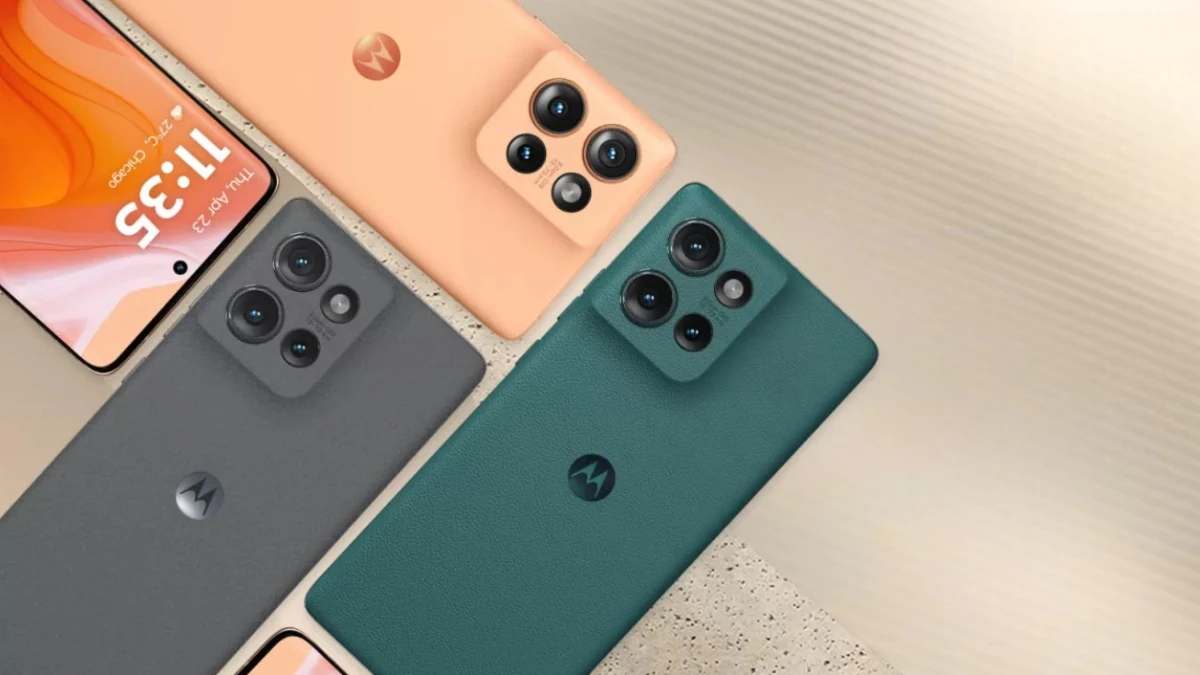
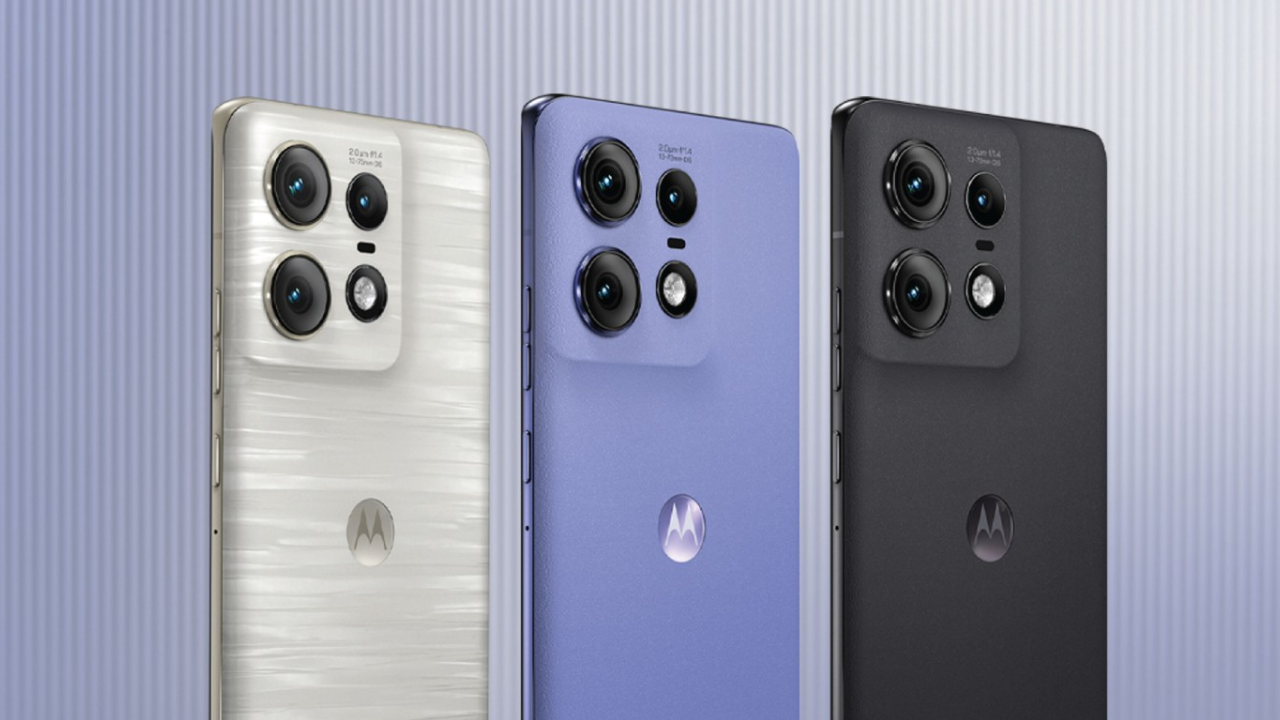
Motorola rolled out five models from the Edge 50 series of smartphones throughout 2024. It includes the Edge 50 Neo, Edge 50, Edge 50 Fusion, Edge 50 Pro, and Edge 50 Ultra. These arrive at a different price point with varying specs, but which one should you buy? So read on as we find out which Edge 50 device is the best for you.
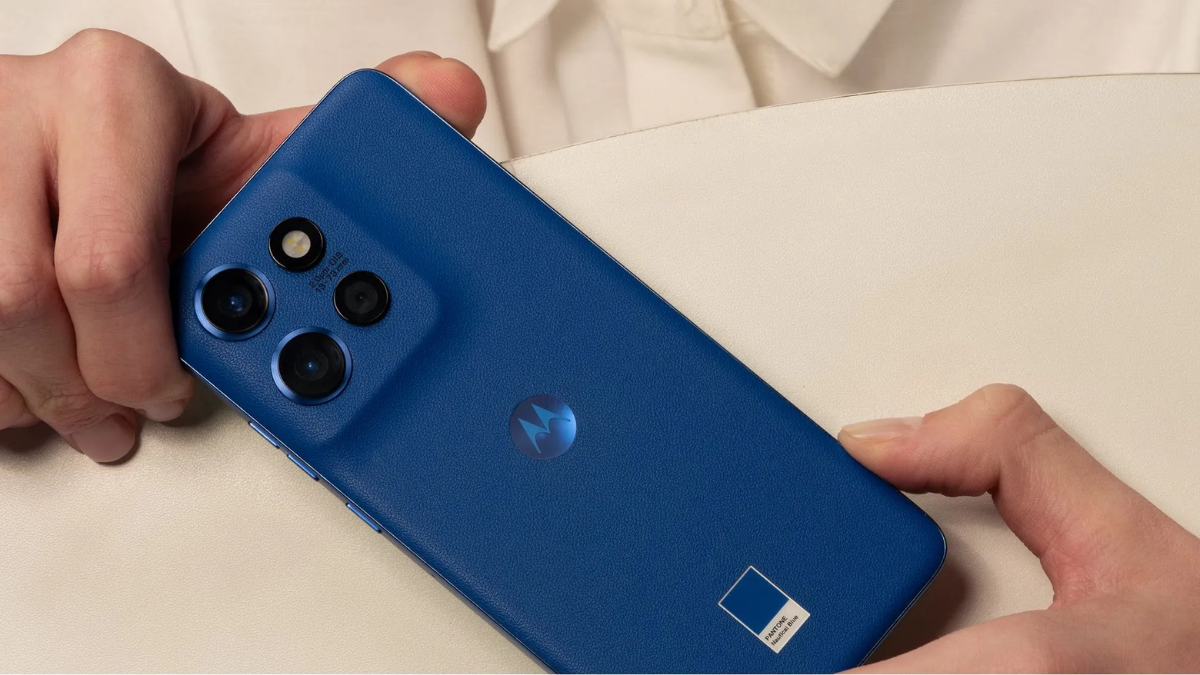
Starting this list, we have the Motorola Edge 50 Fusion. This model is the most affordable entry from the Edge 50 lineup. For a budget price tag of 22,999 INR, the Edge 50 Fusion is a great package with capable specs and features. Despite being so affordable, it also has an eco leather back panel. On the front, you get a tall 6.7-inch pOLED display with a 144Hz refresh rate and 1600 nits of peak brightness.
Under the hood, the Edge 50 Fusion is equipped with the Snapdragon 7s Gen 2. The rear has a 50MP dual camera setup and a 32MP selfie shooter. A large 5,000mAh battery pack powers this device, which supports 68W wired fast charging.
Please Note: When you buy something using the links in our articles, we may earn a small commission at no cost to you.
2. Motorola Edge 50 Neo
Motorola Edge 50 Neo
The Motorola Edge 50 Neo is slightly more expensive than the Edge 50 Fusion but is another great deal for its price. Not only is it a good value, but it is also the only compact smartphone model in this list. The Edge 50 Neo is also the only compact smartphone that targets the mid range segment in the Indian market, starting from 25,999 INR. It sports a 6.4-inch pOLED display with a 120Hz refresh rate, FHD+ resolution, and up to 3,000 nits of peak brightness. So for those who prefer a smaller phone, you should definitely check out this one.
Please Note: When you buy something using the links in our articles, we may earn a small commission at no cost to you.
3. Motorola Edge 50
Motorola Edge 50
Arriving at the vanilla model, the base Motorola Edge 50 is the world’s slimmest phone with a MIL-STD-810H military-grade body. Unlike the other two models, this is a simple mid range smartphone that is capable in every regard. You’re getting a 6.67-inch 120Hz pOLED display with HDR10+ support, Snapdragon 7 Gen 1, a big 5000mAh battery, 68W wired fast charging, 15W wireless charging, and a 50MP triple camera setup. For 27,999 INR, it is a great budget phone with versatile cameras.
4. Motorola Edge 50 Pro
Motorola Edge 50 Pro
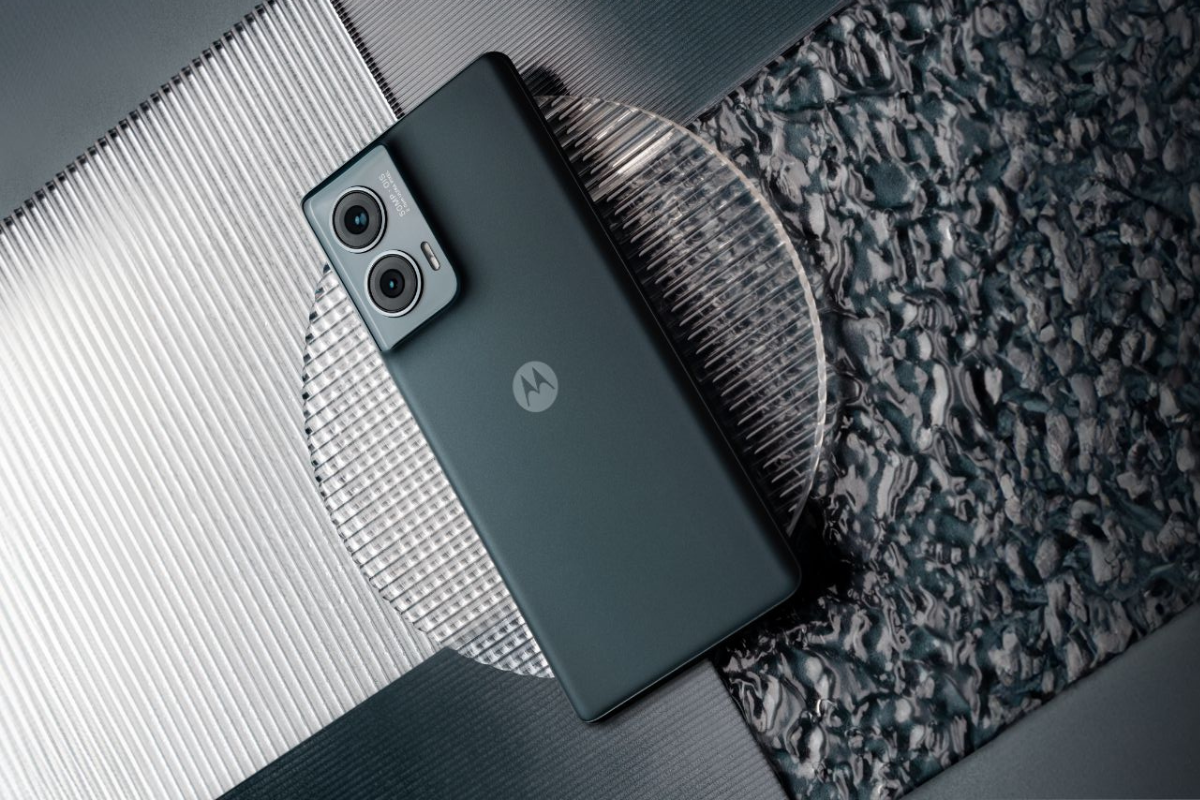
Back in April, Motorola unveiled the Edge 50 Pro. It has a starting price tag of 31,999 INR for the base 8GB + 256GB configuration. For this price, you’re getting a more powerful Snapdragon 7 Gen 3 chip, which is capable of gaming and heavy use but also has decent battery efficiency. The front sports a tall 6.7-inch pOLED screen with an FHD+ resolution, a 144Hz refresh rate, and HDR10+.
The 4,500mAh cell powers this device, which supports an impressive 125W wired fast charging and 50W wireless fast charging. Even the camera setup is quite capable with a 50MP main, 10MP telephoto, and 13MP ultra wide angle lens. This makes it a great deal for an upper mid range phone.
Please Note: When you buy something using the links in our articles, we may earn a small commission at no cost to you.
5. Motorola Edge 50 Ultra
Motorola Edge 50 Ultra
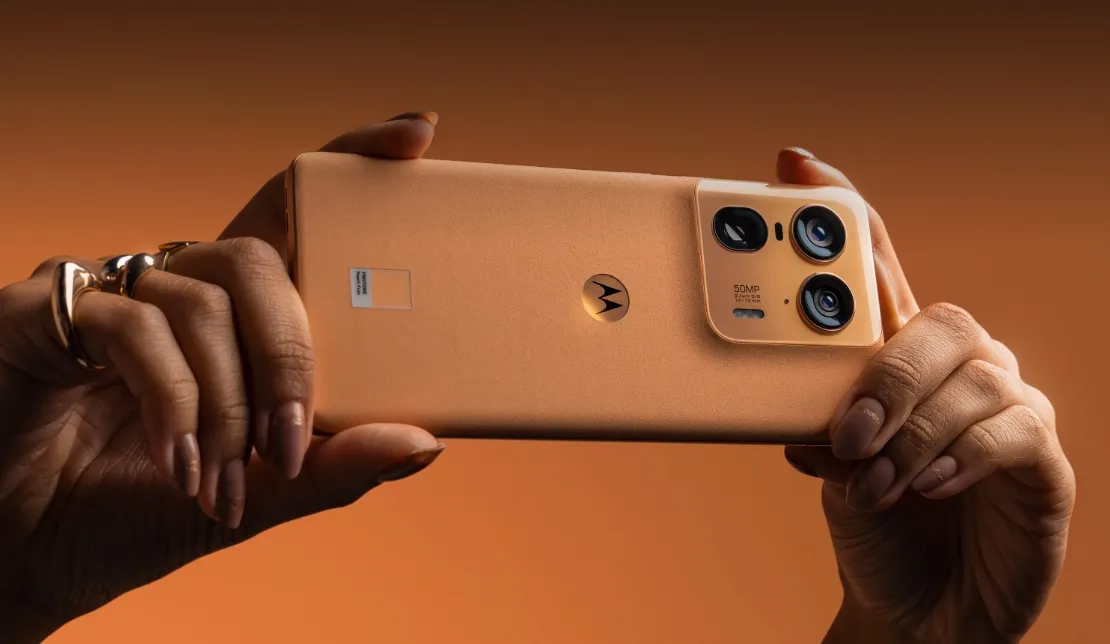
A couple of months ago, the Motorola Edge 50 Ultra arrived as the top end variant of the Edge 50 Ultra. It is also the most expensive model with a 59,999 INR starting price. But it isn’t pricey for no reason, the screen has a higher 1440p resolution and a Super pOLED panel. Under the hood, the phone is equipped with the Snapdragon 8s Gen 3, which is a flagship grade processor.
For optics, there is a 50MP main sensor, a 50MP ultrawide with macro vision, a 64MP telephoto with 3x optical zoom, and a laser autofocus sensor. On the front, it houses a 50MP selfie shooter. It also offers a similar battery and charging rate. You also get real wood on the back with a pleasant fragrance and vegan leather options for Peach Fuzz and Forest Gray.
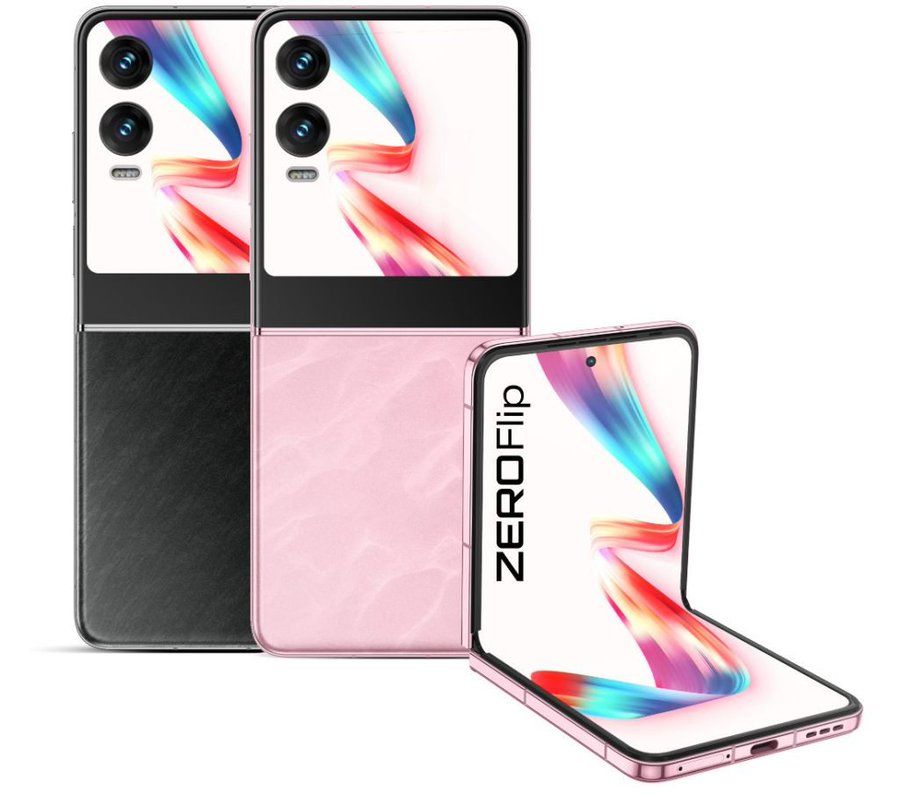
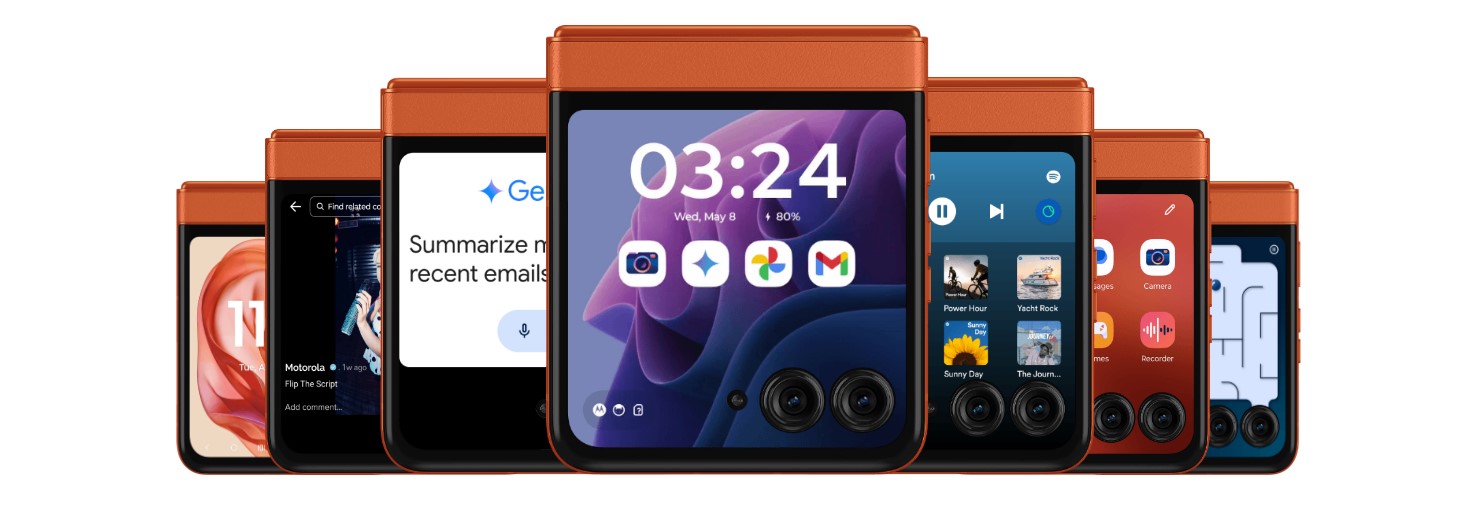
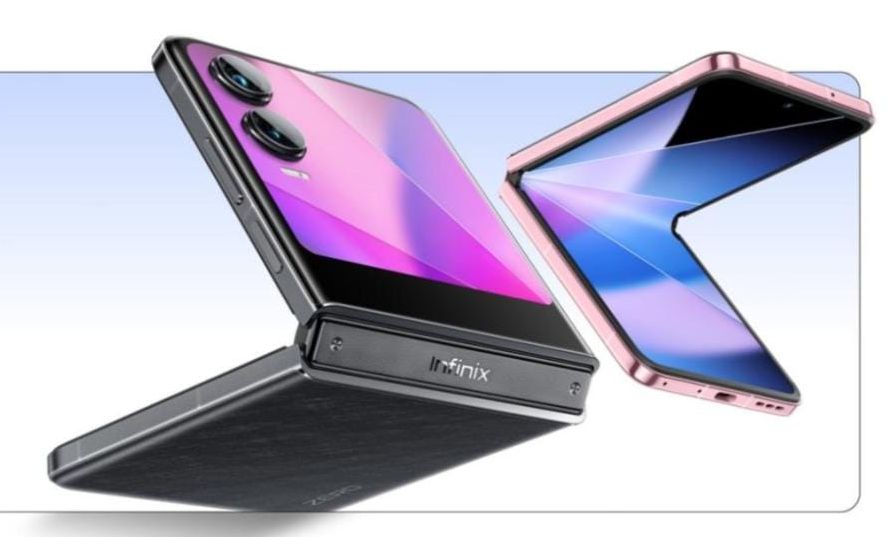
The flip-style smartphone market in India is getting more competitive with the recent launches of the Samsung Galaxy Z Flip 6, Motorola Razr 50, and Infinix Zero Flip. While the Z Flip 6 is a flagship device priced at Rs 1,09,000, the Razr 50 and Zero Flip are more affordable, offering prices under Rs 50,000. If you are considering buying a flip phone and are on a budget, these options may catch your interest. This article will compare the two models to help you decide which one suits your needs better.
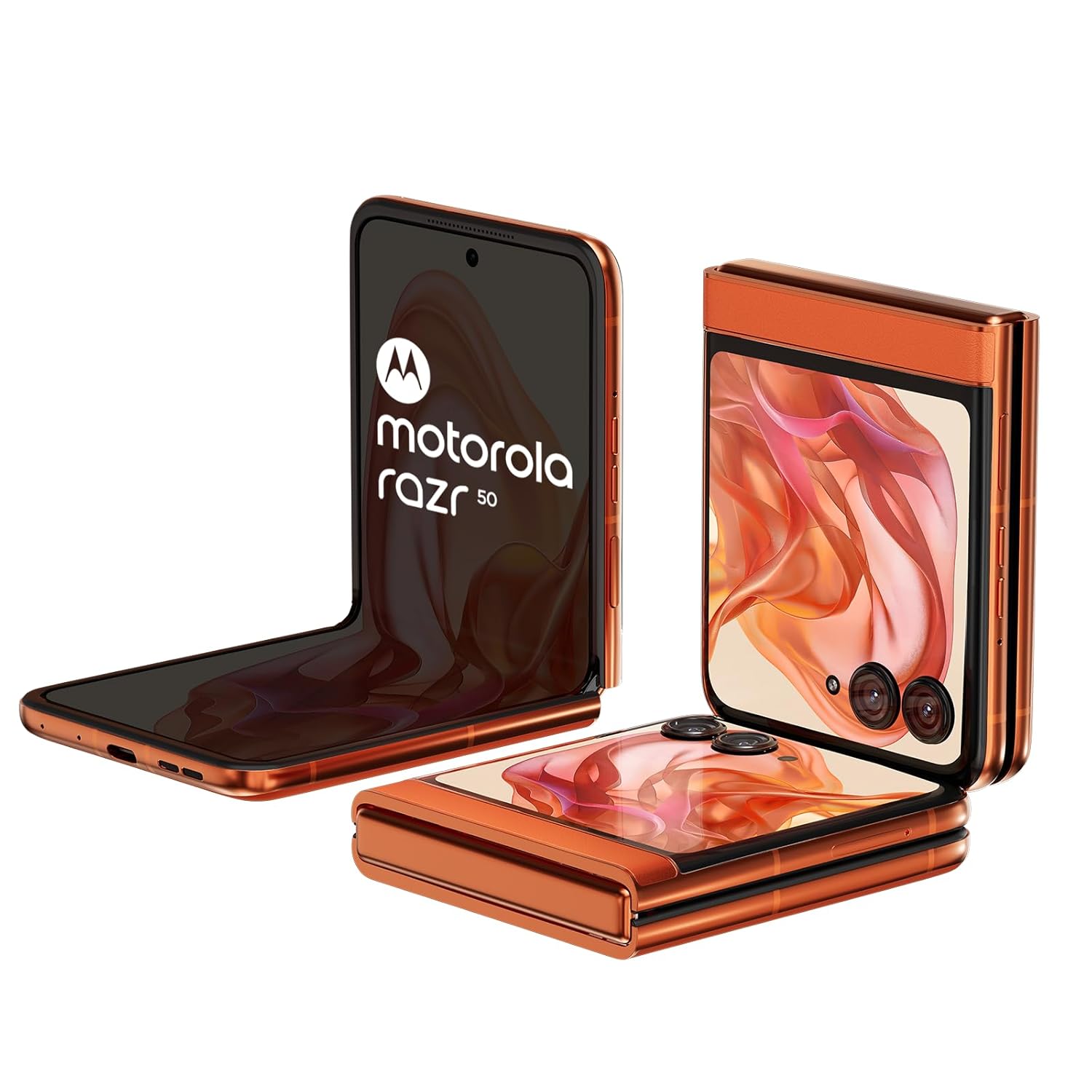
Both phones sport a similar clamshell design with a large foldable inner screen and a smaller cover display. The Razr 50 has a slightly larger 3.6-inch cover screen compared to the Zero Flip’s 3.64-inch one. However, the Zero Flip’s cover screen supports over 100 apps, offering greater functionality. Both phones feature a durable Gorilla Glass Victus display on the outside.
When unfolded, the Razr 50 offers a 6.9-inch FHD+ 120Hz LTPO OLED panel, while the Zero Flip has a 6.9-inch LTPO AMOLED FHD+ 120Hz screen. Both deliver vibrant colors and smooth visuals, making them ideal for media consumption and gaming.
Please Note: When you buy something using the links in our articles, we may earn a small commission at no cost to you.
2. Performance and Software
Motorola Razr 50
Under the hood, the Razr 50 is powered by the MediaTek Dimensity 7300X, while the Zero Flip packs the Dimensity 8020. Even though the 6nm Dimensity 8020 is an 8000-series chip that appears to be better, the 4nm Dimensity 7300X is a newer and more powerful chip. Both chipsets offer capable performance for everyday tasks and moderate gaming. The Razr 50 comes with 8GB of RAM and 256GB of storage, while the Zero Flip offers 8GB of RAM and a more generous 512GB of storage. Both support virtual RAM expansion for enhanced multitasking. E
Software-wise, the Razr 50 runs on Android 14 with Motorola’s My UX, known for its clean and near-stock Android experience. The Zero Flip also runs on Android 14 but with Infinix’s XOS 14.5 skin on top. While XOS offers extra features and customization options, it might not be to everyone’s taste.
3. Camera
Infinix Zero Flip 5G
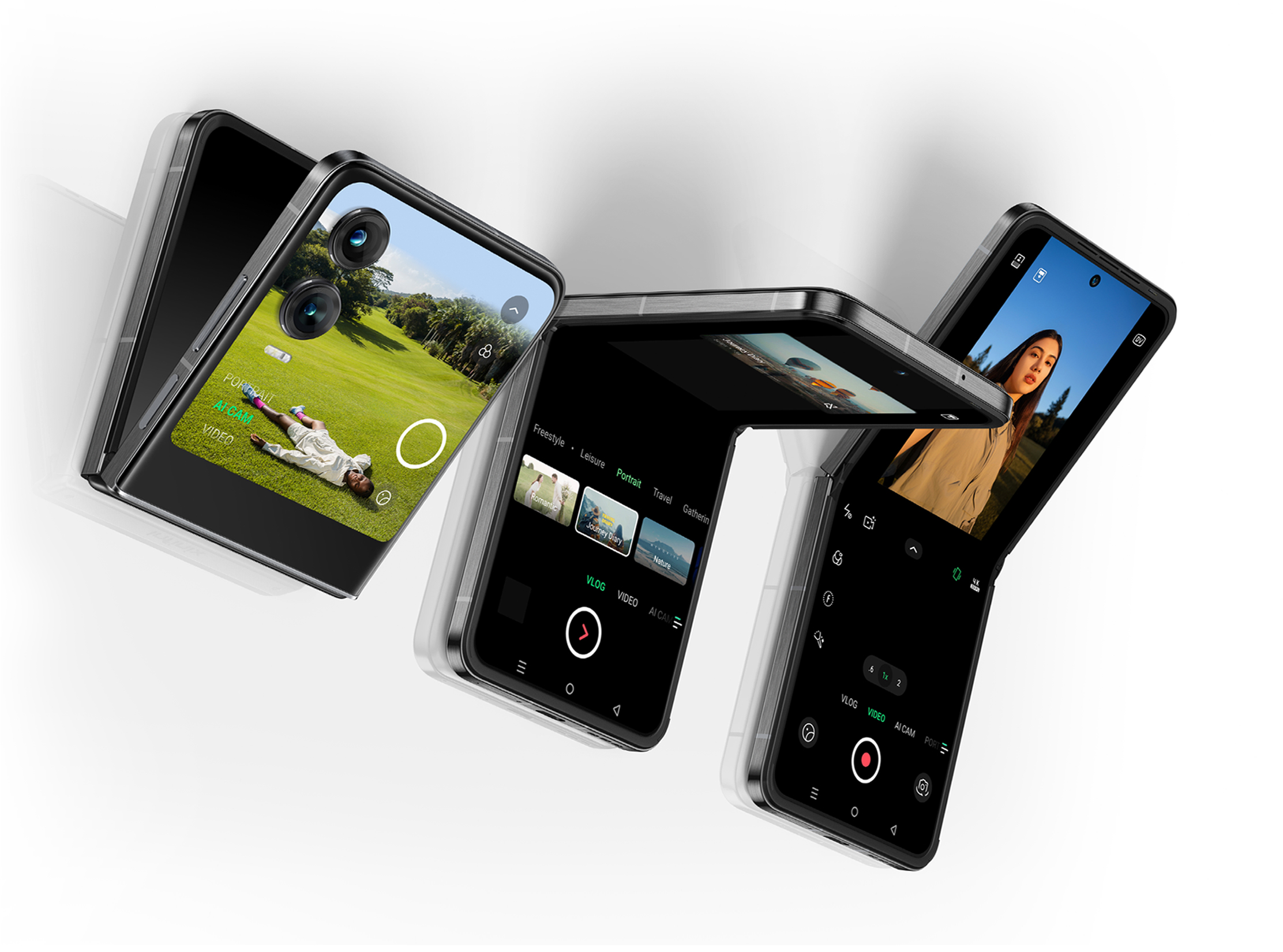
The camera setup is where these two phones significantly differ. The Razr 50 features a 50-megapixel main camera with OIS, a 13-megapixel ultrawide lens that doubles as a macro camera, and a 32-megapixel front-facing camera.
The Zero Flip, on the other hand, features a triple camera system with a 50-megapixel main sensor (Samsung GN5) with OIS, a 50-megapixel ultrawide lens, and a 50-megapixel front-facing camera (Samsung JN1) with autofocus. The Zero Flip also includes a front-facing LED flash and emphasizes video recording capabilities with features like 4K 60fps recording from both front and rear cameras, vlogging modes, and a GoPro mode.
4. Battery, Charging and Other Features
Motorola Razr 50
The Razr 50 houses a 4,200mAh battery with 30W wired charging, while the Zero Flip packs a larger 4,720mAh battery and supports blazing-fast 70W charging. The Zero Flip also offers 10W wired reverse charging, allowing you to charge other devices.
Both phones come with a side-mounted fingerprint scanner, dual speakers, NFC, and a USB-C port. The Razr 50 features Dolby Atmos support for an immersive audio experience, while the Zero Flip boasts JBL-tuned dual speakers.
5. Motorola Razr 50 vs. Infinix Zero Flip: Price
Infinix Zero Flip 5G
The Infinix Zero Flip is priced aggressively at Rs 49,999 for the 8GB+512GB variant. The Motorola Razr 50 is priced higher at Rs 64,999 for the 8GB+256GB variant.
6. Which One Should You Choose?
Motorola Razr 50
The choice between the Infinix Zero Flip and the Motorola Razr 50 ultimately depends on your priorities:
Choose the Infinix Zero Flip if:
You want a more affordable option with a larger storage capacity.
You prioritize camera features, especially for video recording and selfies.
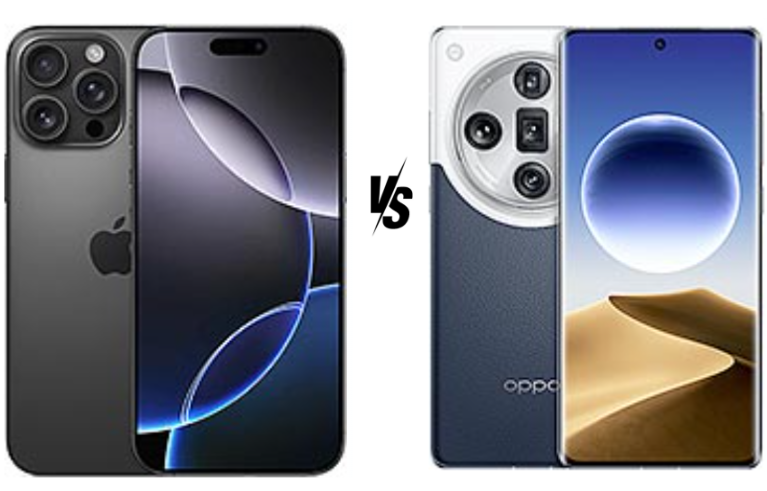
When it comes to premium smartphones, both Apple and Oppo have raised the bar with their flagship models, iPhone 16 Pro Max and the Oppo Find X7 Ultra. Both devices represent the pinnacle of technology and design in 2024, offering high-end features, stunning cameras, and top-tier performance. But which one is the better buy for you? In this detailed comparison, we will evaluate these phones based on key parameters such as Design, Display, Media, Software, Performance and Battery, and Cameras to help you decide.
Please Note: When you buy something using the links in our articles, we may earn a small commission at no cost to you.
Design
Features
iPhone 16 Pro Max: This model features a glass front and back made from Corning glass, framed by a Grade 5 titanium frame, which adds both durability and a premium feel. It boasts an IP68 rating for dust and water resistance, capable of surviving up to 6 meters underwater for 30 minutes.
Oppo Find X7 Ultra: The Oppo Find X7 Ultra is built with a glass front (Gorilla Glass Victus 2) and offers two back options: either Gorilla Glass or eco-leather, with an aluminum frame. It also has an IP68 rating but is rated for water resistance up to 1.5 meters for 30 minutes.
Similarities Both phones sport premium materials with a focus on durability, offering water and dust resistance through their IP68 certifications.
Differences The iPhone 16 Pro Max’s titanium frame gives it a sturdier and more luxurious feel compared to the aluminum frame of the Oppo Find X7 Ultra. Additionally, while the iPhone opts for Corning glass on both sides, the Oppo gives buyers the choice of a glass or eco-leather back for a different aesthetic experience.
Advantages The eco-leather option on the Oppo adds an element of customization and eco-friendliness, appealing to users looking for sustainable materials. However, the iPhone’s titanium frame is more durable and feels more premium, especially to those who prioritize build quality.
Which is Better? While both devices are impressive in design, the iPhone 16 Pro Max slightly edges out thanks to its titanium frame and superior water resistance.
Display, Media, and Software
Features
iPhone 16 Pro Max: The phone has a 6.9-inch LTPO Super Retina XDR OLED display with a 120Hz refresh rate, HDR10, Dolby Vision, and a peak brightness of 2000 nits. Apple’s latest iOS 18 powers the device, ensuring smooth operation and seamless integration with Apple’s ecosystem.
Oppo Find X7 Ultra: The Oppo Find X7 Ultra sports a slightly smaller 6.82-inch LTPO AMOLED display with support for 1 billion colors, HDR10+, Dolby Vision, and a peak brightness of 4500 nits. The phone runs on Android 14 with ColorOS 14, offering a more customizable user experience.
Similarities Both displays use high-end OLED technology, support Dolby Vision, and offer 120Hz refresh rates for smooth animations. They are designed for media consumption, with deep blacks and vibrant colors.
Differences The Oppo Find X7 Ultra boasts a higher peak brightness at 4500 nits, making it more suitable for outdoor use under direct sunlight, whereas the iPhone’s 2000 nits brightness, though impressive, is not as bright. Additionally, the Oppo Find X7 Ultra offers a higher resolution at 1440 x 3168 pixels, giving it a slightly crisper display compared to the iPhone’s 1320 x 2868 pixels.
Advantages The iPhone’s iOS 18 is incredibly well-optimized, providing a seamless user experience that integrates perfectly with Apple’s ecosystem of services. On the other hand, the Oppo Find X7 Ultra’s ColorOS 14 is more customizable and offers Android’s flexibility.
Which is Better? The Oppo Find X7 Ultra wins in terms of brightness and resolution, making it a better choice for display quality, especially for outdoor use. However, if you prefer a more polished and integrated software experience, the iPhone 16 Pro Max may be the better option.
Performance and Battery
Features
iPhone 16 Pro Max: Powered by the Apple A18 Pro chip (3nm), the iPhone offers a hexa-core CPU and a 6-core Apple GPU. It is available in 256GB, 512GB, and 1TB storage variants, all with 8GB RAM. The battery is a 4685 mAh Li-Ion, with 50% charging in 30 minutes using wired PD2.0, and supports MagSafe wireless charging and reverse wired charging.
Oppo Find X7 Ultra: The Oppo Find X7 Ultra runs on the Snapdragon 8 Gen 3 (4nm) chipset with an octa-core CPU and Adreno 750 GPU. Storage options include 256GB and 512GB with either 12GB or 16GB of RAM. The 5000 mAh battery supports 100W wired charging, reaching 50% in just 10 minutes, and also supports wireless and reverse wireless charging.
Similarities Both phones offer high-performance chipsets and are capable of handling intensive tasks like gaming and multitasking. They also support fast charging and wireless charging technologies.
Differences The Oppo Find X7 Ultra not only has a larger battery at 5000 mAh but also charges significantly faster, reaching 50% in just 10 minutes with its 100W wired charging. The iPhone’s charging is slower in comparison, though its battery optimization is typically better thanks to iOS.
Advantages The faster charging speed of the Oppo Find X7 Ultra is a clear advantage, especially for users who are constantly on the go. However, the iPhone’s A18 Pro chip might provide slightly better performance in terms of efficiency and smoothness in day-to-day operations.
Which is Better? For pure performance and faster charging, the Oppo Find X7 Ultra takes the crown. However, if battery efficiency and ecosystem integration are more important to you, the iPhone 16 Pro Max is still an excellent choice.
Cameras
Features
iPhone 16 Pro Max: The phone features a triple-camera system: a 48 MP wide, a 12 MP periscope telephoto with 5x optical zoom, and a 48 MP ultrawide lens. It also includes a TOF 3D LiDAR scanner for depth sensing. The camera supports Dolby Vision HDR, 3D spatial video, and a range of frame rates, up to 120fps in 4K.
Oppo Find X7 Ultra: Oppo offers a quad-camera setup with four 50 MP sensors: wide, two periscope telephoto lenses (2.8x and 6x optical zoom), and an ultrawide. This setup, enhanced with Hasselblad Color Calibration, supports 10-bit video, Dolby Vision, and HDR.
Similarities Both phones have high-end camera systems capable of capturing stunning photos and videos. They also support advanced video recording features like Dolby Vision and HDR.
Differences The Oppo Find X7 Ultra stands out with its quad-camera setup, offering more versatility in zoom with two periscope lenses (2.8x and 6x optical zoom), while the iPhone has only one periscope telephoto lens with 5x zoom. The Oppo’s collaboration with Hasselblad also gives it an edge in color accuracy and professional-grade photography.
Advantages The Oppo Find X7 Ultra’s camera versatility, especially with its dual periscope lenses, gives it a significant advantage for users who need more zoom options and prefer professional-grade photography features.
Which is Better? For photography enthusiasts, the Oppo Find X7 Ultra offers more flexibility and a superior zoom range. However, the iPhone 16 Pro Max excels in video recording, making it the better choice for those who prioritize video content creation.
Our Verdict:
Both the iPhone 16 Pro Max and Oppo Find X7 Ultra are incredibly powerful smartphones, each excelling in different areas. The iPhone 16 Pro Max shines in its premium build, seamless software experience, and superior video recording capabilities. On the other hand, the Oppo Find X7 Ultra impresses with its brighter, more vibrant display, faster charging, and a versatile camera system ideal for photography enthusiasts.
If you’re deeply integrated into the Apple ecosystem and value a well-rounded device with industry-leading video capabilities, the iPhone 16 Pro Max is the better buy. However, if you prioritize display brightness, faster charging, and more flexible photography options, the Oppo Find X7 Ultra is the superior choice.
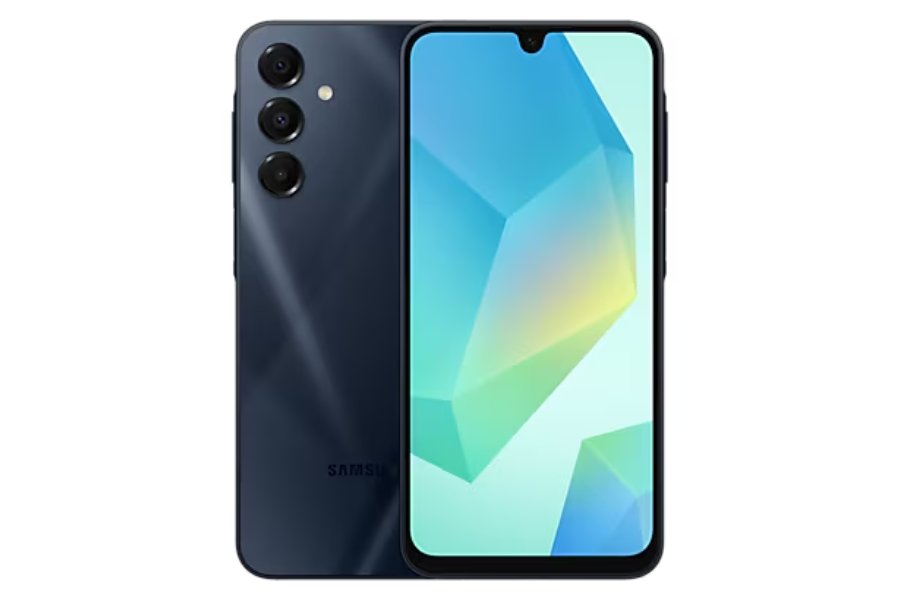
Earlier this month, Samsung unveiled the Galaxy A16 5G with a budget friendly price tag. But apart from its affordable pricing, another notable aspect of this device was its impressively long battery life. The model is now arriving in the Indian market, so here’s everything you need to know.
Samsung Galaxy A16 5G: What makes it special?
The South Korean tech giant’s latest budget friendly phone features a tall 6.7-inch AMOLED display that supports FHD+ resolution, a 90Hz refresh rate, and 800 nits of peak brightness. It is equipped with the MediaTek Dimensity 6300 SoC, which is paired with 8GB of RAM and up to 256GB of internal storage. Users can even expand storage by up to 1.5Tb via a microSD card slot. A large 5,000mAh battery pack powers this device, which supports 25W wired fast charging.
The Galaxy A16 5G runs on the Android 14 OS based One UI 6.0 custom skin out of the box. This is the brand’s first mid range phone to get 6 major OS updates along with 6 years of security updates. So, buyers are getting updates till 31st October 2030. For optics, the rear has 50MP (Main) + 5MP (Ultrawide) + 2MP (Macro) cameras while the front has a 13MP selfie shooter. Other notable features include hybrid dual SIM support, a side mounted fingerprint scanner, an IP54 rating for water and dust resistance, Bluetooth 5.3, and NFC support.
Samsung Galaxy A16 5G
Pricing and Availability
Samsung has released the Galaxy A16 5G in India in three color options, namely Gold, Light Green, and Blue Black. It has a starting price tag of 18,999 INR for the 8GB + 128GB variant, while the 8GB + 256GB option costs 21,999 INR. The smartphone is available for purchase as of today via Samsung’s official website, Amazon, Flipkart, and other online platforms. There is up to 1,000 INR cashback on Axis and SBI Credit Cards and a 500 INR voucher on Samsung Wallet as a special limited time deal.
We use cookies on our website to give you the most relevant experience by remembering your preferences and repeat visits. By clicking “Accept”, you consent to the use of ALL the cookies.
This website uses cookies to improve your experience while you navigate through the website. Out of these, the cookies that are categorized as necessary are stored on your browser as they are essential for the working of basic functionalities of the website. We also use third-party cookies that help us analyze and understand how you use this website. These cookies will be stored in your browser only with your consent. You also have the option to opt-out of these cookies. But opting out of some of these cookies may affect your browsing experience.
Necessary cookies are absolutely essential for the website to function properly. This category only includes cookies that ensures basic functionalities and security features of the website. These cookies do not store any personal information.
Any cookies that may not be particularly necessary for the website to function and is used specifically to collect user personal data via analytics, ads, other embedded contents are termed as non-necessary cookies. It is mandatory to procure user consent prior to running these cookies on your website.