The iPhone 16 series has been continuously making headlines recently. Today brings another update, as a new leak reveals the camera specs of the upcoming smartphones.
The iPhone 16 and 16 Plus appear to be receiving the most minor upgrades. These models will retain the same 48-megapixel main sensor as their predecessors, but the ultrawide camera will see a bump in aperture from f/2.4 to f/2.2.
Notably, the leak suggests these non-Pro models will finally gain support for macro photography, a feature currently absent from base iPhones.
The iPhone 16 Pro and Pro Max are rumored to receive slightly more substantial updates. The main camera will likely stay the same as last year, but the ultrawide camera is expected to get a major improvement.
The resolution of the ultrawide camera is rumored to increase from 12-megapixels to 48-megapixels. It will also use pixel binning to take pictures. Each pixel will be 0.7 micrometers, which will effectively create a pixel size of 1.4 micrometers when using binning mode. You should also be able to capture 48-megapixel photos in Apple’s high-fidelity image format, ProRaw.
Beyond the sensor upgrades, Apple is said to introduce a new photo format this year, JPEG-XL, and the Pro models will also support 3K video recording at 120fps with Dolby Vision.
One of the more expected additions is the Capture button on all four iPhone 16 models. The button will be capacitive in nature, meaning you won’t have to physically press it to trigger an action, and it will be exclusive to camera apps, supporting both Apple’s apps and third-party options.
The button is also expected to support a force-sensitive half-press, allowing developers to use it for features like locking exposure and focus before taking a photo. Additionally, its capacitive nature might enable it to function as a trackpad.
Xiaomi recently confirmed that it will unveil its premium X-series Pro QLED TVs on August 27 in India. Now, its sub-brand has confirmed that the Redmi Watch 5 Active will also debut on the same date. The Redmi Watch 5 Active, as its name suggests, is the successor to the Redmi Watch 3 Active, which made its announcement in August 2023. This indicates that the company has decided to skip the Watch 4 branding and name it the Watch 5 Active.
The Redmi Watch 3 Active offered a battery life of 12 days. Redmi has confirmed that the Watch 5 Active will last longer with a battery life of 18 days. However, Redmi has not confirmed the exact battery size.
2. Bluetooth calling
Like its predecessor, the Watch 5 Active will support Bluetooth voice calling. The “Clear+” text used by the brand to advertise the Bluetooth calling feature suggests that it may offer better voice clarity.
3. Larger display
The Redmi Watch 3 Active has a 1.83-inch display, whereas its successor, the Watch 5 Active, will feature a larger 2-inch display. The Watch 5 Active will also support over 140 sport modes, which is 40 more than its predecessor. This larger screen provides more space for viewing health and fitness data, making it easier for users to track their activities and stay informed about their progress.
4. HyperOS
The Redmi Watch 5 Active will be the first Redmi smartwatch to come with HyperOS preinstalled. This indicates a smoother user experience and offers seamless connectivity with Xiaomi/Redmi devices running on HyperOS.
5. Built-in Alexa
The Watch 5 Active comes with Alexa voice assistant support, which means it will allow users to interact with Amazon’s voice assistant directly from the smartwatch. This feature allows for hands-free control of smart home devices, setting reminders, checking weather updates, and more, all through voice commands.
Redmi Watch 5 Active price in India
The Redmi Watch 5 Active is expected to be priced similarly to the Watch 3 Active, which launched at Rs 2,999. Therefore, its price could be in the range of Rs 3,000 to Rs 3,500.
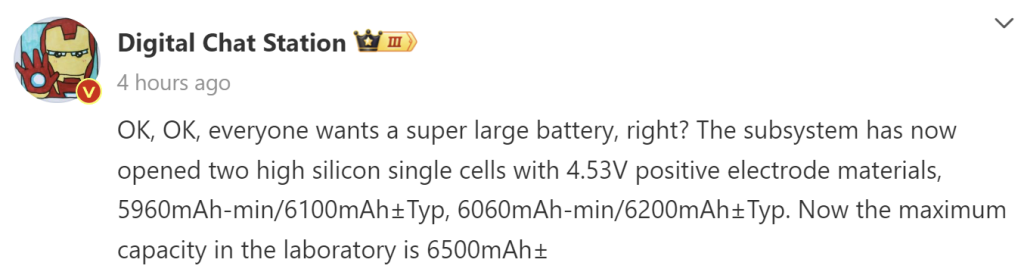
Xiaomi is expected to announce the Xiaomi 15 series of smartphones with the Snapdragon 8 Gen 4 chip onboard in October of this year. In November, its sub-brand Redmi is expected to unveil the Redmi K80 series to the Chinese market. Like the Redmi K70 lineup, the initial models in the K80 family could include the Redmi K80e, the Redmi K80, and the Redmi K80 Pro. Today, reliable tipster Digital Chat Station took to Weibo to claim that the K80 series is currently undergoing testing with high-silicon single-cell batteries.
Redmi K80 series battery size tipped
The above Weibo post by DCS suggests that the batteries being tested for the Redmi K80 series have capacities of 5,960mAh and 6,060mAh, with typical capacities reaching 6,100mAh and 6,200mAh. Under laboratory conditions, the maximum capacity could reach up to 6,500mAh.
This means that the Redmi K80 series could boast a single-cell battery with a capacity as large as 6,500mAh, making it the highest-capacity battery phone in its price range, with no other device coming close. Comparatively, the Redmi K70 and K70 Pro featured a 5,000mAh battery, while the recently announced K70 Ultra boasts a 5,500mAh battery.
Reports suggest that the Redmi K80 could incorporate the Snapdragon 8 Gen 3 chip and undergo a rebranding as the Poco F7 Pro in 2025. On the other hand, the Redmi K80 Pro may feature the Snapdragon 8 Gen 4. This device is likely to remain confined to the Chinese market.
In today’s roundup, we have a bunch of exciting stories, including iPhone 16 Pro India made sticker, an analysis of Samsung’s Galaxy S24 FE, Caviar’s luxury custom phones, a comparison between the Google Pixel 9 and iPhone 15, and an update on the One UI 7 Beta with Android 15!
Today’s Highlights:
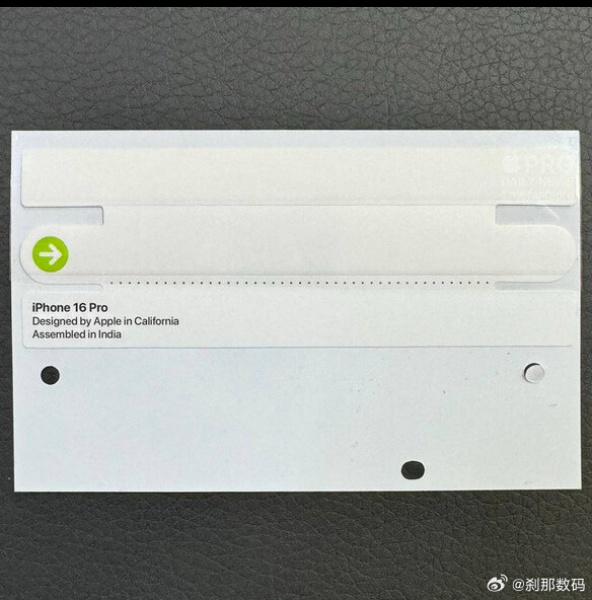
iPhone 16 Pro “Made in India”: Dive into the latest leak seemingly confirming the rumor of iPhone 16 Pro models being manufactured in India.
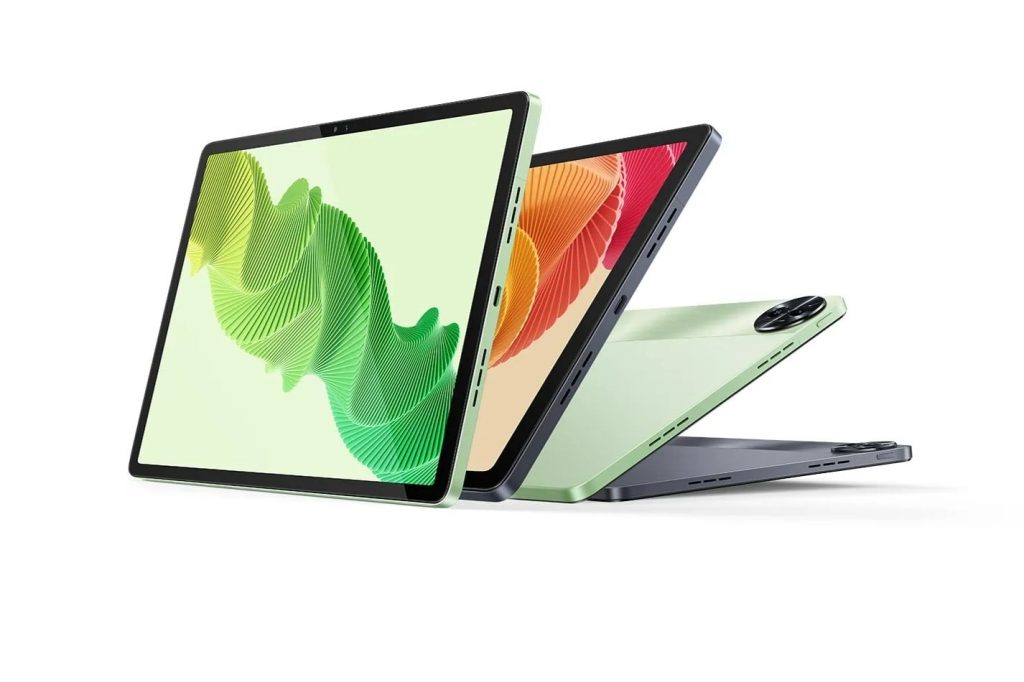
Realme’s Budget Tablet: Get the scoop on Realme’s upcoming budget-friendly tablet, the Realme Pad 3. We’ll discuss how this device might position itself in the competitive tablet market.
Snapdragon 8 Gen 4 GPU Leak: Unpack the latest leak about the Snapdragon 8 Gen 4’s Adreno GPU clock speed. We’ll analyze how this could impact mobile gaming and overall smartphone performance in the next generation of flagship devices.
Galaxy Z Fold 6 Slim Details: Examine the first camera details and potential launch date for Samsung’s rumored slimmer foldable, the Galaxy Z Fold 6 Slim. We’ll speculate on how this device might shake up the foldable phone market.
A report earlier this week revealed that, for the first time, Apple is planning to manufacture the iPhone 16 Pro and 16 Pro Max in India, alongside China.
In fact, Foxconn, a key Apple manufacturing partner, is said to have already begun training its workers at its Tamil Nadu facility in India. A new leak now adds further credibility to the rumors that the “Made in India” iPhone 16 Pro models are indeed on the way.
Realme is apparently working on a new budget tablet, which could be launching in India soon. The Realme Pad 3 has emerged getting certified in the region. It is the direct successor to the Realme Pad 2 which was first unveiled last year.
As we get closer to the October launch of the Snapdragon 8 Gen 4, more details about the processor are starting to come out. A leaked datasheet earlier this week revealed some key information about the SoC. Now, another leak from the usually reliable tipster, Ice Universe, shares details about the GPU.
Samsung‘s foldable ambitions are likely to go beyond the recent Galaxy Z Fold 6, if the rumors are to be believed. The speculation centers on a slimmer, possibly more premium foldable phone, codenamed “Q6A,” which has been making the rounds for months. Now, a report by GalaxyClub offers some of the first details on its camera and a possible launch time frame.
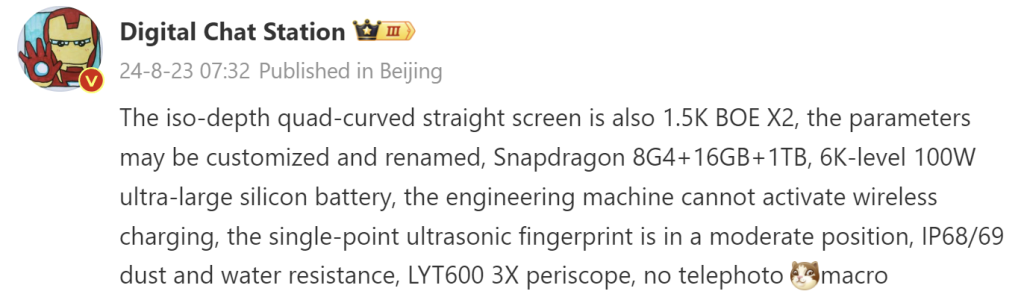
Realme has just launched the Realme 13 Pro series of smartphones in China. In the coming weeks, the brand is expected to announce a few Realme 13-branded phones in the home market. By late October or November, it is expected to take off covers from the Realme GT 7 Pro, which will feature the next-generation Snapdragon 8 Gen 4 chipset. Tipster Digital Chat Station has already revealed a lot of information about the GT 7 Pro. Today, the leaker posted more information about the device through his Weibo handle.
Realme GT 7 Pro specifications (rumored)
The emoji and specifications mentioned in the Weibo post strongly suggest that DCS is referring to the Realme GT 7 Pro, even though he hasn’t explicitly mentioned the name. The post indicates that the Realme GT 7 Pro will feature the all-new BOE X2 screen, which looks flat despite having micro-curved edges on all four sides. To recall, the Realme GT 5 Pro, which debuted in December last year, featured the BOE X1 screen. The leaker added that the parameters of the screen can be customized and Realme may use a different branding to advertise the display.
While the leaker mentioned that the Realme GT 7 Pro’s screen will support a 1.5K resolution, he did not reveal the screen size. However, considering that the BOE X2 would likely be an improved version of the BOE X1, the Realme GT 7 Pro’s screen size could be 6.78 inches, similar to the GT 5 Pro.
Under the hood, the Realme GT 7 Pro will feature the Snapdragon 8 Gen 4. It appears that the topmost variant of the device will have 16 GB of RAM and 1 TB of storage. The leak did not reveal the exact battery size, but it did mention that it would pack a high-capacity silicon battery with 100W charging support. The leaker has previously hinted that it may pack a 6,000mAh+ battery. There is no clarity on whether the final device will support wireless charging. This is because the wireless charging feature cannot be activated on the device’s current engineering prototype.
The Realme GT 7 Pro’s rear camera setup might include a LYT-600 3X periscope lens, but it may lack a telephoto macro lens. A previous leak by the same source claimed that the device would support 10x hybrid zoom and 120x digital zoom. It may feature a 50-megapixel primary camera sensor.
So far, Realme has launched the Realme Narzo 70x, Narzo 70, and Narzo 70 Pro smartphones in India this year. A new report reveals that the country will soon receive another Narzo 70-branded model. It also leaked the device’s configurations and color options.
Realme Narzo 70 Turbo 5G configurations, color variants leaked
According to 91mobiles, Realme will soon unveil the Realme Narzo 70 Turbo 5G in India. The device’s rumored RMX5003 model number suggests that it may be a rebranded or tweaked version of the Realme 13+ 5G, which has the RMX5002 model number.
The report reveals that the Narzo 70 Turbo 5G will be available in three options, such as 8 GB RAM + 128 GB storage, 8 GB RAM + 128 GB storage, 8 GB RAM + 256 GB storage, and 12 GB RAM + 256 GB storage. It will come in three colors, such as purple, yellow, and green.
The Camera FV-5 platform has also revealed the Narzo 70 Turbo, suggesting a potential 50-megapixel primary camera with EIS support. The phone appears to have a 16-megapixel front-facing camera.
There is a possibility that its other specs could be identical to the Realme 13+ 5G, which is launching on Aug. 29 in India. Expected specifications for the 13+ include a 6.67-inch AMOLED FHD+ 120Hz display, a Dimensity 7300 Energy chipset, a 5,000mAh battery with 45W fast charging, a 16-megapixel front camera, and a 50-megapixel + 2-megapixel dual-camera setup on the back.
The Narzo 70 Turbo branding suggests that it will be positioned above the Pro model. The 8GB+256GB edition of the Pro is currently selling for Rs 21,999. It is likely that the Turbo model could be priced under Rs 25,000 in the country.
The battle between flagship smartphones often comes down to brand loyalty and preferences, but the Google Pixel 9 Pro XL and iPhone 15 Pro Max offer unique features that could sway undecided buyers. Both phones deliver premium design, cutting-edge technology, and powerful performance. In this comprehensive comparison, we’ll break down the key areas of design, display and software, performance and battery, and cameras to help you determine which device best fits your needs.
Please Note: When you buy something using the links in our articles, we may earn a small commission at no cost to you.
Design
The design philosophy of both phones represents the pinnacle of their respective ecosystems. The Google Pixel 9 Pro XL sports a modern, refined look with a glass front and back encased in Gorilla Glass Victus 2, paired with an aluminum frame. It retains the familiar camera visor at the back, adding an unmistakable visual signature. Meanwhile, the iPhone 15 Pro Max has a premium build featuring a titanium frame, with Corning-made glass on the front and back. The shift to titanium offers improved durability and a lighter feel compared to previous models.
Similarities:
Both devices boast premium glass materials, offering robustness and sleekness.
They carry IP68 dust and water resistance ratings, though the iPhone provides better water resistance (up to 6 meters for 30 minutes versus the Pixel’s 1.5 meters).
Differences:
The Pixel 9 Pro XL embraces a larger footprint with a 6.8-inch display, slightly bigger than the 6.7-inch display of the iPhone 15 Pro Max.
The iPhone’s use of titanium makes it lighter while maintaining strength, compared to the Pixel’s aluminum frame.
The iPhone 15 Pro Max has a more rounded design, while the Pixel 9 Pro XL keeps its angular edges for a bolder profile.
Advantages:
The choice between these two designs is subjective. The Pixel 9 Pro XL offers a more utilitarian, tech-forward design with enhanced Gorilla Glass protection, while the iPhone 15 Pro Max delivers a luxurious feel thanks to its titanium frame and polished aesthetics. For those prioritizing weight and premium materials, the iPhone edges out.
Which Is Better? The iPhone 15 Pro Max edges out the Pixel 9 Pro XL in terms of premium build quality and lightweight feel due to its titanium construction.
Display, Media, and Software
Displays play a crucial role in delivering immersive experiences. The Pixel 9 Pro XL comes with a 6.8-inch LTPO OLED panel boasting a 120Hz refresh rate, HDR10+ support, and a peak brightness of 3000 nits. On the other hand, the iPhone 15 Pro Max is equipped with a 6.7-inch LTPO Super Retina XDR OLED, also featuring a 120Hz refresh rate, Dolby Vision, and a peak brightness of 2000 nits.
Similarities:
Both devices feature LTPO OLED displays with adaptive 120Hz refresh rates, providing fluid animations and smoother scrolling.
Always-On Display is standard across both phones, ensuring you never miss critical updates.
HDR support is robust on both devices, making them ideal for media consumption and mobile gaming.
Differences:
The Pixel 9 Pro XL outshines with a peak brightness of 3000 nits, perfect for outdoor viewing, while the iPhone 15 Pro Max peaks at 2000 nits.
The iPhone excels with Dolby Vision, offering superior color accuracy and contrast in supported content, while the Pixel’s strength lies in its more neutral color tuning and ultra-bright HDR10+.
Advantages:
For display quality, the Pixel 9 Pro XL delivers an edge in peak brightness, catering to those who often use their phones in bright environments. However, if cinematic media consumption with Dolby Vision is your priority, the iPhone 15 Pro Max leads. In terms of software, the Pixel’s Android 14 offers unparalleled customization, while iOS 17 in the iPhone maintains a seamless and polished user experience. Ultimately, your preference between Android and iOS will guide your choice.
Which Is Better? For brightness and outdoor readability, the Google Pixel 9 Pro XL wins. However, for media consumption and overall software integration, the iPhone 15 Pro Max takes the lead.
Performance and Battery
When it comes to raw performance, the Google Tensor G4 in the Pixel 9 Pro XL and Apple’s A17 Pro in the iPhone 15 Pro Max both deliver top-tier experiences, though with different focuses. The Tensor G4 is tailored for AI-driven tasks, while the A17 Pro emphasizes GPU prowess for gaming and video rendering.
Similarities:
Both phones offer exceptional performance for daily tasks, multitasking, and intensive applications.
Neither device supports expandable storage, but they provide ample internal storage options, ranging up to 1TB.
Differences:
The Pixel 9 Pro XL houses 16GB of RAM across all storage variants, while the iPhone 15 Pro Max is limited to 8GB of RAM.
The iPhone’s A17 Pro, built on a 3nm process, edges out in energy efficiency and delivers better-sustained performance in graphically demanding scenarios like gaming.
The Pixel 9 Pro XL benefits from AI enhancements and machine learning, driving features like personalized app suggestions, and smarter photo editing.
Battery:
The Pixel 9 Pro XL packs a larger 5060 mAh battery compared to the iPhone’s 4441 mAh. In terms of charging, the Pixel supports 37W wired charging, faster than the iPhone’s 50% in 30 minutes with 20W.
Both devices support wireless charging, with the Pixel offering 23W on its Pixel Stand, whereas the iPhone provides up to 15W via MagSafe.
Advantages:
The iPhone 15 Pro Max offers more consistent performance in gaming and graphics-heavy tasks thanks to the A17 Pro. However, the Pixel 9 Pro XL excels in multitasking with more RAM and superior AI-driven features, making it a better choice for users who prioritize smart functionality. Battery life also tilts in favor of the Pixel due to its larger capacity and faster charging speeds.
Which Is Better? The iPhone 15 Pro Max offers better raw performance and battery management despite the smaller capacity, making it the winner in this category.
Cameras
Camera quality is often the deciding factor in choosing a smartphone. The Pixel 9 Pro XL features a triple-camera setup with a 50MP main sensor, 48MP periscope telephoto lens, and 48MP ultrawide lens. Google’s AI photography magic continues with features like Ultra-HDR, Best Take, and Zoom Enhance. On the other hand, the iPhone 15 Pro Max sports a 48MP main lens, a 12MP periscope telephoto lens, and a 12MP ultrawide sensor, along with a TOF 3D LiDAR scanner for depth.
Similarities:
Both devices offer advanced optical zoom and deliver exceptional photo and video quality in various lighting conditions.
4K video recording is supported on both, with slow-motion, HDR, and high frame-rate options.
Differences:
The Pixel 9 Pro XL’s 48MP periscope telephoto offers 5x optical zoom, while the iPhone’s telephoto lens is limited to 5x but incorporates 3D sensor-shift OIS for added stability.
The Pixel provides more AI-driven enhancements, such as Pixel Shift and Zoom Enhance, which are especially beneficial for capturing distant subjects or enhancing details post-shot.
The iPhone introduces 3D spatial video recording, adding depth to video content for users interested in immersive media experiences.
Advantages:
For still photography, the Pixel 9 Pro XL stands out due to its computational photography strengths and advanced zoom capabilities. However, for those focused on video, the iPhone 15 Pro Max wins with Dolby Vision HDR and 3D spatial recording, offering a more versatile video experience.
Which Is Better? For photography, the Google Pixel 9 Pro XL edges out with its AI-driven enhancements and versatility. For video recording, the iPhone 15 Pro Max is superior.
Which is Better?
Both the Google Pixel 9 Pro XL and iPhone 15 Pro Max are outstanding devices that cater to different types of users. The Pixel 9 Pro XL shines in terms of AI features, multitasking, and camera versatility, making it ideal for users who prioritize smart functionality, customization, and top-tier photography. On the other hand, the iPhone 15 Pro Max’s strengths lie in its polished ecosystem, unparalleled video capabilities, and premium design with a lightweight titanium frame.
Our Opinion: For overall balance, the iPhone 15 Pro Max is the better buy, offering a premium design, superior software, and well-rounded performance. However, if you prioritize photography and Android’s flexibility, the Google Pixel 9 Pro XL is a strong contender. Ultimately, both devices are exceptional, and your choice should align with your personal needs and preferences.
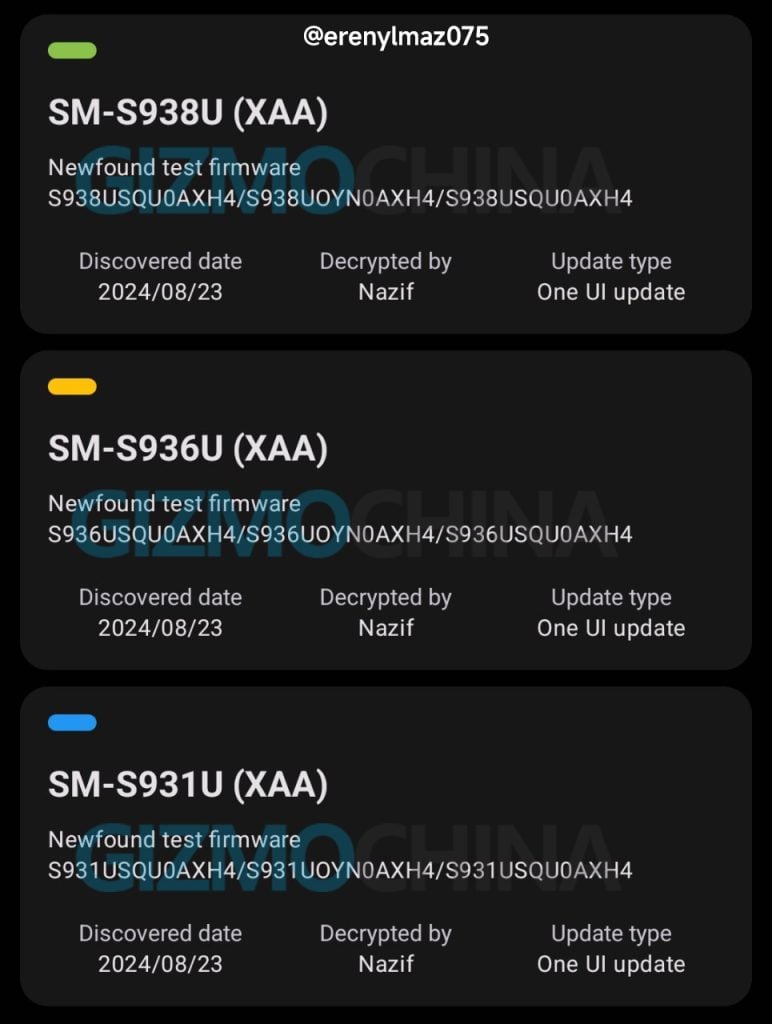
Samsung is gearing up to introduce the Galaxy S25 series. The company has uploaded the Galaxy S25 series’ first One UI 7 test to the Samsung OTA server. Gizmochina has spotted that Samsung has started One UI 7 tests of the Galaxy S25 series. The smartphones will launch with the Android 15-based One UI 7 interface. Considering that the S25 series will be introduced in January 2025, it’s quite normal that preparations are already underway. Samsung wants to launch its devices without any problems. Since the Galaxy Note 7 disaster, South Korean brand have increased security measures and regularly tested their devices.
Galaxy S25 series’ first One UI 7 tests on Samsung OTA server
The Galaxy S25 series was previously spotted in the IMEI database. This series consists of 3 different smartphones respectively: Galaxy S25, Galaxy S25+ and Galaxy S25 Ultra. Furthermore, the IMEI database provided us with the model numbers of the devices: SM-S931, SM-S936 and SM-S938. Now, the discovery of these smartphones on the Samsung OTA server shows that the brand is speeding up its work on the Galaxy S25 series. Here is the information about the first One UI 7 tests of the Galaxy S25 series!
This information comes from the Samsung OTA server and is therefore reliable. The first One UI 7 tests for the US versions of the devices were uploaded to the OTA server by Samsung. The Internal One UI 7 builds are S931USQU0AXH4/S931UOYN0AXH4/S931USQU0AXH4/S931USQU0AXH4 for the regular Galaxy S25, S936USQU0AXH4/S936UOYN0AXH4/S936USQU0AXH4/S936USQU0AXH4 for the Galaxy S25+ and S938USQU0AXH4/S938UOYN0AXH4/S938USQU0AXH4/S938USQU0AXH4 for the Galaxy S25 Ultra.
These tests officially confirm Samsung’s focus on the Galaxy S25 series. Of course, it’s normal for them to test their new flagship, and it’s important that it’s already out there. It’s curious to see what Samsung will offer with the Galaxy S25 series.
The Galaxy S25 and S25+ will come with the Exynos 2500 processor, while the top-of-the-line S25 Ultra will be powered by the Snapdragon 8 Gen 4 for Galaxy processor. We can’t wait to find out what improvements the Exynos 2500 will bring compared to the previous Exynos 2400. We hope Samsung will improve power efficiency with the new processor and get one step closer to Qualcomm’s Snapdragon processors.
One UI 7 is already being tested for many smartphones. According to the latest news from Sammobile, the One UI 7 Beta has been postponed until September. There are many questions about what Samsung will offer with One UI 7. Our request from Samsung is to release One UI 7 beta a slightly earlier. Many users are curious about One UI 7 and want to test it on their devices. I am using Galaxy S23 Ultra and I am very excited about the new animations of One UI 7. If Samsung releases One UI 7 Beta early, we will be able to experience the new interface to the fullest.
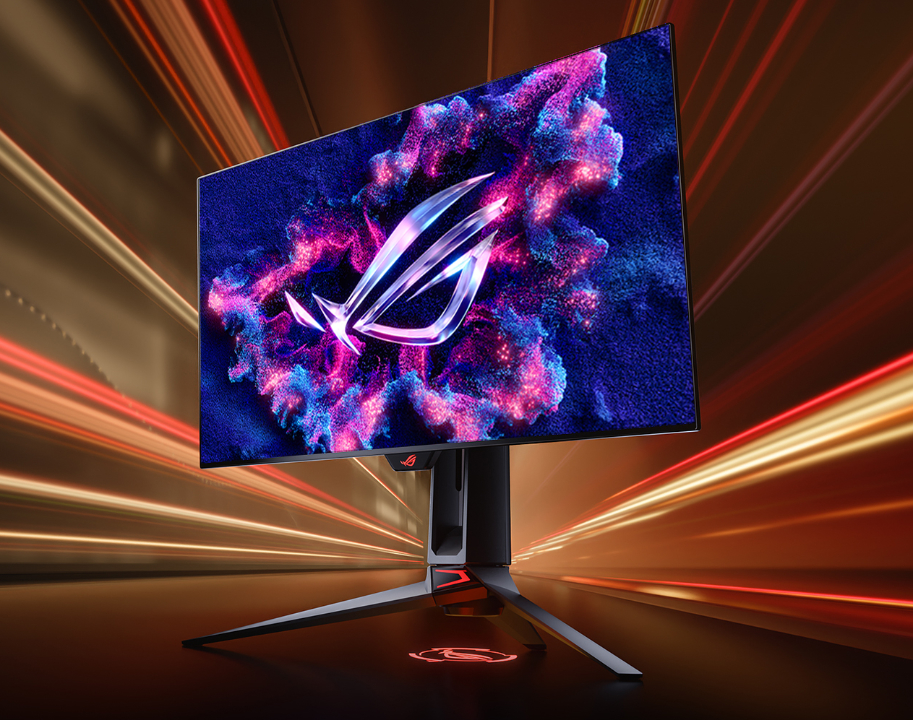
Taiwanese tech giant ASUS has unveiled a new QD-OLED monitor under the ROG Strix series. The Asus XG27AQDNG monitor is rated 1440p and has a peak refresh rate of 360Hz. The monitor is also anti-glare and has a size of 26.5 inches.
The new Asus ROG Strix QD-OLED monitor is similar to the XG27AQDMG but with some key differences. The older model featured a glossy panel while the latest model omits such. The new model also comes with a maximum display refresh rate of 360Hz, unlike its predecessor which peaked at 240Hz. Both monitors have a 1440 pixel resolution and feature the same gray-to-gray (GtG) latency of 0.03ms. The monitors feature Asus’ OLED Anti-Flicker technology and anti-burn-in OLED Care+ battery settings. The new monitor has a similar gaming-style stand as its predecessor.
The QD-OLED panel of the Asus ROG Strix XG27AQDNG however differs from that of its predecessor, the XG27AQDMG which sports a WOLED panel. This means the new model has a less even brightness distribution between the two. The new display has a powered USB-C port, an HDMI 2.1 interface, and DisplayPort 1.4 connection. The high refresh rate and other features position the new Asus ROG Strix QD-OLED monitor as a gaming monitor. It can provide passthrough charging up to 90W via its USB-C port.
Pricing & Availability
The Asus ROG Strix XG27AQDNG monitor covers 99% of the DCI-P3 color gamut. Asus hasn’t provided pricing details yet for the monitor. However, it could be pricier than the XG27AQDMG which currently retails for $699 on Amazon.
ASUS has revealed a new gaming monitor under the ROG Swift lineup. The ROG Swift OLED PG27AQDP has a 1440p OLED panel and a 480Hz display refresh rate. The model omits a glossy display and was part of the highlights at Gamescom 2024 in Cologne, Germany.
The ROG Swift OLED PG27AQDP was first showcased during CES 2024 last January. Asus recently started selling The ROG Swift OLED PG32UCDP and PG39WCDM in the UK and US. It is part of a growing list of Asus gaming monitors with improved refresh rates and brightness for seamless gaming and other applications.
The new Asus ROG Swift OLED PG27AQDP gaming monitor has a 27-inch OLED panel and offers similar output parameters as the Alienware AW2725DF. The impressive 480Hz refresh rate of the ROG Swift OLED PG27AQDP is a major highlight of the new monitor. It also utilizes the LG WOLED panel with a GtG response time of 0.03ms.
The new Asus gaming monitor features AMD FreeSync Premium and NVIDIA G-SYNC variable refresh rate (VRR) technologies. It is being promoted as the world’s first 1440p 480Hz OLED gaming monitor which will soon berth in some markets. Inside sources claim that the model will soon enter the US market and the EU.
Pricing & Availability
The price of the monitor is $999/ €1,099 and it is already available in the UK. More details about the new ROG Swift OLED gaming monitor can be purchased on ASUS’ website.
Motorola first launched the Moto G Power in 2020. The company refreshed the lineup earlier this year with the Moto G Power 5G (2024). A recent leak suggests that Motorola is working on another refresh, set for release next year. The leaked image reveals a refreshed back design compared to the Moto G Power 5G (2024).
Moto G Power 5G 2025 (render)
The Moto G Power 5G (2025) could also offer one extra camera on the back
91mobiles has shared this concept render of an upcoming Motorola device with the model number Vegas XT2515-1. This model number closely resembles the Moto G Power 5G 2024 (XT2415-1). It appears that the ’24’ and ’25’ in the model numbers represent the release years of the devices, leading to speculation that the Vegas XT2515-1 is the Moto G Power 5G (2025).
Moto G Power 5G 2025 (render)Moto G Power 5G 2024
The image shows the phone sporting a triple-camera setup on the back, a shift from this year’s dual-camera (50 MP + 8 MP UW) configuration. Additionally, the camera island features a refreshed design similar to recent Edge series devices like the Moto Edge 50 Pro.
The source speculates that the back panel might be made of vegan leather. Although the image is low-resolution and the material can’t be confirmed, the use of vegan leather on the affordably priced Moto G45 5G‘s back panel makes this plausible.
Despite these changes, the phone retains a flat display with a noticeably thicker chin and a flat middle frame from its predecessor. From the front and sides, the phone’s design remains largely unchanged.
Currently, the Moto G Power 5G (2024) is only available in North America, with no confirmation of a broader release. Therefore, it’s uncertain whether the Moto G Power 5G (2025) will be available globally. Furthermore, no specifications for the upcoming Moto G Power have been revealed yet.
This year’s model offers a 6.7″ IPS LCD screen with FHD+ resolution. It packs a 50 MP main and an 8 MP ultrawide on the back and a 16 MP selfie on the front. All of this is powered by a 5000 mAh battery, which supports 30W wired fast charging and 15W wireless charging.
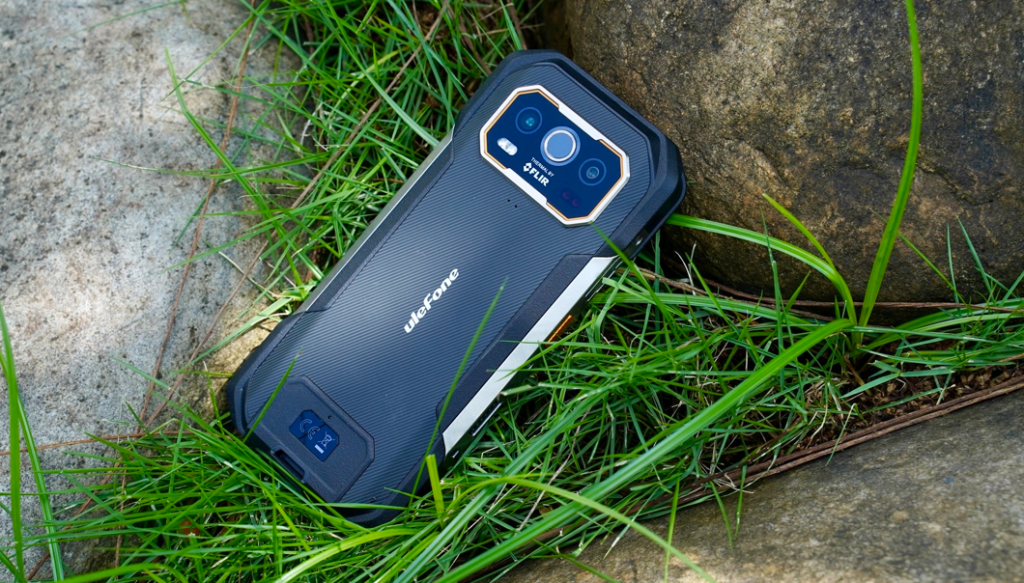
The Ulefone Armor 27T Pro has officially launched on AliExpress, marking its global debut. From August 19th to 25th, you can get this flagship rugged phone at an introductory price of $329.99. This promotional period offers an excellent opportunity to grab a device known for its extreme durability and advanced features at a discounted price.
Key Features
The Ulefone Armor 27T Pro is packed with standout features that set it apart in the rugged phone market. It boasts an integrated FLIR thermal vision system that provides advanced thermal imaging for professional and industrial use. Additionally, it includes a 64MP night vision camera powered by the OMNIVISION OV64B sensor, along with Ulefone’s NightElf Ultra 3.0 Algorithm for clear low-light photography. Designed as a 5G flagship rugged phone, it’s built with Ulefone’s proprietary Defender Structure, offering unmatched durability and protection.
Durability and Ruggedness
This phone is engineered for extreme conditions, meeting IP68/IP69K and MIL-STD-810H standards. It’s resistant to water, dust, accidental drops, and harsh environments, making it ideal for those who work or explore in tough settings. The Armor 27T Pro’s sub-zero solid-state battery can operate optimally between -30℃ to 55℃, ensuring reliability in both frigid and scorching conditions. The durability tests this phone has undergone are impressive: it’s been dropped in mud and sand, submerged in water, dropped from a ladder, drilled with an electric drill, frozen in ice, and even used to break ice with its screen—proving its resilience in the most challenging situations.
Performance and Specifications
For high-performance needs, the Ulefone Armor 27T Pro is equipped with a 10600mAh battery and up to 24GB of RAM, offering smooth and seamless operation for multitasking and heavy usage. The FLIR thermal imaging is enhanced by the MyFLIR Pro app for superior image processing, while the infrared night vision ensures excellent low-light photography.
Competitive Pricing Options
The Ulefone Armor 27T Pro, featuring thermal vision capability, is available at $329.99 during the promotional period. For those who don’t require the thermal feature, the Ulefone Armor 27 Pro (non-thermal version) with a 50MP ultra-wide-angle camera is priced at $269.99. Additionally, the latest Ulefone Tab A11 Pro is on sale, starting at $149.99, a 50% discount from its original price.
Back to School Sale on AliExpress
Alongside the Armor 27T Pro launch, Ulefone is hosting a Back to School Sale on AliExpress, with discounts of up to 70% off on popular models like the Armor 25T Pro, 25T, and 26 Ultra. This is a great chance to score rugged devices at unbeatable prices, perfect for students and professionals alike.
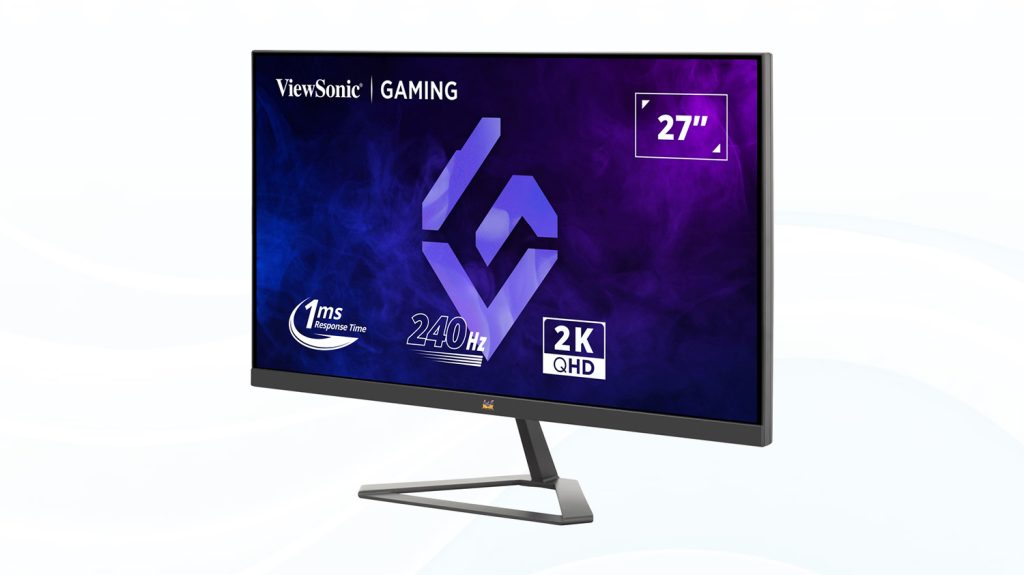
ViewSonic has launched a new monitor in India. It is called the VX2758A 2K PRO 3. The latest offering is catered towards gamers and content creators. It packs some impressive specifications including a high resolution and a faster refresh rate that too at an affordable price tag. Read on to know what it offers out of the box.
ViewSonic VX2758A 2K PRO 3 specifications
The ViewSonic VX2758A 2K PRO 3 features a 27-inch IPS display surrounded by thin bezels. It bears a QHD resolution of 2,560 x 1,440 pixels for crystal clear details, a 300 nits peak brightness, and a 1ms response time. It also offers a 178-degree viewing angle, 130 percent sRGB, and a 1000:1 contrast ratio.
The ViewSonic VX2758A 2K PRO 3 features a lightning-fast refresh rate of 240Hz for smooth viewing while playing games or editing videos. The monitor also supports HDR10 for delivering enhanced dynamic range. Additionally, the AMD FreeSync Premium for stutter and tear-free viewing during gaming. The monitor delivers an immersive experience.
The ViewSonic VX2758A 2K PRO 3 has Blue Light, Flicker, and Eye Care technology for reduced eye strain during longer hours. It comes with a sturdy stand that ensures stability. The monitor features two HDMI 2.1 ports, a DisplayPort 1.4, and a 3.5mm headphone jack.
The ViewSonic VX2758A 2K PRO 3 carries a price tag of Rs 20,990. It comes with a 3-year warranty. The monitor can be purchased from Amazon. It will also be available from leading retail stores across the country.
In other news, ViewSonic recently released the M1X and M1S portable projectors. They have a native resolution of 480 pixels and two built-in 3W Harman Kardon speakers.
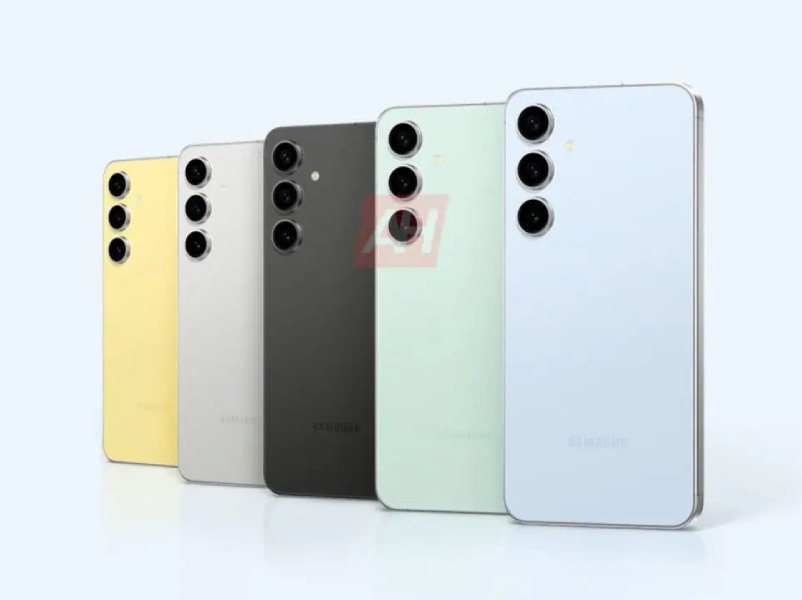
The Samsung Galaxy S24 FE is on the horizon, promising to deliver flagship level smartphone experience without breaking the bank. But is it truly the budget powerhouse we’ve been waiting for? Let’s delve into all of its expected specs, features, design, and more.
Samsung’s Fan Edition series models were launched affordable flagship phones, offering a premium experience but with certain cut corners. But starting with the Galaxy S23 FE, the brand improved the design of the Fan Edition phone, using a glass back and an aluminum frame. Looking at some of the leaked marketing materials, the Galaxy S24 FE would also feature a similar body that employs glass and metal.
On the front, the Galaxy S24 FE is expected to sport a tall 6.7-inch Dynamic 2X AMOLED display with FHD+ resolution and a 120Hz refresh rate, similar to its predecessor. Finer details regarding the screen are still unknown, but it will likely offer HDR support and over 1,000 nits of peak brightness.
2. What’s under the hood?
A GeekBench listing recently revealed that the Galaxy S24 FE is equipped with an Exynos 2400e SoC. This chipset appears to be an underclocked version of the Exynos 2400, which powers the flagship Galaxy S24 lineup. So we can expect better battery efficiency. While Samsung typically launches its premium smartphones in two variants (Snapdragon and Exynos) like the Galaxy S24, it will announce the Galaxy S24 FE with the Exynos 2400e in all regions.
Samsung could couple the processor with up to 8GB of RAM and 256GB of internal storage. The smartphone is rumored to be powered by a 4,565mAh battery pack that could likely support 25W wired fast charging. Out of the box, the Galaxy S24 FE would run on the Android 14 OS based OneUI 6.1.1 custom skin.
On the rear, it is rumored to pack a 50-megapixel primary camera along with a 12-megapixel ultra wide angle lens, and an 8-megapixel telephoto shooter with 3x optical zoom. For selfies and video calls, the front houses a 10-megapixel sensor.
Other notable features would likely include stereo speakers, an in-display fingerprint scanner, an IP rating for water and dust resistance, and all new AI features that were exclusively announced with the Galaxy S24 lineup.
3. So why choose the Galaxy S24 FE?
Samsung had launched the Galaxy S24 series with a starting price tag of around 800 US Dollars. But for those looking to get a similar flagship experience from this brand without a premium price tag, the Galaxy S24 FE will have you covered. Its predecessor launched for 600 US Dollars and we can expect the upcoming model to have a similar price tag. You would also get access to features exclusive to the Galaxy S series like AI and new camera features. So stick around as we will be covering more leaks and reports about this budget powerhouse.
Samsung‘s foldable ambitions are likely to go beyond the recent Galaxy Z Fold 6 if the rumors are to be believed. The speculation centers on a slimmer, possibly more premium foldable phone, codenamed “Q6A,” which has been making the rounds for months. Now, a report by GalaxyClub offers some of the first details on its camera and a possible launch time frame.
The leak suggests that the Galaxy Z Fold 6 Slim (model number SM-F958N) will feature a familiar 10MP front-facing camera on the cover screen. The specifics of the main and telephoto sensors are still unknown, but the leak suggests it will include a 12MP ultrawide camera.
More significantly, the Galaxy Z Fold 6 Slim could introduce the most notable under-display camera (UPC) upgrade yet. Instead of the standard Z Fold 6’s 4MP sensor, the Slim variant is said to come with a 5MP UPC.
The upgrade should mean improvement in image quality for selfies when the phone is unfolded but don’t expect a dramatic difference, as the change is fairly minor.
According to previous leaks, the Z Fold 6 Slim will measure 10mm when folded and will feature a 6.5-inch cover screen and an 8-inch foldable main display. Interestingly, it might also be the first Samsung foldable to use titanium in its construction.
There’s a caveat, however. While the Galaxy Z Fold 6 enjoys global availability, the Z Fold 6 Slim’s release might be more limited. Current rumors hint at a possible launch only in Korea and perhaps China, with European and North American markets notably missing from the leaks.
A report from The Chosun Daily suggests the Galaxy Z Fold 6 Slim will go official in Korea on the September 25 launch date for the Z Fold 6 Slim — just a month from now. It is expected to cost around 2.8 million won (approximately $2,100), which is $200 more than the starting price of standard Z Fold 6.
Caviar, a well-known creator of luxury custom versions of Apple and Samsung devices, has launched a new collection in line with the ongoing US Open. The collection, named “Elegance,” showcases custom Samsung Galaxy Z Flip 6, Fold 6, and iPhone models, all designed with a tennis-inspired theme known as “tennis core.”
Caviar’s Elegance Collection
This fashion style, which became popular in 2024, takes its inspiration from tennis culture and aesthetics, particularly following the release of the film “Challengers,” starring Zendaya.
The custom Galaxy Z Flip 6 models in this collection are designed with a predominantly white color scheme, accented by green shades that evoke tennis courts and pastel tones reminiscent of summer.
These devices are crafted using premium materials such as Chevre and Epsom leather, which are commonly used in Hermes products. The minimalist design is further enhanced with silver decorations and accents of yellow and rose gold, inlaid with Swarovski crystals, reflecting the understated elegance associated with tennis core fashion.
In addition to the Samsung Z Flip 6 and Fold 6, the Elegance collection also includes customized versions of the iPhone 15 and upcoming iPhone 16. These phones are available in several variations, each with its unique design and material choices.
For example, the “Emerald” model features green natural Chevre leather and reinforcing inserts made from a jewelry alloy coated with 24-karat rose gold. The “Sapphire” model offers similar luxury with its sapphire-inspired design, while the “Veridian,” “Blanc,” and “Orange Amber” models provide different color and material options to suit varying tastes.
The pricing for these custom devices ranges from $8,770 to $11,060, depending on the design and memory configuration. Each model in the Elegance collection is limited to just 99 pieces, making them highly exclusive.
These custom phones are aimed at fans of both luxury and the sporty lifestyle, offering a unique blend of high-end craftsmanship and thematic design centered around the sport of tennis.
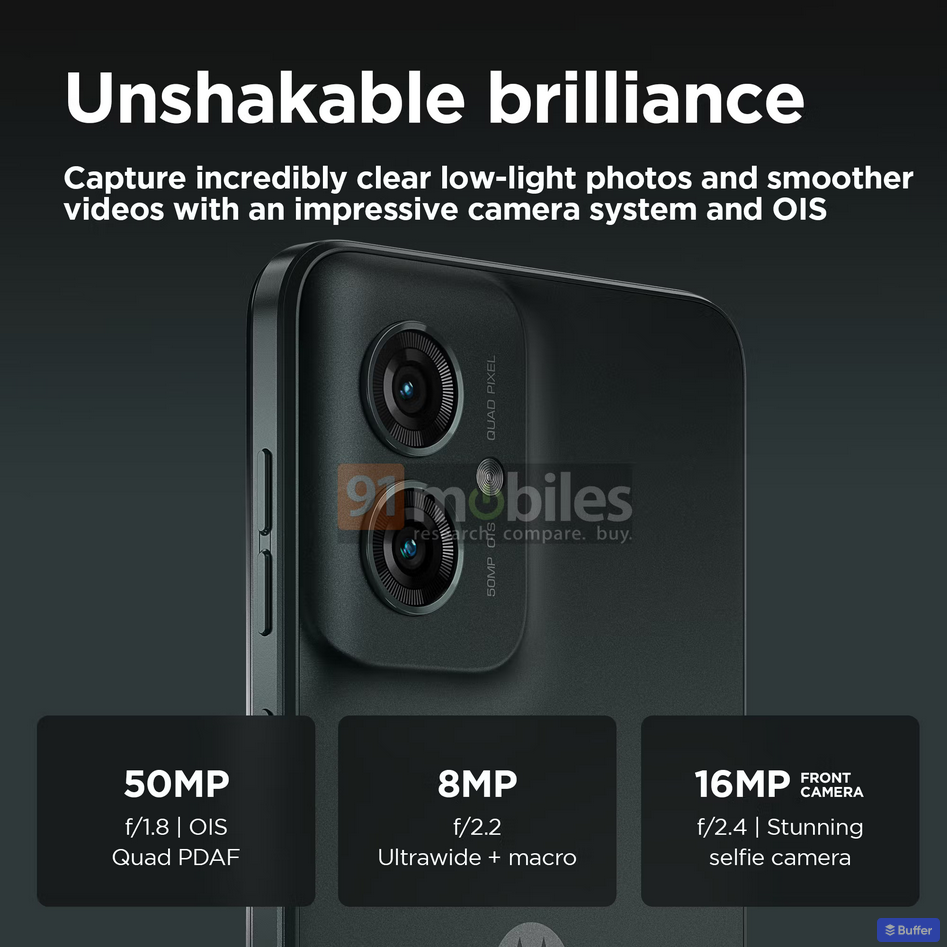
Motorola just unveiled the Moto G45 with a premium leather body in India yesterday. Now, it seems like the brand is working on another G series model. A recent leak revealed renders of the Moto G55, confirming its color and front design. But a fresh report has revealed the full design along with key specs thanks to Hi-Res renders and leaked marketing material.
Moto G55 5G: What do the marketing images tell us?
The leaked marketing images (Via 91Mobiles) confirmed that the Moto G55 5G will be equipped with a MediaTek Dimensity 5G chipset. This processor is paired with up to 8GB of RAM and up to 256GB of UFS 2.2 storage. Users can further boost RAM via virtual memory expansion.
Under the hood, the Moto G55 5G is powered by a large 5,000mAh battery pack with support for 30W wired fast charging. The display size is still unknown but it will be protected by a Corning Gorilla Glass 3. The leaked marketing images confirm an IP54 rating for water and dust resistance.
For photography, the rear packs a 50-megapixel primary camera with an f/1.8 aperture, OIS, and Quad PDAF support. This sensor is paired with an 8-megapixel ultra wide angle lens. Meanwhile, the front houses a 16-megapixel shooter for selfies and video calls. Other notable features that were showcased were Dolby Atmos, an FHD+ 120Hz LCD display, a 3.5mm audio jack, and a USB Type C port.
Moto G55 5G Renders
Our previous report showcased the design of the Moto G55 5G from the front. But the latest leak showcases the device in the Green color option from the back as well. The device is also rumored to arrive in Purple variant. While the back has a flat panel, the camera module is raised but seamlessly blends into the rear panel. On the other hand, the front has noticeable bezels on all side along with a center aligned punch hole cutout for the selfie camera.
As we get closer to the October launch of the Snapdragon 8 Gen 4, more details about the processor are starting to come out. A leaked datasheet earlier this week revealed some key information about the SoC. Now, another leak from the usually reliable tipster, Ice Universe, shares details about the GPU.
According to the tipster, the Snapdragon 8 Gen 4 will feature the Adreno 830 GPU which is currently being tested at a clock frequency of 1,250MHz (or 1.25GHz).
While this number may seem low compared to the 4GHz speed Qualcomm has reportedly achieved with the 8 Gen 4’s Oryon CPU, it’s important to note that GPUs in mobile processors typically have lower clock speeds than CPUs.
To put this in perspective, the Adreno 750 in the 8 Gen 3 operates at 903MHz for the standard variant and 1,000MHz for the performance-focused “for Galaxy” or “Leading” versions.
A leaked AnTuTu benchmark for the Snapdragon 8 Gen 4 shows a GPU score of 1,330. That’s a significant increase over the top Snapdragon 8 Gen 3 score currently on AnTuTu, which stands at 896,416 points.
However, be sure to take these details with a grain of salt. The tipster notes in the comments that the 1,250MHz speed was achieved with an engineering sample of the 8 Gen 4 and the final version of the SoC might have different GPU speeds.
Moreover, the leaked datasheet reveals the SoC will be manufactured on a 3nm processor, supports dual-channel package-on-package (PoP) high-speed LPDDR5X SDRAM, and has a Qualcomm Spectra ISP 8-series image processor.
The connectivity option includes 5G, Wi-Fi 7, Bluetooth 5.4, and ultra-wideband (UWB) support. For AI and security features, the SoC is said to feature a Low-Power AI (LPAI) subsystem with a dedicated DSP and AI accelerator which will enable continuous on-device AI processing without compromising battery life.
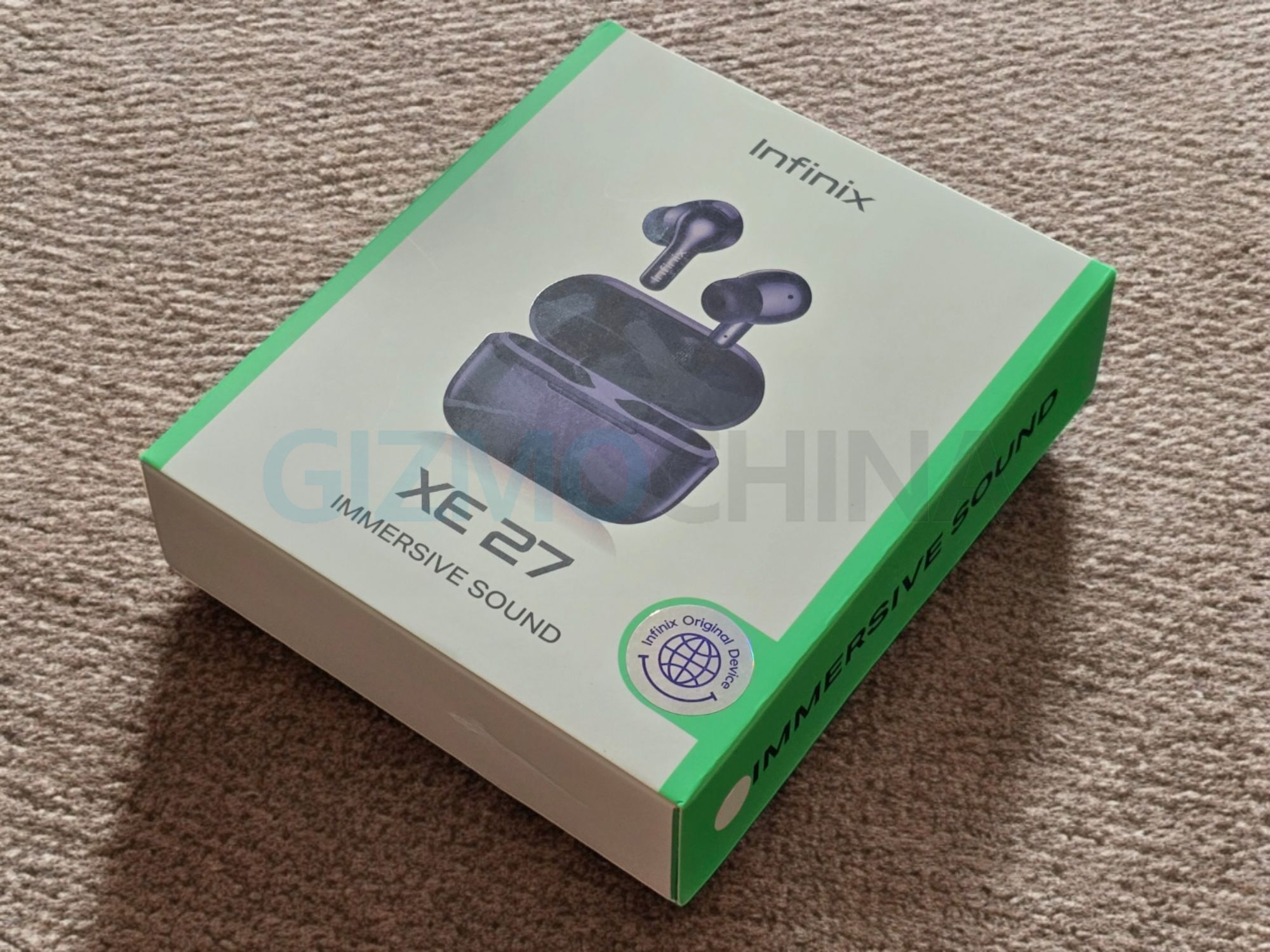
Today, Infinix unveiled the Infinix Buds Neo TWS and XE27 TWS earbuds in India. The new TWS has been announced in celebration of the 7th anniversary of the brand in India. After spending some time with the Infinix XE27 TWS earbuds, I can say that these earbuds offer a compelling mix of features and performance, especially considering their price point. Here’s a breakdown of my experience.
The Infinix XE27 TWS earbuds come with a sleek design that’s both modern and functional. It comes in white and blue options.
The in-ear fit is snug, thanks to the customizable ear tips included in the box. I tried a few different sizes before settling on the ones that offered the best seal and comfort.
Even during extended listening sessions, the earbuds remained comfortable, without causing any ear fatigue. The IPX4 rating provides some peace of mind when using these earbuds during workouts or in light rain.
2. Sound Quality and Touch Controls
Infinix XE27 TWS earbuds
The 10mm deep bass drivers are where these earbuds truly shine. The bass is rich and full, providing a satisfying thump that enhances genres like hip-hop and electronic music. The mids and highs are clear, with decent separation that keeps vocals and instruments distinct. Although the soundstage isn’t as wide as some high-end earbuds, the XE27 delivers an immersive audio experience that’s hard to beat at this price.
The XE27 TWS earbuds feature intuitive touch controls that allow you to manage your listening experience without needing to reach for your phone. A single tap on the earbud lowers the volume, while a double tap plays or pauses your music. Triple tapping skips to the next song and holding the touch sensor for three seconds lets you switch between modes.
3. Noise Cancellation Features
Infinix XE27 TWS earbuds
The active noise cancellation (ANC) on the XE27 is effective at drowning out background noise, making it easier to focus on music or podcasts. While it’s not as powerful as premium models, it does a commendable job, especially in moderately noisy environments like cafes or public transport. Environmental noise cancellation (ENC) also plays its part well during calls, ensuring that your voice comes through clearly even in bustling settings.
One of the highlights for me was the voice-through mode. With a simple touch, I could switch from ANC to this mode, allowing ambient sounds to filter through. This is particularly useful when you need to stay aware of your surroundings, like when walking on a busy street.
4. Battery life and Other Features
Infinix XE27 TWS earbuds
Battery life is another strong point for the XE27. With ANC and Voicethrough off, I was able to get close to the advertised 5 hours of listening time on a single charge. The charging case extends this to a total of around 28 hours, which is more than enough for a few days of regular use. According to the brand, it offers a standby time of up to 60 days.
The Type-C charging port supports fast charging, and I found the 10-minute charge for 1 hour of playback to be a lifesaver on more than one occasion.
The Bluetooth 5.0 connection is stable, and I didn’t experience any dropouts during my usage, which is always a plus. The touch controls are intuitive and responsive, allowing for easy management of playback, calls, and switching between modes without needing to pull out my phone.
5. Final Thoughts
Infinix XE27 TWS earbuds
Overall, the Infinix XE27 TWS earbuds offer a well-rounded experience with impressive sound quality, effective noise cancellation, and solid battery life. Whether you’re commuting, working out, or just relaxing at home, these earbuds are a reliable companion that won’t disappoint.
Infinix XE27 TWS earbuds price in India
The XE27 TWS has an enticing price tag of Rs 1,699 (~$20). It will be available for purchase through Flipkart on Aug. 26.
Shanling MG100 Dynamic HiFi Earphones bring a blend of cutting-edge technology and acoustic refinement for audiophiles and casual listeners alike. Featuring a high-precision 10 mm ceramic diaphragm dynamic driver, these earphones excel in delivering balanced, detailed sound with enhanced clarity. The Ultra Linear Dual Magnetic Circuit System combined with a Dual Chamber Acoustic System ensures powerful and controlled audio output, making every listening experience immersive.
You can now get the Shanling MG100 Dynamic HiFi Earphones for $159 at GeekWills. The earphones come in black and green color variants.
Advanced Audio Customization
One of the standout features of the Shanling MG100 is its interchangeable audio filters, offering two distinct modes: Equalization and Ambience. These filters allow users to tailor their audio experience, whether they prefer a more balanced sound profile or a spacious, open feel. Additionally, the MMCX pin Furukawa monocrystalline copper cable provides optimal signal transmission while being durable and easy to replace, thanks to its interchangeable plug design.
Build Quality and Comfort
The earphones feature a lightweight design, weighing only 5.6 grams, ensuring long-lasting comfort during extended listening sessions. The 3.5 mm gold-plated plug and oxygen-free copper wire enhance signal clarity and reduce distortion, making the MG100 a reliable choice for high-fidelity sound. With a frequency response range from 15 Hz to 40,000 Hz and an impedance of 32 Ω, these earphones cater to both casual and critical listening needs.
Versatile Accessories
The Shanling MG100 has various headphone covers to accommodate different fit preferences and ear sizes. Whether you’re commuting, working out, or relaxing at home, these earphones deliver consistently excellent sound with minimal fatigue. The 1.3-meter cable length offers flexibility, allowing easy connection to various devices without being cumbersome.
Shanling MG100 Dynamic HiFi Earphones are an excellent choice for anyone seeking high-quality sound and customizable audio settings in a compact, comfortable package. Their advanced technology, customizable features, and superior build quality make them a top contender in the dynamic earphone category.
We use cookies on our website to give you the most relevant experience by remembering your preferences and repeat visits. By clicking “Accept”, you consent to the use of ALL the cookies.
This website uses cookies to improve your experience while you navigate through the website. Out of these, the cookies that are categorized as necessary are stored on your browser as they are essential for the working of basic functionalities of the website. We also use third-party cookies that help us analyze and understand how you use this website. These cookies will be stored in your browser only with your consent. You also have the option to opt-out of these cookies. But opting out of some of these cookies may affect your browsing experience.
Necessary cookies are absolutely essential for the website to function properly. This category only includes cookies that ensures basic functionalities and security features of the website. These cookies do not store any personal information.
Any cookies that may not be particularly necessary for the website to function and is used specifically to collect user personal data via analytics, ads, other embedded contents are termed as non-necessary cookies. It is mandatory to procure user consent prior to running these cookies on your website.