Add GIZMOCHINA as Preferred Source on Google
Oppo recently launched the Reno 12 series smartphones in the global market. These are Oppo’s premium mid-range offerings with the spotlight on the Reno 12 Pro model. While there are many new and exciting things about this device, the main question on our minds is how this device compares to the last generation of Reno 11 Pro. If you have been wondering the same, then this is the article for you. Do note that this is a comparison of the global models. We have covered the differences between the China-exclusive modes separately.
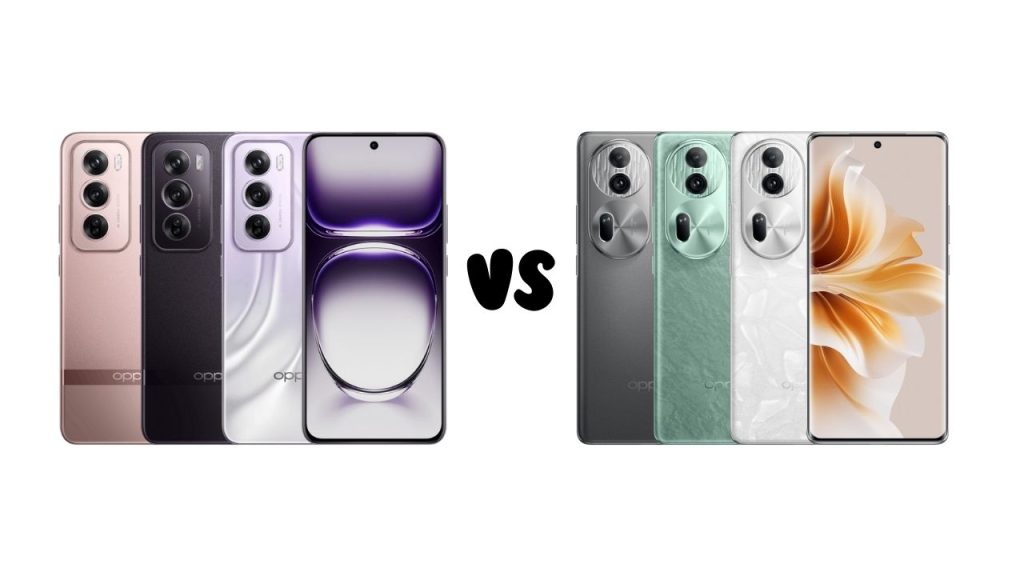
1. Reno 12 Pro has a unique display design
Oppo has made noticeable changes to the design of the Reno 12 Pro compared to the Reno 11 Pro. The Reno 11 Pro had an overall curved design, while the Reno 12 Pro combines flat sides and a flat back with a new “Infinite View Screen”. This screen is a flat display with curved edges, similar to the “2.5D” displays often seen on smartwatches.
The camera island now has a more mainstream rectangular design, compared to the pill-shaped design of the Reno 11 Pro. The device has also shed some weight and slimmed down to 7.55 mm compared to 8.19 mm on last year’s model.
Other than the new Reno 12 Pro pretty much has the same display specifications as the Reno 11 Pro, offering a 6.7-inch 2772 x 1240 pixels display with a 120Hz refresh rate and a slightly higher peak brightness of 1200 nits. That said, the one major change in the display department is the inclusion of Gorilla Glass Victus 2 protection, replacing the Asahi glass AGC.
2. Reno 12 Pro comes with a weaker SoC compared to last year
For some reason, the global variant of the Reno 12 Pro has been fitted with a Dimensity 7300 Energy chip, which is a bit inferior when compared to the Dimensity 8200 onboard the Reno 11 Pro. As per AnTuTu scores of these devices, the Reno 12 Pro has a marginal lead in the CPU department, however, the GPU is about 30% better, which will surely make a difference while playing games.
Additionally, the new Reno 12 Pro is also equipped with LPDDR4X RAM, which is also a headscratcher since the Reno 11 Pro from last year features LPDDR5X RAM, which is significantly faster and energy efficient. Both devices use UFS 3.1 storage.
Both smartphones feature 80W SUPERVOOC fast charging, however, the newer model comes with a larger 5,000mAh battery compared to the 4,600mAh on the Reno 11 Pro.
3. Camera hardware is a mixed basket
The camera system on the Reno 12 Pro features the recently released 50 MP Sony LYT-600 sensor for its primary camera, which is respectable for a mid-ranger. That said, it is hard to ignore the fact that the Reno 11 Pro launched with the flagship-grade Sony IMX890 50 MP sensor, which is significantly better than the LYT-600.
For starters, the IMX890 sensor is physically bigger than the LYT-600, allowing for more light capture, which in turn means better performance in low-light conditions and better dynamic range. Additionally, the IMX890 has a bigger pixel size that also helps in low-light photography.
All that said, the telephoto camera on the newer model has an improved 50 MP sensor replacing the 32MP sensor on the Reno 11 Pro. Both drives offer 2x optical zoom and share the same 8 MP ultra-wide camera sensor.
The selfie camera has been upgraded to a 50 MP unit, replacing the 32 MP sensor of its predecessor. Additionally, the device also claims to have improved video stabilization while recording using the front camera.
4. Reno 12 Pro has many AI features
While the Reno 11 Pro had AI features like face retouching and an object remover, the Reno 12 Pro offers several improvements. These include AI Eraser 2.0 for easy removal of unwanted objects from photos, AI Clear Face for better clarity and reduced distortion in group shots, AI Best Face to fix closed eyes in group photos, and AI Smart Image Matting 2.0 for quick cutouts and adding creative elements to photos.
There is also AI Studio enables users to add backgrounds, change hairstyles, and create stunning group shots from a single photo. And these are just the camera-released features. The device also has many other features like AI LinkBoost which improves connectivity, an AI recording summary that summarizes the main parts of an audio recording, an AI speaker that can read texts or articles for you, and more.
5. Verdict
The Oppo Reno 12 Pro focuses on its stylish design, AI features, and upgraded front camera. However, this results in a significant trade-off in performance. The Dimensity 7300 Energy SoC, with its improved NPU, enhances AI functionalities but does not offer the same level of raw performance in demanding tasks like gaming.
Additionally, the primary camera has been reduced in quality, while the front and telephoto cameras have been improved. All that said, it is hard to justify the Reno 12 Pro as a successor to the Reno 11 Pro, since from a practical standpoint, the only thing it has going for it are the software features.