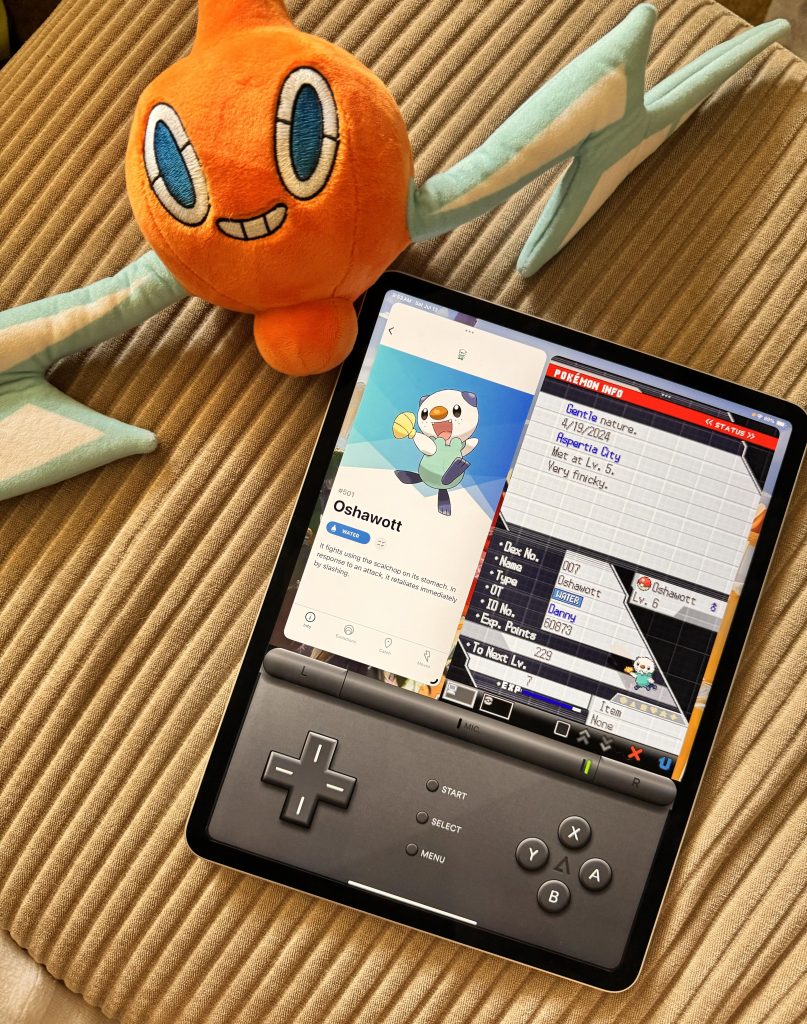
Delta, a popular Nintendo game emulator, has introduced key upgrades with its version 1.6 release. The company has been doing pretty well for a while now, building a strong reputation for quality emulation. The primary focus is enhanced iPad compatibility, allowing users to seamlessly switch between iPhone and iPad devices. The update also includes improvements to DS game compatibility, fresh skin and menu options, and a new logo necessitated by legal concerns.
Image credit: u/dannyleemg on Reddit
The update, available on both the App Store and AltStorePAL, fulfills a promise made by Delta creator Riley Testut just three months ago. iPad users can now enjoy full-screen gameplay and utilize Stage Manager and Split View for multitasking. However, the developers have warned users about potential DS save state issues, recommending in-game saving before updating and offering a dedicated app, Delta Legacy, to assist with save state migration.
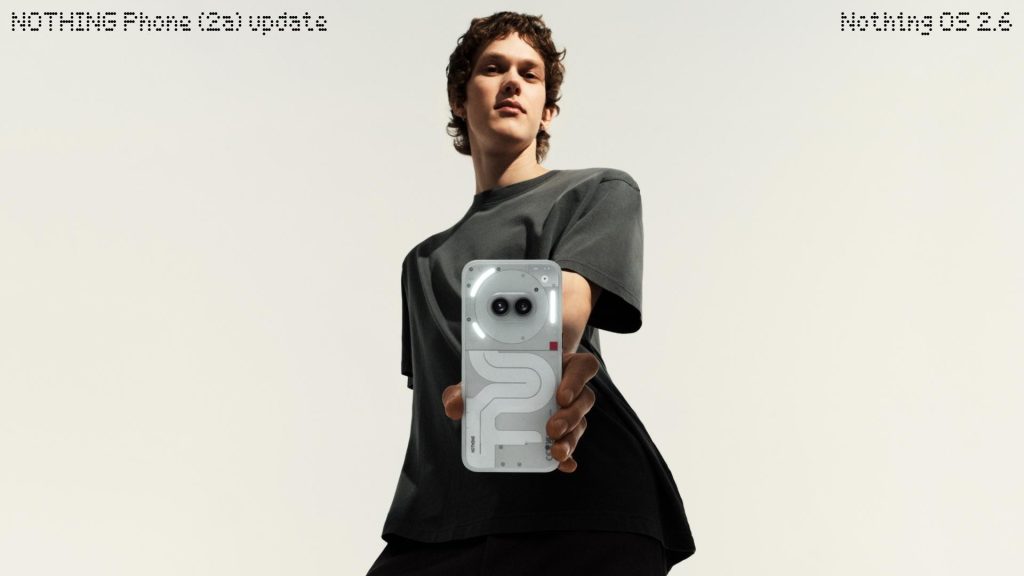
Earlier this week, the Noting OS 2.6 update arrived on the Nothing Phone (2). Now, the brand has started pushing the update for the Phone (2a) as well. The main focus of this update is resolving multiple issues, while also adding some new features and improving the game mode.
Nothing OS 2.6 update changelog for Phone (2a)
New features & improvements
New support for CMF Watch battery level display in the Quick Settings Bluetooth tile.
Added a new swipable Date Widget.
Game Mode enhancements
Tap the left sidebar for quick access to the Game Dashboard during games.
Incoming calls during games can now be displayed in a pop-up.
Added support to reject third-party app calls during gameplay.
Support for one-tap callback after rejecting a call.
Optimised light notifications to show more information during games.
Support for blocking notifications during gameplay to reduce distractions.
Bug Fixes
Resolved an issue affecting voice and call recording in WhatsApp.
Fixed an issue causing the Atmosphere wallpaper effect to disappear in certain scenarios.
Resolved an issue causing overlapping of the Lock Screen display in certain scenarios.
Fixed an issue causing photo previews to display incorrectly when taken in landscape while the device was locked.
Improved Portrait Mode in the camera to avoid incorrect blurring.
Optimised camera stability.
Other general bug fixes and experience improvements.
Like most firmware rollouts, the Nothing OS 2.6 update is being deployed in stages. Users who have not yet received the OTA notification can manually check for the update by going to Settings > System > System Update.
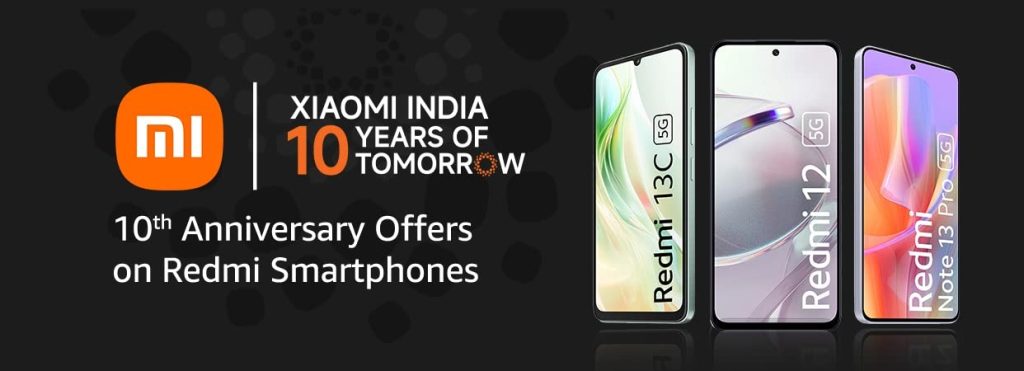
Just before Amazon Prime Day in India, Xiaomi is celebrating “10 Years of Tomorrow” by offering discounts on several smartphones, including the Redmi 13 5G, Redmi 12C, Xiaomi 14 Ultra, and others. The special sale is extended on accessories and other items from Xiaomi in India. Each product across Amazon India from Xiaomi has a certain discount, which could benefit the end buyer.
The newly launched Redmi 13 5G is retailing at a price of Rs 12,999. However, there are some handsome offers on the previously launched smartphones, like the Xiaomi 14 Ultra, which is retailing for Rs 89,999, and the Xiaomi 14, which is up for sale for Rs 59,999. The sale is exclusive of bank discounts, which could make the deal even more lucrative.
Coming to accessories, the Mi USB 18W Dual Port is now retailing for the price of Rs 599, instead of Rs 799, the Mi Power Bank Boost Pro with a 3000 mAh battery is now available with 18W fast charging for the price of Rs 3299. Redmi Buds 3 Lite is available at an unmatched price of Rs 1499.
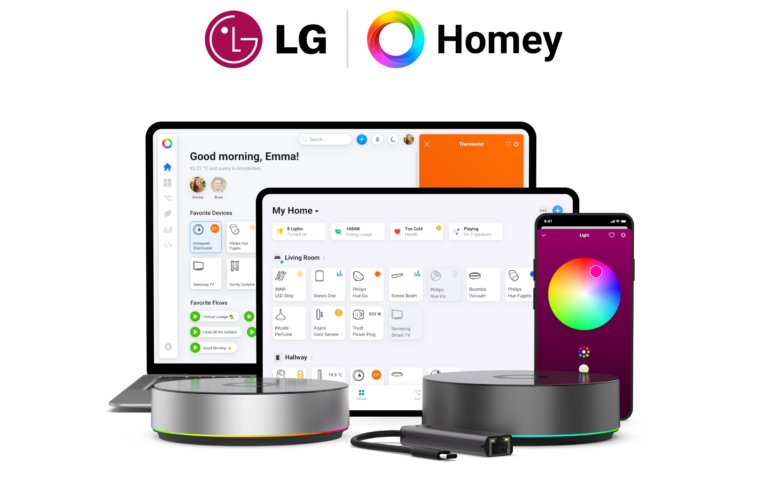
LG has acquired the Homey smart home platform in its move to expand the ThinQ ecosystem. LG recently acquired Athom, the creator of the Homey and the platform includes a hub, bridge, and an App store. The acquisition agreement implies that LG gets an 80% stake in Athom. It also includes a clause that could see LG acquiring the rest of the stake within three years.
There are no official details of the value of the LG-Athom deal but it has been estimated to be worth $61 million. The deal has further expanded the connectivity options available to the LG brand. LG’s ThinQ platform which runs on webOS is essentially limited to LG products but the new deal will signal an expansion of the ThinQ ecosystem.
The integration of the Homey platform will allow for third-party devices to be onboarded into the ecosystem. Homey has an open ecosystem, unlike ThinQ with multiple connection options including Bluetooth, WiFi, ZigBee, Z-Wave, and infrared. The Homey Pro also connects with Matter and Thread and the connected device count reaches 50,000.
It is expected that the Athom acquisition by LG will fast-track its natural progression of the AI home to a software-focused platform. It is noted that LG had previously acquired Alphonso in 2021. LG is expected to continue to make these strategic acquisitions as it continues to consolidate its presence in the smart home ecosystem.
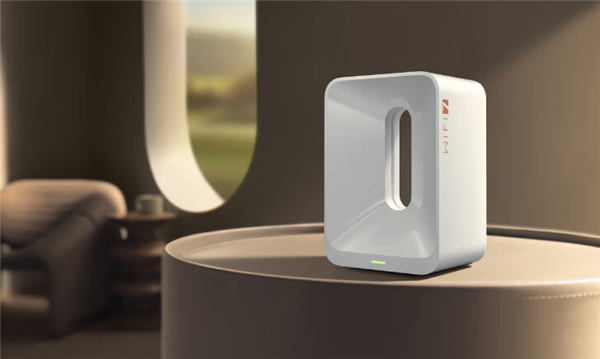
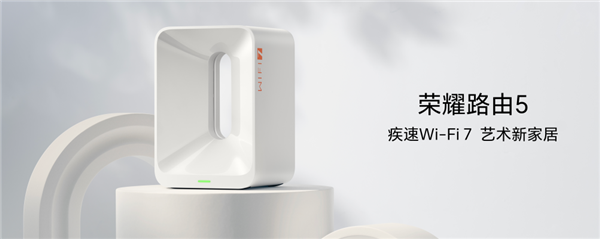
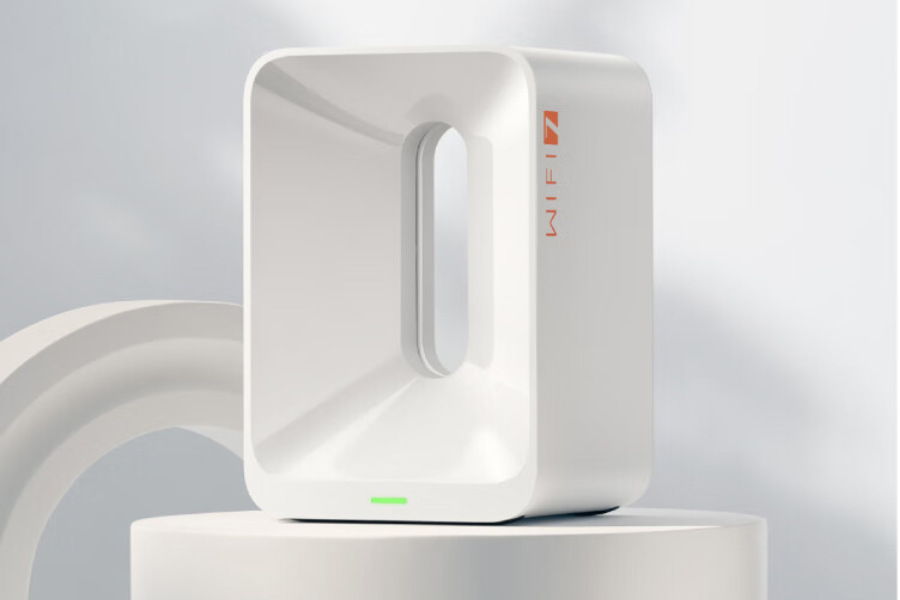
The Honor Router 5 has been launched in China. The new model is a home router that supports WiFi 7 connectivity. The new-generation artistically designed home router was launched during the Honor press conference on July 12.
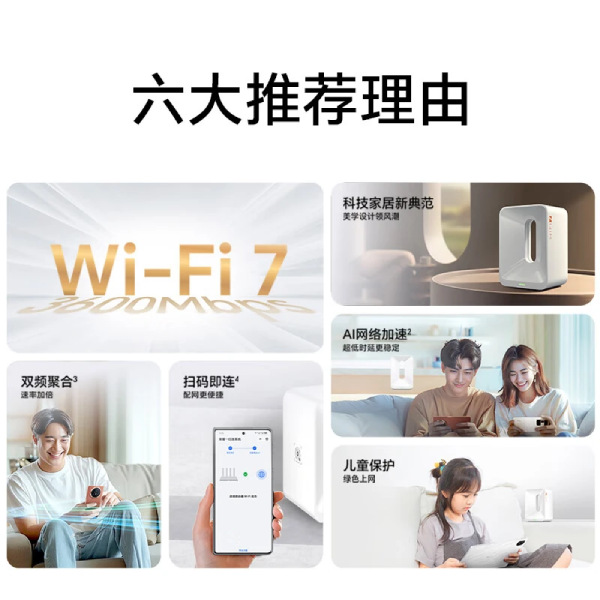
The Honor Router 5 is aesthetically designed and it has a 5-antenna surround layout with wide signal coverage. It has a speed of up to 3,600Mbps and supports 4K QAM and MLO dual-band aggregation technology. The router is theoretically faster by up to 48% than WiFi 6 5GHz. In comparison as well, it is also theoretically faster than WiFi 6 @ 2.4GHz by up to 520%.
The Honor Router 5 has the Link Turbo engine, delivers low latency operation, and supports AI network acceleration. It supports connecting to the internet by scanning a QR code and also supports Honor mesh networking. The AI dual-band optimization is utilized for seamless switching and intelligent optimization of frequency bands. The router can be used in different types of houses and will still deliver the same high-performance metrics, with full signal coverage achieved.
Pricing & Available
The Honor Router 5 was introduced in a white colorway but it could be available in other color variants. The new-generation high-performance home router can be purchased from JD.com for 349 yuan ($48). The new router is expected to be subsequently available in other international retail outlets like AliExpress, Amazon, and eBay, all of which are currently selling previous Honor router models.
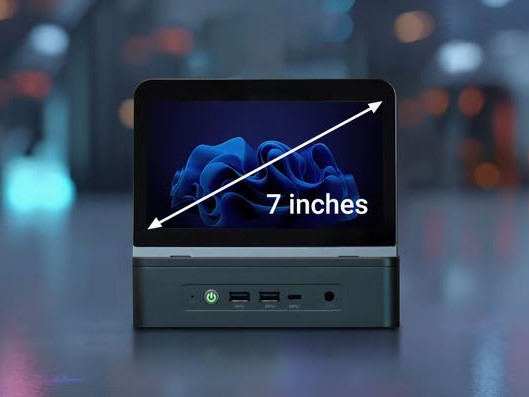
The Miniproca mini PC has been launched. The new mini PC has an unusual design and has a 7-inch folding and multipoint touch display. The touchscreen can be folded at 90 degrees, highlighting the model’s versatility.
There is a growing list of mini PCs with in-built displays but the new Miniproca Mini PC takes such parameters several notches higher. The product was recently launched on crowdfunding platform Kickstarter and its versatility supports its usage as a mobile system and in confined spaces. The mini PC is powered by the AMD Ryzen 9 6900HX APU while the AMD Radeon RX 680M graphics unit is integrated into the APU. The specified AMD Ryzen 9 APU was released in 2022 but AMD has subsequently released other models with a higher performance.
The Miniproca Mini has 4800MHz DDR5 RAM with 8/ 16/ 32GB capacity. The storage options for the mini PC are 512GB, 1TB, and 2 TB. The storage is an M.2 2280 SSD via PCIe 4.0. The Miniproca Mini PC is equipped with a vapor chamber heat spreader and a 400rpm blower fan. This allows the device to be cooled even when undertaking intensive tasks. It can be used for moderate video gaming while connectivity options include WiFi 6E and Bluetooth 5.2.
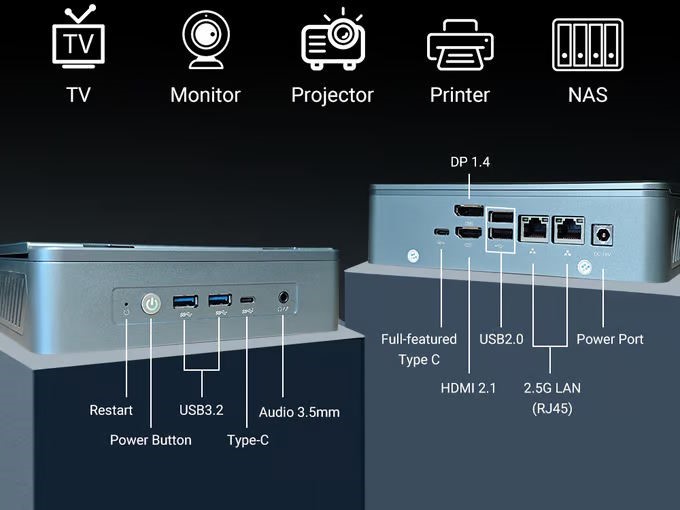
There are two USB-C ports, two USB 3.2 Type-A, and a 3.5mm headphone jack at the front of the mini PC. At the back, there is a DP 1.4 interface, two USB 2.0 Type-A ports, an HDMI 2.1 port, and a Type-C port. There are also dual 2.5G RJ45 wired network ports and a 19V DC power supply connection.
Pricing
The Miniproca mini PC is available on Kickstarter for $699 but deliveries are scheduled to begin in October 2024. The availability of the model will however be based on how successful the crowdfunding campaign is.
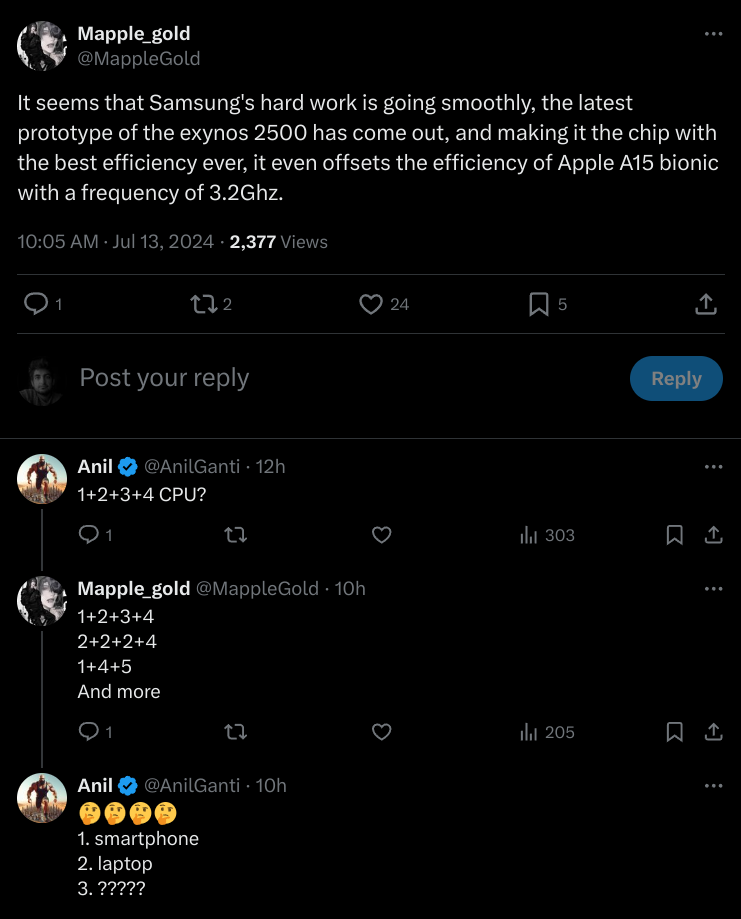
Recent reports suggest that the Exynos 2500 might surpass the Apple A15 in terms of efficiency. A tech blogger on Twitter has revealed some new details on the future Exynos 2500.
According to the tipster, Exynos 2500 boasts better energy efficiency than the Apple A15. Previously, we mentioned that Samsung’s upcoming processor might be used not only in Galaxy S25 smartphones but also Exynos 2500 in Galaxy Book series. New information reveals that in addition to a 1+2+3+4 core architecture, there will also be 2+2+2+4 and 1+4+5 core configurations available.
Exynos 2500
The variety in core configurations is due to Samsung’s plan to use this chip in laptops as well as phones. Laptops require more power, causing the need of more prime cores. Earlier, another leak indicated that Exynos 2500 might feature an ARM Cortex-X5 as its prime core, the same core expected to be used in Snapdragon 8 Gen 4.
Apple A15, used in iPhone 13 Pro, was introduced three years ago. While it may not seem impressive for a modern chip to surpass it, this actually represents significant progress for Exynos processors. This year, Samsung introduced the 5-core Exynos W100 chip in the Galaxy Watch Ultra. Considering Samsung’s previous watches typically featured dual-core chips, the Watch 7 and Watch Ultra show substantial performance improvements over earlier Galaxy Watches. Samsung may be aiming to reestablish Exynos as a powerhouse in both smartphones and smartwatches. Plus the ARM laptops.
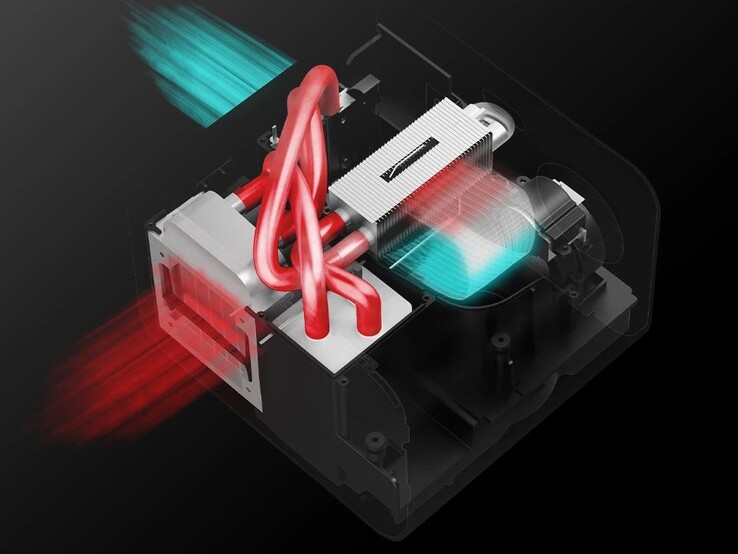
The Blitzwolf BW-V3 Max smart projector has been launched in Europe. The model comes with an affordable price tag atop several impressive features. It utilizes water cooling technology to optimize its performance and is also dustproof. The projector is a smart gadget and comes with several convenience functions while it can also be easily set up.
The projector offers efficient cooling and a reduced noise level when it is in operation. It has a maximum noise output of 36dB and can work silently. The key parts of the projector are fully protected from dust with its design. The model also has IPX5 certification to underscore its dust protection capability.
The Blitzwolf BW-V3 Max has an LED light source with a life cycle of up to 20,000 hours. The lifespan of the light source corresponds to the entire service life of the projector. The illumination of the Blitzwolf BW-V3 Max is at 65 percent, hence not uniform. The projector has a maximum brightness of 350 ANSI lumens which is not that high. It therefore requires dimming or restrictions on the projection diagonal. The projection ratio of the device is 1.24:1 and it omits a zoom lens. The projector can output images between 36 inches and 130 inches.
The resolution of the Blitzwolf BW-V3 Max projector is 1080 x 720 pixels and the image will not be sharp on larger projection surfaces. The model however supports automatic keystone correction. Accessories for the projector include a special stand that allows for flexible adjustment and positioning of the gadget. The projector has an HDMI interface, a USB port, and audio input/ output ports. The projector runs on Android 9 operating system and direct media playback is supported.
Pricing & Availability
The Blitzwolf BW-V3 Max projector costs €102 ($111) and ships from the Czech Republic. The company says that it takes a maximum of five days for deliveries to arrive at their destination within the EU.
HMD Global has been rumored to be working on a phone inspired by the classic Nokia Lumia 920. Now, a listing from a Belgian retailer appears to have given us the clearest look yet at this device called HMD Skyline.
The leaked image shows a design that heavily borrows from Nokia’s Lumia era. The phone features a boxy aesthetic with fairly noticeable bezels and sharp edges, reminiscent of Lumia’s Fabula design language.
The back panel has a rectangular camera module housing three camera lenses and an LED flash. The phone can be seen in its Pink shade, and the tipster Sudhanshu Ambhore has also revealed its Black variant — so there will be at least two colors in the phone.
There’s not much the retailer reveals about the specs, but based on previous leaks, the Skyline will feature an FHD+ OLED display with a 120Hz refresh rate. Under the hood, it’s expected to be powered by the Qualcomm Snapdragon 7s Gen 2 SoC, a mid-range processor.
Moving to the camera system, the Skyline is rumored to feature a main sensor with 108MP resolution, an ultrawide lens, and a macro or depth sensor. A 32MP front-facing camera is tipped for handling selfies.
Endurance is seemingly addressed with a sizable 4,900mAh battery, along with support for 33W fast charging. The phone is also rumored to be IP67-rated for protection against dust and water ingress.
HMD Skyline will also have features like an under-display fingerprint sensor and stereo speakers if rumors are to be believed. On the software side, the phone is expected to launch with Android 14, the latest version of Google’s mobile operating system.
Pricing for the HMD Skyline is estimated at €520 for a variant with 8GB of RAM and 256GB of storage. The launch timeframe is reportedly set for sometime in July, though we are still waiting for an official confirmation from HMD.
Honor‘s product launch yesterday wasn’t just about foldable phones and laptops. The company also introduced the Honor Router 5, an affordable Wi-Fi 7 router that ditches the usual black box aesthetic for something a touch more audacious. Let’s get into its details here.
Honor Router 5 Specifications
The Router 5 leans into the current trend of tech blending seamlessly with home aesthetics. Its rectangular form has soft, rounded edges and a hollow center, giving it a distinctive, open structure. The device is predominantly white with a subtle Wi-Fi 7 logo in orange on one side, adding a touch of color. But design isn’t the only focus.
The Honor Router 5 packs 5 built-in high-performance FEM chips to provide ample Wi-Fi coverage. The company claims the router can blanket an area of 120 square meters with a 360-degree signal, eliminating dead zones. There are five antennae in it to aid with this. And thanks to its support for 4K QAM and MLO dual-band aggregation technology, it can deliver speeds of up to 3600Mbps.
Performance-wise, the Router 5 is equipped with the Link Turbo engine and supports AI network acceleration. This allows the router to intelligently adapt to various scenarios and network environments, including over 200 games, 3 online conferencing platforms, and 8 online course platforms.
The router also has AI dual-band optimization that ensures seamless switching between Wi-Fi bands and intelligent optimization of frequencies for a more stable connection.
For added convenience, you get support for the Honor Smart Space App allowing users to create a floor plan of their home. The app then detects signals at various locations and visually presents the Wi-Fi signal strength in different areas. Additionally, the Router 5 supports Honor Mesh networking and QR code scanning for easy setup and connection.
Price and Availability
Honor has released the Router 5 in two versions: a Gigabit version and a 2.5G version. The Gigabit version carries a price tag of 299 yuan (~ USD 42), with a limited-time offer bringing the price down to 269 yuan (~ USD 37). The 2.5G version is priced at 369 yuan (~ USD 50), with a limited-time offer of 349 yuan (~ USD 48). You can purchase it from JD.com and Honor official store in China.
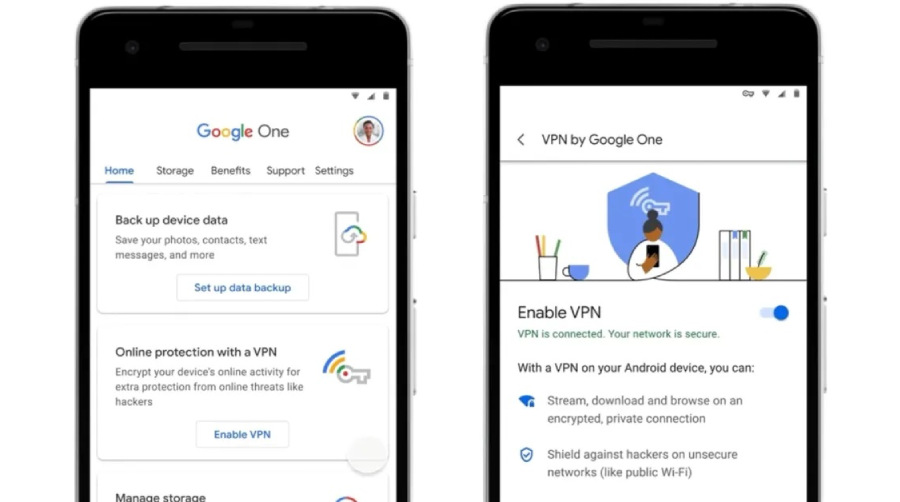
In a move that seems to prioritize data security over virtual private network (VPN) access, Google is expanding its Dark Web Monitoring service. Previously available only to paying Google One subscribers, this feature will be integrated into all Google Accounts by late July 2024. This announcement comes shortly after Google phased out the VPN service within the Google One app.
What is Dark Web Monitoring?
The Dark Web refers to encrypted online networks that are difficult to access with traditional search engines. These networks are sometimes used for illegal activities, and can also contain leaked personal information from data breaches.
Dark Web Monitoring scans these hidden corners of the internet for your personal details, such as name, address, email address, and phone number. If a match is found, Google will notify you and suggest steps to take, like changing passwords or reporting stolen credit cards.
Previously a Paid Feature Now Available to All
Previously, Dark Web Monitoring was only accessible to users with a Google One subscription. This paid service offered additional features like increased cloud storage and family sharing. Now, the core functionality of monitoring the dark web will be available to all Google Account holders for free.
Users will be able to see the change within “Results about you” tab on Google one app starting July 204. “Results about you” allows you to identify and request removal of your personal information from public search results. Dark Web Monitoring complements this by scanning the darker corners of the internet for leaks that might not be readily apparent.
Improved User Privacy in the Age of Data Breaches
The increased focus on Dark Web Monitoring reflects the growing concern around data breaches. With online services and products regularly falling victim to cyberattacks, having a way to track your personal information can be a valuable security measure.
By offering Dark Web Monitoring for free, Google is taking a step towards empowering users to protect themselves in the digital age.
Shanling has unveiled an upgraded version of their M3X advanced music player. The new model features 4GB of RAM and 64GB of storage, double the previous capacity. It is priced at 1698 yuan, with an early bird discount of 1598 yuan and a free leather case available on July 15th.
The M3X is equipped with the Snapdragon 430 CPU
The M3X is powered by a Qualcomm Snapdragon 430 processor and supports expandable storage up to 2TB via microSD card. It utilizes a dual ES9219C DAC scheme with FPGA technology, enabling MQA 16x expansion.
The player boasts a 4.2-inch 1280 x 768 display with a 3:2 aspect ratio and 356 PPI. It packs a 3200mAh battery, offering up to 23 hours of playback time in single DAC mode, 20 hours in dual DAC mode, 19 hours in balanced mode, and 46 hours in Bluetooth mode.
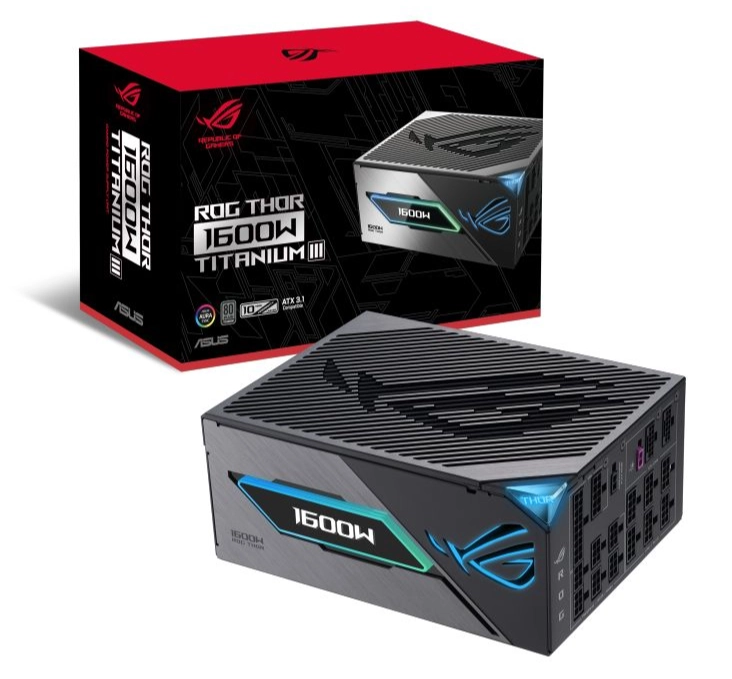
ASUS has unveiled its new Raytheon 3rd generation power supply at BiliBiliWorld 2024. This power supply features a unique double-sided magnetic OLED screen that displays real-time power consumption. It will be available in 1000W,1200W, and 1600W variants, priced at 2699 yuan, 3499 yuan, and 4599 yuan respectively.
The 1600W model can support up to three RTX 4090 graphics cards
The power supply utilizes gallium nitride (GaN) MOSFET technology, promising higher efficiency, a more compact design, and lower operating temperatures. The 1600W model is particularly impressive, offering two 12V-2×6 power interfaces capable of supporting up to three RTX 4090 graphics cards.
The OLED screen, a standout feature, can be magnetically attached to either side of the power supply for easy viewing of power consumption data. The power supply is scheduled for release in September.
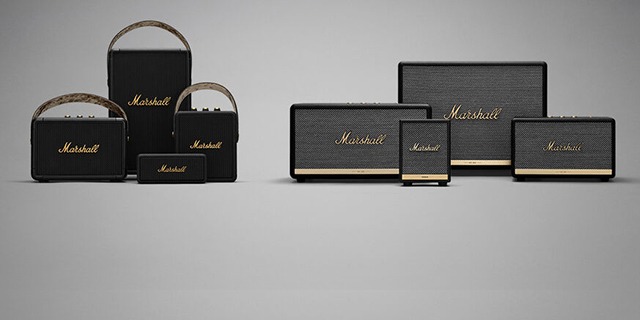
Hefty discounts are already live for the upcoming Amazon Prime Day. The Early Deals are leaving no stone unturned in bringing some handsome discount deals for the users. Apart from the discounts on the newly launched Galaxy Z Fold 6 and Z Flip 6, and other Samsung gear, there’s a new discount on the Marshall and JBL speakers. Interested folks can get up to a $100 discount in the early Amazon Prime Day sale.
Discounts on Marshall and JBL Speakers
Speakers have already become a hot sales segment since the inception of e-commerce. There have already been some discounts and deals on the speakers, but this time there are some extraordinary discounts on the Marshall and JBL speakers. Marshall Acton III is now retailing for $230, with a discount of around $50. Meanwhile, the Marshall Stanmore III speakers are on sale for $300 with a discount of $80. Meanwhile, there’s an additional discount of $1000 on the purchase of JBL Authentics 200. Let’s jot down the list below:
There are some good discounts applicable on the JBL Authentics 300 and JBL Authentics 500, which are retailing with discounts of $100 and $200, respectively.
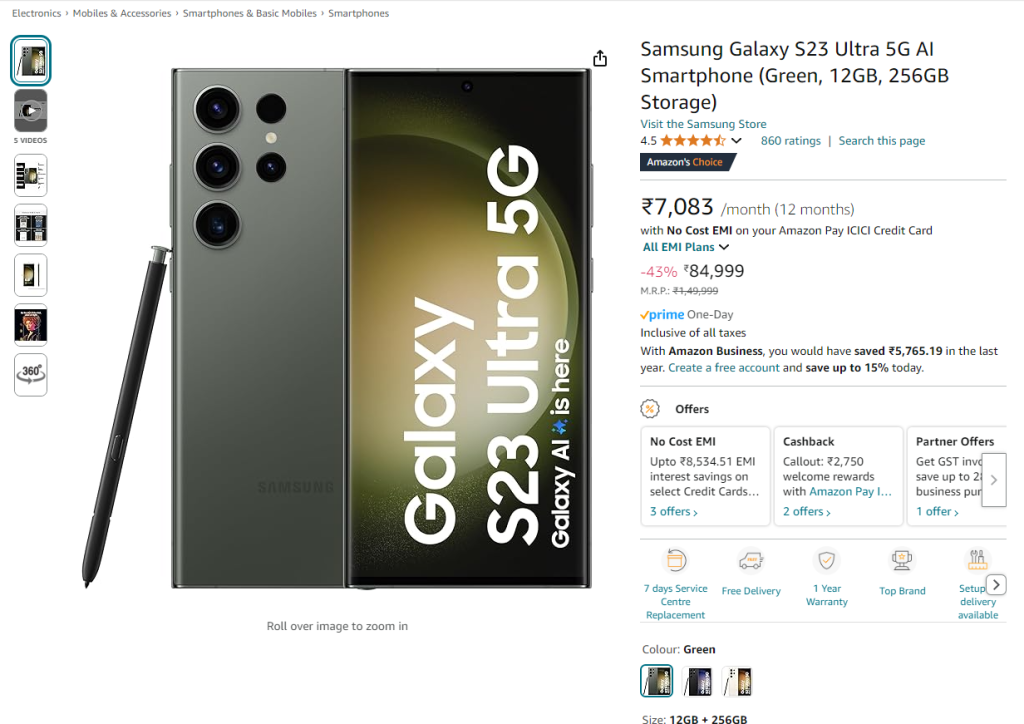
Earlier this month, Amazon India reduced the price of the Samsung Galaxy S23 Ultra smartphone to Rs 89,999 for the 12GB RAM and 256GB storage variant. Now, the price has been slashed further to Rs. 84,999 (~$1,018), hitting an all-time low.
Samsung Galaxy S23 Ultra offer:
The Samsung Galaxy S23 Ultra, which debuted in February 2023 with a starting price of Rs 1,24,999 (~$1,497) for the 12GB RAM and 256GB storage model is now down to Rs. 84,999 on Amazon India. Buyers can also purchase it through an EMI plan, with monthly payments starting at Rs 7,083 for the 12-month no-cost EMI option.
At this price, the Galaxy S23 Ultra is an awesome deal as it boasts a powerful processor for smooth performance and excellent cameras that capture incredible photos and videos. Software support won’t be an issue since Samsung has promised long-term software support for the Galaxy S23 Ultra, guaranteeing that it will at least receive Android 17 in 2027.
Samsung Galaxy S23 Ultra specs:
The Samsung Galaxy S23 Ultra has a 6.8-inch Quad HD+ Dynamic AMOLED 2X Infinity-O display with a variable refresh rate from 1 to 120Hz and a peak brightness of 1750 nits. It runs on the Snapdragon 8 Gen 2 for Galaxy and has vapor chamber cooling to manage heat.
The phone is built with an Armor Aluminum frame and Corning Gorilla Glass Victus 2 for durability. It includes an in-display Ultrasonic Fingerprint Scanner and comes with Android 13 and Samsung’s OneUI 5.1, with an update to Android 14-based One UI 6.1 available.
The rear camera system includes a 200MP primary sensor with OIS, super HDR, and pixel enhancer, a 12MP Ultra Wide lens, a 10MP Telephoto lens with 3x zoom, a 10MP Periscope lens with 10x zoom, and a 3D ToF sensor. The front camera has a 12MP Dual Pixel sensor with AI object awareness. The phone supports 8K video recording at 30 fps with VDIS technology.
Other features include UWB capabilities, an IP68 rating, a 5000mAh battery with 45W fast charging, wireless charging, and a built-in S Pen Stylus.
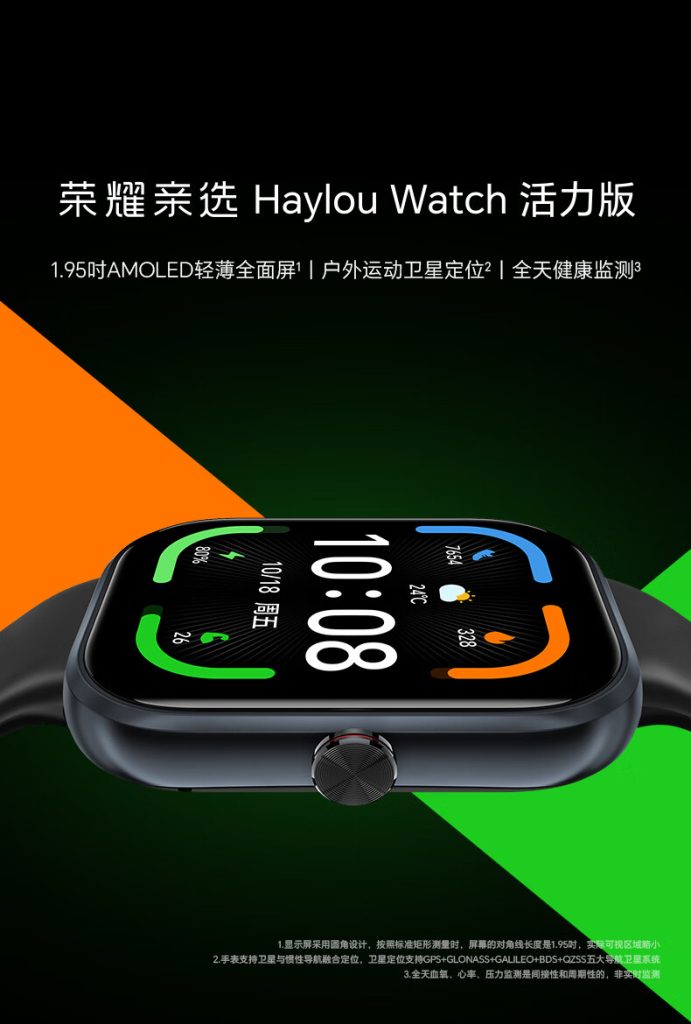
Honor under its label Honor’s Choice, has launched a new smartwatch – the Haylou Watch Vitality Edition. This budget-friendly smartwatch focuses on fitness and everyday health monitoring, making it a compelling option for those looking for a feature-packed wearable without breaking the bank.
The Haylou Watch Vitality Edition boasts a large 1.95-inch AMOLED display with a high 75% screen-to-body ratio. The display offers a peak brightness of 550 nits, making it easily viewable even in strong sunlight.
Under the hood, the smartwatch packs built-in global positioning with five satellite systems (GPS, GLONASS, GALILEO, BDS, and QZSS) for accurate outdoor sports tracking. It also supports over 120 sports modes, including cycling, swimming, and running, with automatic recognition for five common activities.
For health monitoring, the Haylou Watch Vitality Edition offers 24/7 heart rate and blood oxygen monitoring, along with sleep tracking. It also boasts water resistance up to 5 ATM, allowing users to wear it worry-free during swimming or showering.
The smartwatch also boasts some smart features, including Bluetooth calling, allowing users to answer calls directly on their wrist. It also supports contactless payments through Alipay and WeChat Pay, making it convenient for on-the-go purchases.
Honor claims the watch can last up to 12 days on a single charge, making it a great option for those who don’t want to constantly worry about recharging.
The Haylou Watch Vitality Edition comes in two color options – Starry White and Night Black. The watch body has a metal texture and weighs just 29 grams, making it comfortable to wear for extended periods. Additionally, the silicone straps are replaceable, allowing users to customize the look of their watch.
Pricing and Availability
Honor Choice Haylou Watch Vitality Edition smartwatch is priced at 369 yuan (approximately $50) and it is now up for sale in China on JD.com.
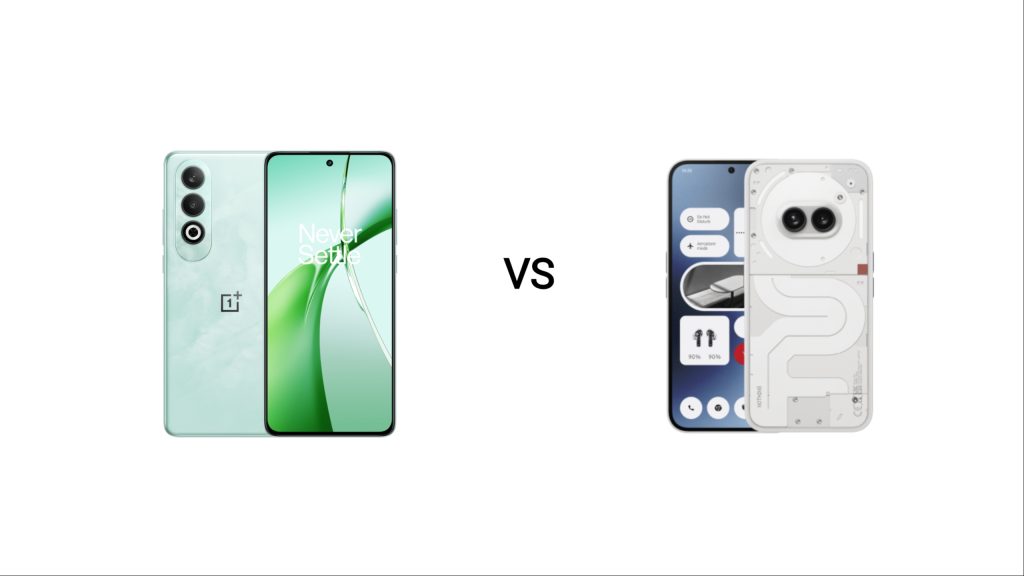
OnePlus Nord CE 4 vs Nothing Phone 2a comparison table
The battle of the midrange Android devices is often a very tense tussle between top brands in the segment. In recent years, Nothing has made a name for themselves as a smartphone brand that picks out-of-the-box designs but offers great quality. Already, OnePlus is a formidable force to reckon with not only in the midrange Android market but also in the flagship segment. How will these two brands stack up against each other as we put the OnePlus Nord CE 4 and the Nothing Phone 2a each brand against each other. Let’s find out and tell which is the better purchase if looking for a new device to purchase.
OnePlus Nord CE 4 vs Nothing Phone 2a: Price
Oneplus Nord CE4 (Celadon Marble, 8GB RAM, 128Gb Storage)
Please Note: When you buy something using the links in our articles, we may earn a small commission at no cost to you.
OnePlus Nord CE 4 vs Nothing Phone 2a: Design and colours
OnePlus Nord CE 4:
This is a good-looking device and if you’ll agree with me, the OnePlus brand logo on it makes it look cooler. The OnePlus Nord CE 4 comes with a dual rear camera setup in a vertically with the main sensor above the secondary lens, and the secondary lens above the ring-shaped torch. All edges of this device are flat, and the volume and power buttons sit on the right side of the frame. At its base are the USB-C port, microphone, SIM tray slot, and speakers And at the top sits the upwards firing speakers. Available colours for this device are Celadon Marble, Dark Chrome.
Nothing Phone 2a:
Like you already know, Nothing loves to make a bold statement with its devices, and the Nothing Phone 2a doesn’t fall far from the tree. Unlike its predecessor, the Nothing Phone 2a comes with a center-mounted horizontally aligned camera setup. It spots the glyph interface on its rear as well as flat edges all around, for this device, the power button sits on the right side of the frame and the volume rocker keys on the left. At its base is the USB-C port, speakers, a microphone, and the SIM tray. Available colours on this device are Black, White, Milk, Blue.
Major differences:
Glyph interface on the Nothing Phone 2a.
Simple design on the OnePlus Nord CE 4.
OnePlus Nord CE 4 vs Nothing Phone 2a: Display
OnePlus Nord CE 4 and Nothing Phone 2a:
The OnePlus Nord CE 4 and the Nothing Phone 2a both come with 6.7-inch screen displays. Both screen displays are also AMOLED panels, giving impressive display quality and brightness. The both screens have center-mounted selfie cameras, with the OnePlus Nord CE 4 claiming the slightly better screen-to-body ratio. You can get a 120Hz refresh rate on both devices, but the Nothing Phone 2a spots a brighter display panel.
Major differences:
Better screen-to-body ratio on the OnePlus Nord CE 4.
Brighter screen on the Nothing Phone 2a.
OnePlus Nord CE 4 vs Nothing Phone 2a: Cameras
OnePlus Nord CE 4 and Nothing Phone 2a:
In this comparison category, we see the Nothing Phone 2a take the crown. For their main camera sensors, both devices feature a 50MP sensor, but on the secondary lens the OnePlus Nord CE 4 spots an 8MP sensor. Nothing however arms the Phone 2a with a 50MP ultrawide secondary sensor. Up front, we find a 16MP selfie camera on the OnePlus Nord CE 4 while the Nothing Phone 2a spots a 32MP selfie sensor.
Major differences:
50MP ultrawide sensor on the Nothing Phone 2a.
32MP selfie camera on the Nothing Phone 2a.
OnePlus Nord CE 4 vs Nothing Phone 2a: Performance
OnePlus Nord CE 4 and Nothing Phone 2a:
This is an area where these devices go head-to-head with each other. The OnePlus Nord CE 4 comes with the Snapdragon 7 Gen 3 processor, and the Nothing Phone 2a comes with the MediaTek Dimensity 7200 Pro. Both devices feature 8GB worth of RAM and up to 512GB storage. Processor performance testing on platforms like Antutu and Geek bench shows that the Snapdragon 7 Gen 3 outperforms the MediaTek Dimensity 7200 Pro. So, expect to get better performance on the OnePlus Nord CE 4.
Major upgrades & differences:
A more powerful processor on the OnePlus Nord CE 4.
OnePlus Nord CE 4 vs Nothing Phone 2a: Software
OnePlus Nord CE 4 and Nothing Phone 2a:
Both devices run on Android 14 out of the box but with different software as the OnePlus Nord CE 4 runs ColorOS 14 and the Nothing Phone 2a runs Nothing OS 2.5.5. If you purchase any of these devices, you’ll get up to three years of IS upgrades and five years of security updates.
Major differences:
OnePlus Nord CE 4 runs ColorOS 14.
Nothing Phone 2a runs Nothing OS 2.5.5.
OnePlus Nord CE 4 vs Nothing Phone 2a: Battery life and charging
OnePlus Nord CE 4 and Nothing Phone 2a:
OnePlus ensures to arm the Nord CE 4 with not only a bigger battery but also faster charging than its rival in this comparison. For battery capacity, the OnePlus Nord CE 4 comes with a 5500mAh capacity and supports 100W fast charging. As for the Nothing Phone 2a, it comes with a 5000mAh battery capacity and supports 45W fast charging capacity.
Major differences:
Faster charging and a larger battery on the OnePlus Nord CE 4.
OnePlus Nord CE 4 vs Nothing Phone 2a: Final Verdict
For the final verdict, the OnePlus Nord CE 4 outperforms the Nothing Phone 2a but falls short in the photography department. However, we’ll recommend getting the Nothing Phone 2a to buyers that want to get head turning whenever they work by with their device. The design of the Nothing Phone 2a, while being its stand out feature, is a major drawback for some buyers. The OnePlus Nord CE 4, on the other hand, is the perfect blend of simplicity and performance, and is overall a better device in comparison to the Nothing Phone 2a.
HMD recently introduced its new HMD Pulse series phones. HMD manufactures both Nokia phones and its own branded phones. In a recent Twitter post, HMD Global announced that the company will be launching new 100% recycled clear cases for HMD Pulse smartphones.
HMD is one of the companies that produces affordable smartphones. HMD Pulse was introduced in 2024 with a price tag of around €100 in Europe. Additionally, the HMD Pulse features a user-replaceable battery. Now the company is announcing cases made from 100% recycled materials. We can say that HMD is taking sustainability and repairability seriously for the benefit of users.
Clear case for HMD Pulse series
The company’s smartphone, known as “Pulse” in the global market, was rebranded and launched in India as the “HMD Arrow.” HMD Global has not made an official statement, but new cases made from 100% recycled materials might also become available in India. See the official announcement of HMD Global from the given link.
Four companies have scheduled smartphone launches for next week. Out of these, three of them will take place in India, while the last one is meant for all markets.
The three brands that will debut phones in India are iQOO, Samsung, and Honor. The handsets they will announce are already official in other markets or under a different name.
While OnePllus will be hosting a global event to take wraps off its next-gen Nord smartphone.
The products from Honor are expected to be the costliest, followed by OnePlus. While iQOO and Samsung will introduce budget models.
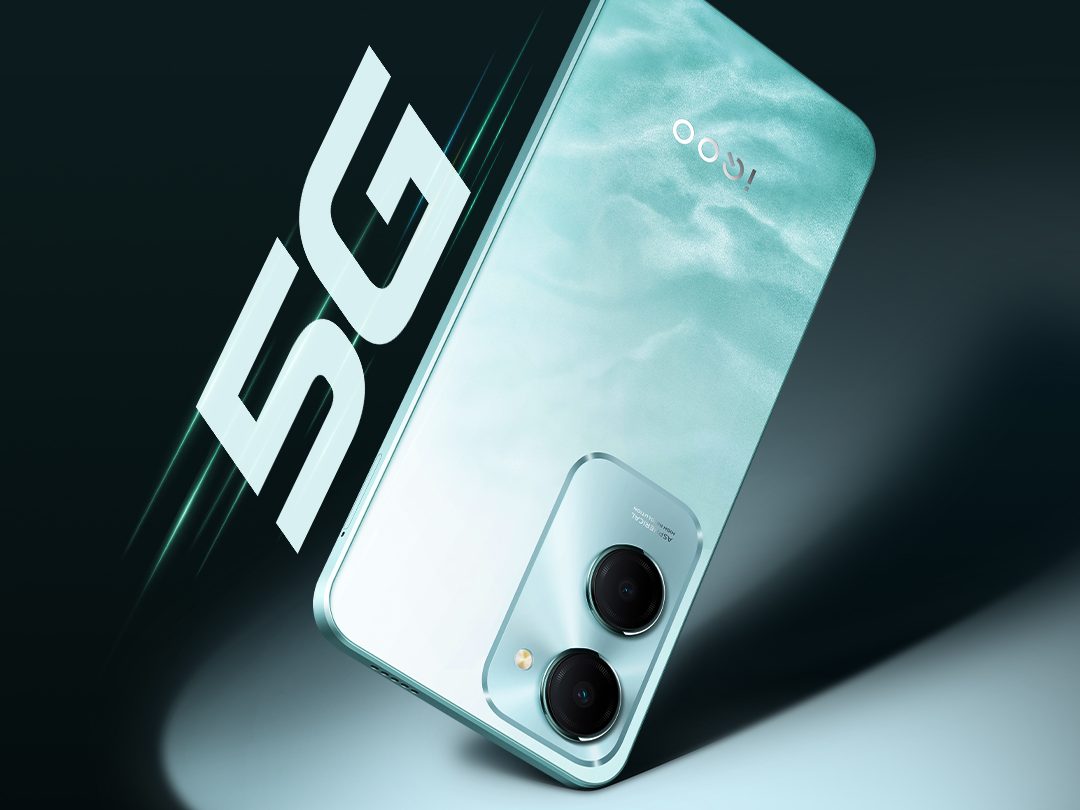
The iQOO Z9 Lite is set to launch in India on July 15 (Monday). It is expected to be a rebranded version of Vivo T3 Lite, which is already official in the country.
The device is said to come with a 6.56-inch 90Hz HD+ display (LCD) with a dewdrop notch. It will be powered by a MediaTek Dimensity 6300 SoC.
Further, it will offer a 50MP rear camera, an IP64 rating, a 5000mAh battery, and 15W charging support.
2. OnePlus Nord 4
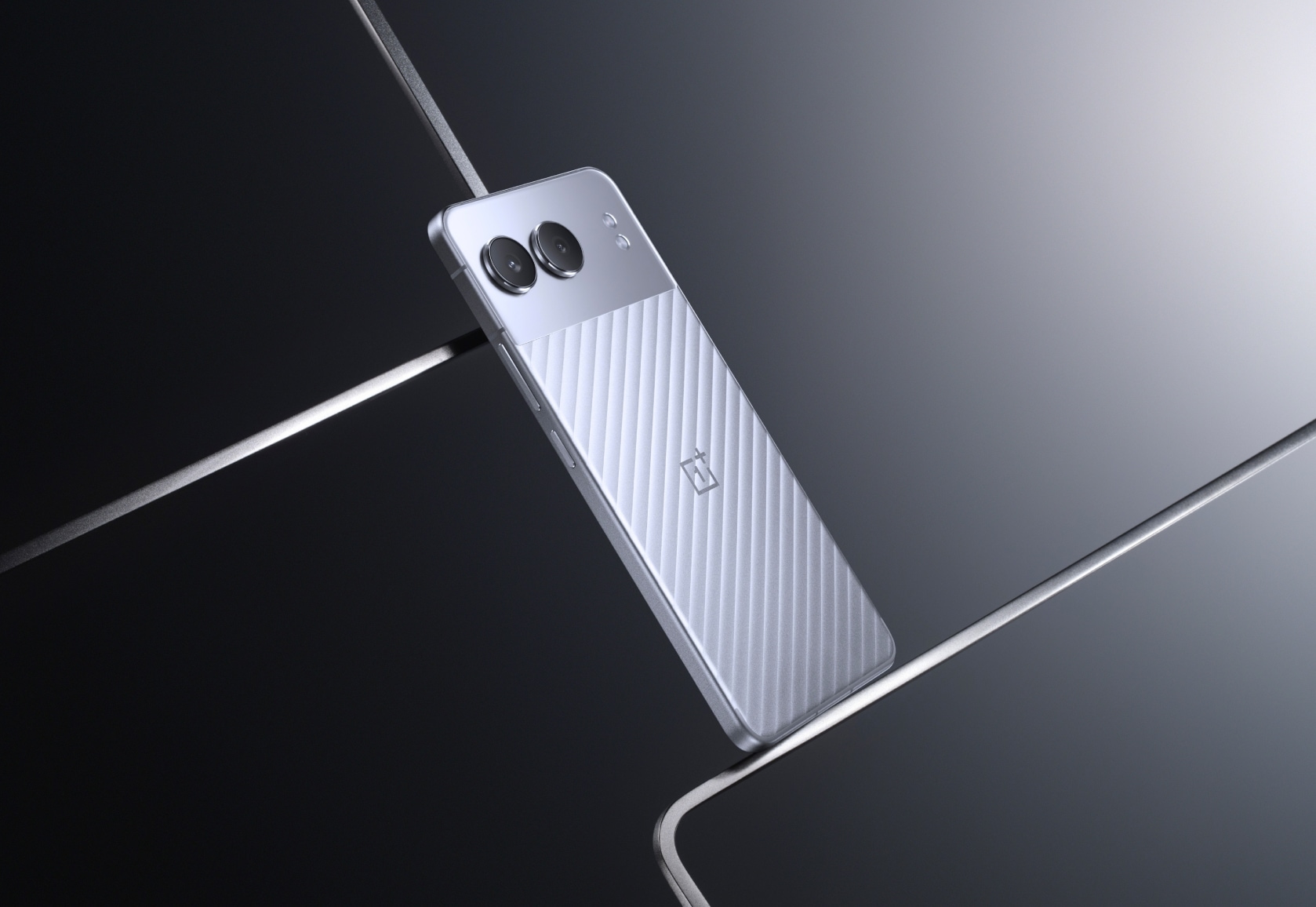
The OnePlus Nord 4 will be officially unveiled on July 16 (Tuesday). It will the first mainstream smartphone in a long while to feature a metal back.
The phone will be powered by a Qualcomm Snapdragon 7 Plus Gen3 chipset. It will sport a 6.74-inch 120Hz 1.5K OLED display,
It is expected to arrive with 50MP (wide) + 8MP (ultrawide) dual cameras, a 16MP selfie camera, 6 years of software updates, a 5,500mAh battery, and 100W charging support.
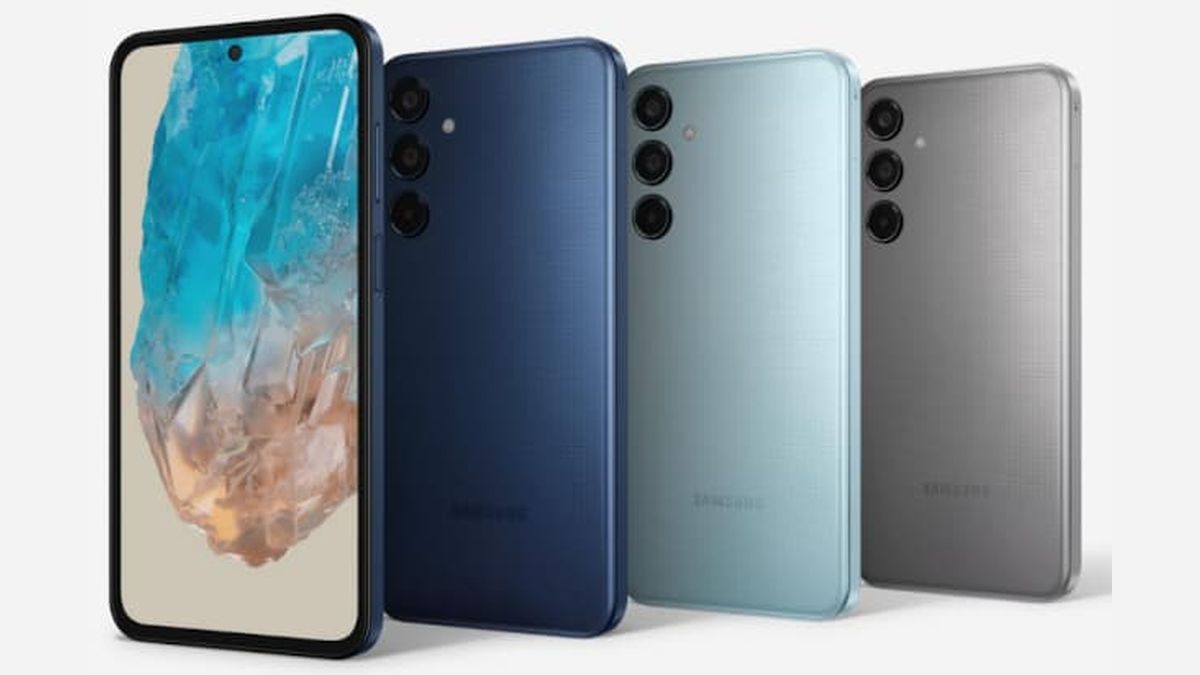
3. Samsung Galaxy M35
Samsung will debut the Galaxy M35 in India on July 17 (Wednesday). Since the product is already official in several markets, everything about it is already known.
The handset sports a 6.6-inch FHD+ 120Hz AMOLED display protected by Corning Gorill Glass Victus. It is powered by an Exynos 1380 chip and draws energy from a 6,000mAh battery.
The device comes with a 50MP main camera, an 8MP ultrawide unit, a 13MP selfie camera, a side-mounted fingerprint sensor, and 25W charging support.
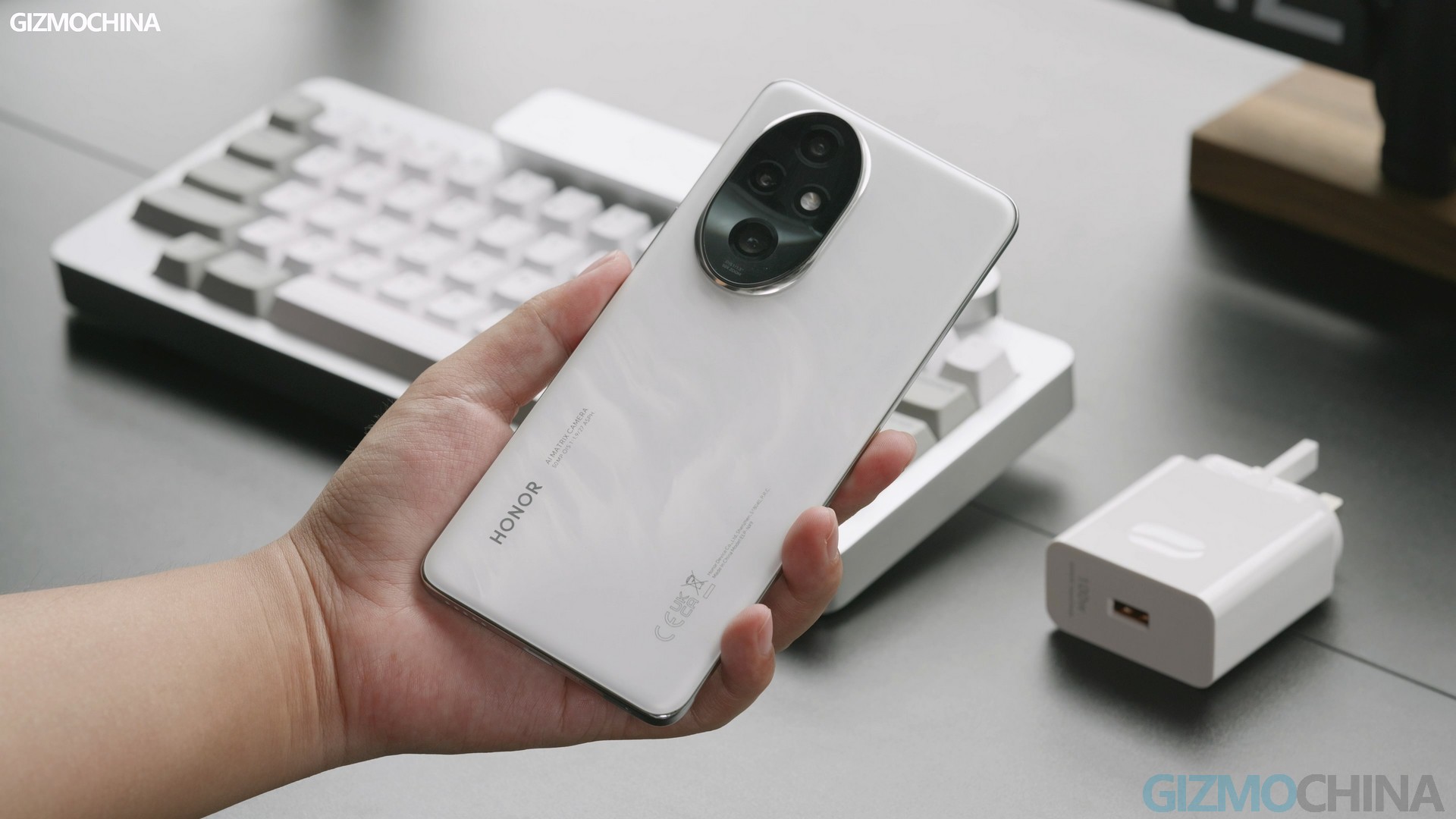
4. Honor 200 Series
The Honor 200 series will be made official in India On July 18 (Thursday). The lineup will include Honor 200 and Honor 200 Pro.
The duo is almost identical in terms of specs except for a few big differences. For instance, the vanilla variant is powered by a Snapdragon 7 Gen 3 SoC as compared to a more powerful Snapdragon 8s Gen 3 underneath the pro version.
Additionally, the pro model supports wireless charging and a secondary depth sensor on the front for face authentication system. Otherwise, they come with same design, a 6.7-inch 1.5K 120Hz OLED display, a 50MP (wide) + 50MP (2.5x telephoto) + 12MP (ultrawide) camera setup, a 5,200mAh battery, and 100W wired charging support.
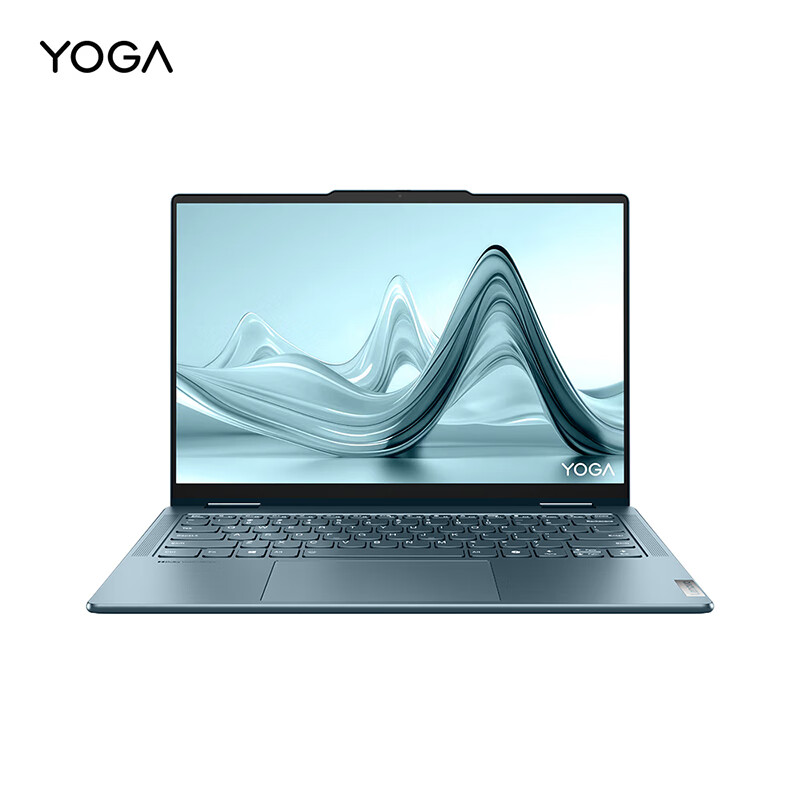
Last month, Lenovo unveiled its AI-powered flip notebook Yoga Air 14c in the Chinese market. The laptop is now up for sale in China on JD.com at a price of 8999 Yuan ($1241). It comes in Misty Blue color.
Lenovo Yoga Air 14c Specifications:
The Yoga Air 14c is powered by the latest Core i7 Ultra 7 155H processor, offering a 33% improvement in multi-core performance compared to the previous generation. This processor is paired with 32GB of LPDDR5x RAM and a 1TB PCIe 4.0 SSD.
The laptop comes with a 2.8K OLED touchscreen display with a 120Hz refresh rate. This display offers a vibrant viewing experience with 400 nits of brightness, 100% DCI-P3 color gamut, Dolby Vision, and VESA DisplayHDR True Black 500 certification. The touchscreen supports the Lenovo Yoga Inspiration Pen with 4096 pressure levels and allows for screen-off note-taking.
The Yoga Air 14c Flip boasts a sleek design with a 360-degree hinge, allowing seamless transition between laptop and tablet modes. The device weighs just 3.1 lbs (1.4kg) and is 0.59 inches (14.9mm) thin, making it highly portable. It features a comfortable 1.5mm key travel keyboard and a large 5.6-inch precision touchpad.
Lenovo integrates its Xiaotian AI assistant powered by the Tianxi large language model. Xiaotian interacts with users through natural language, summarizing documents, answering questions, and learning user habits to personalize the experience.
For connectivity, the Yoga Air 14c Flip offers two Thunderbolt 4 ports, an HDMI 2.1 port, a USB-A 3.2 Gen 1 port, a microSD card reader, and a 3.5mm headphone jack. The 75Wh battery promises up to 19.1 hours of local video playback and 8.1 hours of simulated workday usage. Additionally, the laptop supports fast charging with the included 65W Type-C adapter.
The Yoga Air 14c Flip comes pre-installed with Windows 11 Home. Lenovo offers a one-year accidental protection plan with a free spare machine and dedicated customer service for Yoga Black Gold members (additional cost applies).
Earlier today, Lenovo’s Yoga Air 14s, powered by the latest Snapdragon X Elite, also went on sale in China.
We use cookies on our website to give you the most relevant experience by remembering your preferences and repeat visits. By clicking “Accept”, you consent to the use of ALL the cookies.
This website uses cookies to improve your experience while you navigate through the website. Out of these, the cookies that are categorized as necessary are stored on your browser as they are essential for the working of basic functionalities of the website. We also use third-party cookies that help us analyze and understand how you use this website. These cookies will be stored in your browser only with your consent. You also have the option to opt-out of these cookies. But opting out of some of these cookies may affect your browsing experience.
Necessary cookies are absolutely essential for the website to function properly. This category only includes cookies that ensures basic functionalities and security features of the website. These cookies do not store any personal information.
Any cookies that may not be particularly necessary for the website to function and is used specifically to collect user personal data via analytics, ads, other embedded contents are termed as non-necessary cookies. It is mandatory to procure user consent prior to running these cookies on your website.