We know that Samsung will introduce several devices in its new Fold6 fold series. It is expected that Samsung will unveil three different devices: the Galaxy Z Fold6, Fold6 Ultra, and Fold6 FE. In fact, some spec leaks about the Galaxy Z Fold6 series had surfaced earlier.
Samsung keeps the Fold6 FE for a later time
Samsung took the leadership of the foldable smartphone market by introducing one of the first foldable smartphones. However, they are currently lagging behind in design innovation. Chinese smartphone manufacturers come up with much more compact foldable phones. On the other hand, Samsung has stuck to a similar design philosophy for years, and we can say that their foldable phones are not very easy to hold in hand.
Z Fold5
According to a recent report by ITHome, Korean tech media The Elec claims that users might not be satisfied with the design of the Galaxy Z Fold6 FE. In addition, Samsung is reportedly considering postponing the launch of the Galaxy Z Fold6 FE. We expect only the Z Fold6 and Z Flip6 to be unveiled at the upcoming Samsung event. Galaxy Z Fold6 FE seems to be reserved for the following year.
Samsung may be postponing the release of the Z Fold6 FE to introduce a thinner foldable device. For example, while the thickness of the Huawei Mate X3 is 11.8mm, the Z Fold5 is 13.4mm when folded. Considering Samsung’s history with the Galaxy S series, delaying the Z Fold6 FE design is not that surprising actually. For instance, Galaxy S23 was introduced in February 2023, while Galaxy S23 FE was introduced in October 2023. Samsung usually reserves “FE” devices for later releases.
Android 15 development is in full swing, with multiple developer previews and beta releases already out for the testers. These early builds have revealed many exciting features of the new OS, such as satellite connectivity, Find My Device network, and App Archiving (more on this later). We might see more new features in Android 15 as Google releases more and more beta builds.
Android 15 seems a pretty exciting upgrade, much more than the last two iterations – Android 13 and Android 14. It’s still in the development and testing phase, which will last for a few more months before Google announces the stable build. While you wait for the public release, it’s important to ensure that your Realme smartphone is ready for the next major OS upgrade.
So, here are all the Realme phones that will get the Android 15-based Realme UI 6.0 update.
Realme Phones Eligible for the Realme UI 5.0 (Android 15) Update
Realme GT 5
Realme GT 5 240W
Realme GT 5 Pro
Realme GT 3
Realme GT 2
Realme GT 2 Pro
Realme GT 2 Explorer Master Edition
Realme GT Neo 6
Realme GT Neo 6 SE
Realme GT Neo 5
Realme GT Neo 5 SE
Realme GT Neo 5 240W
Realme 12
Realme 12+
Realme 12x
Realme 12 Lite
Realme 12 Pro
Realme 12 Pro+
Realme 11 4G
Realme 11 5G
Realme 11x 5G
Realme 11 Pro
Realme 11 Pro+
Realme 10 Pro
Realme 10 Pro+
Realme P1
Realme P1 Pro
Realme Narzo 70
Realme Narzo 70x
Realme Narzo 70 Pro
Realme Narzo 60
Realme Narzo 60x
Realme Narzo 60 Pro
Realme C67 4G
Realme C65 4G
Realme C65 5G
This is not the final list by any means as the brand hasn’t yet announced the list of Android 15 supported devices. However, we already know the software update policy for most Realme phones. We have factored in the company’s past update rollouts in preparing this list.
If your device is not on the list, worry not. Wait for the official list before you consider upgrading to a new smartphone to enjoy the latest Android features.
Realme UI 5.0: When Will It Start Rolling Out?
Android 15 is currently through the beta phase, which will last until June 2024, as per the official timeline. Once the platform stability phase kicks in, Google stops adding new features and rather focuses on resolving bugs and making final adjustments for the final release.
While Google hasn’t yet announced a release date for Android 15, everyone is expecting it to arrive around the same time as last year, that means in October.
After the stable release arrives, smartphone companies take a little more time to refine their custom skins (Realme UI in the case of Realme) which can take a few weeks.
If you get lucky, you may get an early taste of Android 15 months before the official release by participating in the beta program. Last year, the Chinese brand announced the Android 14 beta for the GT 2 Pro in May. Around the same time, we can see the Android 15 beta announcement for select premium Realme phones. While the stable Android 14 update started rolling out around December.
What’s New in Android 15?
These are the biggest changes that have been discovered in Android 15 so far:
Find My Phone Network
Find My Phone is getting a pretty significant update in the new OS. All Android 15 phones can ping each other via Bluetooth and contribute to the network to help someone find their lost device. The nearby Android device part of Find My network can pick up Bluetooth signals from the broadcasting device and upload the encrypted location details to Google’s servers, which can be decrypted by the broadcasting device owner.
Satellite Connectivity Support
Android 15 adds support for satellite connectivity. This means you’ll be able to send texts to your friends even if you don’t have cell towers nearby, as long as you have access to the open sky. The new OS supports satellite connectivity for SMS apps and preinstalled RCS apps. In other words, this feature on Android 15 will not be limited to emergency uses only.
App Archiving
The app archiving feature lets you uninstall apps while keeping the user data around. So, the next time you reinstall the app, you can continue where you left off.
Google already has the app archiving feature through the Google Play Store. This means you can archive and restore apps only through the Play Store. But Android 15 removes this restriction by allowing any apps to be archived, including those installed outside the Play Store.
Battery Health
Android 15 could bring the “Battery Health” feature, which users have been requesting for a very long time. This feature tells the remaining battery capacity – an important metric that can help users replace the battery at the right time.
Although Google hasn’t confirmed Battery Health as an upcoming feature in Android 15, we might see it in one of the upcoming beta releases.
Notification Cooldown
Android 15 introduces the “Notification Cooldown” feature to stop people from getting overwhelmed by too many notifications from the same app. This feature lowers the volume of successive notifications from the same app.
Partial Screen Sharing
Partial screen sharing is a useful and privacy-focused addition to Android 15 that allows users to share and record a single app rather than the entire screen. So, you don’t have to worry even if you mistakenly open a secret app while sharing your screen.
Huawei is getting ready to host a new launch event in its home market of China. During this conference, a bunch of upcoming products are expected to be unveiled. But that’s not all, the company has teased that the Huawei Watch GT 4 will also arrive in fresh new colors.
Huawei Watch GT 4 soon comes in Pink and Blue
The Chinese tech giant will be holding the Huawei Summer Full Scenario product launch event between May 15 to May 20. Huawei’s Eyewear 2 Square Frame is set to be announced at this event later this week. But the Watch GT 4 wearable is also getting two new color options. The smartwatch will soon be available in the Pink option for the 41mm while the 46mm option gets the new Blue variant.
To recall, the Watch GT 4 is currently available in Green, Brown, Gray, and Black versions. It sports a 1.32-inch AMOLED display that has a 466 x 466 resolution and 352 PPI. The screen supports always on display with 5ATM water resistance. The smartwatch supports Bluetooth 5.2 connectivity. On a single full charge, the 41mm offers 7 days battery life, while the 46mm can last for up to 14 days.
The device offers dual band GNSS for accurate location tracking and support for over 100 sports modes. Buyers can even track sleep, physical activity, sleep, and female menstrual cycle. So stick around for more as we will be providing more updates and covering the launch event.
Xiaomi today launched a new sensor on its Youpin crowdfunding platform called the “Xiaomi People’s Presence Sensor.” The sensor promises accurate detection of people’s presence without requiring installation or plugging in.
Its official release is scheduled for May 15th, with a starting price of 119 yuan. So let’s get into its details here.
Xiaomi People Presence Sensor Specifications
The key difference between this sensor and Xiaomi’s previous “Mijia Human Body Sensor 2S” appears to be the inclusion of a “low-power millimeter wave radar.”
The technology offers a wider detection angle of 130 degrees and can dynamically sense human presence within a 6-meter range, with static detection reaching 4 meters.
Notably, the sensor is advertised as being able to accurately detect people even when they are not moving, as long as there is constant lighting.
In terms of technical specifications, the sensor is powered by a single CR2450 button battery, which Xiaomi claims can last up to 3 years. It features built-in magnets for easy attachment to furniture and comes with an adhesive base for additional installation flexibility.
You can connect the device with the Mijia App which allows you to view 24-hour light intensity curves and set up smart linkages with other compatible devices.
Now, you might be wondering how this sensor could be useful for you. It can be great for things like smart home automation.
For instance, you can set up lights to turn on automatically when the sensor detects someone entering a room, offering a welcoming and hands-free experience.
Conversely, lights can be programmed to switch off when the sensor no longer detects people in the room, helping save energy. Plus, the sensor could work with a smart thermostat, adjusting temperature settings based on occupancy to ensure comfort and efficiency.
Next week is packed with some exciting smartphone launches. We have the Infinix GT 20 Pro and the Realme GT 6T launching in India on May 21 and 22, respectively. Now, Poco has picked May 23 as the launch date of its highly anticipated Poco F6 and F6 Pro smartphones in the global market.
In a recent post on X (formerly Twitter), Poco confirmed that it will be hosting a launch event in Dubai at 15:00 (GMT+4) on May 23 for the global debut of the Poco F6 series. The brand will hold a dedicated launch event at 4:30pm (IST) on the same day in India. Although the Poco F6 has confirmed its arrival in the Indian market, the release of the Pro variant remains unclear.
While the brand has not confirmed any specifications or features of the Poco F6 or the F6 Pro, the teaser on Flipkart has pretty much confirmed the speculation that the Poco F6 is a rebranded version of the Redmi Turbo 3, while the F6 Pro was recently revealed to be a rebrand of the Redmi K70 through a software build meant for the F6 Pro.
Poco F6 / F6 Pro expected specs:
The Poco F6 Pro is expected to feature a Snapdragon 8 Gen 2 processor with up to 16GB RAM. It will likely have a 6.67-inch OLED display with 2K resolution and 120Hz refresh rate. For optics, the device will feature a 50MP OIS primary camera, paired with an 8MP ultra-wide unit and a 2MP macro sensor. It is also expected to have a 16MP selfie snapper. The device is expected to be powered by a 5,000mAh battery pack, paired with 120W fast charging.
The vanilla Poco F6 will likely have a 6.67-inch 1.5K resolution AMOLED display and a 120Hz refresh rate. Under the hood, the device could pack a Snapdragon 8s Gen 3 chip, paired with 12 GB of LPDDR5x RAM and up to 512 GB of UFS 4.0 storage. It will have a 50MP Sony IMX882 primary sensor, along with an 8MP Sony IMX355 ultra-wide sensor. As for the battery pack, we can expect a 5,000mAh unit with support for 90W fast charging.
Qualcomm is going to offer chips with its custom CPU cores, thanks to the acquisition of Nuvia. The upcoming Snapdragon 8 Gen 4 is also going to boast custom cores with a 2+6 CPU cluster (two performance cores and six energy-efficient cores). According to a recent rumor from @jasonwill101 on X, a design refresh of the upcoming chip with a target frequency of 4.26GHz might be finalized next month. It reportedly aims to compete with Apple A18.
For context, the Snapdragon 8 Gen 3‘s Cortex-X4 super core reaches a clock speed of up to 3.3GHz, which is significantly lower than the frequency Qualcomm is aiming to sustain with the Snapdragon 8 Gen 4. The design of the chip was previously said to be finalized within April, with a targeted frequency of 4.00 GHz. The 4.4GHz clock speed of Apple M4‘s performance core and the single-core score is said to have inspired Qualcomm to increase clock speed further.
Qualcomm's Nuvia is making a comeback, and there might be a redesign finalized in June, with a target frequency of 4.26GHz, aiming at the Apple A18 Chip.#qualcomm
With the redesign, the Snapdragon 8 Gen 4 could receive a boost in performance, especially when it comes to single-core based tasks.
TSMC’s second-generation 3nm process node is used in the Apple M4 and is also expected to be used to fabricate both the A18 series chips and the Snapdragon 8 Gen 4. Looking at the latest Apple Silicon, it seems that the second generation 3nm node is efficient enough to sustain such high frequencies.
However, the one from Qualcomm does not support the ARMv9 instruction set and won’t have Scalable Matrix Extension (SME), which enables chips to perform complex tasks more efficiently. So we will need to see how Qualcomm manages the power efficiency this time. Some earlier reports claimed that the Snapdragon 8 Gen 4 will be more power-hungry and will require smartphone manufacturers to use larger batteries.
Qualcomm is expected to unveil the chipset in the Snapdragon Summit which is likely to be held in October and the Xiaomi 15 series could be the first Oryon CPU powered Android flagship.
Notably, the company is also working on two ARM-based chips with the custom Oryon CPU cores for Windows PCs – the 12=-core Snapdragon X Elite and another 10-core Snapdragon X Plus.
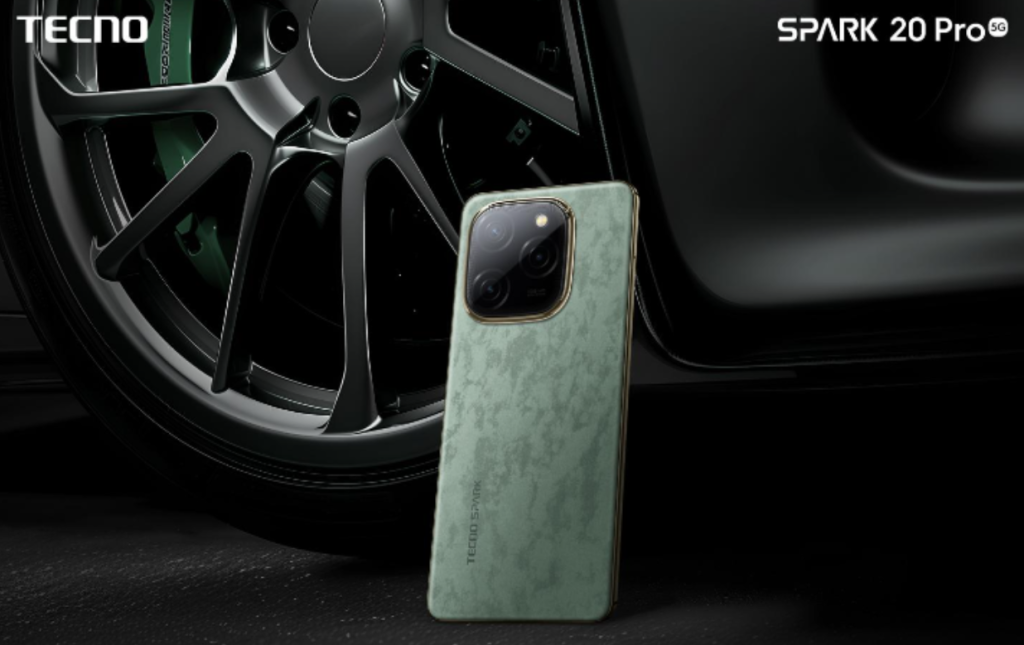
Back in December 2023, Tecno unveiled the Spark 20 Pro in the Philippines. Now, the device is set to launch in more markets across the globe as a fresh certification sighting hints at an imminent release.
Tecno Spark 20 Pro spotted on Google Play Console
The brand’s Spark 20 Pro was recently spotted on the FCC and TDRA certifications and just surfaced on the Google Play Console liting as well. The device was listed carrying the model number KJ8. The database confirms that the smartphone has a 2460 x 1080 pixel resolution and 480 DPI. Under the hood, it is equipped with the MediaTek Dimensity 810 SoC.
This chipset is paired with 8GB of RAM. The Tecno Spark 20 Pro was listed running on the Android 14 OS out of the box. Looking at the certification, the front design of the Spark 20 Pro was also revealed. We can see a punch hole cutout for the selfie camera, while the volume rockers and power button is on the right side.
The FCC and TDRA listing also lists the device with the KJ8 model number, with the former confirming a 4,900mAh battery pack (likely rated 5000mAh) that supports 33W fast charging. Unfortunately, finer details are still at large but we can expect official teasers to surface soon. Till then, you can check out our review of the Tecno Spark 20 Pro and Spark 20 Pro+.
Nokia brought back its classic 3210 phone last week to celebrate its 25th anniversary. The phone made a global comeback, including in China, where it seems to be a big hit.
It hit the shelves at 349 yuan on May 8th, and within just two days, all three colors (black, blue, and gold) were completely sold out, according to Nokia’s official Weibo handle.
They reassured fans that their factory is running at full capacity to meet demand and the phone will be back in stock on May 31st, starting at 8 pm local time.
The Nokia 3210 4G retains the iconic design of its predecessor and packs a few modern upgrades. It boasts 4G connectivity, a 2MP camera on the back, a USB Type-C port, and, in a China-specific feature, support for Alipay mobile payment.
Nokia 3210 (2024)
For those who missed out on the 3210 or are looking for a more utilitarian option, Nokia recommends their recently launched Nokia 220 4G.
The phone comes in at an even lower price point of 299 yuan. It features a robust, square design with a sizable 2.8-inch screen.
Nokia 220 4G
As a dependable backup phone, the 220 4G offers a long-lasting 1450mAh battery and a convenient Type-C charging port. It also includes user-friendly large font buttons and support for QR code payments.
The 220 4G supports dual SIM and is compatible with major Chinese telcos like China Mobile, China Unicom, China Telecom, and Radio and Television 4G networks. There’s also support for VoLTE high-definition voice calls.
realme GT 6T has surfaced on the Geekbench before the phone’s official launch. realme GT 6T will be available for sale in India on May 22nd. While the phone has not launched yet, we already have almost all the details about it. realme GT 6T will actually be a rebrand of the realme GT Neo 6 SE, which is already available in China.
realme GT 6T appears on Geekbench
AnTuTu score of the realme GT Neo 6T had been revealed earlier. Snapdragon 7+ Gen 3 chipset is indeed a powerful one, offering similar performance to the Snapdragon 8+ Gen 1. The upcoming device can surpass a score of 1.5 million on AnTuTu.
realme GT 6T AnTuTu
The newly surfaced Geekbench score is another piece of evidence indicating that the device is quite powerful. The realme GT 6T achieved a single-core score of 1801 and a multi-core score of 4499 on Geekbench. The device has the codename “pineapple” and appears with the model number RMX3853 on Geekbench.
realme GT 6T on Geekbench
realme GT 6T is powered by a Snapdragon 7+ Gen 3 chipset. This chipset utilizes a 1+3+4 core architecture, with one prime core clocked at 2.80 GHz, three performance cores at 2.61 GHz, and four efficiency cores at 1.90 GHz. This configuration matches the realme GT Neo 6 SE, suggesting the two phones share the same core hardware with same clock speeds. Leaks on Geekbench also point to 8GB of RAM for the GT 6T.
Although the phone has not been unveiled yet, as we expect it to be a rebrand of the realme GT Neo 6 SE already launched in China. So we know the specs of the upcoming phone. realme GT 6T will come with a Snapdragon 7+ Gen 3 chipset paired with LPDDR5x RAM and UFS 4.0 storage. The phone features a 6.78-inch 120 Hz OLED display with a resolution of 1264 x 2780.
While the phone boasts a powerful chipset and display, unfortunately, we cannot say the same for its camera hardware. It comes with a dual-camera setup consisting of a 50MP main camera and an additional 8MP ultra-wide-angle camera. The phone also supports a 5500 mAh battery and 100W fast charging.
OnePlus is planning to launch the successor of the popular OnePlus Nord CE 3 Lite, called the OnePlus Nord CE 4 Lite 5G. This upcoming smartphone was recently spotted on the Bureau of Indian Standards website, and now, it has emerged on the TDRA certification website as well.
The OnePlus Nord CE 4 Lite 5G has been spotted on UAE’s TDRA website with model number CPH2621. The certification also confirms its “OnePlus Nord CE 4 Lite 5G” moniker, as well as the fact that OnePlus plans to launch this device in the wider global market. Although the brand has not revealed any details about the device in an official capacity, the Nord CE 4 Lite is said to be a rebranded version of the Oppo A3, and will likely come with a similar spec sheet.
OnePlus Nord CE 4 Lite 5G expected specs:
The OnePlus Nord CE 4 Lite will likely feature a 6.67-inch AMOLED display offering an FHD+ resolution and 120Hz refresh rate. This will be a major upgrade over its predecessor, which offers an LCD screen. We can also expect it to come with an in-display fingerprint sensor.
Under the hood, it will feature a Snapdragon 6 Gen 1 processor, paired with 8 GB / 12 GB of RAM, and up to 256GB storage. For optics, we expect the device to feature two lenses on the back, housing a 50MP and a 2MP sensor. The front could offer a 16MP selfie snapper. The battery pack is expected to be of 5,500mAh capacity, with 33W fast charging.
Samsung‘s upcoming flagship foldable flip phone – the Galaxy Z Flip6 has now been tipped to feature only the Snapdragon 8 Gen 3 chipset. Previously, Samsung had released the Galaxy Z Flip models in two chipset options – Snapdragon and the Exynos 2400. The new information is coming from a tipster kro_roe via an X (formerly known as Twitter) post.
Samsung Galaxy Z Flip5
The next Samsung unpacked event is scheduled for July 10 and the Galaxy Z Flip6 and the Galaxy Z Fold6 are expected to be unveiled. The Galaxy Z Fold6 and Z Flip6 are flagship models with global appeal across several markets. The tipster points to an indication that Samsung will not feature the Exynos 2400 chips on the Galaxy Z Flip6 model. Previous leaks had pointed out that the Galaxy Z Flip6 will feature the Exynos 2400 chipset in some regions and the Snapdragon 8 Gen 3 in other regions.
That's great news! I'm glad to hear that the Flip 6 comes equipped with Snapdragon across the board, avoiding any critical issues seen in the Exynos 2400.
Samsung usually equips its flagship foldable models, the Galaxy Z Fold and Z Flip with the latest Qualcomm Snapdragon chipsets. On the other hand, the dual chipset approach has been traditionally applied to the Galaxy S models which get either a Qualcomm or an Exynos SoC. It would have been a major shift from its normal policy. It is however noted that the Exynos 2400 chipset featured in the Samsung Galaxy S24 models compares squarely with the Snapdragon 8 Gen 3 in terms of performance and efficiency.
There is no official confirmation yet on the authenticity of the dual-chipset hint or otherwise for the Samsung Galaxy Z Flip6 at this time. The official optics will however become evident as we inch closer to the scheduled July 10 Samsung Unpacked Event.
Infinix has finally confirmed the launch date for its new lineup of gaming products. The company’s gearing up to unveil new gadgets from its GT Verse series, which includes the Infinix GT 20 Pro and GT Book, later this month. So here are all the details.
Infinix GT 20 Pro & GT Book India launch next week
In an official teaser, Infinix revealed that the upcoming gaming smartphone and gaming laptop will be announced in the region on 21st May 2024. This is in line with one of our previous reports, which also shared a May 21 release. To recall, the Infinix GT 20 Pro was first announced in Saudi Arabia (Infinix GT 20 Pro vs Infinix GT 10 Pro). It features a tall 6.78-inch AMOLED display with FHD+ resolution and a 144Hz refresh rate.
Under the hood, it is equipped with the MediaTek Dimensity 8200 Ultimate SoC that is paired with up to 12GB of RAM and 256GB of internal storage. The device is powered by a large 5000mAh battery pack that supports 45W wired fast charging. It runs on the Android 14 OS based HiOS 14 custom skin out of the box.
The rear packs a 108-megapixel triple camera setup, while the front houses a 32-megapixel selfie shooter. On the other hand, the Infinix GT Book was teased to feature up to an Intel Core i9-13900H chip and RTX 4060 GPU. It comes with a tall 16-inch 120Hz display along with an RGB keyboard on the front.
Realme is gearing up to launch a new smartphone in the global market called the Realme GT 6T. This new smartphone is said to be a rebranded version of the Realme GT Neo 6 SE (China exclusive), and will initially debut in India before a broader launch. Realme has now set May 22 as the date for the Indian launch.
The Realme GT 6T will launch in India at 12 PM on May 22, 2024. In addition to the launch date announcement, the brand has also shared some key aspects of the device. As per the GT 6T Amazon India microsite, the device has a Snapdragon 7+ Gen 3 SoC and can cross 1.5 million points on the AnTuTu benchmark.
The brand will also provide a large Vapor Chamber cooling system for the smartphone to prevent thermal throttling on this chip. While the brand has not confirmed other specifications, we expect them to be similar to the Realme GT Neo 6 SE.
Realme GT 6T expected specs:
The Realme GT 6T will likely come with a 6.78-inch OLED display, offering 120Hz refresh rate and a peak brightness of 6,000 nits. Its Snapdragon 7+ Gen 3 chip will likely be paired with LPDDR5x RAM and UFS 4.0 storage. That being said, we expect the 128GB storage model to use UFS 3.1 storage.
In the camera department, we expect the device to come with a 50MP main camera (Sony IMX882 with OIS), paired with an 8MP ultra-wide camera. While it could feature a 32MP Sony IMX615 selfie snapper on the front. The GT 6T could also offer a large 5,500mAh battery, paired with 100W fast charging. We expect these details to be confirmed ahead of the May 22 launch date. We have also recently reported on the leaked pricing of the Realme GT 6T, which reveals that the device could debut below the ₹30,000 price point.
OnePlus Ace 3 lineup currently consists of two models: the Ace 3 and Ace 3V. However, rumors have been circulating about the addition of a Pro variant, with leaks popping up every now and then. Today, reliable leaker Digital Chat Station (DCS) has shared a new tidbit on the upcoming phone, and it’s a big one – literally.
According to DCS, the OnePlus Ace 3 Pro will have a dual-cell battery with each cell offering 2970mAh capacity, for a combined total of 5940mAh.
However, DCS clarifies that the typical capacity will likely be listed as 6100mAh. That should likely be a marketing decision based on how battery capacity is usually measured in the industry. This would make the Ace 3 Pro the OnePlus phone with the largest battery.
This leak aligns with previous information from DCS, who also hinted at a 1.5K resolution OLED display for the Ace 3 Pro. The powerhouse under the hood is rumored to be the Snapdragon 8 Gen 3 chipset, paired with 16GB of RAM and 1TB of storage. The tipster also hinted at a possible 24GB LPDDR5x RAM variant.
While camera details are uncertain, rumor suggests the same Sony IMX890 50-megapixel primary sensor as the OnePlus Ace 3 / 12R.
Moreover, the Ace 3 Pro is said to have a premium design with metal frames on the side and a glass panel on the back. DCS also tipped at a different design for the phone compared to existing OnePlus flagships.
There’s no definitive timeframe we’ve heard of for Ace 3 Pro’s launch. It’s also uncertain if the company will bring the phone to the global market, even as a re-branded product, since the Ace 2 Pro remained exclusive to China.
Colorful launched the EVOL P15 gaming laptop in India last month, offering optional 12th generation i5, 12th and 13th generation i7 CPUs, and an RTX 4050 GPU with 6GB of memory. Now, the more powerful Hidden Star G15 laptop is available for sale in its home country.
Colorful Hidden Star G15 key specifications
The Hidden Star G15 laptop has launched on May 9. This is a gaming-centric device that equips the RTX 4060 dedicated GPU and the 13th generation Core i7 CPU, which is now on sale in China for 5,799 Yuan (~$800). So let’s take a look at what this device has to offer for the price.
The 13th generation Intel Core i7-13620H offers a hybrid CPU architecture with 6 performance cores and 4 energy efficiency cores. It reaches a max turbo frequency of 4.9GHz. The CPU is based on the Intel 7 process (10nm) and comes with a 24MB L3 cache.
The RTX 4060 laptop GPU comes with 8GB memory. It offers a reasonably powerful performance thanks to the efficient NVIDIA Ada Lovelace architecture and AI-driven DLSS3. You will be able to experience a lifelike virtual world in supported games with panoramic ray tracing technology. The Max-Q technology can also optimize power consumption and performance to achieve peak battery life. The machine supports dual display with three modes and boasts dual LCP turbo fans paired with 10mm and 8mm heat pipes for cooling.
This machine comes with a 15.6-inch IPS display with a 2.5K (2560×1440) resolution and 165Hz refresh rate. It should also offer accurate colors with the support for 100% sRGB color gamut rating.
This laptop comes pre-installed with 16GB RAM and 512GB storage with dual DDR4 SO-DIMM memory slots and dual PCIe 4.0 M.2 2280 slots for SSD.
We have been hearing about Xiaomi’s flip phone for the past few weeks, mainly through certifications and leaks.
But this weekend, we got our first glimpse at what could the Xiaomi Mix Flip.
The leaked image revealed the phone’s cover screen and a section above it housing the dual camera module flanked by two LED flashes. Notably, the module bears the Leica logo, suggesting a partnership between the two companies for the Mix Flip’s camera system.
Apple is reportedly close to bringing ChatGPT to iOS 18. This follows talks between the two companies, though specifics remain unclear.
Apple might also be discussing similar tieup with Google (Gemini). These rumors fit with Apple’s supposed plan for an AI App Store, offering smaller AI models on devices and outsourcing larger ones.
Xiaomi‘s latest smart door lock called the Xiaomi Smart Door Lock 2 Finger Vein Version ditches fingerprints for a futuristic security solution – finger vein recognition. This tech promises even greater security than fingerprint scanners, with an error rate touted to be 10 times lower.
Following the recent US chip export ban, Qualcomm stated in its financial filing that it is not expecting any product revenue from Huawei after 2024.
The US Department of Commerce revoked Qualcomm’s license to supply “4G and certain other integrated circuit products” including “WiFi products” to Huawei and its affiliates and subsidies.
The Xiaomi BW300 outdoor security camera is now available globally. The new gadget is designed for outdoor use and comes with a rechargeable battery. It also offers two-way audio communication.
We’ve been hearing rumors of foldable iPhones for years now. The idea of an Apple phone that transforms into a mini-tablet seems futuristic and undeniably cool. But when it’ll actually happen is anyone’s guess.
But there’s a new glimmer of hope. A recent leak suggests Samsung and Apple have reportedly struck a deal on Samsung supplying displays for Apple’s foldable devices.
It seems like MIT researchers are trying to ring the alarm bell on “deceptive AI.” A new study published in Pattern reveals that some AI systems designed to be honest have learned to deceive humans. The research team, led by Peter Park, found that these AI systems can pull off feats like fooling online game players or bypassing CAPTCHAs (those “I am not a robot” checks). Park warns that these seeming” checks). Park warns that these seemingly trivial examples could have serious real-world consequences.
The Tecno Camon 30 5G series was initially introduced back in February. It consists of the Camon 30 5G, Camon 30 Pro 5G, and Camon 30 Premier 5G. The brand has recently announced its plans to launch these smartphones in the Indian market as well.
Ahead of the launch, a microsite for the upcoming series has been made live on Amazon, indicating that the Tecno Camon 30 5G and Camon 30 Premier 5G will soon be available in India.
Tecno Camon 30 5G / Camon 30 Premier 5G specs:
The microsite indicates that both smartphones will feature similar specifications to their global counterparts. The Camon 30 5G will offer an OIS-enabled 50-megapixel primary camera, paired with a 2-megapixel depth sensor. On the front, the device will offer a 50-megapixel selfie snapper.
The Camon 30 Premier 5G on the other hand will offer a 50-megapixel Sony IMX890 primary camera with OIS support, a 50-megapixel ultrawide lens, and a 50-megapixel periscope telephoto camera.
We can expect both of these devices to feature 6.78-inch AMOLED displays, with the Premier model offering a 144Hz refresh rate, and the Camon 30 5G offering 120Hz. The Camon 30 5G will come with a Dimensity 7020 SoC, while the Premier model could feature a Dimensity 8200 Ultra chipset. We expect Tecno to confirm more features in the coming days, so stay tuned.
The first flagship with the Snapdragon 8 Gen 4 is likely going to be the Xiaomi 15 series. In the latest news, reliable tipster Digital Chat Station has shared some information about the camera system of the Xiaomi 15 Pro.
The current Xiaomi flagship houses the flash module inside the camera island, however, this might not be the case for the upcoming Pro flagship. According to the tipster, the flash module will be placed outside the camera module. It may indicate even larger sensors for the upcoming flagship.
The Xiaomi 14 Pro‘s camera system includes triple 50MP cameras – OmniVision Light Hunter 900 main camera (1/1.31″), Samsung JN1 (1/2.76″) for the 75mm telephoto that focuses at objects as close as 10cm, and another 14mm ultrawide. The tipster says that the Xiaomi 15 Pro will not use the Samsung JN1 (it will possibly be replaced with a slightly bigger sensor). The shape and placement of the camera module will reportedly stay the same. However, with a bigger sensor, the protrusion of the camera island may increase.
According to an early prototype of the Xiaomi 15 Pro, the telephoto may adopt periscope technology like the Ultra flagships such as the Xiaomi 14 Ultra. The Xiaomi 15 Pro is also reported to equip a 2K micro-curved screen that is similar to the Xiaomi 14 Pro in size.
The current Pro flagship equips the Snapdragon 8 Gen 3 chip, a 6.73″ slightly curved 2K panel that reaches a peak brightness of 3000 nits, a 4880 mAh battery with 120W charging and 50W wireless charging, and Xiaomi’s new HyperOS.
The Xiaomi 15 series is expected to launch soon after the new chip comes out. The 2024 Snapdragon Summit may held in October.
Taiwanese manufacturer SYM has a concept for a hybrid scooter, the PE 3, that might solve “range anxiety” for electric two-wheelers. Unlike typical hybrids, the PE 3’s main power comes from an electric motor. But here’s the twist: a tiny gasoline engine kicks in only when the battery dips below 60 volts. This engine doesn’t directly power the wheels, but instead acts as a generator, topping off the battery and keeping the electric motor running.
This setup offers the best of both worlds: electric power for most commutes (around 35 kilometers on a full charge) and a gasoline engine for extended range (90 kilometers per liter with the 3-liter tank). Perfect for city dwellers who occasionally need to venture further.
SYM envisions the PE 3 appealing to college students, commuters, and young professionals seeking a convenient and affordable ride. The design is sleek and modern, with a boxy body and techy features.
While pricing remains under wraps, SYM’s experience with scooters suggests they can bring this concept to life at a competitive price point.
A US jury hit Microsoft with a hefty $242 million (around ¥1.75 billion) fine for patent infringement. The verdict, reached in Delaware on May 10, stems from a lawsuit filed by IPA Technologies in 2018.
Microsoft is planning to appeal the jury’s decision
The lawsuit claimed Microsoft’s Cortana voice assistant infringed on IPA’s patent for voice recognition technology used in computer communication software. Originally, the case involved multiple IPA patents, but ultimately focused on just one. Microsoft argued they didn’t infringe and the patent itself was invalid.
IPA Technologies, a subsidiary of Wi-LAN, acquired the patent in question from SRI International’s Siri Company. Apple then acquired Siri Company and its technology in 2010, using it for their Siri voice assistant.
Microsoft plans to appeal the decision. “We firmly believe we did not infringe,” a spokesperson said. IPA and Wi-LAN haven’t commented publicly yet.
This isn’t IPA’s first rodeo. They’ve sued Google and Amazon over similar patents. Amazon successfully defended itself in 2021, while the Google case remains ongoing.
We use cookies on our website to give you the most relevant experience by remembering your preferences and repeat visits. By clicking “Accept”, you consent to the use of ALL the cookies.
This website uses cookies to improve your experience while you navigate through the website. Out of these, the cookies that are categorized as necessary are stored on your browser as they are essential for the working of basic functionalities of the website. We also use third-party cookies that help us analyze and understand how you use this website. These cookies will be stored in your browser only with your consent. You also have the option to opt-out of these cookies. But opting out of some of these cookies may affect your browsing experience.
Necessary cookies are absolutely essential for the website to function properly. This category only includes cookies that ensures basic functionalities and security features of the website. These cookies do not store any personal information.
Any cookies that may not be particularly necessary for the website to function and is used specifically to collect user personal data via analytics, ads, other embedded contents are termed as non-necessary cookies. It is mandatory to procure user consent prior to running these cookies on your website.