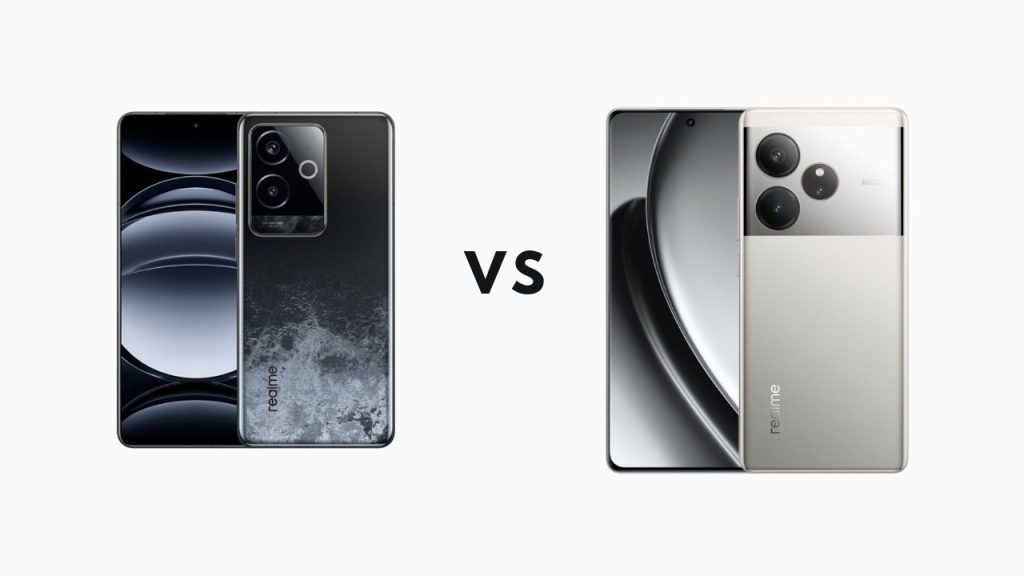
Just yesterday, Realme finally announced the Realme GT 6 in China after days of teasers. It arrived as the latest flagship smartphone model from the brand but carries the same moniker as another device from Realme that was released for the global market. So what’s the difference between the Chinese and Global variants? Is the Realme GT 6 (China) better than the Realme GT (Global)?
There are plenty of differences between the two versions of the Realme GT 6. One of the most notable ones is the chipset that powers the device. In the global market, the Realme GT 6 is equipped with the Qualcomm Snapdragon 8s Gen 3 SoC.
This processor is often seen in the affordable flagship or flagship killer category. On the other hand, the Realme GT 6 in China was launched with the Snapdragon 8 Gen 3, which is the most powerful chip from Qualcomm. Most ultra premium Android flagship phones feature this chip. The Chinese version has a larger 5,800mAh battery pack, and the global model gets a 5,500mAh cell. Both of these support 120W wired fast charging.
2. Same Name, Different Bodies
The Chinese brand released the Realme GT 6 in the global market with a sleek design that offers a mirror finish on the camera module. It packs a plastic frame and plastic rear panel. These materials were likely to cut costs and make it more affordable.
However, the Chinese model has an aerospace grade aluminum middle frame and glass back. The dual tone design returns but with a raised camera module. An IP65 rating is offered on both variants for water and dust resistance. You get a Corning Gorilla Glass Victus 2 in the GT 6 (Global) while the GT 6 (China) offers Crystal Armor glass.
The differences are obvious from the rear, although, the front are practically identical. Both versions sport a tall 6.78-inch LTPO AMOLED display with FHD+ resolution, a 120Hz refresh rate, HDR, 1 billion colors, and 6000 nits of peak brightness. It is worth mentioning that the Chinese GT 6 has a BOE S1+ AMOLED Pro XDR panel.
3. Camera
Looking at the duo, you can immediately tell that the Realme GT 6 in China only has two image sensors on the back, compared to the three on the global version. The Chinese variant features a 50MP Sony IMX890 sensor with OIS and an 8MP ultra wide angle lens on the back and the front houses a 16MP selfie shooter.
For the global markets, the Realme GT 6 has a 50MP Sony LYT-808 sensor with OIS, an 8MP IMX355 112° ultra-wide camera, and a 50MP Samsung JN5 telephoto camera. You also get a 32MP Sony IMX615 sensor for selfies and video calls. So while the Realme GT 6 in China packs higher end primary sensor, the global model is more versatile.
4. Pricing
Realme officially unveiled the GT 6 in the global market with a starting price tag of 600 Euros (roughly 650 US Dollars) in Europe and 40,999 INR in India (roughly 490 US Dollars). In China, you get the Realme GT 6 for a starting price of 2,799 Yuan (roughly 385 US Dollars). This makes it a great deal in the brand’s home market.
We use cookies on our website to give you the most relevant experience by remembering your preferences and repeat visits. By clicking “Accept”, you consent to the use of ALL the cookies.
This website uses cookies to improve your experience while you navigate through the website. Out of these, the cookies that are categorized as necessary are stored on your browser as they are essential for the working of basic functionalities of the website. We also use third-party cookies that help us analyze and understand how you use this website. These cookies will be stored in your browser only with your consent. You also have the option to opt-out of these cookies. But opting out of some of these cookies may affect your browsing experience.
Necessary cookies are absolutely essential for the website to function properly. This category only includes cookies that ensures basic functionalities and security features of the website. These cookies do not store any personal information.
Any cookies that may not be particularly necessary for the website to function and is used specifically to collect user personal data via analytics, ads, other embedded contents are termed as non-necessary cookies. It is mandatory to procure user consent prior to running these cookies on your website.