Add GIZMOCHINA as Preferred Source on Google
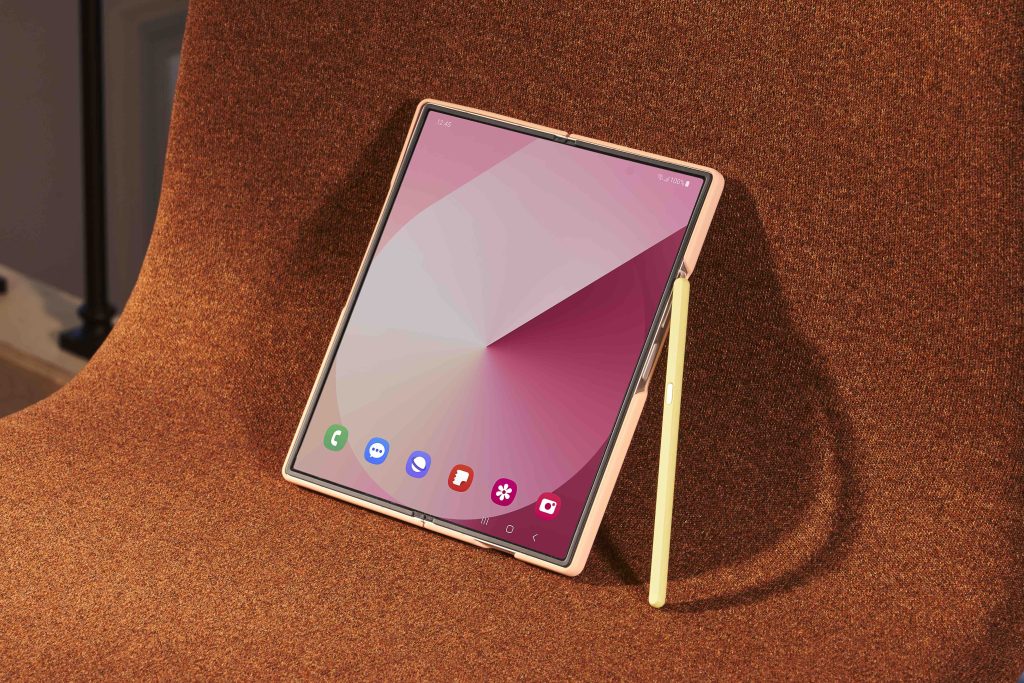
Samsung just unveiled the Galaxy Z Fold 6, the latest iteration of its flagship foldable phone. This new generation promises a series of refinements over its predecessors, the Z Fold 5, Z Fold 4, and Z Fold 3, making it a more compelling option for users seeking a powerful and versatile foldable device. Let’s delve into the key upgrades that the Z Fold 6 brings to the table.
1. Display
All the Fold phones boast large foldable main displays and secondary cover displays. The Z Fold 6 maintains the 7.6-inch size of its predecessors but boasts the highest resolution (2160 x 1856 pixels) and a wider 20.9:18 aspect ratio. This translates to a potentially more immersive viewing experience for content consumption or multitasking.
Brightness is a significant improvement on the Fold 6, reaching a staggering 2600 nits compared to the Fold 5’s 1750 nits and Fold 4’s even lower 1250 nits. Both the Fold 5 and Fold 6 utilize the latest Dynamic AMOLED 2X technology with 120Hz adaptive refresh rates, ensuring smooth visuals and responsiveness.
The cover displays have seen a minor size increase across generations. The Fold 3 and Fold 4 have a 6.2-inch HD+ display, while the Fold 5 and Fold 6 bump it up to a 6.3-inch HD+ display. All the cover displays offer 120Hz refresh rates, making for a seamless transition between the unfolded and folded states. The Fold 6 boasts the brightest cover display at 2600 nits, matching the main screen’s peak brightness.
2. Performance and Software
The Galaxy Z Fold series has always packed the latest and greatest processors. The Fold 3 uses the Snapdragon 888, while the Fold 4 upgrades to the Snapdragon 8+ Gen 1. The Fold 5 and Fold 6 take it a step further with the Snapdragon 8 Gen 3 for Galaxy, potentially offering even better performance and efficiency. All phones come with 12GB of RAM (Fold 6 comes with LPDDR5X), ensuring smooth multitasking capabilities.
On the software front, the Fold 3 launched with Android 11 and One UI 3.1, while the Fold 4 comes with Android 12L and One UI 4.1.1. The Fold 5 upgrades to Android 13 with One UI 5.1.1, and the Fold 6 continues the trend with the latest Android 14 and One UI 6.1.1.
With each generation, Samsung promises extended software support, with the Fold 6 offering the most up-to-date software and the longest update commitment (seven generations of OS upgrades and seven years of security updates).
Samsung has also placed a strong emphasis on AI features with the Z Fold6. The phone integrates Galaxy AI with functionalities like Note Assist, PDF overlay translation in Notes, Circle to Search, Interpreter, Live Translate, AI-powered Pro Visual Engine, Photo Assist, and Portrait Studio. These features aim to enhance productivity, communication, and content creation, making the Z Fold 6 a more versatile tool.
3. Design and Durability
All the Z Fold phones share a similar foldable design with a hinge mechanism that allows the main display to fold inwards. Samsung has continuously refined the hinge across generations, with the Fold 6 boasting a dual-rail hinge structure for improved durability and a reduced crease on the main display. The Fold 6 is also the thinnest and lightest of the bunch at 12.1mm unfolded and 239 grams, making it slightly more comfortable to carry and use when folded.
Material choices have also seen improvements. The Fold 3 and Fold 4 use Armor Aluminum frames and Corning Gorilla Glass Victus+ protection. The Fold 5 introduces a wider variety of recycled materials, and the Fold 6 continues this trend while adopting the even more durable Corning Gorilla Glass Victus 2 for both the cover display and rear glass.
Both the Fold 5 and Fold 6 boast an IP48 water resistance rating, a slight improvement over the IPX8 rating of the Fold 3 and Fold 4. While water resistance is a plus, it’s important to remember that these phones are not completely waterproof.
4. Cameras
Unlike the significant display and performance upgrades, the camera system in the Z Fold 6 remains largely unchanged from the Z Fold5. It features a 50MP primary sensor, a 12MP ultra-wide sensor, and a 10MP telephoto sensor with 3x optical zoom and 30x space zoom.
This setup is still capable of capturing high-quality photos and videos, but it might not be as exciting for users who were hoping for a camera upgrade. All phones boast a 10MP front-facing camera and a hidden 4MP under-display camera on the main screen for video calls while unfolded.
5. Battery Life
The Z Fold 6 retains the 4400mAh battery of its predecessors. While not necessarily a bad thing, some users might have hoped for a larger capacity to accommodate the power-hungry processor and large displays. The phone supports 25W wired charging, 15W wireless charging, and 4.5W reverse wireless charging, offering users convenient charging options.
6. Pricing
The Galaxy Z Fold series has consistently commanded a premium price tag. The Fold 3 started at $1799.99, followed by the Fold 4 and Fold 5 at the same price point. The Fold 6 follows a similar pricing structure, starting at $1899.99 for the base 256GB model.
7. Conclusion
The Galaxy Z Fold 6 represents the latest iteration in Samsung’s foldable phone technology. It boasts improvements across the board, including a brighter and potentially more immersive display, a more powerful processor, the latest software, and a slightly more durable and comfortable design. While the camera system remains largely unchanged, the Fold 6 offers a more refined user experience thanks to the improved hinge design and a potentially better under-display camera.
Choosing the right Fold phone depends on your needs and budget. If you prioritize the absolute latest technology and the most durable design, then the Fold 6 is the clear choice. However, if you’re on a tighter budget and the improvements on the Fold 6 don’t seem significant enough, the Fold 5 might be a more practical option. The Fold 4 and Fold 3 offer even more attractive price points for those who are willing to sacrifice some of the latest features.