
Add GIZMOCHINA on Google:
Soon after the official announcement of the Redmi K70 Ultra, Wang Teng, Xiaomi China’s Vice President of Marketing and General Manager of the Redmi brand, started sharing more information about the device.
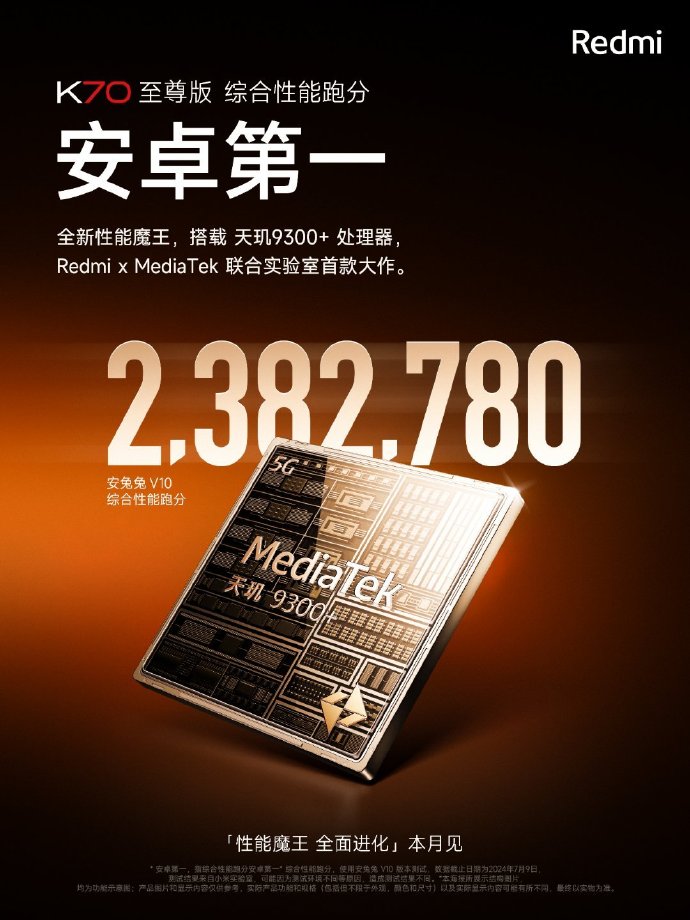
The official claimed that the K70 Ultra ranks first in Android in comprehensive performance. According to the official poster, the phones achieves an AnTuTu score of 2,382,780 points. In addition to that, he also claimed that the actual gaming performance of the phone is “far better than expected”.
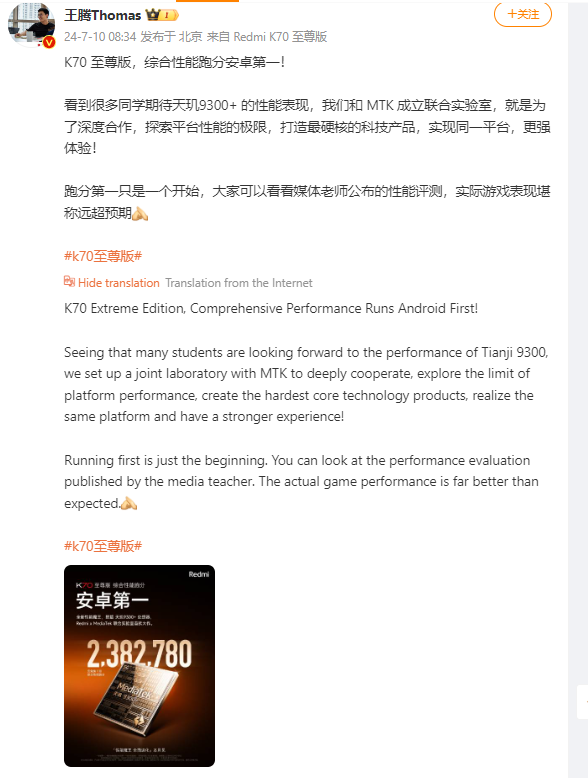
Redmi has reportedly cooperated with MediaTek to make the most of the chipset with their new phone. It is said to be the “deepest” cooperation in the industry, which will create a “stronger” Dimensity 9300+. However, we will need to test the device ourselves before making any conclusions about its performance.
The phone also boasts an improved cooling system
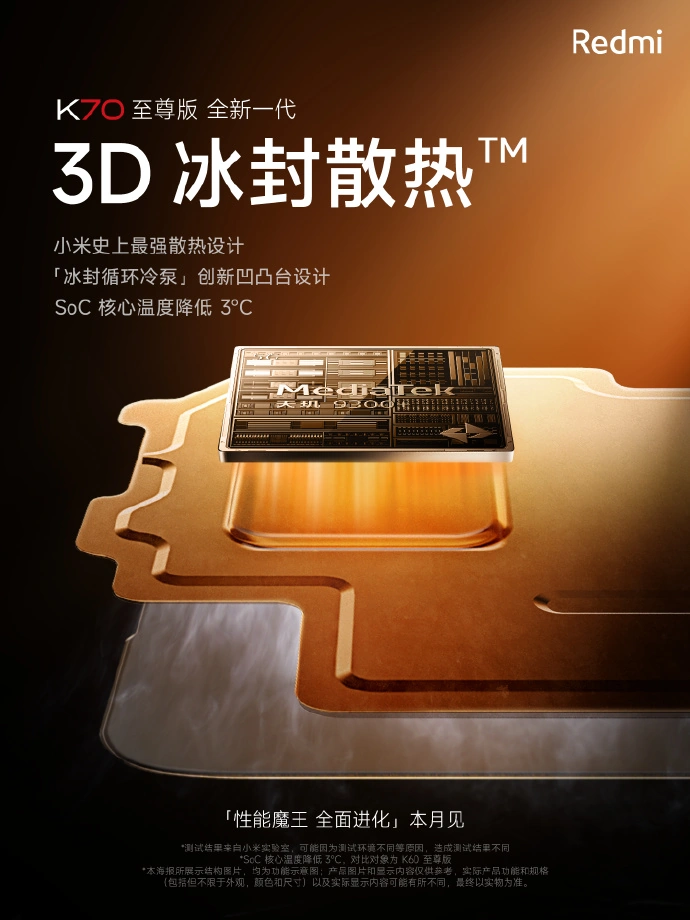
Wang Teng also revealed that the K70 Ultra will be equipped with a new generation of 3D ice cooling technology, that uses an innovative concave-convex platform design. The convex surface is closer to the processor, which reduces the SoC core temperature by up to 3°C compared to the Redmi K60 Ultra. You may have noticed that the screen also gets warmer when the phone deals with heavy workloads. The upcoming device has a solution for this too. The concave surface of the heatsink is far away from the screen, which reportedly results in a lower screen temperature.
With the Dimensity 9300+ chipset paired with the new cooling system, the phone reportedly has 120fps gameplay of Genshin Impact and is able to handle two games at the same time. With all of these, the phone is claimed to have the strongest gaming performance in its competition.
Referring to previously revealed information, the phone also packs a D1 independent graphics chip for better performance and optimal use of resources. It packs a 1.5K display with a 144Hz refresh rate and a 5,500mAh battery that supports 120W fast charging. On the outside, the phone packs a metal middle frame and glass back cover. The camera module comes with a slightly different design, which you can check out from here.



Comments