
Add GIZMOCHINA as Preferred Source on Google
OBE, a Chinese projector company, has launched its latest model, the X30 Ultra in the Chinese market. The projector is currently available for pre-sale at 6,599 Yuan ($926), with an introductory offer of 5,999 Yuan ($842), including a discount for early buyers. It comes equipped with several advanced features. Let’s delve into its key specs.
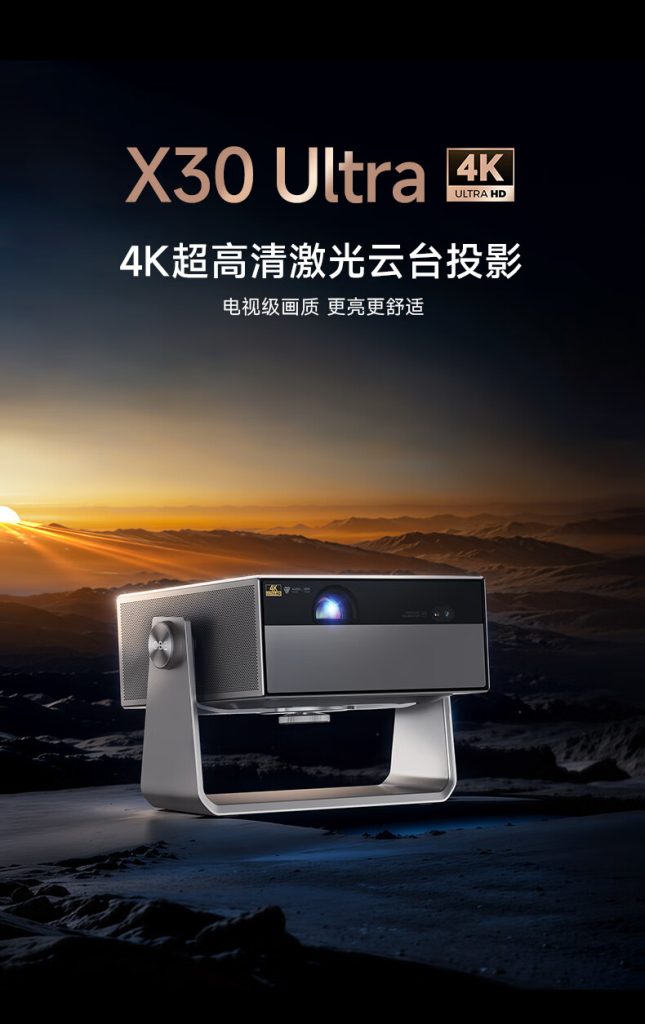
OBE X30 Ultra Specifications:
The X30 Ultra 4K projector features a self-developed Apollo-V Optical Engine and comes with a patented Light Ultra Super Laser that boosts light efficiency by 21%, enhancing image quality while reducing power consumption.
It features a dual-layer, four-stage multi-lens system for sharp, clear 200-inch screen projection, combined with 4K Ultra HD resolution and 2800 CVIA/lm brightness for vivid visuals, suitable for all-day viewing without curtains or dimmed lights.
The projector includes the self-developed O-ColorLM color model for TV-grade colors and features AI Image Quality Enhancement and XSUPER Resolution, allowing it to upgrade old movies to near-4K quality with vivid colors, making it versatile for both modern and classic media.
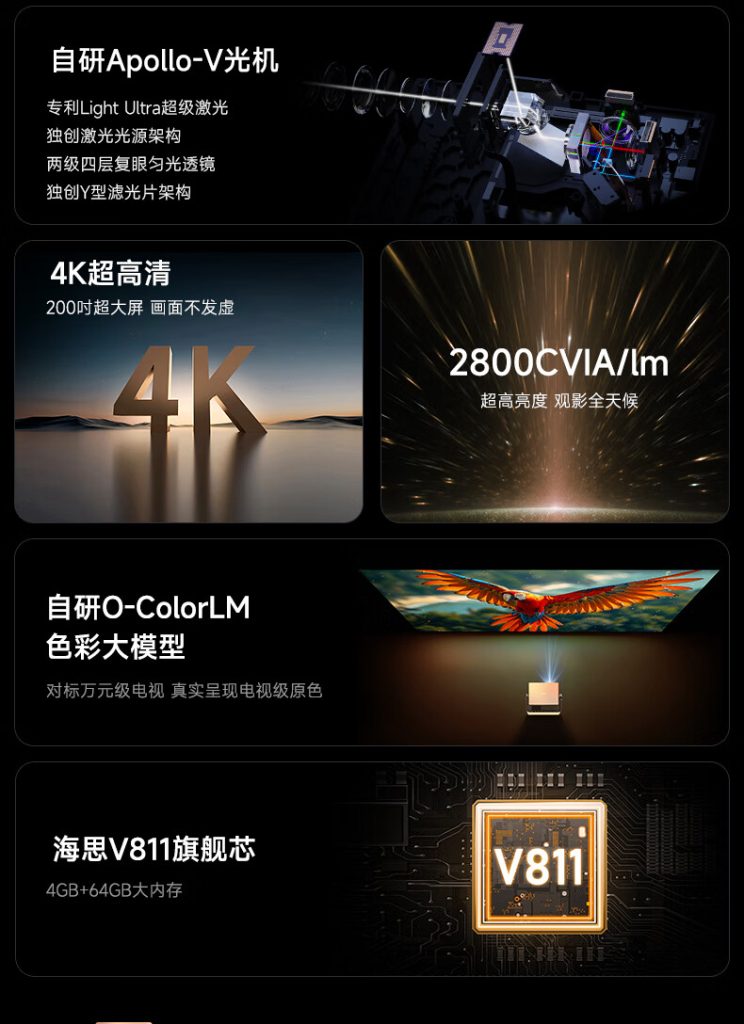
Performance-wise, the X30 Ultra 4K is powered by the HiSilicon V811 flagship chip, similar to those found in high-end smart TVs, offering 8K video decoding, 4GB RAM, and 64GB of storage.
It also supports HDMI 2.1 and a 120Hz refresh rate, ensuring smooth playback and superior image quality. The projector’s audio capabilities are equally impressive, featuring WANOS China Panoramic Sound, dual 10W speakers, and a 600CC sound cavity, delivering an immersive, cinema-grade audio experience.
The design of the X30 Ultra 4K is both functional and aesthetically pleasing. It features a slim, full-metal body with a 360° dynamic gimbal, allowing for flexible projection angles. Additionally, the projector offers advanced features like a “Magic Wall” function, allowing for screen saver customization, and a projection assistant that enables smartphone remote control.
It also features a full-metal floor stand and intelligent features like automatic keystone correction, screen alignment, and obstacle avoidance to enhance usability.



Comments