
Add GIZMOCHINA as Preferred Source on Google
Richard Yu, Huawei‘s chairman of the Board of Directors of the Consumer BG, has already announced that the public beta version of the company’s HarmonyOS NEXT operating system will start rolling out on October 8. Now the supply chain hints that the company may launch the Huawei Mate 70 series in November this year. However, a specific launch date is yet to be revealed.
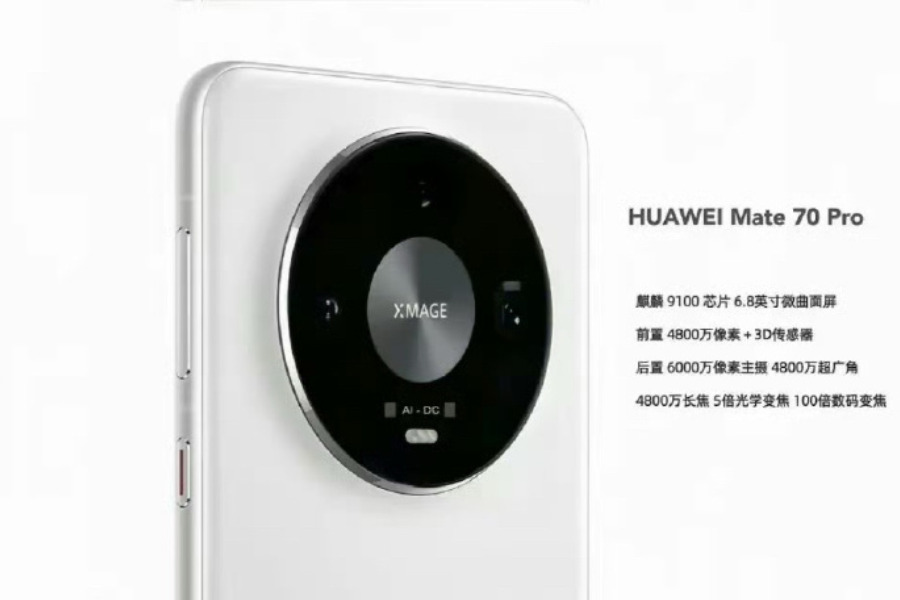
The news comes from a report from Yicai Global that claims that many of the components of the Mate 70 series have already been supplied to Huawei. It suggests the phone is nearing mass production, if it hasn’t already begun. The report further notes that the mass production is expected to start before the Mid-Autumn Festival in China, which typically corresponds to mid-September to early October. According to industry sources, the Mate 70 series will likely launch in November this year.
For context, the Huawei Mate 60 series was launched towards the end of August and was released in early September of last year. It was previously speculated that the delayed launch of this year’s flagship is related to the development of the HarmonyOS NEXT operating system.
To recap, the Huawei Mate 60 and Mate 60 Pro were the first devices to make headlines for featuring the company’s self-developed 7nm chipset. Since then, Huawei has launched several devices with enhanced versions of the chipset. It is rumored that the Mate 70 series will be powered by a Kirin 9100 chipset, which is expected to offer an upgraded performance as compared to its predecessor. It will be interesting to see what the Mate 70 series can achieve when paired with the new operating system. The company’s President of Mobile Cloud, Zhu Yonggang, claims that HarmonyOS NEXT has accomplished in a year what took Android and iOS “17 years.”
According to a recent leak from tipster DCS, a prototype of the Huawei Mate 70 features a centered 3D facial recognition system on a quad-curved screen. While previous leaks hint at an ultrasonic fingerprint scanner, DCS claims that the series integrates the fingerprint sensor into the power button and shifts to a flat design for the metal middle frame. As this design information contradicts earlier rumors, it’s best to take it with a grain of salt.
(Via)




Comments