Add GIZMOCHINA on Google:
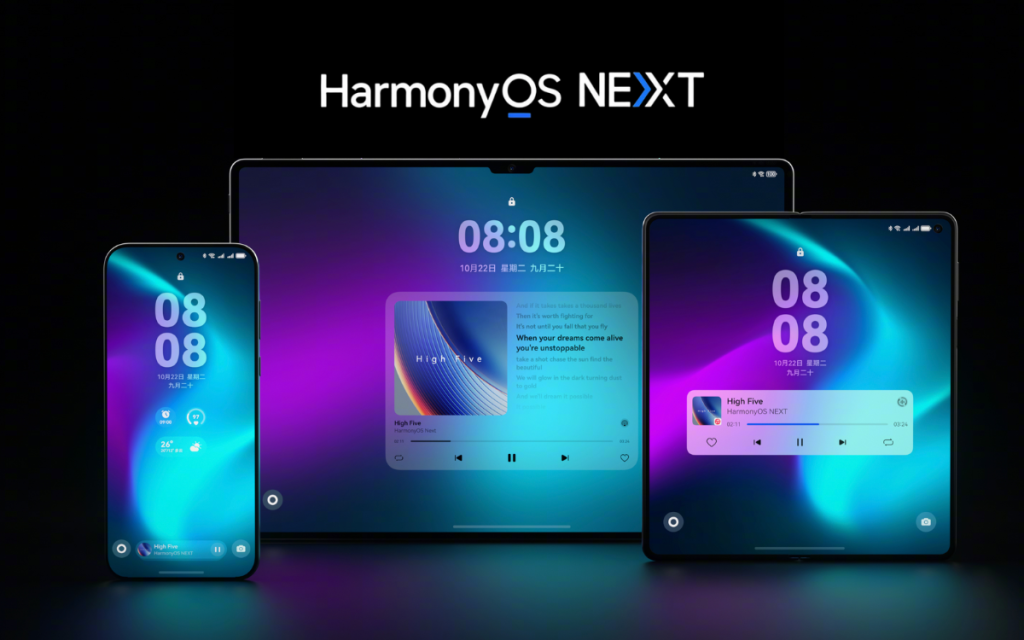
The competition in the mobile operating system market has intensified with Huawei’s introduction of HarmonyOS Next. Unlike previous versions of HarmonyOS, which relied heavily on Android’s core code, HarmonyOS Next is built on an independent microkernel architecture.
With this new OS, Huawei aims to establish a distinct ecosystem that can compete directly with Android and iOS. Below, we explore the key differences between HarmonyOS Next and Android, focusing on system architecture, application ecosystem, openness, performance, and future potential.
1. System Architecture
The system architecture forms the backbone of an operating system, affecting its performance, stability, and scalability.
Android is built on the Linux kernel and uses a monolithic architecture, meaning that essential modules like memory management, device drivers, and network support are embedded within the kernel. This structure makes Android powerful and versatile, but it also makes it prone to system failures. If one module fails, it can impact the stability of the entire system.
Additionally, its reliance on Linux and the Android Open Source Project (AOSP) allows developers to create custom ROMs, making the system flexible but resource-intensive.
HarmonyOS Next, on the other hand, introduces a self-developed microkernel architecture, eliminating any dependence on Linux or AOSP. Unlike Android’s monolithic structure, the microkernel of HarmonyOS Next is lightweight, containing only essential functions like task management and memory allocation.
This design improves efficiency and security, as issues in non-core modules do not affect the entire system. The microkernel architecture also enhances cross-device collaboration and seamless integration across smartphones, tablets, wearables, and smart home appliances.
2. Application Ecosystem
Android has the world’s largest app ecosystem, with over 3 million apps available through the Google Play Store. Supported by an extensive developer community, it offers broad app compatibility and numerous options for users. Android’s ecosystem extends to various devices, including smartphones, tablets, TVs, and wearables, making it widely accessible to developers.
In contrast, HarmonyOS Next focuses on building a fully native app ecosystem, moving away from Android compatibility. Unlike earlier versions of HarmonyOS, HarmonyOS Next no longer supports Android apps, pushing developers to create native applications using the RTS programming language.
While it currently has fewer apps compared to Android, HarmonyOS Next boasts 15,000 native apps covering diverse services. To attract more developers, Huawei offers tools like the Ark Compiler, enabling efficient app creation.
3. Openness vs. Closed Nature
Android is known for its open-source nature, allowing developers to modify the OS freely. This openness has contributed to a vast library of applications, extensive device compatibility, and broad personalization options for users. However, it can also result in security vulnerabilities and fragmented user experiences, as manufacturers customize the system differently.
HarmonyOS Next adopts a more closed approach, with Huawei retaining significant control over the OS. This ensures better system stability, tighter security, and faster updates, though it may result in a smaller app ecosystem compared to Android. The closed nature of HarmonyOS Next limits the level of user customization and developer freedom found in Android, but it offers a more secure and cohesive user experience.
4. Performance and Efficiency
Android is optimized for a wide range of devices, from low-end to high-end models. However, lagging and performance bottlenecks can be common, especially on lower-end devices. It relies on extensive hardware support and runs many background processes, which can affect battery life and overall speed.
Huawei has optimized HarmonyOS Next for better performance and power efficiency. The OS uses intelligent resource management, distributing resources based on device capability. Technologies like the Ark Engine and Distributed Soft Bus allow HarmonyOS Next to deliver up to 30% smoother performance, 20% less power consumption, and 56 minutes of extended battery life compared to earlier HarmonyOS versions.
5. Future Development and Ecosystem Expansion
Both operating systems aim to create a seamless ecosystem that extends beyond mobile devices, but their strategies differ.
Android continues to dominate the mobile device market and is expanding into areas like IoT, automobiles, and wearables. Google is also investing heavily in AI to enhance the capabilities of its OS, making it versatile and adaptable to different use cases.
HarmonyOS Next has an ambitious vision of being a cross-device OS, providing a unified experience across sectors like consumer electronics, industrial automation, transportation, and smart energy management. Huawei’s ecosystem strategy involves deep AI integration through the Xiaoyi Assistant, extensive cross-device collaboration, and a focus on building a complete all-scenario intelligent living solution. This cross-device focus aims to establish HarmonyOS Next as a major player in the IoT era.
6. Conclusion
HarmonyOS Next and Android offer distinctive benefits, each following unique development paths. Android remains a versatile, open-source OS with the largest app ecosystem, making it suitable for a wide range of devices and users. In contrast, HarmonyOS Next emphasizes independence, security, and seamless cross-device interaction. It represents a bold move toward a more controlled and integrated ecosystem, positioning itself as a strong alternative to Android and iOS, particularly within China.
As Huawei continues to develop HarmonyOS Next, its long-term success will depend on app ecosystem growth, developer adoption, and international expansion despite global challenges.