
Add GIZMOCHINA as Preferred Source on Google
As per the latest IDC report, the Indian wearable device market faced another tough quarter, with shipments dropping by 20.7% year-over-year (YoY) to 38 million units in 3Q24. This marks the second consecutive quarter of decline, as brands struggle with shifting consumer preferences, cautious inventory strategies, and fewer product launches.
Smartwatches: A Category in Flux
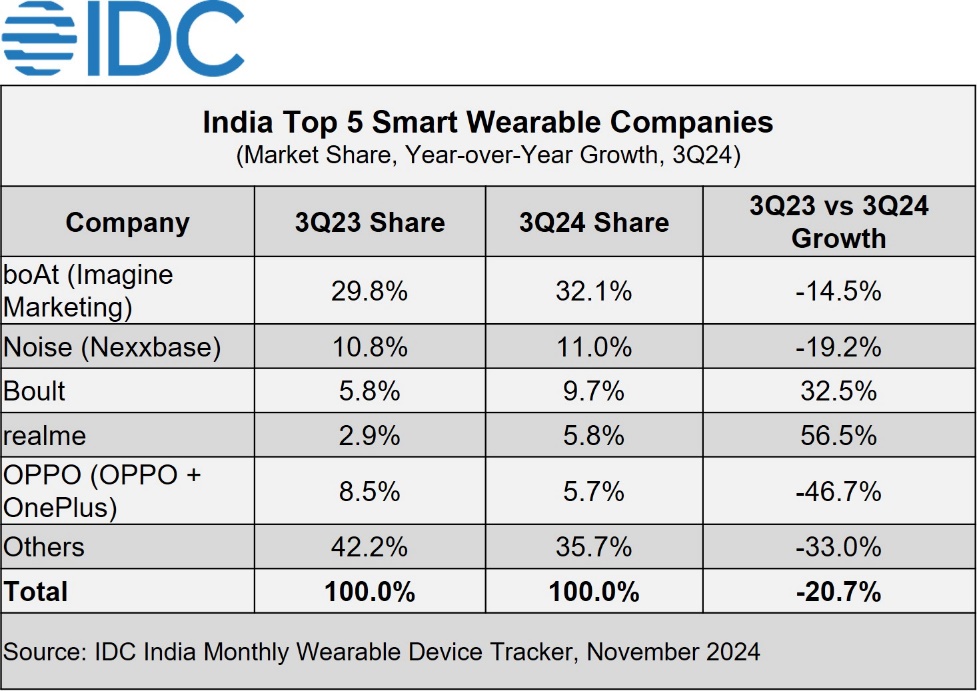
Smartwatch sales saw a significant 44.8% YoY decline, with shipments falling to 9.3 million units. Despite the festive season, brands primarily focused on clearing older inventory by offering discounts, especially on e-commerce platforms. Interestingly, the average selling price (ASP) for smartwatches rose slightly by 1.4% to $26.2, reflecting a gradual shift toward higher-priced advanced models.
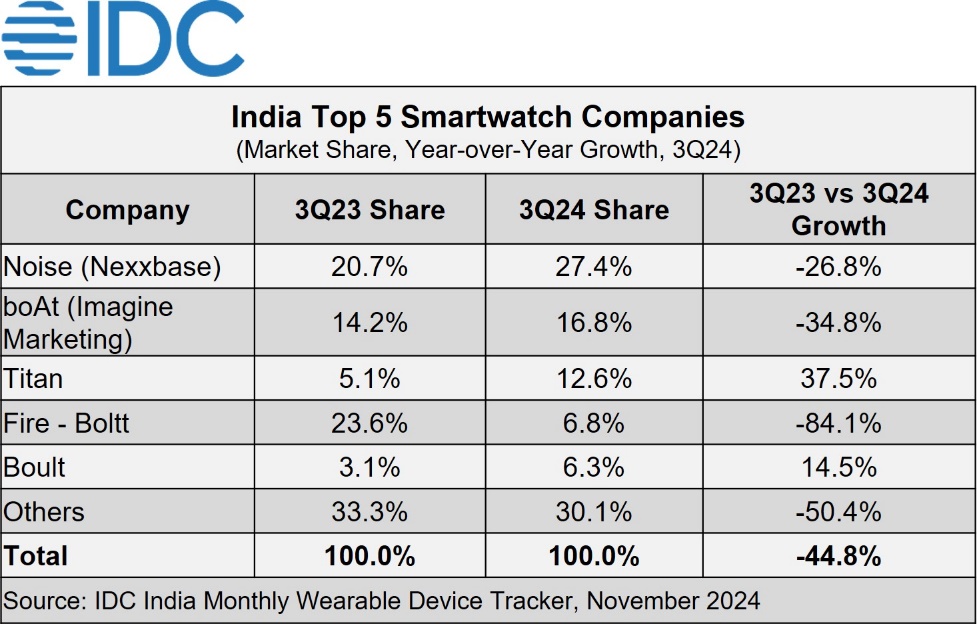
Noise maintained its leadership in the smartwatch category, securing a 27.4% market share, followed by boAt with 16.8%. Titan, however, stood out with a 37.5% growth in market share, driven by its premium positioning. On the other hand, Fire-Boltt faced a staggering 84.1% decline in growth, signaling a shift in consumer loyalty within the competitive segment.
Earwear Sees Slower Decline, TWS Gains Momentum
The earwear category, while also declining, fared better than smartwatches with a 7.5% YoY drop to 28.5 million units. Within this segment, Truly Wireless Stereo (TWS) devices hit a record 73.2% share, highlighting their growing popularity among Indian consumers.
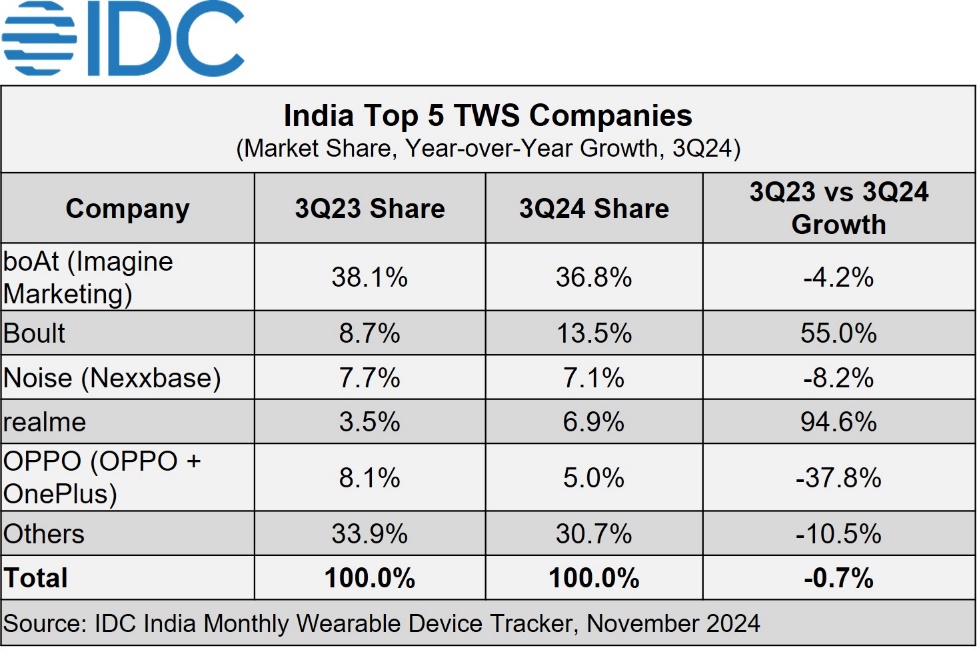
Boult and realme were the standout performers in this category, with impressive growth rates of 55% and 94.6%, respectively. The rise of offline sales also played a crucial role, with earwear shipments to brick-and-mortar stores growing by 9.4%, counterbalancing the 14.4% decline in online sales.
A Shift in Market Dynamics
One of the most striking trends in 3Q24 was the decline in shipments from smaller, long-tail smartwatch brands, including white-label products. After enjoying a massive 328.8% growth in 3Q23, these brands saw a steep 59.1% drop in 3Q24. Analysts attribute this shift to the market’s maturing consumer base, which is increasingly opting for reliable, established brands.
“The smartwatch category is under stress due to a lack of differentiation and a limited number of brands dominating the market. However, we’re observing early signs of consumers leaning toward advanced smartwatches for better health tracking and functionality,” noted Vikas Sharma, senior market analyst at IDC India.
Emerging Categories Like Smart Rings Show Promise
While traditional wearable categories struggled, smart rings emerged as a promising segment, with 92,000 units shipped in 3Q24. Ultrahuman led the segment with a 36.8% market share, followed by boAt at 20.5%. The category’s ASP fell by 16.2% to $162.1, signaling potential for mass adoption as prices drop and new models enter the market.
(Source)


Comments