
Add GIZMOCHINA as Preferred Source on Google
OPPO Indonesia
Last week, Gizmochina got an opportunity to visit OPPO’s Indonesian operations, showcasing the company’s successful “glocalization” strategy—a blend of global reach with local implementation. The term Glocalize is derived from the words Global and Location where brands are focusing on customizing their global offerings for the local markets.
The visit highlighted their smart manufacturing facility in Jakarta, nationwide retail system, and the global Find X8 series launch in Bali.
OPPO Manufacturing Indonesia
OPPO’s Indonesian factory is one of eight global manufacturing centers, alongside facilities in China, India, Brazil, Egypt, Turkey, Pakistan, and Bangladesh. The company leads Indonesia’s smartphone market ahead of Samsung, with 5.1 million units shipped and 21% market share in Southeast Asia as of Q3 2024.
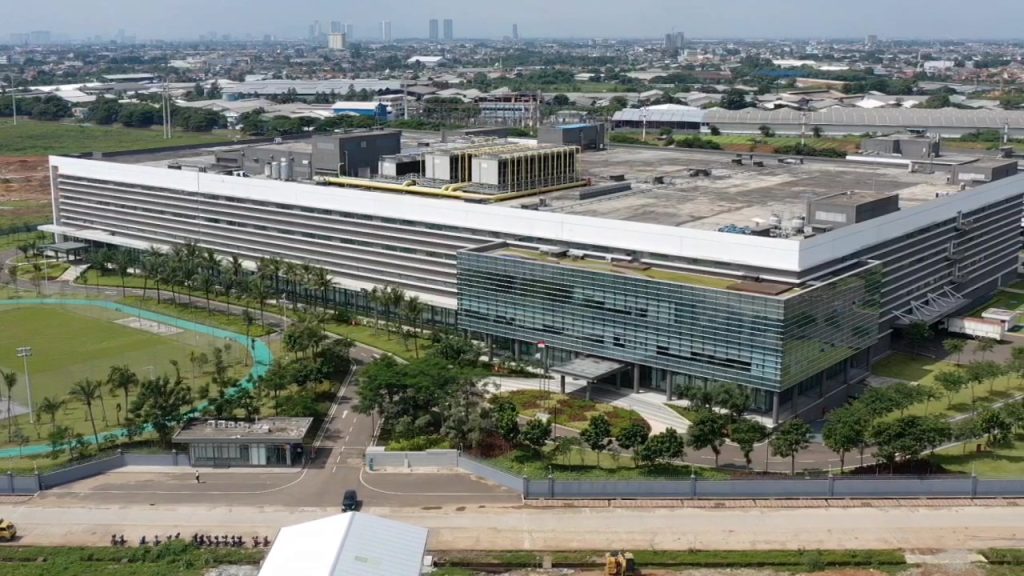
Responding to growing demand, OPPO has expanded its Tangerang factory near Jakarta. The facility produces their entire phone range with over 35% domestic components (TKDN), planning to increase local sourcing further. Currently, items like batteries, cables, adapters, and accessories are already sourced within Indonesia.
OPPO’s Indonesian manufacturing facility operates at an impressive scale, employing 1,200 staff – 99% of whom are local – and reaches a maximum production capacity of 2 million mobile phones monthly. After touring the facility’s assembly lines, testing stations, and packaging operations, it’s clear that this production volume is set to increase further. The facility’s new manufacturing center has been specifically designed with additional production lines to handle growing market demands. A significant milestone highlighted by Jeffry Firman de Hann, Director of OPPO Manufacturing Indonesia, is the facility’s five-day turnover rate – meaning they can transform raw materials and components into finished smartphones and deliver them to consumers within just five days.
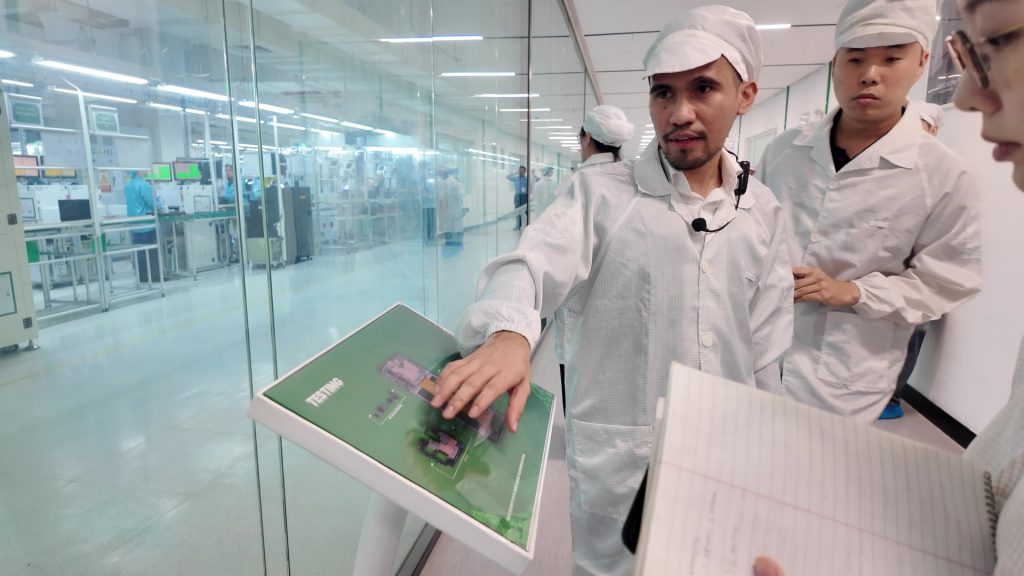
Having previously visited OPPO’s Chinese factory, we observed that both facilities share similar manufacturing approaches and utilize the same AI-assisted production and testing standards. However, the Indonesian facility stands out for its significant positive impact on the local community. Beyond manufacturing, it serves as a crucial center for employment, professional development, and practical industry experience. Employees receive regular training to master new technologies and techniques, while motivational recognition programs throughout the facility showcase OPPO’s commitment to developing local leadership talent. The company has also established ongoing internship partnerships with Indonesian universities, providing students in relevant fields valuable opportunities to begin their careers with a global technology leader.
The smart assembly process was always the most interesting part of every factory tour. Entering and exiting the line is subject to rigorous security checks to ensure that no belongings are left inside, and more importantly, no one can take any parts off the line.
The Indonesian facility’s one-piece-flow manufacturing process operates with remarkable efficiency, combining skilled local workers with advanced AI-assisted visual inspection and robotic assembly systems. The production floor itself is designed for optimal workflow, featuring bright, open spaces, comprehensive multilingual signage, and displays showing real-time production metrics at all key stations.


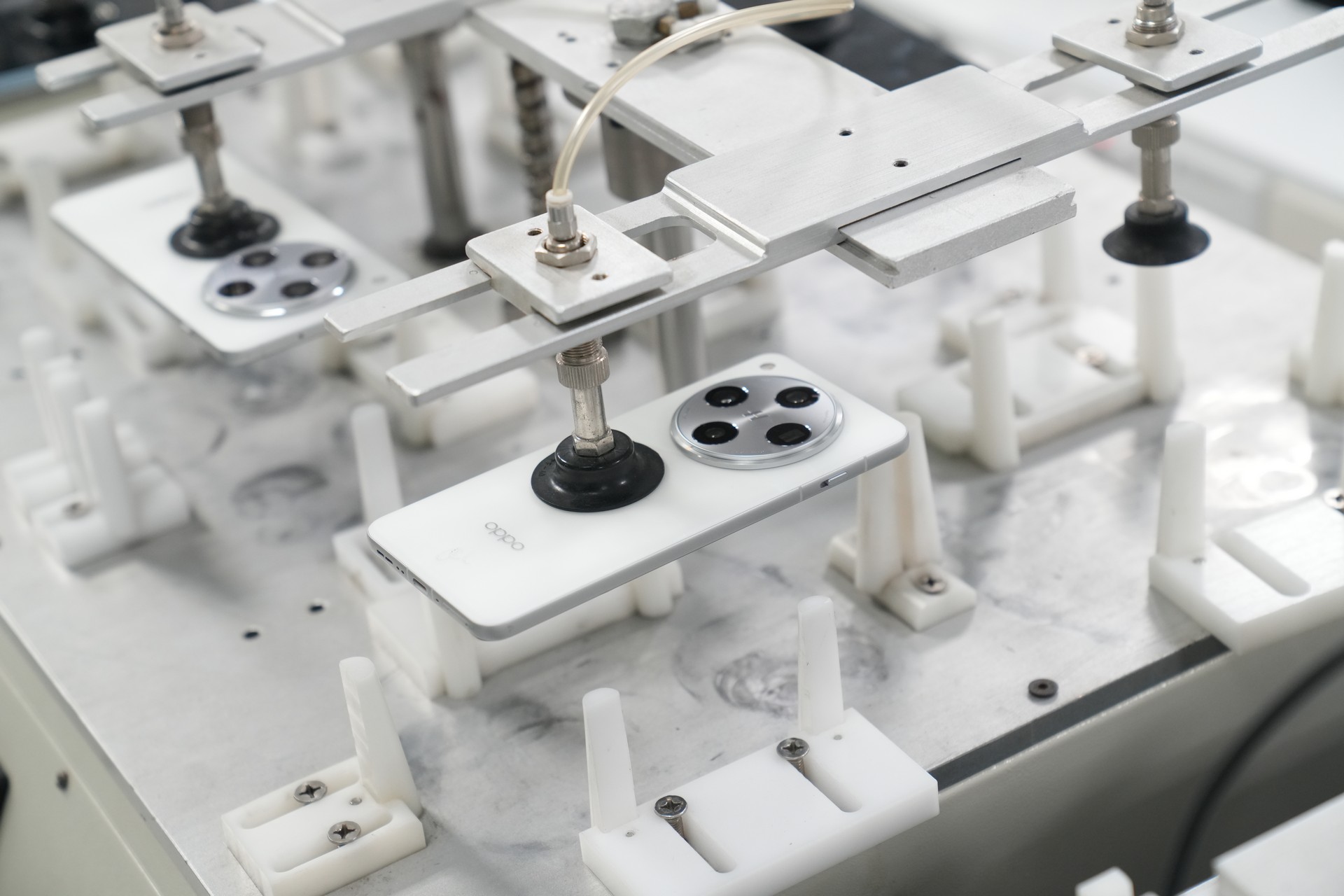
OPPO’s reputation for hardware reliability, consistently noted by Gizmochina reviewers, is supported by the facility’s rigorous testing protocols. The testing labs subject phones to a comprehensive suite of durability tests, including camera performance evaluation, multi-angle drop testing, darkroom signal analysis, water resistance testing (submerged at 1.5m for over 30 minutes), extreme temperature exposure, and dust resistance verification. A particularly unique test involves placing four phones in a large rotating metal cylinder for 150 cycles of intense tumbling – a harsh durability check we hadn’t encountered before.
Local OPPO Experience Stores & OPPO Gallery
Apart from visiting the phone factory, we were also allowed to take a rest in one of the OPPO experience stores (Pacific Place Mall) and another OPPO Gallery. The OPPO’s mature retail system in Indonesia has developed a localized modern culture far beyond shopping. Visitors can enjoy the authentic Indonesian coffee they serve in the store and may even have a peaceful reading experience.


Launching Find X8 Series Globally
On November 21, OPPO held the global launch of its Find X8 flagship smartphone series in Bali, Indonesia, with the updated ColorOS 15 for global users. As the launch comes after a two-year hiatus for the series outside mainland China, the company is ambitious to challenge Apple and Samsung in the global market with dual high-end lines, the Find X and foldable Find N series.
OPPO led the Q3 smartphone shipments for all of Southeast Asia with an 18.1% share, followed by Samsung, Transsion, and Xiaomi, according to IDC, noting the fact that they have been missing flagship candidates in the segment for the last two years. The launch of the Find X8 series will go a long way in filling OPPO’s absence in the segment and be a growth engine for the brand in the region.
Along with the global launch, the new OPPO Find X8 Series was also announced and available in major European countries, such as the UK, Germany, and France.

“Europe is another major market for OPPO. We will launch more new products in Europe later and increase our investment in the market in multiple aspects.” OPPO Vice President Billy Zhang said after the launch.
The Find X8 series is positioned to compete directly with Samsung and Apple’s flagship devices in established markets. Market analysis from Canalys shows the European smartphone market experienced renewed growth in Q1 2024, with Samsung holding 37% market share and Apple following at 22%. This growth coincides with a new Android upgrade cycle, prompting various manufacturers to refresh their European marketing and sales approaches.

In 2024, OPPO expanded its business in Latin America, such as Brazil and Argentina. As the brand’s newly established markets though, the regions gave the brand good feedback, and now OPPO ranks No. 5 with a 62% year-on-year growth.
Overseas markets – Growth engine for OPPO
The company operates in over 70 countries and regions, with over 300,000 retail spaces worldwide. As OPPO claimed, the global growing lineups extend beyond smartphones to IoT products with 700 million ColorOS (new rollout details here) users worldwide. During the tour and the launch, OPPO emphasized its confidence in its global-made capacity and connection with local communities worldwide.
In 2025, perhaps we will see more significant growth in regional smartphone markets, with a high probability that the tech giant will be among them, even as a major player.
Gizmochina is currently conducting a comprehensive review of the new Find X8 and its global version of ColorOS 15. Our hands-on experience with the device is providing valuable insights into OPPO’s latest product developments and direction.
For our full review and detailed coverage, be sure to check our Review section and subscribe to the Gizmochina YouTube channel.




Comments