Add GIZMOCHINA as Preferred Source on Google
If you’re into electric vehicles, you’ve likely heard about Xiaomi‘s foray into the automotive world with the SU7 sedan. Now, the Chinese tech giant is upping its game by introducing the YU7, an all-electric SUV that’s set to hit the market in the summer of 2025.
The YU7 was unveiled quite literally under the regulatory spotlight. As part of the homologation process with China’s Ministry of Industry and Information Technology (MIIT), Xiaomi had to reveal key specs and the first official images of the YU7.
It’s a process that often irks automakers because it spills the beans on models before they’re ready to be officially launched, but for us, it’s a treasure trove of information. Here’s what we know about the YU7.
1. Design and build
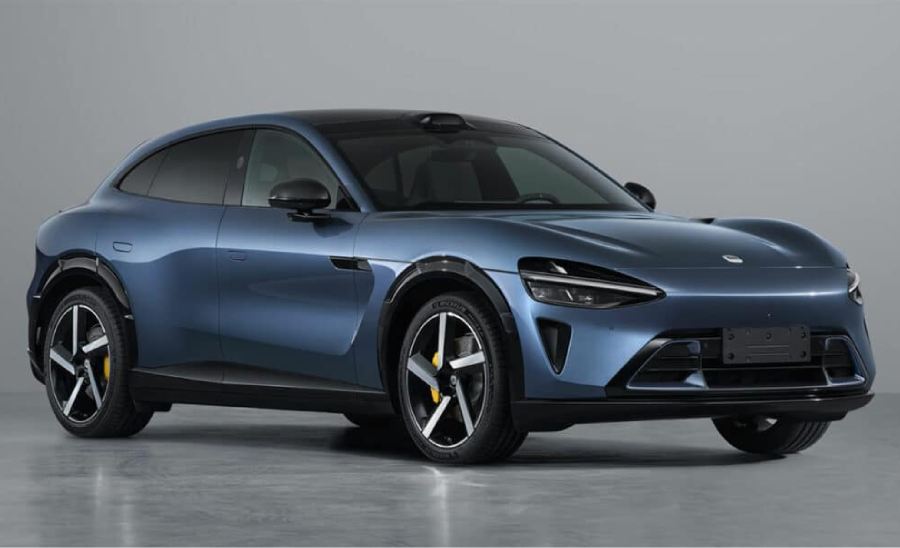
It’s an all-electric SUV, stretching to 4,999 mm in length, 1,996 mm in width, and standing 1,600 mm tall, with a wheelbase of 3,000 mm. This model isn’t playing around in terms of power either. It’s equipped with dual electric motors — one at the front with 220 kW and another at the rear with 288 kW, offering a combined output of 508 kW or 681 hp. That’s enough to push this SUV to a top speed of 253 km/h, which is quite the performance for an SUV.
The energy for the SUV comes from a lithium NMC battery supplied by CATL, though specifics on the battery’s capacity are still under wraps. Given Xiaomi’s partnership with CATL, we can expect some impressive range figures, although exact numbers will have to wait until closer to the launch.
Design-wise, the YU7 resembles the sleek aesthetics of the SU7 sedan. The YU7’s design has been teased with images shared by Xiaomi CEO Lei Jun on Weibo which shows a vehicle that’s both sporty and modern.
2. Building on Success
The YU7 will be another offering from Xiaomi that will build on the success of the SU7 sedan. Launch in March for a starting price of 215,900 yuan (around $29,700), it has already surpassed 100,000 deliveries by mid-November 2024. And Xiaomi is aiming for 130,000 units by year’s end.
The SU7 was not only a commercial success, it also garnered praise from unexpected quarters. Ford CEO Jim Farley was so impressed after driving an SU7 that he reportedly didn’t want to return it.
3. Xiaomi YU7 has competitors to succeed
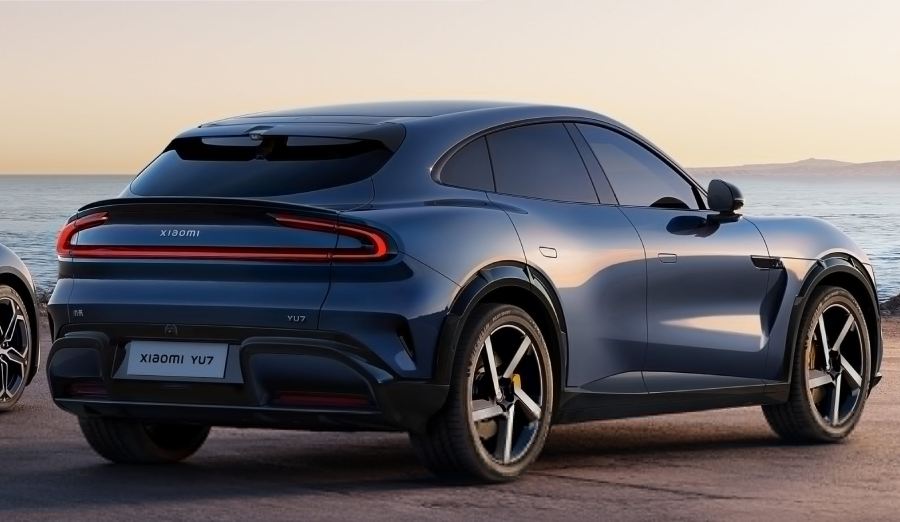
Unlike the SU7 which is a sedan, the upcoming YU7 will dive into a different arena — the burgeoning electric SUV market in China, where it will directly challenge the likes of Tesla’s Model Y.
The Model Y starts at 249,900 yuan in China, so it’s likely that Xiaomi will keep its price close to Tesla’s offering.
Interestingly, despite the homologation revealing all, Xiaomi has decided to keep the YU7 under wraps. However, the CEO has confirmed that the launch will happen in June or July 2025.
This timeline might seem a bit delayed given the regulatory clearance, but Lei Jun sees this as an opportunity for extended testing. He mentioned in a Weibo post that removing the camouflage early would allow for more “comprehensive, detailed, long-term and large-scale testing” to ensure the vehicle’s quality.
4. Context in the Tech-Driven Car Race
Xiaomi’s progress in the EV space is particularly noteworthy, especially compared to tech giants like Apple and Sony. Apple’s long-rumored car project has yet to yield tangible results, and reports suggest the company has scaled back its ambitions.
On the other hand, Sony has partnered with Honda to develop the Afeela EV, expected to debut in the coming years.
Xiaomi, however, has moved faster, with the SU7 and now the YU7 marking tangible entries into the market. Xiaomi isn’t alone either, though. It has teamed up with CATL for batteries and BAIC for manufacturing.
5. Challenges Ahead
Xiaomi has stiff competition in the EV market. Tesla is a dominant player, not just globally but also in China, where the Model Y SUV is among its top sellers. Then there are domestic rivals like BYD and Nio which have their own offering of performance-oriented electric SUVs.
So for Xiaomi, the price of the YU7 will be a crucial factor. Xiaomi has a history of undercutting competitors in the smartphone market, but building EVs is inherently more expensive, and achieving competitive pricing while maintaining quality will be another challenge for the brand.
Don’t miss a thing! Join our Telegram community for instant updates and grab our free daily newsletter for the best tech stories! 🚀