
Add GIZMOCHINA as Preferred Source on Google
The CES 2025 event is displaying the latest technology developments by brands, and among them is Samsung Display. The company unveiled a new MicroLED screen designed for smartwatches that can reach crazy peak brightness. For perspective, as of now, no commercially available smartwatches use MicroLED displays.
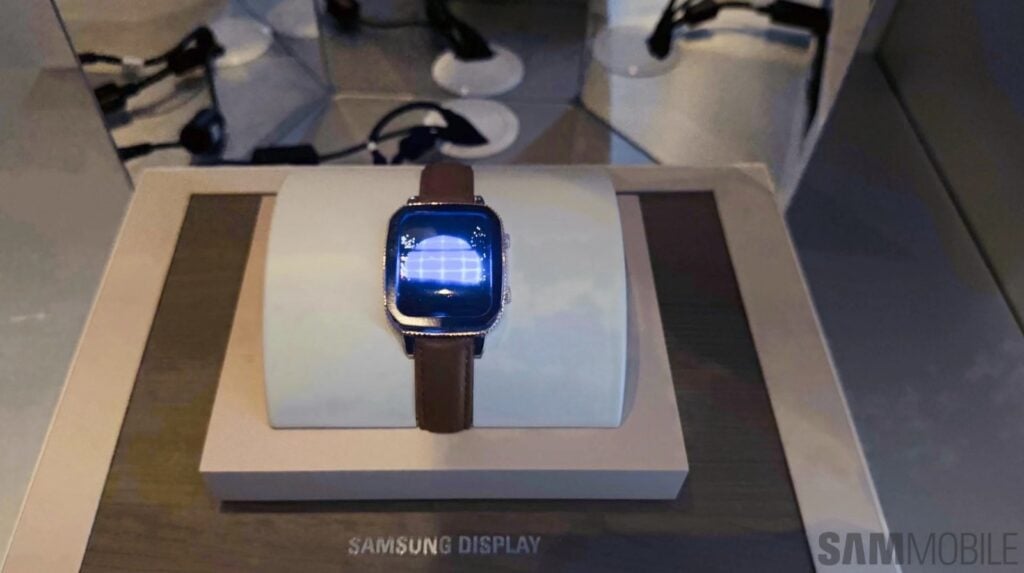
The prototype that Samsung is showing reaches 4000 nits of peak brightness, or 33 percent brighter than the OLED screen in the Galaxy Watch Ultra.
This prototype with MicroLED matches Galaxy Watch Ultra in pixel density
The display Samsung showed off measures 2.1″ in size and has a resolution of 418 x 540 pixels. So the pixel density of the MicroLED display is 326ppi. For reference, the Galaxy Watch Ultra‘s display panel packs a resolution of 480 x 480 pixels and has a pixel density of 327ppi. This is significant, because, the pixel density of MicroLED screens was not as good as that of OLED screens in the past. It’s good to see Samsung has managed to overcome the challenges of using them in small devices like smartwatches.
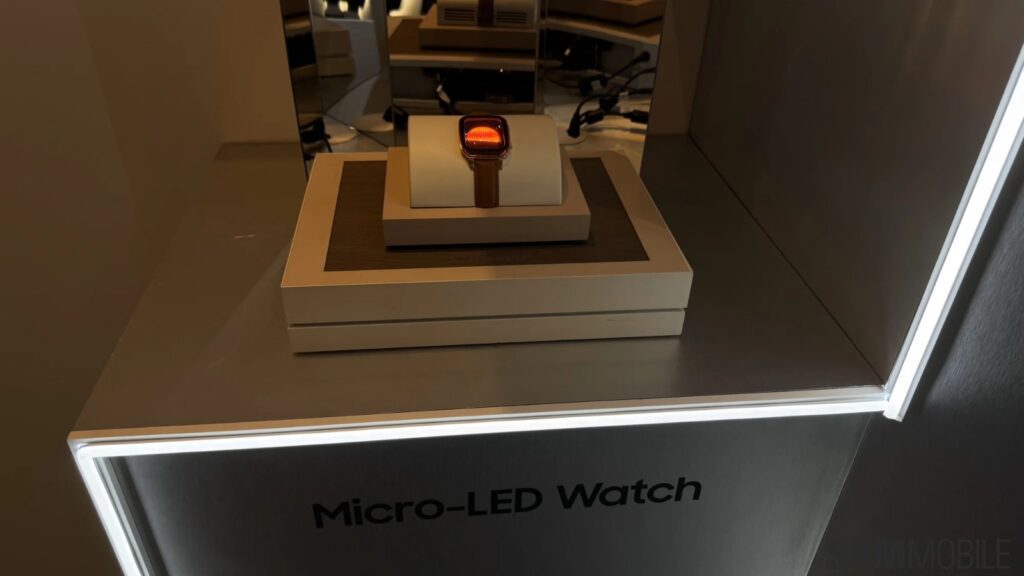
MicroLED displays, in theory, offer much longer lifespan than OLED screens while keeping all the advantages that are already possessed by OLED screens. Similar to OLED screens, MicroLED screens are also self-luminous in nature and can provide pure black, infinite contrast, and wide viewing angle. Moreover, MicroLED screens are also much faster in terms of response speeds, higher in energy efficiency, and can be used in a wide temperature range and hence do not suffer from thermal damage.
According to a previous report from MICROLED-info, Samsung is already working on a Galaxy Watch with a MicroLED display, targeting a release in 2025. However, Samsung isn’t the only one working on offering smartwatches with MicroLED screens. Garmin is reportedly working on incorporating MicroLED displays into its upcoming Fenix 8 series.
Apple has also been researching MicroLED technology for its Apple Watch line. The initial plan was to launch this display technology in the Apple Watch Ultra by 2025, but the latest reports indicate that it may be delayed, and the product may hit the market in 2026.
Don’t miss a thing! Join our Telegram community for instant updates and grab our free daily newsletter for the best tech stories!
(Source)


Comments