Add GIZMOCHINA as Preferred Source on Google
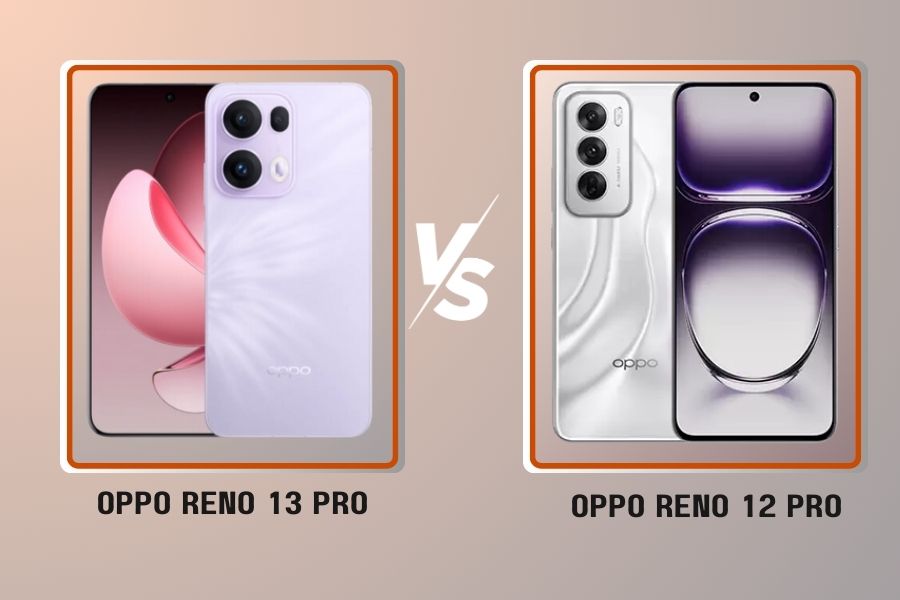
Oppo‘s Reno series has been a reliable option for those looking for a feature-packed smartphone with a focus on design and cameras. The latest Oppo Reno 13 Pro continues this trend but introduces a range of upgrades that set it apart from its predecessor, the Oppo Reno 12 Pro.
Let’s dive into how the Reno 13 Pro differentiates itself in terms of design, performance, display, cameras, and overall usability.
1. Design and Build
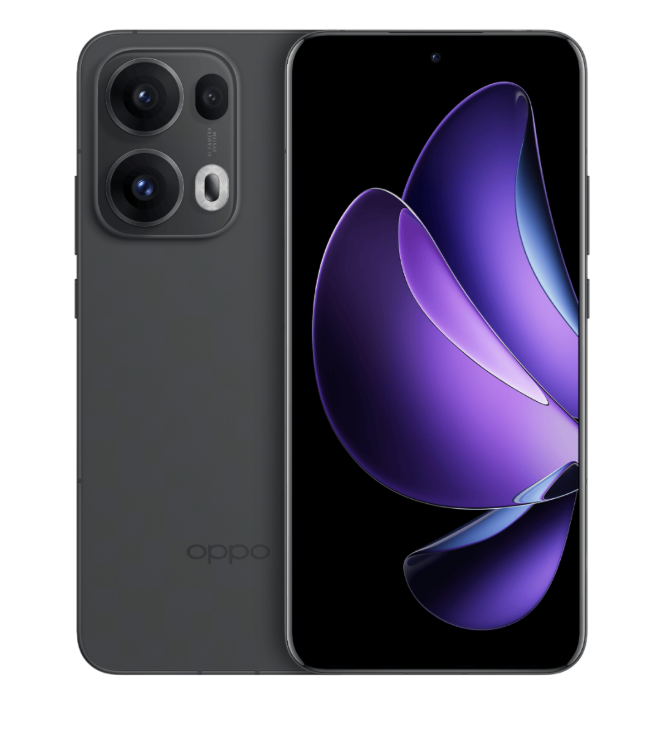
One of the first differences is in the materials. While the Reno 12 Pro features a Gorilla Glass Victus 2 front, a plastic frame, and a glass back, the Reno 13 Pro upgrades to Gorilla Glass 7i on the front and back, coupled with an aluminum alloy frame.
The new model also boasts IP68/IP69 certification for better dust and water resistance compared to the Reno 12 Pro’s IP65 rating.
However, the upgrades come with a slight tradeoff in portability. The Reno 13 Pro is heavier at 195-197 grams compared to the 180 grams of the Reno 12 Pro. It’s also slightly larger, with dimensions of 162.8 x 76.6 x 7.6 mm, making it less compact than the Reno 12 Pro’s 161.5 x 74.8 x 7.4 mm build.
2. Display
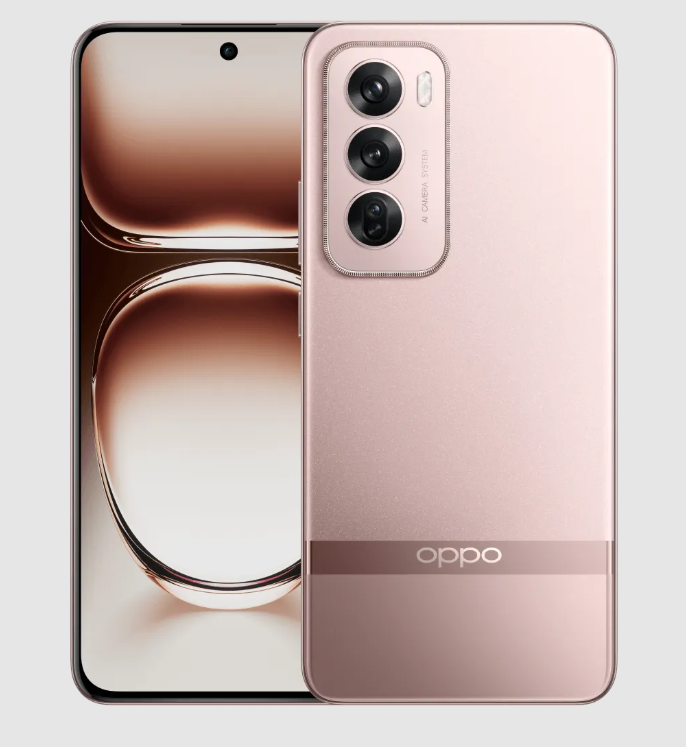
Both phones share a 120Hz AMOLED panel with HDR10+ support and a peak brightness of 1200 nits. However, the Reno 13 Pro slightly edges ahead with a larger 6.83-inch screen, compared to the Reno 12 Pro’s 6.7-inch display. This increase improves the screen-to-body ratio to ~90.9%, up from ~89.4%, offering a slightly more immersive viewing experience.
The resolution also sees a bump, with the Reno 13 Pro offering 1272 x 2800 pixels (~450 ppi), as opposed to the Reno 12 Pro’s 1080 x 2412 pixels (~394 ppi). That said, it’s likely that you won’t notice much difference in everyday use.
3. Performance
As for the performance, the Reno 13 Pro is powered by the MediaTek Dimensity 8350 chipset, a clear upgrade over the Dimensity 7300 Energy in the Reno 12 Pro. Built on the same 4nm process, the newer chipset offers a faster octa-core CPU, featuring a 3.35 GHz Cortex-A715 prime core for better single-threaded performance. In comparison, the Reno 12 Pro caps out at 2.5 GHz on its Cortex-A78 cores.
Graphics processing also sees an improvement, with the Mali-G615 MC6 GPU in the Reno 13 Pro providing more power for gaming and visual rendering than the dual-core GPU in its predecessor.
While everyday tasks such as app switching and media consumption should feel seamless on both devices, the Reno 13 Pro’s chipset will deliver a more stable experience for demanding activities like gaming.
Out of the box, the Reno 13 Pro ships with Android 15 and ColorOS 15, while the Reno 12 Pro launched with Android 14 with ColorOS 14.1.
Oppo’s commitment to software updates is similar for both. Each of them will get three major Android upgrades and four years of security updates.
4. Cameras
On paper, the Reno 13 Pro and 12 Pro share a similar triple-camera setup, with 50 MP primary sensors and 8 MP ultrawide cameras. However, the Reno 13 Pro comes with an improvement in its telephoto lens with 3.5x optical zoom, compared to the Reno 12 Pro’s 2x zoom. It will allow for more detailed shots of distant subjects.
Additionally, the main camera sensor on the Reno 13 Pro boasts multi-directional PDAF and OIS, delivering improved focus and stability. Both phones support 4K video recording, but the Reno 13 Pro adds gyro-EIS across more video modes for smoother footage.
Selfies on both phones are evenly matched, as they sport a 50 MP front camera with autofocus and 4K recording capabilities.
5. Battery and Charging
Battery life is another area where the Reno 13 Pro excels. It has a 5800mAh battery, a notable jump from the Reno 12 Pro’s 5000mAh capacity. While both models support 80W wired charging, the larger battery on the Reno 13 Pro should translate to better endurance, especially for heavy users.
Not to forget, the Reno 13 Pro also offers 50W wireless charging. It’s a quality-of-life upgrade from the 12 Pro which lacks this feature.
6. Connectivity and Miscellaneous Features
Both phones come equipped with dual-band Wi-Fi, Bluetooth 5.4, and NFC. However, the Reno 13 Pro supports newer connectivity standards like aptX HD and LHDC 5 for higher-quality audio streaming.
However, neither phone includes a 3.5mm headphone jack, a compromise that has become standard in this segment. There’s also an infrared port on both models, a small but practical feature for controlling appliances.
7. Should you consider it?
The Oppo Reno 12 Pro launched in India at Rs 36,999 for the 12GB/256GB variant, while the Reno 13 Pro carries a steeper price tag of Rs 49,999. That’s a massive Rs 13,000 jump in price, so this begs the question: is it worth it?
The Reno 13 Pro just feels like a natural evolution of the series. It offers meaningful improvements in design, performance, battery life, and camera versatility. However, whether it justifies the price hike is for you to decide.
Tech enthusiast? Get the latest news first! Follow our Telegram channel and subscribe to our free newsletter for your daily tech fix!