
Add GIZMOCHINA on Google:
Last review we focused on the POCO X7 Pro version, and in this story, it’s the turn of the POCO X7 standard variant. The X7 Pro is designed for those who like extreme performance but don’t want to spend too much money. Then the non-Pro version of the X7 is designed for those who have a much smaller budget, and don’t play much heavy games on their phone either. Without further ado, let’s check if it’s worth a high rating like what we gave to the Pro model.
Design
Although it’s from the same series, the design is hugely different from the Pro version. This silver color variant is already the most minimalist version of the X7, but I would still have liked it to be a bit more minimalist. Especially the large logo, which some people might like, but definitely not me.
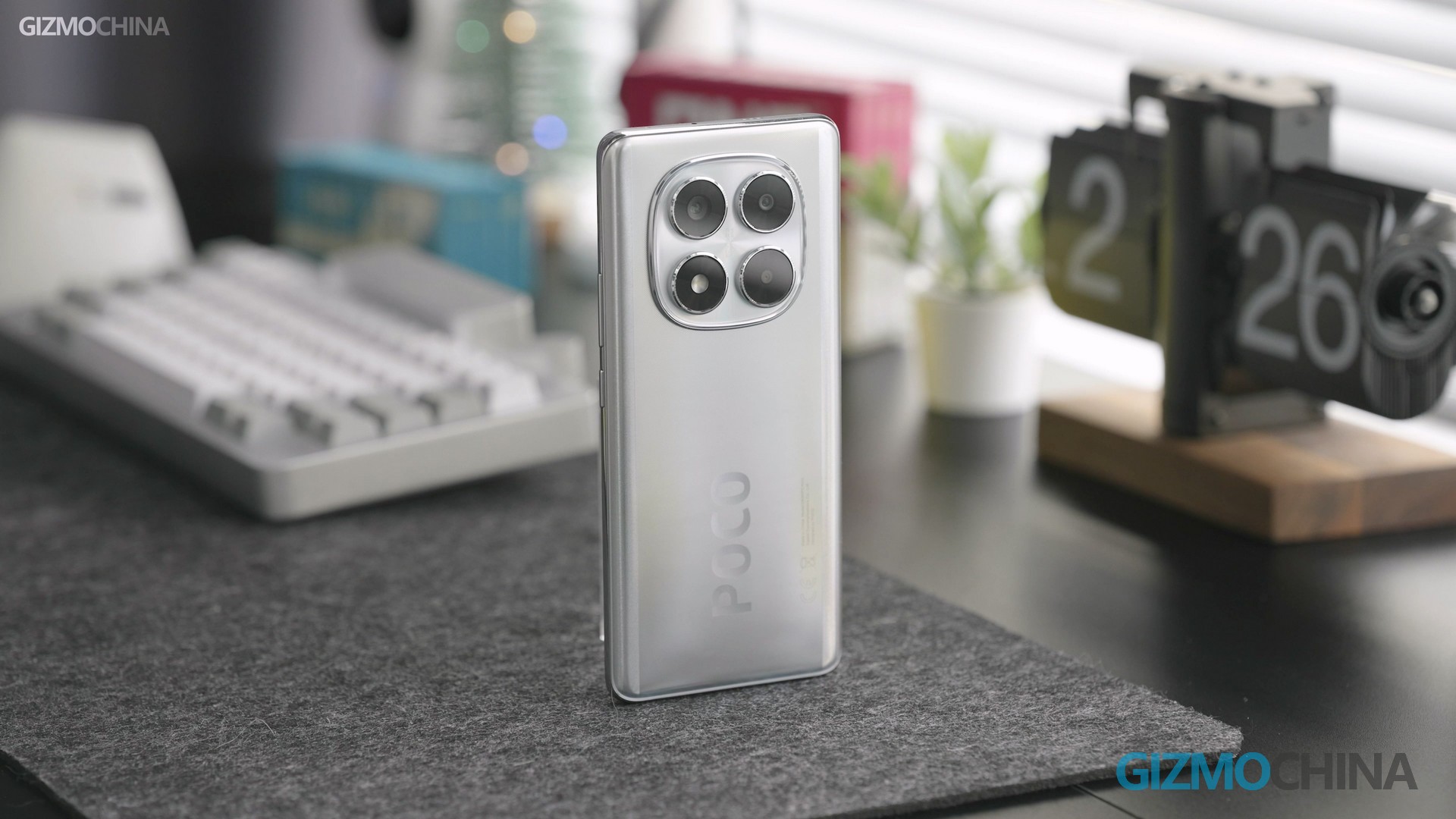
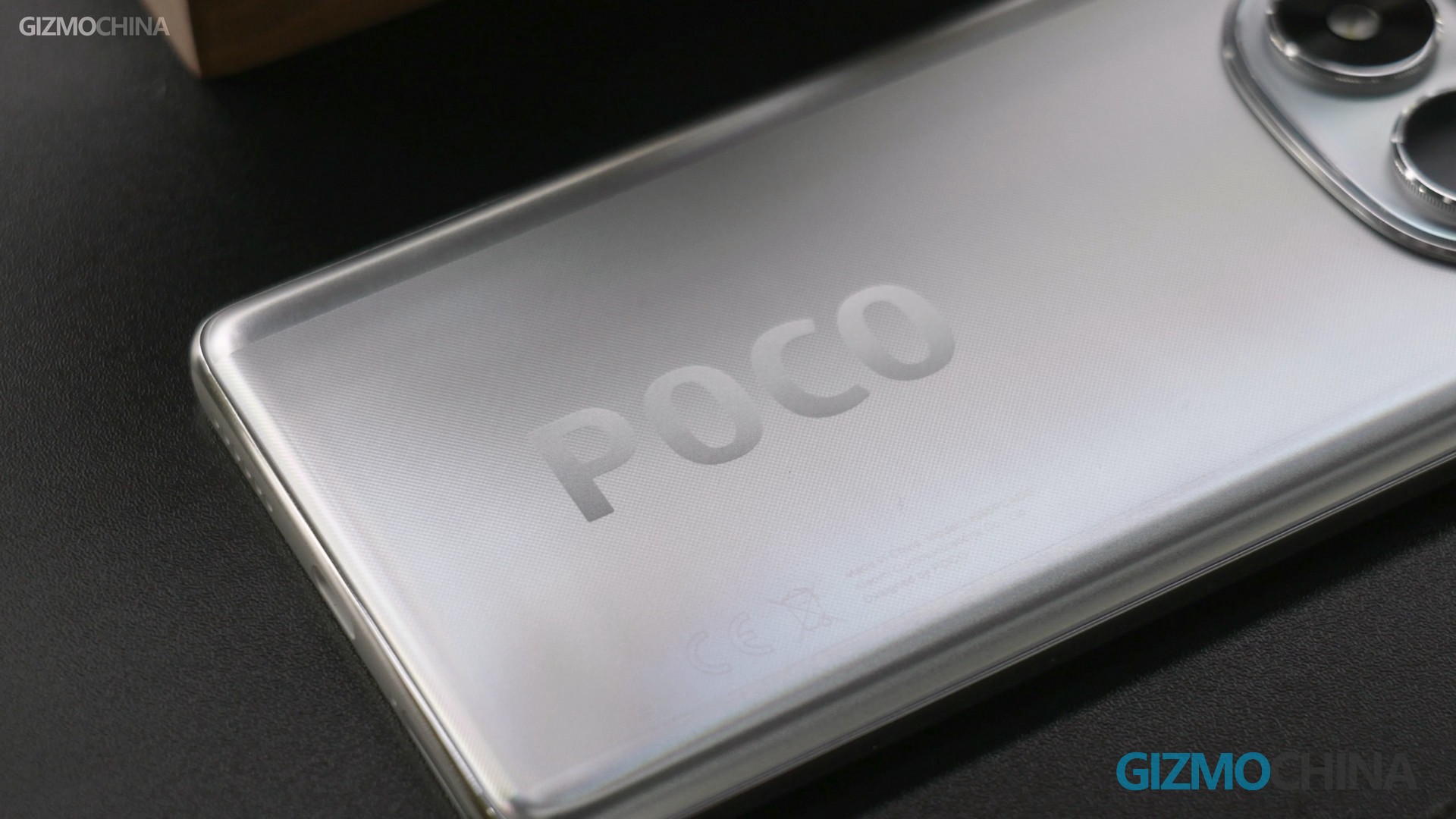
Other than that, POCO hasn’t neutered anything in terms of functionality, it has all your favorite features except for the headphone jack, of course.
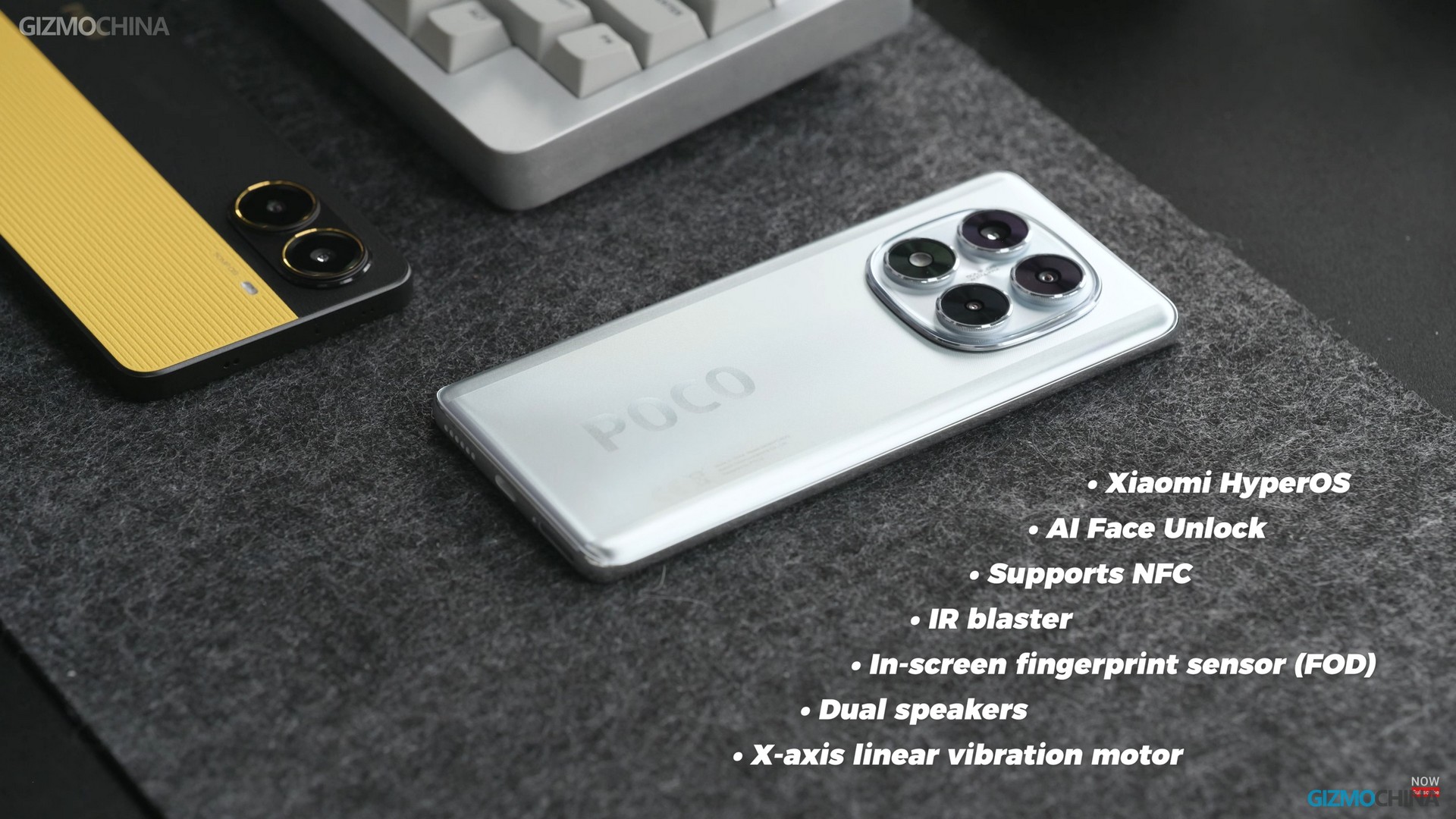
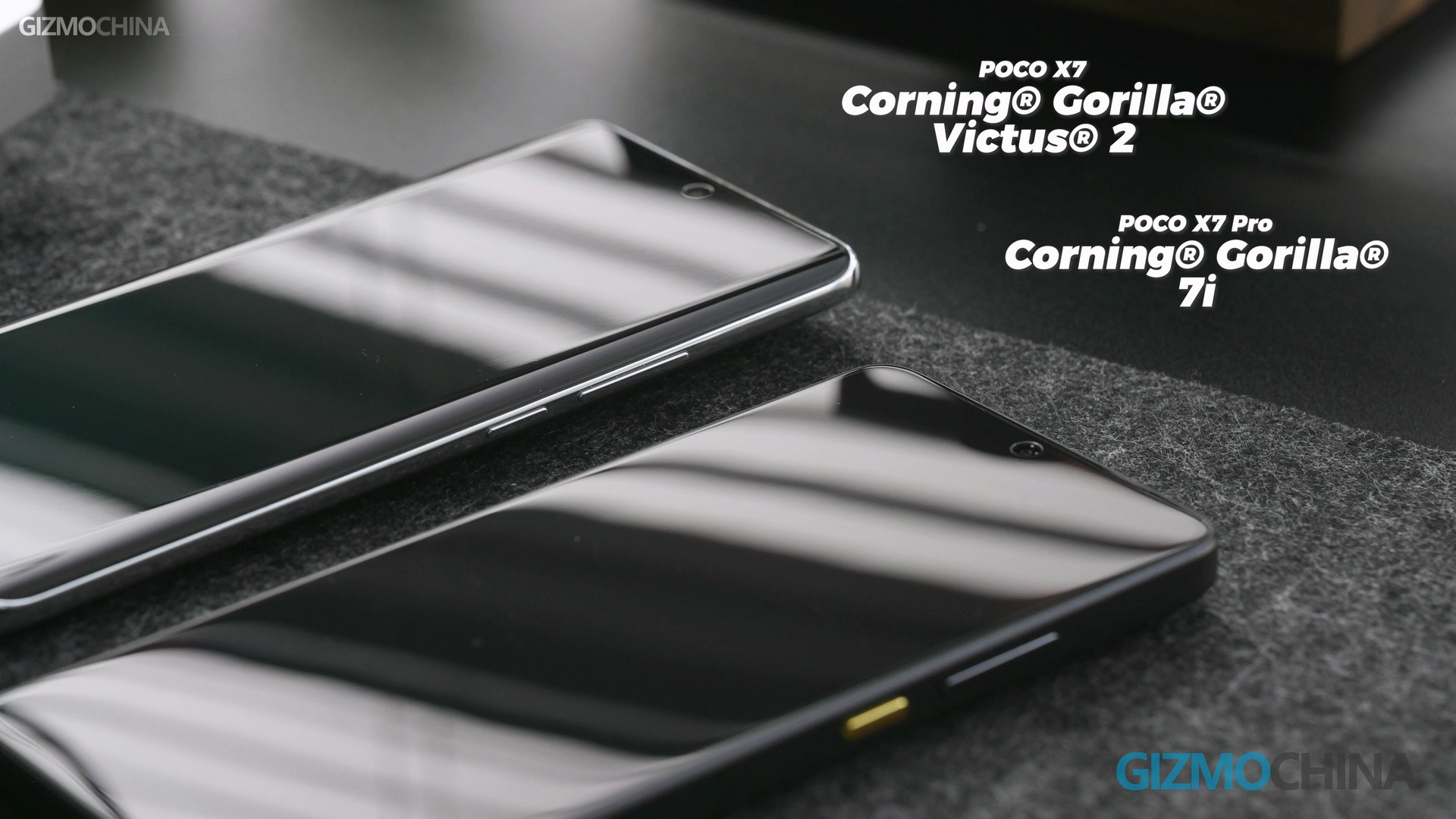
This time, POCO has upgraded the rugged sturture of the X7. Inside, the introduction of the new cushioning structure inside the device further boosts its capacity to withstand drops. It is certified for IP68 dust and water resistance, on par with the pro version. The screen protection glass also got Corning Gorilla Victus 2. So those who have the butterfingers, this time you finally won’t be using a phone with a broken display every day… I mean, not that easy (Do not test purposely).
Display
The display specs of the POCO X7 on paper are good. There are no obvious shortcomings, at a fine level that should be in a budget phone. The manual maximum brightness is 500nit, and the High Brightness mode is 1200nit. Low brightness PWM dimming is 1920Hz, good for eyes at night.
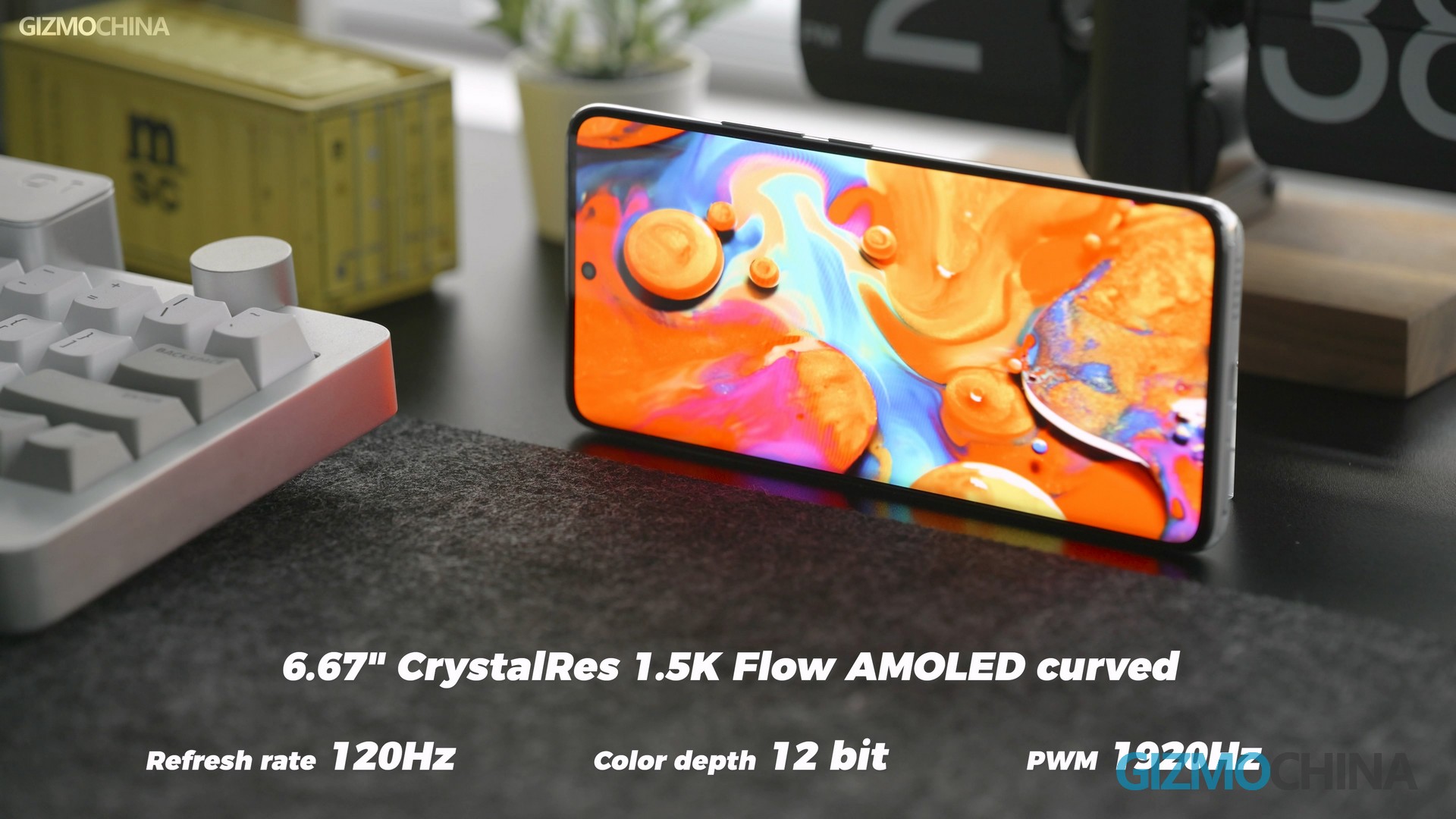
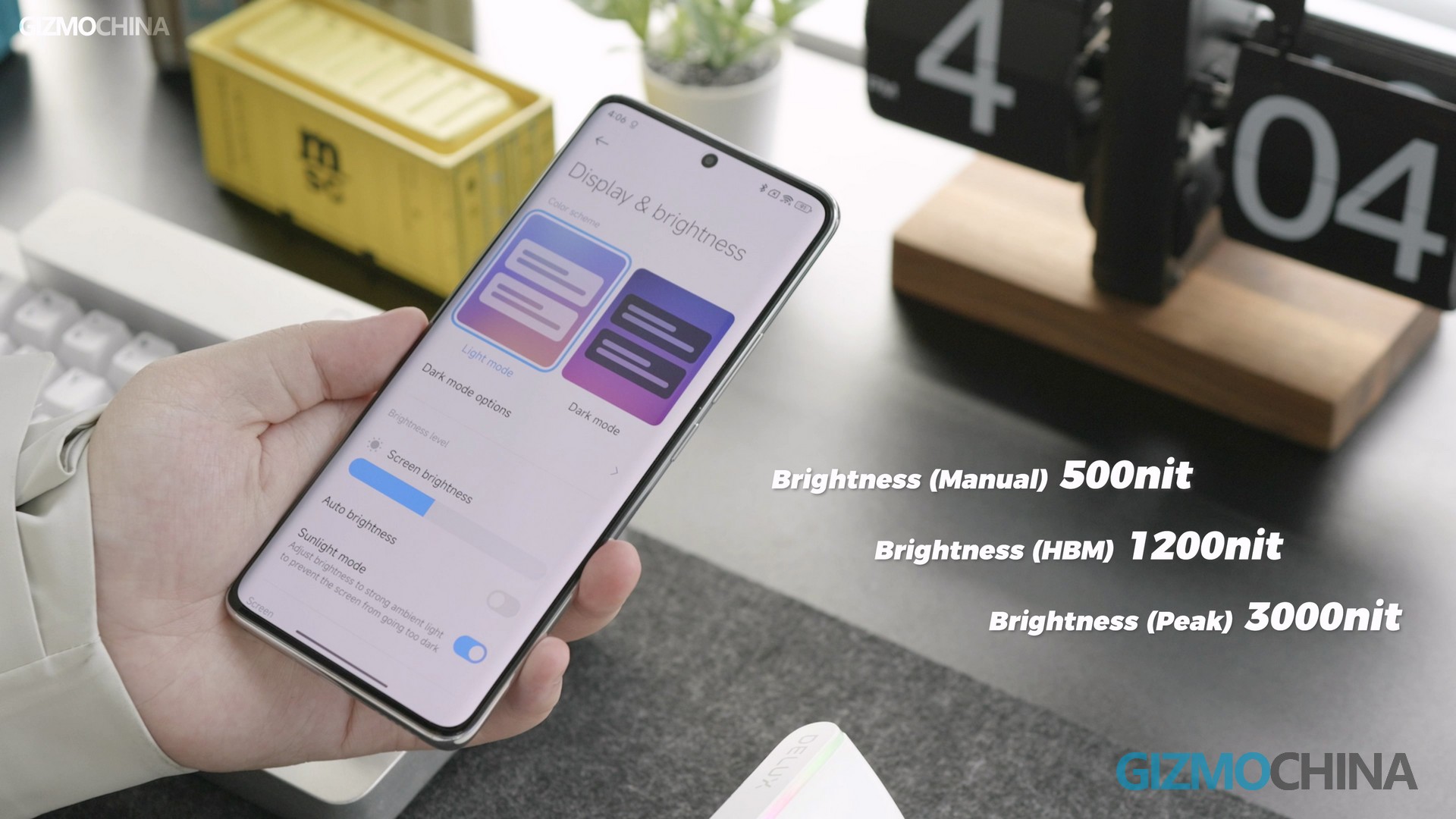
There is also an under-screen fingerprint recognition, although the position is a little lower. Together with the Victus 2 cover glass just mentioned, all in all, there are no drawbacks that can be pointed out with this screen at this price point. If you’re hoping for a better screen, then you’ll have to up the ante for a more expensive phone, such as its brother, the POCO X7 Pro.
Performance
We all know that budget phones all need to save money in different aspects to cut the selling price. So what has the X7 sacrificed to save costs? The answer is performance, the Dimensity 7300-Ultra is an entry-level processor, slightly better than the non-Ultra version. You can understand that they picked the best units from the same chipsets and focused on slightly optimizing their extreme performance (2-5% improved).
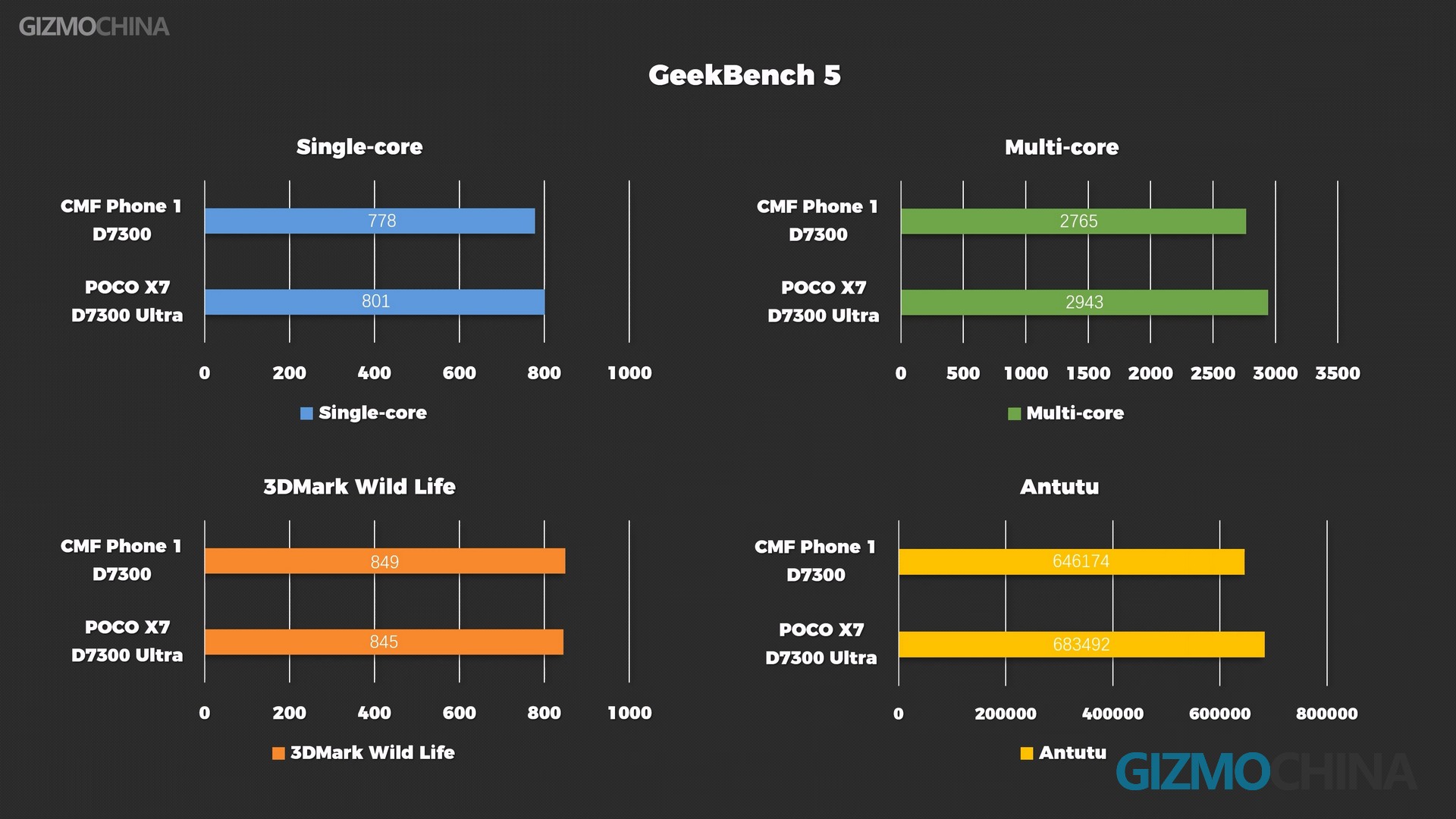
Some mainstream games can still run smoothly, such as PUBG Mobile. there is no lag in smooth graphics. Power consumption and temperature are pretty low. Games with higher loading, such as Genshin Impact, are not as smooth. It should have no problem completing daily tasks, and meanwhile users would gain such well-controlled temperature and power consumption. As an ambitious budget phone, it really does a good job.
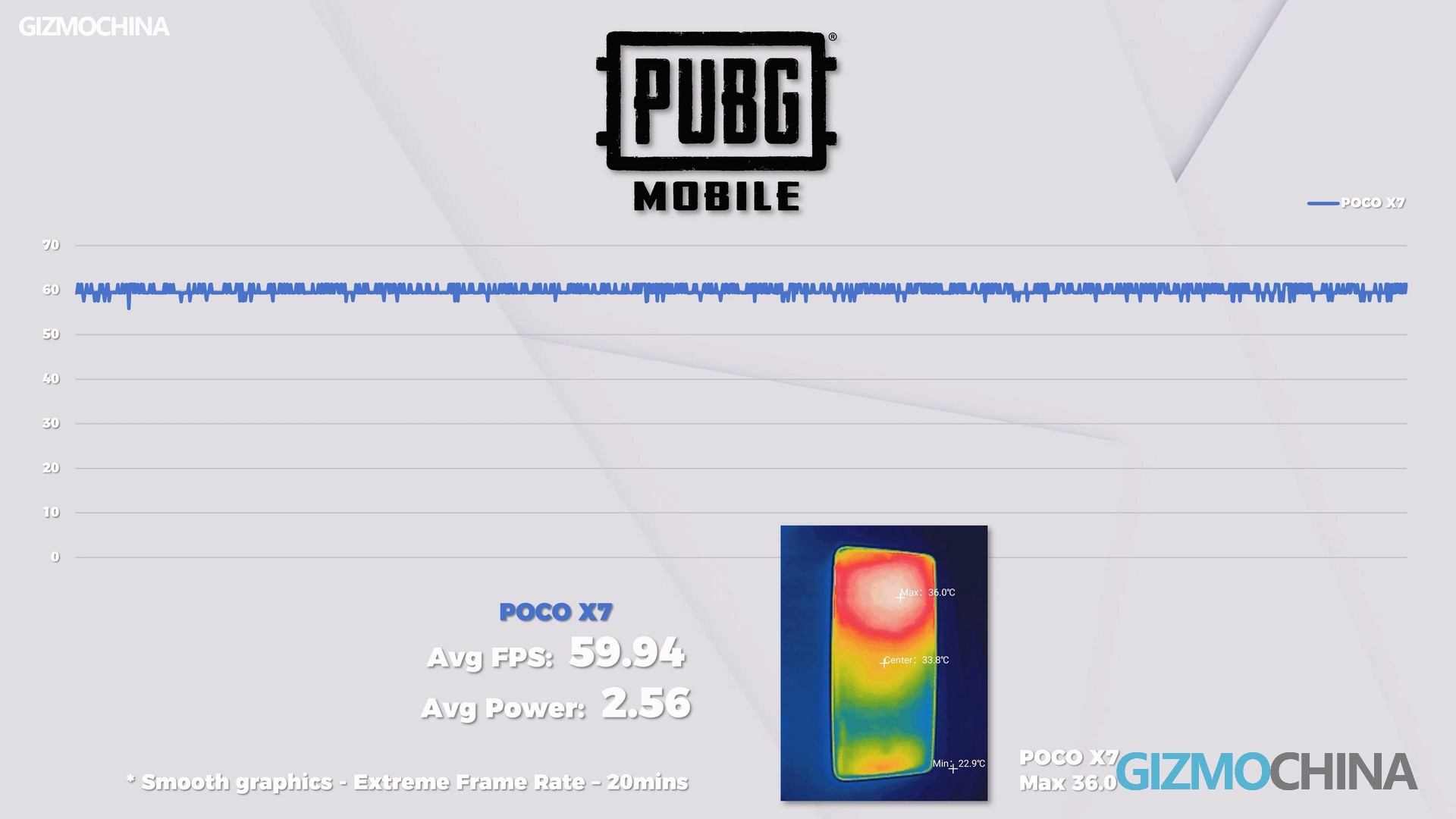
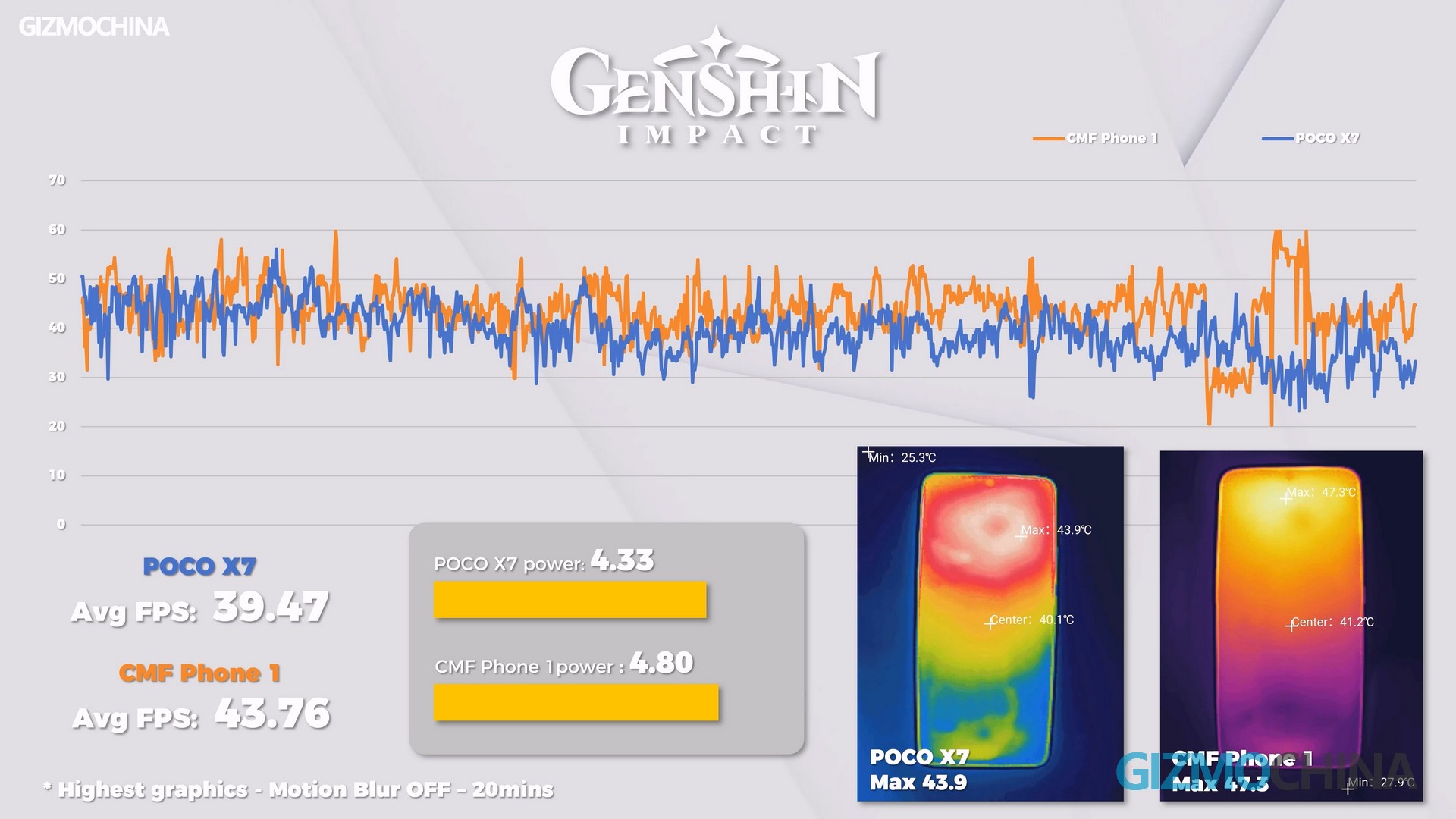
Gaming space, like the REDMI K80, also adds FPS monitoring.
All in all, the X7 is a phone that takes care of daily applications. As long as the tasks you work on it aren’t that heavy, it does its job well.
Camera
The X7’s three cameras are our old favorites: the main camera’s sensor is a Sony IMX882, and the ultra-wide camera and macro camera are 8MP and 2MP respectively. It seems to have done its best.
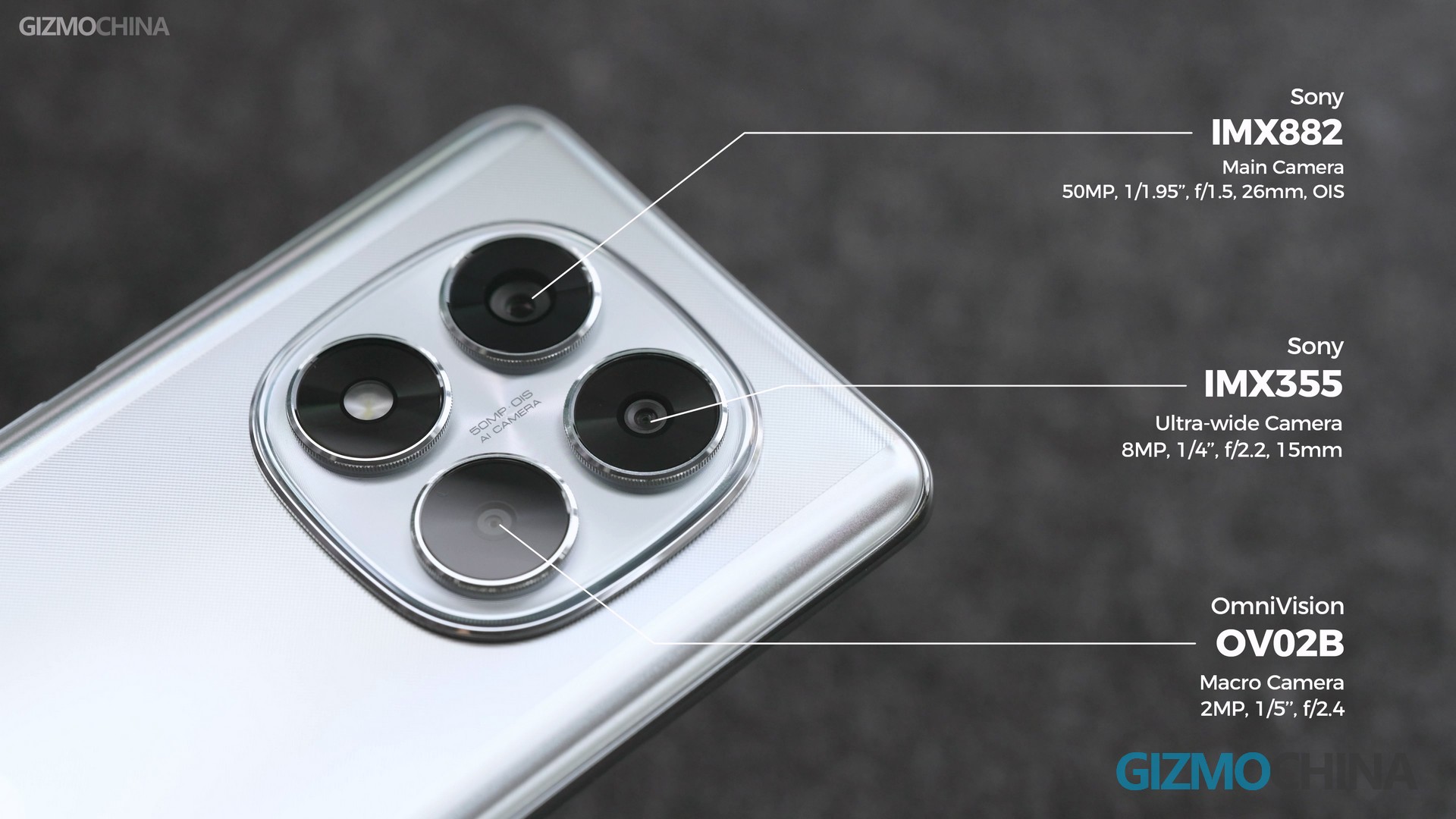
To be honest, the photos shot on it are better than I expected. Of course, as a budget phone, the X7 has a lot of common problems that other phones in the same price range have, such as the purple-fringing issue and the loss of clarity in dark light. But if you lower your expectations a bit, not comparing it to the flagship phones, then it can still delight you with good photos. In-sensor-zoom will take effect at more than 2 times the zoom, so it can hold slightly farther away objects as well.




The Ultra-wide camera didn’t disappoint me either, except for the purple-fringing issue which is still as much of a problem as ever. Again, this issue is present in all mid-range phones, not just the X7. Night details are also fine, an improvement over previous POCO phones.



As for that 2 MP macro camera, just pretend you don’t have it. Actually the main camera can shoot just as well as what it can shoot, and even with better image quality. You don’t have any reason to use it to take pictures, so forget about it.

The X7’s 20 MP front camera is also surprisingly good. It’s not just that it takes clear selfies and keystrokes well enough. Rather, it can actually record 1080P 60fps video with EIS. The detail is good too, so at least you won’t have any problem recording 1080P Vlogs with it.

The main camera can record 4K video, but the ultra-wide camera can only record 1080P. The frame rate is only 30 for both, but the footage is stable and the sharpness is acceptable. For a early-2025 phone in this price range, this is more than enough.
Battery & Charging
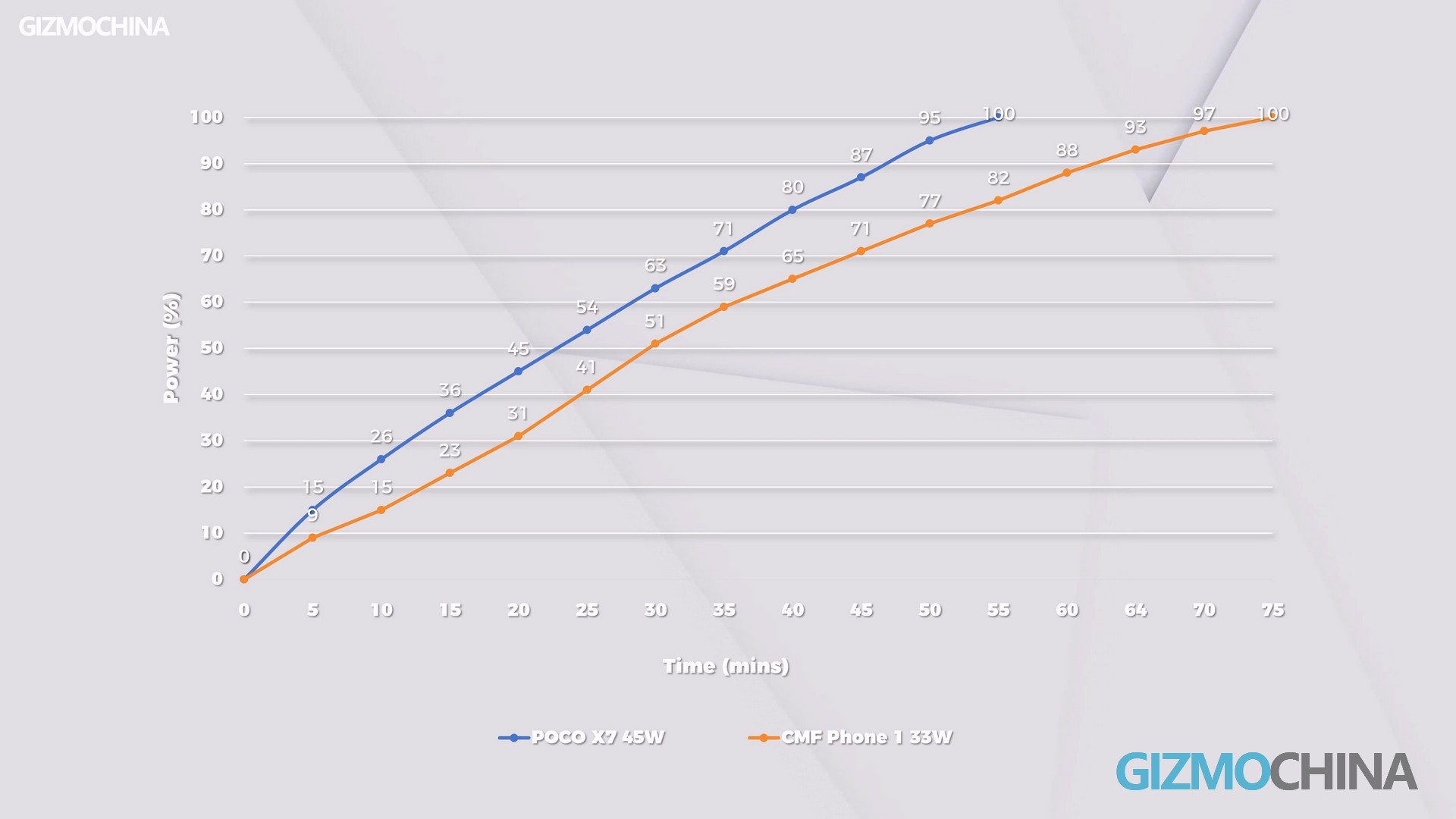
Like the REDMI Note 14 Pro, the POCO X7 has a wired charging power of 45 W. 10 minutes for a 26% charge, and 55 minutes for a full charge. But unlike the Note 14 Pro, the X7’s battery is only 5,110mAh.The battery capacity isn’t shockingly large, but the good news is that the processor is power-efficient enough.
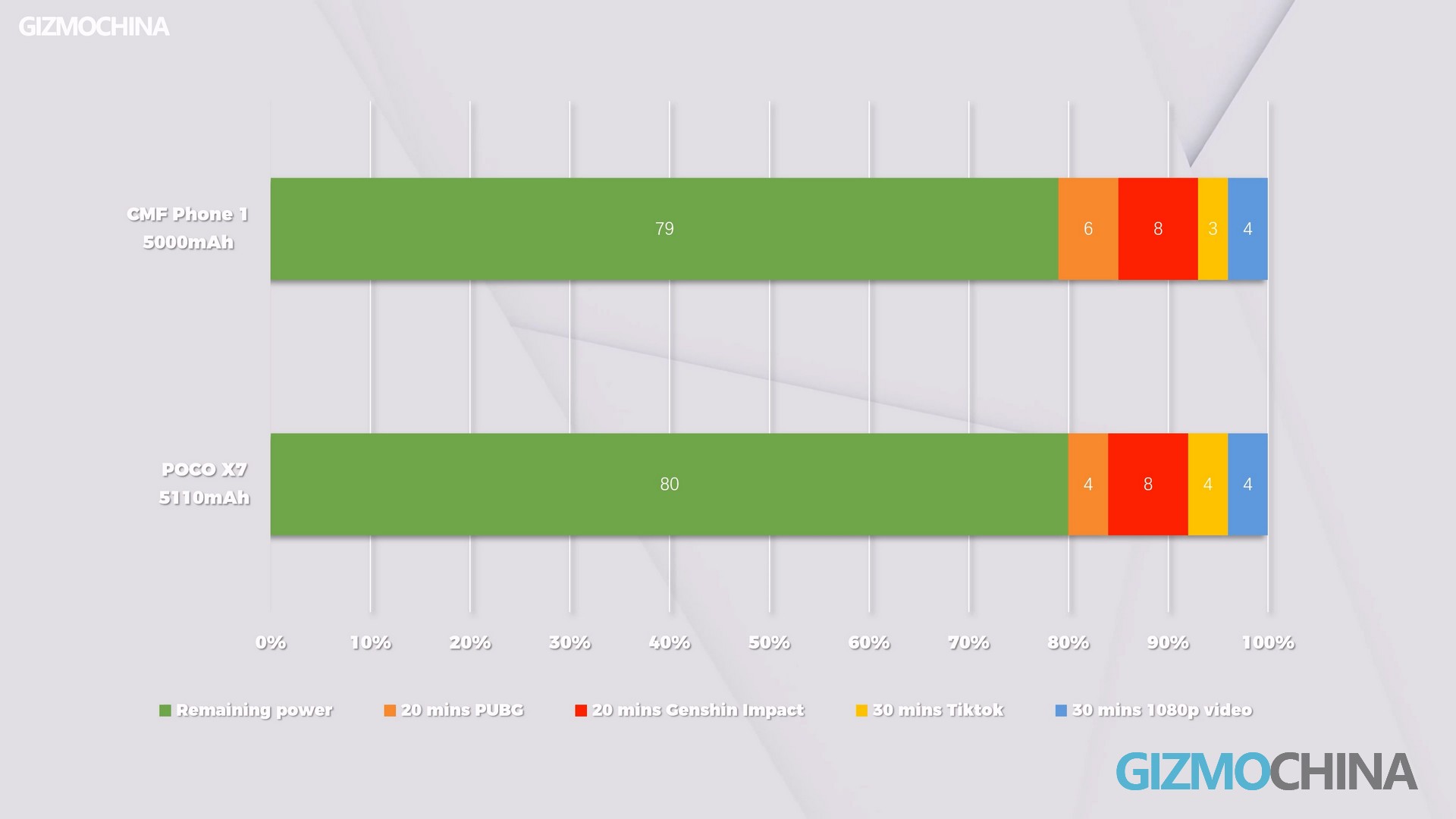
By the way, POCO X7 is equipped with Solid-state electrolyte technology. The device can make voice calls at -10°C for up to 24 hours and standby for 66 hours.
Verdict
The POCO X7 is not quite like other POCO phones. Most POCO phones are emphasizing in leaping performance, but relatively mediocre in other parameters. But the X7 is only conservative in performance, while other features are well done. For those groups who have a limited budget and don’t play games on their phones, this phone will be perfect for them.




Comments