Add GIZMOCHINA as Preferred Source on Google
Qualcomm’s Snapdragon chips have been at the heart of some of the most important smartphones ever made. From making budget phones run smoother to pushing 5G into the mainstream and setting new performance standards for flagships, a few Snapdragon processors have been pivotal for the industry. Here’s a look at five that left a lasting impact on the market.
1. Snapdragon 400
Back in 2013, mid-range smartphones were still finding their place, and Qualcomm’s Snapdragon 400 series played a huge role in shaping that segment. It struck the right balance between price and performance and gave manufacturers the tools to build capable, affordable devices without major compromises. And it wasn’t just for Android—the Snapdragon 400 even powered Windows Phone devices.
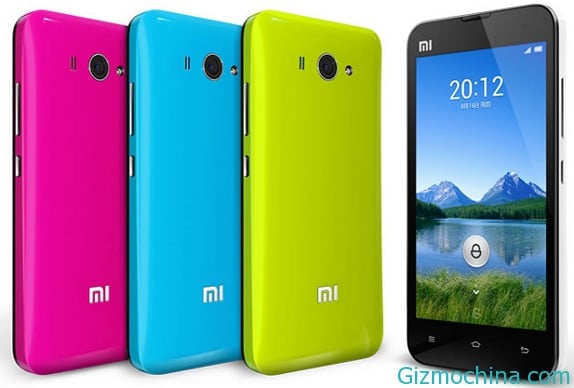
At its core, this chipset packed a quad-core ARM Cortex-A7 CPU, paired with an Adreno 305 GPU to handle graphics. It wasn’t pushing any boundaries with this setup, but it made everyday performance smoother for millions of users. Phones like the Nokia Lumia 630, Xiaomi Mi2A and Motorola Moto G were among the ones that featured this chip.
2. Snapdragon 410
Building on the formula of Snapdragon 400, Qualcomm introduced Snapdragon 410 in late 2013. It was the company’s first 64-bit processor in the entry-level category that ensured even low-cost phones could handle modern software updates and performance demands.
Before this, 64-bit processing was a premium-only feature, but the Snapdragon 410 brought it to the masses. It also arrived just as LTE adoption was surging, and Qualcomm capitalized on this by integrating an LTE modem—meaning even affordable phones could enjoy faster data speeds. And with dual SIM support, it also became a go-to chip in markets where switching networks was essential.
3. Snapdragon 625
Qualcomm unveiled the Snapdragon 625 in 2016 and it quickly became a hit not because it was the most powerful chip, but because it struck an incredible balance between performance and battery life.
It was the first 600-series chip to be built on a power-efficient 14nm FinFET process which drastically improved power efficiency than its predecessor. It used 35% less power than its predecessor in typical daily use.
Under the hood, it packed an octa-core ARM Cortex-A53 CPU clocked at up to 2.0 GHz, paired with an Adreno 506 GPU for smooth graphics. This combo delivered a surprisingly strong user experience, handling everyday tasks effortlessly while keeping phones cool and power-efficient.
Besides efficiency, another flex for 625 was its ability to record 4K videos. This was a rarity in mid-range devices at the time. Plus, with built-in LTE support, it ensured snappier data speeds.
Phones like the Moto Z Play and Xiaomi Redmi Note 4 made the most of the Snapdragon 625, giving users insanely good battery life while still keeping things smooth.
4. Snapdragon 765G
When 5G started rolling out in 2019, it wasn’t just about flagship devices—Qualcomm wanted to make it mainstream. The Snapdragon 765G was their answer: an upper-mid-range chip that brought 5G support and gaming-focused performance to more affordable smartphones.
Built on a 7nm process, it featured an octa-core CPU with a high-performance Cortex-A76 prime core clocked at 2.4 GHz. And that “G” badge”? It wasn’t just for show—the Adreno 620 GPU got a 10% boost over the standard 765.
A significant aspect of the Snapdragon 765G was its integration with the Snapdragon X52 modem. Unlike flagship Snapdragon chips that relied on separate modems, the 765G had the Snapdragon X52 modem baked in, supporting both mmWave and sub-6 GHz 5G for global compatibility. It also flexed its AI muscles, and improved camera performance, voice recognition, and other smart features.
The chip made 5G and high-end gaming more accessible and powered phones like the OnePlus Nord and Google Pixel 5.
5. Snapdragon 8 Elite
Fast forward to October 2024, and Qualcomm dropped its latest flagship silicon: the Snapdragon 8 Elite. And it is not just a regular yearly refresh. The 8 Elite is Qualcomm’s first processor to feature its in-house Oryon CPU.
At its core is the second-gen Oryon CPU with two prime cores and six performance cores for snappier speeds and ultra-responsive performance. Whether you’re a power user or a mobile gamer, this chipset is built to keep up with the demand.
But it’s not just about brute force. It also brings advanced AI capabilities to the forefront. The upgraded Hexagon Neural Processing Unit (NPU) enables on-device AI features, such as multimodal AI assistants, real-time image editing, and smarter interactions—all without relying on the cloud. And then there’s the Adreno GPU, now with a sliced architecture that delivers desktop-like graphics and buttery smooth gameplay.
Flagships from Asus, Honor, OnePlus, Oppo, and Xiaomi were quick to adopt the 8 Elite, While Samsung is the newest member to use the chip in its latest Galaxy S25 series.
For more daily updates, please visit our News Section.
Tech enthusiast? Get the latest news first! Follow our Telegram channel and subscribe to our free newsletter for your daily tech fix!