
Add GIZMOCHINA as Preferred Source on Google
As an Amazon Associate, Gizmochina earns from qualifying purchases. Links on this page may earn us a commission at no extra cost to you.
When Circuit House Technologies first announced its Lumio Vision 7 and Lumio Vision 9 series of smart TVs, they didn’t just promise crisp visuals or rich audio like most brands. They boldly claim they’ve built the fastest smart TVs on the market. The company recently had a media briefing showcasing these TVs in action, and a friend from Lumio helped me get a review unit of the Vision 7. So, is the Vision 7 really as fast as advertised, or is this just another case of a marketing stunt? Read on to find out.
Design & Remote
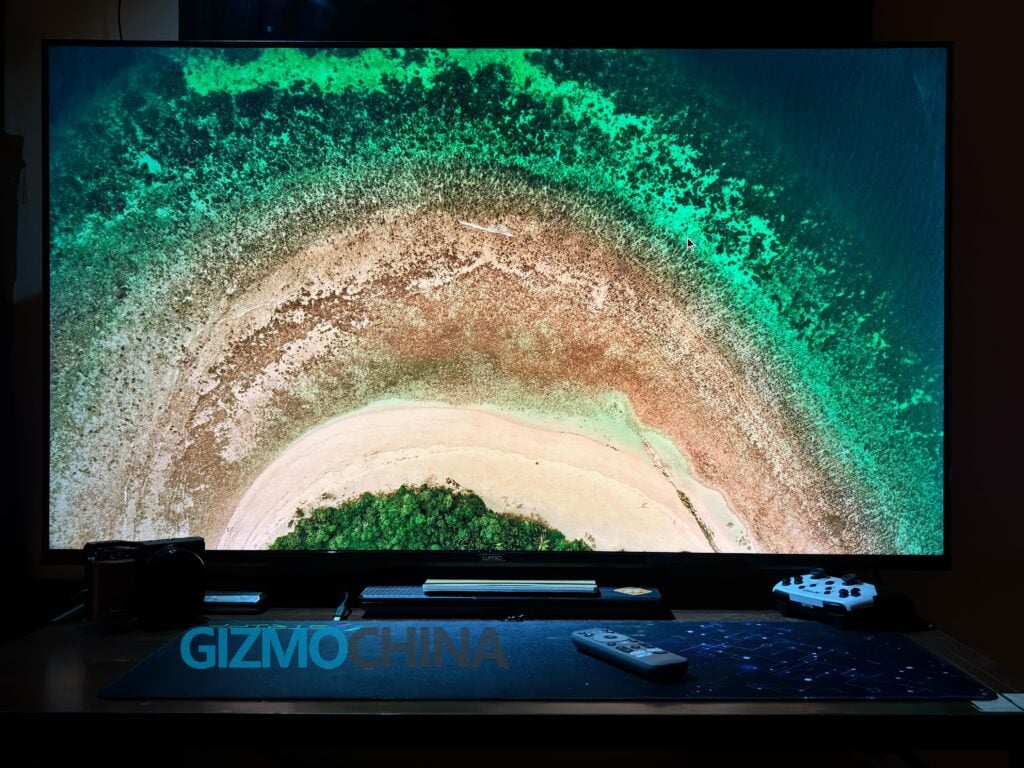
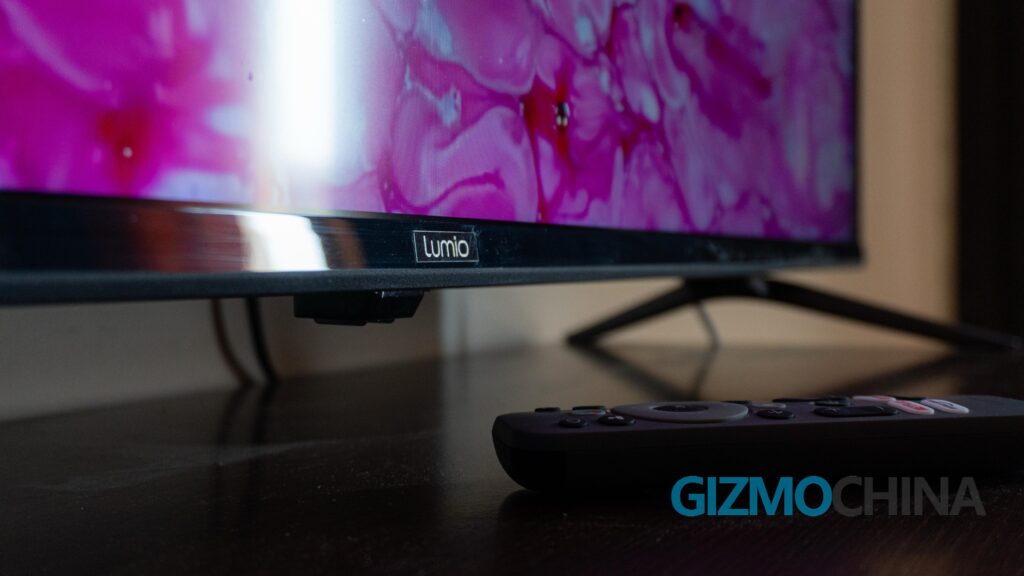
Before diving into how fast it may or may not be, let’s first look at its design. In the modern household, where gadgets and tech are scattered in almost every room, the smart TV often takes up the most visual real estate. That’s why the minimalist design of the Lumio Vision 7 helps it maintain a surprisingly low profile.
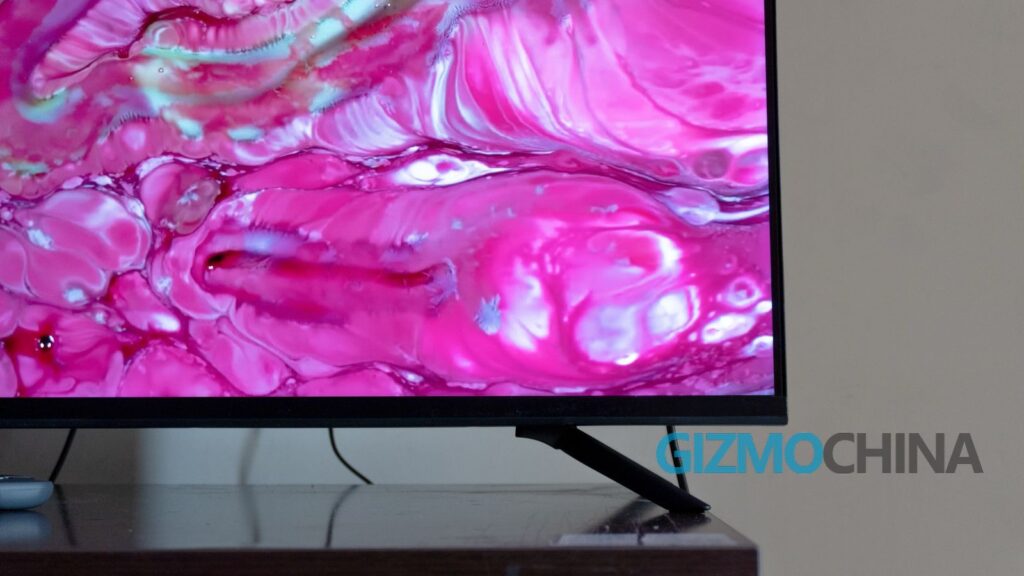
Of course, you can’t completely ignore a 55-inch slab—but once it’s on, the slim bezels around the QLED panel make it feel more like a digital canvas. This is especially true when the TV displays photos from your gallery or digital artwork. The Vision 7 is built using a metallic frame and back panel, blending plastic for other areas like the speaker cover. Buyers can either mount it on a wall or use the stand. It is worth noting that you only get the stand and its necessary screws and not the wall mounts in the box.
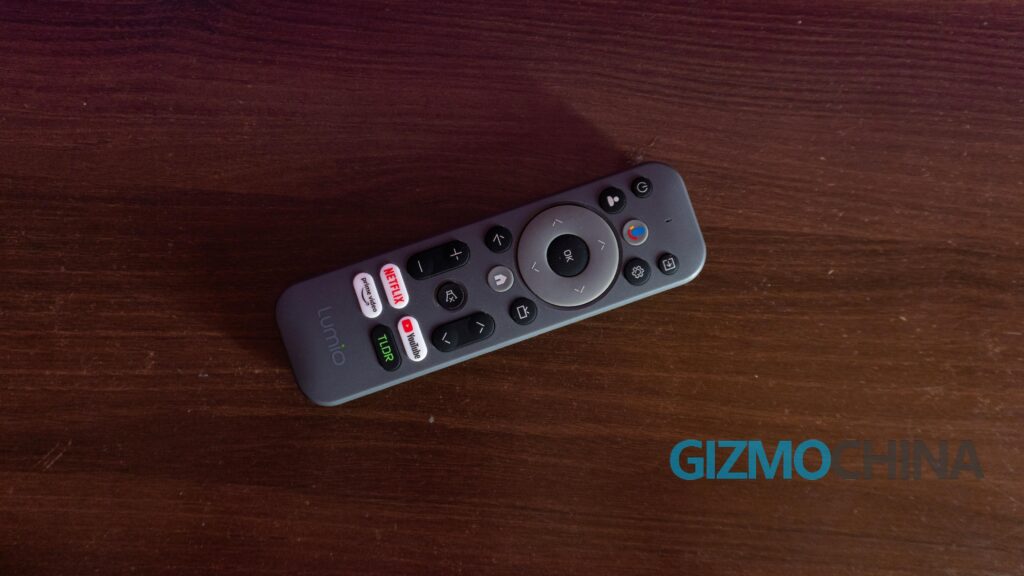
The Lumio Vision 7 is paired with the Minion remote, and honestly, it’s just right. With a refreshing gray plastic body and black textured rubber buttons, the remote manage to feel both premium and lightweight. It covers all the essentials as well like the directional keys, volume rockers, voice control, OTT hotkeys, a dedicated TLDR button, and, importantly, a much-appreciated mute button.
Connectivity
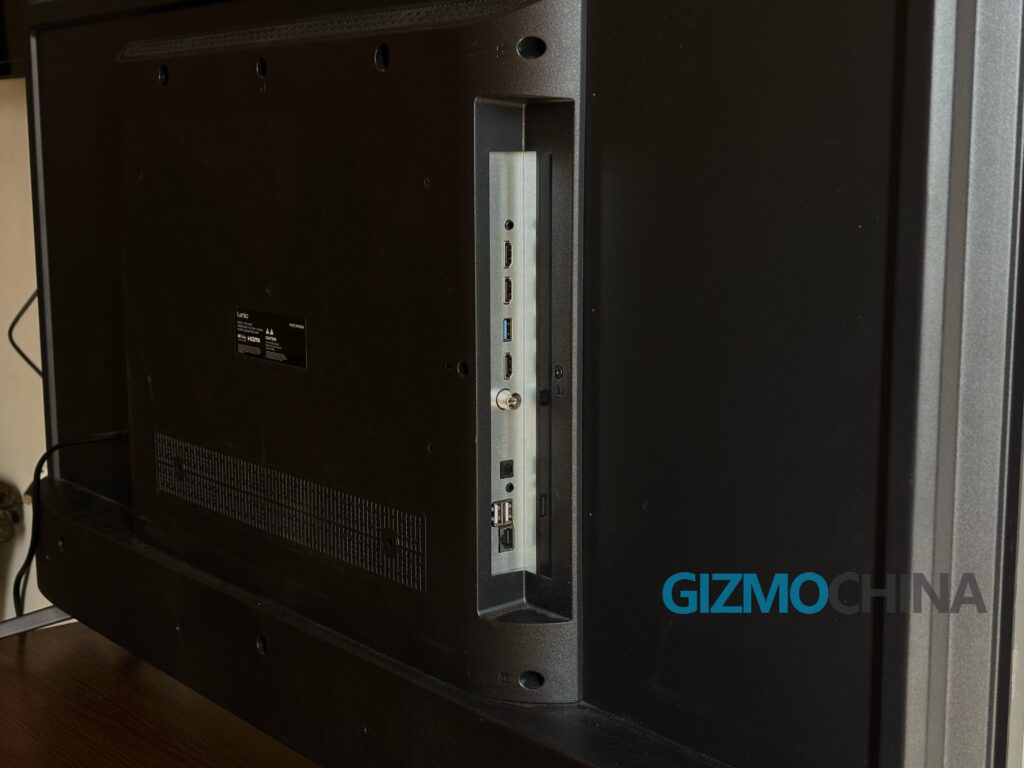
Lumio offers a healthy selection of ports on the Vision 7. You get three HDMI 2.1 ports (maxes out at 4K@60fps), including one with eARC support, making it easy to pair with soundbars for improved audio. There’s also one USB 3.1, two USB 2.0 ports, an Ethernet (RJ45) port, an AV mini input, and an optical port for additional connectivity. The Vision 7 also supports dual-band WiFi (2.4GHz/5GHz) and Bluetooth 5.0. Despite my router being in a different room, the TV managed to maintain a strong and stable connection throughout testing.
Display & Audio
Getting the specs out of the way first, the Lumio Vision 7 unit I received was the 55-inch model featuring 4K resolution, a Blue LED backlight, 60Hz refresh rate, 114% DCI-P3 color gamut, and support for HDR formats like HLG, Dolby Vision, and HDR10. Complementing all of this is Lumio’s proprietary “DOPE” display engine. QLED TVs are more affordable than ever, and here’s why this one stands out from the crowd:
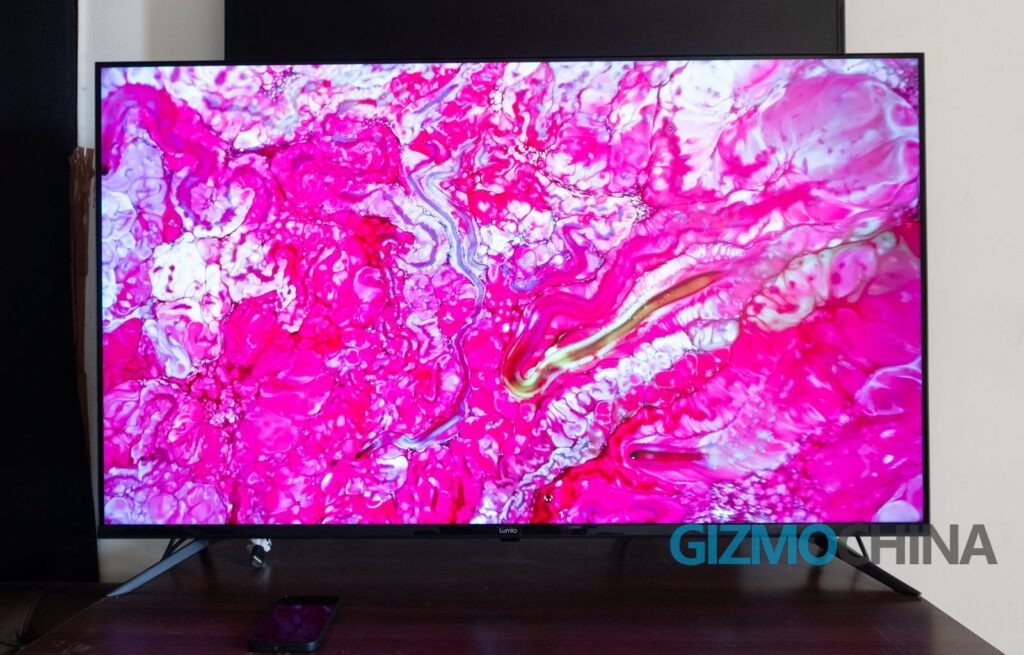
The QLED panel on the Vision 7 provides good color reproduction and sharp picture quality. Watching movies and videos in UHD resolution is genuinely a treat. The TV provides solid viewing angles (except at extreme sides), and both SDR and HDR content look vibrant. Lumio claims 114 percent DCI-P3 color gamut coverage and a peak brightness of 400 nits. The Blue LED backlight brings out warmer tones while color tuning is straightforward through the settings.
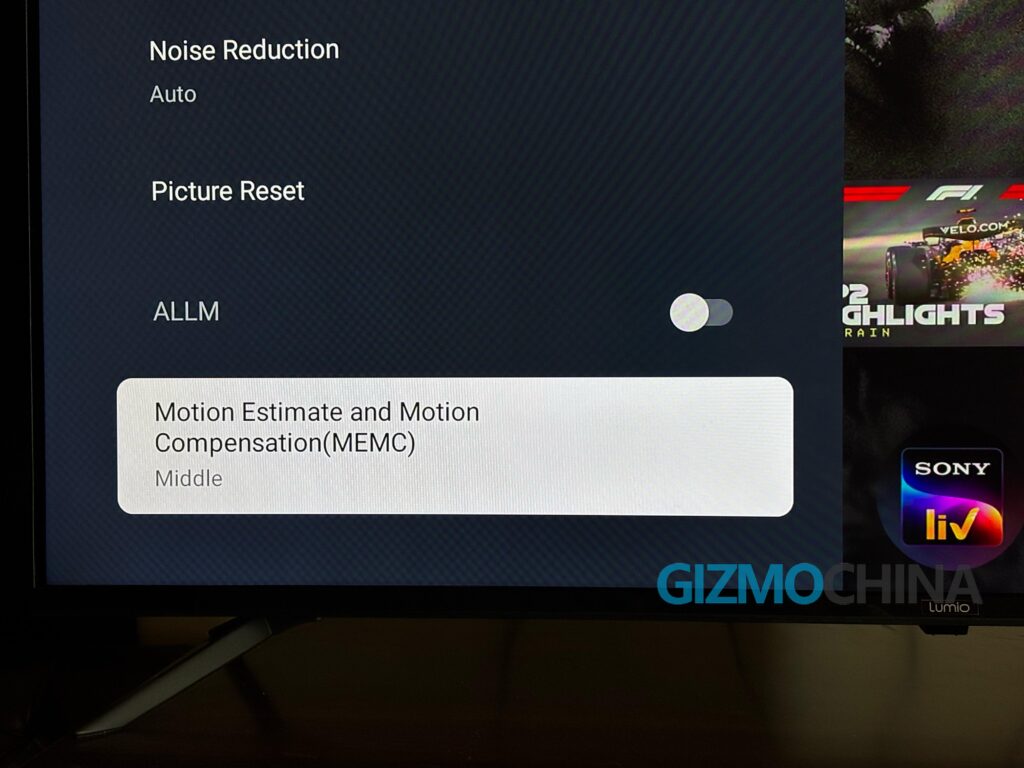
Unfortunately, you’re not getting true blacks—something to be expected given its sub-Rs 40,000 price tag and lack of MiniLED that is found on the Vision 9. Still, the 400-nit brightness performs above average in this segment, ensuring a clear and consistent experience even in a well-lit room during the day. On the feature front, you get ALLM, MEMC, and Dynamic Brightness. I already have a love-hate relationship with MEMC, and having it enabled by default—and turned back on automatically every time the TV starts was frustrating.
But like with most modern TVs, this is just something you learn to live with. Hopefully, Lumio can change this with a future update. MEMC was intended to make watching sports smoother, but being on by default leads to a worse experience when consuming other media like movies. On the gaming side, a 55-inch 4K screen is one of the best ways to enjoy AAA single-player titles. I tested it with The Last of Us Part II, and the cinematic gameplay felt immersive, with no noticeable input lag. That said, I wouldn’t recommend it for competitive esports titles like Counter-Strike 2.
During the initial media briefing, Lumio also highlighted the Vision 7’s audio system—and not without reason. After my Bluetooth speaker suddenly gave out, I relied entirely on the Vision 7’s built-in speakers and was pleasantly surprised. It features a DGS Audio setup with two tweeters and two full-range drivers, delivering a total output of 30W.
While it’s not the loudest in its class, the audio quality was genuinely enjoyable. The sound profile leans toward clarity, with nicely balanced mids and highs. Bass isn’t particularly punchy, but the speaker box offers enough volume for a richer overall range. Plus, you get Dolby Atmos support which is a nice touch. It’s no substitute for a dedicated soundbar or home theater setup, but for this price, it’s easily one of the better audio packages. I mostly kept the volume between 30 to 40 percent which I found to be the sweet spot.
Performance & UI
The smart TV segment is crowded with competition, especially under the Rs 40,000 price mark which makes standing out hard for any single model. Instead of relying on gimmicks or flashy features, Lumio has chosen a more thoughtful route: refining the core experience to match pricier rivals. During the development of the Vision 7, the brand studied reviews of competing TVs and found a common pain point, which is performance.
Many budget smart TVs tend to be sluggish, either right out of the box or over time. Lumio, however, claims that the Vision 7 has been built to avoid such slowdowns and is capable of outperforming the competition. At the official demo, the focus was on the impressive boot-up speeds and app load times, which was mirrored in my own experience over the last two weeks.
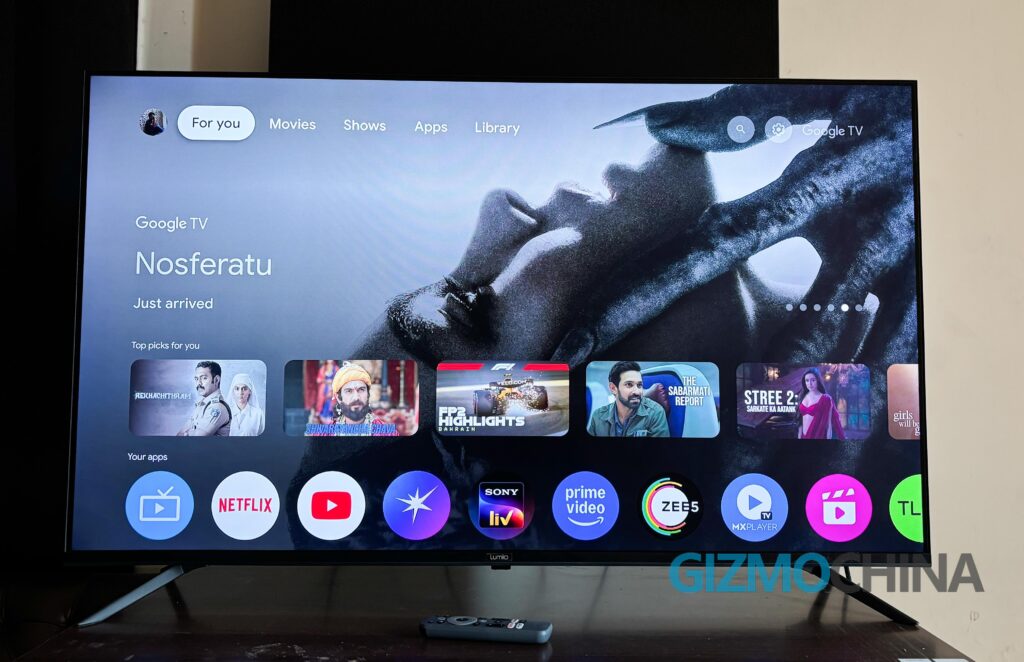
That speed is largely thanks to what Lumio calls the BOSS processor—a quad-core CPU paired with 3GB of DDR4 RAM and 16GB of internal storage. Compared to the typical 2GB/8GB setup found in this segment, this is a notable upgrade, giving the system more breathing room and ensuring smoother performance. Together, these internals deliver what is easily one of the smoothest UI experiences I’ve seen in this price range.
The Vision 7 runs Google TV out of the box. While I wasn’t initially a fan of this UI, the performance here made me reconsider. App switching, loading times, and overall navigation were snappy and responsive. This is what a true “smart” experience should feel like even on a budget. You also get access to all major streaming platforms and can download other media apps via the Play Store.
Verdict
The Vision 7 comes in three sizes: 43, 50, and 55 inches. The top-end 55-inch model, which I reviewed, is priced at Rs 39,999. For the price, you’re getting a responsive, well-built 4K smart TV with great visuals, smooth performance, and competent speakers. It checks all the boxes and delivers a premium experience without the premium price tag.
| Preview | Product | |
|---|---|---|

|
Lumio 109 cm (43 inches) Vision 7 4K Ultra-HD Google Smart QLED TV with FTW1-ADSG | Check Price on Amazon |
Please Note: When you buy something using the links in our articles, we may earn a small commission at no cost to you.
If you’re hesitant about buying from a relatively new brand, Lumio is trying to build consumer confidence. It boasts a network of over 300 service centers across 19,000+ pincodes in India. Plus, every Vision TV comes with 2 years of comprehensive warranty coverage and a year of extended support for those customers who pre-order. For those in the market for a new smart TV, the Lumio Vision 7 is definitely worth checking out.
For more daily updates, please visit our News Section.
Tech enthusiast? Get the latest news first! Follow our Telegram channel and subscribe to our free newsletter for your daily tech fix! ⚡



Comments