Add GIZMOCHINA as Preferred Source on Google
The JBL Flip series has long been the go-to for portable Bluetooth speakers that don’t try to do too much but still end up doing more than you expect. With the arrival of the JBL Flip 7, launched in March, JBL isn’t reinventing the wheel—but it’s definitely tuning the ride. The question now is: should you trade in your older Flip model for this latest iteration?
Let’s break it down.
1. The Flip Just Got Smarter and Tougher
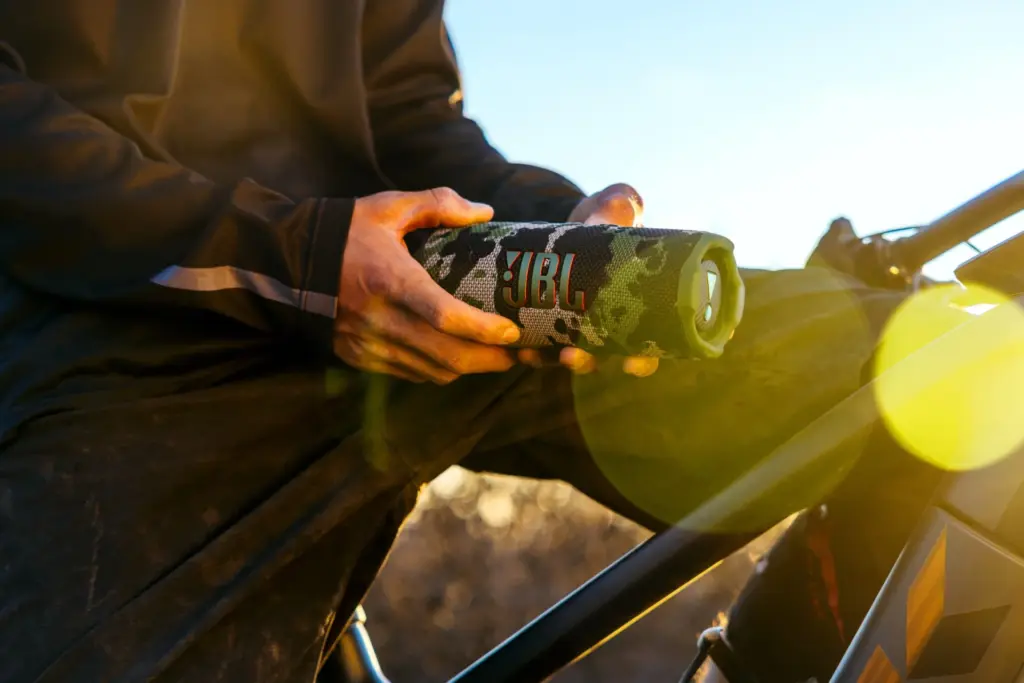
JBL didn’t mess with the size or form factor. The Flip 7 keeps the familiar cylindrical design, but under the hood, it’s gotten noticeably tougher. It now carries an IP68 rating, meaning it’s waterproof, dustproof, and even drop-resistant—an edge over the Flip 6’s IP67. It’s still a speaker you can take to the beach, but now it can handle getting knocked off the table too.
But the most interesting update might be AI Sound Boost. JBL’s new proprietary tech analyzes audio in real-time and dynamically enhances bass and clarity at higher volumes without muddying things up. It’s not just marketing fluff. Side-by-side, the Flip 7 sounds more confident—richer lows, more defined highs, and less distortion when things get loud. Think of it as smarter muscle.
2. Battery That Goes the Distance
Battery life also gets a minor but meaningful bump. The Flip 7 is rated for 14 hours of playback, and if you flip on the new Playtime Boost mode, you can stretch that to 16 hours—a subtle but welcome change for those long weekends or music marathons.
The tradeoff? Playtime Boost slightly dials down bass response, but it’s a fair exchange if you’re running low at a party and just need a few more hours to keep the vibes alive.
3. Smarter App Experience and Eco-Friendly Moves
Flip 7 also benefits from JBL’s updated companion app, which now includes a 7-band EQ. Compared to the Flip 6’s basic 3-band slider, this opens up much more control over your sound profile. Whether you’re tuning it for podcasts or an outdoor bash, it’s easier to make it yours.
Then there’s the eco-conscious design. The Flip 7 is made from 77% recycled plastic and 100% recycled fabric, and the packaging is FSC-certified. It won’t change your listening experience, but it might make you feel better about your purchase.
4. Connectivity Gets a New Standard
This time around, JBL is ditching PartyBoost in favor of Auracast, the emerging audio broadcasting standard. It allows seamless pairing with other Auracast-enabled JBL speakers, creating a larger synchronized sound network. The only issue? Previous gen Flips and Flip 7 can’t pair together—so if you’re building a multi-speaker setup, that’s something to consider.
And if you’re one of those rare folks who still plugs in your music, you’ll appreciate the addition of USB-C lossless audio playback, which caters to high-resolution audio fans.
5. So, Should You Upgrade?
Here’s the verdict: If you’re using anything older than the Flip 6, the Flip 7 is an easy recommendation. It sounds fuller, lasts longer, and now comes with smarter sound tuning and stronger durability. The upgrade to Auracast also future-proofs your setup a bit.
If you already own a Flip 6, it depends. If you’re satisfied with the current sound and rely on PartyBoost with other JBL speakers, you might want to wait. But if extended battery, better EQ control, and improved sound quality are priorities—and you’re ready to embrace the next generation of connectivity—then Flip 7 is more than just a modest refresh. It’s a portable speaker that genuinely earns the “next-gen” tag.
It may not look drastically different, but it plays louder, lasts longer, and sounds better doing it. And in the world of portable speakers, that’s often all that matters.
You can also explore more options in our guide to the Best JBL Speakers for Spring Break 2025.
For more daily updates, please visit our News Section.
Stay ahead in tech! Join our Telegram community and sign up for our daily newsletter of top stories!