Add GIZMOCHINA as Preferred Source on Google
OnePlus is doing something it hasn’t done in a while: making a smaller phone. The company has confirmed that its new device, the OnePlus 13s, is launching globally on June 5. And if that name sounds a little off from the usual, that’s because the phone itself follows a slightly different playbook.
It’s being pitched as a compact flagship, something OnePlus or most manufacturers, for that matter, have largely stayed away from in recent years. It’s a good sign that brands are getting into this territory again, especially since we’ve long thought small phones might be on the verge of dying.
The OnePlus 13s is not entirely a new phone, though. It looks like a rebranded version of the OnePlus 13T which launched exclusively in China last month. That’s not necessarily a bad thing and is within Chinese manufacturers playbook to launch phones under a different name globally.
1. Design and Display
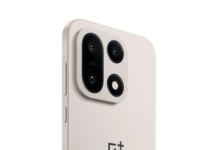
As a compact flagship, it’s natural to expect the 13s in a more manageable form factor. The phone is around 12mm smaller than the regular OnePlus 13 at 151mm height.
It comes with a glass back and a metal frame, which gives it a more premium feel. The front features a 6.32-inch LTPO AMOLED panel, with a 1.5K resolution and variable refresh rate between 1Hz and 120Hz.

OnePlus might also use Oppo’s Crystal Shield Glass for durability, and the screen will also have Dolby Vision support. Based on the China-only 13T, the 13s should also come with an IP65 rating, offering some degree of water and dust resistance, though it stops short of the IP68 standard found on more robust flagships.
2. High-end internals, regardless of name

Inside, the OnePlus 13s is about what you’d expect from a 2025 flagship phone, minus the size. It runs on Qualcomm’s Snapdragon 8 Elite chip, which is built on a 4nm process and powers several high-end Android devices this year.
The phone will come in configurations of up to 16GB of LPDDR5X RAM and 1TB of UFS 4.0 storage. And the company isn’t skimping on thermals either. It houses a 4400mm² Cryo-Velocity Vapor Chamber with an external cooling layer on the back cover to dissipate the heat.
You are sure to be pleased with battery capacity as well. The OnePlus 13s might feature the same 6260mAh cell as its Chinese sibling. That is unusually large for a phone this size, but it’s all thanks to the new silicon-carbon battery tech that is more dense than conventional Li-ion batteries. Charging will be handled via 80W wired fast charging.
On the software side, it looks like the 13s will ship with Android 15-based OxygenOS skin. Features like Wi-Fi 7, Bluetooth 5.4, NFC, Dolby Atmos stereo speakers, an IR blaster, and an in-display fingerprint sensor round out the hardware list.
3. Two cameras on the back, one on the front
The camera hardware on the 13s isn’t trying to compete with phones like the Galaxy S24 Ultra or the Pixel 8 Pro, but that’s not really the point of this phone.
Based on 13T, it will feature a dual camera setup on the rear headlined by a 50MP Sony IMX906 sensor with OIS, and a 50MP telephoto lens with 2x optical zoom and OIS as well. There’s no ultra-wide lens here. On the front, there will be a 16MP camera that shoots 1080p video at 30fps.
All in all, the 13s will offer clean optics, optical zoom, and the core essentials without too many bells and whistles. It won’t get extra points for cameras, but it also doesn’t seem like it’s trying to.
4. The Pricing
As for the price, OnePlus hasn’t confirmed anything yet. The 13T launched in China at ¥3,399, which converts to roughly $446 or some Rs 40,000.
Global models, however, tend to go up in prices depending on regional taxes and storage tiers. We are expecting the OnePlus 13s to land in the $500-$600 range. That would put the OnePlus 13s in competition with devices like the Samsung Galaxy S24, the Pixel 8, and the Nothing Phone (2).
For more daily updates, please visit our News Section.
Stay ahead in tech! Join our Telegram community and sign up for our daily newsletter of top stories! 💡