Add GIZMOCHINA on Google:
As an Amazon Associate, Gizmochina earns from qualifying purchases. Links on this page may earn us a commission at no extra cost to you.
I’ve had the opportunity to spend nearly two months with the new OnePlus 13s. Specifically, I’ve been reviewing the Pink Silk edition with 12GB of RAM and 256GB of storage. OnePlus positions this device as a compact flagship that doesn’t compromise on performance or battery life, addressing a common pain point in the compact phone market. Having put it through its paces in daily use—from heavy multitasking to extensive media consumption and photography, I’ve formed a comprehensive understanding of its capabilities and how it holds up to its claims.
3Performance and Software
- Snapdragon 8 Elite
- LPDDR5x | UFS 4.0 storage
- Variants: 12GB+256GB | 12GB+512GB
- Android 15 | OxygenOS 15
- 5,850mAh battery | 80W charging
Under the hood, the OnePlus 13s is powered by the Snapdragon 8 Elite, paired with 12GB of LPDDR5X RAM and 256GB / 512GB of UFS 4.0 storage. To manage thermals in the compact chassis, the device incorporates a substantial 4,400mm² 3D Cryo-Velocity Vapor Chamber and an “industry-first cooling layer” integrated into the back cover.
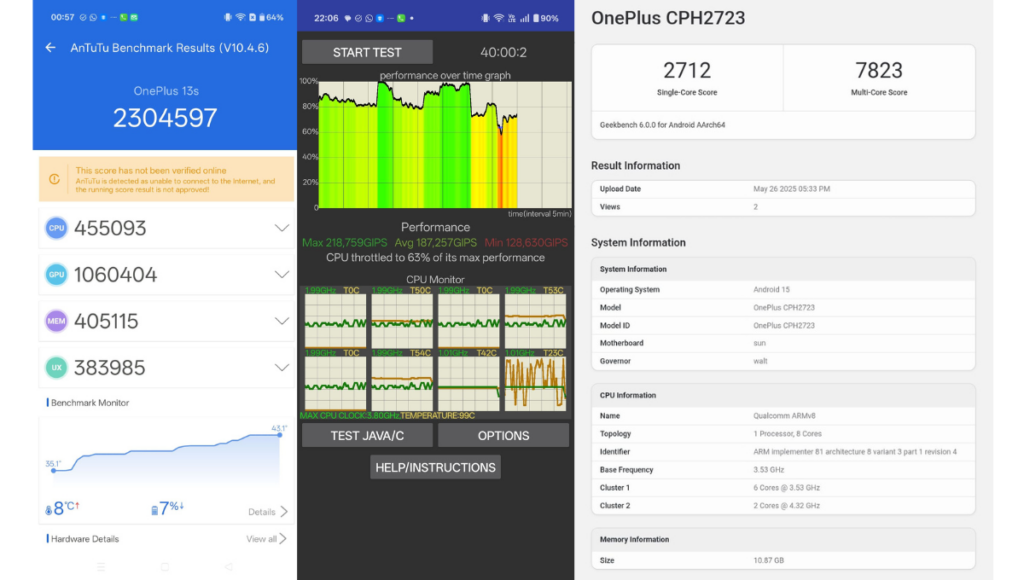
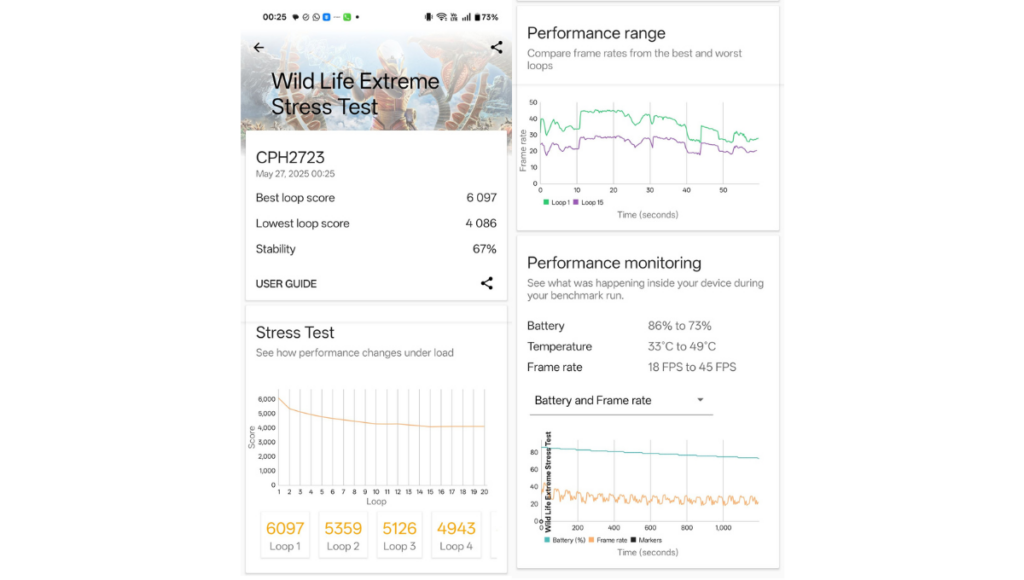
The 13s delivers solid performance, but it does show signs of heating during extended use. Whether it’s heavy gaming or running stress tests, the device tends to warm up noticeably, with thermal throttling reducing performance to around 63 percent of its peak. While everyday tasks remain smooth, power users may feel the heat during longer sessions.
According to OnePlus, network performance is addressed with an 11-antenna omnidirectional system and a custom G1 Wi-Fi enhancement chip, promising improved stability and speed, even in challenging environments like subways or through walls.
Battery endurance is another key focus, with the OnePlus 13s featuring a large 5,850mAh battery, a significant capacity for its size. This is complemented by 80W fast charging, which takes around 60 minutes to achieve a full charge. It comes with bypass charging support, which powers the phone’s motherboard directly by bypassing the battery, reducing heat buildup during extended sessions.
The phone runs OxygenOS 15.0 based on Android 15, aiming to maintain OnePlus’s reputation for a fast and smooth user experience. The phone is promised to receive four years of OS upgrades and six years of security updates. Here’s a look at how the device performed on benchmark apps.