
Add GIZMOCHINA as Preferred Source on Google
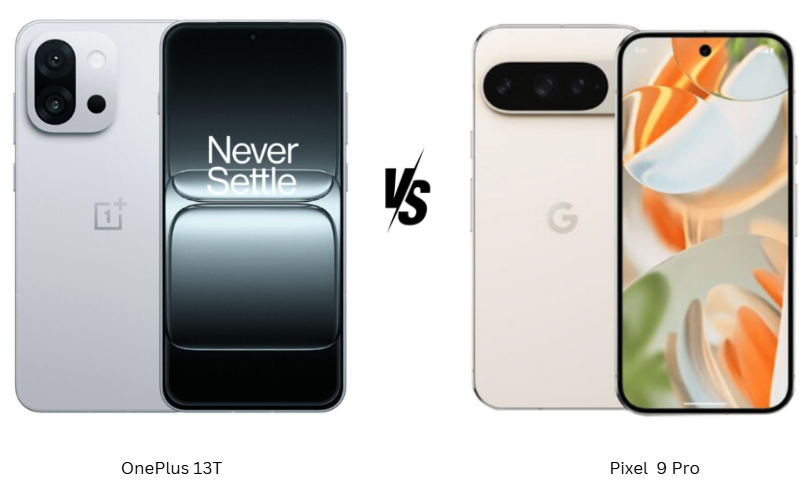
OnePlus 13T and Google Pixel 9 Pro both aim to redefine value in the premium segment, offering flagship-level performance, cutting-edge cameras, and high-refresh displays. What makes this comparison important is how differently each phone prioritizes user experience. OnePlus focuses on raw power and battery innovation, while Google leans into AI, camera versatility, and long-term software support. For buyers torn between performance and software longevity, this matchup highlights two distinct visions of what a modern premium phone should deliver.
1. Design and Display

Build and Feel: OnePlus’s flat Crystal Shield front, matte alloy frame, and IP65 sealing give a lightweight, grippy feel that echoes its performance‑first ethos. Pixel’s Gorilla Glass Victus 2 on both sides, polished aluminum rails, and stricter IP68 rating exude a premium, more durable impression. The firmer ingress protection and richer materials on Pixel signal a step‑up in everyday resilience, so durability‑minded buyers gravitate toward Google’s handset.
Display Quality: The 13 T’s 6.32‑inch LTPO AMOLED reaches 1600‑nit HBM brightness and 2160 Hz PWM dimming, delivering flicker‑free comfort and vibrant Dolby Vision video. Pixel’s slightly larger 6.3‑inch LTPO OLED pushes a searing 3000‑nit peak and higher 495 ppi resolution, rendering HDR10+ content with cleaner highlights and crisper text. In direct sun and for mobile HDR movies, Pixel’s luminance edge and finer pixel grid make visuals more legible and immersive.
Verdict: While OnePlus offers eye‑comfort PWM and a marginally higher screen‑to‑body ratio, Pixel’s sturdier build, stricter waterproofing, and brighter, sharper panel collectively craft the more polished physical experience. Users prioritizing durability and outdoor readability will see Google’s upgrades as the decisive advantage.
| Preview | Product | |
|---|---|---|

|
Google Pixel 9 Pro – Unlocked Android Smartphone with Gemini, Triple Rear Camera System, 24-Hour… | Check Price on Amazon |
Please Note: When you buy something using the links in our articles, we may earn a small commission at no cost to you.
2. Specifications

Performance: Snapdragon 8 Elite’s Oryon V2 cores in the 13 T clock up to 4.32 GHz, pairing with UFS 4.0 storage for flagship‑class throughput and gamer‑friendly thermals. Pixel’s Tensor G4 emphasizes AI and imaging tasks, trading peak raw speed for on‑device Gemini Nano intelligence and seven years of OS upgrades. Power users chasing sustained frame rates benefit more from OnePlus, whereas long‑term software support favors Pixel.
Battery and Charging: OnePlus debuts a 6260 mAh silicon‑carbon cell that outlasts rivals by roughly a workday and fills from 0‑100 % in about 45 minutes at 80 W. Pixel’s 4700 mAh pack charges slower at 27 W wired but counters with 21 W wireless, reverse wireless, and thermal‑saving bypass charging. Frequent travelers gain stamina from OnePlus, while convenience seekers value Pixel’s wireless versatility.
Verdict: Raw horsepower and marathon endurance lean toward the 13 T, yet Pixel’s AI‑centric chip, wireless top‑ups, and guaranteed updates future‑proof daily use. Preference hinges on whether sheer performance or ecosystem longevity matters more.
3. Camera
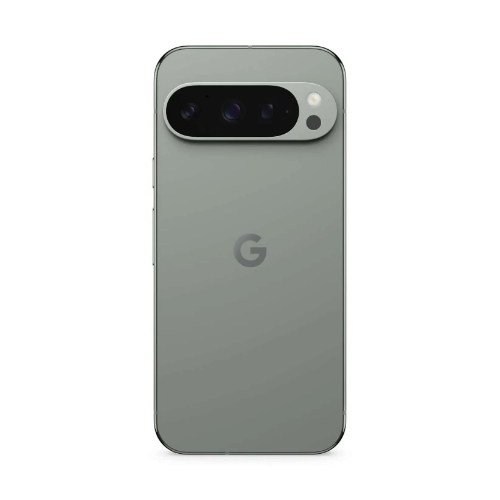
Main and Secondary Lenses: OnePlus fields dual 50 MP sensors; its main shooter offers solid dynamic range, while the 2× tele boosts portrait clarity but lacks ultrawide versatility. Pixel counters with a 50 MP primary, 48 MP 5× periscope, and 48 MP ultrawide, all aided by Laser AF and Google’s computational tricks such as Best Take. The extra focal lengths and refined processing let Pixel pull ahead in reach and color accuracy, making it the more adaptable imaging tool.
Selfie Camera: Pixel’s 42 MP PDAF front lens captures sharper, wider shots and 4 K video, ideal for vloggers. OnePlus’s 16 MP module delivers reliable social‑media selfies but falls short in low‑light detail. Pixel’s upgrade to a flagship‑grade selfie sensor benefits content creators.
Verdict: Google’s triple‑lens hardware plus AI Zoom Enhance and 8 K capture yield a notably broader photographic envelope. OnePlus shoots well, yet Pixel’s optics and algorithms collectively provide a superior, more flexible camera experience.
4. Pricing
Both devices land near the US $600 mark at launch, offering flagship silicon and high‑end displays for mid‑tier money. Because Pixel bundles wireless charging, UWB, and seven‑year software support without a premium, value‑focused shoppers may perceive it as the stronger long‑term deal, while performance enthusiasts still benefit from OnePlus’s faster chip and battery at the same sticker price.
5. Conclusion

OnePlus highlights a 2160 Hz PWM panel, infrared blaster, and pioneering silicon‑carbon battery tech that promises a longer lifespan and higher cycle count. Pixel brings ultrasonic fingerprint security, UWB for spatial device finding, on‑device Gemini Nano AI, Satellite SOS, and extended OS promises.
Verdict: Buyers prioritizing gaming speed, all‑day endurance, and IR remote control will appreciate the OnePlus 13 T’s hardware‑led upgrades. Those who seek a robust camera suite, brighter screen, wireless conveniences, and guaranteed long‑term software support should lean toward the Google Pixel 9 Pro.
Read More:
- Xiaomi 15 vs OnePlus 13s: Which Compact Flagship Is Better?
- Oppo Find X8s+ vs Vivo X200s: Who Has the Best Premium Value in 2025?
- iPhone 16 vs Pixel 9 Specs Comparison: 2024 Smartphone Duel
