
Add GIZMOCHINA as Preferred Source on Google
Intro
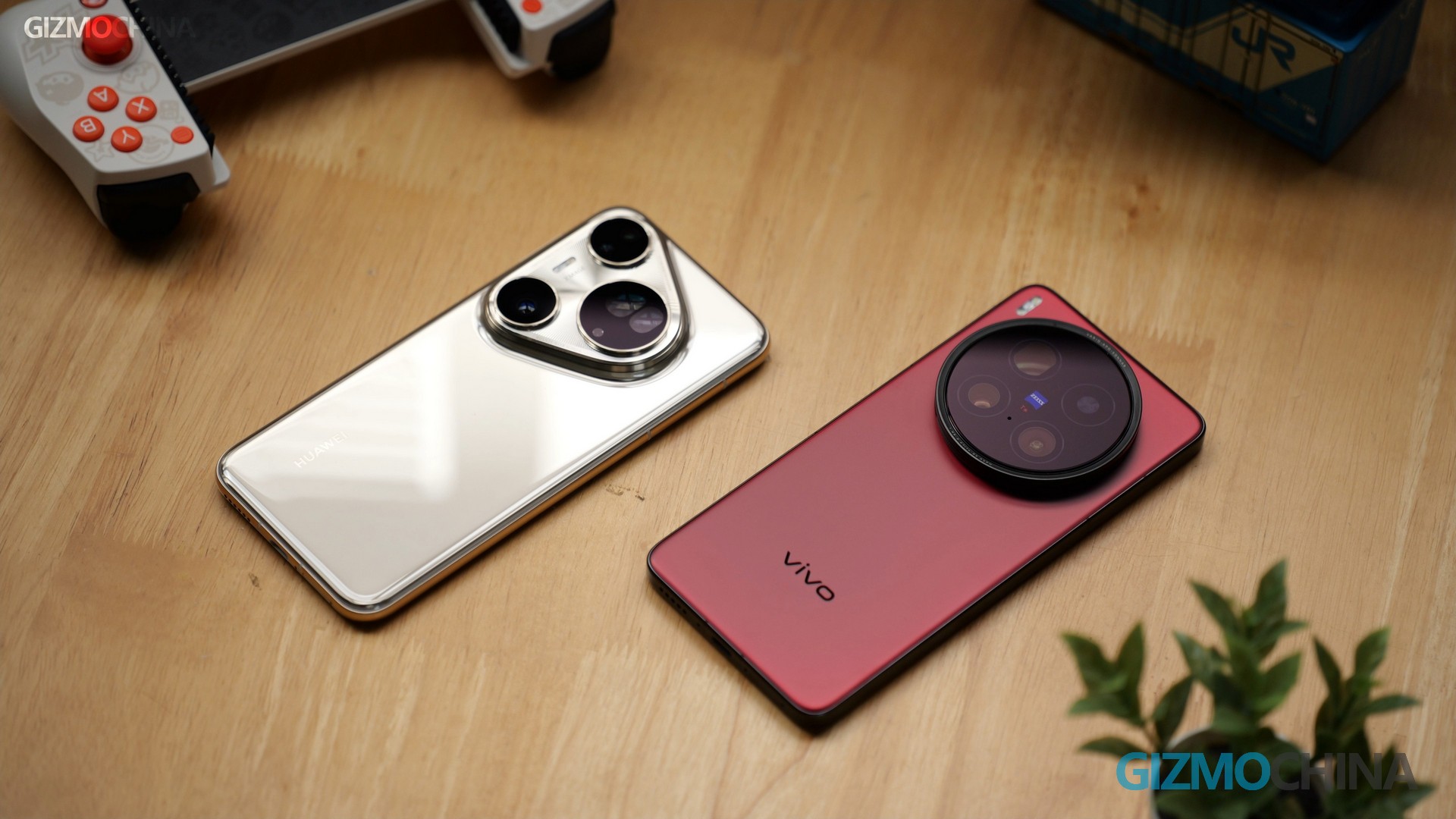
This is the footage captured by a regular telephoto lens, which is a single lens connected to a single sensor, a setup used by iPhone, Samsung, and vivo. Except for Huawei! It uses the same sensor across two lenses. Now, if we compare the vivo X200 Ultra with it, which one will win in imaging performance?
Focal Length Coverage and Specifications
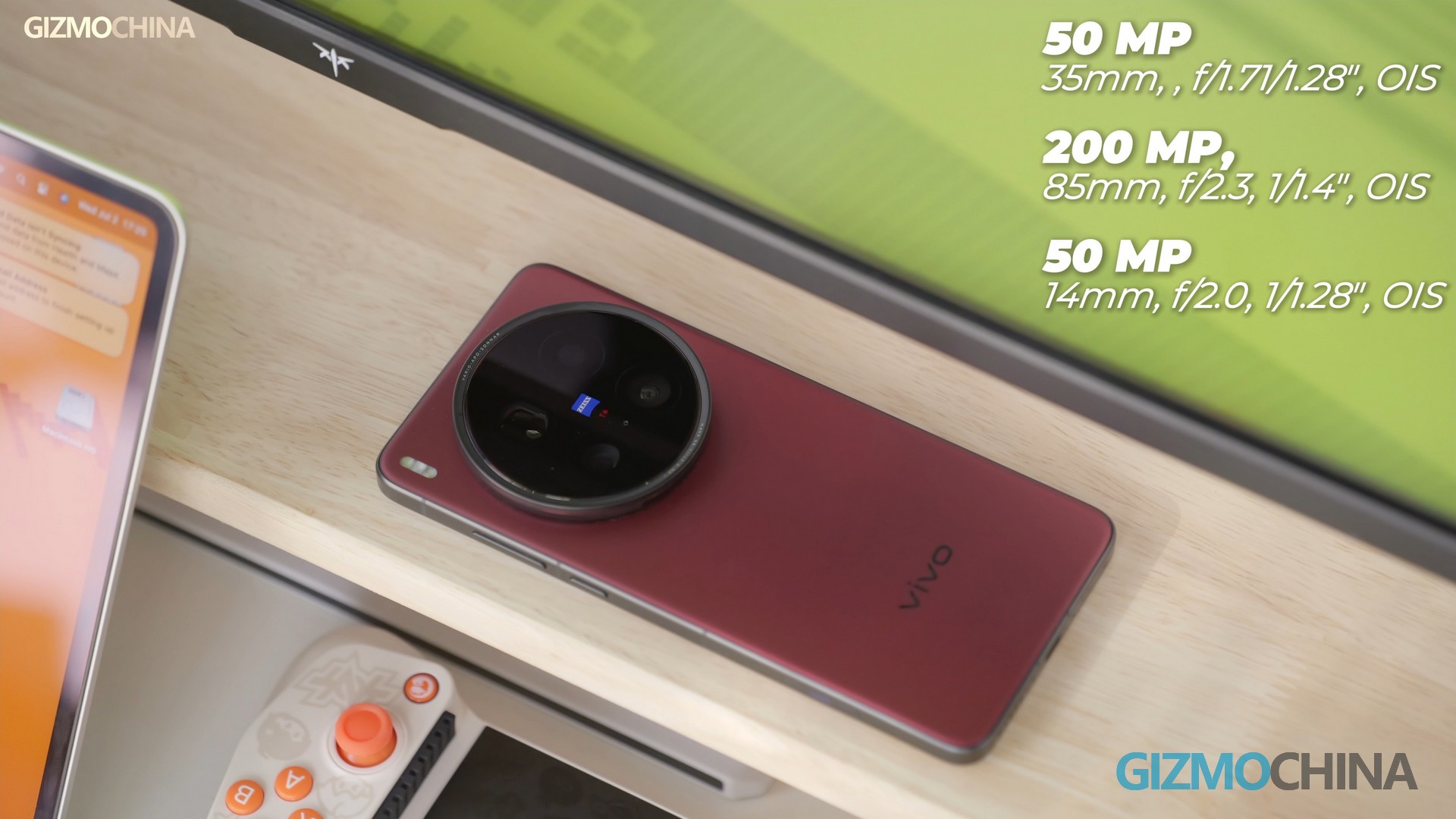
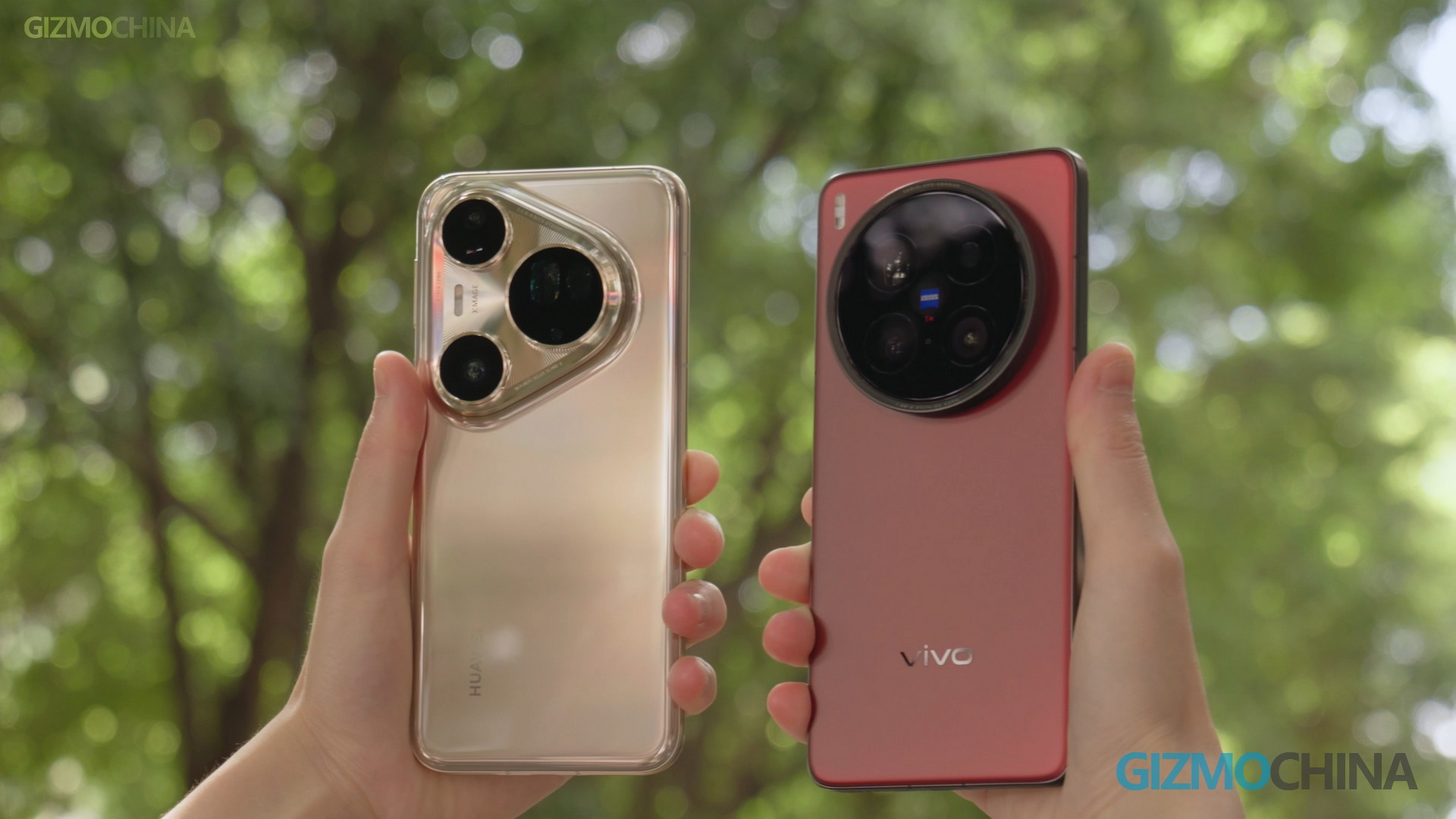
When it comes to telephoto imaging, vivo has already set a high bar. It’s three Zeiss lenses cover three golden focal lengths: the 35mm main lens mimics the human eye’s perspective, while the 85mm lens caters to creative shooting. And let’s not forget the 135mm for portraits.
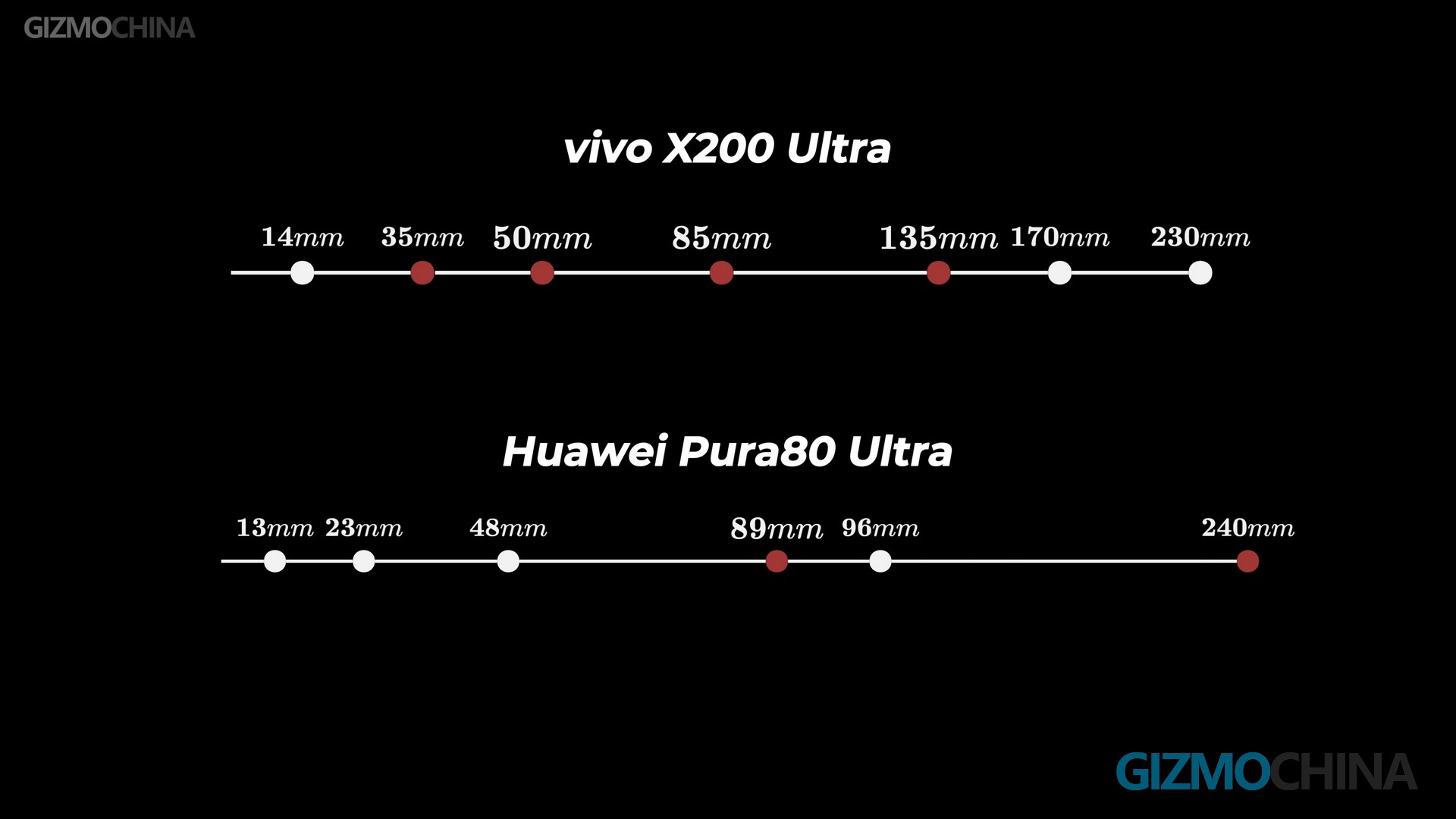
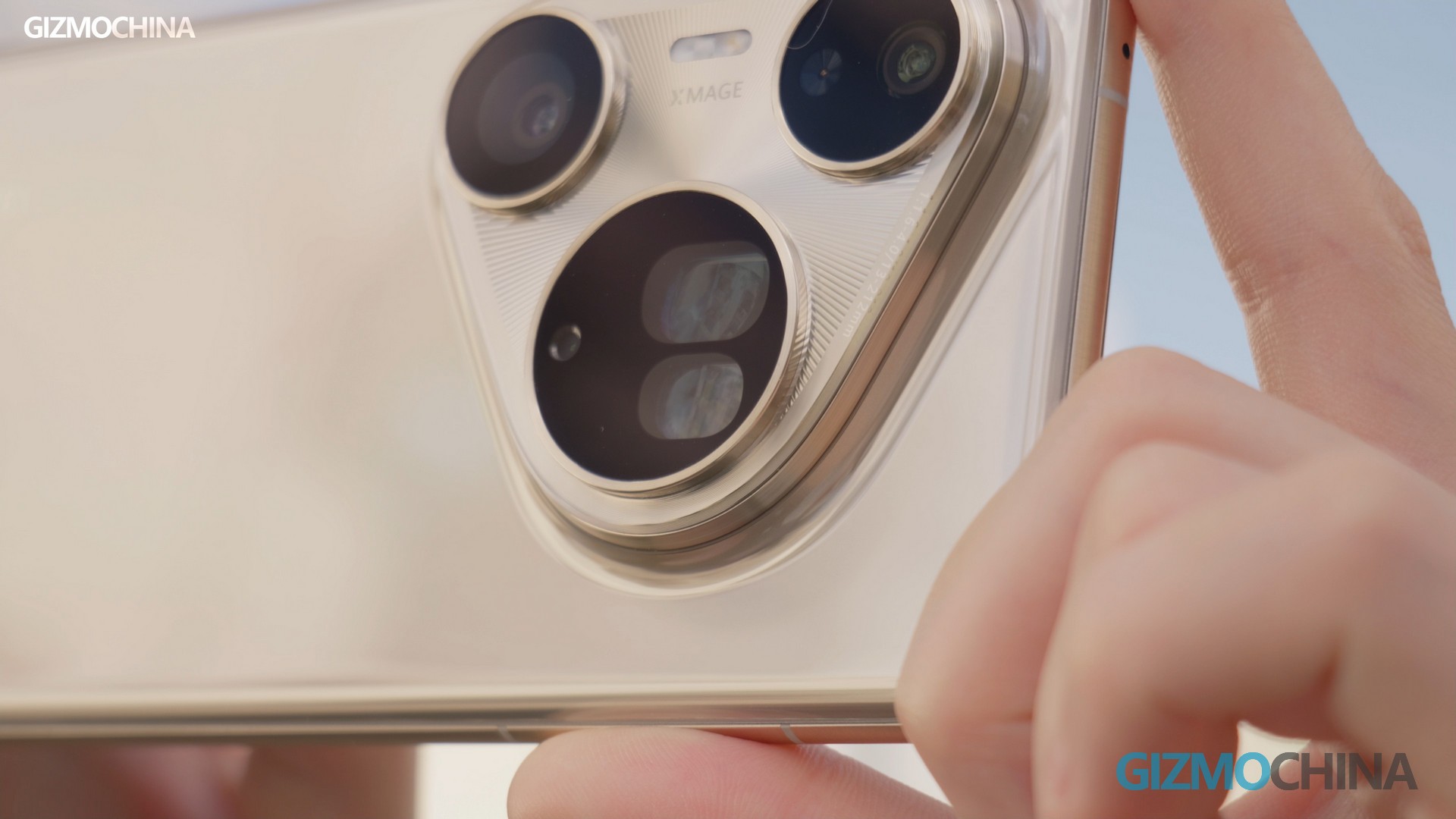
Interestingly, Huawei offers a similar focal length, but with a game-changing twist: one sensor shared by two telephoto lenses. This innovative design enables seamless switching between two focal lengths, delivering 3.7x and 9.4x optical zoom without compromising image quality.
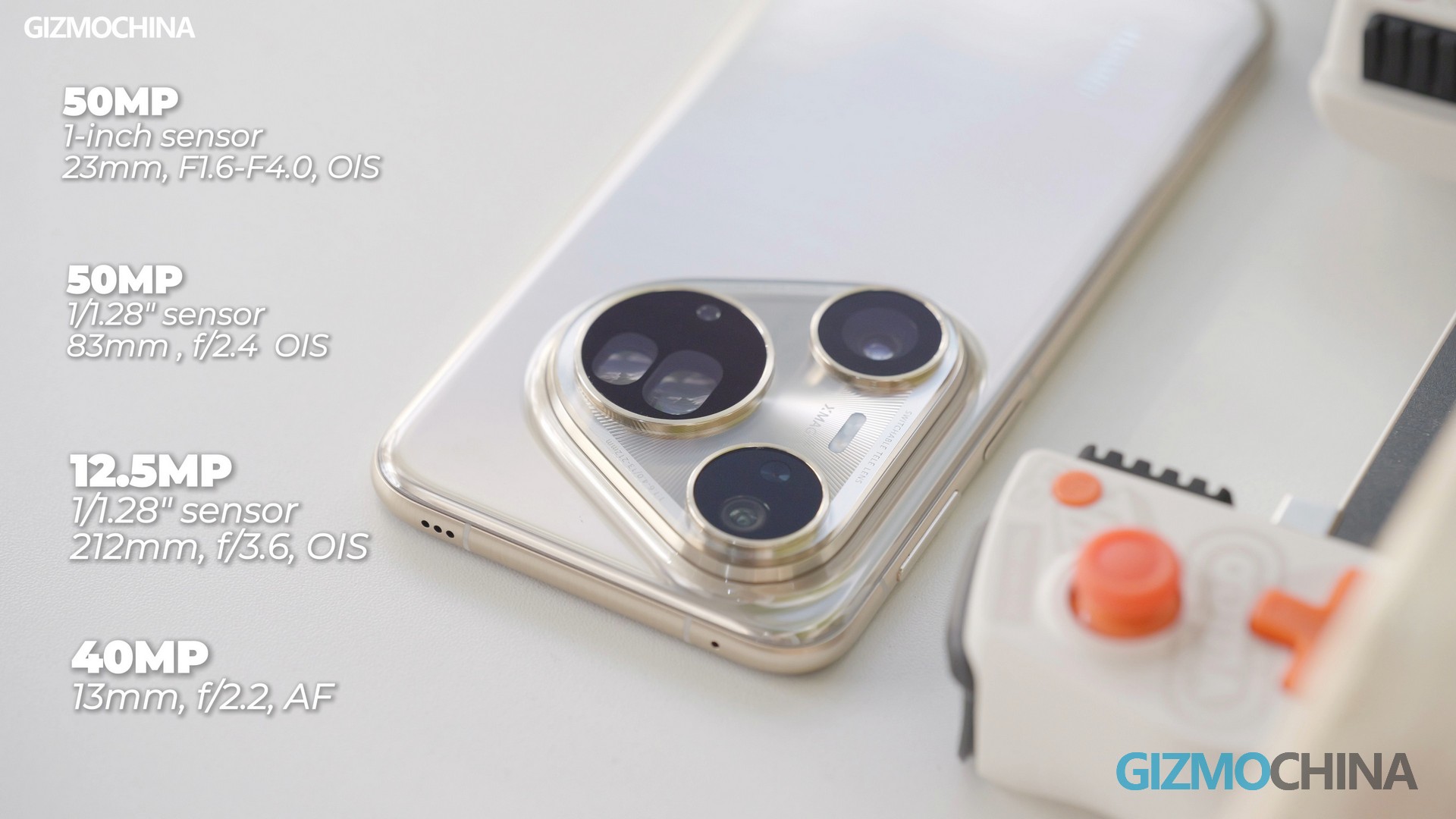
When it comes to sensors, the two phones are very different. Let’s break down the specs:
Huawei Pura 80 Ultra features a 1-inch 50MP sensor for its main camera, packing both a higher pixel count and a larger sensor size.
vivo X200 Ultra equips its main and ultra-wide lenses with Sony’s LYT-818 sensor, while the telephoto uses a Samsung HP9 sensor, for native 85mm optical shooting. Surprisingly, it holds its own in both pixel density and sensor dimensions.
Mid-Telephoto Performance
For this imaging review, we focused primarily on telephoto capabilities. The Pura 80 Ultra switches from the main camera to a telephoto, equivalent of 89mm at 3.7x zoom, while the X200 Ultra offers a 3.7x equivalent of 85mm; this gives the X200 Ultra a slightly wider field of view. During shooting, we controlled the framing to maintain consistency.
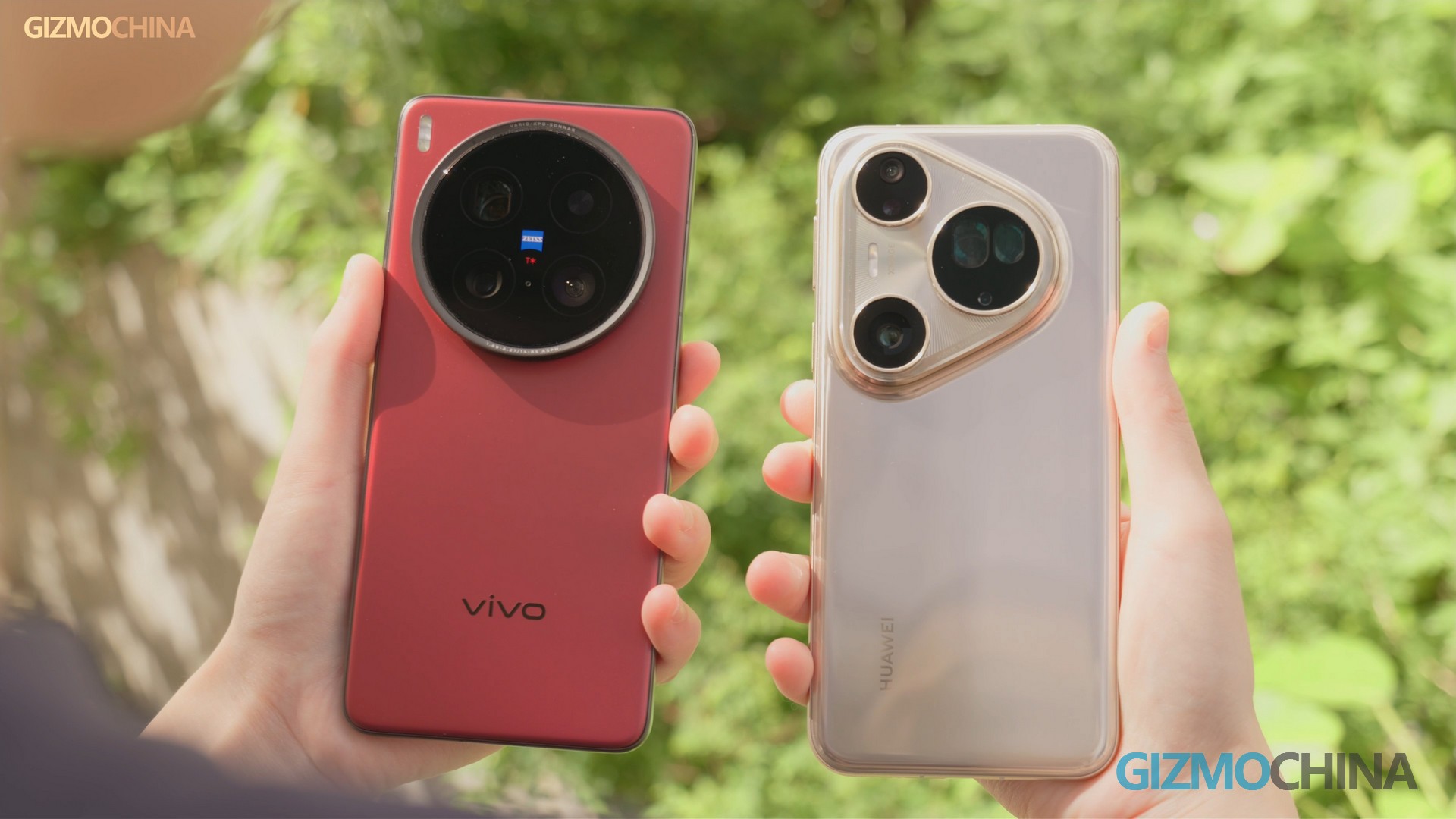
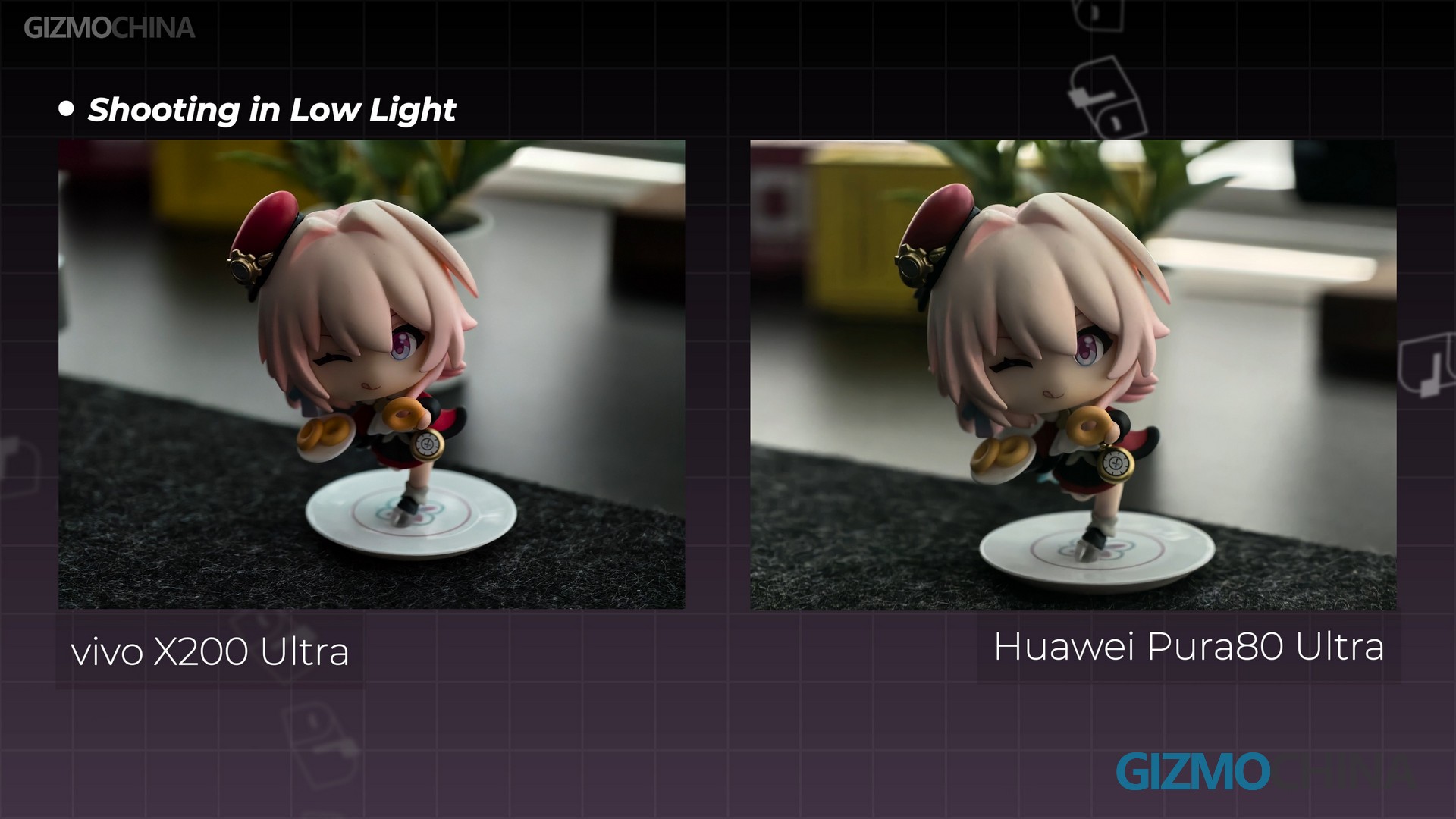
In the first set of native 3.7x low-light shots, the two phones show different styles. The Pura 80 Ultra impresses with buttery-smooth light transitions, preventing blown-out highlights, and retaining shadow detail. It even softens the textures, capturing the scene’s natural lighting. On the other hand, the vivo X200 Ultra sharpens highlights while intensifying shadow contrast, leveraging lighting to sculpt a dramatic, dimensional effect. This makes the subject stand out, though at the cost of some shadow information. Remarkably, despite these differences, both devices deliver almost the same image sharpness and clarity.
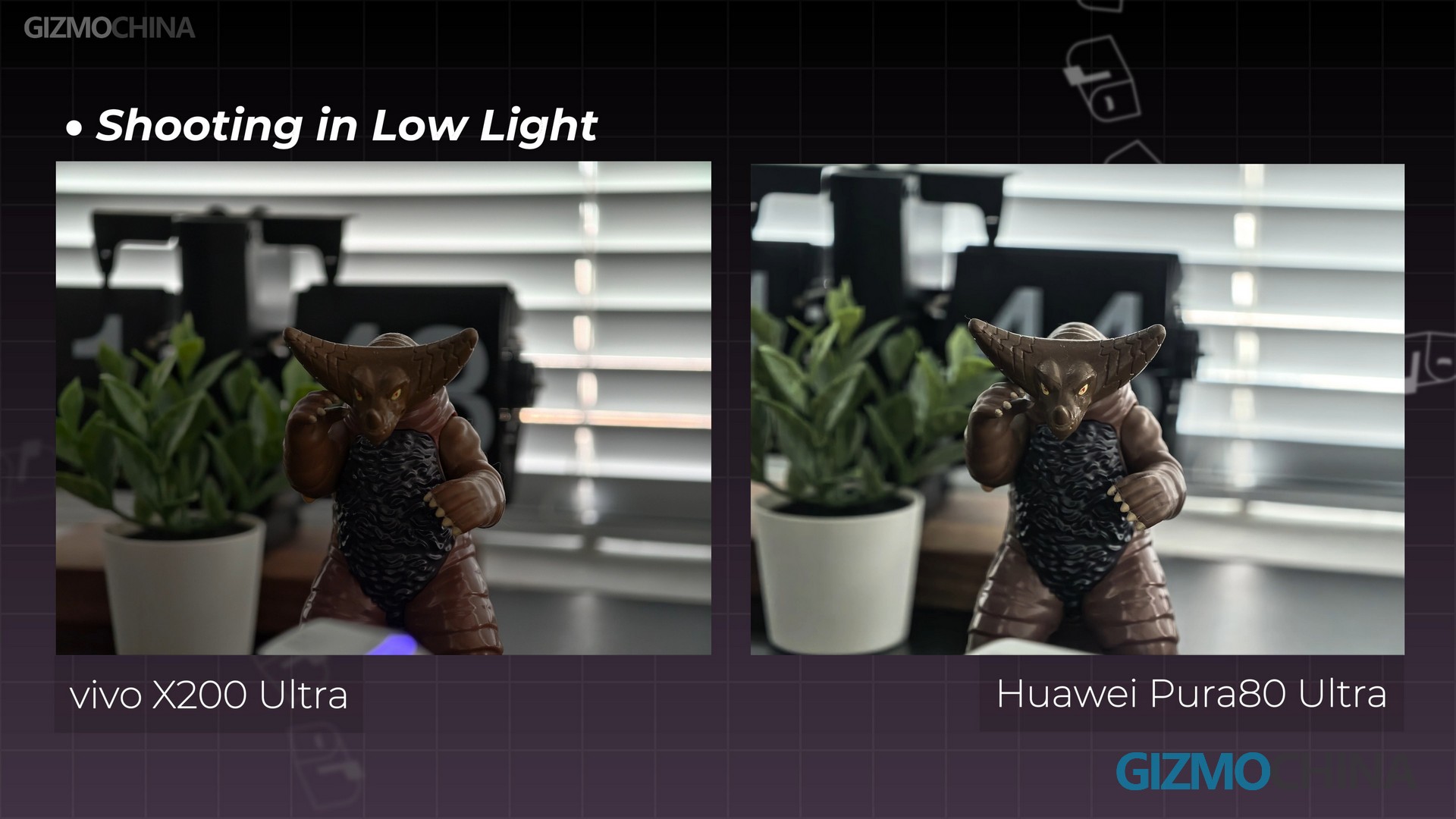
In another set of shots, both phones deliver solid sharpness, revealing clear details like hair strands, fabric textures, hats, and markings on the watch. This shows their telephoto lenses excel at capturing fine details in low light. However, the vivo X200 Ultra slightly under-represents shadow and background details. As for which handles details better, that’s a call for you to make.
Color Performance in Complex Scenes
In terms of color reproduction, the Pura 80 Ultra excels in accuracy. It renders the pink hair, red hat, and purple eyes of the figurine close to their real-life hues, with natural color transitions, and no obvious color casts. The vivo X200 Ultra, however, maintains its signature style, with the tones being very vivid. For example, the pink hair shows heightened saturation, creating a more vibrant visual impact but deviating slightly from the authentic color. Huawei’s Ultra Chroma camera notably stands out, ensuring precise color fidelity even in complex lighting scenarios. To validate this, we also compared portrait and pet close-up shots.
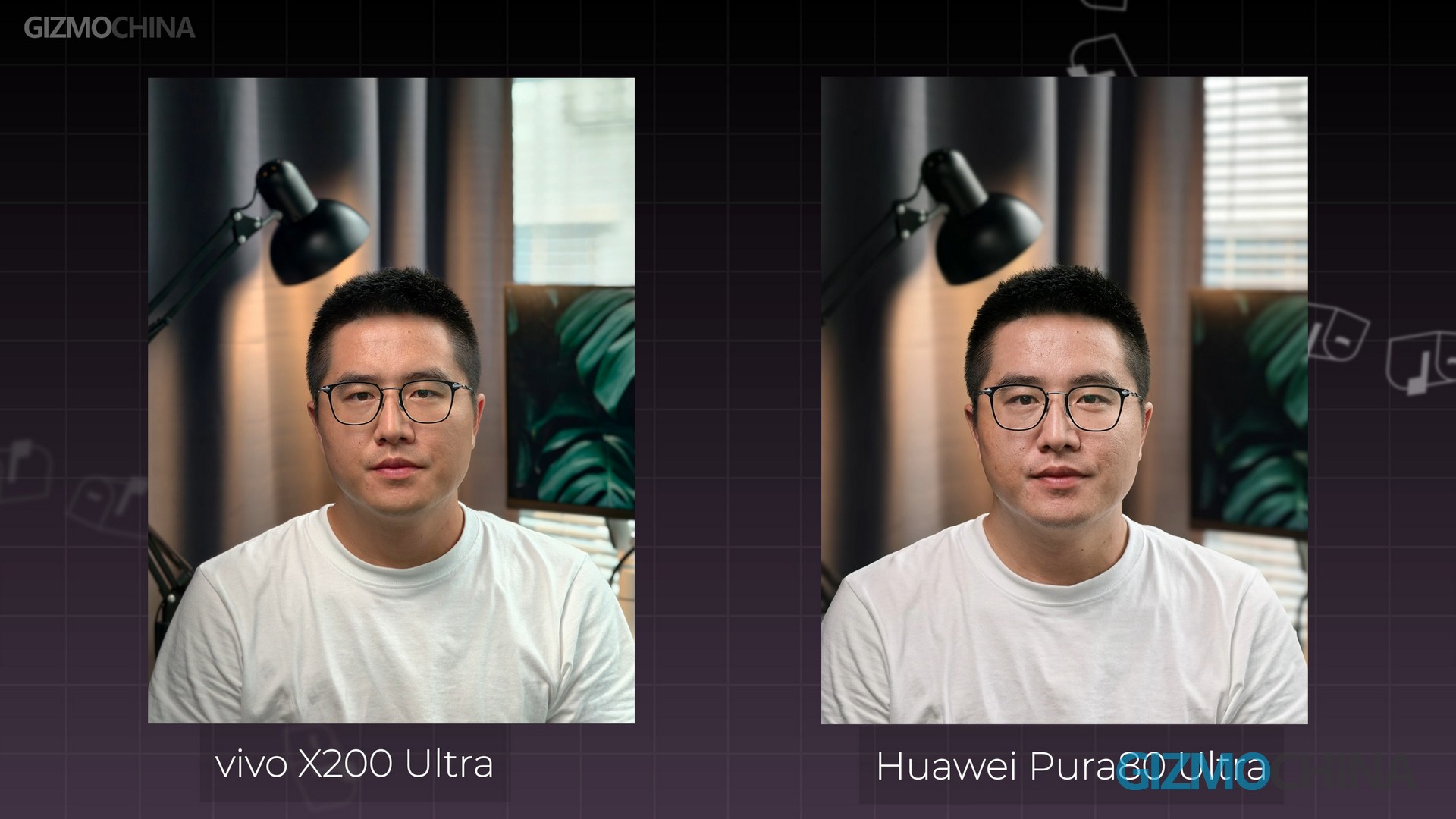
Let’s focus on the white T-shirt and skin tones. Even with good lighting, vivo doesn’t oversaturate colors anymore—but there’s still a big color shift. The white balance looks greenish. Meanwhile, the Pura 80 Ultra nails natural skin tones way better than vivo here.
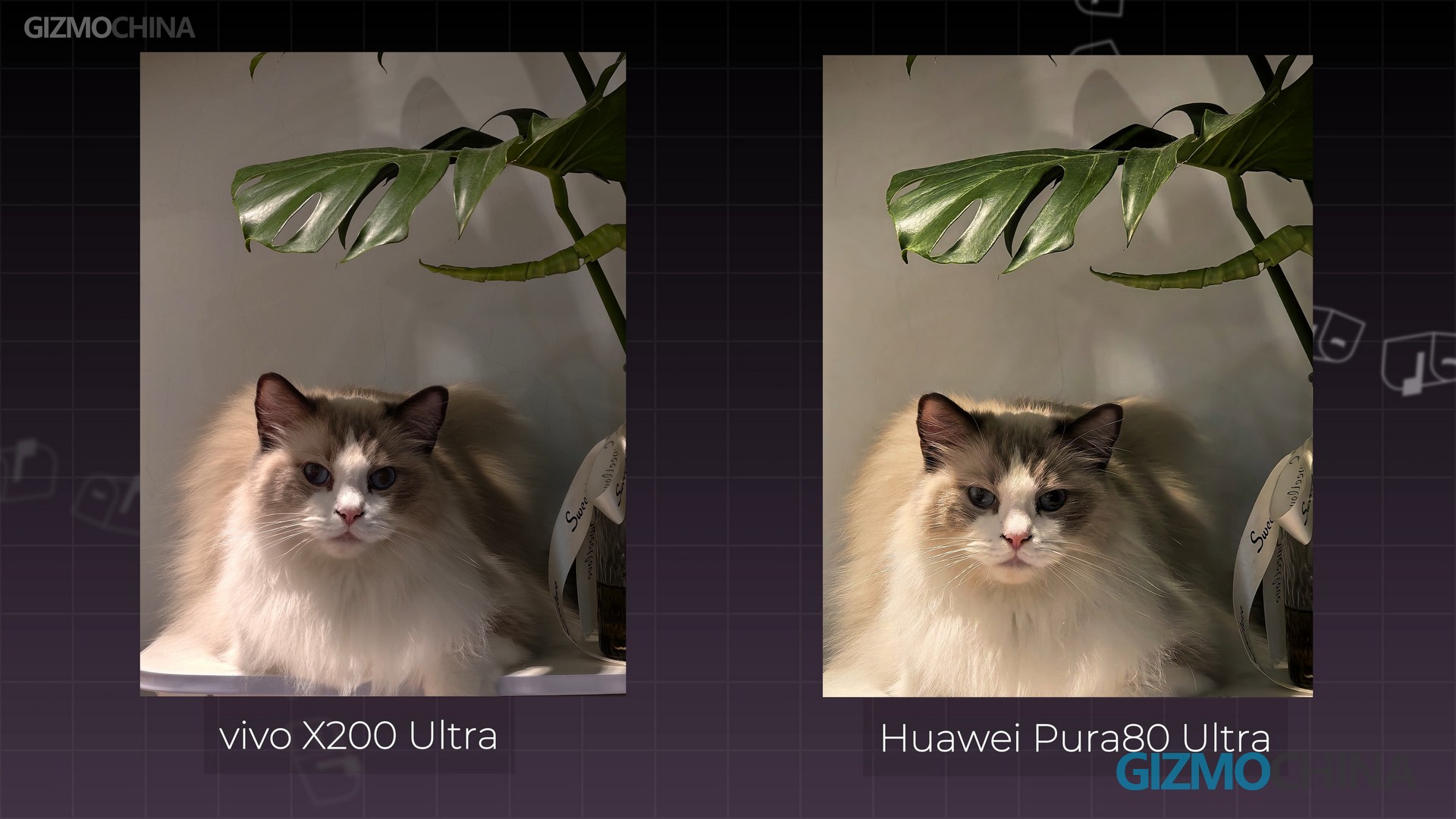
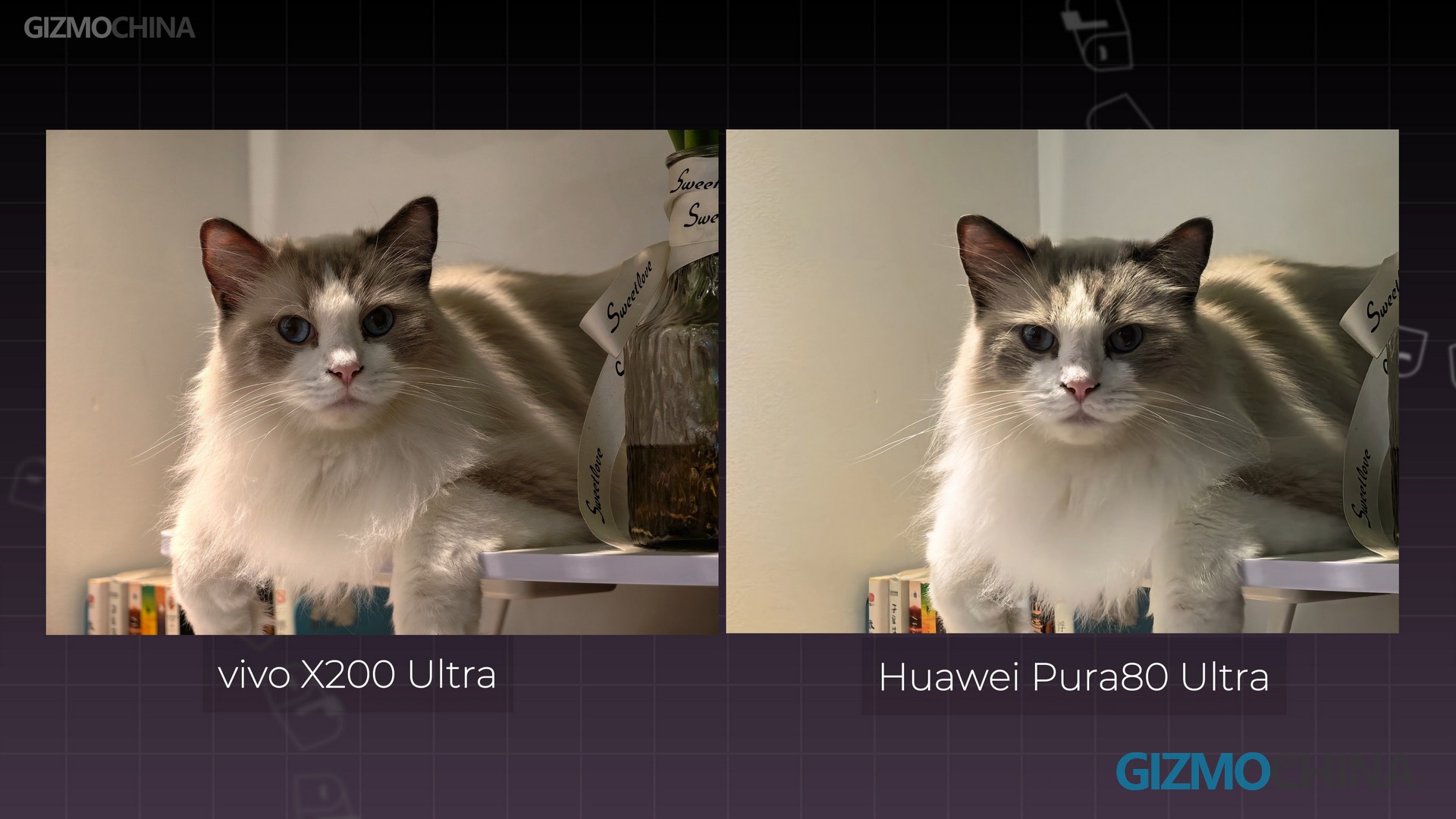
The color issues we talked about earlier? They’re still here. See, vivo doesn’t have a color temperature sensor, so the white balance is all over the place. It tries to fix it, but keeps messing up the correction. Huawei, though, their colors are way closer to what we see. Now, here’s the thing, Pura 80 Ultra is better in color accuracy, but when it comes to fine details—especially hair and fur—vivo handles that better.
Detail Handling
Let’s talk about detail loss. The Pura 80 Ultra shows blurry hair edges—you can’t make out fine strands. It relies more on hardware advantages. Not like the vivo X200 Ultra, which nails those tiny hair textures and keeps that natural, fluffy look. That’s probably because vivo is more optimized for complex scenes, so hair just comes out better.
Second issue: unnatural transitions. Where hair meets skin or the background, Huawei’s performance is a bit off, like places around the forehead and sideburns, the edges are harsh, which kills the softness in portraits. Vivo, though, has smoother transitions; hair blends into the background way more naturally.
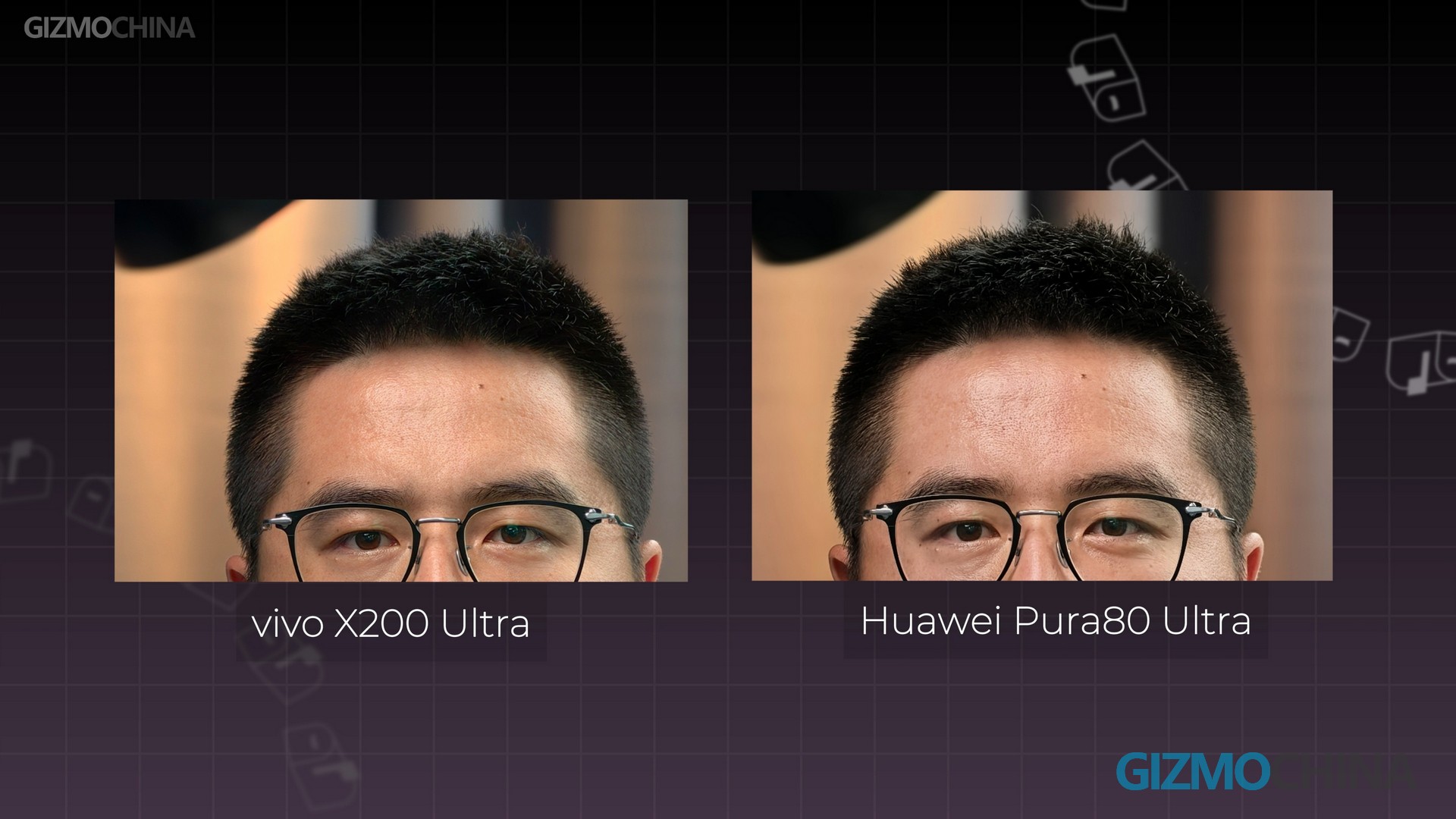
Now, about algorithms. Vivo had some glitches early on, but system updates fixed that pretty well. Huawei still lags here, to be honest. But both have different styles. So, which one do you like more?
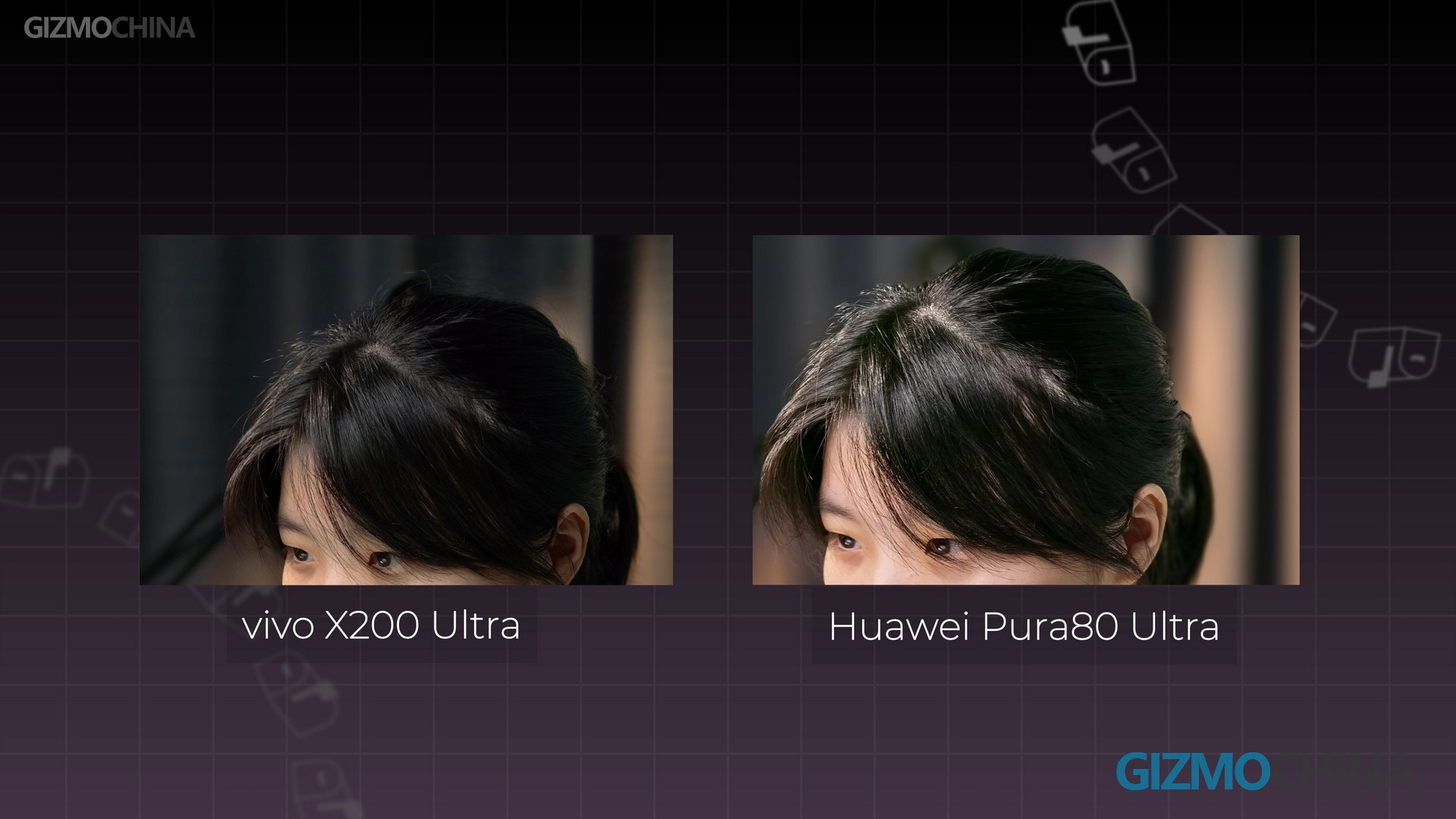
Telephoto Beyond 200mm (10x Zoom)
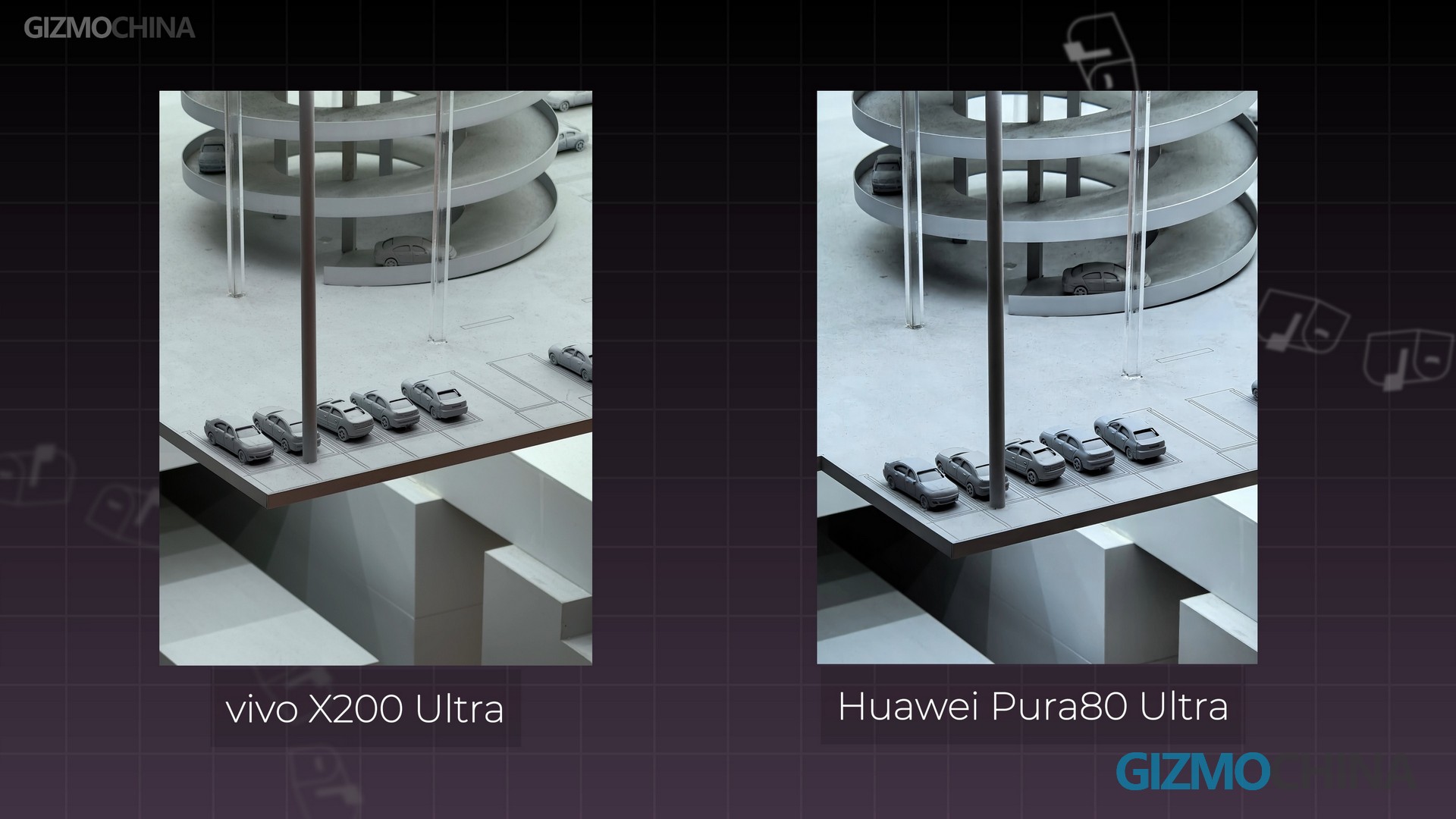
Now let’s look at 10x zoom, the focal length that separates these two phones’ performance. Starting with the first set, beyond the color differences we saw earlier, the X200 Ultra’s main issue here is over-reliance on algorithms. Take this close-up of a jar—it has tons of details and textures. On the X200 Ultra shot, so many details are masked or blurred by the algorithm, which is a real shame.
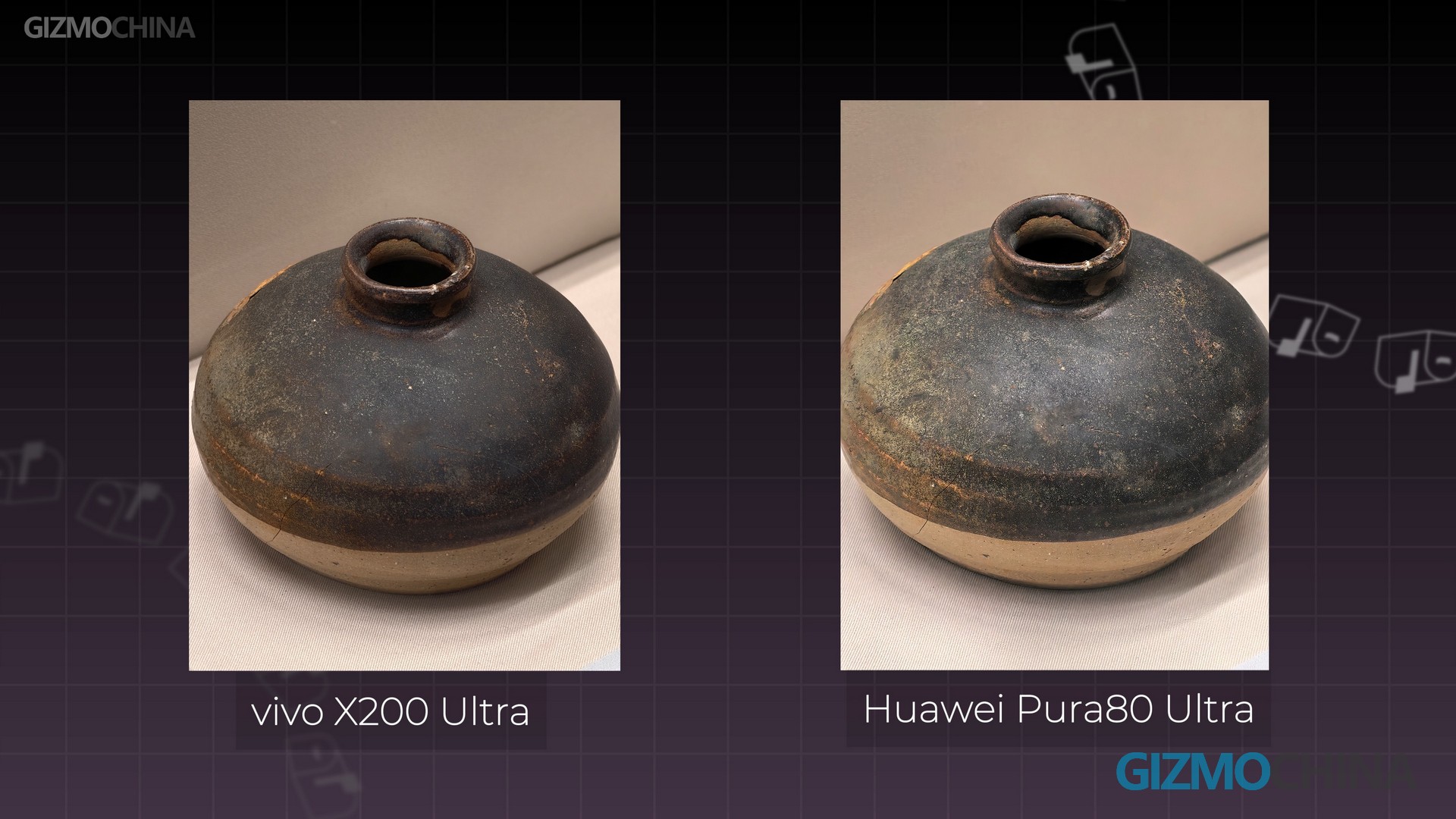
Huawei, though, because of its larger sensor, doesn’t need heavy noise reduction or AI work, so it keeps way more brightness and detail. That bigger sensor gives it a clear edge here. This set also perfectly backs up my earlier point. The Pura 80 Ultra keeps way more shadow details—take the buildings at the back, for example. It outperforms in both detail and dynamic range.
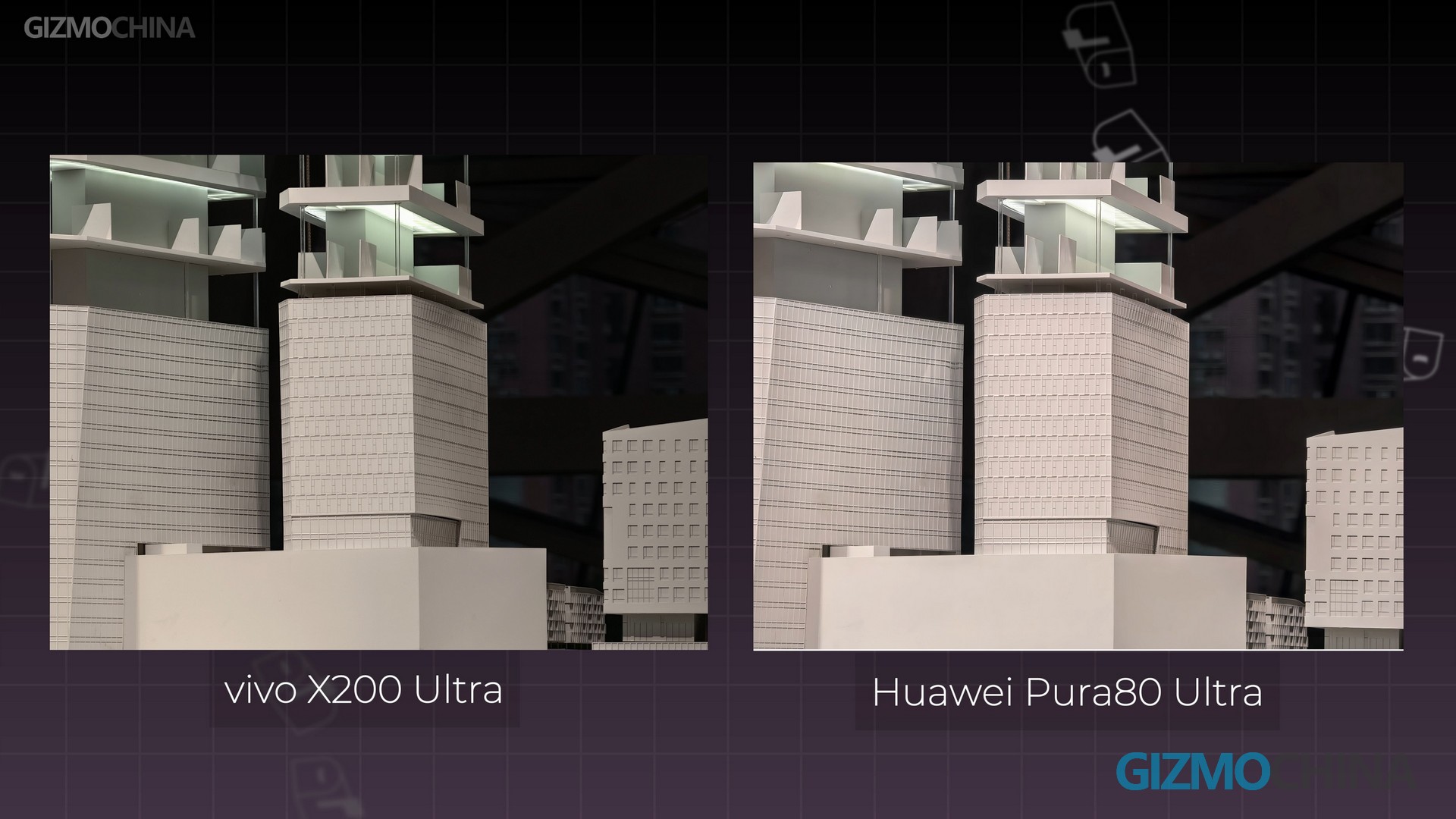
In this scene, the color problem is still here. Huawei leans toward authentic colors, while vivo enhances everything, making the image more pleasing to the eye.
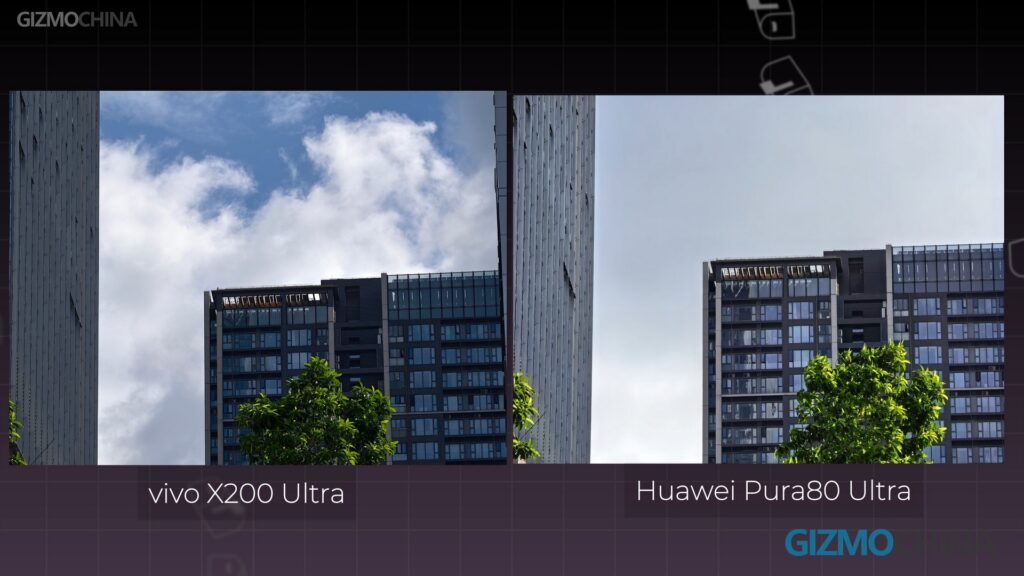
When shooting outdoor scenes, this set of photos shows that the Pura 80 Ultra excels in the details of the sky, plants, and architecture. Vivo boosts contrast to enhance visual appeal, but that highlights slightly weaker resolution and detail retention.
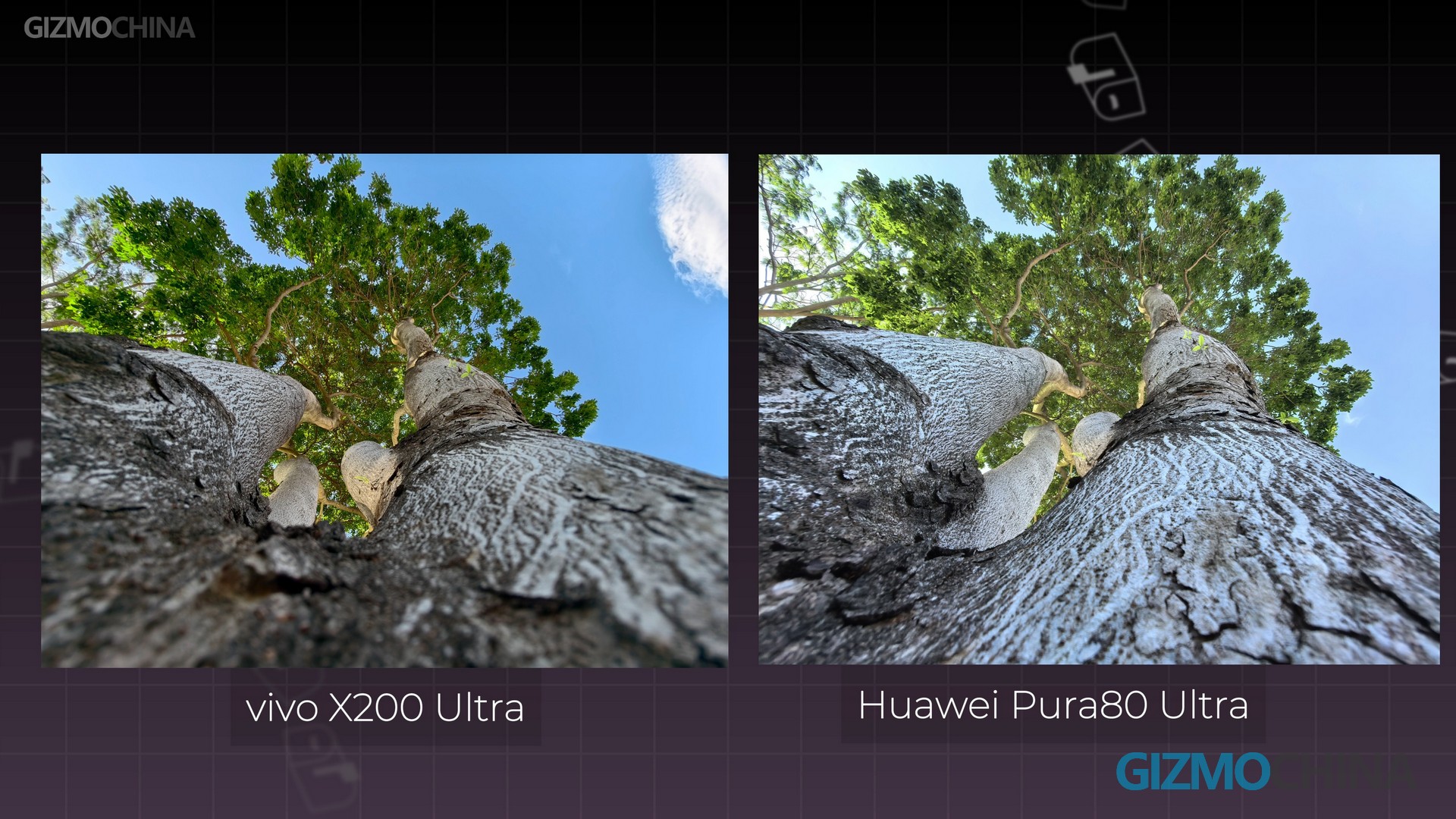
Now let’s compare the main and ultra-wide lenses. Which phone do you think will take the crown here?
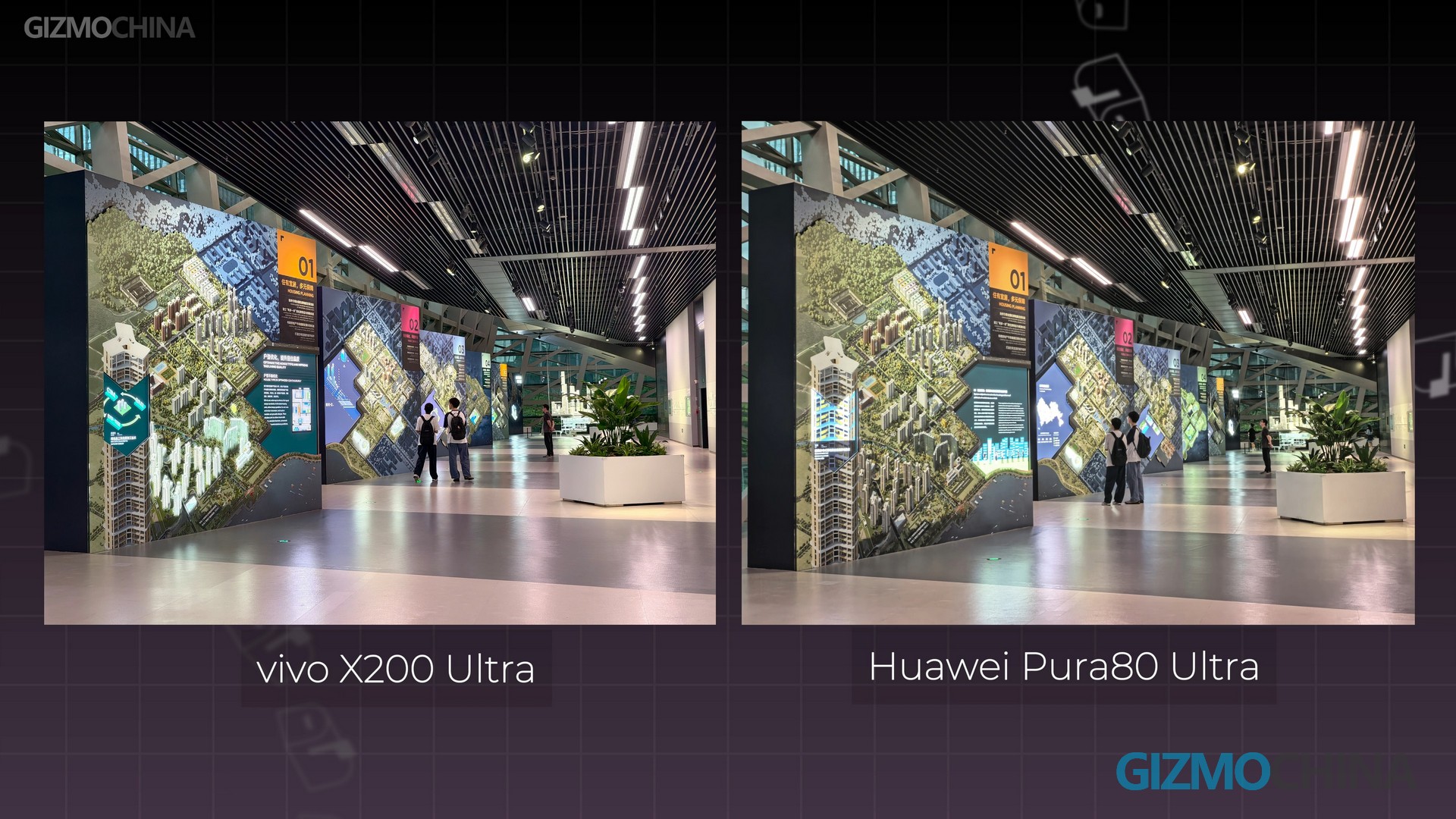
ltra-wide focal lengths, delivering nearly identical performance, ideal for natural landscapes and architecture photography.
Video Stabilization
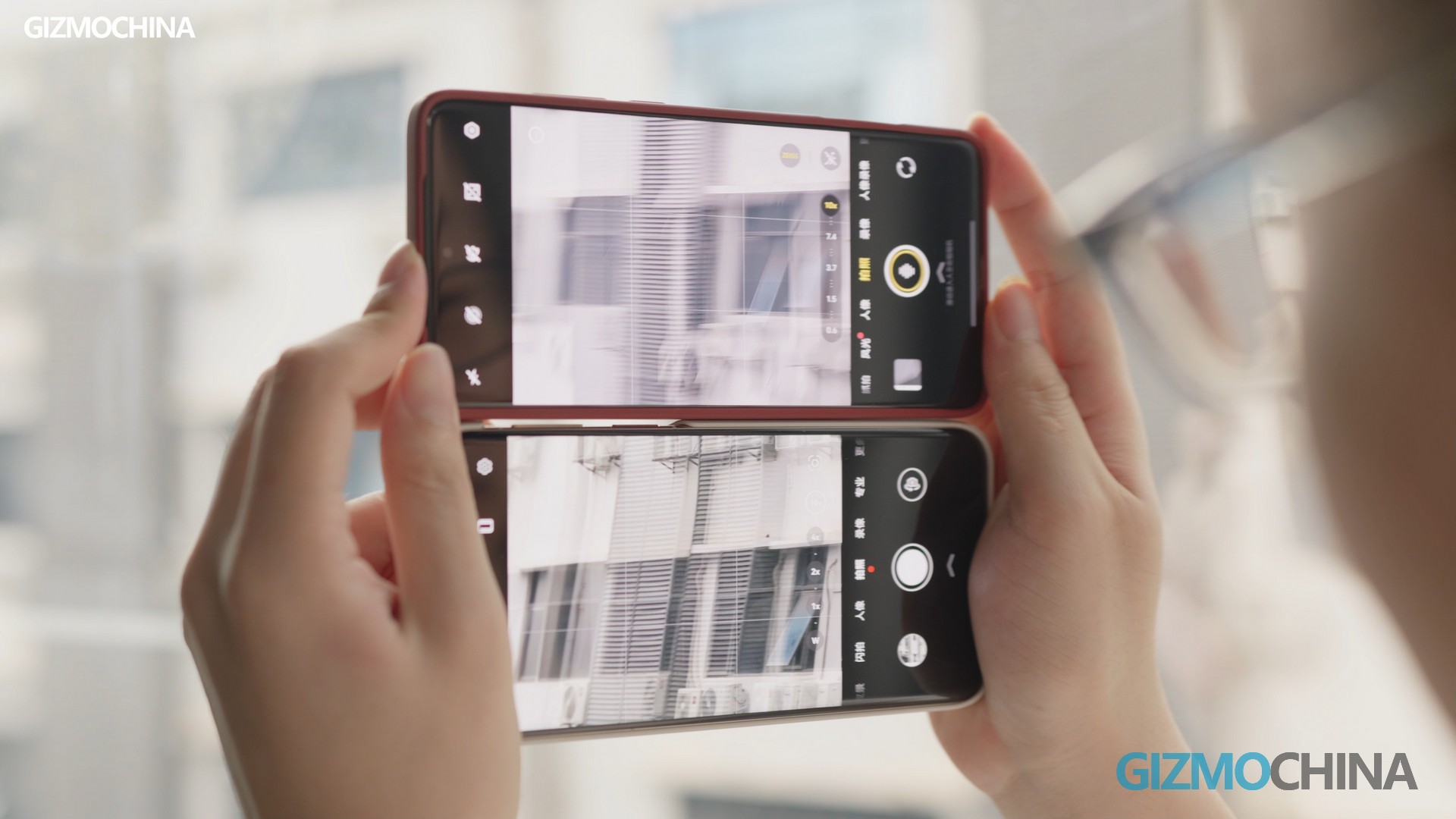
In terms of videos, I think vivo performs extremely well. It has one more LOG mode than Huawei. Regarding the video stabilization, you can get the answer by comparing the video.
User Experience and Selection
During shooting, we also noticed an issue: if we move fast, the Pura 80 Ultra will show a jelly effect, indicating that the CMOS reading speed is relatively slow. Although vivo also has this problem, it is not particularly obvious. The imaging performance between the two phones is not significant. From my experience, vivo tends to focus more on algorithms, while Huawei relies more on the hardware. In terms of details and night performance, Huawei is more outstanding.
However, I should also mention that the lens durability of the Pura 80 Ultra may be a major challenge. Although it can bring a great imaging experience, if you accidentally break it, the cost of repairing the lens will be expensive. In addition, during use, the vivo’s lens has a shaking sensation, and Huawei’s dual telephoto lenses have an obvious mechanical effect when switching.
Summary
Overall, the imaging styles of these two phones differ significantly. The Pura 80 Ultra pursues ultimate telephoto image quality, with its images leaning more toward natural color reproduction. vivo, on the other hand, balances portrait photography and video creation. Therefore, if you want to choose one between them, consider your own needs first.


Comments