Add GIZMOCHINA on Google:
The sub-₹20,000 Android tablet space in India has suddenly become very interesting, thanks to the near-simultaneous launches of the OnePlus Pad Lite and the Redmi Pad 2. Both tablets are priced aggressively, offer large 11-inch displays, run Android 15 out of the box, and support 4G LTE connectivity. But despite similar footprints, these two devices serve slightly different users and use cases. After spending time evaluating both spec sheets, software integrations, and value propositions, here’s a breakdown of how the two stack up.
1. Display and Design
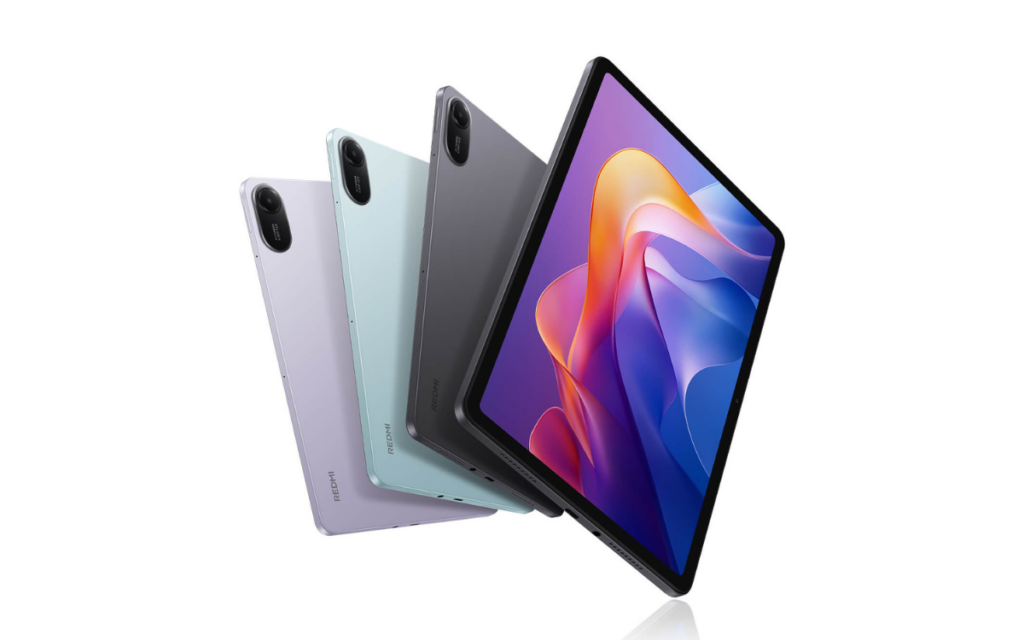
Both tablets feature 11-inch LCD panels with 90Hz refresh rates, but the Redmi Pad 2 maintains a technical edge on paper. Its 2.5K (2560×1600) resolution delivers a sharper 274ppi pixel density compared to the OnePlus Pad Lite’s HD+ panel at 1920×1200. The Redmi Pad 2 also gets brighter in outdoor conditions, peaking at 600 nits, while the OnePlus Pad Lite caps out at 500 nits.
Both displays are TÜV Rheinland certified for low blue light and flicker-free viewing. However, Redmi adds more with circadian-friendly tuning, DC dimming, wet-touch support, and Reading Mode for extended comfort.
In terms of design, the differences are minor but noticeable. The Redmi Pad 2 is slightly thinner at 7.36mm and lighter at 510–519g, compared to the OnePlus Pad Lite’s 7.39mm thickness and 530g weight. While neither tablet feels bulky, Redmi’s tighter dimensions and extra display clarity make it a better choice for prolonged reading, streaming, or stylus-based tasks.
| Preview | Product | |
|---|---|---|

|
Redmi Pad 2, Active Pen Support, 27.94cm(11″) Model, 2.5K Sharp & Clear Display, 4GB, 128GB, All Day… | Check Price on Amazon |
Please Note: When you buy something using the links in our articles, we may earn a small commission at no cost to you.
2. Performance and Software
Under the hood, both tablets share the same 6nm MediaTek Helio G100 SoC, a mid-tier chip with Cortex-A76 and Cortex-A55 cores and a Mali-G57 GPU. Day-to-day performance, browsing, video playback, and productivity apps should be nearly identical.
Where things diverge is the software. OnePlus Pad Lite runs OxygenOS 15.0.1, while Redmi Pad 2 runs HyperOS 2, both based on Android 15. OxygenOS comes with useful integration tools like Screen Mirroring, Clipboard Sharing, and Shared Gallery, which will appeal to existing OnePlus smartphone users. On the other hand, HyperOS introduces Circle to Search, Face Unlock, Gemini, and deeper smart home integration across Xiaomi’s ecosystem.
For stylus fans, Redmi wins again. It supports the Redmi Smart Pen with 4096 pressure levels and ultra-low latency. OnePlus offers no stylus input.
3. Speakers, Battery, and Connectivity
Each tablet offers a quad-speaker setup, and both support Hi-Res Audio, but Redmi Pad 2 adds Dolby Atmos and even a 3.5mm headphone jack, a rare bonus in this price range. OnePlus, however, touts its Omnibearing Sound Field, which adapts speaker directionality depending on orientation, enhancing the experience while watching videos or gaming.
Battery life is competitive on both ends. The OnePlus Pad Lite packs a slightly larger 9340mAh cell with 33W fast charging, while the Redmi Pad 2 houses a 9000mAh unit with slower 18W charging (and a 15W charger in the box). So, if fast top-ups matter, OnePlus gets the edge here.
Both offer Wi-Fi and LTE variants. The Redmi Pad 2 cellular model supports a broader band spectrum, dual-SIM functionality, and GPS, making it the better choice for those wanting a connected tablet on the go.
4. Cameras
Neither of these tablets is a photography champion, but the Redmi Pad 2 again edges out slightly with its 8MP rear and 5MP front sensors, both supporting HDR and document modes. OnePlus sticks to 5MP shooters front and back, serviceable for video calls but not much else.
5. Pricing
The base models of both tablets start at ₹12,999 (after bank offers), with the Redmi Pad 2 Wi-Fi (4GB/128GB) and OnePlus Pad Lite Wi-Fi (6GB/128GB) priced similarly. For LTE variants, Redmi’s 6GB/128GB Cellular and OnePlus Pad Lite 8GB/128GB LTE both cost ₹17,999 (₹14,999 effective in OnePlus’ case).
Redmi offers more flexibility with three configurations and up to 256GB of storage, while OnePlus sticks to two SKUs with identical storage. If you need LTE, 8GB RAM, and maximum storage, Redmi gives you more for the same price.
6. So, Which One Should You Buy?
If display quality, stylus support, GPS, and cross-platform sharing features matter to you, the Redmi Pad 2 is the more well-rounded option. Its brighter, sharper display, higher-res cameras, and 256GB variant offer better long-term value, especially for students and creatives.
But if you’re already deep into the OnePlus ecosystem or want faster charging and a slightly larger battery, the OnePlus Pad Lite makes a lot of sense, particularly for media consumption and casual productivity.
At these prices, both tablets deliver serious bang for the buck. But if we had to pick one for most users, Redmi Pad 2 edges it out with a more complete feature set and better display, even if it charges a bit slower.
For more daily updates, please visit our News Section.
Stay ahead in tech! Join our Telegram community and sign up for our daily newsletter of top stories! 💡