
Add GIZMOCHINA as Preferred Source on Google
In a smartphone world obsessed with sleek design, Apple’s new iPhone Air and Samsung’s Galaxy S25 Edge represent the pinnacle of ultra-thin engineering. Both devices are impossibly slim, featherlight, and pack pro-grade performance.
But after looking past the spec sheet gloss and into real-world utility, it’s clear that Samsung’s Galaxy S25 Edge edges ahead. Not just by a fraction of a millimeter, but by delivering more substance inside that skinny shell.
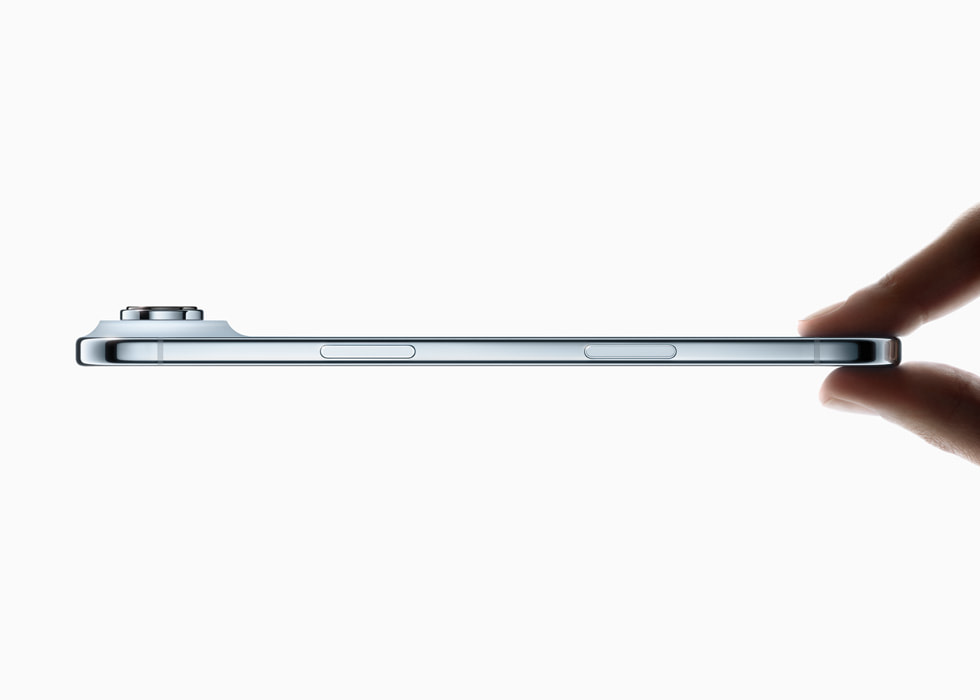
Thin and Light, but Functionally Different
At 5.64mm, the iPhone Air is technically slimmer than the Galaxy S25 Edge’s 5.8mm profile. That’s a hairline difference that vanishes the moment you actually pick them up.
Weight-wise, they’re essentially identical too: 165g for the iPhone Air compared to 163g for the S25 Edge. Both feel like futuristic slivers of glass and metal. But here’s where things diverge. Samsung doesn’t compromise as much to stay slim.
While Apple’s minimalist approach sacrifices an ultra-wide camera and offers only one rear shooter, Samsung fits in a 200MP main sensor and a 12MP ultra-wide camera with autofocus and macro capability. All of that in a chassis that’s just 0.15mm thicker. That’s not just better optics. It’s better use of space.
| Preview | Product | |
|---|---|---|

|
Samsung Galaxy S25 Edge 5G AI Smartphone (Titanium Silver, 12GB RAM, 256GB Storage) | Precision… | Check Price on Amazon |
Please Note: When you buy something using the links in our articles, we may earn a small commission at no cost to you.
| Preview | Product | |
|---|---|---|

|
iPhone Air 256 GB: Thinnest iPhone Ever, 16.63 cm (6.5″) Display with Promotion up to 120Hz,… | Check Price on Amazon |
Please Note: When you buy something using the links in our articles, we may earn a small commission at no cost to you.
Performance
The iPhone Air’s new A19 Pro chip, paired with Apple’s N1 and C1X wireless and modem chips, makes it incredibly power-efficient and consistent over time. Apple’s performance usually stays smooth for years, and the 8GB RAM doesn’t feel like a limitation thanks to tight software optimization. The A19 Pro can easily keep up with the best chips Android has to offer, including the Snapdragon 8 Elite.
But where Samsung wins is software versatility. With 12GB of RAM, the Galaxy S25 Edge has more overhead for multitasking and AI tasks. And more importantly, it brings in Google’s mature AI suite, including Circle to Search, Call Transcript, Live Translate, and more. These features are already deeply embedded across One UI 7. Apple Intelligence is only just rolling out properly with iOS 26. Despite both chips being capable of running on-device AI, Samsung’s deeper and more complete AI integration gives it the upper hand in actual user experience. The performance edge still goes to Edge.
Cameras: Numbers Don’t Lie
Apple nails the front camera. The new 18MP Center Stage selfie sensor is brilliant. Not just for its wider field of view and AI-based framing but also for the ability to shoot in landscape or portrait while holding the phone vertically. It’s one of the best selfie experiences on any phone right now, period.
But on the rear, Samsung wins by volume and versatility. The 200MP main sensor with 2x optical-quality zoom outguns Apple’s 48MP Fusion camera. The addition of an ultra-wide lens with autofocus gives Samsung the flexibility Apple’s single rear camera setup lacks.
The iPhone Air may deliver better consistency and lifelike colors thanks to its new Photonic Engine, but it simply doesn’t offer the same framing options or sensor variety.
Display and Durability
Both phones boast bright, vivid OLED displays with up to 120Hz adaptive refresh rates. But Apple takes the crown for brightness. The iPhone Air hits an insane 3000 nits peak outdoors, offering slightly better visibility under harsh sunlight compared to Samsung’s already excellent QHD+ AMOLED.
On the durability front, it’s a draw. Apple’s new Ceramic Shield 2 on both front and back is more scratch and crack-resistant than ever. Samsung counters with Gorilla Glass Ceramic 2, which also brings excellent shatter resistance. Both devices use titanium frames and meet IP68 water and dust resistance. For such thin phones, durability has clearly been prioritized on both sides.
Battery, Charging, and Value
Apple fits a slim battery that still delivers up to 27 hours of video playback. Samsung packs in a 3900mAh cell and backs it with 25W wired charging, wireless charging, and Wireless PowerShare. Apple counters with 20W wired charging and 20W MagSafe wireless, but no reverse wireless support.
Even if the iPhone Air lasts long enough in real-world use thanks to its tighter integration, Samsung’s faster charging and more versatile power options are a clear win for users on the move.
Verdict
Let’s talk numbers. The iPhone Air starts at $999 for 8GB/256GB and goes up to $1400 for the 1TB variant. The Galaxy S25 Edge starts at $1099 for the 12GB/256GB model and $1219 for 512GB. So yes, the iPhone Air is technically cheaper at the entry point. But it also offers less RAM, fewer cameras, and weaker charging.
When you weigh the total package, camera hardware, Google AI features, display resolution, and faster charging, the Galaxy S25 Edge emerges as the better buy. You’re getting more tech, better software integration, and a more versatile imaging setup. All while still holding a phone that’s practically the same size and weight.
The iPhone Air is an impressive step forward for Apple’s design team, and it redefines what an ultra-thin iPhone can be. But Samsung’s S25 Edge doesn’t just look futuristic. It acts like it too. And that’s what makes it the real winner in this slim showdown.
For more daily updates, please visit our News Section.
Stay ahead in tech! Join our Telegram community and sign up for our daily newsletter of top stories! 💡


Comments