Add GIZMOCHINA as Preferred Source on Google
As an Amazon Associate, Gizmochina earns from qualifying purchases. Links on this page may earn us a commission at no extra cost to you.
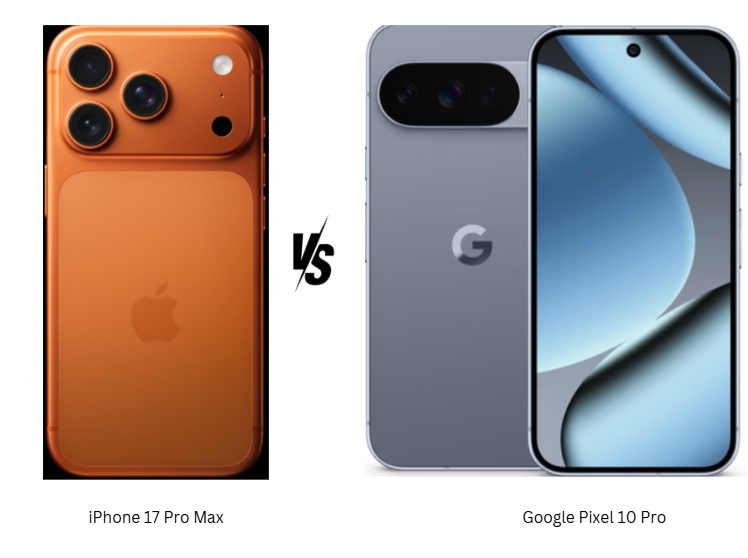
iPhone 17 Pro Max and Google Pixel 10 Pro represent two of the most advanced smartphones in 2025, offering cutting-edge hardware, refined design, and powerful software experiences. This comparison is important because both devices push innovation in different ways: Apple focuses on ecosystem integration, durability, and spatial video, while Google leans into AI-driven photography, longer software support, and slimmer hardware. Choosing between them depends on whether premium hardware synergy or AI-first features matter more to the user.
1. Design and display
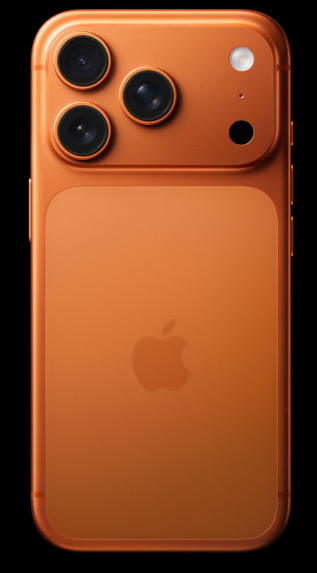
Build and Feel:
The iPhone 17 Pro Max uses a Ceramic Shield 2 front and back with an aluminum alloy frame, built to survive tougher drops and offering a luxurious feel. Its IP68 resistance extends to 6 meters, showing better durability for underwater use. The Pixel 10 Pro, with Gorilla Glass Victus 2 and an aluminum frame, also feels premium but is less robust, offering water resistance up to 1.5 meters. The iPhone stands out for rugged elegance, while the Pixel appeals with its slimmer, lighter design.
Verdict: The iPhone 17 Pro Max edges ahead in durability, but the Pixel 10 Pro wins for portability.
Display Quality:
Apple’s LTPO Super Retina XDR OLED measures 6.9 inches with Dolby Vision and peak brightness of 3000 nits, making it excellent for HDR content and outdoor visibility. Google counters with a 6.3-inch LTPO OLED boasting a sharper pixel density and even higher 3300 nits peak brightness. Both support HDR10, but the Pixel favors detail and sharpness, while the iPhone delivers cinematic consistency with anti-reflective coating.
Verdict: Pixel 10 Pro has sharper visuals and higher brightness, but the iPhone’s larger size and Dolby Vision make it better for immersive media.
Verdict:
The iPhone 17 Pro Max emphasizes durability and immersive size, whereas the Pixel 10 Pro offers sharper visuals and a more compact, lightweight build. The better pick depends on whether rugged premium design or portable clarity matters more.


Please Note: When you buy something using the links in our articles, we may earn a small commission at no cost to you.
2. Specifications
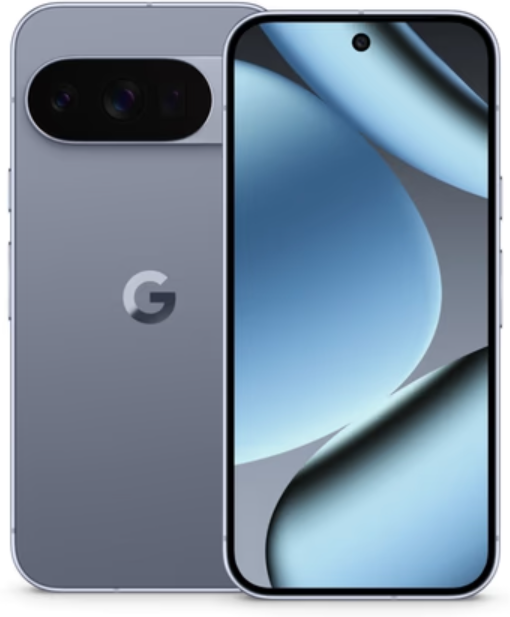
Performance:
Apple’s A19 Pro chip, built on a 3nm process, offers raw speed and efficiency with its powerful GPU optimized for gaming and pro video editing. The Pixel 10 Pro uses Google’s Tensor G5, tuned for AI workloads such as live translations, enhanced voice features, and advanced camera processing. While the iPhone is better for sustained high-performance tasks, the Pixel excels at AI-driven features and multitasking with its larger 16GB RAM option.
Verdict: The iPhone 17 Pro Max leads in raw power, while the Pixel 10 Pro is superior for AI and multitasking efficiency.
Battery and Charging:
The iPhone offers up to 5088 mAh, supporting a 50% charge in 20 minutes and 25W MagSafe wireless charging. Google equips the Pixel 10 Pro with a 4870 mAh cell, 30W wired charging, and faster wireless at 15W. The Pixel also includes bypass charging, reducing battery wear. Apple’s MagSafe ecosystem adds accessories but charges more slowly.
Verdict: Pixel 10 Pro provides more practical charging with bypass support, though the iPhone 17 Pro Max has a slightly larger battery and better accessory integration.
Verdict:
iPhone 17 Pro Max dominates in raw performance and ecosystem optimization, but the Pixel 10 Pro’s charging efficiency and AI-oriented Tensor G5 give it the edge for long-term smart usability.
3. Camera
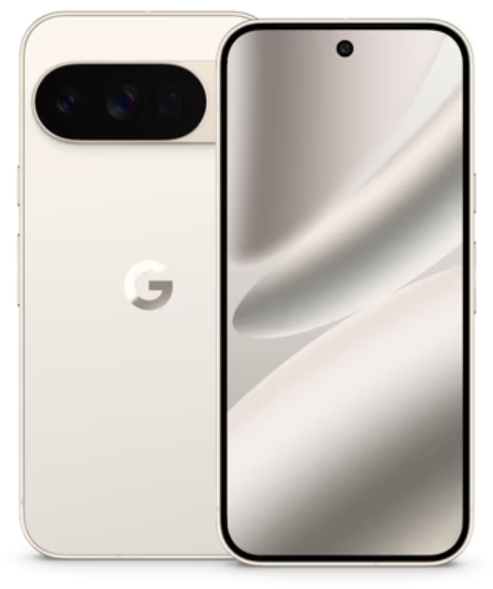
Main and Secondary Lenses:
The iPhone 17 Pro Max features three 48MP lenses with advanced stabilization, including a 4x optical zoom and LiDAR scanner for depth mapping. Its strength lies in ProRes RAW and spatial video, ideal for professionals. The Pixel 10 Pro includes a 50MP wide, 48MP periscope with 5x zoom, and 48MP ultrawide with advanced AI tools like Zoom Enhance and Best Take. While Apple’s hardware shines in cinematic use, Google’s AI-driven imaging provides superior everyday versatility.
Verdict: iPhone 17 Pro Max is better for professional creators, while Pixel 10 Pro is better for casual and AI-boosted photography.
Selfie Camera:
Apple equips an 18MP PDAF selfie lens with 3D depth sensors, Dolby Vision, and ProRes RAW, aimed at creators and AR use. Google offers a higher-resolution 42MP ultrawide front camera with PDAF, excellent for group selfies and sharper detail. Apple’s 3D sensors improve Face ID and AR depth, while Pixel focuses on clarity and wide framing.
Verdict: Pixel 10 Pro wins for detail and versatility, while iPhone 17 Pro Max is superior for secure biometrics and professional-grade video.
Verdict:
iPhone 17 Pro Max favors professionals with advanced stabilization, ProRes support, and LiDAR, while the Pixel 10 Pro leverages AI and high-resolution selfies for better everyday user-friendly results.
4. Pricing
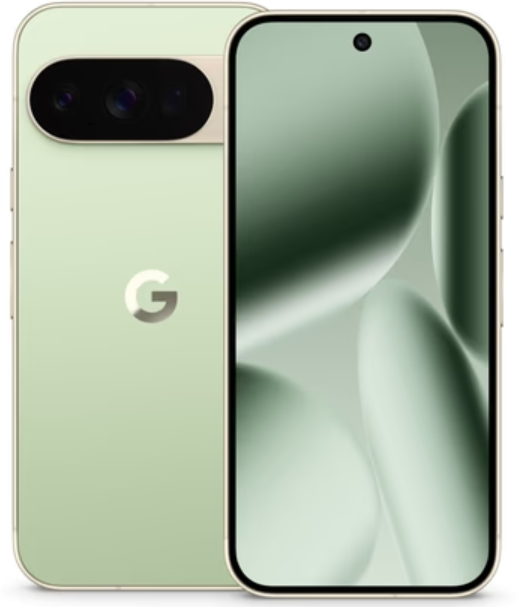
iPhone 17 Pro Max starts at around $1200, while the Google Pixel 10 Pro begins at $1000. With similar premium hardware and unique strengths, Google offers more value for the money, especially for users seeking AI-first features and higher RAM at a lower entry cost. The iPhone justifies its higher price with a stronger ecosystem, higher storage tiers up to 2TB, and professional-grade video features.
Verdict: Pixel 10 Pro is the better value, but iPhone 17 Pro Max is worth the premium for professionals in Apple’s ecosystem.
5. Conclusion
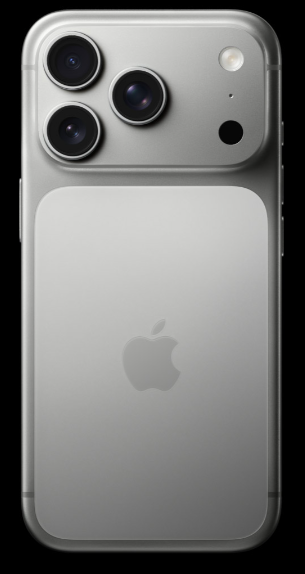
The iPhone 17 Pro Max stands out with spatial video recording, LiDAR depth sensing, ProRes RAW editing, and tight ecosystem integration with Macs and iPads. The Pixel 10 Pro brings Circle to Search, skin temperature sensing, advanced AI features like Best Take, and longer guaranteed Android updates. Each phone pushes innovation in different directions: Apple toward professional creative workflows, Google toward AI-powered usability and health features.
Verdict:
Users invested in Apple’s ecosystem or professional creators will find the iPhone 17 Pro Max a superior choice. However, the Google Pixel 10 Pro is the smarter buy for those who want cutting-edge AI tools, versatile cameras, and better pricing.
Ultimately, the iPhone is the professional powerhouse, while the Pixel is the intelligent all-rounder. For most users, the Google Pixel 10 Pro is the better choice because it delivers flagship performance, superior AI features, and versatile cameras at a lower price.
Read More:
- iPhone 16 vs Pixel 9 Specs Comparison: 2024 Smartphone Duel
- Huawei Pura 80 vs Vivo X200 Pro: Which $800 Flagship is Better?
- iPhone 17 Pro Max vs iPhone Air: Which Should You Buy in 2025?