Add GIZMOCHINA as Preferred Source on Google
Seriously, how often do you charge your smartphone? Most of us don’t really have a set routine for it. Some plug it in at night and wake up to a full battery, some wait until it hits zero, some charge whenever they see an outlet, and those who are more battery-conscious prefer to keep it within certain levels.
Most of us fall into one of those camps. But have you ever wondered what’s actually the right way to do it? Should you only charge when your phone is nearly dead, or is it better to plug in whenever you get the chance?
The short answer is that there isn’t one perfect method. But there are a few things that can help keep your battery healthier for longer.
1. Why phone charging feels confusing
Smartphones use lithium-ion batteries, and they don’t behave like the older batteries some of us grew up with. Nickel-based batteries from the past had what was called the “memory effect,” which meant if you recharged too early, the battery would “forget” its full capacity. With lithium-ion, that’s not the case.
Instead, lithium-ion batteries slowly wear out with every charge cycle. A charge cycle means using 100 percent of the battery’s capacity, though not necessarily all at once. For example, if you use 50 percent of your battery today and then recharge it to full, and use another 50 percent tomorrow, that counts as one cycle.
Most modern phones are rated for somewhere around 500 to 800 cycles before their capacity noticeably drops. After that, you might still get by, but you’ll start noticing shorter battery life. That’s why how often and how you charge your phone matters.
2. The myth of full discharges
A common question is whether you should let your phone battery drain completely before plugging it in. The short answer is no. In fact, letting your phone drop to zero regularly puts extra stress on the battery.
Lithium-ion batteries don’t like extreme lows or highs. Keeping your battery between roughly 20 and 80 percent is often considered the sweet spot. This range helps reduce wear on the battery and extends its lifespan.
That doesn’t mean you should panic if your phone occasionally drops to 5 percent, or if you charge it to 100 percent before a long trip. Phones are built to handle this. But if you make it a habit, your battery may age faster.
3. Overnight charging: good or bad?
This is probably the most common routine: plugging your phone in before bed and letting it charge to 100 percent while you sleep. Many people worry that leaving the phone plugged in overnight will “overcharge” the battery.
Fortunately, that’s not really an issue anymore. Modern smartphones include built-in protections to stop charging once the battery hits 100 percent. Some phones even use software to slow down the final part of the charge if you leave it plugged in for hours, so the battery isn’t sitting at maximum voltage the whole time.
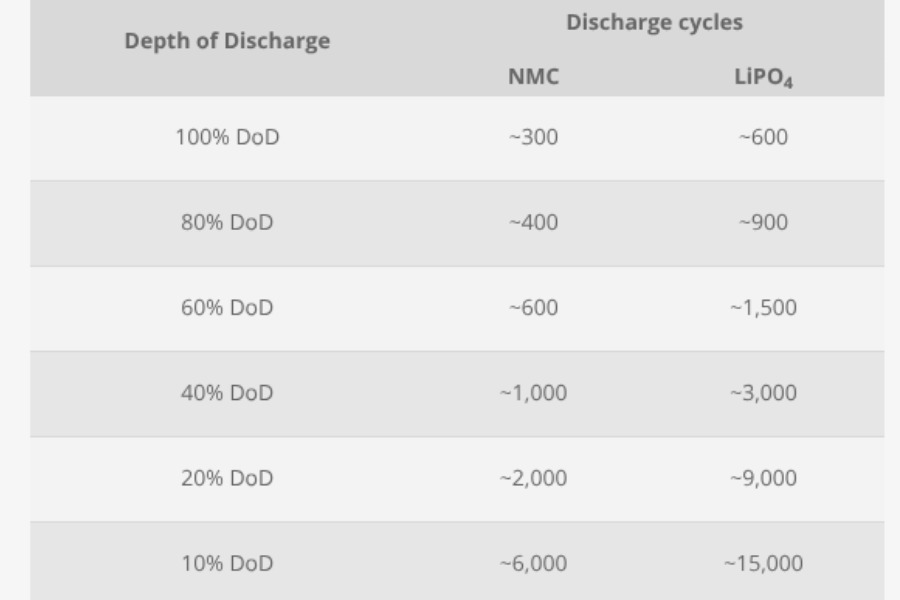
That said, staying at 100 percent for long stretches does create extra strain on the battery over months and years. Below is a table from Battery University that shows the number of usable cycles depending on the habitual depth of discharge.
For those unaware, Depth of Discharge is the percentage of a battery’s total capacity that has been used, while a discharge cycle (or charge cycle) is the process of charging a rechargeable battery and then discharging it. They are inversely proportional.
So if you want to be careful, you can use charging features built into many modern phones, like “optimized charging” on iPhones or “adaptive charging” on Android devices, that delay charging past 80 percent until right before you typically wake up.
4. Should you top up during the day?
There’s nothing wrong with plugging your phone in for a short top-up during the day. In fact, smaller, more frequent charges are easier on lithium-ion batteries than constantly draining them down to near zero.
For example, if you’re at 40 percent in the afternoon and you plug in for half an hour to reach 70 percent, that’s actually healthier than waiting until you’re nearly dead and then doing a full recharge.
Portable chargers and wireless charging pads make this habit more convenient, but keep in mind that heat is the enemy of battery health. If you notice your phone getting hot while charging—especially on a wireless pad—it’s better to unplug once you have enough charge to get through the day.
5. Fast charging vs. slow charging
Most modern smartphones support fast charging, which can take your battery from nearly empty to 50 percent in half an hour. It’s a great feature when you’re in a hurry, but does it harm the battery?
In general, occasional fast charging is fine. But constant high-speed charging does generate more heat, and heat shortens battery lifespan. If you don’t need the speed, using a slower charger can be gentler on the battery over time.
Some phones now offer a setting to limit charging speeds, which can be useful if you usually charge overnight or while sitting at your desk..
6. The bottom line
Batteries are consumable parts, which means they’re going to wear out no matter what. Even if you follow all the best practices, your phone’s battery will eventually lose capacity after a few years. That’s normal.
The goal isn’t to make your battery last forever—it can’t—but to slow down the wear so your phone stays useful for as long as possible. Charging smartly, avoiding extremes, and using the tools built into your phone are usually enough.
So, how often should you charge your phone? As often as you need to—but if you keep your battery hovering between 20 and 80 percent when you can, avoid overheating, and don’t stress about the occasional overnight charge, your battery should stay healthy well past the time you’re ready to upgrade.
For more daily updates, please visit our News Section.
Tech enthusiast? Get the latest news first! Follow our Telegram channel and subscribe to our free newsletter for your daily tech fix! ⚡