
Add GIZMOCHINA as Preferred Source on Google
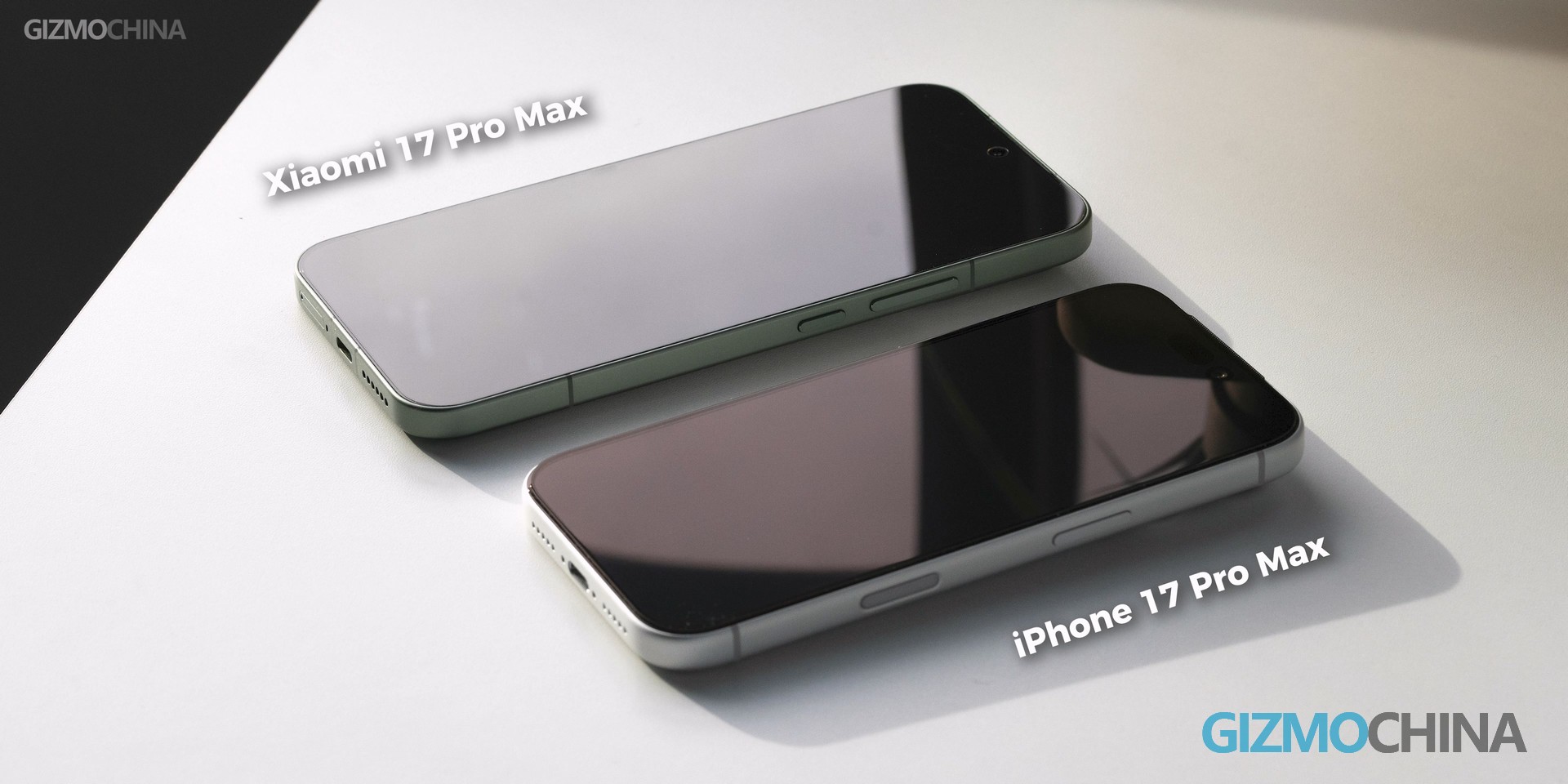
This year’s 17 Pro Max has arrived with full force. Not only does it feature the most powerful mobile processor, but its bezels have gotten narrower, charging speed has increased, and the camera module has been reshaped into a massive, rounded rectangle. You think I’m talking about the iPhone? Nope—I’m talking about Xiaomi’s 17 Pro Max.
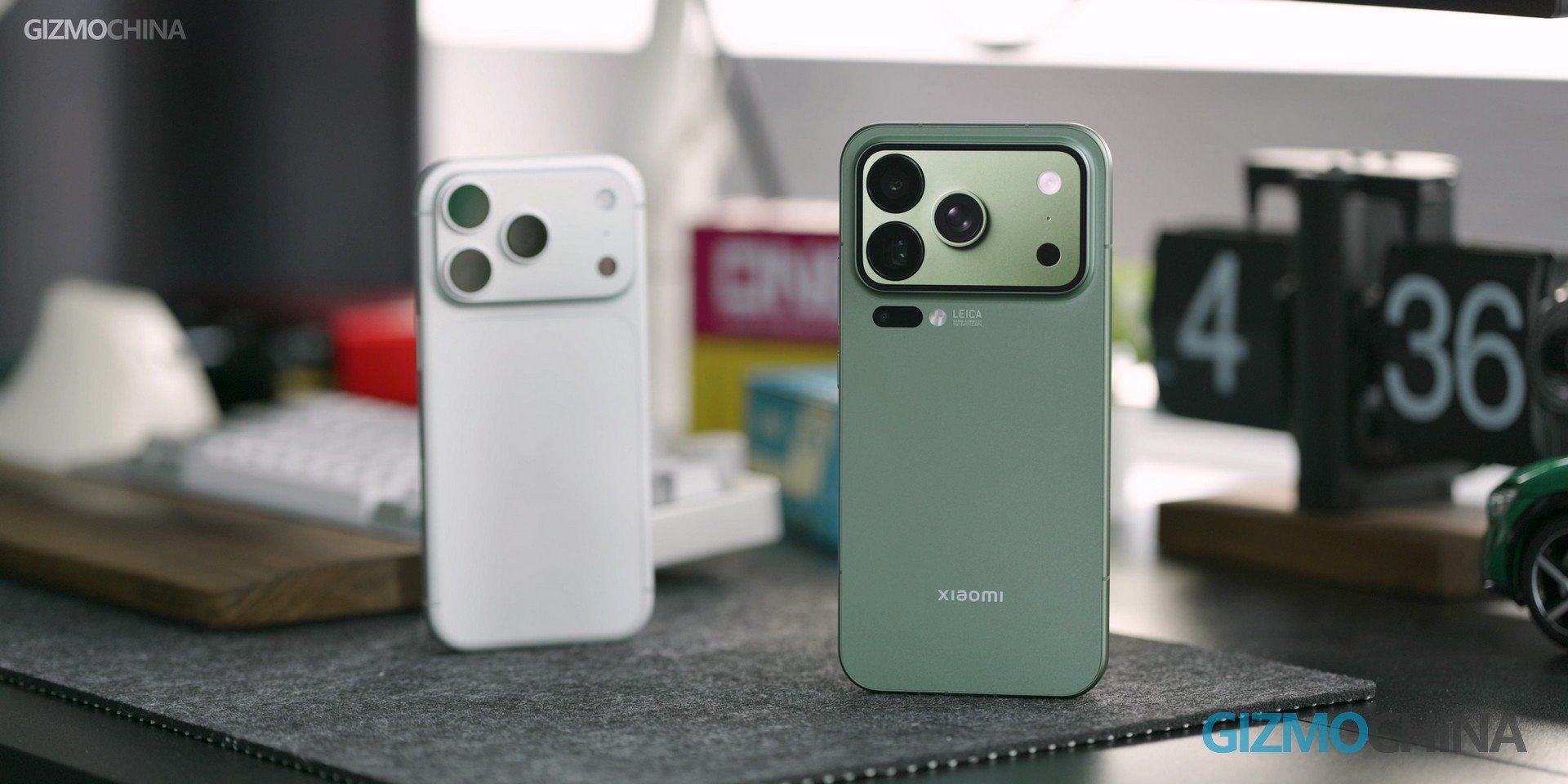
As a former Xiaomi fan, I remember the last time a model looked this similar to an iPhone in both name and appearance—it was the Mi 8. Back then, although everyone criticized its huge chin and the notch without structured light, sales still surged significantly, and Xiaomi got a taste of that success. What I didn’t expect was that seven years later, Xiaomi, as a Fortune Global 500 company, would still be revisiting the same playbook. The good news is, the gap between the two 17 Pro Max models this time isn’t nearly as big as it was seven years ago. Xiaomi’s 17 Pro Max has also achieved stellar first-sale performance, just as they had hoped. Maybe this time, defeating Apple isn’t just a dream.
Rear Display
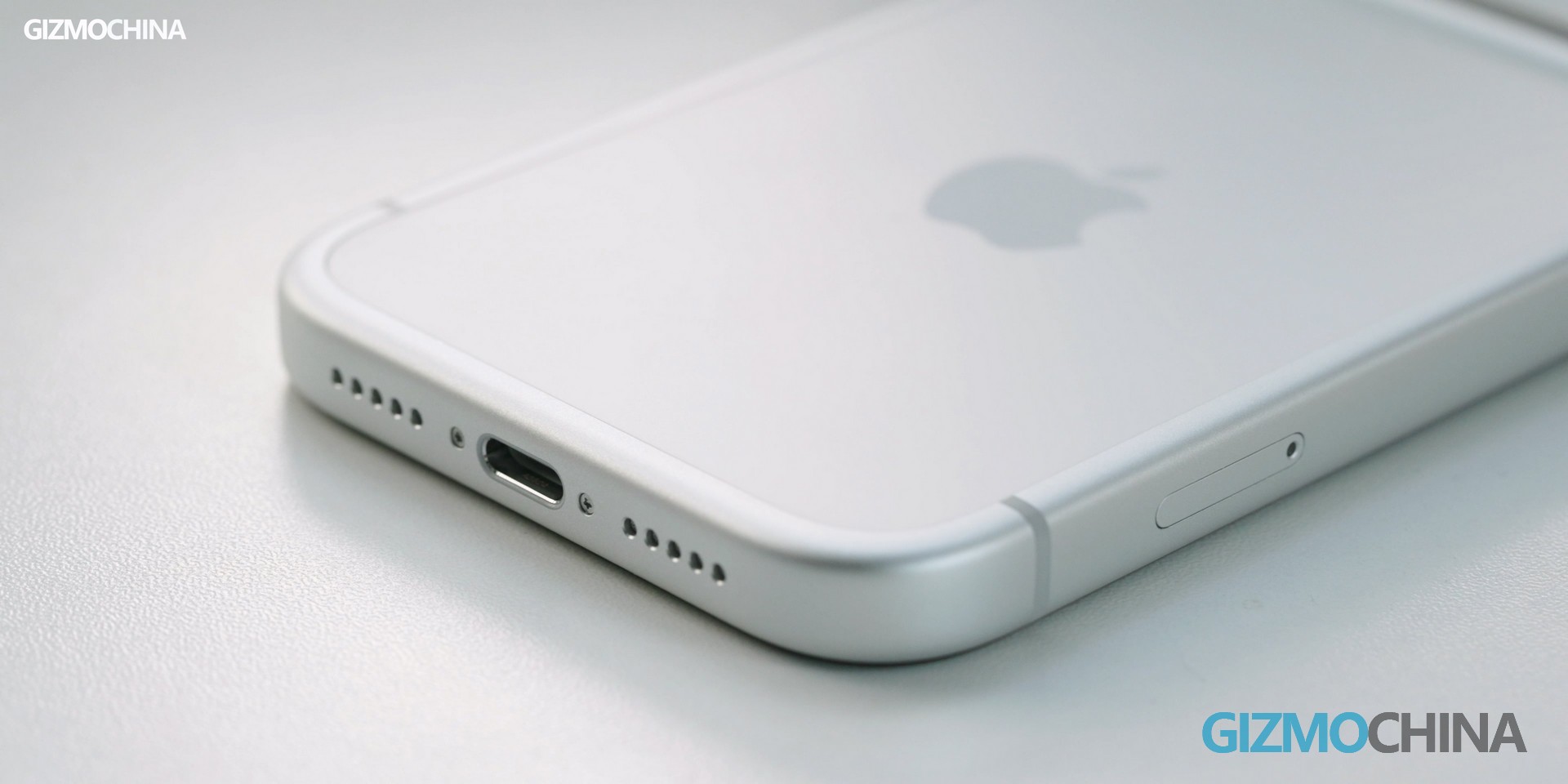
Before I complain about the rear display, I need to first complain about the frame design. Last year, I praised the Xiaomi 15 for extending its frame seamlessly into the back panel—it not only looked great but also felt incredibly smooth to the touch. Who knows, maybe Apple’s iPhone 17 Pro took inspiration from that very design. But this year, Xiaomi inexplicably abandoned the design I liked so much. So if next year’s Xiaomi 18 Pro ditches the rear screen, don’t be surprised—Xiaomi has always been like this.
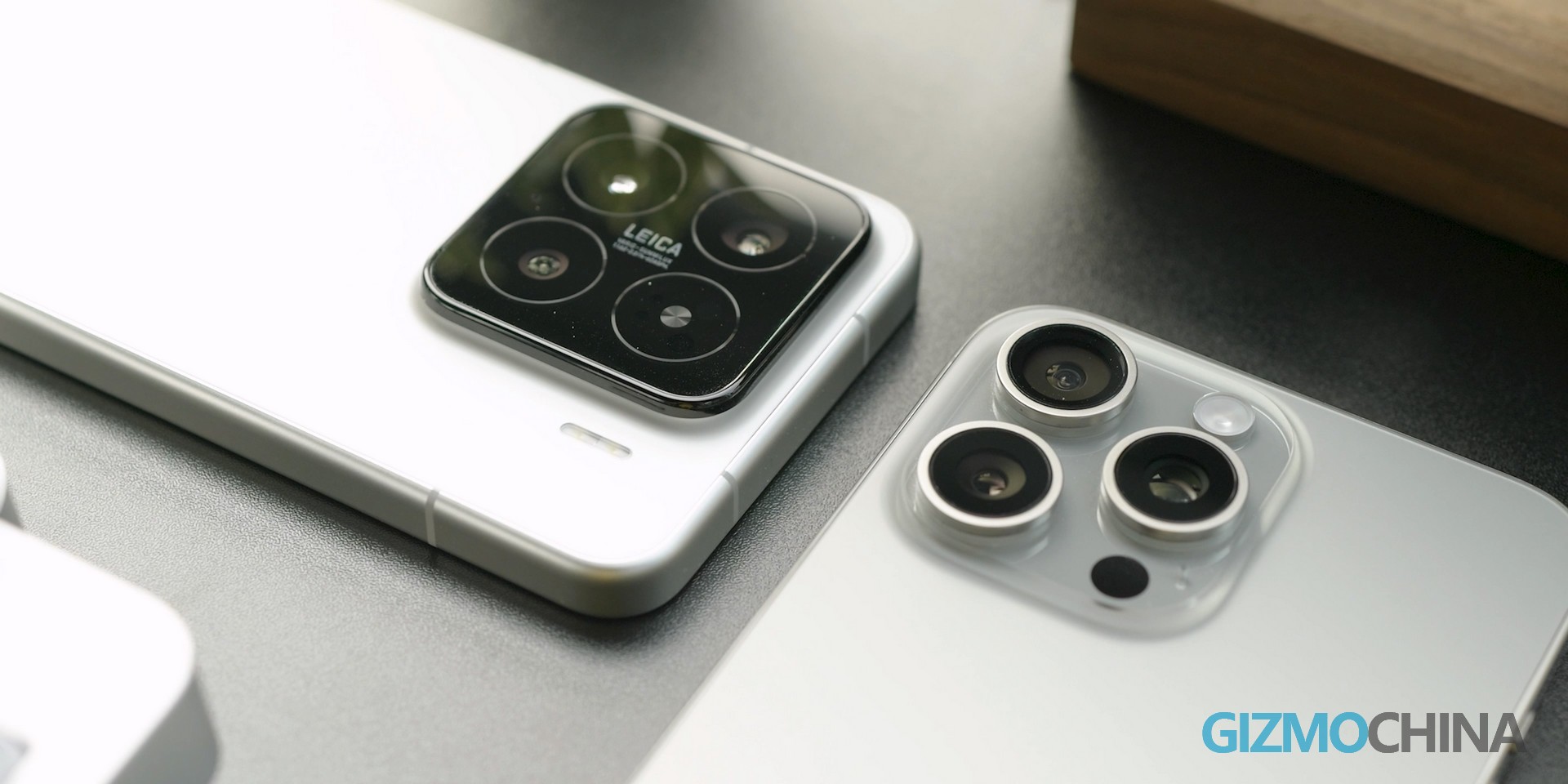
Now, before I explain what this rear display can do, let’s look at its specs. The most important one: a minimum brightness of just 1 nit. Since this display supports AOD, its first function is personalization.
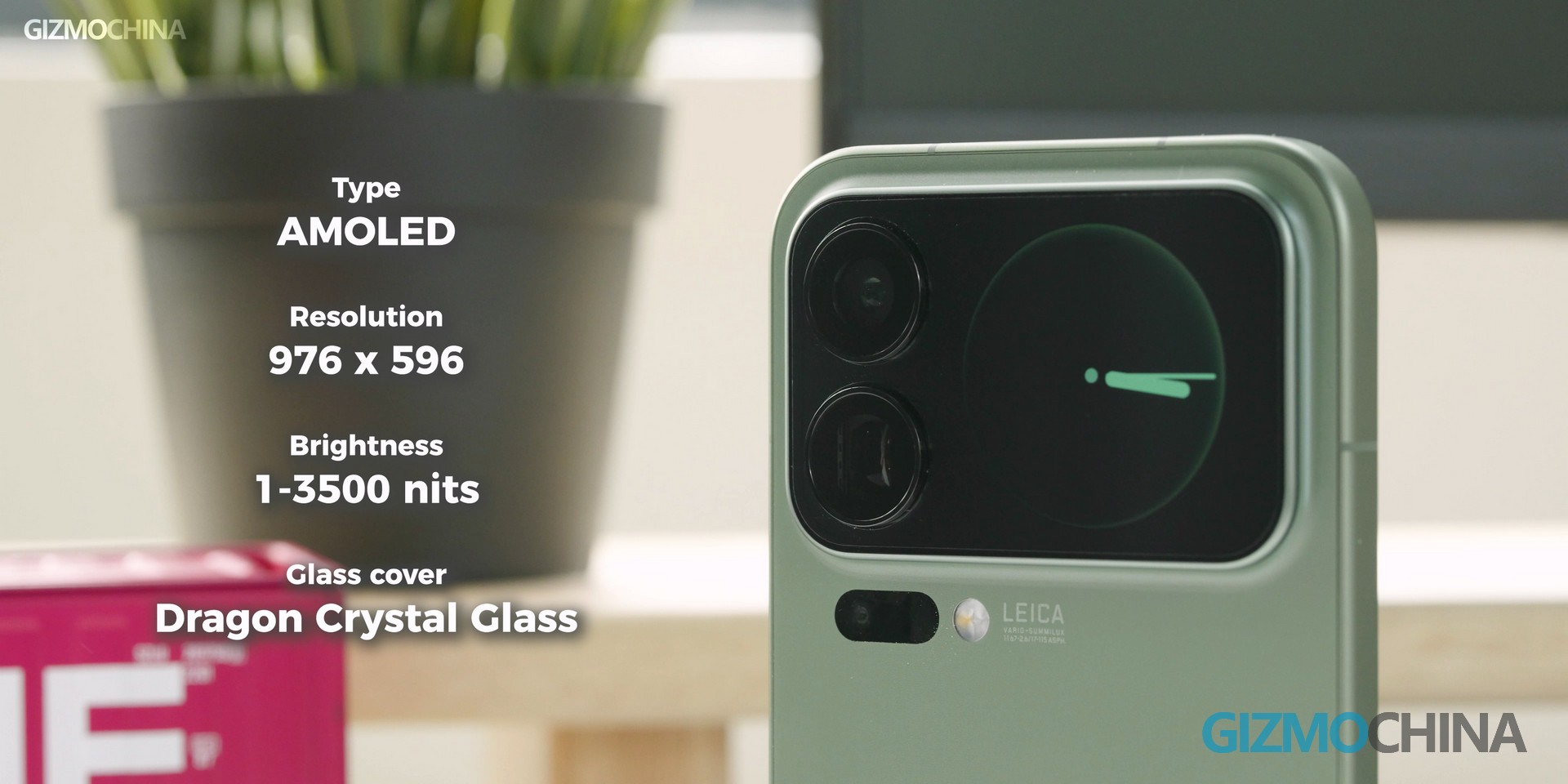
You can put a clock widget on it, or customize it with your own images. Using AI, you can even generate animated versions of your photos in different styles. Most of the time, you won’t be looking at this display—but others can see it, and it can show them what kind of person you are.
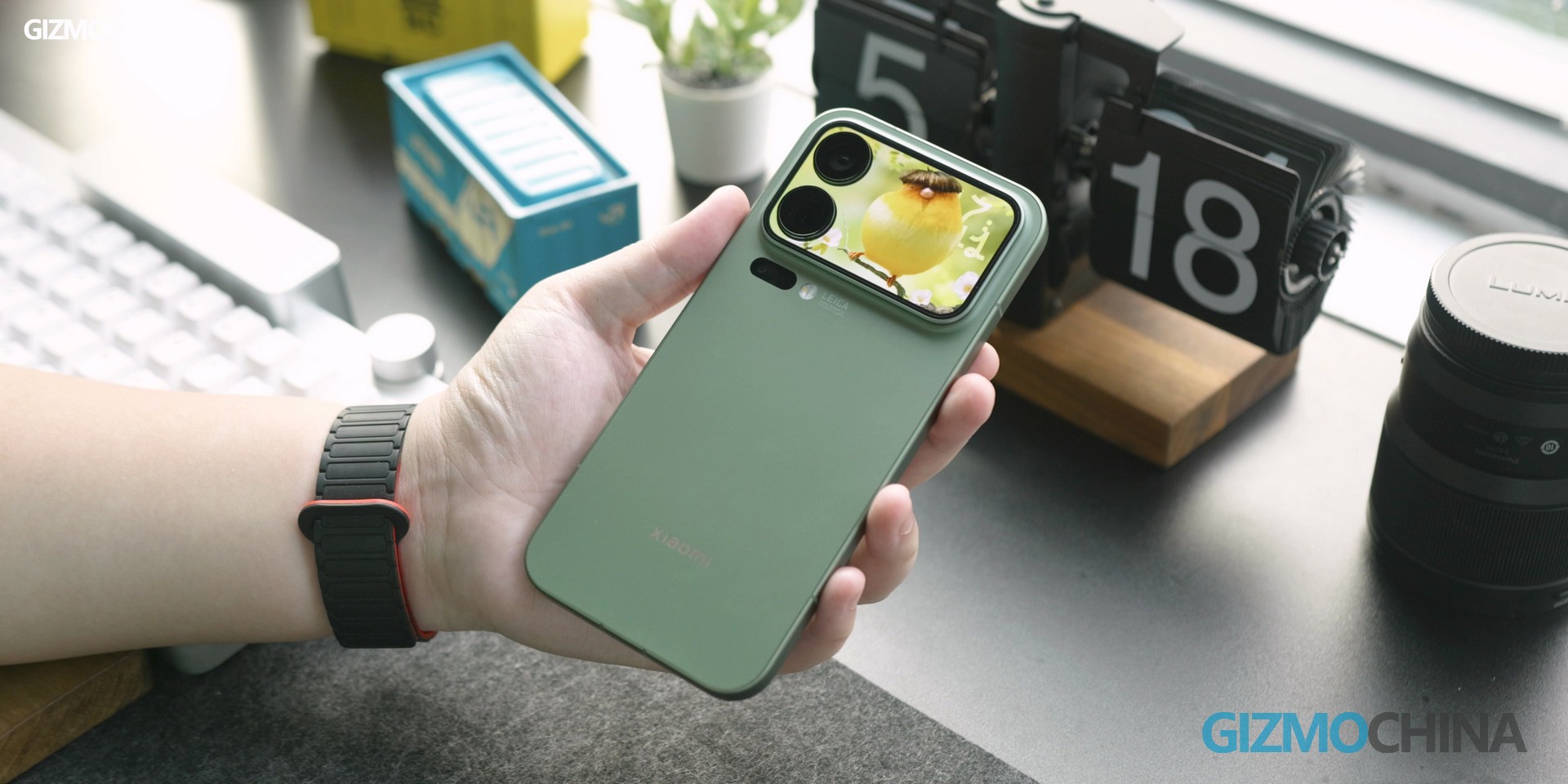
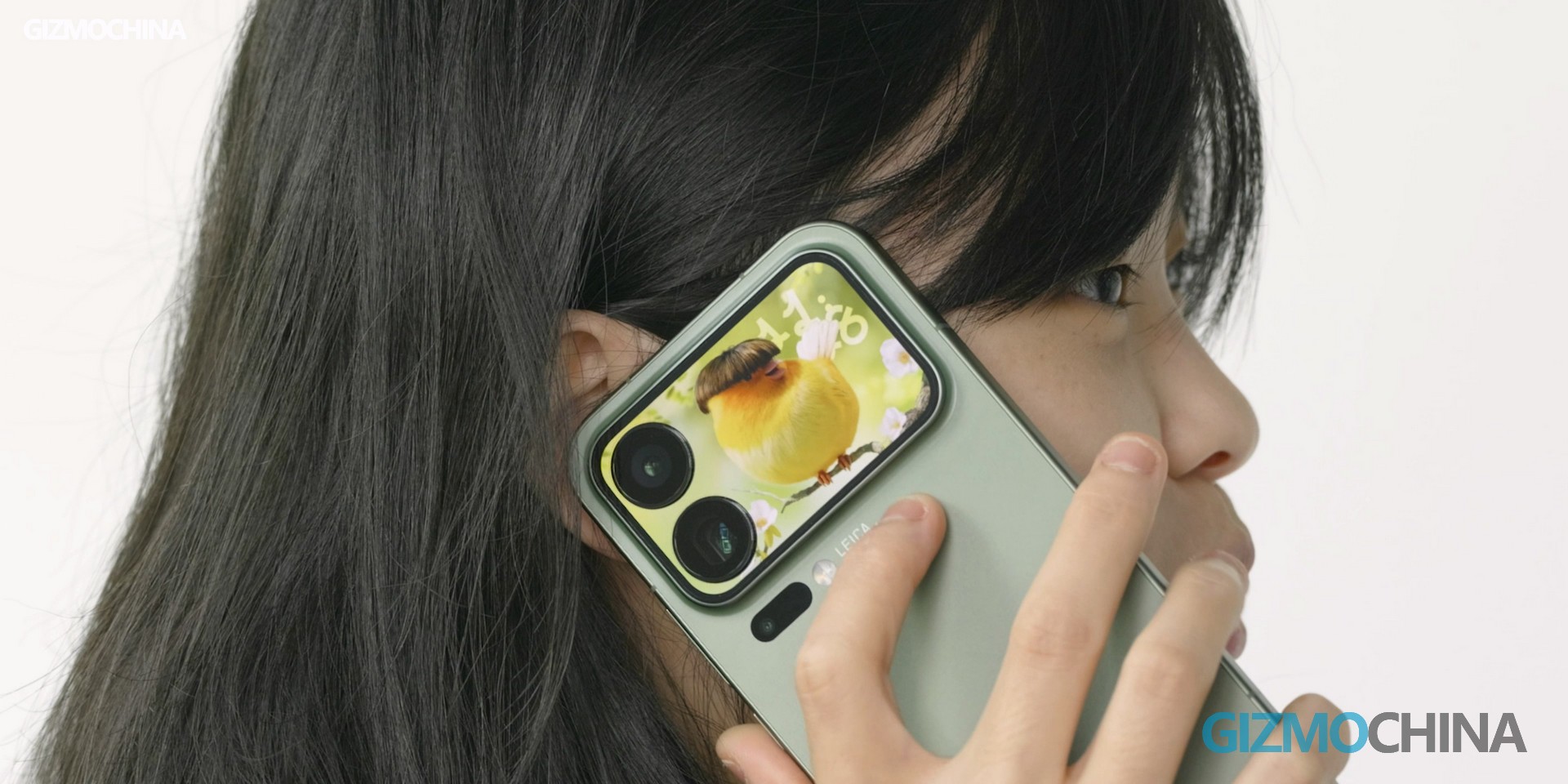
Xiaomi also lets you draw a circle to quickly pin content onto the rear screen. That means you can keep reminders or tricky-to-find information right on the back. That’s its second function.
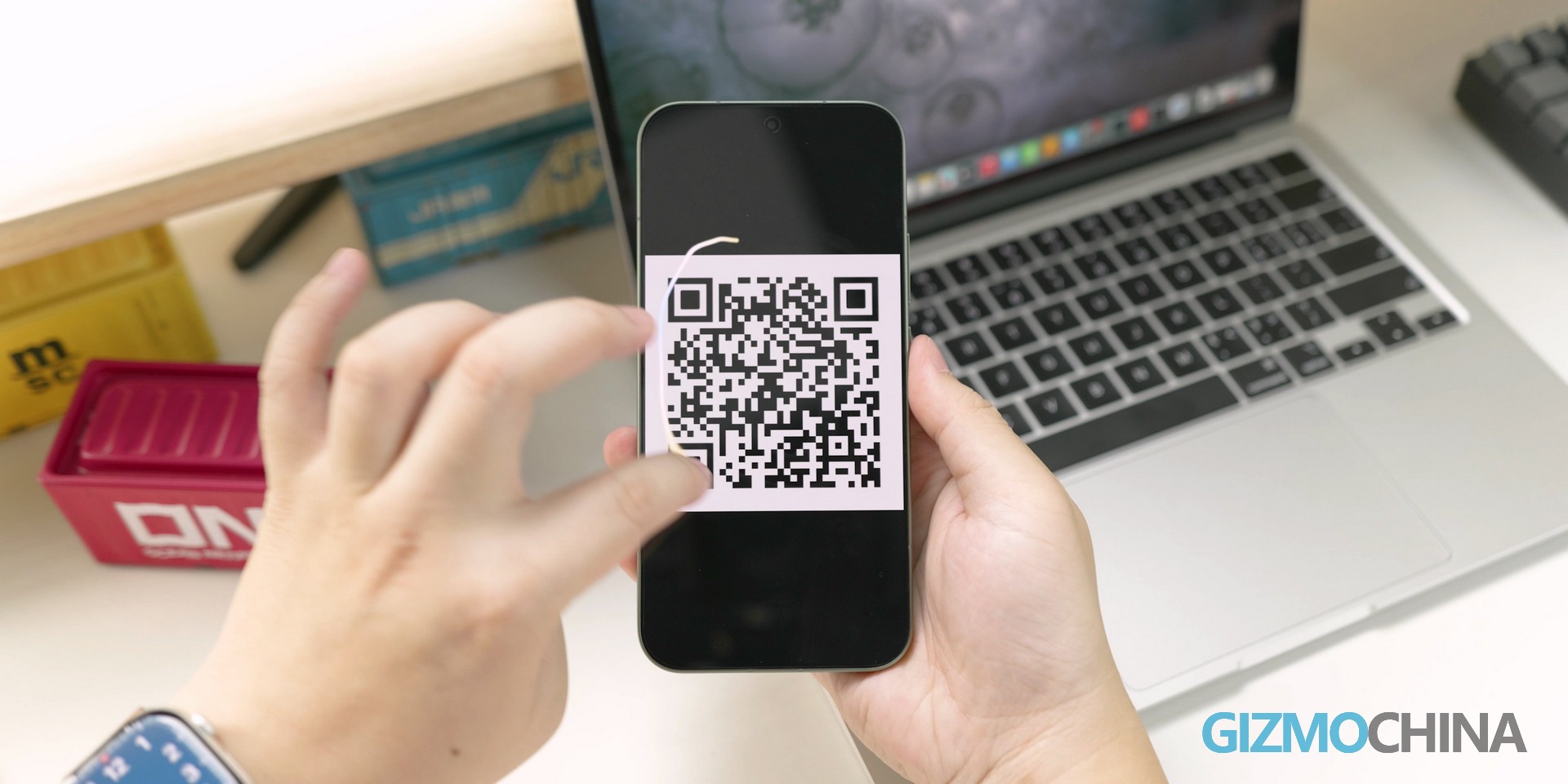
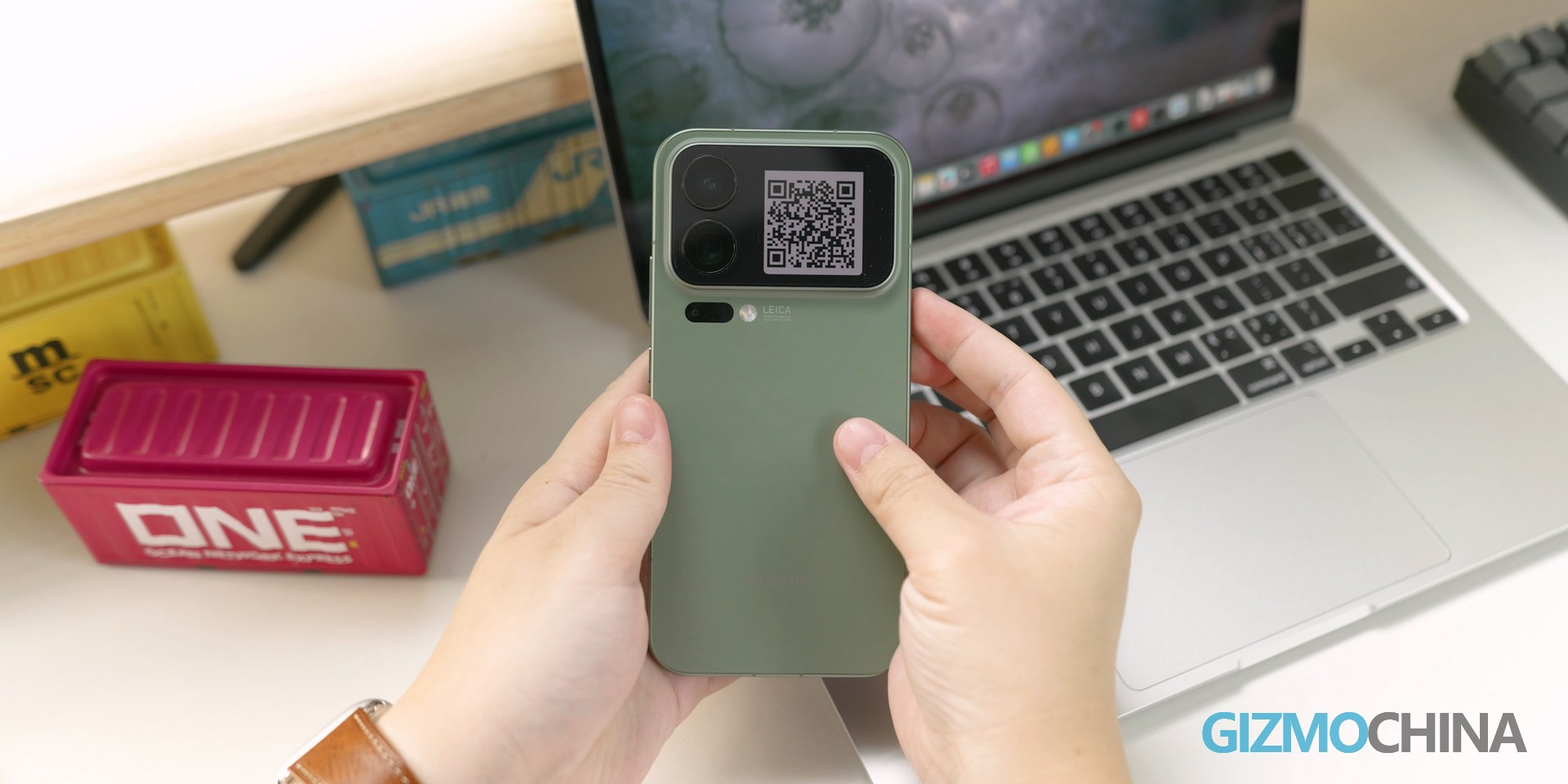
The third function is obvious: selfies. Just like with the MIX Flip series, this rear display lets you use the main camera for selfies. Thanks to the powerful main camera, this makes the 17 Pro Max Xiaomi’s best selfie phone ever.
Of course, no one’s going to play games on a sub-3-inch display, so Xiaomi came up with a workaround. By using a special $42 case, you can play some classic games on the rear screen.
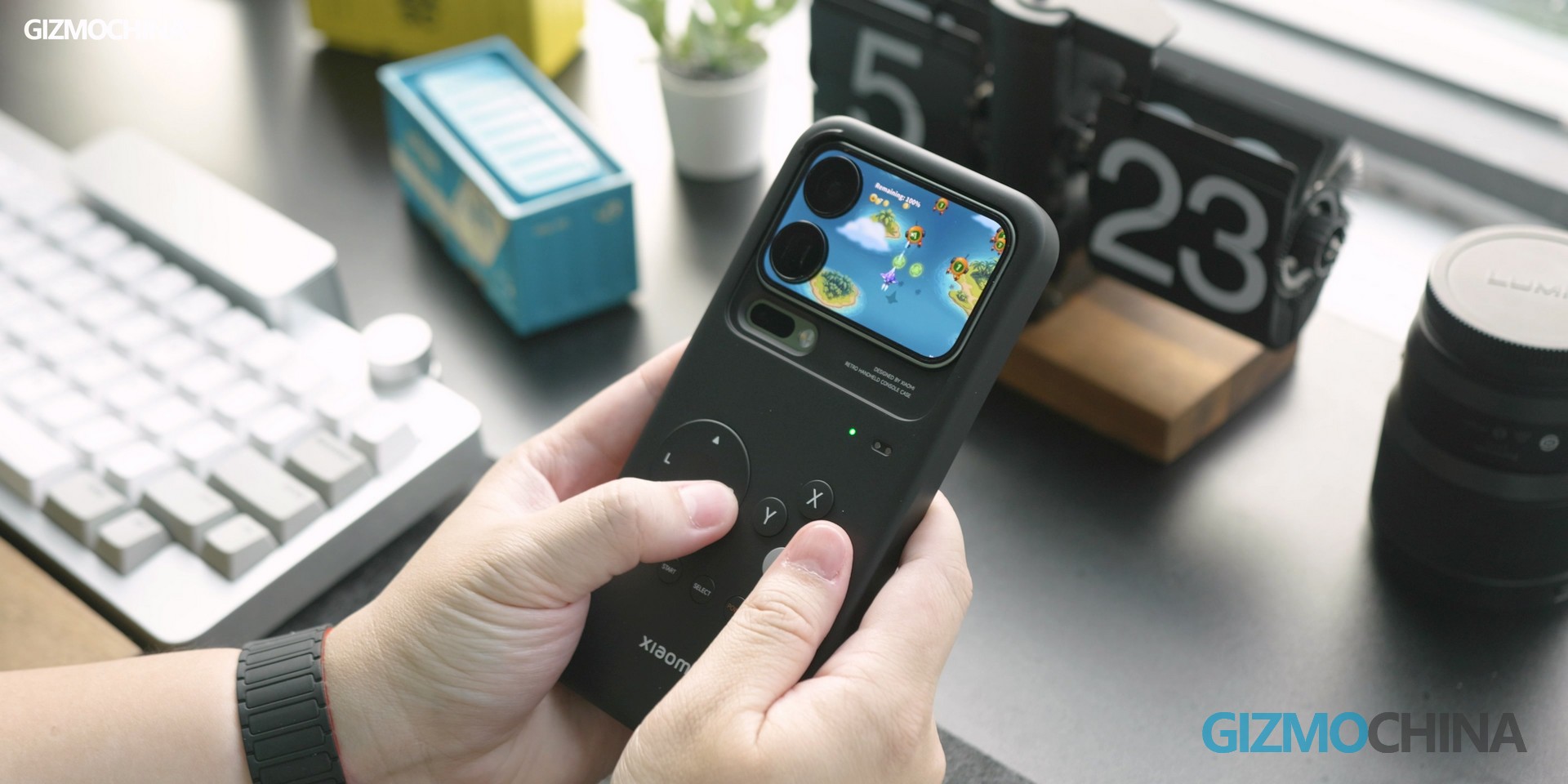
These games all feel strangely familiar; some companies probably want to sue Xiaomi after watching this video. There are only four games available, and once you get bored with them? Xiaomi allows third-party emulators to run on the rear display, which means theoretically hundreds or even thousands of games can be played. Not a bad way to kill time on a flight.
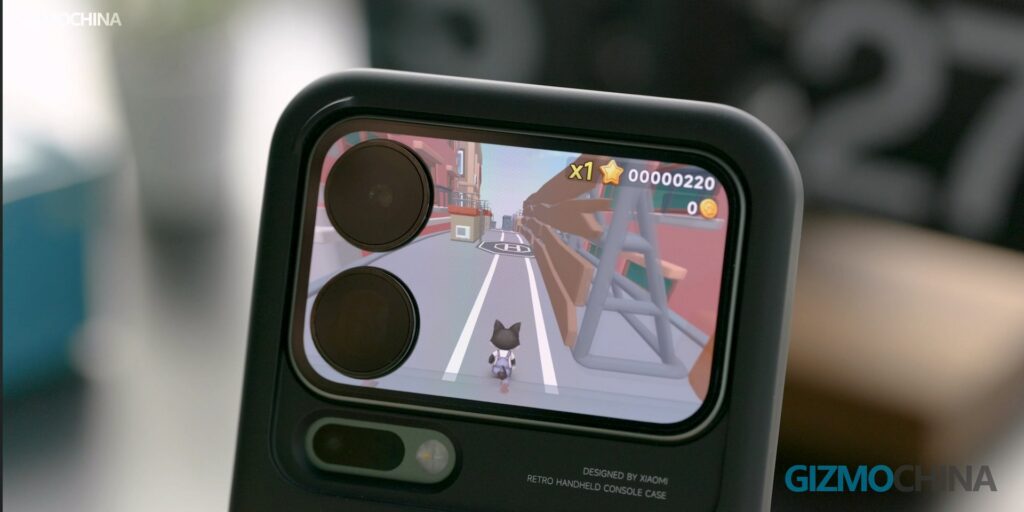
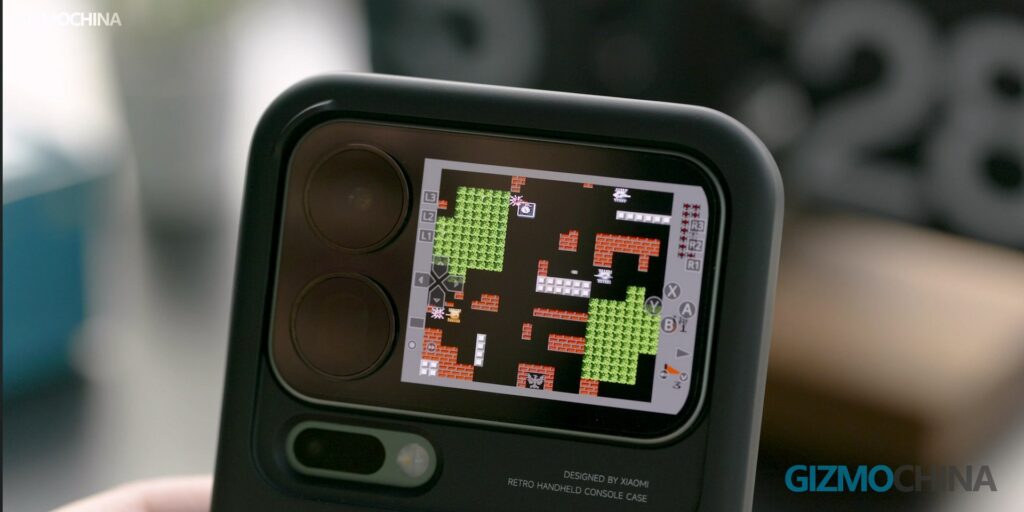
Oh, and don’t worry about privacy—the rear display will never show SMS messages. Currently, only a handful of apps support notifications here, though the global version might differ.
Yes, those are all the functions of the rear display. If you can live with a heavier phone, an entry-level vibration motor, downgraded USB transfer speed from 10Gbps to 5Gbps, a worse ultra-wide camera, no anti-reflective coating, neither display nor pre-applied film, then the Xiaomi 17 Pro Max is a good phone for you.
Performance
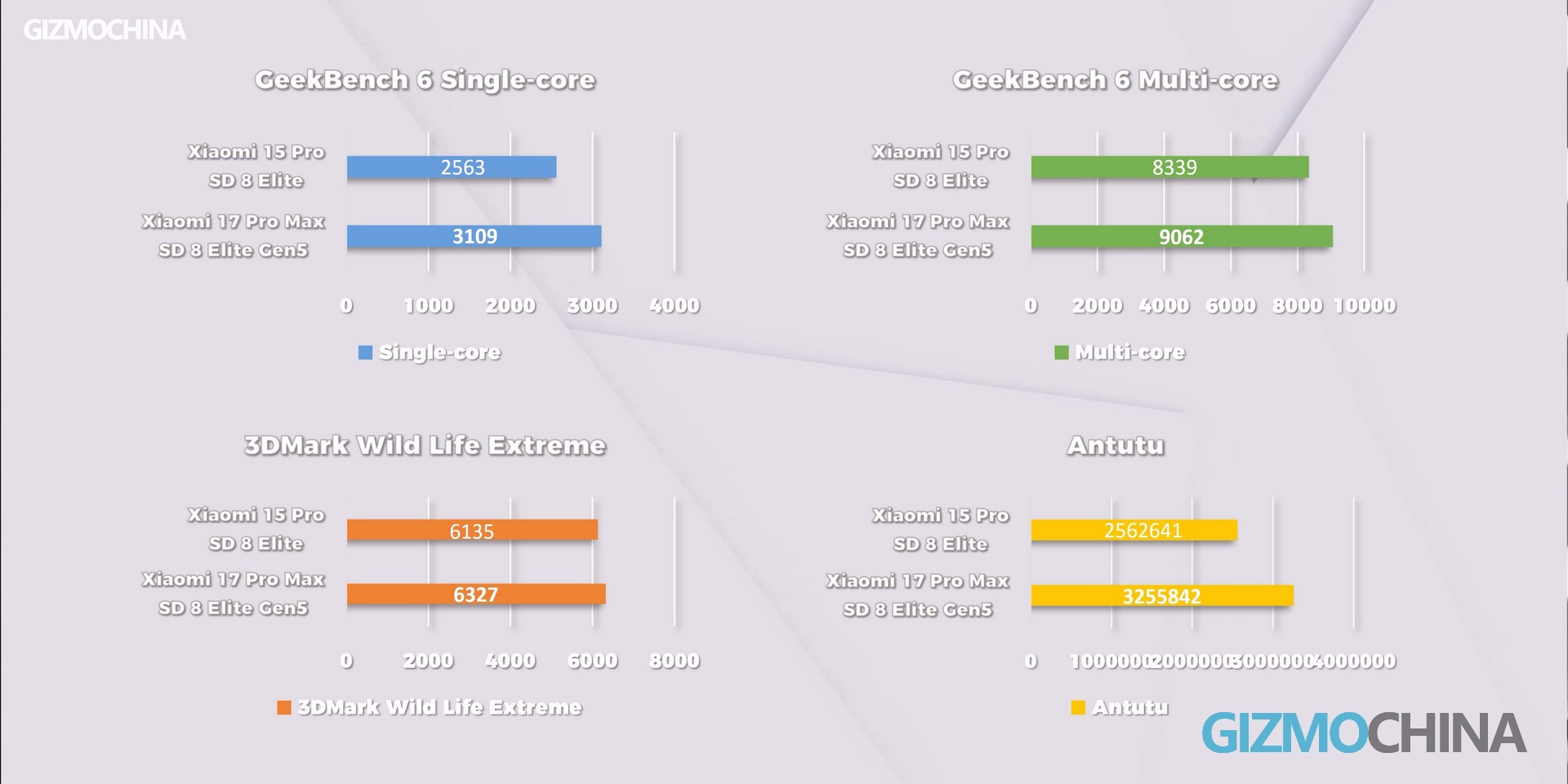
As the first flagship smartphone powered by the Snapdragon 8 Elite Gen5, there is no doubt that the Xiaomi 17 Pro Max has climbed to the top of the Android performance charts. While we don’t yet know how it will compare to upcoming flagships with the Dimensity 9500 in two weeks, current benchmark scores suggest that the improvements aren’t as dramatic as some might have expected. We all know benchmarks are just for reference—high scores don’t necessarily translate to great real-world performance. To truly test a processor, you need to play games.
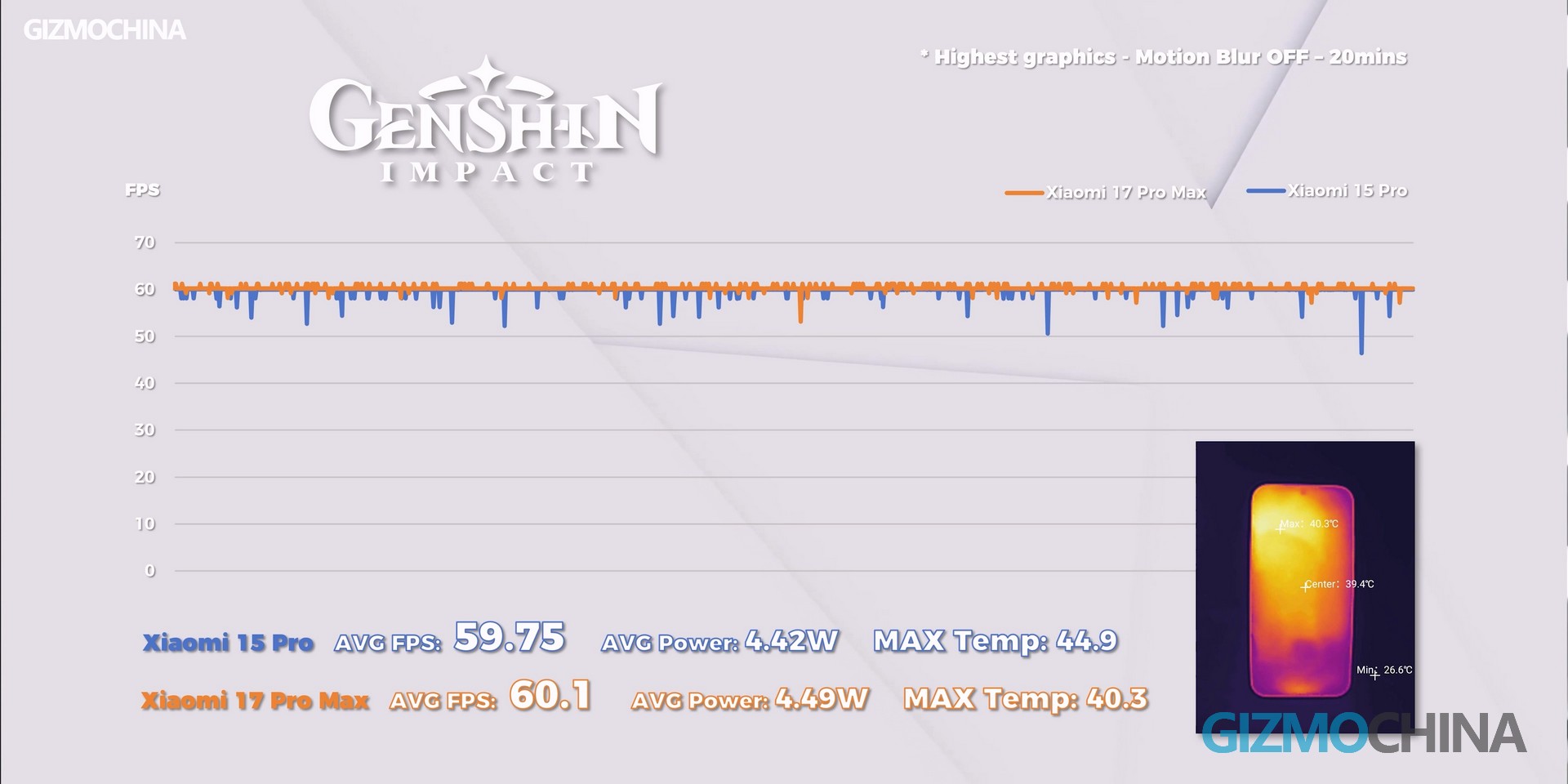
At max settings, Genshin Impact’s 20-minute frame rate curve looks like this. Five years ago, this game was a huge burden for mobile processors, but today’s chips handle it with ease. The Xiaomi 17 Pro Max performs well, but compared to last year’s 15 Pro, the difference isn’t huge. The only noticeable improvement is slightly lower temperatures. So let’s move to Honkai: Star Rail, which quickly exposes the 17 Pro Max’s limits.
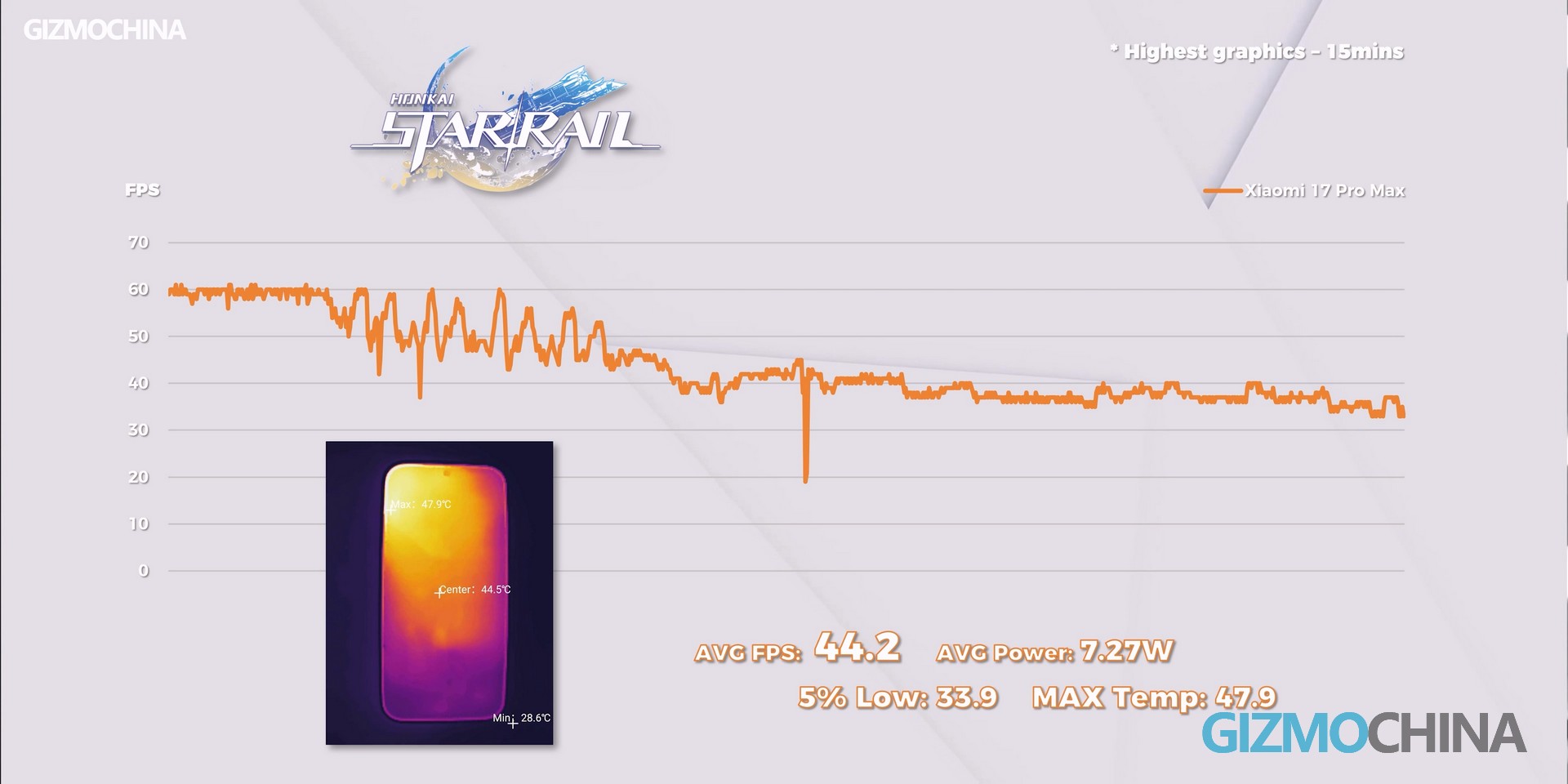
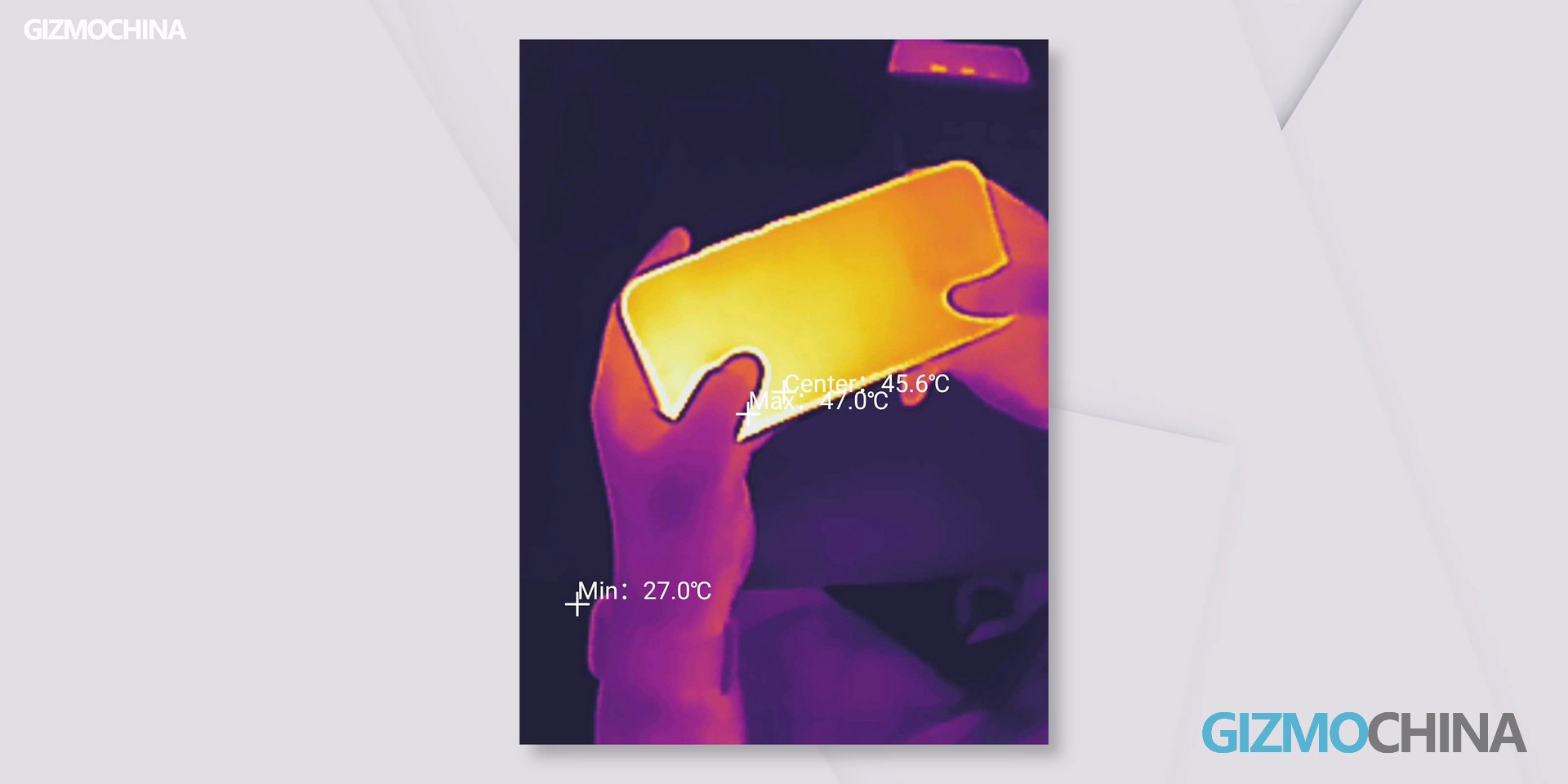
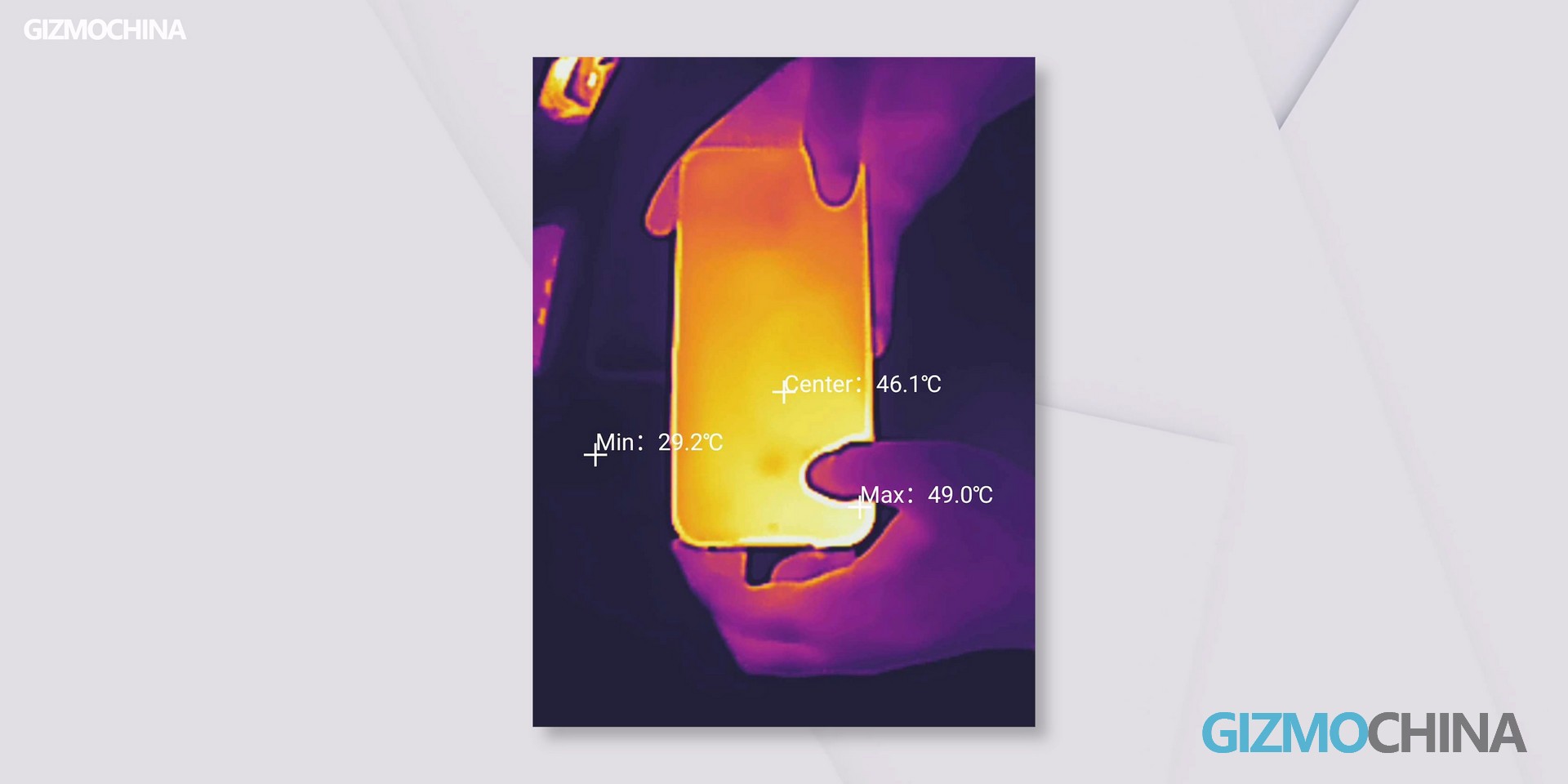
Throttling kicks in within three minutes, with frame rates hovering around 37fps most of the time. The phone also gets uncomfortably hot. Even worse, during our first Genshin test, a bug caused the CPU frequency to suddenly spike, with temperatures nearing 50°C. So honestly, I don’t recommend this phone for heavy gamers—at least not with the current system version, which left me unsatisfied.
Display
This year, the Xiaomi 17 Pro Max’s display received a major upgrade. I’m not talking about the 3,000–4,000 nit peak brightness numbers that are nearly impossible to measure—I mean clarity.
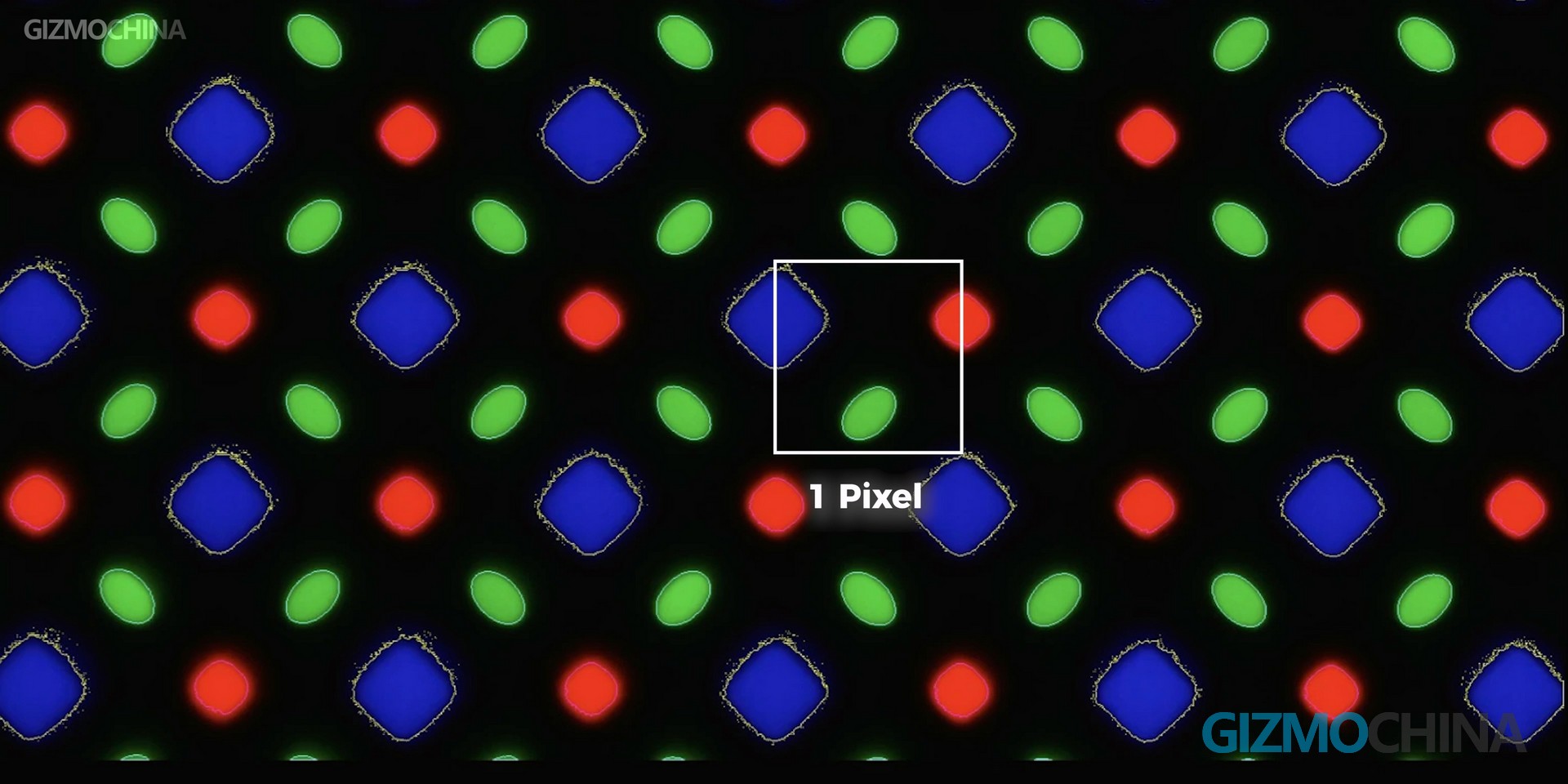
Most smartphones today use Diamond Pentile pixel arrangement, which has a drawback: red and blue subpixels share neighbors, reducing effective PPI. That’s why 2K resolution became necessary in the OLED era.
If you’ve followed tablets, you’ll know that many now use RGB S-Stripe arrangements. This layout gives each pixel its own complete RGB subpixels, so PPI is uncompromised while also saving power.
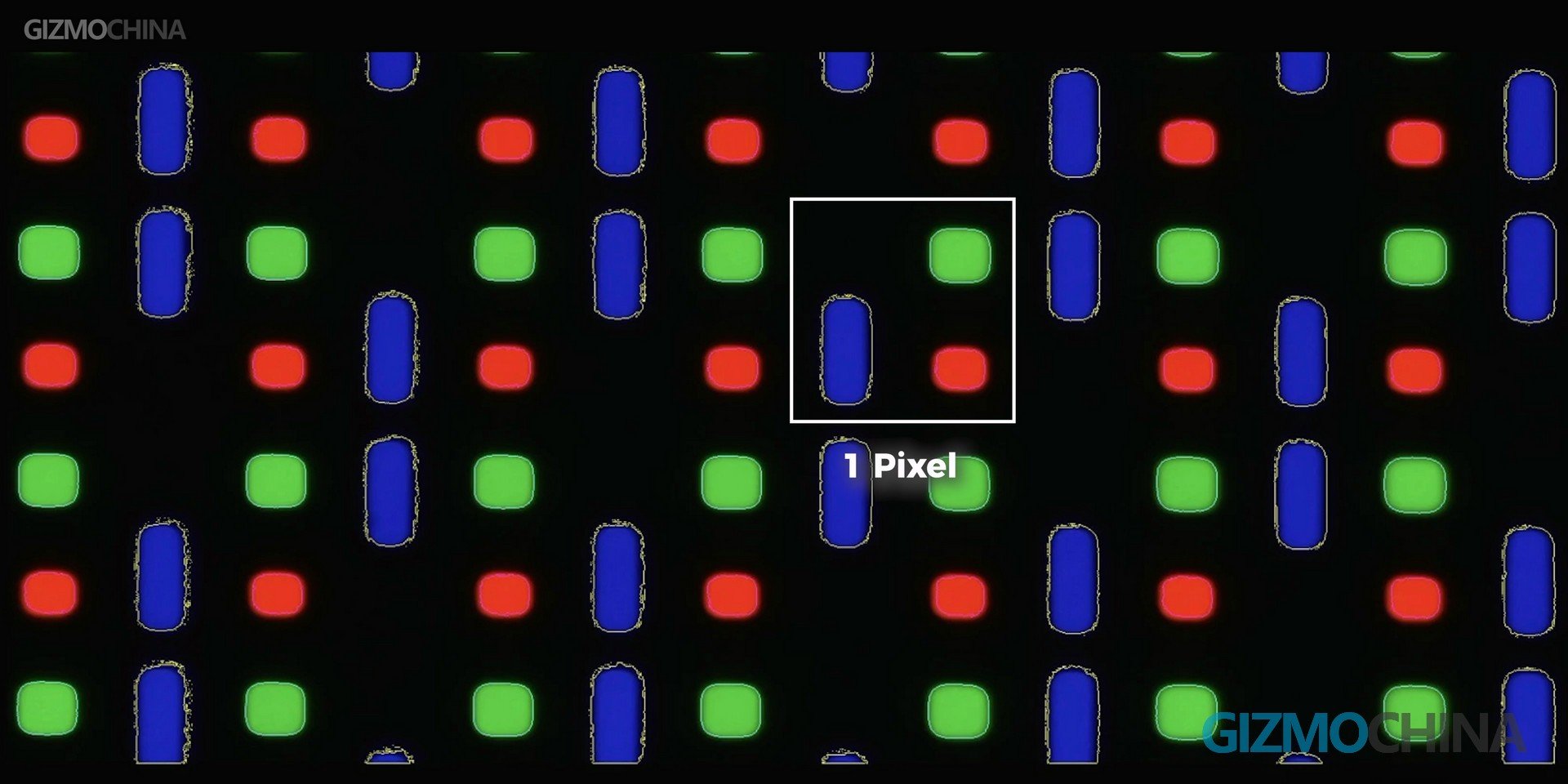
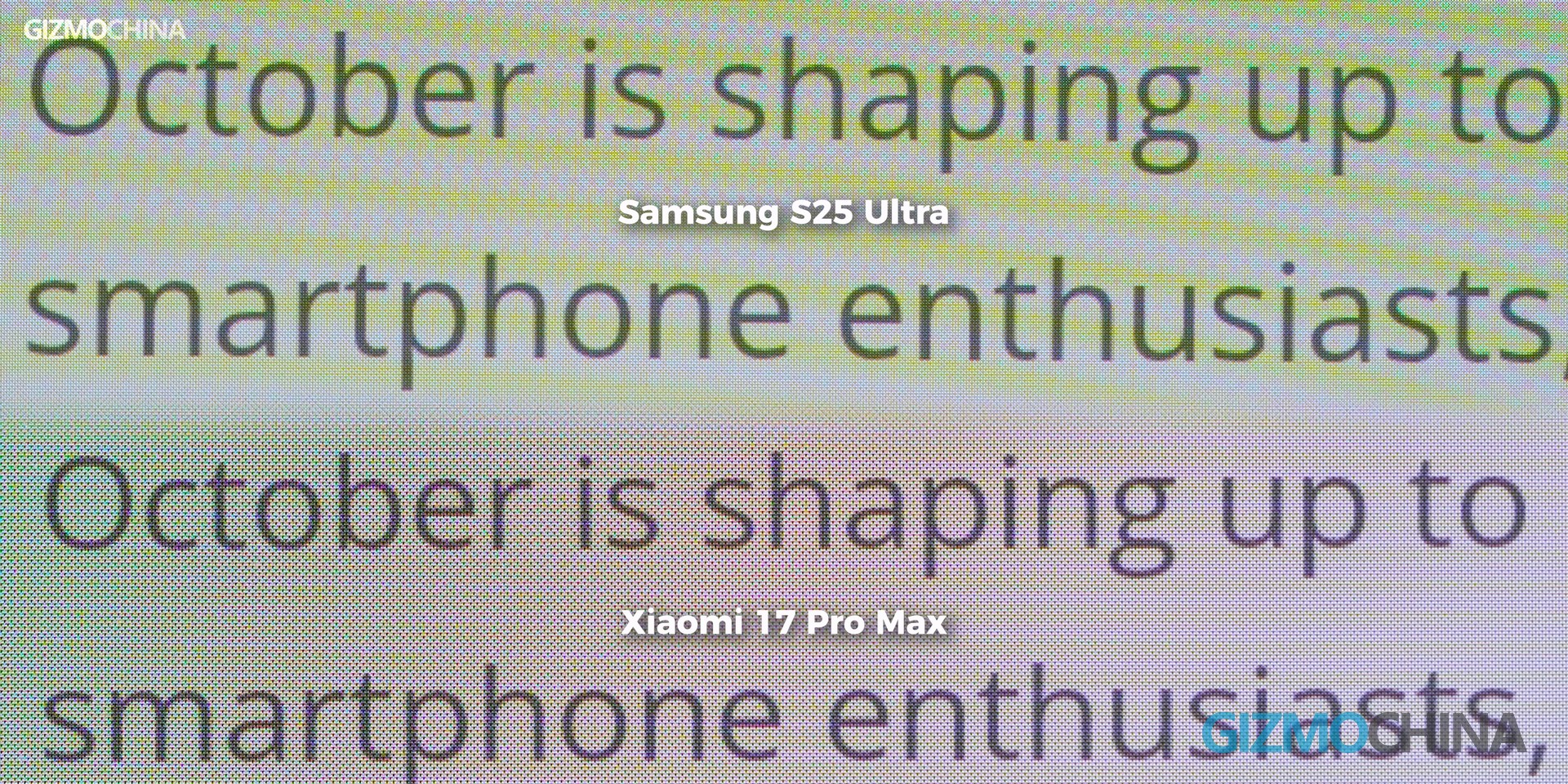
That’s why, even though the Xiaomi 17 Pro Max has a lower resolution than its predecessor, clarity hasn’t dropped noticeably. Unfortunately, this new pixel arrangement is only on the Pro Max version for now. The good news is, Xiaomi doesn’t own the exclusive rights, so more smartphones will adopt this in the future. If you don’t want a Xiaomi, just wait for other flagships to catch up.
Cameras
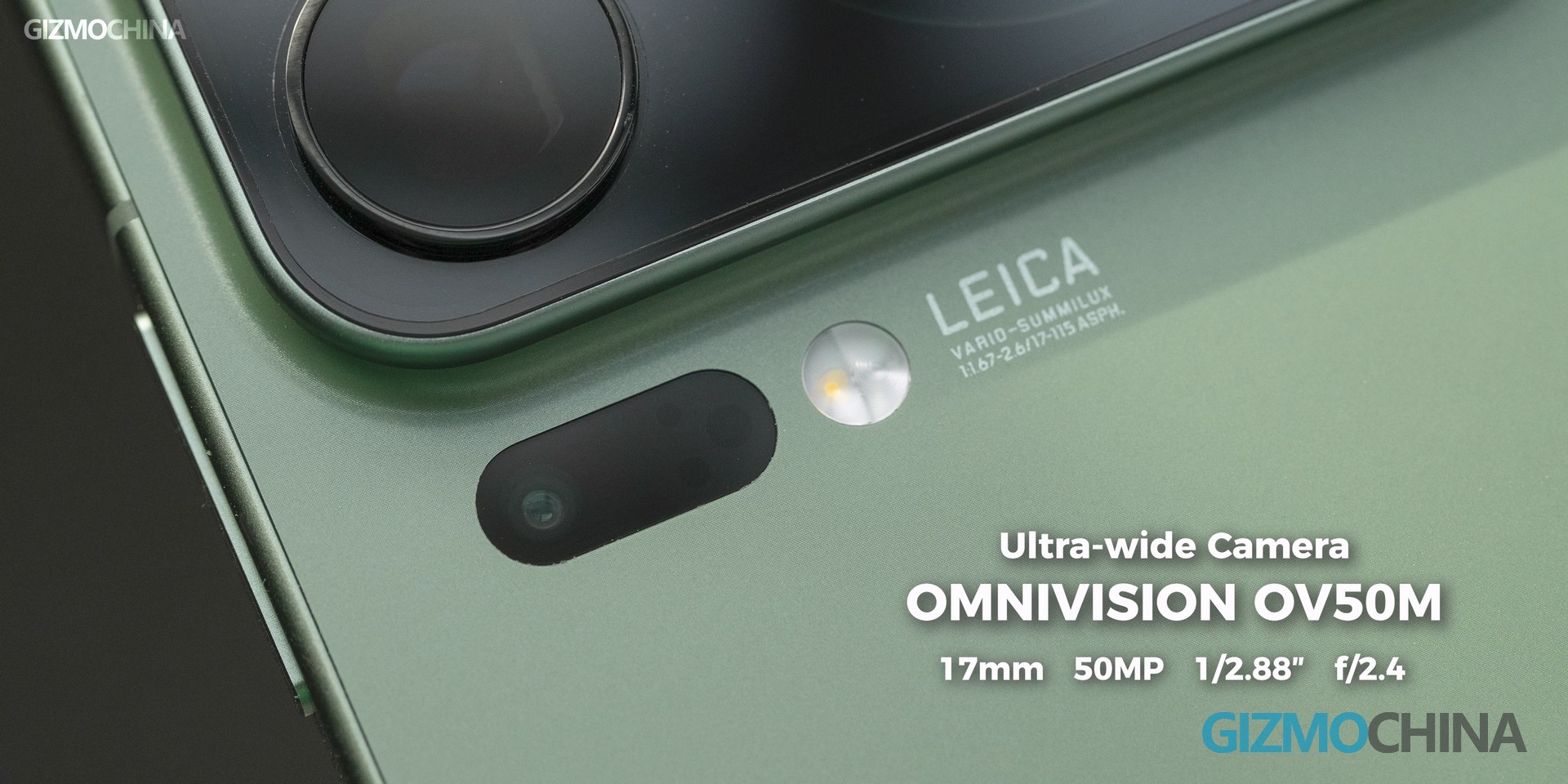
To make room for the rear display, the triple-camera layout has changed. The ultra-wide camera was pushed down near the battery, and unsurprisingly, it’s been downgraded. I can accept the smaller sensor—it shrank by less than 5%, and the ultra-wide isn’t used that often. What bothers me is that its focal length increased from 14mm to 17mm. The field of view is significantly narrower. When switching from the main camera to the ultra-wide, your first reaction will be: “Does Xiaomi even know what “ultra-wide” means?”
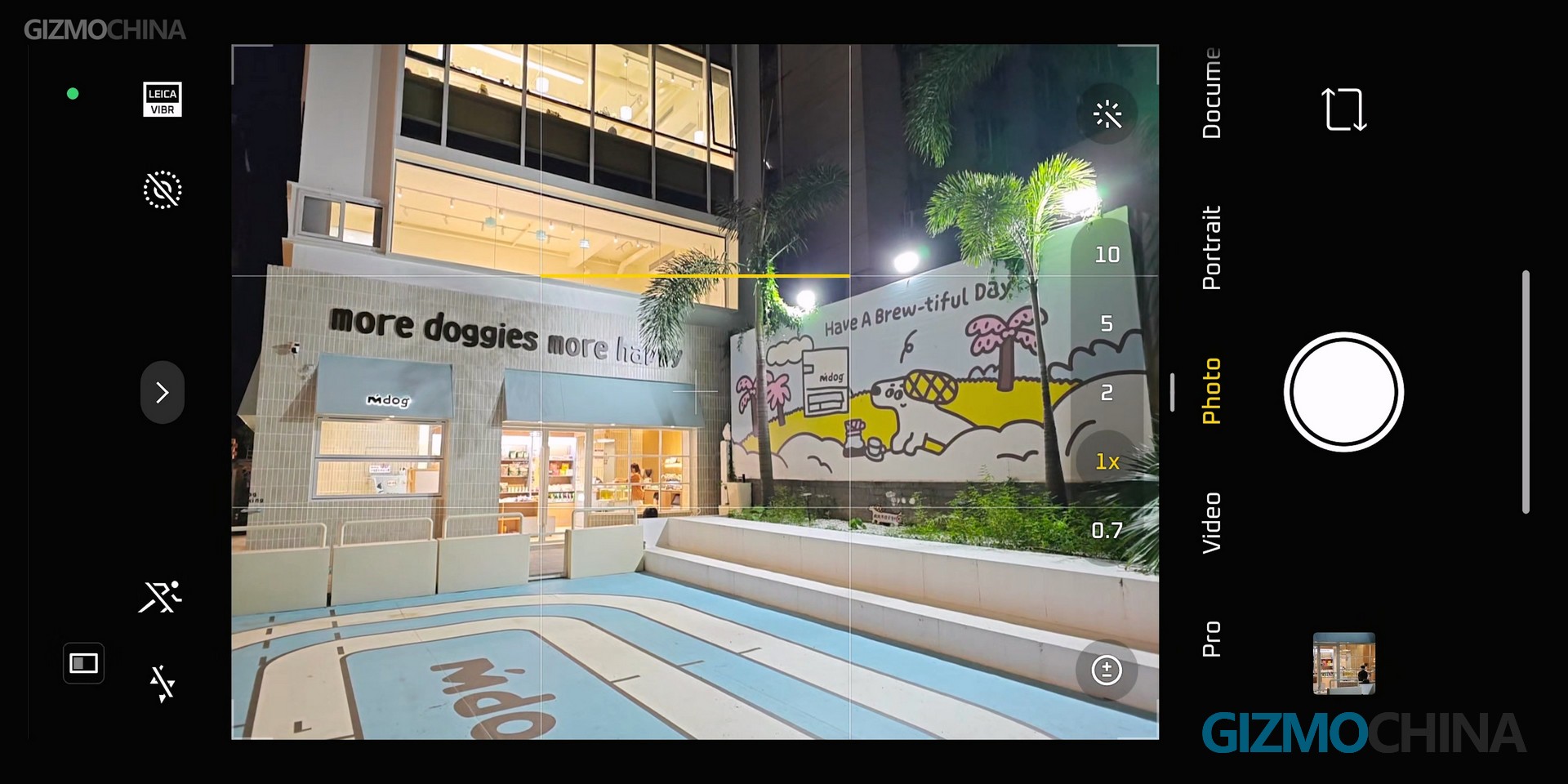
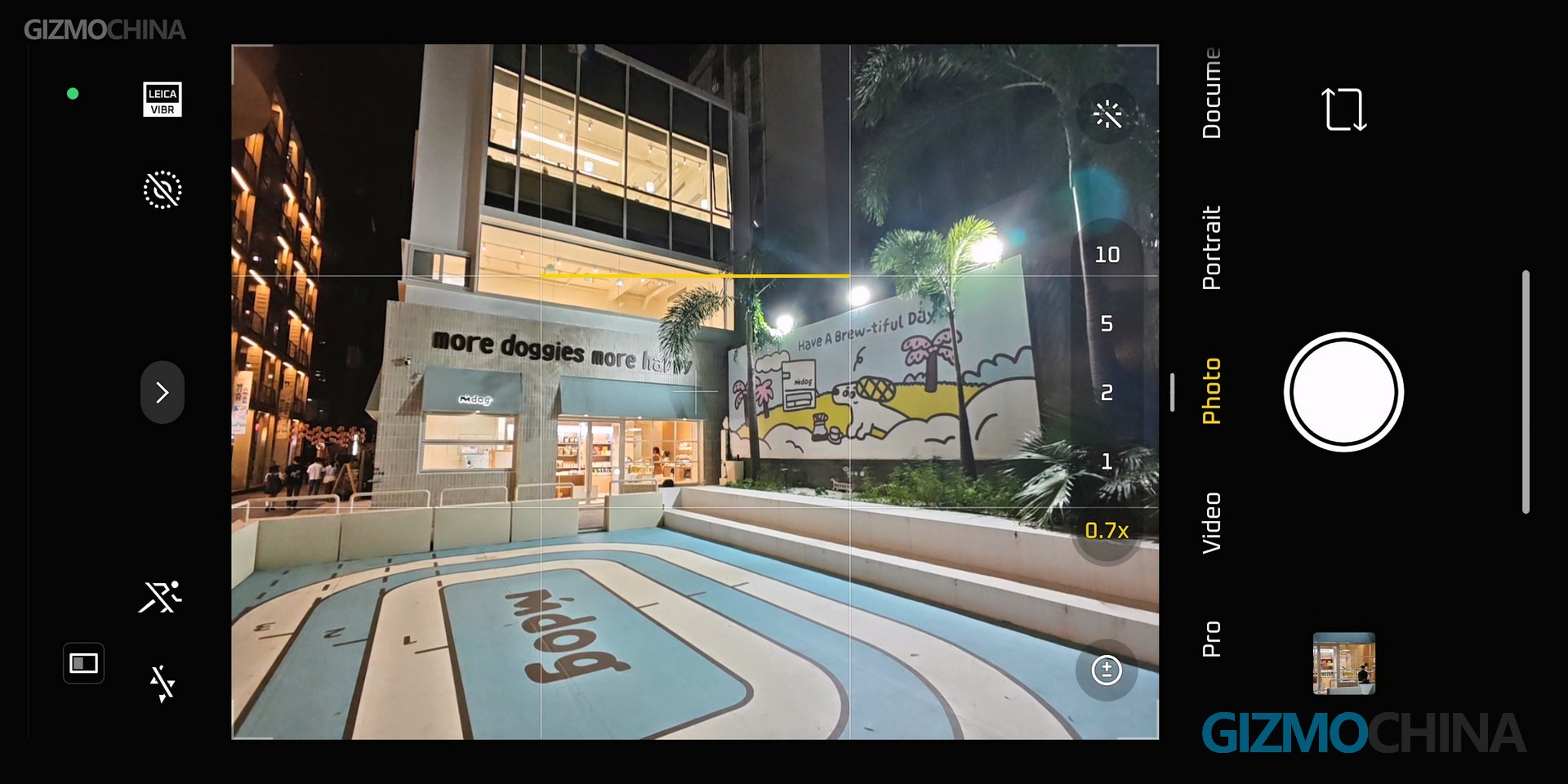
At 17mm, the FOV is ridiculously tight. Even the iPhone’s front-facing video recording offers a similar field of view—sometimes with better quality. WTF.
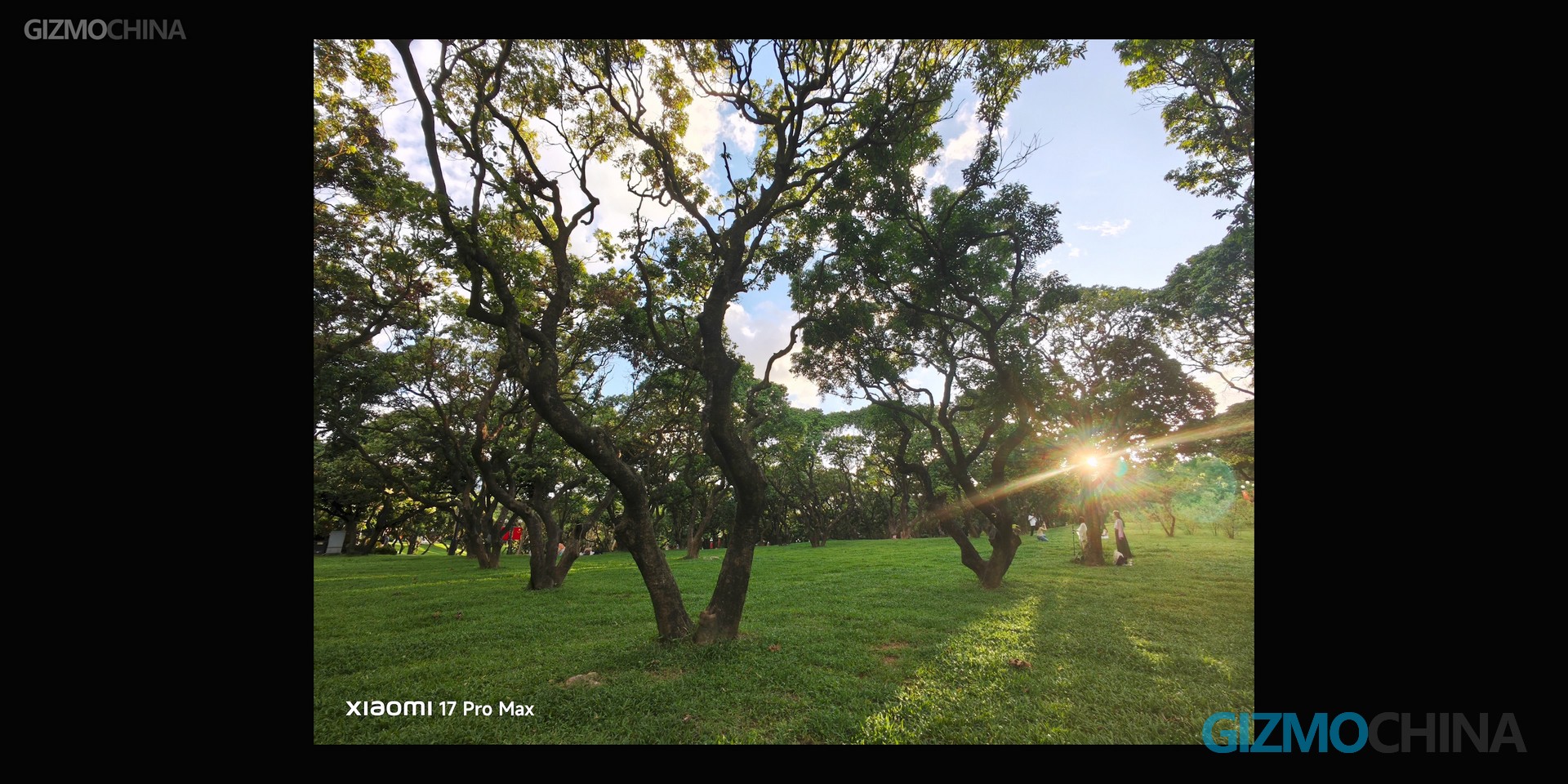

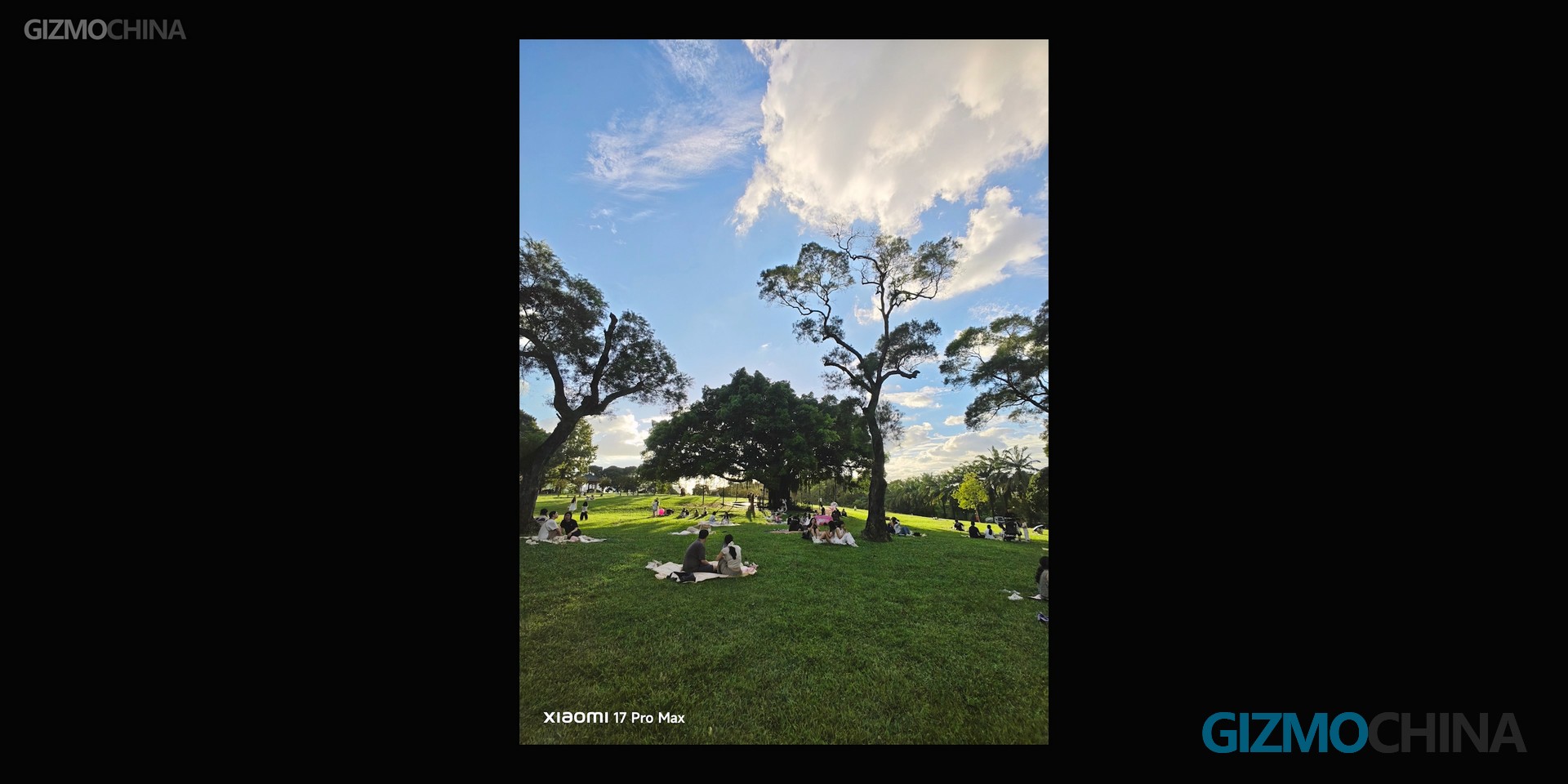
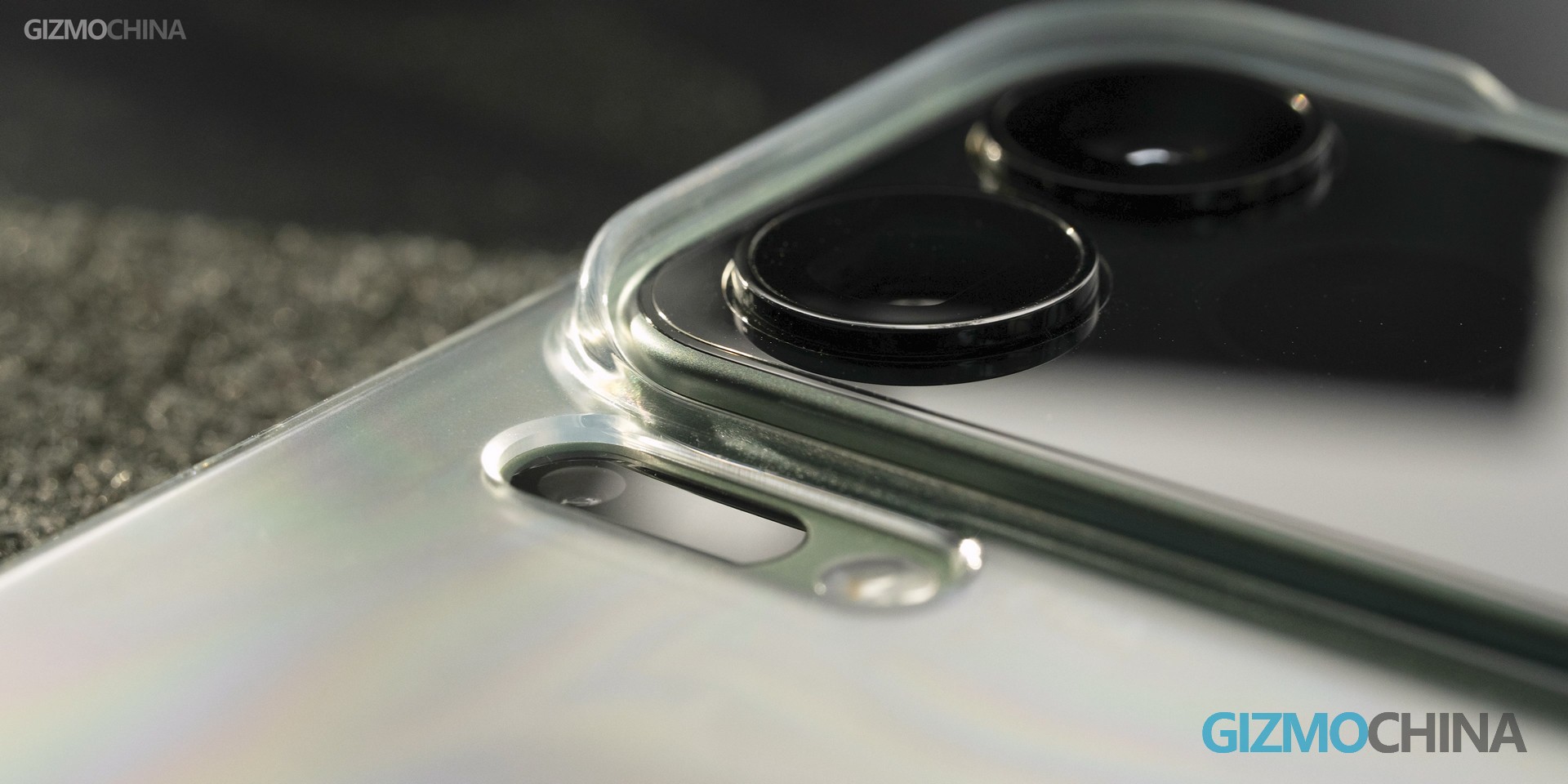
After thinking it through, I suspect this was done to prevent the rear display from intruding into the ultra-wide’s field of view. Supporting this theory, neither the included case nor the Gameboy case extends around the bottom edge of the rear display. This is why I call it Xiaomi’s best selfie phone—not its best vlogging phone.
The main camera delivers excellent quality, but the FOV isn’t wide enough. The ultra-wide is wider, but still doesn’t beat a selfie cam and suffers from worse image quality. For vlogging, I’d actually recommend the front camera: bigger screen, similar image quality.
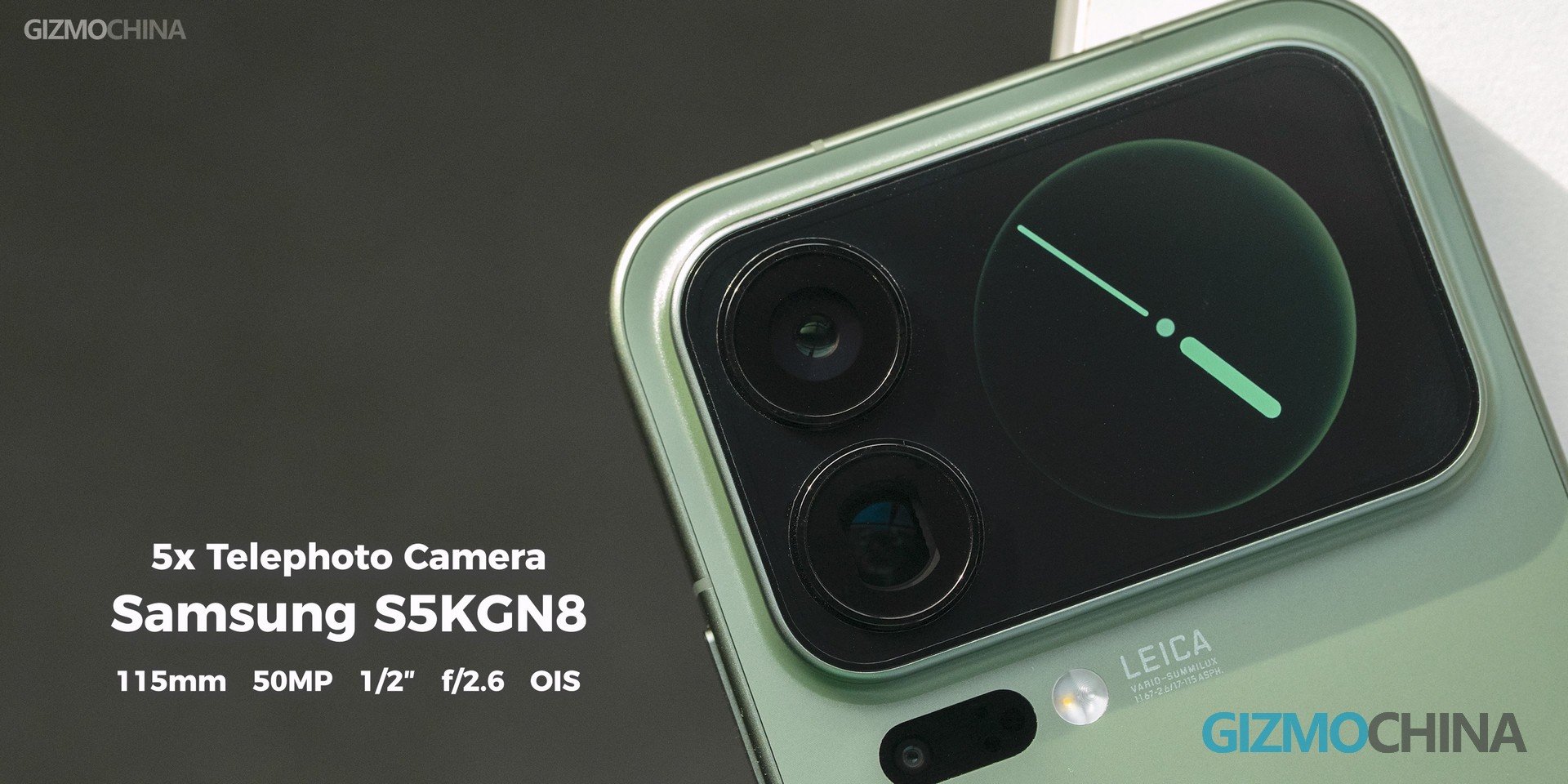
The telephoto camera, on the other hand, received a major upgrade. Zoom to 5x, and you always get great shots. But the 115mm focal length is too long. Even Tim Cook knew that 5x zoom was impractical for everyday use, so Apple shortened it to 100mm this year. Xiaomi sticking with 115mm feels inconvenient. Meanwhile, common focal lengths like 70mm or 85mm can only be achieved through cropping from the main sensor.
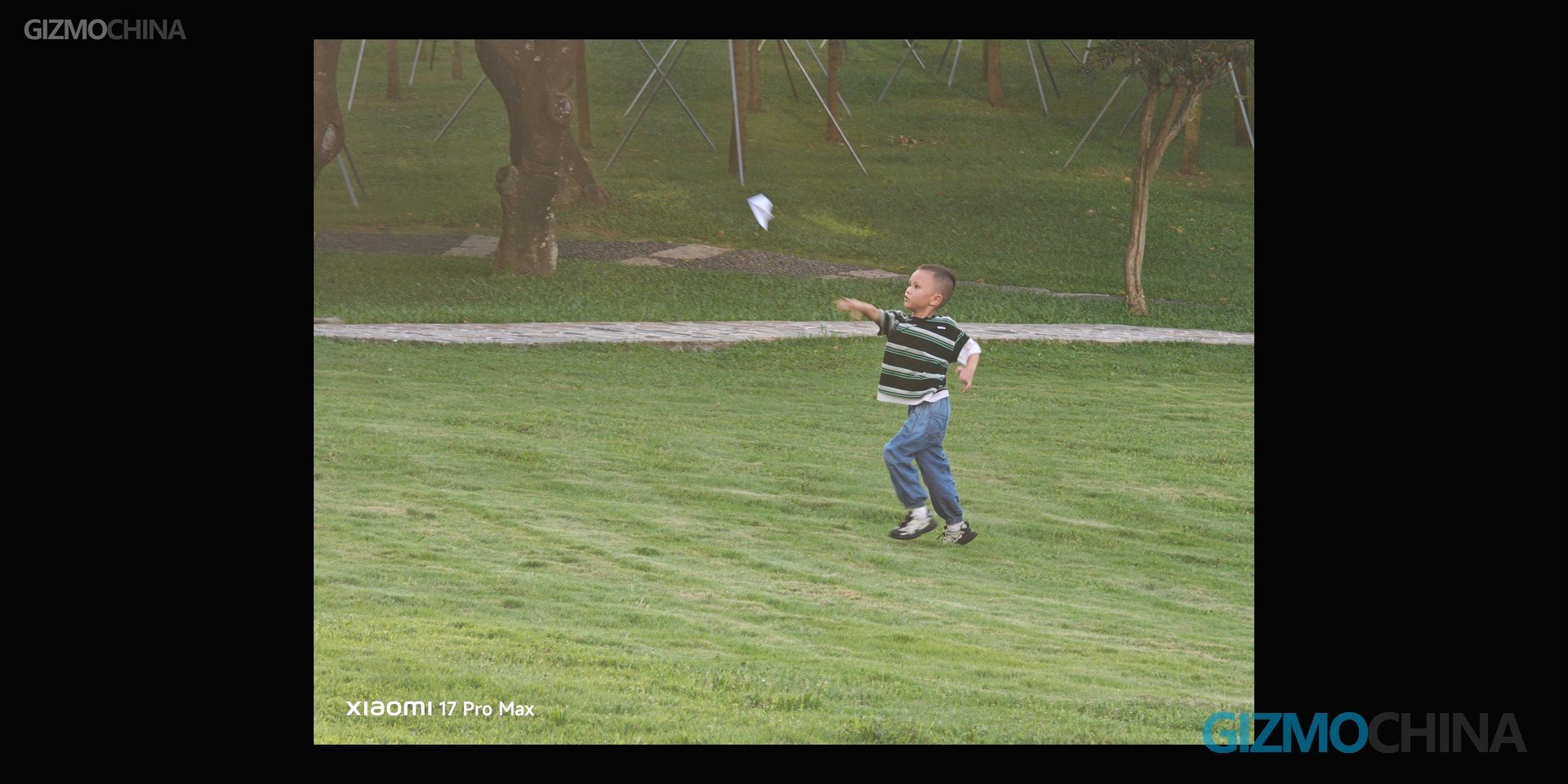
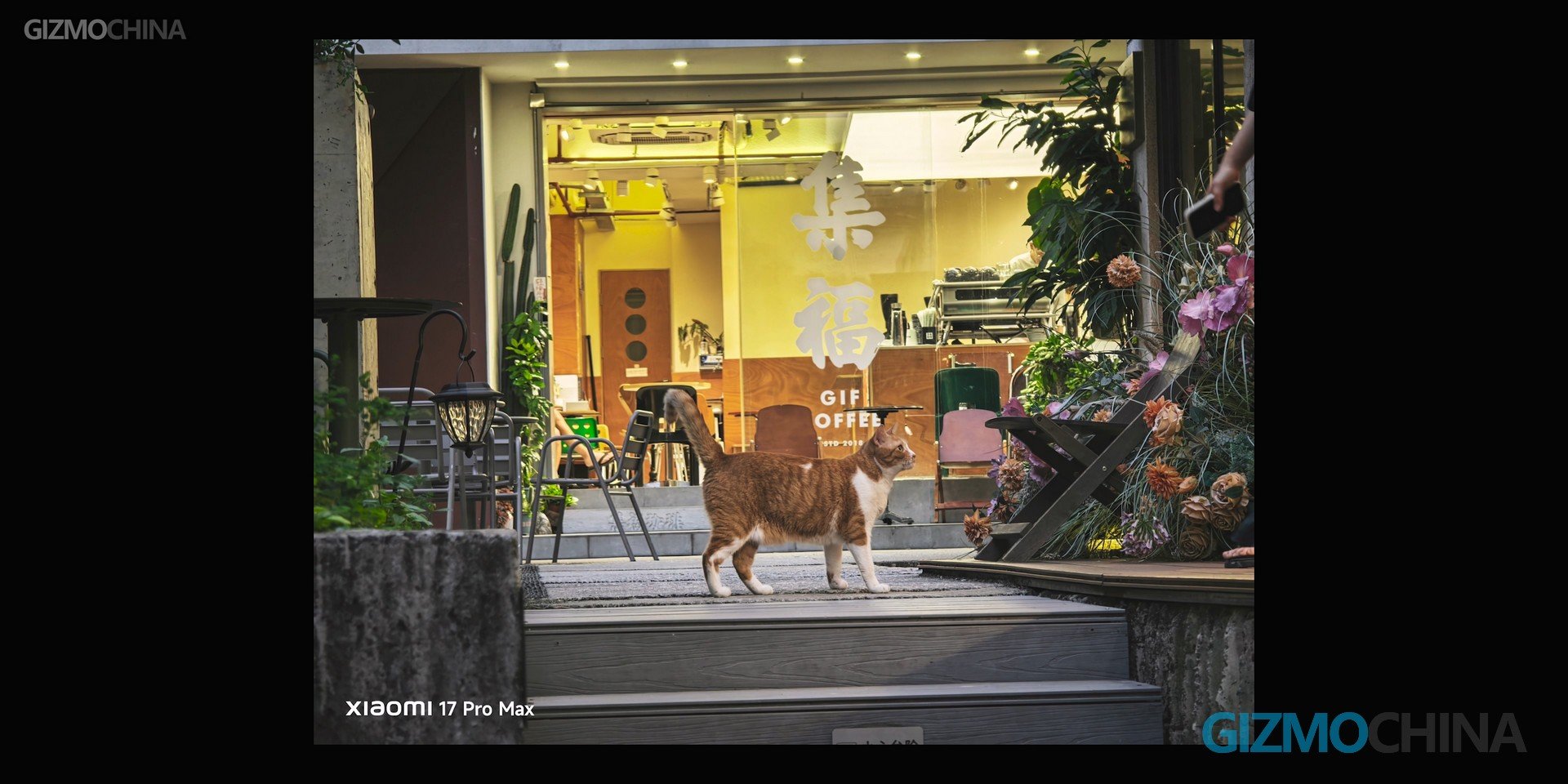
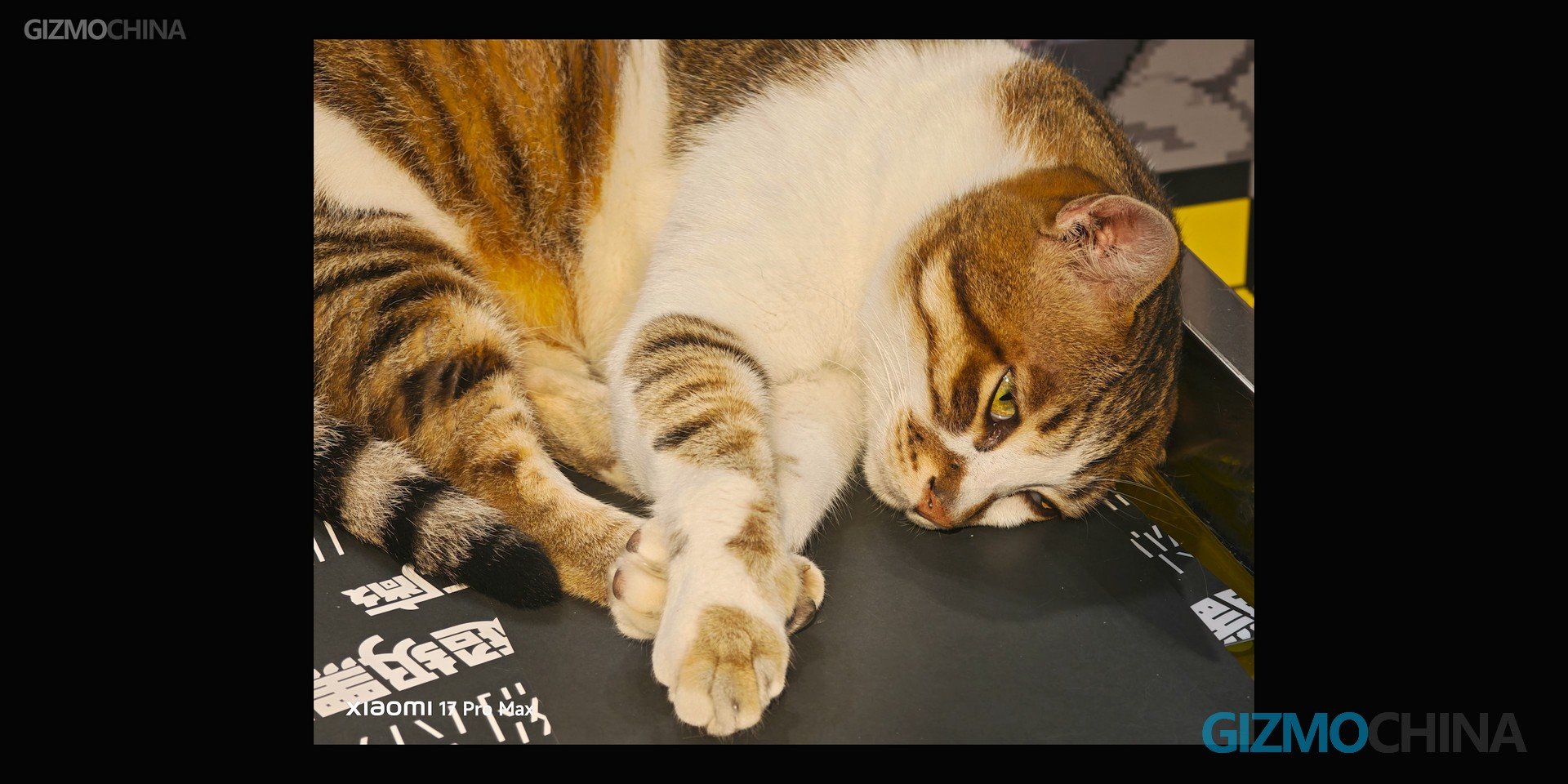
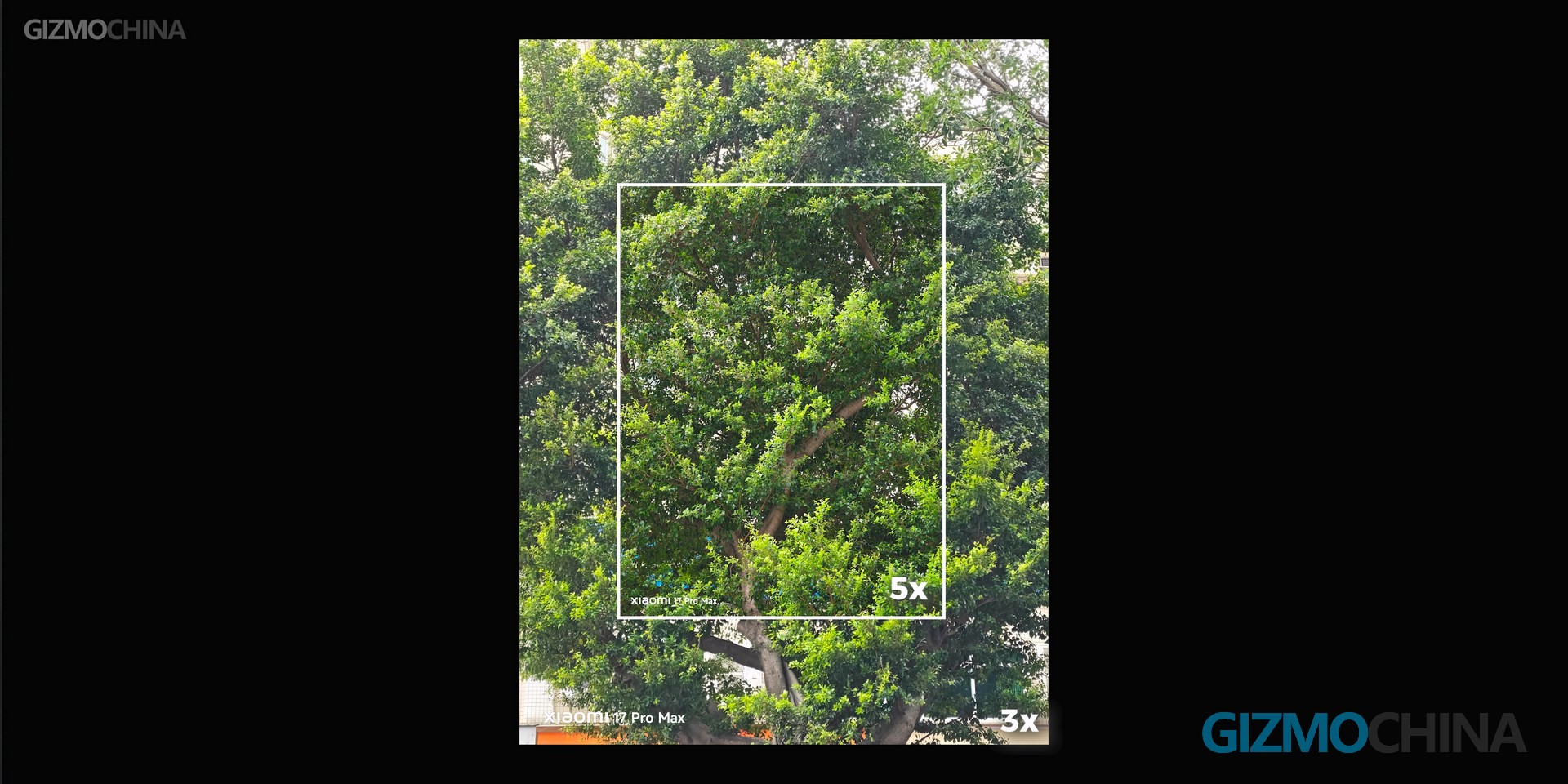
Naturally, I worried whether cropped 70mm shots would look blurry. Surprisingly, they turned out impressively sharp—even scarily so. Compared with the iPhone 17 Pro, the difference becomes obvious. Are these really just cropped shots? Yes—and no.
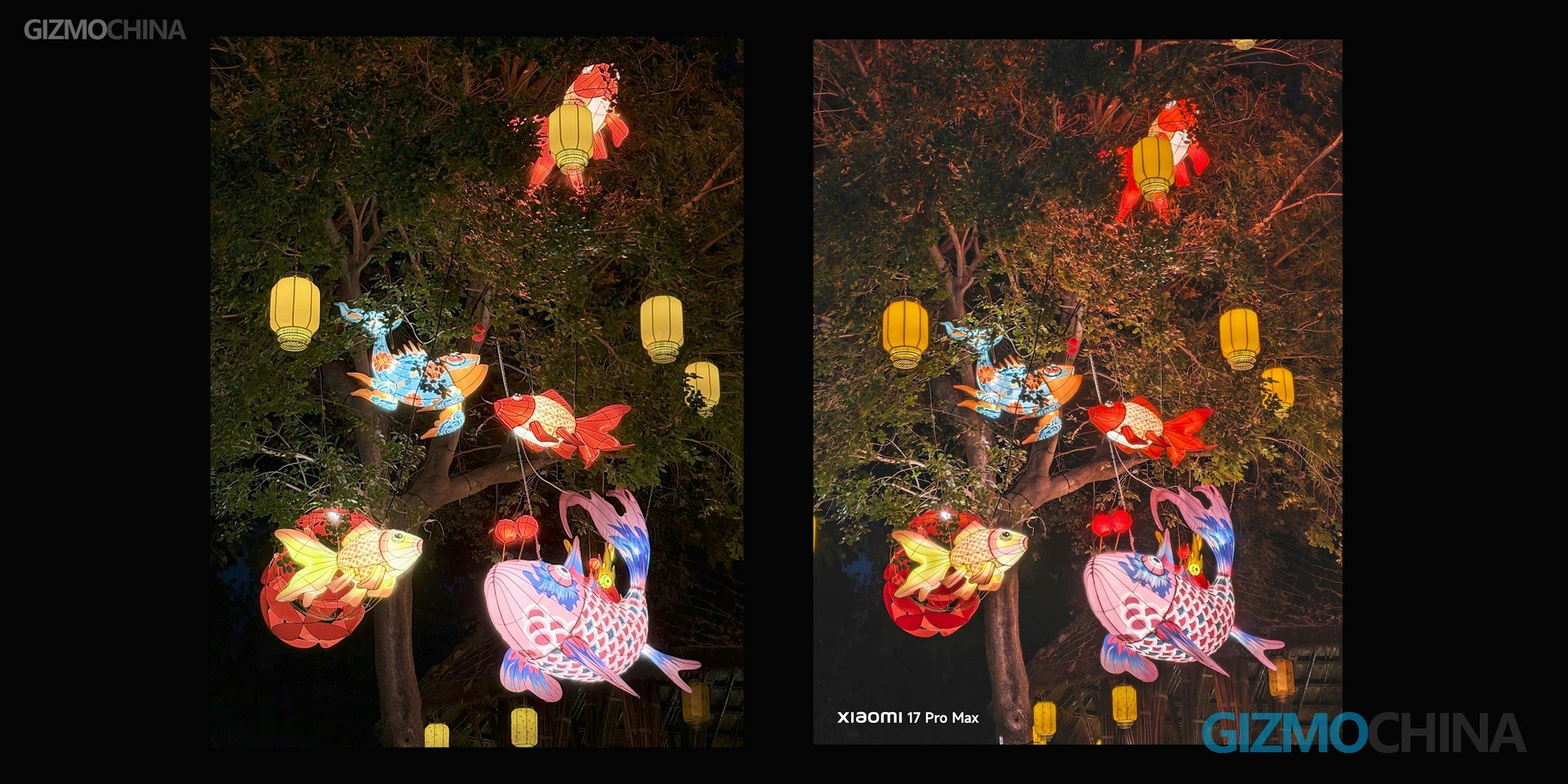
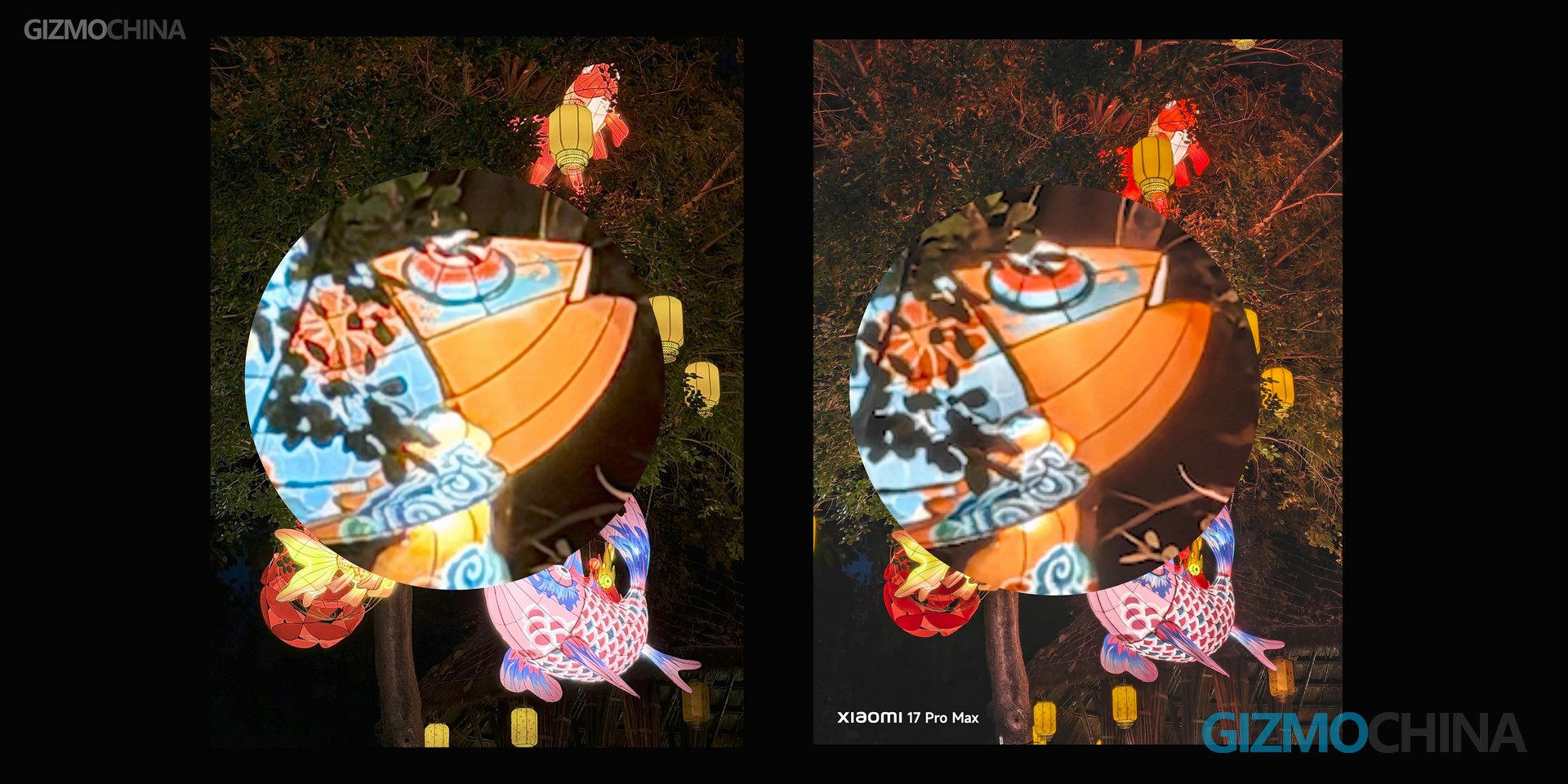
What actually happens is that the 5x telephoto captures the center portion, which is then blended with the cropped main sensor shot. That’s why the middle looks super sharp, but the edges don’t. You can test this yourself: take two 3x shots, one normally, and one with the 5x lens blocked. When I Zoom in, you’ll see what I mean.
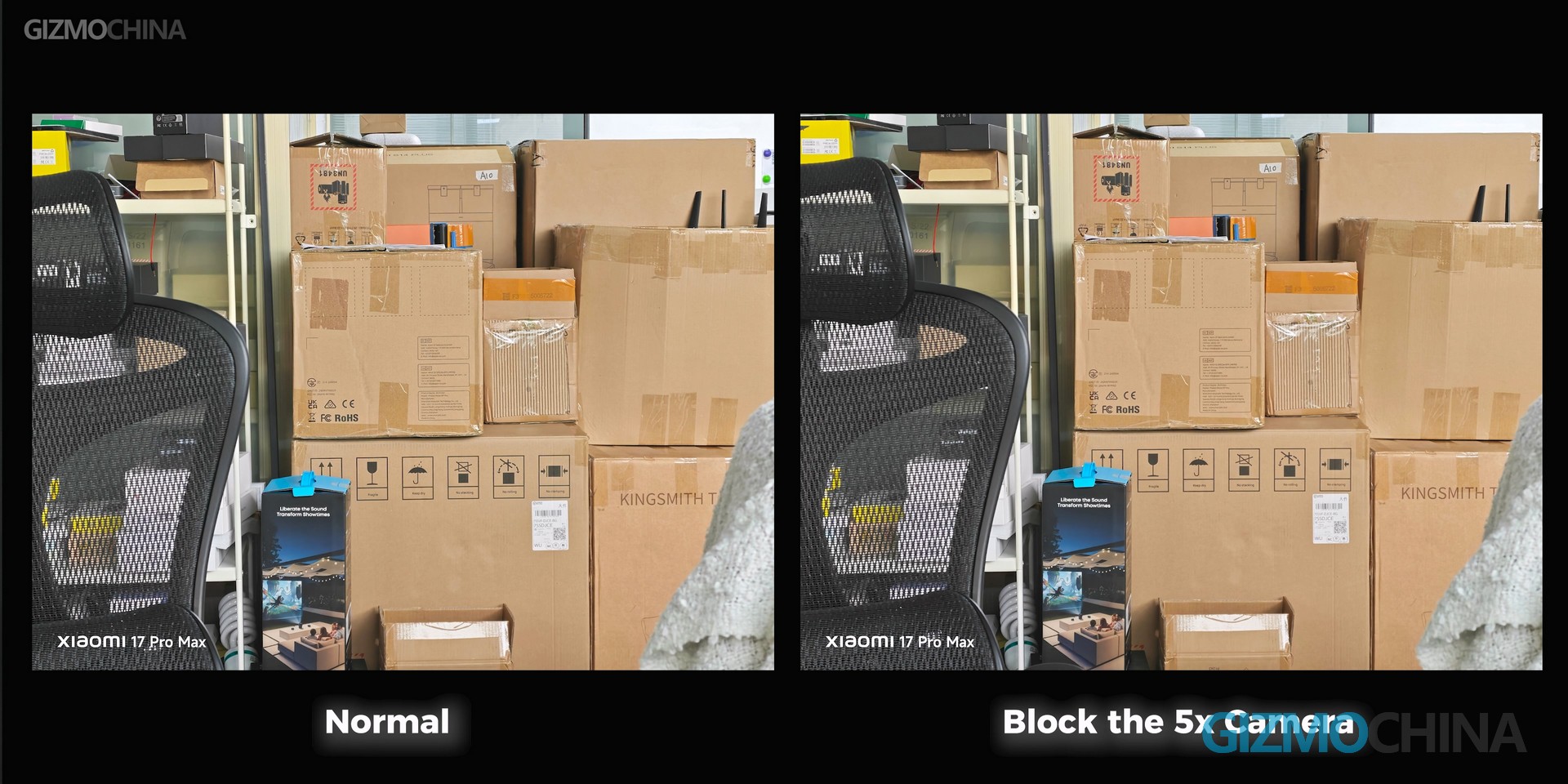
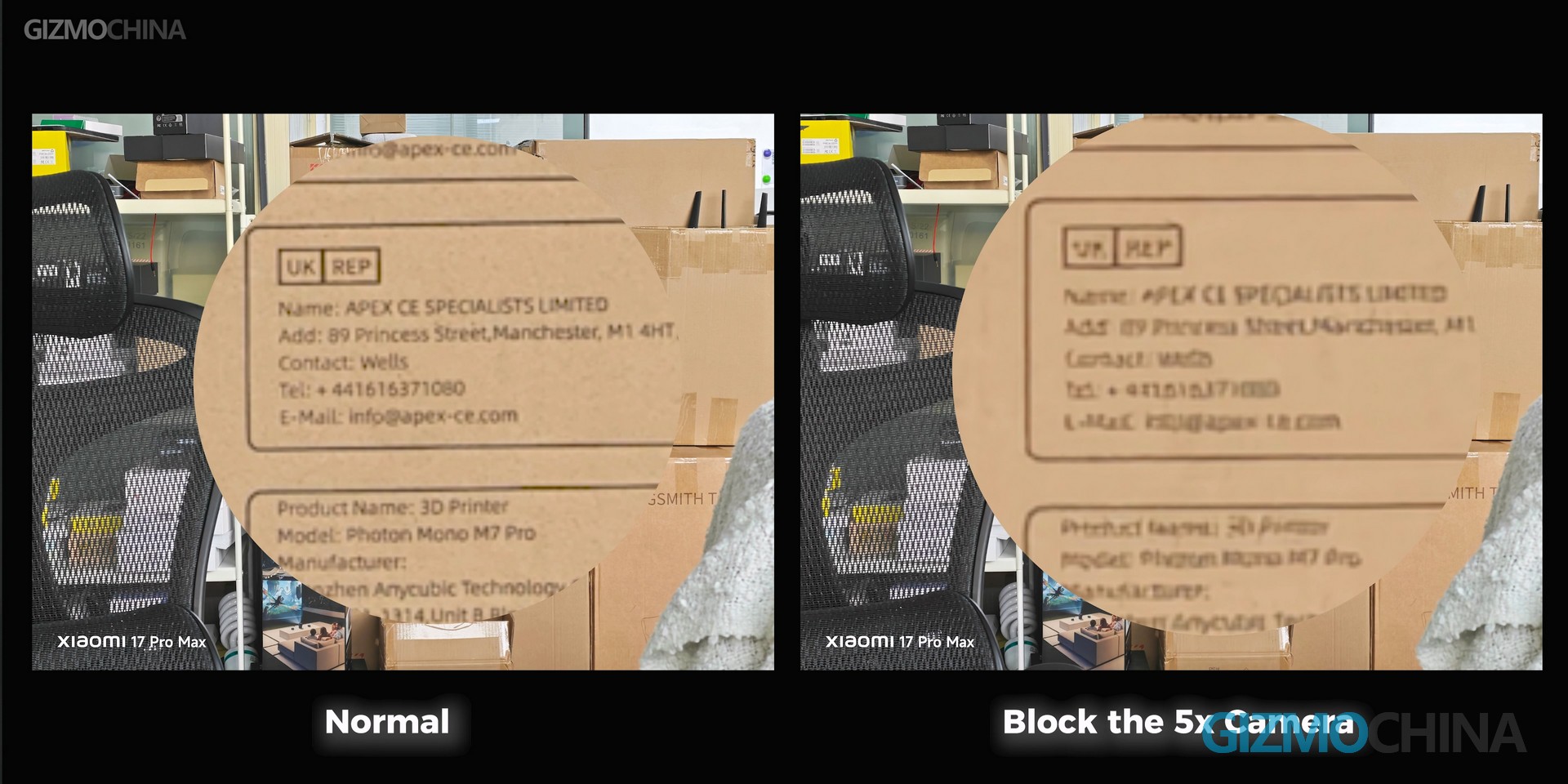
Of course, if you’re too close for the 5x telephoto to lock focus, or if the lighting’s too weak and the image quality difference between the main and telephoto gets too big, the algorithm simply won’t kick in. All in all, the 23–115mm focal range gap isn’t as disastrous as it sounds. Xiaomi actually handled it surprisingly well.
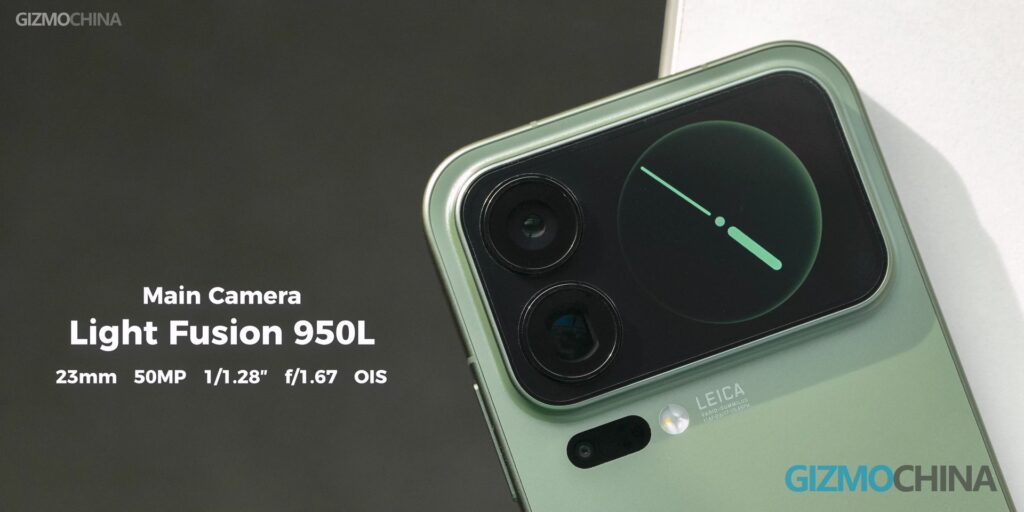
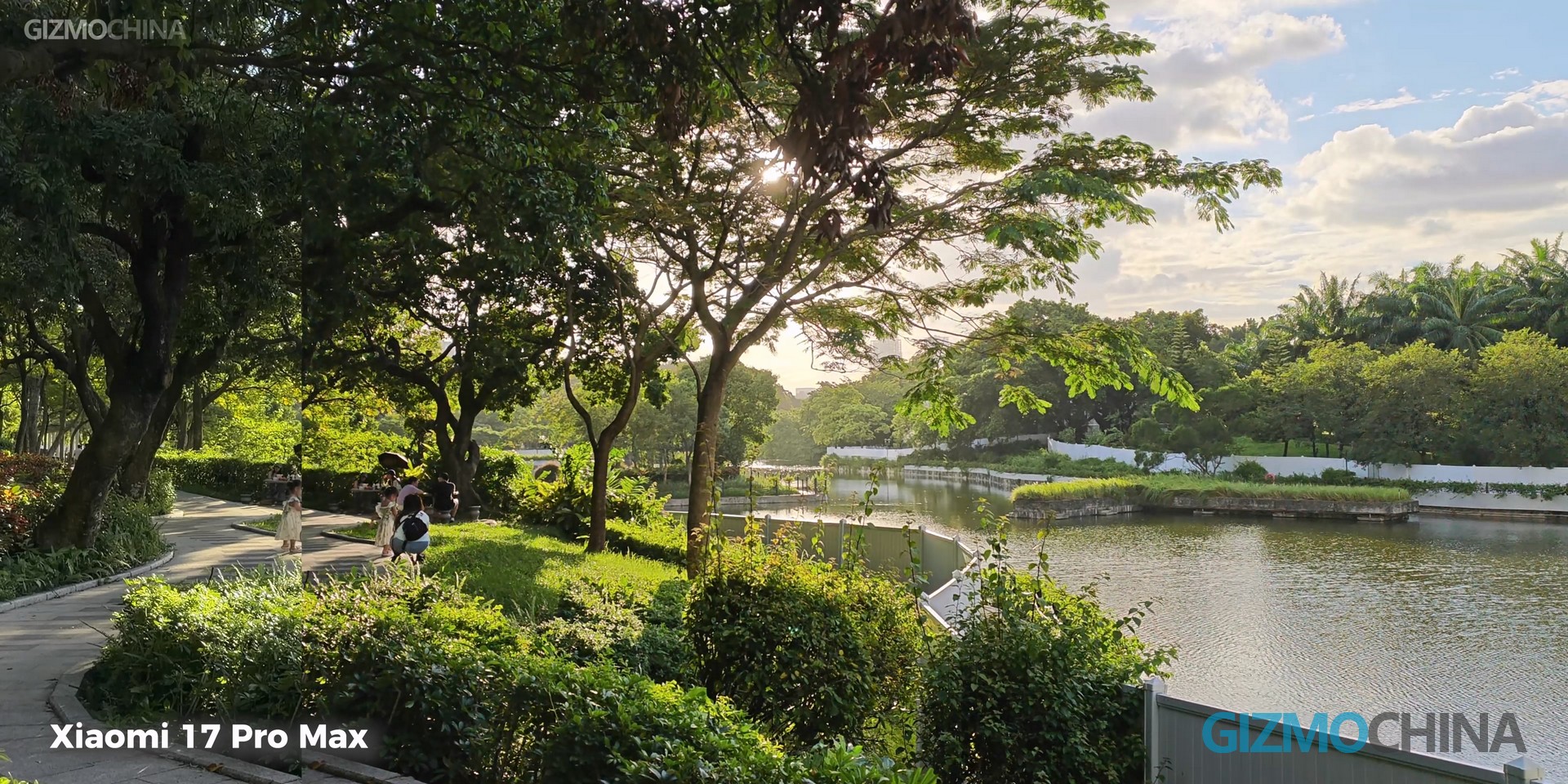
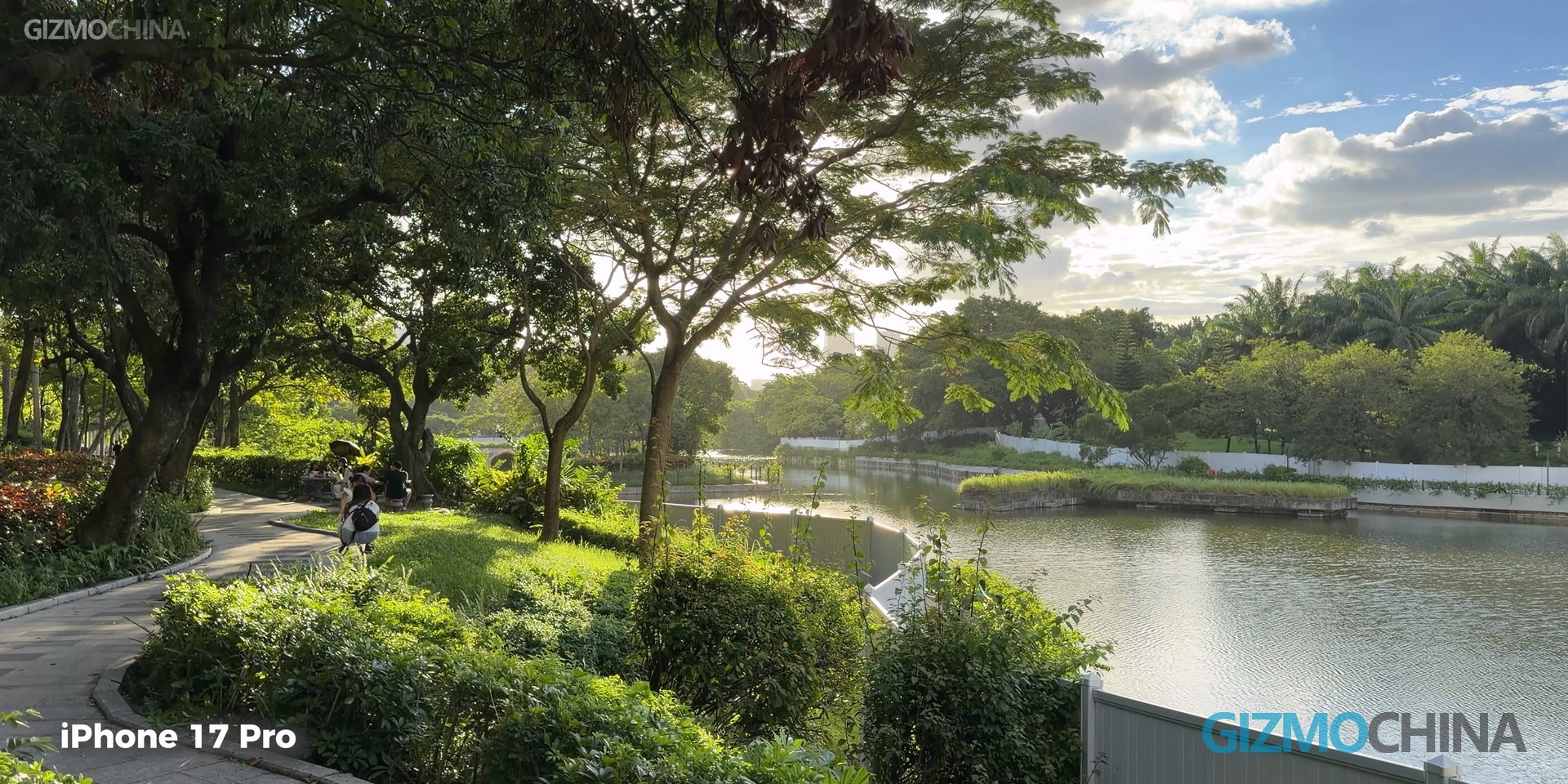
The main camera’s biggest upgrade is dynamic range. Its sensor, using third-gen LOFIC technology, reaches up to 16.5EV. In simpler terms, backlit scenes are exposed more evenly. Comparing it against the iPhone 17 Pro shows a clear difference—Xiaomi pulls ahead in high-contrast situations.

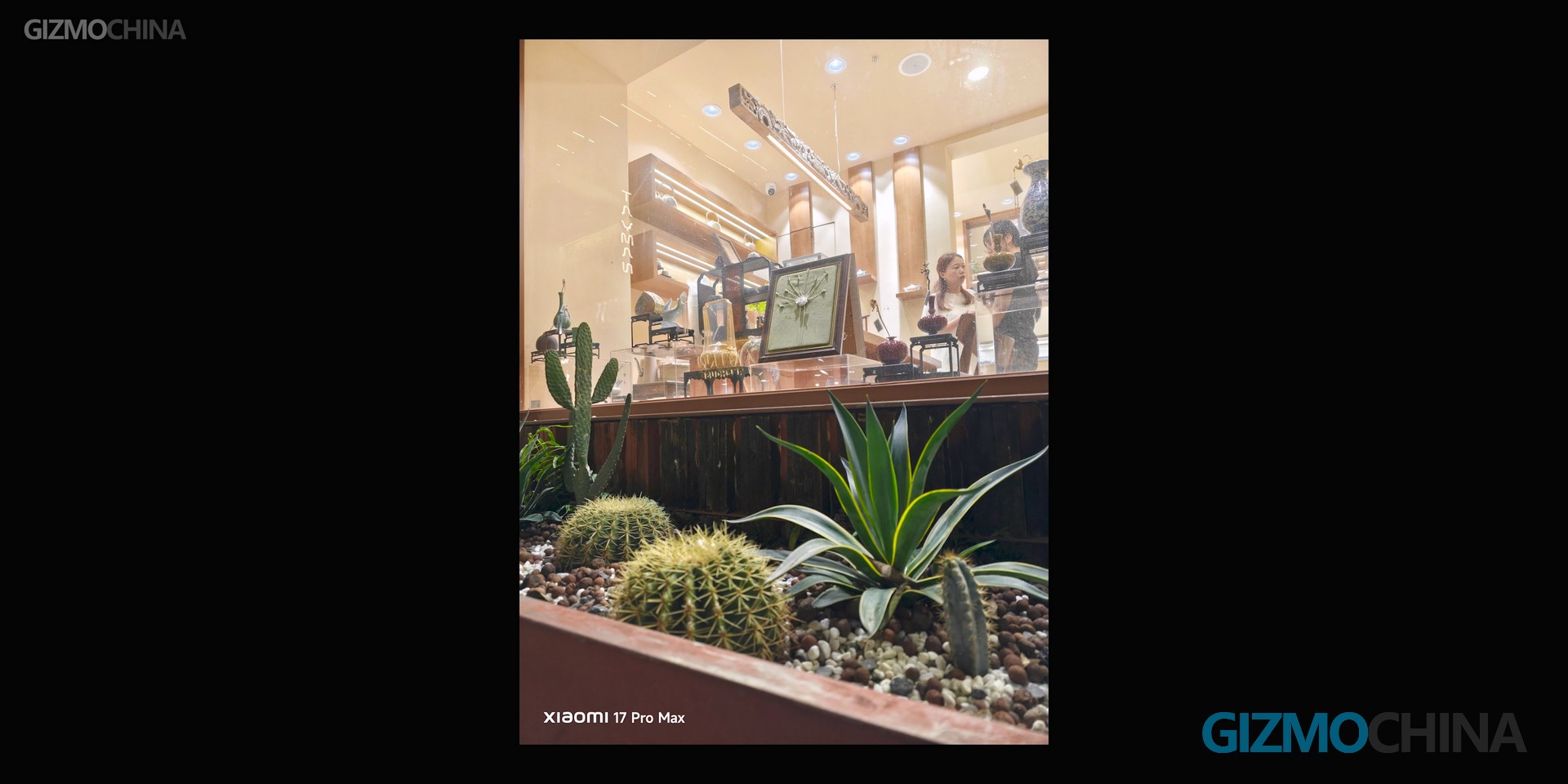
LOFIC theoretically benefits video even more. HDR video looks great, though Xiaomi still trails the iPhone overall. Want to know which phone truly has the stronger camera system—the iPhone 17 Pro or the Xiaomi 17 Pro Max? Stay tuned, because we’ll have a full comparison video soon.
Battery Life
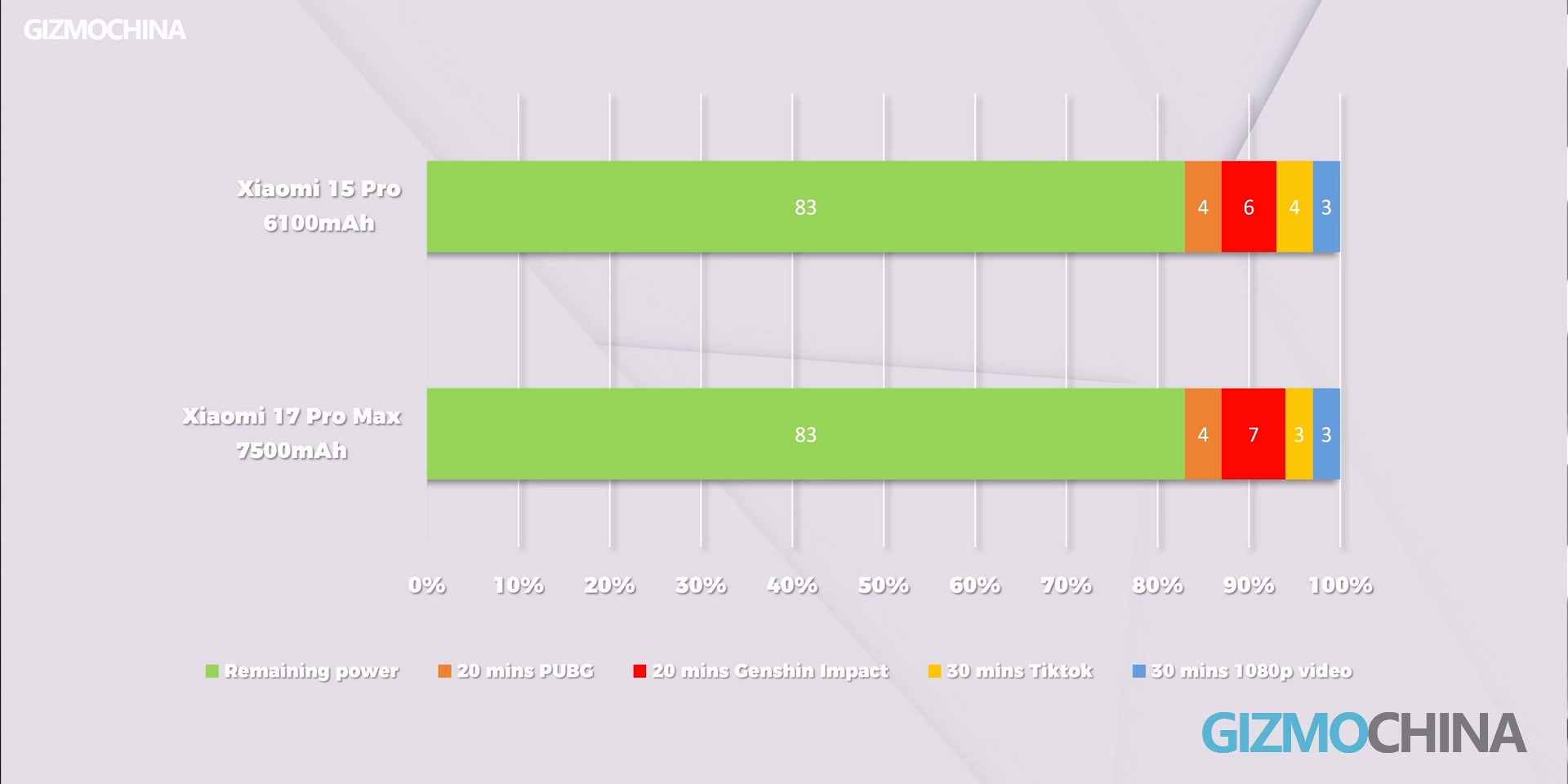
Now let’s talk batteries. The Pro Max packs a 7,500mAh cell—the largest among phones priced above $800. Still, endurance gains weren’t as big as we expected. However, charging is the real surprise. 100W wired charging is a nice upgrade, filling the battery in 40 minutes.
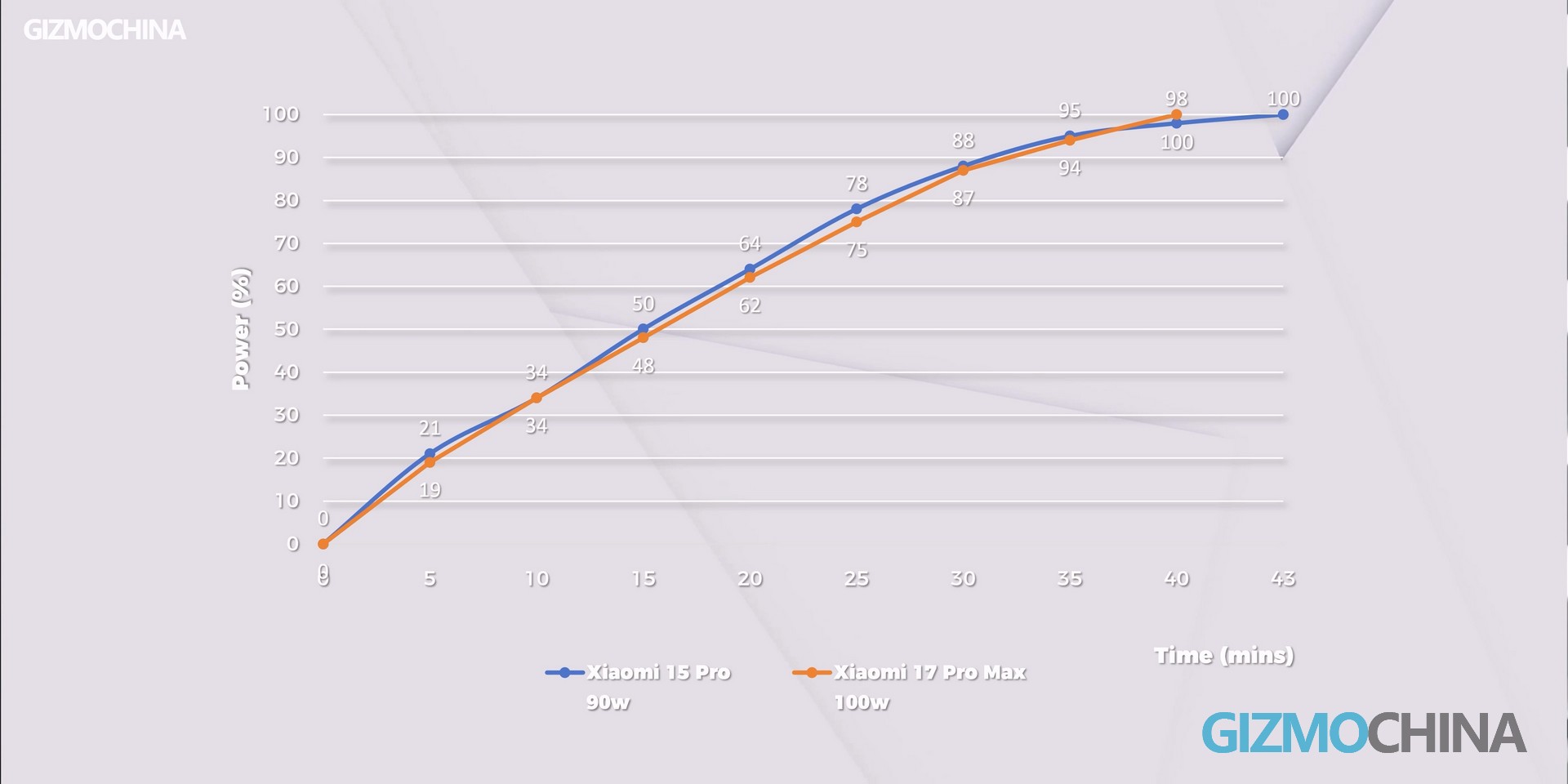
But the real highlight is this: the Xiaomi 17 series now supports 100W PPS charging. That means even a random Amazon charger can fast-charge the 17 Pro Max. In tests, third-party PD chargers charged nearly as fast as the stock one up to 50%, peaking around 80W and sustaining 40W for long periods.
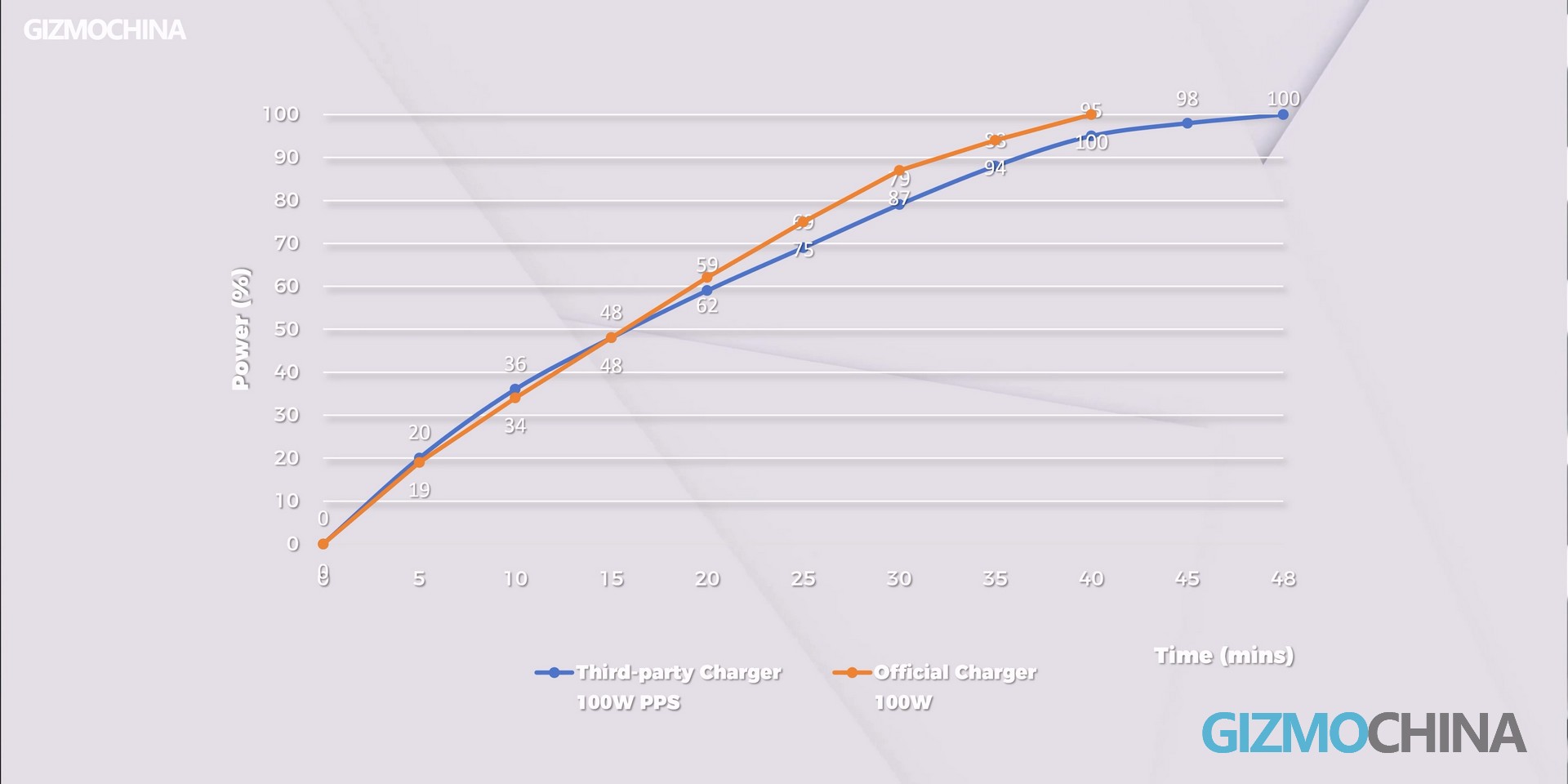
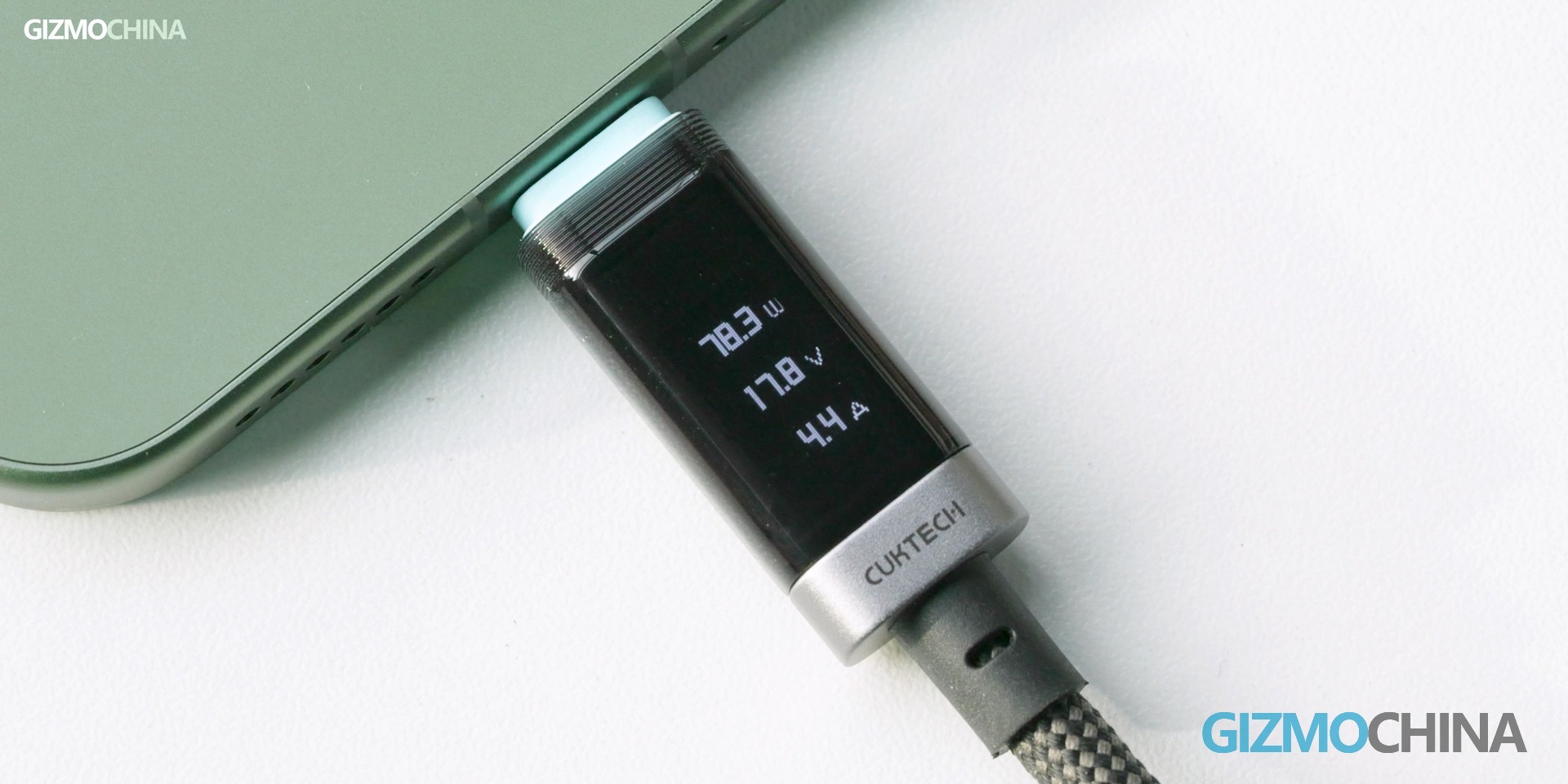
Another good news: Xiaomi will soon open-source its private charging protocol. In the future, third-party chargers will unlock full 100W charging without needing official accessories. And don’t forget—there’s also 22.5W reverse charging. Combined with its 7,500mAh capacity, this phone doubles as a power bank. Without question, this is Xiaomi’s most powerful charging system ever.
My only concern is the global version’s battery size. If the global 17 Pro Max doesn’t meet your endurance needs, you know where to get the Chinese version.
Conclusion
Finally, let’s talk pricing. The standard version stayed the same as last year, but the Pro series saw price hikes across the board. By now, you probably already know whether it’s worth buying.
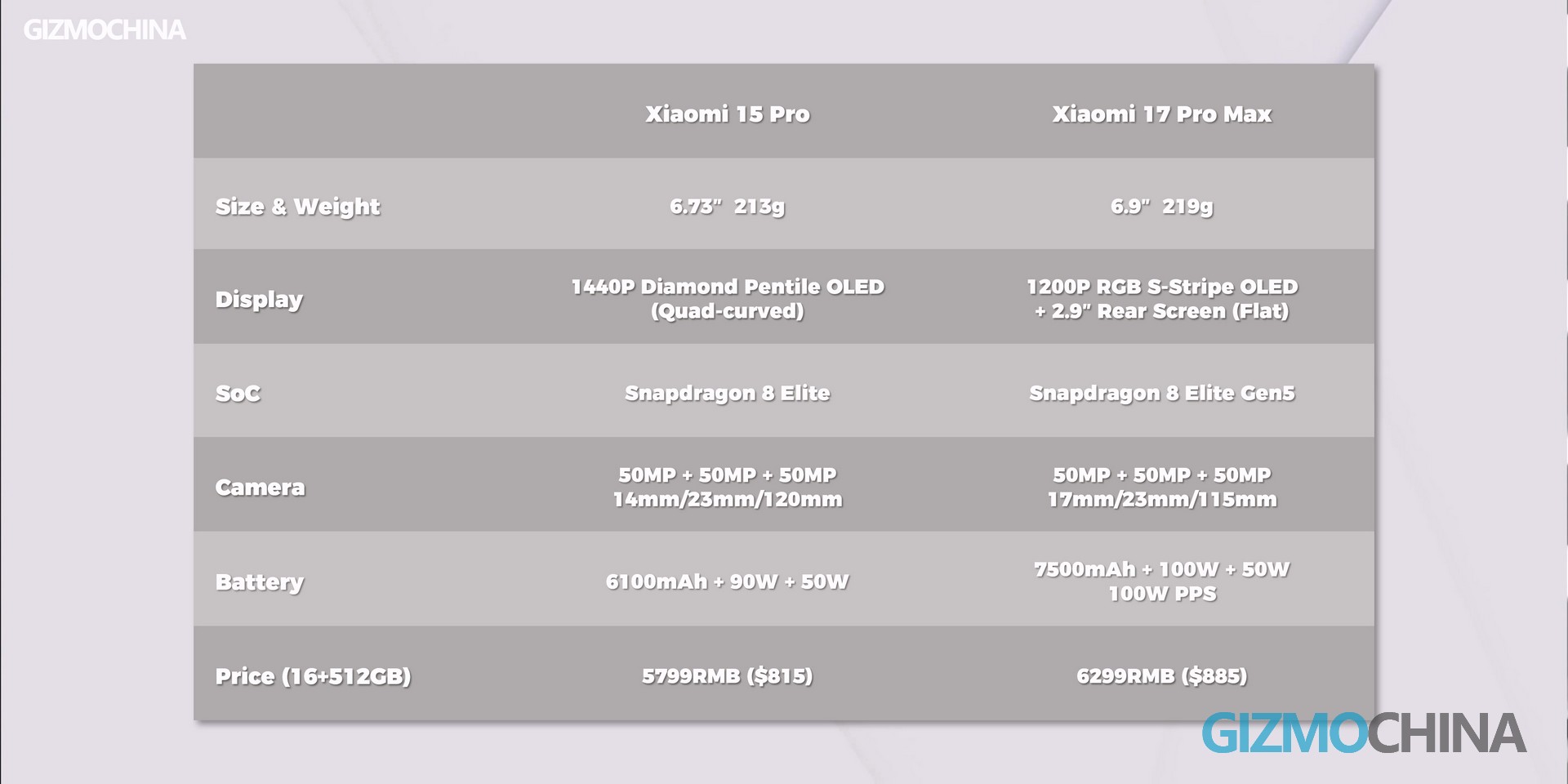
Yes, it brings a new design, a new display, a new processor, and stronger charging compatibility. But there are also hidden downgrades: a weaker ultra-wide camera, slower USB transfer speeds, and the gaming performance is not that good. Whether the Xiaomi 17 Pro Max is good or bad depends on whether you care about those cons. At the very least, you can’t deny it’s a phone with strong character. Its hot sales in China prove people love it.



Comments