
Add GIZMOCHINA as Preferred Source on Google
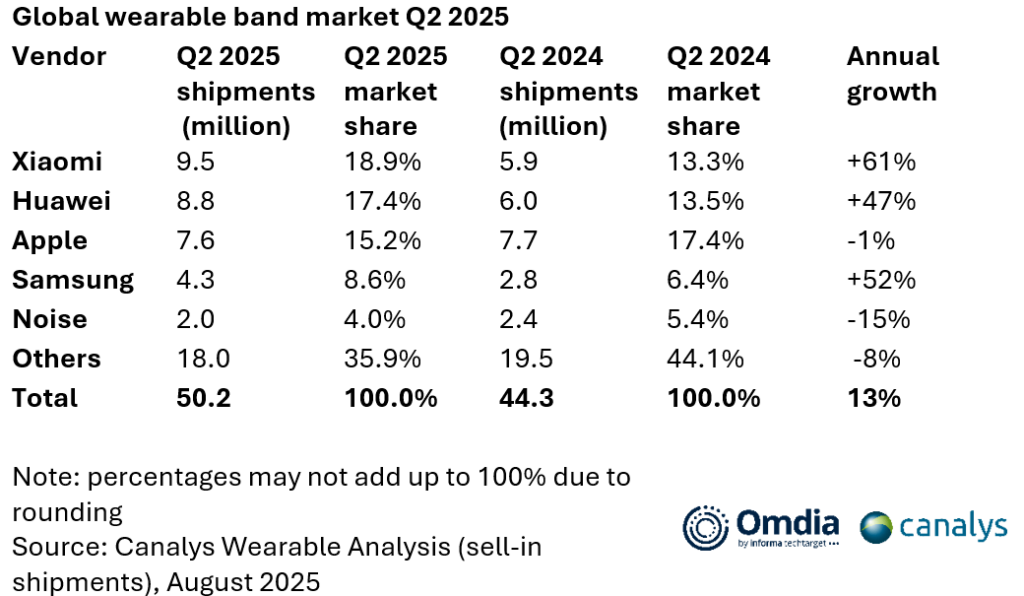
The global wearable band market just got a new frontrunner, and it’s not Apple. According to the latest Q2 2025 report from research firm Omdia, Xiaomi has leapfrogged its rivals to take the top spot in worldwide shipments, fueled by a staggering 61% year-on-year growth. Huawei followed in second place, while Apple, despite its premium presence, slipped to third.
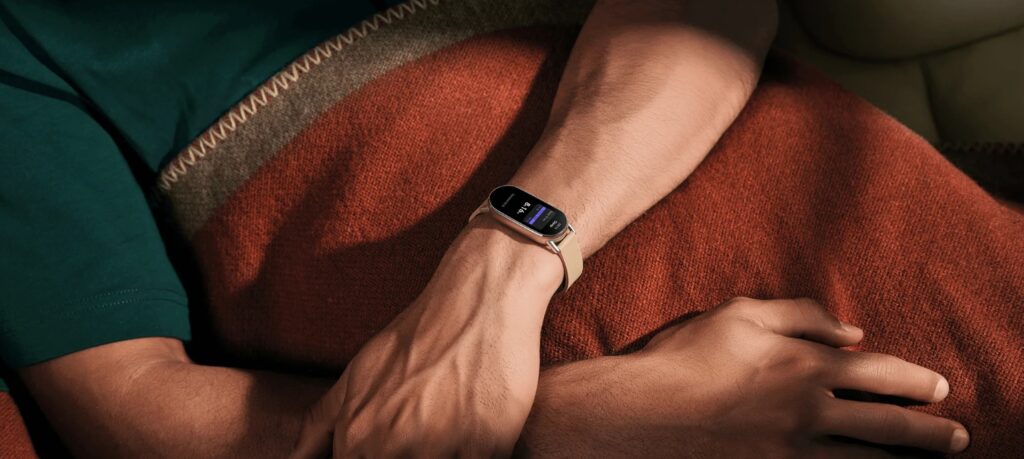
Total shipments hit 50.2 million units in the quarter, up 13% year over year. This reflects strong demand for fitness trackers and smart bands. Entry-level wearables like the Xiaomi Band and Redmi Band series are dominating global shelves, especially as users seek smarter features without the premium smartwatch price tag.
Omdia predicts an 8% growth rate for the market in 2025 and 9% in 2026. But the real shift is happening beneath the hardware. While basic bands are driving volume, value is consolidating around smartwatches. These accounted for just 32% of Q2 shipments but generated 69% of the market’s total value. In short, fewer people are buying watches, but they are spending more on them.
This is pushing brands to rethink the game. Instead of chasing specs alone, companies are doubling down on ecosystems. Xiaomi is leaning into HyperOS to connect its wearables tightly with its broader device portfolio. Huawei is building an all-in-one health ecosystem via the Huawei Health app, which includes hardware, data analytics, and subscription services.
Apple saw a 1% dip in shipments, while Samsung posted modest growth. India’s Noise rounded out the top five, highlighting the region’s increasing role in the global wearables race.
The takeaway is clear. The wearable band war is no longer just about who makes the best gadget. It is about who can keep users inside their ecosystem the longest. Xiaomi appears to have figured that out, at least for now.
For more daily updates, please visit our News Section.
Stay ahead in tech! Join our Telegram community and sign up for our daily newsletter of top stories! 💡
(Source)



Comments