
Add GIZMOCHINA as Preferred Source on Google
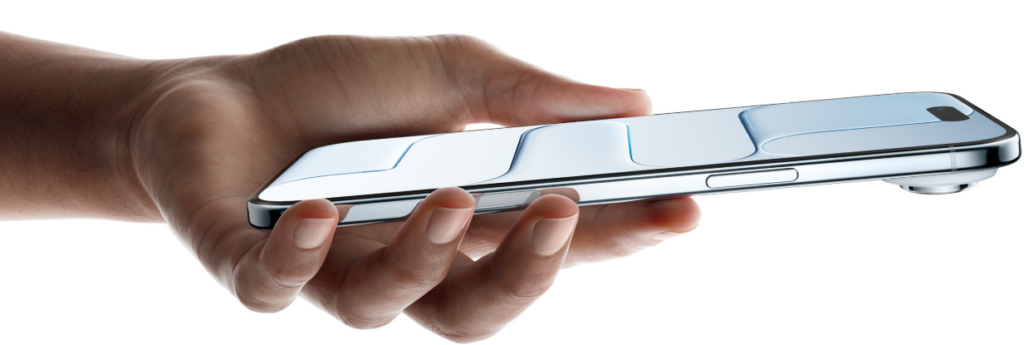
Apple’s latest release, the iPhone Air, has officially brought eSIM technology to China for the first time. Approved by regulators as part of a “commercial trial” involving China Mobile, China Unicom, and China Telecom, the device marks an important turning point in China’s telecom development.
The iPhone Air sold out within minutes of its release on Friday. According to Apple’s official website, retail stores are currently out of stock, and home delivery orders are delayed by about a week. Priced from RMB 7999, customers can buy it in three interest-free installments of RMB 2666 per month, with a limit of two units per person.
Domestic Brands Respond Quickly
Following Apple’s success, Chinese smartphone makers are moving fast. Oppo has introduced its Find X9 Pro with eSIM support, while Huawei is expected to launch its own version soon. This shows that Apple’s move is likely to accelerate eSIM adoption across China’s smartphone market.
What is eSIM and Why It Matters
An eSIM is a digital SIM card built directly into the device. It allows users to store multiple mobile profiles, switch carriers easily, and eliminates the need for a physical SIM slot. This innovation makes devices thinner, lighter, and more water-resistant, one reason why the iPhone Air’s design is just 5.5 mm thick.
Carriers’ Different Strategies
Among China’s three major operators, China Unicom has been the most proactive in promoting eSIM services, having launched wearable eSIMs back in 2018. China Mobile and China Telecom have been more cautious, focusing on limited trials. After a temporary suspension in 2023 for “system upgrades,” all three carriers resumed eSIM activations alongside the iPhone Air’s release.
Early Trials and Limitations
Currently, eSIM use in China is still at a trial stage. Users must visit physical stores for activation and provide a government ID for real-name verification. Online self-activation is not yet available. Each iPhone Air supports two eSIM profiles, but foreign eSIMs cannot be activated in mainland China, limiting cross-border usage.
Balancing Innovation and Security
Experts note that while eSIMs make connectivity simpler, they also raise cybersecurity concerns. Authorities worry that digital SIMs could be used for unverified virtual numbers or illegal activities. For this reason, the government is keeping a close watch on how telecom operators manage eSIM infrastructure.
The launch of the iPhone Air is more than just a product release; it represents a step forward in China’s telecom modernization. It combines innovation with strong state oversight, aiming to balance convenience, competition, and national security.
Read More:


Comments