Add GIZMOCHINA as Preferred Source on Google
Flagship smartphone launches used to be simple. There was one premium model, one Pro version for those who wanted more, and maybe a standard version for everyone else. But that line has almost completely blurred in 2025.
The so-called “base” models from major Chinese brands have grown powerful enough to challenge their own Pro siblings. They now offer high-end cameras, premium materials, and top-tier chips, all at prices that make Pro models feel unnecessary.
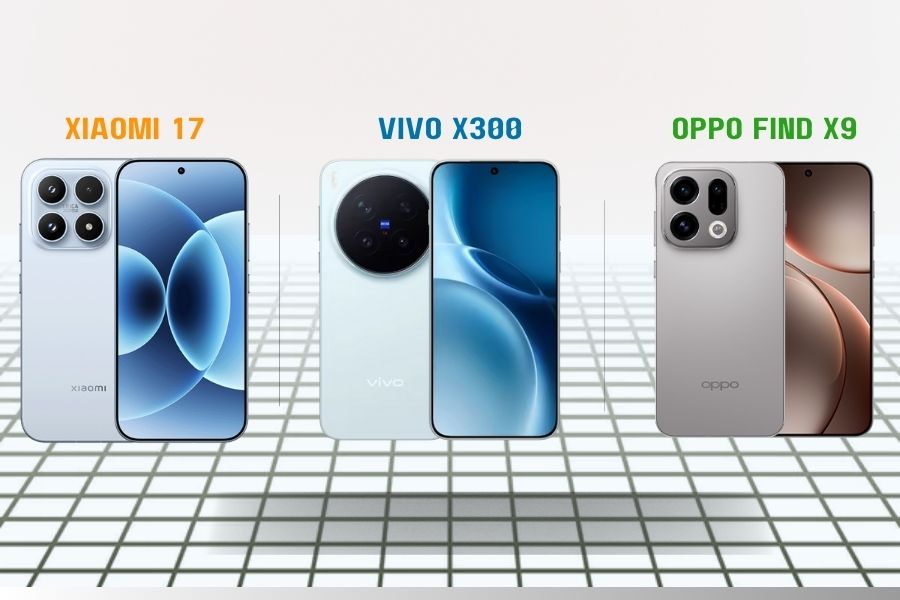
The latest proof of this comes from Vivo, Xiaomi, and Oppo, whose new phones — the Vivo X300, Xiaomi 17, and Oppo Find X9 — were launched within weeks of each other.
Although these three phones sit below their Pro counterparts, they look and feel like top-tier devices in their own right. What’s even more interesting is how differently each company interprets the idea of a flagship phone for everyone.
1. Design and Display
On paper, the three phones share similar footprints. The Vivo X300 and Xiaomi 17 are almost identical in size, hovering around 6.3 inches, while Oppo’s Find X9 stretches slightly larger to 6.59 inches.
All three offer some level of IP68 water and dust protection, though Vivo and Oppo go further with IP69 ratings, which means resistance to high-pressure water jets. This feature is almost unnecessary for most people (here’s why), but it’s here nonetheless.
There’s not much to separate them in display technology either. Each uses an LTPO AMOLED panel with up to 120Hz refresh rate, HDR10+ support, and color standards that now seem mandatory for phones at this price.
Only if we nitpick, Xiaomi claims that it can reach 3,500 nits peak brightness, Vivo claims 4,500 nits, and Oppo claims 3,600 nits. While these are peak figures and you’re rarely hitting these numbers, it’s reassuring to know all three should remain perfectly usable outdoors.
All three panels support HDR10+, Dolby Vision, and high-frequency PWM dimming, with pixel densities hovering around 460ppi. In real use, they’ll likely look nearly identical, though the default color calibration depends on how the brand prefers it.
2. Performance
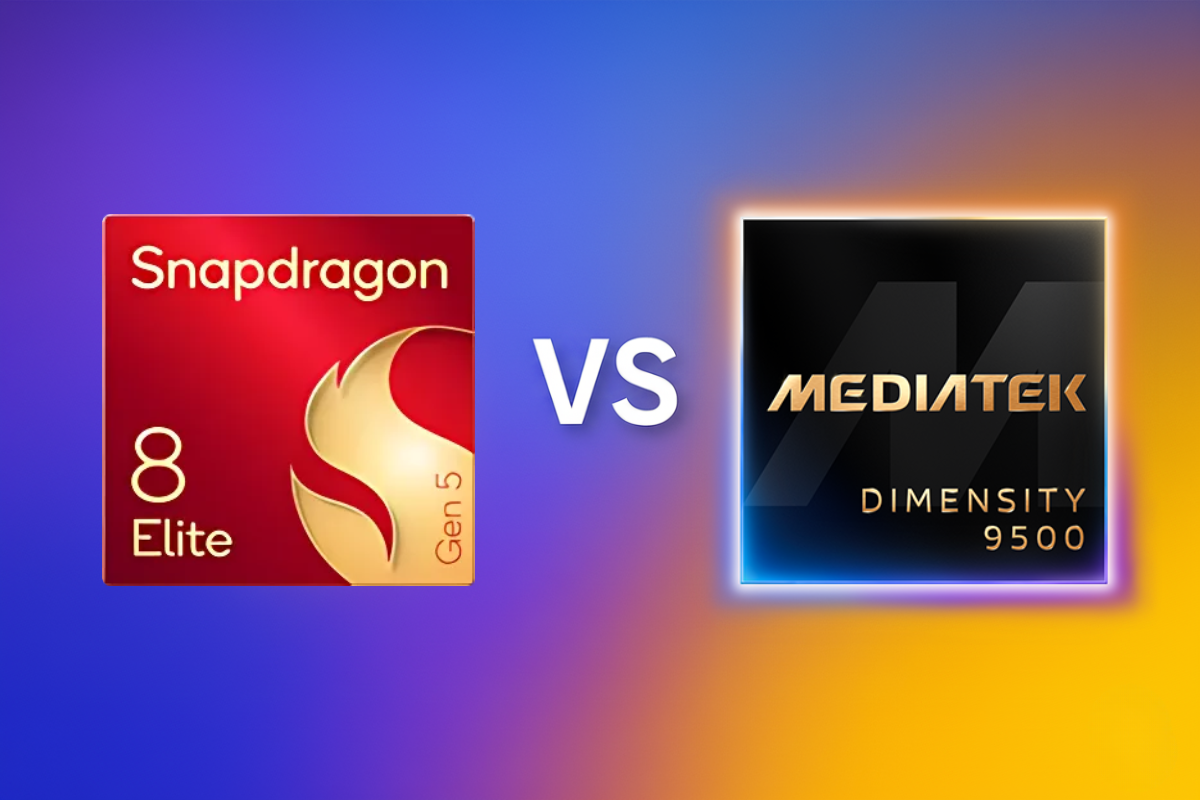
The clearest separation between these phones comes from what’s inside. Xiaomi uses Qualcomm’s Snapdragon 8 Elite Gen 5, while both Vivo and Oppo rely on MediaTek’s Dimensity 9500.
On paper, Qualcomm still leads in raw CPU and GPU performance. Xiaomi’s 8 Elite Gen 5 uses custom Oryon cores with clock speeds up to 4.6GHz and the new Adreno 840 GPU.
Vivo and Oppo’s Dimensity 9500 chips are not far behind; they are built on the same 3nm process and have their own “C1 Ultra” cores running at 4.21GHz. But MediaTek’s focus is on efficiency and sustained performance, and in practice, the difference may be small unless you push the phones with extended gaming or AI workloads.
What’s more notable is how similar these three feel in day-to-day use. All three phones use UFS 4.1 storage and LPDDR5X RAM to ensure flagship-level responsiveness.
3. Cameras
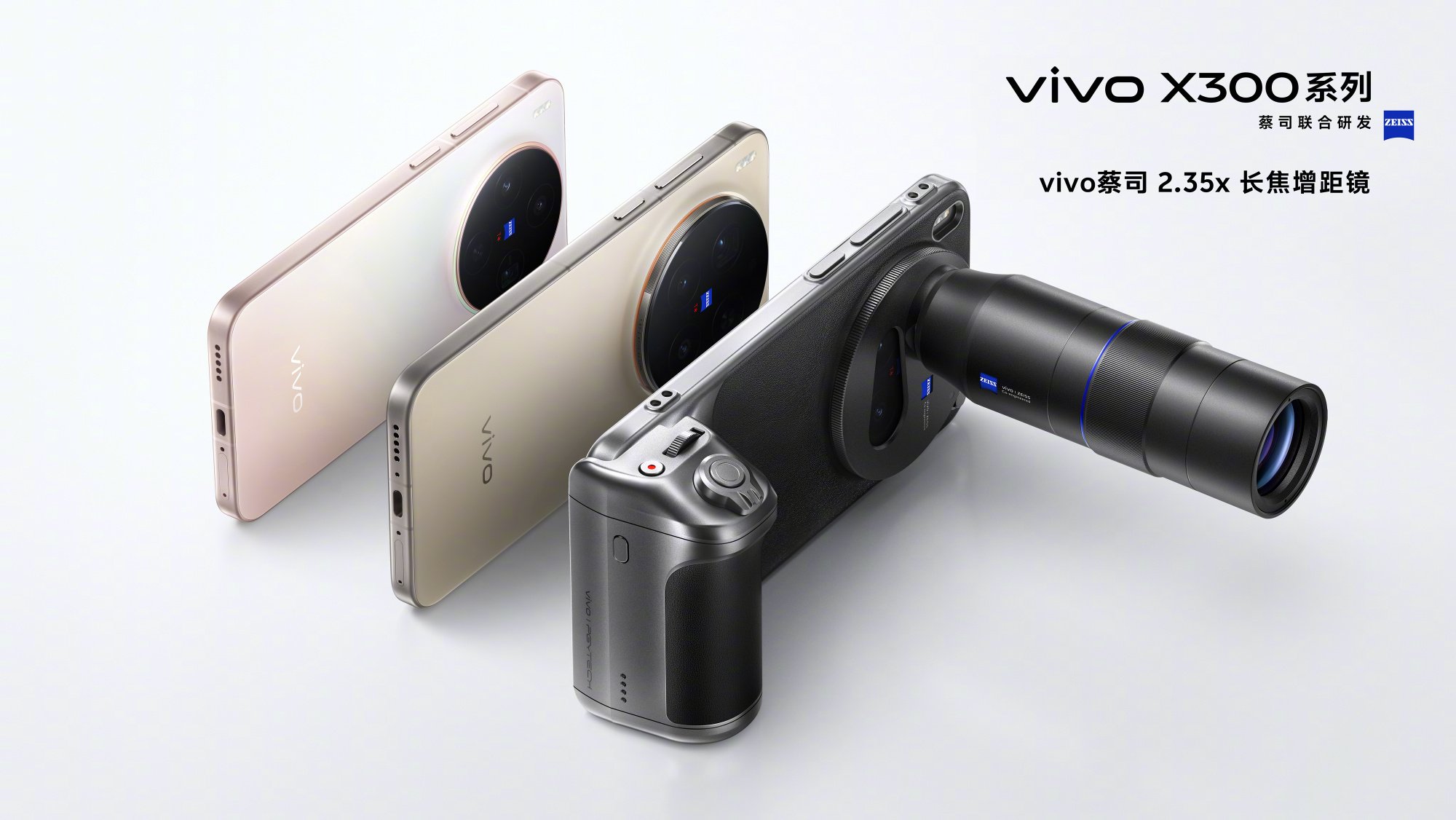
The biggest philosophical split lies in the camera systems. Vivo is the most camera-focused brand here, and it shows. The Vivo X300 leads with a 200-megapixel Samsung HPB main sensor, accompanied by two 50-megapixel cameras — one telephoto, one ultrawide.
Then it has Zeiss optics and the ability to import 3D LUTs. And it even supports a detachable telephoto extender lens sold separately, something previously reserved for its Ultra series.
Xiaomi 17 uses a triple 50-megapixel setup, each tuned in collaboration with Leica. The main lens is a 1/1.31-inch sensor with an f/1.7 aperture, and the telephoto offers 2.6x optical zoom. It also supports 8K video and Dolby Vision HDR, matching its Pro siblings in video flexibility.
Oppo’s Find X9, meanwhile, keeps things simple. It sticks with three 50-megapixel sensors but relies on the established partnership with Hasselblad for color tuning.
The 3x periscope telephoto offers real optical range, and image quality should remain strong thanks to the large 1/1.4-inch main sensor. Like Vivo, Oppo has a telephoto extender for the Find X9 series, but it’s reserved for the Pro model.
4. Battery and charging
Battery life is where these phones start to feel generationally different. All three use silicon-carbon battery chemistry, allowing higher capacity without added bulk.
Oppo leads the group with a 7,025mAh battery, followed closely by Xiaomi’s 7,000mAh and Vivo’s smaller but efficient 6,040mAh pack. Despite the difference in capacity, Vivo claims its battery lasts as long as a typical 7,000mAh unit.
Charging speeds are fast across the board. Xiaomi supports 100W wired and 50W wireless charging, Oppo follows with 80W wired and 50W wireless, and Vivo offers 90W wired and 40W wireless. The phones can go from empty to full in under 40 minutes.
5. Software and experience
All three phones ship with Android 16, customized heavily by their respective skins: HyperOS 3 on Xiaomi, OriginOS 6 on Vivo, and ColorOS 16 on Oppo.
Each takes a different approach to personalization, and whether you like these skins or not largely comes down to preference. Each phone also includes an ultrasonic fingerprint sensor, dual stereo speakers, NFC, and infrared blasters. None offers a 3.5mm headphone jack, but all support high-resolution wireless audio.
6. Verdict
In truth, there’s no clear winner here. The Vivo X300, Xiaomi 17, and Oppo Find X9 are all high-end devices with different priorities wrapped in similar price brackets.
The Vivo X300 is for those who care about photography above all else. Its 200-megapixel sensor and Zeiss collaboration make it a quiet powerhouse for imaging, and its compact design will appeal to users tired of oversized flagships.
The Xiaomi 17 is an all-rounder. Its Leica-tuned cameras, Snapdragon chip, and large battery make it easy to recommend to anyone who values both power and polish.
The Oppo Find X9 sits somewhere between the two. It emphasizes endurance and balance. It’s not as flashy as the Xiaomi or as ambitious as the Vivo. Still, it might be the most reliable of the bunch, combining excellent battery life, consistent camera output, and understated design.
For more daily updates, please visit our News Section.
Stay ahead in tech! Join our Telegram community and sign up for our daily newsletter of top stories! 💡