
Add GIZMOCHINA as Preferred Source on Google
Samsung has started talking openly about its first 2nm chips — and the numbers are raising eyebrows for an unexpected reason: they’re surprisingly modest. The company is aiming to ship the new silicon in 2026, starting with European versions of the Galaxy S26 series. On paper, the improvements don’t scream “revolution,” but behind the scenes they’re already landing Samsung big contracts and even bigger expectations.
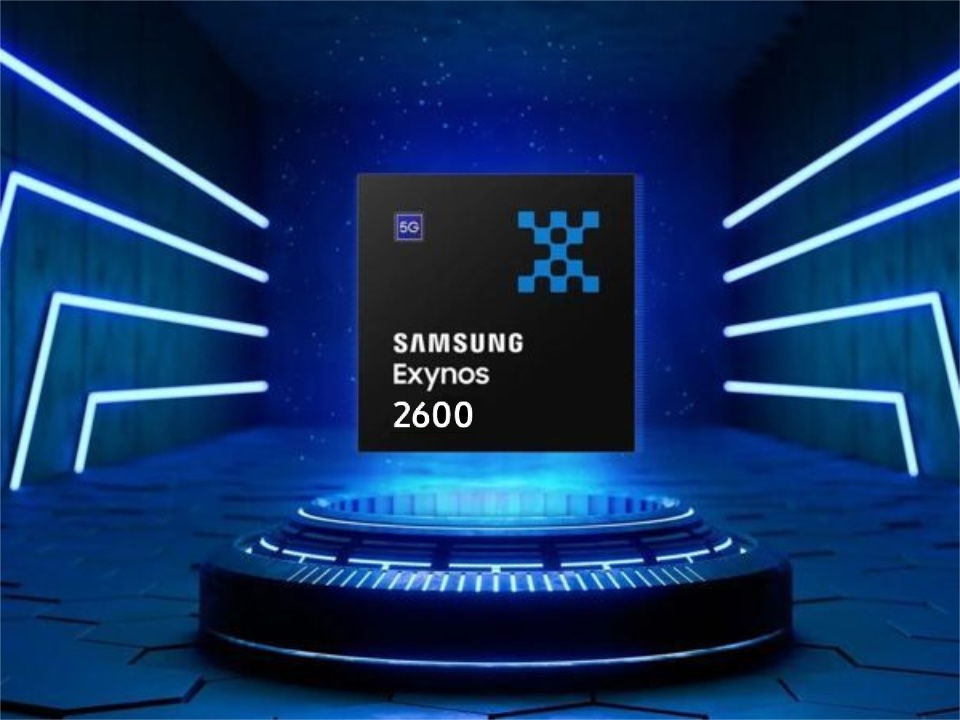
For years, Samsung’s Exynos chips have been the weak link in its global flagship strategy. Buyers in Europe have routinely ended up with slower, less efficient devices than their Snapdragon-equipped counterparts in the US, and it looks like the same split is coming back for the S26 and S26+. Those two models are expected to use the Exynos 2600, while the S26 Ultra will reportedly stick with Qualcomm’s Snapdragon 8 Elite Gen 5 worldwide.
Still, Samsung seems confident. In its latest financial update, the company outlined what the new 2nm Gate-All-Around (GAA) process is supposed to deliver: roughly a 5% performance lift, an 8% bump in efficiency, and about a 5% reduction in chip size compared to its second-gen 3nm process. On their own, those numbers aren’t huge. But they’re already paying off. Samsung has apparently secured around a quarter of Galaxy S26 orders and landed a massive $16.5 billion Tesla contract for its AI6 chips — all based on early 2nm capabilities.
Yield is another piece of the puzzle. Samsung says the Exynos 2600 is hitting about a 60% yield rate so far, which is reportedly enough to start serious production. If that holds, the company could save $20–$30 per unit compared to using Snapdragon chips — potentially lowering the bill of materials (BoM) for the European S26 models by a significant margin.
But not everyone is convinced this is the comeback Samsung wants it to be. Exynos has a long history of looking good on spec sheets and struggling once the phones hit people’s hands. And there’s still a fundamental design gap: while Qualcomm and Apple build heavily customized CPU architectures, Samsung continues to use ARM’s standard Lumex core designs, which usually trail behind in real-world optimization.
With the Galaxy S26 launch creeping closer, the question is pretty simple: is Samsung’s early 2nm jump a genuine turning point or just another round of déjà vu for European buyers? The company clearly thinks small steps will add up. Whether customers agree is another story.
Don’t miss a thing! Join our Telegram community for instant updates and grab our free daily newsletter for the best tech stories!
For more daily updates, please visit our News Section.
(Source)




Comments