
Add GIZMOCHINA on Google:
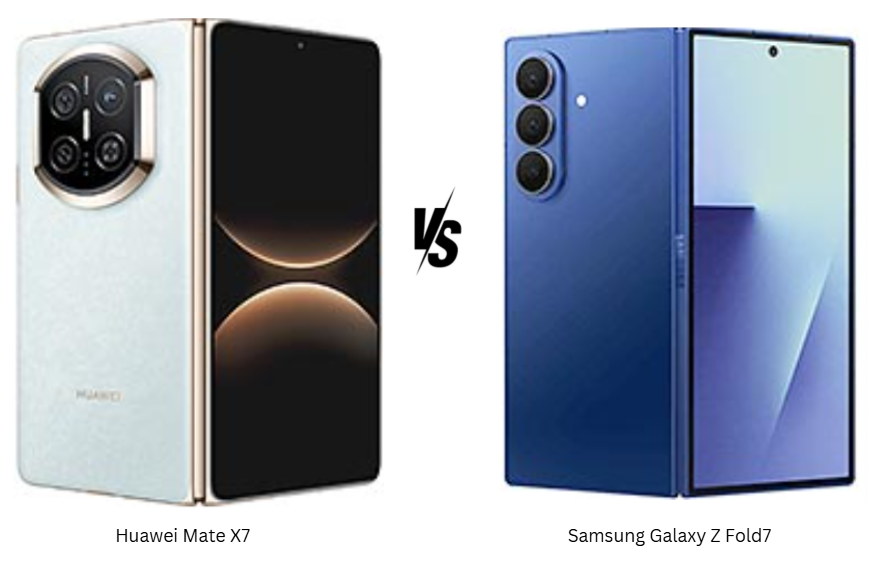
Huawei Mate X7 and Samsung Galaxy Z Fold7 aren’t just premium foldables; they’re two competing visions of the future of mobile computing. Buyers drawn to these devices want more than a phone; they want a portable workstation, a creative canvas, and a luxury gadget in one. Comparing these two matters because each takes a bold but different approach to power, design, and everyday usability. Understanding their strengths helps ambitious users choose the foldable that best matches their lifestyle and expectations.
Major Features:
| Feature / Criteria | Huawei Mate X7 | Samsung Galaxy Z Fold7 | Winner |
|---|---|---|---|
| Performance / Processing Power | Balanced Kirin 9030 Pro — good for everyday tasks and efficient multitasking | Snapdragon 8 Elite — superior raw speed, graphics, and future-proofing | Z Fold7 |
| Battery & Charging | Larger battery + faster wired & wireless charging | Smaller battery, slower charging | Mate X7 |
| Camera (Main + Telephoto + Versatility) | Versatile triple setup with strong periscope zoom and good low-light performance | High-resolution main sensor, detailed photos & powerful video capabilities | Z Fold7 (for all-round camera/video) |
| Display & Multimedia Experience | Bright LTPO OLED foldable — smooth and visually pleasing | Dynamic LTPO AMOLED 2X, HDR10+, more optimized for content and productivity | Z Fold7 |
| Price (approx) | ≈ $1800 | ≈ $2000 | Mate X7 |
1. Design and Display
Build and Feel
Both foldables lean into premium craftsmanship but take different approaches. The Mate X7 focuses on a refined, almost seamless fold experience with its aerospace-grade materials and soft-touch finishes. It gives a more traditional, book-style luxury feel that many users find elegant. The Galaxy Z Fold7 counters with stronger reinforced materials, including advanced armor aluminum and ceramic glass, giving it a more high-tech, confident character. Its sturdier external protection may feel better suited for users prioritizing long-term durability.
Display Quality
Huawei delivers vivid LTPO OLED panels with high PWM dimming and strong peak brightness, which creates a calmer visual experience for sensitive eyes. Samsung’s Dynamic LTPO AMOLED 2X is brighter and more color-accurate, tuned for multimedia and productivity. The Fold7’s inner display also supports high-end HDR formats that enhance clarity in demanding content.
Verdict
Mate X7 feels more comfortable for extended casual use, while the Fold7 provides a display ecosystem optimized for creators and heavy multitaskers.
| Preview | Product | |
|---|---|---|

|
Samsung Galaxy Z Fold7 5G Smartphone with Galaxy AI (JetBlack, 12GB RAM, 512GB Storage), Ultra Sleek… | Check Price on Amazon |
Please Note: When you buy something using the links in our articles, we may earn a small commission at no cost to you.
2. Specifications
Performance
The Mate X7 runs on the Kirin 9030 Pro, offering smooth daily usage and stable power efficiency. It’s tuned for balanced operation rather than benchmark dominance, which many users prefer for reliability. The Fold7’s Snapdragon 8 Elite pushes significantly ahead in raw speed, graphics power, and long-term software support. Its processing capabilities feel more future-ready, especially for gaming, AI tasks, and extended productivity.
Battery and Charging
Huawei offers a larger battery and faster wired and wireless charging, giving it an endurance advantage. It feels better suited for users who want all-day use without anxiety. Samsung charges more slowly but maintains respectable efficiency, particularly with its optimized software and lighter power draw from the Snapdragon chip.
Verdict
Mate X7 wins in battery life and charging convenience, while the Fold7 dominates in performance and software longevity.
3. Camera
Main and Secondary Lenses
Huawei’s camera system prioritizes versatility, with variable aperture and a strong periscope module. It delivers excellent transitions between focal lengths and handles challenging light with confidence. Samsung’s 200MP main sensor captures highly detailed shots with superb dynamic range and consistent color processing. While Huawei excels in low-light and optical zoom, Samsung performs better in sharpness and video flexibility, especially with higher frame-rate options.
Selfie Camera
Huawei keeps things modest with 8MP shooters but produces clean, natural skin tones. Samsung’s higher-resolution front cameras offer sharper results and more reliable HDR, making them better for content creators who rely on selfies or front-camera videos.
Verdict
Huawei provides a more photography-focused experience, especially for zoom lovers, while Samsung is better for video capture and front-facing content.
4. Pricing
With pricing around $1800, the Mate X7 positions itself as a premium yet slightly more attainable foldable. Considering its larger battery, faster charging, and versatile camera, it delivers strong value for users prioritizing battery endurance and photography. The Galaxy Z Fold7, at roughly $2000, costs more but justifies the premium through significantly stronger performance, long-term software support, and a more advanced display ecosystem.
For buyers seeking maximum longevity and top-tier processing power, the Fold7’s higher price feels reasonable. Those who value balanced all-around hardware with better power efficiency may find the Mate X7 the smarter purchase.
Disclaimer:
Prices are approximate and may vary based on country, region, and applicable taxes.
5. Conclusion
Huawei stands out with its satellite messaging (region-restricted), variable aperture camera, and superior charging speeds. These additions make it appealing to travelers, photographers, and users needing dependable endurance. Samsung’s strengths lie in its powerful chipset, extended software promise, DeX support, and UWB features, creating a productivity-driven ecosystem that feels more future-focused.
Final Verdict
Both foldables are excellent, but suited to different user priorities. If you had to pick one device today, the Samsung Galaxy Z Fold7 would be the more sensible choice for most users. It delivers stronger performance, future-proof software support, and a more capable all-around camera and display setup, making it a better fit for productivity, media, and long-term use.
While the Huawei Mate X7 shines in battery endurance and charging speed, the Fold7 feels like the safer bet for a foldable that remains competitive several years down the road.
Read More:

Comments