Add GIZMOCHINA as Preferred Source on Google
Samsung has been making foldables for years now, and most of them follow the same formula. It opens like a book into a small tablet and tries its best to convince you that the future is flexible.
An extension of that idea now comes in the form of the new Galaxy Z TriFold. This is the company’s first tri-folding device, a phone with three display segments connected by two hinges. Open it up, and you get a 10-inch tablet; fold it down, and it shrinks to the size of a thick phone.
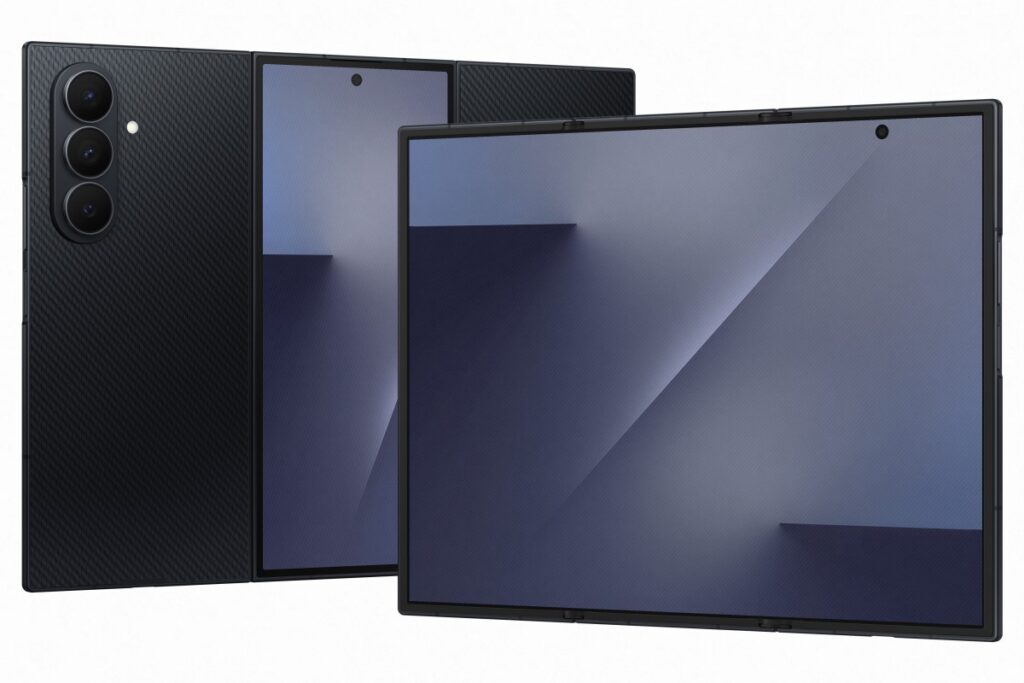
Nothing about the idea is particularly wild. People have been asking for a “proper tablet that folds smaller” since the first Fold came out. But the Z TriFold is the first time Samsung has actually committed to turning that idea into a consumer product.
1. How it differs from Samsung’s previous foldables
If you’ve used a Galaxy Z Fold at any point, you’ll recognize the overall approach. The TriFold still has a cover display on the outside and a larger tablet-like panel inside. But where past devices worked with one long flexible panel, the TriFold uses two hinges and three separate screen sections.
When you open it, the panels line up to form a single 10-inch display. Close it, and everything collapses inward until you end up with a 6.5-inch phone.
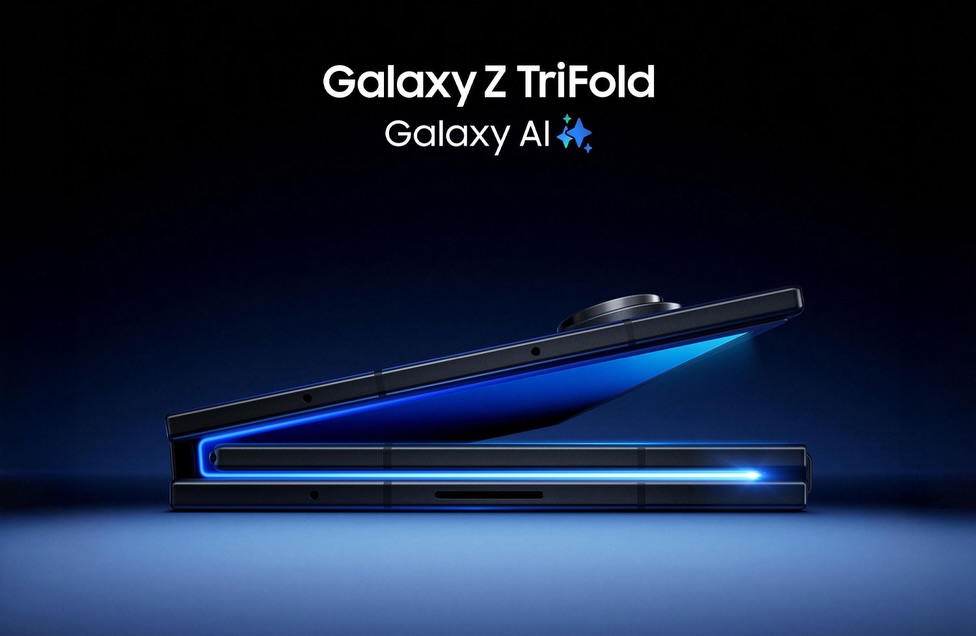
It’s basically Samsung taking the Fold concept and extending it. Instead of doubling the screen area like the Z Fold, the TriFold triples it. And while that sounds simple on paper, it introduces an entirely different set of engineering problems: hinge alignment, panel uniformity, crease management, and overall durability.
Samsung says it redesigned the hinge structure using two different titanium rails to keep wobble down and reduce the gap between folded sections. It’s still early to know how well this works in daily use, though.
One thing Samsung did stick with is protecting the inner panels. The TriFold folds inward, so when it’s closed, no part of the inner screen is left exposed on the outside.
Huawei’s tri-fold, in comparison, keeps the part of the inner panel exposed on the outside, which makes it an extra hassle to take care of.
2. What the TriFold is trying to be
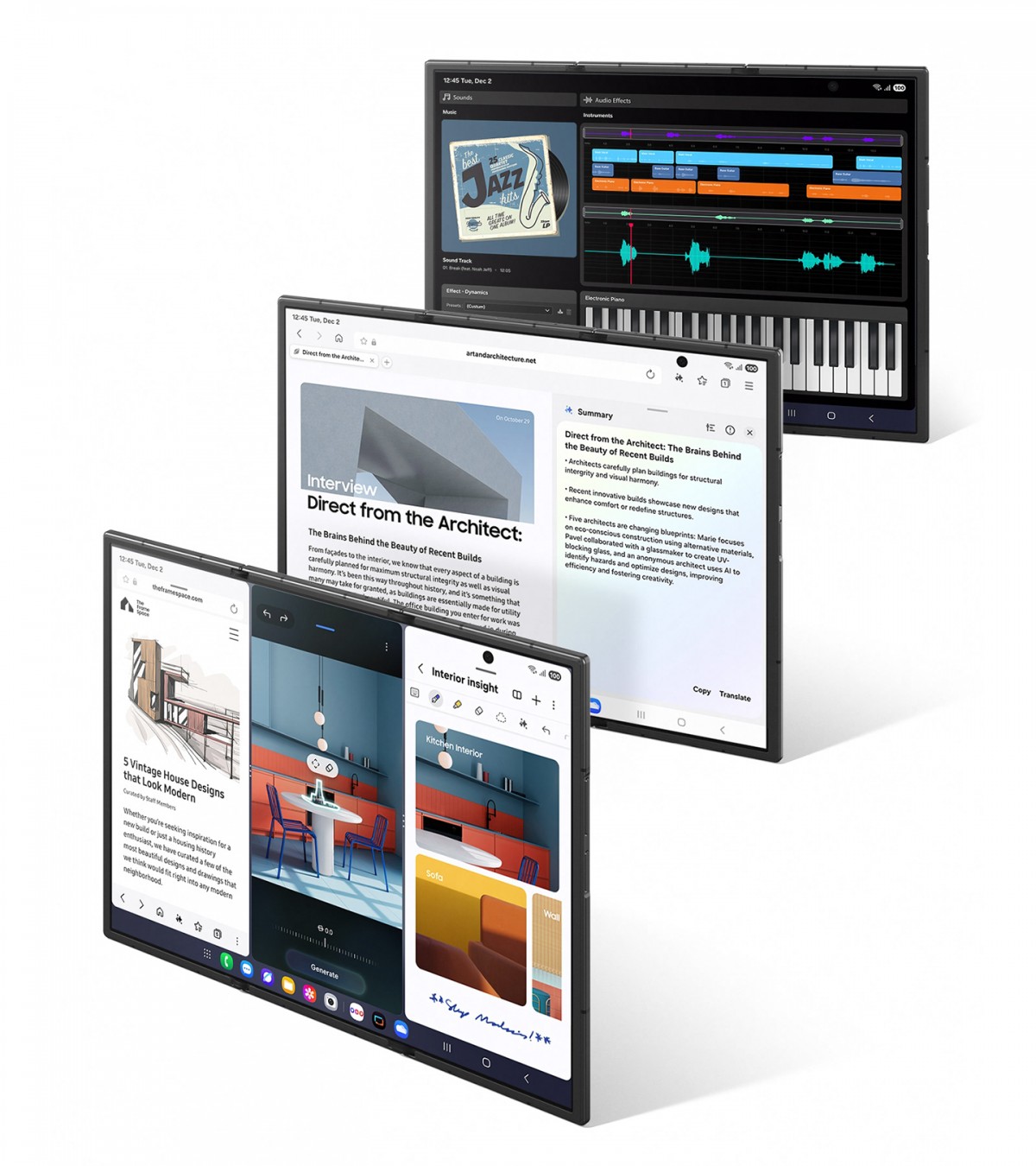
The idea behind the TriFold isn’t mysterious. Samsung is targeting people who treat their phones like small computers. You can do multitasking on a regular fold, but TriFold’s 10-inch screen takes that experience to another level.
You can open two apps in a relatively wide canvas and three in a mode that imitates a regular smartphone. Samsung has also thoughtfully designed the OS to take advantage of this extra screen.
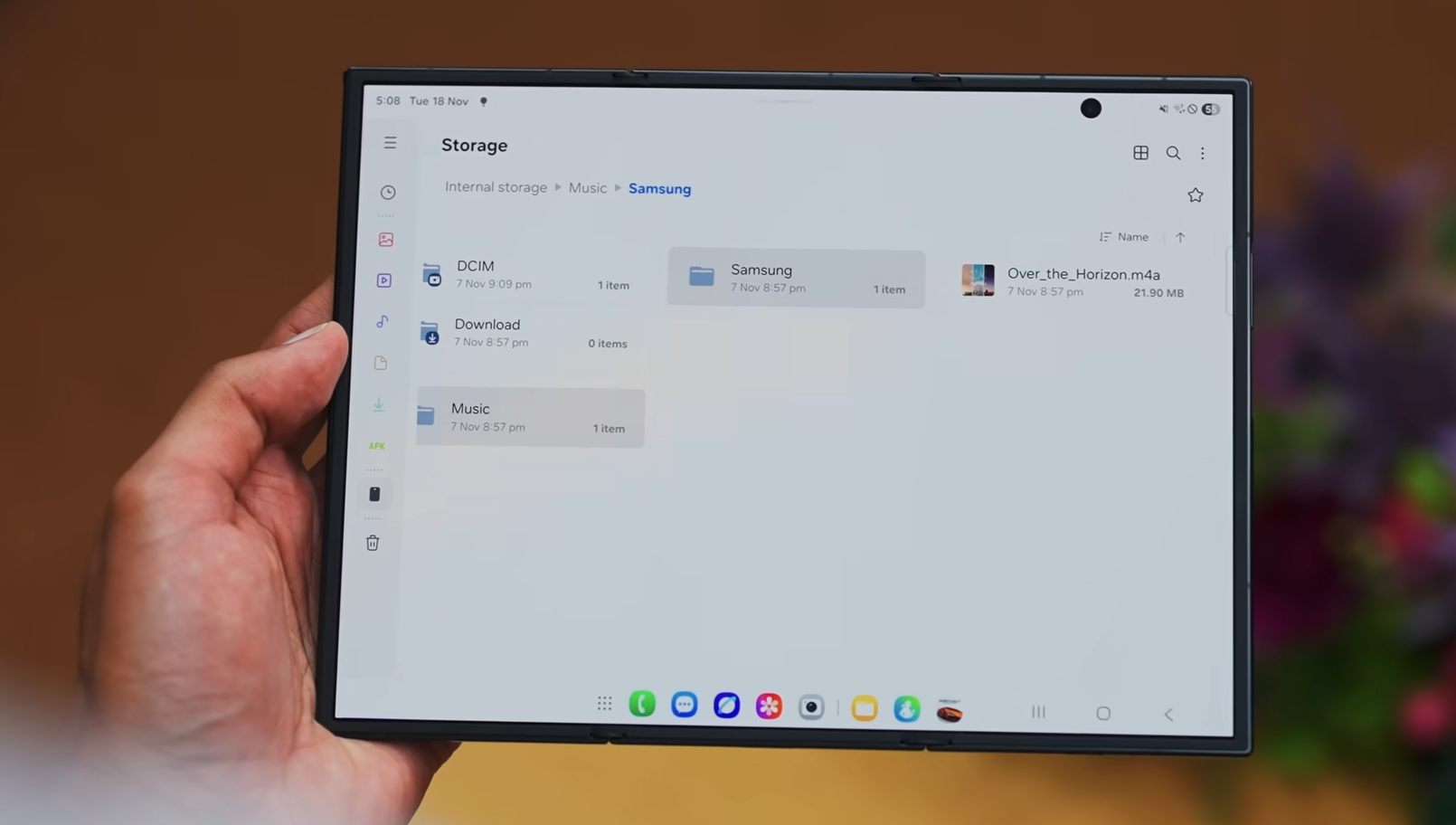
Like in File Manager, the layout you’re greeted with is more similar to a PC than a smartphone. You can see the main folder, subdirectory, and the actual file, all on one screen.
More impressively, you can now use Samsung DeX in the smartphone itself. DeX is one unique take on offering a desktop-like experience to phone users. And while it usually requires a connected monitor or TV to function, the TriFold allows you to use it without additional setup. Users familiar with DeX know the convenience it would bring to their lives.
Since it’s doing so much, it makes sense that Samsung is only shipping the TriFold with 16GB of RAM. You will have ample memory for multitasking and AI models to run side by side.
3. The trade-offs are hard to ignore
The biggest shift in design also comes with the biggest set of compromises.
It’s heavier and thicker than a normal Fold. Even though Samsung advertises an impressively thin 3.9mm profile when opened, the phone becomes noticeably chunky once folded twice.
At around 309 grams, it’s heavier than most flagship phones and even some small tablets. There’s no way around that; adding more panels and hinges simply adds mass.
And there’s still a crease, in fact, now, two of them. Samsung’s foldables have been improving on crease visibility, but a tri-fold will naturally introduce more noticeable transitions between panels. We’ll need long-term testing to see how distracting it feels and how well it holds up.
S Pen support is missing. This is a surprising omission. A big foldable tablet seems like the perfect place for a stylus, but Samsung hasn’t included S Pen functionality here. It’s likely a technical limitation as third-panel flexing and thin internal layers leave less room for the digitizer tech Samsung uses.
Also, the launch is limited, and the price is extremely high. Samsung is starting with Korea, followed by select regions. The price will unsurprisingly be more than the regular Fold, but Samsung is yet to reveal that.
4. The hardware is otherwise what you’d expect from Samsung’s top tier
Specs aren’t the main story here, but Samsung didn’t compromise. The TriFold runs on the Snapdragon 8 Elite for Galaxy, comes with up to 16GB of RAM, and uses a 10-inch Dynamic AMOLED display with a 120Hz adaptive refresh rate. The outer display is 6.5 inches, also at 120Hz.
The biggest improvement is in the battery as it houses a 5,600mAh cell. Not to forget, it’s also powering three screens at the same time.
The camera system is also in line with Samsung’s flagship phones. You get a 200MP main sensor, plus the usual ultrawide and telephoto lenses. Samsung is shipping it with Android 16 and One UI 8, including all the newer Galaxy AI features.
For more daily updates, please visit our News Section.
Stay ahead in tech! Join our Telegram community and sign up for our daily newsletter of top stories! 💡