
Add GIZMOCHINA on Google:
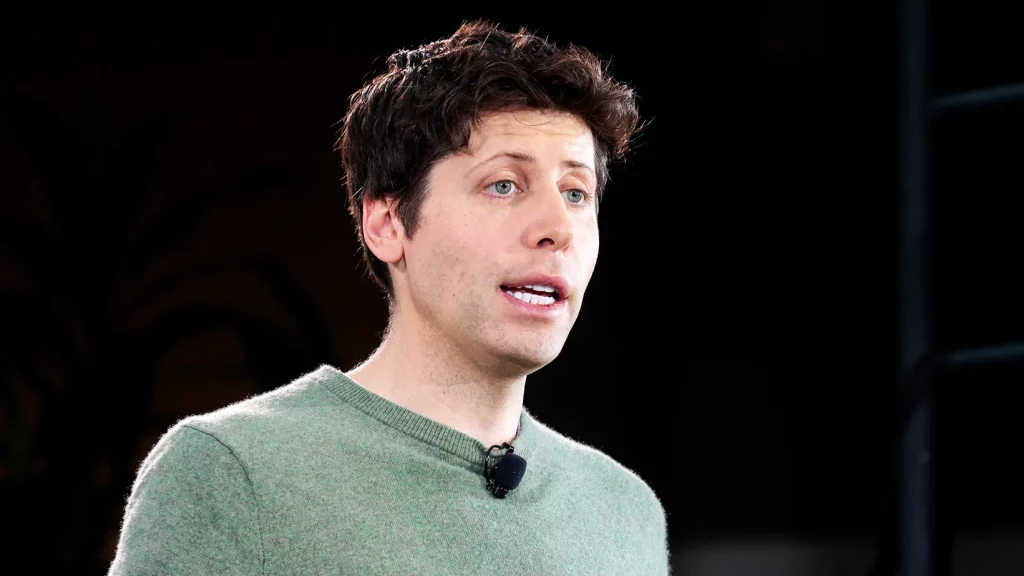
OpenAI is moving beyond software and stepping directly into consumer hardware through a partnership between CEO Sam Altman and legendary designer Jony Ive. The company has already completed its first prototypes, marking a significant milestone in a project that has remained one of Silicon Valley’s most closely guarded secrets.
Here’s what the project looks like so far.
1. Rethinking Personal Tech
The new AI hardware concept is not meant to replace a phone or laptop. It is being developed as a ‘third device’ that sits alongside them. OpenAI CEO Sam Altman described the product as something that delivers a calmer experience, unlike the notification-heavy environment of modern smartphones. He compared current devices to walking through Times Square, while this new product aims to feel more like sitting in a peaceful cabin by a lake.
The device is expected to stay passive until needed and only interrupt when it has something useful or important to share. It is being built as an ambient assistant that remains aware of context and responds when appropriate. Altman said the goal is to give users a sense of peace and trust over time, without constantly demanding attention.
2. Screenless Device With Ambient Awareness
The hardware is screenless and likely pocket-sized. Early prototypes have been described as simple and tactile. Some reports say the form factor resembles an iPod Shuffle, with a clip-on design that may be worn around the neck or placed on a desk. It is not expected to look like a phone, smart glasses, or smartwatch.
Interaction will happen through microphones and possibly cameras or sensors. The device will rely on OpenAI’s latest models to understand spoken queries and real-world context. It will listen, observe, and remember.
Altman said it should be able to recall things like where the user last placed their keys or what book they looked at in a store. The goal is to create a device that feels intuitive, aware, and helpful across long stretches of time.
3. The $6.4 Billion Acquisition That Started It
OpenAI moved into hardware seriously after acquiring Jony Ive’s startup ‘io’ in May 2025. The $6.4 billion equity deal gave OpenAI access to a team focused on AI-specific hardware design. Ive, best known for designing the iPhone and iMac at Apple, took on the responsibility of shaping this new device. He now leads design work for both OpenAI and the former io team under his creative firm LoveFrom.
However, the ‘io’ branding became a legal issue. In June, Google Ventures-backed startup iyO sued OpenAI, claiming that the names ‘io’ and ‘iyO’ were phonetically similar and could confuse consumers. The Ninth Circuit Court agreed and barred OpenAI from using the name for any product similar to iyO’s. OpenAI removed all io branding from its website and public material.
4. Why Hardware Matters to OpenAI’s Future
OpenAI’s push into hardware has three main goals. First, it wants to collect real-world data through microphones and sensors, data that cannot be scraped from the internet.
Second, it wants more control over how its models reach users, without relying on Apple, Microsoft, or Google devices. Third, Altman wants to build a product that fulfills the long-term vision of an AI companion, similar to what was shown in the movie Her.
The company has described the device as a natural extension of its software. It will work with existing phones and computers, but operate in a separate category of its own. Altman said this is not about adding a screen or another app but creating a fundamentally new type of computing device.
5. What the Timeline Looks Like
The device is currently in prototype form. Altman and Ive confirmed in November 2025 that they have a working version, which they described as ‘jaw-droppingly good.’ Earlier versions did not meet their standards, but the latest iteration reportedly impressed both leaders.
Ive said the device could launch in under two years. Internally, OpenAI has targeted a release timeline of late 2026 or 2027. The company hopes to scale production quickly and ship 100 million units faster than any company has done before.
However, delays related to technical design, privacy concerns, and the ongoing trademark dispute could push the timeline further.
For more daily updates, please visit our News Section.
Stay ahead in tech! Join our Telegram community and sign up for our daily newsletter of top stories! 💡