
Add GIZMOCHINA as Preferred Source on Google
If most smartphone imaging systems are chasing “more clarity” and “greater accuracy,” then the Xiaomi 17 Ultra by Leica is clearly taking a different path—it tries to give photos their emotions back. When you switch to Leica Essential mode, this phone stops obsessing over reproducing everything exactly as it is, and instead makes deliberate choices. Highlights are restrained, shadows are allowed to fall silent, and a subtle grain appears, like a breath carried over from the film era.


The image is no longer just a record of “what happened,” but a complete story being told. If you’re not interested in Leica, then don’t buy this phone. Out of the $1,000 you’re paying, at least $500 goes directly into every aspect of the Leica collaboration— the exclusive Leica Essential mode, the Leica red dot, the camera ring, and a full range of Leica-branded accessories. This device is, quite literally, a Leica camera that can make calls and fit into your pocket.
Leica Essential
The Leica M9 look, and the M3 with Monopan 50 film look are not filters. Like Leica’s Authentic modes, they are processed directly within the ISP and output as is. That’s why you simply can’t recreate such natural Leica-style images through basic post-processing. You can even use cloud-based image processing to enhance image quality, but photos shot in Leica Vibrant and Leica Authentic can’t.


The white balance of the M9 looks is fixed to daylight, which does a great job of preserving the warmth of the lighting. However, because white balance cannot be adjusted in this mode, photos taken indoors can easily appear too yellow. Switching back to Leica Vibrant is a better option in those situations.


Another issue is launch speed. Getting into Leica Essential mode is not as quick as Fastshot mode, which caused me to miss quite a few great moments.
One of the reasons that makes Xiaomi 17 Ultra by Leica so special is the camera ring. Yes, it really can be rotated to adjust focal length. You can also customize its function, such as rotating to control EV or filters, or rotating to jump directly into Leica Essential mode.

Unfortunately, just like the camera control button on the iPhone, this camera ring is… not as good to use as you might imagine. Because the ring is quite loose, it’s easy to be triggered accidentally, and it feels cheap in use. It makes sense why it’s designed this way—to prevent deformation from drops or getting stuck due to dust. This isn’t me making excuses for Xiaomi; they explained this in a recent official announcement.

But all of that can be summed up in one sentence: it’s not pleasant to use. Compared to the camera ring, I’d much rather control the camera using the grip from the photography kit.
Photography Kit
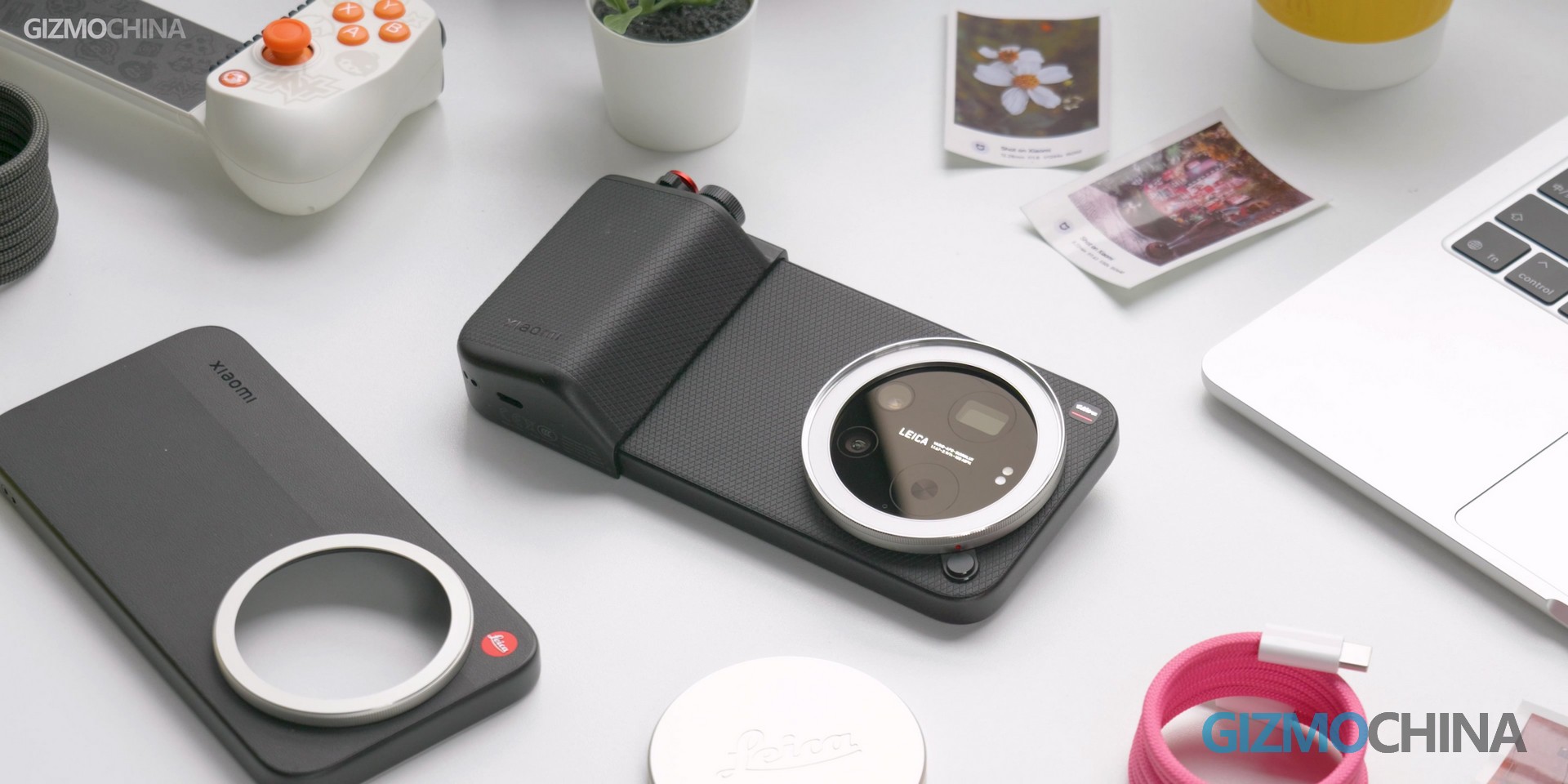
If you’re willing to, you can add another $100 at purchase to get the photography kit for the Xiaomi 17 Ultra. This generation combines all the advantages of previous versions. It still supports 67mm camera filters, the grip still can be connected to the phone via USB-C, and it still has a built-in 2,000mAh battery.

The replaceable shutter button is still there, and the dial has been redesigned to make it feel more like that of a professional camera. The control area has also been moved lower, making it more ergonomic. The thumb grip is now integrated, with a metal outer layer just like before. There are even magnets in the phone case, making it compatible with all MagSafe accessories. These are genuine upgrades—but there are always some downgrades.

Like the phone’s camera ring, the rotating structure on the case is still very loose, which makes it feel less premium. The case material has also changed from vegan leather to plain plastic. My biggest complaint is that the case blocks the Leica red dot logo. If you use the case included in the phone box, the grip cannot lock onto the phone at all. Listen, Xiaomi: if you don’t want to spend more on Leica licensing for the photography kit, then at least cut a hole in the case.

At the moment, I only recommend this kit to users who bought the regular 17 Ultra. Oh, and Xiaomi has also released a Photography Kit Lite—Leica edition. Users should avoid it as well, because it blocks the camera ring.
Telephoto
Now that we’re done with the Leica part, let’s talk about image quality. How is the image quality of this telephoto camera with true optical zoom? Good—but not good enough. The good part is that it doesn’t have any obvious flaws. Whether you’re watching this video on a phone or a computer, as long as I don’t zoom in, you probably can’t find anything wrong with the photos, right? And with In-Sensor Zoom available at both 200mm and 400mm, its telephoto reach is actually quite strong.


The reason I say it’s still not good enough is that, in slightly dimmer lighting, the image quality looks a bit soft. In terms of sharpness, it can even be slightly worse than the Xiaomi 15 Ultra. Another limitation is the 30cm minimum focusing distance, which makes it hard to call the shots true macro.


That’s one of the trade-offs of optical zoom. By the way, if you shake the phone and hear something moving inside the camera, that’s because the camera module is very large. The sound comes from the OIS module and the telephoto lens group moving, and this is completely normal.
As for the focal length range, 75mm to 100mm sounds quite wide on paper, but in practice, the difference in field of view between 75mm and 100mm isn’t that big. Taking two steps forward can give you a similar result.


Why not make the range wider? Xiaomi explained this in the same announcement: there simply isn’t enough internal space to fit a telephoto module beyond 100mm. Being able to satisfy users who like 75, 85, 90, and 100mm lenses is already the best Xiaomi could do.

Main Camera & Video
Although the 17 Ultra still uses a one-inch main sensor, the model has changed. The biggest upgrade is the addition of LOFIC technology. Simply put, this increases dynamic range, especially in highlight control. Video also benefits from LOFIC: areas that would normally blow out are now much better controlled, resulting in a noticeable improvement in dynamic range.

However, I’m not very satisfied with the video recording on the 17 Ultra. The image stabilization isn’t stable enough, and motion blur caused by stabilization appears quite frequently. If a one-inch sensor performs like this, the ultra-wide camera can only be worse.
Besides image quality that’s genuinely hard to accept, there are also some strange, almost bug-like behaviors. For example, the person at the bottom of this footage. In very dark environments, subjects show trailing and color noise. Clearly, the video recording experience isn’t fully ready yet, and we’ll have to wait for updates and optimization.

Ultra-wide Camera & Selfie
On the bright side, the ultra-wide camera is 14mm, which means it offers a much wider field of view than other phones in the 17 series. If you look at these photos on their own, the quality isn’t terrible. But when you consider that I paid $1,000, and the other two cameras are so good, the ultra-wide camera ends up feeling especially weak. Perhaps for a photography-focused phone like this, sacrificing the ultra-wide camera in favor of the main and telephoto is something people can accept more easily.


The selfie camera has seen a slight upgrade to a 50MP sensor. Under normal conditions, selfies are perfectly fine, and the larger sensor really helps in low light. Even when the lighting is weak, facial details aren’t lost too badly. As a man, I’m already quite satisfied with this level of selfie quality.


Performance
I think I’ve talked enough about the cameras, so it’s time to discuss the Xiaomi 17 Ultra as a smartphone. There’s not much left to say about the Snapdragon 8 Elite Gen 5 platform—you can basically consider it the most powerful mobile processor available right now. Its performance in benchmarks is actually a bit more aggressive than the 17 Pro Max.

For an imaging-focused flagship, the gaming experience on the Xiaomi 17 Ultra is excellent. It maintains high frame rates without throttling, and temperatures stay reasonable. We also didn’t find any “cheating” behavior like resolution scaling. So, as long as you don’t mind the lack of frame interpolation, it can easily serve as a gaming phone for the next three to five years.

Display & Battery
There isn’t much to say about the display either. Like the Xiaomi 17 Pro Max, it’s now flat and uses a new pixel arrangement. This is currently Xiaomi’s most advanced display.

While we’re now in an era where smartphone battery capacities have exceeded 10,000mAh, 6,800mAh may not sound huge anymore—but you definitely can’t call it small. I’d say it’s more than enough. If battery life is especially important to you, Xiaomi gave you another option three months ago. If you treat the 17 Ultra purely as a camera, after a full day of intensive shooting, it still has 26% battery remaining.

It supports 90W wired charging, which is more than enough for most people. Wireless charging dropping from 80W to 50W is definitely a step back, but considering that wired charging supports 90W PPS and reverse charging has been increased to 22.5W, the overall charging system is still a clear improvement over the 15 Ultra.

Conclusion
After taking nearly 600 photos in Hong Kong, the positioning of the Xiaomi 17 Ultra became increasingly clear to me. The photos it takes may not be the sharpest, but they are absolutely the most emotionally rewarding. If you love photography, you may have many reasons why you can’t buy a real Leica M camera—but you really have no reason not to buy a Xiaomi 17 Ultra by Leica.
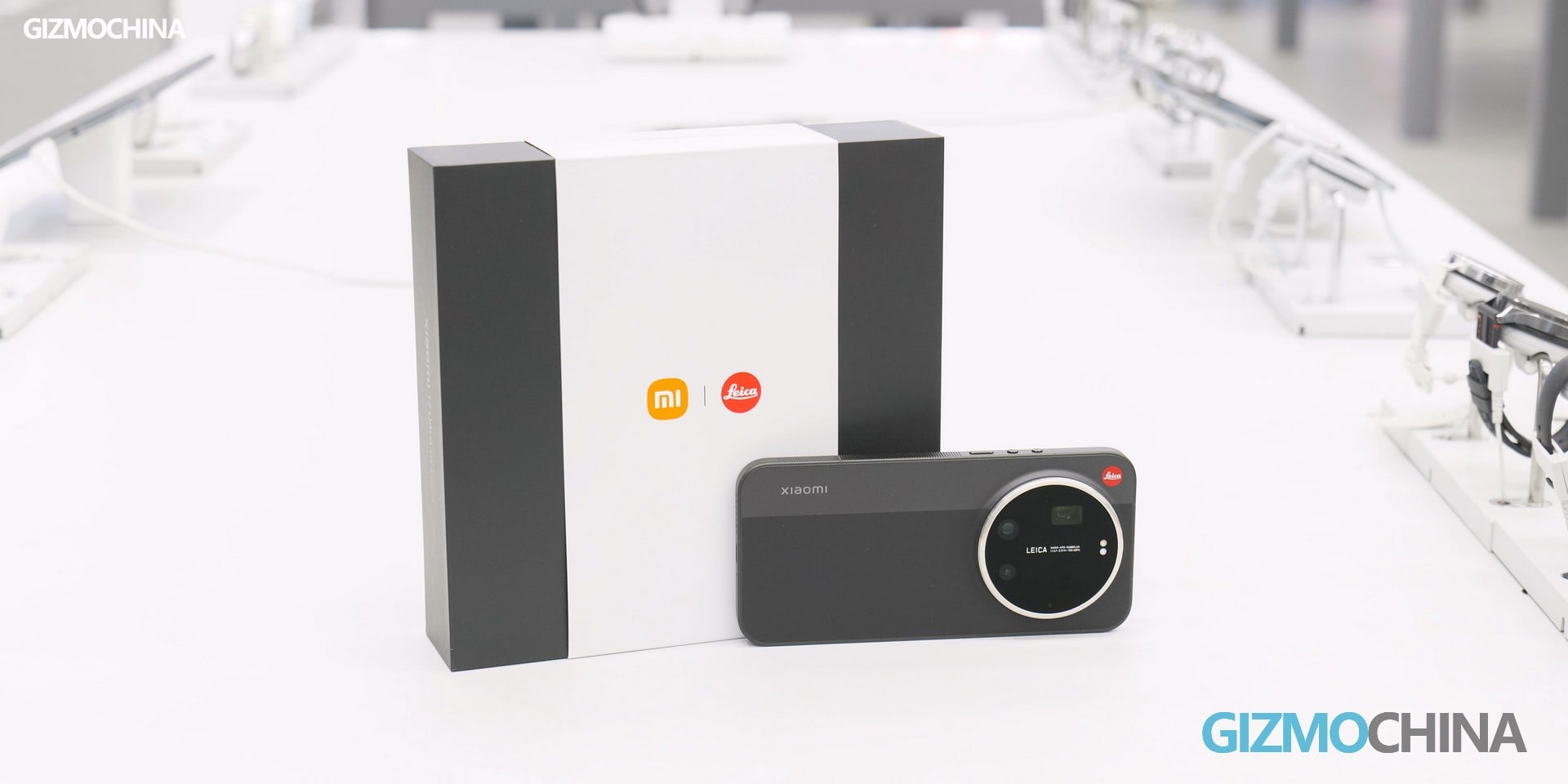
It’s smaller, cheaper, and more durable. I believe that over the next year, it will become my main camera, being with me as I capture more stories from the streets and alleys of everyday life.



Comments