
Add GIZMOCHINA as Preferred Source on Google
Key Highlights:
- NASA and the U.S. Department of Energy plan to deploy a nuclear reactor on the Moon by 2030
- The reactor will support long-term lunar missions and future Mars exploration
- Experts warn that budget cuts, safety risks, and legal issues could delay the plan
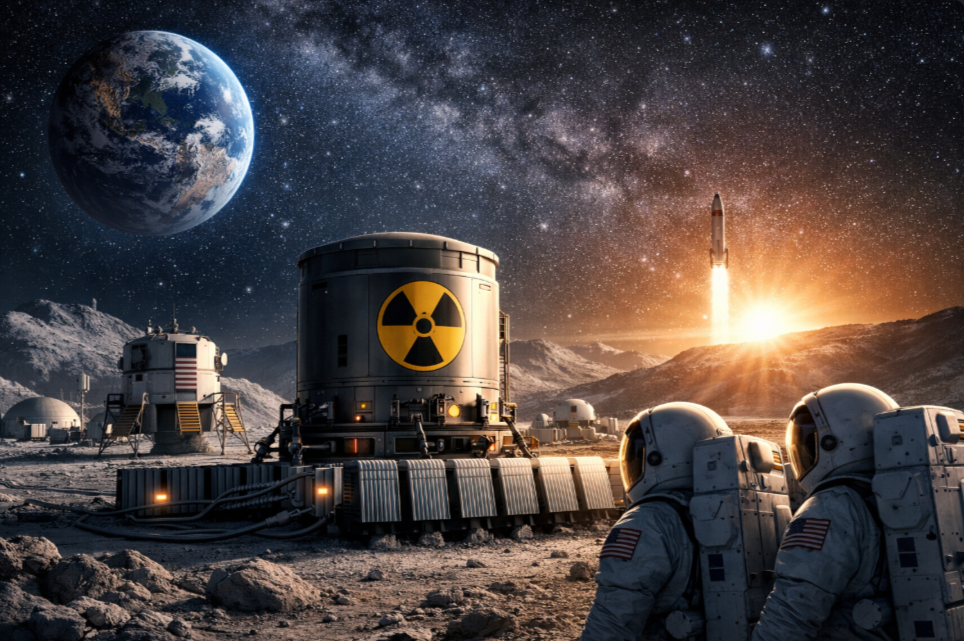
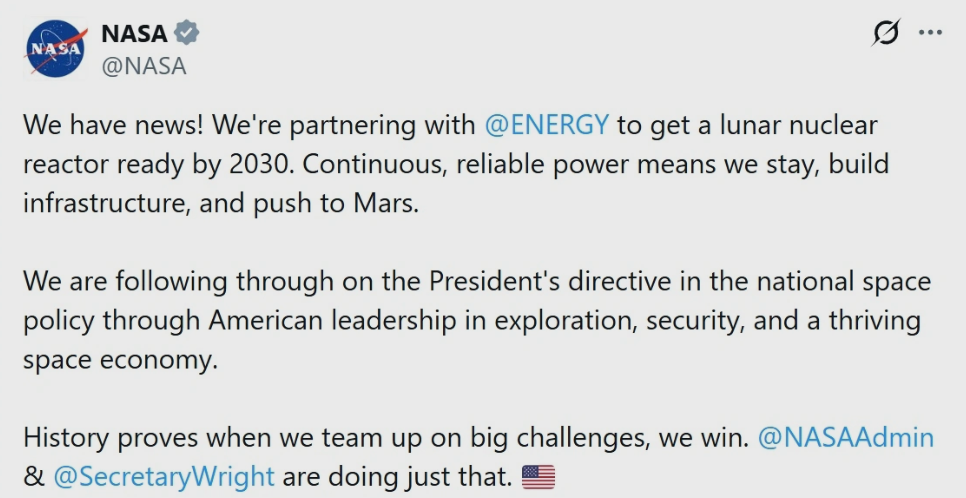
The United States has confirmed plans to build its first nuclear power plant on the Moon by 2030. NASA and the U.S. Department of Energy (DOE) signed a Memorandum of Understanding on January 13 to jointly develop a Lunar Surface Reactor. The project aims to provide reliable power for permanent lunar missions and serve as a stepping stone for future human missions to Mars.
NASA says the goal is not just to return to the Moon, but to build long-term infrastructure that allows humans to stay and work there.
Why Nuclear Power Is Needed
Power is a major challenge on the Moon. Lunar nights last about 14 Earth days, and some regions remain in permanent shadow, making solar energy unreliable. A nuclear reactor can provide continuous electricity regardless of sunlight, temperature extremes, or location.
NASA says nuclear power is essential for life-support systems, scientific equipment, and long-duration human missions, especially in resource-rich areas like the Moon’s south pole.
Technology and Strategic Vision
The project, known as NASA’s Fission Surface Power Project, focuses on developing a compact reactor that can operate safely for several years without refueling. NASA Administrator Jared Isaacman described nuclear energy as key to a “golden age of space exploration,” enabling sustained lunar presence and future Mars missions.
U.S. Energy Secretary Chris Wright compared the effort to historic projects like the Apollo missions, highlighting its importance for American scientific leadership.
Concerns and Challenges Ahead
Despite strong government support, scientists have raised concerns about the ambitious timeline. Experts warn of unresolved technical challenges, launch safety risks, and legal questions related to the Outer Space Treaty, which declares the Moon the shared heritage of humanity.
Legal Concerns
Despite its promise, NASA’s lunar nuclear plan faces serious legal and safety risks. Critics point to the 1967 Outer Space Treaty, which bars national control and harmful contamination of the Moon, raising questions about operating a U.S.-controlled reactor on shared lunar territory.
Safety Risks
Safety concerns are equally significant, including the risk of radioactive material release during launch, reactor malfunctions in the Moon’s extreme environment, radiation exposure to astronauts, and the lack of a clear disposal plan once the reactor reaches the end of its life.
Together, these issues make the project legally sensitive and technically high-risk, especially under an ambitious 2030 timeline.
Read More:
- Huawei Returns as China’s No. 1 Smartphone Brand After Five Years, Overtaking Apple
- Honda Changes Its Iconic Logo After Decades: New ‘H’ Debuts for EV Era
- Rent a Robot for Just $25 (₹2000) a Day: World’s First Robot Rental Platform, Raises Millions
(via)

Comments